What Are American Born Chinese Names
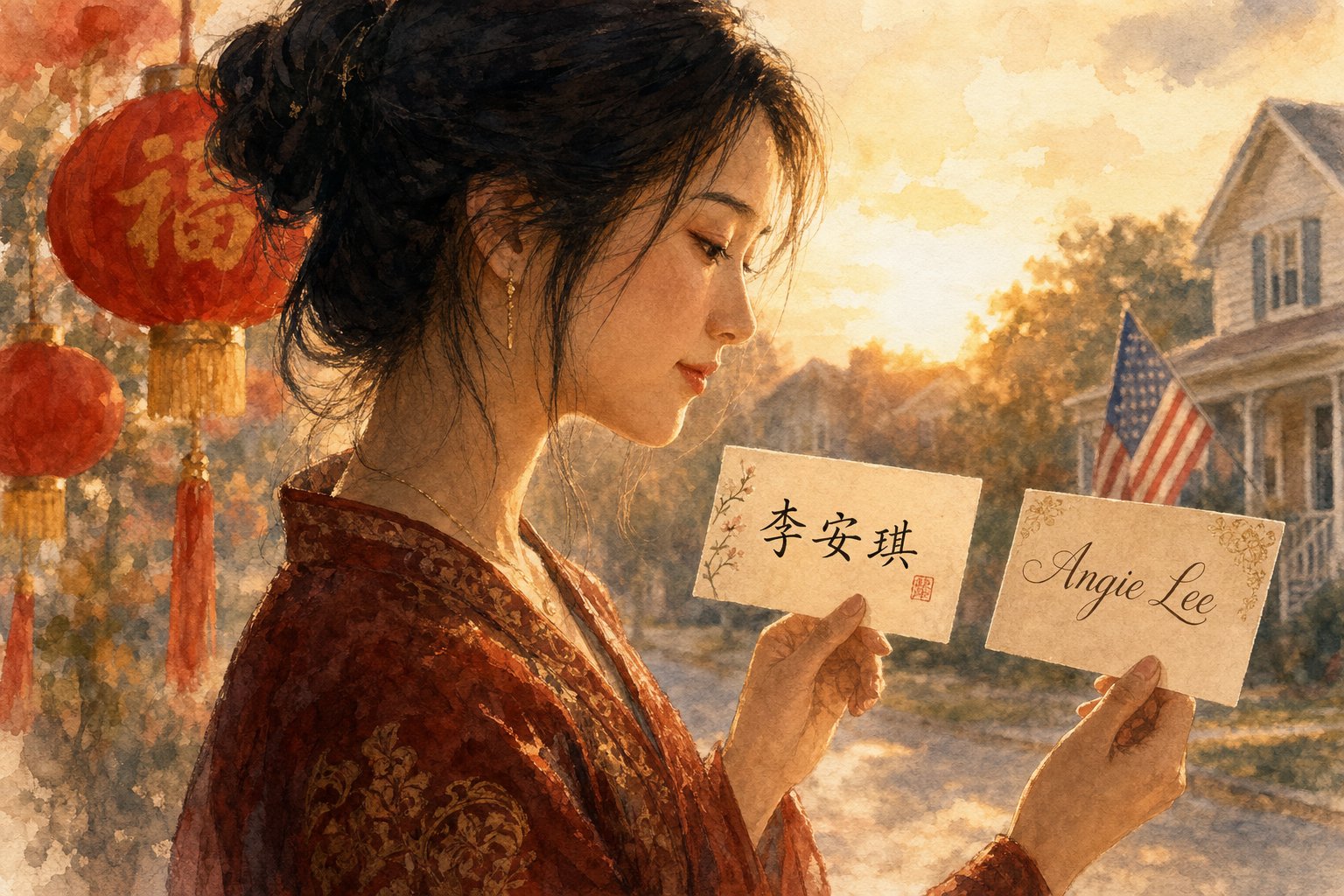
Imagine growing up with two names. One lives on your birth certificate, school roster, and job applications. The other echoes through family dinners, grandparent phone calls, and Lunar New Year gatherings. For millions of Americans with Chinese heritage, this is everyday life. ABC American Born Chinese names represent a bicultural naming identity that blends English first names with Chinese given names, creating a dual name system rooted in both heritage and belonging.
The term "ABC" itself is a phrase used within Chinese communities to identify ethnically Chinese individuals who were born in the United States. It carries layers of meaning, sometimes affectionate, sometimes slightly pointed, implying a distance from traditional Chinese culture. But at its core, the naming conventions tied to this identity reflect something deeply intentional: parents building a bridge between two worlds for their children.
ABC names refer to the dual-naming practice where American Born Chinese individuals carry both an English legal name used in public life and a Chinese given name that connects them to family, heritage, and cultural identity.
What ABC Names Really Mean
So what does an American Born Chinese name actually mean in practice? It means a child might be "Emily" at school and "Mei Ling" at home. It means parents spend weeks choosing Chinese characters with auspicious meanings while also selecting an English name that feels natural in American classrooms and workplaces. The result is a bicultural naming identity where each name serves a distinct purpose and carries its own emotional weight.
This dual name system is not random or casual. It reflects deliberate choices about how a family wants their child to move through the world. The English name opens doors in mainstream American society. The Chinese name preserves a thread of connection to ancestry, language, and cultural values that might otherwise fade across generations.
The CBA vs ABC Naming Distinction
Understanding ABC vs CBA naming conventions helps clarify how immigration direction shapes identity. A CBA, or Chinese Born American, is someone born in China who later becomes an American citizen. Their naming journey often moves in the opposite direction: they may adopt an English name after arriving in the U.S., layering it on top of an existing Chinese identity.
Actor Ben Wang, who plays the lead in the Disney+ adaptation of American Born Chinese, captures this distinction perfectly. As he noted in an interview, "I think it's really funny that when you Google 'American Born Chinese,' it's my face. But I am actually a Chinese-born American." Wang lived in Beijing until age six before moving to rural Minnesota. His experience with identity and naming mirrors the ABC experience, yet arrives from the opposite direction.
The grammatical structure itself reveals a cultural priority. In "American-Born Chinese," the word "Chinese" is the noun, the core identity. In "Chinese-American," the word "American" is the noun. As one cultural commentator observed, this reflects how Chinese culture tends to emphasize ethnicity as primary, while American culture places nationality first. For ABC families navigating names, this tension lives in every choice they make: which identity leads, and which one follows.
These naming decisions carry deep cultural, familial, and personal significance that ripples across generations. The structure behind those choices, how Chinese characters are selected and paired with English names, reveals an entire system of meaning most people never see.
Chinese Naming Structure for American Born Children
Every Chinese name is a small act of architecture. Parents are not just picking a label. They are selecting characters, weighing tonal harmony, and sometimes consulting generational traditions that stretch back centuries. For ABC families, this process carries an extra layer of complexity: the name must work in two linguistic worlds simultaneously.
Surname and Given Name Structure
The most fundamental difference between Chinese and English naming conventions is order. In Chinese, the family name comes first, symbolizing the primacy of lineage and collective identity. The given name follows. So someone named Wang Mei in Chinese becomes Mei Wang when written in English order, with the surname shifted to the end.
This reversal sounds simple, but it creates real confusion. When an ABC child's Chinese name appears on documents or is spoken aloud, non-Chinese speakers often cannot tell which part is the surname and which is the given name. A name like "Li Jun" could be misread as first name "Li" and last name "Jun" by someone unfamiliar with Chinese naming structure.
Most Chinese surnames are a single character and a single syllable. Given names are typically one or two characters. This means a full Chinese name is usually just two or three syllables total, far shorter than many English names. For ABC families, the surname stays consistent across both naming systems, serving as the anchor that ties the English and Chinese identities together.
Character Meanings and Selection
Here is where the process becomes deeply personal. Each Chinese character carries its own meaning, history, and cultural resonance. When ABC parents choose characters for their child's Chinese given name, they are encoding hopes, values, and aspirations into the name itself.
Characters are not chosen at random. Families want names that are both phonetically pleasing and semantically rich. As Temple University's Center for Chinese Language Instruction explains, names chosen for boys often symbolize strength and power, while girls' names frequently represent beauty and kindness. The process of naming is also believed to influence a person's destiny.
Common character meanings chosen for ABC children include:
- Wei (伟) - greatness or grandeur, one of the most popular characters in Chinese naming
- Hui (慧) - wisdom or intelligence, reflecting academic aspirations
- Mei (美) - beauty, used frequently in girls' names
- Jun (俊) - handsome or talented, conveying excellence
- Xin (欣) - joy or happiness, expressing a wish for a contented life
- Ming (明) - brightness or clarity, symbolizing an enlightened path
- Jia (佳) - good or fine, a versatile character for either gender
- Long (龙) - dragon, representing power and good fortune in boys' names
Beyond meaning, some families factor in the five elements: metal, wood, water, fire, and earth. Taoist tradition holds that depending on when someone is born, their body might lack one of these elements, which can affect their health and fortune. A fortuneteller or knowledgeable elder might advise parents to select a character that incorporates the missing element. Stroke count also plays a role for some families, with certain totals considered luckier than others.
There is also a generational naming tradition worth understanding. In many Chinese families, siblings and patrilineal cousins share a generational character in their given names. For example, if the generational character is "Zhen," siblings might be named Zhenni, Zhenhai, and Zhenhua. This practice creates an audible thread connecting family members across a single generation. Not all ABC families maintain this tradition, especially those several generations removed from immigration, but it remains meaningful for many.
How Pinyin Romanization Shapes ABC Names
When a Chinese name moves from characters to Roman letters, something inevitably gets lost. Pinyin romanization, the standard system used in mainland China, translates each character into a syllable spelled with English letters. But Chinese is a tonal language with four distinct tones, and pinyin flattens that dimension for most English readers.
Consider the syllable "ma." Pronounced in the first tone (ma), it means "mom." In the second tone (ma), it means "trouble." Third tone (ma) means "horse." Fourth tone (ma) means "to scold." A name's meaning depends entirely on its tone, yet when written in pinyin on an American birth certificate or school roster, that tonal information disappears completely.
This creates a practical challenge for ABC families. The name "Wang Wen" in the fourth tone (问) suggests a smart, inquisitive individual. Mispronounced in the second tone, it could sound like the character for "mosquito" (蚊). For non-Mandarin speakers encountering the romanized version, there is no way to know the difference without hearing it spoken correctly.
Different romanization systems add another layer of complexity. Families with roots in mainland China typically use Hanyu Pinyin, while Cantonese-heritage families from Hong Kong use Jyutping or Yale romanization, and Taiwanese families may use the Wade-Giles system. The same surname character 謝 becomes "Xie" in Pinyin, "Hsieh" in Wade-Giles, and "Tse" in Cantonese transliteration. For ABC families, the romanization system their ancestors used often becomes a permanent marker of regional origin baked into their legal surname.
You'll notice this is why two ABC families with the same Chinese surname character might spell it completely differently in English. A "Wong" and a "Wang" and a "Huang" could all share the same ancestral character, their spelling simply reflecting whether their family emigrated from Guangdong, Beijing, or Taiwan. The romanized form becomes its own kind of heritage marker, telling a story about when and where a family's American journey began.
All of this structure, the careful character selection, the tonal nuances, the regional romanization, feeds into a larger question that ABC families face every day: when and where does each name get used?
The Dual-Naming System ABCs Navigate Daily
Do American Born Chinese have two names? In most cases, yes. And those two names do not simply coexist. They activate in different contexts, carry different emotional registers, and signal different versions of the same person. The dual-naming system is not a quirk or a formality. It is a daily practice of cultural navigation, a kind of code-switching that happens so naturally most ABCs barely notice they are doing it.
How the Dual-Name System Works in Daily Life
Picture this: a child named Kevin at school hears his grandmother call him "Jianwei" over the phone. At the pediatrician's office, the receptionist reads "Kevin Chen" from the chart. At Saturday Chinese school, the teacher calls roll using his Chinese name. At Thanksgiving with his parents' friends, aunties and uncles use "Jianwei" without a second thought. Kevin and Jianwei are the same person, but each name pulls him into a different social world.
For most ABC families, the English name appears on the birth certificate as the legal first name. The Chinese name might show up as a middle name, might be recorded only in a family register, or might exist purely in spoken form, never written on any official document at all. As journalist Jessica Wei describes, her full legal name is Jessica Ning Yan Wei, with her Chinese name tucked into the middle name slot, "almost never used, unless it's by friends who peer at my passport." This is a common pattern. The Chinese name lives in the legal margins while functioning as a primary identifier within the family.
The system works because each name serves a distinct social function. Michelle Tong, a PhD candidate at Cornell, was born Tianyi but goes by Michelle in nearly every public context. She describes her Chinese name as something that "partitions the world," acting as "a cue into which identity to activate." The English name signals belonging in mainstream American spaces. The Chinese name signals belonging within family and cultural community. Neither is more "real" than the other, though many ABCs wrestle with that question their entire lives.
When ABCs Use Each Name
The split is not always clean, but general patterns emerge across most ABC experiences. You'll notice the division tends to follow a public-versus-private logic, with the English name dominating formal and institutional settings while the Chinese name holds space in intimate and cultural ones.
| Context | Name Typically Used | Why |
|---|---|---|
| School enrollment and classroom | English name | Listed on legal documents; easier for teachers and peers |
| Workplace and professional life | English name | Avoids mispronunciation; matches resume and credentials |
| Legal documents (passport, ID, taxes) | English name (Chinese name as middle, if included) | Reflects birth certificate registration |
| Family gatherings and home life | Chinese name | Used by parents, grandparents, and extended family |
| Chinese school or language classes | Chinese name | Reinforces language learning and cultural identity |
| Cultural events (Lunar New Year, weddings, funerals) | Chinese name | Connects to tradition and community belonging |
| Phone calls with relatives in China | Chinese name | Relatives may not know the English name at all |
| Social media and personal branding | Varies | Increasingly, some ABCs use both or lead with Chinese name |
This table captures the general pattern, but real life is messier. Some ABCs grow up hearing both names interchangeably at home. Others never hear their Chinese name spoken aloud after early childhood. The degree of separation depends on how much Chinese is spoken in the household, how connected the family remains to Chinese-speaking communities, and how comfortable parents feel using Chinese names in mixed-language settings.
What makes this system distinctive is the Chinese American code-switching it requires. An ABC does not just switch languages. They switch entire relational frameworks. When someone calls you by your Chinese name, you are positioned within a web of family obligation, cultural expectation, and ancestral continuity. When someone calls you by your English name, you are positioned as an individual navigating American social norms. The shift can happen multiple times in a single day, sometimes within the same room at a family party where both Chinese-speaking elders and English-speaking friends are present.
This dual system mirrors a broader pattern in Chinese naming culture. As cultural journalist Wu Haiyun explains, the practice of holding multiple names has deep roots in Chinese tradition, where people historically carried a surname, a given name, an alternative personal name, and even self-chosen names that each served different social functions. The ABC dual-naming system is, in some ways, a modern continuation of that tradition, adapted for a bicultural context where the boundary is not just social but linguistic and national.
The question that lingers beneath all of this is not really about logistics. It is about identity. Which name feels like yours? Which one do you introduce yourself with when you have a choice? Those decisions reveal something deeper about how ABCs position themselves between two cultures, and the answers shift across a lifetime as cultural confidence grows or fades.
Popular English Name Choices Among ABC Families
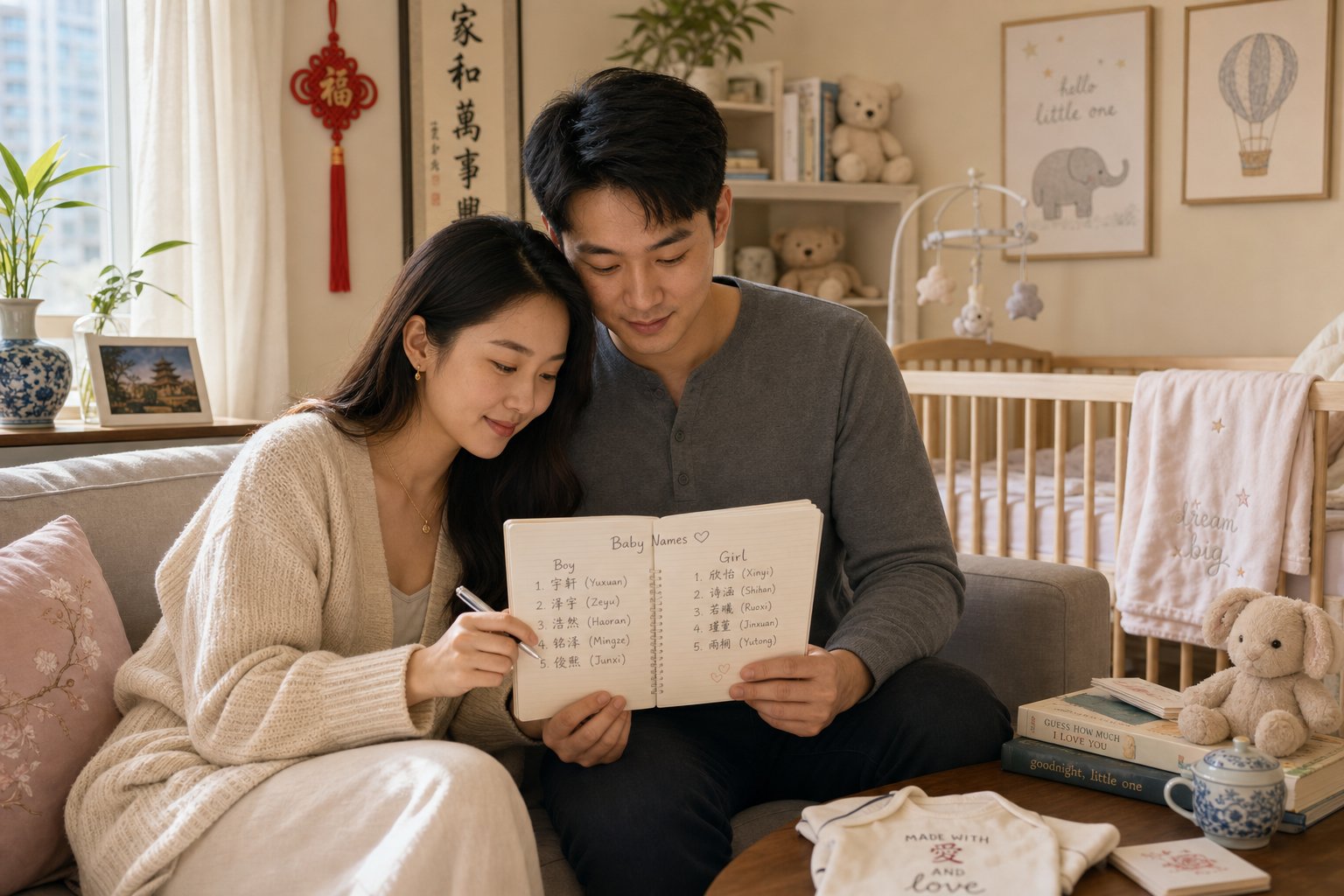
Which name feels like yours is one question. How ABC parents choose English names for their children is another, and the reasoning behind those choices reveals a quiet strategy most outsiders never notice. English names in ABC families are rarely picked at random from a baby book. They are selected through a filter of phonetic compatibility, cross-cultural meaning, and practical survival in American classrooms and workplaces.
Phonetic Bridges Between English and Chinese Names
One of the most common strategies is phonetic matching between Chinese and English names. Parents look for English names that echo the sound of their child's Chinese given name, creating an audible link between the two identities. A child named Mei in Chinese might become "May" in English. A boy named Jian might go by "James" or "Jason." The sounds rhyme or overlap just enough that switching between names feels natural rather than jarring.
This is not just about aesthetics. When a grandparent calls out "Mingwei" and a teacher calls out "Michael," the phonetic similarity helps a young child feel like both names belong to the same person. It softens the cognitive split of the dual-name system.
ABC families typically approach English name selection through several distinct strategies:
- Phonetic matching - choosing English names that sound like chinese names, such as "Lily" for "Li Li" or "Andy" for "An Di"
- Meaning matching - selecting English names with parallel significance, like "Grace" for a child whose Chinese name contains a character meaning elegance
- Ease of pronunciation - prioritizing names that speakers of both Mandarin or Cantonese and English can say comfortably without distortion
- Cultural neutrality - picking names that do not sound exclusively tied to one ethnicity, allowing the child to move fluidly through diverse social settings
- Shortened formality - using informal English names like "Andy" or "Jenny" as legal names rather than their longer forms "Andrew" or "Jennifer"
That last point is particularly interesting. Research from Harvard's Social Science Statistics Blog found that Chinese Americans are significantly more likely to use shortened names like "Andy" or "Jenny" as legal names, while the general American population tends to register the formal versions. This suggests ABC parents sometimes prioritize how a name sounds when spoken aloud in Mandarin or Cantonese over English naming formality conventions.
Generational Naming Trends Across ABC Families
The popular english names for chinese american babies have shifted dramatically across immigration waves. Cantonese-heritage families, many of whom arrived before 1965 from Guangdong province and Hong Kong, gravitated toward classic Anglo-American names. Think David, John, James for boys and Jennifer, Angela, Alice for girls. These names signaled assimilation and carried no phonetic connection to Chinese at all. The priority was blending in.
Post-1965 immigration brought a massive influx of Mandarin-speaking families from Taiwan and later mainland China. Their naming patterns look different. Data analysis of Chinese American naming frequencies shows that names like Andrew, Eric, Peter, and Albert appear among Chinese American men at rates far exceeding the general population. For women, Amy, Grace, Vivian, and Cecilia are over five times more popular among Chinese Americans than among Americans overall. These names were not chosen arbitrarily. "Amy" sounds close to Mandarin names beginning with "Ai" (love). "Grace" mirrors the meaning of characters like Ya (雅, elegance). "Vivian" echoes the syllable "Wei" found in countless Chinese given names.
You'll notice a pattern here. The most statistically overrepresented names among Chinese Americans tend to be short, phonetically clean, and either sound like common Chinese syllables or carry meanings that parallel popular Chinese character choices. Names like "Grace" and "Vivian" accomplish both: they are easy for Mandarin-speaking grandparents to pronounce and they carry meanings that align with traditional Chinese naming values of beauty and vitality.
These naming choices ultimately reflect something larger than personal preference. They reveal a family's assimilation philosophy, their hopes for how their child will be perceived, and the degree to which they want their child's two names to feel like one continuous identity rather than two separate lives. Some parents want seamless integration. Others deliberately choose English names with no Chinese connection at all, giving their child a clean slate in American spaces. Neither approach is wrong. Both are strategic.
What happens, though, when these carefully chosen names meet the world of literature and pop culture? Gene Yang's graphic novel American Born Chinese takes these same naming dynamics and turns them into narrative, using character names as deliberate symbols of the identity conflicts ABC families navigate every day.
How Names Represent Identity in the American Born Chinese Graphic Novel
Gene Luen Yang's American Born Chinese is not just a story about identity. It is a story told through names. Every character name in the graphic novel functions as a deliberate symbol, encoding the tensions of bicultural life into syllables that carry weight far beyond the page. For anyone who has lived with two names, the American Born Chinese character names meaning runs deeper than plot. They mirror the real negotiations ABC families make every day.
Jin Wang and the Weight of a Chinese Name
Consider the protagonist: Jin Wang. Yang's choice here is precise. "Jin" (金) means gold in Mandarin, a character associated with value, prosperity, and worth. "Wang" (王) is one of the most common Chinese surnames, meaning king. Together, the name suggests inherent value and belonging. It is an aspirational name, the kind a Chinese parent would choose with care.
Yet Jin spends most of the novel trying to escape this name. When his teacher at Mayflower Elementary introduces him as "Jing Jang," the mispronunciation signals how American spaces will receive his Chinese identity: carelessly, incorrectly, without regard for what the name actually means. The jin wang name significance lies in this gap between what the name promises (gold, royalty, worth) and how the world treats the person carrying it. Jin's name says he is valuable. His social environment says otherwise.
This tension drives Jin to shed his Chinese identity entirely. He perms his hair, distances himself from other Asian students, and eventually transforms into someone else altogether.
Danny and Chin-Kee as Naming Extremes
That someone else is Danny, a white alter ego with a name so generically American it carries no ethnic marker at all. "Danny" is the opposite of "Jin Wang." It is culturally invisible, which is exactly the point. Jin creates Danny to disappear into whiteness, to exist without the weight of a Chinese name following him through hallways.
Scholars have noted that even "Danny" carries hidden meaning. In Mandarin, the name sounds like characters meaning "big inside" or "strike you," suggesting the internal turmoil beneath Danny's unremarkable surface. As literary critic Jonathan Doughty argues, this doubled language dramatizes the internal struggle between Jin's Chinese and American identities.
Then there is Chin-Kee, Danny's visiting Chinese cousin. The chin-kee name stereotype analysis reveals Yang's most provocative move. The name is a deliberate phonetic echo of the racial slur "Chinky," and the character himself is a "monstrously exaggerated concatenation of every popular cultural stereotype" of Asian people over two centuries. Chin-Kee speaks broken English, knows every answer in class, and embodies contradictory racist caricatures simultaneously.
But Doughty's analysis reveals another layer. "Chin-Kee" also combines the Chinese character for "relative" with the English word "key." The blood relative is literally the key that can unlock Danny and transform him back into Jin. Yang encodes the entire novel's resolution into the villain's name.
In American Born Chinese, names are not labels but battlegrounds. Jin Wang means gold and royalty. Danny means erasure. Chin-Kee means both a slur and a key. Yang uses naming to show that identity is never neutral; it is always being claimed, rejected, or imposed.
The Monkey King's Name as Identity Metaphor
The novel's third storyline makes the naming theme explicit. The Monkey King, ruler of Flower-Fruit Mountain, is denied entry to a heavenly dinner party because he is "still a monkey." His response? He rejects his name entirely, declaring himself "The Great Sage, Equal of Heaven." He masters kung fu, changes his physical form, and refuses to be called what he is.
It takes 500 years of imprisonment beneath a mountain for him to accept the truth. Returning to his true form, he tells Jin: "I would have saved myself from five hundred years' imprisonment beneath a mountain of rock had I only realized how good it is to be a monkey."
The parallel to ABC naming experiences is unmistakable. The Monkey King's journey from rejecting his identity to embracing it mirrors what many Chinese Americans experience with their own names. Abandoning a Chinese name to fit in, adopting something more palatable, and eventually circling back to reclaim what was always yours. Yang transforms this personal struggle into myth, showing that the desire to rename yourself is ancient, universal, and ultimately self-defeating.
The Monkey King later appears disguised as Chin-Kee, serving as Jin's conscience. He does not come to punish. He comes to remind Jin of who he truly is. In Yang's world, names are not just identifiers. They are invitations to accept yourself, or warnings about what you lose when you refuse.
Yang's fictional names illuminate something real: the emotional weight that ABC families carry in every naming decision, every introduction, every moment of choosing which name to offer the world. That emotional dimension shapes identity far beyond what any character chart or naming strategy can capture.

How Names Shape ABC Identity and Belonging
A name is not just a label. It is, as Asian Girls Ignite describes, "the aural gift from your parents, an audible anchor to the heritage, history, and ancestry that flows in your veins." For ABCs, that anchor pulls in two directions at once. The chinese american name identity struggle is not abstract or theoretical. It lives in the split-second decision of which name to offer when someone says, "Hi, what's your name?"
The Emotional Weight of Name Choices
Imagine having two names that each make you feel seen, but for different reasons. One marks your cultural identity. The other helps you assimilate into American social life. Both belong to you, yet as many ABCs describe, it can feel awkward when they exist in the same room, and they rarely do.
The emotional meaning of a Chinese name for an ABC runs deep precisely because it was chosen with such intention. Parents consulted character dictionaries, weighed stroke counts, maybe even factored in the five elements. That name carries a family's hopes in compressed form. Choosing not to use it, or watching others dismiss it, can feel like setting aside a piece of yourself that someone loved into existence.
Writer Huimian Wang captures this tension vividly. She moves through daily life switching between four names: Huimian, Cotton, Mian, and Mia. Her legal Chinese name feels most authentic because it keeps the complete sound of who she is. Yet when she first arrived in an English-speaking country, she avoided using it. She "felt bad about forcing others to remember this hard to pronounce, and spell, name." That instinct, apologizing for your own name before anyone even asks you to, is something countless ABCs recognize.
Mispronunciation and Cultural Erasure
The mispronunciation of chinese names in america is not just an inconvenience. It is a small, repeated act of erasure. Think about what happens during roll call. A teacher scans the list, pauses, takes a hesitant breath. The ABC student already knows what is coming. Many learn to volunteer their own name preemptively, jumping in before the teacher can mangle it, bending the pronunciation toward an American accent so everyone else feels comfortable.
Over time, this pattern teaches something corrosive: that your name is a problem to be solved rather than an identity to be honored. Some ABCs internalize this so deeply that they stop correcting people altogether. Others adopt nicknames or shortened versions. Huimian Wang used "Mia" as her coffee-buying name, her restaurant-booking name, her "not a big deal" name. The real name gets reserved for moments that feel important enough to warrant the effort of explanation.
Teachers and acquaintances sometimes ask outright: "Can I call you something else instead?" The request sounds polite, but it shifts the burden. As community advocates have pointed out, we unconsciously internalize someone else's discomfort in saying our name, as if it is our own fault for their inability to say it. The name does not need to change. The willingness to learn it does.
Names as Sites of Belonging
Choosing between an english and chinese name identity is not a one-time decision. It is a daily negotiation that shifts with context, confidence, and life stage. Some ABCs feel their Chinese name is their "real" name, the one that connects them to family and ancestry. Others feel more grounded in their English name, the one that accompanied them through school friendships, first jobs, and adult milestones. Neither answer is wrong, but the question itself reveals how names become sites where belonging is tested.
Jin Wang's arc in Gene Yang's graphic novel mirrors this lived experience. He rejects his Chinese identity, creates a white alter ego named Danny, and only finds peace when he accepts who he has always been. For real ABCs, the journey is less dramatic but no less significant. It might look like a college student who starts introducing herself by her Chinese name after years of using only her English one. Or a professional who adds Chinese characters to a business card. Or someone who simply stops apologizing when a barista asks them to repeat their name.
Musician Jieun Ko reclaimed her birth name after years of being called "Chi," a name that resulted from a transliteration error at an immigration office. Growing up, the constant teasing led her to tell people they could call her whatever they wanted, as if her existence could be warped to however others chose to name her. It took a reckoning with anti-Asian violence and her own cultural identity to switch back. She now hopes to give other Asian Americans "the space to resist assimilation, cultural erasure, and self-erasure, and firmly hold onto their cultural roots."
That resistance is growing. More ABCs are choosing to lead with their Chinese names in professional settings, correct mispronunciations without apology, and treat their full names as non-negotiable rather than optional. The shift does not erase the struggle. It transforms it into something generative, a way of claiming space rather than shrinking from it. And that transformation does not happen in isolation. It unfolds across generations, each one renegotiating the relationship between heritage names and American life.
How Chinese American Naming Changed Over Generations
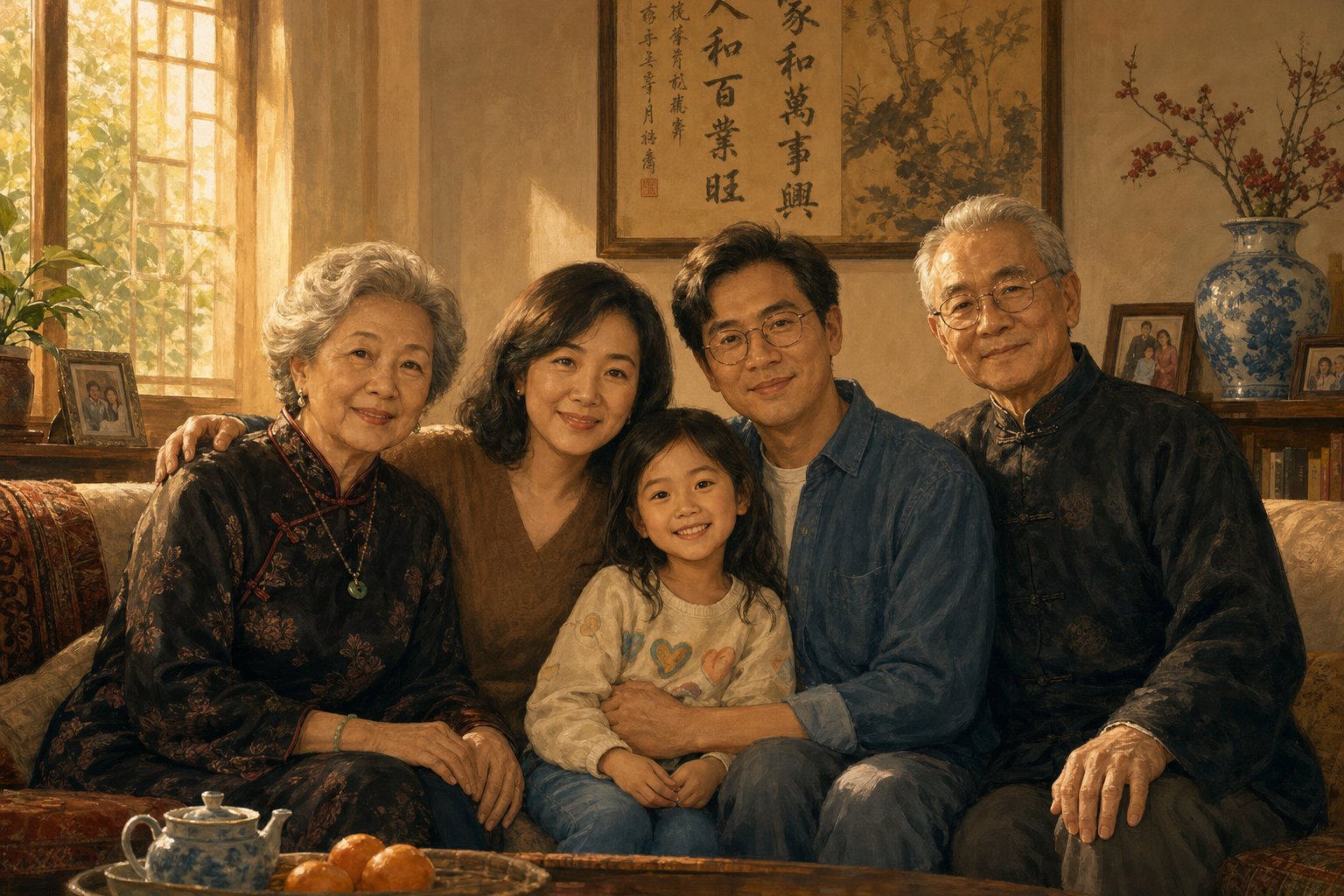
Each generation of Chinese Americans inherits a different relationship with naming. The first generation arrived with survival on their minds. The second generation tried to build bridges. The third and fourth generations are asking a different question entirely: what was lost, and can we get it back? The generational differences in chinese american names tell a story not just about individual families, but about how an entire community's relationship to assimilation has shifted over decades.
First-Generation Naming Survival Strategies
For first-generation immigrants, adopting an English name was often less a choice than a concession. Therapist Sam Louie, a first-generation Chinese immigrant from Hong Kong, describes how his parents acquired English names for him and his brothers. They approached the one white couple they knew and asked what would be nice names for their children in the U.S. "Without much hesitation, they responded, 'Let's go with Sam, Ken, and Fred!'" he writes. "So in the blink of an eye, our Chinese names were replaced."
There was no phonetic matching, no meaning alignment, no careful deliberation. The priority was simple: make it easy for Americans to say your name. Louie notes this was common practice among Asian students he grew up with. "Changing their ethnic name was a gesture of our willingness to adopt and adapt to American norms." Those who kept their ethnic names faced a real cost, the risk of being teased, overlooked, or marked as permanently foreign.
In professional settings, the pressure intensified. Louie describes colleagues in broadcasting who changed their names to sound more palatable to mainstream audiences. Seattle television anchor Siemny Chhuon was told by her boss that she had to change her last name to "Kim" because her Cambodian surname "wouldn't work for an anchor." No name change, no job. The message was clear: your heritage name is a liability.
This first-generation approach was not about identity exploration. It was about economic survival and social acceptance in a country that treated ethnic names as obstacles.
How Later Generations Reclaim Chinese Names
The generational progression of naming philosophies follows a recognizable arc. Each wave of Chinese Americans has approached naming with different priorities, shaped by the cultural climate they grew up in and the sacrifices they watched their parents make.
- First generation (immigrants arriving pre-1980s) - Adopted English names quickly, often chosen by non-Chinese acquaintances or employers. Chinese names were set aside for home use only. Priority: survival and assimilation.
- Second generation (children of immigrants, 1970s-1990s) - Parents carefully selected English names with phonetic or meaning connections to Chinese names. The dual-name system became intentional rather than improvised. Priority: bridging two worlds.
- Third generation (grandchildren of immigrants, 1990s-2010s) - Grew up comfortable in American spaces but increasingly curious about heritage. Some began using Chinese names in social settings or adding them to professional profiles. Priority: cultural reconnection.
- Fourth generation and beyond (2010s-present) - Raised during a period of increased Asian American visibility in media, politics, and culture. More likely to lead with Chinese names professionally or choose Chinese-first naming for their own children. Priority: cultural pride and reclamation.
The trend of going by your chinese name professionally reflects a broader cultural shift. Where earlier generations saw ethnic names as barriers to success, younger ABCs increasingly view them as assets, markers of authenticity and cultural depth. This is not happening in a vacuum. Increased Asian American representation in media, the success of films and shows featuring unapologetically Asian characters, and collective responses to anti-Asian discrimination have all contributed to a climate where reclaiming a Chinese name feels less risky and more empowering.
Reclaiming a chinese name as an adult ABC takes different forms. Some people start introducing themselves by their Chinese name in new social circles while keeping their English name at work. Others make the switch fully, updating email signatures, social media handles, and professional bios. A smaller number pursue legal name changes, formally restoring the Chinese name their parents gave them to its rightful place on official documents.
Louie himself reflects on this tension. "I haven't thought about reclaiming my Chinese name per se," he writes, "but what I can do is renounce the need to cater to what mainstream America wants of me." That sentiment captures where many ABCs land. Reclamation does not always mean changing your legal name. Sometimes it means refusing to apologize for the one you already have.
The cultural pride movements driving this shift are not asking ABCs to abandon their English names. They are asking a simpler question: why should anyone have to choose? The growing answer, across generations, is that they should not. Both names can exist fully, without one being treated as the "real" name and the other as a concession. That realization, hard-won across decades of assimilation pressure, is what makes the practical question of how to choose and use these names feel less like a burden and more like an opportunity.
Practical Guide to Choosing and Using ABC Names
Opportunity is the right word. Whether you are choosing a bilingual chinese english name for a newborn, deciding which name to lead with professionally, or reconnecting with a Chinese name you have not used in years, the process works best when it is intentional rather than reactive. Here is how to approach it.
Practical Tips for Choosing ABC-Friendly Names
If you are an ABC parent naming a child, you are essentially designing a name that needs to function in two linguistic ecosystems. That sounds daunting, but breaking it into clear considerations makes the process manageable.
- Test pronunciation across both languages. Say the full name aloud in English and in Mandarin or Cantonese. Does it flow naturally in both? A name that sounds elegant in one language but awkward in the other will create friction every time it is spoken.
- Check for unintended homophones. Chinese is a tonal language, and a romanized name that looks fine on paper might sound like an unfortunate word when spoken. As naming experts caution, the same pinyin syllables with different tones can mean wildly different things. Run your chosen name past several native speakers before committing.
- Consider the phonetic bridge. If you want the English and Chinese names to feel connected, look for overlapping sounds. "Lily" and "Li Li," "Grace" and "Ge Rui Si," "Andy" and "An Di" all create audible links that help a child feel like both names belong to the same person.
- Research character meanings thoroughly. Each character carries cultural weight. A chinese name meaning lookup should go beyond a simple dictionary definition. Look at how the character is used in literature, whether it carries gendered associations, and how it pairs with your surname tonally.
- Involve family elders. In Chinese naming tradition, grandparents and extended family often participate in choosing a child's name. This is not just about honoring tradition. Elders may know generational naming patterns or family taboos (like avoiding characters used by ancestors) that younger parents might overlook.
- Keep stroke count practical. A character with 25 strokes might carry a beautiful meaning, but your child will need to write it for decades. Modern parents increasingly balance elegance with everyday usability.
- Think about the name at every life stage. A name that sounds adorable for a toddler should still feel dignified on a business card at forty. Test it mentally across contexts: a classroom, a wedding invitation, a professional introduction.
What about the concept of an american born chinese name generator? Online tools exist that match English names to Chinese character equivalents based on phonetics or meaning. These can be useful starting points for brainstorming, but they should never be the final answer. A generator cannot account for family history, regional dialect, tonal clashes with your surname, or the subtle cultural connotations that only a native speaker would catch. Think of generators as inspiration, not authority. The real work happens in conversation with family and community.
Resources for Understanding Chinese Name Meanings
For ABC families wanting to research names systematically, several approaches work well. Online character dictionaries like MDBG and Pleco allow you to look up individual characters by meaning, pronunciation, or radical. You can search for characters that mean "wisdom" or "strength" and see every option available, along with stroke count and usage frequency.
Family records are another underused resource. If your family maintains a genealogy book or knows the generational poem (a traditional sequence of characters assigned to each generation), that poem can guide your character selection and connect your child to a lineage stretching back centuries.
For those considering a legal name change, whether adding a Chinese name or restoring one, the process varies by state but generally involves filing a petition with your local court. USA.gov outlines the steps: you file paperwork, may appear before a judge, and then notify agencies like the Social Security Administration, your state motor vehicle office, and the IRS. Having an updated Social Security card first makes subsequent changes easier, since other agencies verify names through SSA records. The legal name change chinese american process is straightforward, though it requires patience with bureaucracy.
Ultimately, the best tips for naming a chinese american baby come down to this: treat both names as equally real. Give the Chinese name the same care and visibility you give the English one. Write it on the nursery wall. Use it at home consistently. Teach your child what the characters mean and why you chose them. A name only carries power if it is spoken, known, and claimed. The dual-naming system works not when one name hides behind the other, but when both stand together as a complete expression of who someone is.
Frequently Asked Questions About ABC American Born Chinese Names
1. Do American Born Chinese people have two names?
Yes, most ABCs grow up with a dual-naming system. They carry an English legal name used in school, work, and public settings, alongside a Chinese given name used at home, with family, and during cultural events. The English name typically appears on the birth certificate, while the Chinese name may be listed as a middle name or exist only in spoken family use. This system allows ABCs to navigate both American mainstream society and their Chinese cultural community, switching between names depending on the social context.
2. How do Chinese American parents choose English names for their children?
ABC parents typically use one of several strategies: phonetic matching (choosing English names that sound similar to the Chinese name, like 'Lily' for 'Li Li'), meaning matching (selecting names with parallel significance, like 'Grace' for a character meaning elegance), ease of pronunciation across both languages, or cultural neutrality. Research shows Chinese Americans favor names like Amy, Grace, Vivian, Andrew, and Eric at rates far exceeding the general population, often because these names bridge both linguistic worlds effectively.
3. What do the character names mean in Gene Yang's American Born Chinese?
Gene Yang chose each name with symbolic precision. Jin Wang combines 'Jin' (gold, meaning value) with 'Wang' (king), representing inherent worth that society fails to recognize. Danny is a generically American name symbolizing cultural erasure and the desire to disappear into whiteness. Chin-Kee deliberately echoes a racial slur while also encoding 'relative' and 'key' in Chinese, foreshadowing that this character holds the key to Jin's identity acceptance. The Monkey King's rejection and eventual acceptance of his name parallels the ABC journey of self-acceptance.
4. Why are Chinese names spelled differently for the same surname character?
Different romanization systems create varied English spellings for identical Chinese characters. Families from mainland China use Hanyu Pinyin, Hong Kong families use Cantonese transliteration, and Taiwanese families may use Wade-Giles. The surname character for Huang can appear as 'Wong' (Cantonese), 'Wang' (some Mandarin contexts), or 'Huang' (standard Pinyin). The spelling permanently reflects the family's regional origin and immigration history, making it a heritage marker that tells when and where a family's American journey began.
5. How can I legally change or reclaim my Chinese name in the United States?
The legal name change process varies by state but generally involves filing a petition with your local court, potentially appearing before a judge, and then notifying government agencies. Start by updating your Social Security card first, as other agencies verify names through SSA records. You will also need to notify the DMV, IRS, banks, and employers. Many adult ABCs are pursuing this process as part of a broader cultural reclamation movement, restoring Chinese names to official documents after years of using only English names professionally.