Understanding Aesthetic Beauty in Chinese Girl Names
What separates a pretty name from one that feels like a brushstroke of poetry? In Chinese culture, the answer lives inside a single concept: 意境 (yìjìng). This term describes an integrated aesthetic realm where emotion, imagery, and philosophy merge into something greater than the sum of its parts. When applied to naming, yìjìng transforms a chinese female name from a simple label into a miniature work of art, one that carries atmosphere, feeling, and cultural memory in just two or three characters.
Imagine a name that paints a scene the moment you hear it. A name like 雨薇 (Yǔwēi, rain on ferns) or 清月 (Qīngyuè, clear moon) does not just identify a person. It evokes a mood, a season, a line of forgotten verse. That is the difference between choosing chinese girl names at random and selecting one with genuine aesthetic intention.
An aesthetic Chinese name achieves yìjìng when its visual form, sound, meaning, and literary echo work together to create a unified artistic impression, much like a landscape painting where brushwork, empty space, and ink tone produce a feeling beyond what is literally depicted.
What Makes a Chinese Name Aesthetic
Chinese names are more than labels. As naming traditions rooted in Confucian philosophy remind us, each name is composed of three inseparable elements: the character, the pronunciation, and the meaning. Parents selecting chinese names for girls weigh all three simultaneously, but aesthetic naming adds a fourth layer: poetic resonance. The result is a name that functions on multiple levels at once, rewarding both the ear and the eye.
The Four Dimensions of Name Beauty
Aesthetic chinese female names distinguish themselves across four dimensions:
- Visual beauty - The balance of strokes and radicals when a character is written. Some characters look graceful in calligraphy; others feel heavy or crowded. A name like 婉清 (Wǎnqīng) flows elegantly on paper because both characters share a balanced stroke architecture.
- Phonetic harmony - Mandarin has four tones, and the melody created by combining them determines whether a name sounds musical or flat. Tonal contrast between characters produces a pleasing rhythm, much like notes in a short melody.
- Semantic depth - Each character carries layered meanings. Girl chinese names with aesthetic quality use characters whose meanings interact, creating a compound image richer than either character alone. 梦兰 (Mènglán) does not just mean "dream" plus "orchid." It suggests dreaming of orchids, an allusion to virtue appearing in sleep.
- Literary resonance - The strongest chinese names female families choose echo classical poetry, historical texts, or cultural symbols. A name drawn from a Tang Dynasty poem carries centuries of association, giving it narrative weight no invented word can match.
These four dimensions do not operate in isolation. The most beautiful chinese girls names succeed because all four layers align, creating a name that looks graceful when written, sounds melodic when spoken, means something profound when understood, and connects to a living literary tradition when recognized.
Each dimension deserves closer attention. The visual layer, in particular, reveals how the physical structure of Chinese characters shapes the elegance a name carries on paper.
The Visual Art of Chinese Characters in Names
Every Chinese character is a small piece of architecture. Strokes rise, fall, sweep, and hook in patterns that create visual weight and balance on the page. When you choose chinese first names female families will use for a lifetime, the way those characters look when written matters as much as what they mean. A name is written thousands of times across a life: on school papers, wedding invitations, official documents, personal seals. Its visual impression accumulates.
So what makes one character look more elegant than another? The answer starts with radicals, the building blocks that give each character its internal structure.
How Radicals Shape Character Elegance
Radicals are the recurring components within Chinese characters. They signal meaning categories and, just as importantly, they determine how a character distributes its visual weight. Certain radicals produce characters that calligraphers and parents alike consider especially graceful for chinese given names female children carry into adulthood.
Four radicals stand out for the elegance they bring to naming characters:
- The jade radical (玉/王) - Characters built with this radical carry associations of preciousness and refinement. Names like 琳 (Lín, beautiful jade), 瑶 (Yáo, precious jade), and 璇 (Xuán, fine jade) share a left-side structure that creates visual balance. The radical's clean horizontal strokes anchor the character, while the right component adds complexity without clutter.
- The water radical (氵) - This three-dot left-side radical produces characters with a sense of flow and openness. Think of 澜 (Lán, ripples), 清 (Qīng, pure), and 漪 (Yī, water ripples). The three descending dots create a graceful vertical rhythm on the left, leaving space for the right component to breathe.
- The grass radical (艹) - Sitting atop a character like a crown, this radical gives names a natural, organic quality. Characters like 芷 (Zhǐ, a fragrant herb), 蕊 (Ruǐ, flower bud), and 莹 (Yíng, lustrous jade) feel open and airy because the radical spreads horizontally across the top, creating a canopy effect.
- The woman radical (女) - Found in many chinese female given names, this radical appears in characters specifically associated with feminine beauty: 婉 (Wǎn, graceful), 娴 (Xián, elegant), and 姝 (Shū, beautiful). The radical's sweeping lower stroke gives these characters a sense of movement and softness.
You'll notice that the most visually appealing chinese names and characters share a common trait: balanced distribution. The radical occupies one portion of the character's space while the phonetic or semantic component fills the rest, creating a harmonious whole rather than a cramped or lopsided form.
| Character | Pinyin | Radical | Stroke Count | Visual Quality |
|---|---|---|---|---|
| 琳 | Lín | 玉 (jade) | 12 | Balanced left-right structure; clean horizontal lines |
| 澜 | Lán | 氵 (water) | 15 | Flowing left dots; complex but open right side |
| 芷 | Zhǐ | 艹 (grass) | 7 | Light top canopy; simple, airy lower body |
| 婉 | Wǎn | 女 (woman) | 11 | Sweeping base stroke; rounded internal rhythm |
| 瑶 | Yáo | 玉 (jade) | 14 | Stable left anchor; dynamic right component |
| 莹 | Yíng | 艹 (grass) | 10 | Crowned top; luminous lower structure with symmetry |
| 娴 | Xián | 女 (woman) | 10 | Graceful base; balanced complexity |
In brush calligraphy, characters with a mix of sweeping strokes and delicate dots tend to look most graceful. A character like 霏 (Fēi, misty rain) combines the rain radical (雨) on top with a flowing lower section, producing a form that calligraphers describe as having both weight and lightness. Characters that are overly dense with strokes, like 鑫 (Xīn, 24 strokes), may carry fine meanings but feel visually heavy when written by hand. For chinese first names for girls, parents often favor characters in the 7 to 14 stroke range, where complexity and legibility find their sweet spot.
Single vs Double Character Given Names
Beyond individual character beauty, there is a structural choice that shapes how a name looks and feels: should the given name be one character or two?
Historically, single-character names dominated Chinese culture. The great Tang Dynasty poets, Li Bai (李白) and Du Fu (杜甫), both carried single-character given names. There is something undeniably bold about this approach. A name like 雪 (Xuě, snow) or 岚 (Lán, mountain mist) lands with the weight of a seal stamp. No ornamentation. Just essence.
Today, however, roughly 83% of people in China have two-character given names. The shift happened for both practical and aesthetic reasons. With common surnames like 王 (Wáng), 李 (Lǐ), and 张 (Zhāng) covering over 20% of the population, a single-character given name creates a high chance of duplication. Two characters open up thousands of unique combinations.
But the deeper reason is poetic. Two-character chinese first names girl families choose today allow compound imagery that a single character simply cannot achieve:
- 云帆 (Yúnfān) - "Cloud" plus "sail" creates the image of a sail catching wind among clouds, suggesting ambition and freedom. Neither character alone carries that narrative.
- 雨轩 (Yǔxuān) - "Rain" plus "pavilion" evokes sitting inside a pavilion listening to rainfall, a classic scene from Chinese painting.
- 明月 (Míngyuè) - "Bright" plus "moon" echoes countless lines of classical poetry, carrying centuries of literary association in two syllables.
Think of it this way: if single-character names are like haiku, concentrated and demanding attention, then double-character names are like a short melody. They have rhythm, movement, and room to tell a tiny story.
From a calligraphic perspective, two-character names also offer visual pairing opportunities. Parents can choose characters whose stroke densities complement each other. A complex character beside a simpler one, like 澜 (Lán, 15 strokes) paired with 心 (Xīn, 4 strokes), creates visual contrast that feels intentional and balanced on paper. Two equally dense characters can feel heavy; two equally sparse ones may feel insubstantial. The interplay between them is part of the art.
Whether you lean toward the classical confidence of a single chinese character female name or the layered poetry of a double-character combination, the visual dimension is only one piece of the puzzle. How those characters sound when spoken aloud, the tonal melody they create together, adds an entirely different layer of beauty to the name.
Tonal Harmony and Phonetic Flow in Name Selection
A name can look stunning on paper yet fall flat when spoken aloud. That is because mandarin chinese names carry a built-in melody. Every syllable in Mandarin is pronounced with one of four distinct tones: high and flat (first tone), rising (second tone), dipping or low (third tone), and falling (fourth tone). When you string two or three syllables together in a full name, those tones interact like notes in a short musical phrase. Get the combination right, and the name sings. Get it wrong, and it stumbles.
How Tones Create Musical Quality
The core principle is contrast. A name where both characters share the same tone can sound monotonous or, worse, physically awkward to pronounce. Two consecutive third tones trigger a mandatory tone change rule in Mandarin, where the first third tone shifts to a rising tone in natural speech. Two consecutive first tones produce a flat, droning quality with no melodic arc.
The most pleasing female mandarin names tend to pair contrasting tones. A falling tone followed by a rising tone creates a dramatic dip-and-lift. A high flat tone followed by a falling tone mimics the shape of a gentle sigh. These patterns give a name rhythmic movement, the same quality that makes classical Chinese poetry so musical when read aloud.
Consider these tonal pairings and how they feel:
- Tone 4 + Tone 2 (falling then rising) - Creates a dramatic valley shape. Example: 梦琳 (Mènglín). The voice drops then lifts, producing energy and elegance.
- Tone 1 + Tone 4 (high then falling) - A smooth descent from a sustained height. Example: 诗韵 (Shīyùn). Feels composed and graceful.
- Tone 2 + Tone 4 (rising then falling) - An arc that rises and resolves. Example: 岚月 (Lányuè). Sounds complete and balanced.
- Tone 1 + Tone 2 (high then rising) - A gentle upward drift. Example: 清然 (Qīngrán). Light and open.
Combinations to approach with care include Tone 3 + Tone 3 (which forces a pronunciation change) and Tone 4 + Tone 4 (which can sound abrupt or harsh). This does not mean these pairings are unusable, but they require more attention to the surrounding surname tone to maintain overall flow.
Pairing Given Names with Common Surnames
A given name never exists in isolation. The surname comes first in Chinese, so the tonal pattern of the full name starts with whatever tone the family name carries. Understanding chinese family names and meanings begins with recognizing that chinese last names for girls shape the phonetic canvas before the given name even enters the picture.
The three most common chinese surnames illustrate this perfectly:
- 王 (Wáng) - Second tone (rising)
- 李 (Lǐ) - Third tone (dipping)
- 张 (Zhāng) - First tone (high flat)
Each surname sets a different starting pitch. A given name that sounds beautiful after 张 (Zhāng) might feel less balanced after 李 (Lǐ). The goal is a three-syllable sequence where tones create variety without jarring shifts.
| Full Name | Pinyin | Tone Pattern | Phonetic Quality |
|---|---|---|---|
| 张语嫣 | Zhāng Yǔyān | 1-3-1 | Smooth arc: high start, dips low, returns high. Musical and balanced. |
| 李清漪 | Lǐ Qīngyī | 3-1-1 | Low start lifts to sustained height. Feels open and airy. |
| 王梦瑶 | Wáng Mèngyáo | 2-4-2 | Rise, fall, rise. A pleasing wave pattern with strong contrast. |
| 张雨霏 | Zhāng Yǔfēi | 1-3-1 | Mirrors the arc of 张语嫣. Gentle dip creates movement. |
| 李诗韵 | Lǐ Shīyùn | 3-1-4 | Rises from low, sustains, then falls decisively. Elegant resolution. |
| 王芷萱 | Wáng Zhǐxuān | 2-3-1 | Gradual upward drift after initial rise. Soft and lyrical. |
Notice how the most harmonious mandarin names female parents favor tend to avoid repeating the surname's tone in the immediately following character. 王雨薇 (Wáng Yǔwēi) works because the second tone of 王 contrasts with the third tone of 雨, then resolves upward with the first tone of 薇. A common chinese name like 王婉婉 (Wáng Wǎnwǎn), while meaningful, forces two consecutive third tones that shift pronunciation in speech.
When evaluating chinese female names and surnames together, try speaking the full name aloud three times quickly. If it flows without your tongue tripping or your pitch feeling stuck on one level, the tonal architecture is working. The best names feel effortless to say, as though the syllables were always meant to sit together.
Tonal melody gives a name its voice. But what gives it soul is meaning, the imagery and symbolism each character carries. Among the most evocative categories in Chinese naming tradition, celestial imagery offers names that reach beyond the everyday into something luminous.
Celestial and Moon-Inspired Names with Poetic Depth
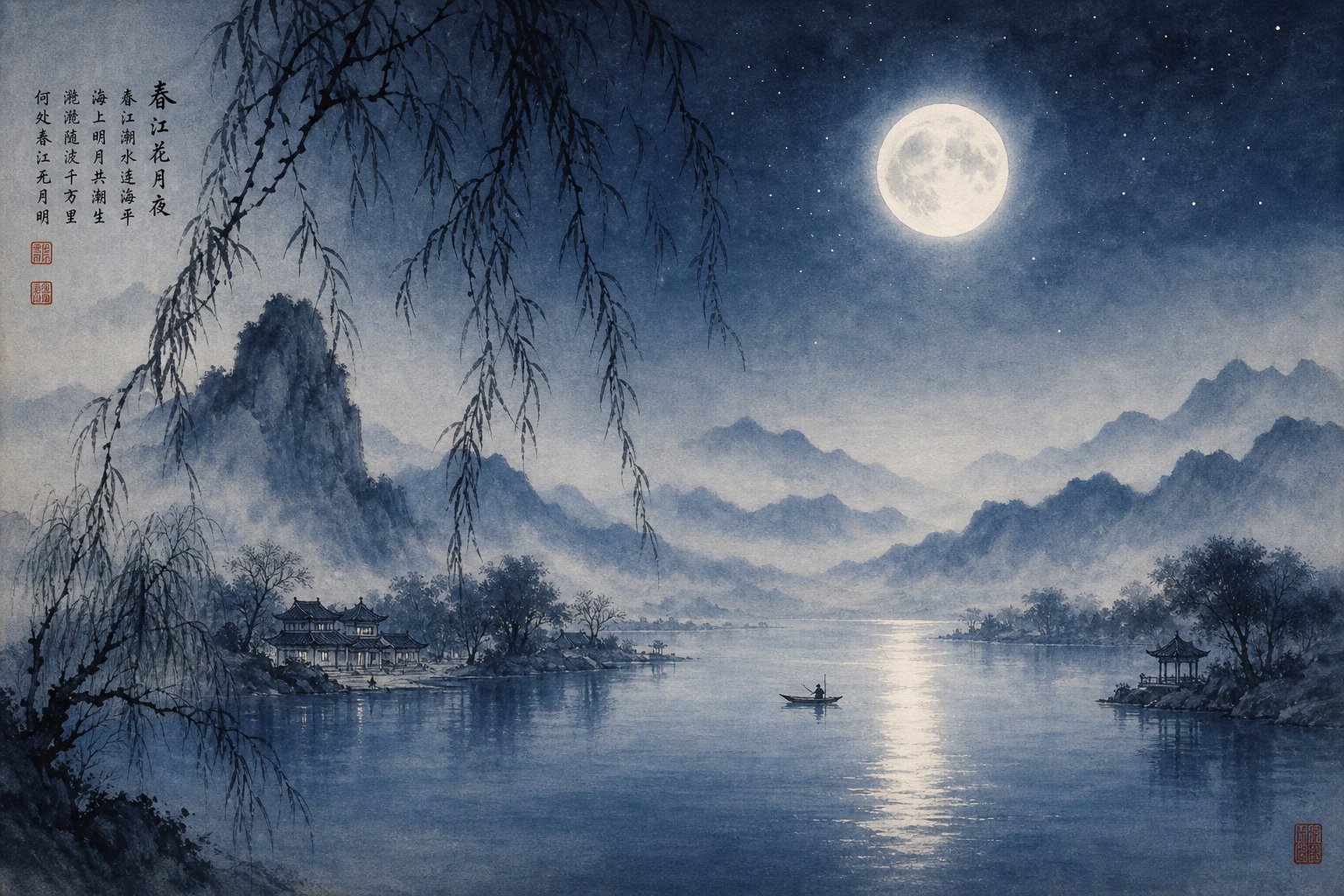
The moon has occupied the emotional center of Chinese poetry for over two thousand years. It represents longing, reunion, beauty beyond reach, and the passage of time. For parents searching for unique chinese girl names, celestial imagery offers something rare: names that carry both visual splendor and centuries of literary weight. These are not invented words. They are fragments of a living poetic tradition, each one a doorway into a specific mood or scene from classical verse.
Many ancient chinese girl names drew from the night sky because celestial bodies symbolized qualities parents wished for their daughters: luminosity, constancy, grace that transcends the ordinary. That tradition remains deeply alive today.
Moon and Celestial Imagery Names
The following names evoke moonlight, starlight, and the vast beauty of the night sky. Each carries layered meaning that goes far beyond its literal translation.
- 月华 (Yuèhuá) - Literal meaning: moonlight splendor. The character 华 suggests radiance and flourishing, so the compound paints an image of the moon at its most luminous, casting silver across a still landscape. In classical usage, 月华 described the halo effect around a full moon, a phenomenon ancient poets considered auspicious.
- 星澜 (Xīnglán) - Literal meaning: starlit ripples. This name merges the sky with water, imagining stars reflected on a lake's surface. The character 澜 (ripples, waves) adds movement and depth, suggesting a personality that is both brilliant and fluid.
- 婵娟 (Chánjuān) - Literal meaning: graceful beauty, often used poetically to refer to the moon itself. Su Shi immortalized this word in his Song Dynasty masterpiece "Prelude to Water Melody" (水调歌头) with the line "但愿人长久, 千里共婵娟," meaning "I only pray our life be long, and our souls together heavenward fly." The name carries wishes for enduring connection and shared beauty across distance.
- 明月 (Míngyuè) - Literal meaning: bright moon. Deceptively simple, this name echoes Li Bai's most famous Tang Dynasty poem, "A Tranquil Night" (静夜思), where the bright moon triggers a wave of homesickness. As a name, 明月 suggests clarity, openness, and emotional depth.
- 云霄 (Yúnxiāo) - Literal meaning: cloud heavens. This name points upward toward the highest reaches of the sky. In Chinese mythology, the celestial realm above the clouds is where immortals dwell. The name suggests aspiration and a spirit unconstrained by the mundane.
- 霜月 (Shuāngyuè) - Literal meaning: frost moon. Li Shangyin's Tang Dynasty poem "Moon and Frost" (霜月) describes the Moon Goddess and Frost Goddess as cold-proof beauties who "before the crystal palace in beauty they vie." This name captures that image of cool, untouchable elegance.
- 素娥 (Sùé) - Literal meaning: pure beauty. A classical literary name for Chang'e, the moon goddess herself. Among old chinese female names, this one carries mythological weight. It suggests purity, solitude, and otherworldly grace, qualities associated with chinese princess names from ancient court poetry.
Names Inspired by Night Sky Poetry
What transforms a beautiful chinese girl name into something unforgettable is its story. The strongest ancient chinese names girl families passed down were not chosen from dictionaries. They were lifted from specific lines of verse, carrying the emotional context of that poem into everyday life.
"I raise my cup to invite the Moon who blends her light with my Shadow and we're three friends." - Li Bai, "Drinking Alone with the Moon"
Li Bai's image of the moon as a companion inspired names that treat moonlight as a living presence rather than a distant object:
- 月影 (Yuèyǐng) - Moon shadow. Drawn from Li Bai's poem where his own shadow and the moon become his drinking companions. The name suggests quiet companionship and the beauty found in solitude.
- 清辉 (Qīnghuī) - Pure radiance. A term poets used to describe moonlight washing over a landscape. As a name, it evokes someone whose presence illuminates without overwhelming.
- 碧霄 (Bìxiāo) - Jade-blue sky. This name captures the deep color of a clear night sky, the kind that makes stars look close enough to touch. The character 碧 adds a jewel-like quality, suggesting preciousness.
- 瑶光 (Yáoguāng) - Jade light. Also the Chinese name for a star in the Big Dipper constellation. This ancient chinese girls names tradition of naming daughters after specific stars gave each child a fixed point in the heavens, a permanent celestial identity.
These names share a quality that sets celestial imagery apart from other naming categories: they point toward something vast and enduring. A flower blooms and fades. The moon returns every night. For parents who want a name that feels timeless rather than trendy, the night sky offers imagery that has moved Chinese poets from the Book of Songs through the Tang and Song dynasties to the present day.
Of course, the sky is not the only source of timeless beauty in Chinese aesthetics. The natural world closer to earth, particularly the language of flowers and plants, holds an equally rich tradition of poetic naming, one where each blossom carries its own symbolic vocabulary.
Floral and Botanical Names Rooted in Nature
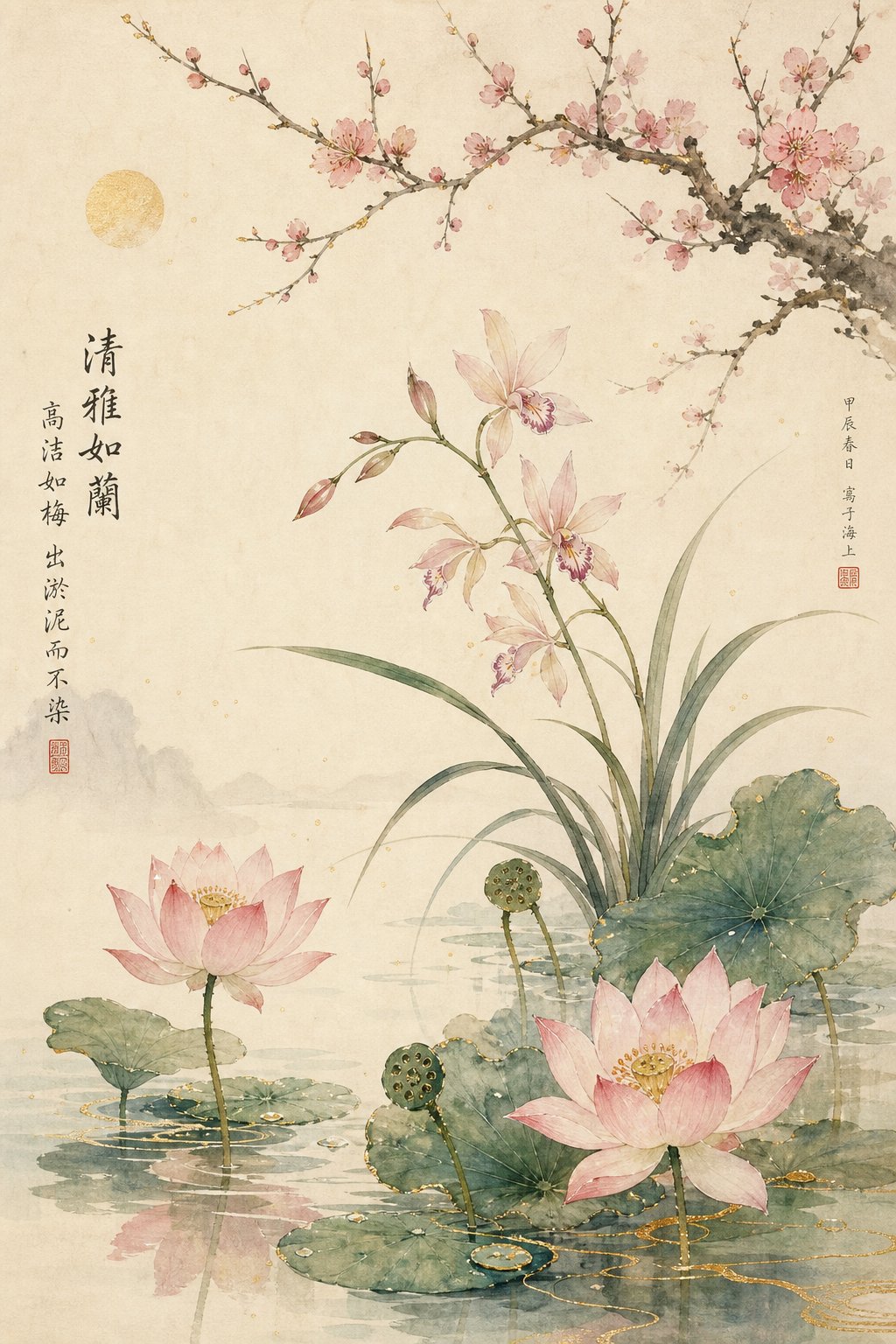
Flowers in Chinese culture are never just flowers. Each blossom carries a moral philosophy, a seasonal identity, and centuries of poetic association. When parents choose chinese flower names girl children will carry through life, they are encoding aspirations into a single character: purity, resilience, quiet refinement, or courageous beauty. This is why floral imagery remains one of the richest sources of beautiful chinese names for girl with meaning, offering depth that purely abstract characters cannot match.
As Chinese naming traditions rooted in nature remind us, a child is not just named after a plant. She is given the quality that plant represents. A lotus name carries purity. An orchid name carries refinement. A plum blossom name carries defiance against hardship. The flower is the vehicle; the virtue is the destination.
Floral Names from Classical Tradition
Five flowers dominate the classical naming tradition, each tied to a specific season and a distinct set of values. These are not trendy inventions. They appear in the Book of Songs, Tang Dynasty verse, and Song Dynasty ci poetry, giving them the kind of literary resonance that makes feminine chinese names feel timeless rather than decorative.
| Flower | Name | Pinyin | Meaning Layers | Season |
|---|---|---|---|---|
| Lotus | 荷韵 | Héyùn | Lotus rhythm; purity rising above murky origins; grace under pressure | Summer |
| Lotus | 莲清 | Liánqīng | Lotus purity; moral integrity untouched by surroundings | Summer |
| Orchid | 兰馨 | Lánxīn | Orchid fragrance; inner virtue that radiates without seeking attention | Spring |
| Orchid | 幽兰 | Yōulán | Secluded orchid; quiet beauty blooming unseen in a valley | Spring |
| Plum Blossom | 梅雪 | Méixuě | Plum and snow; courage blooming in winter's coldest days | Winter |
| Plum Blossom | 寒梅 | Hánméi | Cold plum; defiant beauty that thrives in adversity | Winter |
| Osmanthus | 桂瑶 | Guìyáo | Osmanthus jade; precious sweetness associated with the moon palace | Autumn |
| Osmanthus | 丹桂 | Dānguì | Red osmanthus; achievement and scholarly success | Autumn |
| Wisteria | 紫萝 | Zǐluó | Purple vine; cascading elegance and gentle persistence | Late Spring |
| Wisteria | 藤月 | Téngyuè | Vine moon; intertwining beauty under moonlight | Late Spring |
Each of these beautiful chinese names works on multiple levels simultaneously. Take 荷韵 (Héyùn): the character 荷 carries the grass radical (艹) on top, giving it an airy, crowned appearance in calligraphy, while 韵 (rhythm, charm) adds a musical quality. Together they suggest someone whose grace has a natural cadence to it, unhurried and self-possessed.
The lotus holds particular weight in Chinese philosophy. As one naming resource explains, the lotus "rises from murky pond bottoms, travels through water, and emerges pristine," mirroring the human journey through difficulty toward wisdom. Names containing 莲 (lián) or 荷 (hé) carry this entire philosophical framework in a single syllable. Among pretty female chinese names, few categories offer this combination of visual elegance and moral depth.
The orchid deserves special attention for its connection to the phrase 兰心蕙质 (lán xīn huì zhì), describing someone with a pure heart and refined character. When parents choose 兰 for their daughter, they are drawing on this idiom's full weight. The chinese name for beautiful character, in this tradition, is not about appearance. It is about inner worth that does not require external validation.
Botanical Names Trending in Modern China
The 古风名字 (gǔfēng míngzì, classical-style names) movement among young Chinese parents has revived floral naming with fresh energy. As cultural sociologist Xu Shumin noted, young parents are "reclaiming traditional Chinese culture as a living aesthetic in everyday life." Naming a daughter after a classical flower is one expression of this cultural identity, much like wearing Hanfu or studying calligraphy.
What makes the modern revival different from older traditions is the emphasis on compound imagery. Rather than using a single flower character, today's parents combine botanical elements with atmospheric or emotional characters to create layered scenes:
- 芷若 (Zhǐruò) - Angelica and iris. Two fragrant herbs combined, evoking a field of wildflowers. The name appears in classical poetry as a symbol of natural, unadorned beauty. Both characters carry the grass radical, creating visual harmony in calligraphy.
- 梅映 (Méiyìng) - Plum blossom reflection. Imagine plum blossoms reflected in still water. The character 映 (reflect, shine upon) adds a mirror-like quality, doubling the beauty.
- 兰亭 (Lántíng) - Orchid pavilion. This name references Wang Xizhi's famous calligraphy masterpiece, the Preface to the Orchid Pavilion. It connects the bearer to both botanical beauty and the highest achievement in Chinese brush art.
- 桂语 (Guìyǔ) - Osmanthus whisper. A name that imagines osmanthus flowers speaking softly in an autumn breeze. Among cute female chinese names trending in recent years, this one balances sweetness with literary sophistication.
- 荷风 (Héfēng) - Lotus wind. The breeze that carries lotus fragrance across a summer pond. Simple, evocative, and deeply chinese feminine names in character while avoiding anything overly ornamental.
These names succeed because they do not merely label a flower. They place it inside a scene, a moment, a sensory experience. The flower becomes a setting rather than a subject, and the person carrying the name inhabits that setting as its central presence.
Floral names ground their beauty in the tangible world: petals you can touch, fragrance you can smell, seasons you can feel changing. Yet Chinese aesthetics also prizes what cannot be grasped, the ephemeral qualities of water, mist, and rain that dissolve the moment you try to hold them. That atmospheric tradition offers an entirely different palette for naming.
Names Evoking Water, Mist, and Classical Poetry
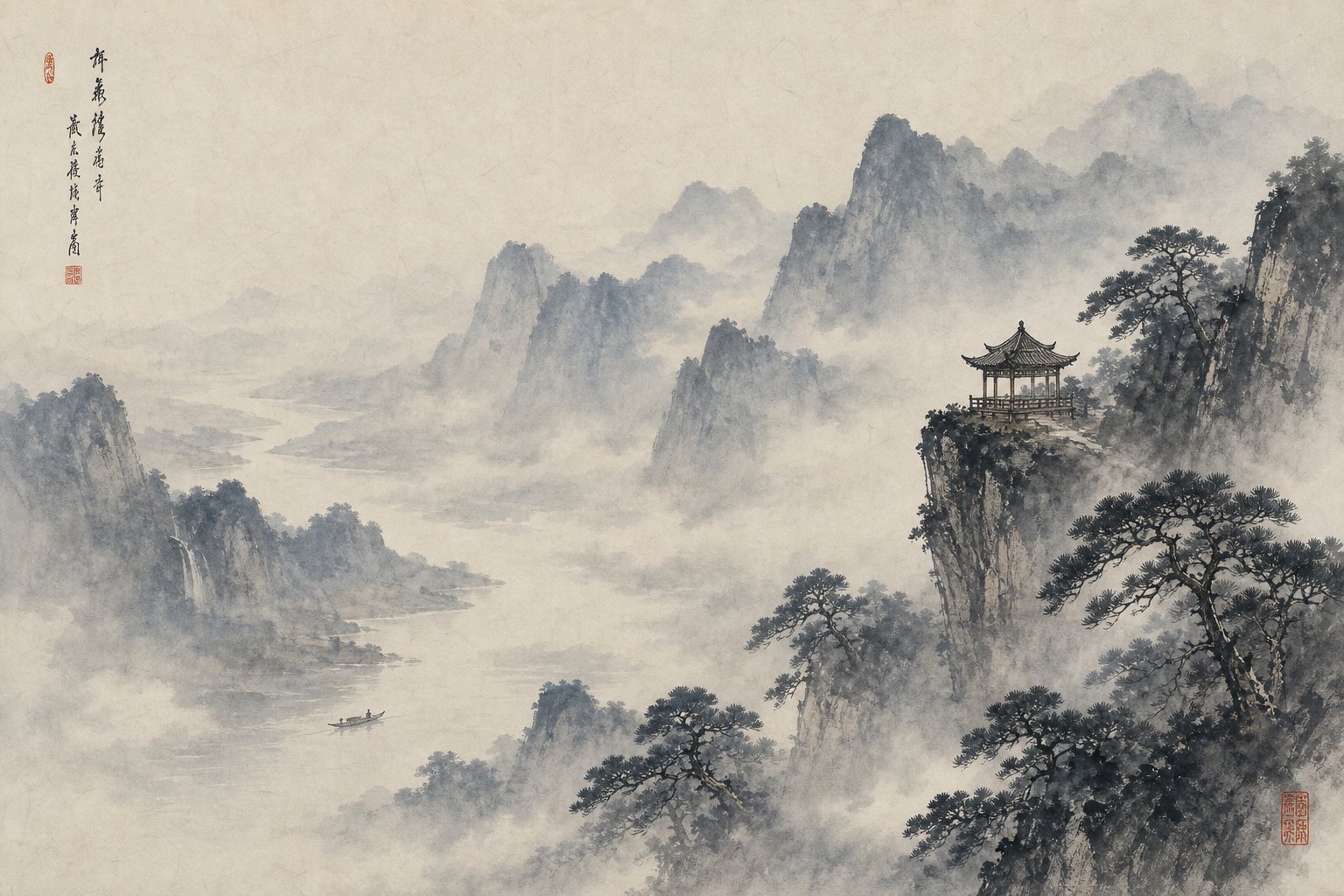
Water in Chinese ink-wash painting is never just water. It is absence made visible, the empty space where the brush did not touch but meaning still lives. That same philosophy shapes some of the most atmospheric chinese girl names and meanings you will encounter. These names capture what cannot be held: mist dissolving over a river at dawn, rain heard but not seen, ripples fading before you can count them. They belong to the tradition of 留白 (liúbái, intentional emptiness), where what is suggested matters more than what is stated.
For parents drawn to chinese names with meaning that feels ethereal rather than solid, water and mist imagery offers a naming palette unlike any other. These characters evoke mood over object, atmosphere over definition.
Water and Mist Imagery Names
The following names draw from the visual language of Chinese landscape painting, where mountains emerge from fog and rivers vanish into cloud. Each one reads like a scene compressed into two characters.
- 清漪 (Qīngyī) - Clear ripples. The character 清 (pure, clear) paired with 漪 (gentle ripples on water) creates an image of transparent water disturbed by the lightest touch. Both characters carry the water radical (氵), giving the name visual cohesion in calligraphy. The chinese name meaning here suggests clarity of spirit combined with subtle emotional depth.
- 雨霏 (Yǔfēi) - Misty rain. The character 霏 describes rain so fine it resembles fog, the kind that does not fall so much as float. This name evokes the landscapes of Jiangnan, where rivers and sky blur into a single wash of grey and silver. It appears in the Book of Songs (诗经) in the line "昔我往矣, 杨柳依依。今我来思, 雨雪霏霏," connecting it to one of the oldest poetic traditions in Chinese literature.
- 烟岚 (Yānlán) - Smoke mist over mountains. Imagine the moment when morning fog clings to a mountain range, making peaks look like islands floating in cloud. 烟 (smoke, haze) combined with 岚 (mountain mist) produces a name that feels like gazing at a Song Dynasty landscape scroll.
- 澄溪 (Chéngxī) - Limpid stream. The character 澄 means to settle, to become clear, describing water after sediment sinks and transparency returns. Paired with 溪 (stream), it suggests someone whose presence brings calm and clarity to those around her.
- 潇湘 (Xiāoxiāng) - A poetic name referencing the Xiao and Xiang rivers in Hunan province, famous in Chinese art as subjects of the "Eight Views of Xiaoxiang" painting tradition. The name carries associations of melancholy beauty, autumn rain, and artistic sensitivity. Among ancient chinese names, few carry as much landscape-painting resonance.
- 沐晴 (Mùqíng) - Bathed in sunlight. The character 沐 (to bathe, to be immersed) paired with 晴 (clear sky after rain) captures that specific moment when clouds break and light floods a rain-washed world. Fresh, luminous, and full of renewal.
- 涟漪 (Liányī) - Rippling waves. Both characters describe the concentric circles water makes when disturbed. As a name, it suggests someone whose influence spreads outward gently, touching others without force. The repetition of the water radical in both characters creates a visually unified pair.
You will notice these names share a quality that sets them apart from floral or celestial imagery: impermanence. Mist lifts. Ripples fade. Rain stops. The beauty they name is transient by nature, and that transience is precisely what makes them feel so alive. In chinese names meaning and mood often intertwine this way, where the emotional resonance of a name matters as much as its dictionary definition.
Names Born from Classical Poetry
Some of the most powerful chinese names and meanings trace directly to specific lines of verse. When a parent lifts a name from a poem, the child carries not just two characters but an entire emotional scene, a context that anyone familiar with the source will immediately recognize.
The Book of Songs (诗经), compiled around 600 BCE, remains the oldest and most respected source for naming. Its language is direct, musical, and rich with natural imagery:
"蒹葭苍苍, 白露为霜。所谓伊人, 在水一方。" - The reeds are grey and vast, white dew has turned to frost. The one I seek stands beyond the water's edge. (Book of Songs, "Jianjia")
From this single poem come several names still used today:
- 白露 (Báilù) - White dew. The image of dew forming at dawn, fragile and luminous. Also the name of a solar term in the traditional Chinese calendar marking early autumn, giving it seasonal weight.
- 伊人 (Yīrén) - That person, the beloved. Though less common as a formal given name, 伊 alone appears frequently in chinese names female and meanings databases as a character suggesting elegance and gentle longing.
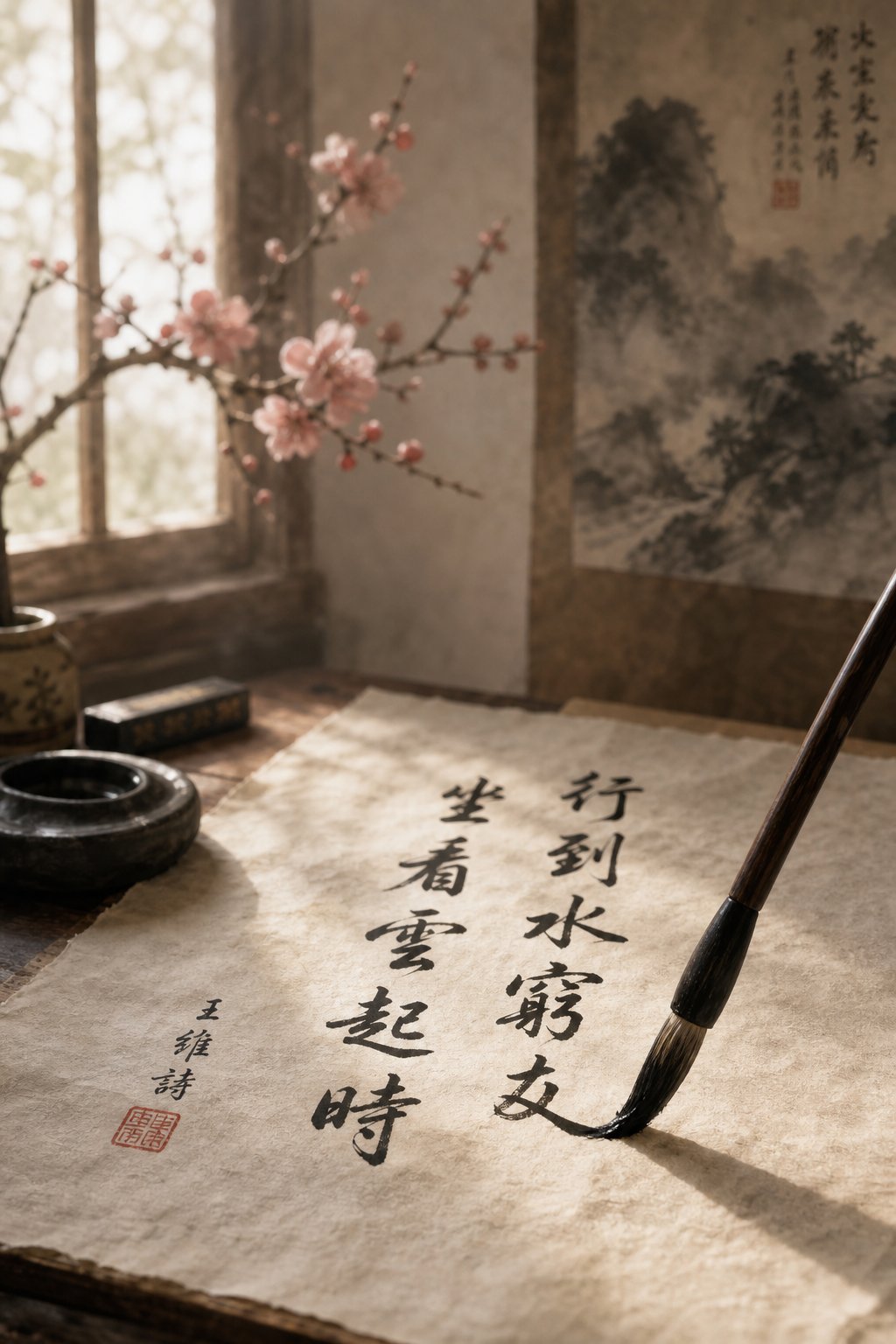
Tang Dynasty poetry offers equally rich material. Wang Wei, the poet-painter whose verses read like ink-wash landscapes, inspired names that blur the line between word and image:
"明月松间照, 清泉石上流。" - Bright moon shines through pines, clear spring flows over stones. (Wang Wei, "Mountain Retreat in Autumn")
- 清泉 (Qīngquán) - Clear spring. Drawn directly from Wang Wei's couplet, this name carries the stillness of a mountain hermitage. It suggests purity of purpose and a life lived close to nature's rhythms.
- 松月 (Sōngyuè) - Pine moon. Combining two images from the same line, this name evokes moonlight filtering through pine branches, a scene of solitude and peace.
Song Dynasty ci poetry, with its longer lyrical forms, provides names with more emotional complexity:
"寻寻觅觅, 冷冷清清, 凄凄惨惨戚戚。" - Searching and seeking, cold and desolate, sorrowful and wretched. (Li Qingzhao, "Slow, Slow Tune")
Li Qingzhao, China's most celebrated female poet, inspired a different tradition of naming. Her pen name itself, 清照 (Qīngzhào, clear illumination), has become a name given to daughters in her honor. Other names drawn from her work include:
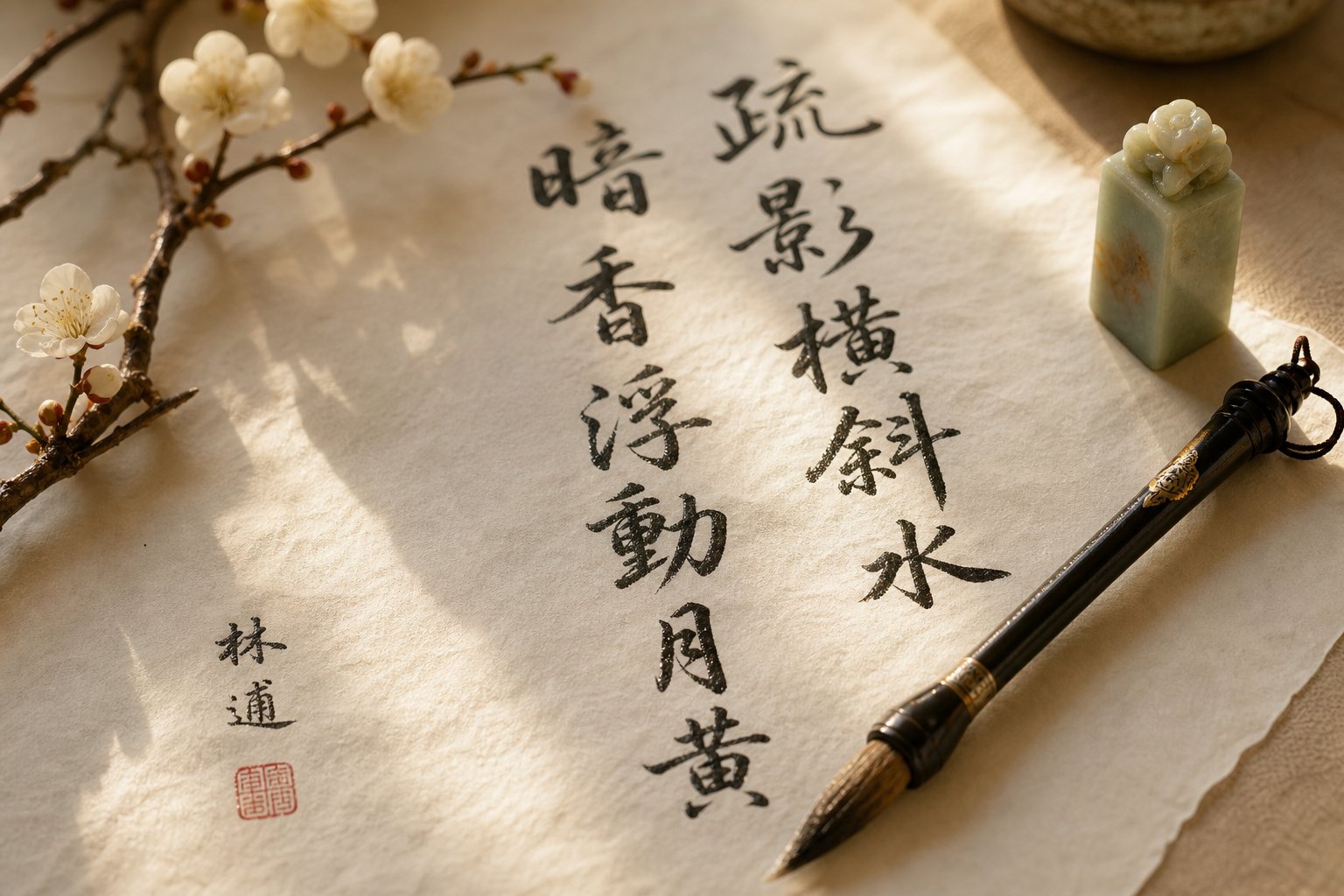
- 疏影 (Shūyǐng) - Sparse shadows. From her poem describing plum blossoms casting thin shadows in moonlight. The name suggests understated beauty, the kind that reveals itself slowly.
- 暗香 (Ànxiāng) - Hidden fragrance. Also from plum blossom poetry, describing scent that arrives before you see the flower. A name for someone whose qualities are felt before they are seen.
What makes poetry-sourced names so compelling is their built-in narrative. When someone recognizes the source, the name opens like a door into a complete emotional world. The bearer does not just have a name. She has a story, a season, a landscape, and a feeling, all compressed into two characters that chinese name meanings alone cannot fully capture.
These literary names carry undeniable gravitas, but they also raise a practical question. In a world where names must function across classrooms, offices, and international borders, how do parents balance poetic beauty with everyday usability? The answer lies in a growing category of names that manage to be both classically rooted and thoroughly modern.
Popular Aesthetic Names for Modern Life
Poetry is one thing. Daily life is another. A name might echo a Tang Dynasty masterpiece, but it also needs to work on a school roster, a passport, and a video call with colleagues in three time zones. The most common chinese girl names succeeding right now manage both: they carry classical beauty without requiring a literature degree to appreciate.
Popular Names with Timeless Aesthetic Appeal
What makes certain popular chinese names endure while others fade after a single generation? Staying power comes from a combination of easy pronunciation, positive meaning accessible to any native speaker, and characters simple enough to write without hesitation. These names are chinese names popular across regions precisely because they balance depth with approachability.
Based on recent newborn name data released by provincial authorities across China, the following popular chinese female names consistently appear on trending lists while retaining genuine aesthetic quality:
- 语桐 (Yǔtóng) - Words and paulownia tree. A name suggesting eloquence sheltered by something enduring. The paulownia is associated with the phoenix in Chinese mythology, adding a layer most people sense even without knowing the reference.
- 芷晴 (Zhǐqíng) - Fragrant herb under clear skies. Bright, optimistic, and visually balanced with the grass radical crowning the first character.
- 诗涵 (Shīhán) - Poetry and depth. Among the most popular chinese names for women born in the last decade, this name directly announces its literary aspiration while remaining easy to pronounce across dialects.
- 梓萱 (Zǐxuān) - Catalpa tree and daylily. Two botanical characters that pair beautifully in calligraphy, with complementary stroke densities.
- 雨桐 (Yǔtóng) - Rain on paulownia. A scene-painting name that evokes the sound of raindrops on broad leaves, one of the classic images in Chinese poetry.
- 欣妍 (Xīnyán) - Joyful beauty. Direct and warm, this name works well internationally because both syllables are easy for non-Mandarin speakers to approximate.
- 思颖 (Sīyǐng) - Thoughtful and talented. A name that values intellect, carrying a modern sensibility while using characters with long literary histories.
- 晨曦 (Chénxī) - Morning light. Universally understood imagery that translates emotionally across cultures without explanation.
You will notice these typical chinese names share a pattern: each uses characters familiar enough that any Chinese speaker immediately grasps the meaning, yet the combinations still create a specific image or feeling. They are not generic. They are accessible.
The Classical Revival in Modern Chinese Naming
The 古风 (gǔfēng, classical-style) movement explains why so many of the most popular chinese names today sound like they belong in a period drama. As cultural sociologist Xu Shumin observed, post-1990 generation parents live at the intersection of technological advancement and traditional cultural revival. Naming a child with classical allusions is "another form of expressing their cultural identity," much like wearing Hanfu or practicing calligraphy.
Names like 砚舟 (Yànzhōu, inkstone boat), drawn from Northern Song poet Zeng Gong's verse, and 锦程 (Jǐnchéng, brocade journey), rooted in the idiom "前程似锦," have appeared on trending newborn name lists across multiple provinces. These names carry poetic weight yet function smoothly in everyday conversation, proving that classical resonance and modern usability are not opposing forces.
For families navigating bilingual environments, the most successful names share practical traits: two to three syllables that non-Chinese speakers can approximate, characters without obscure or ambiguous meanings, and tonal patterns that sound natural at conversational speed. A name like 清雅 (Qīngyǎ, pure elegance) works internationally because its sounds map loosely onto familiar English phonemes, and its meaning translates without losing its essence.
Popularity does not diminish aesthetic value. It confirms it. When thousands of parents independently arrive at the same name, that convergence signals something real: a name that resonates across individual taste and regional difference, carrying beauty that communicates universally within the culture.
Still, choosing from popular lists is only one path. For diaspora families and multicultural households, the process involves additional layers of consideration, from dialect pronunciation to cross-cultural legibility, that shape the decision in ways unique to their experience.
Choosing Aesthetic Chinese Names Across Cultures
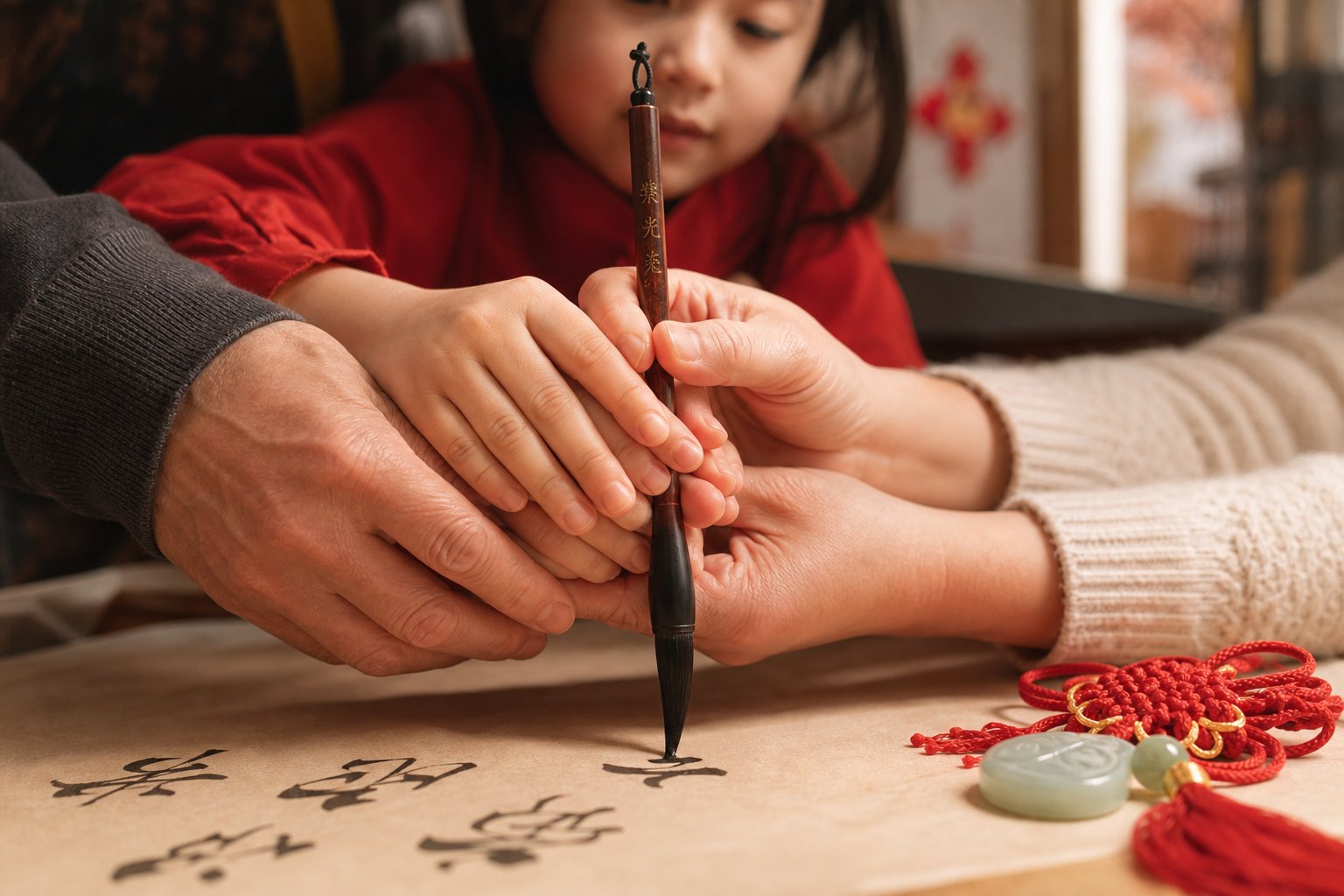
A name chosen in Shanghai and a name chosen in San Francisco face different realities. For chinese american girl names, the challenge is not simply finding something beautiful. It is finding something that honors a cultural lineage while functioning gracefully in a world where teachers, friends, and colleagues may never have encountered a tonal language. Diaspora families and multicultural households navigate this tension every time they sit down with a naming dictionary, balancing heritage with daily practicality.
The good news: aesthetic quality and cross-cultural usability are not opposites. Many of the most poetic names in Chinese tradition happen to contain sounds that English speakers can approximate comfortably. The key is knowing what to look for and what to verify before committing a name to a birth certificate.
Guidance for Diaspora and Multicultural Families
Chinese American naming practices have evolved significantly over generations. Earlier immigrants often adopted English names entirely, sometimes losing their Chinese given names within a single generation. Today, many asian american girl names reflect a deliberate reclaiming of heritage. Parents give their children both an English legal name and a Chinese name used within the family, or they choose a Chinese name that also functions as the child's primary name in English-speaking settings.
For families where one or both parents are not native Chinese speakers, the process requires extra care. A character that looks elegant on paper might carry an unintended secondary meaning in a regional dialect, or its pronunciation might sound uncomfortably close to an unflattering word in Cantonese even though it works perfectly in Mandarin. As the Asia Media Centre explains, the character 王 alone is pronounced Wang in Mandarin, Wong in Cantonese, Ong in Hokkien, and Heng in Teochew. Given names face the same variability.
This is why verification matters. A name is not just its Mandarin pronunciation. It lives across dialects, across written and spoken contexts, and across cultural associations that only native speakers can fully confirm.
Here is a practical checklist for families choosing an aesthetic Chinese name from outside mainland China:
- Verify pronunciation across dialects - If your family has Cantonese heritage, check how the name sounds in Cantonese, not just Mandarin. Female cantonese names can sound dramatically different from their Mandarin equivalents. A name beautiful in one dialect may be awkward or carry negative associations in another.
- Consult a native speaker for hidden meanings - Characters can carry slang meanings, homophone problems, or cultural associations that dictionaries do not capture. As Temple University's Center for Chinese Language Instruction notes, even a character pronounced "chou" is avoided in names because it sounds too close to characters meaning "ugly" or "bad smell," regardless of the specific character's actual meaning.
- Test the full name aloud - Say the surname and given name together at conversational speed, three times quickly. If your tongue trips or the tones collapse into each other, the combination needs adjustment.
- Check stroke complexity for daily writing - A child will write their name thousands of times. Characters above 15 strokes can frustrate young writers, especially those learning Chinese as a heritage language rather than a first language.
- Consider how the name transliterates - Some pinyin spellings confuse English speakers. Names starting with Q, X, or Zh require constant pronunciation correction. Names like 明 (Míng), 兰 (Lán), or 美 (Měi) map more intuitively onto English phonetics.
- Confirm the name does not duplicate a famous figure inappropriately - Naming a child 清照 (Qīngzhào) after Li Qingzhao is a tribute. But some historical or political names carry weight that could feel presumptuous or attract unwanted attention.
- Ensure both characters carry independently positive meanings - In compound names, each character should stand on its own without negative readings. If someone only sees or hears one character in isolation, it should still feel appropriate.
Choosing Names That Honor Chinese Heritage
For asian american names girl families select today, the most successful choices tend to share a few traits. They are phonetically accessible without being anglicized. They carry meaning that can be explained in a sentence to non-Chinese friends. And they connect to a tradition the family genuinely values, whether that is classical poetry, a grandparent's dialect, or a specific cultural symbol.
Consider these names that bridge cultures while maintaining aesthetic integrity:
- 美兰 (Měilán) - Beautiful orchid. Both syllables are easy for English speakers to pronounce. The meaning translates cleanly, and the orchid symbolism carries across cultures. A strong choice for chinese american names girl families want to feel natural in both languages.
- 安琪 (Ānqí) - Peaceful jade. Phonetically close to "Angie" in English, making it function as a dual-purpose name without sacrificing Chinese meaning. The character 琪 (fine jade) carries the jade radical, connecting to centuries of naming tradition.
- 明月 (Míngyuè) - Bright moon. Universally understood imagery. The sounds are clean and open, easy to say in any accent. The literary associations run deep for those who know them, yet the name needs no explanation for those who do not.
- 雅文 (Yǎwén) - Elegant literature. A name that announces its values directly. Both characters are common enough to avoid confusion, and the combination works well as an asian girl name in international settings because its sounds do not require unfamiliar phonemes.
- 嘉琳 (Jiālín) - Good jade. Phonetically similar to common English names, making it easy for non-Chinese speakers to remember and pronounce correctly. The meaning layers goodness with preciousness.
One approach many american chinese girl names reflect is choosing characters that echo the sound of an English name while carrying independent Chinese meaning. This is not mere transliteration. Done well, it creates a name that belongs fully to both languages. 安娜 (Ānnà) is not just a phonetic copy of "Anna." The characters mean "peaceful" and "graceful," giving the name its own Chinese identity that happens to sound familiar in English.
For families exploring cantonese girl names specifically, the tonal system differs from Mandarin, with six to nine tones depending on the analysis. A name that flows beautifully in Mandarin's four-tone system might land differently in Cantonese. If your family speaks Cantonese at home, prioritize how the name sounds in that dialect first, then check its Mandarin pronunciation as a secondary consideration.
Whatever path you choose, remember that a Chinese name is, as Temple University's naming research emphasizes, "more than just a label." It tells the story of parents' ideals and hopes, aspirations that the bearer often embraces throughout life. Whether your family has spoken Chinese for generations or is honoring a heritage newly discovered, the care you bring to choosing a name is itself an act of cultural respect. The aesthetic beauty of the name you select will carry that intention forward, one brushstroke, one tone, one meaning at a time.
Frequently Asked Questions About Aesthetic Chinese Girl Names
1. What makes a Chinese girl name aesthetic?
An aesthetic Chinese girl name achieves yijing (artistic mood) by excelling across four dimensions: visual beauty of the characters when written, phonetic harmony created by tonal contrast between syllables, semantic depth where layered meanings interact to form a richer image, and literary resonance connecting the name to classical poetry or cultural symbols. When all four dimensions align, the name functions as a miniature work of art rather than a simple label.
2. How do tones affect the beauty of a Chinese name?
Mandarin's four tones create a built-in melody when syllables are combined. The most pleasing names pair contrasting tones, such as a falling tone followed by a rising tone, which produces a dramatic dip-and-lift pattern. Repeating the same tone can sound monotonous or cause pronunciation shifts. Parents should also consider how the surname's tone interacts with the given name, since the full three-syllable sequence needs tonal variety to sound musical and natural at conversational speed.
3. Can non-Chinese families give their child an aesthetic Chinese name?
Yes, but the process requires cultural sensitivity and verification. Key steps include consulting native speakers to check for hidden slang meanings or negative homophone associations, verifying pronunciation across relevant dialects like Cantonese and Mandarin, testing stroke complexity for a child who may learn Chinese as a heritage language, and ensuring the name carries positive connotations independently in each character. Many successful cross-cultural names use characters with sounds that English speakers can approximate comfortably while maintaining genuine Chinese literary meaning.
4. What are the most popular sources for poetic Chinese girl names?
The richest sources include the Book of Songs (Shijing, compiled around 600 BCE), Tang Dynasty poetry by masters like Li Bai and Wang Wei, Song Dynasty ci lyrics by poets such as Li Qingzhao and Su Shi, and classical idioms rooted in Confucian philosophy. Modern parents also draw from the guifeng (classical-style) cultural revival movement, combining traditional botanical or celestial imagery with atmospheric characters to create compound names that feel both ancient and fresh.
5. Should I choose a single-character or double-character Chinese given name?
Both options have distinct aesthetic strengths. Single-character names feel bold and classical, landing with the concentrated weight of a seal stamp, much like the names of famous Tang Dynasty poets. Double-character names, used by roughly 83% of people in China today, allow compound imagery where two characters interact to create a scene or narrative. They also offer better visual pairing in calligraphy and significantly reduce the chance of name duplication with common surnames. The choice depends on whether you prefer concentrated essence or layered storytelling.