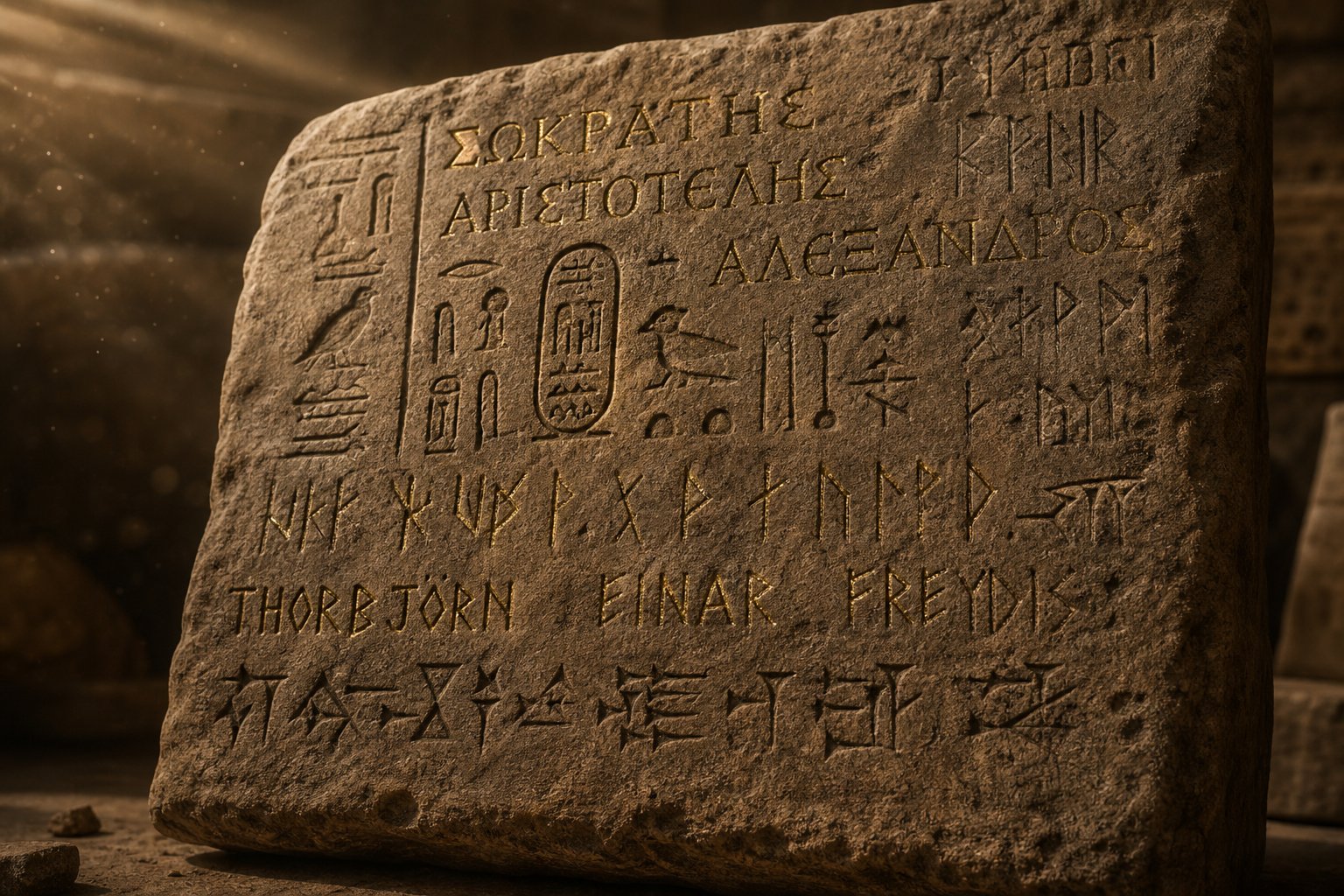
What Ancient Name Generators Reveal About Lost Civilizations
You type a civilization into a fantasy name generator, hit a button, and get a string of syllables that sounds vaguely old. Maybe it works for a quick NPC in your tabletop game. But does it actually mean anything? Almost never. And that gap between random output and meaningful identity is exactly where your worldbuilding falls flat.
What an Ancient Name Generator Actually Does
An ancient name generator typically pulls from databases of historical phonemes, recombines letter patterns, and spits out results that mimic the sound of a given culture. Some tools are better than others, but even the best ones operate without context. They cannot tell you that a name signals royal lineage, devotion to a specific god, or membership in a warrior class. They give you the surface and skip the substance.
That matters because ancient names were never arbitrary labels. They functioned as compressed cultural statements, encoding information about the bearer's family, faith, social rank, and aspirations. Selecting names without understanding these layers is like furnishing a Roman villa with IKEA shelving. It technically fills the space, but nothing belongs.
Why Understanding Ancient Naming Matters
Consider how much meaning a single name can carry:
Alexandros = alexein (to defend) + aner (man) — a compound Greek name declaring its bearer a "defender of men."
That is not decoration. It is identity architecture. As Britannica's research on personal names documents, the old Indo-European system built compound names that attested to virtues, abilities, divine associations, and lineage. Ancient names from Greece, Rome, Egypt, Persia, and Scandinavia all followed structured rules rooted in language, religion, and social hierarchy.
This article breaks down those rules civilization by civilization. You will learn how Greek theophoric names honored gods, how the Roman tria nomina encoded family and class, how Norse bynames recorded deeds, and how Egyptian throne names carried theological weight. The goal is not to replace generators but to give you the linguistic foundation that makes every name you choose, or create, resonate with authentic cultural depth.
How Ancient Naming Systems Actually Worked
Every civilization treated naming as a system, not a lottery. When you pull a random result from a generator, you are bypassing a framework that took centuries to develop. Greek, Roman, Norse, Egyptian, and Celtic cultures each built distinct naming architectures with strict rules about how many names a person carried, who assigned them, and when they could change. Understanding these structures is what separates a name that feels authentic from one that just sounds old.
How Many Names Did Ancient People Have
Did ancient Greeks have last names? Not in the way we think of them. According to the Lexicon of Greek Personal Names at Oxford, Greeks followed the Indo-European pattern of a single given name, evident as far back as Mycenaean texts from the 13th century BC. Identification came through a patronymic, the father's name in the genitive case, plus an ethnic or demotic marker when context required it. So Alcibiades in Athens was "Alkibiades son of Kleinias, of the deme Skambonidai," but abroad he became "Alkibiades son of Kleinias, Athenian." There were no ancient greek surnames in the hereditary sense. The patronymic did the work of distinguishing individuals, and common names in ancient greece like Alexandros or Philippos repeated across generations through a tradition of naming firstborn sons after paternal grandfathers.
Roman names operated on an entirely different scale. The tria nomina system gave aristocratic male citizens three names: a praenomen (personal name like Marcus or Gaius), a nomen (clan name like Tullius or Julius), and a cognomen (branch name like Cicero or Caesar). Non-aristocrats frequently carried only two names until late in the Republic. Women received the feminine form of their father's clan name, so every daughter of a Julius was Julia, distinguished only by "maior" and "minor" or numbered sequentially. Freed slaves took their former master's praenomen and nomen, adding their slave name as a cognomen.
Norse names relied on patronymics or matronymics built by adding -son or -dottir to a parent's name. A warrior named Erik whose father was Leif became Erik Leifsson. Beyond this, bynames based on appearance, deeds, or personality served as identifiers. There was no fixed family surname passed down unchanged.
Egyptian naming was split between commoners and royalty. Ordinary Egyptians carried a single birth name, but pharaohs received up to five throne names upon coronation, each encoding theological claims about their relationship to the gods. Celtic naming tied identity to clan membership, with prefixes like "Mac" (son of) or "O" (grandson of) linking individuals to lineage in ways that persisted for generations.
| Civilization | Number of Names | Inheritance Pattern | Name Components |
|---|---|---|---|
| Greek | 1 (single given name) | Firstborn son named after paternal grandfather | Given name + patronymic + ethnic/demotic |
| Roman | 2-3 (tria nomina for aristocrats) | Nomen and cognomen hereditary through clan | Praenomen + nomen + cognomen (+ agnomen) |
| Norse | 1 + patronymic/byname | Patronymic rebuilt each generation (-son/-dottir) | Given name + patronymic + byname |
| Egyptian | 1 (commoners), up to 5 (pharaohs) | Birth name personal; throne names unique to ruler | Birth name + throne names (royal titulary) |
| Celtic | 1 + clan identifier | Clan prefix inherited (Mac/O) | Given name + clan prefix + ancestor name |
Naming Ceremonies and Life-Stage Names
Names were not casually assigned. In Rome, a male child received his praenomen during a formal naming ceremony called the dies lustricus, held on the ninth day after birth for boys and the eighth for girls. This ritual purified the child and officially introduced them into the family. The firstborn son almost always received his father's praenomen, which is why the same old names like Marcus, Gaius, and Lucius cycled through Roman families for centuries.
Greek naming followed a similar timeline. A child was named around the tenth day after birth during a family celebration called the dekate. The tradition of naming after grandparents meant that ancient greece names repeated in predictable patterns. The LGPN research confirms that in leading families, the grandfather-grandson naming pattern can be traced over two or three hundred years.
Life events could also trigger name changes. Roman generals earned a cognomen ex virtute for military achievements. Publius Cornelius Scipio became Scipio Africanus after conquering Carthage. Adoption completely rewrote a Roman's identity: when Gaius Octavius was adopted by Julius Caesar, he became Gaius Julius Caesar Octavianus. Norse warriors earned bynames through deeds or distinctive traits, names like Bloodaxe or Bluetooth that stuck for life but did not pass to children.
Egyptian pharaohs underwent the most dramatic naming transformation. At coronation, a ruler received an entirely new set of throne names that declared divine favor and political legitimacy. The birth name became secondary to titles like the Horus name and the Two Ladies name, each carrying specific theological weight.
These ceremonies and transitions reveal something critical for anyone using a naming tool: a single character might carry different names at different life stages. A Roman freedman's name tells a story of enslavement and liberation. A Norse byname records a moment of glory or shame. When you select names for characters, knowing when and how those names were earned adds a layer of narrative depth that no random generator can replicate.
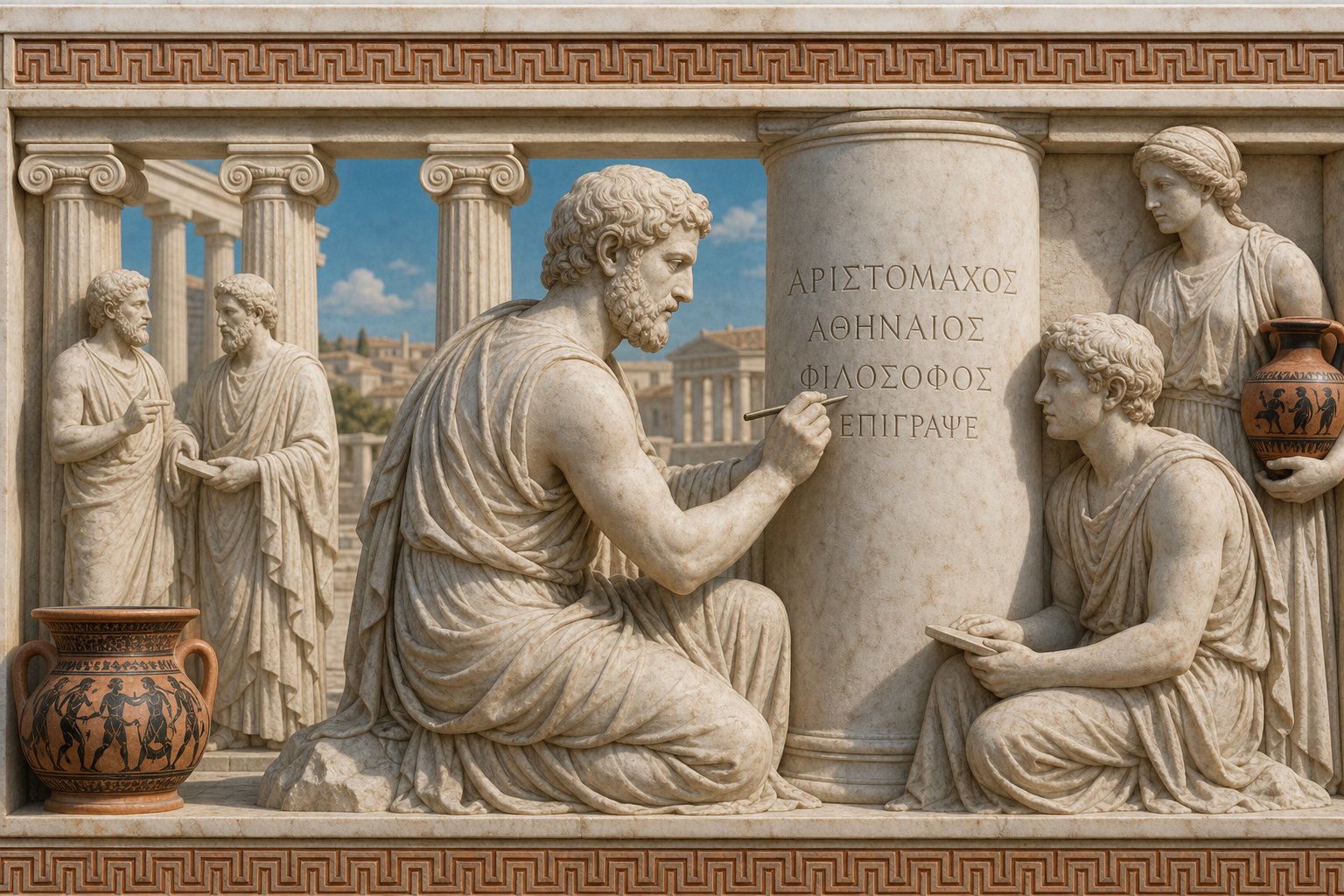
Greek and Roman Names From Roots to Full Identity
Naming ceremonies gave a child their identity, but the name itself was built from something deeper: language. Ancient greek names were not pulled from a hat. They were assembled from meaningful root words following specific grammatical rules, and those rules shifted depending on the era, the city-state, and the social class of the family. Roman names operated on a different logic entirely, one driven by clan membership and political inheritance rather than poetic construction. Both systems reward close study if you want names that feel real rather than decorative.
Greek Name Construction From Root Words
Greek names functioned like compound words. Two meaningful roots were joined together, sometimes with a connecting vowel, to create a name that doubled as a statement. This is why so many old greek names read like miniature declarations: Nikandros means "victory of man," Theodotos means "given by god," and Philosophos means "lover of wisdom."
Here are some of the most common roots you will encounter in names in ancient greece:
- nike (nee-KAY) = victory: Nikephoros, Nikanor, Berenike
- philos (FEE-los) = loving/dear: Philippos, Philomela, Theophilos
- sophos (so-FOS) = wise: Sophokles, Sophia
- andro/aner (AN-dro) = man: Alexandros, Andromache, Lysandros
- theos (THEH-os) = god: Theodoros, Theophanes, Dorothea
- kleos (KLEH-os) = glory/fame: Herakles, Perikles, Sophokles
- hippos (HIP-pos) = horse: Philippos, Hippokrates, Xanthippos
- stratos (STRAH-tos) = army: Stratonike, Stratokles
Theophoric names, those honoring a specific deity, were especially common. A family devoted to Apollo might name a son Apollodoros ("gift of Apollo") or a daughter Apollonia. Devotees of Athena produced names like Athenodoros and Athenais. These patterns made ancient greek boy names and ancient greek girl names immediately legible as religious statements to anyone who heard them.
Regional variation mattered too. Athenian names leaned heavily on intellectual and civic roots like sophos and demos (people). Spartan naming favored martial roots: Leonidas ("son of the lion"), Agesilaos ("leader of the people"), Kleomenes ("famous strength"). During the Archaic period, names tended toward longer compounds. By the Hellenistic era, shorter forms and borrowed names from conquered peoples became more common, reflecting the cosmopolitan world Alexander's conquests created.
Ancient greek names male typically ended in -os, -on, or -as (Alexandros, Platon, Leonidas), while ancient greek female names ended in -a, -e, or -is (Aspasia, Penelope, Artemis). This gendered suffix pattern is one of the simplest rules to apply when constructing new names that sound authentic.
The Roman Tria Nomina System Explained
Roman naming worked nothing like Greek naming. Where Greeks built poetic compounds, Romans inherited bureaucratic identifiers. The tria nomina system gave aristocratic male citizens three fixed slots: praenomen, nomen, and cognomen.
The praenomen (pry-NO-men) was the personal name, used only within the family or among close friends. Here is the catch: Romans recycled a tiny pool of about 18 praenomina. Marcus, Gaius, Lucius, Publius, and Quintus dominated for centuries. The firstborn son almost always received his father's praenomen, which is why inscriptions often read like a hall of mirrors. Cicero registered his son as "M. Tullius M. F. M. N. M. Pr. Cor. Cicero," meaning Marcus Tullius Cicero, son of Marcus, grandson of Marcus, great-grandson of Marcus, of the Cornelian voting tribe.
The nomen (NO-men) identified the clan or gens. Julius, Cornelius, Tullius, Claudius: these were hereditary and unchangeable. They functioned as what we might loosely call roman last names, though they occupied the middle position rather than the end. Every member of the gens Julius, male or female, carried this marker for life.
The cognomen (kog-NO-men) originally distinguished branches within a clan. Scipio, Caesar, Cicero: these started as personal nicknames, often physical descriptions or inside jokes. Cicero likely derives from cicer (chickpea), possibly referencing a wart-shaped mark on an ancestor's nose. Over time, cognomina became hereditary and functioned as the primary way Romans addressed each other in daily life.
Women received the feminine form of their father's nomen. Every daughter of a Julius was Julia. Multiple daughters were distinguished only by "Maior" and "Minor" or numbered: Prima, Secunda, Tertia. By the late Republic, elite women sometimes added the feminine form of their father's cognomen, like Livia Drusilla, but this was an evolution rather than a rule.
Famous Bearers and Historical Context
Freed slaves illustrate how deeply names encoded social reality. A freedman took his former master's praenomen and nomen, then kept his slave name as a cognomen. When Marcus Antonius' daughter Antonia freed a slave named Pallas, he became M. Antonius Pallas. His name announced his status to everyone who heard it: the praenomen and nomen declared his patron, while the Greek-sounding cognomen marked his origin. Freedwomen followed the same pattern. Antonia's freed slavewoman Caenis became Antonia Caenis.
Military achievement could add a fourth name. Publius Cornelius Scipio earned "Africanus" by senatorial decree after defeating Carthage. Gnaeus Pompeius received "Magnus" (the Great). These cognomina ex virtute were personal honors, not passed to descendants, making them the Roman equivalent of Norse deed-names.
Adoption rewrote identity entirely. When Gaius Octavius was adopted by Julius Caesar, he became Gaius Julius Caesar Octavianus, adding the suffix -anus to his birth nomen. Supporters called him Caesar. Opponents used Octavianus to remind everyone he was not born into the Julian clan. In 27 BCE, the Senate awarded him "Augustus" (the revered one), and that honorific became the name history remembers.
These examples reveal why a simple generator cannot replicate the social weight of Roman naming. Every element, from the recycled praenomen to the earned agnomen, carried information about family, class, patronage, and achievement. When you select or build Roman names for characters, matching the right components to the right social position is what makes the name feel inhabited rather than invented.
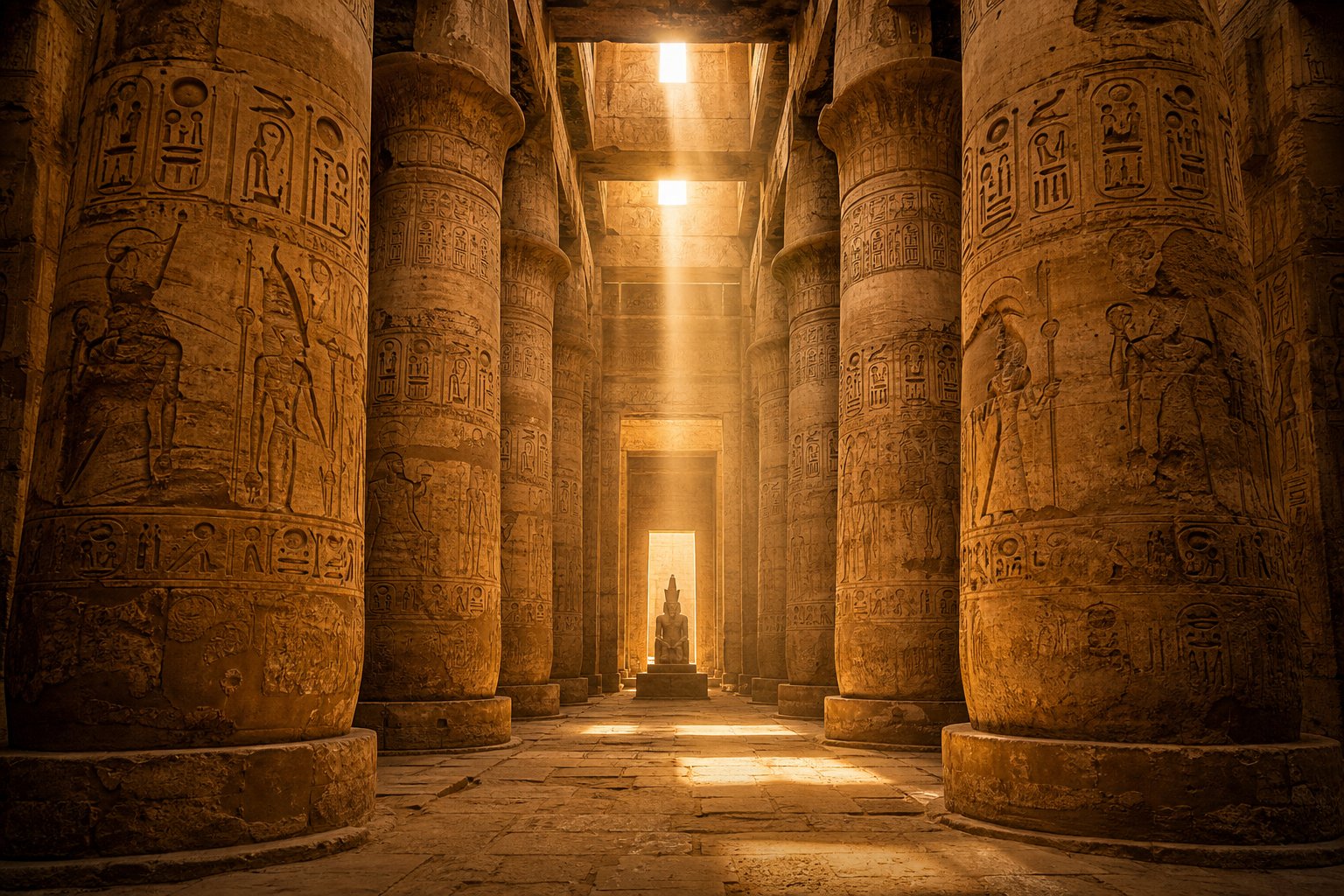
Egyptian and Mesopotamian Names Beyond Greek and Roman
Greek compound construction and Roman bureaucratic naming get most of the attention in worldbuilding circles. But the civilizations of the Nile, the Tigris-Euphrates, and the Iranian plateau developed naming traditions that predate both by centuries, and they operated on fundamentally different principles. Egyptian names functioned as theological statements. Mesopotamian names were prayers compressed into a single phrase. Persian names encoded moral philosophy. If your ancient name generator only draws from Greco-Roman pools, you are missing three thousand years of naming logic that produced some of history's most evocative identities.
Egyptian Names Across Three Thousand Years
Egyptian names split into two distinct worlds: the names of ordinary people and the elaborate titulary of pharaohs. Commoner names were typically short, descriptive, and often theophoric, linking the bearer to a patron deity. Names like Amenhotep ("Amun is satisfied"), Nefertiti ("the beautiful one has come"), and Khnumhotep ("Khnum is satisfied") followed a consistent pattern: deity name plus a verb or adjective expressing devotion, gratitude, or divine favor.
Egyptian girl names frequently invoked beauty, joy, or divine protection. Names like Nefertari ("the most beautiful companion"), Sitamun ("daughter of Amun"), and Merytamun ("beloved of Amun") reveal how egyptian women and egyptian girls were named within the same theophoric framework as men, though with roots emphasizing relational qualities. Egyptian last names in the hereditary sense did not exist. Identity was established through parentage: "Amenhotep, son of Hapu" or "Nefertiti, daughter of Ay."
The naming landscape shifted across Egypt's major periods. Old Kingdom names (c. 2686-2181 BCE) favored connections to Ra and older solar deities: Rahotep, Khufu ("Khnum protects me"), Djedefre. Middle Kingdom names (c. 2055-1650 BCE) saw the rise of Amun-based names as Thebes gained political dominance: Amenemhat, Senusret. By the New Kingdom (c. 1550-1069 BCE), the full diversity of the Egyptian pantheon appeared in personal names, with Thoth, Ptah, Isis, and Hathor all generating theophoric patterns alongside the dominant Amun and Ra constructions.
Royal naming operated on an entirely different scale. Egyptian pharaohs received five distinct names upon ascending the throne, each encoding a specific theological claim:
- Horus name - linked the ruler to the falcon god Horus, symbolizing kingship and divine authority, displayed within a serekh (palace facade glyph)
- Nebty name (Two Ladies) - connected the pharaoh to Nekhbet (vulture goddess of Upper Egypt) and Wadjet (cobra goddess of Lower Egypt), affirming sovereignty over the unified kingdom
- Golden Horus name - emphasized royal lineage and divine power, though scholars still debate its precise theological function
- Prenomen (throne name) - adopted at coronation, written in a cartouche, and used in official inscriptions and diplomatic correspondence
- Nomen (birth name) - the personal name given at birth, considered so powerful that knowing it granted influence over the bearer
Imagine the full weight of this system in practice. Tutankhamun's prenomen was Nebkheperure, meaning "the possessor of the manifestation of Ra." Thutmose III's complete titulary read: "Kanakht Khaemwaset, Wahnesytmireempet, Sekhempahtydjeserkhaw, Menkheperre, Thutmose Neferkheperu," translating roughly to "Mighty Bull arising in Thebes, enduring in kingship like Ra in heaven, powerful of strength and sacred of appearance, enduring of form is Ra, Thutmose beautiful of forms." Each name was a sentence-length declaration of divine legitimacy.
Mesopotamian and Babylonian Naming Prayers
Travel east from Egypt to ancient Babylon and the naming logic shifts again. Sumerian and Akkadian names were not descriptions or titles. They were prayers, compressed into a name-length phrase and directed at a patron deity. A Babylonian parent naming a child was literally encoding a wish, a plea, or a statement of faith into the child's identity.
Sumerian names from the third millennium BCE followed patterns like "deity + verb" or "deity + quality." Ur-Nammu means "servant of Nammu" (the primordial sea goddess). Shulgi means "noble youth." Lugal-zagesi translates to "king who fills the sanctuaries." These names functioned as devotional statements, publicly declaring which god the family served and what blessing they sought.
Akkadian and Babylonian names expanded this prayer structure. Names like Nebuchadnezzar (Nabu-kudurri-usur, "Nabu, protect my boundary stone"), Hammurabi (likely "the kinsman is a healer"), and Sin-muballit ("Sin gives life") show how naming became an act of worship. The name was not just identification. It was a petition to the divine, spoken aloud every time someone addressed the bearer. If you have ever studied a babylon civilization map showing the spread of Mesopotamian culture, you will notice how these naming patterns traveled along trade routes from Sumer to Assyria to Persia, adapting to local pantheons while preserving the prayer-name structure.
Gender conventions in Mesopotamian naming were less rigid than in Greece or Rome. Both men and women received theophoric prayer-names, though feminine names sometimes incorporated terms for daughter (martu) or handmaiden (amtu) in relation to the deity: Amat-Marduk ("handmaiden of Marduk"), Belet-ili ("lady of the gods").
Persian Names and Zoroastrian Virtue Concepts
Persian naming drew from a different philosophical well. Where Mesopotamian names were prayers and Egyptian names were theological claims, Old Persian names encoded moral and cosmic concepts rooted in Zoroastrian thought. Virtues like truth (arta), good (vahu), and power (xshaya) formed the building blocks of a naming system that declared what a persian man aspired to embody.
The name Darius illustrates this perfectly. According to the Encyclopaedia Iranica, Old Persian Darayavauš is composed of the present stem daraya- ("hold") and the adjective vau- ("good"), translating to "holding firm the good." This is not a prayer to a god or a description of appearance. It is a philosophical declaration: the bearer upholds what is righteous. The name traveled through Elamite (Dariyamauish), Babylonian (Dariamuš), and Greek (Dareios) adaptations, each culture reshaping the phonology while the meaning persisted.
Other Persian names follow the same virtue-encoding pattern. Artaxerxes (Artaxšaca) means "whose reign is through truth." Xerxes (Xšayarša) means "ruling over heroes." Cyrus (Kuruš) likely connects to the sun or shepherd imagery. Vistaspa means "whose horses are untethered" or "with spirited horses," combining martial imagery with freedom. These names read like compressed mission statements, declaring what the bearer's reign or life would stand for.
For worldbuilders, the Persian model offers something neither Greek nor Egyptian naming provides: a system where names encode abstract philosophical values rather than divine relationships or poetic descriptions. A character named in the Persian style carries an ethical thesis in their identity.
| Civilization | Name Structure | Core Principle | Example | Meaning |
|---|---|---|---|---|
| Egyptian (commoner) | Deity + verb/adjective | Theophoric devotion | Amenhotep | "Amun is satisfied" |
| Egyptian (royal) | Five-name titulary | Divine legitimacy claims | Nebkheperure (Tutankhamun's prenomen) | "Possessor of the manifestation of Ra" |
| Sumerian | Deity + servant/quality | Devotional identity | Ur-Nammu | "Servant of Nammu" |
| Babylonian | Deity + verb (prayer) | Compressed petition | Nabu-kudurri-usur | "Nabu, protect my boundary stone" |
| Persian | Virtue/action + quality | Moral philosophy | Darayavauš (Darius) | "Holding firm the good" |
These three naming traditions share one quality that separates them from Greek and Roman systems: they treat the name as an active statement rather than a passive identifier. An Egyptian name declares divine favor. A Babylonian name petitions for protection. A Persian name pledges moral commitment. When you build characters rooted in these civilizations, the name itself becomes a piece of dialogue, revealing what the bearer or their parents believed about the world and their place in it.
But names did more than express devotion or philosophy. They also broadcast something far more practical: where you stood in the social hierarchy. A pharaoh's five-name titulary and a farmer's single birth name existed in the same culture, separated by an ocean of power. That gap between royal and common naming is where social class becomes legible through language alone.
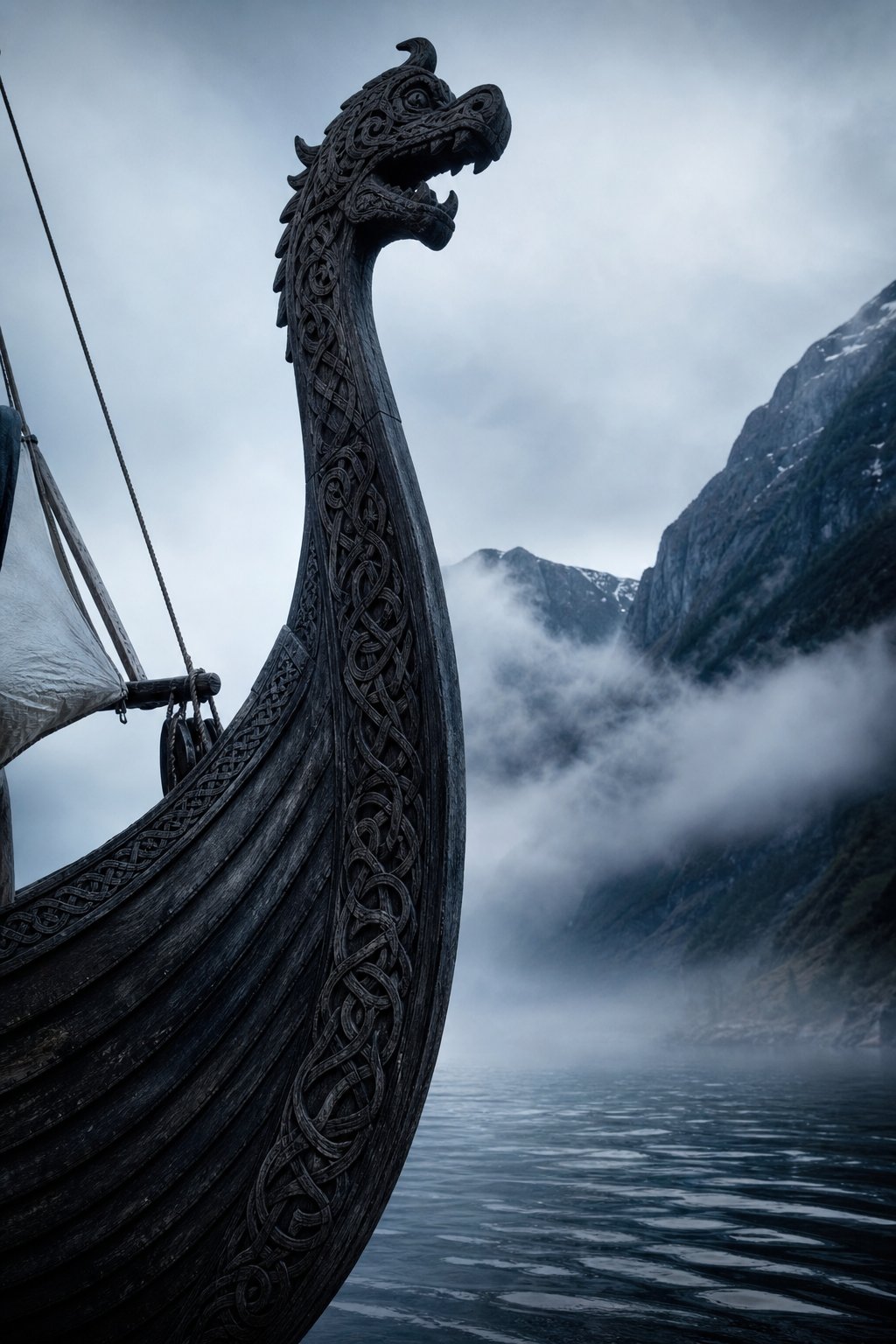
Norse Viking and Celtic Names for Worldbuilders
Persian names encoded philosophy. Egyptian names declared divine favor. Norse and Celtic names did something rawer: they recorded what you did, who your father was, and which clan would avenge your death. These naming systems are among the most popular sources for fantasy worldbuilding and tabletop gaming, yet they are also among the most frequently misunderstood. A viking name generator might hand you something that sounds Scandinavian, but without grasping how patronymics, bynames, and name elements actually combined, the result lacks the social texture that made these names functional identities in their original cultures.
Viking names operated through a modular system. A person carried a given name, a patronymic (or occasionally a matronymic), and often a byname earned through life. Celtic names layered clan identity onto personal identity through prefix systems and druidic naming rites. Both traditions built names from meaningful elements drawn from nature, warfare, the divine, and kinship, but they followed different phonological rules and cultural logics.
Viking Bynames and How Warriors Earned Them
The Viking Age (roughly 793-1066 CE) produced a naming culture where identity was built in layers. Your given name came first, chosen by your parents according to strict traditions. Viking parents named children after deceased relatives, preferably a direct ancestor like a grandparent or great-grandparent. This was not sentimental. Vikings believed that part of the deceased person's luck attached to the child bearing their name. If a relative died while a child was in the womb, that child always received the dead relative's name. If a boy's father died before the birth, the boy took his father's name without exception.
Two additional conventions shaped how siblings were named. One was alliteration: all children in a family might receive names starting with the same sound, like Olaf, Olief, Olvir, Ospak, and Ottar. The other was variation, where one name element stayed constant while the other changed: Hallbjorn, Hallbera, Halldor, Hallfrid, Hallgerd, Hallkel. These patterns meant that old norse names clustered in recognizable family groups, making lineage audible the moment someone introduced themselves.
The patronymic came next. Vikings did not carry hereditary surnames. Instead, each generation rebuilt the identifier from scratch. Erik, son of Leif, was Erik Leifsson. His daughter Astrid was Astrid Eriksdottir. The system reset with every generation, which is why tracing Viking genealogies requires sagas rather than phone books. Matronymics (using the mother's name) appeared occasionally, sometimes indicating that the mother held higher social status or that the father was unknown.
Then came the byname, and this is where viking names get interesting for worldbuilders. Bynames were earned, not given. They described physical traits, personality, deeds, habits, or place of origin, and they were usually assigned by others rather than chosen by the bearer. Many were unflattering. Harald Bluetooth (Blatand) likely had a conspicuously dark or dead tooth. Ivar the Boneless may have had a physical condition or may have been extraordinarily flexible in battle. Sigurd Snake-in-the-Eye reportedly had a mark in his iris resembling a serpent.
These bynames functioned as compressed narratives. A warrior called "Blood-Axe" carried his reputation in his name. A farmer called "Flat-Nose" carried his appearance. For fiction writers and game designers, bynames offer a powerful tool: they let you communicate character history through naming alone, without exposition.
Norse names also drew heavily from the pantheon. Thor was the most popular divine element in norse names male, producing compounds like Thorald, Thorberg, Thorbjorn, Thord, Thorfast, and Thorgest. For norse female names, the element As (meaning god) appeared frequently: Asdis, Asgerd, Ashild, Asta, and Astrid. Freya-derived elements and Valkyrie associations also shaped female viking names, though less commonly than the As- prefix.
Here are the most productive name elements you will encounter when building authentic nordic names:
- -ulf / -ulfr = wolf: Hrothulf, Arnulf, Ingulf
- -bjorn = bear: Thorbjorn, Hallbjorn, Arnbjorn
- -run / -runa = secret, rune: Gudrun, Sigrun, Alruna
- -heim / -heimr = home, world: Alfheim, Gudheim
- -gard / -gardr = enclosure, protection: Asgard, Thorgardr
- -hildr / -hild = battle: Brunhild, Svanhild, Gunnhild
- -stein / -steinn = stone: Thorstein, Bjornstein, Hallstein
- -valdr = ruler, power: Thorvald, Osvald, Haraldr
- -dis = goddess, woman of divine nature: Thordis, Hjordis, Asdis
- -vin / -vinr = friend: Alvin, Gudvin, Baldvin
One critical distinction that most generators miss: historical Viking Age names differ from later medieval Scandinavian names. The name Ragnar belongs to the Viking Age. The name Magnus entered Scandinavian use only after Magnus I of Norway (1024-1047), who was named after Charlemagne (Carolus Magnus). Names like Valdemar and Kristoffer reflect post-Christianization influence. If you are building a pre-Christian Norse setting, names with Thor-, As-, and Frey- elements are appropriate. Names reflecting Christian saints or Latin borrowings are anachronistic.
Celtic Clan Names and Druidic Naming Traditions
Celtic naming operated on a different axis than Norse naming. Where Vikings built identity from individual deeds and parental lineage, Celtic cultures anchored identity to the clan. Your name declared not just who your father was, but which extended kinship group would stand behind you in disputes, alliances, and warfare. The prefixes Mac (son of) and O (grandson/descendant of) were not optional additions. They were the structural core of identity, linking every individual to a web of obligation and belonging.
Gaelic linguistic rules shaped how these names sounded in ways that trip up English speakers. Irish and Scottish Gaelic use initial consonant mutations called lenition and eclipsis, which change the first letter of a word depending on grammatical context. A woman named Maire whose father was Seamus would be Maire Ni Sheamuis (not Ni Seamuis), because the feminine patronymic particle "Ni" triggers lenition, turning the S to Sh. These mutations are not decorative. They are grammatical requirements that make Celtic names sound distinctly different from Germanic or Romance language names.
The role of druids in naming adds another layer. In the Druid tradition, each new child received a Rite of Welcoming, often combined with a Naming Rite where the child was given a name and where parents and guardians made vows to honor and care for the child. Additional rites of passage marked significant events throughout childhood, each acknowledgment adding to the child's sense of identity and grounded integration. Celtic deities played a direct role in these ceremonies, with names sometimes chosen to invoke the protection of specific gods like Lugh, Brigid, or the Dagda.
Celtic names drew from nature, warfare, and the divine in ways that overlapped with but differed from Norse patterns. Names like Brennan ("raven"), Conall ("strong wolf"), Niamh ("brightness" or "radiance"), and Deirdre (possibly "sorrowful") encoded qualities the parents wished for or observed in the child. Compound names followed Gaelic word order, which places the adjective after the noun: Fionnuala means "white shoulder" (fionn + guala), not "shoulder-white" as a Germanic compound would construct it.
Clan identity also determined which names were available. Certain names belonged to specific families and were recycled through generations, much like the Viking ancestor-naming tradition. The name Brian, for instance, became strongly associated with the O'Brien clan after Brian Boru's kingship. Using a name associated with another clan could be seen as a claim on their lineage or an insult, depending on context.
Pronouncing Norse and Celtic Names Correctly
Mispronunciation is the fastest way to break immersion at a gaming table or pull a reader out of a novel. Here are written phonetic guides for the most commonly mangled Norse and Celtic names:
Norse pronunciation:
- Sigurd - SIG-urd (not "SIG-erd")
- Bjorn - BYORN (the B and J blend, rhymes roughly with "yearn")
- Freyja - FRAY-ah (not "FREE-jah")
- Ragnar - RAHG-nar (hard G, not "RAG-ner")
- Thorvald - THOR-vald (rhymes with "bald," not "valled")
- Gudrun - GOOTH-roon (the D is soft, almost a TH sound)
- Hjalmar - YAHL-mar (the Hj- produces a Y sound)
Celtic pronunciation:
- Niamh - NEEV (the MH is silent or produces a V sound)
- Siobhan - shih-VAWN (not "SEE-oh-ban")
- Caoimhe - KEE-vah (not "KAY-oh-mee")
- Saoirse - SEER-shah (not "SAO-irse")
- Cillian - KIL-ee-an (hard C, not "SILL-ee-an")
- Oisin - USH-een (not "OY-sin")
- Meadhbh / Maeve - MAYV (the DH and BH are both silent/softened)
The key pattern to notice: Norse pronunciation is generally more phonetic than English speakers expect (the main traps are Hj-, Bj-, and soft D sounds), while Gaelic pronunciation follows rules that are internally consistent but wildly different from English letter-sound mappings. If you are selecting names for a tabletop RPG where players need to say names aloud, Norse names tend to be more accessible. Celtic names carry tremendous atmosphere but may need a pronunciation note the first time they appear.
Both Norse and Celtic naming systems share something that separates them from the Mediterranean traditions covered earlier: they are living systems. Modern Icelandic still uses patronymics. Irish and Scottish Gaelic naming conventions persist in contemporary use. This continuity means that resources for these naming traditions are abundant and well-documented, but it also means that careless use can feel disrespectful to living cultures rather than merely inaccurate about dead ones.
Names in these traditions did more than identify individuals, though. They broadcast social position as clearly as any Roman tria nomina. A Viking jarl's son carried a name heavy with divine elements and ancestral prestige. A thrall might carry only a single short name with no patronymic at all. Understanding how names mapped to social class is what transforms a random collection of syllables into a coherent fictional society.
What Ancient Names Reveal About Social Class and Identity
A Viking jarl and a thrall could stand side by side, and you would know their rank before either spoke a word, simply by hearing their names called. The same was true in Rome, Egypt, Greece, and every other ancient civilization covered so far. Names were not just personal identifiers. They were social uniforms, broadcasting class, occupation, citizenship, and religious affiliation to anyone within earshot. For fiction writers and game designers building coherent worlds, this is where naming moves from linguistic exercise to social architecture.
Names as Social Class Markers in Ancient Worlds
In Rome, the structure of your name announced your legal status instantly. A full citizen carried the tria nomina: praenomen, nomen, cognomen. A freed slave carried his former master's praenomen and nomen with his slave name appended as cognomen, a permanent marker of servitude even after liberation. A current slave often had only a single Greek-sounding name, no patronymic, no clan identifier, nothing that anchored them to a lineage. As scholarship on ancient identification methods confirms, the names of romans functioned as legal documents in miniature: the number of name elements alone told you whether someone was freeborn, freed, or enslaved.
Greek naming encoded citizenship rather than class in the strict Roman sense. A citizen of Athens identified himself with his personal name, his father's name in the genitive, and his deme (local district). A non-citizen used an ethnic marker instead of a demotic. A slave carried a single name with no patronymic at all. There were no old greek surnames or ancient greek family names in the hereditary sense, but the patronymic system accomplished the same social sorting. If you heard "Demosthenes son of Demosthenes, of Paiania," you knew immediately: citizen, established family, specific neighborhood. If you heard only "Manes" with no father's name, you knew: slave, probably Phrygian in origin.
Egyptian names revealed priestly lineage through theophoric patterns tied to specific temple cults. A family serving the temple of Amun at Karnak produced generations of names built on Amun-roots: Amenhotep, Amenemhat, Amenmose. Commoner names, by contrast, were often simple descriptive terms. A peasant meaning someone working the land might carry a name like Paneb ("the lord") or Hesyre ("praised by Ra"), but without the elaborate genealogical chains that priestly families maintained across centuries. The gap between a farmer's single name and a priest's name embedded in five generations of recorded ancestry was the gap between anonymity and institutional power.
Norse names signaled family alliances through the ancestor-naming tradition. A jarl's son carried a name recycled from a famous forebear, heavy with divine elements like Thor- or As-, plus a patronymic linking him to a powerful father. A thrall might carry only a short, often foreign-sounding name with no patronymic, no byname, no connection to any lineage worth claiming. Mediterranean surnames did not exist in the Norse world, but the layering of given name plus patronymic plus earned byname accomplished the same hierarchical display. The more name elements you carried, the more social weight you held.
Sacred and Forbidden Names Across Cultures
Naming taboos operated as invisible fences around power. In ancient China, the practice of character taboo (bihu) meant that any character appearing in an emperor's personal name was prohibited from use nationwide. If your name shared a character with the emperor's, you changed it. Scribes altered strokes in written documents to avoid reproducing the forbidden character. This was not superstition. It was law, enforced with real consequences, and it meant that royal last names effectively erased themselves from common use the moment a ruler took the throne.
Egyptian pharaohs guarded their birth names with similar intensity. Knowing someone's true name granted power over them in Egyptian magical belief. This is why pharaohs governed under throne names while their birth names carried protective secrecy. The five-name titulary was not vanity. It was a defensive structure, burying the vulnerable personal name beneath layers of divine titles.
Greek naming taboos were subtler but real. Certain theophoric names were considered presumptuous for commoners. Naming a child directly after a god, rather than using a compound that honored the god, could be seen as hubris. You might name your son Apollodoros ("gift of Apollo") but not Apollo itself. Roman naming reserved certain praenomina for specific gentes: the name Appius belonged exclusively to the Claudii, and Mamercus to the Aemilii. Using another clan's reserved name was a social transgression that marked you as either ignorant or deliberately provocative.
Norse cultures practiced a different kind of naming restriction. You did not name a living child after a living relative, only after the dead. Naming a child after someone still alive was considered an attempt to steal their luck or hasten their death. This superstition shaped naming patterns across generations and explains why Viking genealogies show names skipping a generation rather than repeating father-to-son.
Matching Names to Character Social Position
All of this historical knowledge collapses into a practical question for worldbuilders: how do you select names that feel socially coherent? A commoner in your fictional Roman-inspired city should not carry a tria nomina with an aristocratic cognomen. A slave character in a Greek-inspired setting should not have a patronymic. A low-born Norse character should not bear a name heavy with divine elements reserved for jarls' families.
When you are choosing names for characters, whether through a generator or manual construction, run each result through this hierarchy of considerations:
- Civilization and era - Which culture's naming rules apply, and from which historical period? A Hellenistic Greek name differs from an Archaic one.
- Social class - Is this character royalty, aristocracy, free citizen, freed slave, or enslaved? The number of name elements and their structure change accordingly.
- Gender conventions - What suffixes, prefixes, or structural patterns mark masculine versus feminine names in this culture?
- Religious context - Which deity or philosophical tradition would this character's family honor? Theophoric elements must match the local pantheon and era.
- Geographic region - Mediterranean last names, Norse patronymics, and Celtic clan prefixes all signal where someone comes from. A name should place a character geographically as well as socially.
This checklist transforms name selection from aesthetic guesswork into informed design. A senator's daughter in your story carries a feminized nomen with perhaps a cognomen addition. A freed gladiator carries his former master's clan name stamped onto a foreign cognomen. A Norse thrall carries a single short name, maybe Slavic or Irish in origin, with no patronymic to anchor him to any family. Each choice tells the reader or player something about that character's history before a single line of dialogue is spoken.
The social encoding of names also explains why random generators so often produce results that feel wrong without the user being able to articulate why. A generator does not know that the name it produced combines a royal Egyptian element with a commoner suffix, or pairs a Greek citizen's demotic with a slave's naming pattern. You need the cultural grammar to catch those mismatches, and that grammar is exactly what turns a generated string of syllables into a name that belongs to a specific person in a specific world.
Knowing what names reveal about social position is the diagnostic skill. The next step is generative: learning how to construct your own authentic-sounding names from scratch using the linguistic rules each civilization followed.

Build Your Own Ancient Names Using Linguistic Rules
Most tools function as a greek name generator ancient cultures would not recognize. They shuffle syllables without understanding why certain combinations work and others feel invented. The difference between a name that sounds plausible and one that sounds like gibberish comes down to following the same construction rules that native speakers of these languages followed instinctively. You can learn those rules in an afternoon and produce better results than any randomizer.
The methodology is straightforward: identify your target civilization and era, select root elements appropriate to that culture, combine them following that language's phonological patterns, and then verify the result against attested names to confirm it sounds genuine. Each civilization has its own logic, and mixing rules across cultures is the fastest way to produce something that belongs nowhere.
Greek Compound Name Construction Method
Greek names were built like Lego sets with specific connection points. According to the Lexicon of Greek Personal Names at Oxford, compound names were formed by combining nouns, adjectives, verbs, or adverbs, and with certain exceptions, these elements could appear in either order. So the root nike (victory) produces both Niko-machos ("victory in battle") and Andro-nikos ("man of victory"). This reversibility is key to understanding why Greek naming feels so productive: a handful of roots generates dozens of legitimate combinations.
Here is how to construct a Greek name step by step:
- Choose your first element - Pick a root that carries the meaning you want. If your character is a warrior, reach for roots like andro- (man), niko- (victory), strato- (army), or mach- (battle).
- Choose your second element - Select a complementary root. Pair niko- with -stratos to get Nikostratos ("victory of the army") or with -laos to get Nikolaos ("victory of the people").
- Add the correct gender ending - Male names typically end in -os, -on, or -as. Female names end in -a, -e, or -is. So a feminine form of a victory-name might be Nikostrate or Stratonike.
- Create a hypocoristic (short form) if needed - Greeks shortened compound names into affectionate forms, often with consonant doubling. Kleomenes became Kleommas. Aristophanes became Aristophas. These short forms work well for informal characters or children.
The LGPN research confirms that "simple" names also existed, formed from a single noun or adjective plus a suffix. From the adjective aristos ("best"), you get Aristos, Arist-ion, Arist-ullos for men, and Ariste, Aristo, Arist-ulla for women. This pattern is useful when you want something less grandiose than a full compound: a commoner or a child might carry a simple-form name where an aristocrat would carry a compound.
One trap to avoid: not every element combines freely. An ancient greek name generator that simply mashes random roots together will produce combinations that never existed and sound wrong to anyone familiar with the language. The root Hallr in Norse, for instance, appears with some second elements but not others, and Greek works the same way. If you are unsure whether a combination is plausible, check it against the LGPN database. If a similar structure exists with different roots, your construction is likely sound.
For anyone building a greek mythology name generator or working on a project set in the mythic age, theophoric construction follows the same compound rules but locks one element to a deity name. Apollo- plus -doros gives Apollodoros ("gift of Apollo"). Athena- plus -genes gives Athenagenes ("born of Athena"). Dio- (from Zeus) plus -genes gives Diogenes ("born of Zeus"). The divine element can sit in either position: Herodoros ("gift of Hera") or Dorotheos ("gift of god").
Applying Roman Naming Formulas to New Characters
Roman name construction is less creative and more formulaic than Greek, which actually makes it easier to replicate. You are not inventing poetic compounds. You are filling slots in a bureaucratic system. Think of it as a latin name generator with three fixed fields.
Step 1: Select a praenomen. You have roughly 18 options. The most common are Marcus, Gaius, Lucius, Publius, Quintus, Titus, Gnaeus, Aulus, Decimus, and Sextus. As the Herodotus History Blog documents, certain aristocratic families recycled the same praenomina for centuries. The Julii favored Gaius, Lucius, Sextus, and Vopiscus. If you are building a fictional Roman family, pick two or three praenomina and rotate them across generations for authenticity.
Step 2: Assign a nomen (clan name). This is hereditary and shared by every member of the gens. Historical nomina end in -ius (Julius, Cornelius, Tullius, Claudius, Valerius). To invent a plausible new nomen, take a Latin root and add the -ius suffix: Ferr-ius (from ferrum, iron), Silv-ius (from silva, forest), Aquil-ius (from aquila, eagle). The feminine form changes -ius to -ia: Julia, Cornelia, Tullia.
Step 3: Choose or invent a cognomen. Cognomina started as nicknames, often physical descriptions. Caesar means "hairy." Cicero means "chickpea." Brutus means "dull" or "stupid." Rufus means "red-haired." Longus means "tall." To create a new cognomen, pick a Latin adjective or noun that describes a physical trait, occupation, or memorable incident. A character with a scar might be Cicatrix. A character known for speed might be Celer. A character from a coastal town might be Litoralis.
Step 4: Apply social modifiers. A freed slave takes his former master's praenomen and nomen, keeping his slave name as cognomen. So a Greek slave named Hermes freed by Gaius Valerius becomes Gaius Valerius Hermes. A woman takes the feminine nomen: Valeria. An adopted son adds -anus to his birth nomen: if Lucius Aemilius is adopted by a Cornelius, he becomes Lucius Cornelius Aemilianus.
This formula approach means you can populate an entire fictional Roman society in minutes. A senator: Marcus Aurelius Corvinus. His freed scribe: Marcus Aurelius Philemon. His daughter: Aurelia. His adopted nephew: Gaius Aurelius Cassius Aurelianus. Each name instantly communicates social position and relationship.
Norse and Celtic Phonological Rules for Name Building
Norse name construction sits between Greek creativity and Roman formula. You combine meaningful elements, but you cannot mix them freely. As the Viking Answer Lady's research emphasizes, "a great number of potential compounds constructable from popular elements do not show up anywhere in the extensive documentation." The element Hallr, for example, combines with -bjorn, -dor, -fredr, -geirr, -grimr, -kell, -steinn, -vardr in men's names, but is never attested with equally popular elements like -brandr, -finnr, -gautr, -oddr, or -olfr.
The safest approach for building Norse names:
- Pick a first element from attested combinations - Thor-, Gunn-, Hall-, Sig-, Arn-, Ing-, Rag-, Alf-
- Match it with a second element documented for that first element - Check sources like Geirr Bassi Haraldsson's The Old Norse Name or the Landnamabok for attested pairings
- Apply gender rules - Some second elements are exclusively female: -dis (goddess), -veig (strength), -ny (new moon). Others are exclusively male: -valdr (ruler), -gautr (Geat/man)
- Build the patronymic correctly - The genitive form of the father's name plus -son or -dottir. Names ending in -i form the genitive in -a (Snorri becomes Snorrason). Names ending in -r add -s (Grimr becomes Grimsson). Names ending in -dr or -mundr add -ar (Sigurdr becomes Sigurdarson)
For a byzantine name generator approach, you would blend Greek compound construction with Norse-style patronymics, since Byzantine naming combined Hellenistic Greek roots with patronymic identifiers and religious saint-names. A plausible Byzantine name might be Nikephoros Doukas or Theodora Komnene, combining classical Greek roots with clan identifiers that functioned like Roman nomina.
Celtic name construction follows Gaelic phonological rules that differ sharply from both Germanic and classical patterns. The key principles:
- Word order is noun + adjective - Fionnuala ("white shoulder") not "Shoulder-white." Dubhghall ("dark stranger") not "Stranger-dark."
- Lenition changes initial consonants after certain particles - Mac Domhnaill becomes Mhic Dhomhnaill in the genitive. The M softens to Mh (pronounced V), and the D softens to Dh (pronounced like a soft G or Y).
- Broad and slender vowel rules - In Irish, consonants are "broad" (surrounded by a, o, u) or "slender" (surrounded by e, i). This affects pronunciation and spelling: "caol le caol agus leathan le leathan" (slender with slender and broad with broad) is the fundamental spelling rule.
- Gender affects the entire name phrase - A man is Mac ("son of"), a woman is Nic or Ni ("daughter of"), and the following name mutates differently depending on which particle precedes it.
If you are working as a greek names generator for a project that spans multiple cultures, the key insight is this: each system has internal consistency that makes names feel real. Greek names sound Greek because of their vowel-heavy endings and compound structure. Roman names sound Roman because of their -ius/-ia suffixes and tripartite formula. Norse names sound Norse because of their hard consonant clusters and -r/-dr endings. Celtic names sound Celtic because of their lenited consonants and broad/slender vowel patterns. Match the phonological fingerprint to the culture, and your invented names will pass as authentic.
Here is a quick-reference construction guide pulling together the core elements from each system:
| Civilization | Common Prefixes | Common Roots | Common Suffixes | Example Result |
|---|---|---|---|---|
| Greek | Aristo-, Niko-, Theo-, Andro-, Philo- | -kles (glory), -stratos (army), -demos (people), -genes (born) | -os (m), -a/-e (f), -ion (diminutive) | Nikodemos ("victory of the people") |
| Roman | Praenomen: Marcus, Gaius, Lucius | Nomen: -ius (Julius, Valerius, Cornelius) | Cognomen: -us/-a (Rufus, Longus, Celer) | Gaius Silvius Aquila |
| Norse | Thor-, Gunn-, Sig-, Arn-, Ing-, Hall- | -bjorn (bear), -ulf (wolf), -stein (stone), -grim (mask/helm) | -r (m), -a (f), -dis (f, goddess), -hildr (f, battle) | Arnbjorn ("eagle-bear") |
| Egyptian | Amen-, Ra-, Thut-, Nefer-, Khnum- | -hotep (satisfied), -mose (born of), -ankh (living) | -(none, names are phrase-complete) | Khnumhotep ("Khnum is satisfied") |
| Celtic | Fionn- (white), Dubh- (dark), Conn- (chief) | -gall (stranger), -barr (top/head), -gus (strength/vigor) | Mac- (son), Ni- (daughter), O- (descendant) | Fionnbarr ("white-headed") |
An ancient greece name generator can hand you a random output, but this table gives you the grammar to evaluate whether that output makes sense. Does the combination follow the right element order? Does the suffix match the gender? Does the root belong to the correct era? These are the diagnostic questions that separate informed name creation from blind generation.
The construction method works for individual characters. But most creative projects need more than one name. They need curated lists organized by theme, meaning, and use case, names grouped by whether they suit warriors, priests, nobles, or commoners, and guidance on how to select the right name for the right context.
Curated Ancient Names for Every Creative Project
You know the construction rules. You understand the social logic. But when you are staring at a blank character sheet or an empty manuscript page, sometimes you need a starting point rather than a methodology. The lists below organize names by meaning category across civilizations, giving you a ready reference that pairs the thematic weight you need with the cultural authenticity you have spent this article learning to recognize.
Curated Names by Meaning Category
Fantasy names drawn from real history carry resonance that invented syllables cannot match. Here are names grouped by the qualities they encode, each one attested in historical sources:
Warrior Names
- Nikandros (Greek, male) - "victory of man"
- Boudicca (Celtic, female) - "victory"
- Gunnhild (Norse, female) - "battle + battle"
- Bellona (Roman, female) - goddess of war, from bellum (war)
- Montuhotep (Egyptian, male) - "Montu (war god) is satisfied"
Nature Names
- Daphne (Greek, female) - "laurel tree"
- Bjornulf (Norse, male) - "bear-wolf"
- Silvius (Roman, male) - "of the forest"
- Fionnuala (Celtic, female) - "white shoulder" (associated with swans)
- Seshat (Egyptian, female) - goddess of writing, linked to stars and trees
Divine Names
- Apollodoros (Greek, male) - "gift of Apollo"
- Thorbjorn (Norse, male) - "Thor's bear"
- Amat-Marduk (Babylonian, female) - "handmaiden of Marduk"
- Isidora (Greek/Egyptian, female) - "gift of Isis"
- Brigid (Celtic, female) - fire goddess, "exalted one"
Virtue Names
- Sophokles (Greek, male) - "famed for wisdom"
- Clementia (Roman, female) - "mercy, gentleness"
- Darayavauš / Darius (Persian, male) - "holding firm the good"
- Alethea (Greek, female) - "truth"
- Sigrun (Norse, female) - "victory + secret knowledge"
Each of these names slots into a specific cultural framework. Mixing them carelessly, giving a Norse warrior a Greek virtue name, for instance, breaks the internal logic of your world. But mixing them deliberately, with historical justification, creates something richer. More on that below.
Choosing Names for RPGs Fiction and Worldbuilding
The right name depends on where it will live. A dnd name generator might produce something that looks great on paper but stumbles when spoken aloud at a table. A novel can sustain longer, more complex names because readers process them visually. Each medium has different constraints.
Tabletop RPGs (D&D, Pathfinder, etc.): Pronounceability is king. When four players and a GM need to say a name dozens of times per session, anything longer than three syllables creates friction. Norse names like Sigurd, Bjorn, and Astrid work beautifully at the table. Greek names like Theron, Damon, and Cleo land cleanly. If you are using a dungeons and dragons name generator or a name generator for d&d, filter results by syllable count and test them aloud before committing. A name your players cannot say is a name they will not use.
Fiction writing: Here you have room for names that carry thematic weight. A character named Cassandra in a story about unheeded warnings gains layers from the mythological echo. Medieval names like Aldric or Isolde set period atmosphere without requiring footnotes. Fantasy last names built from real linguistic roots (Ashford from Old English, Corvinus from Latin) feel grounded because they follow actual derivation patterns. The d&d name generator approach of random syllable combination works poorly for fiction because readers notice when names lack internal logic.
Worldbuilding: Consistency matters more than individual name quality. If your fictional culture is Norse-inspired, every name in that culture should follow Norse phonological rules: hard consonants, -r and -dr endings, compound elements from the same linguistic family. A medieval name generator can seed your initial list, but you need to curate results so they sound like they belong to the same language. Real civilizations had naming patterns that repeated across generations. Your fictional ones should too.
How Ancient Cultures Borrowed Each Other's Names
Names never stayed inside their borders. They traveled along trade routes, marched with conquering armies, and drifted through intermarriage. Understanding how this worked historically gives worldbuilders a template for creating realistic cultural exchange in fictional settings.
Greek names flooded into Roman culture after Rome's conquest of the Greek-speaking east in the 2nd century BCE. As research on Greco-Roman naming documents, noble Greeks began adopting the Roman tria nomina in official contexts while continuing to use their traditional single names informally. The reverse also happened: Romans adopted Greek names for slaves and freedmen, which is why so many Roman-era inscriptions show Greek cognomina attached to Latin praenomina and nomina. By the late Empire, the Greek single-name model actually won out, and the tria nomina collapsed back into simpler forms.
Egyptian names entered Greek culture through the Ptolemaic dynasty. Names like Isidoros ("gift of Isis") became common across the eastern Mediterranean as the cult of Isis spread through trade networks. Persian names traveled westward after Alexander's conquests: Darius, Cyrus, and Roxana all entered Greek usage. Babylonian astronomical knowledge carried naming conventions with it along Silk Road trade routes, influencing how cultures as far apart as India and Rome named celestial phenomena.
For worldbuilders, this means cultural borders should be permeable. If two fictional civilizations trade or fight, their naming conventions should bleed into each other at the edges. Border regions produce hybrid names. Conquered peoples adopt conqueror naming structures in formal contexts while preserving their own traditions privately. Freed slaves carry their masters' naming patterns into new communities. These dynamics create the kind of lived-in texture that makes fictional worlds feel real, and no random generator can replicate them without the historical knowledge to guide the mixing.
Turning Ancient Naming Knowledge Into Authentic Characters
Cultural exchange made ancient naming systems porous and dynamic. That same dynamism is what makes these systems so rewarding to study and apply. Whether you landed here looking for a random greek name generator or trying to understand why your worldbuilding names feel hollow, the answer is the same: names built on real linguistic foundations carry weight that random syllables never will. A 2025 study published in PNAS confirmed that naming diversity functions as a measurable indicator of social openness and cultural exchange in ancient societies. Names are not decorative. They are data.
The best ancient greek names, the ones that survived millennia and still resonate in fiction and gaming, all follow the rules covered in this article. Popular ancient greek names like Alexandros, Theodoros, and Nikephoros endure because their compound structure makes meaning audible. Popular names in ancient greece repeated across generations not through randomness but through deliberate cultural logic: grandfather-grandson inheritance, theophoric devotion, and civic aspiration encoded into syllables.
That same principle applies across every civilization covered here. Each ancient name you encounter is a compressed cultural statement, and each name you build using these rules becomes one too.
Your Ancient Name Selection Checklist
Every naming decision, whether you are using a mythology name generator as a starting point or constructing from scratch, benefits from running through a structured framework. Here is the process distilled into five steps:
- Choose your civilization - Greek, Roman, Norse, Egyptian, Mesopotamian, Persian, or Celtic. Each has distinct phonological fingerprints and structural rules. Do not mix them unless you are deliberately modeling cultural exchange.
- Identify the era - An Archaic Greek name differs from a Hellenistic one. A Viking Age Norse name differs from a medieval Scandinavian one. Period determines which roots, deity references, and structural patterns are appropriate.
- Determine social context - Is your character royalty, aristocracy, free citizen, freed slave, or enslaved? The number of name elements, the presence of patronymics, and the weight of divine references all shift based on class position.
- Select meaningful roots - Use the construction tables and element lists from this article to pick roots that encode the right meaning. A warrior needs martial roots. A priest needs theophoric elements. A commoner needs simpler, single-element forms.
- Verify phonological fit - Does your constructed name follow the sound patterns of its target culture? Greek names end in -os, -on, -a. Roman nomina end in -ius/-ia. Norse names cluster hard consonants. Celtic names follow broad-with-broad, slender-with-slender vowel rules. If it does not sound like it belongs, adjust until it does.
From Generator Output to Meaningful Character Identity
A random mythology name generator or random greek name generator is not useless. It is incomplete. Think of generator output as raw material rather than finished product. When a tool hands you a name, run it through the checklist above. Does the structure match the social class you need? Does the theophoric element reference a deity appropriate to your setting's era? Does the suffix match the character's gender conventions? If not, you now have the knowledge to adjust it until it fits.
Start with one civilization. Master its naming rules until you can spot mismatches instinctively. Then expand to a second system, and notice how the contrasts sharpen your ear for what makes each culture's names distinctive. A Greek compound and a Norse compound use different element orders, different phonological textures, and different semantic priorities. That contrast is what makes a multicultural fictional world feel genuinely diverse rather than generically old-sounding.
Every ancient name that survived into the historical record did so because it meant something to the people who spoke it. The naming systems behind those names are not arbitrary. They are cultural architecture, as deliberate and structured as the temples and legal codes those civilizations also left behind. When you build names using these rules, you are not just labeling characters. You are giving them identities that carry the same depth and intentionality that real names carried for thousands of years.
Frequently Asked Questions About Ancient Name Generators
1. Did ancient Greeks have last names?
Ancient Greeks did not use hereditary surnames the way modern cultures do. Instead, they relied on a single given name paired with a patronymic (father's name in the genitive case) and sometimes a demotic or ethnic marker for context. For example, a citizen might be identified as 'Alkibiades son of Kleinias, of the deme Skambonidai.' The tradition of naming firstborn sons after paternal grandfathers created repeating name patterns across generations, but these were not fixed family surnames passed down unchanged like modern last names.
2. How did the Roman tria nomina naming system work?
The Roman tria nomina gave aristocratic male citizens three name slots: the praenomen (a personal name drawn from a pool of about 18 options like Marcus or Gaius), the nomen (a hereditary clan name ending in -ius like Julius or Cornelius), and the cognomen (originally a nickname that became hereditary, like Caesar or Cicero). Women received the feminine form of their father's nomen. Freed slaves took their former master's praenomen and nomen while keeping their slave name as a cognomen, making social status immediately visible through name structure alone.
3. How do you build an authentic-sounding ancient Greek name?
Greek names were constructed by combining two meaningful root words with a connecting vowel and a gendered suffix. Start by choosing a first element that carries your desired meaning (like niko- for victory or theo- for god), pair it with a complementary second element (like -stratos for army or -demos for people), then add the correct gender ending (-os, -on, or -as for male; -a, -e, or -is for female). The roots can often appear in either order, so nike + stratos produces both Nikostratos and Stratonike. Verify your combination against attested names in databases like the Lexicon of Greek Personal Names.
4. What is the difference between Viking Age names and medieval Scandinavian names?
Viking Age names (793-1066 CE) drew heavily from the pre-Christian Norse pantheon, using elements like Thor-, As- (god), and Frey-. They followed strict ancestor-naming traditions and patronymic systems rebuilt each generation. Medieval Scandinavian names, by contrast, reflect post-Christianization influence, incorporating saint names, Latin borrowings like Magnus (from Charlemagne's title Carolus Magnus), and names like Kristoffer or Valdemar. If you are building a pre-Christian Norse setting, names with divine elements are appropriate while Christian-influenced names would be anachronistic.
5. How did ancient names indicate social class?
Ancient names functioned as social uniforms across every major civilization. In Rome, the number of name elements revealed legal status: three names meant freeborn citizen, a Greek-sounding cognomen attached to a Roman praenomen and nomen marked a freedman, and a single name with no patronymic indicated a slave. In Greece, the presence or absence of a patronymic and demotic distinguished citizens from non-citizens and slaves. Norse naming layered divine elements and prestigious ancestor names onto jarls' children while thralls carried only short, often foreign names with no patronymic connection to any lineage.