Understanding Asian Male Names Beyond Random Generators
When you type "asian name generator male" into a search bar, most tools spit out a random string of syllables that sound vaguely Eastern. The result might pass a quick glance, but it carries no real weight. No family lineage, no philosophical aspiration, no cultural fingerprint. That gap between random output and authentic naming is exactly what this guide addresses.
Why Asian Male Names Deserve More Than Random Generation
Asian names are not decorative labels. They function as compressed narratives. A single Chinese given name can encode a father's hope for his son's future, a generational marker linking cousins across provinces, and a philosophical ideal drawn from Confucian tradition. As Temple University's Center for Chinese Language Instruction explains, the process of naming is believed to influence a person's destiny, with each character carrying cultural, historical, and sometimes spiritual significance.
Asian names encode meaning, identity, and family history in ways Western names typically do not. A name is not just what you are called. It is what your family wishes you to become.
This matters whether you are a fiction writer building authentic characters, a gamer seeking a culturally grounded username, or someone trying to understand a colleague's name with genuine respect. A typical asian names generator treats all these cultures as interchangeable. They are not.
What This Guide Covers Across Asian Cultures
Think of this article as a culture name generator in written form, one that teaches you the anatomy behind the output. You will learn how asian male names are structured across Chinese, Japanese, Korean, Vietnamese, Thai, and Filipino traditions. Each section breaks down naming conventions, character meanings, generational systems, and romanization quirks that change how the same name appears in English. You will also find curated name lists with real meanings and practical guidance for using an asia name generator responsibly, whether for creative projects or cross-cultural communication.
The differences start at the most basic structural level: where the surname sits, how many characters a name contains, and what signals masculinity in each tradition.
How Asian Male Names Are Structured Across Cultures
Imagine someone calls the leader of North Korea "Chairman Un." That is exactly what U.S. Secretary of State Mike Pompeo did in 2018, confusing a given name component for a surname. The mistake, as the Asia Media Centre noted, would be like calling President Trump "President Don." This kind of error happens because Asian names and surnames follow structural rules that differ sharply from Western conventions, and those rules vary across the continent itself.
Surname-First Order and Why It Matters
In China, Korea, Japan, Vietnam, and Cambodia, the family name comes first. This is not a stylistic quirk. It reflects a cultural value system where family identity precedes individual identity. As Culturs Magazine explains, Asian cultures possess a deep priority and respect for origins and ancestors, so family names lead. Western culture, being more individualistic, places the given name first.
Not every Asian country follows this pattern, though. Thailand, the Philippines, Malaysia, and Indonesia all use given-name-first order, similar to Western conventions. This means that when you encounter names in Asia, you cannot assume a single rule applies everywhere. The popular last names you recognize, like Kim, Nguyen, or Tanaka, sit in completely different positions depending on the culture.
How Male Names Differ Structurally From Female Names
Masculinity is encoded differently across Asian naming traditions, but the structural signals are consistent within each culture. Chinese male names tend to use characters associated with strength, ambition, and natural forces like mountains or dragons. Japanese boy names often end in specific kanji readings like -ro, -ta, or -ki. Korean male names frequently draw from hanja characters representing wisdom, righteousness, or martial virtue. These are not random aesthetic choices. They are culturally embedded markers that any authentic asian name generator male tool should reflect.
Female names, by contrast, lean toward characters for beauty, grace, flowers, and gentleness. The structural difference is not always in syllable count or name length but in the semantic weight of each character chosen.
Single vs. Compound Given Names Across Cultures
Some cultures favor single-character given names while others require two. Chinese given names can be one or two characters, though two-character names are more common for distinguishing individuals among the massive population sharing asia surnames. Korean given names are almost always two syllables, often hyphenated in romanization. Japanese given names range widely, from two to four syllables, with kanji combinations offering enormous variety. Vietnamese given names are typically two parts, with the final element used in casual address.
The table below maps these structural differences across six major naming traditions, covering family name position, typical given name length, and whether generational markers are used. This comparison of surnames asian cultures use reveals just how varied the systems are.
| Culture | Family Name Position | Typical Given Name Length | Generational Markers | Common Name Components |
|---|---|---|---|---|
| Chinese | First | 1-2 characters | Yes (generational character shared among siblings/cousins) | Family name + given name (2-3 total characters) |
| Japanese | First | 2-4 syllables | Rare in modern use | Family name + given name (kanji with multiple readings) |
| Korean | First | 2 syllables | Yes (dollimja system) | Family name + two-syllable given name (3 total syllables) |
| Vietnamese | First | 2 parts (middle + given) | Middle name can indicate generation or gender | Family name + middle name + given name |
| Thai | Last | Multi-syllable (often long) | No formal system | Given name + family name; nicknames used daily |
| Filipino | Last | Varies widely | Mother's maiden name as middle name | Given name + mother's surname + father's surname |
You will notice that asian male names and surnames operate on entirely different logic depending on the region. A tool generating asian last names without accounting for these structural rules produces names that feel hollow to anyone familiar with the culture. The real depth comes from understanding what each component does, and nowhere is that more apparent than in the character-level meanings embedded in Chinese male names.
Chinese Male Names and Their Hidden Meanings
Every Chinese male name is a deliberate composition. Parents do not simply pick a sound they like. They select characters, each carrying its own meaning, visual balance, and tonal quality, then combine them into a name that functions almost like a wish cast in ink. Understanding this process is what separates a thoughtful chinese name generator from one that just shuffles syllables.
Characters That Signal Masculinity in Chinese Names
Chinese boy names draw from a specific pool of characters associated with strength, ambition, and natural power. When parents choose male chinese given names, they reach for characters that project the qualities they hope their son will embody. Here are some of the most frequently used characters in chinese male names and what they convey:
- 龙 (Long) - Dragon. Symbolizes imperial power, vitality, and extraordinary achievement.
- 强 (Qiang) - Strong, powerful. Directly encodes physical and moral strength.
- 伟 (Wei) - Great, mighty. Suggests someone destined for significant accomplishments.
- 武 (Wu) - Martial, military. Carries connotations of bravery and warrior spirit.
- 山 (Shan) - Mountain. Represents steadfastness, reliability, and endurance.
- 浩 (Hao) - Vast, grand. Evokes the expansiveness of the sky or ocean.
- 杰 (Jie) - Outstanding, heroic. Implies rising above others through talent.
- 志 (Zhi) - Ambition, will. Signals determination and purpose.
- 金 (Jin) - Gold, metal. Represents wealth, value, and permanence.
- 健 (Jian) - Healthy, vigorous. A wish for physical well-being and resilience.
These characters often appear in combination. A name like Zhiwei (志伟) layers ambition onto greatness. Haolong (浩龙) merges vastness with dragon energy. The combinations are not random. Parents weigh how the tones of each character interact, whether the pairing sounds harmonious when spoken aloud, and even how the characters look when written side by side. Among common chinese names for boys, you will find Haoran (浩然, meaning "vastness"), Yuxuan (宇轩, meaning "universe high"), and Muchen (沐宸, meaning "bathe in celestial abode") consistently ranking at the top.
Generational Names and Ancestral Taboos
One of the most distinctive features of Chinese naming is the generational name system. Males of the same generation within a family share one character in their given name. If a grandfather determined that all grandsons in the third generation should carry the character 文 (Wen, meaning "literature"), then cousins might be named Wenhua, Wenjie, and Wenlong. As the Asia Media Centre explains, these generation names are often worked out long in advance and recorded in family genealogies or poems expressing best wishes for the lineage.
Equally important is the naming taboo. It is considered disrespectful to give a child the same name, or even the same characters, as a living elder or ancestor. This convention, called biming (避名), means parents must know their family tree before selecting a name. Unlike Western traditions where naming a son after his father is an honor, Chinese culture treats it as a breach of filial respect. This is why a reliable chinese name generator needs cultural logic built in, not just a database of attractive-sounding characters.
Popular Chinese Male Names and Their Meanings
Stroke count adds another layer to the selection process. Each Chinese character is composed of a specific number of brush strokes, and traditional naming practice classifies characters as Yin (even strokes) or Yang (odd strokes). A well-formed name balances these energies in specific patterns, such as Yang-Yang-Yin or Yin-Yang-Yang. Some families consult feng shui masters who calculate the ideal total stroke count for the full name based on the child's birth date and zodiac sign.
The most common chinese last names shape what given names work well alongside them. Wang (王), Li (李), and Zhang (张), the three chinese surnames shared by over 270 million people in mainland China, each have distinct stroke counts that influence which given-name characters create an auspicious total. A name paired with Wang needs different tonal and stroke balance than one paired with Chen (陈), which is the most common chinese last names in Taiwan at over 11 percent of the population.
Sound also matters. Mandarin Chinese has four main tones, and names with identical pinyin spellings can carry entirely different meanings depending on tone. The given name Mei in the third tone means "beautiful," while Mei in the second tone means "plum blossom." Parents avoid combinations where tones create awkward cadences or where the full name sounds like an unfortunate homophone. This tonal sensitivity is something no basic chinese boy names list can fully capture without context.
All of these layers, character meaning, generational markers, stroke balance, tonal harmony, and ancestral taboos, work together in a single naming decision. It is a system where every element carries weight, and where the same depth of intention extends into neighboring cultures that developed their own parallel traditions with Chinese characters.
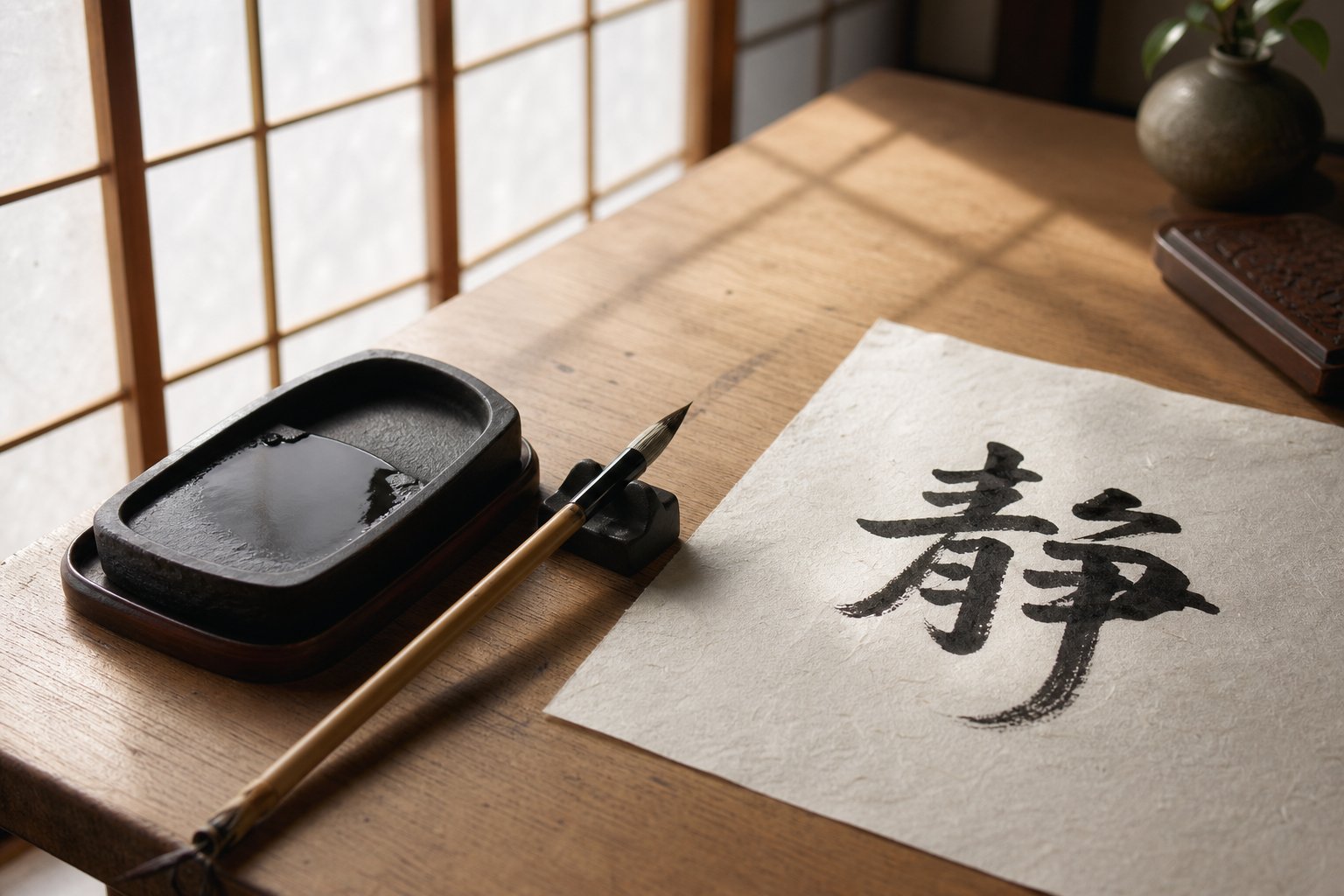
Japanese Male Names From Kanji to Cultural Context
Japan borrowed Chinese characters over a thousand years ago, then built an entirely different naming philosophy on top of them. Where Chinese names compress meaning into one or two characters with fixed pronunciations, Japanese names introduce a layer of ambiguity that makes the system both richer and more complex. A single kanji can have multiple readings, and the same spoken name can be written with entirely different characters, each shifting the meaning. This flexibility is what makes any japanese name generator worth using far more nuanced than a simple randomizer.
Kanji Choices That Define Japanese Boy Names
When Japanese parents name a son, they select kanji not just for meaning but for visual elegance, stroke count, and how the characters pair together on paper. The same reading, Haruto for example, can be written as 陽翔 (sun + soar), 春翔 (spring + soar), or 晴人 (clear weather + person). Each version carries a different emotional texture despite sounding identical when spoken aloud. This is the core concept behind japanese names and meanings: the written form holds as much identity as the sound.
Certain kanji appear repeatedly in japanese names for boys because they encode qualities parents wish for their sons:
- 翔 (Sho/To) - To soar, fly. One of the most popular kanji in modern boy names, expressing ambition and freedom.
- 陽 (You/Hi) - Sun, positive energy. Conveys warmth, brightness, and an outgoing spirit.
- 大 (Dai/Ta) - Great, large. Suggests someone with a big presence or generous character.
- 颯 (Hayate/So) - Refreshing breeze, brisk. Evokes energy and swift action.
- 蓮 (Ren) - Lotus. Symbolizes purity rising from adversity, drawn from Buddhist imagery.
- 律 (Ritsu) - Law, rhythm, discipline. Implies someone upstanding and principled.
- 凪 (Nagi) - Calm, windless. A newer trend reflecting parents' wish for peaceful lives.
- 碧 (Ao/Aoi) - Blue-green, azure. Connects to nature and clarity of spirit.
Stroke count matters here too, though differently than in Chinese tradition. Japanese parents often consult seimei handan (name fortune-telling), a system that calculates luck based on the total stroke count of the full name. Specific totals are considered auspicious or unlucky, and some parents will swap one kanji for another with the same reading just to hit a better number. A name like 健太 (Kenta, meaning "healthy and strong") has a different fortune score than 賢太 (Kenta, meaning "wise and strong") despite identical pronunciation.
Historical vs. Modern Japanese Male Naming Trends
Japanese men's names shift dramatically across historical periods, which matters enormously for fiction writers and worldbuilders. During the samurai era, male names often ended in suffixes that indicated birth order or status: -ro (郎, "son") for firstborns, as in Ichiro or Taro; -suke (助/介, "helper") for second sons; and -zo (蔵/三, "storehouse" or "three") for third sons. Names like Hanzō, Musashi, and Nobunaga carry the weight of feudal Japan and signal warrior-class identity immediately.
The Taisho era (1912-1926) brought a shift toward literary and artistic sensibilities. Names like Akira (明, "bright"), Jun (純, "pure"), and Shin'ichi (真一, "true one") reflected modernization and Western intellectual influence. If you are writing historical fiction set in this period, these names feel era-appropriate in ways that modern choices would not.
Contemporary trends tell a different story. A Meiji Yasuda Life Insurance survey found that 陽翔 (Haruto/Hinato) topped Japan's 2024 baby name rankings for boys, with the reading "Haruto" holding the number-one spot for sixteen consecutive years. Other top names included 凪 (Nagi, meaning "calm"), 朝陽 (Asahi, meaning "morning sun"), and 暖 (Dan/Haru, meaning "warmth"). You will notice a clear pattern: modern japanese names boy parents choose lean heavily toward nature imagery, light, and emotional warmth rather than the martial strength that dominated earlier centuries.
Common Japanese Surnames Paired With Male Given Names
Understanding japanese family names adds another dimension. Unlike Chinese surnames, which number in the hundreds, Japan has over 100,000 distinct family names. Still, a handful dominate. The most common japanese surnames, Sato (佐藤), Suzuki (鈴木), Takahashi (高橋), Tanaka (田中), and Watanabe (渡辺), each carry their own meaning rooted in geography or occupation. Sato combines "help" with "wisteria," while Tanaka literally means "in the rice field."
When pairing surnames with given names, Japanese parents consider how the full name sounds as a unit. A surname ending in a vowel pairs differently than one ending in a consonant sound. Tanaka Haruto flows smoothly, while Suzuki Sho might feel too clipped for some families. These japanese last names and meanings interact with given-name kanji to create a complete identity, one where sound, meaning, stroke count, and visual balance all play a role.
This layered system, where a single spoken name can carry multiple written identities, is uniquely Japanese. It also means that when you encounter a Japanese name romanized in English, you are seeing only the surface. The kanji beneath could tell an entirely different story, a complexity that extends into Korean naming traditions, where a parallel character-based system called hanja creates its own generational architecture.
Korean and Southeast Asian Male Naming Traditions
Korean names share the same Chinese-character DNA as Japanese names, but the system governing how those characters are selected, debated, and passed down is entirely its own. And once you move south into Vietnam, Thailand, and the Philippines, the logic shifts again. Each tradition encodes masculine meaning through different linguistic and cultural machinery. If you are looking for authentic asian names for boys, understanding these systems is what separates a grounded choice from a hollow one.
The Dollimja System and Generational Identity
Korean families historically used a system called the dollimja (돌림자) to link male relatives across generations. Here is how it works: a family's genealogical record, the jokbo (족보), prescribes a specific hanja character that all males born in the same generation must share. One syllable of the two-syllable given name is fixed by the jokbo, while the other syllable is chosen individually. So cousins might be named Minjun, Minseok, and Minho, all sharing the "Min" character assigned to their generation.
This system meant you could meet a stranger with the same surname and, by comparing generational characters, immediately determine whether they were an elder or junior within the clan. As Korean author Kim Yoonmi explains, the dollimja allowed clan members to give each other proper respect based on generational rank. The practice has weakened over recent decades, particularly as "pure Korean" names without hanja backing became fashionable in the 1990s and 2000s. Still, many families maintain the jokbo, and debates over whether to follow it remain a real source of family tension.
Hanja Characters for Korean Male Names
Even when families skip the dollimja, hanja selection remains central to how to name your asian baby in a Korean context. The Korean government maintains an official list of approved hanja for name registration, and families often argue intensely over which characters to use. The considerations stack up quickly:
- Meaning - The character must express the family's aspirations for the child. Characters like 俊 (jun, "talented"), 成 (seong, "achievement"), and 哲 (cheol, "wise") carry strong masculine meaning in Korean naming.
- Sound harmony - Korean names avoid harsh double consonants (ㅃ, ㄲ, ㅆ) in favor of softer sounds, though male names tolerate harder consonants like "cheol" (철) or "cheon" (천) more than female names do.
- Stroke count - Families weigh which homophone hanja to register based on stroke balance, sometimes arguing over a difference of one or two strokes.
- Elemental balance - Some families consult the child's natal chart and Chinese zodiac, choosing characters with water radicals to balance a fire-heavy birth chart, or metal elements to strengthen a perceived weakness.
- Historical context - A character associated with a disgraced ancestor or an unfashionable era gets avoided.
Modern Korean parents also factor in trends. Names cycle through fashions by decade. A name ending in "-sook" signals a woman born in the 1960s-70s, while "-ja" endings mark the Japanese occupation era. For boys, single-syllable given names like Min (민) or Jun (준) have gained ground recently, especially when paired with two-syllable surnames like Namgung (남궁). The result is a naming culture that balances deep tradition with real-time social awareness.
Vietnamese, Thai, and Filipino Male Naming Traditions
Southeast asian names operate on fundamentally different principles. Vietnamese names follow a three-part structure: family name, middle name, and given name. The middle name often signals gender. "Van" (Văn) marks a name as male, while "Thi" (Thị) marks it as female. As the Cultural Atlas notes, common male middle names also include Hữu, Đức, Xuân, and Công, each adding a layer of meaning beyond simple gender identification.
Vietnamese given names carry direct poetic meaning drawn from nature, virtues, or aspirations. A boy named Dũng (courageous) or Lập (independent) wears his family's hopes openly. Many Vietnamese names also hold unisex meaning, with names like Anh, Khánh, and Xuân used for both genders. The middle name is what disambiguates. This makes Vietnamese naming surprisingly flexible while still encoding clear masculine or feminine identity through structure rather than the given name alone.
Thai male names reflect centuries of Pali and Sanskrit influence layered over older monosyllabic Thai roots. According to the Thailand Foundation, Thai commoners historically used simple one-syllable names, but as Brahmanist and Buddhist influence spread, names grew longer and more elaborate. Modern Thai first names for men typically run three to four syllables and draw from religious or royal vocabulary. Somchai (สมชาย), one of the most common names in asia for Thai men, directly means "worthy man" or "true male." Arthit (อาทิตย์), derived from the Sun God, conveys persistence and strength. Thai last names are even longer, often five to eight syllables, because a 1913 law required every family to register a unique surname.
Filipino naming traditions blend indigenous, Spanish, and American influences into something distinct. Spanish-era naming conventions left many Filipino families with surnames drawn from a government-issued catalog in 1849. Male given names often combine a Spanish first name (Jose, Juan, Antonio) with an indigenous or modern middle name. The mother's maiden surname serves as the middle name in official documents, creating a structure unlike any other Asian system. Contemporary Filipino parents increasingly choose English or invented names, though traditional choices with Spanish roots remain among the most common names in asia's Philippine context.
The table below shows how the concepts of strength and wisdom, two of the most desired qualities in asian names for boys, are expressed differently across these four cultures:
| Concept | Korean | Vietnamese | Thai | Filipino |
|---|---|---|---|---|
| Strength | 강 (Gang) - "strong"; 철 (Cheol) - "iron" | Dũng - "courageous"; Mạnh - "powerful" | Somchai (สมชาย) - "worthy man"; Arthit (อาทิตย์) - "sun/persistence" | Lakas (indigenous) - "strength"; Andres (Spanish) - "manly" |
| Wisdom | 지 (Ji) - "wisdom"; 현 (Hyeon) - "virtuous/wise" | Trí - "intellect"; Minh - "bright/clever" | Paithoon (ไพฑูรย์) - "chrysoberyl" (auspicious clarity); Panya (ปัญญา) - "wisdom" | Marunong (indigenous) - "knowledgeable"; Prudencio (Spanish) - "prudent" |
| Ambition/Success | 성 (Seong) - "achievement"; 준 (Jun) - "talented" | Lập - "independent"; Thành - "succeed" | Preecha (ปรีชา) - "clever/capable" | Dalisay (indigenous) - "pure"; Prospero (Spanish) - "prosperous" |
| Nature/Poetic Meaning | 하늘 (Haneul) - "sky" (pure Korean) | Phong - "wind"; Xuân - "spring" | Duangkamol (ดวงกมล) - "from the heart" | Dagat (indigenous) - "sea"; Bituin - "star" |
You will notice that Korean and Vietnamese names encode these qualities at the character level, compressing meaning into one or two syllables. Thai names achieve similar goals through longer Sanskrit-derived compounds. Filipino names split the work between two linguistic traditions entirely. Each approach is valid, each is culturally specific, and each produces names that sound and feel completely different when romanized into English, which raises its own set of complications.

Romanization Systems That Change How Names Look in English
The same person can have a name that looks completely different on two documents. Not because of a typo, but because two competing romanization systems rendered the original characters into English using different rules. If you have ever wondered why Mao Tse-tung and Mao Zedong are the same person, or why a japanese surname like 千葉 appears as both "Chiba" and "Tiba," romanization is the answer. For anyone using an asian name generator male tool or researching authentic names for creative projects, understanding these systems prevents confusion and adds a layer of realism most people miss.
Chinese Romanization and Why Spelling Varies
Mandarin Chinese has two major romanization systems still in active circulation. Pinyin, adopted by the People's Republic of China in 1958 and now the international standard, uses letters like B, D, G, Q, X, and Z to represent sounds. Wade-Giles, developed in the 19th century and still common in older academic texts and Taiwanese contexts, uses apostrophes to mark aspiration and combinations like HS and TS that Pinyin avoids entirely.
The Library of Congress Pinyin Conversion Project provides a clear way to tell the systems apart: if you see syllables beginning with B, D, G, Q, X, or Z, you are looking at Pinyin. If you see apostrophes marking aspiration (like ts'ui or ch'ien) or hyphens separating syllables in personal names, that is Wade-Giles. Consider how the chinese for name "陈金安" renders differently:
- Wade-Giles: Ch'en, Chin-an (hyphenated, with apostrophe)
- Pinyin: Chen, Jin'an (joined syllables, no hyphen)
This matters practically. Taiwanese Mandarin speakers often use Wade-Giles on passports and official documents because Taiwan never adopted Pinyin as its standard. Someone might ask "is Taiwanese a language?" and the answer involves complex politics, but the romanization difference is straightforward: the same han Mandarin sounds get spelled differently depending on which side of the strait issued the document. A name like 王鐵人 becomes "Wang T'ieh-jen" in Wade-Giles but "Wang Tieren" in Pinyin. Same person, same pronunciation, completely different English spelling.
Japanese Romanization Systems Explained
Japan has wrestled with competing romanization systems for over a century. The two main contenders are Hepburn (developed in 1867) and Kunrei-shiki (adopted as the government standard in 1937). The core difference: Hepburn spells sounds the way English speakers would pronounce them, while Kunrei-shiki organizes spellings based on the internal logic of the Japanese kana chart.
The practical impact is significant. Under Kunrei-shiki, し is spelled "si," ち is "ti," and つ is "tu" because they belong to the S and T rows of the kana table. Under Hepburn, those same characters become "shi," "chi," and "tsu," matching their actual pronunciation. As Language Log reports, Japan's Agency for Cultural Affairs has recommended officially switching to Hepburn as the standard because Kunrei-shiki never caught on with the general public despite decades of being taught in schools.
For anyone researching japanese name meanings or building characters for fiction, this creates a real pitfall. A japanese name like 千葉庄司 could appear as "Chiba Shoji" (Hepburn) or "Tiba Syozi" (Kunrei-shiki). The first looks familiar. The second looks like a different person entirely. Passport offices historically used Hepburn for outward-facing documents while schools taught Kunrei-shiki internally, which sometimes caused mismatches on credit cards and bank accounts.
Korean Romanization and Common Confusions
Korean has its own parallel battle. McCune-Reischauer (MR), developed in 1937, uses diacritical marks and apostrophes to represent Korean sounds. South Korea's Revised Romanization (RR), introduced in 2000, dropped all diacritics in favor of letter combinations that work better in digital contexts. Most academic libraries and institutions like Cornell University still use McCune-Reischauer for cataloging Korean materials.
The differences are not subtle. The poet 김소월 appears as "Kim So-wol" in McCune-Reischauer but "Gim Sowol" in Revised Romanization. The name 이광수 becomes "Yi Kwang-su" (MR) versus "I Gwangsu" (RR). That initial consonant shift from Y to I and K to G trips up anyone unfamiliar with the systems.
| Original Name | Language | System A | System B | Key Difference |
|---|---|---|---|---|
| 毛泽东 | Chinese | Mao Tse-tung (Wade-Giles) | Mao Zedong (Pinyin) | Hyphen and initial consonants (Ts vs. Z) |
| 王鐵人 | Chinese | Wang T'ieh-jen (Wade-Giles) | Wang Tieren (Pinyin) | Apostrophe, hyphen, joined syllables |
| 千葉庄司 | Japanese | Tiba Syozi (Kunrei-shiki) | Chiba Shoji (Hepburn) | Ti/Chi and Sy/Sh consonant mapping |
| 新宿 | Japanese | Sinzyuku (Kunrei-shiki) | Shinjuku (Hepburn) | Si/Shi and Zy/J consonant mapping |
| 이광수 | Korean | Yi Kwang-su (McCune-Reischauer) | I Gwangsu (Revised) | Y/no-Y, Kw/Gw, hyphenation |
| 박목월 | Korean | Pak Mog-wol (McCune-Reischauer) | Bak Mokwol (Revised) | P/B, hyphenation, vowel markers |
The practical takeaway: when you encounter an unfamiliar spelling of an Asian name in English in mandarin Chinese texts, Japanese documents, or Korean records, the person's name has not changed. The system translating it has. Writers building characters, professionals addressing colleagues, and anyone using name generators should recognize that a single individual might appear under multiple spellings depending on context, era, and which government or institution produced the document. This awareness becomes even more critical when you move from how names are spelled to how they are actually used in conversation, where honorifics, formality levels, and cultural etiquette add yet another layer of complexity.
Cultural Etiquette and Respectful Use of Asian Male Names
Knowing how a name is spelled is one thing. Knowing how to actually use it, when to add an honorific, which part to say in conversation, and what signals respect versus familiarity, is where most non-Asian speakers stumble. These are not minor details. Getting someone's name wrong in a professional or creative context can flatten a relationship or flatten a character into a stereotype.
Honorifics and When to Use Them
Japanese honorifics are the most widely recognized system, but they are not the only one. In Japan, attaching "-san" to a surname is the default safe choice for virtually any interaction. As Migaku's guide to Japanese addressing explains, using someone's last name plus san works in roughly 90% of situations, from business meetings to casual introductions. The hierarchy expands from there: "-sama" for formal or customer-facing contexts, "-kun" for junior males addressed by a senior, and "-sensei" for teachers, doctors, and masters of a craft.
Korean uses a parallel system with titles like -ssi (씨, roughly equivalent to Mr./Ms.), -nim (님, a respectful suffix for superiors), and positional titles that replace names entirely in workplace settings. In Chinese professional contexts, the surname plus a title like Lao (老, "elder") or Xiao (小, "young") signals familiarity and relative seniority without crossing into disrespect.
When in doubt, use the family name plus the culture's default respectful suffix. In Japanese, that is -san. In Korean, that is -ssi. In Chinese, use the full name or surname plus title. Never default to a first name asian colleagues have not explicitly offered.
Thai culture flips the script entirely. Despite having family names, Thais address each other by given name in almost all contexts, including formal ones. As the Asia Media Centre's naming guide confirms, second reference for Thai individuals uses the given name, not the surname. Calling a Thai colleague by their family name would sound oddly stiff.
Common Mistakes When Using Asian Male Names
The most frequent errors fall into predictable patterns:
- Splitting the wrong syllable. Calling Xi Jinping "Mr. Jinping" or Kim Jong-un "Chairman Un" treats a given-name element as a surname. If you see a three-syllable Chinese name, the single syllable is almost always the family name.
- Using first names prematurely. In Japan, using someone's given name signals serious intimacy, reserved for family and close friends. Even married couples sometimes stick to surnames. Jumping to a first name without invitation feels presumptuous, not friendly.
- Assuming all Asian names work the same way. Vietnamese names put the family name first but use the last element of the given name for casual address. Filipino names follow Western given-name-first order. Applying one culture's rules to another creates confusion.
- Mispronouncing and not correcting. Asking "how do you prefer your name pronounced?" shows more respect than guessing repeatedly or avoiding the name altogether.
People sometimes search "what is my asian name" looking for a fun quiz result, but the question itself reveals a misunderstanding. Asian names are not interchangeable accessories. They belong to specific linguistic and cultural systems. A good asian names list gives you options rooted in real traditions. A quiz that assigns you a random name based on your birthday treats those traditions as costume.
Authentic Names vs. Orientalist Stereotypes
There is a clear line between good asian names drawn from real cultural pools and names invented to sound generically "Eastern." The difference matters especially for writers. As NextGenerAsian's analysis of Asian character depiction points out, naming Asian characters wrong is a form of casual racism. The article cites Cho Chang from Harry Potter as a prime example: a character given a Korean surname as a first name paired with a Chinese surname, creating a stereotypical asian name that belongs to no actual naming tradition.
Similarly, giving a male character a name like "Feng Shui" or "Kung Pow" because it sounds vaguely Chinese is not creative. It is lazy orientalism. Authentic naming means choosing characters that a real family in that culture might plausibly select. It means understanding that typical asian names follow specific structural rules, that stereotype chinese names built from random "exotic" syllables are immediately obvious to anyone from that culture, and that research is not optional.
If you are building characters for fiction or gaming, here is the standard to aim for: could a native speaker of that culture encounter your character's name and find it unremarkable? Not exotic, not comedic, not a collection of nice asian names strung together for aesthetic effect, but simply a name that sounds like it belongs to a real person. That is the bar. Cute asian names pulled from baby-name lists can work perfectly well for characters, as long as you verify the gender coding, generational appropriateness, and cultural origin match your character's background.
The goal is not perfection. It is intentionality. A writer who picks a name because they researched its meaning and verified its cultural fit has done the work. A writer who picks a name because it "sounds Asian" has not. That distinction carries directly into practical applications, where the context of your project, whether fiction, gaming, or professional communication, shapes which naming choices serve you best.
Practical Uses From Fiction Writing to Gaming Characters
Intentionality without application is just trivia. The cultural knowledge covered so far becomes genuinely useful when you apply it to a specific project, whether that is a novel manuscript, a gaming avatar, or a workplace interaction. Each context demands a different approach to selecting and using Asian male names, and the stakes vary accordingly. A random asian name pulled from a generator might work for a throwaway NPC in a video game, but it will not hold up under scrutiny in a published novel or a professional email.
Names for Fiction Writers and Worldbuilders
Fiction is where naming decisions carry the most weight. Your character's name signals his culture, era, social class, and family aspirations before a single line of dialogue lands. The genre you are writing in determines which naming conventions apply.
For xianxia and cultivation fantasy, names function as prophecy. As Cultivating Dragons' guide to wuxia and xianxia naming conventions explains, a well-crafted xianxia name is not just poetic but a foreshadowing tool. A hero named "Tian Wu" (Heavenly Void) may struggle with his place in the celestial order. A warrior named "Xue Feng" (Blood Wind) may be doomed to a violent destiny. Names in this genre incorporate elements of Confucian virtue, Daoist cosmology, and poetic symbolism, contributing to a richer storytelling experience.
The danmei community, which writes male-male romance within Chinese fantasy settings, follows these same conventions but adds layers of emotional resonance. Protagonists often carry names with dual meanings: one reading that signals strength or cultivation prowess, and another that hints at vulnerability or emotional depth. A character named Lan Wangji (蓝忘机, "Blue Forget-Machine") from the popular danmei novel Mo Dao Zu Shi encodes both his clan identity and his emotional arc in two characters.
Here is what to consider for each fiction genre:
- Xianxia and cultivation novels: Use characters referencing natural elements (wind, fire, ice), celestial forces (heaven, void, star), or philosophical virtues (righteousness, wisdom). Avoid mixing Japanese and Chinese elements in the same cultural framework. A name like "Akira Longwei" breaks immersion instantly because it crosses two distinct traditions.
- Historical fiction (ancient China): Research era-appropriate surnames. Tang Dynasty names differ from Ming Dynasty names in character fashion and generational conventions. Characters should have a birth name, a courtesy name (zi), and possibly a title, reflecting real Chinese naming practice where one person carries multiple names across their life.
- Historical fiction (Joseon-era Korea): As research by S.Q. Eries demonstrates, sourcing names from Korean historical dramas released for native audiences is a practical method when English-language academic sources are limited. Joseon-era commoners used simpler naming schemes, sometimes based on birth month and day, while nobility followed strict hanja conventions.
- Modern-day settings: Use names that reflect current trends. A Korean character born in 2000 would not carry a name ending in "-sook" (a 1960s-70s female convention). A Japanese character born in the 2020s is far more likely to be named Haruto or Ren than Taro or Ichiro.
- Fantasy with Asian-inspired worldbuilding: You can invent names, but ground them in real phonetic patterns. Random syllables like "Gon Su Fa" or "Tak Lin Hu" do not follow Chinese phonetic rules and will feel inauthentic to readers familiar with the genre.
As Ignited Ink Writing advises, character names should match the time period and location of your story. Having a "Beyonce" in 1753 jars readers out of the narrative, and the same principle applies to Asian settings. A modern Korean name in a Joseon-era story, or a simplified Chinese name in a pre-simplification historical context, breaks immersion just as badly.
Gaming Characters and Username Inspiration
Gaming operates under different constraints. You need a name that reads well on screen, fits character limits, and communicates something about your avatar's identity at a glance. A username generator might give you random combinations, but culturally grounded names create more memorable characters.
- MMORPGs and RPGs: If your character class is a swordsman or martial artist, draw from wuxia naming conventions. Characters like "Xue Feng" (Blood Wind) or "Wu Xing" (Formless) signal combat identity immediately. For healer or support classes, names with characters for calm, lotus, or wisdom fit better.
- Anime-inspired games: An anime name generator typically pulls from Japanese naming pools. For male characters, endings like -to (翔, soar), -ki (輝, radiance), or -ro (郎, son) signal masculinity. Pair these with a surname that matches your character's archetype: Takahashi (高橋, "high bridge") for nobility, Tanaka (田中, "in the field") for an everyman.
- Competitive gaming usernames: Shorter names work better. Single kanji readings like Ren (蓮, lotus), Kai (海, sea), or Shin (真, truth) are punchy, easy to type, and carry real meaning. A japanese name gen tool can help you find these, but verify the kanji meaning before committing.
- Gacha and mobile games: Many players create multiple characters. Using a consistent naming logic, like all characters sharing a surname or all drawing from the same elemental theme, creates cohesion across your roster.
A japanese name maker or random japanese name generator can serve as a starting point for gaming characters, but the best results come from understanding what the output actually means. A name that sounds cool but translates to something embarrassing (like "Little Meat" or "Baby Immortal," as the xianxia naming guide warns) will undermine your character the moment someone who reads the language encounters it.
Professional Context and Understanding Colleagues' Names
The professional use case is less about generating names and more about understanding them. When you work with Asian colleagues, clients, or partners, their names carry the same cultural weight described throughout this article. Recognizing that weight, even at a basic level, builds rapport.
- Email and formal correspondence: Default to the full name or surname plus appropriate title until told otherwise. For Chinese colleagues, use the surname (the first element). For Thai colleagues, use the given name (also the first element, but for the opposite structural reason).
- Pronunciation: Ask once, listen carefully, and practice. Most people appreciate the effort far more than they mind the initial stumble. Avoiding someone's name entirely because you find it difficult is worse than mispronouncing it while trying.
- Western nicknames: Many Asian professionals adopt English names for convenience in international settings. Use whichever name they introduce themselves with. Do not ask "what is your real name?" as if their chosen professional name is somehow less valid.
- Business cards: In East Asian business culture, the card represents the person. Accept it with both hands, read it, and note the name order. If the card lists the surname first (common for Chinese, Korean, and Japanese professionals), follow that order in your address.
Whether your context is creative or professional, the underlying principle stays the same: names are not interchangeable labels. They carry structure, meaning, and cultural expectation. The difference between using them well and using them carelessly is simply whether you took the time to understand what you are working with, a distinction that becomes even clearer when you see specific names laid out with their full character breakdowns and cultural connotations.
Curated Asian Male Names by Culture With Meanings
Character breakdowns and cultural context transform a list of names into something you can actually use. The tables below consolidate asian boy names across five cultures into a single reference, showing native script, romanized spelling, literal meaning, and the cultural connotation each name carries. Whether you are naming a fictional character, choosing a gaming handle, or simply trying to understand a colleague's name at a deeper level, these entries give you the full picture rather than just a sound.
Top Chinese Male Names With Character Meanings
Chinese male names compress family aspirations into one or two characters. The names below reflect current naming trends while drawing from traditional character pools that have signaled masculine qualities for centuries.
| Native Script | Pinyin | Literal Meaning | Cultural Connotation | Context Notes |
|---|---|---|---|---|
| 浩然 | Haoran | Vast + righteous | Evokes the Confucian concept of cultivating a "vast, righteous spirit" (浩然之气) | Works in both formal and casual settings; literary resonance |
| 俊杰 | Junjie | Talented + outstanding | A classic pairing suggesting someone who rises above peers through ability | Common across generations; safe for any register |
| 山龙 | Shanlong | Mountain + dragon | Combines steadfastness with imperial power and vitality | Slightly traditional; strong for fiction or formal naming |
| 文博 | Wenbo | Cultured + broad | Signals intellectual breadth and scholarly refinement | Suits professional or academic characters |
| 卓逸 | Zhuoyi | Outstanding + excellent | Implies effortless superiority; a modern aspirational choice | Trendy among younger parents; works informally |
| 瑜睿 | Yurui | Elegant jade + wise | Combines material preciousness with intellectual sharpness | Refined tone; fits formal contexts well |
| 翰俊 | Hanjun | Writing brush + talented | Suggests literary talent and handsome bearing | Classic feel; appropriate across all contexts |
Names like Haoran, Junjie, and Wenbo consistently appear among the most chosen Chinese boy names because they balance traditional character weight with modern phonetic smoothness. Parents favor combinations where both characters reinforce each other rather than compete for attention.
Popular Japanese Male Names With Kanji Breakdown
Japanese boys names gain their richness from kanji flexibility. The same pronunciation can carry different meanings depending on which characters a family selects. Below are popular japanese boy names alongside unique japanese boy names that offer something more distinctive. You will find both cute japanese boy names with gentle meanings and stronger options suited to warrior-type characters.
| Kanji | Reading | Literal Meaning | Cultural Connotation | Context Notes |
|---|---|---|---|---|
| 陽翔 | Haruto | Sun + soar | Brightness and ambition; topped Japan's charts for 16 consecutive years | Universal; works in any setting from casual to formal |
| 蓮 | Ren | Lotus | Purity rising from adversity; Buddhist symbolism | Modern and clean; popular for its simplicity |
| 湊 | Minato | Harbor | A gathering place; suggests someone who draws people together | Gentle tone; suits both formal and informal use |
| 颯太 | Sota | Refreshing breeze + great | Energy and natural vitality; a dynamic, active image | Youthful feel; common among names of male in Japan born after 2010 |
| 碧 | Aoi | Blue-green, azure | Nature and clarity of spirit; gender-neutral leaning masculine | Trendy; works well as a standalone single-kanji name |
| 暖 | Dan / Haru | Warmth | Emotional gentleness and approachability | A unique japanese boy name reflecting newer parental values |
| 健太 | Kenta | Healthy + great | Physical vigor and generous spirit; classic japanese guy names energy | Timeless; appropriate across all decades and registers |
| 勇 | Isamu | Brave | Direct courage; associated with artist Isamu Noguchi | Strong and traditional; suits historical or modern fiction |
Boy names japanese parents choose today lean heavily toward nature imagery and emotional warmth. According to Pampers' Japanese boy names guide, the flexibility of kanji means parents can personalize even the most popular reading by selecting characters that add a unique layer of meaning, making each Haruto or Ren subtly different from the next.
Korean and Southeast Asian Male Name Picks
Korean names balance hanja tradition with modern sound preferences, while Vietnamese and Thai names draw from entirely different linguistic roots. The entries below cover all three.
| Native Script | Romanized | Literal Meaning | Cultural Connotation | Context Notes |
|---|---|---|---|---|
| 민준 (敏俊) | Minjun | Quick/clever + talented | Intelligence paired with natural ability; Korea's most popular boy name for years | Universal; formal and informal |
| 서준 (瑞俊) | Seojun | Auspicious + talented | Good fortune meeting capability; a modern aspirational name | Trendy; suits contemporary characters |
| 지호 (智虎) | Jiho | Wisdom + tiger | Intellectual strength backed by fierce courage | Strong masculine coding; works across registers |
| 강대 (剛大) | Kang-Dae | Mighty + great | Direct physical and moral power; no subtlety, all force | Traditional; suits historical or powerful characters |
| Minh Đức (Vietnamese) | Minh Duc | Bright + virtue | Intellectual clarity paired with moral uprightness | Formal; the given name "Duc" used in casual address |
| Dũng (Vietnamese) | Dung | Courageous | Direct martial bravery; a classic Vietnamese male name | Works in all contexts; note tonal pronunciation matters |
| สมชาย (Thai) | Somchai | Worthy man | One of Thailand's most common male names; signals traditional masculinity | Informal daily use; Thais address by given name |
| อาทิตย์ (Thai) | Arthit | Sun (from Sanskrit) | Persistence, radiance, and divine energy | Formal feel; used with nickname "Art" in casual settings |
Korean names like Minjun and Seojun dominate current charts because their hanja combinations feel both meaningful and phonetically smooth. Vietnamese and Thai names, by contrast, wear their meanings on the surface. There is no hidden character layer to decode. "Dung" means courageous, full stop. "Somchai" means worthy man, directly and without ambiguity.
One practical note across all these cultures: names that work in formal contexts almost always work informally too, but the reverse is not true. A nickname like "Art" (short for Arthit) or "Min" (short for Minjun) fits casual conversation but would feel incomplete on a business card or in a novel's character introduction. When selecting from these lists, consider where your character or reference will appear most often and choose the register that matches.
Frequently Asked Questions About Asian Male Names
1. What is the correct name order in Asian cultures?
Most East Asian cultures place the family name first, including Chinese, Korean, Japanese, and Vietnamese traditions. This reflects a cultural value where family identity precedes individual identity. However, Southeast Asian countries like Thailand, the Philippines, and Indonesia use given-name-first order similar to Western conventions. When addressing someone, knowing which part is the surname prevents embarrassing mistakes like calling Kim Jong-un 'Chairman Un' instead of 'Chairman Kim.'
2. How do Chinese parents choose male names?
Chinese parents select characters based on multiple layered criteria: the meaning of each character (favoring strength, ambition, or natural power for boys), tonal harmony between syllables, stroke count balance for auspicious energy, generational naming requirements from family records, and the taboo against repeating ancestor names. Characters like Long (dragon), Wei (great), and Zhi (ambition) are popular for encoding masculine qualities. Many families also consult feng shui practitioners to calculate ideal stroke totals based on the child's birth date.
3. Why do Asian names look different in English depending on the source?
Different romanization systems translate the same original characters into English using different spelling rules. Chinese has Pinyin versus Wade-Giles, Japanese has Hepburn versus Kunrei-shiki, and Korean has Revised Romanization versus McCune-Reischauer. For example, the same Chinese name might appear as 'Mao Zedong' in Pinyin or 'Mao Tse-tung' in Wade-Giles. These are not typos or alternate names but different transliteration standards used by different governments, eras, and institutions.
4. What are the most popular Japanese male names right now?
According to Meiji Yasuda Life Insurance surveys, Haruto (陽翔, meaning sun plus soar) has topped Japan's baby name charts for sixteen consecutive years. Other popular choices include Ren (蓮, lotus), Minato (湊, harbor), Sota (颯太, refreshing breeze plus great), and Aoi (碧, azure). Modern Japanese parents favor nature imagery, warmth, and emotional gentleness over the martial strength that dominated earlier naming periods like the samurai era.
5. How can I create authentic Asian male names for fiction or gaming?
Start by choosing a specific culture and time period rather than mixing elements from different traditions. Research era-appropriate naming conventions: xianxia fiction uses characters referencing natural elements and celestial forces, while modern Korean settings need names reflecting current trends like Minjun or Seojun. Verify that your chosen characters actually form plausible combinations a real family might select. Avoid mixing Japanese and Chinese elements in the same character, and check that the name does not accidentally translate to something embarrassing by consulting native speakers or reliable cultural resources.