Understanding Chinese Radicals in Dragon Zodiac Naming
When you look at a Chinese character, you're not seeing a single indivisible symbol. You're looking at a structure built from smaller components called radicals, or 部首 (bushou) in Mandarin. Think of radicals as the DNA of Chinese characters. Each one carries its own meaning, and that meaning quietly shapes the identity of every character it appears in.
For example, the Chinese word for dragon is 龙 (long). But when naming a child born in a Dragon year, you won't typically put 龙 directly into the name. Instead, you select characters whose radicals resonate with the Dragon's symbolic energy. This is where the real craft begins.
What Are Chinese Radicals and Why They Matter in Names
A radical is the core component of a Chinese character that hints at its category of meaning. The water radical 氵tells you a character relates to liquid, flow, or moisture. The fire radical 火 signals heat or light. There are roughly 214 traditional radicals, and they function like a periodic table for the Chinese writing system. In naming, radicals do double duty. They contribute to a character's dictionary meaning and its deeper symbolic resonance. A Chinese name operates across four dimensions simultaneously: sound, form, meaning, and elemental energy. Radicals sit at the intersection of form and meaning, making them a powerful lever for shaping a name's cultural weight.
The Dragon Zodiac Connection to Radical Selection
Radical selection for Chinese dragon names isn't guesswork or personal taste. It's rooted in centuries of cultural logic connecting specific character components to zodiac animal traits. The Dragon in Chinese culture commands water, soars through the heavens, and embodies imperial authority. Radicals that echo these domains amplify a name's auspiciousness. Radicals that contradict them, like those suggesting confinement or smallness, diminish it.
Radicals carry symbolic weight that amplifies or diminishes a name's auspiciousness based on zodiac compatibility. Choosing the right radical is choosing the right energy for your child's identity.
This article won't hand you a list of names to copy. Understanding the dragon meaning in Chinese culture and how radicals channel that meaning gives you something more valuable: the ability to evaluate any character yourself. You'll learn the system behind the selections, so every naming decision you make is informed rather than borrowed.
The Dragon's symbolic reach spans multiple domains, from rain-soaked seas to celestial skies, and each domain maps to a distinct family of radicals worth exploring.
Why the Dragon Zodiac Demands Specific Radicals
The Dragon isn't just another animal in the Chinese zodiac. It's the only mythical creature in the cycle, and that distinction shapes everything about how naming traditions treat it. Where the Ox connects to earth and labor, or the Rabbit to gentleness and grass, the Dragon commands entire realms of nature. Its symbolic territory is vast, and the radicals that serve it must match that scope.
The Dragon's Symbolic Domains in Chinese Culture
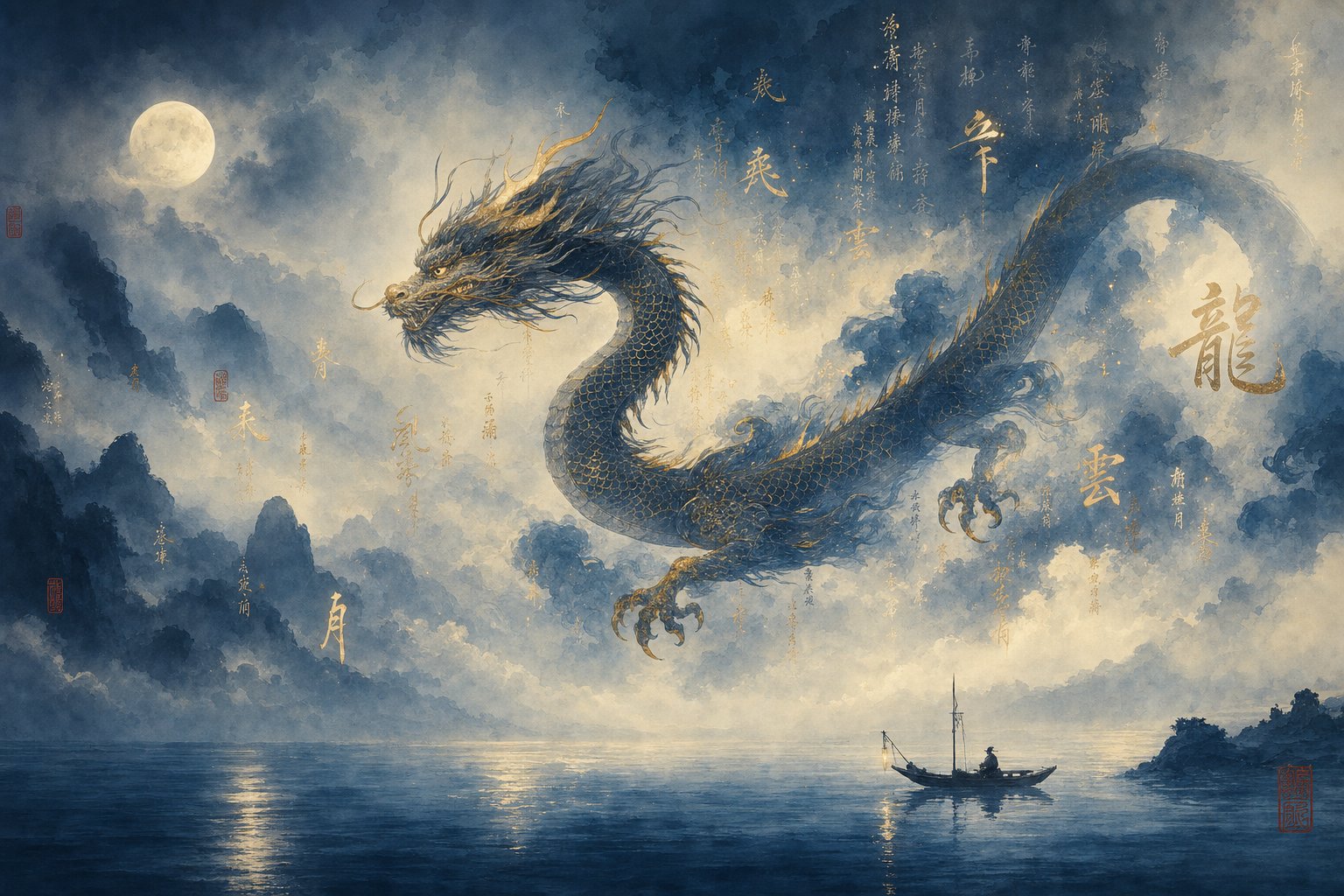
Imagine a creature that summons rainstorms, rides through clouds, and sits on an imperial throne. That's the Chinese dragon in a nutshell. Unlike Western dragons associated with destruction, the Asian dragon names tradition draws from a being of creation, authority, and cosmic balance. Its power flows through four primary symbolic domains, and each one maps directly to radical families you'll want to consider:
- Water (rain, seas, rivers) — The dragon in Chinese mythology is the lord of water. It governs rainfall, controls floods, and rules the four seas through Dragon Kings. Radicals like 氵(water), 雨 (rain), and characters containing 海 (sea) tap directly into this authority.
- Sky (clouds, celestial realm) — Dragons soar above the earth, dwelling among clouds and commanding the heavens. This celestial association connects to radicals like 日 (sun), 月 (moon), and components suggesting height, vastness, or flight.
- Royalty and imperial power — For centuries, the dragon was the exclusive symbol of the Chinese emperor. The dragon throne, dragon robes, and dragon seals all reinforced this link. The radical 王 (king/jade) and characters suggesting nobility or authority resonate with this domain.
- Transformation and vitality — Dragons shape-shift between forms, appear and vanish in mist, and represent dynamic life force. Radicals associated with growth, movement, and expansive energy echo this transformative nature.
Each domain gives you a different angle for selecting radicals. A name built on water radicals channels the Dragon's nurturing, life-giving power. A name rooted in celestial radicals emphasizes ambition and expansiveness. The key insight for dragon zodiac naming traditions is that you're not limited to one domain. You're choosing which facet of Dragon energy to highlight.
Traditional vs Simplified Radicals in Naming Practices
Here's where regional context matters. The mandarin for dragon is 龙 (long) in simplified characters, used in Mainland China, Singapore, and Malaysia. In traditional characters, used in Taiwan, Hong Kong, and Macau, it's written as 龍. The same split applies to many radicals themselves.
During the 1950s, the Chinese government simplified complex characters to boost literacy rates. Many radicals were streamlined in the process. For instance, the speech radical 言 became 讠, and the food radical 食 became 饣. Roughly 30% of the 3,500 most commonly used characters were altered during simplification, which means the majority of radicals remain identical across both systems.
What does this mean for naming? If your family uses simplified characters, you'll work with simplified radical forms. If your heritage connects to Taiwan or Hong Kong, traditional forms apply. The symbolic meaning stays the same either way. The water radical 氵carries identical auspicious weight whether it appears in a simplified or traditional character. The difference is visual form, not energetic substance.
One practical note: some characters exist only in one system, and a few simplified characters merged multiple traditional characters into one form. When selecting name characters, verify that your chosen character carries the intended meaning in the specific system your family uses. A character that looks elegant in simplified form might correspond to a different traditional character than you expect.
The cultural reasoning behind auspicious radicals transcends the simplified-traditional divide. A dragon still commands water whether you write it as 龙 or 龍. What matters is matching the radical's symbolic energy to the Dragon's nature, and the most direct way to do that starts with the element the Dragon rules most completely: water.
Water and Rain Radicals That Empower Dragon Names
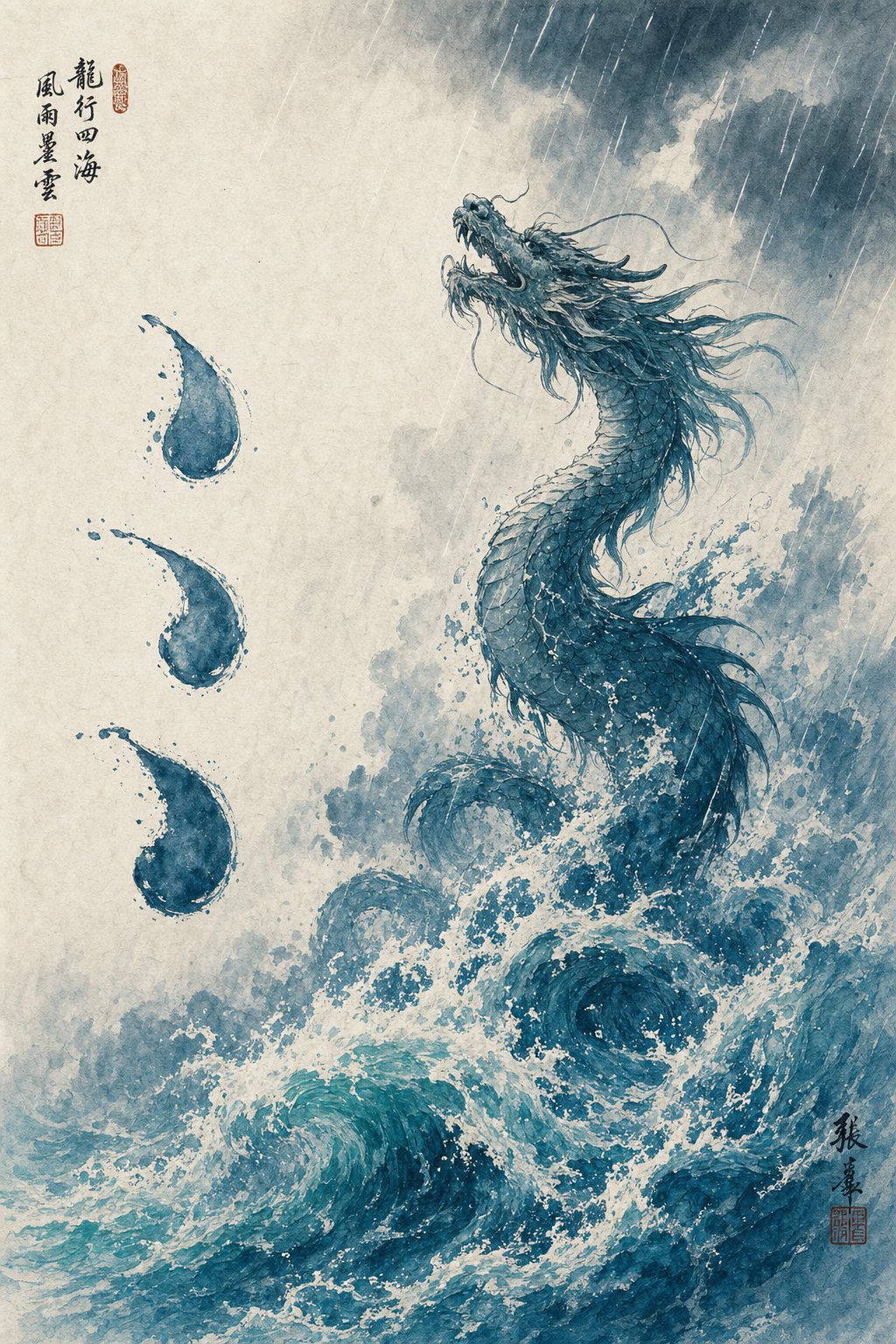
Water is the Dragon's home territory. In Chinese mythology, dragons don't merely live near water. They govern it. The Dragon Kings (Long Wang) rule the four seas, command rainfall, and control every river, lake, and well across the land. When you place a water-related radical inside a Dragon baby's name, you're placing that child squarely within the Dragon's domain of power. It's the single most resonant radical family for this zodiac sign.
Three water-related radicals stand out as top choices. Each one channels the Dragon's aquatic authority in a slightly different way, giving you flexibility depending on the sound, meaning, and visual balance you want in the final name.
The Water Radical 氵 and Its Name Characters
The three-dot water radical 氵(called "san dian shui" in Mandarin) is the most common water indicator in Chinese letters. It appears on the left side of a character and signals a connection to liquid, flow, or depth. For Dragon zodiac names, it's arguably the strongest single radical you can choose because it directly invokes the Dragon's role as water lord.
You'll find 氵in hundreds of characters, but not all of them work well in names. The best candidates carry meanings that are both beautiful and symbolically aligned with Dragon energy. Here are standout options:
- 泽 (ze, fourth tone) — means grace, benevolence, or marsh. It suggests abundance and generosity, like water nourishing the land.
- 涵 (han, second tone) — means to contain, cultivate, or encompass. It implies depth of character and intellectual breadth.
- 澜 (lan, second tone) — means great waves. It evokes the ocean's power and grandeur, fitting for the Dragon's commanding presence.
- 浩 (hao, fourth tone) — means vast or grand, like an endless body of water. Popular in boy names for its sense of boundless ambition.
- 淳 (chun, second tone) — means pure or honest. It connects water's clarity to moral character.
Each of these characters pairs the dragon chinese word's symbolic energy with a distinct personality trait. You're not just picking a pretty sound. You're encoding meaning at the radical level.
Rain and Sea Radicals for Dragon Babies
Beyond 氵, two other water-connected radicals deserve attention. The rain radical 雨 (yu, third tone) sits at the top of characters and connects to weather, sky, and atmospheric phenomena. Since Dragon Kings are specifically responsible for summoning rain and controlling storms, this radical carries deep mythological weight. Characters like 霖 (lin, second tone, meaning timely rain) and 霄 (xiao, first tone, meaning sky or firmament) blend celestial and water imagery in a single stroke.
The standalone water radical 水 (shui, third tone) occasionally appears as a full component rather than the abbreviated 氵form. You'll see it in characters like 淼 (miao, third tone), which triples the water symbol to mean vast expanse of water. It's visually striking in dragon in chinese letters and carries unmistakable aquatic energy.
| Radical | Pinyin | Meaning | Example 1 | Example 2 | Example 3 |
|---|---|---|---|---|---|
| 氵 | san dian shui | Water (flowing) | 泽 (ze) — grace | 涵 (han) — cultivate | 澜 (lan) — waves |
| 雨 | yu | Rain | 霖 (lin) — timely rain | 霄 (xiao) — firmament | 霏 (fei) — falling rain |
| 水 | shui | Water (standalone) | 淼 (miao) — vast water | 泉 (quan) — spring | 永 (yong) — eternal |
A quick note on 永 (yong): while it doesn't visually scream "water," its original form derives from flowing water, and it remains classified under the water radical in traditional dictionaries. Its meaning of "eternal" or "forever" makes it a popular and versatile name character that quietly carries water energy beneath the surface.
When choosing among these radicals, consider the overall visual weight of the name. The 氵radical is compact and balances well with complex right-side components. The 雨 radical sits on top and creates taller, more imposing characters. Both are excellent, but they produce different aesthetic results when written alongside a surname.
Water radicals ground a Dragon name in the zodiac's most fundamental element. But the Dragon doesn't only swim. It flies. And the radicals that capture its celestial nature open up an entirely different palette of naming possibilities.
Sky and Celestial Radicals for Dragon Zodiac Children
Dragons don't just rule the waters below. They command the skies above. In Chinese mythology, the dragon ascends through clouds, rides lightning, and moves freely between heaven and earth. This celestial nature makes sky-related radicals a powerful second pillar for any dragon chinese name. Where water radicals ground the name in the Dragon's elemental domain, celestial radicals lift it toward ambition, brilliance, and expansive vision.
Sun and Moon Radicals for Celestial Dragon Names
The sun radical 日 (ri, fourth tone) is one of the oldest pictographic components in Chinese writing. It dates back to the oracle bone inscriptions of the Shang Dynasty, originally drawn as a circle with a dot in the center to represent a luminous body. In naming, 日 signals brightness, time, and vitality. Characters built on this radical carry connotations of clarity and forward momentum, qualities that align with the Dragon's role as a bringer of dawn and cosmic order.
The moon radical 月 (yue, fourth tone) complements 日 by representing gentleness, cycles, and inner luminosity. Together, these two radicals cover the full spectrum of celestial energy. The character 明 (ming, second tone) literally combines sun and moon to mean "bright," symbolizing how day and night take turns illuminating the sky. It's one of the most popular characters in Chinese names for exactly this reason.
Here are strong celestial characters for a chinese dragon name:
- 晨 (chen, second tone) — morning, daybreak. Carries the energy of new beginnings and rising potential.
- 昊 (hao, fourth tone) — vast sky, boundless heavens. Evokes the limitless space where dragons soar.
- 明 (ming, second tone) — bright, clear. Combines sun and moon for balanced luminosity.
- 朗 (lang, third tone) — clear, bright, resonant. Suggests clarity of mind and voice.
- 曜 (yao, fourth tone) — shine, celestial body. Directly references heavenly luminaries.
The celestial dragon name meaning embedded in these characters isn't subtle. You're naming a child after the sky itself, after light and vastness. For a zodiac sign that literally flies through clouds, this resonance runs deep.
The King Radical and Imperial Dragon Power
The radical 王 (wang, second tone) means "king" but doubles as the jade radical in many characters. This dual identity is perfect for Dragon names. The dragon was the exclusive emblem of the Chinese emperor for over two thousand years. Dragon robes, dragon thrones, dragon seals — all reinforced the creature's link to supreme authority. Characters containing 王 channel that imperial energy directly.
What makes 王 especially versatile is its jade connection. In Chinese culture, jade represents virtue, purity, and nobility. Characters like 瑞 (rui, fourth tone, meaning auspicious) and 琪 (qi, second tone, meaning fine jade) carry both regal authority and moral beauty. They work across genders and pair well with most surnames.
| Radical | Pinyin | Meaning | Example Characters | Gender Suitability |
|---|---|---|---|---|
| 日 | ri | Sun / day | 晨 (chen) — morning; 昊 (hao) — vast sky; 曜 (yao) — shine | Mostly male; 晨 is unisex |
| 月 | yue | Moon / month | 朗 (lang) — clear; 朦 (meng) — hazy moonlight; 朝 (zhao) — dawn | Unisex; 朦 leans female |
| 日+月 | — | Combined luminosity | 明 (ming) — bright; 景 (jing) — scenery/light | Unisex |
| 王/玉 | wang / yu | King / jade | 瑞 (rui) — auspicious; 琪 (qi) — fine jade; 珩 (heng) — jade pendant | Unisex; 琪 leans female |
A practical tip: characters with the 日 radical tend to carry higher stroke counts and bolder visual weight, making them natural fits for single-character given names or as the first character in a two-character name. The 王 radical characters are more compact and flexible, slotting easily into either position.
Celestial and imperial radicals give a Dragon name its upward reach. But the best radical choices also account for the child's gender, where traditional preferences and modern flexibility create an interesting tension worth navigating.
Gender-Specific Radical Choices for Dragon Babies
Traditional Chinese naming draws clear lines between masculine and feminine energy, and those lines run right through radical selection. If you're wondering what are some boy names that mean dragon in spirit, or searching for graceful baby dragon names for a girl, the radical you choose sets the tone before anyone even reads the full character.
That said, these are tendencies, not rules carved in stone. Modern Chinese naming practices are increasingly flexible, with many parents choosing characters based on meaning and sound rather than strict gender conventions. Still, understanding the traditional framework helps you make intentional choices rather than accidental ones.
Auspicious Dragon Radicals for Boy Names
Male names in Chinese traditionally lean toward characters conveying strength, ambition, and authority. For Dragon zodiac boys, this aligns naturally with the creature's commanding presence. The radicals that work best channel vastness, power, and forward motion.
- 日 (sun radical) — Brightness and expansive energy. Characters like 昊 (hao, vast sky) and 晨 (chen, morning) suggest a boy who rises above and shines outward. The sun's directness matches masculine naming conventions perfectly.
- 王 (king/jade radical) — Imperial authority and noble character. Characters like 瑞 (rui, auspicious) and 珩 (heng, jade pendant) connect directly to the Dragon's role as the emperor's symbol. This radical says leadership without shouting it.
- 马 (horse radical) — Speed, vigor, and ambition. In Chinese astrology, the Horse and Dragon form a harmonious pairing. Characters like 骏 (jun, fine steed) and 腾 (teng, to soar) carry dynamic, forward-driving energy that complements Dragon vitality.
- 氵(water radical) — Depth and boundless reach. While water radicals work across genders, characters like 浩 (hao, vast) and 泽 (ze, grace/benevolence) carry a masculine weight through their meanings of grandeur and generosity.
Here's how these radicals look in complete names. Imagine the common surname 陈 (Chen):
- 陈昊天 (Chen Haotian) — vast sky + heaven. Double celestial imagery for a boy meant to aim high.
- 陈骏泽 (Chen Junze) — fine steed + grace. Combines horse-radical vigor with water-radical depth.
- 陈瑞晨 (Chen Ruichen) — auspicious + morning. King radical meets sun radical for imperial brightness.
Auspicious Dragon Radicals for Girl Names
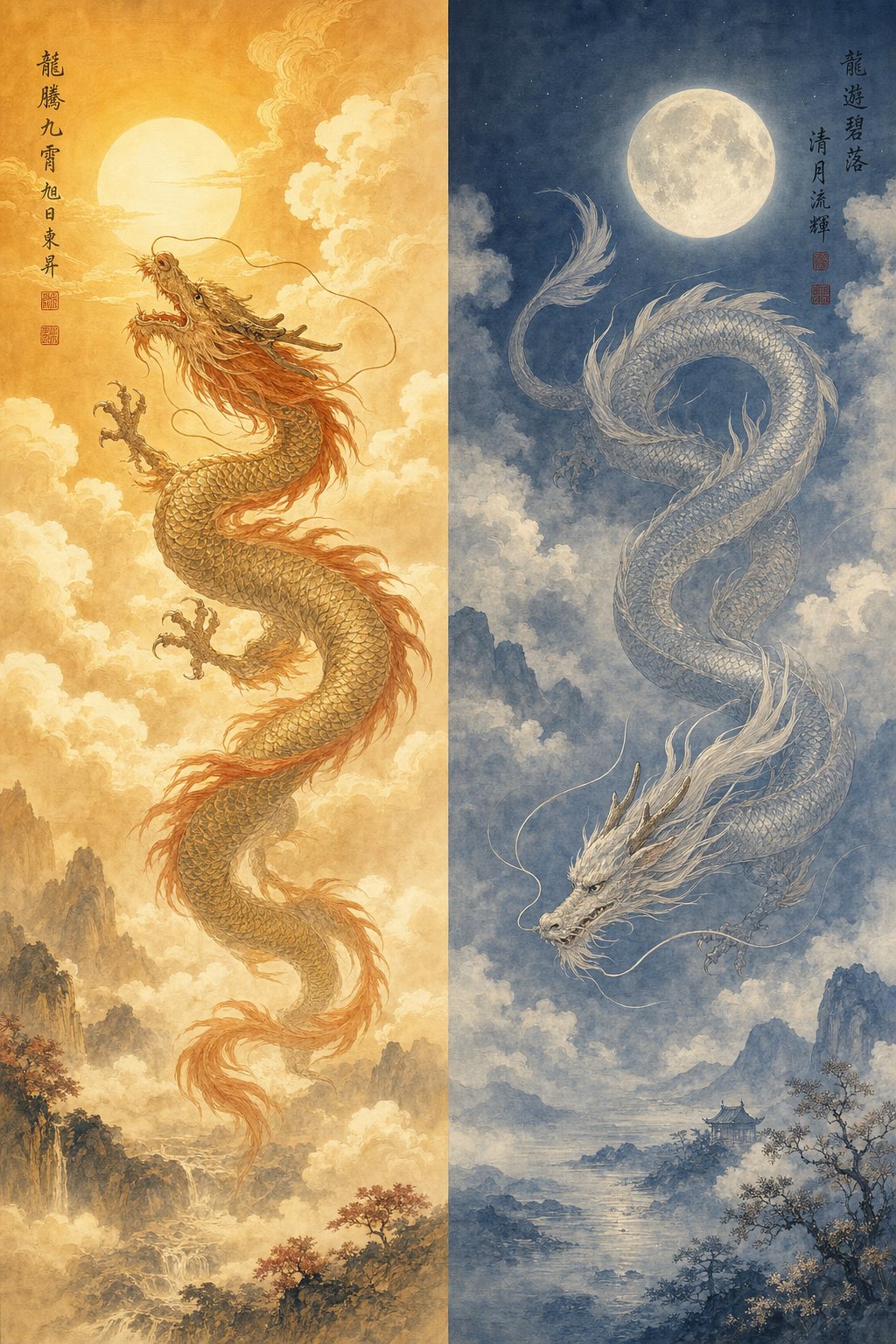
Female names traditionally favor characters suggesting beauty, grace, and flourishing life. For Dragon zodiac girls, the goal is channeling the Dragon's power through elegance rather than force. Think of it as the difference between a dragon soaring through moonlit clouds versus one commanding a thunderstorm. Both are powerful. The energy just moves differently.
- 氵(water radical) — Flowing grace and emotional depth. Characters like 涵 (han, cultivate/encompass) and 澜 (lan, waves) are popular in chinese names that mean dragon-like qualities through fluid beauty rather than blunt force. Water nurtures, and that nurturing aspect resonates with feminine naming traditions.
- 月 (moon radical) — Gentle luminosity and inner radiance. Characters like 朦 (meng, hazy moonlight) and 朗 (lang, clear and bright) carry a softer celestial energy. The moon's cyclical nature also connects to themes of renewal and wisdom.
- 艹 (grass/plant radical) — Flourishing life and natural beauty. This radical appears in characters related to flowers, fragrance, and growth. Characters like 芸 (yun, rue herb/literary grace), 蕙 (hui, orchid), and 莉 (li, jasmine) suggest a girl who blooms with vitality. The flower radical 艹 is one of the most recognizable markers of feminine names in Chinese.
- 女 (female radical) — Elegance and feminine virtue. Characters like 妤 (yu, beautiful/talented) and 娜 (na, graceful) directly encode femininity. Paired with Dragon-auspicious elements, they create names that are both traditionally grounded and zodiac-aligned.
Complete name examples using the surname 林 (Lin):
- 林涵月 (Lin Hanyue) — cultivate + moon. Water radical and moon radical together create layered Dragon resonance.
- 林芸溪 (Lin Yunxi) — literary grace + stream. Grass radical meets water radical for flourishing flow.
- 林霏蕙 (Lin Feihui) — falling rain + orchid. Rain radical paired with grass radical blends celestial water with earthly beauty.
Notice how each example name uses radicals from different Dragon-auspicious families. This isn't accidental. Stacking two characters from the same radical group, say two water-radical characters, can feel heavy or one-dimensional. Mixing radical families within a two-character given name creates balance and textural variety.
The strongest Dragon names pair complementary radicals rather than doubling down on a single element. A water character beside a celestial character gives the name both depth and height.
Gender conventions offer a starting framework, but the Dragon's energy is inherently versatile. A girl named 昊 isn't breaking any linguistic rule, and a boy named 涵 carries perfectly respectable masculine weight in modern usage. The radicals themselves are gender-neutral. It's the specific characters built from them, and the cultural associations those characters carry, that tilt masculine or feminine.
Of course, gender and radical family are only two variables in the equation. The specific Dragon year your child is born in adds another layer entirely, because each Dragon year carries a different elemental signature that shifts which radicals offer the most support.
Five Elements Theory and Dragon Year Radical Selection
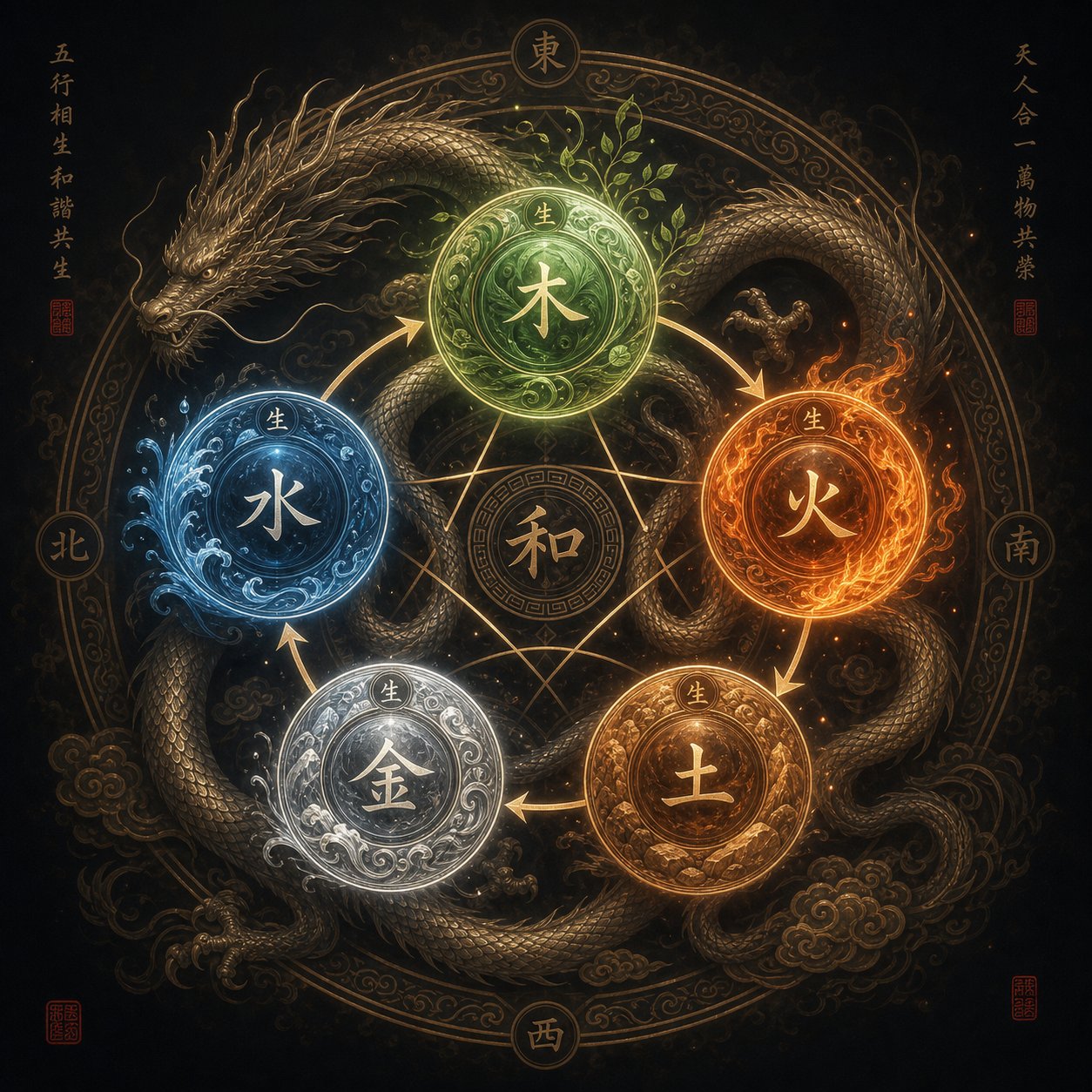
Not every Dragon year is the same Dragon. The Chinese calendar layers a second system on top of the twelve zodiac animals: the Five Elements, or Wu Xing (五行). Each Dragon year carries one of five elemental signatures — Wood, Fire, Earth, Metal, or Water — and that signature fundamentally shifts which radicals will best support your child's name.
Sounds complex? It's actually straightforward once you see the pattern. The Five Elements cycle through a fixed sequence, pairing with each zodiac animal once every sixty years. A child born in 2024 is a Wood Dragon. A child born in 2012 was a Water Dragon. The element changes the Dragon's energetic profile, which means the radicals that strengthen one type of Dragon might overwhelm or clash with another.
How Five Elements Theory Shapes Dragon Name Radicals
Wu Xing operates on two core relationships: the generation cycle (sheng) and the control cycle (ke). In the generation cycle, each element feeds the next in a nurturing chain: Water nourishes Wood, Wood fuels Fire, Fire creates Earth (ash), Earth bears Metal (ore), and Metal collects Water (condensation). In the control cycle, each element restrains another: Water quenches Fire, Fire melts Metal, Metal chops Wood, Wood parts Earth, and Earth dams Water.
For naming purposes, you want radicals connected to elements that generate or harmonize with your child's birth element. You want to use caution with radicals tied to the element that controls or weakens it. Think of it like this: if your child is a Wood Dragon, radicals carrying Water energy feed that wood and help it grow. Radicals carrying Metal energy cut against it.
Here's how to identify your child's Dragon element type:
- Wood Dragon — years ending in 4 (1964, 2024)
- Fire Dragon — years ending in 6 (1976, 2036)
- Earth Dragon — years ending in 8 (1988, 2048)
- Metal Dragon — years ending in 0 (2000, 2060)
- Water Dragon — years ending in 2 (1952, 2012)
A quick shortcut: the last digit of the birth year tells you the element. Years ending in 4 or 5 are Wood, 6 or 7 are Fire, 8 or 9 are Earth, 0 or 1 are Metal, and 2 or 3 are Water. For Dragon years specifically, only the even digits apply since the Dragon occupies the fifth position in the zodiac cycle.
Element-Specific Radical Recommendations by Dragon Year Type
Each Dragon element type benefits from radicals that either nourish its native element or give it a productive outlet. A chinese name meaning dragon power works best when the radical selection accounts for this elemental layer. For parents choosing wood dragon baby name radicals in 2024, the priority is clear: Water radicals (氵, 雨) feed Wood's growth, and Fire radicals (火, 日) give Wood a constructive channel to express its energy. Metal radicals, however, work against Wood's nature.
The same logic applies across all five types. A Fire Dragon thrives with Wood radicals that fuel its flame but struggles under Water radicals that extinguish it. An Earth Dragon draws strength from Fire radicals that forge and solidify it but finds Wood radicals destabilizing since Wood's roots break earth apart.
| Dragon Type | Birth Years | Nourishing Radicals (Use Freely) | Productive Radicals (Good Balance) | Cautious Radicals (Use Sparingly) |
|---|---|---|---|---|
| Wood Dragon | 1964, 2024 | 氵雨 水 (Water feeds Wood) | 火 日 灬 (Wood fuels Fire) | 金 钅 (Metal chops Wood) |
| Fire Dragon | 1976, 2036 | 木 艹 (Wood fuels Fire) | 土 山 (Fire creates Earth) | 氵雨 水 (Water quenches Fire) |
| Earth Dragon | 1988, 2048 | 火 日 灬 (Fire creates Earth) | 金 钅 (Earth bears Metal) | 木 艹 (Wood parts Earth) |
| Metal Dragon | 2000, 2060 | 土 山 (Earth bears Metal) | 氵雨 水 (Metal collects Water) | 火 日 灬 (Fire melts Metal) |
| Water Dragon | 1952, 2012 | 金 钅 (Metal collects Water) | 木 艹 (Water nourishes Wood) | 土 山 (Earth dams Water) |
Notice something interesting in this table: the Water radical 氵, which is universally auspicious for Dragons due to their mythological water lordship, becomes a cautious choice for Fire Dragons. This is where the system gets nuanced. A Fire Dragon still benefits from the zodiac-level water connection, but the elemental layer suggests using water radicals sparingly or balancing them with strong Wood radicals that bridge the gap. The name meaning dragon energy you're building needs to honor both the zodiac animal and its elemental coloring.
A practical approach for navigating conflicts: prioritize the zodiac-level radical associations (water and celestial radicals remain broadly positive for all Dragons) but use the elemental layer to break ties between equally appealing characters. If you're torn between two beautiful characters for a Wood Dragon baby, and one contains 氵while the other contains 钅, the elemental framework gives you a clear tiebreaker.
Elemental balance also explains why professional Chinese naming consultants don't simply stack every auspicious radical into one name. Too much of any single element, even a supportive one, creates imbalance. The goal is harmony, not maximum dosage. And just as certain radicals strengthen a Dragon name, others actively work against it regardless of element type, creating symbolic conflicts that are worth understanding before you finalize any choice.
Radicals to Avoid in Dragon Zodiac Names
Knowing which radicals empower a Dragon name is only half the picture. The other half is recognizing which radicals quietly undermine it. These aren't arbitrary taboos. Each unlucky radical for dragon zodiac names carries a specific symbolic conflict rooted in the Dragon's nature, and once you understand the reasoning, you'll spot problematic characters instinctively.
Radicals That Weaken Dragon Energy in Names
Picture a dragon. It's vast, soaring, uncontained. Any radical that symbolically shrinks, traps, or grounds that energy works against the zodiac's fundamental character. The conflicts fall into clear categories:
- 口 (kou, mouth/enclosure radical) — This radical forms a box shape, and in naming symbolism, it suggests confinement. A dragon inside an enclosure is a caged dragon, stripped of its freedom and power. Characters built heavily around 口 or full enclosure components like 囗 (the larger enclosure radical seen in characters like 困, meaning "trapped") directly contradict the Dragon's need for open sky and flowing water.
- 小 (xiao, small radical) — The Dragon is a creature of grandeur and vastness. Radicals or components suggesting smallness, diminishment, or narrowness shrink its symbolic stature. Characters containing 小 as a visible component can carry a reducing energy that conflicts with the Dragon's expansive nature.
- 宀 (mian, roof radical) — Similar to the enclosure problem, a roof over a dragon suggests limitation. While 宀 appears in many common characters (家, 安, 宇), traditional naming practitioners note that it can symbolize a dragon forced indoors, unable to ascend to the heavens where it belongs.
- 虫 (chong, insect radical) — This one is subtle. While the ancient character for dragon (龙) historically shared connections with serpentine creatures, the insect radical in modern usage suggests small, crawling things. It diminishes the Dragon's majesty by associating it with creatures far below its station.
The common thread here is restriction and reduction. Anything that symbolically puts a ceiling on the Dragon, boxes it in, or scales it down works against the zodiac's core energy.
Zodiac Conflict Radicals to Avoid
Chinese astrology assigns specific clash relationships between zodiac animals, and these conflicts extend directly into naming. The Dragon's primary zodiac adversary is the Dog. In the twelve-animal cycle, Dragon and Dog sit in direct opposition, forming what's called a "chong" (冲) or clash relationship. This makes dog-related radicals particularly problematic in chinese names for dragon babies.
- 犭 (quan, dog/animal radical) — This is the radical referenced in the article's title. It appears in characters like 狮 (lion), 猛 (fierce), and 独 (alone). Despite some of these characters carrying strong meanings, the dog radical's presence creates a fundamental zodiac tension. You're embedding the Dragon's adversary directly into the name.
- 犬 (quan, dog as component) — The full dog character sometimes appears as a component within more complex characters. The same clash logic applies.
- 戌 (xu, the Earthly Branch for Dog) — Less common in everyday characters, but worth noting. The Earthly Branch associated with the Dog carries oppositional energy to the Dragon's branch (辰, chen).
Beyond the Dog clash, some practitioners also flag rabbit-related components as mildly unfavorable, since the Rabbit and Dragon form a "harm" (害) relationship in the zodiac. However, this is a weaker conflict than the Dragon-Dog opposition, and fewer characters contain obvious rabbit radicals, making it a lower practical concern.
When evaluating chinese names dragon families are considering, a simple test helps: ask whether the radical's symbolic imagery places the dragon in a position of power or a position of constraint. A dragon swimming through vast waters? Powerful. A dragon caged behind bars or facing its zodiac enemy? Weakened. The logic is consistent once you internalize it.
Avoiding problematic radicals is straightforward when you're choosing a single character. The real complexity emerges when you're building a complete two-character given name, where radical choices must work together across multiple dimensions simultaneously.
Combining Radicals for Harmonious Dragon Names
Selecting two individually auspicious radicals doesn't automatically produce a great name. Imagine picking two beautiful paint colors and slapping them side by side without considering how they interact. The result might clash. A dragon name in chinese works the same way. Each character in a two-character given name must complement the other, and both must harmonize with the surname. Radical symbolism is one dimension. Stroke count, tonal flow, and elemental balance are the others.
This is where naming shifts from art to architecture. You're building a structure that needs to stand on multiple foundations at once.
Building Balanced Two-Character Names with Multiple Radicals
A standard Chinese name has three characters: one surname character plus two given-name characters. The two given-name characters carry the creative weight, and their radicals should draw from complementary Dragon domains rather than duplicating the same one.
For example, pairing 涵 (han, water radical, meaning cultivate) with 晨 (chen, sun radical, meaning morning) creates a name that channels both the Dragon's aquatic depth and its celestial reach. The water radical provides grounding. The sun radical provides aspiration. Together, they paint a fuller picture of Dragon energy than either could alone.
Contrast that with pairing 涵 (han, water radical) with 泽 (ze, water radical). Both are beautiful characters. Both are zodiac-appropriate. But stacking two water-radical characters can feel one-dimensional, like a song stuck on a single note. Traditional naming philosophy calls this "element flooding" — too much of one energy without a counterbalance.
Effective radical pairing strategies for Dragon names include:
- Water + Celestial — depth meets height (e.g., 澜 + 曜)
- Water + King/Jade — nurturing meets nobility (e.g., 涵 + 瑞)
- Celestial + Growth — brightness meets vitality (e.g., 晨 + 芸)
- Rain + Moon — atmospheric power meets gentle luminosity (e.g., 霖 + 朗)
Each pairing creates textural contrast. You'll notice the strongest combinations draw from different symbolic domains of the Dragon rather than repeating the same one.
Stroke Count and Tonal Harmony in Radical Selection
Radical choice determines which characters are available to you, but stroke count determines whether those characters produce a numerologically balanced name. In traditional Chinese naming, the total stroke count of a name carries its own layer of auspicious or inauspicious meaning.
Here's how it works. A Chinese name is divided into sections: the surname (tian ge), the surname plus the first given-name character (ren ge), and the full given name (di ge). The total of all strokes across the complete name is called the zhong ge. Certain totals are considered fortunate — numbers like 3, 5, 6, 7, 8, 11, 13, 15, 16, 17, 18, 21, 23, 25, 29, 31, 32, 33, 37, 39, and others carry positive energy. Characters are also classified as Yin (even stroke count) or Yang (odd stroke count), and the three characters of a name should follow specific Yin-Yang patterns like Yang-Yang-Yin or Yin-Yang-Yang.
What does this mean practically? When you've narrowed your radical choices to a shortlist of characters, stroke count becomes the tiebreaker. If two characters carry equally strong radical symbolism but one produces a more auspicious total stroke count with your surname, that's your answer.
Tonal flow adds yet another filter. Mandarin has four tones plus a neutral tone, and how to say dragon in chinese (long, second tone) illustrates why tone matters — certain tone sequences sound musical while others feel awkward on the tongue. A name where all three characters share the same tone creates a flat, monotonous sound. The most pleasing names alternate tones, creating a rising-and-falling rhythm.
Consider the surname 王 (Wang, second tone). Pairing it with 浩然 (Hao Ran, fourth tone + second tone) produces a tonal pattern of 2-4-2, which rises, drops, and rises again. That's rhythmically satisfying. Pairing it with 涵澜 (Han Lan, second tone + second tone) creates 2-2-2 — three consecutive rising tones that feel flat when spoken aloud, despite both characters carrying excellent radical symbolism.
Here's a practical evaluation framework you can follow for any potential Dragon name. Work through these steps in order, and you'll catch conflicts before they become permanent:
- Verify radical symbolism — Does each character contain a radical from a Dragon-auspicious domain (water, celestial, king/jade, growth)? Do the two given-name characters draw from different domains for balance?
- Check for avoided radicals — Scan both characters for enclosure radicals (口, 囗, 宀), diminishing components (小), or zodiac-conflict radicals (犭, 犬). Even a secondary component buried inside a complex character counts.
- Calculate stroke count — Count the strokes of each character individually. Determine the Yin/Yang pattern (even = Yin, odd = Yang). Confirm the three-character name follows an acceptable pattern. Check whether the total chinese dragon name stroke count falls within the list of auspicious numbers.
- Test tonal flow — Say the full name aloud, surname included. Listen for monotony (three identical tones) or awkward sequences (three consecutive fourth tones can sound harsh). Aim for tonal variety that feels natural when called across a room.
- Assess Five Elements balance — Identify the elemental association of each radical. Confirm that neither character introduces an element that controls or weakens your child's birth-year element. If both characters carry the same element, consider whether that creates flooding.
- Evaluate visual balance — Write the full name out. Do the characters look proportional beside each other? A very simple surname (like 丁, two strokes) beside two highly complex characters (15+ strokes each) can look visually lopsided. Aim for a comfortable visual rhythm.
- Confirm meaning coherence — Read the two given-name characters together as a phrase. Do their combined meanings create a coherent image or feeling? The best names tell a tiny story: "cultivated brightness," "vast waves," "morning jade." Avoid combinations where the meanings contradict or create unintended readings.
This checklist might seem like a lot, but most candidates fail at step one or two, which narrows your options quickly. By the time you're evaluating tonal flow and visual balance, you're typically choosing between two or three strong finalists rather than dozens.
One final note on stroke count: the system described above follows the traditional San Cai Wu Ge method, which remains widely used by naming consultants across Chinese-speaking communities. Some modern parents treat stroke count as optional, prioritizing meaning and sound instead. Either approach is valid. What matters is that you're making a conscious choice about which dimensions to prioritize rather than accidentally ignoring one.
Even with a solid framework in hand, certain pitfalls trip up parents who are new to this system — especially those approaching Chinese naming from an English-language background, where radicals and stroke counts have no equivalent.
Common Mistakes When Choosing Dragon Name Radicals
English-speaking parents navigating Chinese naming for the first time face a unique challenge. You're working in a writing system where visual form, sound, and meaning operate independently — and a mistake in one dimension can undermine the others without you realizing it. The framework from the previous section gives you the tools to evaluate names properly. These are the traps that catch people before they get to that evaluation stage.
Common Radical Selection Mistakes to Avoid
The most frequent error is choosing a character purely for its romanized sound. You might love how "Mei" sounds and pick 没 (mei, meaning "not" or "disappear") instead of 美 (mei, meaning "beautiful") or 梅 (mei, meaning "plum blossom"). Same pinyin, completely different radicals, completely different energy. The character 没 contains the water radical 氵, which might seem Dragon-appropriate on the surface, but its meaning of negation or disappearance works against everything you're trying to build. Sound alone tells you nothing about what name means dragon-level power versus what means emptiness.
The second pitfall is ignoring regional character differences. A parent researching a chinese name for dragon energy online might find a beautiful traditional character used in Taiwanese naming, then discover it doesn't exist in the simplified system their Mainland Chinese family uses. Or worse, the simplified version maps to a different traditional character entirely. The radical might shift in the process. Always confirm your chosen character exists and carries the intended meaning within your family's specific writing system.
Third: selecting characters that look visually striking but carry hidden negative weight. Some characters are aesthetically gorgeous — balanced strokes, elegant proportions — yet contain radicals or components with unfavorable connotations. The character 狼 (lang, wolf) looks bold and contains the animal radical 犭, but you're embedding the Dog radical's zodiac clash directly into a Dragon child's name. Visual appeal is not a reliable guide to symbolic meaning. As the Berlitz radical reference notes, radicals can hint at meaning but aren't always obvious at first glance, so you need to verify rather than assume.
Fourth: over-stacking auspicious radicals without considering balance. Some parents, once they learn which radicals are favorable, try to pack every possible lucky element into a single name. Two water-radical characters plus a water-element surname creates flooding. Three characters all carrying celestial radicals can feel ungrounded, like a name with no roots. More auspicious components don't equal a more auspicious name.
Balance and harmony matter more than stacking maximum auspicious elements. A name with one well-chosen radical in each character outperforms a name overloaded with lucky symbols that fight each other for dominance.
How to Verify Your Dragon Name Radical Choices
Before finalizing any name, run through these practical verification steps:
- Look up the radical, not just the character. Use a Chinese dictionary that shows radical decomposition. Confirm which radical the character is officially classified under. Some characters contain multiple components, and the dominant radical might not be the one you assumed.
- Check the character in both systems. Even if your family uses simplified characters, verify the traditional form to ensure no unintended meanings surface. Names of chinese dragons in classical texts use traditional forms, and family members in different regions may interpret the character differently.
- Read the character's full dictionary entry. Some characters have secondary meanings or historical usages that carry negative associations. A character might look perfect in its primary definition but have an archaic meaning related to death, illness, or misfortune that educated Chinese speakers will recognize.
- Say the full name aloud to native speakers. Homophones are everywhere in Mandarin. A name that looks elegant on paper might sound identical to an unfortunate word or phrase when spoken. Native speakers catch these collisions instantly.
- Know when to consult a professional. If you're combining Five Elements balancing, stroke count numerology, and zodiac radical selection simultaneously, a professional Chinese naming consultant can verify that all layers align. This is especially valuable when parents aren't native speakers and can't intuitively sense whether a character "feels right" in cultural context.
The goal isn't perfection anxiety. It's informed decision-making. You don't need to master every dimension of Chinese naming to choose well. You need to understand enough to ask the right questions and verify the answers. A name built on one strong, well-chosen radical with confirmed meaning, proper tonal flow, and no hidden conflicts will serve a Dragon child far better than a name stuffed with lucky symbols that no one bothered to cross-check.
Frequently Asked Questions About Chinese Name Radicals for Dragon Zodiac
1. What is the best radical for a baby born in the Year of the Dragon?
The three-dot water radical (氵) is widely considered the strongest single radical for Dragon zodiac names. Dragons in Chinese mythology are lords of water who govern rainfall and rule the seas. Characters containing this radical, such as 泽 (grace), 涵 (cultivate), and 浩 (vast), directly invoke the Dragon's primary domain of power while offering beautiful meanings suitable for names.
2. Which radicals should you avoid in Dragon zodiac names?
Avoid radicals that symbolize confinement or diminishment. The enclosure radical 口 suggests a caged dragon, while 宀 (roof) implies a dragon forced indoors. The dog radical 犭 creates a zodiac clash since Dog and Dragon are direct adversaries in Chinese astrology. The small radical 小 contradicts the Dragon's expansive, grand nature. Each of these weakens the symbolic power a Dragon name should carry.
3. Does the Five Elements cycle affect which radicals to choose for a Dragon baby name?
Yes, significantly. Each Dragon year carries a different elemental signature. A 2024 Wood Dragon benefits most from water radicals (氵, 雨) because water nourishes wood in the Wu Xing generation cycle. A 2012 Water Dragon, however, draws strength from metal radicals (金, 钅) since metal collects water. Identifying your child's specific Dragon element type helps you select radicals that harmonize rather than conflict with their birth energy.
4. Are there different radical recommendations for Dragon baby boys versus girls?
Traditional naming conventions favor radicals suggesting strength and authority for boys (日 for sun, 王 for king, 马 for horse) and radicals suggesting grace and beauty for girls (月 for moon, 艹 for flourishing plants, 氵 for flowing water). However, modern practice is increasingly flexible. The radicals themselves are gender-neutral; it is the specific characters built from them and their cultural associations that tilt masculine or feminine.
5. Can you use two water-radical characters together in a Dragon zodiac name?
While both characters would be zodiac-appropriate, traditional naming philosophy advises against it. Stacking two radicals from the same domain creates what practitioners call element flooding, an imbalance where one energy dominates without counterbalance. Stronger names pair complementary radicals from different Dragon domains, such as a water-radical character alongside a celestial-radical character, giving the name both depth and height.