The Invisible Weight of Carrying Two Names
Imagine standing in line at a coffee shop, and the barista asks for your name. A split second of hesitation. Do you offer the name your grandmother chose, the one that means "remember grace" or "young bamboos in a valley"? Or do you give the English name your mother pulled from a TV show while filling out school paperwork? That tiny pause, invisible to everyone else, carries the weight of two cultures, two languages, and an entire identity negotiation compressed into a single breath.
Millions of Chinese Americans navigate this moment every day. At doctor's offices, on first dates, in job interviews, at the start of every new semester. Each introduction becomes a quiet calculation: Who am I speaking to? What assumptions will they make? How much of myself do I want to explain right now? As writer Rong Xiaoqing describes, the question "What is your name?" remains a struggle well beyond childhood, a process tangled up with the deeper philosophical question of "Who am I?"
A name is never just a name in immigrant communities. It is a border crossing you perform with your mouth every single day.
What Chinese American Naming Struggles Really Mean
Chinese American naming struggles go far beyond mispronunciation or awkward spelling corrections. They encompass a web of forces that shape how a person moves through the world. Identity negotiation sits at the center: the constant code-switching between an Asian name at home and an English name everywhere else, what Cornell psychology researcher Michelle Tong describes as a cue that "partitions the world" and signals which identity to activate. Cultural erasure plays its part too. When a name narrative gets flattened into a mispronounced string of syllables, or when someone's given name becomes "soaking wrong" in English mouths, something meaningful is lost. Systemic barriers compound the problem: immigration forms that cannot accommodate Chinese characters, databases that scramble surname-first conventions, and professional settings where unfamiliar names trigger unconscious bias. Research shows that job applications with non-white names receive significantly fewer callbacks, turning a deeply personal choice into a career calculation.
And then there is personal agency. The decision to reclaim, adapt, or hold both names simultaneously. Some people, like writer and activist Kai Cheng Thom, reclaim their Chinese name as an act of self-determination, connecting ethnic identity recovery to broader personal liberation. Others, like Rong Xiaoqing, spend years experimenting with name order before settling into a stance that feels authentic. There is no single correct answer, which is precisely what makes this a struggle rather than a simple problem to solve.
Why This Conversation Matters Now
This is not just a my name essay or a single personal reflection. The conversation around naming has shifted in recent years. Younger Chinese Americans are increasingly refusing the old bargain of quiet assimilation. Anti-Asian discrimination has made identity reclamation feel urgent rather than optional. Workplaces and institutions are slowly recognizing that accommodation should not always fall on the person whose name is being mangled. The landscape is changing, but practical guidance remains scattered across personal essays, academic papers, and social media threads.
This resource bridges that gap. It moves through cultural education, generational perspectives, professional strategy, and actionable steps, offering something for the person still deciding which name to put on a resume and for the colleague who wants to stop fumbling through introductions. The weight of two names does not have to be carried alone or in silence.
Understanding Chinese Naming Conventions Beyond the Surface
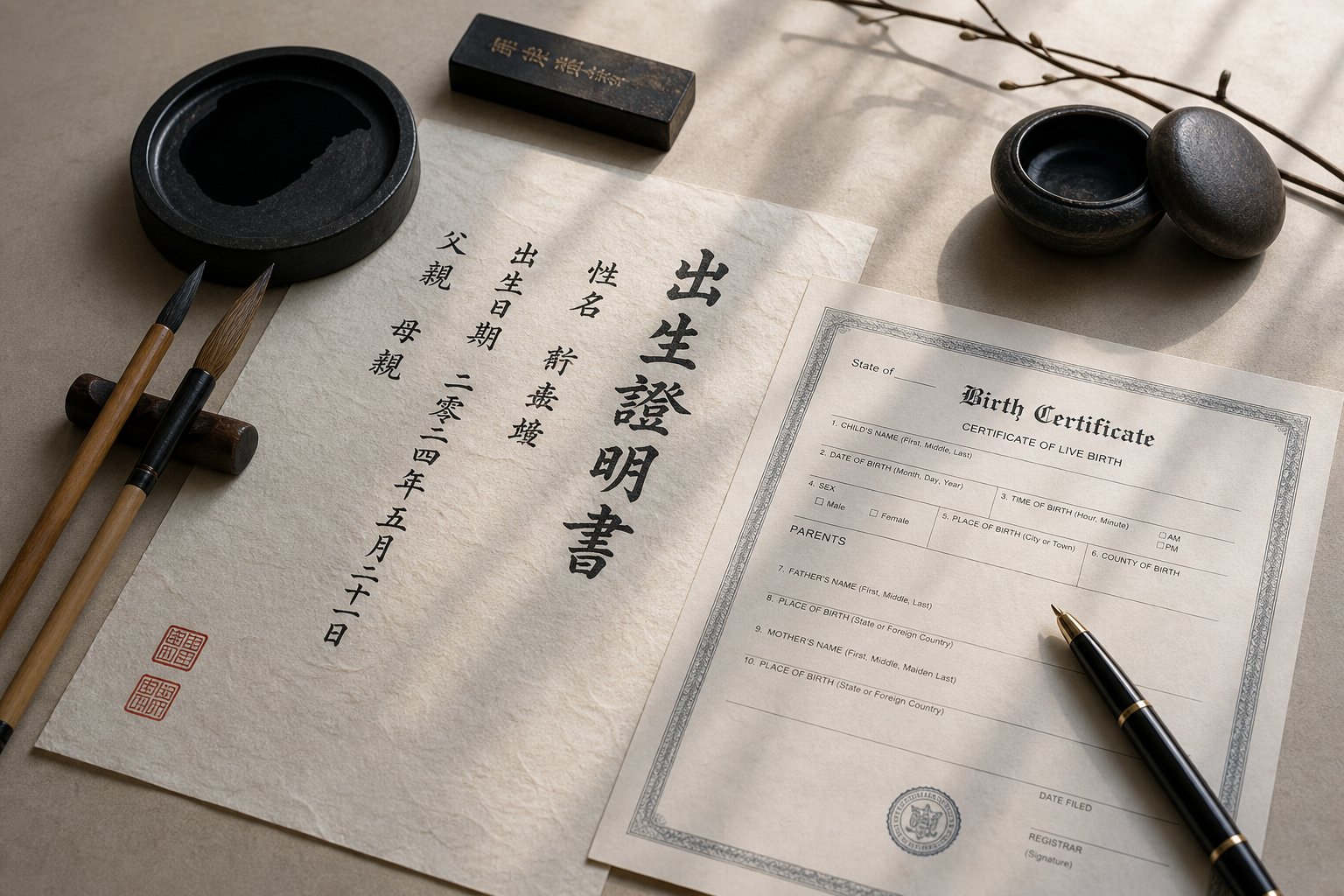
That split-second hesitation at the coffee counter does not happen in a vacuum. It grows from a fundamental structural difference between how Chinese and Western names work. To understand why naming struggles run so deep for Chinese Americans, you need to understand what a Chinese name actually is, and why it carries a kind of cultural weight that most English names simply do not.
How Chinese Names Are Constructed and Why They Matter
In English, you introduce yourself given name first, surname last. John Smith. In Chinese, the order flips: your surname comes first, followed by your given name. The basketball player known in the West as "Yao Ming" is actually surname Yao, given name Ming. This is not a quirk of grammar. It reflects a Confucian value system where family identity precedes individual identity. You belong to your lineage before you belong to yourself.
A typical Chinese name is just two or three characters total. One character for the surname, one or two for the given name. Sounds simple, but each of those characters is a standalone word carrying its own pronunciation, tone, and meaning. The name Li Meihua, for example, combines the surname Li with a given name meaning "beautiful splendor." Nothing is filler. Nothing is arbitrary.
This structure creates a naming experience that feels radically different from Western conventions. When English-speaking parents name a child "Grace" or "Hunter," the meaning is present but secondary to how the name sounds or how popular it is. In Chinese naming culture, meaning is the primary driver. Families often spend months deliberating over characters, weighing how each one sounds when spoken aloud, how it looks when written, and what aspirations it encodes for the child's future.
| Naming Element | Chinese Convention | Western Convention |
|---|---|---|
| Name order | Surname first, given name second | Given name first, surname last |
| Character meaning | Each character chosen for specific meaning (virtue, nature, aspiration) | Meaning often secondary to sound or tradition |
| Tonal considerations | Tone affects meaning; wrong tone can change a name's significance entirely | No tonal system in English |
| Generational markers | Shared character among siblings/cousins to mark family generation | Rare; occasionally a "Jr." or family middle name |
| Length | 2-3 characters total | Typically 2-4 syllables per name, multiple names common |
| Selection process | May involve numerology, stroke count, five elements balance | Usually based on personal preference, family tradition, or popularity |
The Cultural Weight Behind Every Character
Here is where the depth becomes clear. Chinese given names are not pulled from a list of popular baby names. They are composed, almost like a poem. Parents select characters that express their hopes for the child: strength, wisdom, beauty, resilience. Common themes include virtues like ren (benevolence) and zhi (wisdom), nature imagery like mei (plum blossom, symbolizing resilience through hardship) and zhu (bamboo, representing flexibility), and aspirations like wei (greatness) or yong (courage).
Tonal quality adds another layer. Standard Mandarin has four tones, and mispronouncing a tone does not just sound wrong, it changes the word entirely. The syllable "ma" means "mother" in the first tone, "trouble" in the second, "horse" in the third, and "to scold" in the fourth. Imagine someone consistently calling you "horse" when your name means "elegant." This is not a minor annoyance. It is a fundamental misrepresentation of who you are.
Many families also incorporate generational names, a shared character given to all siblings or patrilineal cousins of the same generation. If your cousins are named Zhenni, Zhenhai, Zhenhua, and Zhendong, the "zhen" element links you all within the family tree. This practice creates continuity across decades, a living record of lineage embedded in everyday introductions. Not all families maintain this tradition, and some generational names have been lost over time, but where it persists, it adds yet another dimension that Western naming rarely replicates.
Surname Patterns in the Chinese Diaspora
If you have ever wondered why so many Chinese Americans share surnames like Wang, Li, Zhang, or Chen, you are asking a question with deep historical roots. China has the world's largest population but one of the smallest surname pools. Only about 6,000 surnames are in active use, and the five most common ones, Li, Wang, Zhang, Liu, and Chen, are shared by more than 433 million people, roughly 30% of China's population.
This concentration traces back to the Hundred Family Surnames, a Song dynasty text from the 10th century that catalogued Chinese surnames in rhyming verse. Over thousands of years, smaller surnames died out through a natural process: families without enough descendants lost their names, while large clans expanded and spread theirs. Political upheaval, forced Sinicization of ethnic minorities, and practical simplification of complex characters all pushed the pool smaller. The surname Li alone is carried by an estimated 100 million people, more than the entire population of Germany.
For Chinese Americans, this surname concentration creates a specific friction. In a Western context where surnames are expected to be relatively unique identifiers, sharing a last name with millions of people means your given name carries even more weight as a distinguishing marker. When that given name gets dropped in favor of an English substitute, or mangled beyond recognition, the loss is not just personal. It erases the one element that made you distinct within an already crowded surname landscape. This is part of why common Chinese American names like "David Chen" or "Jennifer Wang" can feel like a flattening, a reduction of something layered and intentional into something generic and forgettable.
The structural gap between these two naming systems is not just linguistic. It is philosophical. And when a Chinese name crosses into American institutional life, paperwork, databases, school rosters, that philosophy collides with systems built for a completely different logic.
Why Chinese Immigrants Changed Their Names in America
That collision between Chinese naming philosophy and American systems did not happen gently. It happened through decades of policy, paperwork, and social pressure that left Chinese immigrants with a stark choice: adapt your name or face constant friction. Understanding why so many families carry americanized chinese names today requires looking at the forces that made anglicization feel less like a preference and more like a survival strategy.
Historical Pressures That Forced Name Changes
The story of immigrants having to change their name in America stretches back to the 1800s. During the Chinese Exclusion Era (1882-1943), Chinese arrivals faced immigration officers who could not read, write, or pronounce Chinese characters. Names were transliterated on the spot, often inconsistently, sometimes incorrectly. As journalist Mary Chao writes, for Asian immigrants the choice was essentially to "assimilate or vanish." Her own birth name, Ching Hwa, meaning "celebrate China," was replaced by "Mary" for everyday American life.
By mid-century, assimilation pressure intensified. Schools enrolled children under anglicized names without asking. Employers expected something "easy to say." Social belonging demanded reducing friction wherever possible. Immigrant names became something to leave at the front door, carried privately at home but hidden in public. The message was consistent across decades: your real name is a problem that you need to solve for everyone else.
Romanization Chaos From Cantonese to Mandarin Systems
Even when Chinese Americans kept their names, the English spelling of those names became a source of confusion. Two major romanization systems, Wade-Giles and Pinyin, produce dramatically different spellings for identical Chinese characters. A family that immigrated through Hong Kong or Taiwan before the 1980s likely has names romanized in Wade-Giles. A family arriving from mainland China after that period uses Pinyin.
The differences are not subtle. According to the Library of Congress Pinyin Conversion Project, the same personal name can appear as "Ch'en, Chin-an" in Wade-Giles or "Chen, Jin'an" in Pinyin. "Mao Tse-tung" becomes "Mao Zedong." Wade-Giles uses hyphens and apostrophes to mark aspiration and syllable breaks; Pinyin joins syllables together without them. The result? Two cousins with the same Chinese surname can have completely different English spellings on their passports, depending on when and where their families emigrated. To outsiders, they do not even appear related.
This romanization inconsistency means that Chinese American families cannot always trace their own lineage through English-language records. A "Tsai" and a "Cai" may share the exact same Chinese character. A "Hsieh" and a "Xie" are the same surname rendered through different historical lenses. The system was never designed for consistency, and families bear the consequences.
Institutional Barriers That Still Exist
The pressure to anglicize did not end with the Exclusion Era. Modern institutions continue to struggle with Chinese name conventions, creating daily friction that quietly reinforces the old message: your name does not fit here. As identity systems researcher Paul Wong argues, this is not an edge case but a design mistake, one where "the system is not going to move, so you must."
Specific institutional barriers include:
- Immigration and government forms that enforce a first-middle-last structure, splitting two-syllable given names into a "first name" and an unwanted "middle name"
- School enrollment systems that default to Western name order, automatically reversing surname-first conventions and confusing family names with given names
- Medical records where abbreviated names like "T. Chan" create dangerous misidentification risks, especially given the concentration of common Chinese surnames
- Banking and financial systems that cannot reconcile different romanizations of the same legal name across documents, triggering identity verification failures
- Professional licensing databases that truncate or mangle names containing spaces, apostrophes, or characters outside the standard ASCII set
Each of these barriers operates quietly. No single form rejection or misprinted ID badge feels catastrophic on its own. But cumulatively, they send a message that immigrant names are problems to be managed rather than identities to be respected. The cost, as Wong notes, is "pushed downwards" onto the people whose names never fit the form in the first place.
These systemic forces did not affect every generation equally. The reasons for adopting an English name, and the emotional weight of that choice, shifted dramatically depending on when your family arrived and what America demanded of them at that moment.

How Naming Struggles Evolve Across Generations
A first-generation immigrant choosing an English name out of necessity and a third-generation descendant reclaiming a Chinese name out of longing are both responding to the same fracture, but from opposite sides of it. The relationship between Chinese Americans and their names is not static. It shifts with each generation, shaped by the political climate, the degree of cultural connection maintained at home, and the broader question of what it costs to be visibly different in America.
First Generation and the Survival Name
For first-generation immigrants, the English name was rarely a choice made with care. It was a survival tool, grabbed quickly and deployed immediately. Therapist Sam Louie describes how his parents, first-generation Chinese immigrants from Hong Kong, approached the problem: they asked the one white couple they knew for suggestions. "Without much hesitation, they responded, 'Let's go with Sam, Ken, and Fred!'" In the blink of an eye, their Chinese names were replaced. The children had no say. Their parents believed this was the best way to help them assimilate.
This was not unusual. Between 1900 and 1930, roughly 86% of boys and 93% of girls born to immigrants in the United States had an "American name," according to US census data analyzed in the journal Labour Economics. Names were pulled from television characters, coworkers, or whatever sounded neutral enough to avoid attention. The grief came later, quietly, when parents realized they had handed their children a name that carried no family history, no ancestral meaning, no connection to the village they left behind.
Some first-generation arrivals did not even choose their own americanized names. Immigration officers assigned them. Employers shortened them. The story of Ong Shew Ngoh, a young merchant who survived incarceration on Angel Island and reinvented himself as Edward Gaw in Albuquerque, illustrates how complete the transformation could be. His great-granddaughter Aimee grew up knowing nothing of the name Shew Ngoh. The original identity was buried so thoroughly that it took archival research a century later to uncover it.
Second Generation Code-Switching Between Worlds
Second-generation Chinese Americans typically grow up with both names from birth. A Chinese name given by grandparents or parents, used at home, at Chinese school, during family gatherings. An English name used everywhere else. The two names create two worlds, and the child learns early to toggle between them.
In childhood, this code-switching can feel seamless, even unremarkable. But adolescence often brings shame. When you are 13 and desperate to blend in, a Chinese name can feel like a spotlight. Hmong American artist Tshab Her describes the tension between her legal name Jennifer and her Hmong name Tshab: "When I went as Jennifer, I felt like I was playing a role, this White-assimilated, American Dream type. Tshab and Jennifer were always at tension with each other." Many second-generation Chinese Americans recognize this split. The americanized asian identity becomes a performance, comfortable in its familiarity but hollow at its core.
Adulthood often triggers reclamation. The same name that felt embarrassing at 14 becomes a source of pride at 28. Her dropped Jennifer entirely when she started college. "Going as Tshab was an act of resistance," she said. "I just want to be who I am." This adolescent shame-to-adult reclamation arc is one of the most common patterns in second-generation naming experiences, a slow return to something that was always there but temporarily buried under the weight of fitting in.
Third Generation Reclamation and New Challenges
By the third generation and beyond, the relationship with Chinese names becomes more complicated. Many third-generation Chinese Americans were never given a Chinese name at all. Their parents, having grown up navigating the dual-name burden, sometimes chose not to pass it on. Others received a Chinese name but never used it, never learned to write it, never heard it spoken outside of a single grandparent's voice.
Aimee Towi Mae Tang, a fourth-generation Chinese New Mexican, embodies this distance. Her grandfather refused to discuss their Chinese heritage. If pressed, he simply said, "We are American" in a deep, commanding voice in which "American" clearly meant "European American." Aimee grew up disconnected from her Chinese side, unable to speak Mandarin, knowing little about how her family arrived in New Mexico. It was not until her late forties, in the wake of the 2021 Atlanta spa shootings, that she began actively researching her ancestry and sharing it with her daughter Marisol.
For Marisol, the fifth generation, the reclamation is secondhand but no less meaningful. "Knowing that my family has fought for their rights is very cool," she told a journalist. "If that never happened, I don't think I'd ever be who I am, or what I am." This is the third-generation challenge distilled: reconnecting with a heritage name and its history when the language, the context, and the living memory have all faded.
The generational arc follows a recognizable pattern:
- First generation: Assimilation-driven adoption of English names as a survival tactic; Chinese names preserved privately but hidden publicly
- Second generation: Dual-name existence from birth; childhood code-switching gives way to adolescent shame, followed by adult reclamation
- Third generation: Possible loss of Chinese name entirely; reconnection becomes an active research project rather than a lived experience
- Fourth generation and beyond: Heritage names become symbolic anchors; choosing Chinese names for their own children requires deliberate effort when language fluency has faded
The broader sociopolitical climate has accelerated this progression. The rise in anti-Asian hate crimes, the Atlanta shootings, and ongoing discrimination have made identity reclamation feel urgent for younger generations. Popular asian names in america are no longer something to hide behind. Increasingly, Chinese Americans across all generations are asking not "How do I make my name easier for others?" but "Why should I have to?"
That question does not stay personal for long. It follows people into conference rooms, onto resumes, and through every professional interaction where a name is the first thing offered and the first thing judged.

Workplace Identity and the Professional Name Decision
The conference room, the email signature, the top of a resume. These are the places where an asian american name stops being a private identity question and becomes a professional calculation. Which name do you lead with when the stakes are a callback, a promotion, or a first impression that shapes how seriously colleagues take you? For many Chinese Americans, the workplace is where naming struggles feel most acute, because the consequences are measurable in dollars, opportunities, and career trajectories.
The Resume and Interview Name Dilemma
Here is the uncomfortable reality. Research consistently shows that the name at the top of your resume affects whether anyone reads the rest of it. A joint study by the University of Toronto and Ryerson University found that job applicants with Asian names were 28 percent less likely to receive an interview callback compared to applicants with Anglo names, even when qualifications were identical. Earlier research by economist Philip Oreopoulos found that for every 100 calls received by applicants with Anglo names, those with Asian names got only 72.
The discrimination compounds. Applicants with Asian names and foreign credentials were 45 to 60 percent less likely to be selected for an interview compared to Anglo-named counterparts. A separate two-year study published in the Administrative Science Quarterly Journal found that Asian job candidates in the U.S. were almost twice as likely to receive a callback if they "whitened" their resumes by changing their names and excluding race-based honors.
When researchers asked employers to explain the gap, the responses were revealing. As sociologist Jeffrey Reitz noted, employers typically said something like, "Well, you see an Asian name and you know that language problems are going to be there." The assumption is automatic, unconscious, and wrong in most cases, but it shapes hiring decisions before a candidate ever speaks a word.
This data creates a painful tension. You know your american chinese name might cost you interviews. You also know that hiding it feels like erasing part of yourself before you even walk through the door. Chinese Americans navigate this dilemma with different strategies:
- Leading with an English name on applications, then introducing their Chinese name after being hired, once colleagues can associate it with a real person rather than a resume
- Using initials for a Chinese given name paired with an English middle or last name, reducing the "foreignness" signal without fully abandoning the name
- Leading with their Chinese name deliberately, treating it as a filtering mechanism. If a company will not call back someone named Xiaowei, that tells you something about the workplace culture before you invest further
- Hyphenating or combining both names, such as "Mei (Michelle) Zhang," signaling cultural identity while offering an accessible alternative
None of these strategies is neutral. Each carries a tradeoff between cultural pride and career pragmatism, and the "right" choice depends on industry, geography, career stage, and personal tolerance for being the person who has to educate every new colleague.
Navigating Mispronunciation in Professional Settings
The burden of accommodation almost always falls on the person whose name is mispronounced, not on the colleagues who mispronounce it.
Think about that for a moment. When someone mangles your american asian name in a meeting, you are the one who must decide: Do I correct them and risk being seen as difficult? Do I let it slide and feel invisible? Do I offer a nickname I never wanted just to make everyone else comfortable? The emotional labor is entirely one-directional.
Mispronunciation in professional settings is not just awkward. It signals to everyone in the room that your name, and by extension your identity, is not worth the effort of learning. Over time, repeated mispronunciation erodes confidence. It makes people smaller in spaces where they deserve to take up room. And it often goes uncorrected because the social cost of speaking up feels higher than the social cost of being misnamed.
The workplace compounds this dynamic. In a casual social setting, you might shrug off a mangled name. In a meeting with senior leadership, correcting someone feels riskier. During a client presentation, interrupting to fix your own name can feel like derailing the conversation. The professional context raises the stakes on every interaction, making silence the path of least resistance even when it costs you something real.
Scripts for Introducing Your Name With Confidence
Practical language helps. Having a script ready removes the cognitive load of deciding what to say in the moment. Here are approaches adapted from professional communication strategies, tailored for the specific challenges of introducing or correcting a Chinese name:
For a first introduction:
"Hi, I'm Xiaowei Zhang. It's pronounced shyow-way. Think of it like 'shower' without the 'r,' then 'way.' Most people get it on the second try."
This approach does three things: it leads with the Chinese name confidently, offers a phonetic anchor tied to familiar English sounds, and normalizes the idea that a second attempt is fine. No apology. No offering of a nickname as an escape hatch.
For correcting a mispronunciation (the straightforward approach):
"It's actually Mei-lin, two syllables with equal emphasis. No worries, it trips people up at first."
Quick, direct, and paired with a brief grace note that prevents the other person from spiraling into embarrassment. As career writer Kat Boogaard advises, correcting someone is not rude. Letting them butcher your name for months and then revealing the error is far more uncomfortable for everyone.
For correcting a repeated mispronunciation (the firm approach):
"Hey, I've noticed my name keeps coming through as 'Jing' in meetings. It's actually 'Qing,' with a 'ch' sound at the front. I'd appreciate getting it right going forward."
This works for the colleague who has been corrected before but reverts to the wrong pronunciation. It is calm, specific, and makes a clear request without aggression.
For declining an unsolicited nickname:
"I appreciate the thought, but I go by Yuxuan. If it helps, you can think of it as 'you-shwen.' I'd rather people use my actual name."
This script is for the moment when someone says, "Can I just call you 'Yu'?" or "Do you have an English name?" It politely closes the door on a shortcut you did not offer.
The common thread across all of these scripts is confidence without combativeness. You are not asking permission to have your name. You are offering information that helps others get it right. The shift is subtle but important: from "Sorry, it's actually..." to "It's pronounced..." Dropping the apology changes the entire dynamic.
These professional interactions do not exist in isolation. They extend into every digital space where a name appears, from LinkedIn profiles to email signatures to the portfolio links shared in job applications. The question of which name to present follows Chinese Americans off the conference table and onto every screen.
Digital Identity and Naming in an Online World
Your name does not just live on a business card or a conference room whiteboard anymore. It lives on LinkedIn, in email headers, across Instagram bios, on GitHub profiles, and in every Zoom waiting room you enter. For Chinese Americans managing two names, the digital world multiplies the identity question exponentially. Every platform asks you to declare yourself, and every platform stores that declaration permanently, searchably, publicly.
Building a Cohesive Digital Identity With Two Names
Imagine Googling yourself and finding two separate people. Your LinkedIn shows "Michelle Wang," optimized for recruiter searches and professional networking. Your personal Instagram uses "Meiling," the name your family calls you. Your byline on a published article reads "Meiling (Michelle) Wang." Your university alumni directory has "Wang, Mei Ling" with an unwanted space jammed into your given name. Which one is you? All of them. None of them completely.
This fragmented digital identity is not just an inconvenience. It creates real problems. Recruiters searching for your work history may not connect your portfolio site to your LinkedIn. Colleagues from different stages of your career may not realize they know the same person. Your personal brand, the cohesive professional story that ties your work together, gets split across two naming identities that search engines treat as unrelated.
Younger Chinese Americans are increasingly resolving this fragmentation by choosing one direction: leading with their Chinese name everywhere. Rather than maintaining separate identities for separate audiences, they use their romanized Chinese name as their primary identifier across all platforms. This is not just a personal preference. It is an act of visibility, a refusal to partition themselves into a "professional" English self and a "real" Chinese self. When enough people named Yuxuan or Zihan or Jiaming show up consistently across professional spaces, it normalizes american chinese names in contexts where they were once considered obstacles.
Others take a hybrid approach, using formats like "Meiling 'Michelle' Wang" or "Michelle Wang (Wang Meiling)" to maintain searchability while asserting their full identity. The key is consistency. Whichever format you choose, using it across every platform prevents the fragmentation problem and builds a recognizable personal brand that does not require people to connect two separate digital identities.
Platform Limitations and Workarounds
The desire for a cohesive identity runs into a practical wall: most platforms were not built for non-Western name structures. As Twin Sun Solutions argues, the standard "First Name / Last Name" field structure mirrors Western naming conventions and fails to account for the rich diversity of global naming practices. For Chinese Americans, this means platforms routinely split two-character given names, reverse surname order, or reject Chinese characters entirely.
A name like "Ouyang Mingzhe" breaks the two-field system immediately. Is "Ouyang" a first name or a compound surname? The platform cannot tell. A name like "Li Yi" looks incomplete to algorithms expecting longer inputs. And anyone who has tried entering Chinese characters into a system that only accepts ASCII knows the frustration of watching their name reduced to question marks or blank fields.
Here are platform-specific strategies for presenting your name effectively:
- LinkedIn: Use the "Former Name" or "Other Name" field to add your Chinese name (in characters or romanized form) so both versions appear in search results. Set your primary display name to whichever version you want recruiters to see first.
- Email signatures: Include both names with a pronunciation guide, such as "Qianyun (chee-en-yoon) Li" beneath your sign-off. This normalizes your Chinese name in every professional exchange without requiring a separate conversation.
- GitHub and portfolio sites: Use your romanized Chinese name as your username if possible. These platforms reward consistency, and a unique Chinese name is often more available and more memorable than a common English one.
- Zoom and video conferencing: Update your display name to include a phonetic guide in parentheses, like "Haoran (how-rahn)." This preempts mispronunciation before anyone has to ask.
- Social media (Instagram, X, TikTok): Use your Chinese name as your handle and your full bilingual name in the display field. Younger named asians are building followings under their Chinese names, creating visibility that makes the next person's choice a little easier.
- Professional directories and publications: Establish one canonical format early in your career and use it for every byline, conference bio, and directory listing. Switching formats mid-career creates the fragmentation problem retroactively.
The broader trend in software design is moving toward more inclusive name handling, with some platforms adopting single "Name" fields or adding optional "How should we address you?" inputs. But progress is slow, and in the meantime, the workaround burden still falls on the user. The practical reality is that building a cohesive digital identity with an american chinese name requires deliberate strategy in a way that someone named "John Smith" never has to think about.
Choosing how to present yourself online is one piece of a larger puzzle. For those ready to move beyond workarounds and make a definitive choice about their name, whether that means full reclamation, a legal change, or a conscious framework for living with both, the path forward requires more than platform settings. It requires a plan.
Practical Steps for Navigating Your Naming Journey
A plan looks different depending on where you are in the story of my name. Maybe you have spent years going by an English name at work and want to reclaim your Chinese name without upending every professional relationship. Maybe you are ready to make a legal change and need to understand the bureaucratic maze. Or maybe you have made peace with carrying two names and just need a clearer framework for deciding which one to use when. Each path is valid. Each one requires different steps.
Steps to Reclaim Your Chinese Name Professionally
Reclamation does not have to be dramatic. You do not need to send a company-wide announcement or make a speech. It can be gradual, deliberate, and paced to your comfort level. Here is a step-by-step process that moves from low-visibility changes to full professional reintroduction:
- Start with your email signature. Add your Chinese name in parentheses next to your English name, or swap the order so your Chinese name leads. Include a phonetic pronunciation guide. This is the lowest-stakes change because it requires no conversation, just a quiet update that people absorb over time.
- Update your internal profiles. Change your display name on Slack, Teams, Zoom, and any internal directory. These are the spaces where colleagues see your name daily. Consistency here builds familiarity before you ever have to say anything out loud.
- Revise your LinkedIn and external profiles. Align your public-facing identity with your internal one. Use the format you want to be known by going forward. This signals to new contacts and recruiters that your Chinese name is your professional name.
- Tell your immediate team directly. A brief, confident message works: "Hey, I'm going by Yuxuan going forward. It's pronounced you-shwen. I've been meaning to make this switch for a while." Keep it casual. Most people will follow your lead without drama.
- Correct gently and consistently. After the initial announcement, some colleagues will slip back to your English name out of habit. A quick "It's Yuxuan now" without frustration or lengthy explanation is enough. Repetition does the work.
- Update formal records. Once you are comfortable with the social transition, request changes to your HR records, business cards, company directory listing, and any published bios. This formalizes what has already become your lived reality.
The key insight here is sequencing. You do not need to change everything at once. Starting with written, asynchronous channels gives people time to adjust before face-to-face interactions, which reduces awkwardness for everyone involved.
Legal Name Change Process and Practical Considerations
For some, professional reclamation is not enough. If your legal documents carry a name that no longer reflects who you are, whether that is an anglicized name assigned decades ago or a romanization that does not match your preferred spelling, a legal name change may be the right step. The process is straightforward in concept but requires patience with bureaucracy.
In most U.S. states, a legal name change requires filing a petition with your local court. You will typically need to complete a Name Change Petition form, pay a filing fee (which ranges from $150 to $500 depending on your state), and in many jurisdictions, publish a notice of your name change in a local newspaper. After the publication period, a judge reviews your petition at a court hearing and, if everything is in order, grants the change.
Once you have the court order in hand, the real work begins. USA.gov recommends notifying government agencies in a specific sequence: start with the Social Security Administration, since other agencies learn of name changes through SSA records. Next, update your driver's license or state ID at your local DMV, then your passport through the State Department. After these core documents are current, move on to tax records, voter registration, banking, and employer records.
For Chinese Americans specifically, the legal process carries unique challenges:
- Romanization corrections can be complicated. If you want to change from a Wade-Giles spelling ("Hsieh") to Pinyin ("Xie"), courts may treat this as a full name change rather than a simple correction, even though the underlying Chinese character is identical.
- Adding or restoring Chinese characters to legal documents is not possible in most U.S. systems. Your legal name will remain in romanized English regardless of the change.
- Surname-first order cannot be enforced on most government forms. Even after a legal change, systems will continue to parse your name into "first" and "last" fields according to Western conventions.
- International document alignment becomes an issue if you hold dual citizenship or travel frequently. A name change in the U.S. does not automatically update records in China, Taiwan, or Hong Kong, potentially creating mismatches across passports.
The total cost, including court fees, publication fees, and document replacement fees for a new passport, Social Security card, and driver's license, typically runs between $300 and $800. The timeline varies by state but generally takes six to twelve weeks from petition to court order, plus additional weeks for each document update. It is not fast, and it is not cheap, but for many people the result is worth it: a legal identity that finally matches the name they hear in their own head.
A Framework for Dual-Name Decision Making
Not everyone wants or needs a single-name solution. Many Chinese Americans live comfortably with two names and simply want a clearer sense of when to use which one. If you have ever written an essay my name exploring what is the origin of my name and what it means to you, you already know that both names carry real weight. The goal is not to eliminate one but to use each intentionally rather than reactively.
This decision framework maps common contexts against the considerations that matter most:
| Context | Key Considerations | Suggested Approach |
|---|---|---|
| Job applications and resumes | Industry norms, company culture signals, callback research | Lead with whichever name you want to be known by long-term; use parenthetical format if you want both visible |
| First day at a new job | Setting the tone for how colleagues will address you for years | Introduce yourself with your preferred name and a pronunciation guide on day one, before habits form |
| Client-facing interactions | Relationship depth, repeat vs. one-time contact, cultural context of the client | Use your professional name consistently; offer pronunciation help proactively rather than waiting for errors |
| Social media and personal branding | Searchability, audience, long-term consistency | Pick one format and use it everywhere; fragmentation weakens discoverability |
| Family and community gatherings | Respect for elders, cultural continuity, emotional connection | Use your Chinese name; this is the space it was made for |
| Medical and legal records | Accuracy, safety, cross-document consistency | Use your legal name exactly as it appears on government ID to avoid verification issues |
| Creative work and publications | Legacy, personal meaning, uniqueness | Choose the name you want permanently associated with your body of work |
The underlying principle is intentionality. Instead of defaulting to your English name out of habit or offering it preemptively to make others comfortable, you are making a conscious choice in each context based on your own goals. Some people will land on using their Chinese name everywhere. Others will keep both names active but assign them to different domains of life. Neither approach is a compromise if it is chosen rather than imposed.
What matters is that the decision belongs to you. Not to a barista, not to an HR system, not to a colleague who finds your name inconvenient. The naming journey is yours to navigate, and these frameworks exist to make that navigation feel less like guesswork and more like agency.
Of course, individual agency only goes so far when the systems around you have not caught up. The people on the other side of the introduction, teachers, managers, coworkers, HR teams, also have a role to play in making names feel welcome rather than burdensome.

A Guide for Allies Who Want to Get Names Right
The story of my name is not something I owe a stranger. But when a colleague takes the time to learn it, to say it correctly without being asked twice, that effort communicates something words cannot: you matter here exactly as you are. This section is for the teachers, HR professionals, managers, and coworkers who want to be on the right side of that interaction. Not out of guilt, but because getting someone's name right is one of the simplest ways to build trust and belonging in any shared space.
How to Approach Pronunciation With Respect
You will mispronounce names. That is not the problem. The problem is what happens next. Do you try again, or do you avoid using the name entirely? Do you ask for help, or do you quietly assign a nickname in your head? The difference between a respectful stumble and a harmful pattern comes down to effort and follow-through.
As workplace culture experts at Trainual note, the simplest opening is: "Hi, am I pronouncing your name correctly?" This signals investment. It shows you tried, and it gives the person space to correct you without feeling like they are creating a problem. If you cannot find the pronunciation online beforehand, try: "Would you mind pronouncing your name for me so I get it right?" Low pressure, high respect.
A few principles make the difference between genuine effort and performative awkwardness:
- Do your homework first. Before a meeting or interview, search for the pronunciation online. YouTube has entire channels dedicated to name pronunciation. Arriving with a reasonable first attempt shows you cared enough to prepare.
- Learn basic Mandarin and Cantonese phonetics. You do not need fluency. Just knowing that "X" in Pinyin sounds like "sh," that "Q" sounds like "ch," and that "Zh" sounds like "j" covers most of the sounds English speakers stumble over. Ten minutes of study prevents years of mispronunciation.
- Practice privately, then confirm publicly. Say the name to yourself a few times before using it in conversation. When you do use it, check in: "Am I getting that right?" Most people appreciate the effort far more than they mind the question.
- Be an ally when others mispronounce. If you hear a colleague mangling someone's name in a meeting, a gentle correction helps. "I think it's actually pronounced chee-en, not kee-en" takes the burden off the person whose name it is. Power dynamics make self-correction exhausting, especially when the mispronouncer is a manager or client.
One critical point: asking someone "What does your name mean?" or "Where is your name from?" requires context and trust. In a first interaction, these questions can feel like being asked to perform your ethnicity for someone else's curiosity. In a relationship where trust already exists, the same question can feel like genuine interest in the story of my name. Read the room. Let the person volunteer that information rather than extracting it.
Systemic Changes Organizations Can Make
Individual effort matters, but systems shape behavior at scale. If your intake forms, HR software, and meeting tools all default to Western name conventions, you are structurally communicating that non-Western names are edge cases rather than standard human variation. Here is what organizations can do:
- Update intake and enrollment forms. Replace rigid "First Name / Last Name" fields with a single "Full Name" field plus an optional "Preferred Name" and "Pronunciation Guide" field. As Twin Sun Solutions recommends, the standard two-field structure fails the majority of the world's naming conventions.
- Add pronunciation fields to directories and profiles. If your company uses Slack, Teams, or an internal directory, advocate for a "Name Pronunciation" field that employees can fill in themselves. Some platforms already support audio recordings of names.
- Normalize pronunciation guides in professional settings. Include phonetic spellings on conference name badges, meeting agendas, and speaker introductions. When pronunciation guides are standard for everyone, no one is singled out as "the difficult name."
- Train facilitators and interviewers. Anyone who reads names aloud, substitute teachers, meeting hosts, event MCs, should be trained to pause and ask rather than guess. A brief "Let me make sure I say this correctly" before reading an unfamiliar name costs three seconds and prevents real harm.
- Audit your systems for character support. Ensure that databases, email systems, and ID badges can handle diacritics, apostrophes, spaces within given names, and non-ASCII characters. If your system truncates "Ouyang" into "Ouyan" or splits "Xiaoming" into "Xiao" and "Ming," that is a bug, not a feature.
What Not to Do and Why It Matters
Sometimes understanding what to avoid is more useful than a list of best practices. These are the behaviors that cause the most harm, often unintentionally:
Do not offer unsolicited nicknames or shortened versions. Saying "Can I just call you 'Mei'?" when someone introduced themselves as "Meiling" is not friendly. It communicates that their full name is too much trouble. If someone wants to offer a shortened version, they will. Wait for that invitation rather than creating one yourself.
Do not ask "Do you have an English name?" This implies their actual name is insufficient for the space they are in. If someone uses an English name, they will offer it. If they introduced themselves with their Chinese name, that is the name they want you to use.
Do not treat pronunciation as optional after being corrected. Getting it wrong once is human. Getting it wrong repeatedly after correction signals that you do not consider the person worth the effort. As Dale Carnegie wrote, remembering and using someone's name correctly is "one of the simplest, most obvious and most important ways of gaining goodwill." The inverse is equally true.
Do not make a spectacle of your effort. Overcorrecting with excessive apologies or drawing attention to how "exotic" or "beautiful" a name sounds can be just as othering as mispronouncing it. Treat the name as normal, because it is. Say it, use it, move on.
The thread connecting all of this guidance is simple: a name belongs to the person who carries it. Your role as a colleague, teacher, or manager is not to judge whether that name is convenient for you. It is to say it correctly, spell it accurately, and create systems where no one has to shrink themselves to fit a form that was never designed with them in mind. That effort, multiplied across classrooms and conference rooms and onboarding systems, is how the invisible weight of carrying two names finally gets a little lighter for the people who have carried it alone for too long.
Frequently Asked Questions About Chinese American Naming Struggles
1. Why do so many Chinese Americans have English names?
Historical pressures drove Chinese immigrants to adopt English names as a survival strategy. During the Exclusion Era (1882-1943), immigration officers could not process Chinese characters, so names were anglicized on the spot. Schools enrolled children under Western names without consent, and employers expected something easy to pronounce. Research shows that between 1900 and 1930, roughly 86% of boys and 93% of girls born to immigrants in the U.S. had an American name. Today, resume discrimination studies reveal that Asian-named applicants receive 28% fewer interview callbacks, perpetuating the practical incentive to use English names professionally.
2. How are Chinese names different from Western names?
Chinese names place the surname first and given name second, reflecting a cultural value where family identity precedes individual identity. Each character in a Chinese given name is deliberately chosen for its meaning, tonal quality, and visual balance. Parents may spend months selecting characters that encode aspirations like wisdom, resilience, or beauty. Many families also use generational markers, a shared character among siblings or cousins that links them within the family tree. Unlike most English names where sound and popularity drive choices, Chinese naming treats meaning as the primary consideration.
3. What is the difference between Wade-Giles and Pinyin romanization for Chinese names?
Wade-Giles and Pinyin are two systems for spelling Chinese characters in English letters, and they produce dramatically different results. Families who immigrated through Hong Kong or Taiwan before the 1980s typically use Wade-Giles spellings, while those from mainland China after that period use Pinyin. The same surname can appear as 'Hsieh' in Wade-Giles or 'Xie' in Pinyin. This means two cousins with identical Chinese surnames may have completely unrelated English spellings on their passports, making it difficult to trace family connections through English-language records.
4. How can I professionally reclaim my Chinese name at work?
Start with low-visibility changes and build outward. Update your email signature first by adding your Chinese name with a pronunciation guide. Then change your display name on internal platforms like Slack and Zoom. Next, align your LinkedIn and external profiles. When ready, tell your immediate team directly with a brief, confident message. Correct colleagues gently and consistently when they revert to your old name. Finally, update formal HR records and business cards. This sequenced approach gives people time to adjust through written channels before face-to-face interactions, reducing awkwardness for everyone.
5. How should colleagues and managers correctly handle Chinese names in the workplace?
The most effective approach combines personal effort with systemic changes. Before meetings, look up pronunciation online or ask directly with a simple 'Am I pronouncing your name correctly?' Learn that X in Pinyin sounds like 'sh,' Q sounds like 'ch,' and Zh sounds like 'j,' which covers most common stumbling points. Avoid offering unsolicited nicknames or asking 'Do you have an English name?' as this implies their actual name is insufficient. Organizations should update intake forms to include preferred name and pronunciation fields, add phonetic guides to name badges, and audit systems for proper character support.