Why Chinese Names Don't Fit the Middle Name Mold
If you've ever tried to enter a Chinese name into a Western form and stared at that blank "middle name" field, you're not alone. The confusion is real, and it stems from a fundamental mismatch: Chinese names do not have middle names in the Western sense. There is no equivalent slot, no parallel tradition, and no direct translation for the concept. The Western first-middle-last structure simply does not map onto how Chinese names work.
So do Chinese people have middle names? The short answer is no. The longer answer involves understanding an entirely different naming architecture, one built on different cultural priorities and structural logic. This article breaks down what Chinese names actually contain, why the idea of a "middle name" doesn't apply, and what you should do when these two systems collide on a passport application or HR form.
Why Western Systems Get Chinese Names Wrong
Imagine a system designed around the assumption that every person on Earth has exactly three name components: a first name, a middle name, and a last name. That's the reality of most Western databases, airline booking systems, and government forms. When a Chinese name like "Wang Xiaoming" enters this system, the software does what it was programmed to do: it splits the name into tokens and assigns them to slots. Suddenly, "Xiao" becomes a first name and "Ming" becomes a middle name, even though "Xiaoming" is a single, unified given name that was never meant to be divided.
As one analysis of global identity systems puts it, this isn't an edge case. It's a design mistake. The cost gets pushed onto individuals who must navigate mismatched records, rejected background checks, and correspondence addressed to a name fragment they barely recognize.
What Chinese Names Actually Contain
The Chinese name structure explained in its simplest form looks like this: a surname comes first, followed by a given name of one or two characters. That's it. No middle name occupies a separate structural position. When the given name has two characters, they function together as a single unit, not as a first name plus a middle name.
Here's a side-by-side comparison that clarifies the Western vs Chinese name format at a glance:
| Component | Western Name Structure | Chinese Name Structure |
|---|---|---|
| Position 1 | First name (e.g., John) | Surname/family name (e.g., Wang) |
| Position 2 | Middle name (e.g., Michael) | Given name, 1-2 characters (e.g., Xiaoming) |
| Position 3 | Last name/surname (e.g., Smith) | No third position exists |
| Optional element | Additional middle names | Generational character (shared among siblings/cousins, embedded within the given name) |
You'll notice the generational character listed as an optional element. In some traditional families, one character of the two-character given name is shared across all children of the same generation. This is the closest thing Chinese naming has to a middle name, but it doesn't occupy a separate slot. It lives inside the given name itself.
Understanding why Chinese names don't have middle names starts here: the architecture is fundamentally different. And that difference creates real friction every time a Chinese name meets a Western form, a topic this guide addresses step by step, from the structural logic of Chinese names to the practical workarounds that make both systems coexist.
How Chinese Name Structure Actually Works
The Chinese surname and given name structure follows a logic that's deceptively simple on the surface. A full Chinese name typically contains just two or three characters total. The first character is the surname (姓, xing), inherited from the family. Everything after it is the given name (名, ming), chosen specifically for that individual. No third category exists between them.
Think of it this way: where a Western name stacks three independent blocks (first + middle + last), a Chinese name uses only two blocks (surname + given name). The given name might be one character or two characters long, but regardless of length, it functions as a single, indivisible unit.
The Surname and Given Name Structure
Chinese surnames are ancient and relatively few in number. The classic text Hundred Family Surnames (百家姓, Baijia Xing) catalogued around 500 surnames during the Song Dynasty, and the modern list runs to roughly 6,000. But in practice, a handful dominate. The five most common surnames — Wang (王), Li (李), Zhang (张), Liu (刘), and Chen (陈) — account for over 300 million people. That concentration means the surname alone tells you almost nothing about a specific individual.
This is precisely why the given name carries so much weight. Parents, grandparents, and sometimes professional name consultants spend months selecting characters that express hopes for the child's future: wisdom, beauty, strength, or prosperity. Each character is a word with its own meaning and tonal pronunciation, so a two-character given name forms a mini-phrase. For example, the name 李美华 (Li Meihua) pairs the surname 李 with the given name 美华, meaning "beautiful splendor." Those two characters work together as one semantic unit.
Here are the common structural patterns you'll encounter:
- Single-character surname + single-character given name (2 characters total): e.g., 姚明 (Yao Ming) — surname 姚, given name 明 ("bright")
- Single-character surname + two-character given name (3 characters total): e.g., 王小明 (Wang Xiaoming) — surname 王, given name 小明 ("little brightness")
- Compound surname + given name (3-4 characters total): e.g., 司马迁 (Sima Qian) — compound surname 司马, given name 迁. Compound surnames like 欧阳 (Ouyang), 上官 (Shangguan), and 诸葛 (Zhuge) use two characters for the family name.
Most modern Chinese people fall into the second pattern: one-character surname plus two-character given name, making three characters total. This is where the confusion with Western middle names begins.
Why Two-Character Given Names Get Split Apart
When a name like Wang Xiaoming gets entered into a Western system, the software sees three tokens separated by spaces: Wang, Xiao, Ming. It assigns them to the three available slots — first name, middle name, last name — and suddenly "Xiaoming" has been cut in half. The person now has a "first name" of Xiao and a "middle name" of Ming, neither of which is their actual name.
This splitting happens because of how romanization works. In Chinese characters, there are no spaces: 王小明 is written as a continuous string. But when transcribed into the Roman alphabet using Pinyin, the given name's two syllables can appear as two separate words (Xiao Ming), a hyphenated pair (Xiao-Ming), or a single combined unit (Xiaoming). The Cultural Atlas notes that writing both syllables as a single unit (e.g., Xiaoming) is advisable specifically to indicate that it is one name, not two.
Yet many official documents, airline systems, and university registrars still split them apart. The result? A person's legal records might show different name configurations depending on which institution processed them. One passport says "WANG XIAOMING" with no middle name. A university transcript says first name "Xiao," middle name "Ming." A bank account uses "Xiaoming Wang." All three refer to the same person, but none of the records match.
The two-character Chinese given name meaning is always unified. 小明 doesn't mean "small" plus "bright" as two independent descriptors — it means "little brightness" as a complete phrase. Splitting it is like taking the English name "Annabelle" and insisting the person's first name is "Anna" and their middle name is "Belle." The parts might have individual etymologies, but the name only works as a whole.
This structural reality — how many characters in a Chinese name and how they relate to each other — is the root cause of nearly every administrative headache Chinese individuals face abroad. The name was never designed to be divided, yet Western systems keep dividing it. And when families historically did embed a shared character within the given name to mark generational belonging, that practice added another layer of complexity that looks even more like a middle name to outside observers.
Generational Names as the Closest Middle Name Equivalent
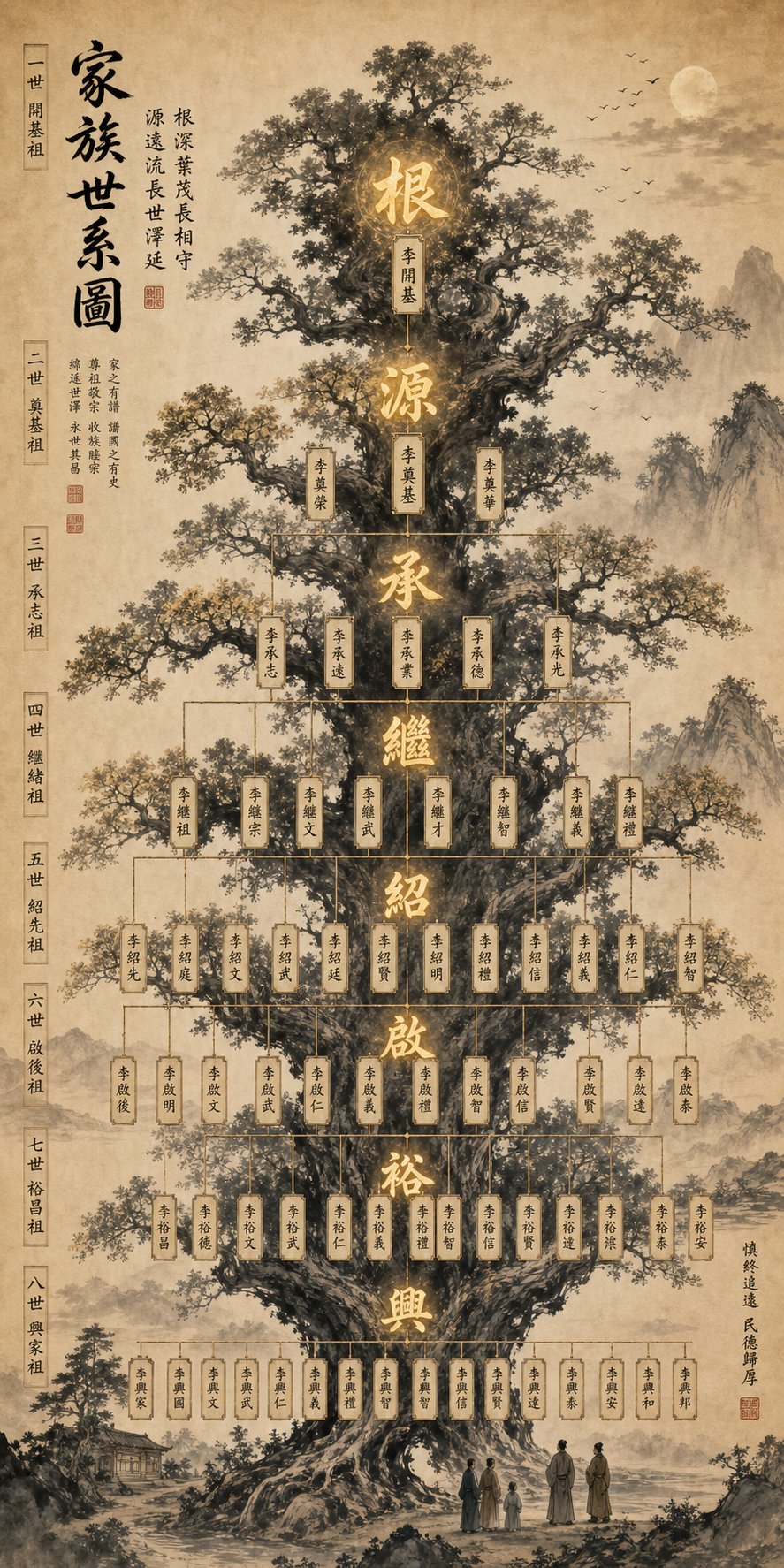
That shared character embedded within the given name? It has a name of its own: the generational name, or 字辈 (zibei). If you're searching for a Chinese generation name equivalent to middle name, this is the closest you'll find. But "closest" doesn't mean "same." The zibei system serves a fundamentally different purpose, and understanding it reveals just how differently Chinese culture approaches the question of what a name should do.
What Generational Names Are and How They Work
In traditional Chinese families, all children born into the same generation share one character in their given name. Not just siblings — all cousins, second cousins, and extended family members of the same generational rank receive this identical character. The other character in their given name is unique to them, chosen by their parents to reflect individual hopes and aspirations.
Imagine a family where three brothers are named 王德明 (Wang Deming), 王德华 (Wang Dehua), and 王德强 (Wang Deqiang). You'll notice the shared character in Chinese family names here: 德 (De, meaning "virtue"). Each brother carries 德 as a generational marker, while 明, 华, and 强 distinguish them as individuals. Their cousins on the paternal side would also carry 德 in the same position. The next generation down might all share the character 文 (Wen, meaning "literature"), and so on.
The zibei naming system explained in genealogical terms works like a built-in family database. Before written records were widely accessible, before digital family trees existed, this naming convention allowed any member of a large clan to immediately identify how they were related to another person. Hear someone's generational character, and you instantly know whether they're your peer, your elder, or your junior within the family hierarchy.
This is why the Chinese generational name tradition persisted for centuries across thousands of families. It wasn't decorative. It was functional infrastructure for managing kinship in clans that could span hundreds or even thousands of members across dozens of villages.
The generational character is the closest thing Chinese naming has to a middle name, but it serves a completely different purpose — marking your place in a family lineage rather than honoring an individual.
In Western naming, a middle name might honor a grandparent, carry a mother's maiden name, or simply sound pleasant between the first and last names. It's personal and often arbitrary. The generational character, by contrast, is systematic and collective. You don't get to choose it. It was decided — sometimes centuries before your birth — by ancestors who planned the naming sequence for generations to come.
Where the Generational Character Sits in the Name
Position matters. In a standard three-character Chinese name (one-character surname + two-character given name), the generational character typically occupies the first position of the given name — that is, the second character overall. The third character is the individual's unique identifier.
Using the earlier example:
- 王 (Wang) — surname, position 1
- 德 (De) — generational character, position 2
- 明 (Ming) — individual character, position 3
Some families reverse this order, placing the generational character in the third position instead. But the first pattern is far more common historically. Either way, the generational character never occupies its own separate structural slot. It lives inside the given name, fused with the individual character into what appears — and grammatically functions — as a single two-character given name.
This is exactly why Western systems misread it. When "Deming" gets split into "De" and "Ming" on a form, the system accidentally isolates the generational character into what looks like a middle name. The irony is that this accidental separation actually mirrors the character's internal function: it is the part of the name that connects you to others rather than distinguishing you from them. But structurally, it was never meant to stand alone.
How Chinese families track generations through names becomes clearer when you see the system at scale. Picture a family reunion with 200 members. Without asking anyone's age or consulting a chart, you can sort every person into their correct generational tier just by listening to their names. All the 德 generation members are peers. All the 文 generation members are one step younger. The names themselves encode the family's organizational structure.
As genealogical research on Chinese names confirms, if two people share the same first character of their given name, they're likely siblings or first cousins within the same generational tier. This makes the zibei system an invaluable tool for anyone tracing Chinese ancestry — and it explains why the generational character, despite resembling a middle name to Western eyes, carries far more structural weight than any Western middle name ever could.
The question that naturally follows: how did families decide which characters to assign to each generation? The answer involves poetry, Confucian philosophy, and planning horizons that stretched across centuries.
The Poem-Based Generational Naming System
Poetry and naming don't often intersect in Western culture. But in Chinese tradition, an entire system of generational naming was built on verse. The Chinese generational poem naming system — known as 字辈诗 (zibei shi) — gave families a pre-written sequence of characters, one per generation, drawn from a composed or adopted poem. Each successive generation of children would take the next character in the poem as their shared generational marker. The result was a naming plan that could stretch across 20, 30, or even 50 generations into the future.
The Poem-Based System for Choosing Generation Characters
How does a zibei shi poem for naming generations actually work in practice? The mechanics are surprisingly elegant. A family elder, clan leader, or respected scholar would compose a short poem — typically structured in lines of five or seven characters, following classical Chinese poetic form. Each character in the poem was then assigned to a generation in sequence. As FamilySearch's research on generation poems explains, these characters were arranged in ordered lines, usually in sets of 5 or 7, with some following rhyme schemes while others simply provided a meaningful sequence.
Here's how the system operated step by step:
- A family composes or adopts a poem. The clan patriarch, a respected scholar, or a council of elders creates a poem whose characters embody virtues, aspirations, or blessings for future descendants.
- Each generation takes the next character in sequence. The first generation of children after the poem's creation uses the first character. Their children use the second character. Their grandchildren use the third, and so on down the line.
- The character is placed in a fixed position within the given name. Most commonly, it occupies the first position of the two-character given name (the second character overall), though some clans place it second. The remaining character is chosen individually for each child.
- The cycle repeats or extends. When the poem's characters are exhausted after many generations, some families loop back to the beginning. Others compose a new poem to continue the sequence.
The beauty of this approach is its simplicity at scale. A 20-character poem plans naming for 20 generations — roughly 500 to 600 years of family history, mapped out in advance with a single piece of writing.
Historical Roots in Confucian Family Values
Why go to such lengths? The Confucian influence on Chinese names runs deep. Confucian philosophy places filial piety (孝, xiao) and ancestral reverence at the center of moral life. Knowing your place within the family hierarchy isn't just a social convenience — it's an ethical obligation. The generational poem made that hierarchy legible in every person's name, reinforcing the Confucian principle that respect flows upward through generations and responsibility flows downward.
The characters chosen for these poems weren't random. They typically conveyed virtues like loyalty (忠), propriety (礼), wisdom (智), and benevolence (仁). As FamilySearch notes, the characters "often conveyed virtues such as loyalty, respect, or wisdom" and "expressed the hopes families had for each generation, reminding descendants of the ideals they were meant to uphold." Each generation didn't just receive a naming marker — they received a moral aspiration encoded directly into their identity.
How the System Planned Names Generations Ahead
The most famous Ming Dynasty generational naming example comes from the imperial Zhu family itself. When Zhu Yuanzhang founded the Ming Dynasty in 1368, he didn't just establish a government — he established generational poems for each of his 26 sons' lineages. Each branch of the imperial family received a unique 20-character poem, ensuring that for the next 20 generations, every prince's name would follow a predetermined sequence. This allowed the court to immediately identify any imperial descendant's generational rank and branch of the family tree simply by hearing their name.
The system worked so well that genealogists today can trace Ming Dynasty descendants through their generational characters alone. And the Zhu family wasn't unique — thousands of ordinary clans across China maintained their own poems, recorded in their family genealogy books (家谱, jiapu). Some of these poems have survived for over 30 generations, still in active use among families in rural southern China and overseas Chinese communities.
This level of forward planning reveals something important about how Chinese culture approached naming. A name wasn't just a label for one person in one moment. It was a thread connecting past, present, and future — a system designed to hold a family together across centuries. The generational poem turned naming into an act of collective memory, ensuring that even descendants born 500 years later would carry a visible link to their ancestors' intentions.
Of course, the zibei shi wasn't the only layer of naming complexity in Chinese tradition. Historical figures often carried multiple names that served entirely different social functions — names for peers, names for art, names shaped by cosmological beliefs about elemental balance.
Traditional Chinese Naming Layers and Their Purposes
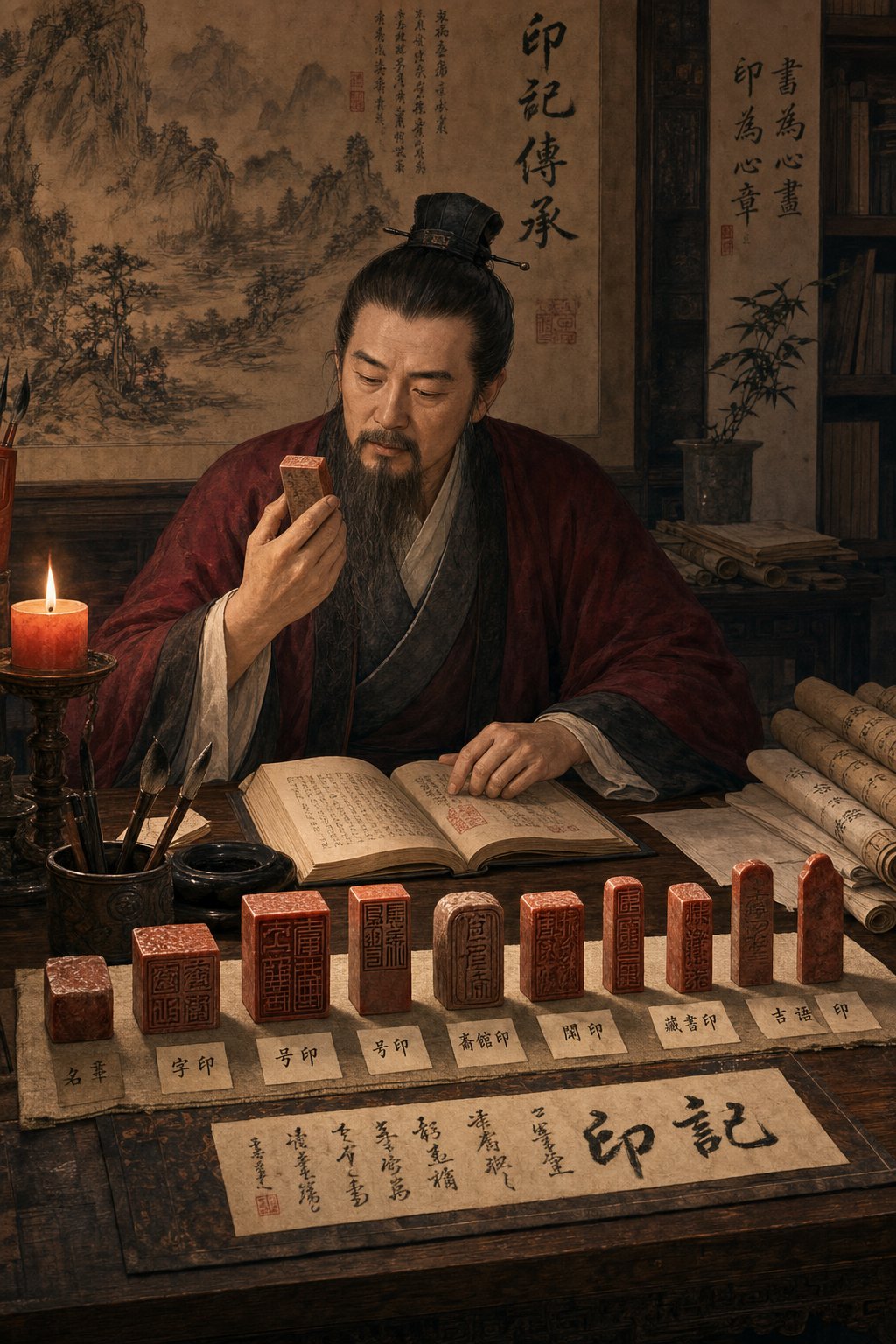
A single person in ancient China could carry five or more distinct names across their lifetime. If that sounds excessive by Western standards, consider this: none of these additional names functioned like a middle name. Each one served a specific social role, activated at a particular stage of life, and used only by certain people in certain contexts. Chinese culture didn't add naming layers for decoration — it built a system where your name changed depending on who was speaking to you and what relationship they held.
Courtesy Names and Art Names in Historical Context
The most important of these additional names was the courtesy name (字, zi). When a young man reached age 20 — or a young woman reached marriage age — they received a zi from a respected elder. From that point forward, peers and social equals used the courtesy name in conversation. The birth name (名, ming) became essentially private, reserved for family elders and the individual themselves as a sign of self-modesty.
Calling someone by their birth name in public was a serious insult. The Chinese courtesy name zi explained in social terms worked like a respect barrier: it signaled that you acknowledged someone's adult status and treated them as an equal. The zi was often semantically linked to the birth name — through synonyms, antonyms, or complementary meanings. The strategist Zhuge Liang (诸葛亮), for instance, had the courtesy name Kongming (孔明). Both 亮 and 明 mean "bright," reinforcing the same core meaning through different characters.
Beyond the courtesy name sat the art name (号, hao). The Chinese art name hao meaning is closer to a self-chosen alias — a creative expression of personality, philosophy, or circumstance. Unlike the zi, which was bestowed by elders, the hao was chosen by the individual themselves. The poet Tao Yuanming called himself "Mr. Five Willows" (五柳先生) after the trees near his home. The scholar Ouyang Xiu adopted "The Hermit of Six Ones" (六一居士), referencing his collection of books, inscriptions, a lute, a board game, a pot of wine, and himself as the sixth.
Here's how these traditional naming layers break down by function:
- 名 (ming) — Birth name: Used only by family elders and oneself. Considered private and intimate.
- 字 (zi) — Courtesy name: Given at adulthood by a respected elder. Used by peers and social equals to show respect.
- 号 (hao) — Art name: Self-chosen creative alias. Used in literary, artistic, or philosophical contexts.
- 训名/学名 (xunming/xueming) — School name: A more formal name given when a child began their education.
You'll notice something important: none of these names occupied a fixed structural position within the given name. They existed as entirely separate names used in parallel, not as components slotted between a first and last name. This is a fundamentally different architecture than the Western middle name, which sits inside a single legal name string. Chinese naming created multiple complete identities rather than one name with multiple parts.
How the Five Elements Shape Name Selection
Beyond social naming layers, Chinese culture also embedded cosmological philosophy directly into character selection. The Five Elements theory (五行, wuxing) — wood, fire, earth, metal, and water — plays a significant role in how parents choose given name characters for their children.
The process works like this: when a child is born, their exact birth date and time are analyzed using the Eight Characters system (八字, bazi), which maps the birth moment onto a framework of heavenly stems and earthly branches. This analysis reveals which elemental energies are strong, weak, or missing in the child's cosmic profile. The given name is then chosen to compensate for any imbalance.
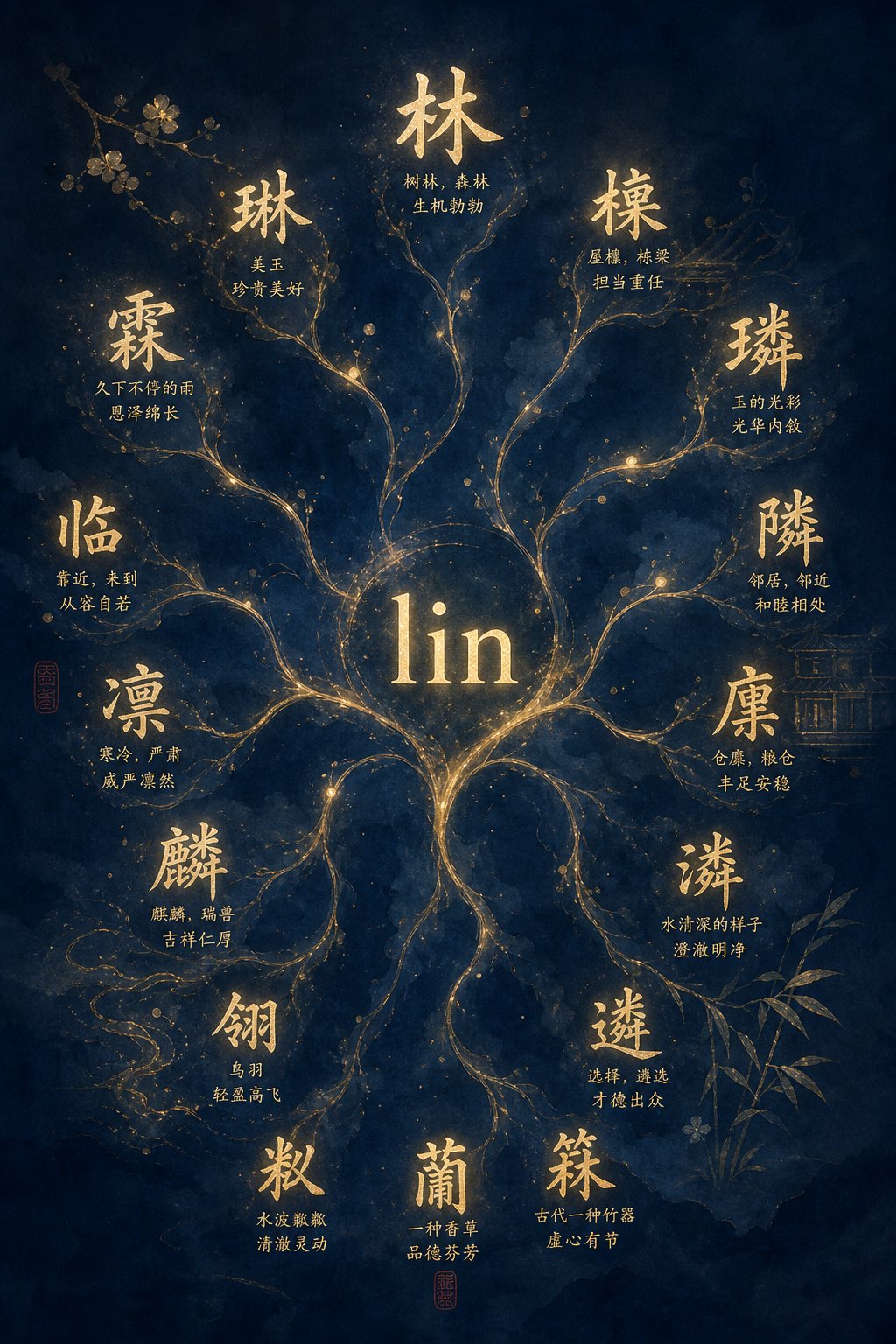
If a child's birth chart shows a deficiency in water energy, for example, parents might select characters containing the water radical (氵) — names like 浩 (hao, "vast"), 洋 (yang, "ocean"), or 清 (qing, "clear"). A child lacking wood energy might receive characters with the wood radical (木) — such as 林 (lin, "forest") or 桐 (tong, "paulownia tree"). The name becomes a form of elemental medicine, designed to bring the child's cosmic constitution into harmony.
This practice remains common today. Many families in mainland China, Taiwan, and overseas Chinese communities still consult fortune-tellers or naming specialists who analyze the bazi before suggesting appropriate characters. The Five Elements theory in Chinese naming adds yet another layer of intentionality that has no Western parallel — the name isn't just a label or even a wish for the child's future. It's an active intervention in their cosmic balance.
All of these traditions — generational poems, courtesy names, art names, elemental balancing — developed within a single cultural context: mainland Chinese naming practice. But Chinese-speaking communities span multiple regions with distinct histories, legal systems, and colonial influences. Those regional differences have produced dramatically different approaches to how Chinese names interact with Western naming conventions.
Regional Variations Across Chinese-Speaking Communities
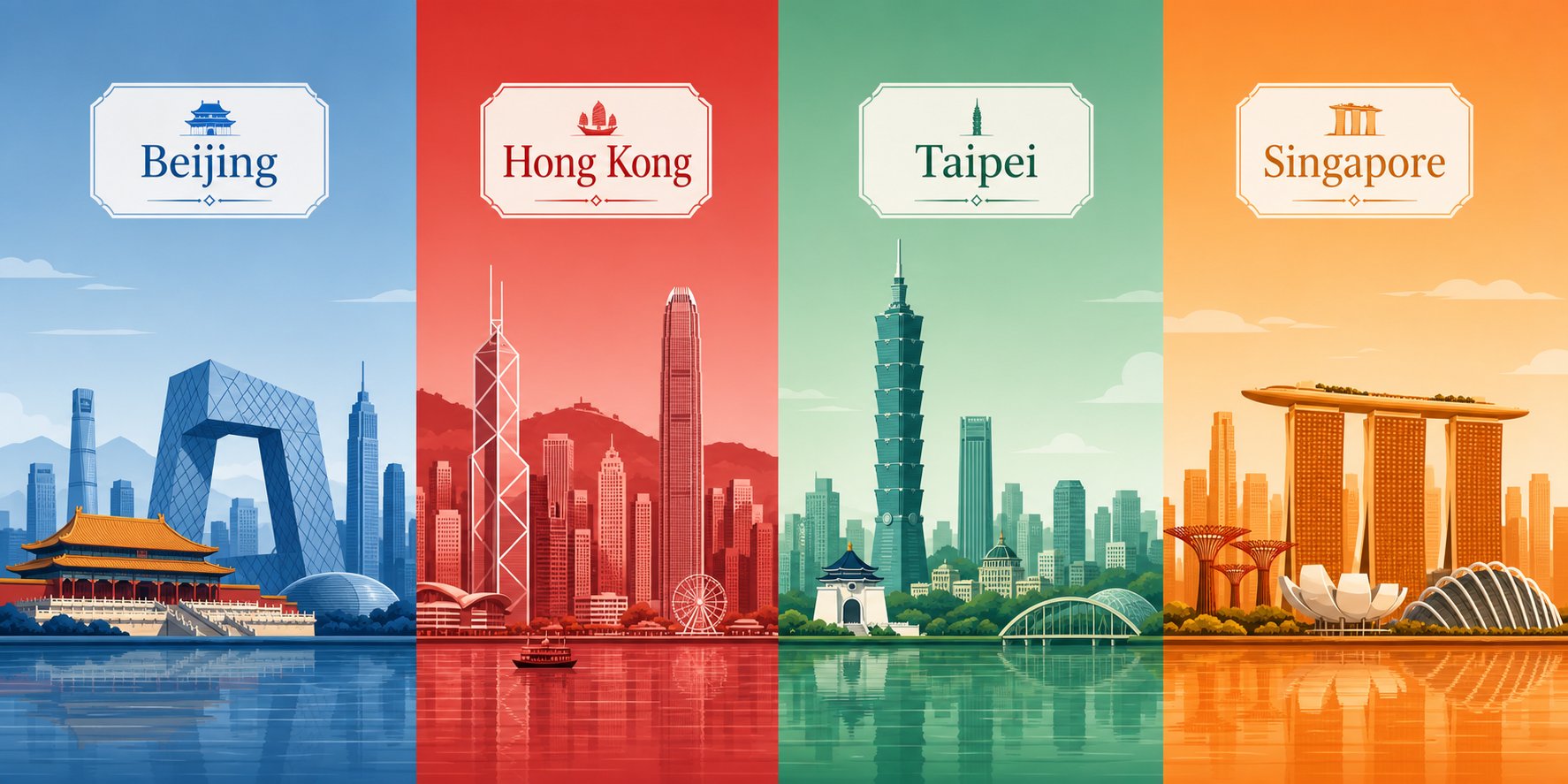
A Chinese name written in Hong Kong looks nothing like the same name written in Beijing or Singapore — even when the underlying characters are identical. Each region's colonial history, legal framework, and romanization system shapes how names appear on paper. And those formatting differences directly determine whether a Chinese name looks like it has a middle name when rendered in English.
How Hong Kong and Singapore Handle Middle Names Differently
Hong Kong's naming conventions carry a distinct colonial fingerprint. Under British administration, many Hong Kong residents adopted English first names alongside their Chinese names. The Hong Kong English middle name practice typically works like this: a person's legal name might read "Chan Tai Man, David" — where Chan is the surname, Tai Man is the Chinese given name, and David is the adopted English name. On identity documents, the English name sometimes appears in a middle name slot, sometimes as an alias, and sometimes as a prefix to the Chinese given name.
The result is a hybrid structure that genuinely does create something resembling a Western middle name — but only because the system was designed by British administrators who expected names to fit their familiar three-part format. As one researcher documented, Cantonese-translated English forenames retain the independence of each character. A name like 鄭月娥 becomes "Cheng Yuet-Ngor," where the hyphen signals that both syllables form one given name. But in UK naming registries, "Yuet" often gets truncated as the first name while "Ngor" is recorded as a non-existent middle name.
Singapore Chinese name conventions follow yet another pattern. Singaporean identity cards typically display Chinese names in a Westernized order with the given name first and surname last. A person named 陈伟明 (Chen Weiming) might appear on their NRIC as "Weiming Chen" or "Wei Ming Chen" — with the space between "Wei" and "Ming" once again creating the illusion of a first-plus-middle structure. Many Singaporean Chinese also carry English names that appear on official documents, producing four-part name strings like "David Wei Ming Chen" that slot neatly into Western databases but obscure the original two-part Chinese structure entirely.
The One-Child Policy's Effect on Generational Naming
While Hong Kong and Singapore developed hybrid naming practices through colonial contact, mainland China experienced a different kind of disruption from within. The one-child policy, enforced from 1979 to 2015, didn't just reshape family size — it quietly dismantled the generational naming tradition that had persisted for centuries.
Think about it: the zibei system was designed for large extended families with multiple children per household. When every couple produces five or six children, sharing a generational character across siblings and dozens of cousins creates a meaningful web of connection. But when each couple has exactly one child, the generational character loses its connective function. There are no siblings to share it with. Cousins become rare. The character that once linked 20 or 30 family members of the same generation now marks just one person — making it indistinguishable from any other given-name character.
The one-child policy effect on Chinese naming went beyond just reducing family size. It shifted parental psychology. With only one child to name, parents poured all their creative energy and aspirational hopes into selecting unique, distinctive characters. Following a predetermined generational poem felt like a constraint rather than a connection. Many families simply abandoned the practice, choosing instead to give their single child a name that stood entirely on its own merits.
By the time the policy was relaxed, an entire generation had grown up without generational names. The tradition survives in some rural communities and among overseas Chinese families who maintained genealogical records, but in urban mainland China, it has largely faded from common practice.
Romanization and the Illusion of a Middle Name
Perhaps the most underappreciated factor in whether a Chinese name appears to have a middle name is the romanization system used to transcribe it. Different regions use different systems, and each one handles spacing, hyphenation, and syllable boundaries differently. The Chinese name romanization differences by region create wildly inconsistent results from the same source name.
Mainland China uses Hanyu Pinyin, which officially joins the two syllables of a given name into one word: "Xiaoming" rather than "Xiao Ming." Taiwan historically used Wade-Giles romanization, which produces different spellings entirely — "Hsiao-ming" instead of "Xiaoming." The Taiwan vs mainland China name format difference means the same person's name could look like two completely different identities depending on which system transcribed it. Taiwan has since introduced other systems, including Tongyong Pinyin and a modified approach that sits somewhere between Pinyin and Wade-Giles.
Hong Kong uses romanizations based on Cantonese pronunciation rather than Mandarin, with no single standardized system. The Jyutping system exists as an academic standard, but most Hong Kong residents use informal romanizations that were established decades ago on their identity documents. Cantonese romanization tends to separate each character of the given name with a space or hyphen — "Siu Ming" or "Siu-Ming" rather than "Siuming" — which makes the name look far more like it contains a middle name than the mainland Pinyin equivalent would.
Here's how the same name appears across regional conventions:
| Region | Chinese Characters | Romanized Format | Appears to Have Middle Name? |
|---|---|---|---|
| Mainland China (Pinyin) | 王小明 | Wang Xiaoming | No — given name joined as one word |
| Taiwan (Wade-Giles) | 王小明 | Wang Hsiao-ming | Ambiguous — hyphen signals one name, but systems may split it |
| Hong Kong (Cantonese) | 王小明 | Wong Siu Ming | Yes — space between syllables looks like first + middle |
| Singapore | 王小明 | Siu Ming Wong (Western order) | Yes — "Siu" reads as first name, "Ming" as middle name |
You'll notice that the exact same three characters produce four different impressions about whether a middle name exists. The name hasn't changed. The person hasn't changed. Only the transcription system changed — and with it, the entire way Western databases interpret the name's structure.
This is why asking whether Chinese people "have" middle names is the wrong question. The answer depends entirely on which region's formatting conventions produced the English version of the name. A Hong Kong resident's name will almost always look like it has a middle name when written in English. A mainland Chinese person's name formatted in standard Pinyin almost never will. The underlying naming structure is the same — surname plus given name — but the romanization layer creates or erases the appearance of a middle name entirely on its own.
For anyone navigating official paperwork — whether you're filling out your own forms or processing someone else's records — these regional formatting differences aren't just academic trivia. They determine which box your name lands in, whether your records match across institutions, and how much friction you'll face every time you cross a border or open an account.
Practical Guide to Chinese Names on Official Documents
Formatting differences aren't just a curiosity — they become a real headache the moment you sit down with a government form, a visa application, or an employee onboarding system. The blank "middle name" field stares back at you, mandatory or not, and the question becomes intensely practical: what do you actually put there? Whether you're filling out your own paperwork or processing someone else's records, getting this wrong can cascade into mismatched documents, rejected applications, and hours spent on the phone with bureaucracies trying to reconcile two versions of the same name.
Filling Out Forms When There Is No Middle Name
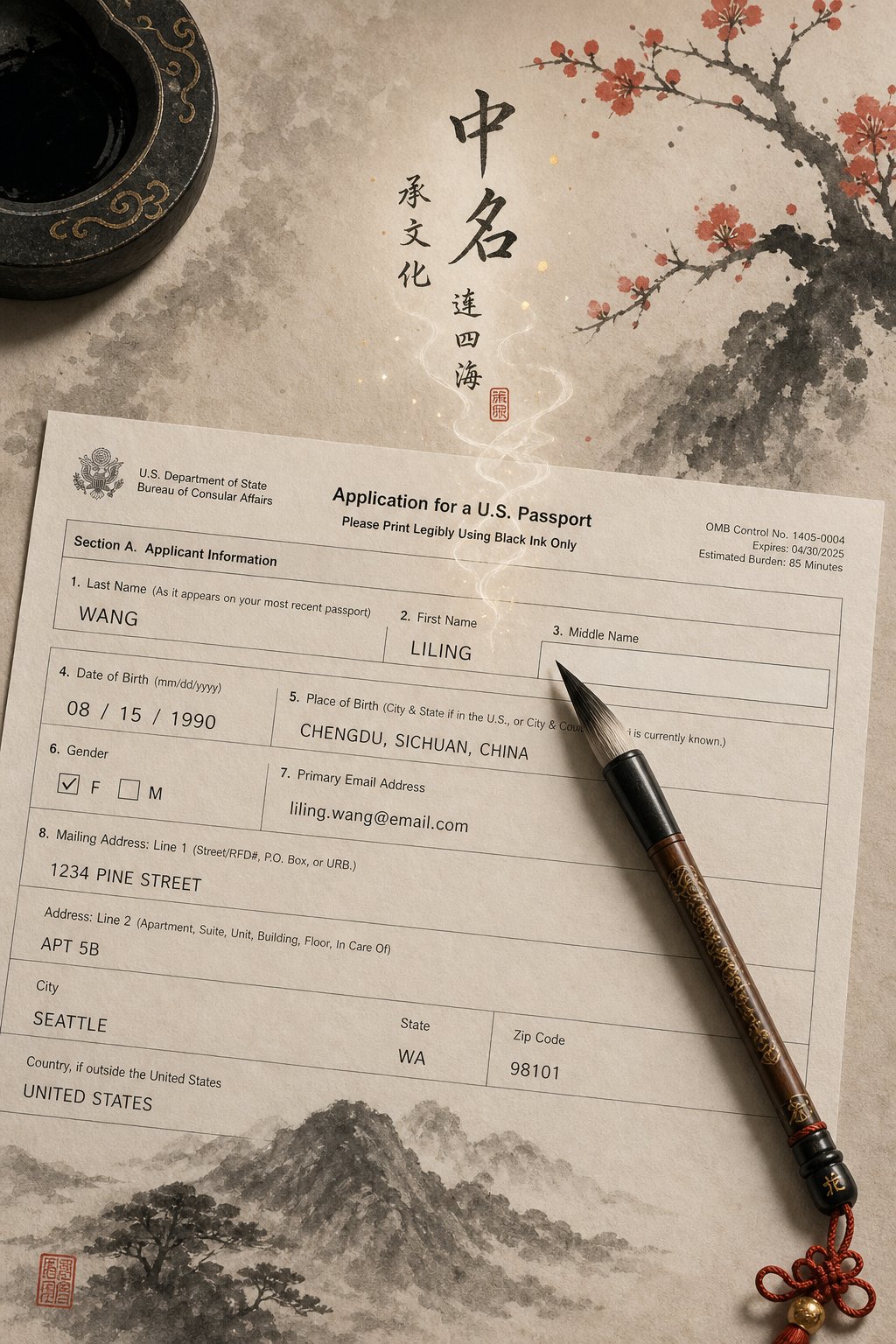
When a form asks for a middle name and you don't have one, you have a few options depending on the system. Some forms include a checkbox or note that says "no middle name." Others accept the field being left blank. But many older systems — particularly immigration databases, airline reservation platforms, and university registrars — require something in every field before they'll let you proceed.
This is where the abbreviation NMN comes in. NMN stands for "No Middle Name" and is a recognized placeholder used across U.S. immigration forms, passport applications, and institutional records. You may also encounter NMI ("No Middle Initial"), which serves the same purpose when a form asks specifically for an initial rather than a full name. As documentation on naming conventions confirms, NMN and NMI are standard abbreviations used when no middle name exists — though they're sometimes misapplied or entered into the wrong field by systems that don't handle them gracefully.
A related abbreviation you might encounter is FNU, which stands for "First Name Unknown." This one appears frequently in U.S. immigration contexts where a person's name doesn't split neatly into the expected first-last format. When a Chinese passport displays the name as "WANG XIAOMING" with no separation between given name components, some immigration officers enter "FNU" in the first name field and place the entire given name elsewhere. The result? A legal record that says your first name is literally "FNU" — an abbreviation that can follow you through background checks, credit reports, and employment verification for years.
Here's what to do when you encounter the "no middle name" problem on Western forms:
- If the field is optional: Leave it blank. Don't invent a middle name or split your given name to fill the space.
- If the field is mandatory but accepts text: Enter "NMN" or write "N/A." Check the form's instructions first — some specifically tell you which placeholder to use.
- If the system won't accept a blank or placeholder: Enter a single dash or period if the system allows it. Document what you entered so you can be consistent across all future forms.
- If your two-character given name has already been split on a previous document: Match whatever your passport shows. Consistency across documents matters more than correctness in any single field.
That last point deserves emphasis. How to fill out forms with a Chinese name and no middle name ultimately comes down to one principle: match your passport. The machine-readable zone (the coded strip at the bottom of your passport's identity page) structures your name in a LAST NAME << FIRST NAME format, separated by angle brackets. Whatever appears in that zone is your definitive legal name format for travel and official purposes. If your passport's machine-readable zone shows "WANG< The same Chinese name can look dramatically different depending on the context. Here's a single example — the name 王小明 — shown in every common format you're likely to encounter: Notice how the hyphenated and spaced formats create the visual impression of a middle name, while the joined Pinyin and passport formats do not. All seven rows refer to the same person with the same name. The differences are purely presentational — but they determine how databases categorize you. For specific audiences dealing with Chinese name formatting for official records, here are targeted recommendations: The Chinese name on passport format is ultimately the anchor document. Immigration systems, airlines, and banks all reference it as the authoritative source. When you write your Chinese name on Western forms, you're not translating — you're transcribing from that passport. The characters haven't changed. The name hasn't changed. You're simply fitting it into a system that wasn't designed for it, and the goal is to do so consistently enough that every institution recognizes you as the same person. These practical workarounds solve the immediate paperwork problem. But they also highlight a broader shift happening in real time: as millions of Chinese individuals live, work, and raise families across Western countries, entirely new naming conventions are emerging — hybrid structures that didn't exist a generation ago. A generation ago, the question of Chinese diaspora naming conventions had a simple answer: you had your Chinese name at home and maybe an English name at school or work. The two existed in parallel, rarely intersecting on legal documents. Today, that separation has collapsed. Millions of Chinese individuals living abroad have merged these naming traditions into hybrid structures that genuinely do produce something occupying the middle name slot — not because Chinese naming tradition requires it, but because navigating two systems simultaneously demands it. The most common pattern looks like this: a Chinese person living in the U.S., Canada, Australia, or the UK adopts a Western first name for daily use while placing their Chinese given name in the legal middle name field. Someone born as 张伟 (Zhang Wei) becomes "David Wei Zhang" on their driver's license, tax returns, and employment records. Using a Chinese name as a legal middle name solves two problems at once — it preserves the birth name in official records while giving Western colleagues and systems a familiar entry point. This isn't a casual choice. It's a structural adaptation. As research on Chinese naming practices explains, when Chinese people take English names, they don't give up their birth names — the new name becomes an additional moniker. This mirrors China's own historical tradition of carrying multiple names (zi, hao) for different social contexts. The English name today plays the same role that the self-chosen hao did in imperial China: it reveals an aspect of personality and implies a certain social distance, used among colleagues but almost never in familial contexts. The result is a three-part legal name that looks perfectly Western on paper — first, middle, last — even though it was assembled from two entirely different naming systems. "David Wei Zhang" reads as a standard American name to any database. But its internal logic is hybrid: an adopted English name + a Chinese given name repurposed as a middle name + an inherited Chinese surname. For children born abroad to Chinese parents, the Chinese and English name combination practices get even more creative. Parents face a decision that previous generations never encountered: how do you give a child both a meaningful Chinese name and a functional Western name, and how do you fit both onto a birth certificate? Modern Chinese naming trends for children abroad vary significantly by country. In the United States, many parents register the child's legal name as something like "Emily Xinyi Chen" — Western first name, Chinese given name as middle name, Chinese surname. In Australia and Canada, similar patterns dominate. But in the UK, some parents reverse the structure, placing the Chinese name first and the English name second: "Xinyi Emily Chen." Others skip the legal middle name entirely and maintain the Chinese name as an unofficial home name that never appears on documents at all. Younger generations are pushing these boundaries further. Some second-generation Chinese Americans choose to reclaim their Chinese given name as their primary name in professional settings, reversing the pattern their parents established. Others create blended names that work phonetically in both languages — names like "Mei" that sound natural in English while carrying Chinese meaning. The information-theoretic research on name systems confirms that allowing individuals more flexibility in choosing how their names are presented has strong historical precedent and can help reduce the nominal ambiguity that rigid conventions create. Chinese middle name conventions are actively evolving as naming practices adapt to a globalized world where multiple naming systems must coexist. The traditional answer to "do Chinese names have middle names" remains no. The structure of Chinese naming — surname plus given name, with no third slot — hasn't changed. But the lived reality of Chinese people navigating Western systems has produced a new functional convention: the Chinese given name repurposed as a legal middle name, bridging two worlds that were never designed to fit together. It's not a traditional middle name. It's something new — a practical invention born from the collision of naming systems, creating hybrid identities that honor both cultural inheritance and administrative necessity. No, Chinese names follow a two-part structure: a surname (family name) followed by a given name of one or two characters. There is no separate middle name slot. When a two-character given name like Xiaoming gets entered into Western systems, it is often incorrectly split into a first name and middle name, but both characters form a single, indivisible given name that was never meant to be separated. The generational name (zibei) is the closest equivalent to a Western middle name, but it serves a different purpose. In traditional families, one character of the given name is shared among all siblings and cousins of the same generation to mark their place in the family lineage. Unlike a Western middle name that honors an individual, the generational character is systematic and collective, often predetermined by a family poem composed centuries earlier. If the middle name field is optional, leave it blank. If it is mandatory, enter NMN (No Middle Name) or N/A. The most important rule is consistency: match whatever format appears on your passport's machine-readable zone across all documents. If your given name has already been split on a previous official document, continue using that same format to avoid mismatches between records. Hong Kong uses Cantonese-based romanization that typically separates each syllable of the given name with a space or hyphen, such as Siu Ming instead of Siuming. This formatting creates the visual appearance of a first name plus middle name. Additionally, many Hong Kong residents adopted English names under British colonial influence, which sometimes occupy the middle name position on identity documents. The most common approach is placing a Western first name in the given name field and using the Chinese given name as a legal middle name. For example, someone born as Zhang Wei might become David Wei Zhang on official documents. This hybrid structure preserves the Chinese birth name in legal records while providing Western systems with a familiar name format that fits standard database fields.A Name Format Quick Reference for Common Situations
Context Format Example Chinese characters (standard order) Surname + Given name 王小明 Pinyin with tones Surname + Given name (joined) Wáng Xiǎomíng Chinese passport (MRZ) SURNAME< WANG< Western document order Given name + Surname Xiaoming Wang Hyphenated format Surname + Hyphenated given name Wang Xiao-Ming Spaced format (Hong Kong style) Surname + Spaced given name Wong Siu Ming Combined with English name English name + Chinese given + Surname David Xiaoming Wang
Modern Evolution of Chinese Naming in a Globalized World
How Diaspora Communities Create Hybrid Name Structures
The Rise of Western Names Alongside Chinese Names
Frequently Asked Questions About Chinese Middle Name Conventions
1. Do Chinese people have middle names?
2. What is the Chinese generational name and is it a middle name?
3. How should I fill out a form that requires a middle name if I have a Chinese name?
4. Why do some Chinese names from Hong Kong appear to have middle names?
5. How do Chinese people living abroad handle having both a Chinese and English name?