Why Chinese Names Carry More Literary Weight Than You Think
Imagine reading a novel where a character's name quietly tells you she will suffer, that her beauty is doomed to fade, that her family's wealth is an illusion. You turn the pages unaware, but a reader who knows the language caught all of that on page one. This is the reality of Chinese names in literature. They are not labels. They are compressed stories.
In English-language fiction, a character named "John" or "Sarah" carries little inherent meaning. The name identifies, but it rarely describes. Chinese names work on an entirely different principle. Each character in a name is selected from a vast lexicon of meaning. A single syllable might evoke jade, moonlight, moral virtue, or the sound of wind through bamboo. When an author chooses those characters for a fictional person, the name becomes the first act of characterization before a single line of dialogue is spoken.
Why Chinese Names Are Never Just Names
Every Chinese name is built from characters that carry independent semantic weight. The character for "name" in Chinese (ming, 名) itself combines the symbols for "evening" and "mouth," suggesting someone calling out their identity in the dark. This layered logic extends to every name you encounter in Chinese fiction.
Parents in real life choose characters representing hope, beauty, strength, or scholarly ambition. Authors do the same, but with narrative intent. A character whose name contains the element for "fire" might be passionate or destructive. One named with characters referencing "jade" signals purity or preciousness. Unlike most Western naming traditions, where meaning has faded behind familiarity, chinese names in chinese retain their semantic transparency. A literate reader sees the meaning instantly, the way you might notice if an English character were literally named "Grace" or "Victor," except with far more nuance and specificity.
This tradition of meaningful naming draws from deep cultural roots. Classic texts like the Book of Songs and the Verses of Chu have supplied beautiful name characters for centuries, connecting each person to literary heritage. Authors exploit this connection, embedding allusions to ancient poetry within a character's name itself.
What Western Readers Miss Without Context
Here is the gap. When you read a translated Chinese novel, the names arrive as romanized syllables: pinyin stripped of its characters, its tones, its visual architecture. You see "Lin Daiyu" and register a sound to track across pages. A Chinese-literate reader sees those same two characters and immediately understands "black jade of the forest," a name saturated with fragility and melancholy. The entire reading experience diverges at the level of names and characters.
A Chinese literary name functions as a compressed character description, encoding personality, fate, and thematic role in as few as two or three carefully chosen characters.
This isn't a minor footnote. It reshapes how readers relate to a story. Asian names in literary contexts often carry cultural information that translation simply cannot preserve through sound alone. The result is that English-language readers experience a flattened version of the text, missing an entire dimension of meaning that the author carefully constructed.
The purpose of what follows is to bridge that gap. Not as a language lesson, but as a literary one. Understanding how chinese names function as deliberate artistic choices transforms the way you read translated fiction, diaspora novels, and cross-cultural narratives. It turns opaque syllables into windows.
The Structural Anatomy of Chinese Literary Names
Knowing that Chinese names carry meaning is one thing. Understanding how they are built, piece by piece, gives you the tools to actually read that meaning on the page. Chinese full names follow a consistent architecture, and once you recognize its logic, patterns emerge across entire novels.
Surname-Given Name Order and Its Literary Implications
Chinese names place the family name first. This is not merely a formatting difference. It reflects a worldview where lineage precedes individuality, where you belong to a family before you belong to yourself. In fiction, this ordering matters. A character is introduced surname-first, anchoring them in a clan, a history, a social position before their personal identity is even spoken.
There are roughly 100 common chinese names for surnames that cover the vast majority of the population. The most common chinese names like Wang, Li, Zhang, and Liu appear so frequently that they signal ordinariness, an everyman quality. When an author gives a character a rare surname, something with only a few thousand bearers in all of China, it immediately marks that person as unusual, perhaps aristocratic, perhaps from an ethnic minority, perhaps isolated. Readers attuned to this convention pick up social cues before the plot even begins.
Given names following the surname can be one or two characters. Single-character given names feel more classical and formal, common in historical fiction and among characters of high status. Two-character given names are the modern standard, offering more room for layered meaning. When you encounter a character with a single-character given name in a contemporary novel, that choice signals something deliberate about their family's traditionalism or the author's stylistic intent.
How Characters Are Selected for Given Names
Imagine having thousands of possible building blocks for a name, each carrying its own meaning, sound, tone, and visual shape on the page. That is the reality of choosing chinese names and characters for a given name. Parents and authors alike weigh multiple dimensions simultaneously: Does the character mean something aspirational? Does it sound harmonious with the surname? Does it look balanced when written?
Here is where romanization fails literary readers. The same pinyin syllable can correspond to dozens of entirely different characters. When you see "Wei" in an English translation, you have no way of knowing which meaning the author intended without access to the original characters.
| Pinyin | Character | Meaning | Common Use in Names |
|---|---|---|---|
| wei | 伟 | great, mighty | Male chinese given names suggesting ambition |
| wei | 薇 | fern, rosebud | Female names evoking delicacy |
| wei | 卫 | to guard, protect | Names implying duty or loyalty |
| wei | 微 | subtle, tiny | Names suggesting humility or refinement |
This table illustrates why romanization alone is insufficient for literary analysis. A character named "Li Wei" in translation could be powerful, delicate, protective, or humble depending on which "wei" the author chose. For chinese first names male characters in martial arts fiction, the character 伟 (great) carries entirely different narrative weight than 微 (subtle) would in a literary novel about quiet domestic life. The meaning lives in the character, not the sound.
Generational Characters and Family Naming Poems
One of the most structurally fascinating naming traditions involves generation poems, known as paihang (排行). Historically, many families composed or inherited a poem, sometimes dozens of characters long, where each character was assigned to a successive generation. Every child born into that generation would share that character in their given name.
The generational name creates unity within a family. Siblings and patrilineal cousins of the same generation all carry a shared character, making their kinship immediately visible in their names. For example, siblings named Zhenni, Zhenhai, Zhenhua, and Zhendong all share the element "Zhen," though each may use a different character for it or pair it with a unique second character.
For novelists writing multi-generational sagas, this tradition is a gift. It provides a built-in structural device. Readers can track which generation a character belongs to simply by recognizing the shared element in their name. It creates visual and phonetic cohesion among family members while still allowing individual differentiation through the second character. When a character breaks from the generational naming pattern, perhaps choosing their own name or being denied the family character, that rupture carries narrative weight. It signals exile, rebellion, or a severed lineage.
Not all families maintain this practice. Some have lost their generational poems over time, and modern naming trends increasingly favor individual expression over collective identity. But in fiction set across decades or centuries, the presence or absence of generational naming tells you something essential about a family's relationship to tradition itself.
Beyond Given Names and the Layers of Chinese Identity
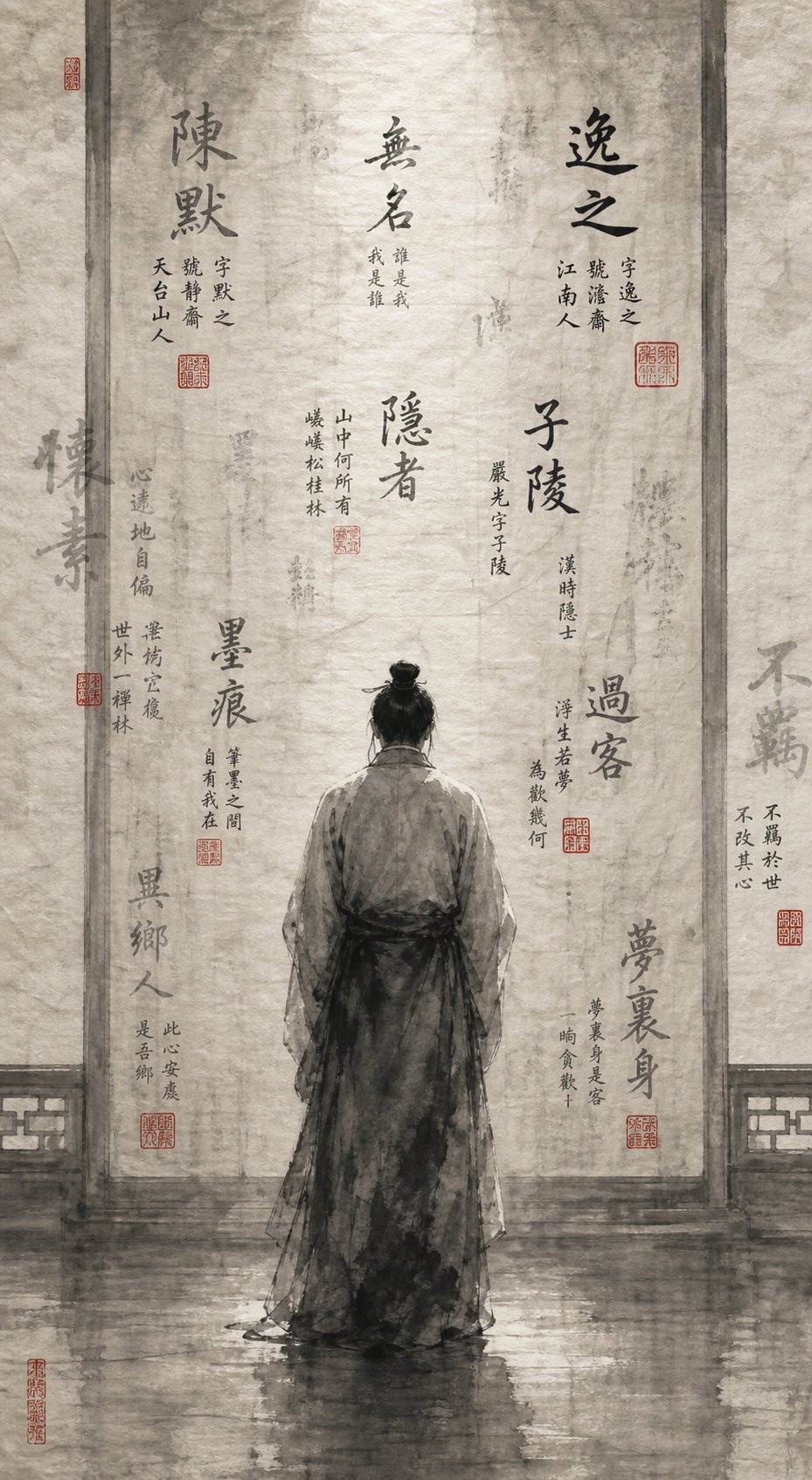
Generational characters and structural naming patterns only scratch the surface. In classical Chinese literary tradition, a single person might carry four or five different names across their lifetime, each one unlocked at a different stage of life and used by a different circle of people. This layered system has no real equivalent in Western fiction, and it gives authors an extraordinary tool for revealing relationships without a word of exposition.
Courtesy Names and Art Names as Narrative Layers
Think of it this way. In English, you might call someone "Dr. Smith" at work, "Robert" among friends, and "Bobby" at home. Chinese naming tradition formalizes this multiplicity into distinct categories, each with its own rules about who may use it and when.
The given name (ming, 名) is bestowed in childhood. It belongs to your parents, your elders, your superiors. The courtesy name (zi, 字) arrives at adulthood, traditionally granted during a capping ceremony at age twenty. Your peers call you by this name as a sign of respect. The art name or pseudonym (hao, 号) is one you choose for yourself, a creative self-portrait in characters. And after death, a posthumous name fixes your legacy in a single judgment.
The poet Su Shi illustrates this perfectly. His given name was Shi (轼), his courtesy name Zizhan (子瞻), and his self-chosen pseudonym Dongpo Jushi (东坡居士), meaning "the retired scholar of the Eastern Slope." Each name reveals a different facet: the formal identity his father chose, the scholarly aspiration his mentor granted, and the rustic self-image he cultivated after political exile.
For authors naming chinese characters in fiction, this system creates narrative depth that a single name never could. In the Romance of the Three Kingdoms, which name a speaker uses to address another character instantly communicates the power dynamic between them. When peers use courtesy names, they signal mutual respect. When a lord uses a vassal's given name, he asserts authority. An anecdote from the Three Kingdoms period describes how Ma Chao addressed Liu Bei by his courtesy name after joining his service, an act so presumptuous that Guan Yu and Zhang Fei demanded permission to kill him for it. The wrong name, spoken to the wrong person, could be a death sentence.
Zhuge Liang's given name means "bright" (亮), and his courtesy name Kongming (孔明) also means "bright" through a different character. This mirroring between given name and courtesy name was the traditional ideal. As the Eastern Han scholar Ban Gu wrote, "upon hearing the style one can infer the given name." Zhou Yu's given name (瑜) and the jin (瑾) in his courtesy name Gongjin both refer to beautiful jade. These semantic echoes between chinese character names and courtesy names create a resonance that rewards attentive readers.
Naming Taboos and Their Plot Potential
Imagine a world where speaking certain syllables is a criminal offense. That was the reality of naming taboo (bihu, 避讳) in imperial China. You could not write or speak the characters in your emperor's name, your father's name, or your lord's name. Violating this rule ranged from social disgrace to capital punishment.
This prohibition rippled through literature in fascinating ways. The historian Chen Shou, writing his Records of the Three States during the Jin dynasty, was obligated to avoid the name of his ruler Sima Zhao. The result? The historical figure Wei Zhao (韦昭) was recorded as Wei Yao (韦曜) for centuries, his actual name distorted by political necessity. In Tang dynasty poetry anthologies, a line by Cao Zhi containing the word "yuan" (abyss) was changed to "chuan" (spring) to avoid the name of the founding emperor Li Yuan, rendering the verse nonsensical.
Chinese people names could be altered, careers disrupted, and entire texts corrupted by this single cultural rule. The general Meng Da originally carried the courtesy name Zijing, but was forced to change it to Zidu because his lord Liu Bei had an uncle named Liu Jing. One shared character was enough to demand a new identity.
For fiction writers, naming taboos generate organic tension. A character who cannot speak their beloved's name because it shares a character with the emperor's. A scholar whose own name must be erased from records after a political shift. A family forced to rename a child when a new ruler ascends the throne. These are not invented conflicts. They are historical realities that classical authors wove directly into their narratives, and they give modern writers working with chinese name characters a rich source of culturally grounded drama.
Titles, Epithets, and Progressive Name Revelation
Classical Chinese fiction rarely introduces a character by their full given name on the first page. Instead, you'll encounter a title, an epithet, a social role. The true name arrives later, earned through narrative context. This technique builds mystery and mirrors the social reality that most people in traditional China would never learn the given names of those above them in status.
Characters in novels like Water Margin are known primarily by their jianghu epithets: "Timely Rain" Song Jiang, "Black Whirlwind" Li Kui. These nicknames function as compressed reputations, telling you what a character is known for before you learn who they actually are. The gradual revelation of a character's real name, courtesy name, and family background unfolds like peeling layers from an identity.
You'll notice this hierarchy moves from public distance to private intimacy:
- Posthumous name or temple name — used by historians and descendants after death
- Official title or rank — used in formal address by subordinates and strangers
- Epithet or jianghu nickname — used by the public and in reputation
- Courtesy name (zi) — used among peers and equals as a sign of respect
- Art name or pseudonym (hao) — used in creative and intellectual circles
- Given name (ming) — used only by elders, superiors, or oneself in humility
- Childhood name or milk name — used only by immediate family in private
Each level of this hierarchy carries narrative information. When a novel shifts from using a character's title to using their courtesy name, the relationship between narrator and subject has changed. When an enemy uses a character's given name rather than their courtesy name, it is a deliberate act of disrespect, claiming superiority. Chinese characters names encode social dynamics through the simple act of choosing which name to speak aloud.
This layered naming system means that a single character in a classical novel might be referred to by five or six different appellations across the text. Far from being confusing, each shift in address tells the attentive reader something new about power, intimacy, and social position. It is characterization through naming convention, a technique so embedded in the tradition that authors barely need to explain it to their original audience.
These naming layers operate within a culture. But when authors deliberately exploit them for symbolic and thematic purposes, choosing specific characters to foreshadow fate or comment on theme, names become something more than social convention. They become literary devices with the precision of metaphor.
Chinese Names as Literary Devices in Published Works
Social convention is one thing. Deliberate artistic manipulation is another. When skilled authors choose names for their characters, they are not simply following cultural norms. They are planting seeds of meaning that bloom across hundreds of pages, encoding fate, theme, and irony into syllables that a literate reader absorbs before the story even begins to unfold.
Symbolism and Foreshadowing Through Name Characters
No work demonstrates this more powerfully than Dream of the Red Chamber (红楼梦), the 18th-century novel by Cao Xueqin that occupies the same central place in Chinese literary culture as Shakespeare does in English. The novel's naming system is so intricate that an entire branch of scholarship, known as Redology (红学), has developed partly to decode it.
Start with the family surname itself. The Jia clan (贾) carries a surname that is a perfect homophone for the word "false" (假). This is not coincidence. Cao Xueqin built the novel's central philosophical tension, the interplay between illusion and reality, directly into the name his readers encounter on nearly every page. Every time you read "the Jia family," you are also reading "the False family." Their wealth, their status, their entire world is marked as illusory from the first mention.
The very first named character in the novel is Zhen Shiyin (甄士隐), whose name is a homophone for "true things disappear" (真事隐). His counterpart is Jia Yucun (贾雨村), a homophone for "false words remain" (假语存). Before a single plot event occurs, Cao Xueqin has announced his theme through naming alone: truth will vanish, and only fabrication will persist. The protagonist Jia Baoyu has a distant relative also called Baoyu, but with the surname Zhen, meaning "real." When these two Baoyus meet in a dream, neither can determine who is genuine. The naming system transforms a character encounter into a philosophical puzzle about the nature of identity itself.
The twelve principal women of the novel each carry names that prophesy their fates. Lin Daiyu (林黛玉), whose name means "black jade of the forest," is destined for melancholy and early death. The character dai (黛) refers to a dark pigment used for painting eyebrows, evoking both beauty and sorrow. Xue Baochai (薛宝钗), whose name contains "precious hairpin," will be the one who ultimately claims the material prize of marriage, her name encoding possession and adornment rather than spiritual depth. These are not subtle hints for those who can read the characters. They are compressed prophecies, visible from the moment each woman appears on the page.
Characterization Through Sound and Meaning
Cao Xueqin's approach represents the pinnacle of a broader tradition. Across Chinese literary history, authors select name characters that combine pleasing sounds with thematic resonance, creating a kind of phonetic-semantic harmony that works on multiple levels simultaneously.
Consider how this operates across character types. A warrior in classical fiction might carry characters suggesting metal (金), strength (强), or thunder (雷). A scholar's name often references jade (玉), literature (文), or brightness (明). A character destined for tragedy might bear a name containing the chinese symbol that means love (爱) or joy (乐), creating painful irony as their story unfolds in the opposite direction. These patterns are not rigid formulas but flexible conventions that skilled authors play with, subvert, and exploit.
In the books of Tang poets, personal names often doubled as artistic statements. The poet Li Bai (李白), whose given name means "white" or "pure," cultivated an image of transcendent clarity. Du Fu (杜甫), whose name references lush vegetation, wrote poetry rooted in earthly suffering and human compassion. Whether these names shaped the poets or the poets shaped our reading of their names, the semantic connection between name and work became inseparable in literary memory.
For asian literary characters appearing in English-language works, the challenge shifts. Authors like Amy Tan navigate a dual audience. In The Joy Luck Club, names like Jing-mei ("pure, beautiful essence") and Waverly carry different weight for bilingual readers who catch the Chinese meanings versus monolingual readers who experience them as sounds. Tan uses this gap deliberately, sometimes translating name meanings in dialogue to create moments of cultural revelation for her characters and readers simultaneously.
Ha Jin takes a different approach. Writing in English about Chinese characters, he often selects names whose pinyin sounds carry faint echoes of their meaning even for non-Chinese speakers. The protagonist of Waiting, Lin Kong, bears a surname meaning "forest" and a given name meaning "emptiness," a combination that mirrors his paralyzed emotional state throughout the novel. The name works phonetically in English while encoding thematic content for those who look deeper.
Names That Comment on Theme and Social Position
One of the most sophisticated uses of naming in Chinese fiction involves ironic commentary, where a name says one thing and a character's reality says another. This technique rewards close reading and creates a layer of meaning that operates independently of plot.
In Dream of the Red Chamber, servants and minor characters often carry names that comment on their masters' world rather than their own. Maids are given pretty names like "Faithful" (鸳鸯, Yuanyang, literally "mandarin ducks") or "Patience" (平儿, Ping'er), names that describe the virtues demanded of them rather than qualities they freely possess. The naming encodes their social position: they exist to serve a function, and their names are that function made verbal.
The irony cuts deeper with tragic characters. Jia Xifeng (贾熙凤), the brilliant and ruthless household manager, carries a name meaning "phoenix of splendid joy." Her fate is anything but joyful. After years of scheming, poisoning rivals, and lending money at interest to maintain the family's lavish lifestyle, she meets a miserable end. The gap between her radiant name and her dark trajectory creates a sustained ironic tension that runs through the entire novel.
In Cao Xueqin's naming system, Jia Yuanchun, Jia Yingchun, Jia Tanchun, and Jia Xichun, the four sisters of the Jia family, carry given names whose first characters together form the phrase "yuan ying tan xi" (原应叹息), meaning "one should sigh," a hidden lament for the family's inevitable decline encoded across four names that no single character reveals alone.
This technique, distributing meaning across multiple names so that the pattern only emerges when you read them together, represents naming as structural architecture rather than individual characterization. It is a device unique to a writing system where each syllable carries independent meaning, impossible to replicate in languages where names are phonetic units without semantic content.
The zou meaning in a Chinese name (邹, an ancient state and surname) can similarly carry historical weight, connecting a character to the legacy of Zou Yan, the philosopher who systematized Five Elements theory. When an author gives a character this surname, readers steeped in classical tradition hear an echo of cosmological thinking. The name does not just identify. It situates the character within an intellectual lineage.
What emerges from these examples is a consistent principle: in the hands of skilled authors, Chinese names function as compressed narratives running parallel to the main story. They foreshadow, they comment, they ironize. They create a second text beneath the first, accessible only to readers who know how to look. This parallel text does not require fluency in Chinese to appreciate once someone points it out, but it does require awareness that the text exists at all.
These naming strategies operate within specific literary traditions. A name that works perfectly in a classical novel about aristocratic decline would feel entirely wrong in a martial arts epic or a contemporary realist story. Each genre has developed its own naming logic, its own conventions for what a name should sound like and what it should mean, creating distinct sonic and semantic worlds that signal genre as clearly as any plot element.
Genre Conventions from Wuxia to Contemporary Fiction
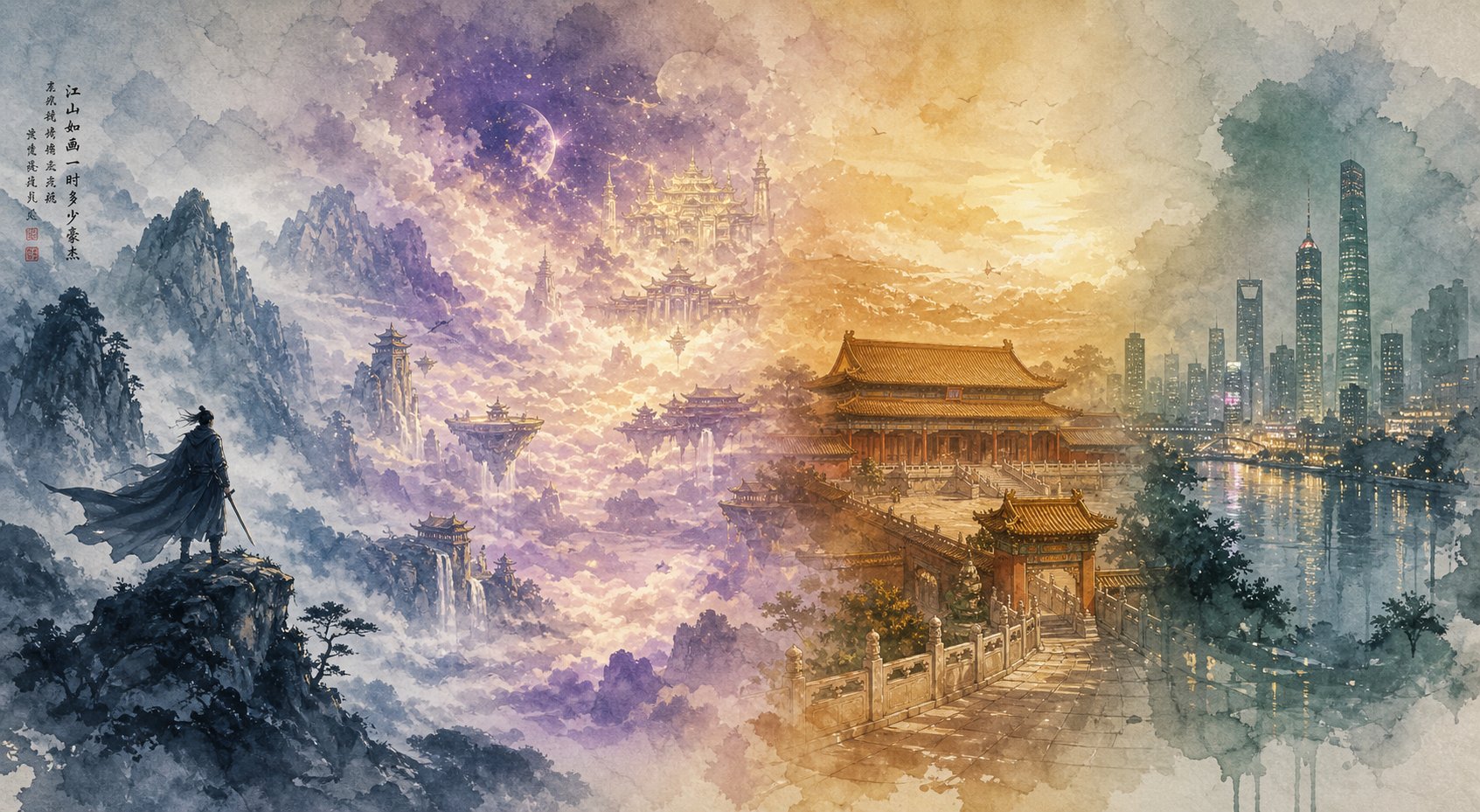
A name that encodes aristocratic decline in a Qing dynasty family saga would sound absurd in a story about sword-wielding wanderers leaping across rooftops. Genre shapes naming the way it shapes everything else in fiction, and in Chinese literary traditions, the conventions are so distinct that a single character name can tell you what kind of story you are reading before you finish the first page.
Wuxia and Jianghu Naming Traditions
Wuxia fiction, the genre of martial arts heroes and wandering swordsmen, operates in the jianghu (江湖), literally "rivers and lakes," a term for the lawless underworld of fighters, outlaws, and secret societies. Names in this world carry a specific energy. They evoke natural forces, weapons, moral qualities, and physical power. A wuxia hero named "Ling Xu" (Empty Spirit) would feel out of place. The genre demands something more grounded, more visceral.
Cool chinese names in jianghu fiction tend to draw from a recognizable palette. Surnames like Xiao (萧, desolate), Ye (叶, leaf), or Mu (慕, admire) appear frequently because their sounds carry a sense of solitary grandeur. Given names reference swords (剑, jian), wind (风, feng), frost (霜, shuang), or Confucian virtues like righteousness (义, yi) and loyalty (忠, zhong). The combination creates names that feel both poetic and dangerous.
But the given name is only half the identity. Jianghu characters carry dramatic epithets alongside their personal names, functioning as public reputations compressed into a phrase. In Water Margin, Song Jiang is "Timely Rain." In Jin Yong's novels, characters earn titles like "Eastern Heretic" or "Western Poison." These epithets signal a character's martial specialty, moral alignment, or feared reputation. They function the way a wu tang name generator might try to replicate: combining elemental imagery with personality to produce something instantly evocative.
Sects and schools add another naming layer. Members of the same martial arts school often share a character in their names, indicating allegiance the way generational naming indicates family. If every disciple of the Wudang sect carries the character "Chong" (冲, surge) in their generation, you can identify their affiliation at a glance. When a character abandons that shared element, taking a new name, they have severed ties with their school. The name change is the betrayal made visible.
Xianxia and Fantasy Naming Patterns
Step from wuxia into xianxia, the genre of immortal cultivation and celestial warfare, and the naming conventions shift dramatically. Where wuxia names feel earthy and martial, chinese fantasy names in xianxia draw on Daoist cosmology, Buddhist scripture, and archaic literary language. The difference is immediate and unmistakable.
Immortal characters carry names referencing jade (玉, yu), clouds (云, yun), celestial phenomena (星, xing, star; 月, yue, moon), or abstract philosophical concepts like void (虚, xu) and profound mystery (玄, xuan). A cultivator ascending toward godhood might be named Tianxu Zhenren (天虚真人), "Celestial Void True Person," a title that situates them within Daoist religious tradition. These names feel ancient, elevated, deliberately removed from the mundane world.
Demonic or villainous characters in xianxia carry darker elemental associations. Names incorporating mo (魔, demon), xue (血, blood), or ming (冥, underworld darkness) signal moral alignment through sound and meaning simultaneously. A character named Mo Tianlie (魔天烈, "Demonic Sky Fury") announces their nature before they commit a single villainous act. The naming is prophecy, just as it is in classical literary fiction, but tuned to a different register.
As cultivation progresses, characters in xianxia often adopt new names reflecting their spiritual advancement. A disciple might begin with an ordinary birth name, receive a Daoist cultivation name upon entering a sect, and eventually earn a celestial title after transcending mortality. This progressive naming mirrors the genre's central narrative arc: transformation from human to something beyond human, tracked through the names a character accumulates and discards. Anyone who has used a chinese name generator for games or fiction will recognize how these patterns, celestial imagery for heroes, infernal imagery for villains, have become codified conventions that readers expect.
Contemporary Literary Fiction and Realistic Naming
Strip away the swords and celestial realms, and you find a completely different naming logic. Contemporary Chinese literary fiction uses names the way a realist painter uses light: to ground characters in a specific time, place, and social class. The names are ordinary. That ordinariness is the point.
A character born in the 1950s might carry the character guo (国, nation) in their name, reflecting the patriotic fervor following the founding of the People's Republic. Names like Jianguo (建国, "build the country") or Weiguo (卫国, "guard the country") were so common in that era that they function as instant historical markers. A character named Wenge (文革, Cultural Revolution) immediately tells you their birth decade and their parents' political alignment. The name is a timestamp.
By the 1980s, naming trends shifted toward Western-influenced sounds and doubled characters meant to sound cute or modern. A character named Shanshan (珊珊) or Tingting (婷婷) signals the reform era's openness and individualism. In the post-1990s generation, four-character names and rare characters emerged as parents sought uniqueness in an increasingly competitive society. Contemporary authors exploit these generational patterns to situate characters in history without exposition. You don't need a narrator to tell you when a character was born. Their name already did.
This is what separates genre naming from literary realism. In wuxia and xianxia, names are aspirational, symbolic, larger than life. In contemporary fiction, names are sociological evidence. Both approaches treat naming as a deliberate authorial choice, but they point in opposite directions: one toward myth, the other toward documentary precision.
| Genre | Naming Characteristics | Common Elements | Function |
|---|---|---|---|
| Wuxia | Martial, grounded, evocative of natural forces and moral virtue | Sword (剑), wind (风), righteousness (义), frost (霜) | Signals combat style, moral alignment, sect allegiance |
| Xianxia | Archaic, celestial, drawn from Daoist and Buddhist traditions | Jade (玉), void (虚), heaven (天), cloud (云), profound (玄) | Tracks cultivation progress, spiritual identity, cosmic role |
| Historical Fiction | Period-accurate, reflecting real naming conventions of the depicted era | Courtesy names, generational characters, classical allusions | Establishes social rank, family lineage, historical authenticity |
| Contemporary Literary Fiction | Ordinary, era-specific, reflecting generational naming trends | Patriotic characters (50s-60s), Western sounds (80s), rare characters (post-90s) | Grounds characters in specific historical moments and social classes |
These genre conventions are not arbitrary. They evolved from decades of reader expectation and authorial tradition, each genre developing its own sonic and semantic vocabulary. For Chinese-literate readers, a name alone can identify genre as reliably as a book's cover art. For readers approaching these works in translation, recognizing these patterns transforms a list of unfamiliar syllables into a map of the story's world and intentions.
Genre conventions govern how names sound and what they mean within a story's internal logic. But what happens when those names cross linguistic boundaries entirely, when they must survive the journey from Chinese characters into Roman letters on an English-language page? That crossing introduces a different set of challenges, ones that no amount of genre awareness can fully resolve.
Translation and Romanization Challenges in English Works
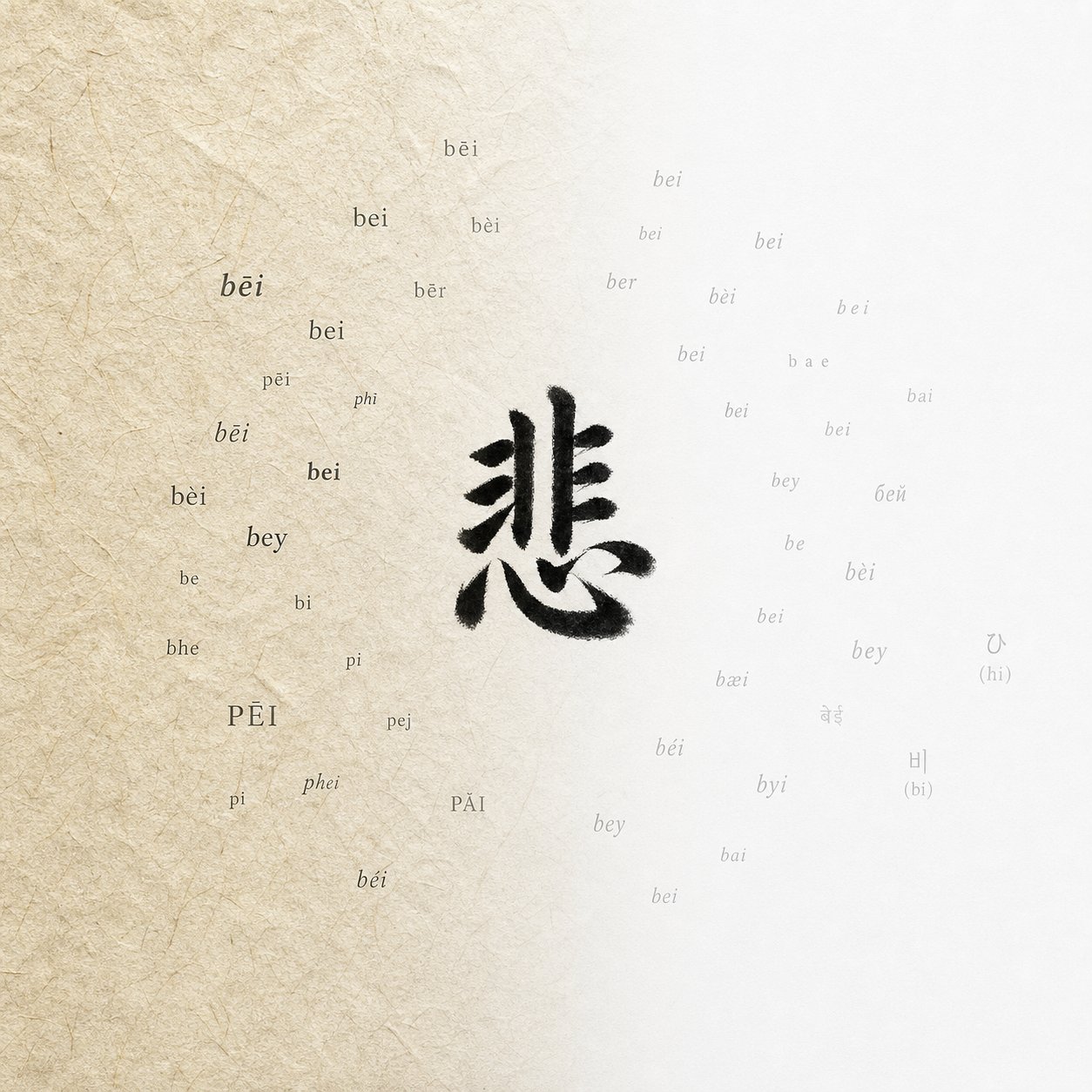
A name that functions as a compressed prophecy in Chinese characters arrives in English as a string of unfamiliar syllables. The journey from character to Roman letter is not neutral. It strips away meaning, introduces ambiguity, and forces readers to navigate systems that were never designed with literary appreciation in mind. For anyone reading Chinese literature in translation, understanding what romanization does and does not preserve is essential to grasping what you are actually encountering on the page.
How Romanization Systems Shape Reader Perception
There is no single way to spell a Chinese name in English. Multiple romanization systems exist, each producing different results from the same original characters, and the system a publisher chooses shapes how a reader perceives the name before they know anything else about the character.
The Wade-Giles system, developed by Sir Thomas Francis Wade in the mid-nineteenth century and modified by Herbert Allen Giles in 1912, remained the world standard for most of the twentieth century. By wade definition, this system uses apostrophes and unusual letter combinations to represent sounds, producing spellings like "Ts'ao Hsueh-ch'in" that feel ornate and exotic to modern English readers. Pinyin, created by China's Committee on Language Reform in 1956 and prescribed for all international publications by 1979, produces the cleaner, more standardized "Cao Xueqin" for the same author.
The difference is not cosmetic. Older translations using Wade-Giles create a sense of distance and foreignness that Pinyin does not. A reader encountering "Tao Te Ching" (Wade-Giles) versus "Dao De Jing" (Pinyin) forms different phonetic impressions of the same text. Publishers make deliberate choices about which system to use, and those choices influence whether a name feels ancient or accessible, scholarly or approachable.
Postal romanization adds a third layer of confusion. City names like "Peking" and personal names romanized during the Republican era follow neither system consistently. The result? A single historical figure might appear as three apparently different people across different translations.
- Mao Zedong (Pinyin) vs. Mao Tse-tung (Wade-Giles) — the same leader, two very different visual impressions
- Zhuangzi (Pinyin) vs. Chuang Tzu (Wade-Giles) — the philosopher's name split or joined depending on the system
- Li Bai (Pinyin) vs. Li Po (Wade-Giles) — the Tang poet whose name barely looks related across systems
- Sun Zi (Pinyin) vs. Sun Tzu (Wade-Giles) — even the combination of syllables is applied inconsistently, sometimes appearing as "Sunzi" in library catalogs
- Qing dynasty (Pinyin) vs. Ch'ing dynasty (Wade-Giles) — the apostrophe marking aspiration disappears entirely in Pinyin
For literary readers, this creates a practical problem. If you read one translation of Dream of the Red Chamber using Wade-Giles and another using Pinyin, character names look unrelated. "Lin Tai-yu" becomes "Lin Daiyu." Cross-referencing scholarship becomes an exercise in decoding before you even reach the literary analysis. Taiwan, notably, has not fully adopted Pinyin, meaning Taiwanese authors' names still frequently appear in Wade-Giles romanization, adding another layer of inconsistency to any reader's bookshelf.
Meaning Lost in Transliteration
Romanization preserves sound, roughly. Everything else vanishes. When you see names in chinese letters, each character is a visual object containing radical components that hint at meaning categories. The character for "jade" (玉) looks nothing like the character for "rain" (雨), and a Chinese reader registers that difference instantly. In Pinyin, both "yu" and "yu" are identical without tone marks, and even with them, the ā pronunciation system and other diacritical marks are routinely dropped in English-language publishing.
Consider what disappears in transliteration:
The visual architecture of the character itself. The radical that tells you a name relates to water, wood, metal, or fire. The tonal quality that distinguishes meaning. The yuan pronunciation in one tone means "origin" while in another it means "far" or "round." And most critically, the semantic content, the actual meaning the author chose. All of it collapses into a phonetic approximation that English readers must accept as the entire name.
Translators have developed strategies to compensate. Some add footnotes explaining name meanings on first appearance. Others include glossaries at the back of the book. David Hawkes, in his celebrated translation of Dream of the Red Chamber (published as The Story of the Stone), occasionally translated servant names into English equivalents like "Faithful" and "Patience" to preserve the semantic layer for readers who would otherwise miss it entirely. Each approach involves a tradeoff: footnotes interrupt narrative flow, glossaries require readers to flip back and forth, and English equivalents sacrifice the Chinese phonetic identity.
The yin pinyin system was designed for pronunciation guidance, not literary transmission. It was never meant to carry the weight of meaning that name chinese writing encodes in every stroke. When we ask romanization to do the work of literary communication, we are asking a phonetic tool to perform a semantic function it was not built for.
When Authors Translate Their Own Names
Bilingual authors face a unique version of this problem. They must decide how to present their own names and their characters' names to English-speaking audiences, and that decision is itself a literary act.
Some authors transliterate, keeping the Pinyin sound and trusting readers to learn it. Others translate meaning, choosing English names that echo the Chinese semantic content. The poet and memoirist Qiu Miaojin, whose surname means "autumn," retains the Chinese sound in English publication. But the children's author known in English as "Sanmao" (三毛, "Three Hairs") chose to keep a nickname that carries humor and self-deprecation in Chinese while sounding merely exotic in English.
The most interesting cases involve authors who do both. Eileen Chang, born Zhang Ailing (张爱玲), chose an English name that phonetically echoes her Chinese given name "Ailing" while functioning as a completely natural English name. The translation is not of meaning but of sound, adapted just enough to pass seamlessly in both worlds. This is a creative act as deliberate as any naming choice within her fiction.
For diaspora authors writing primarily in English, the question becomes even more charged. When a character abandons their Chinese name for an English one, or when they insist on the Chinese pronunciation against English-speaking resistance, the act of naming crosses from craft into theme. The romanization problem stops being a technical challenge and becomes the emotional center of the story itself.
Diaspora Literature and the Politics of Naming
That emotional charge, the friction between a Chinese name and its English-language context, is not just a translator's headache. For diaspora authors, it is the story. When characters navigate two naming systems, they are navigating two selves, and the tension between those selves generates some of the most compelling themes in contemporary cross-cultural fiction.
Dual Names as Identity Markers
Think about what it means to carry two names. Not a nickname and a formal name, but two entirely separate identities rooted in different languages, different cultures, different expectations of who you are supposed to be. This is the lived reality that authors like Amy Tan, Celeste Ng, and Yiyun Li transform into narrative architecture.
In Tan's The Joy Luck Club, the character Jing-mei Woo spends much of the novel being called "June," her American name. The recovery of her Chinese name, and the journey to China where that name carries its full weight, becomes the emotional climax of her story. The name is not incidental to the plot. It is the plot. Reclaiming "Jing-mei" means reclaiming a connection to her dead mother, to a language she barely speaks, to a self she was never allowed to fully become in America.
Celeste Ng explores the opposite trajectory in Everything I Never Told You, where characters suppress their Chinese names to assimilate, and that suppression becomes a form of slow erasure. The absence of the Chinese name is as narratively significant as its presence would be. You feel the gap where identity should be.
Chinese American journalist Rong Xiaoqing has written about this negotiation in her own life. After years of being called "Soaking Wrong" by English speakers who mangled her name's pinyin, she considered adopting an English name like Mary or Cecilia but realized it would keep her "up at night pondering the question 'who am I?'" Instead, she reversed her name order back to the Chinese convention, surname first, as "a statement of my own identity." Her experience mirrors what diaspora novelists dramatize: the act of choosing how to present my name is in chinese or English form becomes an assertion of cultural allegiance.
Gender and Naming in Cross-Cultural Literature
Chinese naming conventions encode gender through character selection rather than phonetic patterns. English speakers can often guess gender from name endings: names ending in "-a" or "-elle" tend female, while "-on" or "-ard" tend male. Chinese names work differently. Chinese female names draw from characters evoking flowers (花, 莲), beauty (美, 丽), or jade (玉, 瑶), while chinese boy names favor strength (强, 刚), ambition (志, 伟), or vastness (海, 宇). The gendering is semantic, not phonetic.
This creates interesting possibilities for diaspora authors. Female chinese names in traditional families follow recognizable patterns, characters referencing grace, fragrance, or precious stones that signal femininity to Chinese-literate readers. Chinese male names lean toward characters suggesting mountains, dragons, or scholarly achievement. But contemporary authors increasingly choose chinese gender neutral names for their characters, selecting characters like "Yu" (宇, universe) or "Chen" (晨, morning) that carry no gendered associations, deliberately challenging traditional expectations across both cultures.
When diaspora authors give a daughter a name traditionally reserved for sons, or vice versa, that choice carries narrative weight. It might signal progressive parents, a family that wanted a boy, or a character who will spend the novel defying gendered expectations. The name becomes the first site of gender negotiation in the text. Chinese names for girls in these narratives often function as compressed arguments about what femininity means across cultural boundaries, especially when a grandmother's traditional expectations collide with a granddaughter's American self-determination.
Common Names as Cultural Shorthand
Some diaspora authors make a different strategic choice. Rather than giving characters unusual or deeply meaningful names, they select deliberately common ones. A character named "Wei" or "Li" in a diaspora novel might carry one of the most ordinary chinese girls names precisely because the author wants to comment on how Western readers flatten Chinese identity into interchangeable syllables.
This technique works through recognition. When every Chinese character in a Hollywood film seems to be named "Chen" or "Wang," the repetition itself becomes a statement about how little attention mainstream culture pays to Chinese individuality. Diaspora authors who replicate this pattern are holding up a mirror. Conversely, when an author gives a character an unusual name, one that other Chinese characters in the novel comment on, they signal that this person stands apart from their community. The name marks individuality within a culture, not just between cultures.
In diaspora fiction, the act of naming is never merely practical. It is the first thematic declaration, encoding whether a character will assimilate, resist, or spend the entire novel suspended between two worlds that each demand a different name.
Yiyun Li, writing in English about characters who exist between China and America, uses naming sparingly and precisely. Her characters' names are often plain, unadorned, refusing to perform exoticism for Western readers. This restraint is itself a political choice. It refuses the expectation that Chinese names in English-language fiction must be explained, translated, or made palatable. The name simply is, and the reader must meet it on its own terms.
What all these authors share is an understanding that naming is not preliminary to the story. It is the story's first sentence, its first argument, its first act of self-definition. And for readers who want to engage with that argument more deeply, who want to decode the layers of meaning compressed into those characters, there are practical approaches that transform passive reading into active literary analysis.
How to Decode Chinese Character Names as a Reader
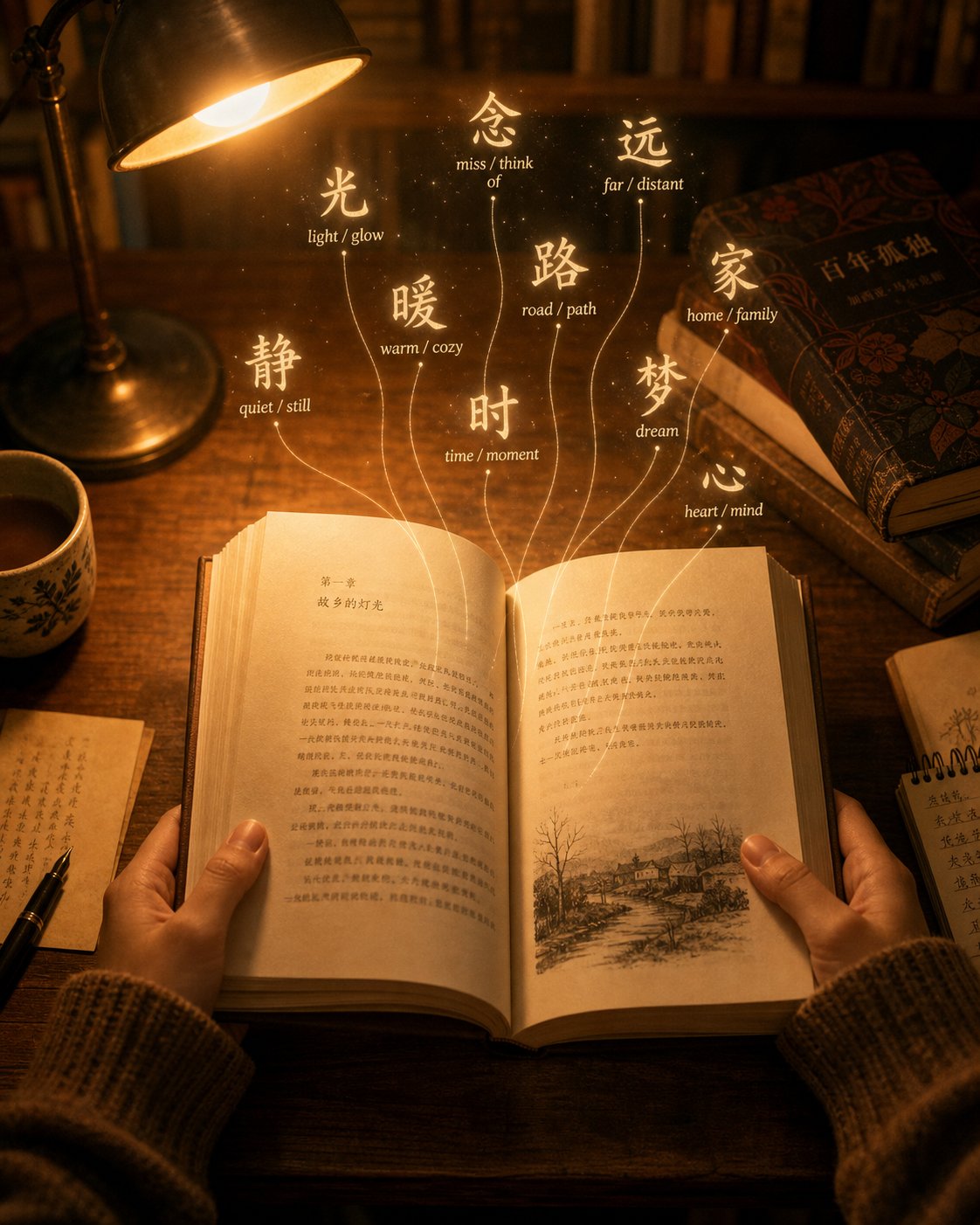
You don't need to be fluent in Mandarin to read Chinese names with intention. You don't even need to recognize a single character. What you need is a shift in approach: treating names as meaningful text rather than arbitrary sounds to memorize. That single adjustment transforms the reading experience of any translated or cross-cultural novel from surface-level plot tracking to something richer, more layered, and far more rewarding.
Reading Names as Compressed Character Descriptions
Here is the simplest, most powerful habit you can develop: when you encounter a Chinese name in a novel, look it up. Not the pinyin spelling, but the actual characters behind it. Online dictionaries like MDBG, Pleco, or even a quick search for the name followed by "Chinese characters meaning" will often reveal what the author encoded in those syllables.
Even basic familiarity with a handful of common name characters opens doors. The character yu (玉) means jade and signals preciousness or purity. Mei (美) means beautiful. Qiang (强) means strong. Ming (明) means bright. Wen (文) means literature or culture. Hua (华) means splendid or Chinese. When you recognize these building blocks, names stop being opaque sounds and start functioning as the author's first act of characterization.
Imagine encountering a character named "Mingzhu" in translation. Without context, it is two syllables to track. With a quick lookup, you discover it means "bright pearl" (明珠). Suddenly you know something about how the author sees this person, perhaps treasured, perhaps luminous, perhaps destined to be lost. That knowledge colors every scene the character appears in. You are reading the way the author intended, catching the signal embedded in the name itself.
This approach works even with sample chinese names you encounter in anthologies or short story collections. A character whose name contains the element for water (水) might be fluid, adaptable, or emotionally deep. One named with fire (火) might be passionate or destructive. These are not rigid rules but tendencies, patterns that authors exploit and sometimes subvert. Recognizing the pattern is the first step toward recognizing the subversion.
Recognizing Naming Patterns Across a Novel
Individual names carry meaning. But the real depth emerges when you read names in relation to each other. Authors rarely name their characters in isolation. They build naming systems, constellations of meaning where each name gains significance from its position relative to others.
Start by looking for shared characters among family members. If three siblings all carry the character "Wen" (文) in their names, you are seeing generational naming at work. That shared element tells you these characters belong to the same generation of the same family, and any character who lacks it has been excluded or has broken away. When reading a chinese character names list at the front of a novel, scan for these repetitions. They are the author's family tree encoded in syllables.
Rivals and lovers often carry contrasting names. A hero named with characters suggesting light might face a villain named with darkness. Two romantic interests might carry complementary elements, one named for the moon and another for the sun, or one for jade and another for gold. These pairings are rarely accidental. They tell you something about how the author conceives the relationship before the characters ever interact on the page.
Name changes signal transformation. When a character abandons one name and takes another, whether through marriage, religious conversion, political upheaval, or personal reinvention, that shift is as significant as any plot event. In wuxia fiction, a disciple who drops their sect's shared naming character has severed allegiance. In diaspora fiction, a character who reclaims their Chinese name after years of using an English one is performing an act of cultural recovery. Track these changes. They are turning points disguised as administrative details.
Pay attention to how do you write names in chinese when the novel provides characters alongside romanization. Some translations include Chinese characters in footnotes or appendices. If yours does, notice whether names within a cast share radicals, the component parts of characters that indicate meaning categories. Multiple characters with the "water radical" (氵) in a novel set by a river is not coincidence. It is thematic architecture built into the names in chinese writing.
Resources for Deeper Engagement
You don't need a degree in Chinese literature to engage with naming at this level. A few practical resources and habits will carry you surprisingly far. Readers interested in chinese boy names with characters or chinese names list female patterns will find that even basic reference tools reveal the logic behind authorial choices.
The key is approaching names in chinese as texts to be read rather than labels to be memorized. Translator's introductions often discuss naming choices explicitly, and these sections deserve as much attention as the novel itself. A good translator will tell you what they could not preserve, and that admission is itself a guide to what you should investigate independently.
- Read the translator's introduction and endnotes first. Many translators explain their approach to names, noting which ones carry significant meaning and how they chose to handle the semantic content. This gives you a framework before you encounter the names in context.
- Look up character meanings for major characters. Use an online Chinese dictionary (MDBG.net is free and comprehensive) to search the characters behind each protagonist's name. Write the meanings in the margin or on a bookmark. Even two minutes of research per character transforms your reading.
- Create a name map noting shared elements. As you read, jot down which characters share name components. Group family members, note contrasts between rivals, and mark any name changes. This map becomes a visual guide to the novel's relational architecture.
- Notice when characters address each other differently. If a character is called by their full name in one scene and a shortened form or title in another, ask why. The shift in address often signals a shift in power, intimacy, or social context that the narrative may not state explicitly.
- Read comparative translations when available. If a novel exists in multiple English translations, comparing how different translators handle the same names reveals what each translator prioritized. One might preserve sound while another preserves meaning, and the gap between them illuminates what the original contains.
- Check whether the author has discussed naming choices in interviews or essays. Many contemporary authors, particularly diaspora writers, have written or spoken about how they name their characters. These reflections offer direct insight into the intentionality behind names that might otherwise seem arbitrary.
Even partial understanding changes everything. You do not need to catch every allusion or decode every radical to benefit from this approach. Knowing that Lin Daiyu's name means "black jade of the forest" transforms your reading of Dream of the Red Chamber even if you miss dozens of other naming subtleties. Knowing that a character's name contains the element for "sorrow" gives you information the author planted deliberately, information that enriches every scene without requiring fluency.
Chinese names in literature were never meant to be opaque. They were meant to be read. The opacity is an artifact of translation, not of the names themselves. Every tool you bring to that reading, every character meaning you look up, every pattern you notice across a cast of names, closes the gap between what the author wrote and what you receive. The names are already speaking. The only question is whether you are listening.
Frequently Asked Questions About Chinese Names in Literature
1. Why do Chinese names carry more meaning than Western names in literature?
Each character in a Chinese name is selected from thousands of options, each carrying independent semantic weight. Unlike English names where meaning has faded behind familiarity, Chinese characters retain their transparency. A literate reader instantly sees whether a name references jade, fire, virtue, or sorrow. Authors exploit this by encoding personality traits, foreshadowing fate, and embedding thematic commentary directly into character names. This makes naming the first deliberate act of characterization before any dialogue or action occurs.
2. How do Chinese naming conventions differ across literary genres like wuxia and xianxia?
Wuxia names draw from martial imagery, natural forces, and moral virtues, using characters for sword, wind, frost, or righteousness to signal combat style and allegiance. Xianxia names shift toward Daoist cosmology with archaic characters referencing jade, clouds, celestial phenomena, and spiritual concepts. Contemporary literary fiction uses ordinary, era-appropriate names that function as historical timestamps, grounding characters in specific decades through generational naming trends like patriotic characters in the 1950s or Western-influenced sounds in the 1980s.
3. What is lost when Chinese names are romanized in English translations?
Romanization preserves only an approximation of sound while stripping away the visual architecture of characters, radical components that hint at meaning categories, tonal distinctions that differentiate words, and all semantic content. The same pinyin syllable like 'wei' can map to dozens of characters meaning great, delicate, protective, or subtle. Translators compensate through footnotes, glossaries, or occasionally translating servant names into English equivalents, but each strategy involves tradeoffs between narrative flow and meaning preservation.
4. How do diaspora authors use Chinese names as a literary theme?
Diaspora writers like Amy Tan, Celeste Ng, and Yiyun Li use the tension between Chinese given names and adopted English names to explore assimilation, generational conflict, and cultural identity. Characters who abandon their Chinese names enact erasure, while those who reclaim them perform cultural recovery. The act of choosing which name to use in which context becomes a thematic declaration about belonging, resistance, or suspension between two worlds that each demand a different identity.
5. How can English-language readers decode Chinese character names in translated novels?
Start by looking up the actual characters behind romanized names using free online dictionaries like MDBG.net. Even learning a handful of common name characters like yu (jade), mei (beautiful), or ming (bright) transforms the reading experience. Beyond individual names, watch for shared characters among family members indicating generational naming, contrasting names between rivals or lovers, and name changes that signal character transformation. Reading translator introductions and endnotes also provides frameworks for understanding what semantic content the translation could not preserve.