Understanding Chinese Sibling Naming Patterns
Chinese sibling naming patterns are deliberate structural and semantic connections embedded across the given names of brothers and sisters within a family. Rather than choosing names independently for each child, Chinese families often link siblings' names through shared characters, complementary meanings, or thematic sequences that signal family unity and generational identity.
In Western naming traditions, siblings might share a first initial or a vague stylistic similarity. Chinese naming conventions operate on a fundamentally different level. Each character in a Chinese name carries its own meaning, tone, and visual structure, and parents use these layers to build relationships between siblings' names that are visible in both sound and writing.
What Makes Chinese Sibling Naming Unique
Imagine looking at two names and immediately knowing those people are brother and sister. That's exactly what Chinese sibling naming achieves. Because every Chinese character functions as a unit of meaning, parents can embed shared elements that create inter-name relationships. A single shared character between siblings can represent a family value, a generational marker, or a poetic theme chosen before the children were even born.
This practice transforms naming from an individual act into a collective one. Chinese names are more than just labels, as Temple University's EDVICE Exchange notes. They carry culturally rich meanings and reflect philosophical traditions, social customs, and parental aspirations. When applied across siblings, these layers multiply.
Sibling naming patterns are one of the most deliberate acts of family identity-building in Chinese culture, turning individual names into a shared statement of lineage, values, and hope.
How Chinese Names Work as a System
To understand how these patterns function, you'll need a quick look at how Chinese names are structured. A Chinese name typically consists of a one-character surname (family name) followed by a one- or two-character given name. The surname comes first, representing lineage and clan identity. The given name follows, and this is where sibling connections appear.
So how are Chinese names structured in practice? Consider a family with the surname Wang (王). If two siblings are named Wang Junhao and Wang Junyi, the shared character "Jun" in the given name immediately signals their connection. The chinese for name, "mingzi" (名字), itself reflects this layered quality: "ming" refers to the given name while "zi" historically pointed to a courtesy name used in formal contexts.
This surname-plus-given-name system creates a clear space where parents encode sibling relationships. Whether through a shared character, a common radical, or complementary meanings, the given name becomes the canvas for family patterning. The chinese name definition most people encounter only scratches the surface of this system. The real depth emerges when you look at how siblings' names interact with each other.
These connections don't happen by accident. They trace back to ancient clan genealogy books that predetermined which characters each generation would use, a system with roots stretching back thousands of years.
The Generational Name System and Clan Genealogy Books
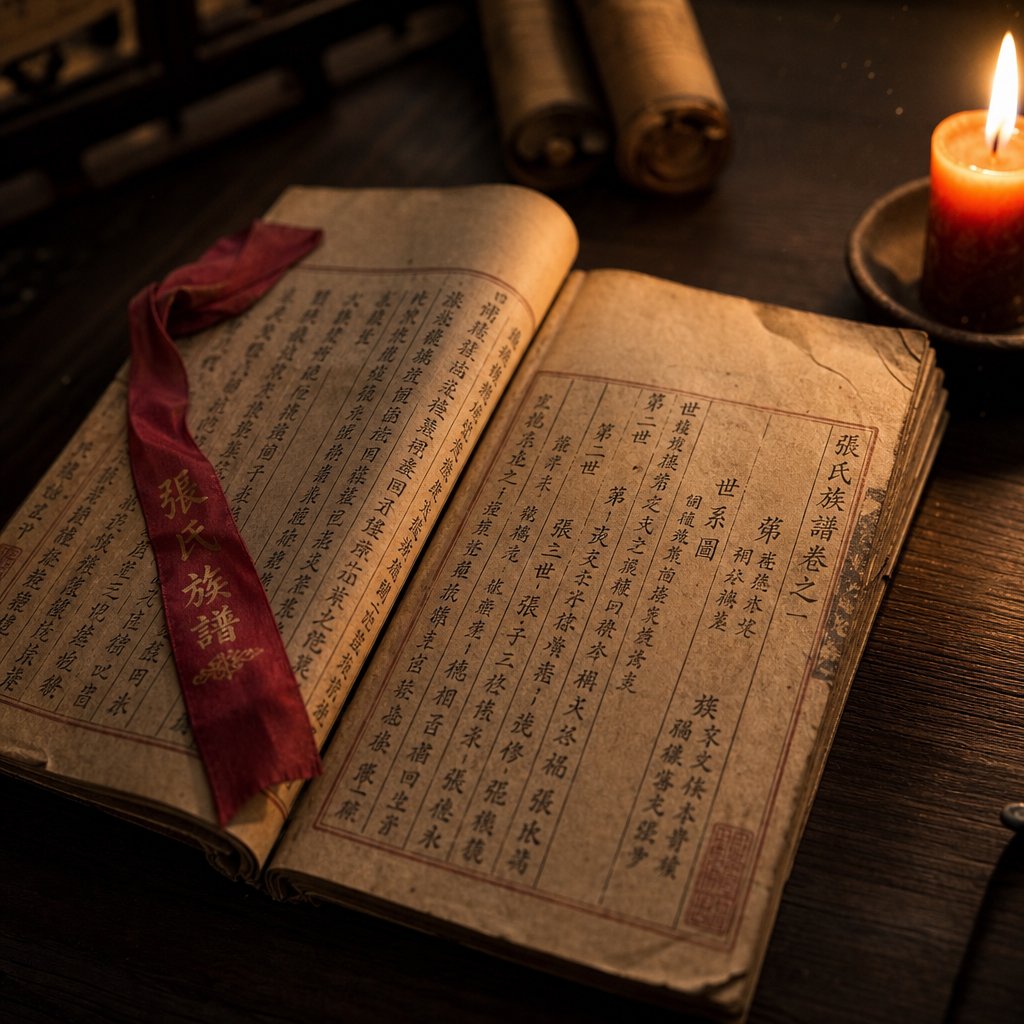
The oldest and most systematic form of Chinese sibling naming patterns is the generational name system, known as zibei (字辈). This chinese naming convention assigns a specific character to every person born in the same generation of a clan. Siblings, paternal cousins, and even distant relatives within the same generational tier all share that one character in their given names. The result? You can look at two people's names and instantly know they belong to the same generation of the same family.
The system's backbone is the clan genealogy book, called a jiapu (家谱) or zupu (族谱). These records do far more than list ancestors. They contain a predetermined sequence of characters, often arranged as a generation poem (派字歌), that maps out naming for dozens of generations into the future. Each successive character in the poem corresponds to the next generation, creating a naming blueprint that can span centuries.
How Clan Elders Select Generational Characters
So how does a child actually receive their generational name? The process follows a clear sequence rooted in chinese naming customs passed down through clan leadership:
- A committee of family elders composes a generation poem when a new lineage is established, often through geographical migration or social elevation. This poem typically contains lines of 5 or 7 characters, sometimes rhyming, sometimes not.
- Each character in the poem is assigned to a successive generation. If the poem has 50 characters, it covers 50 generations of naming before recycling.
- When a child is born, the family identifies which character in the poem corresponds to the current generation. That character becomes the fixed element in the child's given name.
- Parents then select a second given-name character, the personal character, unique to that individual child. This is where individual meaning, tonal balance, and parental hopes come into play.
The generation character most often appears as the first character of the two-character given name, though some lineages place it second. A few clans even alternate its position from generation to generation. The personal character fills the remaining slot, making each name both collectively anchored and individually distinct.
Consider the descendants of Confucius, whose generation poem was imperially bestowed during the Ming dynasty and extended multiple times through the Qing dynasty and into the Republican era. Characters like 昭 (zhao), 宪 (xian), and 庆 (qing) each mark a specific generation, and every Kong family member of that generation carries the assigned character in their name.
Generational Names Among Siblings Versus Cousins
Here's what makes this system particularly powerful: it extends far beyond immediate siblings. All same-generation relatives on the paternal side share the generational character. Brothers share it. Paternal cousins share it. Even distant clan members you've never met share it if they belong to the same generational tier.
Imagine a family with the chinese surname Li (李) whose current generation poem character is 文 (wen). The siblings might be named:
| Family Member | Surname | Generation Character | Personal Character | Full Name |
|---|---|---|---|---|
| First child | 李 (Li) | 文 (Wen) | 龙 (Long, dragon) | Li Wenlong |
| Second child | 李 (Li) | 文 (Wen) | 凤 (Feng, phoenix) | Li Wenfeng |
| Third child | 李 (Li) | 文 (Wen) | 鹏 (Peng, roc) | Li Wenpeng |
| Paternal cousin | 李 (Li) | 文 (Wen) | 辉 (Hui, brilliance) | Li Wenhui |
Notice how the shared character 文 sits in the same position for every name. The personal characters, chosen individually, give each person their unique identity while the generational marker binds them together. Their father's generation might use 裕 (yu), and their children's generation will use whatever character comes next in the poem. Family relationships become immediately visible just by reading the names.
This tradition was primarily applied to male descendants in most clans, though some families extended it to daughters as well. The practice of tracking chinese surnames meaning through genealogy books meant that chinese last names carried not just family identity but generational positioning. When you encountered someone with the surname in chinese matched to yours and the same generation character, you could determine exactly how you were related within the clan hierarchy.
These generation poems functioned like a fingerprint for each lineage. Even today, FamilySearch notes that knowing just a few characters from your family's generation poem can help locate your clan's jiapu records, since each poem is unique to its lineage. The system made chinese traditional names into a living map of kinship.
Of course, not every family maintained formal clan genealogy books. Many families adopted the spirit of generational naming without the rigid structure of a poem, simply choosing a shared character that all siblings would carry. This more flexible approach became its own widespread tradition, one that persists even among families with no zupu to consult.
Shared-Character Naming Between Siblings
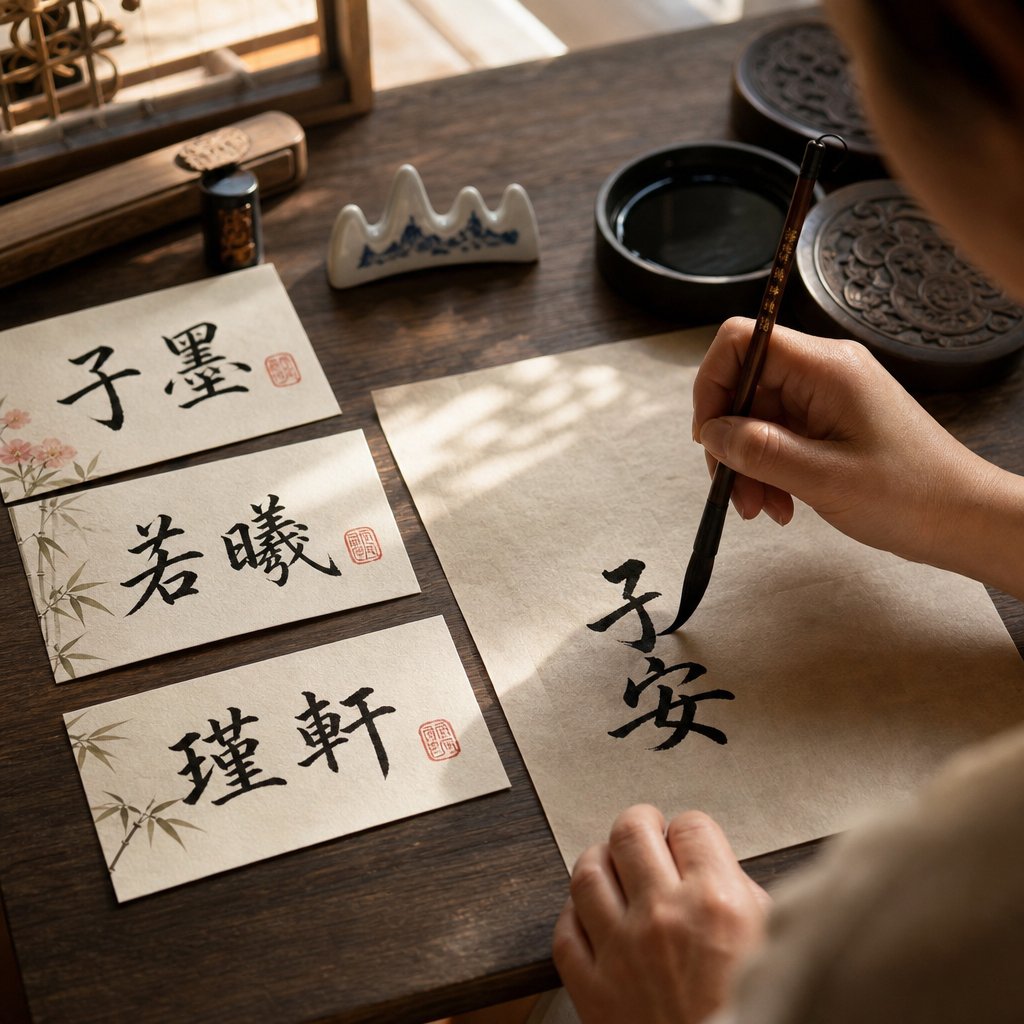
Shared-character naming is the most instantly recognizable form of Chinese sibling naming. Even without a formal clan poem or genealogy book, millions of families choose one character that all siblings carry in their given names. It's a simple, elegant system: one character stays constant across every sibling's name, while a second character is individually selected for each child. The shared element signals family unity, and the individual element gives each child their own identity.
When you encounter a chinese name in chinese language, each character carries independent meaning. That's what makes this pattern so effective. The shared character isn't just a phonetic placeholder. It's a deliberate semantic choice that ties siblings together through a common value, image, or aspiration.
Shared Characters in the First or Second Position
In a two-character given name, the shared character can sit in either the first or second position. Both approaches are common, and the choice often comes down to sound and rhythm.
When the shared character occupies the first position, it acts like a family prefix within the given name. You'll notice names like Zhang Mingxuan and Zhang Mingyu, where "Ming" (明, bright) anchors both names at the front. This mirrors the generational name structure and feels slightly more formal.
When the shared character sits in the second position, the individualized character leads. Think of siblings named Chen Yuhan and Chen Zihan, where "Han" (涵, encompass) closes both names. This arrangement often produces a softer, more lyrical sound because the tonal variety comes first and resolves into a shared ending.
What influences the choice? Tonal flow with the surname plays a major role. If the surname is a flat first tone, parents might prefer a rising or falling tone in the first given-name position, pushing the shared character to whichever slot produces the most pleasing cadence. The Cultural Atlas notes that siblings may share the same character in their personal name as a generation marker, with examples like Wang Qingzhao and Wang Qingxi, where "Qing" leads.
Choosing the Shared Character for Meaning and Sound
Parents selecting the shared character are essentially choosing the thematic thread that will run through all their children's names. The decision involves weighing chinese name meanings on multiple levels: the character's definition, its visual structure, its tonal quality, and how well it pairs with a range of possible individual characters.
Common strategies include:
- Selecting a character with broad positive meaning (like 嘉, jia, meaning "excellent" or 宇, yu, meaning "universe") that pairs naturally with many complementary characters
- Choosing a character whose radical connects to a family theme, such as the water radical (氵) for fluidity and adaptability
- Picking a character with a tone that balances well against the surname, ensuring every sibling's full name sounds harmonious
Once the shared character is locked in, parents select each child's individual character to create a distinct meaning when combined. This is where the art of name chinese characters really shines. The individual character might reflect the season of birth, a personal hope for that specific child, or a quality that complements the shared element.
Here's how this works in practice with concrete sibling sets showing chinese names and meanings broken down by component:
| Full Name | Shared Character | Individual Character | Combined Meaning |
|---|---|---|---|
| Lin Jiahui (林嘉慧) | 嘉 (Jia - excellent) | 慧 (Hui - wisdom) | Excellent wisdom |
| Lin Jiaming (林嘉铭) | 嘉 (Jia - excellent) | 铭 (Ming - inscribe) | Excellent legacy |
| Lin Jiarui (林嘉瑞) | 嘉 (Jia - excellent) | 瑞 (Rui - auspicious) | Excellent fortune |
| Full Name | Shared Character | Individual Character | Combined Meaning |
|---|---|---|---|
| Zhao Yihan (赵逸涵) | 涵 (Han - encompass) | 逸 (Yi - carefree) | Carefree depth |
| Zhao Muhan (赵慕涵) | 涵 (Han - encompass) | 慕 (Mu - admire) | Admirable depth |
In the first set, the shared character "Jia" leads each given name, and the individual characters differentiate each child's personal quality. In the second set, "Han" sits in the closing position, and the leading characters create each sibling's unique identity. Both approaches produce names that are individually meaningful yet clearly connected.
This flexibility is part of why shared-character naming remains so popular. It doesn't require a clan book or elder committee. Any family can adopt it, choosing a character that reflects their values and building each child's name around that anchor. The meaning chinese names carry through this pattern transforms a set of individual labels into a cohesive family statement, one that's visible every time the names appear together on paper or are spoken aloud.
Still, not every family wants their children's names to share a literal character. Some parents prefer a subtler approach, connecting siblings through thematic imagery, complementary virtues, or shared radical structures that create visual harmony without identical elements.
Thematic and Complementary Naming Patterns
A shared character makes sibling connections obvious at a glance. But some families prefer something more poetic: names that don't repeat a single element yet still resonate with each other through meaning, imagery, or visual structure. These thematic patterns require more creativity from parents, and they often reveal deeper layers of chinese name meaning than a straightforward shared character ever could.
Think of it like a musical chord rather than a repeated note. Each name sounds distinct, but together they produce harmony.
Sequential Natural Elements and Seasons
One of the most beloved thematic approaches draws on nature. Parents select characters representing sequential or complementary natural phenomena, creating a set of names that reads like a landscape painting or a passage through time.
Common pairings include:
- Celestial bodies: Sun (日, ri) and Moon (月, yue), or Star (星, xing) and Cloud (云, yun)
- Landscape features: Mountain (山, shan) and River (河, he), or Forest (林, lin) and Field (野, ye)
- Seasons: Spring (春, chun) and Autumn (秋, qiu), or names progressing through all four seasons for a four-child family
- Flora: Pine (松, song) and Plum (梅, mei), or Orchid (兰, lan) and Chrysanthemum (菊, ju)
The Wikipedia entry on Chinese names offers a concrete example: a boy named Song (松, pine tree) might have a sister named Mei (梅, plum). These aren't random plants. Pine and plum are two of the "Three Friends of Winter" in Chinese art, symbolizing resilience and purity. The mandarin name meaning behind each character connects to a shared cultural reference that any educated Chinese reader would recognize instantly.
Seasonal naming works especially well for families who want each child's name to reflect their birth timing while maintaining a cohesive set. A spring-born daughter might be Chunxiao (春晓, spring dawn), while her autumn-born brother becomes Qiuming (秋明, autumn brightness). No shared character, but the parallel structure and seasonal progression bind them together.
Shared Radicals and Complementary Virtues
Here's where the visual dimension of Chinese writing becomes a naming tool. Every Chinese character contains a radical, a structural component that often signals the character's semantic category. Parents can choose characters with the same radical for each sibling, creating names that look related on paper even when they share no complete character.
For example, in the classic novel Dream of the Red Chamber, the Jia clan's second generation features names like Lian (璉), Zhen (珍), and Huan (環). Each character contains the jade radical (玉/王), visually linking the siblings through their written forms. The china name meaning embedded in these choices goes beyond sound. It's a connection you can see in the brushstrokes.
Popular radical groupings for sibling names include:
- Water radical (氵): Characters like 浩 (hao, vast), 涵 (han, encompass), 清 (qing, clear), and 润 (run, moist), suggesting adaptability and depth
- Jade radical (玉/王): Characters like 瑾 (jin, fine jade), 琳 (lin, beautiful jade), and 珊 (shan, coral), evoking preciousness and refinement
- Wood radical (木): Characters like 桐 (tong, paulownia), 楠 (nan, cedar), and 柏 (bai, cypress), representing growth and strength
- Heart radical (忄/心): Characters like 慧 (hui, wisdom), 恩 (en, grace), and 悦 (yue, joy), centering on inner qualities
Beyond radicals, complementary virtues offer another path. Rather than matching structure, parents select characters whose meanings complete each other. A brother named Ren (仁, benevolence) might have a sister named Zhi (智, wisdom), pairing two of the five Confucian virtues. Or siblings might carry Yong (勇, courage) and Ya (雅, grace), qualities that balance strength with refinement.
These thematic categories reveal what parents value most. Here are the most common frameworks families draw from:
- Natural elements: Earth, water, fire, wood, metal, aligned with the Five Elements philosophy
- Seasons and time: Sequential progression through spring, summer, autumn, winter
- Virtues and character traits: Confucian values, complementary personal qualities
- Literary references: Characters drawn from the same classical poem, text, or philosophical work
- Directional and positional themes: East/West, high/deep, or other spatial complements
What do these patterns communicate? At their core, they express how parents see their children in relation to each other and to the world. Sequential natural elements suggest that each child completes a picture no single name could paint alone. Complementary virtues say that the family's strength lies in its diversity. Shared radicals whisper that beneath surface differences, these children share the same essence.
Understanding what chinese names meaning conveys through these thematic links helps you appreciate that naming in Chinese culture is never just about one child. It's about the family as a composition, each name a brushstroke in a larger work. The connections might be invisible to someone unfamiliar with the characters, but to those who can read them, the family's values and aspirations are written right there in the names.
These meaning-based connections operate on a conceptual level. But Chinese naming also has a more pragmatic dimension, one rooted in birth order, where a child's position among siblings gets encoded directly into the name itself.
Birth-Order Conventions in Sibling Names
Beyond shared characters and thematic imagery, Chinese families have long used another layer of sibling connection: encoding birth order directly into names. This practice turns a name into a positional marker, telling you not just who someone is but where they stand among their brothers and sisters. It's one of the oldest chinese sibling naming patterns, and traces of it still surface in modern families.
Numerical Prefixes and Birth Position Encoding
The most straightforward approach uses characters with explicit numerical or positional meaning. You'll encounter these in both formal given names and informal family names:
- 大 (da, big/eldest): Often used for the firstborn, as in Daming or Dawei
- 二 (er, second): Marks the second child, sometimes appearing in informal names like Erniu
- 三 (san, third): Indicates the third-born, seen in names like Sanming
- 小 (xiao, little/youngest): Frequently applied to the youngest child, especially in milk names
- 伯 (bo, eldest), 仲 (zhong, second), 叔 (shu, third), 季 (ji, youngest): A classical set of birth-order markers with roots in ancient Chinese naming
The bo-zhong-shu-ji sequence deserves special attention. These four characters formed a formal system for indicating birth position among sons, and they appeared prominently in chinese courtesy name traditions. Confucius himself carried the character 仲 (zhong, second-born) in his courtesy name Zhongni (仲尼), signaling that he was the second son in his family. General Sun Jian's four sons illustrate the full sequence: Sun Ce (伯符, Bofu), Sun Quan (仲谋, Zhongmou), Sun Yi (叔弼, Shubi), and Sun Kuang (季佐, Jizuo).
Not every family used such explicit markers. Subtler approaches encoded birth order through meaning rather than number. A firstborn son might receive a character suggesting leadership or pioneering, like 先 (xian, first) or 开 (kai, open/begin). A second child might carry a character implying continuation, like 承 (cheng, inherit) or 续 (xu, continue). The birth position is there if you know how to read it, but it doesn't announce itself the way a literal number does.
Gender-Specific Birth Order Traditions
Historically, birth-order naming applied most rigidly to sons. Chinese first names male children received often carried explicit positional indicators because sons were recorded in clan genealogy books and their sequence mattered for inheritance and ritual responsibilities. The bo-zhong-shu-ji system was designed specifically for ranking brothers.
Daughters occupied a different naming space. Chinese first names female children received tended to emphasize qualities, hopes, or beauty rather than numerical position. A family might number their sons as Bowen, Zhongwen, and Shuwen while naming their daughters Xiulan (elegant orchid) and Meiling (beautiful jade tinkling). The girls' names expressed parental aspirations rather than birth sequence.
There were exceptions. Some families, particularly in rural areas, did number daughters with informal names like 大妹 (Damei, eldest sister), 二妹 (Ermei, second sister), or 三妹 (Sanmei, third sister). These functioned more as chinese names for boys and girls in everyday family use rather than formal registered names. In some regions, a daughter's name might encode not her position among all siblings but specifically her rank among sisters.
This gendered distinction connects to the broader system of chinese honorifics and forms of address within families. Within households, siblings were often called by positional titles rather than given names. Addressing an older brother as 大哥 (dage, eldest brother) or a younger sister as 小妹 (xiaomei, little sister) reinforced the hierarchy that birth-order names formalized. The courtesy name tradition amplified this further: a man's zi (字) might incorporate his birth rank as its opening character, making his position among brothers visible in every formal interaction outside the home.
How have these conventions evolved? The explicit numbering of children has largely faded from formal naming in urban China. You're unlikely to meet a young professional named 二明 today. But subtler echoes persist. Parents still sometimes choose characters for a firstborn that suggest beginnings or primacy, and characters for later children that imply continuation or completion. The informal use of 大, 二, and 小 as prefixes in family nicknames remains common, even when official names carry no birth-order signal at all.
Modern families with two or three children sometimes revive positional encoding in creative ways. Rather than using literal numbers, they might name a first child with a character meaning "dawn" and a second child with one meaning "noon," embedding temporal sequence as a proxy for birth order. The underlying impulse to mark each child's place in the family story hasn't disappeared. It's simply found new, less rigid forms of expression.
Birth-order conventions operated within a single family's walls. But Chinese sibling naming patterns also vary dramatically depending on geography, dialect, and political history, with communities across the Chinese-speaking world developing distinct approaches shaped by their unique circumstances.

Regional Differences Across Chinese Communities
Chinese sibling naming patterns aren't practiced uniformly across the Chinese-speaking world. Geography, dialect, and political history have shaped how families in different regions approach the task of connecting siblings' names. A family in Taipei, a family in Hong Kong, and a family in Vancouver's Chinatown may all value inter-name connections, but the forms those connections take, and the pressures working against them, differ considerably.
Mainland China and the One-Child Policy Legacy
For roughly 35 years, most urban families in mainland China had only one child. The one-child policy didn't just reduce family size. It effectively suspended sibling naming traditions for an entire generation. When there's no second child, there's no pattern to build. Generational poems gathered dust. Parents poured all their naming energy into a single name, optimizing it for individual meaning rather than family cohesion.
The policy's relaxation, first to two children in 2016 and then to three in 2021, has sparked a quiet revival. Young parents now face a naming challenge their own parents never encountered: how to connect a second or third child's name to the first. Global Times reports that post-1990 generation parents are increasingly drawing on classical texts and traditional culture when naming children. This cultural reclamation extends naturally to sibling naming, as parents who choose poetically inspired names in China often seek thematic or structural coherence across multiple children.
The disruption left a gap, though. Many young parents lack the clan genealogy books their grandparents consulted. They're reinventing sibling naming from scratch, often blending traditional shared-character approaches with modern thematic creativity.
Taiwan, Hong Kong, and Diaspora Adaptations
Taiwan never implemented a one-child policy, and multi-child families remained common throughout the twentieth century. This continuity meant that clan genealogy naming survived with fewer interruptions. Taiwanese families, particularly those with strong ties to ancestral villages in Fujian or Guangdong, often maintained zupu records and continued assigning generational characters to children born across decades. The practice remains visible among families who prioritize lineage identity.
Hong Kong presents a different picture. Cultural Atlas notes that in some Hong Kong families, immediate siblings share the same character in their personal name as a generation name, giving examples like Ho Sai Wing and Ho Sai-iu, where "Sai" is the shared element. Cantonese names carry distinct phonetic considerations that influence character selection. Because Cantonese preserves more tonal distinctions and final consonants than Mandarin, a character that sounds elegant in Cantonese might feel flat in Mandarin, and vice versa. Families choosing shared characters must ensure the name works phonetically in their spoken dialect, not just in standard Mandarin pinyin.
Diaspora communities face the most complex challenge. When children carry both a Chinese name and an English name, parents often try to maintain sibling coherence in both systems simultaneously. Some families create an english to chinese name correspondence where the English names share an initial or syllable (like "Jason" and "Justin") while the Chinese names share a character. Others prioritize coherence in one language and treat the other as independent.
The practical difficulty of maintaining a chinese name from english name translation that preserves sibling connections across writing systems is real. A shared character like 嘉 (jia) might inspire English names starting with "J," but the phonetic mapping is imperfect. Many diaspora families ultimately accept that their children's english name chinese name pairings will carry parallel but separate logic, with sibling connections stronger in one language than the other.
| Region | Sibling Pattern Prevalence | Dominant Pattern Type | Key Influence |
|---|---|---|---|
| Mainland China (urban) | Reviving after decades of decline | Thematic and shared-character (newly created) | One-child policy disruption; classical culture revival |
| Mainland China (rural) | Moderate to strong | Generational name from clan poem | Preserved zupu traditions in villages |
| Taiwan | Strong | Generational name and shared-character | Uninterrupted multi-child families; clan continuity |
| Hong Kong | Moderate | Shared-character with Cantonese phonetic priority | Cantonese tonal considerations; bilingual naming |
| Diaspora (Western countries) | Variable | Dual-system: thematic in Chinese, stylistic in English | Bilingual identity; cross-script coherence challenges |
You'll notice that names in china today reflect a tension between revival and reinvention. Rural families with intact genealogy records continue centuries-old patterns. Urban families, many encountering sibling naming for the first time, are crafting new approaches that blend traditional logic with personal expression. And across asian names in diaspora contexts, the challenge isn't just choosing chinese names for english names that sound natural in both languages. It's deciding which naming system gets priority when coherence across scripts proves impossible.
These regional variations highlight something important: tradition isn't static. It adapts, breaks, and reforms based on the circumstances families face. That same adaptive quality is driving a broader shift among modern parents who are rethinking whether rigid patterns serve their families at all, or whether subtler, more personal connections between siblings' names better reflect contemporary values.
Modern Adaptations and Breaking with Tradition
A generation ago, the question was simple: which character from the clan poem does this child get? Today, many Chinese parents face a different kind of decision. They want their children's names to feel connected, but they also want each name to stand on its own as a carefully crafted expression of individuality. The result is a wave of hybrid approaches that borrow from tradition without being bound by it.
Hybrid Approaches to Modern Sibling Naming
Contemporary parents, especially those from the post-1990 generation, are blending old and new in creative ways. Rather than locking siblings into a shared character, they might draw both names from the same classical text, creating a literary connection that's invisible unless you know the source. Global Times reports that a mother in Chengdu named her daughter Chirou (驰柔) after a line in the Tao Te Ching about the quiet power of softness, calling the name "the first life gift" to her child. If she has a second child, she might select another character from the same chapter, producing sibling names that share a philosophical origin rather than a literal character.
This approach reflects a broader trend visible in common chinese names appearing on recent newborn registries. Names like Yanzhou (砚舟, inkstone boat) and Jincheng (锦程, brocade journey) draw from classical poetry and idioms. When parents apply this literary sourcing across multiple children, the sibling connection becomes a shared aesthetic sensibility rather than a structural rule.
Other hybrid strategies include:
- Selecting characters from the same poem but different lines, so each name carries independent meaning while sharing a textual home
- Using characters with the same tonal pattern or stroke count, creating rhythmic rather than semantic unity
- Choosing names that form a phrase or sentence when read together, turning the sibling set into a hidden message
- Picking characters from the same semantic field (all relating to light, or growth, or music) without repeating any element
These methods satisfy the impulse to connect siblings' names while giving parents room to optimize each name individually. A family might name their first child after a line about mountains and their second after a line about rivers from the same Tang dynasty poem. No shared character, no rigid formula, but a connection that rewards anyone who recognizes the source.
When Families Choose Individual Names Over Patterns
Not every modern family maintains even subtle connections. A growing number of parents treat each child's name as a standalone project, optimized for that specific child's birth timing, elemental balance, and the parents' hopes at that moment. The most popular chinese names on annual registries reflect this shift: parents chase uniqueness and personal resonance over family coherence.
This break with tradition doesn't happen without friction. Grandparents who grew up with generational naming sometimes view individually chosen names as a rejection of family identity. The tension is real and recurring in families across China.
Modern Chinese parents navigate a cultural tightrope: honoring the tradition that names should bind a family together while expressing the contemporary belief that each child deserves a name crafted entirely for them.
Several forces drive this shift toward individual naming. The internet has transformed how parents select chinese baby names. Online naming platforms let users input a surname, birth date, and preferences to generate suggestions within minutes. Sixth Tone notes that some sites even claim to evaluate how a name will shape a child's future, functioning as algorithmic versions of traditional fortunetellers. These tools optimize for the individual child, not for sibling coherence. A parent who used one platform for their first child might get entirely different stylistic suggestions for their second.
Tools like a chinese name converter or generators that answer "what is my chinese name" for non-native speakers have also influenced domestic naming culture. They've normalized the idea that names can be engineered for specific qualities rather than inherited from a system. When typical chinese names are generated by algorithm rather than drawn from a family poem, the connective tissue between siblings becomes optional rather than automatic.
Yet even parents who abandon formal patterns often create unconscious connections. They might gravitate toward the same character complexity, the same tonal register, or the same emotional warmth across their children's names. The impulse to link chinese first names within a family runs deep enough that it surfaces even when parents aren't deliberately pursuing it.
What's emerging isn't a clean break from tradition but a spectrum. Some families maintain strict generational naming. Others create loose thematic links. Still others name each child independently but find that their consistent taste produces natural harmony. The rigid binary of "traditional pattern versus no pattern" doesn't capture what's actually happening in most households.
For anyone outside these families, whether educators, researchers, or translators, the question becomes practical: how do you recognize when names are connected, especially when the connections have grown subtler and more varied?
Recognizing Sibling Naming Patterns in Practice
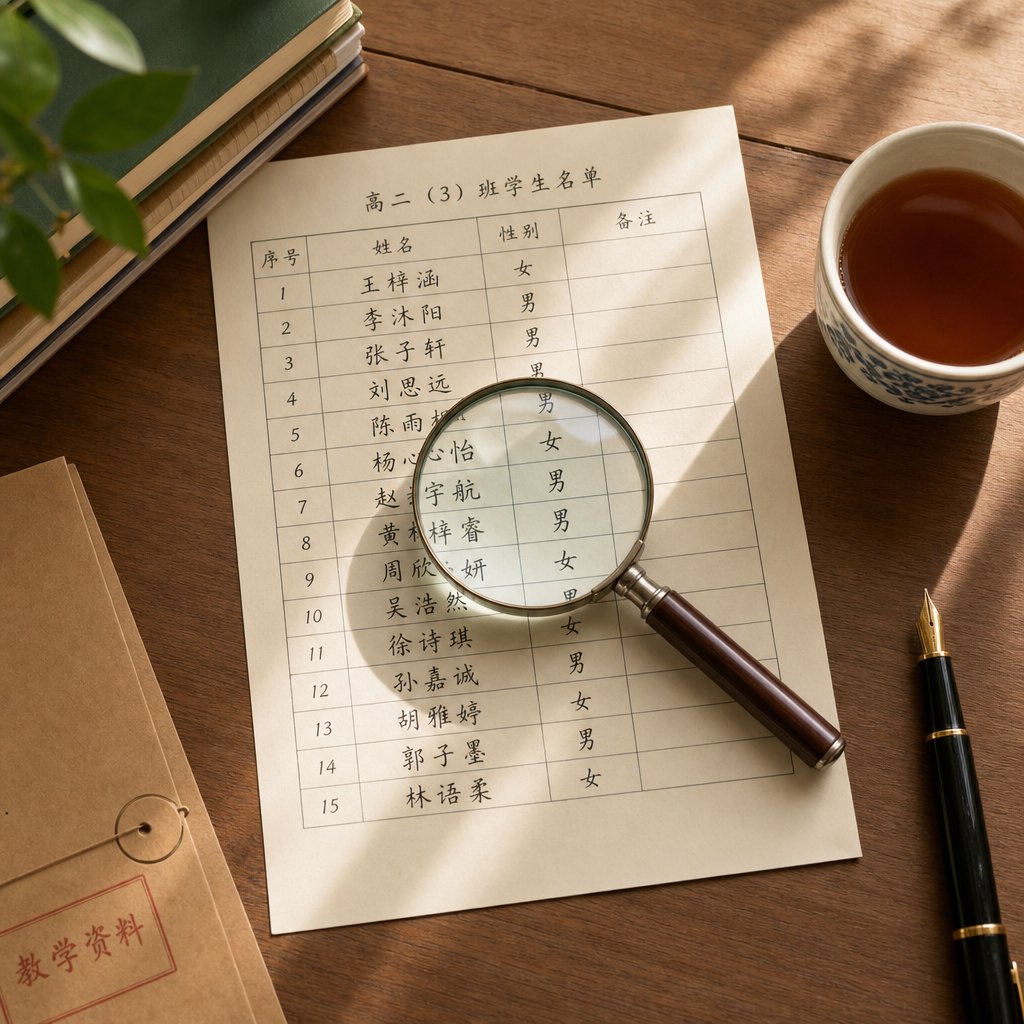
Knowing that these patterns exist is one thing. Spotting them in a classroom roster, a genealogical record, or a translation project is another. Whether you're a teacher trying to understand family relationships among students, a genealogist mapping a Chinese family tree, or a translator working to preserve naming connections across languages, a few practical techniques can help you decode what's hiding in plain sight.
Spotting Shared Characters and Thematic Links
When you look at two Chinese names side by side, the fastest clue is a repeated character in the same position of the given name. If two students share a last name in chinese and also share one character in their given names, there's a strong chance they're siblings or cousins. For example, if your roster lists both Zhang Yuxuan and Zhang Yufei, that shared "Yu" in the first given-name position is a signal worth noting.
But connections aren't always that obvious. Subtler patterns require you to look deeper. Here's a step-by-step checklist for identifying sibling naming patterns when working with Chinese names:
- Check the surname. Siblings share a surname. If two individuals have the same family name, proceed to the next steps. Keep in mind that common surnames like Wang or Li don't guarantee a relationship, but less common ones raise the probability.
- Compare given-name characters position by position. In two-character given names, check whether the first character matches or the second character matches. A match in either position suggests a generational or shared-character pattern.
- Look for shared radicals. If no complete character is shared, examine whether the given-name characters contain the same radical. Two names like Su Qin (苏沁) and Su Lan (苏澜) both carry the water radical (氵) in their given names, a classic sibling indicator.
- Identify thematic connections. Check whether the characters' meanings belong to the same semantic field. Names referencing sun and moon, mountain and river, or pine and plum suggest deliberate pairing even without structural overlap.
- Consider phonetic patterns. Some families create tonal or syllabic echoes. If two names share the same tonal contour or rhyme in their given-name characters, this may be intentional.
- Ask. When in doubt, a respectful question about family relationships is always appropriate. Many Chinese individuals are happy to explain the name in chinese meaning and the logic connecting their name to a sibling's.
One important caveat: not every shared character indicates a sibling relationship. Some characters are simply popular in a given era. The key is looking for multiple signals, same surname plus a shared character or radical, rather than relying on any single indicator.
Practical Applications for Educators and Researchers
For teachers, recognizing these patterns solves real problems. When two students share a surname and a given-name character, understanding that they're likely siblings helps with communication, parent-teacher interactions, and avoiding confusion. Temple University's EDVICE Exchange emphasizes that Chinese names carry culturally rich meanings and a personal and shared history. Recognizing sibling connections is part of honoring that history. It also helps you avoid the embarrassment of treating siblings as unrelated or, conversely, assuming a relationship where none exists.
For genealogical researchers, chinese name interpretation is an essential skill. When working through historical records or family documents, the presence of a shared generational character across multiple names immediately identifies same-generation relatives. This is especially valuable when reconstructing family trees from incomplete records. If you find three individuals surnamed Chen with the shared character "Guo" in their given names, you can tentatively place them in the same generation and look for confirming evidence. MyHeritage notes that Chinese given names are structured by a two-character pattern where the first part is often the generation name shared by all members of a generation. Knowing this structure turns a list of names into a map of kinship.
For translators, the challenge is preserving sibling connections when rendering chinese names into english or other languages. A chinese name translation that strips away the shared element destroys information the original names carried. When you encounter siblings named Li Wenjun and Li Wenhua, a translation or romanization should preserve the "Wen" connection rather than replacing both names with unrelated English equivalents. If a client asks you to name convert to chinese for characters going in the other direction, understanding these patterns helps you create Chinese names for multiple family members that maintain appropriate connections.
Practical tips for translators working with sibling sets:
- Always romanize sibling names using the same system (pinyin, Wade-Giles, or Cantonese romanization) to keep shared elements visually consistent
- When providing meaning glosses, note which element is shared and which is individual
- If translating names into English equivalents for fiction or creative work, try to mirror the structural connection, perhaps through shared initials, syllables, or thematic meaning
- Flag sibling naming patterns in translation notes so downstream readers understand the relationship encoded in the original
The chinese translation for names in genealogical or legal documents carries particular weight. Mishandling a generational character can obscure family relationships that the original naming system was specifically designed to make visible. When you understand that a shared character isn't coincidence but deliberate family architecture, you treat it with the care it deserves.
Whether you're reading a class roster, piecing together a family tree, or translating a novel, the ability to recognize these patterns transforms a list of unfamiliar names into a story about family, values, and belonging. The logic is always there. You just need to know where to look.
Frequently Asked Questions About Chinese Sibling Naming Patterns
1. How do Chinese families choose matching names for siblings?
Chinese families typically connect sibling names through one of several methods: sharing a fixed character in the same position of each child's given name, using characters with the same radical for visual unity, selecting thematically linked meanings like sun and moon or mountain and river, or following a predetermined generational poem from a clan genealogy book. The shared element signals family unity while individually chosen characters give each child a distinct identity. Parents weigh meaning, tonal harmony with the surname, and how well the shared element pairs with various complementary characters.
2. What is the generational name system (zibei) in Chinese naming?
The zibei system assigns a specific character to every person born in the same generation of a clan. This character comes from a generation poem recorded in the family's genealogy book, which maps out naming for dozens of future generations. All same-generation relatives, including siblings, paternal cousins, and distant clan members, share this character in their given name. The famous Kong (Confucius) family lineage uses an imperially bestowed generation poem that has guided naming for centuries, making family relationships immediately identifiable through names alone.
3. Did China's one-child policy affect sibling naming traditions?
Yes, the one-child policy significantly disrupted sibling naming traditions in urban mainland China for roughly 35 years. With no second child to name, generational poems went unused and parents focused entirely on optimizing a single name. Since the policy's relaxation to two children in 2016 and three in 2021, young parents are reviving these traditions but often without access to clan genealogy books. Many are reinventing sibling naming by blending traditional shared-character approaches with modern thematic creativity drawn from classical literature.
4. Can you identify siblings by looking at their Chinese names?
Often, yes. The strongest indicator is two people sharing the same surname plus an identical character in the same position of their given names. Subtler clues include characters sharing the same radical, meanings from the same semantic field like seasons or natural elements, or matching tonal patterns. However, not every shared character indicates a sibling relationship since some characters are simply popular in a given era. Looking for multiple signals together, such as same surname plus shared character or radical, provides the most reliable identification.
5. How do diaspora Chinese families handle sibling naming across two languages?
Diaspora families face the challenge of maintaining sibling coherence in both Chinese and English naming systems simultaneously. Some create phonetic correspondences where English names share an initial matching the shared Chinese character, like using J-names to echo the character jia. Others prioritize coherence in one language and treat the other independently. Many families ultimately accept that their children's dual-language names carry parallel but separate logic, with sibling connections stronger in Chinese where the character-based system naturally supports structural linking.