Understanding Chinese Zodiac Naming Rules and Their Cultural Roots
Imagine choosing a name for your child, only to learn that a single radical in one character clashes with their birth year animal, turning an otherwise beautiful name into a cultural red flag. In Chinese naming tradition, this kind of detail matters deeply. Chinese zodiac naming rules form a structured system where the zodiac animal of a child's birth year directly shapes which characters are considered lucky or unlucky for their given name. It's a practice that has guided families for centuries, and it remains remarkably alive today.
What Are Chinese Zodiac Naming Rules
At their core, these rules connect a person's birth year animal to the internal structure of Chinese characters, specifically the radicals and graphical components that make up each character. The chinese name definition in this context goes beyond sound or surface meaning. It extends into the visual architecture of the character itself, examining what each stroke and radical symbolizes when paired with a particular zodiac sign.
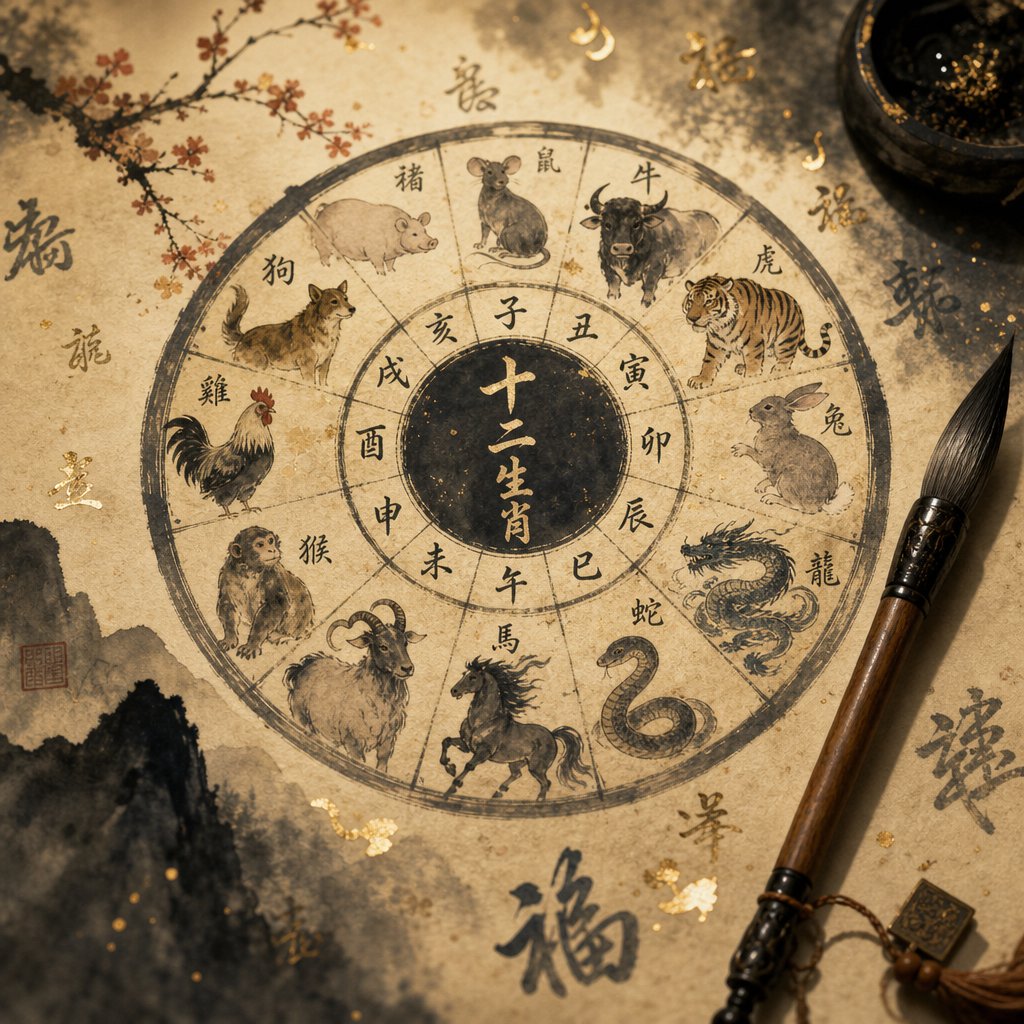
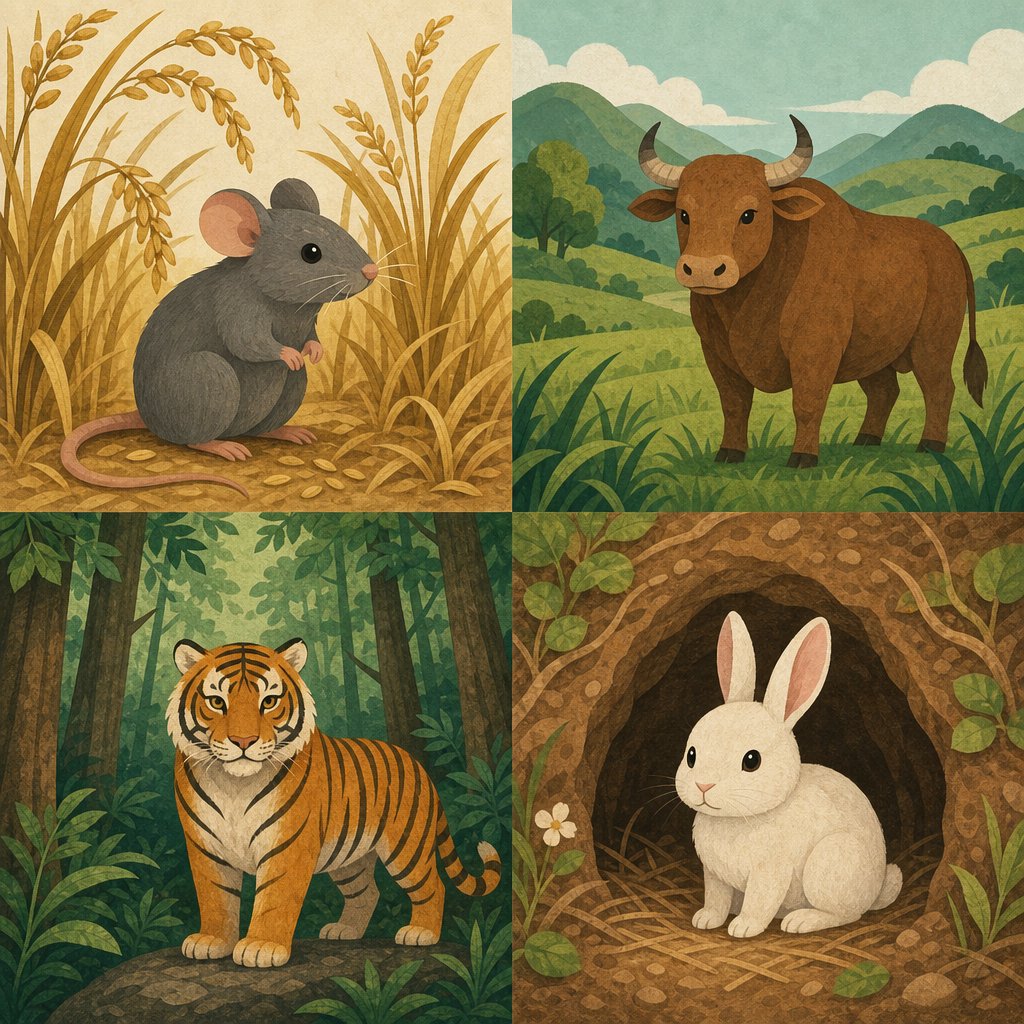
There are twelve zodiac signs animals in the cycle: Rat, Ox, Tiger, Rabbit, Dragon, Snake, Horse, Goat, Monkey, Rooster, Dog, and Pig. Each animal carries specific associations drawn from its natural behavior, habitat, and diet. These associations translate directly into naming guidelines. A child born in the Year of the Rat, for example, benefits from characters containing grain-related radicals because rats eat grain. A Tiger-year child thrives with wood and mountain radicals because tigers live in forests. The logic is consistent and traceable.
This method of forming given names combines information about the named person's birth with references to the specific features of the symbolic animal, as research from Jagiellonian University Press explains, in order to influence the person's horoscope. The system considers both the lexical meaning of names and their formal aspects, including the forms of chinese names and characters and the meaning of individual graphical elements within them.
Why Zodiac Animals Influence Name Characters
You might wonder why an animal's eating habits or sleeping preferences would affect something as personal as a name. The reasoning is grounded in a kind of cultural logic rather than mysticism. Each zodiac animal represents a set of conditions under which a person "thrives" symbolically. When a name contains radicals that align with those conditions, the name is considered harmonious. When it contains radicals that conflict, the name works against the person's innate energy.
Each zodiac animal has natural affinities and aversions, rooted in its behavior, habitat, and diet, that translate into favorable and unfavorable character radicals for names. A name that aligns with these affinities supports the person; one that contradicts them creates symbolic friction.
This isn't about predicting destiny or guaranteeing good fortune. It's about cultural aesthetics and symbolic coherence. When parents explore chinese names and meanings through this lens, they're giving their child a name that resonates with a tradition stretching back thousands of years. The meaning chinese names carry under this system is layered: there's the dictionary definition of the character, the emotional tone it evokes, and the zodiac-level compatibility embedded in its radicals.
Chinese name interpretation through zodiac rules also accounts for animal symbolism beyond the literal. The Dragon isn't just a reptile; it's a creature of water and sky. The Tiger isn't just a predator; it's the king of the mountain. These cultural layers inform which radicals feel "right" for each birth year, creating a naming framework that is both systematic and deeply personal.
The real power of this system lies in its internal consistency. Once you understand the reasoning framework, you can evaluate any character for any zodiac year without memorizing endless lists. That framework begins with a simple question: what does this animal need to thrive?
The Logic System Behind Zodiac Character Selection
Every zodiac naming rule traces back to one foundational question: what does this animal need to survive and flourish in its natural environment? The answer shapes everything, from which radicals are considered auspicious to which ones practitioners flag as harmful. Rather than treating these guidelines as arbitrary lists to memorize, understanding the reasoning behind them lets you evaluate any character for any birth year on your own terms.
How Animal Behavior Determines Auspicious Radicals
Think of it this way. If you were choosing a home for a rabbit, you'd pick a sheltered burrow over an open field. If you were feeding a horse, you'd offer grass and grain rather than meat. The zodiac naming system applies this same intuitive logic to Chinese characters. Each radical within a character carries symbolic weight, and when that symbolism aligns with what the animal naturally seeks, the character is deemed favorable.
The zodiac of rat offers a clear starting point. Rats are grain-eating creatures that thrive in sheltered, dark spaces. Characters containing the grain radical (禾) symbolize abundance and nourishment for a Rat-year child. Similarly, radicals suggesting a roof or enclosure (宀) represent safety, because rats nest in hidden places. On the flip side, characters with radicals evoking daylight or open exposure would work against the Rat's nature, since rats are nocturnal and prefer concealment.
The tiger chinese zodiac follows a different but equally consistent thread. Tigers rule the forest and the mountain. They need space, authority, and terrain that supports their power. Wood radicals (木) and mountain radicals (山) align with the Tiger's domain, while radicals suggesting confinement or cages create symbolic tension, implying a trapped predator rather than a free one.
The Habitat and Diet Logic Framework
The entire system operates on two parallel tracks: what the animal eats and where the animal lives. Diet determines which "nourishment" radicals strengthen a name. Habitat determines which "environment" radicals provide symbolic comfort or protection.
- Rat eats grain → grain radical (禾) is auspicious. Characters like 秀 (elegant) or 程 (journey) contain this radical, symbolizing a life where the Rat-year child never lacks sustenance.
- Ox grazes on grass → grass radical (艹) brings fortune. For the chinese horoscope for the year of the ox, characters like 芳 (fragrant) or 茗 (tea plant) suggest lush pastures and contentment.
- Tiger lives in forests → wood radical (木) is favorable. Characters like 林 (forest) or 柏 (cypress) place the Tiger in its natural kingdom, reinforcing strength and authority.
- Rabbit lives in burrows → cave/roof radical (宀) offers protection. For a year of rabbit child, characters like 宁 (peaceful) or 安 (safe) echo the security of an underground den.
Notice the pattern. You don't need to memorize which characters belong to which animal. You need to understand what the animal requires, then check whether a character's radicals deliver or deny that requirement. A child born in one of the years of the horse chinese astrology, for instance, benefits from grass radicals (艹) because horses graze, and from wood radicals (木) because horses roam open landscapes with trees. The logic is self-reinforcing once you grasp the framework.
Cultural Symbolism Behind Character Selection
Diet and habitat cover the practical layer, but there's a cultural layer sitting on top. Some radical associations go beyond biology and into mythology. The Dragon isn't evaluated as a lizard; it's treated as a celestial creature associated with water, rain, and imperial power. The Rooster isn't just a barnyard bird; it's a symbol of punctuality and the dawn. These cultural overlays add nuance that pure animal behavior can't explain.
This is where the system gets interesting and, admittedly, where it invites debate. Critics like those at Qimingtong point out that the logic can be stretched in contradictory directions: if a Rat fears daylight, should a Rat-year person also avoid sunshine? The counterargument from practitioners is that the system operates on symbolic resonance, not literal equivalence. A name isn't a habitat. It's a vessel for aspiration and cultural meaning.
What matters for practical application is recognizing that the framework has internal rules, even if those rules rest on metaphor rather than science. The diet-and-habitat logic gives you a reliable starting point. Cultural symbolism adds a second filter. Together, they form the reasoning engine behind every zodiac naming recommendation you'll encounter. The next layer of complexity arrives when elemental theory enters the picture, adding cycles of generation and destruction that interact directly with the zodiac year itself.
Five Elements Theory and Zodiac Year Naming
The zodiac animal tells you which radicals align with a child's symbolic nature. But the animal alone doesn't complete the picture. Every zodiac year also carries an elemental signature, one of five forces: Wood, Fire, Earth, Metal, or Water. This elemental layer interacts with the animal layer to create a naming system with far more precision than either could offer alone.
Five Elements Cycle and Zodiac Year Pairing
The Five Elements, known as Wuxing (五行), cycle through the zodiac on a ten-year rotation. Since there are twelve animals and five elements, the full combination takes 60 years to complete before repeating. That means two people born in the Year of the Rat twelve years apart may share the same animal but carry entirely different elemental energies.
Here's a quick way to identify your element based on birth year. The last digit of the year determines the elemental association:
- Metal: birth year ending in 0 or 1
- Water: birth year ending in 2 or 3
- Wood: birth year ending in 4 or 5
- Fire: birth year ending in 6 or 7
- Earth: birth year ending in 8 or 9
So a child born in 1992 (chinese zodiac of 1992: Water Monkey) carries Water energy, while someone born in 1995 (1995 chinese zodiac: Wood Pig) carries Wood energy. A 2003 chinese zodiac birth gives you a Water Goat, and the 1981 chinese zodiac year produces a Metal Rooster. The chinese zodiac 2025 year is the Wood Snake. Each pairing creates a distinct energetic profile that directly influences which characters strengthen or weaken a name.
This is why two children born in different Rat years might receive very different naming advice. A Metal Rat (born in a year ending in 0 or 1) has different elemental needs than a Water Rat (ending in 2 or 3). The animal determines which habitat and diet radicals are favorable. The element determines which energetic radicals provide balance.
Generating and Overcoming Relationships in Names
The five elements don't exist in isolation. They interact through two fundamental cycles that practitioners use to evaluate character selection.
The generating cycle (相生) describes how one element nourishes another:
- Wood feeds Fire
- Fire creates Earth (through ash)
- Earth bears Metal (minerals form within earth)
- Metal enriches Water (metal carries minerals into water)
- Water nourishes Wood
The overcoming cycle (相克) describes how one element weakens or controls another:
- Wood parts Earth (roots break soil)
- Earth dams Water
- Water extinguishes Fire
- Fire melts Metal
- Metal cuts Wood
When selecting name characters, the goal is to include radicals associated with elements that generate the child's birth element, while avoiding radicals tied to elements that overcome it. Imagine a child born in a Water year. Metal generates Water in the producing cycle, so characters containing metal-associated radicals (金, 钅) support and strengthen the child's elemental energy. But Earth overcomes Water in the controlling cycle, so earth-associated radicals (土, 山) would symbolically suppress the child's innate force.
This logic applied to the chinese horoscope 2024 (Wood Dragon year) means children born that year benefit from water-element radicals, since Water nourishes Wood. They'd want to avoid metal-element characters, because Metal cuts Wood. Similarly, the 2020 chinese zodiac year (Metal Rat) favors earth-element radicals in names, since Earth bears Metal, while fire-element radicals should be avoided because Fire melts Metal. A child born under the 2014 chinese zodiac (Wood Horse) would also benefit from water-element characters and should steer clear of metal radicals.
The following table maps each element to its associated radicals, its generating partner, and its overcoming threat:
| Element | Associated Radicals | Generated By | Generates | Overcome By |
|---|---|---|---|---|
| Wood (木) | 木, 艹, 竹, 禾 | Water | Fire | Metal |
| Fire (火) | 火, 灬, 日, 光 | Wood | Earth | Water |
| Earth (土) | 土, 山, 石, 田 | Fire | Metal | Wood |
| Metal (金) | 金, 钅, 刂, 玉 | Earth | Water | Fire |
| Water (水) | 水, 氵, 雨, 冫 | Metal | Wood | Earth |
You'll notice that some radicals overlap with the animal-based recommendations from the previous layer. A Wood-year Tiger, for example, gets a double endorsement for wood radicals: the Tiger's habitat logic favors forests, and the Wood element's generating cycle (fed by Water) adds further support. When both layers agree, practitioners consider the character especially powerful. When they conflict, the naming decision requires weighing which factor takes priority, a judgment call that often depends on the child's full birth chart.
This elemental dimension transforms zodiac naming from a single-variable system into a layered one. The animal gives you the broad strokes. The element fine-tunes the selection. But there's still another layer of zodiac relationships that further narrows the field: the compatibility groups that link certain animals together in bonds of mutual support or mutual conflict.
Zodiac Compatibility Groups in Name Selection
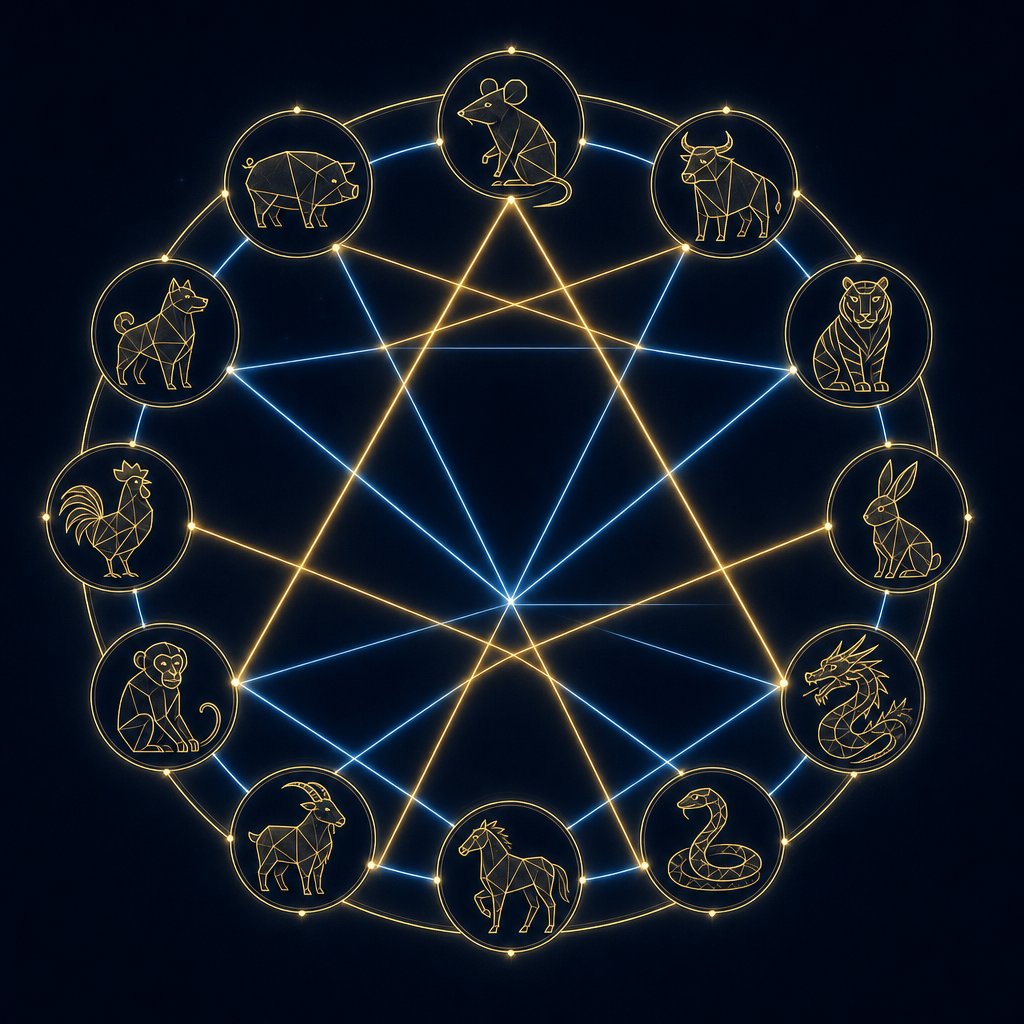
Beyond the animal itself and its elemental year, Chinese zodiac naming rules draw on a network of relationships between the twelve animals. Some zodiac signs naturally support each other. Others clash. These alliances and conflicts, encoded in two systems called San He and Liu He, give naming practitioners another powerful filter for choosing characters. A name that references a child's allied animals amplifies good fortune. A name that accidentally invokes a clashing animal introduces symbolic friction that the entire system is designed to avoid.
San He Three Harmonies Groups Explained
San He (三合), or Three Harmonies, divides the twelve zodiac animals into four groups of three. Each group shares a deep elemental affinity and, according to traditional belief, its members naturally enhance one another's energy. Think of it as a support triangle: when any one animal in the triad appears in a name's radicals or character roots, it strengthens the fortune of the other two.
The four San He triads are:
- Rat, Dragon, Monkey (Water frame): These signs share intelligence, dynamism, and strategic thinking. A child born in the year of the monkey benefits from characters containing dragon-related radicals (辰) or rat-related roots (子), because these allied animals reinforce the Monkey's energy.
- Ox, Snake, Rooster (Metal frame): Persistence, precision, and methodical effort define this group. A Rooster-year child gains support from characters linked to the Ox (丑) or Snake (巳).
- Tiger, Horse, Dog (Fire frame): Bravery, independence, and a strong sense of justice unite these three. For a dog zodiac child, characters referencing the Tiger (寅) or Horse (午) carry harmonious energy.
- Rabbit, Goat, Pig (Wood frame): Compassion, creativity, and gentleness characterize this triad. A child born in the year of the goat thrives with characters that echo the Rabbit (卯) or Pig (亥).
In practice, this means a naming consultant looks at the child's birth animal, identifies its San He partners, and then searches for characters whose radicals or structural components reference those allied animals. A dragon chinese zodiac child, for instance, belongs to the Water-frame triad with Rat and Monkey. Characters containing the "子" root (like 孟, 学, or 存) or the "申" root (like 绅 or 坤) subtly invoke the Dragon's allies, creating a name that resonates with supportive energy.
Liu He Six Harmonies Pairs for Naming
Where San He operates in groups of three, Liu He (六合) works in intimate pairs. These six pairings represent the closest one-on-one bonds in the zodiac, a kind of complementary partnership where each animal balances and completes the other. In the context of the chinese love zodiac and personal compatibility, Liu He pairs are often considered the most harmonious matches.
The six Liu He pairs are:
| Liu He Pair | Earthly Branches | Combined Element | Example Radicals for Names |
|---|---|---|---|
| Rat + Ox | 子 + 丑 | Earth | 子: 学, 孟, 存; 丑: 纽, 钮, 特 |
| Tiger + Pig | 寅 + 亥 | Wood | 寅: 演, 虔; 亥: 核, 家, 豪 |
| Rabbit + Dog | 卯 + 戌 | Fire | 卯: 柳, 卿; 戌: 成, 威, 然 |
| Dragon + Rooster | 辰 + 酉 | Metal | 辰: 振, 震, 宸; 酉: 鸿, 茜, 郑 |
| Snake + Monkey | 巳 + 申 | Water | 巳: 融, 建; 申: 绅, 坤, 侯 |
| Horse + Goat | 午 + 未 | Sun/Moon | 午: 许, 骏; 未: 妹, 美, 善 |
For naming purposes, Liu He works like this: if your child is born in a Rat year, the Ox is their Liu He partner. Including characters with Ox-related roots (丑) in the name creates a symbolic bond with the Rat's most complementary ally. A Tiger-year child benefits from Pig-related radicals (亥), and so on through each pair.
The difference between San He and Liu He in naming practice comes down to scope. San He provides a broader pool of allied radicals drawn from two partner animals. Liu He offers a single, deeply resonant partner whose radicals carry concentrated harmonious energy. Many practitioners check both systems and prioritize characters that satisfy either or both.
Avoiding Clashing Animal Radicals
Every alliance has its opposite. The system of Liu Chong (六冲), or Six Clashes, identifies pairs of animals that sit in direct opposition on the zodiac wheel. Their energies conflict, and characters referencing a child's clashing animal are considered inauspicious.
The six clash pairs are:
| Clash Pair | Earthly Branches | Elemental Conflict | Radicals to Avoid |
|---|---|---|---|
| Rat vs. Horse | 子 vs. 午 | Water vs. Fire | Rat child avoids 午, 马, 骏, 骅 |
| Ox vs. Goat | 丑 vs. 未 | Earth vs. Earth | Ox child avoids 未, 妹, 美, 祥 |
| Tiger vs. Monkey | 寅 vs. 申 | Wood vs. Metal | Tiger child avoids 申, 袁, 侯 |
| Rabbit vs. Rooster | 卯 vs. 酉 | Wood vs. Metal | Rabbit child avoids 酉, 鸿, 飞 |
| Dragon vs. Dog | 辰 vs. 戌 | Earth vs. Earth | Dragon child avoids 戌, 成, 狄, 猛 |
| Snake vs. Pig | 巳 vs. 亥 | Fire vs. Water | Snake child avoids 亥, 核, 该, 家 |
Imagine naming a child born in the year of the dragon. The Dragon's clash partner is the Dog. Any character containing dog-related radicals (犭, 戌, or characters like 献, 猛, 狄) would introduce the energy of the Dragon's adversary directly into the name. Traditional practitioners view this as inviting conflict into the child's life path.
The same logic applies across all pairs. A Rat-year child should steer clear of horse-related characters (马, 骏, 骐). A Horse-year child avoids rat-related roots (子, 孙, 学). These aren't arbitrary prohibitions. They follow the same structural reasoning that governs the entire system: animals in opposition create tension, and a name should be a source of harmony rather than friction.
What makes this layer especially tricky is that some characters hide their zodiac associations inside complex structures. The character 骏 (meaning "fine horse") obviously references the Horse. But a character like 献 (meaning "to offer") contains the Dog radical in a less visible way. Practitioners trained in radical analysis catch these hidden connections, which is one reason professional naming consultants remain in demand even as parents learn the basic principles themselves.
Together, San He, Liu He, and Liu Chong form a relational map that sits on top of the animal-behavior logic and Five Elements theory covered earlier. Each layer narrows the field of ideal characters further. The animal tells you what environment and nourishment radicals to seek. The element tells you which energetic radicals provide balance. The compatibility groups tell you which allied animals to invoke and which adversaries to avoid. The question that remains is which specific radicals and characters pass through all these filters for each of the twelve animals.
Auspicious Radicals and Characters for All Twelve Animals
With the logic framework, elemental cycles, and compatibility groups in place, you now have the tools to evaluate any character. But what does the full picture look like when you apply all these layers to each zodiac animal? Below is a comprehensive breakdown of favorable radicals for every sign, complete with example characters and the reasoning behind each recommendation. Think of this as your reference table, the place you return to once you've identified the birth year animal and element.
Favorable Radicals for Rat Through Horse
The first six animals span a wide range of habitats and diets, from the grain-loving Rat to the pasture-roaming Horse. Each animal's favorable radicals reflect what it needs to thrive symbolically. A child born under the rat zodiac, for instance, benefits from characters that evoke shelter, nourishment, and nighttime safety. During the tiger years, parents look for characters suggesting forests, authority, and open terrain. For year of the dragon years, water and celestial imagery dominate the recommendations.
| Zodiac Animal | Favorable Radical Categories | Example Characters | Reasoning |
|---|---|---|---|
| Rat (鼠) | Grain (禾), Water (氵), Cave/Roof (宀), Gold (金), Jade (玉) | 秀, 程, 泽, 宁, 铭, 琪 | Rats eat grain, nest in sheltered spaces, and are active near water. Gold and jade radicals reference the Rat's San He allies (Dragon, Monkey). |
| Ox (牛) | Grass (艹), Water (氵), Field (田), Person (亻), Wood (木) | 芳, 茗, 泓, 畅, 伟, 林 | Oxen graze on grass, drink from streams, and work in fields. Person radicals suggest a caring owner, meaning the Ox is valued and well-treated. |
| Tiger (虎) | Wood (木), Mountain (山), King (王), Person (亻), Moon (月) | 林, 岳, 琪, 俊, 朗 | Tigers rule mountain forests. The king radical (王) reflects the Tiger's status as lord of beasts. Moon radicals reference nighttime hunting prowess. |
| Rabbit (兔) | Grass (艹), Cave/Roof (宀), Wood (木), Grain (禾), Person (亻) | 芸, 安, 桐, 秋, 依 | Rabbits eat grass and grain, shelter in burrows (roof radical), and live among trees. Person radicals suggest companionship and protection. |
| Dragon (龙) | Water (氵), Rain (雨), Star/Sun (日), Gold (金), Jade (玉) | 泽, 霖, 晨, 鑫, 瑞 | Dragons are celestial water creatures associated with rain and clouds. Gold and jade radicals evoke imperial dignity and the Dragon's noble status. |
| Snake (蛇) | Cave/Roof (宀), Wood (木), Field (田), Clothing (衤), Moon (月) | 宜, 杰, 畅, 裕, 朋 | Snakes shelter in caves and burrows, coil around trees, and move through fields. Clothing radicals suggest a "dressed" snake, symbolizing elevated status (dragon imagery). |
Notice how the 2009 chinese zodiac (Earth Ox) child would draw from the Ox row above, prioritizing grass and field radicals, while also factoring in earth-element support from the Five Elements layer. Similarly, a 2007 chinese zodiac (Fire Pig) child would reference the Pig section below, but with fire-element considerations layered on top.
Favorable Radicals for Goat Through Pig
The second half of the zodiac cycle includes animals with equally distinct needs. The chinese zodiac horse thrives on open pastures and grain. The rooster zodiac favors characters suggesting abundant food and elevated perches. Each animal's favorable radicals tell a story about what kind of life the name symbolically provides.
| Zodiac Animal | Favorable Radical Categories | Example Characters | Reasoning |
|---|---|---|---|
| Horse (马) | Grass (艹), Grain (禾), Wood (木), Person (亻), Silk (纟) | 蓉, 秉, 杰, 俊, 绮 | Horses graze on grass and grain, roam among trees, and are valued by people. Silk radicals suggest a decorated, prized horse rather than a wild one. |
| Goat (羊) | Grass (艹), Wood (木), Cave/Roof (宀), Grain (禾), Moon (月) | 萱, 柔, 宸, 穗, 朗 | Goats eat grass and grain, rest under shelter, and browse on woody plants. Roof radicals mean the Goat has a safe pen, symbolizing security. |
| Monkey (猴) | Wood (木), Cave/Roof (宀), King (王), Person (亻), Silk (纟) | 桦, 宏, 瑜, 伦, 绪 | Monkeys live in trees, seek shelter in caves, and are considered clever "kings" of the forest. Person radicals suggest the Monkey is appreciated and supported. |
| Rooster (鸡) | Grain (禾), Mountain (山), Metal (金), Jade (玉), Field (田) | 秀, 岩, 铭, 瑾, 畅 | Roosters eat grain and perch on high ground. Metal and jade radicals reference the Rooster's San He allies (Ox, Snake) and its association with the Metal element. |
| Dog (狗) | Person (亻), Cave/Roof (宀), Grain (禾), Heart/Meat (忄/月), Silk (纟) | 伟, 宁, 秋, 恒, 绍 | Dogs are loyal to people and thrive with a home (roof). Grain and meat radicals mean the Dog is well-fed. Person radicals reflect the bond between dog and owner. |
| Pig (猪) | Grain (禾), Cave/Roof (宀), Gold (金), Bean (豆), Field (田) | 穗, 安, 鑫, 登, 畴 | Pigs eat grain and beans, live in enclosed pens, and are associated with wealth (gold). Roof radicals suggest comfort and domestic contentment. |
A child born under the 2019 chinese zodiac (Earth Pig) would combine the Pig's favorable radicals above with earth-element support, making field (田) and mountain (山) radicals doubly reinforced. The same layered approach applies to every birth year: start with the animal row, then cross-reference with the elemental year and compatibility groups from earlier sections.
You'll notice certain radicals appear across multiple animals. Grass (艹), grain (禾), and roof (宀) show up frequently because many zodiac animals are herbivores or shelter-seekers. This overlap is a feature, not a flaw. It means some characters are broadly auspicious across several signs, while others carry highly specific energy suited to just one or two animals. The real skill lies in identifying characters that satisfy multiple layers simultaneously: the right animal radical, the right elemental energy, and ideally a connection to a San He or Liu He ally.
Favorable radicals tell you what to reach for. But knowing what to avoid is equally critical, because a single misplaced radical can undermine an otherwise well-constructed name.
Unfavorable Characters and Naming Taboos to Avoid
A name built entirely from favorable radicals can still fail if it accidentally contains a single taboo element. In Chinese zodiac naming practice, avoidance rules carry as much weight as auspicious recommendations, sometimes more. One clashing radical doesn't just neutralize the good; practitioners believe it actively introduces conflict into the name's symbolic energy. Understanding these prohibitions requires the same animal-logic framework used for favorable characters, just applied in reverse.
Taboo Radicals and Clashing Animal Characters
Every zodiac animal has natural adversaries. These adversarial relationships come from the Liu Chong (六冲) clash system and the Xiang Hai (相害) harm pairings discussed earlier. When a character contains radicals linked to an animal's enemy, the name symbolically places the child in the presence of a threat.
Consider the year of rat horoscope. The Rat's direct clash partner is the Horse (子 vs. 午). Any character containing horse-related radicals, such as 马, 骏, 骐, or even 许 (which contains the 午 component), should be avoided for a Rat-year child. The reasoning is straightforward: Rat and Horse sit in direct opposition, and their energies cancel or damage each other. Beyond the Horse clash, Rat-year children should also avoid characters with the sheep radical (羊, 善, 美, 群) because of the Rat-Goat harm relationship (子未相害), and snake-form radicals (辶, 弓, 邑) since snakes prey on rats.
The same logic scales across all twelve animals. For the horse sign chinese astrology, the taboo runs in the opposite direction: Horse-year children avoid rat-related roots (子, 孙, 学) and water radicals (氵, 冫) because the Horse belongs to Fire and clashes with Water energy. A child born in a year for monkey should steer clear of tiger-related radicals (寅, 虎, 彪) since Tiger and Monkey sit in direct opposition (寅申相冲). And for the year of a dragon, dog-related radicals (犭, 戌, 成, 献, 猛) represent the Dragon's most dangerous clash partner.
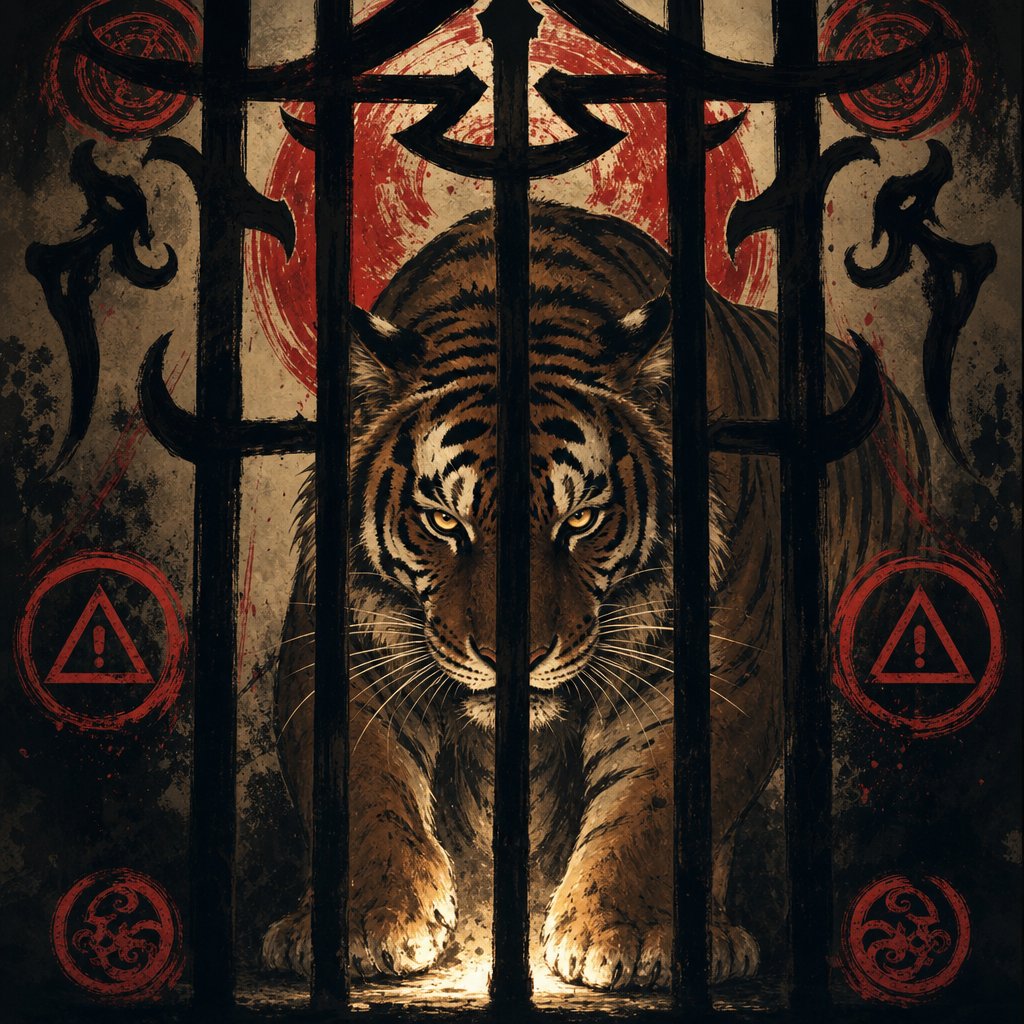
Some prohibitions go beyond simple clashes into behavioral symbolism. The Tiger, for instance, should avoid characters with small "口" (mouth/enclosure) radicals. Why? A tiger inside an enclosure is a caged tiger, stripped of power and freedom. Characters like 困, 国, or 圆symbolically trap the Tiger, turning its strength into frustration. Similarly, the Dragon should avoid "宀" (roof) radicals because a dragon confined under a roof becomes a "trapped dragon" (困龙), unable to soar.
- Rat avoids: 午/马 (Horse clash), 羊/善/美 (Goat harm), 日 (daylight exposure), 人/亻 (people threaten rats)
- Ox avoids: 午/马 (Horse conflict), 未/羊/祥 (Goat opposition), 王/玉/君 (implies sacrifice as offering)
- Tiger avoids: 申/袁/侯 (Monkey clash), 口/囗 (enclosure implies captivity), 人/亻 (humans control tigers), 辶/巳 (Snake harm)
- Dragon avoids: 戌/犭/狗 (Dog clash), 宀/口 (confinement), 山/寅 (Tiger territory triggers "dragon-tiger battle"), 草/艹 (dragon stuck in weeds)
Traditional Naming Taboos Connected to Zodiac Practice
Zodiac-specific prohibitions don't operate in isolation. They intersect with broader Chinese naming taboos that have governed character selection for millennia. These cultural rules add another layer of "don't" to the naming process.
The most historically significant taboo is bi hui (避讳), the practice of avoiding characters used in the names of ancestors, rulers, and sages. As research on Chinese language taboos documents, this custom dates back to the Zhou Dynasty and persisted through imperial China. Qin Shihuang's given name "Zheng" (政) forced an entire empire to rename the first month. Emperor Taizong of Tang (Li Shimin) caused the Ministry of People (民部) to become the Ministry of Households (户部) because "min" appeared in his name. While modern families no longer avoid imperial names, the principle of not duplicating a living grandparent's or great-grandparent's name characters remains widely observed.
Homophone taboos add yet another filter. After selecting characters that pass zodiac and elemental checks, parents must read the full name aloud, listening for unfortunate sound-alikes. The number four (四, sì) sounds like death (死, sǐ). A character pronounced similarly to "defeat" or "loss" can undermine an otherwise auspicious name. This phonetic layer operates independently of radical analysis but can override it: a character with perfect zodiac alignment still fails if its pronunciation creates an embarrassing or ominous phrase when combined with the surname.
Where do parents most commonly go wrong? Usually at the intersection of these overlapping systems, where a character looks good on one dimension but fails on another they didn't check.
- Choosing a character for its meaning alone without examining its radical structure for hidden clash animals (e.g., selecting 骏 for "excellence" without realizing it contains the Horse radical, problematic for Rat-year children)
- Ignoring the harm relationships (相害) and focusing only on the six direct clashes, missing subtler conflicts like Rat-Goat or Ox-Horse
- Overlooking enclosure radicals for animals that need freedom (Tiger, Dragon, Horse), accidentally creating "trapped" symbolism
- Selecting a grandparent's character as a tribute without checking whether it clashes with the child's zodiac year
- Skipping the phonetic check after passing all radical and elemental filters, resulting in a name that sounds unfortunate when spoken aloud
These mistakes happen because each layer of the system requires a different type of analysis. Radical structure is visual. Elemental balance is mathematical. Homophone checking is auditory. Ancestor avoidance is genealogical. A thorough naming process moves through all of them sequentially, and the stroke count and birth chart dimensions that professional consultants layer on top add even more precision to the final selection.
Stroke Count and Ba Zi Integration in Name Selection
Radical analysis tells you which building blocks belong in a name. But traditional naming masters don't stop there. They also count every single brush stroke in the chinese name characters, then run those numbers through a numerological framework that maps stroke totals to life outcomes. On top of that, they consult the child's Ba Zi birth chart to identify elemental gaps the name should fill. These two systems, stroke count numerology and Ba Zi analysis, form the precision layer that separates casual zodiac naming from professional-grade practice.
Stroke Count Numerology in Zodiac Naming
Every Chinese character has a fixed number of strokes. In the naming tradition, those strokes aren't just a measure of complexity. They carry numerical energy. The system used to evaluate chinese name strokes is called San Cai Wu Ge (三才五格), or the "Three Talents and Five Formulas" method. It was systematized by Japanese scholar Kumazaki Keno during the Taisho era, based on the Song Dynasty text Huang Ji Ba Shi Yi Shu Tu, and later brought to Taiwan where it became the dominant stroke-count framework across Chinese-speaking communities.
Here's how it works. The stroke counts of your surname and given name in chinese are combined in five different configurations, each producing a number that governs a specific life domain:
| Formula (格) | Calculation | Life Domain |
|---|---|---|
| Tian Ge (天格) - Heaven | Surname strokes + 1 | Parents, superiors, early childhood fortune |
| Ren Ge (人格) - Person | Surname + first given-name character | Core personality, main life trajectory |
| Di Ge (地格) - Earth | First + second given-name character | Children, spouse, foundation, early career |
| Zong Ge (总格) - Total | All characters combined | Overall life fortune, later years |
| Wai Ge (外格) - External | Second given-name character + 1 | Social relationships, peers, external luck |
Each resulting number maps to one of 81 "auspiciousness ratings" and also carries a Five Elements value based on its last digit: 1-2 = Wood, 3-4 = Fire, 5-6 = Earth, 7-8 = Metal, 9-0 = Water. The critical rule? The elemental relationships between Tian, Ren, and Di (the "Three Talents") must be generating or harmonious, never clashing. As practitioners emphasize, a name where the Person formula's element is overcome by the Heaven formula's element damages the relationship with authority figures and, for women, the marriage bond.
What connects this to zodiac naming is the elemental alignment. A child born in a Water year ideally has stroke-count formulas that produce Water-supporting elements (Metal generates Water) rather than Water-suppressing ones (Earth dams Water). The stroke count must harmonize with both the zodiac animal's needs and the birth year's elemental energy. A chinese character name that passes radical analysis but fails stroke-count harmony is considered incomplete by traditional standards.
One important detail: stroke counts follow the Kangxi Dictionary standard, not modern simplified counts. The water radical (氵) counts as 4 strokes, not 3. The grass radical (艹) counts as 6, not 3. Getting this wrong throws off every calculation downstream.
Ba Zi Birth Chart and Elemental Balance
Stroke count tells you whether the numbers work. Ba Zi (八字) tells you what the name needs to accomplish. The chinese birth chart, also called the Four Pillars of Destiny, converts a child's birth year, month, day, and hour into eight characters from the Heavenly Stems and Earthly Branches system. Each character carries elemental energy, and the full chart reveals which of the Five Elements are strong, weak, or entirely absent in the child's innate makeup.
The chinese birth calendar system was first systematized during the Tang Dynasty by Li Xuzhong and later refined by Song Dynasty master Xu Ziping. It remains the primary diagnostic tool naming consultants use before selecting characters. The key concept is the "Day Master" (日主), the Heavenly Stem of the birth day, which represents the child's core elemental identity. A child whose Day Master is Yang Wood but whose chart lacks Water (the element that nourishes Wood) has an elemental deficiency that the name can partially address.
This is where zodiac naming rules and Ba Zi converge. The zodiac animal provides broad radical guidelines. The Five Elements year adds a second filter. But Ba Zi analysis pinpoints exactly which element the child personally needs most, what practitioners call the "Useful God" (用神). A professional naming master doesn't just add whatever element is missing from the chart. They identify which element will most effectively strengthen the Day Master given the chart's overall temperature, season, and internal dynamics.
Sounds complex? It is. Here's the step-by-step process a naming consultant typically follows when integrating all these layers into a single chinese character name:
- Record the exact birth time and location, converting clock time to true solar time for accurate Hour Pillar calculation.
- Calculate the full Ba Zi chart (Four Pillars), identifying the Day Master and mapping all Five Elements across the eight characters, including Hidden Stems.
- Determine the Day Master's strength (strong or weak) and identify the Favorable Element (用神) that best balances the chart.
- Identify the zodiac animal and elemental year, establishing which radicals are favorable based on animal behavior, habitat, and diet logic.
- Cross-reference San He and Liu He groups, noting allied animal radicals to include and clash animal radicals to exclude.
- Select candidate characters whose radicals satisfy both the zodiac layer and the Ba Zi Favorable Element simultaneously.
- Calculate stroke counts using Kangxi Dictionary standards, testing each name combination against the Five Formulas framework.
- Verify Three Talents harmony, ensuring the elemental relationship between Heaven, Person, and Earth formulas is generating or neutral, never clashing.
- Check the 81 auspiciousness ratings for each formula's number, prioritizing Person (人格) and Total (总格) as the most influential.
- Perform phonetic and cultural checks, reading the full name aloud for homophone issues and verifying no ancestor-name conflicts exist.
The chinese name structure that emerges from this process isn't arbitrary. Every character earns its place by satisfying multiple criteria simultaneously: the right radical for the zodiac animal, the right elemental energy for the Ba Zi chart, the right stroke count for numerological harmony, and the right sound for cultural acceptability. Professional consultants typically generate dozens of candidate names before narrowing to three or four that pass all filters.
Not every family goes this deep. Some parents focus only on zodiac radicals. Others prioritize Ba Zi balance. Still others care most about stroke-count harmony. The level of integration depends on regional tradition, personal belief, and whether the family consults a professional or works through the system independently. That variation in practice, and how it plays out across different Chinese-speaking communities, shapes how these rules actually function in the real world.
Regional Differences and Modern Practice in Chinese Naming Conventions
The ten-step process outlined above represents the ideal, the full integration a trained naming master performs. But how many families actually go through all of it? The answer depends heavily on where they live, which generation they belong to, and how they balance tradition with personal taste. Chinese naming conventions vary dramatically across communities, and zodiac naming rules exist on a wide spectrum of adherence.
Regional Variations Across Chinese Communities
In mainland China, the practice took a significant hit during the mid-twentieth century. Political movements discouraged traditional metaphysics, and names in china during that era reflected ideology rather than cosmology: "Jianguo" (build the country), "Yuanchao" (support Korea), "Weidong" (defend the East). Cultural sociologist Xu Shumin notes that naming preferences serve as a "microcosm" of societal change, and the political naming era left a generational gap in zodiac knowledge. Revival came gradually with economic reform, and today mainland parents increasingly draw from classical texts and traditional systems. Over 5,670 naming shops on Taobao now offer zodiac and Ba Zi naming services, reflecting strong market demand.
Taiwan maintained stronger continuity. Traditional naming masters never disappeared from practice there, and the San Cai Wu Ge stroke-count system became deeply embedded in Taiwanese chinese naming conventions. Families routinely consult professionals for traditional chinese names that satisfy zodiac, elemental, and numerological requirements simultaneously. The chinese name order of surname-first followed by a carefully constructed given name remains a serious cultural exercise.
Overseas Chinese communities show mixed patterns. Southeast Asian families, particularly in Malaysia, Singapore, and Indonesia, often preserve zodiac naming practices through dialect-group associations and temple networks. In North America and Europe, adherence tends to be lighter. Parents may check basic zodiac compatibility but skip stroke-count analysis, or they may prioritize a name that works well in both Chinese and English contexts. The result is a practical blending where zodiac rules inform rather than dictate.
Zodiac naming rules exist on a spectrum from strict traditional adherence, where every radical, stroke, and elemental relationship must align, to light cultural reference, where parents simply avoid the most obvious clashing radicals for their child's birth year animal.
Younger generations, especially post-1990s parents, represent an interesting middle ground. As the Global Times reports, these parents "are reclaiming traditional Chinese culture as a living aesthetic in everyday life." They name children with allusions to classical poetry and philosophical texts while also checking zodiac compatibility. Characters like "Yanzhou" (inkstone and boat, from a Song Dynasty poem) and "Chirou" (from the Tao Te Ching) reflect this blend of literary aspiration and traditional structure.
It's worth noting that the traditional chinese name structure historically included more than just the given name. What is a courtesy name? In classical practice, a person received a zi (字), or courtesy name, upon reaching adulthood. The chinese courtesy name carried its own layer of meaning, often complementing or expanding on the birth name. The courtesy name meaning typically reflected maturity, scholarly achievement, or moral aspiration. While the courtesy name tradition has largely faded from daily use, understanding this three-part system (surname, given name, courtesy name) reveals how deeply layered chinese given names have always been.
What Professional Naming Consultants Consider
For families who want the full traditional treatment, professional naming consultants remain the standard path. How does a consultation actually work? The process is more systematic than most outsiders expect.
Parents provide the child's exact birth time, their own names, any characters they want to avoid (family taboos or personal dislikes), and sometimes dialect pronunciation preferences. The consultant then runs through the complete analysis: Ba Zi chart calculation, zodiac animal identification, elemental year assessment, San He and Liu He cross-referencing, radical selection, stroke-count verification, and phonetic screening.
Pricing and timelines vary by region. In mainland China, services range from 150 to 500 yuan for standard consultations, with premium one-on-one analysis reaching higher. The most popular Taobao naming shops charge around 298 yuan per name, with turnaround times of one to three days. Consultants typically deliver three to five candidate names, each accompanied by a written analysis explaining how the name satisfies zodiac, elemental, and numerological criteria. Parents review the options, discuss preferences, and select a final name that the consultant then annotates in full detail.
In Taiwan, consultations tend to be more personal and in-depth, often conducted face-to-face with established naming masters who factor in family genealogy and generational naming patterns. The emphasis on stroke count is particularly strong in Taiwanese practice, where the San Cai Wu Ge system is treated as non-negotiable rather than optional.
Whether you consult a professional or work through the system yourself, the underlying logic remains the same. The difference is depth of analysis and confidence in edge cases where multiple layers conflict. For parents who want to apply these principles independently, a clear decision framework can guide the process from start to finish.
Practical Guide to Applying Zodiac Naming Rules
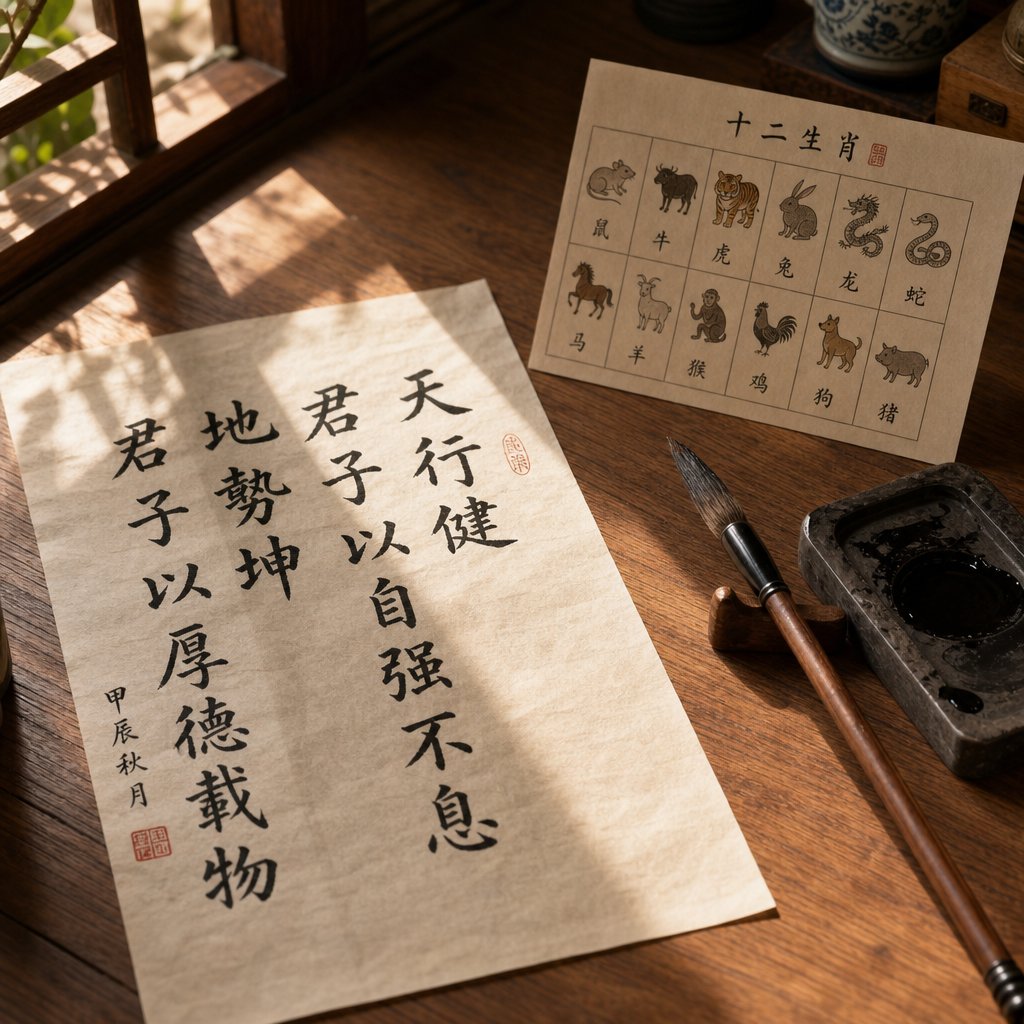
You've seen the layers: animal behavior logic, Five Elements cycles, compatibility groups, stroke-count numerology, and Ba Zi integration. Taken together, they can feel overwhelming. But here's the thing: you don't need to master every layer at once. Whether you're a parent researching chinese baby names and meanings or a cultural learner wondering what would my chinese name be, a clear sequence of steps turns this complex system into a manageable process.
Step-by-Step Zodiac Naming Framework
The following framework walks you through how to pick a chinese name using zodiac principles. Work through each step in order. If you can only complete the first three or four, you'll still produce a name that respects the tradition's core logic. The deeper layers add precision but aren't mandatory for a culturally sound result.
- Identify the zodiac animal. Determine the birth year's animal using the Chinese lunar calendar. Remember that the zodiac year begins at Chinese New Year (late January or early February), not January 1st. A child born in January may belong to the previous year's animal.
- Determine the elemental year. Check the last digit of the birth year: 0-1 = Metal, 2-3 = Water, 4-5 = Wood, 6-7 = Fire, 8-9 = Earth. This gives you the full animal-element pairing (e.g., Wood Snake, Water Rat).
- Check San He and Liu He groups. Identify the birth animal's Three Harmonies triad and Six Harmonies partner. Note which allied animal radicals you can incorporate and which clashing animal radicals (Liu Chong) you must avoid.
- Select favorable radicals. Using the animal's diet, habitat, and cultural symbolism, build a shortlist of radical categories that align with the birth year. Cross-reference with the elemental year to prioritize radicals that also support the birth element through the generating cycle.
- Screen candidate characters. From your radical shortlist, identify specific characters with positive meanings. Eliminate any that contain hidden clash-animal radicals or unfortunate homophones when paired with the surname.
- Verify stroke-count harmony (optional but recommended). Calculate the Five Formulas using Kangxi Dictionary stroke counts. Confirm that the Three Talents (Heaven, Person, Earth) produce a generating or neutral elemental relationship.
- Cross-reference with Ba Zi if available. If you have the child's exact birth time, identify the Day Master and Favorable Element. Prioritize characters whose elemental energy matches the Useful God identified in the chart.
- Perform final checks. Read the full name aloud in all relevant dialects. Verify no ancestor-name conflicts exist. Confirm the name is easy to write, pleasant to hear, and carries a meaning the family connects with personally.
Steps one through five are accessible to anyone willing to spend an afternoon with a zodiac reference table. Steps six and seven require either a naming consultant or deeper study of stroke-count and Ba Zi systems. Most families who handle the process independently focus on the first five and consult a professional only if they want the full numerological verification.
Balancing Tradition with Personal Meaning
Here's where many parents get stuck. They find a character that passes every zodiac and elemental filter but feels emotionally flat. Or they fall in love with a character that carries deep personal significance but contains a problematic radical. What then?
The honest answer: zodiac naming rules are a framework, not a cage. Even traditional practitioners acknowledge that a name's emotional resonance matters. A character that connects the child to a family story, a cherished value, or a meaningful moment carries its own kind of energy. The goal is harmony between structural alignment and personal meaning, not the elimination of one in favor of the other.
If you're asking yourself what would be my chinese name or what does my chinese name mean through this system, start by identifying your birth animal and element, then examine the radicals already present in your existing name. You may discover your name already aligns with zodiac principles, or you may spot a clash that explains why the name has always felt slightly off to native speakers familiar with these traditions.
For those wondering how to get a chinese name from scratch, the framework above gives you a structured path. But remember that what is a chinese name, at its deepest level, is more than a zodiac calculation. It's a vessel for identity, aspiration, and cultural belonging. The zodiac layer ensures the vessel is well-crafted. The meaning you pour into it is yours to choose.
A practical tip for parents navigating this independently: generate five to ten candidate names using steps one through five, then narrow to two or three favorites based on personal meaning and sound. If any of those finalists also pass stroke-count verification, you've landed on a name that satisfies both tradition and heart. If none pass, adjust one character at a time rather than starting over. Small changes, sometimes swapping a single radical variant, can shift a name from problematic to harmonious without losing the meaning that drew you to it in the first place.
Frequently Asked Questions About Chinese Zodiac Naming Rules
1. How does my child's zodiac animal affect their Chinese name?
Your child's birth year animal determines which character radicals are favorable or unfavorable in their name. The system uses the animal's natural behavior, diet, and habitat as a guide. For example, a Rat-year child benefits from grain radicals (禾) because rats eat grain, and roof radicals (宀) because rats nest in sheltered spaces. Conversely, radicals linked to the Rat's clash animal (Horse) should be avoided. This logic applies consistently across all twelve zodiac animals, creating a structured framework where each radical either supports or conflicts with the child's birth energy.
2. What are the Five Elements in Chinese zodiac naming and how do they work?
The Five Elements (Wood, Fire, Earth, Metal, Water) add a second layer to zodiac naming beyond the animal itself. Each birth year carries an elemental signature determined by the year's last digit: 0-1 is Metal, 2-3 is Water, 4-5 is Wood, 6-7 is Fire, and 8-9 is Earth. Elements interact through generating cycles (where one nourishes another) and overcoming cycles (where one suppresses another). A name should include radicals tied to elements that generate the child's birth element while avoiding those that overcome it. For instance, a Water-year child benefits from metal radicals since Metal generates Water.
3. What are San He and Liu He in Chinese naming and why do they matter?
San He (Three Harmonies) groups the twelve zodiac animals into four triads that share deep elemental affinity: Rat-Dragon-Monkey, Ox-Snake-Rooster, Tiger-Horse-Dog, and Rabbit-Goat-Pig. Liu He (Six Harmonies) pairs animals into complementary duos like Rat-Ox and Tiger-Pig. In naming practice, incorporating radicals associated with a child's allied animals strengthens the name's fortune. Conversely, radicals linked to clashing animals (Liu Chong pairs like Rat vs. Horse or Dragon vs. Dog) introduce symbolic conflict and should be avoided in character selection.
4. Can I apply Chinese zodiac naming rules without hiring a professional consultant?
Yes, parents can independently apply the core principles by following a structured process. Start by identifying the birth year animal and elemental year, then check San He and Liu He compatibility groups. Next, select characters with favorable radicals based on the animal's diet and habitat logic while screening out clash-animal radicals and homophone issues. Steps like stroke-count verification and Ba Zi analysis add precision but are optional for a culturally sound result. Most families who handle naming independently focus on animal-radical alignment and elemental balance, consulting professionals only for full numerological verification.
5. Which radicals should be avoided based on zodiac clashes?
Each zodiac animal has specific radicals to avoid based on its clash partner (Liu Chong) and harm relationships (Xiang Hai). Rat-year children should avoid horse radicals (马, 骏) and goat radicals (羊, 善). Tiger-year children should steer clear of monkey radicals (申, 侯) and enclosure radicals (口, 囗) that symbolize captivity. Dragon-year children must avoid dog radicals (犭, 戌, 献) and roof radicals (宀) that imply confinement. Beyond direct clashes, behavioral symbolism matters too: animals that need freedom suffer from enclosure radicals, while nocturnal animals are weakened by daylight radicals.