What Are Feng Shui Baby Naming Rules and Why They Matter
Imagine giving your child a name that does more than sound pleasant. A name engineered to interact with their unique birth energy, correct elemental imbalances, and support their life path from day one. That is exactly what feng shui baby naming rules are designed to do.
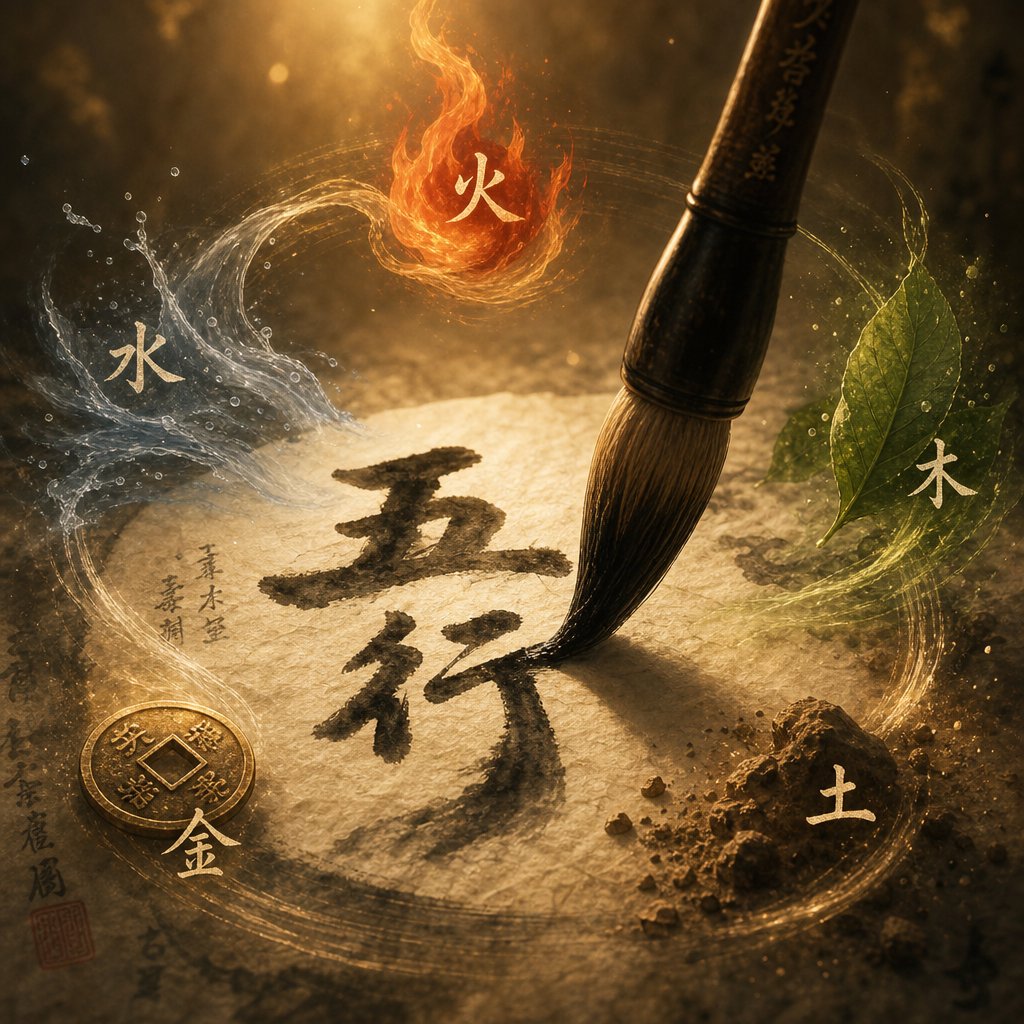
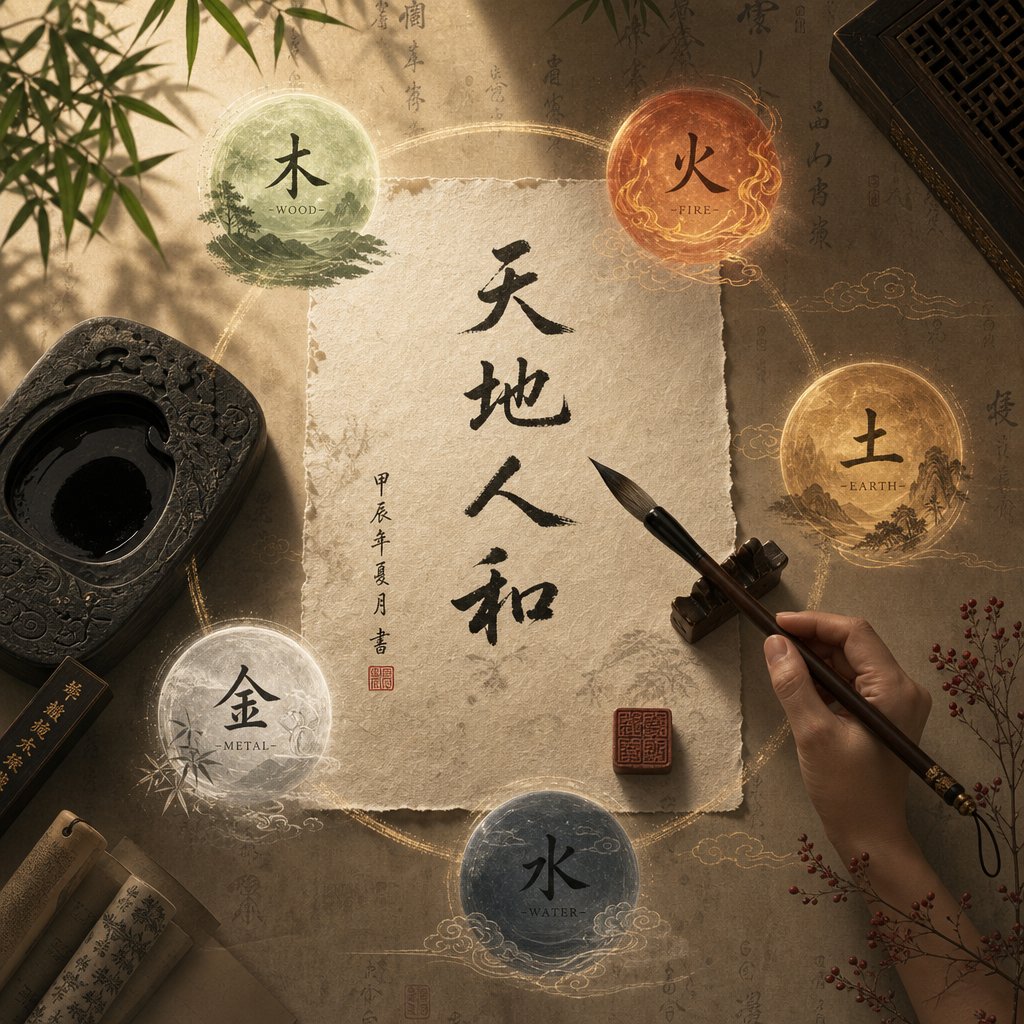
This system is not guesswork or cultural superstition. It is a structured methodology rooted in Chinese metaphysics that combines BaZi (Four Pillars of Destiny) analysis, Five Element theory, stroke count numerology, phonetic evaluation, and cultural taboo avoidance into a single naming framework. Each layer serves a specific purpose, and skipping any one of them produces an incomplete result.
What Feng Shui Baby Naming Actually Involves
Most parents assume this process means picking something that sounds "lucky" as a name or carries a beautiful meaning. The reality is far more technical. A properly selected feng shui name begins with reading the child's birth chart to identify elemental strengths and weaknesses. From there, characters are chosen based on their radical structure, stroke count, tonal quality, and meaning, all calibrated to complement what the birth chart reveals.
Think of it as a multi-layered diagnostic process. The BaZi chart tells you what the child needs. The Five Elements framework tells you which characters deliver it. The stroke count system (Wu Ge) confirms numerical harmony. Phonetics ensure the name flows well when spoken aloud. And cultural taboos act as a final filter to eliminate anything that could create conflict within the family lineage or broader social context.
This is why a qualified practitioner from a Chinese metaphysics practice will always request the child's exact birth date and time before suggesting a single character. Without that data, the entire process lacks its foundation.
Why These Rules Matter for Your Child
The philosophical core here is straightforward: in Chinese metaphysics, a name generates an energy field. Every time someone writes, types, or speaks your child's name, that energy activates. A name aligned with the child's natal chart reinforces positive attributes. A misaligned name works against them.
The name serves as a corrective tool to balance elemental weaknesses identified in the birth chart, not merely a label for identification.
This is where the approach diverges sharply from Western naming conventions. In English-speaking cultures, parents typically choose names based on sound preference, family tradition, or trending popularity. Meaning matters, but it is secondary. You might love how "Diane" sounds without ever researching its Greek origins, much like how Diane Disney Miller carried a name chosen for its elegance rather than metaphysical alignment.
In the feng shui naming tradition, every character must earn its place through elemental logic. A name is not a wish or a hope. It is a calculated intervention, one that complements what cannot be changed about the child's birth chart. As the Chinese proverb puts it: instead of giving your child wealth, give them a good name. The reasoning is that wealth can be lost, but a well-constructed name works quietly in the background for an entire lifetime.
The challenge, of course, is that this methodology has many moving parts. Each layer of analysis can confirm or contradict the others, and resolving those tensions is where real expertise lives. The BaZi birth chart is where everything begins.
Reading the BaZi Birth Chart for Name Selection
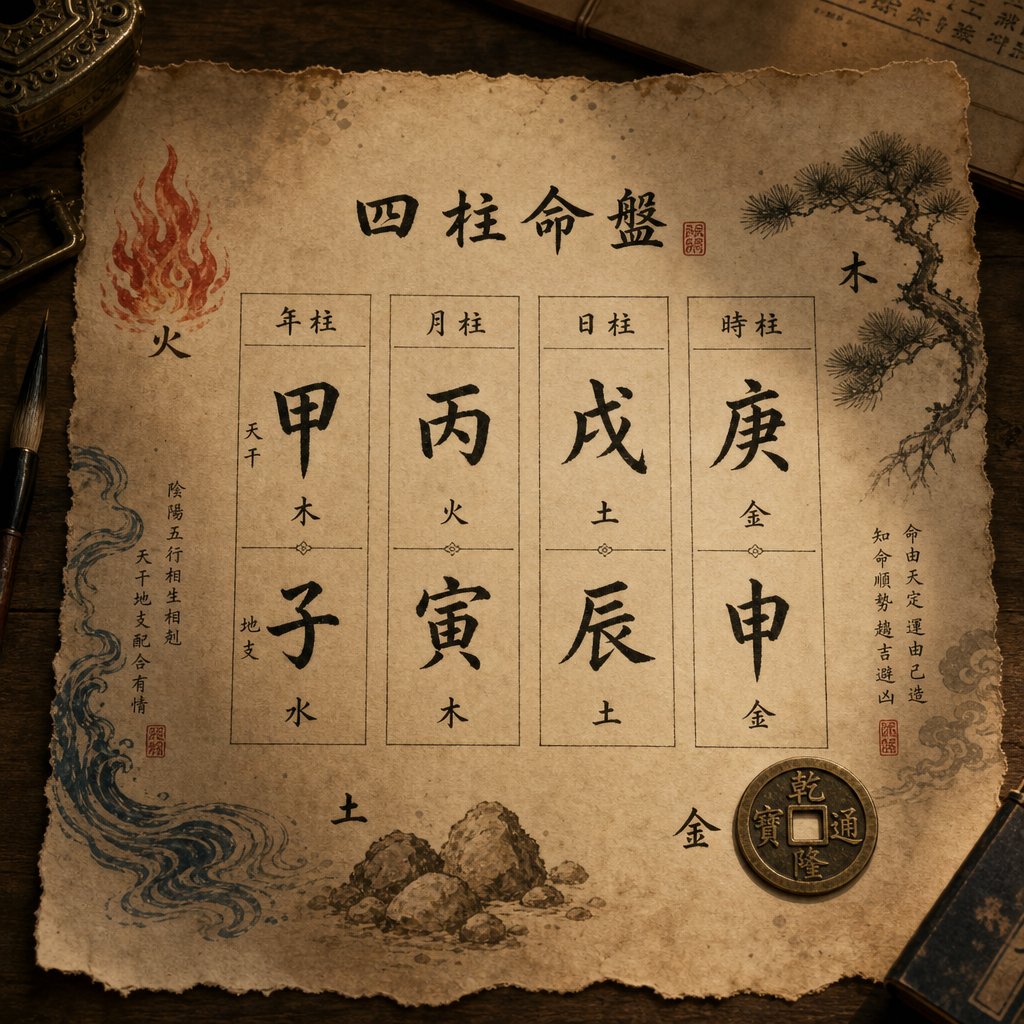
Every feng shui naming decision traces back to a single document: the child's BaZi chart. Without it, selecting characters is like prescribing medicine without a diagnosis. The chart converts the baby's birth year, month, day, and hour into eight Chinese characters arranged across four pillars, each pair consisting of one Heavenly Stem and one Earthly Branch. These eight characters map the elemental composition of the child's life energy, and the name must respond directly to what they reveal.
How to Read the Day Master Element
Your child's core identity in BaZi is called the Day Master. It is the Heavenly Stem of the Day Pillar, the third column in the chart. This single character represents who the child fundamentally is at an elemental level.
There are ten possible Day Masters, but they reduce to five elemental types: Wood, Fire, Earth, Metal, and Water. Each exists in Yang and Yin forms. A Yang Wood Day Master (represented by the stem Jia) is likened to a towering pine tree, strong and upward-reaching. A Yin Wood Day Master (Yi) resembles flexible vines or delicate flowers. The distinction matters because a Yang Fire person requires entirely different balancing strategies than a Yin Fire person.
The critical next step is determining whether the Day Master is strong or weak. A strong Day Master has heavy support from surrounding elements and the birth season. A weak Day Master lacks that support and is drained by the elements around it. Neither is inherently better. They simply require different naming strategies. A strong Day Master benefits from elements that challenge or channel its energy outward, while a weak Day Master needs characters that reinforce and nourish it.
Identifying Missing or Weak Elements
Seasonal influence is the single biggest factor in Day Master strength. A child's birth month determines which element dominates the environment at the time of birth, directly strengthening or weakening the Day Master. Consider this relationship:
| Day Master Element | Strong Season (Supported) | Weak Season (Controlled/Drained) |
|---|---|---|
| Wood | Spring (Feb-Apr) | Autumn (Aug-Oct) |
| Fire | Summer (May-Jul) | Winter (Nov-Jan) |
| Earth | Transitional months (seasonal shifts) | Spring (Feb-Apr) |
| Metal | Autumn (Aug-Oct) | Summer (May-Jul) |
| Water | Winter (Nov-Jan) | Summer (May-Jul) |
A Wood Day Master born in spring arrives during its peak season, making it naturally strong. That same Wood Day Master born in autumn faces Metal season, where Metal controls Wood, leaving it weakened and in need of support. A practitioner working with families from any region, whether the child is born in Jiangsu, Guan Dong, China, or as far west as Dunhuang Jiuquan, applies the same seasonal logic because BaZi is a solar calendar system tied to astronomical cycles rather than geographic location.
Once seasonal strength is assessed, the practitioner examines all eight characters plus the Hidden Stems contained within the Earthly Branches. Elements that appear rarely or not at all become candidates for reinforcement through the name. However, a common misconception is that you simply add whatever is missing. Professional practitioners look for the "Useful God" or Favorable Element, the specific element that best supports the Day Master given the chart's overall dynamics. A chart heavy in Water with a weak Fire Day Master does not necessarily need more Fire. It may need Wood, which bridges Water and Fire through the productive cycle.
Why Birth Time Precision Matters
The Hour Pillar changes every two hours in the traditional Chinese time-keeping system, which divides the day into twelve two-hour segments. A baby born at 12:50 PM and another born at 1:10 PM may fall into different hour pillars, producing entirely different elemental distributions in their charts.
This is not a minor technicality. The Hour Pillar can introduce elements completely absent from the other three pillars, or it can tip the balance of an element from weak to strong. A chart that appears to need Water reinforcement based on three pillars might already have sufficient Water hiding in the Hour Pillar's Earthly Branch. Change the hour, and the naming recommendation changes with it.
Accurate BaZi calculation also requires converting standard clock time into true solar time based on the birth location's longitude. A child born at 11:15 PM in Beijing and another born at 11:15 PM in western China share the same clock time but may have different true solar times, potentially altering both the Day and Hour Pillars entirely.
This is precisely why any credible practitioner will insist on the exact birth hour and birthplace before beginning the naming process. Without that precision, the elemental map is unreliable, and every character selection built on top of it becomes guesswork. The elements identified here flow directly into the next decision: which characters to select and which to avoid based on how the Five Elements generate and destroy one another.
Five Elements Productive and Destructive Cycles in Naming
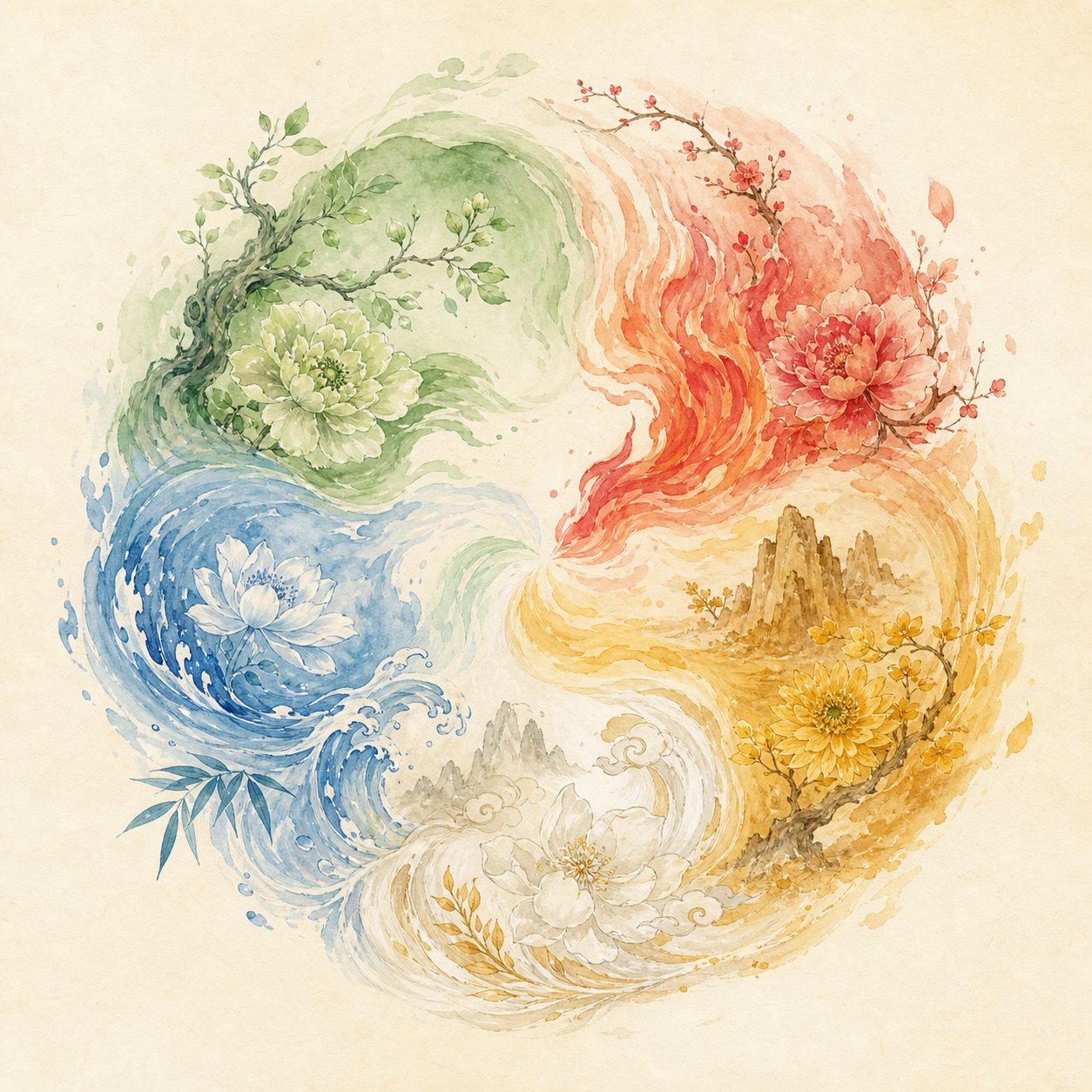
Knowing which elements your child's chart needs is only half the equation. The other half is understanding how those elements relate to each other, because in Chinese metaphysics, no element exists in isolation. Each one generates another and controls another in a continuous loop. Selecting the right name characters means working with these relationships, not against them.
The Productive Cycle in Name Character Selection
The generating cycle, called Xiang Sheng (相生), describes how each element nourishes the next in a fixed sequence:
- Wood feeds Fire (wood burns to create flame)
- Fire creates Earth (ash returns to soil)
- Earth bears Metal (ores form within compressed earth)
- Metal collects Water (metal surfaces attract condensation)
- Water nourishes Wood (irrigation allows trees to grow)
Why does this matter for naming? Imagine a child whose BaZi chart reveals a weak Fire Day Master born in winter. The obvious move is to select Fire-element characters. But a skilled practitioner often reaches one step back in the cycle and chooses Wood-element characters instead, because Wood generates Fire. This creates a supportive flow rather than a blunt correction. The name feeds the needed element indirectly, producing a more natural and sustainable energetic effect.
This indirect approach is especially useful when strong Fire characters feel too aggressive for the name's aesthetic quality. A character like Lin (林, meaning "forest") carries gentle Wood energy that quietly fuels Fire without overwhelming the name's tone or meaning. The generating cycle gives practitioners flexibility to balance elemental needs with linguistic beauty.
The Destructive Cycle and Characters to Avoid
The controlling cycle, called Xiang Ke (相克), describes how each element restrains another:
- Wood parts Earth (roots break through soil)
- Earth dams Water (earthen banks block flow)
- Water extinguishes Fire (water quenches flame)
- Fire melts Metal (intense heat reshapes rigid metal)
- Metal chops Wood (an axe cuts down trees)
Characters belonging to an element that controls your child's needed element should be avoided. If the chart requires Water strengthening, Earth-element characters work against that goal because Earth dams Water. If the child needs Metal support, Fire-element characters are counterproductive because Fire melts Metal.
This is where many parents make costly mistakes. A character might carry a beautiful meaning, something like "mountain" or "peak," but if it belongs to Earth and the child's chart needs Water, that character actively suppresses the very element the name should be reinforcing. Beauty of meaning cannot override elemental logic in this system.
The following table maps each element to its productive parent (the element that generates it) and its destructive opponent (the element that controls it) in a naming context:
| Element Needed in Name | Productive Parent (Also Beneficial) | Destructive Opponent (Avoid) |
|---|---|---|
| Wood | Water (generates Wood) | Metal (chops Wood) |
| Fire | Wood (feeds Fire) | Water (extinguishes Fire) |
| Earth | Fire (creates Earth) | Wood (parts Earth) |
| Metal | Earth (bears Metal) | Fire (melts Metal) |
| Water | Metal (collects Water) | Earth (dams Water) |
Use this as a quick reference when evaluating candidate characters. If a character's element appears in the "Destructive Opponent" column for your child's needed element, eliminate it regardless of how appealing its meaning sounds.
Balancing Multiple Weak Elements
Birth charts rarely present a single clean deficiency. More often, a practitioner finds two or even three elements underrepresented. A Metal Day Master born in summer might lack both Water and Metal support while also showing minimal Earth. How do you address multiple needs with just two or three name characters?
The standard approach is prioritization. The element identified as the "Useful God," the single most beneficial element for the chart's overall balance, takes precedence and is typically embedded in the primary given name character. The secondary beneficial element goes into the middle name character or the second character of a two-character given name. This layered strategy ensures the most critical elemental correction receives the strongest position in the name.
Practitioners also leverage the productive cycle to address two needs simultaneously. If a chart needs both Metal and Water, selecting a Metal-element character accomplishes double duty: Metal energy directly strengthens the Metal deficiency while also generating Water through the productive cycle. One well-chosen character can serve two elemental purposes when the needed elements sit adjacent in the generating sequence.
Conflicts arise when the needed elements sit on opposite sides of the controlling cycle. A chart that somehow needs both Wood and Metal presents a tension, since Metal controls Wood. In these rarer cases, practitioners separate the conflicting elements across different name positions and introduce a bridging element between them. Water, for instance, can mediate between Metal and Wood because Metal generates Water, and Water generates Wood, creating a chain that satisfies both needs without triggering the destructive relationship.
The cycles themselves are simple. Five movements, two relationships, one continuous loop. But applying them to a real birth chart with competing demands is where the methodology becomes genuinely complex. The next layer of decision-making involves identifying exactly which Chinese characters carry which elemental energy, a question that depends heavily on radical structure and semantic meaning.
Character Radicals and Five Element Associations
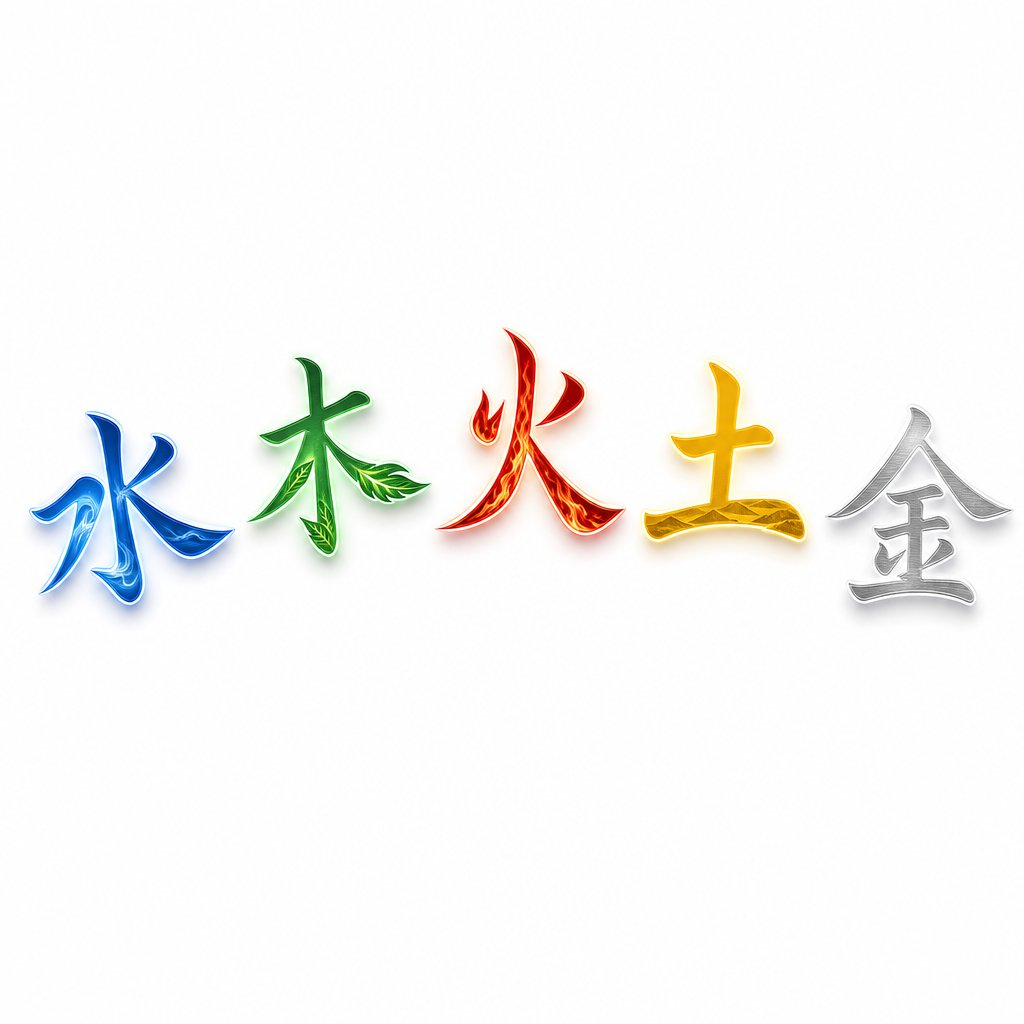
So you know your child needs Wood energy or Water support. How do you actually determine which Chinese characters deliver those elements? The answer lives inside the character itself, specifically in its radical, the structural component that signals meaning. In Chinese, radicals function as semantic elements that categorize characters by theme. For feng shui naming, they also categorize characters by elemental energy.
Radicals That Signal Each Element
Each of the Five Elements has a set of associated radicals. When you see these radicals embedded in a character, you can quickly identify its elemental classification. Here is the reference map practitioners use:
| Element | Key Radicals | Common Naming Characters |
|---|---|---|
| Water | 氵 (three-dot water), 冫 (ice), 雨 (rain) | 浩 (Hao, vast), 涵 (Han, contain), 淳 (Chun, pure), 霖 (Lin, sustained rain) |
| Wood | 木 (wood/tree), 艹 (grass), 竹 (bamboo) | 林 (Lin, forest), 桐 (Tong, paulownia), 芷 (Zhi, angelica), 萱 (Xuan, daylily) |
| Fire | 火 (fire), 灬 (four-dot fire), 日 (sun) | 炎 (Yan, flame), 煜 (Yu, radiant), 晨 (Chen, morning), 昊 (Hao, vast sky) |
| Earth | 土 (earth/soil), 山 (mountain), 石 (stone) | 坤 (Kun, earth), 峻 (Jun, lofty peak), 磊 (Lei, stacked stones), 岚 (Lan, mountain mist) |
| Metal | 金 (gold/metal), 钅 (metal radical) | 鑫 (Xin, prosperous), 铭 (Ming, inscribe), 锦 (Jin, brocade), 钰 (Yu, precious jade) |
This table gives you a starting point for character evaluation. When browsing candidate names, check the left side or top portion of each character first. That is where radicals most commonly appear in pictophonetic characters, which make up the majority of Chinese characters in use.
When Meaning Overrides Radical
Here is where things get less straightforward. Some characters carry elemental energy through their meaning rather than their visible radical structure. A character like 明 (Ming, meaning "bright" or "brilliant") contains the radicals for sun (日) and moon (月). The sun component signals Fire energy, but the character's overall meaning, brightness and illumination, reinforces that Fire association even more strongly than the radical alone.
Consider 天 (Tian, meaning "sky" or "heaven"). It has no obvious elemental radical, yet practitioners classify it as Fire because the sky is associated with the sun, warmth, and expansive Yang energy. Similarly, 海 (Hai, meaning "sea") clearly carries Water energy through both its radical (氵) and its meaning, making it a double-confirmed Water character. But a character like 雷 (Lei, meaning "thunder") contains the rain radical (雨) suggesting Water, while thunder itself is associated with Wood energy in traditional Five Element cosmology because thunder occurs in spring, the Wood season.
The rule of thumb: when radical and meaning align, classification is simple. When they conflict, meaning and traditional metaphysical association take precedence over radical structure alone. This requires deeper knowledge than a radical chart can provide, which is one reason experienced practitioners outperform automated naming tools.
Characters With Dual Element Properties
Some characters genuinely straddle two elements, and practitioners must decide which energy dominates. These dual-element characters appear frequently in naming because they tend to carry rich, layered meanings that parents find appealing.
- 淇 (Qi) - contains the Water radical (氵) but references a river bordered by lush vegetation, carrying both Water and Wood energy. Water takes precedence due to the dominant radical.
- 森 (Sen, meaning "dense forest") - triple Wood radical (木) stacked, but the density and darkness implied can evoke Earth energy. Wood takes clear precedence given the structural composition.
- 熙 (Xi, meaning "prosperous, bright") - contains the four-dot fire radical (灬) at the bottom, signaling Fire, but its upper component relates to joy and abundance, which some associate with Earth's nurturing quality. Fire takes precedence based on the radical position.
- 梓 (Zi, meaning "catalpa tree") - Wood radical (木) on the left, but the phonetic component 辛 relates to Metal. Wood takes precedence because the semantic element defines elemental classification in traditional feng shui naming conventions.
- 淑 (Shu, meaning "gentle, virtuous") - Water radical (氵) is present, yet the character's association with refined character traits can suggest Metal's precision. Water takes precedence per radical hierarchy.
The consistent pattern: when a character's semantic radical (the meaning-indicating component) clearly belongs to one element, that element wins. The phonetic component, which indicates pronunciation rather than meaning, does not override the semantic element's classification. This principle comes directly from how Chinese characters were constructed thousands of years ago, where the semantic element (形旁) carries the meaning while the phonetic element (声旁) carries the sound.
Knowing a character's elemental identity is essential, but it is not the final checkpoint. The number of strokes in each character feeds into an entirely separate layer of analysis, one that evaluates numerical harmony across the full name structure.
Stroke Count Analysis and the Wu Ge Five Grid Method
Elemental classification tells you what kind of energy a character carries. Stroke count analysis tells you whether the numerical structure of the full name produces harmony or friction. These are two separate systems working in parallel, and a name that passes the Five Elements test can still fail the stroke count test. The Wu Ge (五格) method, also called the Five Grid or Five Formula system, evaluates the mathematical relationships between every character in the name by converting stroke counts into auspiciousness ratings.
How the Five Grids Are Calculated
The system breaks a full name into five numerical grids, each representing a different sphere of life influence. For a standard Chinese name with a single-character surname and a two-character given name, the calculations work like this:
- Heaven Grid (天格) - Surname strokes + 1. This grid represents inherited fortune and ancestral influence. Because it derives from the surname, which you cannot change, it is considered a fixed factor rather than something to optimize.
- Earth Grid (地格) - Total strokes of both given name characters combined. This grid governs early life, childhood development, and foundational luck before age 35.
- Human Grid (人格) - Last character of the surname + first character of the given name. This is the most critical grid. It represents the person's core character, career potential, and primary life trajectory.
- External Grid (外格) - First character of the surname + last character of the given name + 1. This grid reflects social relationships, external support, and how others perceive you.
- Total Grid (总格) - All strokes of the full name combined. This grid indicates later life fortune, typically after age 50, and the overall arc of one's destiny.
Sounds abstract? Here is a worked example using the name 陈俊宏 (Chen Junhong), calculated with traditional character forms:
| Character | Traditional Form | Stroke Count |
|---|---|---|
| 陈 (Chen, surname) | 陳 | 16 |
| 俊 (Jun, talented) | 俊 | 9 |
| 宏 (Hong, grand) | 宏 | 7 |
| Grid | Calculation | Result |
|---|---|---|
| Heaven Grid (天格) | 16 + 1 | 17 |
| Earth Grid (地格) | 9 + 7 | 16 |
| Human Grid (人格) | 16 + 9 | 25 |
| External Grid (外格) | 16 + 7 + 1 | 24 |
| Total Grid (总格) | 16 + 9 + 7 | 32 |
Each resulting number is then evaluated against a classical reference system to determine whether it is auspicious, inauspicious, or neutral. The practitioner's goal is to ensure that at minimum the Human Grid, Earth Grid, and Total Grid all land on favorable numbers.
Auspicious and Inauspicious Stroke Numbers
The classification system draws from a traditional text called the Shu Li (數理), which assigns meaning and fortune ratings to each number from 1 through 81. Numbers above 81 cycle back by subtracting 80, so 82 becomes 2, 95 becomes 15, and so on. This mirrors a principle in the I Ching where 81 represents completion and returns to a new beginning.
Numbers fall into three broad categories:
- Auspicious (吉) - Numbers associated with growth, prosperity, leadership, and stability. These are the targets for all five grids when possible.
- Inauspicious (凶) - Numbers linked to obstruction, loss, isolation, or instability. These should be avoided in the Human Grid and Total Grid especially.
- Half-auspicious (半吉) - Numbers carrying mixed energy, favorable under certain conditions but potentially problematic under others. Acceptable in less critical grids like the Heaven Grid or External Grid.
The ThoughtCo reference on Chinese name strokes lists specific favorable totals including 3, 5, 6, 7, 8, 11, 13, 15, 16, 17, 18, 21, 23, 25, 29, 31, 32, 33, 37, 39, 45, 47, 48, 52, 63, 65, 67, 68, 73, and 81 for the Total Grid. However, exact classifications vary between lineages and reference texts, so practitioners typically work from a complete 81-number chart specific to their training tradition. The key takeaway: do not assume any number is lucky without checking it against a proper Shu Li reference.
Beyond raw auspiciousness, each grid number also maps to one of the Five Elements based on its last digit. Numbers ending in 1 or 2 correspond to Wood, 3 or 4 to Fire, 5 or 6 to Earth, 7 or 8 to Metal, and 9 or 0 to Water. This creates yet another layer of elemental interaction. The Human Grid's element should ideally support or generate the Earth Grid's element, maintaining productive cycle flow within the name's numerical structure itself.
Why Traditional Character Forms Are Non-Negotiable
You'll notice the example above uses 陳 (16 strokes) rather than the simplified 陈 (7 strokes). This is not optional. The entire Wu Ge system was developed during a period when only traditional characters existed, and its numerical classifications were calibrated to those stroke counts. Using simplified forms produces different numbers, which map to entirely different auspiciousness ratings, rendering the analysis meaningless.
This catches many families off guard, particularly those in mainland China or Singapore where simplified characters are standard in daily life. Your child may write their name in simplified form on every school assignment and government document. That is perfectly fine. But the analytical calculation must reference the traditional form because that is what the system's mathematics are built upon.
A practical example: the character 华 (hua, meaning "magnificent") has 6 strokes in simplified form but 14 strokes in its traditional form 華. Those two numbers carry completely different auspiciousness ratings and different elemental associations. Calculating with the wrong form does not produce a slightly off result. It produces a fundamentally wrong one.
This requirement also means that online name generators using simplified stroke counts are unreliable unless they explicitly state they convert to traditional forms before calculating. Many do not. If you are evaluating a name yourself, look up each character's traditional form in a stroke count reference before running the five grid formulas.
The Wu Ge method gives you numerical confirmation that a name's structure is sound. But numbers alone cannot tell you how a name will feel when spoken aloud, whether its tones clash or flow, or whether its sound carries unintended meanings in different dialects. That auditory dimension introduces its own set of rules entirely.
Phonetic and Tonal Considerations in Feng Shui Naming
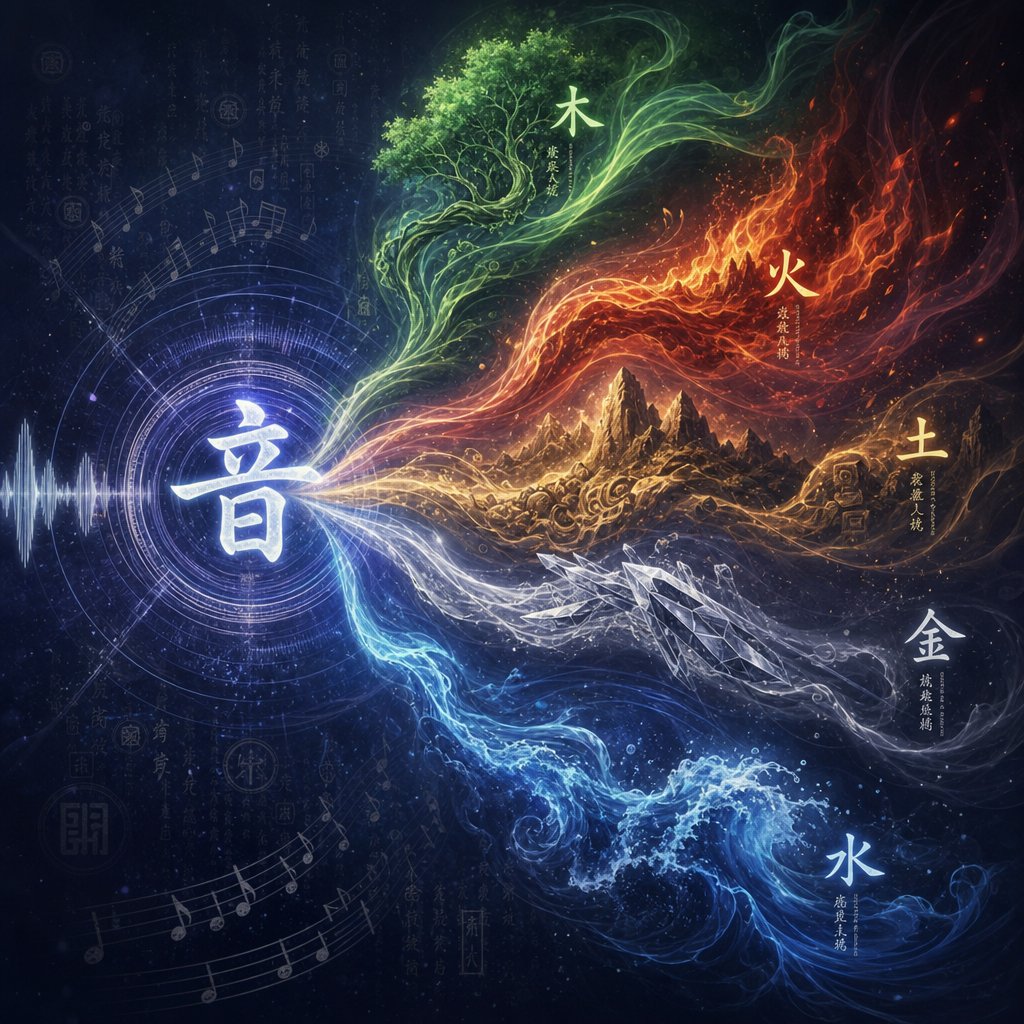
A name can satisfy every elemental requirement and pass every stroke count test, yet still fail when spoken aloud. Sound is not decoration in Chinese metaphysics. It is energy in motion. The ancient Chinese recognized this connection explicitly through the concept of the Five Tones (五音), a system mapping musical pitches to the Five Elements: Gong to Earth, Shang to Metal, Jue to Wood, Zhi to Fire, and Yu to Water. This same principle extends into naming, where the tonal quality of each character contributes its own elemental vibration to the overall name.
Tonal Energy and Element Correspondence
Mandarin Chinese uses four primary tones, and each carries a distinct energetic signature that practitioners associate with specific elements:
- First tone (high, flat) - carries Metal energy. The sound is crisp, clear, and sustained, mirroring Metal's precision and sharpness.
- Second tone (rising) - carries Wood energy. The upward movement echoes Wood's growth pattern, always reaching higher.
- Third tone (dipping) - carries Water energy. The tone descends before rising, mimicking water flowing into a valley and back out.
- Fourth tone (falling) - carries Fire energy. The sharp downward strike feels intense and decisive, like a flame's sudden burst.
How does this apply in practice? Imagine a child whose BaZi chart needs Water reinforcement. A practitioner might favor characters pronounced in the third tone to layer additional Water energy on top of the character's radical-based elemental classification. When a character already belongs to the Water element by radical and is also pronounced in the third tone, you get what practitioners call "double resonance" - elemental alignment through both form and sound simultaneously.
This does not mean every character in the name must match the needed element's tone. That would be impractical and, as you will see next, energetically stagnant. The tonal layer is a reinforcement tool, not a rigid requirement.
Phonetic Harmony Between Characters
Mandarin is a tonal language where the same syllable spoken in different tones produces entirely different meanings. This makes tonal flow between characters critical. A well-crafted name moves through contrasting tones, creating a natural rhythm when spoken aloud. The test is intuitive: does the name sound right when you call it across a room?
Names where all characters share the same tone are considered energetically stagnant. Three first-tone characters in a row produce a flat, monotonous sound that lacks dynamic movement. Three fourth-tone characters feel aggressive and abrupt. The ideal name creates tonal variety, a rising character followed by a falling one, or a flat tone paired with a dipping tone, so the sound itself carries a sense of flow and vitality.
A practical pattern many practitioners follow: pair the surname's tone with contrasting tones in the given name. If the surname is third tone (like Li, 李), avoid making both given name characters third tone as well. The sequence Li (3rd) + Jin (1st) + Ze (2nd), for example, moves through three different tones and creates a melodic arc that feels complete when spoken.
Homophone Conflicts and Sound Taboos
This is where feng shui baby naming rules intersect with one of Chinese culture's deepest linguistic sensitivities. A name might look perfect on paper, carry the right elemental energy, and hit every stroke count target, but if it sounds like an inauspicious word when spoken aloud, it is immediately disqualified.
Chinese is rich with homophones that carry cultural weight. The number four (四, si) sounds like death (死, si). Giving a clock (送钟, song zhong) sounds like attending a funeral (送终, song zhong). These associations run deep enough to influence architecture, gift-giving, and certainly naming.
Categories of sounds to avoid in a child's name include:
- Homophones of death or dying (死, si; 亡, wang; 殁, mo)
- Homophones of illness or suffering (病, bing; 痛, tong)
- Homophones of poverty or loss (穷, qiong; 失, shi; 输, shu)
- Homophones of separation or abandonment (离, li; 散, san; 弃, qi)
- Homophones of decline or emptiness (衰, shuai; 空, kong)
The tricky part: you need to check not just individual characters but the combined sound of the full name read together. Two perfectly fine characters can produce an unfortunate phrase when their syllables merge. A surname like Shi (史) paired with a given name character pronounced "wang" creates "shi wang," which sounds identical to 失望 (disappointment) or 死亡 (death). Neither association is acceptable.
Regional dialect adds another layer of complexity. A name that sounds clean in standard Mandarin might create problems in Cantonese, Hokkien, Hakka, or Shanghainese. Families with roots in southern China or those maintaining dialect use at home should test the name's pronunciation across all relevant dialects. What passes in Mandarin does not automatically pass everywhere else. A practitioner familiar with the family's linguistic background will flag these conflicts before finalizing any recommendation.
Sound is the dimension of a name that people encounter most frequently. It is what teachers call out in classrooms, what colleagues use in meetings, what family members repeat thousands of times across a lifetime. Getting the tonal energy right ensures that every spoken instance of the name reinforces rather than undermines the elemental work embedded in its characters. But even a phonetically flawless name can stumble on cultural ground rules that have nothing to do with sound, elements, or stroke counts, rules rooted in family hierarchy and generational tradition.
Cultural Taboos and Common Naming Mistakes to Avoid
Elemental balance, stroke harmony, and tonal flow can all check out perfectly, and the name can still be wrong. Cultural taboos operate as hard boundaries in feng shui naming, rules that override every other consideration. These are not suggestions or soft preferences. In traditional Chinese naming practice, violating a taboo renders a name unusable regardless of how well it scores on every other metric.
Ancestor and Authority Name Avoidance
The most fundamental taboo is also the oldest: never use characters from a direct ancestor's name. This means parents, grandparents, and great-grandparents are all off-limits. Using an ancestor's name character is considered disrespectful to the elder and energetically confusing within the family lineage, as if the child is claiming a position in the hierarchy that belongs to someone above them.
This practice, known as bi hui (避讳), has roots stretching back before the Qin dynasty. During Imperial China, the taboo extended far beyond family. Using characters from an emperor's given name was a criminal offense. The Qing dynasty scholar Wang Xihou was executed along with his family in 1777 for writing the Qianlong Emperor's name without omitting the required stroke. Entire words were renamed to avoid imperial names. The Forbidden City's Xuanwu Gate became the Gate of Divine Might simply because "Xuan" appeared in the Kangxi Emperor's personal name.
Modern practice no longer involves emperors, but the family-level taboo remains firmly in place. You'll also find that many families extend the rule to include the names of living elders in the extended clan, teachers, or other authority figures the child will interact with regularly. The reasoning is both cultural and metaphysical: a name shared with a superior creates an energetic collision where the child's identity competes with someone who holds authority over them.
Practically, this means a practitioner must collect the names of at least three generations of direct ancestors on both sides before proposing any characters. A beautiful, elementally perfect character that happens to appear in a grandmother's name gets eliminated immediately, no exceptions.
Generational Characters and Family Naming Systems
Many Chinese families follow a tradition called zi bei (字辈), a generational naming poem composed by ancestors that assigns a specific character to each successive generation. Every child born into that generation shares the designated character in their name, creating a visible marker of where they sit in the family tree.
When this tradition intersects with feng shui element requirements, conflicts arise. Imagine the generational character for your child's cohort is 德 (De, meaning "virtue"), which carries Earth energy. But your child's BaZi chart identifies Water as the Yong Shen, the element most needed for balance. Earth controls Water in the destructive cycle. The mandated generational character actively works against what the birth chart requires.
How do practitioners resolve this? Several approaches exist. Some place the generational character in the middle name position and use the final character to deliver the needed elemental correction, accepting that one position serves family tradition while the other serves metaphysical balance. Others argue that the generational character's elemental impact is softened when the remaining characters strongly reinforce the needed element. In rare cases where the conflict is severe, families may choose to honor the zi bei tradition in official genealogical records while using a different daily-use name that satisfies the BaZi requirements.
There is no universal answer here. The resolution depends on how strictly the family observes the generational poem, how strong the elemental conflict is, and whether the practitioner can find creative character combinations that honor both systems simultaneously.
Common Mistakes That Clash With the Day Master
Beyond formal taboos, certain naming errors appear so frequently that they deserve explicit flagging. These mistakes are not cultural violations but strategic failures, choices that undermine the name's ability to support the child's chart.
- Selecting characters purely for beautiful meaning without checking elemental compatibility. A character like 淼 (Miao, meaning "vast expanse of water") is visually striking and poetically rich, but it introduces an enormous amount of Water energy through three stacked Water radicals. For a child whose chart already overflows with Water, this character is actively harmful regardless of its elegance.
- Choosing trendy characters that create element overload. Naming trends sweep through generations. When 梓 (Zi, catalpa tree) became wildly popular in China, millions of children received Wood-element names without any consideration of whether their charts needed Wood. Trend-following ignores the entire point of personalized elemental analysis.
- Ignoring the destructive cycle relationship between name elements and the Day Master. If a child has a weak Fire Day Master, selecting Metal-element characters might seem neutral, but Fire controls Metal in the productive cycle, meaning the weak Fire Day Master expends energy trying to melt Metal. This drains an already weak element further rather than supporting it.
- Copying a relative's successful name. A name that brought fortune to a cousin may be exactly wrong for your child. Different birth charts produce different Yong Shen requirements. What strengthens one person's chart can destabilize another's.
- Using online generators that do not account for the full BaZi chart. Many popular tools ask only for the birth date, skip the hour pillar entirely, and produce names based solely on stroke count calculations. Without integrating the complete Four Pillars analysis, these generators cannot identify the Yong Shen or assess elemental needs. The result is a name that might score well numerically but fails the most important test: does it actually support this specific child's energetic blueprint?
The common thread across all these errors is the same: prioritizing one layer of the naming system while ignoring others. A name chosen for meaning alone skips elemental logic. A name chosen by stroke count alone skips BaZi integration. A name chosen by family tradition alone skips personalization. The feng shui naming framework works precisely because it demands all layers align simultaneously, and cultural taboos function as the final gatekeepers ensuring nothing slips through that could create social or energetic friction.
These rules were developed for a world where families lived in one region, spoke one dialect, and operated within a single cultural framework. The modern reality is different. Many families applying these principles live outside China, want names that work across languages, or face questions about which character system to use for analysis. That cross-cultural dimension introduces its own set of challenges.
Modern Applications and Finding a Qualified Practitioner
A family in Toronto wants their daughter to carry a Chinese name that honors her BaZi chart and a Western name that works in English-speaking classrooms. A couple in Sydney debates whether to count strokes using traditional or simplified forms when their child will grow up writing simplified characters. A father in London wonders whether the English name "Brooke" carries Water energy the way a Chinese Water-radical character would. These are not edge cases. They represent the majority of families seeking feng shui naming guidance today.
Applying Feng Shui Rules to Bilingual Names
When families want both a Chinese feng shui name and a Western given name, the first question is whether both names need to follow the same elemental rules. The short answer: the Chinese name carries the primary metaphysical weight because the entire system was built around Chinese characters, their radicals, stroke counts, and tonal properties. A Western name operates in a different linguistic and energetic framework.
That said, practitioners who work with diaspora families often recommend selecting a Western name whose phonetic qualities echo the Chinese name's tonal energy. If the Chinese name emphasizes Water through third-tone characters and flowing sounds, a Western name with soft, liquid consonants (think "Liam," "Nora," or "River") creates a subtle phonetic bridge between the two identities. The Western name does not need to pass Wu Ge stroke analysis or radical classification, but it should not actively contradict the Chinese name's elemental intent.
Some families take a more integrated approach by choosing a Western name that phonetically approximates the Chinese name. A child named 美琳 (Mei Lin) might go by "Meilin" or "Merlin" in English contexts, preserving the sound and, by extension, some of the tonal energy. Others keep the two names entirely separate, treating the Chinese name as the metaphysical anchor and the Western name as a social convenience. Neither approach is wrong. The key principle is that the Chinese name remains the one built on BaZi analysis, and the Western name supports rather than undermines its energetic direction.
Families sometimes ask whether a Western name like "Oscar" or "Leo" carries inherent elemental energy. In strict traditional practice, the answer is no, because these names exist outside the Chinese metaphysical system. However, some modern practitioners apply a looser interpretation, associating "Leo" with Fire (lion, sun, heat) or "Brooke" with Water based on English semantic meaning. This is an adaptation rather than a classical rule, and its validity depends on the practitioner's lineage and methodology.
Traditional vs. Simplified Characters in Modern Practice
This point bears repeating because it generates more confusion than almost any other aspect of the process: stroke count analysis always uses traditional character forms. Always. Regardless of whether the family lives in mainland China, Singapore, or Malaysia where simplified characters dominate daily life.
The visual and written form of the name in everyday use can absolutely be simplified. Your child's school registration, passport, and social media profiles can all display the simplified version. The metaphysical calculation, however, references the traditional form because the Wu Ge system's numerical classifications were calibrated to those structures. A character with 7 simplified strokes and 16 traditional strokes produces entirely different grid numbers, and only the traditional count maps correctly to the classical auspiciousness ratings.
Think of it this way: the traditional form is the character's "energetic blueprint," the version that carries its full structural DNA. Simplified forms are abbreviations created for practical convenience in the 1950s and 1960s. They serve communication perfectly well, but they were never designed with numerological systems in mind. Using them for Wu Ge calculations is like measuring a building's foundation with a ruler calibrated to a different scale.
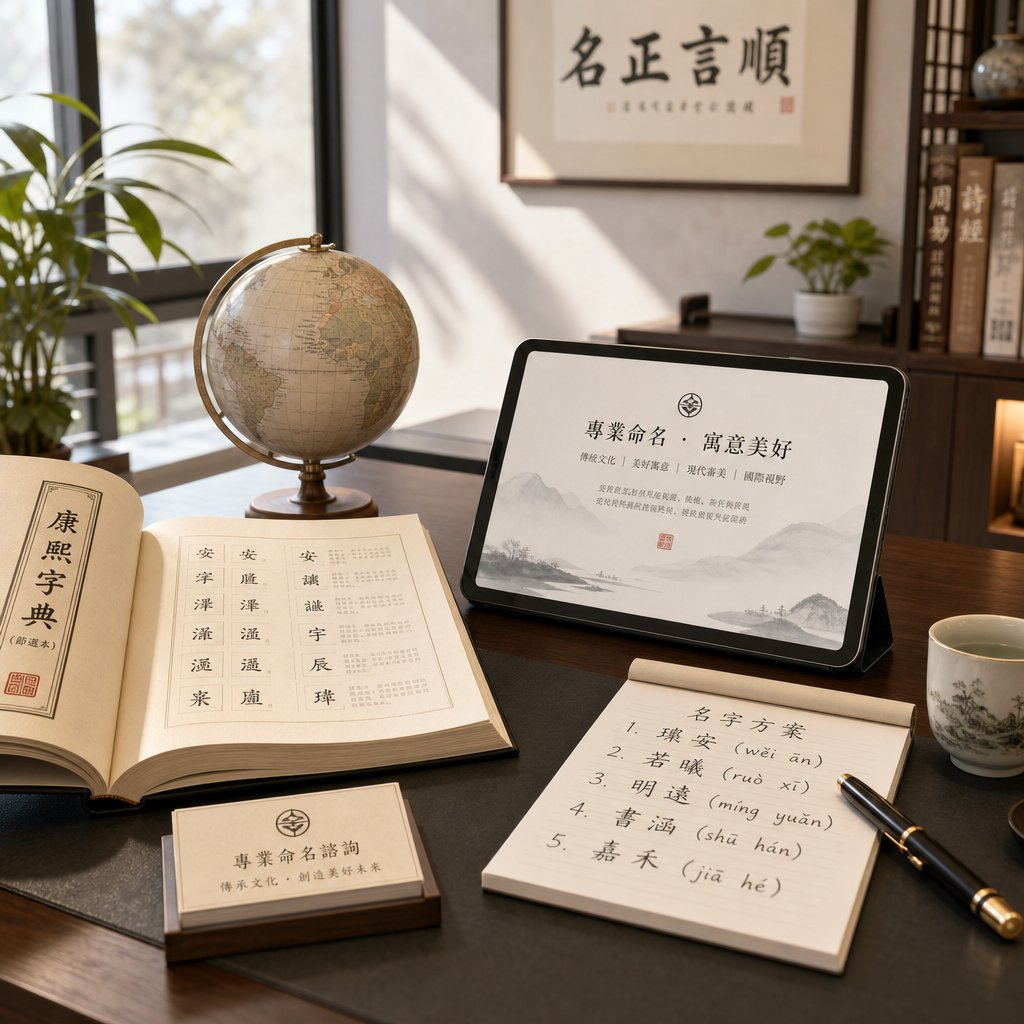
For families unfamiliar with traditional characters, this means one extra step: looking up each candidate character's traditional form in a reference dictionary (the Kangxi Dictionary is the standard) before running any stroke count formulas. Many practitioners handle this conversion automatically, but if you are reviewing their work or doing preliminary research yourself, verify which character form the calculations reference.
Selecting a Qualified Feng Shui Naming Practitioner
Given the complexity layered across seven chapters of methodology, most families benefit from working with an experienced practitioner rather than attempting the full process independently. But how do you distinguish a qualified professional from someone offering superficial services?
A credible practitioner should demonstrate several things during the consultation process. They should request the baby's exact birth date, time, and location before proposing any names. They should explain their methodology transparently, walking you through the BaZi analysis, identifying the Yong Shen (Useful God), and showing how each proposed character addresses the chart's needs. They should provide multiple name options, typically five to seven auspicious choices, with reasoning for each. And they should be willing to answer questions about why specific characters were selected or rejected.
As Master Tan Wee Keong of One Fengshui Consultancy explains, auspicious Chinese name selection is a complex process requiring substantial knowledge of Chinese metaphysics and language. A practitioner who treats it as a quick transaction rather than a detailed analysis is likely cutting corners.
Watch for these red flags when evaluating a naming service:
- They do not ask for the baby's birth time, or they say the hour does not matter. Without the Hour Pillar, the BaZi chart is incomplete and the elemental analysis unreliable.
- They provide names without explaining the elemental logic behind each choice. You should understand why a specific character was selected, not just receive a list.
- They use only stroke count analysis without BaZi integration. Stroke counts alone cannot determine which elements the child needs. A name can score perfectly on Wu Ge grids while delivering exactly the wrong elemental energy for that specific child.
- They offer names before the baby is born. Since the BaZi chart requires the exact birth date and time, names generated pre-birth lack the foundational data needed for accurate analysis.
- They use simplified character stroke counts for Wu Ge calculations without converting to traditional forms.
- They cannot explain the relationship between the proposed name's elements and the child's Day Master strength.
A good practitioner also sets realistic expectations. Feng shui baby naming rules provide a framework for selecting a name that harmonizes with a child's natal energy. They do not guarantee wealth, health, or success. The name is one factor among many, including parenting, education, environment, and personal effort, that shape a life. What the name offers is alignment: the assurance that this particular piece of the puzzle is not working against the child's natural energetic composition.
If you prefer to be involved in the selection process rather than simply receiving a final list, say so upfront. Many practitioners welcome parental input on preferred meanings, sounds, or cultural themes and will incorporate those preferences while ensuring feng shui compliance. The goal is a name that satisfies both the metaphysical requirements and the family's emotional connection to it, because a name the parents love and use with warmth carries its own kind of positive energy.
Frequently Asked Questions About Feng Shui Baby Naming Rules
1. Can you name a baby using feng shui before it is born?
No. Feng shui baby naming requires the child's exact birth date, time, and location to construct the BaZi (Four Pillars of Destiny) chart. Since the Hour Pillar changes every two hours and can shift the entire elemental balance, names generated before birth lack the foundational data needed for accurate analysis. Practitioners who offer pre-birth naming services cannot identify the child's Day Master strength or Yong Shen (Useful God), making their recommendations incomplete at best.
2. What is the difference between stroke count naming and full feng shui naming?
Stroke count analysis (Wu Ge method) evaluates only the numerical harmony of a name by calculating five grids from character stroke totals. Full feng shui naming integrates stroke counts with BaZi birth chart analysis, Five Element cycles, radical-based elemental classification, tonal energy assessment, and cultural taboo screening. Using stroke counts alone cannot determine which elements a specific child needs, so a name may score well numerically while delivering the wrong elemental energy for that child's chart.
3. Do feng shui naming rules apply to Western or English names?
The classical feng shui naming system was built around Chinese characters, their radicals, stroke structures, and tonal properties. Western names operate outside this framework and do not undergo Wu Ge or radical analysis. However, practitioners working with bilingual families often recommend selecting a Western name whose phonetic qualities echo the Chinese name's tonal energy, such as choosing soft liquid consonants for a child needing Water element reinforcement. The Chinese name remains the primary metaphysical anchor.
4. Why must traditional Chinese characters be used for stroke count calculations?
The Wu Ge Five Grid system was developed when only traditional characters existed, and its auspiciousness classifications were calibrated to those stroke counts. Simplified characters, created in the 1950s-60s for practical convenience, produce different stroke totals that map to entirely different numerical ratings. For example, the character for 'magnificent' has 6 simplified strokes but 14 traditional strokes, yielding fundamentally different grid results. The child can use simplified forms in daily life, but the analytical calculation must reference traditional forms.
5. How do practitioners handle conflicts between generational naming traditions and BaZi requirements?
When a family's generational poem (zi bei) assigns a character whose element conflicts with the child's BaZi needs, practitioners use several strategies. The most common approach places the generational character in one name position while using the remaining character to deliver strong elemental correction. Some families honor the zi bei in official genealogical records while using a different daily-use name that satisfies BaZi requirements. The resolution depends on how strictly the family observes the tradition and how severe the elemental conflict is.