What It Really Means to Find a Chinese Name from Pinyin
Imagine you hear a Chinese name spoken aloud or see it spelled out in Roman letters. You know the sound, but what characters does it actually represent? Finding a Chinese name from pinyin is the process of moving from a romanized sound to the specific characters that carry meaning, identity, and cultural weight. It sounds simple, but the gap between a pinyin spelling and a real name is wider than most people expect.
Why Pinyin Alone Does Not Define a Chinese Name
Pinyin is a pronunciation guide, not a writing system. It tells you how a syllable sounds in Mandarin, but it does not tell you which character is intended. Research from CSH visualization scientist Liuhuaying Yang illustrates this problem clearly: thousands of distinct Chinese characters compress into just 375 unique pinyin syllables. That means any single syllable you encounter could map to dozens of different characters, each with its own meaning.
Pinyin is not a one-to-one mapping. Each syllable can correspond to dozens of characters with entirely different meanings, making the romanized spelling alone insufficient to identify or create a name.
Consider the artist Ai Weiwei. His romanized name looks straightforward, yet the syllable "wei" alone represents multiple characters. Without seeing the actual hanzi, you cannot know which "wei" is his. This ambiguity sits at the heart of every attempt to convert pinyin to chinese characters for a name.
Three Reasons People Search for Names by Pinyin
People asking "what is my chinese name" or searching for their name in chinese typically fall into one of three groups:
- Identifying characters behind a known sound — You have seen or heard Chinese names in romanized form and want to understand the actual characters and their meanings.
- Creating a Chinese name from a foreign name — You want a name that sounds like your English name but works as a real Chinese name with positive meaning.
- Exploring characters by sound — You have a preferred pinyin syllable and want to discover which characters it unlocks, building a meaningful name from scratch.
What You Need Beyond a Romanized Spelling
A romanized spelling gives you a starting point, not a destination. The chinese for name — 名字 (mingzi) — itself hints at the deeper layers involved: 名 means "name" and 字 means "character" or "word." To move from "my name in chinese" as a concept to an actual name you can use, you need tone information, character options, meaning evaluation, and cultural context. Sound alone leaves too much hidden.
The tonal dimension is where most of that hidden complexity lives, and it changes everything about which characters are even available to you.
How Pinyin Tones Change Everything About Character Meaning
You see the pinyin syllable "li" and think you know what it means. But which "li"? The one that means "beautiful"? "Strength"? "Plum"? "Sharp"? Each of these is a completely different character, and the only thing separating them in spoken Mandarin is tone. When you are converting pinyin into characters for a name, tone is not optional decoration — it is the primary filter that narrows hundreds of possibilities down to a manageable set.
The Four Tones Explained with Name Examples
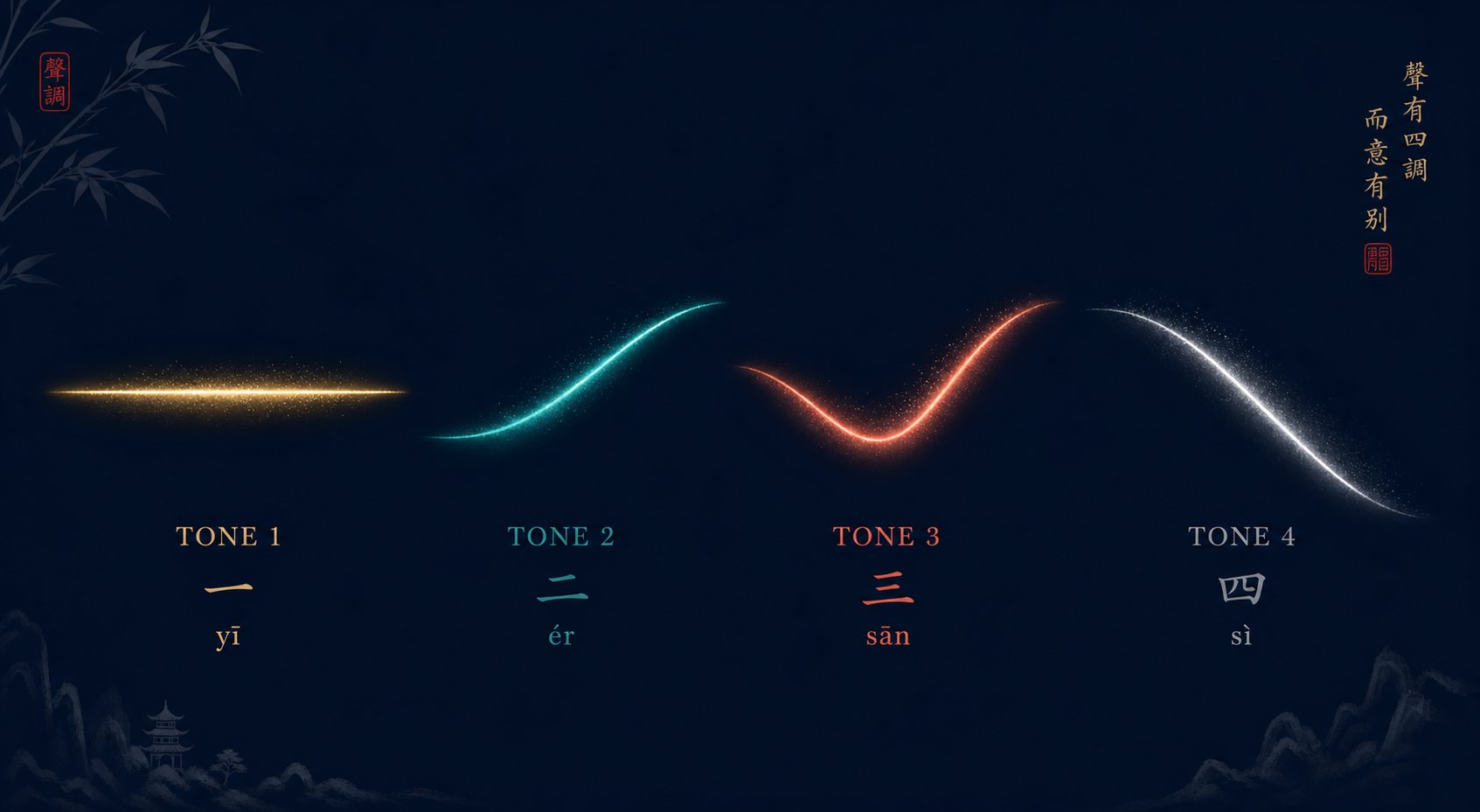
Mandarin Chinese uses four distinct tones to differentiate words that share the same consonant-vowel combination. Here is how each tone works:
- First tone (flat, high pitch) — Your voice stays level at a higher register, like holding a musical note. Example: li (first tone) can represent 丽 (beautiful, elegant), a character frequently used in female names.
- Second tone (rising) — Your pitch climbs from middle to high, similar to the intonation of a surprised "what?" in English. Example: li (second tone) can represent 离 (to leave, to separate), a character you would generally avoid in names.
- Third tone (dipping then rising) — Your pitch drops low and then comes back up. Example: li (third tone) can represent 李 (plum tree), one of the most common Chinese surnames, or 礼 (propriety, ritual), a character with strong Confucian associations.
- Fourth tone (falling sharply) — Your pitch drops quickly from high to low, like giving a firm command. Example: li (fourth tone) can represent 力 (strength, power), often used in male names, or 利 (sharp, benefit), common in both surnames and given names.
Notice how a single romanized spelling — just two letters — branches into entirely different meanings depending on which tone you apply. The romanization meaning stays ambiguous until you specify that tonal layer.
How Tone Marks Guide Your Character Search
When you see pinyin written with tone marks (li, li, li, li), those small diacritical marks above the vowel are doing heavy lifting. They tell you which subset of mandarin characters to search within. Without them, you are browsing an unfiltered list of every character that shares that base sound.
Here is the syllable "li" mapped across all four tones with characters relevant to naming:
| Pinyin with Tone | Chinese Hanzi | Meaning | Commonly Used in Names? |
|---|---|---|---|
| li (1st tone) | 丽 | Beautiful, elegant | Yes — popular in female given names |
| li (1st tone) | 莉 | Jasmine (as in the flower) | Yes — very common in female names |
| li (2nd tone) | 离 | To leave, separate | No — negative connotation for names |
| li (3rd tone) | 李 | Plum tree | Yes — one of the top 3 Chinese surnames |
| li (3rd tone) | 礼 | Propriety, ritual, courtesy | Yes — used in male given names |
| li (4th tone) | 力 | Strength, power | Yes — common in male given names |
| li (4th tone) | 利 | Sharp, benefit, profit | Yes — used in both surnames and given names |
| li (4th tone) | 立 | To stand, establish | Yes — used in male given names |
You will notice that tone alone does not give you a single answer — first tone "li" still offers multiple character options. But it eliminates the wrong categories entirely. Searching for name pinyin without specifying tone is like searching a phone book without knowing the first letter of the last name.
Common Mistakes When Ignoring Tones in Name Selection
The most frequent error people make when converting pinyin into characters for a name is treating all tones as interchangeable. This leads to three specific problems:
- Accidentally choosing characters with negative meanings. As Temple University's Center for Chinese Language Instruction explains, the character 丑 (chou, meaning "ugly") makes the entire syllable "chou" risky in names — even characters with different meanings but the same pronunciation carry that association.
- Mixing up surname and given name characters. The third-tone "li" (李) functions as a surname. The fourth-tone "li" (力) works as a given name element. Confusing these creates structurally awkward names.
- Creating unintended homophones. A name like Wang Wen in the fourth tone (王问) suggests curiosity and intelligence. Shift to the second tone and Wang Wen (王蚊) suddenly evokes "mosquito" — a meaning no one wants attached to their identity.
The romanization meaning of any syllable remains incomplete without its tone. Think of tone marks as the difference between a name that honors someone and a name that embarrasses them. When you are working through chinese hanzi options for a name, always start by locking in the tone before you ever evaluate character meanings.
Tones narrow your options, but they still leave you with multiple characters per syllable. The next challenge is determining whether your chosen pinyin sound corresponds to a real Chinese surname — because not every character is eligible for that role.
Identifying Chinese Surnames When Starting from Pinyin
Given names in Chinese offer wide creative freedom — nearly any character with a positive meaning can work. Surnames operate under entirely different rules. Only a fixed set of characters function as chinese family names, and no amount of creative thinking can turn a random character into a legitimate surname. When you are working from a pinyin sound, the first structural question is whether that sound maps to a recognized chinese surname at all.
Which Pinyin Syllables Map to Real Surnames
China has a naming tradition stretching back over five thousand years. The classic text Baijiaxing (百家姓), or "Hundred Family Surnames," was compiled during the Song Dynasty and originally listed 411 surnames, later expanding to 568. Despite the title, the actual number of documented chinese surnames throughout history reaches approximately 24,000, though only around 6,000 remain in active use today.
Not every pinyin syllable corresponds to a surname. Some syllables — like "de" or "ba" — have no common surname character associated with them. Others, like "wang" or "li," are so heavily represented that they account for millions of people each. The 2020 National Name Report from China's Ministry of Public Security confirms that the top five surnames alone — Wang, Li, Zhang, Liu, and Chen — cover 30.8% of the entire registered population.
This means your starting pinyin sound either hits a well-established surname or it does not. There is no middle ground. You cannot invent a new surname the way you might coin a given name from an unusual character.
Top Surnames Organized by Pinyin Sound
The following table lists common chinese last names grouped by their pinyin initial letter. Each entry includes the character, its pinyin with tone, and its approximate ranking based on contemporary population data:
| Pinyin Initial | Character | Pinyin with Tone | Approx. Rank |
|---|---|---|---|
| C | 陈 | Chen (2nd) | 5 |
| C | 曹 | Cao (2nd) | 27 |
| D | 邓 | Deng (4th) | 29 |
| G | 郭 | Guo (1st) | 17 |
| H | 黄 | Huang (2nd) | 7 |
| H | 何 | He (2nd) | 18 |
| L | 李 | Li (3rd) | 2 |
| L | 刘 | Liu (2nd) | 4 |
| L | 林 | Lin (2nd) | 16 |
| M | 马 | Ma (3rd) | 13 |
| S | 孙 | Sun (1st) | 12 |
| W | 王 | Wang (2nd) | 1 |
| W | 吴 | Wu (2nd) | 10 |
| X | 徐 | Xu (2nd) | 11 |
| Y | 杨 | Yang (2nd) | 6 |
| Z | 张 | Zhang (1st) | 3 |
| Z | 赵 | Zhao (4th) | 8 |
| Z | 周 | Zhou (1st) | 9 |
| Z | 朱 | Zhu (1st) | 14 |
A few patterns stand out. Many of the most common chinese last names cluster around certain initials — "Z" alone accounts for four of the top fifteen. Meanwhile, some pinyin initials like "R" or "N" have very few associated surnames, and those that exist tend to rank much lower in population frequency. If your target pinyin sound starts with one of these sparse initials, your surname options will be limited.
Also worth noting: the surname 王 (Wang) overtook 李 (Li) as the most populous chinese surname in recent decades, with approximately 94.68 million bearers based on census data. The top ten surnames collectively represent a significant portion of the population, which is why encountering them in romanized form is so common.
Regional Differences in Surname Romanization
Here is where things get tricky for anyone researching taiwanese last names or encountering Chinese names romanized outside mainland China. The same surname character can appear in completely different romanized spellings depending on which system was used.
Taiwan has historically used Wade-Giles romanization for personal names rather than Hanyu Pinyin. Most Taiwanese people romanize their names using a simplified Wade-Giles that drops diacritics and tone marks. The result is that identical surnames look different on paper:
- 张 appears as "Zhang" in pinyin but "Chang" in Wade-Giles (common in taiwanese surnames)
- 黄 appears as "Huang" in both systems, but older Taiwanese documents may show "Hwang"
- 蔡 appears as "Cai" in pinyin but "Tsai" in Wade-Giles — as seen in former president Tsai Ing-wen's name
- 谢 appears as "Xie" in pinyin but "Hsieh" in Wade-Giles
- 萧 appears as "Xiao" in pinyin but may appear as "Hsiao" or even "Siew" (from Hokkien) in Taiwan
Some Taiwanese personalities use idiosyncratic romanizations that follow neither system consistently. Former president Lee Teng-hui's surname would be "Li" in any standard romanization, yet he used "Lee." This inconsistency means that when you encounter a romanized Chinese surname from Taiwan, you may need to consider multiple romanization systems before identifying the correct character.
Taiwan officially adopted Hanyu Pinyin in 2009 for signage and new documents, but personal names registered before that date — and many registered after — still follow older conventions. Since romanization is not systematically taught in Taiwanese schools (students learn Zhuyin/Bopomofo instead), many people simply inherit whatever spelling appears on their existing documents.
The practical takeaway: if you are trying to identify a chinese surname from a romanized spelling, consider where the person or name originates. A "Chang" from Taiwan and a "Zhang" from mainland China likely share the same character (张). A "Tsai" from Taipei and a "Cai" from Beijing both write their surname as 蔡. Recognizing these equivalences prevents you from treating the same surname as two different names.
Surname identification is the first structural constraint in building a Chinese name. The second constraint — whether you are transliterating a foreign name or creating something culturally authentic — shapes everything about how you select the remaining characters.

Transliteration vs Authentic Name Creation from Pinyin
Two people can both type "english to chinese name" into a search bar and mean completely different things. One wants their existing name rendered in Chinese characters so it sounds roughly the same. The other wants a real Chinese name — one that a native speaker would recognize as culturally natural — built around preferred pinyin sounds. These are fundamentally different goals, and confusing them leads to names that satisfy neither purpose.
Phonetic Transliteration and How It Works
Phonetic transliteration takes a foreign name and approximates its sound using Chinese characters. The characters are chosen almost entirely for their pronunciation, with meaning treated as secondary or ignored altogether. As Xinhua's official transcription standards demonstrate, mainland China maintains a fixed table mapping English phonemes to specific Chinese characters — for example, the sound "ba" maps to 巴, "ke" maps to 克, and "si" maps to 斯.
This is how "Thomas" becomes 托马斯 (tuo ma si) and "Jack" becomes 杰克 (jie ke). The characters 马 (horse) and 斯 (this) carry no meaningful connection to the person — they are simply sound placeholders. A name to chinese name converter tool typically uses this approach, pulling from the same standardized character set that news agencies use for foreign public figures.
The result? A chinese name translation that sounds vaguely like the original but reads awkwardly to native speakers. As one language educator describes it, transliterated names "sound neither like the originals nor like authentic Chinese names." They exist in an uncanny valley — recognizably foreign, yet stripped of the meaning that makes Chinese names culturally rich.
Building a Culturally Authentic Name from Preferred Sounds
Authentic name creation starts from the same pinyin sounds but applies entirely different selection criteria. Instead of matching phonemes mechanically, you choose characters for their meaning, cultural resonance, and aesthetic balance — while still honoring your preferred sound. The pinyin syllable guides your search, but meaning drives your final decision.
Here is how the two approaches differ in practice:
- Character pool: Transliteration draws from a small, fixed set of ~600 approved transcription characters. Authentic naming draws from thousands of characters deemed appropriate for names.
- Selection priority: Transliteration prioritizes phonetic accuracy above all else. Authentic naming prioritizes meaning, then finds characters where sound and meaning align.
- Structural result: Transliterated names often run three or four syllables long, mirroring the foreign name's length. Authentic Chinese names follow the standard two- or three-character structure (one surname character plus one or two given name characters).
- Native speaker perception: Transliterated names are immediately recognized as foreign. Authentic names are indistinguishable from names given to native Chinese speakers.
- Meaning coherence: Transliterated characters rarely form a meaningful phrase together. Authentic name characters are deliberately paired to create layered meaning.
Deciding Which Approach Fits Your Situation
When does each approach make sense? Transliteration works for temporary or formal contexts — business cards for short trips, bylines in Chinese media, or legal documents where phonetic consistency with your passport matters. It is also the default output of most english to chinese name converter tools, which prioritize speed over cultural depth.
Authentic name creation fits better when you plan to use the name long-term — living in a Chinese-speaking environment, building relationships with Chinese colleagues, or giving a child a name that carries genuine cultural weight. The process takes longer because you are not just matching sounds. You are evaluating meaning, checking cultural associations, and ensuring the name works as a complete unit.
Consider the name "Emily." A transliteration gives you 艾米莉 (ai mi li) — three characters chosen purely for sound. An authentic approach might keep the "mei" sound from Emily and build a name like 林美琪 (Lin Meiqui) — using a real surname, a character meaning "beautiful," and a character meaning "fine jade." Same starting sound, completely different result.
The translation name to chinese process you choose shapes every subsequent decision. Transliteration is mechanical and quick. Authentic creation requires you to explore individual characters by their pinyin sound, evaluate their meanings, and assemble them according to structural rules that govern all Chinese names.
Exploring Given Name Characters by Pinyin Sound
Authentic name creation means choosing characters where sound and meaning work together. But once you have locked in a preferred pinyin syllable — say "mei" or "hao" — how do you actually explore what is available? Chinese given names draw from a pool of thousands of characters, each carrying distinct meaning, visual weight, and cultural associations. The syllable is your entry point. What you find inside determines whether the name feels elegant, powerful, gentle, or awkward.
Popular Given Name Characters Grouped by Pinyin Sound
Some pinyin syllables appear in names far more often than others. Syllables like "jing," "xin," "mei," and "hao" are popular because they map to characters with overwhelmingly positive meanings — qualities parents want to bestow on their children. When you search for names in chinese and meanings, these syllables surface repeatedly because they offer multiple strong character options.
The table below organizes commonly used given name characters by their pinyin sound. Each entry shows the character, its meaning, and its typical gender association in naming practice:
| Pinyin | Character | Meaning | Gender Association |
|---|---|---|---|
| mei (3rd tone) | 美 | Beautiful | Female |
| mei (2nd tone) | 梅 | Plum blossom (resilience) | Female |
| jing (4th tone) | 静 | Quiet, serene | Female |
| jing (1st tone) | 晶 | Crystal, sparkling | Female |
| jing (1st tone) | 京 | Capital city | Gender-neutral |
| hao (4th tone) | 浩 | Vast, grand | Male |
| hao (3rd tone) | 好 | Good, fine | Rarely used alone in names |
| xin (1st tone) | 欣 | Joyful, happy | Female |
| xin (1st tone) | 鑫 | Prosperous (triple gold) | Male |
| xin (1st tone) | 新 | New, fresh | Gender-neutral |
| wei (3rd tone) | 伟 | Great, mighty | Male |
| wei (2nd tone) | 薇 | Fern, rose | Female |
| yu (4th tone) | 玉 | Jade | Female |
| yu (3rd tone) | 宇 | Universe, space | Male |
| zhi (4th tone) | 志 | Ambition, will | Male |
| zhi (4th tone) | 智 | Wisdom, intelligence | Male |
| wen (2nd tone) | 文 | Cultured, literary | Gender-neutral |
| hua (2nd tone) | 华 | Splendid, China | Gender-neutral |
| lan (2nd tone) | 兰 | Orchid | Female |
| jun (4th tone) | 俊 | Handsome, talented | Male |
You will notice that the same pinyin syllable often yields characters with very different vibes. "Wei" in the third tone gives you 伟 (great, mighty) — a classic choice for chinese names male — while "wei" in the second tone gives you 薇 (fern, rose), which appears frequently in female chinese names. The tone shifts the entire character landscape, and the character you pick within that landscape determines the name's personality.
Gender Associations in Character Selection
Chinese names do not carry grammatical gender the way Romance languages mark nouns as masculine or feminine. Instead, gender associations emerge from cultural convention and the semantic content of the characters themselves. Certain characters are so strongly associated with one gender that using them for the other would strike native speakers as unusual — though not technically wrong.
Characters commonly found in mandarin names female include those evoking beauty, flowers, jade, grace, and gentleness: 美 (beautiful), 芳 (fragrant), 玲 (tinkling jade), 秀 (elegant), 婷 (graceful). Many china female names also draw from nature imagery — 梅 (plum blossom), 兰 (orchid), 雪 (snow), 云 (cloud) — reflecting traditional poetic ideals of femininity.
Characters typical of chinese given names male lean toward strength, ambition, and grandeur: 伟 (great), 强 (strong), 军 (military), 鹏 (mythical great bird), 志 (ambition). Nature imagery appears here too, but in different forms — 涛 (ocean waves), 雷 (thunder), 峰 (mountain peak).
Then there are genuinely gender-neutral characters that appear across all naming contexts: 文 (cultured), 华 (splendid), 平 (peaceful), 安 (tranquil), 瑞 (auspicious). These work in any combination and carry no strong gendered expectation. If you are exploring chinese names girl options or chinese names male options from the same pinyin syllable, the character you select — not the sound itself — signals gender.
Why Character Frequency Matters for Practical Names
Imagine finding the perfect character: beautiful meaning, ideal tone, strong cultural resonance. But it has 23 strokes, appears in no standard computer font, and the person at the bank counter has never seen it before. This is the practical problem with rare characters in names.
Character frequency refers to how commonly a character appears in everyday written Chinese. High-frequency characters are recognized instantly by native speakers, render correctly on all digital systems, and can be handwritten without consulting a dictionary. Low-frequency characters — no matter how poetically appealing — create friction in daily life.
Practical problems caused by obscure name characters include:
- Government ID systems that cannot display the character, forcing substitutions or errors on official documents
- Colleagues, teachers, and service workers who mispronounce or avoid saying the name because they do not recognize the character
- Digital input methods that bury the character deep in suggestion lists, making it tedious to type
- Handwriting situations — filling out forms, signing documents — where the character's complexity causes delays or mistakes
This is why experienced name-givers in Chinese culture balance elegance with accessibility. A character like 琪 (qi, fine jade) is distinctive enough to feel special but common enough that everyone can read and write it. A character like 翾 (xuan, to fly lightly) carries a lovely meaning but sits so far outside common usage that it becomes a burden.
When exploring chinese girl names and meanings or building any name from pinyin, check whether your candidate characters appear in the commonly used character sets for modern Chinese. The GB2312 standard covers 6,763 characters and represents the practical ceiling for names that will function smoothly in mainland China's administrative systems. Characters outside this set may be legally permitted but will generate headaches for years.
The best names land in a sweet spot: meaningful enough to carry weight, common enough to function without friction, and phonetically aligned with your preferred pinyin sound. Finding that intersection is the real craft — and it depends not just on individual characters but on how those characters combine within the structural rules that govern every Chinese name.
Structural Rules That Shape Every Chinese Name
You have identified a surname, explored given name characters, and narrowed your options by tone and meaning. But individual characters do not become a name until they are assembled according to conventions that Chinese culture has refined over thousands of years. These structural rules are not suggestions — they determine whether your character combination reads as a real name or an awkward string of syllables.
Surname-First Convention and Name Length Options
Every Chinese name places the family name first. This is not a stylistic preference — it reflects a cultural worldview where family identity precedes individual identity. When you see a name in characters, the first character is almost always the surname, and everything after it is the given name. The Cultural Atlas confirms this convention: Chinese naming arranges names as [FAMILY NAME] [given name], with no exceptions in traditional usage.
Name length follows a tight pattern. A standard Chinese name is either two or three characters total:
- Two-character names — one surname character plus one given name character (e.g., 王伟, Wang Wei)
- Three-character names — one surname character plus two given name characters (e.g., 李明华, Li Minghua)
Rare compound surnames like 欧阳 (Ouyang) or 司马 (Sima) add one character to the surname slot, making four-character names possible — but these account for a tiny fraction of the population. For most people working from pinyin to build a name, the decision is simple: do you want a one-character or two-character given name?
This matters for your pinyin-based search because it determines how many syllables you need to fill. A single-character given name means one pinyin syllable must carry all the meaning on its own. A two-character given name lets you combine two syllables — and their associated characters — into something richer and more nuanced. In practice, the first name chinese speakers encounter most often today uses two given name characters, giving parents and name-seekers more room to layer meaning.
Generational Characters and Family Naming Traditions
Some families add another constraint that further narrows your pinyin options: the generational character, known as 字辈 (zibei). In this tradition, all siblings and cousins within the same generation share one character in their given name. The other character is unique to each individual.
For example, if the generational character for a family's current generation is 明 (ming, meaning "bright"), all children in that generation might be named 明X or X明 — where X is the individually chosen character. Siblings could be 李明华 (Li Minghua) and 李明志 (Li Mingzhi), sharing 明 while differing in their personal character.
This tradition has deep roots. As the MingShu naming library explains, historically one of the two given name characters might be a generation name shared by all siblings and cousins, while the other character remains unique to the individual. Some families maintain generational poems — sequences of characters predetermined for successive generations — meaning the pinyin sound of one character in your name may already be decided before you are born.
If you are building a name within a family that observes this tradition, one of your pinyin syllables is locked. Your creative freedom applies only to the remaining character. This is a significant constraint when finding a chinese name first name combination, because it limits which sounds and meanings you can pair together.
Tonal Flow and Character Pairing for Given Names
Two-character given names open up a dimension that single-character names cannot access: the relationship between the characters. This relationship operates on multiple levels — meaning, visual balance, and tonal rhythm.
Tonal flow refers to how the tones of all characters in the full name interact when spoken aloud. A name where all three characters share the same tone sounds flat and monotonous. A name that moves through contrasting tones creates natural musicality. The structural analysis from MingShu illustrates this with the name Li Jinze (李金泽): the sequence moves from third tone (falling-rising) to first tone (high level) to second tone (rising), creating dynamic rhythm that carries clearly when spoken.
Here is the step-by-step sequence of structural decisions you face when assembling a name in characters from pinyin components:
- Confirm your surname character — verify that your chosen pinyin syllable maps to a legitimate surname and select the specific character.
- Decide on name length — choose between a one-character or two-character given name based on how much meaning you want to encode.
- Check for generational constraints — determine whether family tradition dictates one of your given name characters.
- Select given name characters — choose characters whose pinyin matches your preferred sounds while carrying appropriate meaning.
- Evaluate tonal flow across the full name — read the complete name aloud and check that the tone sequence avoids monotony or awkward collisions (especially avoid three consecutive third tones).
- Assess visual and stroke balance — ensure the characters look proportionate when written together, avoiding extreme mismatches between very simple and very complex characters.
- Test the name as a complete unit — verify that the characters together do not accidentally form an unintended word or phrase.
Step five deserves extra attention. Certain tone combinations are considered more pleasing than others. A common guideline: if the surname is a flat first tone, pairing it with a fourth-tone character followed by a second-tone character creates a satisfying arc. If the surname is a third tone, following it with a first-tone character avoids the tonal "collision" that makes consecutive third tones difficult to pronounce naturally.
Character pairing also involves semantic harmony. Two given name characters should complement rather than contradict each other. 明志 (bright + ambition) reinforces a unified idea. 雪火 (snow + fire) creates conceptual tension that reads as careless rather than creative. The best pairings feel like they belong together — each character strengthening the other's meaning while contributing distinct phonetic texture to the whole name.
These structural rules act as guardrails. They do not eliminate creativity, but they channel it. A name built within these conventions sounds natural to native speakers and carries the cultural weight that makes it function as a real identity — not just a collection of pleasant-sounding syllables. The next layer of refinement involves testing your assembled name against cultural meaning and the subtle dangers of homophones.
Evaluating Meaning and Avoiding Problematic Homophones
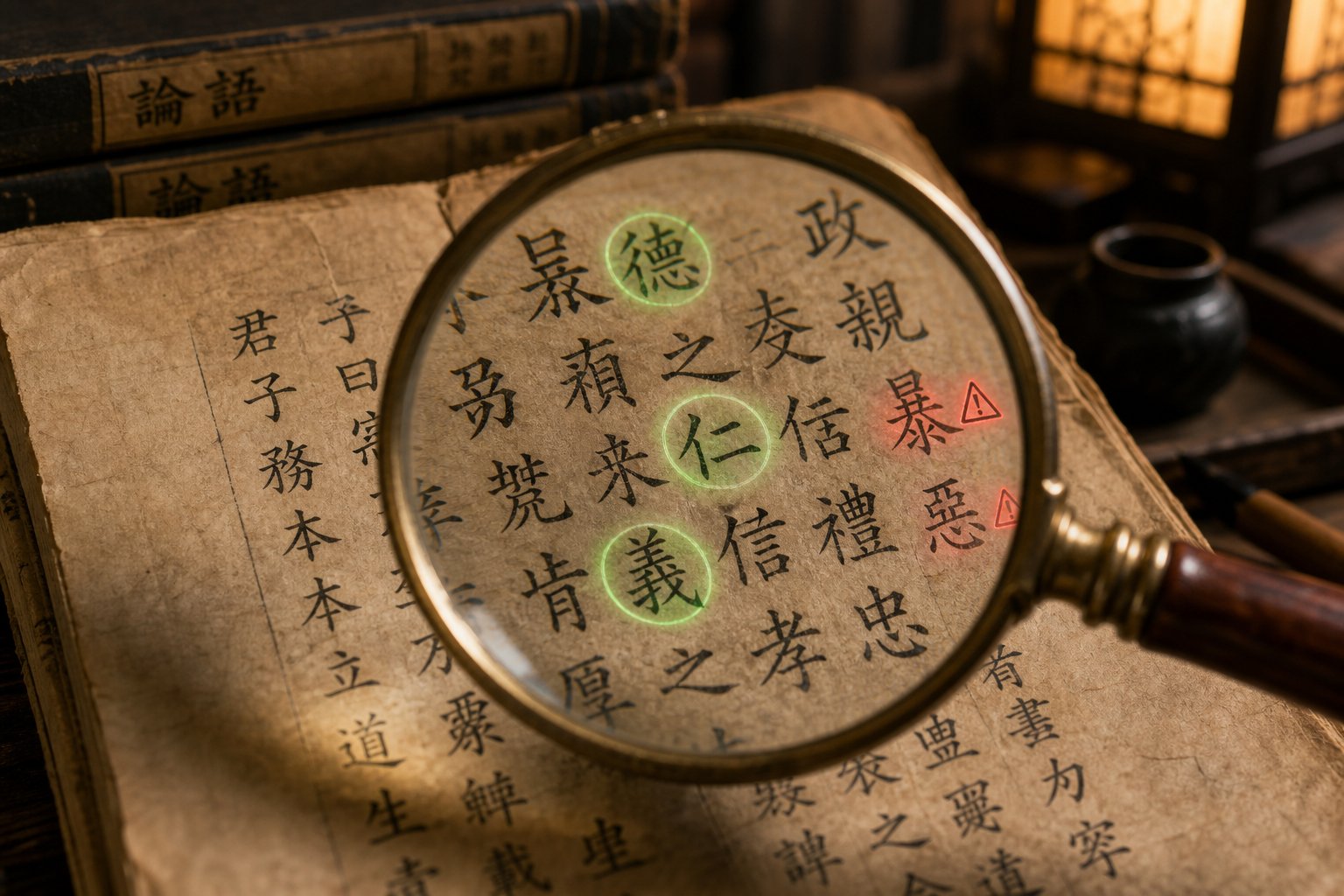
A name can follow every structural rule perfectly — correct surname, balanced tones, proper length — and still fail because of what the characters actually communicate. Chinese name meaning operates on multiple layers simultaneously. There is the dictionary definition, the cultural connotation, the historical baggage, and the sounds that echo other words in the listener's mind. Skipping any of these layers risks creating a name that looks fine on paper but draws winces in conversation.
Checking Character Meaning Beyond the Dictionary
When you look up a character in a dictionary, you get its primary definitions. But the chinese name definition that matters in practice extends far beyond what a dictionary entry tells you. Characters accumulate associations over centuries of literary, historical, and colloquial use. A character might mean "autumn" in isolation, but in naming contexts it can evoke decline or endings because of its poetic associations with fading and loss.
Consider the character 芳 (fang, fragrant). Its dictionary meaning is perfectly positive. Yet in contemporary China, it has become so strongly associated with an older generation of women's names that using it today can feel dated — like naming an American baby "Mildred." The name in chinese meaning shifts with generational trends even when the character itself stays the same.
Understanding the meaning of chinese last names also matters here. Some surname-given name combinations create unintended readings. The surname 吴 (Wu) is extremely common, but because it sounds identical to 无 (wu, meaning "without" or "lacking"), pairing it with certain given names produces unfortunate phrases. 吴德 (Wu De) technically combines a fine surname with a character meaning "virtue" — but spoken aloud, it sounds like 无德 ("without virtue").
The Homophone Trap and How to Avoid It
Mandarin's limited syllable inventory means homophones are everywhere. Every name you assemble from pinyin sounds identical to dozens of other character combinations. The homophone trap catches people who evaluate their characters in isolation without reading the full name aloud and considering what else it could sound like.
Imagine choosing the name 邹诗 (Zou Shi). The characters mean "a surname + poetry" — elegant on paper. But spoken quickly, it sounds uncomfortably close to 走失 (zou shi, "to go missing"). Anyone researching zou meaning chinese name options needs to test the full name against common words and phrases that share those sounds. The character 邹 itself is a legitimate surname, but its phonetic neighborhood demands extra caution with given name pairings.
Common homophone pitfalls include names that sound like:
- Negative adjectives (ugly, stupid, lazy)
- Bodily functions or embarrassing actions
- Death-related words — 死 (si, death) shares its sound with 思 (si, thought), making any "si" syllable worth double-checking
- Animals with negative cultural connotations (pig, turtle, rat)
- Slang terms or internet memes that shift meaning over time
Cultural Associations That Affect Name Suitability
Beyond homophones, certain chinese symbols and meanings carry weight that only cultural familiarity reveals. Characters associated with historical villains, tragic literary figures, or politically sensitive periods can taint an otherwise beautiful name. A character that what does a chinese name mean to one generation may signal something entirely different to another.
To evaluate your candidate characters thoroughly, run them through these criteria:
- Primary character meaning — Does the dictionary definition convey something positive, aspirational, or at minimum neutral?
- Stroke count balance — Do the characters in the full name look visually proportionate when written together, avoiding jarring complexity mismatches?
- Homophone check — When you read the full name aloud at natural speed, does it sound like any unfortunate word, phrase, or slang term?
- Cultural and historical associations — Is the character linked to any infamous figures, tragic events, or outdated naming trends that could create awkwardness?
- Ease of writing and recognition — Can an average literate adult write and read the character without hesitation?
The final safeguard is human verification. No amount of dictionary research replaces asking a native Mandarin speaker — ideally more than one, from different age groups and regions — to react to the name. Ask them to say it aloud quickly, tell you what comes to mind, and flag anything that feels off. Native speakers catch associations that no lookup tool surfaces, because they live inside the language's full web of sound and meaning every day.
With your characters vetted for meaning, homophones, and cultural fit, the remaining step is seeing the entire process in action — from a raw pinyin sound all the way through to a finished, usable name.
Worked Examples: From Pinyin Sound to Final Name
Theory only takes you so far. The real test of any naming method is whether it produces a name you would actually use — one that sounds natural, carries meaning, and passes the scrutiny of native speakers. Below are two complete walkthroughs showing every decision point, from raw pinyin input to a finished name ready to write on a business card or introduce yourself with.
Example One: From an English Name Sound to a Chinese Name
Imagine someone named "Kayla" wants to convert to a chinese name that echoes her English name while functioning as a culturally authentic Chinese name. She is not looking for a mechanical transliteration like 凯拉 (kai la) — she wants something a native speaker would recognize as a real name.
Step 1: Break the English name into usable pinyin syllables.
"Kayla" splits roughly into two sounds: "kai" and "la." In Mandarin pinyin, "kai" exists as a valid syllable. "La" also exists but offers limited character options for names. A closer match might use "lan" or "li" for the second syllable, since Mandarin does not have a direct equivalent for the English "la" sound in naming contexts.
Step 2: Identify a surname.
Kayla needs a surname first. She likes the sound "kai" — but does it map to a real surname? Checking the surname registry: 凯 is not a standard surname. However, she could use a common surname that pairs well phonetically. She chooses 林 (Lin, 2nd tone) because it is a top-20 surname and flows smoothly before a "kai" sound.
Step 3: List candidate characters for the given name.
With surname 林 locked in, she explores characters for "kai" and a second syllable. Here are her options:
| Pinyin | Character | Meaning | Keep or Eliminate? | Reasoning |
|---|---|---|---|---|
| kai (3rd tone) | 凯 | Triumphant, victorious | Keep | Strong positive meaning, commonly used in names |
| kai (1st tone) | 开 | Open, start | Eliminate | Too generic, rarely used as a given name character |
| lan (2nd tone) | 兰 | Orchid | Keep | Classic feminine character, elegant pairing |
| lan (2nd tone) | 蓝 | Blue | Eliminate | Color characters feel incomplete alone in names |
| la (1st tone) | 拉 | Pull, drag | Eliminate | No positive naming association, sounds transliterated |
| li (4th tone) | 丽 | Beautiful, elegant | Keep (alternative) | Strong feminine character, natural name ending |
Step 4: Assemble and test.
Two strong candidates emerge: 林凯兰 (Lin Kailan) and 林凯丽 (Lin Kaili). Testing tonal flow: 林 (2nd) + 凯 (3rd) + 兰 (2nd) gives a rising-dipping-rising pattern — varied and pleasant. 林 (2nd) + 凯 (3rd) + 丽 (4th) moves rising-dipping-falling — also smooth, with a decisive ending.
Step 5: Homophone and cultural check.
"Lin Kailan" spoken quickly does not echo any common negative phrase. "Kailan" does sound like 芥兰 (Chinese broccoli) in Cantonese contexts, which could draw jokes in southern China. "Lin Kaili" has no problematic homophones and reads naturally. Final choice: 林凯丽 (Lin Kaili) — triumphant and beautiful.
Kayla can now introduce herself confidently. When someone asks how to say my name is chinese, she has a real answer: "我叫林凯丽" (Wo jiao Lin Kaili).
Example Two: Starting with a Preferred Pinyin Syllable
A different scenario: a Mandarin learner loves the sound "yu" and wants to build my chinese name around it. He has no English name to match — he simply finds the syllable appealing and wants to explore what it unlocks.
Step 1: Check if "yu" works as a surname.
Yes. 余 (Yu, 2nd tone) is a legitimate surname ranking around 40th in frequency. 于 (Yu, 2nd tone) ranks even higher. He selects 余 because he likes its meaning ("surplus, abundance").
Step 2: Explore given name characters using "yu" or complementary sounds.
He wants the "yu" sound to appear in his given name as well, creating a subtle echo with the surname. But repeating the exact same syllable would sound odd, so he looks for a second character that contrasts:
| Pinyin | Character | Meaning | Keep or Eliminate? | Reasoning |
|---|---|---|---|---|
| yu (3rd tone) | 宇 | Universe, space | Keep | Grand meaning, popular in modern male names |
| yu (4th tone) | 玉 | Jade | Eliminate | Strongly feminine association |
| yu (4th tone) | 煜 | Radiant, shining | Keep | Distinctive but recognizable, strong meaning |
| ze (2nd tone) | 泽 | Marsh, grace, luster | Keep | Popular complementary character, flows well after "yu" |
| heng (2nd tone) | 恒 | Eternal, persevering | Keep (alternative) | Strong meaning, good tonal contrast |
| yu (2nd tone) | 鱼 | Fish | Eliminate | Sounds identical to surname, creates "Yu Yu" repetition |
Step 3: Assemble candidates.
Top options: 余宇泽 (Yu Yuze) and 余煜恒 (Yu Yuheng). Testing tonal flow for the first: 余 (2nd) + 宇 (3rd) + 泽 (2nd) — rising, dipping, rising. Acceptable but slightly repetitive in its rising pattern. The second: 余 (2nd) + 煜 (4th) + 恒 (2nd) — rising, falling, rising. More dynamic, with a satisfying drop in the middle.
Step 4: Final verification.
"Yu Yuheng" spoken aloud does not trigger negative homophones. The characters 煜恒 together suggest "radiant and enduring" — a coherent, aspirational meaning. The name follows the standard three-character structure, uses a real surname, and contains characters that appear in the commonly used naming character sets. He can now write name in mandarin with confidence: 余煜恒.
How to Document Your Own Selection Process
Both examples above follow the same underlying method. When you sit down to convert name to chinese characters, documenting each step prevents backtracking and helps you explain your choice to others — especially native speakers who might offer feedback.
Keep a simple record structured like this:
- Starting sound: Write down the pinyin syllable(s) you want to work with and why.
- Surname decision: Record which surname character you selected and confirm it is a recognized family name.
- Character candidates: List every character you considered for the given name, with meanings and tones.
- Elimination notes: For each rejected character, write one sentence explaining why — negative meaning, homophone risk, gender mismatch, or impractical stroke count.
- Assembled name: Write the full name in characters with pinyin and tone marks.
- Tonal flow check: Note the tone sequence and confirm it avoids monotony or awkward collisions.
- Native speaker feedback: Record reactions from at least one native speaker, noting any associations or concerns they raised.
This documentation serves a practical purpose beyond organization. If you later want to explain my name in mandarin to Chinese friends or colleagues, you can share the reasoning behind your choice. A name with a story — "I chose 煜 because it means radiant, and 恒 because I value persistence" — earns respect in Chinese culture, where naming is treated as a deliberate, meaningful act rather than a casual decision.
The process works whether you are matching an English name's sound or building something entirely new from a pinyin syllable you love. What matters is moving systematically through each layer: sound, then characters, then meaning, then structure, then verification. Skip a layer and you risk a name that fails in ways you will not discover until someone reacts to it in person.
With a clear method and documented reasoning in hand, the final piece is knowing which tools and resources can accelerate your character research without replacing the cultural judgment that only human understanding provides.
Tools and Methods for Pinyin-Based Name Research
A solid method gives you the framework. Tools give you speed. The character-by-character research described in the previous examples can take hours when done manually — flipping through dictionaries, cross-referencing meanings, checking frequency data. The right resources compress that timeline without sacrificing depth. But choosing the wrong tool, or relying on one too heavily, produces names that look algorithmically generated rather than culturally grounded.
What to Look for in a Pinyin Lookup Tool
Not all pinyin-to-character resources are built for naming. A general dictionary helps you find word definitions, but it will not tell you whether a character is appropriate for a name, how frequently it appears in naming contexts, or whether it carries gendered associations. When evaluating any chinese name pronunciation tool or character database, look for these features:
- Tone-specific filtering — The tool should let you search by pinyin with tone marks, not just bare syllables. Without this, you are sifting through every character that shares a sound regardless of tone.
- Meaning annotations in context — Dictionary definitions alone are insufficient. The best resources note whether a character is commonly used in names, carries negative connotations, or has shifted meaning in modern usage.
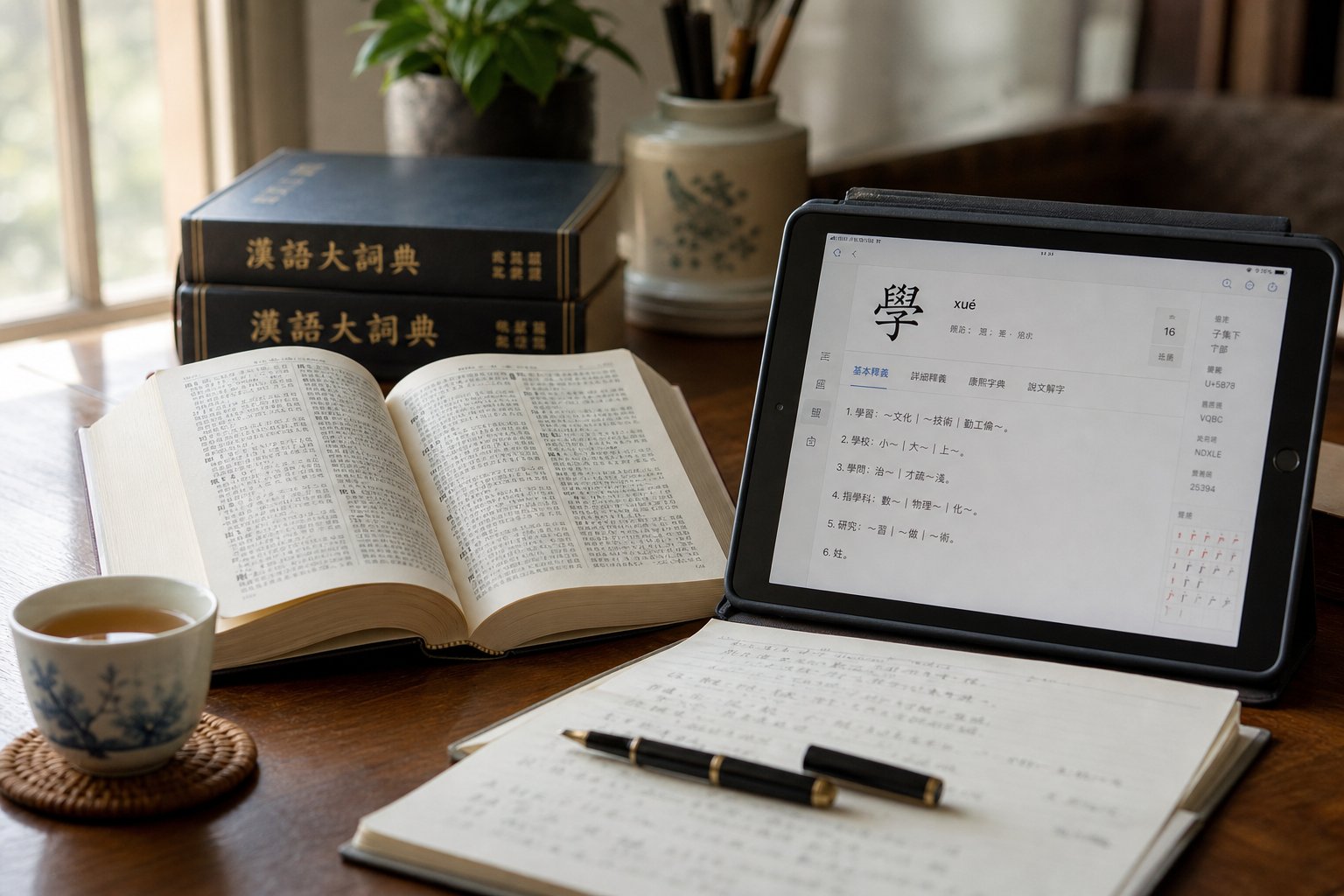
- Usage frequency data — Knowing that a character ranks in the top 2,000 versus the bottom 10,000 tells you whether it will function smoothly in daily life. Resources like Handian (汉典网) provide this kind of depth, showing pronunciation, etymology, and usage scope for each character.
- Name-specific filtering — Some databases let you filter results to show only characters that appear in real Chinese names at meaningful frequency. This eliminates characters that are technically valid but never actually used in naming practice.
- Stroke order and visual preview — Seeing how a character looks when written helps you evaluate visual balance across the full name. A character that seems elegant in isolation might look cramped or lopsided next to your surname character.
Dictionary Methods vs Generator Approaches
Two broad categories of resources exist, and they serve different purposes in the naming process.
Dictionary and database methods put you in control. You input a pinyin syllable, browse the resulting characters, and make every selection decision yourself. Online character dictionaries, radical-indexed references, and pinyin lookup tables fall into this category. They require more effort but produce names that reflect genuine personal choice. Tools like Meaningfully Learning Chinese Characters go further by showing etymological connections between characters, helping you discover related options you might not have considered.
Generator approaches automate part of the process. A typical chinese name generator or mandarin name generator asks for your preferences — gender, desired meaning, preferred sounds — and outputs complete name suggestions. A chinese name gen tool can be useful for brainstorming when you feel stuck, surfacing combinations you would not have assembled on your own. A chinese name converter works similarly but starts from an existing foreign name and proposes Chinese equivalents.
The tradeoff is clear. Generators offer convenience at the cost of understanding. They cannot explain why they chose a particular character, whether it carries subtle cultural baggage, or how it will land with speakers from different regions. Dictionary methods demand more from you but build the comprehension that lets you evaluate any suggestion — whether it comes from a tool or a native speaker.
The most effective workflow combines both: use a generator to produce initial candidates, then apply dictionary methods to verify meaning, check homophones, and confirm cultural appropriateness. Think of mandarin tools get a chinese name as a starting point for exploration, not a final authority.
Combining Tools with Cultural Understanding
Here is the honest reality: no tool replaces the cultural literacy that makes a Chinese name work. Software cannot hear the subtle joke in a homophone. It cannot feel whether a character sounds dated or fresh to a twenty-year-old in Shanghai versus a sixty-year-old in Chengdu. It cannot weigh the family associations that make one character feel warm and another feel cold.
What tools do well is narrow the field. They take you from "I like the sound jing" to a manageable list of fifteen characters instead of an overwhelming list of eighty. They show you stroke counts, frequency rankings, and basic definitions at a glance. They let you compare options side by side without memorizing everything.
What tools cannot do is make the final call. That responsibility belongs to you — informed by the methodology this article has walked through: tone identification, surname verification, character exploration, structural assembly, meaning evaluation, and homophone testing. Each layer builds on the last, and skipping any of them leaves gaps that tools alone cannot fill.
The best Chinese names emerge where sound preference meets cultural knowledge meets personal meaning. You start with a pinyin syllable you love. You discover which characters live inside that sound. You evaluate those characters against real cultural standards. And you assemble them into a name that carries weight — not because an algorithm suggested it, but because you understand exactly why each character belongs there.
Frequently Asked Questions About Finding Chinese Names from Pinyin
1. Can the same pinyin spelling represent different Chinese names?
Yes. Mandarin compresses thousands of characters into only 375 unique pinyin syllables, so a single romanized spelling like 'li' or 'wei' can correspond to dozens of characters with completely different meanings. Without knowing the tone and seeing the actual character, you cannot determine which name is intended. For example, 'li' in the third tone gives you the surname Li (plum tree), while 'li' in the fourth tone offers characters meaning strength or benefit. Tone marks and character context are essential to distinguish one name from another.
2. How do I choose between transliterating my English name and creating an authentic Chinese name?
Transliteration approximates your English name's sound using a fixed set of Chinese characters chosen primarily for pronunciation, resulting in names that native speakers immediately recognize as foreign. Authentic name creation uses your preferred pinyin sounds as a starting point but prioritizes meaning, cultural resonance, and standard name structure. Transliteration suits short-term or formal contexts like business trips and legal documents. Authentic creation works better for long-term use, building relationships in Chinese-speaking environments, or giving a child a culturally grounded name.
3. Why do the same Chinese surnames appear spelled differently in different countries?
Different romanization systems produce different spellings for identical characters. Mainland China uses Hanyu Pinyin, while Taiwan historically uses Wade-Giles. The surname Zhang in pinyin becomes Chang in Wade-Giles, Xie becomes Hsieh, and Cai becomes Tsai. Some individuals also use dialect-based romanizations from Hokkien or Cantonese. When identifying a surname from a romanized spelling, consider the person's geographic origin and which romanization system was likely used for their documents.
4. What makes a Chinese character unsuitable for use in a name?
Several factors can disqualify a character: negative dictionary meanings, unfortunate homophones when combined with the surname, strong associations with historical villains or tragic figures, extremely high stroke counts that cause practical problems on forms and digital systems, and characters so rare they fall outside standard encoding sets like GB2312. A character might also be technically positive but culturally dated, making it feel out of place for a modern name. Testing the full name aloud and getting feedback from native speakers of different ages catches issues that dictionary research alone misses.
5. Do I need to follow tonal flow rules when building a Chinese name from pinyin?
Tonal flow is not a strict grammatical rule, but it significantly affects how natural and pleasant a name sounds when spoken. Names where all characters share the same tone sound flat and monotonous, while names with varied tones create a musical quality. Consecutive third tones are particularly problematic because they force pronunciation changes in natural speech. A common guideline is to ensure the tone sequence across all characters in the name moves through at least two different tones, creating contrast and rhythm that carries well in conversation.