What It Means When Fire Is Missing in Your Bazi Chart
You ran a Bazi chart for your child, and the result came back showing no fire element. Naturally, the next step feels obvious: pick a name loaded with fire characters. But before you start browsing character lists, there is a critical question most parents skip. Is fire actually missing, or are you reading the chart wrong?
What Does Missing Fire Actually Mean in Bazi
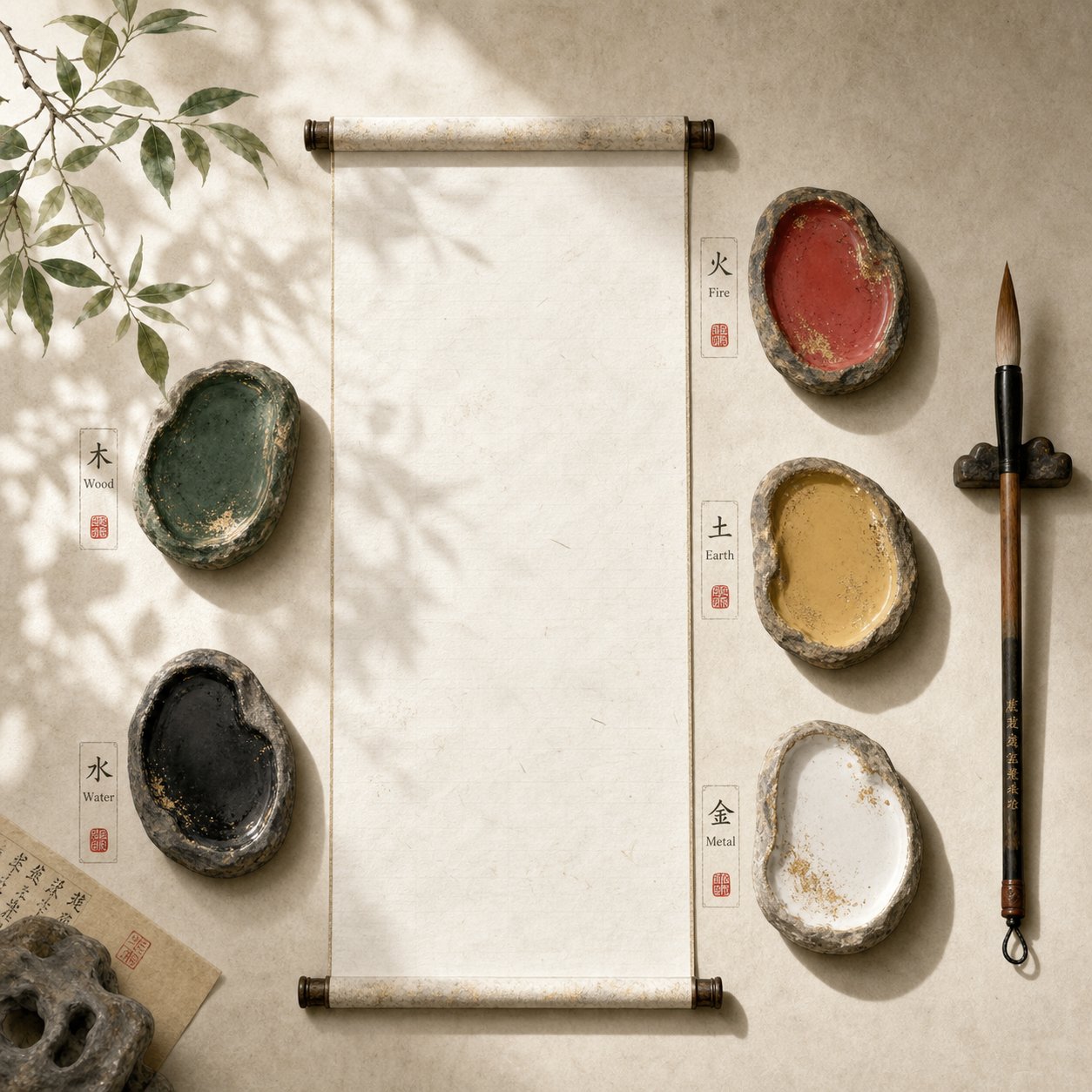
A Bazi chart maps eight characters across four pillars, each built from a Heavenly Stem and an Earthly Branch. These eight characters distribute the Five Elements — Wood, Fire, Earth, Metal, and Water — in a pattern unique to the person. When fire is absent from all eight positions, the chart lacks the energy associated with warmth, passion, visibility, and transformation. In naming tradition, this gap signals that fire-related characters may help restore balance.
But "missing" does not always mean "completely gone." Fire can hide inside certain Earthly Branches as a hidden stem, operating quietly beneath the surface. A chart that looks fire-free at first glance might still carry traces of it. This distinction shapes everything about how you approach name selection.
Why Your Birth Year Alone Is Not Enough
Here is where most online guides get it wrong. They tell you to look up your birth year animal, identify its element, and decide what is missing from there. That method captures one character out of eight. As BaZi-Web notes, the birth year animal generates only one of the eight characters in a full chart — it is by no means the whole picture.
A proper Bazi reading requires all four pillars — year, month, day, and hour. Determining a missing fire element from the birth year alone is like diagnosing a patient by checking only their temperature.
The Four Pillars system converts your birth year, month, day, and hour into elemental codes. The Day Pillar alone reveals your core identity as a Day Master. The Month Pillar shapes career and personality. Skipping any of these means you are working with incomplete data, and incomplete data leads to naming choices that miss the mark entirely.
This article sits between two extremes: the oversimplified character lists that ignore chart context, and the overly cautious warnings that leave parents with no actionable path forward. The goal here is practical clarity — understanding how to know if fire is missing in Bazi accurately, and what that means for choosing a name that genuinely supports your child's elemental balance.
How to Read Your Bazi Chart and Spot Missing Fire
So you have all four pillars in front of you. Eight characters staring back. The question now is straightforward: where exactly should you look for fire, and how do you confirm it is genuinely absent? The process is more layered than scanning for obvious fire stems, because the Earthly Branches hold secrets that surface-level reading will miss entirely.
Reading the Four Pillars Step by Step
Each of your four pillars — year, month, day, and hour — contains two characters: a Heavenly Stem on top and an Earthly Branch on the bottom. That gives you eight visible characters total. To perform a proper bazi four pillars fire element identification, follow this sequence:
- Locate your four Heavenly Stems (the top row). Check whether Bing (丙, Yang Fire) or Ding (丁, Yin Fire) appears in any position.
- Locate your four Earthly Branches (the bottom row). Check whether Si (巳, Snake) or Wu (午, Horse) appears, as these are the two fire-dominant branches.
- If neither fire stem nor fire branch shows up in the visible eight characters, check the hidden stems inside each Earthly Branch using a reference table.
- Tally the results. Note whether fire appears as a main element, a hidden stem, or not at all.
This is how to read a bazi chart for missing elements with accuracy. Most people stop at step two and assume fire is gone. Step three is where the real picture emerges.
Where Fire Hides Inside Earthly Branches
Every Earthly Branch contains between one and three hidden stems — internal elemental forces that do not show on the surface. Fire hides in more branches than you might expect. According to the hidden stems framework used in classical Bazi, here is where hidden fire in earthly branches bazi charts actually lives:
- Yin (寅, Tiger): Contains Bing Fire (丙) as its Central Qi, contributing roughly 30% of the branch's energy.
- Si (巳, Snake): Contains Bing Fire (丙) as its Principal Qi at 60% — this is a primary fire branch.
- Wu (午, Horse): Contains Ding Fire (丁) as its Principal Qi at 70% — the strongest fire branch.
- Wei (未, Goat): Contains Ding Fire (丁) as Central Qi, carrying the residual warmth of late summer.
- Xu (戌, Dog): Contains Ding Fire (丁) as Residual Qi at roughly 10% — a trace amount, but still present.
Imagine your chart shows no Bing or Ding in the top row and no Si or Wu in the bottom row. It looks fire-free. But if your Day Branch is Yin (Tiger), you still carry Bing Fire internally. That hidden fire is not as powerful as a visible stem, but it is not nothing either. It changes your naming strategy from "add maximum fire" to "gently reinforce what already exists beneath the surface."
Which Pillar Position Matters Most for Naming
Here is the piece most guides leave out entirely. Not all pillar positions carry equal weight when deciding which pillar matters most for naming. The Day Pillar represents your core self — its Heavenly Stem is your Day Master, and its Earthly Branch reflects your internal identity. If fire is missing from the Day Pillar specifically, the absence hits closer to your fundamental nature.
The Month Pillar, however, governs the seasonal energy surrounding your birth. It determines whether your Day Master is strong or weak. A Day Master born in a fire-dominant month (Si or Wu month) already receives environmental fire support, even if no fire character appears elsewhere in the chart.
For naming purposes, prioritize this hierarchy:
- Fire absent from the Day Pillar and Month Pillar — strongest case for fire-element characters in the name.
- Fire absent from visible stems but present as a hidden stem in the Day or Month Branch — moderate case, gentler fire support needed.
- Fire absent from the chart but born during summer months — weakest case, since seasonal context already provides fire energy externally.
This layered reading is what separates a thoughtful naming decision from a reflexive one. The difference between fire being completely absent versus merely hidden or seasonally supported determines how aggressively you should compensate through character selection — a distinction the next section breaks down in detail.
Missing Fire vs Weak Fire and Why the Difference Matters
That layered hierarchy raises an important follow-up question. You have confirmed fire is either absent or barely present in the chart. But "barely present" and "completely gone" are not the same condition, and they demand very different naming responses. Treating them identically is one of the most common reasons fire element names backfire instead of bringing balance.
Completely Absent Fire vs Weak Fire
Think of it this way. A chart with zero fire — no Bing or Ding in the stems, no Si or Wu in the branches, and no hidden fire stems lurking inside any Earthly Branch — is like a room with no heat source at all. The absent fire element naming strategy here calls for direct, visible fire energy in the name. You are introducing something the chart has never had.
A chart with weak fire is a different situation entirely. Maybe Ding Fire appears as a hidden stem inside the Wei (Goat) branch, or a single Bing Fire sits in the Hour Pillar where its influence is limited. Fire exists, but it is outnumbered, unsupported, or positioned where it cannot exert much force. The missing fire vs weak fire bazi difference here is crucial: you are not introducing a new element. You are strengthening one that already has a foothold.
How weak fire affects chinese name choice comes down to intensity. A completely absent element benefits from bold, unmistakable fire characters — think characters with the fire radical front and center, carrying strong yang energy. A weak fire element benefits from gentler reinforcement: characters that nurture fire indirectly through Wood energy, or softer yin fire characters that harmonize with what little fire already exists rather than overwhelming the chart's existing structure.
| Scenario | Chart Characteristics | Naming Approach | Character Strength Needed |
|---|---|---|---|
| Completely Absent Fire | No fire in any Heavenly Stem, Earthly Branch, or hidden stem across all four pillars | Introduce fire directly through name characters with strong fire radicals or meanings | Strong — Yang Fire characters (Bing-type energy), bold fire or sun radicals |
| Weak Fire (Hidden or Isolated) | Fire appears as a hidden stem, sits in a single minor position, or is controlled by dominant Water/Metal | Support existing fire gently; consider Wood-element characters that generate fire indirectly | Moderate — Yin Fire characters (Ding-type energy), wood radical support, or subtle warmth-related meanings |
The table above is not a rigid formula. It is a starting framework. A chart with weak fire that also has strong Water elements controlling it might actually need bolder fire support than a chart with absent fire but no opposing elements. Context always refines the approach.
How Seasonal Birth Context Changes Everything
Here is where many parents get tripped up. Your child's chart might show no fire characters at all, yet the bazi seasonal fire element strength could already be working in their favor without appearing in the eight characters directly.
Every season carries a dominant elemental energy. As BaZi-Web's seasonal analysis explains, summer is ruled by the Fire element, meaning anyone born during the Si (Snake) or Wu (Horse) months — roughly May through July — is born into an environment saturated with fire qi. This environmental fire does not show up as a character in the chart, but it still influences the Day Master's strength and the overall elemental climate.
What does this mean practically? A summer-born child whose chart lacks visible fire characters is not as fire-deficient as a winter-born child with the same chart structure. Winter is Water's season, which actively suppresses fire energy. The seasonal backdrop either cushions or intensifies the absence.
Consider these scenarios:
- Summer birth, no fire in chart: Environmental fire provides passive support. Naming can use moderate fire characters or Wood-element characters rather than maximum-strength fire.
- Spring birth, no fire in chart: Wood energy dominates, which naturally generates fire through the productive cycle. A moderate approach still works, since the seasonal Wood feeds into fire.
- Winter birth, no fire in chart: Water dominates and actively controls fire. This is the strongest case for direct, powerful fire characters in the name — the chart and the season both work against fire.
- Autumn birth, no fire in chart: Metal dominates. Metal does not directly oppose fire, but it does not support it either. A moderately strong fire approach is appropriate.
Seasonal context does not override chart analysis — it refines it. Two children born on the same day but at different hours might have identical visible elements yet different seasonal relationships depending on their Month Pillar. The season tells you how much external support fire already receives, which directly calibrates how much compensating work the name needs to do.
This interplay between chart content and seasonal energy is exactly why a one-size-fits-all character list never works. The right fire character for one child's name might be too aggressive or too subtle for another, even when both charts technically "lack fire." The real question becomes: which specific fire characters carry the right weight for your situation? And that depends on understanding the elemental building blocks themselves — the Heavenly Stems and Earthly Branches that make fire what it is.
Understanding Fire Through Heavenly Stems and Earthly Branches
Fire in Bazi is not a single, uniform force. It comes in distinct forms, each with its own personality, intensity, and implications for naming. When you understand the specific heavenly stems and earthly branches that carry fire energy, you stop seeing "fire" as a generic checkbox and start recognizing it as a spectrum — one that directly shapes which characters belong in a name and which ones do not.
Bing and Ding as Yang Fire and Yin Fire
The Ten Heavenly Stems double each of the Five Elements into a yang version and a yin version. For fire, that gives us two distinct stems:
- Bing (丙) — Yang Fire: This is the sun. Bing represents illumination on a grand scale — consistent, radiant, and completely independent. It warms everything around it without discrimination. In classical imagery, Bing is described as sunlight that gives without keeping score, rises and sets with unwavering routine, and remains unaffected by what happens around it. Think of Bing as fire that does not need fuel.
- Ding (丁) — Yin Fire: This is candlelight, a hearth, a bonfire. Ding is the fire we use when things are not readily visible — intimate, warm, and dependent on something to sustain it. A candle needs a wick. A fireplace needs wood. Ding fire is described as clinging fire — it draws people in, thrives on connection, and follows wherever it is fed. Think of Ding as fire that needs a relationship to burn.
Why does this yang fire vs yin fire distinction matter for naming? Because a chart missing all fire is not just missing "heat." It is missing a specific type of energy. A child whose chart lacks warmth and visibility might benefit from Bing-type characters — bold, radiant, sun-associated. A child whose chart lacks connection and gentle warmth might respond better to Ding-type characters — softer, more intimate, nurturing. The bing ding fire heavenly stems in bazi are not interchangeable, and neither are the name characters that echo them.
Si and Wu as Fire Branches in Your Chart
While Heavenly Stems are the visible expression above ground, Earthly Branches are the structural foundation beneath. Two branches carry fire as their dominant element:
- Si (巳, Snake) — Yin Fire Branch: The stage where heat is rising but still carries internal complexity. Si represents emerging pressure and upward movement. Its principal hidden stem is Bing Fire (丙) at roughly 60% of its internal energy, but it also contains traces of Wu Earth and Geng Metal. Si is fire that has not yet reached full intensity — it is building.
- Wu (午, Horse) — Yang Fire Branch: The strongest expression of fire among all twelve branches. Wu represents peak activation, full visibility, and direct expression. Its principal hidden stem is Ding Fire (丁) at about 70%, with Ji Earth as a secondary component. Wu is fire at its zenith — fully arrived and radiating outward.
Notice something counterintuitive here. Si is classified as a Yin Fire branch, yet its main hidden stem is Bing (Yang Fire). Wu is classified as a Yang Fire branch, yet its main hidden stem is Ding (Yin Fire). This crossover is part of what makes the Earthly Branch system more complex than it first appears. The fire earthly branches si wu explained in full context reveal layers that simple element charts flatten out.
For chart reading purposes, if Si or Wu appears anywhere in your four pillars, fire is structurally present in your chart — even if no Bing or Ding shows up in the Heavenly Stems row. The branches are the soil and roots; the stems are the trunk and leaves. A tree can have strong roots without visible foliage.
How Stems and Branches Inform Name Choices
Here is where the heavenly stems earthly branches fire element knowledge becomes practical for naming decisions. Each fire component carries a different energetic signature, and matching that signature to name characters creates coherence rather than conflict.
- Chart missing Bing (Yang Fire) energy: Consider name characters associated with sunlight, brightness, and radiance. Characters with the sun radical (日) or meanings tied to dawn, brilliance, and illumination echo Bing's nature.
- Chart missing Ding (Yin Fire) energy: Consider name characters associated with warmth, glow, and gentle light. Characters with the fire radical (火) or four-dot radical (灬) that suggest candles, torches, or hearth-like warmth align with Ding's quality.
- Chart missing fire branches (Si or Wu): The absence is structural and foundational. Name characters here should carry fire energy that feels grounded and stable rather than fleeting — characters with meanings tied to lasting warmth or enduring light rather than sparks or flashes.
This is not about rigid rules. It is about resonance. A name built on Yang Fire characters for a chart that specifically lacks Yin Fire warmth might technically "add fire" while missing the point entirely. The type of fire matters as much as its presence.
Understanding these building blocks also protects you from a common trap: assuming that any fire-related character will do the job. Fire interacts with every other element in the chart through generating and overcoming relationships. A fire character that looks perfect in isolation might clash with existing elements or create unintended imbalances — dynamics governed by the Five Elements cycle that determines whether your chosen character supports the chart or works against it.

The Five Elements Cycle and Smarter Naming Strategies
Those generating and overcoming relationships are not abstract philosophy. They are the operating logic behind every effective five elements cycle fire naming strategy. The Five Elements exist in constant interaction — each one feeding another, each one restraining another. When you understand these dynamics, naming stops being a guessing game of "pick a fire character" and becomes a deliberate act of elemental engineering.
Two cycles govern how the elements relate. The Generating Cycle (Sheng) describes how each element nourishes the next in a continuous loop: Wood feeds Fire, Fire creates Earth, Earth produces Metal, Metal generates Water, Water nourishes Wood. The Controlling Cycle (Ke) describes how each element restrains another to prevent excess: Water quenches Fire, Fire melts Metal, Metal cuts Wood, Wood parts Earth, Earth dams Water.
For sheng ke cycle bazi name selection, the relationships that matter most when fire is missing are these:
| Relationship | Elements Involved | What It Means for Naming |
|---|---|---|
| What generates Fire | Wood feeds Fire | Wood-radical characters can indirectly strengthen fire by providing fuel |
| What Fire generates | Fire creates Earth | Adding fire may also boost Earth energy — check if Earth is already excessive |
| What overcomes Fire | Water quenches Fire | Water-radical characters in the name can suppress the very fire you are trying to build |
| What Fire overcomes | Fire melts Metal | Strong fire characters may weaken Metal energy — problematic if Metal is already scarce |
This table reveals why simply stuffing fire characters into a name without considering the full chart can create new imbalances while solving the original one.
Wood Generates Fire and When to Use This Approach
Here is where the Generating Cycle becomes a practical naming tool. As the Wu Xing framework explains, Wood provides the fuel for Fire to burn and expand. In naming terms, this means wood generates fire chinese name characters — those carrying the Wood radical (木) or Grass radical (艹) — can serve as indirect fire support.
When is this indirect approach better than adding fire directly? Consider these situations:
- The chart has weak fire, not absent fire. A small flame does not need more flame thrown at it. It needs fuel. Wood characters feed the existing fire without overwhelming the chart's balance.
- The chart already has strong Earth. Adding fire directly would generate even more Earth through the productive cycle, potentially creating excess. Wood characters bypass this problem by supporting fire without amplifying Earth.
- The chart has moderate Water. Water controls fire, so a direct fire character might get "quenched" by existing Water energy. But Wood actually absorbs Water (Water nourishes Wood), so a Wood character simultaneously drains the opposing force and feeds fire. Two corrections in one character.
Characters like Lin (林, forest), Rong (荣, flourishing), or Mao (茂, lush growth) carry strong Wood energy. They do not scream "fire" on the surface, but within the elemental logic of the chart, they function as fire's support system — quietly generating the warmth the chart needs.
The Overcoming Cycle and Characters to Avoid
The Controlling Cycle carries a direct warning for anyone selecting fire element names. Water extinguishes Fire — this is the fundamental water overcomes fire name conflict that catches parents off guard.
Imagine spending time selecting a beautiful fire-radical character for your child's given name, only to pair it with a water-radical character in the second position because it "sounds nice." Phonetically, the name might flow. Elementally, you have built a fire and poured water on it in the same breath. The controlling cycle does not care about aesthetics — it operates on elemental logic.
Characters to watch for include those carrying the Water radical (氵), the Rain radical (雨), or meanings tied to rivers, oceans, and rain. Common examples:
- Ze (泽, marsh) — strong Water energy
- Han (涵, contain/encompass) — Water radical
- Run (润, moist/smooth) — Water radical
- Lin (霖, continuous rain) — Rain radical
These are perfectly fine characters in other contexts. But pairing them alongside fire characters in a name designed to compensate for missing fire creates internal contradiction. The name works against itself.
This does not mean you must avoid all Water energy in every case. If the chart has excessive Metal, a touch of Water can actually help — Water drains Metal and is then converted into Wood through the generating cycle, which eventually feeds Fire. But that level of multi-step elemental reasoning is where simple character lists fail and genuine chart understanding becomes essential.
The five elements cycle is not a decoration on top of naming. It is the structural logic underneath it. Every character you choose either generates, controls, or remains neutral toward the fire energy you are trying to build. Knowing which relationship your chosen character activates is the difference between a name that supports the chart and one that quietly undermines it — which brings us to the specific characters worth considering and how to evaluate them properly.
Best Chinese Characters for Fire Element Names
Evaluating characters properly means knowing what is available and what each option actually brings to the table. Not all fire element characters for baby names carry the same weight, tone, or cultural resonance. Some feel bold and traditional. Others read as modern and understated. The radical a character carries — its structural root — tells you both its elemental classification and its visual identity on paper.
Character choice matters more than you might think from a practical standpoint, too. CNN reports that almost 86% of China's population shares just 100 surnames, with over 100 million people carrying the Wang surname alone. When your family name is shared by millions, the given name carries the full burden of individuality. Selecting the best fire characters for chinese names is not just about elemental balance — it is about crafting a name that stands apart while doing its metaphysical work.
Below, you will find characters organized by their radical type. Each radical connects the character to fire energy in a slightly different way, giving you options across a range of intensity and style.
Characters with the Fire Radical 火
The fire radical (火) is the most direct signal of fire energy. Characters built on this radical carry unmistakable elemental weight — they announce fire openly. These are your strongest options when the chart shows completely absent fire and needs bold reinforcement.
| Character | Pinyin | Meaning | Radical Type | Naming Suitability Notes |
|---|---|---|---|---|
| 炎 | yan | Flame, blazing | 火 (fire) | Double fire structure gives maximum elemental intensity. Works well for boys' names. Strong Yang Fire energy. |
| 灿 | can | Brilliant, splendid | 火 (fire) | Carries brightness without aggression. Suits both traditional and modern naming styles. Moderate fire energy with positive connotation. |
| 炜 | wei | Glowing, radiant | 火 (fire) | Classic naming character with warmth and dignity. Common in male names but increasingly used for girls. Steady, enduring fire quality. |
| 烨 | ye | Brilliant, glorious | 火 (fire) | Suggests firelight illuminating darkness. Elegant and literary. Strong fire presence with refined aesthetic. |
| 焕 | huan | Shining, luminous | 火 (fire) | Implies renewal and radiance. Works across genders. Carries the sense of fire that transforms rather than destroys. |
These chinese characters with fire radical for names are the most transparent choices. Anyone familiar with Chinese writing will recognize the fire component immediately, which makes them ideal when you want the elemental intention to be visible rather than subtle.
Characters with the Four-Dot Radical 灬
Here is where many parents miss an opportunity. The four-dot radical (灬) at the bottom of a character is actually a variant form of fire — it evolved from the same pictographic root as 火 but appears in a different visual position. Four dot radical fire characters naming opens up options that carry fire energy without looking as obvious, giving you a more understated aesthetic.
| Character | Pinyin | Meaning | Radical Type | Naming Suitability Notes |
|---|---|---|---|---|
| 熙 | xi | Prosperous, bright | 灬 (four-dot fire) | Extremely popular in modern naming. Suggests warmth and flourishing. Elegant sound pairs well with most surnames. |
| 煦 | xu | Warm, genial | 灬 (four-dot fire) | Gentle warmth rather than blazing heat. Ideal for charts needing Yin Fire support. Soft, nurturing connotation. |
| 照 | zhao | To illuminate, to shine upon | 灬 (four-dot fire) | Implies light that guides others. Carries both fire energy and a sense of purpose. Works across genders. |
| 熠 | yi | Glittering, sparkling | 灬 (four-dot fire) | Suggests dynamic, lively fire energy. Less common in names, offering distinctiveness. Modern and fresh. |
| 然 | ran | So, thus (originally: to burn) | 灬 (four-dot fire) | Original meaning is "to ignite." Modern usage adds philosophical depth. Subtle fire energy with intellectual tone. |
The four-dot radical characters tend to feel more polished and contemporary. They carry genuine fire energy — the radical classification is clear — but their visual presentation reads as sophisticated rather than elemental. For parents who want fire support without an overtly traditional look, these are strong candidates.
Sun Radical 日 as an Alternative Fire Source
The sun radical (日) connects to fire through association rather than direct radical classification. The sun is the ultimate Yang Fire source in nature — it is Bing Fire made physical. Sun radical characters for bazi fire names work particularly well when the chart specifically lacks Yang Fire (Bing) energy, since they echo the sun's qualities of radiance, consistency, and warmth from above.
| Character | Pinyin | Meaning | Radical Type | Naming Suitability Notes |
|---|---|---|---|---|
| 晨 | chen | Morning, dawn | 日 (sun) | Suggests new beginnings and rising light. Universally positive. One of the most versatile fire-associated naming characters. |
| 晖 | hui | Sunlight, radiance | 日 (sun) | Direct solar energy in character form. Warm without being aggressive. Traditional naming choice with enduring appeal. |
| 旭 | xu | Rising sun | 日 (sun) | Carries upward momentum and optimism. Strong Yang Fire association. Popular in male names for its vigor. |
| 昕 | xin | Dawn, early morning light | 日 (sun) | Softer than 旭 but still solar. Increasingly popular for girls' names. Delicate fire energy with poetic quality. |
| 曜 | yao | Luminous, celestial body | 日 (sun) | Carries cosmic fire energy — stars and sun. Less common, offering strong individuality. Bold and distinctive. |
Sun radical characters occupy a middle ground. They are not classified under the fire radical in dictionary terms, but their elemental association with fire is recognized in Bazi naming practice. They work especially well as a second character in a two-character given name, providing fire support while the first character handles meaning or family significance.
A practical note on selection: do not choose a character solely because it appears on a fire element list. Every character carries tone, stroke count, and cultural associations beyond its radical. A character that provides perfect elemental support but sounds awkward with your surname, or carries an unintended meaning in your regional dialect, creates problems no amount of fire energy can fix. The elemental function is one layer — but it sits alongside several others that determine whether a name actually works in daily life. Those other layers are exactly where most naming mistakes happen.
Common Mistakes When Adding Fire to a Chinese Name
Those other layers are where good intentions go sideways. Parents identify a fire deficiency, find a list of fire-radical characters, and pick the one that "feels right" without checking whether it actually works as a name. The result? A name that satisfies the elemental checkbox but fails on every other dimension — or worse, creates a new imbalance while fixing the original one. Here are the mistakes adding fire element to a chinese name that trip people up most often.
The Zero-Sum Trap of Overloading Fire
When you discover fire is missing, the instinct is to compensate aggressively. Two fire-radical characters in the given name. Maybe a third fire-associated character if the surname allows it. More fire must mean better balance, right?
Not quite. As the BaZi Advisor framework explains, an excess of one element creates imbalances just as a deficiency does. Too much fire in a bazi name creates imbalance by overwhelming the other elements in the chart. Fire generates Earth — so overloading fire characters can inadvertently flood the chart with Earth energy. Fire also melts Metal, meaning excessive fire can weaken whatever Metal the chart does have. You solve one problem and create two new ones.
Balance is the goal, not maximum dosage. A single well-chosen fire character often does more than three stacked together, because it introduces warmth without destabilizing the existing elemental relationships.
Ignoring Character Meaning and Cultural Context
Elemental value is one dimension of a Chinese name. MingShu's naming framework identifies four simultaneous dimensions every name must satisfy: Sound, Form, Meaning, and Element. A character that nails the elemental requirement but fails on meaning is an incomplete choice — like a song with perfect rhythm but nonsensical lyrics.
Here is what this looks like in practice. You find a character with a strong fire radical and good stroke count, but its meaning carries connotations of destruction, aggression, or impermanence. Or the character is so archaic that nobody recognizes it in modern usage, making the name feel awkward in daily life. Fire element naming errors to avoid include treating characters as elemental delivery vehicles while ignoring what they actually say about the person carrying the name.
- Choosing characters with negative or violent fire associations — words meaning "inferno" or "scorch" technically carry fire energy, but their connotations work against the child in social and professional contexts.
- Using birth year alone to determine missing elements — as covered earlier, the birth year captures one character out of eight. Basing your entire naming strategy on 12.5% of the chart data leads to overloading fire characters in name selection that may not even be needed.
- Selecting overly trendy fire characters — certain characters spike in popularity during specific decades. A name that sounds fashionable today may feel dated in twenty years, regardless of its elemental value.
- Ignoring regional dialect pronunciation — a character that sounds elegant in Mandarin might be a homophone for something unfortunate in Cantonese, Hokkien, or your family's home dialect.
- Pairing fire characters with water-radical characters for phonetic reasons — the name might flow beautifully when spoken, but elementally it contradicts itself, with one character building fire and the other extinguishing it.
Why Stroke Count and Sound Still Matter
Imagine you have found the perfect fire character — strong elemental value, beautiful meaning, culturally appropriate. You pair it with your surname and say it out loud. Three consecutive falling tones. The name sounds like a command barked across a military yard. Or the total stroke count creates a visual imbalance when written: a three-stroke surname next to a twenty-three-stroke given name character that looks like an ink blot beside a whisper.
These are not trivial concerns. As the four-dimensional naming model emphasizes, tonal harmony determines whether a name feels natural when spoken aloud. Ideally, the tones across surname and given name move through different pitches, creating rhythm rather than monotony. A name you will say thousands of times should feel effortless on the tongue.
Stroke count carries its own weight. Some naming traditions assign elemental or numerical significance to total strokes. Even setting that aside, visual balance matters — your child's name will be written on documents, seals, and screens for a lifetime. A character chosen purely for its fire radical but carrying 25 strokes next to a minimalist surname creates a lopsided visual signature that undermines the name's presence on paper.
The core lesson across all these mistakes is the same: fire element support is one job the name must do, not the only job. A name that perfectly balances the Bazi chart but sounds clumsy, looks unbalanced, or carries unfortunate meaning has not succeeded — it has traded one kind of disharmony for another. The most effective fire element names satisfy the elemental requirement while remaining invisible as "corrective" choices. They simply sound like good names that happen to carry the right energy underneath.
This multi-dimensional balancing act is already complex with standard Bazi analysis. But there is an additional layer most guides never mention — one that can reveal fire presence your standard chart reading missed entirely, or confirm that fire truly needs reinforcement from a completely different angle.
The Nayin Layer Most Bazi Name Guides Miss
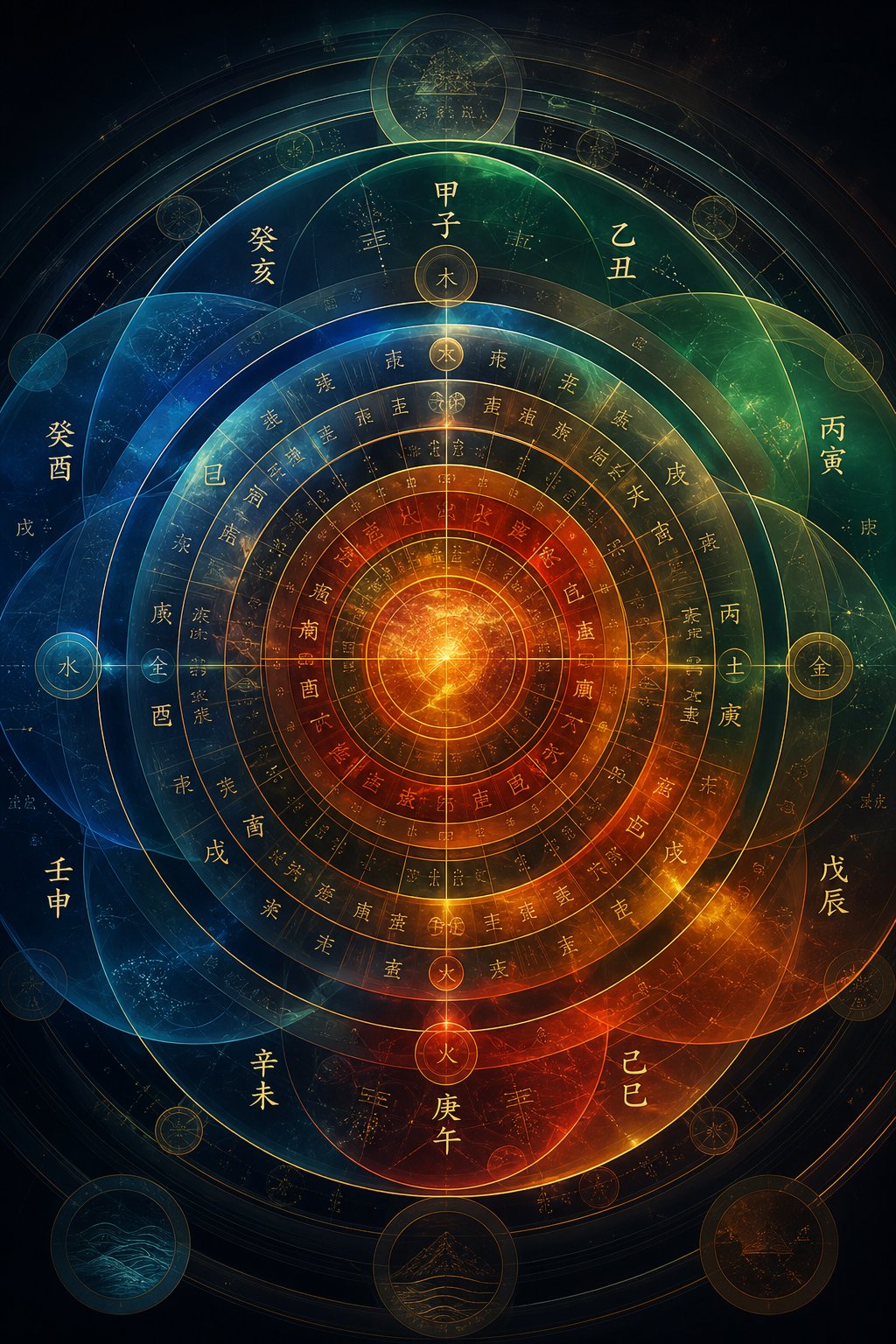
That additional layer is called Nayin (纳音), and it operates on entirely different logic than the standard Five Elements analysis you have been reading about so far. Where standard Bazi assigns elements based on individual Heavenly Stems and Earthly Branches, Nayin assigns a poetic elemental classification to each pair of Jiazi pillars within the 60-year cycle. It is a classical system that can reveal hidden fire in the nayin sixty jiazi cycle — fire that your standard chart reading never detected.
What Is Nayin and How It Reveals Hidden Fire
Think of standard Bazi analysis as reading individual words. Nayin is like reading the sentence those words form together. The system takes each pair of consecutive Jiazi combinations and maps them to one of 30 named elemental images — vivid, poetic classifications like Furnace Fire (炉中火), Mountaintop Fire (山头火), Thunderbolt Fire (霹雳火), and Heavenly Fire (天上火). There are 30 Nayin total, with six belonging to each of the Five Elements.
Here is what makes this relevant for nayin fire element bazi naming. Your Year Pillar might contain a Wood stem and an Earth branch — no visible fire anywhere in standard analysis. But the specific Jiazi combination of that pillar might carry a Fire Nayin classification. For example, the pillar Jia-Xu (甲戌, Yang Wood Dog) carries the Nayin of Mountaintop Fire (山头火) — a Fire element classification despite having a Wood stem and an Earth branch on the surface. Someone reading only the standard elements would see Wood and Earth. Someone reading the Nayin layer would see Fire underneath.
The six Fire Nayins each carry distinct imagery that describes how their fire energy behaves:
- Furnace Fire (炉中火) — contained, industrial, purposeful heat
- Mountaintop Fire (山头火) — a beacon visible from far away, exposed and signaling
- Thunderbolt Fire (霹雳火) — sudden, electric, transformative
- Mountainfoot Fire (山下火) — grounded warmth at the base, steady and low
- Lamp Fire (覆灯火) — intimate, guiding, domestic
- Heavenly Fire (天上火) — celestial, expansive, cosmic
Each of these carries genuine Fire energy in the Nayin system, regardless of what the standard stem-branch analysis shows on the surface.
Standard Five Elements analysis reads each stem and branch individually. Nayin reads the combined Jiazi pair as a single poetic image — and that image can belong to a completely different element than what the individual components suggest.
When Nayin Changes Your Naming Strategy
So how does nayin vs standard bazi fire analysis actually affect your naming decisions? Consider two scenarios.
In the first, your child's chart shows no fire in any stem, branch, or hidden stem through standard analysis. But the Year Pillar's Nayin classification is Thunderbolt Fire. Does this mean fire is present after all? In classical practice, yes — but with a caveat. Nayin fire operates as a qualitative texture rather than a structural force. It does not carry the same weight as a visible Bing or Ding stem in the chart. It suggests that fire energy exists at a deeper, more subtle level — like background warmth that colors the chart's personality without actively participating in elemental interactions the way a visible stem would.
In the second scenario, your chart shows weak fire through standard analysis (maybe a single hidden Ding in the Wei branch), and the Nayin also confirms fire presence. This double confirmation suggests the chart is not as fire-deficient as it first appeared. The advanced bazi nayin naming strategy here would lean toward gentle support — Wood-element characters or soft Yin Fire characters — rather than aggressive fire reinforcement.
Practically speaking, Nayin does not override standard analysis. As practitioners note, modern BaZi readings prioritize structural analysis — Day Master strength, Ten Gods, visible stem interactions, and Luck Pillars — with Nayin sitting on top as an additional narrative layer. Different schools weight it differently. Some treat it as essential context. Others consider it supplementary.
For naming purposes, here is a realistic framework:
- If standard analysis shows completely absent fire and Nayin confirms no fire presence — strongest case for bold fire characters in the name.
- If standard analysis shows absent fire but Nayin reveals a Fire classification — the deficiency is less severe than it appears. Moderate fire support in the name is likely sufficient.
- If standard analysis shows weak fire and Nayin also shows fire — the chart has more fire resources than surface reading suggests. Gentle reinforcement through Wood characters may be all that is needed.
Should you calculate Nayin yourself? You can — every Jiazi pair maps to a fixed Nayin, and reference tables exist for all 60 combinations. But interpreting how Nayin interacts with the rest of your chart's structure adds genuine complexity. This is one of those layers where knowing it exists helps you ask better questions, even if the full interpretation benefits from experienced guidance. And knowing when to seek that guidance versus when to proceed independently is itself a skill worth developing.
DIY Naming vs Professional Consultation and Next Steps
Knowing when to seek that guidance is not about admitting defeat — it is about recognizing where your situation falls on the complexity spectrum. Some charts are straightforward enough that a parent with solid research can make confident naming decisions. Others carry layered interactions that even experienced practitioners debate among themselves. The honest question is: which category does your child's chart belong to?
What You Can Safely Do on Your Own
The fundamentals covered in this article — reading the four pillars, identifying hidden stems, understanding seasonal context, and recognizing the generating and controlling cycles — are accessible to anyone willing to invest the time. DIY bazi naming vs professional consultation is not an all-or-nothing choice. There is a meaningful middle ground where independent work produces solid results.
You can confidently handle naming on your own when:
- Fire is the only missing or weak element. A single elemental gap with no conflicting forces is the simplest scenario. The naming direction is clear: support fire directly or through Wood, avoid Water conflicts, and choose characters that satisfy meaning, sound, and form alongside the elemental requirement.
- The chart has no major clashes between existing elements. When the other seven characters coexist without strong controlling relationships fighting each other, adding fire through a name character is unlikely to trigger cascading imbalances.
- You have confirmed the birth time accurately. A verified Hour Pillar means your chart reading is reliable. The entire analysis rests on accurate birth data — if the time is solid, your conclusions are trustworthy.
- Your family does not have complex generational naming rules. If there are no clan characters, sibling patterns, or ancestral taboos to navigate, you have full creative freedom within the elemental framework.
In these cases, the work you have done understanding the chart, identifying what type of fire is needed, and selecting characters that balance all four dimensions — sound, form, meaning, and element — is genuinely sufficient. Trust the process.
When to Seek a Professional Bazi Consultant
Complexity multiplies quickly when multiple factors interact. A professional naming consultation becomes worthwhile when the chart presents layered challenges that simple character selection cannot resolve alone.
Consider professional guidance when:
- Multiple elements are missing or severely weak. A chart lacking both Fire and Wood, for example, creates a chicken-and-egg problem — Wood generates Fire, but if both are absent, which do you prioritize in a name with only one or two characters to work with?
- Strong clashing elements dominate the chart. If Water and Metal are both powerful and actively controlling the fire position, a single name character may not be enough to shift the balance. A consultant can assess whether the name should focus on draining the controlling elements rather than directly adding fire.
- The Day Master itself is extremely weak or extremely strong. Day Master strength determines whether the chart benefits from support or restraint. Misjudging this flips the entire naming strategy — what helps a weak Day Master harms a strong one, and vice versa.
- Nayin analysis contradicts standard analysis. When the two systems point in different directions, interpreting which layer to prioritize requires experience with how different schools of thought weight these factors.
- Birth time is uncertain. If the Hour Pillar cannot be confirmed, the chart has a built-in margin of error. A practitioner can assess how much the uncertain pillar affects the overall reading and whether the naming direction holds regardless.
Professional consultation is not about outsourcing the decision entirely. As ShenShu's naming framework emphasizes, a good BaZi baby name still needs to pass ordinary checks — pronunciation, surname fit, family rules, and daily usability. The consultant provides elemental direction. You still choose the name that resonates with your family.
Choosing Names That Work Across Cultures
Modern families face a dimension that traditional naming guides rarely address. A chinese name fire element cross cultural challenge arises when the name must function in both Chinese-speaking and international contexts. Chinese naming conventions place the family name first, use characters with tonal significance, and embed cultural meaning in every stroke. English-speaking environments reverse the name order, strip tonal information, and reduce the name to romanized syllables.
For bazi naming next steps for parents navigating both worlds, consider these practical realities:
- Pinyin pronunciation matters internationally. A fire character that sounds elegant in Mandarin tones should also produce a romanized spelling that is pronounceable for non-Chinese speakers. Characters like Xin (昕, dawn) or Yan (焱, flames) romanize cleanly. Others may create confusion in English contexts.
- Some families pair a Chinese name with a separate English name. In this case, the Chinese name carries the full elemental and cultural weight, while the English name handles international usability. The two names do not need to sound alike — they serve different functions.
- Characters with overly complex stroke counts create practical friction. As naming practitioners note, very rare characters cause problems in school records, passports, bank systems, and digital forms. A fire character that supports the chart but cannot be typed on standard keyboards or recognized by government databases creates daily frustration.
The goal is a name that carries its elemental purpose quietly while functioning smoothly in every context your child will encounter — from family gatherings to international classrooms to official documents.
Wherever you land on the DIY-to-professional spectrum, the work you have done here — understanding what fire means in your chart, recognizing whether it is truly absent or merely hidden, learning which characters carry the right type and intensity of fire energy, and knowing which elemental relationships to honor or avoid — is the foundation everything else builds on. No consultant can help you effectively if you cannot describe what your chart shows. No character list serves you well if you do not know what you are looking for or why. That understanding is yours now. The name you choose next will be grounded in it.
Frequently Asked Questions About Fire Element Missing in Bazi Names
1. How do I know if fire is truly missing in my Bazi chart?
To confirm fire is genuinely absent, you need to check all eight characters across your four pillars — not just the birth year. Look for Bing or Ding in the Heavenly Stems row, Si or Wu in the Earthly Branches row, and then examine the hidden stems inside each branch. Fire can hide within branches like Yin (Tiger), Wei (Goat), and Xu (Dog). Only when no fire appears in any visible stem, visible branch, or hidden stem position can you confirm it is completely missing.
2. What is the difference between missing fire and weak fire in Bazi naming?
Completely absent fire means no trace of fire exists anywhere in the chart — no stems, branches, or hidden stems carry it. Weak fire means fire is present but outnumbered or poorly positioned, such as appearing only as a hidden stem in a minor branch. The naming approach differs significantly: absent fire calls for bold, direct fire-radical characters with strong Yang energy, while weak fire benefits from gentler support through Yin Fire characters or Wood-element characters that feed the existing flame indirectly.
3. Can I use Wood element characters instead of fire characters in a Bazi name?
Yes, Wood element characters are a valid indirect strategy because Wood generates Fire in the Five Elements productive cycle. This approach works especially well when fire is weak rather than completely absent, when the chart already has strong Earth that direct fire would amplify further, or when moderate Water is present that Wood can absorb while simultaneously feeding fire. Characters with the Wood radical or Grass radical serve as fire's fuel source within the elemental logic.
4. Should I avoid water radical characters if fire is missing in my child's Bazi?
Generally yes, because Water overcomes Fire in the controlling cycle. Pairing a fire-radical character with a water-radical character in the same name creates internal elemental contradiction — one character builds fire while the other extinguishes it. Characters carrying the Water radical, Rain radical, or meanings tied to rivers and oceans can suppress the fire energy you are trying to introduce. However, in rare cases where excessive Metal needs draining, a touch of Water might serve a strategic purpose within a more complex balancing approach.
5. When should I consult a professional instead of choosing fire element name characters myself?
Professional guidance becomes worthwhile when your chart presents layered challenges: multiple elements are missing simultaneously, strong clashing elements like Water and Metal dominate the chart, the Day Master is extremely weak or strong, Nayin analysis contradicts standard analysis, or the birth time is uncertain. Simple cases where fire is the only missing element with no major elemental conflicts are generally manageable independently with proper research into character meaning, sound, stroke count, and elemental value.