Why Hanzi and Kanji Confuse Nearly Everyone
You spot a character on a sign in Tokyo that looks identical to one you learned in a Mandarin textbook. Same strokes, same shape, same radical structure. So they must mean the same thing, right? Not necessarily. And that single assumption trips up language learners, travelers, and even professional translators more often than you'd expect.
Why Hanzi and Kanji Look the Same but Aren't
Hanzi and kanji are both pronunciations of the same term: 漢字. The hanzi meaning is straightforward — "Han characters" — and refers to the logographic writing system used in Chinese. In Japanese, the same characters are called kanji, serving a parallel but distinct role within a completely different language. So what are chinese characters called when used in Japan? Still 漢字, just read with Japanese pronunciation.
Here's where it gets interesting. These two systems share a common ancestor, but centuries of independent development have pushed them apart in ways that aren't visible at first glance. Chinese vs Japanese characters may look interchangeable on the surface, yet they differ in simplification methods, pronunciation rules, meaning, and grammatical function. Calling them "the same" is like saying American English and British English are identical because they share an alphabet — technically related, factually misleading.
Hanzi and kanji grew from the same root but evolved under completely different linguistic pressures, producing two systems that overlap heavily yet diverge in critical, often invisible ways.
What This Guide Covers
Despite the common misconception that these are simply "chinese hieroglyphics" shared across East Asia, the reality of hanzi vs kanji is far more layered. Japanese kanji and Chinese hanzi operate under different rules for reading, writing, and even meaning — and those rules matter whether you're a student, a developer working with CJK text encoding, or someone curious about how Chinese vs Japanese writing actually works.
This guide breaks down the hanzi vs kanji differences into clear categories: historical simplification paths, pronunciation systems, semantic drift, unique characters, and practical implications for anyone learning one system after the other. Each section targets a specific type of divergence so you can understand exactly where transfer between systems works and where it fails. Think of it as a map showing which bridges between hanzi in Chinese and Japanese kanji still hold — and which ones collapsed long ago.
How We Identified and Ranked These Differences
A map is only useful if it's organized by terrain type. Lumping every difference of chinese and japanese characters into one flat list would leave you overwhelmed and no closer to understanding which gaps actually matter when you're trying to transfer skills between the two systems.
Categories of Divergence Between the Two Systems
The differences between chinese and japanese writing fall into five distinct categories, each representing a different kind of challenge:
- Historical divergence — how independent simplification reforms in China (1956-1964) and Japan (1946-1981) produced different modern forms from the same traditional characters.
- Reading systems — the fundamental structural gap in how each language assigns pronunciation to characters.
- Semantic shifts — cases where identical character compounds drifted into completely different meanings over centuries of separation.
- Unique inventions — characters that exist in one system but have no counterpart in the other.
- Functional role — how characters operate within each language's broader writing and grammar system.
How We Organized These Differences
Each category is ranked by its practical impact on learners. The difference between chinese and japanese script isn't just academic — it determines where your existing knowledge transfers cleanly and where it actively misleads you. A learner who knows Simplified Chinese and picks up a Japanese newspaper will hit three structural walls: characters simplified in unfamiliar ways, words that look familiar but mean something else entirely, and grammatical machinery that hanzi never needed to handle.
These three forces — independent reform paths, semantic drift, and Japanese grammatical needs that demanded additional scripts — are the engines behind every japanese and chinese difference you'll encounter in the sections ahead. The divergence starts at the most visible level: what the characters physically look like after each country reshaped them.
Simplification Reforms Took Completely Different Paths
Imagine two siblings inheriting the same family recipe, then spending decades modifying it independently without ever comparing notes. That's essentially what happened when China and Japan each decided their shared traditional characters were too complex for modern life. Both countries simplified — but they did it at different times, with different methods, and arrived at different results.
Three Paths of Simplification From One Source
People often ask: is kanji chinese or japanese? The answer is both — and neither, in a sense. Kanji originated in China, but once Japan adopted these characters, they took on a life of their own. This becomes especially clear when you look at how simplification unfolded.
Three distinct forms exist for many characters today:
- Traditional Chinese — the original complex forms still used in Taiwan, Hong Kong, and Macau.
- Simplified Chinese — the result of China's reforms in 1956-1964, which aggressively reduced stroke counts using cursive script forms and phonetic substitutions.
- Japanese Shinjitai (新字体) — Japan's post-WWII simplifications, introduced through the Toyo Kanji list in 1946 and refined through the Joyo Kanji revisions of 1981 and 2010.
The timing matters. Japan moved first, beginning reforms in 1946 during the post-war occupation period. China followed a decade later with its own program. Poor relations between the two nations after World War II prevented any coordination, so each country solved the same problem — overly complex characters — using entirely different strategies.
Japan's approach was relatively conservative. Many shinjitai forms were based on widely used handwritten abbreviations that already existed before the war, or on simpler historical character variants. China's reforms went further, employing whole cursive script adoptions and radical phonetic substitutions that sometimes made characters unrecognizable compared to their traditional forms. A comparative study from the University of Hawaii describes the Japanese simplifications as more conservative, while the Chinese approach was more radical in scope and technique.
So is kanji chinese in origin? Absolutely. But the modern forms used in Japan are neither traditional Chinese nor simplified Chinese — they're a third path entirely.
Side-by-Side Examples of Divergent Simplification
The question of whether is japanese kanji traditional or simplified doesn't have a clean answer. Some kanji match the traditional form exactly. Others were simplified in ways that overlap with China's reforms. And many landed somewhere in between — simplified, but differently. The table below shows how the same starting character split into three distinct modern forms:
| Traditional Chinese | Simplified Chinese | Japanese Shinjitai | Meaning |
|---|---|---|---|
| 國 | 国 | 国 | Country |
| 學 | 学 | 学 | Study |
| 廣 | 广 | 広 | Wide |
| 鐵 | 铁 | 鉄 | Iron |
| 龍 | 龙 | 竜 | Dragon |
| 圓 | 圆 | 円 | Round/Circle |
You'll notice a few patterns here. For 國 and 學, both countries arrived at the same simplified form — 国 and 学. These are the easy cases. But look at 廣: China stripped it down to just the radical 广, while Japan kept more structure with 広. For 鐵 (iron), China replaced the right component entirely to get 铁, while Japan made a smaller substitution to produce 鉄. And 龍 (dragon) shows perhaps the starkest split — China's 龙 and Japan's 竜 bear almost no visual resemblance to each other or to the original.
The kanji vs chinese comparison gets even trickier when you realize that some characters were simplified in only one country. The character 緊 (tight) was simplified in Chinese to 紧 but left untouched in Japanese. Meanwhile, 惠 (benefit) was simplified in Japanese to 恵 but kept its traditional form in Chinese. This means learners studying kanji and chinese simultaneously must sometimes memorize three versions of a single character — a reality that makes the relationship between kanji in chinese and kanji in Japanese far less straightforward than the shared origin suggests.
These visual differences are just the surface layer. Beneath the strokes, an even deeper divergence exists in how each system assigns sound to these characters.
Reading Systems Work Fundamentally Differently
A character can look identical in both languages and still sound completely different — or, in the case of Japanese, sound like five completely different things depending on context. This is where the hanzi vs kanji split goes from visually confusing to structurally alien. The way each system assigns pronunciation to characters isn't just different in degree. It's different in kind.
One Character, One Sound in Chinese
In Mandarin Chinese, the rule is refreshingly simple: one character gets one pronunciation. The character 山 is always "shān." The character 水 is always "shuǐ." There are tonal variations to master, and a small number of characters have context-dependent readings (called 多音字, duōyīnzì), but these are exceptions rather than the system's core logic. For the vast majority of the roughly 8,000 characters in standard use, you learn one sound and you're done.
This one-to-one mapping between character and sound means that chinese language kanji — or more accurately, hanzi — function as relatively predictable phonetic units. When you encounter an unfamiliar compound word in Chinese, you can usually pronounce it correctly even if you don't know the meaning, because each character carries its single reading regardless of what surrounds it.
One Character, Many Sounds in Japanese
Japanese flips this logic entirely. So whats kanji in terms of pronunciation? It's a character that might have two, four, or even ten or more valid readings depending on the word it appears in. What is kanji in japanese if not a constant source of "which reading do I use here?" decisions that even native speakers occasionally struggle with.
The character 生 illustrates this perfectly. In Chinese, it has one reading: shēng. In Japanese, the same character has over ten distinct pronunciations used in everyday language:
| Reading | Type | Example Word | Meaning |
|---|---|---|---|
| セイ (sei) | On'yomi | 学生 (gakusei) | Student |
| ショウ (shō) | On'yomi | 一生 (isshō) | Lifetime |
| い (i) | Kun'yomi | 生きる (ikiru) | To live |
| う (u) | Kun'yomi | 生まれる (umareru) | To be born |
| なま (nama) | Kun'yomi | 生ビール (nama bīru) | Draft beer |
| は (ha) | Kun'yomi | 生える (haeru) | To grow |
| き (ki) | Kun'yomi | 生地 (kiji) | Fabric/dough |
That's seven readings for a single character — and this list isn't even exhaustive. Compare that to Chinese, where 生 is simply "shēng" in every context. The gap between these two approaches is enormous, and it's one of the first walls learners hit when moving between systems.
Why Japanese Has Multiple Readings Per Kanji
Understanding what is a kanji reading requires a bit of history. When Chinese characters arrived in Japan — a process that unfolded over roughly a thousand years starting around the 5th century CE — the Japanese language already had a fully developed spoken vocabulary. The word for "mountain" was already yama. The word for "life" was already something close to ikiru. These native words didn't disappear just because a foreign writing system showed up.
Instead, Japanese scholars created a dual reading system that preserved both layers:
- On'yomi (音読み) — the "sound reading," approximating the Chinese pronunciation at the time of borrowing. Used most often in compound words where two or more kanji sit together.
- Kun'yomi (訓読み) — the "meaning reading," mapping the character to the native Japanese word with the same meaning. Used when a kanji appears alone or with hiragana verb endings attached.
Think of it this way: imagine English borrowed the symbol ☀ from a language where it was pronounced "sol." English speakers might sometimes read it as "sol" and sometimes as "sun" depending on context. That's essentially what happened with kanji — but across thousands of characters.
The complexity deepens because on'yomi readings weren't borrowed just once. Characters arrived in Japan during different historical periods, each carrying the Chinese pronunciation of that era and region:
- Go-on (呉音) — the earliest layer, from the Wu region of China (5th-6th century).
- Kan-on (漢音) — from the Tang Dynasty capital Chang'an (7th-8th century), the most common layer.
- Tō-on (唐音) — later borrowings from Song and Ming Dynasty Chinese (12th-17th century).
This means a single kanji might carry multiple on'yomi readings from different centuries of Chinese in japanese linguistic history, plus one or more kun'yomi readings from native Japanese. The character 行, for example, has the on'yomi readings "kō" (Kan-on), "gyō" (Go-on), and "an" (Tō-on), plus the kun'yomi readings "i-ku" (to go) and "okona-u" (to carry out). That's five readings for one character — and context is the only guide for choosing correctly.
Chinese never developed this layered complexity because hanzi didn't need to accommodate a pre-existing spoken language. The characters were the language from the start. Japanese, by contrast, grafted a foreign writing system onto an existing tongue, and the seams of that graft show up every time you encounter a kanji with multiple possible sounds.
This pronunciation gap creates a cascading effect. Characters that share identical visual forms across both systems don't just sound different — they participate in entirely different word-formation patterns. And when those patterns produce compound words, the meanings themselves can drift apart in surprising ways.
False Friend Compounds That Trip Up Every Learner
Pronunciation differences are at least predictable — you know the sound will change between languages. Meaning shifts are sneakier. Two characters sit side by side, forming a compound word you recognize instantly from your studies in one language. You assume you know what it means. And you're wrong. Sometimes embarrassingly wrong.
Identical Characters With Opposite Meanings
Among all the chinese and japanese difference categories, false friends are the most treacherous because they punish confidence. The more words that are similar in chinese and japanese, the more learners assume that every shared compound transfers cleanly. It doesn't. Semantic drift — the gradual shift in meaning that happens when two languages evolve independently — has turned dozens of common compounds into traps.
How does this happen? When Japan borrowed Chinese vocabulary centuries ago, both languages continued developing. A word might narrow in meaning in one language while broadening in the other. Or one language might retire a word's original sense entirely, replacing it with something new while the other language preserved the old meaning. Over enough time, the same two-character compound can land on completely unrelated — or even opposite — definitions.
Are chinese and japanese similar enough for meaning to transfer reliably? For basic nouns like 山 (mountain) or 水 (water), yes. For compound words built from those characters? You're rolling the dice every time you assume.
The Most Confusing False Friend Compounds
The table below lists some of the most commonly cited false friends between the two systems. These aren't obscure literary terms — they're everyday vocabulary that learners encounter early and often:
| Compound | Japanese Meaning | Chinese Meaning | Danger Level |
|---|---|---|---|
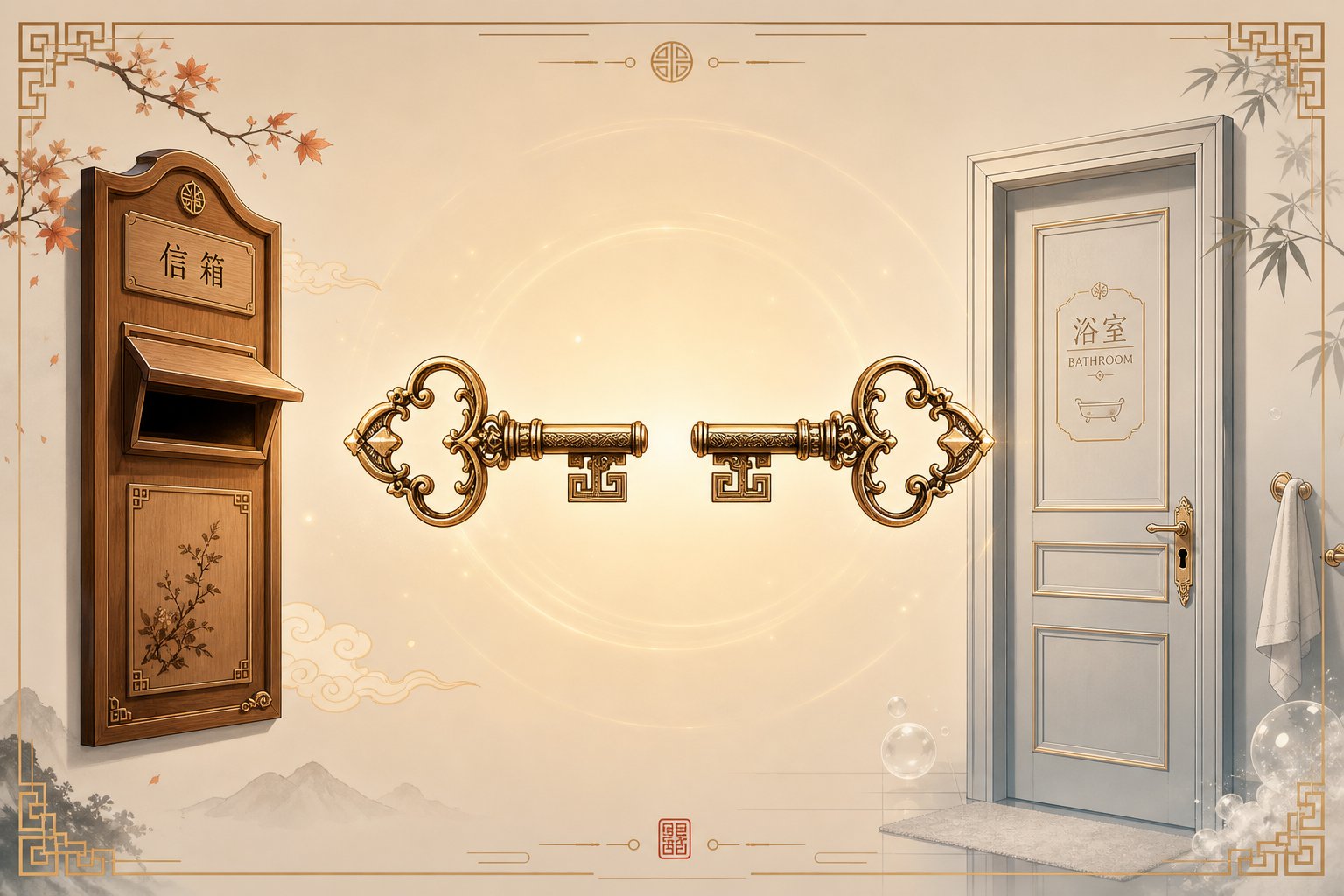
| 手紙 (てがみ / shǒuzhǐ) | Letter (mail) | Toilet paper | High — socially awkward |
| 勉強 (べんきょう / miǎnqiǎng) | Study, learning | Reluctant, forced | High — opposite tone |
| 大丈夫 (だいじょうぶ / dàzhàngfu) | Okay, fine, no problem | A real man, manly man | Medium — confusing context |
| 新聞 (しんぶん / xīnwén) | Newspaper | News (in general) | Medium — related but different |
| 汽車 (きしゃ / qìchē) | Steam train | Car, automobile | Medium — wrong vehicle entirely |
| 娘 (むすめ / niáng) | Daughter, young woman | Mother, older woman | High — generational reversal |
| 走 (はしる / zǒu) | To run | To walk | Medium — different speed |
Look at 手紙. In Japanese, this is a perfectly normal word for a letter you'd mail to a friend. Tell a Chinese speaker you're writing them a 手紙, and they'll wonder why you're announcing your toilet paper plans. The characters are identical. The chinese kanji meanings couldn't be more different.
Or consider 娘. Japanese uses it to mean "daughter" or "young woman." Chinese uses it to mean "mother" or "older woman." The same character compound points to opposite ends of a generational spectrum depending on which language you're reading. Are japanese and chinese similar? At the character level, sure. At the compound-word level, similarity becomes a liability.
The 勉強 example reveals how tone and connotation can flip entirely. A Japanese student saying "I need to 勉強" is expressing dedication to their studies. The same compound in Chinese carries a sense of being forced or reluctant — doing something against your will. The emotional valence reverses completely.
These false friends exist because japanese and chinese characters were shared at a point in history, then each language continued coining new meanings, retiring old ones, and reshaping usage without any coordination. The longer two languages develop independently, the more their shared vocabulary drifts apart — even when the written forms remain frozen in place.
For learners, the practical takeaway is clear: never assume a multi-character compound means the same thing in both languages just because you recognize the individual characters. Each compound needs to be verified independently. The visual similarity that makes these systems feel approachable is the same quality that makes false friends so dangerous.
Semantic drift operates at the word level. But there's an even more fundamental divergence happening at the system level — characters that exist in one language and simply don't appear in the other at all.
Kokuji and Ghost Characters Unique to Japanese
False friends at least start from a shared origin. The two languages borrowed the same compound and then drifted apart over time. But what happens when one language invents entirely new characters that the other never had in the first place? That's the story of kokuji — and it's one of the clearest proofs that japanese characters kanji are not simply a copy of the Chinese system.
What Are Kokuji and Why Do They Exist
Kokuji (国字), literally meaning "national characters," are kanji that were created in Japan rather than borrowed from China. They look like standard kanji. They use the same radicals, the same stroke patterns, the same compositional logic. But search for them in a Chinese dictionary and you'll come up empty — because they were invented to express concepts that had no existing Chinese character equivalent.
Why would Japan need to create new characters when it already had thousands imported from China? The answer comes down to daily life. Japanese geography, culture, and ecology produced concepts that simply didn't map onto any existing Chinese character. A mountain pass between two peaks. A dry field used for growing vegetables rather than rice. A crossroads in a town. These were everyday realities in Japan that needed written expression, and no imported kanji symbol fit the bill.
The construction method is revealing. Most kokuji are semantic compounds — they combine two or more existing radicals based on meaning rather than sound. This contrasts with the majority of Chinese-origin characters, which are phono-semantic compounds where one component hints at pronunciation. Since kokuji were built for native Japanese words that had no Chinese pronunciation to reference, sound-based construction wasn't an option. Meaning-based combination was the only path forward.
Think of it this way: if you needed a character for "mountain pass" and no Chinese character existed, you'd combine the radicals for "mountain" (山), "up" (上), and "down" (下) into a single new glyph. That's exactly how 峠 was born — a purely Japanese invention built from Chinese parts.
Notable Kokuji Characters You Should Know
There are hundreds of kokuji in existence, though many are rare or archaic. Several, however, have become fundamental components of everyday written Japanese. If you're studying japanese in kanji characters, you'll encounter these early and often:
- 働 (hataraku / dō) — "to work." Composed of the person radical (亻) plus 動 ("move"). This is the most commonly used kokuji, appearing in the fundamental verb 働く and included in elementary-level Japanese texts. Unusually for a kokuji, it carries an on'yomi reading (ドウ) borrowed from its phonetic component 動.
- 峠 (tōge) — "mountain pass." Built from 山 (mountain) + 上 (up) + 下 (down), visually depicting the concept of going up and then down a mountain. A purely semantic construction with only a kun'yomi reading.
- 畑 (hatake) — "dry field, crop field." Combines 火 (fire) and 田 (rice paddy), referencing the practice of burning fields before planting. Distinct from 田, which specifically means a flooded rice paddy — a distinction important in Japanese agriculture but unnecessary in Chinese.
- 辻 (tsuji) — "crossroads, street." Formed from 辶 (road radical) and 十 (cross/ten), literally depicting a crossing of roads. Common in Japanese place names and surnames.
- 込 (komu) — "to be crowded, to include." Used in the essential verb 込む and dozens of compound verbs like 申し込む (to apply) and 飛び込む (to jump in). One of the most frequently encountered kokuji in daily Japanese.
Some kokuji were created for very specific domains. During the Meiji era (late 19th century), characters were coined for Western measurement units — 粁 for kilometer, 瓩 for kilogram — combining kanji for the base unit with kanji for the multiplier. These have largely fallen out of use in favor of katakana, but they demonstrate that kokuji creation continued well into the modern period.
Interestingly, a few kokuji have traveled back to China. The character 腺 (gland), created in Japan for medical terminology, was later adopted into Chinese with an assigned Mandarin reading. Even kanji japanese symbols invented on Japanese soil can occasionally cross back over the linguistic border.
Ghost Characters: When Divergence Happens by Accident
Kokuji represent intentional divergence — characters created on purpose to fill a gap. Ghost characters (幽霊文字, yūrei moji) represent something stranger: divergence by bureaucratic accident.
When Japan developed its JIS encoding standard for digital text in the 1970s and 1980s, the process of cataloging thousands of characters involved human transcription from handwritten sources. Mistakes crept in. Characters that never actually existed in any dictionary or text were accidentally registered as valid entries in the encoding standard.
The character 妛 is a well-known example. It originated as a transcription error — the kanji 𡚴 (composed of 山 over 女) was being copied onto paper, and a shadow-like horizontal line appeared between the two components during the pasting process. This artifact was misidentified as an intentional stroke, and the non-existent character 妛 was registered in the JIS standard as if it were real.
Why not simply delete these ghost characters once the errors were discovered? Compatibility. By the time researchers identified which characters were ghosts, the JIS standard had already been incorporated into Unicode — the global character encoding system. Removing characters would break backward compatibility with existing databases, documents, and software systems worldwide. The ghost characters are now permanently embedded in digital infrastructure, a form of technical debt that can never be repaid.
Ghost characters matter for the hanzi vs kanji discussion because they illustrate how the two character sets can diverge through pure accident, not just intentional reform or cultural evolution. China's encoding standards don't contain these same errors. The result is a set of codepoints in Unicode that exist only because of Japan's specific digitization history — characters with no meaning, no reading, and no usage, yet permanently occupying space in the shared CJK character block.
Between kokuji and ghost characters, the Japanese writing system contains hundreds of entries that have zero Chinese equivalent. Some were crafted deliberately to serve Japanese life. Others slipped in through clerical mistakes that became impossible to undo. Either way, they represent concrete proof that these two systems — despite their shared ancestry — have become structurally distinct entities.
Unique characters are one axis of divergence. But even the shared characters behave differently at a deeper level: the grammatical role they play within each language's broader writing system.
How Characters Function Within Each Writing System
Open any Chinese text and you'll see one script from start to finish — characters, nothing else. Open a Japanese text and you'll see kanji interspersed with two additional scripts, each handling a different job. This isn't a cosmetic difference. It fundamentally changes what each character is responsible for doing on the page.
Kanji Share the Page With Two Other Scripts
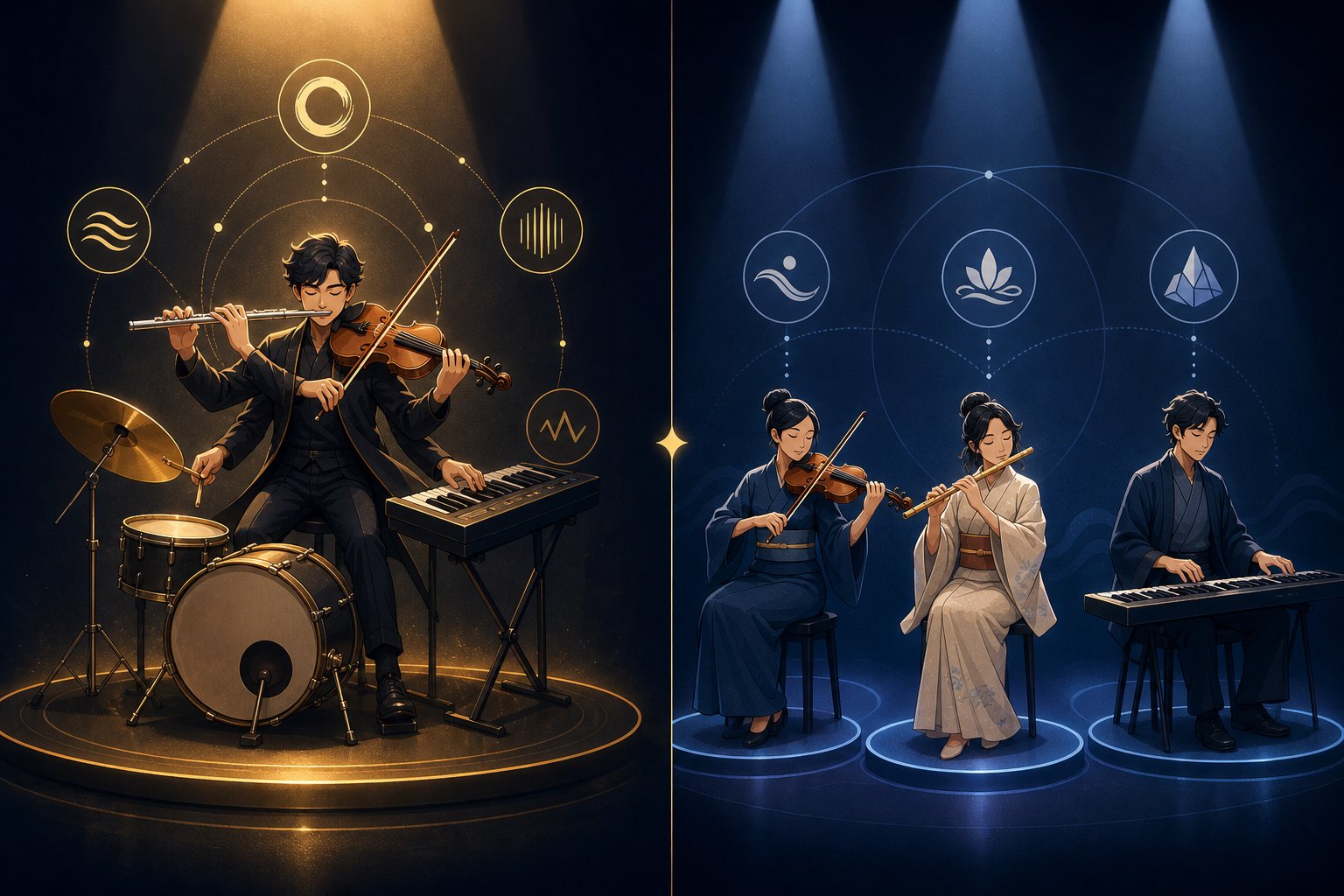
Japanese writing is a three-script system. Kanji carry the core semantic weight — nouns, verb stems, adjective roots. Hiragana handles grammatical particles (は, が, を), verb conjugation endings, and native words that lack a standard kanji form. Katakana covers foreign loanwords, onomatopoeia, and emphasis. In a typical Japanese sentence, you'll see all three scripts working together in a single line of text.
What does this mean for kanji's role? It means kanji don't need to do everything. They're freed from grammatical duty because hiragana picks up that load. A verb like "to eat" appears as 食べる — the kanji 食 provides the meaning ("eat"), while the hiragana べる marks it as a specific conjugation form. Strip away the hiragana and you lose the grammar. Strip away the kanji and you lose the meaning. Each script has its lane.
The kanji vs katakana distinction is equally clear-cut. Katakana exists specifically because Japanese needed a way to represent foreign sounds that kanji couldn't handle efficiently. Words like コンピューター (computer) or パン (bread, from Portuguese) live entirely in katakana — no kanji involved. This division of labor means kanji in Japanese function primarily as meaning-carriers rather than all-purpose linguistic tools.
Hanzi Stand Alone as the Complete Writing System
Chinese never developed this kind of script specialization. There is no separate "chinese and japanese alphabet" equivalent in Mandarin — no secondary phonetic script running alongside the characters. Hanzi do it all: meaning, grammar, and sound representation packed into a single system. When people search for "the chinese alphabet," they're often surprised to learn that one doesn't exist in the traditional sense. Pinyin (romanized spelling) serves as a pronunciation guide for learners, but it doesn't appear in standard written Chinese the way hiragana appears in Japanese.
This means every hanzi carries a heavier functional load. The character 了 in Chinese isn't just a meaning-unit — it's a grammatical particle marking completed action. The character 的 functions as a possessive and descriptive marker, appearing constantly in everyday text. In Japanese, these grammatical roles are handled by hiragana, keeping kanji focused on content words. In Chinese, the characters themselves must serve double or triple duty.
Kanji are specialists — they carry meaning while other scripts handle grammar. Hanzi are generalists — they carry meaning, grammar, and phonetic function all at once, because no other script exists to share the load.
This structural difference explains why the chinese vs japanese alphabet question confuses so many people. Japanese has something resembling an alphabet — two of them, in fact — while Chinese has none. The reason traces back to how each language adopted characters in the first place. Chinese characters evolved organically within the language they served. They never needed a phonetic supplement because they were the complete system from day one. Japanese, by contrast, grafted a foreign writing system onto an existing spoken language, and the mismatch between Chinese characters and Japanese grammar demanded supplementary scripts to fill the gaps.
Consider what happens when you write a simple sentence like "I ate sushi" in both languages. In Chinese: 我吃了寿司 — five characters, all hanzi, handling subject, verb, grammar, and object. In Japanese: 私は寿司を食べた — a mix of kanji (私, 寿司, 食), hiragana particles (は, を), hiragana verb ending (べた), all working in concert. The chinese and japanese letters on the page look fundamentally different in density and composition, even when expressing the same idea.
For learners moving between systems, this has a practical consequence. Studying chinese and japanese writing requires completely different reading strategies. In Chinese, you parse character by character, each one potentially carrying grammatical information. In Japanese, you learn to visually separate kanji content words from hiragana grammar markers — a skill that has no equivalent in Chinese reading.
These functional differences play out at scale when you look at how many characters each system actually requires for full literacy — and how official standards define that threshold differently in each country.
Character Lists and Digital Encoding Differences
China's official standard includes nearly four times as many characters as Japan's. That gap isn't arbitrary — it reflects fundamentally different decisions about what "literate" means in each country and how much of the writing system's full inventory a person actually needs.
Official Character Lists Compared
When you place japanese vs chinese characters side by side at the system level, the scale difference is striking. China's 通用规范汉字表 (Table of General Standard Chinese Characters), published in 2013, contains 8,105 characters across three tiers of frequency. Japan's 常用漢字表 (Jōyō Kanji), last revised in 2010, lists just 2,136 characters. Both represent official government standards for education, publishing, and public communication — but they define the boundaries of "standard use" very differently.
| Dimension | Chinese (Mandarin) | Japanese |
|---|---|---|
| Official standard list | 通用规范汉字表 — 8,105 characters | 常用漢字表 (Jōyō) — 2,136 characters |
| Characters for basic literacy | ~3,500 (covers ~99.5% of daily text) | ~2,136 (the full Jōyō list) |
| Characters taught K-12 | ~3,500 across primary and secondary | 1,026 in primary (Kyōiku Kanji) + remainder in secondary |
| Total characters in encoding | ~87,000+ in Unicode CJK blocks | ~13,000 in JIS X 0208/0213 |
| Supplementary scripts | None (Pinyin is a learning aid only) | Hiragana + Katakana handle grammar and loanwords |
Why does China need so many more? Because hanzi carry the entire linguistic load — grammar, meaning, and sound — with no secondary script to offload onto. Japanese can express any word using hiragana or katakana when a kanji doesn't exist or isn't commonly known, effectively capping how many kanji a person truly needs. Chinese has no such escape valve. Every concept, from ancient poetry to modern chemistry, must be expressible through a chinese char or combination of characters.
What Different List Sizes Mean for Learners
For learners comparing chinese characters vs japanese characters, the list sizes create very different study trajectories. A Japanese learner who masters the 2,136 Jōyō Kanji can read newspapers, legal documents, and most published books with only occasional lookups. A Chinese learner who masters 2,136 characters is still missing thousands of entries they'll encounter in professional, literary, or technical contexts.
This doesn't mean Japanese is "easier" — remember, each of those 2,136 kanji may carry multiple readings. But the bounded nature of the Jōyō list gives Japanese learners a concrete finish line that Chinese learners simply don't have.
The difference between chinese and japanese characters also shows up in an unexpected place: your computer screen. When Unicode was developed in the late 1980s and 1990s, engineers faced a problem. Many characters looked nearly identical across Chinese, Japanese, and Korean — but not quite. Slight differences in stroke direction, component positioning, or dot placement existed between regional typographic traditions. Rather than assign separate codepoints to each regional variant, Unicode's CJK Unified Ideographs project merged visually similar characters into single codepoints, relying on font selection to display the correct regional form.
In practice, this means the same Unicode codepoint can render differently depending on whether your device's language is set to Chinese or Japanese. The character 直, for example, has a subtle stroke difference between its Chinese and Japanese typographic forms — but both share codepoint U+76F4. If you're studying japanese and chinese side by side on a computer, the font your browser selects might show you the "wrong" regional variant without any warning. Developers building multilingual applications hit this constantly: a page tagged as Japanese might render characters using a Chinese font, or vice versa, producing text that looks subtly off to native readers.
For learners, the encoding issue creates a hidden trap. Flashcard apps, dictionary tools, and language-learning platforms that don't properly tag their content by language may display characters in the wrong regional style — teaching you a Chinese stroke pattern when you're studying Japanese, or the reverse. It's a small visual difference, but it reinforces incorrect muscle memory for handwriting and can cause confusion during exams or real-world reading.
Numbers and encoding standards quantify the gap between these systems. But for learners trying to move between them, the practical question remains: which parts of your existing knowledge actually carry over safely, and which parts will actively mislead you?

Transfer Knowledge Framework and Final Recommendations
Knowing what is the difference between japanese and chinese at the character level is useful. Knowing exactly where your existing knowledge applies — and where it becomes a liability — is what actually saves you time and embarrassment. The framework below sorts character categories into three zones based on how reliably they transfer between kanji vs hanzi.
Characters That Transfer Safely Between Systems
Some categories move between Chinese and Japanese with minimal risk. Numbers (一, 二, 三, 百, 千) carry the same meaning in both systems. Basic nature words (山, 川, 水, 火, 木) retain their core sense. Concrete nouns for universal concepts (人, 手, 目, 口) also hold steady. If you're trying to figure out how to tell the difference between japanese and chinese writing, these shared characters won't help — but they also won't mislead you when reading.
Danger Zones Where Transfer Fails
Other categories are minefields. The table below maps the full spectrum from safe to dangerous:
| Safe Transfer | Partial Transfer | Danger Zone |
|---|---|---|
| Numbers (一, 二, 三, 十, 百) | 新聞 — newspaper (JP) vs. news (CN) | 手紙 — letter (JP) vs. toilet paper (CN) |
| Nature (山, 川, 海, 森) | 勉強 — study (JP) vs. reluctant (CN) | Kokuji like 峠, 畑, 込 (no CN equivalent) |
| Body parts (目, 耳, 口, 足) | 汽車 — steam train (JP) vs. car (CN) | Differently simplified forms (広 vs. 广) |
| Basic adjectives (大, 小, 長, 高) | 走 — run (JP) vs. walk (CN) | Multiple readings per kanji (生 = 10+ readings in JP) |
| Common verbs in isolation (食, 見, 聞) | Characters with shifted nuance | Ghost characters with no meaning at all |
The pattern is clear: single characters representing concrete, physical things tend to be safe. Multi-character compounds and abstract concepts are where drift accumulates. And anything involving pronunciation is essentially non-transferable — knowing a character's Mandarin reading tells you almost nothing about its Japanese readings, and vice versa.
Your Roadmap for Learning Both Systems
If you already know one system and you're approaching the other, here are concrete recommendations based on the difference between japanese and chinese covered throughout this guide:
- Chinese learners approaching Japanese: Your character recognition transfers well, but never assume compound meanings match. Prioritize learning hiragana and katakana first — they unlock the grammatical layer that kanji alone can't provide. Expect every character to have multiple readings and learn words as whole units rather than assembling them from individual character pronunciations.
- Japanese learners approaching Chinese: Your meaning knowledge transfers better than you'd expect for single characters. The biggest adjustment is tonal pronunciation and the absence of kana as a grammatical crutch. Every character carries more functional weight in Chinese, so pay attention to grammatical particles written as characters (了, 的, 把) that have no equivalent role in Japanese.
For anyone wondering how to tell chinese from japanese text at a glance: look for hiragana's rounded curves or katakana's angular strokes. If you see them mixed with characters, it's Japanese. If you see only block-shaped characters with no phonetic script interspersed, it's Chinese.
Here's a summary of all seven core differences in one place:
- Simplification reforms produced different modern forms from the same traditional characters.
- Chinese assigns one reading per character; Japanese assigns multiple on'yomi and kun'yomi readings.
- False friend compounds carry different — sometimes opposite — meanings across the two languages.
- Kokuji exist only in Japanese, with no Chinese equivalent whatsoever.
- Kanji share functional space with hiragana and katakana; hanzi operate alone as the complete writing system.
- Official character lists differ dramatically in size (2,136 vs. 8,105).
- Digital encoding treats visually similar characters as identical codepoints, creating display inconsistencies across languages.
Approach the other system with informed caution rather than blind assumption of similarity — the shared ancestry is real, but so are centuries of independent evolution that turned one writing system into two.
What's the difference between japanese and chinese at the deepest level? Not the characters themselves — it's the rules governing how those characters behave. Same building blocks, wildly different architecture. Respect both systems on their own terms, verify every assumption at the compound level, and let the genuine overlap accelerate your learning without letting false confidence slow it down.
Frequently Asked Questions About Hanzi vs Kanji Differences
1. Are kanji and hanzi the same thing?
Kanji and hanzi both refer to the term 漢字 (Han characters) and share a common ancestor, but they are not the same in practice. Over centuries of independent development, China and Japan simplified characters differently, assigned different pronunciations, and even created entirely new characters (kokuji in Japan). While many individual characters retain the same core meaning, compound words frequently diverge in meaning, and the reading systems operate on fundamentally different principles — one sound per character in Chinese versus multiple possible readings per character in Japanese.
2. Is Japanese kanji traditional or simplified Chinese?
Japanese kanji (shinjitai) is neither traditional nor simplified Chinese — it represents a third simplification path. Japan reformed its characters between 1946 and 1981, while China conducted separate reforms from 1956 to 1964. Some results overlap (both simplified 學 to 学), but many differ significantly. For example, the traditional 廣 became 广 in China but 広 in Japan, and 龍 became 龙 in China but 竜 in Japan. Some characters were simplified in only one country, making the relationship between the three systems complex rather than linear.
3. Why do Japanese kanji have multiple readings while Chinese characters have only one?
Chinese characters evolved within the language they serve, so each character naturally carries one pronunciation. Japanese, however, grafted Chinese characters onto an already-existing spoken language. Native Japanese words were mapped to characters as kun'yomi (meaning readings), while approximations of the original Chinese pronunciations were preserved as on'yomi (sound readings). Additionally, characters were borrowed during different historical periods (5th-17th centuries), each carrying the Chinese pronunciation of that era, creating multiple on'yomi layers for a single character.
4. What are false friends between Chinese and Japanese characters?
False friends are compound words written with identical characters that carry different meanings in each language. For example, 手紙 means 'letter' in Japanese but 'toilet paper' in Chinese. 勉強 means 'study' in Japanese but 'reluctant' in Chinese. 娘 refers to a 'daughter' in Japanese but 'mother' in Chinese. These divergences occurred because both languages continued evolving independently after sharing vocabulary centuries ago, with each language retiring old meanings or developing new ones without coordination.
5. How can you tell Chinese writing from Japanese writing at a glance?
Look for hiragana and katakana — the two phonetic scripts unique to Japanese. Hiragana features rounded, flowing curves while katakana has angular, sharp strokes. If you see these scripts mixed in with block-shaped characters, the text is Japanese. If you see only characters with no phonetic script interspersed, it is Chinese. Japanese text has a visually varied density because of its three-script system, while Chinese text appears more uniform since hanzi handle all linguistic functions alone.