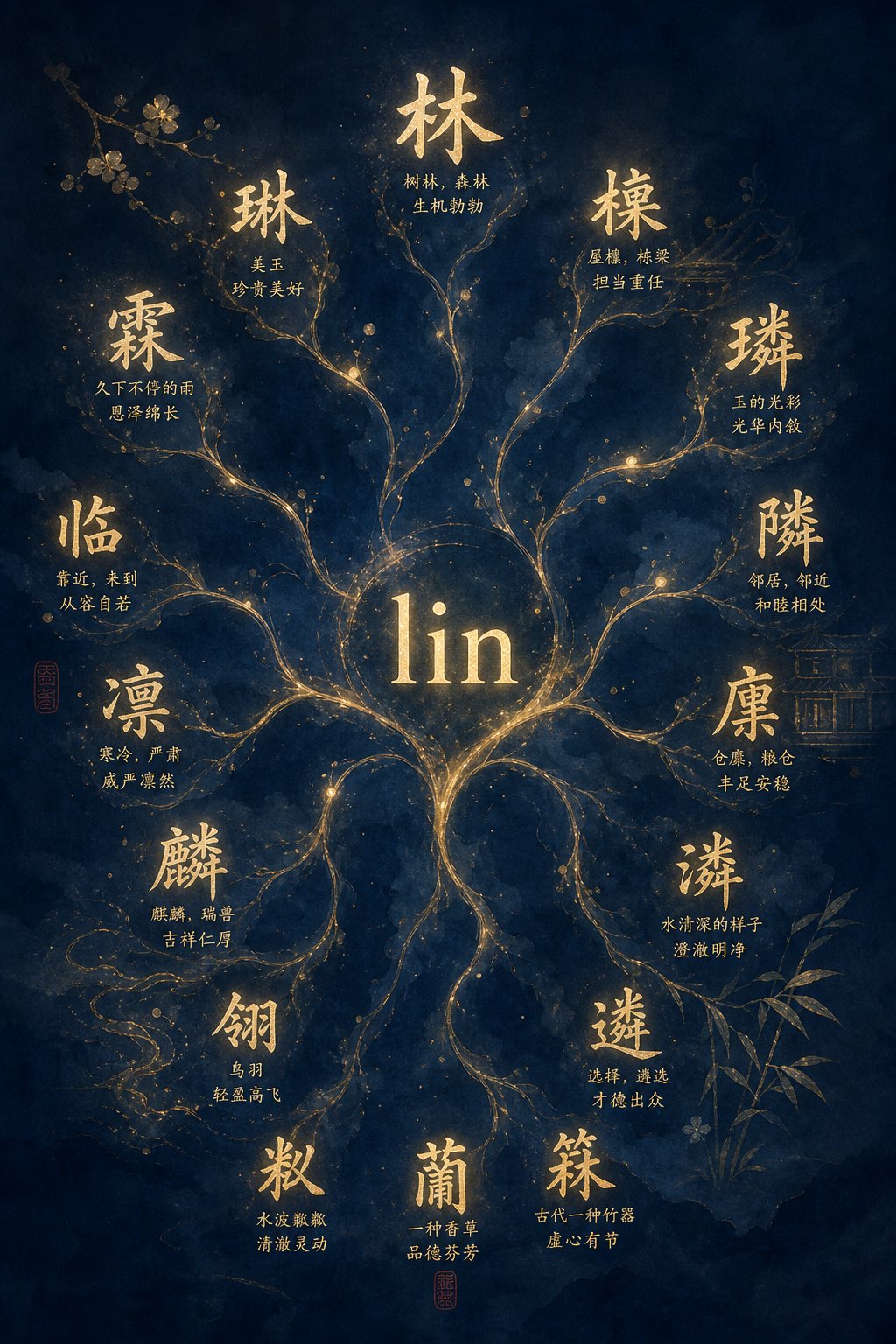
Why Giving Your Foreign Friend a Chinese Name Is a Meaningful Gift
Imagine your foreign friend struggling to order coffee in Shanghai because the barista can't write their name on the cup. Or picture them filling out university enrollment forms that require a 中文名 in Chinese characters. These everyday moments reveal something important: helping a friend get a Chinese name is one of the most practical and personal gifts you can offer.
This tradition runs deeper than convenience. During the Tang Dynasty, foreign merchants, scholars, and diplomats who traveled to China were often welcomed with Chinese names as a sign of respect and cultural inclusion. The practice signaled that these visitors belonged in the community. That same spirit lives on today when you give a foreign friend a Chinese name that carries real thought and meaning behind it.
Why Foreign Friends Appreciate a Chinese Name
A well-chosen Chinese name does more than solve a logistical problem. It tells your friend, "I see you as part of my world." As one Swiss professor named "Lin Pei" (林沛) by her Chinese peers shared, having a name that reflects both phonetic beauty and cultural depth transformed how she connected with Chinese-speaking communities. The name became a bridge, not just a label.
Social Contexts Where a Chinese Name Helps
You'll notice your friend reaching for their Chinese name more often than you'd expect. Here are the most common situations where it makes daily life smoother:
- Workplace introductions and business cards in Chinese-speaking offices
- University registration and official academic documents
- Social media profiles on platforms like WeChat or Xiaohongshu
- Ordering food and drinks where staff need to call out a name
- Making local friends who find it easier to remember and pronounce a Chinese name
- Opening bank accounts or signing up for local services
Each of these moments becomes a small friction point without a proper name, and a small connection point with one. This guide walks you through the entire process of creating a Chinese name your friend will genuinely love, from understanding name structure to selecting characters with the right sound, meaning, and cultural resonance.
Step 1 Understand How Chinese Names Are Structured
Before you start picking characters, you need a clear picture of how naming in Chinese actually works. The structure is compact, deliberate, and almost the reverse of what your friend is used to. Getting this right is the foundation for everything that follows.
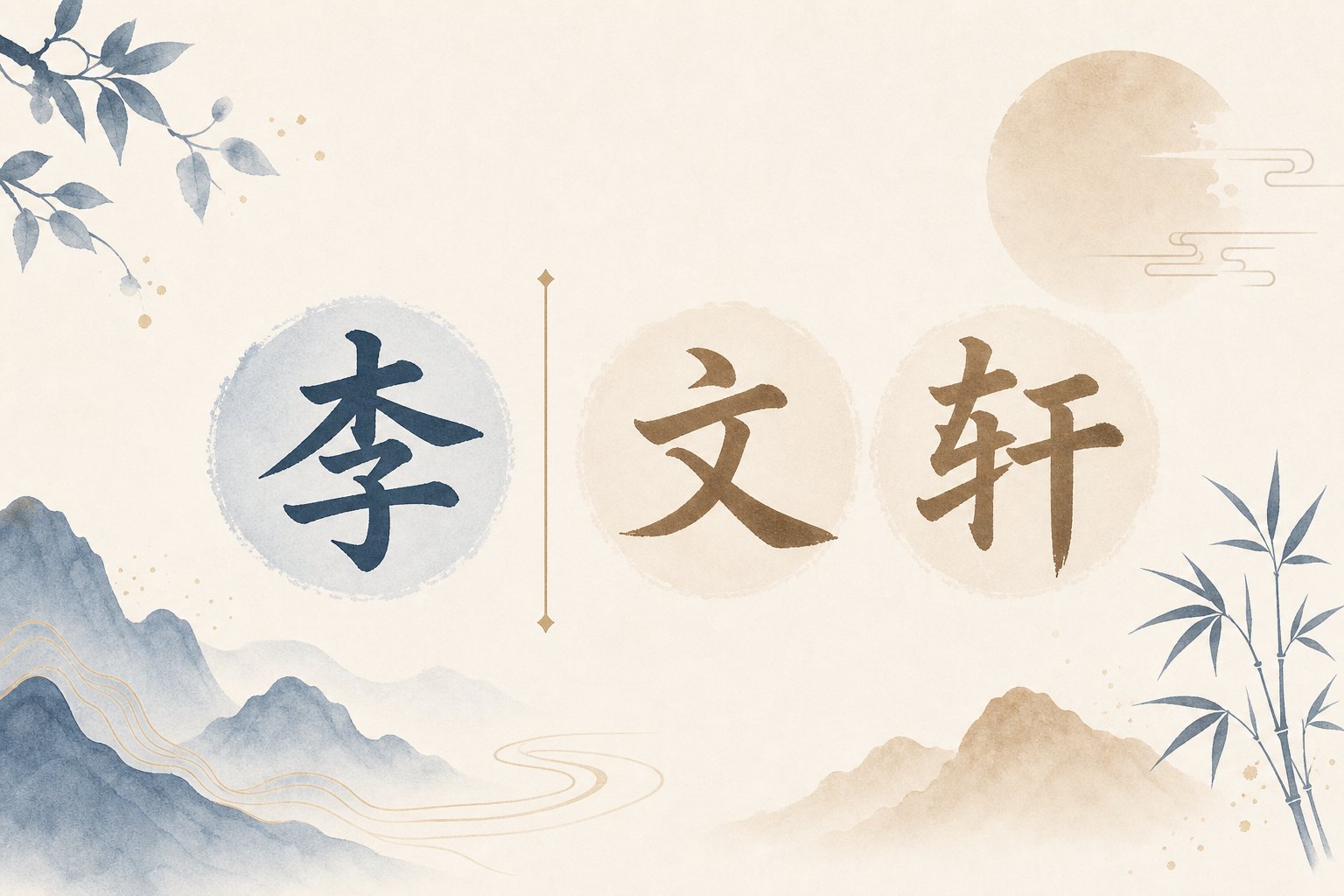
A Chinese name typically has two or three characters total. The surname (姓, xing) comes first, followed by a given name (名, ming) of one or two characters. That's it. No middle names, no hyphenated additions. Every character carries weight because there are so few of them.
Surname Plus Given Name Structure
Think of it as a tight formula: one character for family identity, then one or two characters for personal identity. The top 100 Chinese surnames are all single-syllable and cover roughly 85 percent of the population in mainland China. The three most common, Li (李), Wang (王), and Zhang (张), are shared by over 270 million people. There are only about 400 different surnames in total, with 81 being compound surnames like Ouyang (欧阳) or Zhuge (诸葛).
Given names, on the other hand, are where creativity lives. Parents choose characters based on meaning, sound, tonal harmony, and even visual beauty when written. Some names reflect hopes for the child, like Kang (康, healthy) or Yong (勇, brave). Others reference nature, literature, or family generational poems. Here's how the chinese name structure explained in practice:
| Full Name | Surname (姓) | Given Name (名) | Meaning |
|---|---|---|---|
| 王小明 (Wang Xiaoming) | 王 (Wang) | 小明 (Xiaoming) | King + Small Brightness |
| 李慧 (Li Hui) | 李 (Li) | 慧 (Hui) | Plum + Wisdom |
| 张伟 (Zhang Wei) | 张 (Zhang) | 伟 (Wei) | Archer + Greatness |
| 陈美玲 (Chen Meiling) | 陈 (Chen) | 美玲 (Meiling) | Ancient Kingdom + Beautiful Jade Sound |
Notice how each name reads as a complete thought. The surname anchors the person in a lineage, and the given name expresses something personal. A two-character given name like 美玲 allows for richer layered meaning, while a single-character given name like 慧 feels clean and direct.
How Chinese Names Differ From Western Names
When you look at chinese people names side by side with Western ones, a few key differences jump out. Western names typically pull from a fixed pool of established first names (James, Sarah, Michael) and the surname sits at the end. The given name rarely carries literal meaning in daily life, even if it has etymological roots.
Chinese names flip this entirely. The surname leads, signaling family and belonging before individual identity. And the given name is almost always invented fresh for each person, chosen character by character for specific meaning. You won't find a standard list of "popular given names" the way you'd find a list of popular baby names in English. Each combination is crafted.
This means when you create a name for your friend, you're not picking from a menu. You're composing something original within a set of structural constraints: a real surname, one or two meaningful characters, pleasant tonal flow, and no awkward homophones. Understanding these boundaries is what separates a name that sounds authentically Chinese from one that feels off.
Step 2 Gather Key Information About Your Friend
Jumping straight into character selection without preparation is like writing a poem without knowing the subject. The best Chinese names feel personal because they are personal, built from real details about the person who will carry them. A quick information-gathering step makes the difference between a generic name and one your friend genuinely connects with.
Information to Gather Before You Start
Think of this as your name creation worksheet. Each piece of information opens up different character possibilities and helps you narrow thousands of options down to a handful of strong candidates. Here's what to consider when figuring out how to create a chinese name for a foreigner:
- Their full original name and how it sounds. Write out the syllables of their first and last name. Which sounds could map onto Chinese characters? "Martin" gives you "Ma" as a natural surname hook. "Sarah" offers "Sa" or "Sha" sounds to work with.
- Personality traits that define them. Are they calm and thoughtful, or energetic and bold? A quiet, reflective friend might suit characters associated with wisdom or water. Someone adventurous might resonate with mountain or sky imagery.
- Hobbies, passions, or profession. A musician might appreciate characters related to sound or harmony. A nature lover could connect with forest or ocean characters. These details add a layer of personal meaning.
- Values or concepts they care about. Some people are drawn to ideas like courage, kindness, or creativity. Knowing this helps you select characters that carry emotional weight for them specifically.
- Gender expression preferences. Chinese characters carry gender associations. Some friends will want a name that aligns with traditional expectations; others prefer something neutral. Ask rather than assume.
Ask Your Friend About Their Preferences
Here's something easy to overlook: your friend likely has opinions about what "my chinese name" should feel like. Some people want a name that echoes their original name phonetically, so colleagues can make the connection instantly. Others want something entirely fresh, a name that feels like a new identity within Chinese culture rather than a translation of their old one.
A simple conversation clears this up. Ask whether they'd prefer recognition (sound-based) or meaning (concept-based). Ask if there are specific sounds they love or dislike. Some friends will say, "I have no idea, surprise me," and that's fine too. But giving them the chance to weigh in creates ownership from the start, and a name someone helped shape is a name they'll actually use.
With these details in hand, you have raw material to work with. The next decision is a strategic one: should the name mirror how your friend's original name sounds, or should it express who they are through meaning alone?
Step 3 Decide Between Sound-Based and Meaning-Based Naming
That strategic choice between sound and meaning is really the fork in the road for the entire naming process. In Chinese, these two approaches even have their own terms: phonetic transliteration (音译, yinyi) and meaningful naming (取名, quming). Understanding how each one works, and when to use which, is essential for figuring out how to pick a chinese name that actually feels right.
Phonetic Transliteration Explained
Transliteration maps the sounds of a foreign name into Chinese characters, syllable by syllable. This is how celebrity names end up in Chinese media. Beethoven becomes 贝多芬 (Beiduofen). Elizabeth becomes 伊丽莎白 (Yilishabai). The characters are chosen primarily for their pronunciation, not their meaning.
Sounds straightforward? Here's the catch. As Hacking Chinese points out, Mandarin has only about 400 available syllables (ignoring tones), compared to over 10,000 in English. Syllables can't end in most consonants. So phonetic accuracy is always a compromise. And because characters carry meaning whether you intend it or not, a purely sound-based name often produces nonsense when read literally. "Jonathan" transliterated as 乔纳森 (Qiaonasen) reads roughly as "tall admit forest." Christopher as 克利斯朵夫 becomes "gram advantage thus earlobe man."
The result is a name that neither sounds exactly like the original nor means anything coherent in Chinese. For short names with simple syllables, transliteration can work reasonably well. For longer or phonetically complex names, it tends to produce something awkward.
Creating a Meaningful Name Instead
The alternative is to set aside the original name's sound entirely and create a fresh Chinese name based on personality, values, or aesthetics. This is closer to how Chinese parents actually name their children: selecting characters for what they mean, how they sound together, and how they look on paper.
A meaningful name feels native. When your friend introduces themselves as 卫诗雨 (Wei Shiyu, "guardian of poetic rain") rather than a five-character transliteration, Chinese speakers respond differently. The name registers as a real name, not a foreign import squeezed into Chinese phonetics. It invites curiosity rather than confusion.
This approach works especially well when your friend wants deeper cultural immersion, plans to live in China long-term, or simply prefers a name that carries personal significance over phonetic recognition. The tradeoff is that colleagues who know their English name won't immediately see the connection.
When to Combine Both Approaches
In practice, you don't have to choose one or the other. The most natural-sounding results often come from blending the two strategies. Here's the principle worth remembering:
Use a phonetically similar surname to preserve a sound connection to the original name, then choose given name characters purely for meaning, tone, and beauty.
Imagine your friend's name is Martin. You pick the surname 马 (Ma) because it echoes the first syllable and is a common, authentic Chinese surname. Then for the given name, you select characters based on Martin's personality: perhaps 文博 (Wenbo, "cultured and broad-minded") if he's intellectual, or 天宇 (Tianyu, "sky and universe") if he's adventurous. The result, 马文博 or 马天宇, sounds completely natural to Chinese ears while maintaining a subtle phonetic thread back to "Martin."
This combined method is often the best way to pick a chinese name because it satisfies both practical recognition and cultural authenticity. Your friend's coworkers can still connect "Ma" to "Martin," but the full name reads as genuinely Chinese rather than an obvious transliteration. It respects the chinese name transliteration vs meaning debate by taking the strongest element from each side.
Consider the real-world example of a learner named Scott whose teacher gave him the name 洪宇 (Hong Yu). The surname 洪 echoes his English surname phonetically, while 宇 (universe) was chosen to represent his ambitions. Two characters, one clean idea, and a sound bridge that makes the name easy to remember across both languages.
With your approach decided, the next practical question becomes concrete: which specific surname should you choose, and how do you match it to your friend's original name sounds?
Step 4 Select a Chinese Surname That Fits Your Friend's Name
The surname is the anchor of any Chinese name. It signals authenticity instantly. A name built on a real, recognizable Chinese surname sounds native from the very first syllable, while an invented or unusual one immediately flags the name as foreign. Your goal here is to pick chinese name surnames that echo your friend's original name phonetically while being genuinely common in Chinese-speaking communities.
Matching Surnames to Western Name Sounds
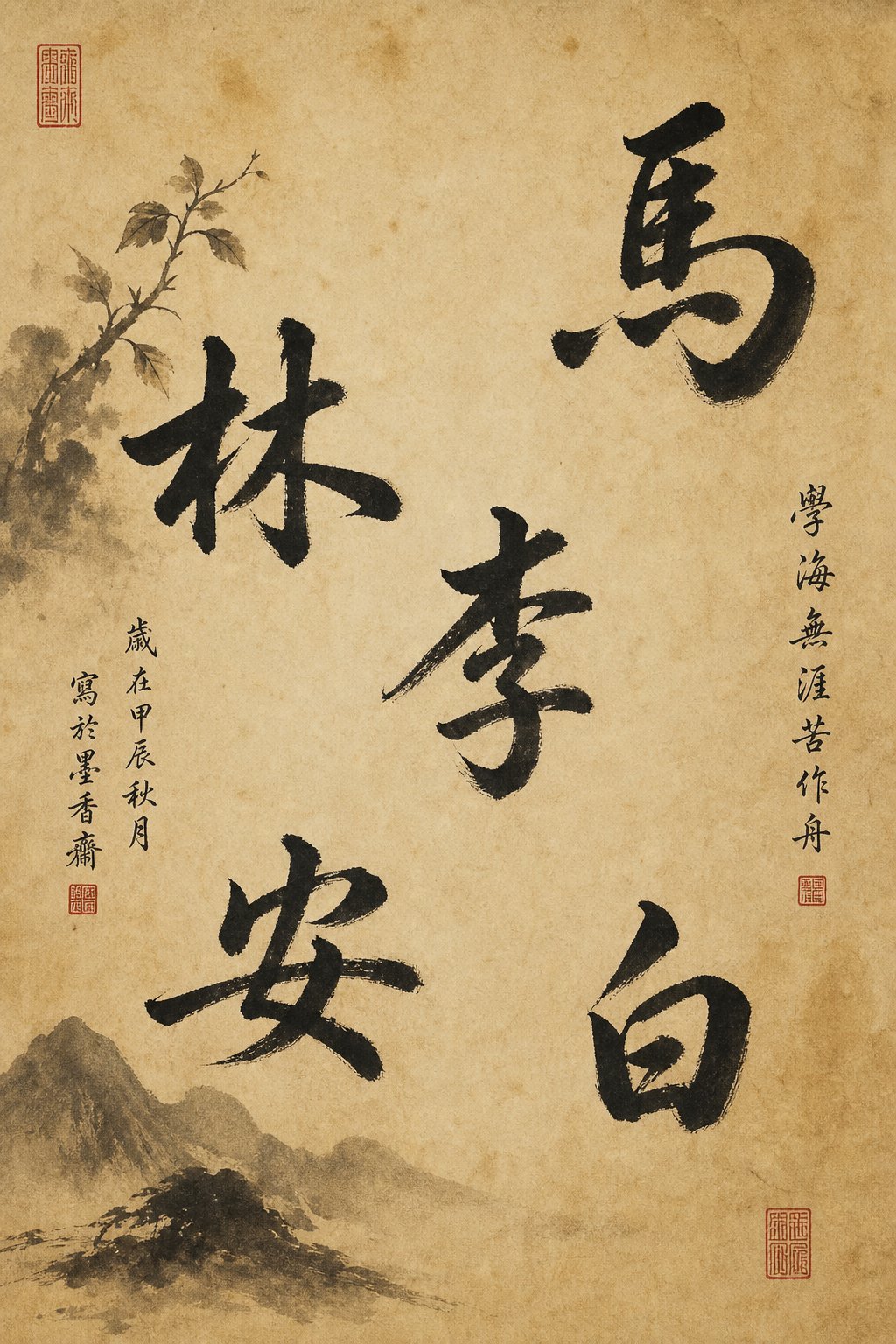
The strategy is simple: identify the dominant sound in your friend's first or last name, then find a real Chinese surname that approximates it. You're not looking for a perfect phonetic match, just a natural-sounding echo. A friend named "Michael" gives you the "Mai" sound, which maps cleanly to 麦 (Mai). Someone named "Lynn" or "Linda" pairs naturally with 林 (Lin).
Here's a reference table showing how to choose a chinese name surname based on common Western name sounds:
| Chinese Surname | Pinyin | Approximate Sound Match | Example Western Names |
|---|---|---|---|
| 马 | Ma | "Ma" sounds | Martin, Mary, Mark, Matthew |
| 林 | Lin | "Lin" or "Lyn" sounds | Linda, Lynn, Lindsay |
| 李 | Li | "Lee" or "Lei" sounds | Lee, Leigh, Lisa, Leo |
| 安 | An | "An" sounds | Andrew, Anna, Anthony, Andrea |
| 白 | Bai | "Ba" or "Bei" sounds | Bailey, Barbara, Benjamin |
| 罗 | Luo | "Ro" or "Lo" sounds | Robert, Roger, Rosa, Roland |
| 柯 | Ke | "Ke" or "Co" sounds | Kevin, Colin, Karen, Kate |
| 高 | Gao | "Ga" or "Go" sounds | Gary, Gabriel, Gordon |
| 周 | Zhou | "Jo" sounds | John, Jones, Joseph, Joan |
| 何 | He | "He" sounds | Henry, Helen, Herbert |
| 胡 | Hu | "Hu" or "Who" sounds | Hugo, Hugh, Hunter |
| 王 | Wang | "Wa" or "Won" sounds | Walter, Warren, Wayne |
Popular Surnames That Work Well for Foreigners
Not all surnames carry equal weight. A study of over a thousand North American China scholars' Chinese names found that 白 (Bai) was the most frequently chosen surname, followed by 柯 (Ke) and 罗 (Luo). These surnames work well because they're common enough to sound natural, phonetically flexible, and free of overly strong cultural associations.
That last point matters. Some surnames carry specific connotations you should be aware of. 孔 (Kong) is strongly associated with Confucius and his descendants. 毛 (Mao) inevitably evokes Mao Zedong. 习 (Xi) connects to current political leadership. These aren't wrong choices, but they draw attention in ways your friend might not intend. When in doubt, stick to high-frequency, culturally neutral surnames like 林, 李, 马, or 白.
Also consider how the surname's tone interacts with the given name you'll build next. A fourth-tone surname like 赵 (Zhao) pairs differently than a second-tone surname like 林 (Lin). The tonal melody of the full name matters for how pleasant it sounds spoken aloud, which brings us to the most creative part of the process: choosing the given name characters themselves.
Step 5 Pick Meaningful Characters for the Given Name
This is where the name comes alive. The surname gives your friend a cultural anchor, but the given name is where personality, aspiration, and beauty converge into something truly personal. When picking a chinese name's given name characters, you're selecting one or two characters that will represent your friend every time they introduce themselves, sign a document, or hear someone call out to them.
The key question: what do you want the name to say? Chinese name characters meaning is never accidental. Every character carries semantic weight, tonal color, and visual form. Your job is to find characters that align with your friend's identity while sounding natural together.
Common Characters Organized by Theme and Meaning
Rather than scrolling through a dictionary of thousands of characters, start with thematic clusters. Most Chinese given names draw from a handful of meaning categories. Here's a curated reference to help you how to choose chinese name characters that fit your friend's personality:
| Theme | Character | Pinyin | Meaning | Gender Association |
|---|---|---|---|---|
| Nature | 雨 | Yu | Rain | Neutral / slightly feminine |
| Nature | 风 | Feng | Wind | Neutral / slightly masculine |
| Nature | 山 | Shan | Mountain | Masculine |
| Nature | 海 | Hai | Ocean, sea | Masculine |
| Nature | 云 | Yun | Cloud | Feminine |
| Virtue | 文 | Wen | Literature, culture | Neutral |
| Virtue | 德 | De | Virtue, morality | Masculine |
| Virtue | 慧 | Hui | Wisdom, intelligence | Feminine |
| Virtue | 信 | Xin | Trust, faith | Masculine |
| Beauty & Elegance | 雅 | Ya | Elegant, refined | Feminine |
| Beauty & Elegance | 婷 | Ting | Graceful | Feminine |
| Beauty & Elegance | 瑶 | Yao | Precious jade | Feminine |
| Beauty & Elegance | 琳 | Lin | Beautiful jade | Feminine |
| Strength & Ambition | 志 | Zhi | Ambition, will | Masculine |
| Strength & Ambition | 伟 | Wei | Great, mighty | Masculine |
| Strength & Ambition | 杰 | Jie | Outstanding, heroic | Masculine |
| Strength & Ambition | 强 | Qiang | Strong, powerful | Masculine |
A few notes on gender. These associations reflect traditional patterns, not rules. Modern Chinese naming is increasingly flexible. A man named 雅文 (Yawen, "elegant culture") or a woman named 志远 (Zhiyuan, "far-reaching ambition") won't raise eyebrows. Follow your friend's preferences rather than rigid conventions.
You'll also notice that combining characters from different themes creates richer meaning. Pairing a nature character with a virtue character, like 海信 (Haixin, "ocean of trust") or 雨慧 (Yuhui, "rain wisdom"), produces names that feel layered and poetic without being overwrought.
Balancing Aesthetics and Meaning in Character Selection
Meaning alone isn't enough. A Chinese name also needs to look right on paper and sound right spoken aloud. This is where visual aesthetics come in.
Consider stroke count balance. Characters are defined by their number of strokes, and a name looks more harmonious when the characters have a balanced visual weight. A surname with 4 strokes (like 王) paired with a 20-stroke given name character (like 馨) creates a lopsided appearance. Aim for characters whose stroke counts don't differ dramatically, so the name looks proportional when written by hand or printed on a business card.
Radical harmony matters too. Characters that share similar radicals (the building-block components) can create visual echoes that feel intentional. For example, 琳瑶 both contain the jade radical (王), reinforcing the precious-stone theme visually. On the other hand, two characters with the same radical can sometimes look repetitive. Trust your eye: write the full name out and see if it feels balanced.
Finally, check character combinations for unintended readings. Two perfectly fine individual characters can produce awkward meanings when placed together. Search the combination in a Chinese dictionary or on Baidu to see if it's an existing word with an unwanted definition. Say the full name aloud and listen for homophones that might trigger unfortunate associations. Ask yourself: if this were a stranger's name on a business card, would anything seem odd?
Getting the characters right is the creative heart of the process. But even a beautifully chosen name can stumble if the tones clash or the sounds accidentally echo something inauspicious, which is exactly what the verification step catches.

Step 6 Check for Tonal Issues and Cultural Taboos
You've selected beautiful characters with layered meaning. The name looks great on paper. But here's where many people stop too early. A Chinese name isn't just read silently; it's spoken aloud dozens of times a day. And spoken Chinese is a tonal language where pitch patterns carry meaning. If the tones in your friend's name clash or the sounds accidentally echo something inauspicious, even the most thoughtful character choices can backfire. This verification step is what separates a polished name from one that makes native speakers wince.
Tone Combinations That Sound Natural
Mandarin has four tones plus a neutral tone, and certain sequences feel more musical than others. Say a name with three or four consecutive fourth tones (the sharp, falling tone) aloud. It sounds clipped and aggressive, almost like barking commands. A name like 赵志毅 (Zhao Zhiyi, all fourth tones) is technically valid but exhausting to say and harsh on the ear.
The most pleasant-sounding chinese nams tend to alternate between rising and falling tones, creating a natural melodic contour. A second-tone character followed by a fourth-tone character (rising then falling) produces a satisfying arc. A first-tone followed by a second-tone (high-flat then rising) feels open and bright.
There's also a practical pronunciation rule to consider. When two third-tone characters appear consecutively, the first one shifts to a second tone in natural speech. So a name like 李雨 (Li Yu, both third tone) is actually pronounced "Li Yu" with the surname rising to second tone. This isn't a problem per se, but it means the name sounds different from how it looks in pinyin. If you're building a name with multiple third-tone characters, be aware of how the tone sandhi rules will reshape the spoken version.
Watch for these tonal patterns:
- Three or more fourth tones in a row (e.g., 赵志毅) - sounds harsh and staccato
- All third tones (e.g., 马雨美) - triggers cascading tone changes that make pronunciation confusing for your friend
- Repeated identical tones throughout - creates a flat, monotonous feel regardless of which tone it is
- Best combinations: alternating tones (2-4, 1-3, 2-1) or a mix that creates natural rise and fall
Characters and Homophones to Avoid
Chinese is rich with homophones, words that sound identical but carry wildly different meanings. When you're choosing characters for a name, you need to think beyond the characters you've selected and consider what other characters share those exact sounds. This is one of the most critical chinese name taboos to avoid, and it's where even experienced native speakers sometimes slip up.
The classic example: any character or combination that sounds like 死 (si, death) is deeply inauspicious. But the danger extends far beyond that single word. Here are homophones and sound combinations to check against:
- Si (any tone) - echoes 死 (death). Avoid names where syllables combine to produce "si" sounds, like 思义 read quickly
- Li (fourth tone) - can echo 离 (separation, divorce). Be cautious with 丽 in certain surname pairings
- Ku (third tone) - sounds like 苦 (bitterness, suffering)
- Sang (first tone) - echoes 丧 (mourning, funeral)
- Mei (second tone) after certain surnames - can sound like 没 (without, lacking), as in 没命 (no life)
- Fan (second tone) - can echo 烦 (annoyed, troubled) in some combinations
- Shuai (first tone) - while meaning "handsome," it also means "to fall/decline" in other contexts
Beyond individual syllables, read the full name aloud quickly and listen for unintended phrases. A name like 杨伟 (Yang Wei) is a real name that unfortunately sounds like a colloquial term for impotence. 史珍香 (Shi Zhenxiang) reads beautifully character by character but spoken fast resembles a vulgar phrase. These traps aren't obvious until you say the name at conversational speed.
Regional Dialect Considerations
Here's something most naming guides overlook entirely. Mandarin isn't the only Chinese language your friend's name will encounter. If they'll spend time in Guangdong, Hong Kong, or among Cantonese-speaking communities, the name needs to pass a second phonetic test. Characters that sound elegant in Mandarin can carry unfortunate associations in Cantonese, Hokkien, or Shanghainese.
For example, the character 芬 (fen, "fragrant" in Mandarin) is perfectly lovely in standard Chinese. But in certain southern dialects, its pronunciation shifts closer to words with less pleasant meanings. Similarly, some characters that are tonally neutral in Mandarin become homophonous with vulgar terms in Cantonese.
You don't need to be an expert in every dialect. But if your friend will live or work in a specific region, take these steps:
- Search the full name in a Cantonese dictionary (like CantoDict) if they'll be in Hong Kong or Guangdong
- Ask a speaker of the relevant dialect to read the name aloud and flag any awkward associations
- Check whether the characters have different common meanings in traditional vs. simplified Chinese, since Hong Kong and Taiwan use traditional characters
The final quality check is straightforward: say the complete name aloud five times at normal conversational speed. Does it flow? Does anything sound like an existing word or phrase you didn't intend? Then search the full name on Baidu or Google to see if it belongs to a famous person, fictional character, or brand. Finally, text the name to at least one other native speaker without context and ask for their gut reaction. If they smile and say it sounds like a real person's name, you've passed. If they pause or laugh, ask why and adjust accordingly.
A name that clears these checks is ready for the most rewarding part: the moment you actually share it with your friend and watch their reaction.
Step 7 Present the Name and Explain Its Meaning
That moment when you share the name matters more than you might think. You've invested real thought into selecting characters, checking tones, and avoiding pitfalls. The presentation is where all that invisible work becomes visible, where your friend goes from not having a Chinese name to owning one. How you deliver it shapes whether they feel excited to use it or uncertain about whether it truly fits.
How to Present the Name as a Gift
Think of this less like handing over a form and more like giving a meaningful gift. Your friend can't read the characters yet, doesn't know the tones, and has no context for why you chose what you chose. Your job is to bridge that gap with clarity and warmth. Here's a step-by-step approach to how to present a chinese name to a friend in a way that feels special:
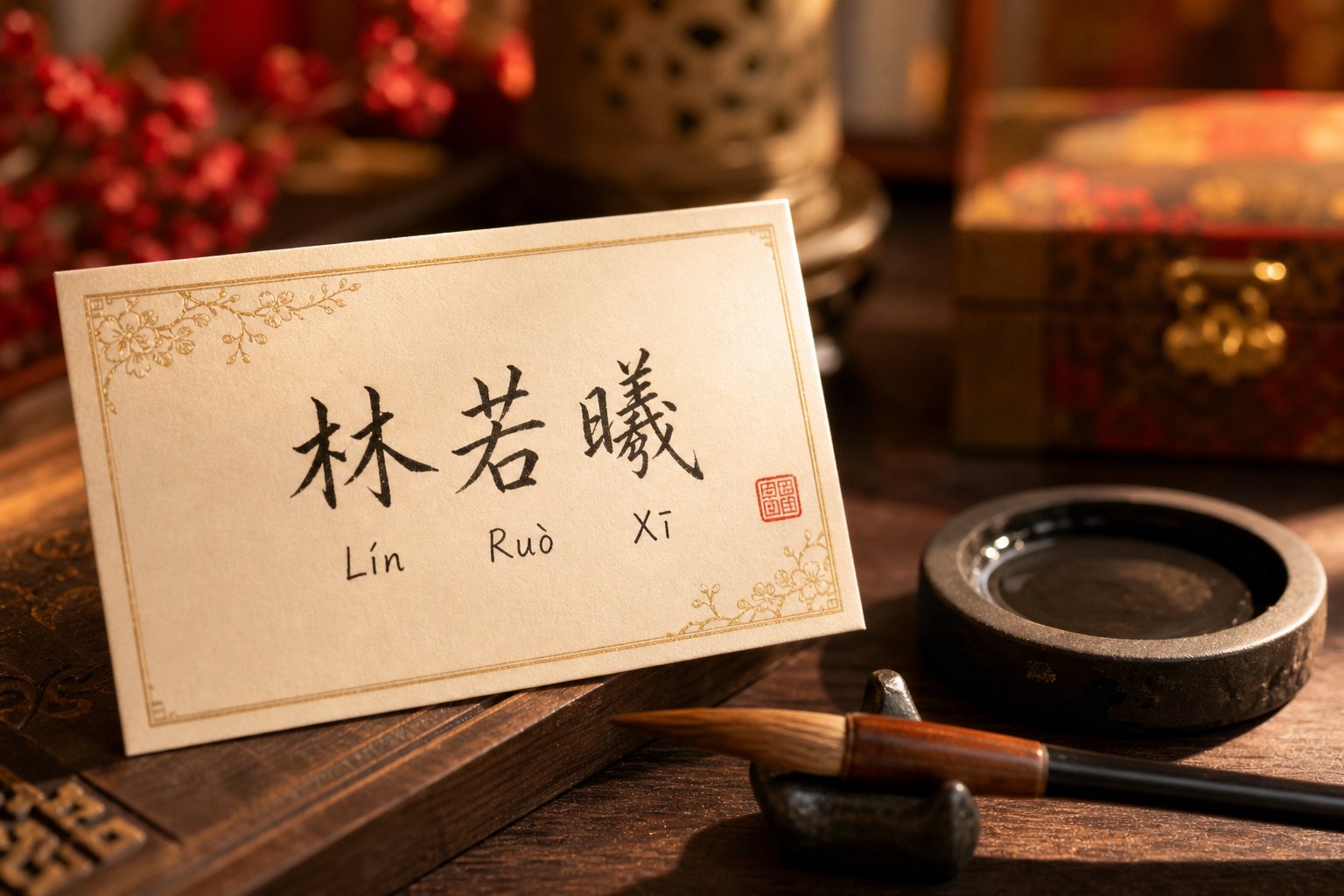
- Prepare a written card or note. Write the full name in Chinese characters, followed by the pinyin with tone marks (e.g., Ma Wenbo / 马文博 / Ma Wenbo). Include each character's individual meaning and the overall sentiment the name conveys. Something like: "马 (Ma) - your surname, echoing 'Martin.' 文 (Wen) - culture, literature. 博 (Bo) - broad, learned. Together: a cultured, open-minded person from the Ma family."
- Offer 2-3 options rather than a single name. This gives your friend agency. Present each option with its meaning and feeling, then let them choose the one that resonates most. One might sound more elegant, another more energetic. Their gut reaction tells you which name they'll actually use.
- Say each name aloud slowly. Pronounce it clearly so your friend hears the tonal melody. Then say it at natural speed so they hear how it flows in conversation. Repeat it a few times. Let them try it themselves.
- Explain the "why" behind your choices. Tell them which personality trait, value, or sound inspired each character. "I picked 雅 because you always notice beauty in small things" lands differently than just saying "this means elegant." The story behind the name is part of the gift.
- Consider a calligraphy version. If you or a friend can write brush calligraphy, a handwritten version of the name on nice paper makes the moment tangible. It's something they can frame, photograph, or keep. Even a neatly handwritten version on a card feels more personal than a typed message.
The key principle: don't just hand them a name. Hand them understanding. When your friend knows what each character means and why you chose it, the name stops being a foreign string of sounds and becomes something they feel connected to.
Teaching Your Friend to Use Their New Name
A name your friend can't pronounce or write is a name that stays unused. Spend a few minutes on practical skills right there in the moment. Mandarin has four tones, and your friend's name likely uses two or three of them. Break the name into syllables and practice each tone individually before combining them. The pinyin system uses diacritics above vowels to indicate tones visually, so make sure your written version includes these marks clearly.
For writing, show them the stroke order of each character. You don't need to turn this into a calligraphy lesson, but tracing each character a few times helps the name feel embodied rather than abstract. Many friends enjoy learning to write their own name even if they never study Chinese further. It becomes a small skill they're proud of.
Then help them use the name confidently in real situations. Practice a simple self-introduction: "我叫马文博" (Wo jiao Ma Wenbo, "My name is Ma Wenbo"). Role-play ordering coffee or introducing themselves at a work meeting. The first few times they say their own name aloud to a stranger will feel awkward. If they've practiced with you beforehand, that awkwardness fades faster.
One more thing worth mentioning: let your friend know it's completely normal to choose a chinese name and then adjust it later. Some people live with a name for a few weeks before deciding a different option from your shortlist fits better. That's fine. A name should feel like it belongs to them, and sometimes that takes a little time to settle in.
Even with a thoughtful presentation, certain missteps during the naming process itself can undermine the result. Knowing the most common pitfalls helps you avoid them entirely.
Common Mistakes to Avoid When Picking a Chinese Name
You've followed every step carefully, but even well-intentioned naming efforts can go sideways in predictable ways. Browse any language learning forum or Reddit thread about cool chinese names and you'll find the same complaints surfacing again and again: names that sound like ancient emperors, names that accidentally belong to pop stars, names that make Chinese speakers guess the person is eighty years old. These chinese naming mistakes to avoid are surprisingly common among native speakers who haven't thought critically about what makes a name work for a foreigner versus a newborn baby.
The good news? Each mistake has a clear fix. Here's what to watch for and how to course-correct.
Mistakes in Character Selection
Character choice is where most problems originate. You're fluent in Chinese, so every character feels accessible to you. But not every character belongs in a name, and not every combination that sounds poetic in your head will land well in daily life. A chinse name that looks impressive in calligraphy might embarrass your friend at a coffee counter.
The most frequent issue? Going too literary. Characters like 曦 (xi, dawn light), 翊 (yi, assist in flight), or 麒 (qi, mythical creature) are beautiful in poetry but heavy in a name. When your friend introduces themselves and the listener pauses to ask "which character is that?" every single time, the name becomes a burden rather than a bridge. Stick to characters that educated adults recognize immediately without needing clarification.
Equally problematic is choosing characters purely for phonetic similarity without checking what they actually mean. A name assembled syllable by syllable from your friend's English name can produce combinations that read as gibberish or worse. Remember: every character carries meaning whether you intended it or not.
Mistakes in the Naming Process
Beyond individual characters, the process itself has common failure points. Ignoring your friend's preferences is perhaps the biggest one. You might love the name you created, but if your friend feels no connection to it, they simply won't use it. A name gathering dust isn't a gift; it's an obligation.
Here's a complete breakdown of the most common mistakes, why they cause problems, and what to do instead:
| Common Mistake | Why It's Problematic | What to Do Instead |
|---|---|---|
| Using overly grandiose or literary characters (e.g., 龙腾, 凤翔) | Sounds pretentious and theatrical. Native speakers associate these with fictional characters or boastful parents, not real people walking into meetings. | Choose characters that are meaningful but grounded. 文, 雅, 明 carry beauty without drama. If you wouldn't name your own child something, don't give it to your friend. |
| Picking characters solely for sound without checking meaning | Produces names that read as nonsensical or accidentally negative. Characters like 腐 (fu, rotten) or 痴 (chi, obsessed/foolish) might match a sound but carry terrible connotations. | Always verify each character's meaning independently and in combination. Search the full name on Baidu to confirm it doesn't form an existing word with unwanted definitions. |
| Accidentally duplicating a celebrity or fictional character's name | Your friend introduces themselves as 马天宇 only to learn it's a famous Chinese actor's name. Now every interaction starts with "Oh, like the singer?" which gets old fast. | Search the complete name online before finalizing. Check Baidu, Weibo, and Douyin. If a well-known person shares the name, swap one character. |
| Choosing outdated or overly traditional names (e.g., 建国, 秀英, 桂芳) | These names peaked in popularity during the 1950s-1970s. Giving them to a young foreigner is like naming an exchange student "Gertrude" or "Herbert" in English. It signals a generational mismatch. | Check naming trends for the current era. Characters like 宇, 轩, 涵, 萱 feel contemporary. Ask yourself: would a Chinese person born in the same decade as your friend carry this name? |
| Making the given name three characters (total name of four+ characters) | Chinese names are almost always two or three characters total. A four-character name reads as a compound surname or a transliteration, not a natural name. It immediately marks the person as foreign. | Limit the full name to two or three characters: one surname character plus one or two given name characters. This is the standard structure that sounds native. |
| Ignoring the friend's input entirely | The friend feels no ownership over the name. They may dislike the sound, find the meaning irrelevant, or simply never use it because it doesn't feel like theirs. | Offer 2-3 options and explain each one. Let your friend choose. Ask about their preferences before you start. A collaborative name is a name that sticks. |
One pattern worth highlighting: the temptation to show off your own literary knowledge through your friend's name. It's natural to want to demonstrate cultural depth, but the name isn't for you. It's for someone who will carry it into rooms where they're already navigating unfamiliar social dynamics. A name that requires explanation every time it's spoken adds cognitive load rather than reducing it.
The simplest test? Imagine a Chinese stranger reading the name on a form with no context. Would they picture a normal person, or would they picture a character from a wuxia novel? If it's the latter, dial it back. The best names feel inevitable, like they could belong to anyone, while still carrying personal meaning for the one person who owns them.
FAQs About Giving Chinese Names to Foreign Friends
1. How do I choose a Chinese surname for my foreign friend?
Match the dominant sound in your friend's English first or last name to a real Chinese surname. For example, use 马 (Ma) for names like Martin or Mary, 林 (Lin) for Linda or Lynn, and 安 (An) for Andrew or Anna. Stick to common, culturally neutral surnames that native speakers recognize instantly. Avoid surnames with strong political or historical associations like 毛 or 习, as these draw unintended attention.
2. Should a Chinese name for a foreigner be based on sound or meaning?
The most effective approach combines both. Use a phonetically similar surname to preserve a sound connection to the original English name, then select given name characters purely for meaning, tonal harmony, and beauty. This hybrid method produces names that sound authentically Chinese while maintaining a subtle link to the friend's original identity, making it easier for colleagues to connect the two names.
3. What are common mistakes when giving a Chinese name to a foreigner?
The most frequent errors include using overly literary or grandiose characters that sound pretentious, choosing outdated names that belong to older generations, accidentally duplicating a celebrity's name, and ignoring the friend's personal preferences. Always search the full name on Baidu to check for famous namesakes, avoid characters that require constant explanation, and offer 2-3 options so your friend can choose the one that resonates most.
4. How many characters should a Chinese name for a foreigner have?
A Chinese name should be two or three characters total: one surname character plus one or two given name characters. This matches the standard structure native speakers use. Names with four or more characters immediately sound like transliterations rather than natural Chinese names, which defeats the purpose of creating an authentic-sounding identity for your friend.
5. How do I avoid cultural taboos when creating a Chinese name?
Check for homophones that echo inauspicious words like 死 (death), 离 (separation), or 苦 (bitterness). Say the full name aloud at conversational speed to catch unintended phrases. Avoid consecutive fourth tones, which sound harsh. If your friend will spend time in southern China or Hong Kong, verify the name doesn't carry negative associations in Cantonese. Always have at least one other native speaker review the name before presenting it.