What the Hyphen in Chinese Names Really Means
When you see a name like "Chen Cheng-Wei," that hyphen is doing something specific. It tells you that "Cheng-Wei" is one given name, not two separate names. It is not a first name followed by a middle name. It is a single, indivisible unit.
What the Hyphen Actually Represents
A hyphen in Chinese names connects two romanized syllables that together form one given name. Each syllable represents one Chinese character, and the two characters function as a single name unit, not a first-plus-middle combination.
So what is a Chinese name, structurally? The chinese name structure typically consists of a one-character surname followed by a one- or two-character given name. The surname comes first. The given name follows. When that given name has two characters, romanization produces two syllables that need a visual link to signal their unity.
Each Chinese character is monosyllabic. One character, one syllable. A two-character given name like 志明 becomes two syllables when written in the Latin alphabet: "Zhi" and "Ming." Without something connecting them, a Western reader might assume "Zhi" is a first name and "Ming" is a middle name. The hyphen prevents that misreading. It says: these belong together.
This is how Chinese names work at their core. The chinese naming conventions you encounter in passports, academic papers, and office directories all trace back to this basic reality: two characters, one name, one hyphen holding them together.
Why This Matters for Everyone
Whether you carry a hyphenated name yourself or you regularly encounter one at work, understanding this chinese name definition has real consequences. Misparsing the hyphen leads to wrong forms, wrong database entries, and wrong ways of addressing people. The reasons behind the hyphen span linguistics, history, and regional politics, and the practical fallout touches everything from airline tickets to HR systems.
The logic is simple. The complications start when different regions romanize the same name in different ways.
The Linguistic Reason Chinese Names Use Hyphens
Chinese characters operate on a one-character, one-syllable basis. Every single character carries exactly one syllable of sound. When a given name for Chinese individuals contains two characters, romanization splits that name into two distinct syllables. And two separate syllables sitting next to each other on a page look, to English-trained eyes, like two separate names.
Monosyllabic Characters and Two-Syllable Given Names
Imagine the given name 志明. In Chinese script, these two characters sit together without any space, forming one seamless unit. But the moment you romanize them, you get "Zhi Ming" or "Chih Ming," depending on the system. Two syllables. Two visual chunks. And that is where the confusion begins.
English speakers are conditioned to read separate words as separate names. "John David Smith" has a first name, a middle name, and a last name. So when someone sees "Chen Zhi Ming," the instinct is to parse it the same way: "Chen" as a first name, "Zhi" as a middle name, and "Ming" as a last name. Or some other equally wrong combination.
Surnames in Chinese are typically one character and therefore one syllable. The family name is usually a single syllable, so it never needs internal punctuation. The given name is where the problem lives, because naming chinese characters into Latin script forces a two-character name into a format that looks like two words.
The Hyphen as a Unity Signal
The hyphen solves this by acting as a visual bridge. "Zhi-Ming" immediately communicates that these two syllables are bound together. They are one name. You would not call this person "Zhi" any more than you would call someone named "Elizabeth" just "Eliza" without asking first.
Do chinese people have middle names? Not in the Western sense. The traditional Chinese name structure has two parts: a family name and a given name. There is no separate middle name slot. When you see "Chen Cheng-Wei," the hyphenated portion is the complete given name, not a first-plus-middle arrangement. The concept of a middle name for chinese naming traditions simply does not exist in the same way it does in English-speaking cultures.
Some overseas Chinese individuals do adopt a Western given name and place their Chinese given name in the middle position, creating something like "James Zhiming Chen." But that is an adaptation to Western systems, not a reflection of how Chinese names inherently work.
Here is what happens when the hyphen disappears and the given name is left as two separate words:
- "Chen Zhi Ming" gets read as first name "Chen," middle name "Zhi," last name "Ming" by someone unfamiliar with Chinese name order.
- "Wang Mei Ling" gets split in a database as given name "Mei" and middle name "Ling," erasing the unity of the name 美玲.
- A colleague sees "Li Cheng Wei" on a roster and starts calling the person "Cheng," using only half their given name.
- An airline system assigns "Wei" as a middle name, creating a mismatch with a passport that lists "Cheng-Wei" as one unit.
Each of these errors stems from the same root: without the hyphen, Western readers and Western systems default to their own naming logic. The hyphen in Chinese names is not decorative. It is structural. It carries meaning the way a space between words carries meaning in English.
The question, then, is where this convention came from and why different regions handle it differently. That story starts with 19th-century British linguists and the romanization systems they built.

Historical Origins of Hyphenated Chinese Names
The hyphen did not appear in Chinese names by accident. It was baked into the very first widely adopted system for converting Chinese characters into Latin script, and its presence or absence today still reflects which romanization tradition a region follows.
Wade-Giles and the Origin of Hyphenation
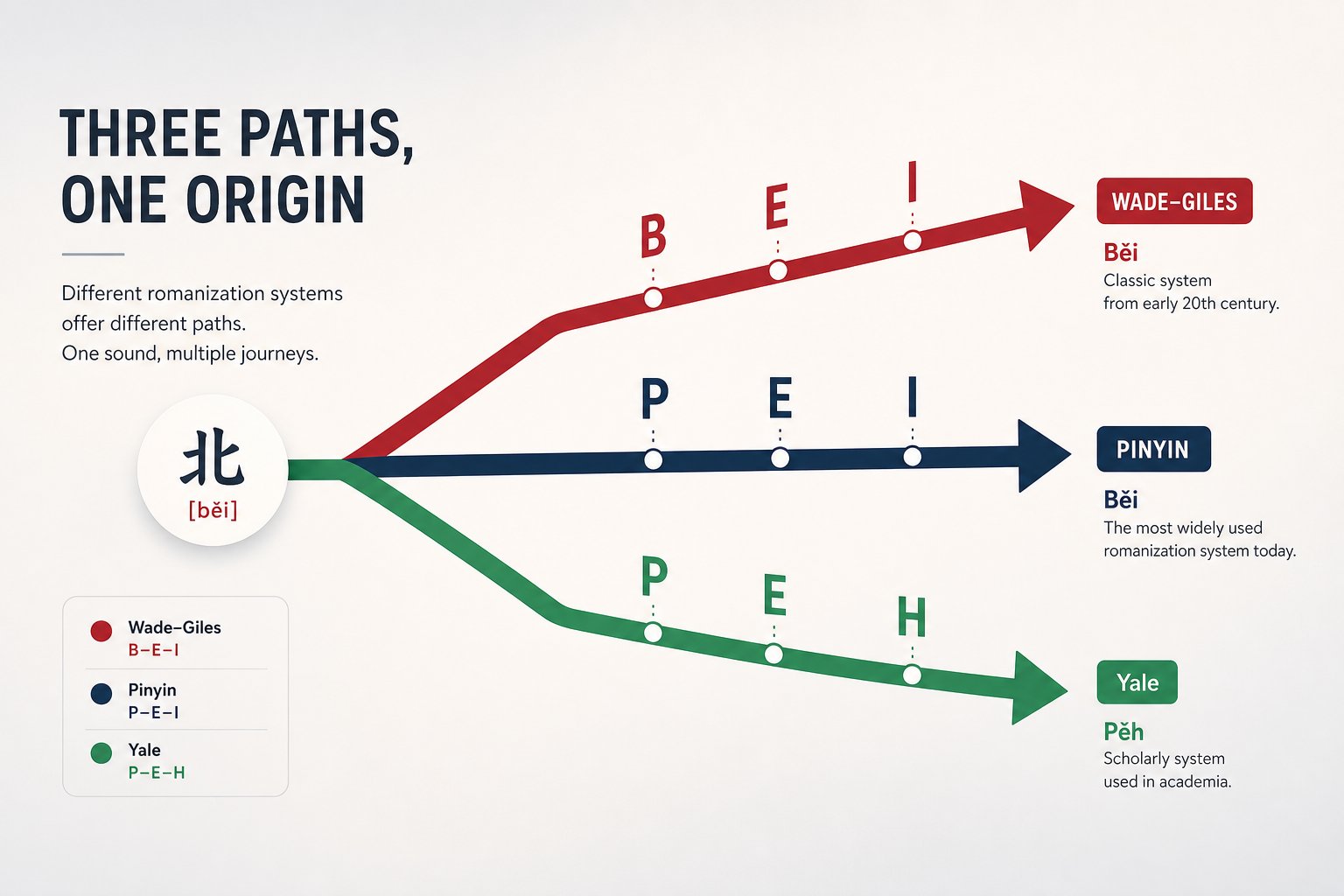
In the mid-19th century, British diplomat Sir Thomas Francis Wade created a system for romanizing Mandarin Chinese. Cambridge professor Herbert Allen Giles later refined it in his Chinese-English Dictionary (1912), and the result, Wade-Giles romanization, became the dominant english translation of chinese names for over a century. The system hyphenated two-syllable given names by default. "Mao Tse-tung," "Chiang Kai-shek," "Wang T'ieh-jen" — every compound given name got a hyphen connecting its parts.
This was not arbitrary. Wade-Giles treated each Chinese character as a discrete syllable and used the hyphen to show which syllables belonged to the same name unit. The chinese name origin of hyphenation, then, is fundamentally a product of 19th-century British linguistics meeting Chinese phonology. The convention spread through academic publishing, diplomatic records, and library cataloging systems across English-speaking countries.
Hanyu Pinyin and the Mainland Approach
Mainland China officially adopted Hanyu Pinyin in 1958 and made it the sole standard for international use in 1979. Pinyin takes a different approach: it joins the syllables of a given name into one unbroken string. "Wang Tieren" instead of "Wang T'ieh-jen." "Mao Zedong" instead of "Mao Tse-tung."
The Library of Congress notes this as a key distinguishing feature: Wade-Giles separates syllables with hyphens, while name pinyin in the Hanyu system fuses them together. Consider the zuo transliteration as a small example of how the systems diverge visually — what Wade-Giles writes as "tso" becomes "zuo" in Pinyin, and when these syllables appear in given names, Pinyin simply merges them with the adjacent character rather than bridging them with punctuation.
Taiwan, however, never fully adopted Pinyin. It continued using Wade-Giles-influenced romanization on passports and official documents, preserving hyphenation as standard practice. Even when Taiwan introduced its own Tongyong Pinyin system around 2000, and later shifted toward a revised romanization framework, the hyphenated given name format persisted. The chinese name conventions you see on a Taiwanese passport today — names like "CHEN, CHENG-WEI" — are direct descendants of Wade-Giles formatting choices made over a hundred years ago.
ISO 7098 and Official Standards
The international standard governing romanization of Chinese is ISO 7098, which specifies Hanyu Pinyin as the basis for converting modern Chinese into Latin script. Under this standard, a two-character given name is written as one continuous word without a hyphen. The surname is separated by a space, and the given name follows as a single block: "Wang Tieren," not "Wang T'ieh-jen" or "Wang Tie-ren."
But ISO 7098 governs mainland Chinese romanization specifically. It does not override the conventions used in Taiwan, Hong Kong, or diaspora communities that follow older or regional systems. The result is a fractured landscape where the same person's name might appear hyphenated on one document and fused on another, depending entirely on which political and linguistic tradition produced it.
These regional splits are not just historical curiosities. They show up on passports, visa applications, and boarding passes every day, creating real confusion for the people carrying those names and the systems trying to process them.
How Hyphenation Differs Across Regions
Take one person. Give them the name 陳志明. Now hand that name to five different passport offices across Asia. You will get five different romanized versions back, some hyphenated, some not, some in a completely different dialect. The characters are identical. The person is the same. But the way their name appears on official documents depends entirely on where they happen to hold citizenship.
This is not a quirk. It is the direct result of political history, colonial influence, and administrative decisions made decades ago that still govern how mandarin names and other Chinese-language names get rendered into Latin script. Are chinese names last name first? Yes, universally. But how the given name portion gets formatted after that surname varies dramatically by region.
Taiwan and Hyphenated Passport Names
Taiwanese passports use a modified Wade-Giles romanization system that hyphenates two-syllable given names by default. The format places the surname first in capital letters, followed by a comma, then the hyphenated given name. So 陳志明 becomes CHEN, CHIH-MING on a Taiwanese passport.
As the Taipei Times has documented, Taiwanese citizens have some flexibility in how they romanize their names. Some use standard Wade-Giles, others adopt quirky spellings that better approximate how their name actually sounds in English, and a few even use Hanyu Pinyin — though that choice often carries political connotations. What remains consistent is the hyphen. Whether someone writes "TSAI, ING-WEN" or "LIN, TZU-MIAO," the two-syllable given name stays connected by that punctuation mark.
Taiwan's government has allowed citizens to change their romanized names, and some politicians have taken advantage of this. But the underlying system still defaults to hyphenation because the island's romanization infrastructure descends directly from Wade-Giles conventions. Even when Taiwan briefly promoted Tongyong Pinyin in the early 2000s, the hyphenated given name format carried over.
Mainland China and Pinyin Without Hyphens
Mainland Chinese passports follow Hanyu Pinyin strictly. The given name syllables are fused into one unbroken string with no hyphen and no space between them. The same 陳志明 becomes CHEN ZHIMING. Two syllables, one block, no punctuation.
This reflects a deliberate standardization choice. When the People's Republic adopted Pinyin as its official romanization system, it treated the given name as a single lexical unit. The logic is straightforward: since the two characters form one name, they should appear as one word. No bridge needed because there is no gap to bridge.
The practical effect is that names in china look visually different from the same names in Taiwan, even when the underlying Chinese characters are identical. A mainland passport holder named 王美玲 appears as WANG MEILING, while a Taiwanese passport holder with the same name might appear as WANG, MEI-LING. Same person, same characters, different formatting — and different potential for confusion at international borders.
Hong Kong, Singapore, and Malaysia Conventions
Hong Kong adds another layer of complexity. The city uses Cantonese pronunciation rather than Mandarin, so 陳志明 becomes CHAN Chi-ming or CHAN Chi-Ming. The surname is romanized as Cantonese "Chan" rather than Mandarin "Chen," and the given name is typically hyphenated. This convention reflects Hong Kong's British colonial history, where administrative systems adopted Cantonese romanization with hyphenation patterns similar to Wade-Giles formatting.
You will notice that chinese names surname first is the universal rule across all these regions. The variation is entirely in how the given name gets treated after that surname.
Singapore and Malaysia present yet another pattern. The South China Morning Post explains that Chinese names in these countries are romanized based on the pronunciation in a person's ancestral dialect — Hokkien, Teochew, Cantonese, Hakka, or others. So 陳志明 might appear as TAN Chee Beng (Hokkien), CHAN Chi Ming (Cantonese), or CHIN Chee Meng (Hakka), depending on the family's linguistic heritage.
In Singapore and Malaysia, hyphenation is inconsistent. Some individuals hyphenate their given names, others use a space, and still others write them as separate unhyphenated words. The Asia Media Centre notes that in these diaspora communities, the way a family name is spelled can signal which region of China a person's ancestors came from. The given name formatting is similarly varied, reflecting the absence of a single government-mandated romanization standard for Chinese names.
The political and administrative reasons behind these divergences are clear. Each region's romanization choices were shaped by its colonial history, its relationship with mainland China, and its own language policies. Taiwan maintained Wade-Giles as a marker of distinction from the mainland. Hong Kong inherited British colonial Cantonese romanization. Singapore and Malaysia preserved dialect-based spellings as a reflection of their multicultural Chinese communities. Mainland China standardized on Pinyin as part of broader language reform.
| Region | Name (陳志明) | Romanization System | Hyphenation Standard |
|---|---|---|---|
| Taiwan | CHEN, CHIH-MING | Modified Wade-Giles | Yes, hyphenated by default |
| Mainland China | CHEN ZHIMING | Hanyu Pinyin | No, syllables joined without hyphen |
| Hong Kong | CHAN Chi-ming | Cantonese romanization | Yes, typically hyphenated |
| Singapore | TAN Chee Beng (Hokkien) or CHAN Chi Ming (Cantonese) | Dialect-based, varies by ancestry | Inconsistent, no single standard |
| Malaysia | TAN Chee Beng or CHAN Chi Ming | Dialect-based, varies by ancestry | Inconsistent, no single standard |
What this table makes visible is that the hyphen in Chinese names is not a universal convention. It is a regional one. And when people from these different regions interact with the same Western form, airline system, or HR database, their names arrive in fundamentally different formats — all equally valid, all representing the same underlying naming logic, but visually distinct enough to cause real processing problems.
The formatting differences are one thing. But the confusion deepens when you realize that different romanization systems also change the actual letters used, not just the punctuation. The same name can look like an entirely different person depending on which system produced it.
Comparing Romanization Systems and Their Hyphen Rules
A chinese name in english can look completely different depending on which romanization system produced it. The characters stay the same. The pronunciation stays the same. But the letters on the page shift, and so does the punctuation holding the given name together. Seeing examples of chinese names across multiple systems makes this concrete in a way that abstract rules cannot.
Romanization Systems Side by Side
Consider three names written in chinese names in chinese letters: 林美玲, 王志強, and 李淑芬. Each has a one-character surname and a two-character given name. Watch what happens when different systems romanize them:
| Chinese Characters | Wade-Giles (Taiwan) | Hanyu Pinyin (Mainland) | Cantonese Romanization (Hong Kong) | Hyphen Used? |
|---|---|---|---|---|
| 林美玲 | Lin Mei-ling | Lin Meiling | Lam Mei-ling | Wade-Giles: Yes / Pinyin: No / Cantonese: Yes |
| 王志強 | Wang Chih-ch'iang | Wang Zhiqiang | Wong Chi-keung | Wade-Giles: Yes / Pinyin: No / Cantonese: Yes |
| 李淑芬 | Li Shu-fen | Li Shufen | Lee Shuk-fan | Wade-Giles: Yes / Pinyin: No / Cantonese: Yes |
The pattern is clear. Wade-Giles and Cantonese romanization both hyphenate the given name, treating each syllable as a visible unit linked by punctuation. Hanyu Pinyin fuses the syllables into one block. The chinese name english name pairing looks different in each case, but all three systems represent the same underlying two-character given name.
Hokkien and Teochew romanizations, common in Singapore and Malaysia, add further variation. The same 林美玲 might appear as "Lim Bee Leng" in Hokkien, with no hyphen and completely different vowel sounds. Without context, you might never guess these examples of chinese names all refer to the same person.
Why Shortening a Hyphenated Name Is Wrong
Here is where the real damage happens. When English speakers encounter a hyphenated chinese name and english name pairing like "Cheng-Wei Hu," most default to using just the first syllable. A personal account by Cheng-Wei Hu found that 74% of people greeted him as "Cheng" rather than "Cheng-Wei." Only 21% used his full given name.
Think about what that means. Calling someone "Cheng" instead of "Cheng-Wei" is not like shortening "William" to "Will." It is closer to calling someone named Noah just "No," or addressing Marie as "Ma." You are not using a recognized nickname. You are slicing a name in half at an arbitrary point because the hyphen tricked you into thinking the first syllable could stand alone.
The consequences in professional settings are not trivial:
- Colleagues consistently use half a name, signaling they never bothered to learn the full one.
- Email systems auto-generate display names using only the text before the hyphen, reinforcing the error across an entire organization.
- Conference badges print "Cheng H." instead of "Cheng-Wei H.," making the person unrecognizable to contacts who know their full name.
- The person carrying the name faces a daily choice between correcting everyone or silently accepting a name that is not theirs.
The hyphen is not a separator. It is a connector. It tells you that both syllables are required, not optional. Dropping the second half does not create a casual nickname. It creates a non-name.
Understanding how romanization systems format these names is one thing. But the deeper problem is what happens when Western institutions, forms, and databases encounter them and apply the wrong logic entirely.
Common Misconceptions About Hyphenated Chinese Names
Western naming logic is so deeply ingrained that most people apply it automatically, even when it does not fit. You see a hyphenated name, your brain reaches for the closest familiar pattern, and suddenly "Cheng-Wei" becomes a first name plus a middle name. That instinct is wrong, and it causes a cascade of errors that follow a person through every system they touch.
It Is Not a First Name Plus Middle Name
The most persistent misconception about the hyphen in Chinese names is that it separates a first name from a middle name. In English-speaking countries, "Mary Jane Smith" has a clear structure: first name, middle name, surname. So when someone encounters "Chen Cheng-Wei," the temptation is to map it onto that same template: "Chen" as a surname, "Cheng" as a first name, "Wei" as a middle name.
That mapping is completely wrong. As the Joseph Lam blog explains, there is no equivalent of a middle name in Chinese. A full Chinese name has exactly two parts: a surname and a given name. The hyphenated portion is the entire given name, not two separate names joined for convenience. When you identify the first name and last name for chinese individuals, you are looking at a surname (the family name) and a given name (the hyphenated unit). That is it. There is no third slot.
The confusion deepens because some overseas Chinese people do adopt a Western given name and place their Chinese name in a middle position, like "David Zhiming Wang." But that is an adaptation to Western bureaucracy, not a reflection of how the chinese name first name last name structure actually works. The original name has two components, not three.
Name Order Confusion Compounds the Problem
Layer another issue on top: chinese name order places the surname first. In Chinese, you are "Chen Cheng-Wei," surname followed by given name. In Western contexts, many Chinese individuals flip the order to match local expectations, becoming "Cheng-Wei Chen." Others keep the original order of chinese names. Some documents use one format, some use the other, and the reader is left guessing which part is which.
When someone sees "Cheng-Wei Chen" and already believes the hyphen separates a first name from a middle name, they might conclude that "Cheng" is the first name, "Wei" is the middle name, and "Chen" is the surname. They will then address this person as "Cheng." Half a name. A syllable that was never meant to stand alone.
When chinese names first last order is preserved — "Chen Cheng-Wei" — a different misreading occurs. Someone unfamiliar with the convention might assume "Chen" is the first name and "Cheng-Wei" is a hyphenated surname. Either way, the Western template fails because it was never designed for a two-part naming system where the given name contains two bound syllables.
Real Consequences of Getting It Wrong
These are not abstract linguistic debates. They produce tangible, daily frustrations for millions of people. The naming errors documented in UK health records and university systems show that Cantonese-translated forenames are routinely truncated, with the second syllable stripped away and filed as a nonexistent middle name. "Yuet-Ngor" becomes "Yuet" in the given name field and "Ngor" in the middle name field, splitting one name into two fragments.
Here are the most common mistakes people and systems make with hyphenated Chinese names:
- Treating the first syllable before the hyphen as a standalone first name and the second syllable as a middle name.
- Addressing someone by only the first half of their hyphenated given name, as if it were a complete chinese name first name.
- Database systems automatically splitting on the hyphen and populating separate "first name" and "middle name" fields.
- Airline booking systems dropping the second syllable or the hyphen entirely, creating a mismatch with the passport.
- Assuming the name order is Western (given name first) when it is actually Chinese (surname first), or vice versa.
- Removing the hyphen during data entry because the system flags it as an invalid character, then losing the visual link between syllables permanently.
- Alphabetizing by the wrong part of the name because the system cannot determine which element is the surname.
Each of these errors forces the person carrying the name into an uncomfortable position. Do you correct every new colleague, every receptionist, every automated email? Or do you let it go and accept being called something that is not your name? For many people, this is not a one-time inconvenience. It is a recurring friction point in every new interaction, every new system, every new form.
The pattern is clear: Western systems were built for Western names, and they break when they encounter a structure they were not designed to handle. The question becomes what individuals can actually do to protect their names within those systems.
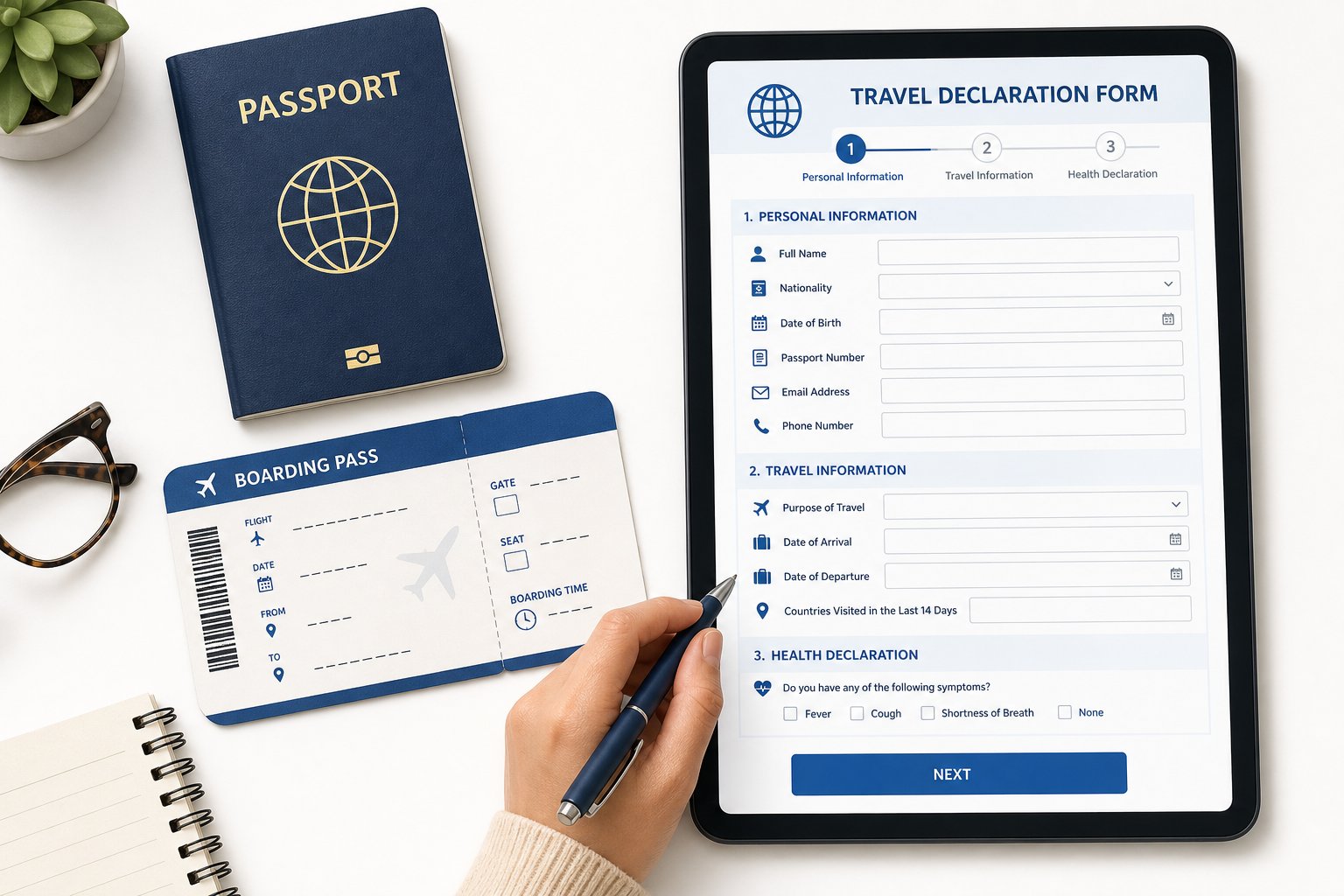
Navigating Forms, Passports, and Everyday Systems
Systems were not built for your name. That is the reality. But you still have to move through them, book flights, open accounts, fill out government forms, and introduce yourself in meetings. The goal is not to fight every system. It is to create consistency so that one version of your name follows you everywhere, reducing friction at every step.
Passports and Official Documents
Your passport is the anchor. Every other document, every booking, every form should match what appears on that page. When you apply for or renew a passport, the romanization of your name gets locked in. If you hold a Taiwanese passport, your given name will appear hyphenated by default. If you hold a mainland Chinese passport, it will appear as one fused block. Either way, that format becomes your official identity in Latin script.
The challenge arises when writing name in chinese characters produces a romanized result you did not expect. Some passport offices allow you to choose or adjust your romanization. If you have that option, think carefully about how to spell name in chinese for international use. Consider whether the hyphenated form or the fused form will cause fewer problems in the countries where you live and travel. Once it is printed, every subsequent document needs to replicate it exactly.
As TropicalHainan documents, a single discrepancy between your passport name and another system's record can halt permit renewals, block bank transactions, and trigger compliance reviews. The fix is always harder than getting it right the first time.
Airline Tickets and Travel Bookings
Airline systems are where name mismatches cause the most immediate, visible problems. Your ticket must match your passport. Not approximately. Exactly. The TSA states that names containing special characters like hyphens must be entered precisely as they appear on your identification documents when booking reservations.
In practice, many airline booking engines strip hyphens or do not accept them. When that happens, enter your given name as one continuous string without a space. "Cheng-Wei" becomes "CHENGWEI" in the given name field. Do not split it across the first name and middle name fields. That creates exactly the kind of mismatch that gets flagged at check-in or security.
If the system forces a middle name field, leave it blank. Putting the second syllable there transforms your single given name into two separate names on the booking, and that may not match your passport. Some travelers with chinese names first and last formatted differently across documents have been denied boarding because the ticket name did not align with what the passport showed.
Forms, Email Addresses, and Digital Systems
Government forms, job applications, university registrations, and medical intake forms all present the same problem: a "First Name" field and a "Middle Name" field that assume your name splits neatly into Western categories. When you encounter this, put your entire hyphenated given name in the first name field. Leave the middle name field empty or write "N/A."
For email addresses and usernames, you have more flexibility. Some people use the full hyphenated form (cheng-wei.chen@), others fuse the syllables (chengwei.chen@), and some use initials (cw.chen@). The key is picking one format and using it consistently across professional platforms so colleagues learn how do you write names in chinese-to-English contexts for your specific name.
Here is a step-by-step approach to maintaining consistency when writing chinese names across all your documents and accounts:
- Start with your passport. Note the exact romanization, capitalization, spacing, and punctuation of your name as printed.
- Use that exact format on all government documents: visa applications, residence permits, tax registrations, and social security records.
- For airline bookings, replicate the passport format. If the system rejects the hyphen, merge the syllables into one string in the given name field. Never split across first and middle name fields.
- For bank accounts and financial records, insist on the passport spelling at the time of account opening. Get written confirmation of how your name was entered.
- For professional systems like email, LinkedIn, and company directories, choose one consistent format and communicate it clearly to HR during onboarding.
- Keep a screenshot or printout of each system's record of your name. If a discrepancy surfaces later, you have evidence of what was entered and when.
Professional introductions deserve their own strategy. When you meet someone new, say your full given name and offer a brief anchor: "I'm Cheng-Wei, both parts together, like one name." Most people respond well to a clear, friendly cue. If someone shortens it later, a simple correction works: "It's actually Cheng-Wei, not just Cheng." You should not have to do this. But until systems and habits catch up, a confident, low-friction correction protects your name without turning every introduction into a lecture.
The reality of chinese names first and last ordering, combined with hyphenation, means you are navigating systems that were designed without you in mind. Consistency is your best defense. When every document matches, every correction becomes easier, and every new system has a clear reference point to follow.
Individual strategies help, but they only go so far. The larger problem sits with the institutions, databases, and software systems that keep breaking these names in the first place.

Guidance for Developers and Institutions Handling These Names
If your system breaks a hyphenated Chinese name, the problem is not the name. It is your system. Every time a database splits "Cheng-Wei" into a first name and a middle name, every time a form rejects a hyphen as an invalid character, every time a badge prints only half a given name, your software is telling someone their identity does not fit. That is a design failure, not a user error.
The good news: fixing it is not complicated. It requires understanding one core principle about the chinese naming convention and then applying it consistently across your technical stack and institutional processes.
Database and Software Design for Hyphenated Names
Most name-handling bugs trace back to a single flawed assumption: that every person has a first name, an optional middle name, and a last name, each stored in its own field. That assumption breaks for a significant portion of the world's population. The W3C's guide on personal names around the world documents just how many naming structures exist globally, and Chinese hyphenated names are one of the most common cases where the Western three-field model fails.
When a system encounters "Cheng-Wei" and splits on the hyphen to populate separate fields, it has just destroyed the integrity of someone's name. When it strips the hyphen because the validation regex only allows letters and spaces, it has erased meaningful punctuation. When it truncates at a character limit that was designed for single-syllable Western given names, it has cut a name in half.
Here are the technical requirements your name-handling systems should meet:
- Allow hyphens as valid characters in all name fields. Do not strip, reject, or flag them as special characters requiring review.
- Never programmatically split a name on hyphens. A hyphen within a given name field is a connector, not a delimiter.
- Set generous character limits. A minimum of 40 characters for given name fields accommodates hyphenated names, compound names, and names from other traditions that run longer than typical English names.
- Support Unicode fully. Names in chinese writing may need to be stored alongside their romanized equivalents, and your system should handle both without corruption.
- Store the name as the user entered it. Do not auto-capitalize, auto-trim, or auto-format name fields beyond what the user explicitly provides.
- If your system must distinguish between given name and surname, use exactly two fields: "Given name" and "Family name." Do not add a middle name field unless it is clearly marked as optional and never auto-populated from other fields.
- When importing data from external systems, do not assume that a space or hyphen within a given name indicates a boundary between first and middle names.
- Test your system with real-world name formats: "Mei-Ling," "Zhiming," "Chi-Ming," "Chee Beng." If any of these break your validation, your validation is wrong.
As Bruce Lawson points out, development teams often build name forms based on their own cultural assumptions simply because no one on the team has a name that breaks the mold. The result is software that works perfectly for "Chad Pancreas" and fails silently for half of Asia.
Form Design That Respects Name Structures
Imagine you are filling out a form and it asks for your "First Name" and "Middle Name" in separate fields. If your given name is "Cheng-Wei," where does it go? You know it belongs together. But the form is telling you it expects two pieces. Some people put the whole thing in the first name field. Others reluctantly split it. And the database downstream records whatever choice they made under pressure, creating inconsistency that compounds over time.
The fix is straightforward: use a single "Given name" field instead of splitting into first and middle. The W3C recommends this approach, and it works for virtually every naming tradition on the planet. A person with a hyphenated Chinese name enters "Cheng-Wei." A person with a Western middle name enters "John David." A mononymous Indonesian person enters "Sukarno." One field handles all of them without forcing anyone into a structure that does not fit.
If your business logic genuinely requires distinguishing a "primary" given name from additional names, make the second field clearly optional and label it something like "Other given names (if any)" rather than "Middle Name." That phrasing signals flexibility rather than demanding a Western name structure. Never auto-populate this field by splitting on hyphens or spaces from the primary given name field.
Display formatting matters too. When your system renders a name in chinese symbols or romanized form on a screen, in a report, or on a printed document, it should reproduce exactly what was entered. If someone typed "Mei-Ling" with a capital L, display "Mei-Ling" with a capital L. If they typed "mei-ling" in lowercase, respect that. Names are identity, and identity is not something your system should silently reformat.
HR and Institutional Best Practices
Software is only half the equation. The people operating the systems matter just as much. HR teams, office managers, and administrative staff are the ones printing badges, creating directory listings, sending onboarding emails, and introducing new hires. Every one of those touchpoints is a place where a hyphenated name can get mangled or respected.
Start at onboarding. Ask new employees directly: "What is your full given name as you would like it displayed?" Do not assume based on what the system imported from their application. ADP's guidance on preferred names emphasizes that systematic ways to capture how someone wants to be addressed reduce the pressure on employees to repeatedly correct others. Build that question into your intake process so the correct name propagates from day one.
For badges and directories, print the full hyphenated given name. "Cheng-Wei Chen" on a badge, not "Cheng C." or "C. Chen." If space is limited, abbreviate the surname before you abbreviate the given name. The given name is how people are addressed face-to-face, and truncating it defeats the purpose of a name badge entirely.
Train managers and front-desk staff on one simple rule: a hyphenated given name is one name. Both parts are required. You would not call someone named "Elizabeth" just "Eliz" to save time. The same logic applies to "Mei-Ling" or "Chi-Keung." If you are unsure how to pronounce it, ask. Most people appreciate the effort far more than they resent the question.
When setting up email addresses, use the full given name. "[email protected]" or "[email protected]" are both acceptable, depending on whether your email system allows hyphens in usernames. What is not acceptable is "[email protected]," which drops half the name and creates confusion when multiple people share the same surname.
Finally, audit your existing records. If your system has been splitting hyphenated names into first and middle name fields for years, you likely have a backlog of incorrectly stored names in chinese letters and their romanized forms. Run a query for records where the middle name field contains a single short syllable and the first name field contains another single short syllable. Those are likely split Chinese given names that need to be merged back together. Reach out to affected employees, confirm the correct format, and fix the records. It is a one-time cleanup that prevents ongoing harm.
The technical and institutional fixes are not difficult. They require awareness, not massive engineering effort. A regex that accepts hyphens. A form with one given name field. A badge that prints the full name. An HR process that asks the right question on day one. Each of these is a small change that tells someone with a hyphenated name: your identity fits here.
Why Getting the Hyphen Right Matters
A hyphen is a small mark. It takes up barely any space on a page, a passport, or a screen. But for millions of chinese people names rendered in Latin script, that tiny stroke of punctuation holds an entire given name together. Remove it, ignore it, or split on it, and you have broken something that was never meant to come apart.
The Hyphen as a Cultural Bridge
For people living between languages, the hyphen carries weight beyond grammar. It is the point where Chinese identity meets English-language life. The two syllables it connects represent characters chosen with care, often carrying family meaning, generational markers, or aspirations that parents encoded into their child's name. When that name crosses into English, the hyphen is what keeps it whole.
As The Expat Kids Club puts it, names are "the first gift of our identity, the first story of our culture." For someone navigating a multicultural world, being called by their full name is a powerful affirmation of who they are. The hyphen makes that possible in a script that was not designed for Chinese phonology. It says: this is one name, one person, one identity that spans two worlds.
Understanding what is chinese name structure and what are chinese names at their core is not just an academic exercise. It is a matter of respect. Chinese naming customs place deep significance on the given name as a complete unit. Treating half of it as optional tells someone that their full identity is too inconvenient to bother with.
Key Takeaways for Respecting Chinese Names
Whether you carry a hyphenated name yourself or encounter one in your work, the principles are straightforward. A hyphenated given name is one name, not two. The hyphen connects rather than separates. No syllable is a middle name. No syllable is optional. The person in front of you gets to decide what they are called, and your job is to use the whole thing.
If you build systems, build them to accept hyphens without flinching. If you manage people, learn their full names on day one. If you are the one carrying the name, know that consistency across your documents is your strongest tool, and that a brief, confident correction is always worth making.
A name is not a convenience for the person reading it. It is an identity belonging to the person carrying it. The hyphen in Chinese names exists to keep that identity intact across languages, and respecting it costs nothing more than attention.
That small mark between two syllables is doing exactly what it was designed to do. It bridges two characters, two sounds, two worlds. Stop breaking it.
Frequently Asked Questions About Hyphens in Chinese Names
1. Why do some Chinese names have a hyphen?
The hyphen connects two romanized syllables that together form a single given name. Chinese characters are monosyllabic, so a two-character given name like 志明 produces two syllables when written in Latin script. The hyphen signals that both syllables belong to one indivisible name unit, preventing Western readers from misinterpreting the second syllable as a separate middle name.
2. Is the part after the hyphen in a Chinese name a middle name?
No. Traditional Chinese names have exactly two parts: a surname and a given name. There is no middle name slot in Chinese naming structure. The entire hyphenated portion (e.g., Cheng-Wei) is the complete given name. Both syllables are required and neither is optional. Some overseas Chinese individuals adopt a Western name and place their Chinese name in a middle position, but that is an adaptation to Western systems, not the original structure.
3. How should I address someone with a hyphenated Chinese name?
Always use both syllables together. Calling someone 'Cheng' instead of 'Cheng-Wei' is not a casual nickname — it is equivalent to using only half of their name. If you are unsure how to pronounce it, ask the person directly. Most people appreciate the effort. A hyphenated given name functions as one complete unit, and dropping the second half creates a non-name that the person may not even recognize as theirs.
4. Why do Taiwanese names use hyphens but mainland Chinese names do not?
Taiwan uses a modified Wade-Giles romanization system that hyphenates two-syllable given names by default, a convention dating back to 19th-century British linguistics. Mainland China adopted Hanyu Pinyin in 1958, which fuses given name syllables into one continuous string without punctuation. The difference is purely a matter of which romanization system each region follows — the underlying Chinese characters and name structure are identical.
5. How do I enter a hyphenated Chinese name on airline bookings or forms?
Your ticket must match your passport exactly. If the booking system accepts hyphens, enter your name as it appears on your passport. If the system rejects hyphens, merge the syllables into one string in the given name field (e.g., CHENGWEI). Never split the two syllables across first name and middle name fields, as this creates a mismatch that can cause problems at check-in or security screening.