What Chinese Surnames Reveal About the North-South Divide
Imagine you meet someone with the surname Chen. Without knowing anything else, you can make a reasonable guess: their ancestors likely came from southern China, probably Fujian or Guangdong. Swap that for Wang, and the odds shift dramatically northward, toward Shandong, Henan, or Hebei. A single Chinese name surname carries geographic information that stretches back centuries, sometimes millennia.
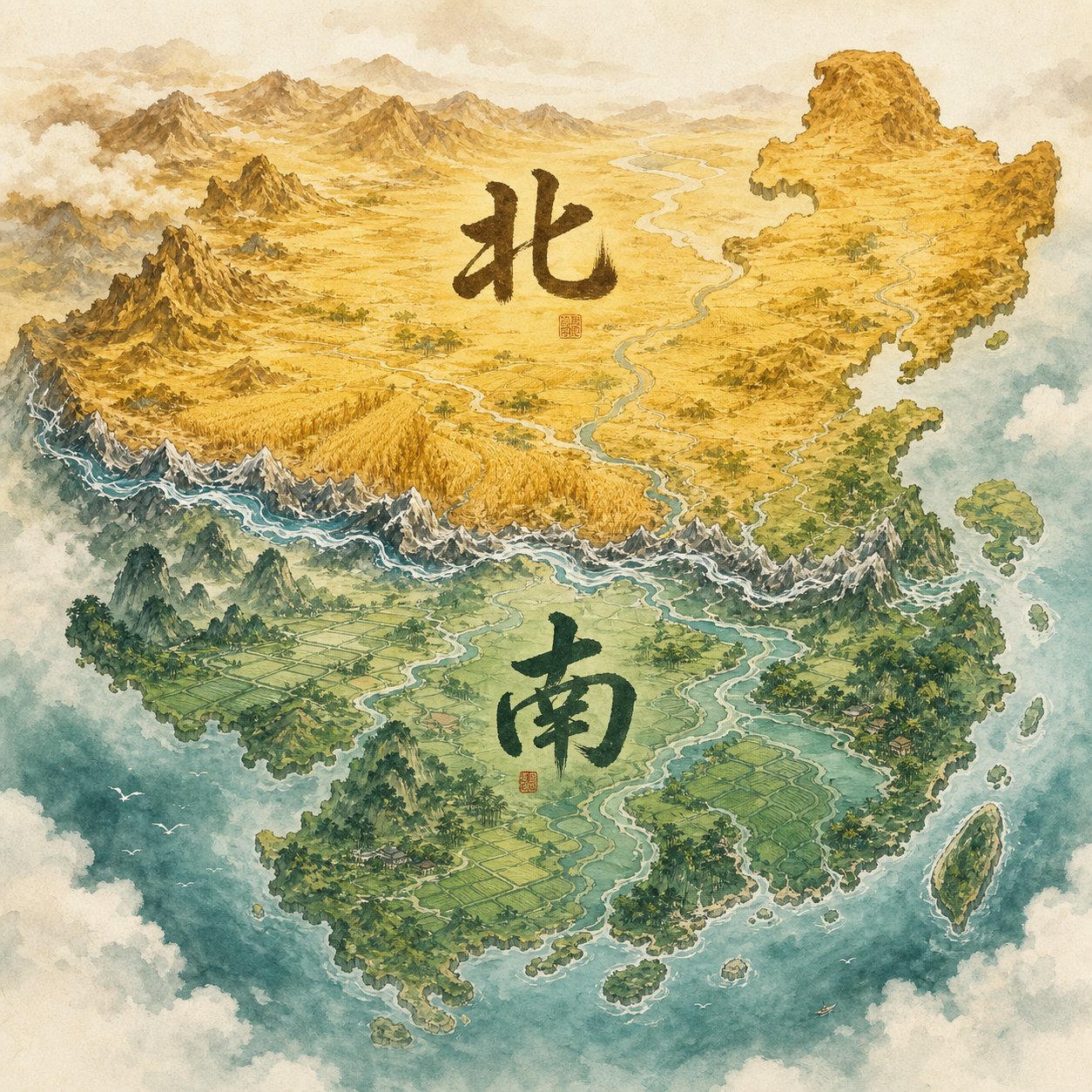
This is not coincidence. Chinese surnames cluster regionally in patterns shaped by ancient feudal territories, dynastic wars, and mass migrations. The invisible line separating these patterns runs along the Qinling Mountains and the Huai River, a boundary that divides China's climate, cuisine, dialect, and, as it turns out, its surnames.
Why Your Chinese Surname Reveals Regional Origins
China has recorded over 6,000 surnames currently in use, drawn from a historical pool of roughly 24,000 surnames documented across all ethnic groups throughout history. Yet the distribution is wildly uneven. A small number of most common Chinese surnames dominate the population, and they do not spread evenly across the map. Provincial census data shows that the top-ranked surname in Fujian is Chen, while in Shandong it is Wang. In Guangdong, Chen and Li lead. In Hebei, Zhang and Wang take the top spots. These are not random variations. They reflect deep historical roots tied to where clans originated and where they migrated.
Fewer than 100 surnames cover over 85% of China's registered population, yet their geographic distribution is remarkably uneven, with certain surnames concentrating heavily in either northern or southern provinces.
The Qinling-Huai River Divide and Surname Geography
The Qinling-Huai River line is China's most fundamental geographic boundary. North of it, you'll find wheat fields, Mandarin dialects, and surnames like Wang, Zhang, and Liu dominating provincial rankings. South of it, rice paddies, regional dialects like Cantonese and Hokkien, and surnames like Chen, Lin, and Huang rise to the top. Understanding Chinese names and surnames through this geographic lens transforms a simple family name into a map coordinate pointing toward ancestral origins.
What follows is a ranked exploration of the most distinctly northern and southern Chinese surnames, each profiled with its historical origin, provincial strongholds, and the migration stories that explain why your surname in Chinese might reveal exactly where your family's journey began. The patterns are striking, and they start with the biggest names on the list.
How We Ranked Northern and Southern Surnames
How do you determine whether a surname belongs to the north or the south? It is not as simple as drawing a line on a map and counting heads. Some surnames appear everywhere in roughly equal proportions, while others concentrate so heavily in specific provinces that their regional identity is unmistakable. To build a reliable chinese surnames list that separates northern from southern, you need multiple layers of evidence working together.
Data Sources and Regional Classification Criteria
The foundation of any regional surname classification is population data. A study published in the American Journal of Physical Anthropology used China's National Citizen Identity Information Center dataset covering 1.28 billion citizens to analyze surname distributions across 362 prefectures. That research confirmed what genealogists have long suspected: surnames cluster geographically, and prefectures with similar surname profiles tend to sit next to each other on the map. Southern prefectures showed more isolated, power-law-like surname distributions, while northern and northeastern prefectures displayed patterns shaped by large-scale migration.
Beyond raw census numbers, historical records fill in the story. The Jin dynasty collapse in the 4th century triggered the first massive southward migration. The Tang dynasty's fall in the 10th century pushed another wave below the Yangtze. The Song dynasty's retreat to Lin'an in the 12th century completed the pattern. Each of these movements carried specific surname groups from the Yellow River basin into southern territories, where they took root permanently. Tracking which surnames moved and which stayed behind is essential for building an accurate list of chinese surnames sorted by region.
Understanding Surname Concentration Ratios
We used four ranking factors to classify each surname's regional identity:
- Provincial concentration percentage - What share of a surname's total population lives in northern versus southern provinces? A surname where 70%+ of bearers live north of the Qinling-Huai River line qualifies as distinctly northern.
- Historical origin territory - Where did the surname's founding clan originate? Surnames tied to Zhou dynasty fiefdoms in the Yellow River basin carry northern DNA regardless of later spread.
- Dialect-group association - Does the surname correlate strongly with a specific dialect group? Surnames concentrated among Hokkien or Cantonese speakers skew southern; those dominant in Mandarin-speaking regions skew northern.
- Migration pattern evidence - Did the surname spread through documented southward migrations, or did it remain anchored in its origin territory?
Not every surname fits neatly into one category. Among the 100 chinese surnames that dominate China's population, several are truly universal. Li, for example, ranks in the top five in both northern and southern provinces thanks to the Tang dynasty's policy of granting the imperial surname to loyal subjects across the empire. Liu similarly spans both regions. These universal surnames are the exceptions that highlight how many chinese surnames are there with strong regional skew, which turns out to be the majority.
The Qinling Mountains and Huai River remain the classification boundary because they align with dialect zones, historical administrative divisions, and the migration corridors that shaped surname geography over four millennia. With these criteria in place, the individual surname profiles that follow tell a much richer story than simple popularity rankings ever could.

Wang - The Northern Powerhouse Surname of Royal Descent
If any single surname could represent northern China's identity, it would be Wang (王). Literally meaning "king," this is the most common Chinese surname in the country, carried by well over 100 million people. Yet its dominance is not evenly spread. Wang's heartland sits squarely in the northern plains, where it ranks as the number one surname in no fewer than 16 provinces stretching from Shandong to Xinjiang. It is, without question, one of the strong Chinese surnames that defines the Yellow River basin's genealogical landscape.
Wang's Royal Origins in the Northern Plains
How does a word meaning "king" become a family name? The answer lies in the Zhou dynasty's feudal system, which governed northern China for nearly 800 years. When royal descendants lost their thrones or fell from favor, their families retained the title Wang as a surname, a permanent reminder of their connection to power.
One of the oldest origin stories traces the name back to Bi Gan, a prince of the Shang dynasty who was killed by the tyrannical King Zhou for speaking out against him. His descendants adopted Wang to honor his royal lineage. Over time, this branch became known as the Jijun Wang Clan, spreading through Gansu, Hebei, Shanxi, and Shandong.
A more widely cited origin involves Wang Zijin, the son of King Ling, the 21st ruler of the Zhou dynasty. After being exiled for criticizing his father, his son Zongjing continued serving in government under the name Wang. From that point forward, the family formalized it as their surname. Both stories share a common thread: royal chinese surnames like Wang emerged directly from the feudal power structures of the northern plains, where the Zhou dynasty's capital and territories were concentrated along the Yellow River.
Why Wang Dominates North of the Yangtze
Wang's geographic concentration tells a clear story. Data from China's National Citizen Identity Information Center shows that Wangs comprise over 7.1% of China's total population, with the highest density in Shandong province. The northern provinces consistently show higher rates of occurrence than the south. Henan, Hebei, Shaanxi, and Shanxi all rank among Wang's provincial strongholds, forming a belt across the ancient chinese surnames heartland where Zhou dynasty fiefdoms once stood.
Why did Wang stay so concentrated in the north? Unlike surnames that scattered during the great southward migrations of the Jin and Song dynasties, Wang's sheer population mass in its origin territory meant that even when some branches moved south, the northern core remained overwhelmingly dominant. The surname's connection to northern kingdoms, northern capitals, and northern clan associations kept its center of gravity firmly above the Yangtze.
For genealogy researchers, Wang presents a double-edged situation. Here is what you should know:
Pros
- Extremely well-documented lineage - With 587 known family tree books (zupus) cataloged and accessible, Wang clans maintained detailed genealogical records across centuries.
- Strong clan associations - Wang family organizations operate worldwide, from the Wang Clan World Student-Parent Friendship Gathering to regional associations across Southeast Asia.
- Easy romanization recognition - Whether spelled Wang (Mandarin), Wong (Cantonese/Hakka), or Ong (Hokkien), the surname is immediately identifiable across dialect groups.
Cons
- Extreme commonality reduces specificity - Being the most common chinese surname means millions of unrelated Wang lineages exist, making it harder to pinpoint a specific ancestral branch without additional information like ancestral village or generation poem.
- Multiple unrelated origin stories - The name was also adopted by foreign nomadic tribes entering China over more than 1,000 years, creating lineages with no connection to the original royal clans.
Wang stands as the signature surname of China's northern heartland, a name born from royal power in the Yellow River basin that never fully relinquished its geographic roots. Among strong chinese surnames, none maps more clearly to a single region. Yet Wang is not the only ancient name anchored in northern soil. Another surname, equally old and nearly as common, traces its origins to a different kind of power: not the throne, but the battlefield.
Zhang - The Bow-Maker Surname Rooted in Northern Soil
The character Zhang (张) tells its own origin story if you look closely. It combines two radicals: 弓 (bow) on the left and 长 (long, stretch) on the right. The literal meaning is "to stretch a bow," and that meaning is not decorative. It points directly to the chinese surname origin of the Zhang clan: a family of weapon-makers in the Yellow River basin who earned their name through military innovation.
Zhang's Ancient Military Origins in Hebei
The chinese surname zhang traces back to Zhang Hui, grandson of the Yellow Emperor (Huang Di). According to historical accounts, Zhang Hui served as the "Gong Zheng," the official in charge of bow-making, and is credited with inventing the bow and arrow. These weapons transformed warfare in ancient China, and in recognition of that contribution, the Yellow Emperor bestowed the surname Zhang upon him, combining the characters for "bow" and "long" into a single name.
Zhang Hui's descendants settled in Qingyang, which corresponds to modern-day Qinghe County in Hebei province. A folk saying still circulates among Zhang genealogists: "All Zhang surnames under heaven come from Qinghe." That phrase captures the chinese surname history of this clan. Its roots are planted firmly in northern soil, in the same Yellow River basin territory where Wang and other northern powerhouse surnames originated.
Other branches emerged later. During the Spring and Autumn period, a Jin state official named Xie Zhang (whose courtesy name was Zhang Hou) passed his name to descendants in what is now Shanxi province. Still other lineages formed through surname changes: the Wei dynasty general Zhang Liao was originally from the Nie clan, and some ethnic minority groups adopted Zhang during sinicization policies across multiple dynasties. These multiple origin points all share one geographic constant: the north.
The Northern Spread of the Zhang Clan
With a population exceeding 95.4 million people, the zhang chinese surname ranks third nationally, behind only Wang and Li. Yet despite that massive number, Zhang's distribution skews unmistakably northern. Contemporary data from China's Ministry of Public Security shows that Henan, Shandong, and Hebei together account for approximately 27.5% of all Zhang bearers. Six additional provinces, including Liaoning, Heilongjiang, and Anhui, hold another 28.5%.
The pattern is clear: a high-concentration northern Zhang region and a low-concentration southern Zhang region, divided roughly at the Yangtze River. During the Song dynasty, when Zhang ranked as the third most common surname with about 4.9 million people, Shandong already held the largest share. That northern dominance has persisted for over a thousand years.
Why did Zhang stay anchored in the north? Unlike some surnames that scattered during the great southward migrations of the Jin and Song dynasties, Zhang's population mass in its origin territory was so large that southern branches never outgrew the northern core. The clan expanded westward into Gansu and Ningxia during the Qin and Han dynasties, and northeastward into Manchuria by the Western Jin period, but these movements stayed within northern latitudes rather than crossing below the Yangtze in transformative numbers.
For anyone researching their Zhang ancestry, here is what the surname's characteristics mean in practice:
Pros
- Rich historical documentation - With over 674 Zhang family tree books (zupus) cataloged across various villages, genealogical records are extensive and accessible.
- Strong presence in northern genealogical records - Provincial archives in Shandong, Henan, Hebei, and Shanxi contain deep Zhang clan documentation stretching back centuries.
- Distinctive character meaning - The bow-and-arrow origin story gives Zhang a memorable and well-documented founding narrative, unlike surnames with disputed or unclear etymologies.
Cons
- Multiple unrelated Zhang lineages - Because the surname was adopted through official bestowals, ethnic sinicization, and deliberate name changes across dynasties, tracing a single ancestor back to Zhang Hui requires sub-lineage research and generation poems.
- Romanization complexity across dialects - Zhang appears as Cheung (Cantonese), Teo or Teoh (Hokkien), Chang (Taiwanese and Korean), and Truong (Vietnamese), which can obscure connections between related families.
Zhang and Wang together form the twin pillars of northern chinese surname identity: one born from royal lineage, the other from military craft. Both remain anchored in the provinces where they originated thousands of years ago. The southern half of China, however, tells a completely different story. There, a single surname rose to such dominance that it defines entire provinces and stretches across oceans into Southeast Asia's diaspora communities.

Chen - The Southern Giant That Crossed Oceans
That single surname dominating the south? It is Chen (陈). If Wang is the king of the north, Chen is the undisputed ruler of everything below the Yangtze. The chen chinese surname ranks fifth nationally with roughly 70 million bearers in mainland China alone, but its real story is geographic concentration. Chen is the most common surname in Fujian, Guangdong, Zhejiang, Hong Kong, Taiwan, and Singapore. Factor in all its dialect spellings, including Chan, Tan, Chin, and Tran, and the global count reaches 80 to 100 million people, making it the fourth most common surname in the world.
What makes Chen so distinctly southern is not just raw numbers. It is the ratio. While Wang spreads across 16 northern provinces as the top surname, Chen concentrates its mass in a handful of coastal southern provinces with an intensity that no other popular chinese surnames can match in such a compact geographic footprint.
Chen's Migration from the Central Plains to the Southern Coast
Here is the paradox: the chen surname chinese character (陈) originated in the north. The ancient State of Chen was founded around 1046 BC in what is now Huaiyang County, Henan province, squarely in the Yellow River basin. Its founding ancestor, Gui Man (also known as Chen Hugong), was a descendant of the legendary Emperor Shun and son-in-law of King Wu of Zhou. When the state of Chu absorbed Chen in 479 BC, the people adopted their former state's name as their surname.
So how did a surname born in Henan become the defining name of Fujian and Guangdong? The answer lies in successive waves of southward migration triggered by northern catastrophes. The first major push came during the Western Jin dynasty's collapse in the early 4th century, when northern aristocratic families fled the chaos of the Five Barbarians' invasions. Chen clans moved into the Yangtze River valley and beyond.
The pattern repeated during the Tang dynasty's fall in the 10th century, when another wave of Chen families pushed further south into Fujian. A Tang military general named Chen Zheng and his son Chen Yuanguang are credited with opening up southern Fujian for Han Chinese settlement, establishing Zhangzhou and bringing large numbers of Chen clansmen with them. By the Song dynasty, Chen had already become the dominant surname in Fujian, a position it has never relinquished.
The chen surname in chinese genealogical records shows a clear migration corridor: Henan to Jiangxi to Fujian to Guangdong, with each dynasty's turmoil pushing the clan further south and deeper into coastal territories. Among the 70 million Chens in China, roughly 50 million trace their ancestry to Yingchuan in Henan province, the largest single branch of the clan. That shared origin point, combined with centuries of southward movement, created the concentrated southern distribution visible today.
Why Chen Dominates Fujian and the Overseas Chinese World
The chen surname chinese presence in Fujian is not just dominant. It is overwhelming.
In Fujian province, Chen is the single most common surname, and in cities like Xiamen, the ancestral hometown of many overseas Hoklo communities, it reaches concentrations that make it feel less like a surname and more like a regional identity marker.
This concentration has a compounding effect. When emigration from China accelerated in the 19th and early 20th centuries, the vast majority of emigrants departed from Fujian and Guangdong, the two provinces where Chen already dominated. The result: Chen became the most common Chinese surname in the global diaspora. In Singapore, Tan (the Hokkien pronunciation of Chen) is the most common surname. In Vietnam, Tran (the Vietnamese reading of the same character) is the second most common surname in the entire country. In Taiwan, Chen ranks first. In the Philippines, Indonesia, Thailand, and Malaysia, various spellings of Chen consistently appear among the top Chinese-origin surnames.
This overseas reach makes Chen unique among popular chinese surnames. While Wang and Zhang remained anchored in their northern homeland, Chen's coastal southern position placed it at the departure point for centuries of maritime emigration. Every wave of Chinese migration to Southeast Asia, from the Ming dynasty trading networks to the 19th century labor migrations, carried disproportionate numbers of Chens abroad.
The chen surname chinese character itself offers a clue to its ancient roots. It combines the radical 阝 (meaning "hill" or "mound") with the phonetic component 东 ("east"), reflecting the geographic features of the original State of Chen in the eastern plains of Henan. That character has remained unchanged for over three thousand years, even as its bearers scattered across southern China and beyond.
For researchers tracing Chen ancestry, the surname's characteristics create a specific set of advantages and challenges:
Pros
- Extremely strong diaspora connections - The World Chen Family Association and regional clan associations operate across Taiwan, Southeast Asia, and beyond, maintaining active networks for genealogical research and family reunions.
- Well-preserved genealogical records in southern China - Chen zupus (family history books) are among the most numerous and detailed in Fujian and Guangdong, with many digitized and searchable through genealogical databases.
- Dominant in multiple countries - Whether your family spells it Chen, Chan, Tan, Chin, or Tran, the shared origin makes cross-border research feasible because clan associations in different countries often maintain connections to the same ancestral villages.
Cons
- Extreme southern prevalence requires sub-clan research - With millions of Chens concentrated in just a few provinces, simply knowing the surname is not enough to narrow down an ancestral village. You need additional identifiers like dialect group, generation poem, or specific branch name (such as the Yingchuan branch or the Xiamen branch).
- Romanization fragmentation across dialects - The same surname appears as Chen (Mandarin), Chan (Cantonese), Tan (Hokkien/Teochew), Chin (Hakka/Taishanese), Ding or Ting (Eastern Min), and Tran (Vietnamese). This diversity can obscure family connections when descendants in different countries no longer recognize their shared surname origin.
Chen's journey from a northern feudal state to the defining surname of southern China and the overseas Chinese world illustrates the core mechanism behind regional surname patterns: migration driven by dynastic collapse, followed by permanent settlement and population growth in the destination territory. The original homeland empties out (relatively), and the new territory becomes the surname's stronghold.
Chen is not the only surname that followed this path. Another name, equally concentrated in Fujian and Guangdong but with an even more dramatic regional skew, tells a parallel story of southern identity. Where Chen is the giant, Lin is the signature, a surname so tightly bound to the Min dialect world that its very spelling reveals which port your ancestors sailed from.
Lin - A Fujian Signature Surname with Deep Southern Roots
Lin (林) is the surname that makes the north-south divide personal. While Chen dominates the south through sheer volume, Lin's regional skew is even more dramatic. It ranks as the 18th most common surname in China overall, yet in Fujian province it consistently sits among the top two or three. Travel north of the Yangtze, and Lin becomes relatively scarce. This sharp geographic contrast makes Lin one of the clearest examples of how the meaning of chinese surnames can double as a regional fingerprint.
The character itself is visually intuitive. Lin (林) is composed of two 木 (wood, tree) radicals standing side by side, evoking the image of a forest. Among traditional chinese surnames, few carry such a transparent connection between character and meaning. That transparency extends to its origin story, which ties the name to one of ancient China's most dramatic tales of loyalty and survival.
Lin's Legendary Origins and Southern Settlement
The founding story of the Lin clan begins during the final years of the Shang dynasty, under the reign of the tyrannical King Zhou. His uncle, Prince Bi Gan, was a man of moral conviction who repeatedly urged the king to reform his cruel policies. Enraged, King Zhou ordered Bi Gan's arrest. Upon hearing the news, the prince's pregnant wife fled into a nearby forest, where she gave birth to their son in hiding.
When King Wu of the Zhou dynasty overthrew the Shang shortly afterward, he sought to honor Bi Gan's courage and loyal service. The new king officially conferred the surname Lin on Bi Gan's newborn son, Lin Jian, commemorating the forest that sheltered the child during his birth. Lin Jian became the recognized founding ancestor of the Lin clan, and the chinese surnames meaning embedded in the character has carried that story forward for over three thousand years.
Other historical branches exist. One traces to King Ping of Zhou, whose grandson Ji Lin later became King Huan of Zhou. During the Northern and Southern Dynasties, Emperor Xiaowen ordered the Xianbei Mongolian nomadic tribe to adopt Chinese surnames, and some took Lin. The Taiwanese Gaoshan indigenous peoples also adopted Lin in later centuries. But the Bi Gan origin remains the primary lineage recognized by most Lin clan associations worldwide.
So how did a surname born from a Shang dynasty prince end up concentrated thousands of kilometers south of its origin? The same mechanism that carried Chen southward applies here. Successive waves of migration during the Jin, Tang, and Song dynasty collapses pushed Lin families from the Central Plains into Jiangxi, then Fujian, then Guangdong. By the Tang dynasty, Lin clans had established deep roots in Fujian's Min River valley. By the Song dynasty, they were among the dominant surnames in the province, a position they have held ever since.
The Fujian-Guangdong Lin Stronghold
The geographic concentration of Lin in southern China is striking. While it ranks 18th nationally, in Fujian it competes for the top three positions. In Guangdong, Taiwan, and among overseas Chinese communities in Singapore, Malaysia, and the Philippines, Lin (or its dialect variants) appears with a frequency that far exceeds its national average. Meanwhile, in northern provinces like Shandong, Hebei, or Shaanxi, Lin barely registers as a notable surname. This makes Lin one of the most regionally distinctive among unique chinese surnames still in common use.
What explains this concentration? The answer lies in dialect-surname correlation, a pattern where specific surnames cluster within specific dialect groups. Lin is overwhelmingly associated with the Min dialect group, the linguistic family spoken in Fujian, eastern Guangdong, Hainan, and Taiwan. When you encounter a Lim in Singapore, a Lam in Hong Kong, or a Lin in Taipei, you are almost certainly looking at someone whose ancestors spoke a Min or related southern dialect. The surname and the dialect traveled together because they were carried by the same migrating communities.
This dialect connection also explains why Lin qualifies as one of the uncommon chinese surnames in the north. It is not that Lin is rare nationally. It is that its population mass sits almost entirely within the Min-speaking world and adjacent Cantonese and Hakka regions. A surname can be common in absolute numbers yet function as a regional marker because of where those numbers concentrate.
For researchers tracing Lin ancestry, the surname's characteristics create a distinctive research profile:
Pros
- Distinctive regional identity - Lin's concentration in Fujian and Guangdong means that knowing the surname immediately narrows your ancestral search to a specific geographic zone, unlike universal surnames that could point anywhere.
- Strong clan temple networks in southern China - Lin clan associations operate actively across Fujian, Guangdong, Taiwan, Singapore, and Malaysia, organizing gatherings, maintaining genealogical records, and connecting diaspora members to ancestral villages.
- Clear diaspora tracing to Fujian - Most Lins who settled overseas in the past 400 years came from Fujian and Guangdong, giving researchers a well-defined starting point with 285 Lin family tree books (zupus) cataloged across various villages.
Cons
- Romanization varies across dialect groups - Lin appears as Lim (Hokkien, Teochew, Hakka), Lam (Cantonese, Hainanese), Ling (some Hakka dialects), and even Hayashi (Japanese). This fragmentation can obscure connections between related families who no longer recognize their shared surname.
- Multiple origin branches complicate deep research - While the Bi Gan lineage is dominant, the existence of Zhou royal, Xianbei, and indigenous Taiwanese branches means that not all Lins share a common ancestor, requiring sub-lineage identification through generation poems or branch-specific records.
Lin's story reinforces a key pattern in southern surname geography: names that are uncommon chinese surnames in the north can be dominant forces in the south, and their dialect-group correlation serves as a secondary identifier that sharpens geographic precision beyond what the surname alone provides. When you know someone is a Lim rather than a Lin or a Lam, you are not just seeing a spelling preference. You are seeing a dialect marker that points to a specific port of departure, a specific migration wave, and a specific ancestral province.
Yet not every major surname follows such clean regional lines. One name, arguably the most famous in all of Chinese history, managed to plant itself so thoroughly in both the north and the south that it defies the very classification system these patterns depend on. Its secret? An emperor who gave his surname away like a political weapon.

Li - The Imperial Surname That Defies Regional Boundaries
That emperor was Li Shimin, better known as Emperor Taizong of the Tang dynasty, and his surname was Li (李). The chinese surname li is the second most common in China, carried by nearly 100 million people. Yet unlike Wang, which anchors itself in the north, or Chen, which dominates the south, Li refuses to stay in one region. It ranks among the top surnames in Henan, Sichuan, Shandong, Guangdong, and Heilongjiang simultaneously. No other surname of comparable size spreads so evenly across both sides of the Qinling-Huai River line.
How did one name end up everywhere? The answer is not natural population growth. It is deliberate imperial policy.
Li's Imperial Spread Across All Regions
The li chinese surname has ancient roots that predate its imperial fame. According to tradition, it descends from the royal house of Ying, tracing back to Emperor Zhuanxu, grandson of the mythical Yellow Emperor. The surname evolved through stages: from Ying to Li 理 (meaning "reason," after an ancestor served as Minister of Justice) to the modern Li 李 (meaning "plum"). The most common origin story tells of Li Zheng, a minister executed by the tyrannical Shang dynasty King Zhou. His wife and son escaped into the wilderness, surviving by eating wild plums. In gratitude, the son changed the family surname to 李, the character for plum.
That origin places Li squarely in the northern Central Plains, specifically in Henan province, where the highest concentration of Li bearers still lives today. If the story ended there, Li would be just another northern surname like Wang or Zhang. But the Tang dynasty changed everything.
During the Tang dynasty (618-907 AD), all twenty emperors carried the surname Li. That alone would have elevated the name's prestige. What made it truly universal was a deliberate political strategy: Tang emperors routinely bestowed the imperial surname upon loyal generals, officials, and entire clans as a mark of favor. Imagine receiving the emperor's own name as a reward for military service or political loyalty. Thousands of families across every province, north and south, suddenly became Lis overnight. The surname was no longer tied to a single lineage or a single region. It became a political tool distributed across the entire empire.
The Longxi Li clan alone, the most famous branch, produced 67 emperors, 91 prime ministers, 86 generals, and 16 revolutionary leaders across Chinese history. But they represent just one thread in a web of Li lineages that spans every dialect group and every province.
Northern Li vs Southern Li - Same Character, Different Stories
Here is what makes the chinese surname li fascinating for genealogical research: a Li in Shandong and a Li in Guangdong may share absolutely no common ancestor despite writing the same character. Northern Li families often trace their lineage to the original Henan-based clan or to Tang dynasty royal descendants who remained in the Yellow River basin. Southern Li families frequently descend from officials or soldiers who received the surname through imperial bestowal while serving in southern provinces, or from families who migrated south during the Song dynasty collapse.
The romanization of the name itself functions as a dialect marker that reveals regional origin. In Mandarin-speaking northern China, the surname is spelled Li. In Cantonese-speaking Guangdong and Hong Kong, it becomes Lee or Lei. In Hokkien-speaking Fujian and Southeast Asia, it appears as Lee, Dee, or Lie. In Teochew communities, it is also Lee. The chinese surname lee spelling, so familiar in Singapore (Lee Kuan Yew), Hong Kong (Bruce Lee), and Taiwan (Lee Teng-hui), signals southern Cantonese or Min dialect origins. When you see Li spelled as Lee, you are looking at a southern branch. When you see it as Li, the odds favor a Mandarin-speaking northern or central origin.
This Lee/Li split is not just a spelling preference. It is a geographic fingerprint embedded in romanization, functioning the same way that Chan versus Chen distinguishes Cantonese from Mandarin speakers. The lee surname chinese communities in Southeast Asia overwhelmingly trace their roots to Fujian and Guangdong, while Li-spelled families in North America more often connect to northern or central Chinese provinces where Mandarin was the dominant dialect.
For anyone researching Li ancestry, the surname's unique characteristics create a specific set of conditions:
Pros
- Universal recognition - Li is immediately identifiable across all Chinese dialect groups and in every country with a significant Chinese diaspora, from Singapore to Canada to Peru.
- Imperial prestige - The Tang dynasty connection gives Li an extensive historical record, with detailed documentation of royal lineages, bestowal records, and branch migrations preserved in official dynastic histories.
- Extensive historical records in both regions - Unlike surnames concentrated in one area, Li family tree books (zupus) exist in large numbers across both northern and southern provinces, with 698 cataloged volumes spanning centuries of genealogical documentation.
Cons
- Extreme commonality makes genealogical research challenging - With nearly 100 million bearers and countless unrelated lineages created through imperial bestowal, simply knowing you are a Li narrows almost nothing without sub-lineage knowledge such as your branch name, generation poem, or ancestral village.
- Multiple origin paths obscure connections - Your Li ancestors may descend from the original Henan clan, from a Tang dynasty bestowal, from ethnic minorities who adopted the name during sinicization, or from the Kaifeng Jewish community where Li was one of seven adopted Chinese surnames. Without additional documentation, determining which path applies is difficult.
Li is the exception that proves the rule of regional surname clustering. Its Tang dynasty dispersal mechanism, unique among major Chinese surnames, broke the geographic constraints that keep names like Wang in the north and Chen in the south. Most surnames stayed where history planted them. Li was deliberately scattered by imperial decree, making it the one name that cannot reliably tell you whether your ancestors lived above or below the Qinling-Huai River line.
That said, the romanization still talks. Whether your family writes it as Li or Lee, that single spelling choice carries dialect information that points toward a region, a port, and a migration story. And romanization differences across dialect groups reveal far more than just the Li surname. They unlock an entire layer of geographic precision that applies to every Chinese surname, turning a simple spelling into a migration map.
Dialect Connections and Diaspora Surname Patterns
Romanization is not just a spelling system. It is a timestamp and a GPS coordinate compressed into a handful of letters. When you see the chan surname chinese communities use in Hong Kong versus the Tan spelling in Singapore versus Chen in Beijing, you are not looking at random variation. You are looking at three different dialect groups, three different ports of departure, and three different migration stories, all encoded in how a single character (陈) gets written in English.
The north-south surname divide tells you which side of the Qinling-Huai River line your ancestors likely came from. But dialect-based romanization goes further. It tells you which specific province, which dialect group, and often which emigration wave carried your family overseas.
Dialect Groups as Surname Fingerprints
China's linguistic landscape is far more complex than a simple Mandarin-versus-everything-else split. The northern half of the country is relatively uniform, dominated by Mandarin dialects that share mutual intelligibility. The south fractures into at least five major dialect families: Cantonese (Yue), Hokkien and Teochew (Southern Min), Hakka, Wu (Shanghainese), and Eastern Min (Fuzhou). Each of these groups pronounces the same surname characters differently, and when those pronunciations were transcribed into English, they created permanently distinct spellings.
Consider what happens with the surname Huang (黄). A Mandarin speaker says Huang. A Cantonese speaker says Wong. A Hokkien speaker says Ng or Ooi. A Hakka speaker says Vong or Wong. Each spelling became a family's legal name when they registered at an immigration checkpoint, enrolled in a school, or signed a business document. Generations later, descendants carrying the surname Wong in San Francisco and descendants carrying the surname Ng in Manila may not realize they share the same ancestral character.
This fragmentation is not random. It maps directly onto geography. Cantonese romanizations (Chan, Wong, Cheung, Lam) point to Guangdong province and Hong Kong. Hokkien romanizations (Tan, Lim, Ong, Ng) point to southern Fujian, Taiwan, and the Straits Chinese communities of Singapore and Malaysia. Hakka romanizations (Chin, Chong, Vong) point to northeastern Guangdong, parts of Fujian, and specific Hakka enclaves in Southeast Asia. The chan surname in chinese genealogical research, for instance, immediately signals Cantonese-speaking ancestry from Guangdong or Hong Kong rather than a Mandarin-speaking background.
Here is how five common surnames appear across the four major southern dialect groups compared to standard Mandarin:
| Surname Character | Mandarin (Pinyin) | Cantonese | Hokkien | Hakka |
|---|---|---|---|---|
| 陈 | Chen | Chan | Tan | Chin / Tan |
| 林 | Lin | Lam | Lim | Lim |
| 黄 | Huang | Wong | Ng / Ooi | Vong / Wong |
| 蔡 | Cai | Choi | Chua | Tshai / Chai |
| 王 | Wang | Wong | Ong / Heng | Vong |
Notice how the cai surname in chinese communities takes completely different forms depending on dialect. A Chua in the Philippines is the same surname as a Choi in Hong Kong and a Tsai in Taiwan. Without understanding this dialect layer, genealogical connections between related families in different countries become invisible. The table above functions as a decoder ring: if you know your family's romanized spelling, you can work backward to identify the dialect group and, from there, the likely province of origin.
How Romanization Reveals Regional Origins
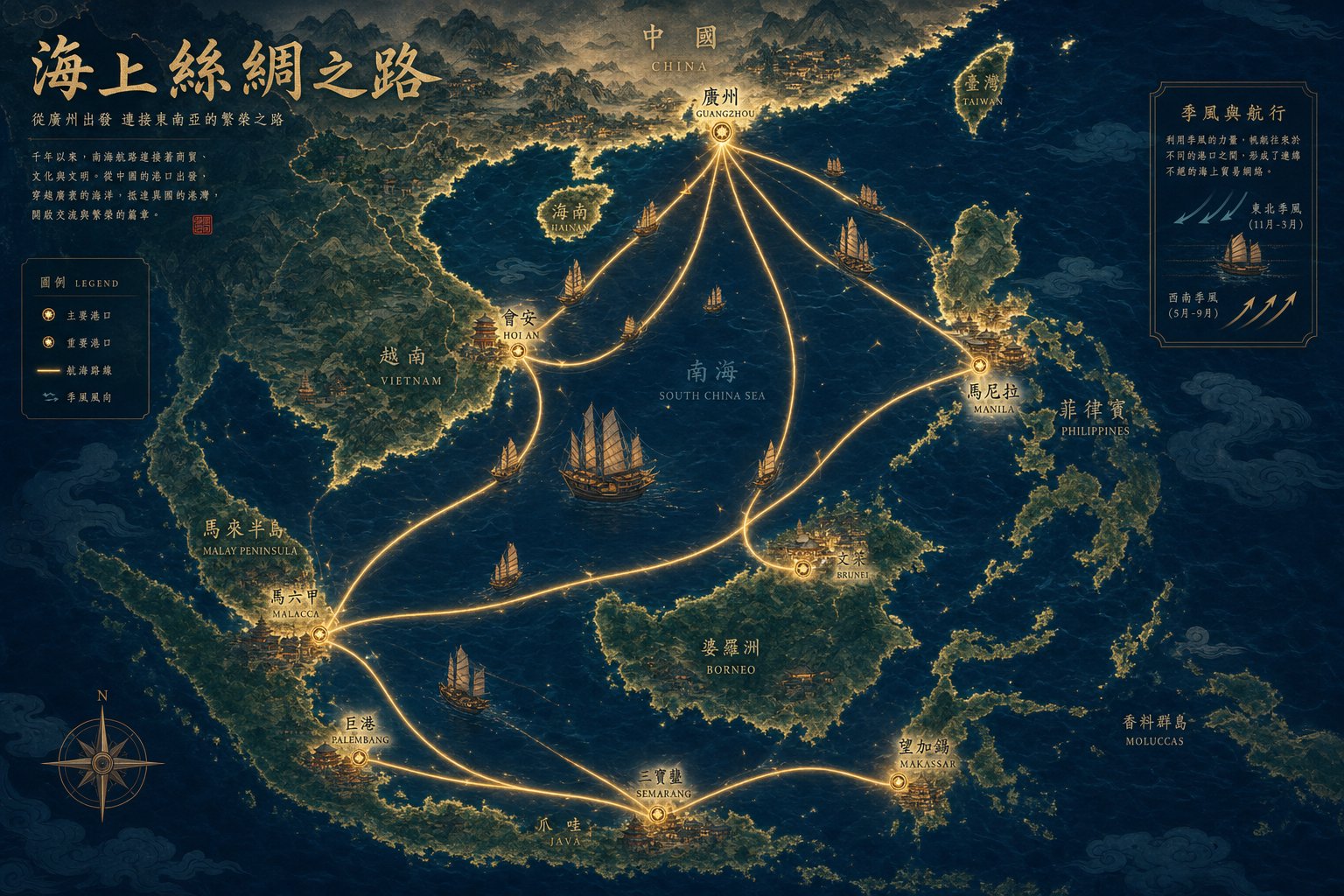
The diaspora dimension makes these dialect patterns even more revealing. Southeast Asian Chinese communities skew overwhelmingly toward southern surnames because emigration historically came from just two provinces: Fujian and Guangdong. My China Roots identifies several reasons for this southern emigration dominance: Fujian and Guangdong housed China's oldest international ports (Quanzhou, Amoy, Canton, Macao), both provinces have the longest coastlines in the country, and imperial authorities deliberately kept foreign trade far from the northern power centers. Immigration was technically illegal under the Qing dynasty, and the south's distance from Beijing meant far less enforcement.
The result? Chinese surnames in the Philippines, Malaysia, Singapore, Indonesia, and Thailand are almost exclusively southern surnames in southern dialect spellings. You'll find Tan, Lim, Ong, Chua, Go, and Sy dominating chinese filipino surnames because the ancestors of Filipino-Chinese communities came primarily from Fujian's Hokkien-speaking regions. In Malaysia and Singapore, a mix of Hokkien, Teochew, Cantonese, and Hakka spellings reflects the more diverse southern Chinese origins of those communities. Northern surnames like Zhang or Wang appear in these countries primarily among post-1980 Mandarin-speaking immigrants rather than among established multi-generational families.
Chinese American surnames tell a different but equally revealing story. Research on Chinese American naming patterns shows that immigration can be divided into distinct periods, each bringing different dialect groups. Before 1882, almost all Chinese immigrants to the United States came from Guangdong province, speaking Siyi (Four Districts) dialects, particularly Taishan, along with Sanyi (Three Districts) and Zhongshan speech. Early immigrants to Hawaii were predominantly Zhongshan and Hakka speakers. This is why the oldest chinese american surnames carry Cantonese and Taishan romanizations: Wong, Lee, Chin, Eng, Moy, and Yee rather than the Mandarin-based Wang, Li, Chen, or Wu.
The U.S. Chinese Exclusion Act (1882-1943) froze this Cantonese dominance in place for over a century. Because immigration was severely restricted, the Chinese American population remained overwhelmingly Cantonese-speaking, and their surname spellings reflected that single dialect group. It was not until 1965, when all restrictions on Chinese immigration were removed, that Mandarin-sounding surnames began appearing in significant numbers. After 1980, when both the People's Republic of China and Taiwan received annual quotas of 20,000 immigrants, Mandarin-based spellings surged. By the 2000 census, surnames with Mandarin pronunciation had surpassed Cantonese pronunciations in U.S. Social Security records.
This layered history means that a Chinese American named Chan almost certainly descends from pre-1882 Cantonese immigrants or their community networks, while a Chinese American named Chen more likely arrived after 1965 from Mandarin-speaking regions. The chan surname chinese American families carry is not just a name. It is a marker of a specific immigration wave, a specific dialect, and a specific set of historical circumstances that shaped their family's path to the United States.
The same logic applies globally. A Tan in Singapore points to Hokkien-speaking Fujian ancestors. A Chan in Vancouver likely traces to Cantonese-speaking Guangdong. A Tran in California connects to Vietnamese-Chinese communities where the chen surname character was read using Vietnamese pronunciation. Each spelling is a breadcrumb leading back to a specific port, a specific dialect community, and a specific chapter in the long history of Chinese migration.
These dialect-romanization patterns add a crucial layer of precision to the broader north-south surname framework. Knowing that your surname is southern narrows the search. Knowing which dialect spelling your family uses narrows it further, often to a single province or even a single cluster of villages. Together, regional identity and dialect fingerprint transform a surname from a vague ethnic marker into a genuine research tool, one that points toward specific records, specific clan associations, and specific ancestral territories worth investigating.
Final Comparison and Surname Research Recommendations
Dialect spellings point to a province. Regional identity points to a side of the Qinling-Huai River line. Put those two layers together with historical origin data, and a single chinese surname becomes a surprisingly precise research tool. The table below synthesizes every surname profiled in this article into one comparative framework, giving you a quick-reference guide for understanding where each name sits on the geographic map.
Complete Northern vs Southern Surname Comparison Table
| Surname | Region | Provincial Strongholds | Dialect Romanizations | Historical Origin Period | Diaspora Presence |
|---|---|---|---|---|---|
| Wang (王) | North | Shandong, Henan, Hebei, Shaanxi | Wang (Mandarin), Wong (Cantonese/Hakka), Ong (Hokkien) | Zhou Dynasty (~1046 BC) | Moderate; strongest in North American Mandarin-speaking communities |
| Zhang (张) | North | Henan, Shandong, Hebei, Liaoning | Zhang (Mandarin), Cheung (Cantonese), Teo/Teoh (Hokkien), Chang (Taiwanese) | Yellow Emperor era (legendary) | Low-moderate; northern-origin immigrants post-1965 |
| Chen (陈) | South | Fujian, Guangdong, Zhejiang, Taiwan | Chen (Mandarin), Chan (Cantonese), Tan (Hokkien/Teochew), Chin (Hakka), Tran (Vietnamese) | Western Zhou (~1046 BC) | Very high; most common Chinese surname globally in diaspora |
| Lin (林) | South | Fujian, Guangdong, Taiwan | Lin (Mandarin), Lam (Cantonese), Lim (Hokkien/Hakka) | Late Shang Dynasty (~1100 BC) | High; dominant in Hokkien-speaking Southeast Asian communities |
| Li (李) | Both | Henan, Sichuan, Shandong, Guangdong, Heilongjiang | Li (Mandarin), Lee/Lei (Cantonese), Lee/Dee (Hokkien) | Shang Dynasty; spread by Tang Dynasty (618-907 AD) | Very high; present in all major diaspora communities worldwide |
A few patterns jump out immediately. The northern surnames (Wang, Zhang) stayed close to their Yellow River basin origins and show relatively modest diaspora presence because emigration historically departed from southern ports. The southern surnames (Chen, Lin) traveled far beyond China's borders precisely because their stronghold provinces, Fujian and Guangdong, were the launchpads for centuries of maritime migration. Li sits in a category of its own, planted everywhere by imperial decree rather than natural geographic clustering.
Key Takeaways for Surname Research
What does all this mean if you are trying to trace your own ancestry? The core insight is straightforward: northern surnames tend to reflect Yellow River basin feudal origins rooted in Zhou dynasty territories, while southern surnames reflect successive waves of southward migration during the Jin, Tang, and Song dynasty collapses. Knowing which category your surname falls into immediately tells you where to start looking.
Knowing a surname's regional identity narrows genealogical research from an entire country of 1.4 billion people to a handful of provinces, and combining that with dialect romanization can narrow it further to a specific cluster of ancestral villages.
For practical research, here is how to use surname geography as your starting point. First, identify your surname's regional classification using the table above or a comprehensive chinese surname list. Are chinese surnames first or last? They come first in Chinese naming order, so if you are working with Chinese-language records, the surname appears before the given name. Are chinese names written surname first? Yes, always in Chinese contexts, though diaspora records often reverse the order to match Western conventions. Knowing this helps you read historical documents correctly.
Second, identify your dialect romanization. The spelling your family uses is not arbitrary. It encodes which dialect group your ancestors spoke and, by extension, which province they likely came from. A Chan researching their roots should look at Guangdong. A Tan should start in Fujian. A Li spelled as Lee should investigate southern Cantonese or Hokkien connections.
Third, connect with clan associations. Among all chinese surnames, the major ones profiled here maintain active genealogical networks spanning multiple countries. These organizations often hold family tree books, ancestral village records, and generation poems that can bridge the gap between a diaspora family and their specific origin point in China.
The common chinese surnames covered in this article represent hundreds of millions of people, yet each one carries a distinct geographic story. What is the most common chinese surname in your province of origin? That question alone can confirm or challenge family oral history. Surname geography does not replace detailed genealogical research, but it gives you a map before you start the journey, pointing you toward the right archives, the right dialect community, and the right side of the mountain range where your family's story began.
Frequently Asked Questions About Northern vs Southern Chinese Surnames
1. What is the main geographic boundary that divides northern and southern Chinese surnames?
The Qinling Mountains and Huai River form China's traditional north-south boundary for surname distribution. North of this line, surnames like Wang, Zhang, and Liu dominate provincial rankings, while south of it, Chen, Lin, and Huang rise to the top. This divide also aligns with differences in dialect zones, cuisine, climate, and historical administrative regions, making it the most reliable geographic marker for classifying surname origins.
2. Why are southern Chinese surnames more common in Southeast Asian countries?
Emigration from China historically departed from the southern coastal provinces of Fujian and Guangdong, where surnames like Chen, Lin, Huang, and Cai were already dominant. These provinces housed China's oldest international ports, had the longest coastlines, and were far from Beijing's enforcement of emigration bans. As a result, Chinese communities in the Philippines, Singapore, Malaysia, and Thailand carry overwhelmingly southern surnames in their respective dialect spellings such as Tan, Lim, Ong, and Chua.
3. How can the romanization of a Chinese surname help trace ancestral origins?
Different dialect groups pronounce the same surname character differently, and these pronunciations became fixed spellings during immigration. For example, the character 陈 appears as Chen (Mandarin), Chan (Cantonese), Tan (Hokkien), and Chin (Hakka). Each spelling points to a specific dialect community and province of origin. A family named Chan likely traces to Guangdong, while a Tan family likely connects to Fujian. This makes romanization a practical tool for narrowing genealogical research to a specific region.
4. Which Chinese surnames are found equally in both northern and southern China?
Li is the most notable surname that defies regional classification, ranking among the top surnames in both northern and southern provinces. This unusual distribution resulted from the Tang dynasty's policy of bestowing the imperial Li surname upon loyal subjects across the entire empire. Liu is another surname that spans both regions. However, most of China's major surnames show clear regional skew, with their population mass concentrated on one side of the Qinling-Huai River line.
5. What makes Wang the most distinctly northern Chinese surname?
Wang ranks as the number one surname in 16 provinces stretching across northern China, from Shandong to Xinjiang. Its origins trace to Zhou dynasty royal descendants in the Yellow River basin who adopted the character meaning 'king' after losing their thrones. Unlike surnames that scattered during southward migrations, Wang's massive population in its origin territory meant the northern core always remained dominant. Over 100 million people carry this surname, with the highest density in Shandong, Henan, Hebei, and Shaanxi.