What Is Numerology in Chinese Names
Numerology in Chinese names is a systematic method of analyzing personal names through stroke counts, numerical values, and Five Elements associations. Known in Chinese as 姓名学 (xingming xue), it evaluates how the specific number of strokes in each character of a name generates energy patterns believed to shape personality, fortune, and life trajectory. Unlike casually picking a "lucky number" for a phone or license plate, this is a structured mathematical framework with defined formulas, element cycles, and an 81-number interpretation chart applied specifically to personal names.
You've probably heard that 8 means wealth and 4 sounds like death in Chinese. That's general number symbolism, and it barely scratches the surface. Chinese name numerology operates on an entirely different level. It doesn't ask "does this name contain a lucky-sounding number?" It asks "what numerical values do the chinese name strokes produce when run through a five-grid calculation, and how do those values interact with each other elementally?"
What Makes Name Numerology Different from General Number Luck
Most English-language content about chinese numerology stops at cultural associations: 8 is prosperous, 6 means smooth sailing, 4 is avoided. That's the folk layer. Nameology, the formal study of names through numerical analysis, goes far deeper. It's a complete analytical system with calculation methods that convert any name into a set of five numbers, map those numbers onto Five Elements (Wood, Fire, Earth, Metal, Water), and then assess whether the resulting configuration is harmonious or conflicting.
Think of it this way. General number luck is like knowing that certain colors "feel" warm or cool. Name numerology is like understanding the full physics of light wavelengths and how they interact. One is intuition. The other is a framework with rules you can learn, apply, and verify.
The system draws from the same roots as the I Ching and yin-yang theory, using chinese numeration principles where odd numbers carry yang energy and even numbers carry yin energy. Each number from 1 to 81 has a documented interpretation covering its elemental nature, fortune rating, and symbolic meaning. Chinese numbers in this context aren't just quantities. They're carriers of specific energetic signatures.
Why Stroke Counts Matter More Than Character Meaning
Here's the counterintuitive part. A character with a beautiful meaning, say 福 (fu, "blessing"), might actually produce an unfavorable numerological profile depending on where it sits in the name and what stroke-count values it generates in the Five Grids calculation. Meanwhile, a less poetic character with the "right" stroke count could create a more harmonious numerical structure overall.
In Chinese name numerology, a name is treated as a mathematical structure first and a semantic one second. The stroke count of each character is the raw input; meaning is secondary to the numerical architecture the name produces.
This doesn't mean character meaning is irrelevant. Practitioners aim for both. But when conflicts arise between a beautiful meaning and a harmonious numerical profile, the system prioritizes the numbers. The reasoning is that numerical vibrations operate continuously and unconsciously throughout a person's life, while the semantic meaning of a name is only activated when someone consciously reflects on it.
So how do you actually count those strokes correctly? The answer isn't as straightforward as you might expect, and getting it wrong throws off every calculation that follows.
Historical Origins of Chinese Name Numerology
The stroke-counting rules that power modern name analysis didn't emerge from a single tradition. They're the product of a cross-cultural exchange between ancient Chinese philosophy and early 20th-century Japanese scholarship, a history that surprises many people encountering this system for the first time.
Long before any codified naming method existed, cultures of Chinese-speaking societies already linked numbers to cosmic order. The I Ching (易经, Yi Jing) established a chinese number system where numerical patterns mapped onto natural forces. Yin-yang theory assigned polarity to odd and even numbers. Five Elements philosophy connected numerical sequences to Wood, Fire, Earth, Metal, and Water. These ideas, rooted in stuff about ancient china that dates back thousands of years, formed the philosophical raw material. But they hadn't yet been distilled into a step-by-step method for evaluating personal names.
The Kumazaki Kenyo Method and Its Chinese Roots
That codification happened in 1918, when Japanese scholar Kumazaki Kenyo (熊崎健翁, Xiongqi Jianweng) synthesized I Ching numerology, yin-yang principles, and stroke-count mathematics into a single structured system: the Five Grids Analysis Method (五格剖象法, Wu Ge Pou Xiang Fa). He took philosophical concepts that had floated through Chinese metaphysics for centuries and gave them precise calculation formulas.
The method then traveled back to Chinese-speaking regions. In 1936, a Taiwanese student named Bai Yuguang (白玉光) brought the system from Japan to Taiwan, translating and promoting it. From there it spread to Hong Kong, Southeast Asia, and South Korea. By the 1990s, mainland Chinese scholars like Fang Chen integrated it with traditional Yixue (易学) principles, adapting it to fit Chinese naming conventions while keeping the Kangxi Dictionary stroke counts as the calculation standard.
How Different Schools of Name Numerology Diverge
Not every practitioner follows the Kumazaki method identically. Traditional Chinese approaches sometimes weight Five Elements balance or phonetic resonance (音韵, yinyun) more heavily than pure stroke-count math. Some schools incorporate the Eight Characters (八字, Bazi) birth chart as the primary driver, treating the Five Grids as a secondary check. Others prioritize character meaning and radical symbolism alongside the numbers.
Regional variation matters too. Taiwanese practitioners tend to follow the Kumazaki framework closely. Cantonese-speaking practitioners in Hong Kong may factor in tonal phonetics. Mainland practitioners often blend multiple schools. The Five Grids method remains the dominant framework across all regions, but how much weight it carries relative to other factors depends on who you ask.
Regardless of which school a practitioner follows, every approach shares one non-negotiable foundation: the stroke count must be calculated correctly. And "correctly" in this context means something very specific, tied to a dictionary published in 1716.
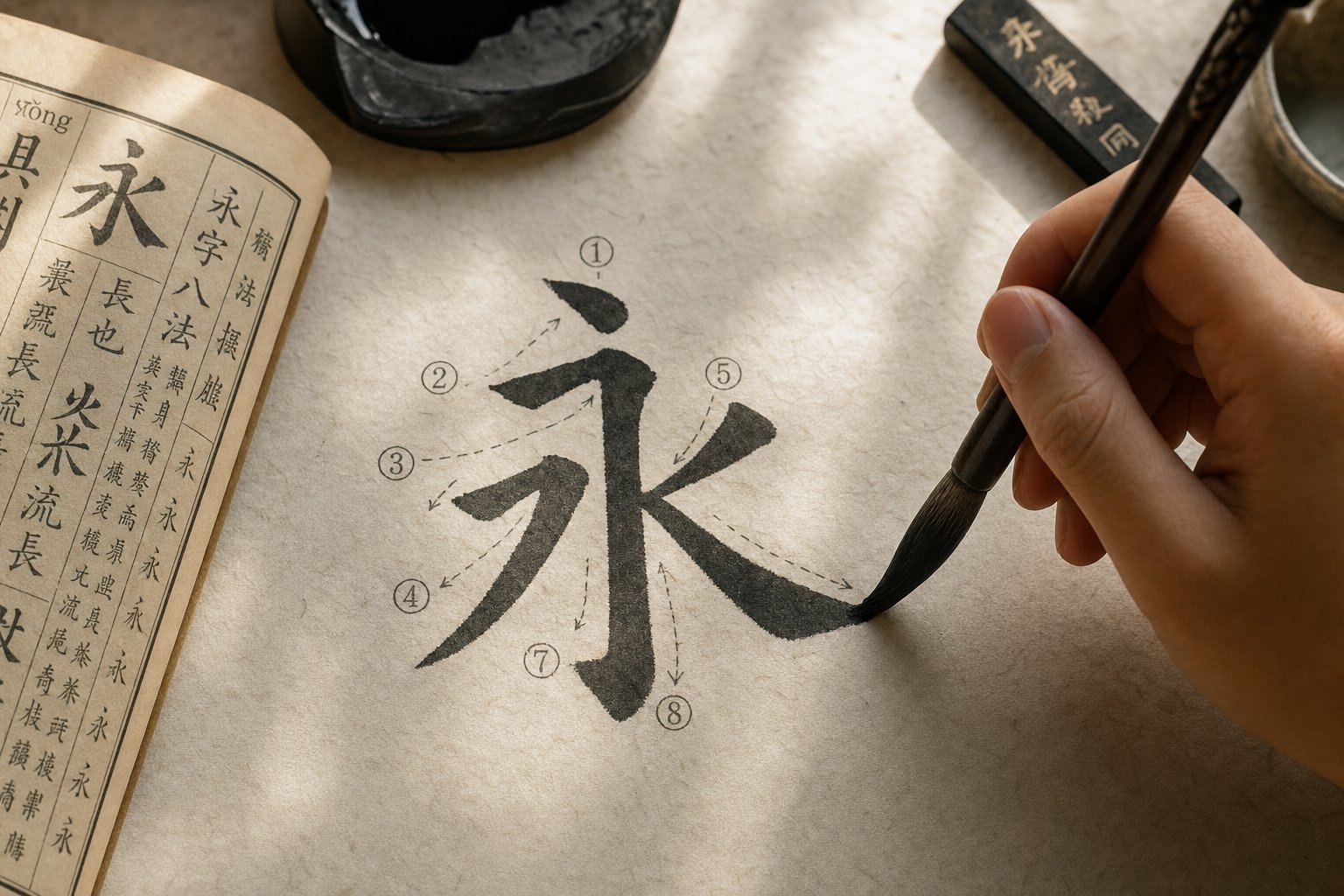
How to Count Strokes Correctly for Name Analysis
Every formula in the Five Grids system takes stroke counts as input. Feed it the wrong numbers and every grid value, element assignment, and fortune reading that follows will be off. The tricky part? The stroke count you'd naturally assign to a character by looking at it on screen often isn't the count the system actually uses.
Chinese name numerology relies on a specific standard: the stroke counts defined in the Kangxi Dictionary (康熙字典, Kangxi Zidian). This dictionary, completed in 1716 during the Qing Dynasty under imperial order, cataloged 47,035 characters organized by 214 radicals. It remains the authoritative reference for stroke counting in numerological analysis, even today.
Why Kangxi Dictionary Stroke Counts Are the Standard
The reasoning is straightforward. The entire numerological system, including the 81 Shu Li interpretations and the Five Elements mappings, was developed using traditional character forms. When Kumazaki Kenyo codified the Five Grids method in 1918, simplified Chinese characters didn't yet exist as an official writing system. China's simplification reforms came decades later, in the 1950s and 1960s. So the mathematical relationships between stroke values and fortune meanings are calibrated to traditional forms.
This means that even if your name is written in simplified Chinese, you must convert each character back to its traditional equivalent before counting strokes. The chinese number you arrive at through modern simplified counting will often differ from the Kangxi count, sometimes by several strokes. For example, the simplified character 龙 (dragon) has 5 strokes, but its traditional form 龍 has 16. That's an 11-stroke difference that would completely change your grid calculations.
The Kangxi Dictionary uses a 214-radical system where each radical has a fixed stroke count. When a radical appears in compressed or abbreviated form within a character, you still count it at its full, original stroke value. This is where most mistakes happen.
Common Stroke Counting Mistakes to Avoid
Imagine you're analyzing the character 洋 (yang, meaning "ocean"). You look at the left side and see 氵, the three-dot water radical. Visually, that's 3 strokes. But in the Kangxi system, 氵 is a compressed form of 水 (shui, water), which is radical number 85 and carries 4 strokes. So you count it as 4, not 3.
The same logic applies across dozens of common radicals. The grass radical 艹 looks like 3 strokes on paper, but it represents the full form 艸 (cao), which counts as 6. The hand radical 扌 appears to be 3 strokes, yet it stands for 手 (shou), counting as 4. If you're working with chinese number 1 through the full stroke range, these discrepancies add up fast.
Here's a reference table covering the radicals that trip people up most often. When one in chinese name analysis gets these wrong, the entire Five Grids calculation collapses:
| Radical | Appears As | Modern Stroke Count | Kangxi Stroke Count | Example Characters |
|---|---|---|---|---|
| 水 (water) | 氵 | 3 | 4 | 洋, 河, 清 |
| 艸 (grass) | 艹 | 3 | 6 | 花, 英, 莲 |
| 手 (hand) | 扌 | 3 | 4 | 打, 拉, 持 |
| 心 (heart) | 忄 | 3 | 4 | 情, 悦, 忆 |
| 犬 (dog) | 犭 | 3 | 4 | 狗, 猫, 独 |
| 玉 (jade) | 王 (as radical) | 4 | 5 | 珍, 琳, 瑞 |
| 示 (spirit) | 礻 | 4 | 5 | 祥, 福, 神 |
| 衣 (clothing) | 衤 | 5 | 6 | 裕, 被, 袖 |
| 肉 (flesh) | 月 (as body radical) | 4 | 6 | 肝, 脑, 胜 |
| 辵 (walk) | 辶 | 3 | 7 | 道, 远, 进 |
Notice the pattern. Compressed radicals almost always have a higher Kangxi count than their visual appearance suggests. The walk radical 辶 is the most dramatic example: it looks like 2 in chinese simplified writing or 3 strokes at most, but the Kangxi system assigns it 7 based on its full traditional form 辵.
A few practical tips to avoid errors:
- Always identify the radical first, then look up its Kangxi stroke value separately from the rest of the character.
- For the remaining strokes (the non-radical portion), count them as they visually appear in the traditional form.
- Add the Kangxi radical count to the remaining strokes for your total.
- Double-check against a Kangxi stroke-count reference rather than relying on dictionary apps, which often display modern simplified counts by default.
Getting stroke counts right is the foundation. It's tedious, but it's also the only part of the process that's purely mechanical. Once you have accurate numbers for each character in a name, the real analytical work begins: plugging those values into the Five Grids formulas to reveal the numerical architecture hidden inside the name.
The Five Grids System That Drives Name Analysis
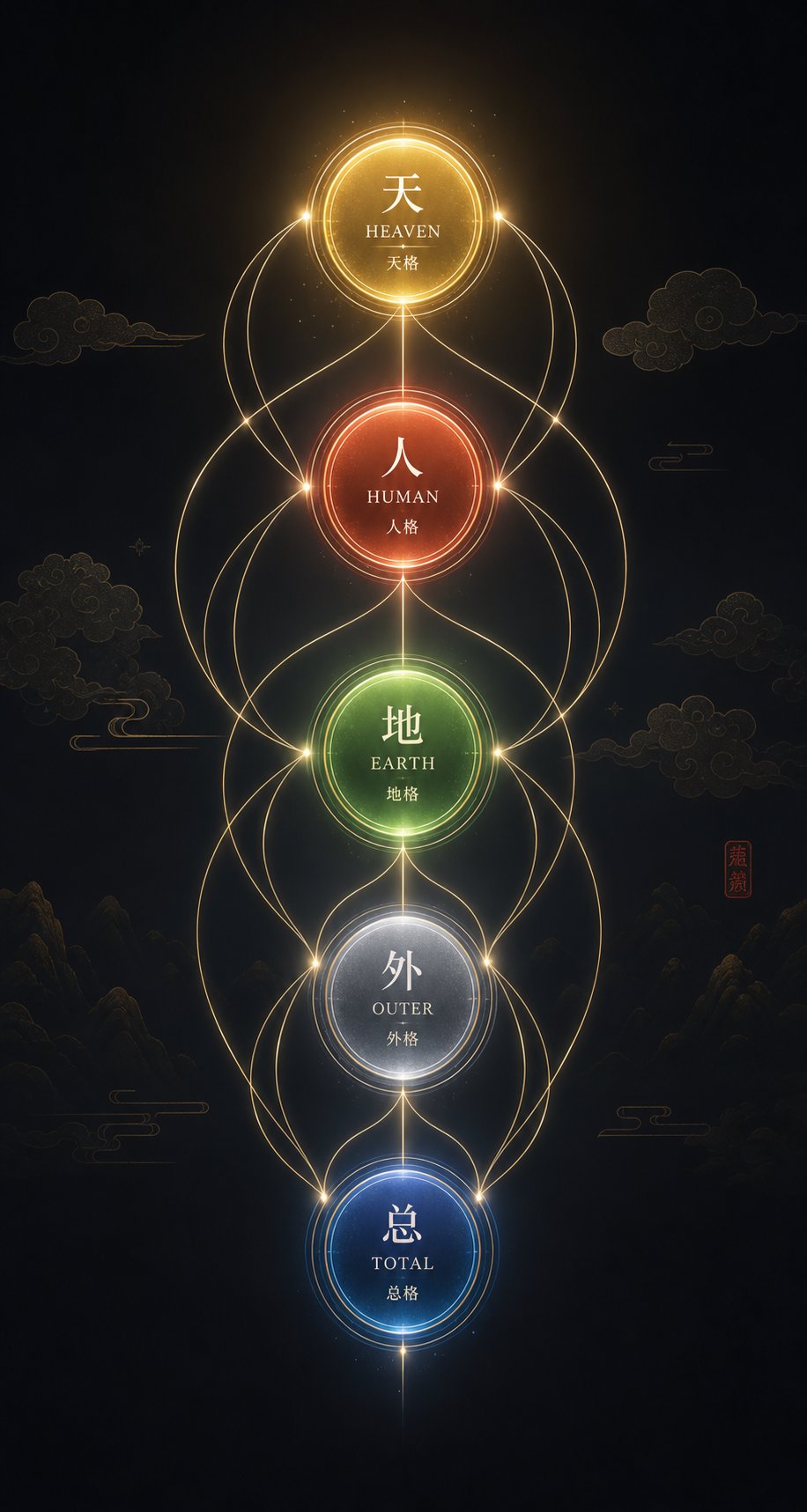
You have accurate stroke counts for each character. What do you actually do with them? This is where the Five Grids (五格, Wu Ge) formulas turn raw numbers into a structured profile. Each grid captures a different dimension of life, and together they form the analytical backbone of how to find your numerology in a Chinese name.
Calculating Each of the Five Grids Step by Step
The five formulas are surprisingly compact. What changes between names is how you handle single versus compound surnames and one-character versus two-character given names. Here are the rules:
- Tian Ge (天格 / Heaven Grid): Single surname = surname strokes + 1. Compound surname = sum of both surname characters' strokes.
- Ren Ge (人格 / Human Grid): Single surname = surname strokes + first character of given name strokes. Compound surname = second surname character strokes + first given name character strokes.
- Di Ge (地格 / Earth Grid): Two-character given name = sum of both given name characters' strokes. Single-character given name = given name strokes + 1.
- Zong Ge (总格 / Total Grid): Total strokes of the entire name (surname + given name combined).
- Wai Ge (外格 / Outer Grid): Single surname with two-character given name = Zong Ge - Ren Ge + 1. Compound surname with two-character given name = Zong Ge - Ren Ge. Single surname with single-character given name = fixed at 2.
The "+1" additions in certain formulas act as placeholder values. They exist because the system requires each grid to have a calculable number even when a name component has only one character. Think of them as structural padding that keeps the math consistent across different name lengths.
A Complete Worked Example from Name to Numbers
Let's walk through a real calculation using the historical name 李世民 (Li Shimin), the Tang Dynasty emperor. Using Kangxi Dictionary stroke counts: 李 = 7 strokes, 世 = 5 strokes, 民 = 5 strokes.
| Character | Position | Kangxi Strokes |
|---|---|---|
| 李 (Li) | Surname | 7 |
| 世 (Shi) | Given name, 1st character | 5 |
| 民 (Min) | Given name, 2nd character | 5 |
Applying the formulas:
- Tian Ge: 7 + 1 = 8 (Metal element)
- Ren Ge: 7 + 5 = 12 (Wood element)
- Di Ge: 5 + 5 = 10 (Water element)
- Zong Ge: 7 + 5 + 5 = 17 (Metal element)
- Wai Ge: 17 - 12 + 1 = 6 (Earth element)
Notice how numerology 12 appears in the Ren Ge position, the most influential grid. The value of numerology 10 shows up in the Di Ge, governing youth and early development. Each of these numbers will later be interpreted through the 81 Shu Li system and assessed for elemental harmony, but the calculation itself is purely mechanical.
What Each Grid Represents in Your Life
Each grid governs a distinct life domain, and practitioners weight them differently when evaluating a name's overall quality:
- Tian Ge (Heaven Grid): Inherited luck and ancestral influence. Since it's derived from the surname, which you don't choose, it carries less personal significance. It hints at family background and early environmental conditions.
- Ren Ge (Human Grid): The core of the entire profile. It reflects personality, behavioral patterns, and fortune during the prime years of life (roughly 25-50). This is the grid practitioners prioritize above all others.
- Di Ge (Earth Grid): Youth, foundational development, and early career trajectory. It also indicates relationships with children and subordinates later in life.
- Wai Ge (Outer Grid): Social relationships, public reputation, and how others perceive you. It reveals the quality of your external support network.
- Zong Ge (Total Grid): The overall life arc, with particular influence on fortune after middle age. It represents the cumulative trajectory and later-life outcomes.
The Ren Ge and Zong Ge carry the heaviest interpretive weight. A name with strong numbers in these two positions can compensate for weaker values elsewhere. Conversely, inauspicious values in the Ren Ge or Zong Ge raise concerns regardless of how favorable the other grids look.
But what exactly makes a number "auspicious" or "inauspicious"? That determination comes from a separate layer of the system: the 81 Shu Li chart, where each number from 1 to 81 carries its own fortune classification and symbolic meaning.
Understanding the 81 Number Meanings Behind Each Grid
You've calculated your Five Grids and arrived at a set of numbers. What do those numbers actually mean? This is where the 81 Shu Li (81数理, Ba Shi Yi Shu Li) system takes over. It functions as the interpretation key, assigning a specific fortune classification, symbolic name, and elemental quality to every number from 1 through 81. Without it, your grid values are just math. With it, they become a readable profile.
The logic is straightforward: each grid produces a number, and that number is looked up in the 81 Shu Li chart. The chart tells you whether that number is auspicious (吉, ji), inauspicious (凶, xiong), or mixed (半吉半凶, ban ji ban xiong). It also provides a poetic name and brief description of the energy pattern the number represents. So when someone says a name has "good numbers," they're referring to this specific lookup process.
What does 4 mean in numerology within this system? It doesn't automatically signal bad luck the way cultural superstition suggests. The number 4 in the 81 Shu Li carries the meaning of "instability and hardship" (凶), but this interpretation comes from its position in the numerical cycle, not from its phonetic resemblance to death. Meanwhile, 14 numerology in this framework also falls into the inauspicious category, associated with separation and loneliness. The number 17 in numerology, by contrast, carries a mixed rating, suggesting determination and strong will that can lead to either success or conflict depending on surrounding grid values.
How the 81 Number Meanings Were Derived
The 81 Shu Li system didn't emerge from arbitrary assignment. Its structure draws from I Ching hexagram symbolism and classical yin-yang number theory. In this framework, odd numbers (1, 3, 5, 7, 9) are yang, carrying active, expansive, and initiating energy. Even numbers (2, 4, 6, 8, 0) are yin, carrying receptive, stabilizing, and completing energy. Harmony arises when yin and yang interact productively. Conflict arises when they clash or stagnate.
The numbers cycle in groups that mirror natural patterns. Numbers 1 through 10 represent foundational archetypes. Numbers 11 through 20 echo and build upon the first cycle with added complexity. This layering continues through 81, at which point the cycle resets. If a grid calculation produces a number above 81, you subtract 80 to find its equivalent. A value of 85, for example, would be interpreted as 5 (85 - 80 = 5).
Each number also carries an elemental association tied to its last digit: 1 and 2 correspond to Wood, 3 and 4 to Fire, 5 and 6 to Earth, 7 and 8 to Metal, 9 and 0 to Water. This means the numerology meaning 6, for instance, places it in the Earth element category, associated with stability and nurturing energy. Its Shu Li interpretation describes it as a number of heavenly virtue and blessings, rated auspicious. The number 54, on the other hand, falls into the inauspicious category, associated with exhaustion and incomplete endeavors, a number practitioners flag when it appears in key grid positions.
The I Ching connection runs deeper than element assignment. Many of the 81 number descriptions reference hexagram imagery directly. Number 1 echoes the creative force of Qian (乾), the first hexagram. Number 2 parallels Kun (坤), the receptive. Higher numbers draw from combinations of trigram energies, producing interpretations that blend fortune prediction with character description.
Key Auspicious and Inauspicious Numbers to Know
Not all grid positions carry equal weight. The Ren Ge (Human Grid) and Zong Ge (Total Grid) matter most in overall interpretation. An inauspicious number in the Wai Ge is a concern, but the same number in the Ren Ge is a red flag. When evaluating a name, practitioners check the Ren Ge and Zong Ge first, then assess the remaining grids for supporting or conflicting patterns.
Here's how the 81 numbers break down by fortune category. The numerology 10 meaning, for example, places it in the inauspicious column, associated with emptiness and endings, a number that suggests plans left incomplete:
| Category | Numbers | General Characteristics |
|---|---|---|
| Strongly Auspicious (大吉) | 1, 3, 5, 8, 11, 13, 15, 16, 21, 23, 24, 31, 32, 33, 35, 37, 41, 45, 47, 48, 52, 57, 61, 63, 65, 67, 68, 81 | Leadership, prosperity, creativity, steady growth, strong foundations, and favorable outcomes across life domains |
| Mixed (半吉半凶) | 6, 7, 17, 18, 25, 26, 27, 29, 30, 38, 39, 49, 50, 51, 55, 58, 71, 73, 75 | Potential for success but with obstacles, conditional fortune that depends on effort and surrounding numbers |
| Inauspicious (凶) | 2, 4, 9, 10, 12, 14, 19, 20, 22, 28, 34, 36, 40, 42, 43, 44, 46, 53, 54, 56, 59, 60, 62, 64, 66, 69, 70, 72, 74, 76, 77, 78, 79, 80 | Instability, isolation, loss, stagnation, conflict, or decline without compensating factors |
A few patterns worth noting:
- Numbers ending in 1, 3, 5, and 8 appear disproportionately in the auspicious column. Yang-dominant numbers with strong elemental grounding tend to rate well.
- Numbers in the 40s and 50s are heavily mixed or inauspicious, reflecting the system's view of mid-cycle instability.
- The number 81 is rated strongly auspicious despite being the highest value. It represents a return to origin, a full cycle completed, echoing the I Ching's concept of renewal after completion.
- Numbers like 12, 14, and 22 are consistently inauspicious across all schools of interpretation, making them particularly undesirable in the Ren Ge or Zong Ge positions.
Keep in mind that a single inauspicious number doesn't condemn a name. The system evaluates the full configuration. A challenging number in the Di Ge (youth grid) might be offset by strong values in the Ren Ge and Zong Ge, suggesting early difficulties followed by later success. Context and interaction between grids matter as much as any individual value.
These number meanings tell you the fortune quality of each grid in isolation. But the system doesn't stop there. The next analytical layer examines how the top three grids interact elementally, producing what practitioners call the Three Talents configuration, where the real complexity of name harmony reveals itself.
Three Talents and Five Elements in Name Construction
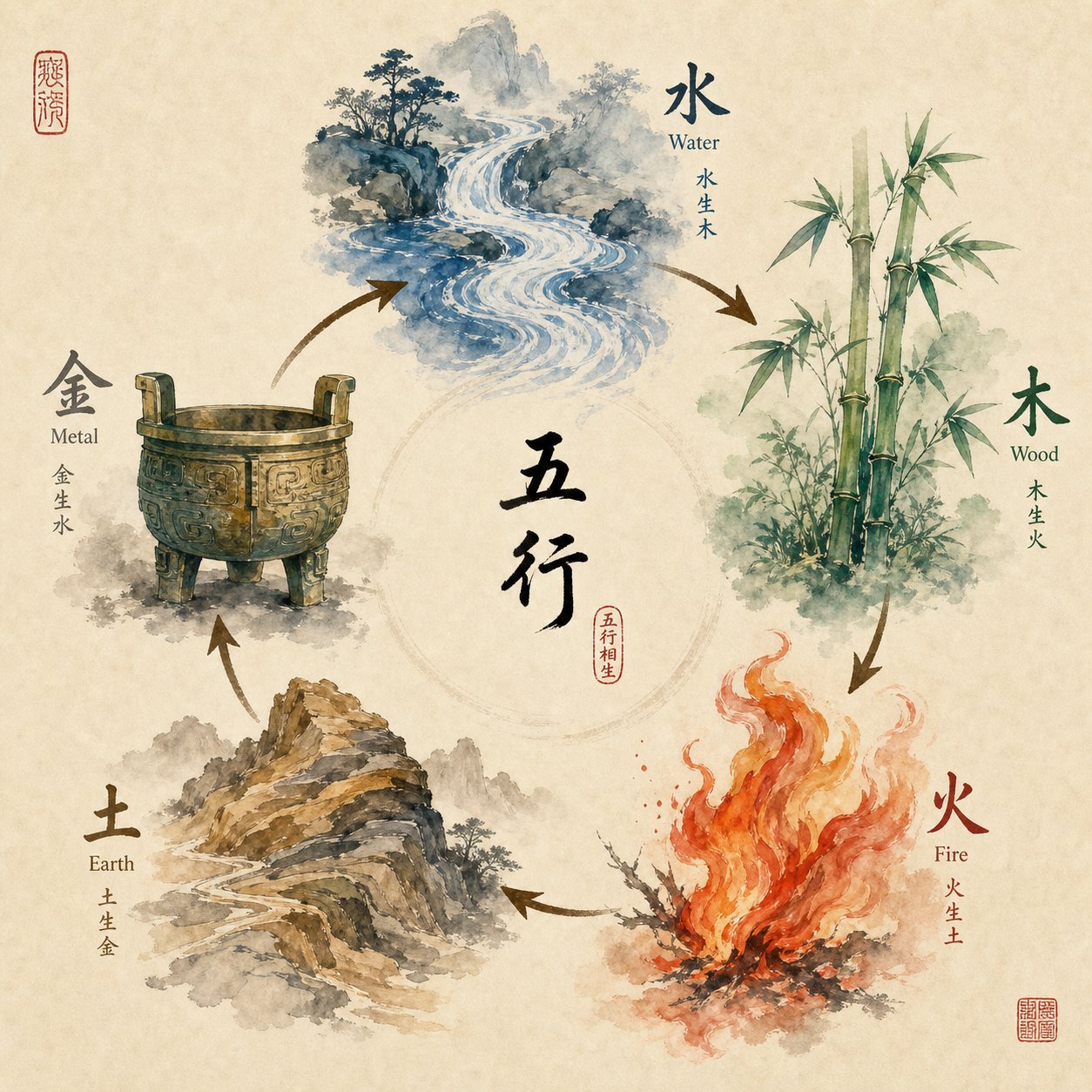
Individual grid numbers tell you fortune quality. But a name isn't five isolated values. It's a system, and systems produce interactions. The Three Talents (三才, San Cai) configuration captures exactly this: it takes the top three grids, Tian Ge, Ren Ge, and Di Ge, converts each into a Five Element, and then evaluates whether those three elements support each other or tear each other apart.
Think of it as a three-layer sandwich. Heaven sits on top, Human in the middle, Earth at the bottom. The question is whether energy flows smoothly between layers or gets blocked. A name where all three elements generate each other in sequence creates a channel for fortune to move freely. A name where elements clash at every junction creates friction that manifests as obstacles in health, relationships, or career.
Converting Grid Numbers to Five Elements
The conversion rule is simple: take the last digit of each grid number and map it to its corresponding element. You don't need the full number, just the final digit. A Tian Ge of 8 ends in 8, so it's Metal. A Ren Ge of 12 ends in 2, so it's Wood. A Di Ge of 10 ends in 0, so it's Water.
Here's the complete mapping based on the wu xing (五行) system:
| Last Digit | Five Element | Nature |
|---|---|---|
| 1 | Wood (木) | Yang Wood |
| 2 | Wood (木) | Yin Wood |
| 3 | Fire (火) | Yang Fire |
| 4 | Fire (火) | Yin Fire |
| 5 | Earth (土) | Yang Earth |
| 6 | Earth (土) | Yin Earth |
| 7 | Metal (金) | Yang Metal |
| 8 | Metal (金) | Yin Metal |
| 9 | Water (水) | Yang Water |
| 0 | Water (水) | Yin Water |
So a grid value of chinese 3 (ending in 3) maps to Fire. A value of chinese 4 (ending in 4) also maps to Fire. And 6 in chinese numerology corresponds to Earth. Once you've converted all three grids, you have a three-element sequence like Metal-Wood-Water or Earth-Fire-Earth. That sequence is your Three Talents configuration, and it's where elemental theory takes over from pure arithmetic.
Favorable and Unfavorable Element Combinations
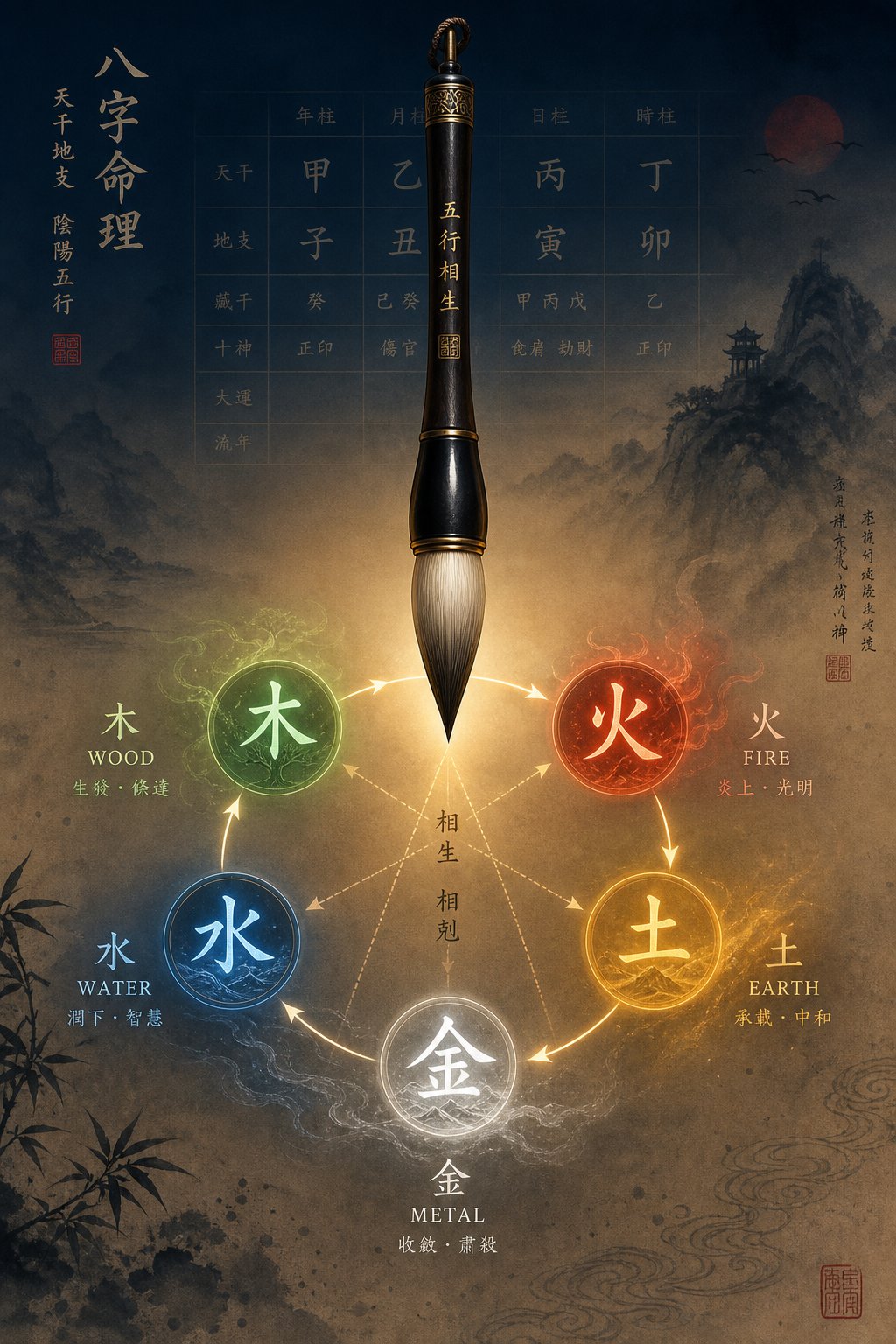
The Five Elements don't exist in isolation. They interact through two fundamental cycles that govern all of Chinese metaphysics:
The Generating Cycle (相生, Xiang Sheng): Each element nourishes the next in a continuous loop.
- Wood feeds Fire (wood burns to produce flame)
- Fire creates Earth (ash and minerals form soil)
- Earth bears Metal (ore is mined from the ground)
- Metal collects Water (metal surfaces condense moisture)
- Water nourishes Wood (plants grow with water)
The Overcoming Cycle (相克, Xiang Ke): Each element controls or weakens another.
- Wood parts Earth (roots break through soil)
- Earth dams Water (dikes block flow)
- Water extinguishes Fire (obvious enough)
- Fire melts Metal (heat overcomes hardness)
- Metal chops Wood (axes fell trees)
In the Three Talents configuration, the ideal is a generating sequence flowing downward: Heaven generates Human, Human generates Earth. This means innate conditions support personal development, and personal abilities find fertile ground in the environment. The next best scenario is a sequence where at least two adjacent elements generate each other, with the third being neutral or identical.
Here are several favorable Three Talents combinations and why they work:
- Fire-Earth-Metal (火-土-金): A continuous generating chain. Fire creates Earth, Earth bears Metal. Innate energy feeds personal growth, which in turn builds material foundations.
- Wood-Fire-Earth (木-火-土): Another full generating sequence. Creativity fuels action, action produces stable results.
- Earth-Earth-Earth (土-土-土): Complete harmony through sameness. Extremely stable, though potentially lacking dynamism.
- Metal-Water-Wood (金-水-木): Full generating flow. Discipline produces wisdom, wisdom nurtures growth.
- Water-Wood-Fire (水-木-火): Continuous generation from intellect through creativity to achievement.
Unfavorable configurations involve overcoming relationships, especially when Heaven overcomes Human (suggesting suppression from family or authority) or Human overcomes Earth (suggesting personal energy that undermines one's own foundation). A configuration like Metal-Wood-Earth is problematic: Metal chops Wood in the first position, meaning inherited conditions actively damage personal development.
How Bazi Charts Influence Name Element Selection
The Three Talents configuration doesn't exist in a vacuum. It needs to complement the person who carries the name. This is where the Bazi (八字, Four Pillars of Destiny) chart enters the picture.
Your Bazi chart is derived from your birth year, month, day, and hour, each converted into Heavenly Stems and Earthly Branches that carry specific Five Element attributes. A professional analysis reveals which elements are overrepresented in your chart (too strong) and which are underrepresented (too weak). The element you most need for balance is called your "Useful God" (用神, Yong Shen).
Name numerology aims to compensate for these imbalances. If your Bazi shows excessive Wood and deficient Metal, a practitioner would seek a name whose Three Talents configuration emphasizes Metal or Earth (since Earth generates Metal). If your chart lacks Water, the name should ideally place Water in a key position, particularly the Ren Ge, since that grid governs your core personality and prime years.
The strongest name configurations align the Three Talents elements with the person's Bazi needs, creating a postnatal supplement for what the birth chart lacks.
This is why two people with the same surname can't simply share an "ideal" given name. The numerological structure that benefits someone born with strong Fire and weak Water would be counterproductive for someone whose chart already overflows with Water energy. The system is personalized at every level.
Elemental harmony within the name is one dimension. But numbers and elements also carry cultural weight that extends beyond the technical framework. The popular beliefs surrounding specific numbers, things like "8 means wealth" or "4 means death," don't disappear just because the Five Grids system uses a different logic. Understanding where cultural symbolism aligns with and diverges from technical analysis helps you navigate both layers with clarity.
Lucky and Unlucky Numbers in Chinese Naming Traditions
Everyone who's spent five minutes reading about Chinese culture knows the basics: 8 is lucky, 4 is unlucky. People pay premiums for phone numbers loaded with eights. Buildings skip the fourth floor. But when you step into the Five Grids system, these cultural reflexes don't map as neatly as you'd expect. The technical framework and the folk layer operate on different logic, and they sometimes reach opposite conclusions about the same number.
Cultural number symbolism in Chinese-speaking societies is primarily phonetic. The number 8 in chinese (八, ba) sounds like "prosper" (发, fa). The number 6 (六, liu) echoes "smooth" (流, liu). The number 9 (九, jiu) shares its sound with "longevity" (久, jiu). And four in chinese (四, si) sounds uncomfortably close to "death" (死, si). These associations are real, deeply felt, and influence everything from wedding dates to license plates. They're the reason lucky number 8 commands a price premium in real estate listings across Asia.
Name numerology doesn't dismiss these associations. But it doesn't use them as its primary operating system either. In the Five Grids framework, a number's meaning comes from its position in the 81 Shu Li chart and its elemental assignment, not from how it sounds when spoken aloud. This creates situations where cultural intuition and technical analysis point in different directions.
Why the Number 4 Is Not Always Bad in Name Numerology
The 4 in chinese culture carries heavy baggage. It's the unlucky number in china that gets floors deleted from elevator panels and phone numbers discounted. The phonetic link between si (four) and si (death) is powerful enough to shape architecture and commerce across East Asia.
But here's what happens when 4 appears as a grid value in the Five Grids system. Its last digit is 4, which maps to the Fire element (Yin Fire, specifically). Fire represents warmth, illumination, passion, and transformation. There's nothing inherently death-related about it. The 81 Shu Li interpretation for the number 4 does classify it as inauspicious, describing it as "encountering calamitous change; all things come to a halt." So in this case, the cultural instinct and the technical rating happen to align: 4 is unfavorable in both systems.
However, the reasons are completely different. Culturally, 4 is bad because it sounds like death. Technically, 4 is unfavorable because of its position in the 81-number cycle, where it represents stagnation and disruption. If the phonetic association didn't exist, the cultural layer would have no problem with it, but the technical layer would still flag it.
More importantly, context matters. A 4 appearing in the Tian Ge (Heaven Grid) carries minimal personal impact since that grid reflects inherited conditions you can't change. The same 4 in the Ren Ge (Human Grid) would be a genuine concern. And a 14 or 24 in any grid position gets evaluated on its own merits: 14 is inauspicious (instability and frequent setbacks), while 24 is strongly auspicious (building fortune from nothing, prosperous finances). Both contain the digit 4, yet they sit at opposite ends of the fortune spectrum.
The takeaway? Luck in chinese name analysis isn't determined by a single digit's sound. It's determined by the full number's position in a structured interpretive system.
Lucky and Unlucky Numbers in Cultural Context vs Technical Analysis
When you compare what people believe about numbers culturally with what the Five Grids system actually says about them, the mismatches are revealing. Some numbers enjoy unearned reputations. Others carry stigma they don't technically deserve. The following table lays out the divergence for the numbers that come up most often in naming discussions:
| Number | Cultural Belief | Five Grids Technical Rating | Element | Alignment |
|---|---|---|---|---|
| 3 | Positive. Sounds like "life" (生, sheng). Associated with growth and creativity. | Strongly Auspicious (大吉). "All things take form; advancement and flourishing." | Fire (Yang) | Aligned. Both systems view 3 favorably. |
| 4 | Strongly negative. Sounds like "death" (死, si). Widely avoided. | Inauspicious (凶). "Encountering calamitous change; all things come to a halt." | Fire (Yin) | Aligned, but for different reasons. Cultural: phonetic. Technical: cycle position. |
| 6 | Positive. Sounds like "smooth" (流, liu). Represents ease and flow. | Auspicious (吉). "Stable, harmonious, and concordant; virtue of Heaven and Earth." | Earth (Yin) | Aligned. Both systems rate 6 as favorable and steady. |
| 7 | Neutral to slightly negative. Associated with the Ghost Festival (7th month). Sometimes linked to togetherness (七, qi). | Auspicious (吉). "Sharp and resolute; acting independently and decisively." | Metal (Yang) | Divergent. Cultural ambivalence vs. technical favorability. |
| 8 | Strongly positive. Sounds like "prosper" (发, fa). The most sought-after number commercially. | Strongly Auspicious (大吉). "Firm resolve and strong will; broad and advancing development." | Metal (Yin) | Aligned. Both systems agree 8 is highly favorable. |
| 9 | Positive. Sounds like "longevity" (久, jiu). Associated with the emperor and permanence. | Inauspicious (凶). "Profit departs and merit is empty; straitened and unable to express oneself." | Water (Yang) | Divergent. Cultural reverence vs. technical caution. Major mismatch. |
The most striking divergence is the number 9. Culturally, it's imperial, auspicious, and associated with eternal life. In the 81 Shu Li system, it's classified as inauspicious, carrying imagery of lofty aspirations that can't be sustained and frequent setbacks. Someone choosing a name purely based on cultural symbolism might deliberately target a grid value of 9, not realizing the technical framework views it as problematic.
The number 7 presents a subtler case. Many people feel uneasy about it due to Ghost Month associations, yet the Five Grids system rates it as auspicious, describing sharp decisiveness and the ability to overcome obstacles. A name producing 7 in the Ren Ge would be technically sound even if it makes some people culturally uncomfortable.
What does this mean practically? If you're evaluating a name, don't let surface-level number feelings override the structured analysis. A name loaded with 8s in its character meanings but producing unfavorable grid values (say, a Ren Ge of 28 or a Zong Ge of 80) would be culturally appealing but technically weak. Conversely, a name that happens to produce a grid value of 7 or 13, numbers that might feel unlucky to Western-influenced sensibilities, would actually rate well in the Five Grids framework.
The practical lesson: cultural number symbolism tells you how a name feels to others at first glance. The Five Grids system tells you how the name's numerical architecture functions as a whole. Both layers have value, but they answer different questions. A skilled practitioner works with both, ensuring the name satisfies cultural expectations while also producing a technically harmonious grid configuration.
Knowing where these two systems agree and disagree puts you in a stronger position to evaluate any name, whether you're assessing one you already carry or considering adjustments to improve its numerological profile.
How to Evaluate and Improve Your Name's Numerological Profile
Understanding the theory is one thing. Sitting down with your own name and running the numbers is another experience entirely. Maybe you're curious whether your name holds favorable patterns, or maybe you've already spotted a grid value that concerns you. Either way, the evaluation process follows a fixed sequence, and knowing what to look for separates casual curiosity from genuine analysis.
Here's the step-by-step process for a complete name evaluation:
- Convert each character to its traditional form and count strokes using Kangxi Dictionary rules.
- Calculate all five grids using the appropriate formulas for your name structure.
- Convert the Tian Ge, Ren Ge, and Di Ge to Five Elements using the last-digit mapping.
- Look up each grid value in the 81 Shu Li chart for its fortune classification.
- Assess the Three Talents element sequence for generating or overcoming relationships.
- Cross-reference with your Bazi chart to check whether the name's elements compensate for birth chart weaknesses.
What is a lucky number in this context? It's not a single magic digit. It's a grid value that rates auspicious in the 81 Shu Li, sits in a harmonious Three Talents configuration, and aligns with the person's elemental needs. Is 3 a lucky number? Technically yes, it's strongly auspicious. Is 9 a lucky number? Culturally it feels that way, but the Five Grids system rates it as inauspicious. The full picture always depends on position, interaction, and personal chart.
Red Flags in a Name's Numerological Profile
Not every imperfect number warrants concern. But certain patterns signal genuine structural weakness:
- Inauspicious Ren Ge or Zong Ge: These two grids carry the most weight. Numbers like 4, 9, 10, 12, 14, 20, or 22 in either position suggest core instability in personality development or overall life trajectory.
- Clashing Three Talents: When Heaven overcomes Human or Human overcomes Earth, the element sequence creates friction. A configuration like Metal-Wood-Fire (Metal chops Wood) means inherited conditions actively suppress personal growth.
- Element conflict with Bazi: If your birth chart already overflows with Fire and your name's Three Talents configuration adds more Fire, the imbalance intensifies rather than corrects.
- Multiple inauspicious grids: A single weak grid can be offset by strong ones elsewhere. Three or more unfavorable values suggest the name's numerical architecture lacks a stable foundation.
A name doesn't need perfect scores across all five grids. Practitioners generally consider a name acceptable when the Ren Ge and Zong Ge are auspicious, the Three Talents flow harmoniously, and the elements complement the person's Bazi. Minor weaknesses in the Tian Ge or Wai Ge are tolerable.
Options for Adjustment Without a Full Name Change
Discovering unfavorable patterns doesn't mean you need to overhaul your legal identity. Chinese naming traditions offer several adjustment paths that range from subtle to formal, and historically, carrying multiple names was standard practice. As FamilySearch's documentation on Chinese naming customs notes, educated Chinese traditionally used a courtesy name (字, zi) among peers and sometimes an art name (号, hao) in professional or creative contexts.
Practical approaches include:
- Adopting a courtesy or professional name: A secondary name used in business, creative work, or social media can carry a more favorable numerological profile without touching your legal documents.
- Choosing a complementary English name: For bilingual individuals, an English name with stroke counts (when transliterated into Chinese characters) that compensate for weaknesses in the Chinese name adds a balancing layer.
- Modifying the given name while keeping the surname: Since the Tian Ge derives from the surname alone, changing only the given name restructures the Ren Ge, Di Ge, Wai Ge, and Zong Ge while preserving family identity.
- Adjusting a generational character: In families that use generation names, selecting a different character with the same generational radical but a different stroke count can shift grid values without breaking the family naming convention.
Beyond numerological structure, several naming taboos deserve attention during any adjustment process. The chinese word for lucky is 吉 (ji) or 幸运 (xingyun), and while incorporating auspicious-meaning characters is tempting, practitioners also watch for homophones with negative words, characters shared with recent ancestors (a traditional taboo reflecting respect for elders), and overly complex characters that create practical difficulties in daily handwriting. Lucky in chinese naming culture means balancing aspiration with usability.
Generational naming conventions matter too. Some families maintain poem-based generation sequences (辈分诗, beifenshi) where each generation uses a specific character. Breaking this sequence carries social weight in traditional families, so any numerological adjustment should work within the convention rather than against it.
The goal isn't a "perfect" name by some absolute standard. It's a name that functions well across multiple dimensions: favorable grid values, harmonious element flow, Bazi alignment, cultural appropriateness, and practical daily use. A name that scores perfectly on the Five Grids but is impossible to write or sounds awkward spoken aloud hasn't actually solved the problem.
These evaluation principles apply whether you're assessing a personal name, naming a newborn, or even choosing a business name. The same Five Grids framework scales across all naming contexts, though how practitioners weight each factor shifts depending on the region, the generation, and the specific cultural community involved.
Modern Practice Across Regions and Generations
The Five Grids framework may follow a single mathematical logic, but how it's applied varies significantly depending on where you are and who you ask. Chinese cultures across East and Southeast Asia have each adapted the system to fit local writing conventions, linguistic realities, and generational attitudes. What looks like one unified tradition from the outside is actually a patchwork of regional schools, each with its own emphasis and occasional disagreements about methodology.
Regional Differences in Practice Across Chinese-Speaking Societies
Taiwan represents the most straightforward case. Practitioners there follow the Kumazaki method closely, using traditional characters as the default writing system. Since Taiwan never underwent character simplification, there's no conversion step required. Kangxi stroke counts align naturally with everyday written forms, and the naming industry is well-established, with professional consultants operating openly alongside temples and cultural centers. Parents commonly consult a naming specialist before registering a newborn's name, treating the Five Grids analysis as standard due diligence.
Mainland China presents a more complicated picture. The official writing system uses simplified characters, but the numerological framework was built on traditional forms. This creates an ongoing debate: should practitioners convert to traditional counts (the orthodox approach), or should a new system be developed around simplified stroke values? Most serious practitioners still insist on Kangxi Dictionary counts, arguing that the 81 Shu Li interpretations lose their calibration otherwise. But casual users running names through online calculators sometimes get conflicting results depending on which standard the tool applies. The practice itself experienced suppression during certain political periods and has re-emerged as a commercial service, particularly in the context of baby naming and business registration.
Hong Kong adds another layer. While traditional characters remain standard there, Cantonese phonetics introduce considerations that Mandarin-focused systems don't address. A character's tonal quality in Cantonese, its phonetic associations in the local dialect, and even its visual balance in handwritten form all factor into naming decisions alongside the Five Grids math. Some Hong Kong practitioners incorporate a phonetic scoring system that evaluates how mandarin chinese numbers and Cantonese pronunciations interact with the name's overall energy profile.
Singapore and Malaysia blend multiple dialect traditions. A Hokkien family, a Teochew family, and a Cantonese family might all consult the same Five Grids framework but weight phonetic considerations differently based on their heritage dialect. The multilingual environment also means names must function across Chinese, English, and sometimes Malay contexts, adding practical constraints that pure numerological optimization can't ignore.
Modern Applications Beyond Personal Names
The same stroke-count principles extend well beyond naming babies. Business owners across Chinese-speaking regions routinely run company names through Five Grids analysis before registration. The logic is identical: count strokes, calculate grids, check the 81 Shu Li ratings, and assess elemental harmony. A restaurant name, a tech startup brand, or a product line all get evaluated through the same framework. The difference is that business names often prioritize the Zong Ge (total trajectory) and Wai Ge (public perception) over the Ren Ge, since a company's external reputation matters more than its "personality."
Brand creation for international markets adds another dimension. Chinese companies expanding abroad often select English names whose transliterated Chinese character equivalents produce favorable grid values. The process works in reverse too. Chinese professionals choosing English names for international use sometimes evaluate how those names would score if converted to Chinese characters, essentially running the system backward to find phonetic matches that satisfy both linguistic and numerological criteria. You'll notice this practice is particularly common among professionals in finance, real estate, and entertainment, industries where personal branding carries significant weight.
Younger generations engage with name numerology differently than their parents did. Rather than treating it as an absolute determinant, many consult it as one input among several. They might run their name through an online calculator out of curiosity, note the results, and factor them into a broader decision that also considers personal taste, international usability, and social media searchability. The attitude is pragmatic rather than devotional: "If the numbers happen to work, great. If they don't, I'll weigh that against other priorities."
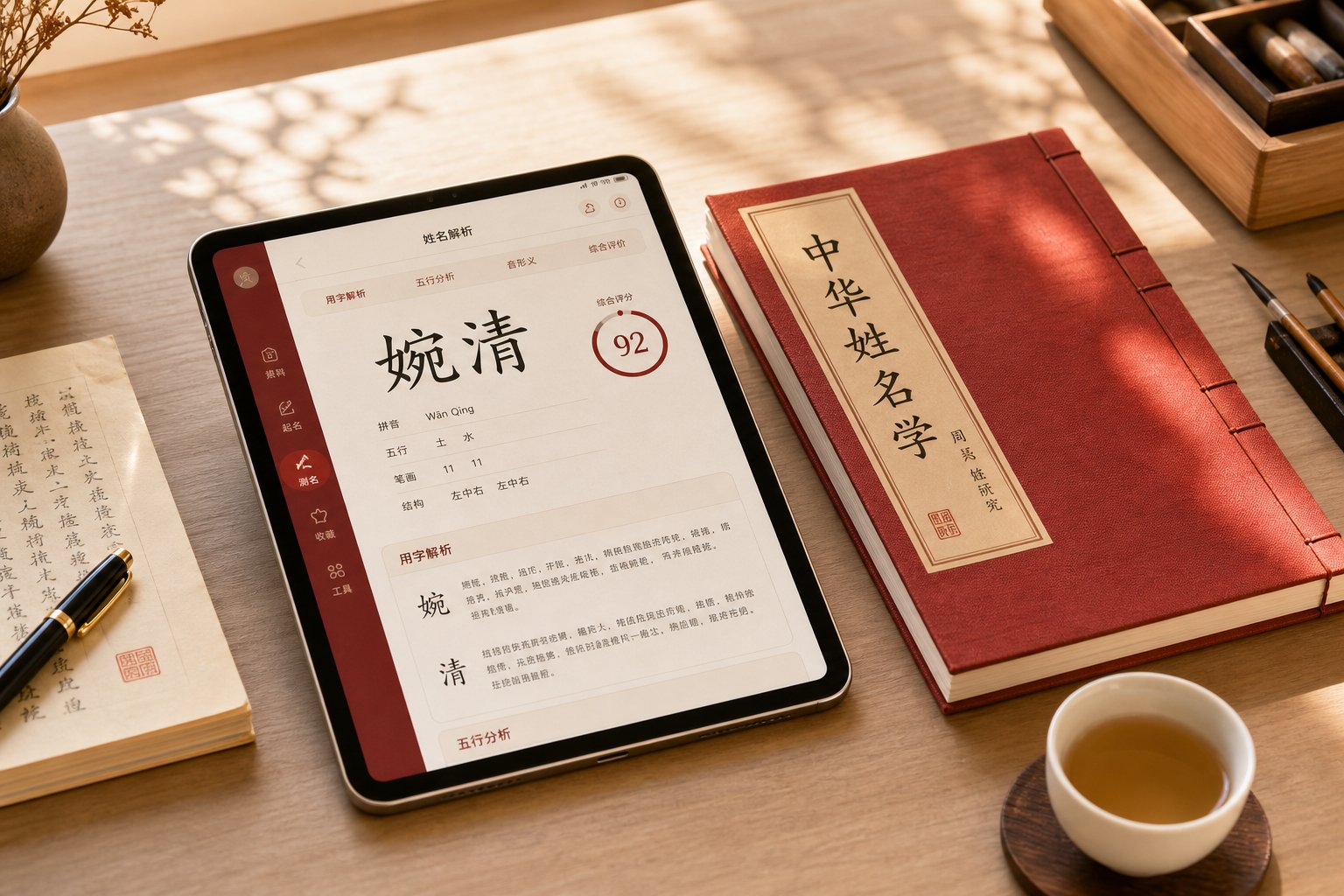
Online calculation tools have made the basic math accessible to anyone. You can find apps that compute all five grids instantly once you input a name. Some even display asian numbers 1-10 element mappings and auto-generate the Three Talents configuration. But accessibility creates its own problem. A single numerical score without context, like a website declaring your name "72% lucky," strips away the interpretive nuance that makes the system meaningful. Knowing that your Ren Ge is 12 means little unless you also understand how it interacts with your Di Ge element, whether your Three Talents flow harmoniously, and how the configuration relates to your birth chart.
This is the gap between calculation and interpretation. The math is mechanical. Anyone can learn it, and machines do it instantly. The interpretation, understanding which patterns matter most for a specific person in a specific life context, requires the full framework. A number that looks unfavorable in isolation might be exactly what a particular Bazi chart needs. A "perfect" grid configuration that ignores phonetic awkwardness or cultural taboos hasn't actually produced a good name.
Whether you approach numerology in Chinese names as a prescriptive guide or simply as cultural literacy, the system rewards understanding. It connects stroke-level detail to elemental theory to life-domain mapping in a way that reveals how deeply numerical thinking is woven into Chinese naming traditions. You don't have to believe the numbers control destiny to appreciate the elegance of a framework that's been refined across cultures and centuries, one that continues to shape how millions of names are chosen, evaluated, and carried through life.
Frequently Asked Questions About Numerology in Chinese Names
1. How do you calculate the numerology of a Chinese name?
To calculate Chinese name numerology, first convert each character to its traditional form and count strokes using Kangxi Dictionary standards. Then apply the Five Grids formulas: Tian Ge (surname strokes + 1), Ren Ge (surname strokes + first given name character strokes), Di Ge (sum of given name strokes), Zong Ge (total name strokes), and Wai Ge (Zong Ge minus Ren Ge + 1). Each resulting number is then interpreted through the 81 Shu Li chart and assessed for Five Elements harmony.
2. Why does Chinese name numerology use Kangxi Dictionary stroke counts instead of modern counts?
The entire numerological system, including the 81 number interpretations and Five Elements mappings, was calibrated using traditional character forms before simplified Chinese existed. Radicals in their compressed forms carry their original full stroke values. For example, the water radical appears as 3 strokes visually but counts as 4 in the Kangxi system. Using modern simplified counts would misalign the mathematical relationships the framework depends on.
3. Is the number 4 always bad in Chinese name numerology?
Not necessarily. While 4 sounds like death in spoken Chinese, the Five Grids system evaluates it differently based on context. The number 4 as a standalone grid value is rated inauspicious in the 81 Shu Li chart, but numbers containing 4 vary widely. For instance, 24 is strongly auspicious, associated with building wealth from nothing. The impact also depends on which grid position the number occupies, with Ren Ge and Zong Ge carrying the most weight.
4. What is the Three Talents configuration in Chinese name numerology?
The Three Talents (San Cai) configuration converts the Tian Ge, Ren Ge, and Di Ge into Five Elements using each number's last digit. The resulting three-element sequence is evaluated for harmony based on generating cycles (elements that nourish each other) and overcoming cycles (elements that clash). A favorable configuration like Wood-Fire-Earth flows in a continuous generating chain, while a clashing sequence like Metal-Wood-Fire creates friction believed to manifest as life obstacles.
5. Can you improve your name's numerology without a full legal name change?
Yes. Traditional Chinese culture supports multiple names for different contexts. Options include adopting a courtesy name or professional name with better grid values, choosing a complementary English name whose transliterated characters produce favorable numbers, modifying only the given name while keeping the surname, or selecting a different generational character with the same radical but a different stroke count. The goal is balancing numerological harmony with cultural appropriateness and practical usability.