Why Getting Chinese Names Right Changes Everything
You open a meeting invite and see the name "Qiu Xiaojing" on the attendee list. Your brain stalls. Do you say "Kwee-oh"? "Chew"? You rehearse a few versions in your head, none of them feel right, and by the time introductions roll around, you mumble something vague and hope nobody notices. Sound familiar?
This moment plays out in offices, classrooms, and newsrooms every day. Chinese name pronunciation trips up English speakers not because the names are impossibly complex, but because the spelling system behind them follows rules most people have never been taught. That system is called pinyin, and it is the key to unlocking any Chinese name you encounter.
Why Pronouncing Chinese Names Correctly Matters
Getting someone's name wrong once is understandable. Getting it wrong repeatedly sends a different message. Research into workplace inclusion shows that persistent mispronunciation functions as a microaggression, signaling to the person that they are not important enough for others to make the effort. In professional settings, that small failure chips away at trust, collaboration, and belonging.
The good news is that Chinese name pronunciation is a learnable skill, not a guessing game. This pinyin name pronunciation guide does not ask you to memorize a list of names. Instead, it teaches you how to decode any name written in pinyin so you can pronounce mandarin names with confidence, whether you encounter them in an email signature, a conference program, or a news headline.
What Pinyin Actually Is and How It Helps
Pinyin is the official romanization system for Standard Mandarin Chinese, adopted internationally by the ISO in 1982 and the United Nations in 1986. It uses the same 26 Latin letters on your keyboard to represent every sound in Mandarin. For anyone navigating chinese pronunciation without reading Chinese characters, pinyin is the bridge.
Here is the catch that trips everyone up:
Pinyin looks like English but follows completely different sound rules. The letter "q" sounds like "ch," the letter "x" sounds like a soft "sh," and "c" sounds like "ts." Reading pinyin as if it were English is the single biggest source of mispronunciation.
Once you internalize that pinyin is its own consistent code rather than quirky English spelling, every Chinese name becomes readable. Each syllable maps to one specific sound, every time, with no exceptions. Unlike English, where "ough" can produce five different pronunciations, pinyin rewards you with predictability. Learn the rules once, and you can apply them to any name you meet.
This chinese language pronunciation guide walks you through those rules step by step, starting with how Chinese names are structured, then moving through every consonant and vowel sound, and finishing with a practical decoder you can use on the spot. The goal is not perfection. It is respect, competence, and the confidence to say a colleague's name without flinching.
Understanding How Chinese Names Are Structured
Before you can sound out a Chinese name, you need to know where one part ends and another begins. Chinese names follow a structure that is the reverse of most Western naming conventions, and that reversal is the first thing that throws English speakers off.
Family Name First and Given Name Second
In English, you say "Michael Chen." In Chinese, the family name always comes first: Chen Ming, not Ming Chen. This is not a stylistic choice or a regional quirk. It reflects a cultural emphasis on family lineage that has been consistent for thousands of years. When you see a Chinese name written in pinyin, the first element is almost always the surname.
Chinese naming conventions arrange names as follows: family name, then given name. So in a name like Wang Xiaoming, "Wang" is the surname and "Xiaoming" is the personal name chosen at birth. Women do not change their surnames after marriage, which means a person's family name stays constant throughout their life.
How to Identify Surname Versus Given Name
Here is a practical rule that works the vast majority of the time: Chinese surnames are typically one syllable. To define syllable in this context, think of it as one beat of sound, one unit you can clap to. The top 100 Chinese family names are all single-syllable, and these cover roughly 85 percent of the population in mainland China. So when you see a three-syllable name, the split is almost always one syllable for the surname and two for the given name.
Common structural patterns look like this:
- Li Wei = one-syllable surname (Li) + one-syllable given name (Wei) = two syllables total
- Zhang Xiaoming = one-syllable surname (Zhang) + two-syllable given name (Xiaoming) = three syllables total
- Wang Qingzhao = one-syllable surname (Wang) + two-syllable given name (Qingzhao) = three syllables total
- Ouyang Xiu = two-syllable compound surname (Ouyang) + one-syllable given name (Xiu) = three syllables total
Compound surnames like Ouyang, Zhuge, or Shangguan do exist, but they are rare. If you encounter a name with four syllables, there is a good chance the first two form a compound surname, though this is uncommon enough that the one-plus-two pattern remains your safest default assumption.
One formatting detail worth noting: two-syllable given names may appear written together (Xiaoming), hyphenated (Xiao-Ming), or separated (Xiao Ming). All three represent the same name. The joined spelling is recommended because it clearly signals that both syllables belong to a single given name rather than being a separate middle name in the Western sense.
Rhythm and Stress in Full Chinese Names
Knowing the structure helps you figure out where to place emphasis when speaking. In a two-syllable name like Li Wei, each syllable carries roughly equal weight. You would not rush through "Li" to land on "Wei" the way English speakers stress the second syllable in "Michelle." Both beats matter equally.
For three-syllable names, the rhythm shifts slightly. In Zhang Xiaoming, the surname "Zhang" gets its own distinct beat, and then "Xiao" and "ming" flow together as a unit. Think of it as ONE pause TWO-THREE rather than one-two-three with equal spacing. The given name syllables connect more closely to each other than to the surname. Understanding what is a syllable and how syllable meaning maps to rhythm here is the difference between sounding choppy and sounding natural.
This matters in professional contexts. When you address someone formally in Chinese culture, you use their full name or their surname plus a title. Calling someone by their given name alone is reserved for close friends and family. So if you meet a colleague named Chen Yufei, you would address them as "Chen" or use their full name in introductions, not "Yufei" on its own, unless they invite you to do so. Many Chinese professionals working internationally will capitalize their surname on business cards or list it first in all caps (CHEN Yufei) specifically to help colleagues identify which part is the family name.
With the structural blueprint in hand, the next challenge is the sounds themselves. Each of those syllables is built from an initial consonant and a final vowel combination, and pinyin maps every one of them to a specific, predictable pronunciation.
Every Pinyin Initial Mapped to English Sounds
Each pinyin syllable starts with a consonant sound called the initial. Think of it as the launching pad for the rest of the syllable. Some of these initials behave almost identically to their English counterparts, while others will require you to retrain your instincts entirely. The complete pinyin chart of initials breaks down into three tiers of difficulty for English speakers, and working through them in order builds your confidence before tackling the harder sounds.
Familiar Initials That Sound Close to English
Good news first. Eleven of the 21 pinyin initials sound close enough to English that you can rely on your existing instincts. These are the consonants where the letter on the page does roughly what you expect:
| Pinyin Initial | English Approximation | Example Surname | Sounds Like |
|---|---|---|---|
| b | b in "bay" | Bai | "bye" |
| p | p in "pay" | Pan | "pahn" |
| m | m in "may" | Ma | "mah" |
| f | f in "fan" | Feng | "fung" |
| d | d in "day" | Deng | "dung" |
| t | t in "top" | Tan | "tahn" |
| n | n in "nap" | Niu | "nyoh" |
| l | l in "lay" | Li | "lee" |
| g | g in "go" | Gao | "gow" (rhymes with cow) |
| k | k in "kite" | Kong | "kohng" |
| h | h in "hat" | Huang | "hwahng" |
One small note: no consonant is ever silent in pinyin. The "h" in Huang is always pronounced, unlike the silent "h" in English words like "hour." If you see a letter, you say it.
The Tricky Initials J Q and X
Here is where English instincts start to mislead you. When you see j in chinese letters like "Jia" or "Jin," your brain wants to produce the hard English "j" from "jump." That is close but not quite right. The pinyin j, q, and x are sounds that do not exist in English, though they have workable approximations.
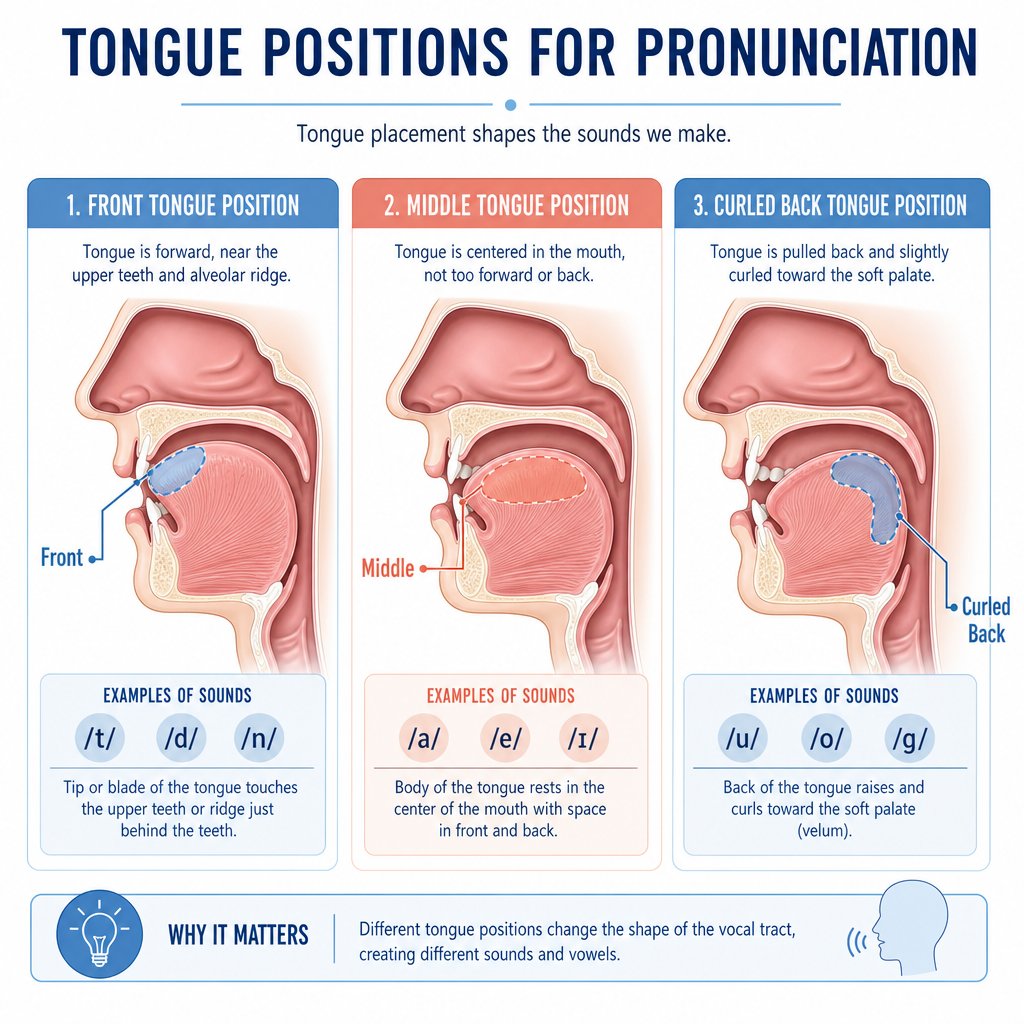
The key physical difference: for all three sounds, the tip of your tongue stays down behind your lower front teeth. Imagine making a "j," "ch," or "sh" sound while keeping your tongue tip low and pushing the middle of your tongue toward the roof of your mouth.
| Pinyin Initial | English Approximation | Example Surname | Sounds Like |
|---|---|---|---|
| j | j in "jeep" but softer, tongue tip down | Jiang | "jee-ahng" (soft j) |
| q | ch in "cheese" but lighter, tongue tip down | Qian | "chee-en" |
| x | sh in "sheep" but with tongue tip down | Xie | "shee-eh" |
The chinese x pronunciation is the one that confuses people most. When you need to pronounce x in chinese names like Xu, Xia, or Xing, think of a "sh" sound made while smiling. If you can comfortably smile while producing the sound, you are making it correctly. If your lips round forward, you have slipped back into the English "sh." This distinction is what makes the chinese pronunciation x unique: it is produced further forward in the mouth than English "sh."
A helpful way to think about the relationship: q is just x with a "t" sound added to the front, and j is a voiced version of the same mouth position. Master x first, and the other two follow naturally.
Zh Ch Sh and R Explained for English Ears
This final group includes the retroflex consonants, where your tongue curls back toward the roof of your mouth, plus a few flat sounds that trip people up for different reasons.
| Pinyin Initial | English Approximation | Example Surname | Sounds Like |
|---|---|---|---|
| zh | j in "judge" with tongue curled back | Zhang | "jahng" |
| ch | ch in "church" with tongue curled back | Chen | "chuhn" |
| sh | sh in "ship" with tongue curled back | Shen | "shuhn" |
| r | between "r" in "run" and "s" in "vision" | Ren | "ruhn" (soft r) |
| z | ds in "beds" | Zou | "dzoh" |
| c | ts in "cats" | Cao | "tsow" (rhymes with cow) |
| s | s in "sun" | Sun | "swuhn" |
The pinyin "r" deserves special attention. It sounds more like the "s" in "vision" or "pleasure" than the English "r" in "red." Your tongue curls up and back, and you produce a buzzy, friction-heavy sound. For the surname Ren, think "ruhn" with a very soft, almost French-sounding r rather than the hard American r.
The "z" and "c" initials catch people off guard because they look like familiar letters but produce unfamiliar sounds. Pinyin "c" never sounds like "k" or "s." It always sounds like the "ts" at the end of "boots" or "pants," moved to the beginning of the syllable. So the surname Cao sounds like "tsow," not "cow" or "say-oh."
With all 21 initials mapped, you have the first half of every pinyin syllable covered. The second half, the finals, is where the vowel sounds live, and that is where English speakers make even more mistakes than they do with consonants.
Pinyin Finals and Vowel Sounds That Trick English Speakers
Consonants get you started, but vowels are where names get mangled. The finals in pinyin, the vowel sounds that follow each initial, look deceptively familiar on the page. You see an "a" and assume it sounds like the "a" in "cat." You see "ei" and think "ee." These assumptions are wrong often enough to make your pronunciation unrecognizable to a native speaker. If you want the phonetic spelling of your name to actually match how it sounds, you need to learn the system behind it. The same principle applies when reading someone else's name in pinyin.
Simple Finals and Why They Fool English Readers
Pinyin has six simple finals: a, o, e, i, u, and u with an umlaut. Each one maps to a single vowel sound, but only two of them behave the way English speakers expect.
The biggest surprise is how to pronounce e in chinese. Pinyin "e" does not sound like the "e" in "bed" or "me." When it stands alone or follows most consonants, it produces a sound closer to the "u" in "duh" or the "er" in "serve" without the r. Your mouth stays relaxed and slightly open, with your tongue pulled back. The surname He, for example, sounds closer to "huh" than "heh."
The letter "i" is another trap. After most initials, it sounds like "ee" in "bee," which feels safe. But after z, c, and s, it becomes something entirely different: a buzzy, hissing continuation of the consonant. The syllable "ci" does not sound like "see." It sounds like "tsuh" with the tongue held in place, producing a sound that has no clean English equivalent. Think of the "ts" in "bits" followed by a brief, teeth-clenched buzz. This is why the surname Ci confuses English speakers so badly, and why spelling in phonetics requires understanding context, not just individual letters.
| Pinyin Final | Actual Sound | Common Mistake | Correct Approximation |
|---|---|---|---|
| a | "ah" as in "father" | "a" as in "cat" | Open, relaxed "ah" |
| o | "aw" as in "law" (shorter) | "oh" as in "go" | Rounded lips, short "aw" |
| e | "uh" as in "duh" / "er" without the r | "eh" as in "bed" | Tongue back, mouth half-open |
| i (after b, d, j, etc.) | "ee" as in "bee" | "ih" as in "bit" | Stretched smile, tongue high |
| i (after z, c, s) | Buzzy continuation of consonant | "ee" as in "see" | Hold tongue in place, let air hiss |
| i (after zh, ch, sh, r) | Retroflex buzz | "ee" as in "she" | Tongue curled back, sustained |
| u | "oo" as in "boot" | "uh" as in "but" | Rounded lips pushed forward |
Notice that the letter "i" alone represents three different sounds depending on what comes before it. This is one of the biggest reasons a simple vowel chart cannot capture pinyin accurately. You need to know the initial to know the final.
Compound Finals and Nasal Endings
Compound finals combine two or three vowel sounds into a single glide. They are where most name mispronunciation happens because pinyin abbreviates them on the page. What you see written is not always what you say.
Several compound finals contain hidden vowels. As Hacking Chinese explains, the spelling "-iu" is actually pronounced "-iou," the spelling "-ui" is actually pronounced "-uei," and "-un" is actually "-uen." These omitted vowels are the reason so many names sound off when English speakers read them at face value.
| Pinyin Final | Actual Sound | Common Mistake | Correct Approximation |
|---|---|---|---|
| -ian | "ee-en" (like "yen") | "ee-ann" | Rhymes with "yen," not "yan" |
| -ui | "oo-ay" (like "way") | "oo-ee" | Sounds like "way" with a soft w |
| -iu | "ee-oh" (like "yo") | "ee-oo" | Glide from "ee" through "oh" to "oo" |
| -ei | "ay" as in "day" | "ee" as in "see" | Same vowel as English "may" |
| -ao | "ow" as in "cow" | "ay-oh" | Rhymes with "now" |
| -ou | "oh" as in "go" | "ow" as in "out" | Long "oh" sound |
| -uo | "waw" (like British "war") | "oo-oh" | Quick "w" into open "aw" |
| -ang | "ahng" ("ah" + ng) | "ang" as in "bang" | Open "ah" followed by nasal ng |
| -eng | "ung" (like "dung") | "eng" as in "length" | Schwa sound plus nasal ng |
| -ing | "eeng" (like "sing") | Usually correct | Same as English "-ing" |
| -ong | "oong" (like "oo" + ng) | "ong" as in "song" | Rounded "oo" plus nasal ng |
The final "-ian" deserves extra attention because it appears in extremely common names. Tian, Qian, Jian, and Lian all use it. English speakers instinctively say "ee-ann," but the actual sound is much closer to "yen." The "a" in this combination shifts forward in the mouth and sounds like the "e" in "yet." So the name Qian sounds like "chee-en," not "chee-ann."
Nasal endings (-n versus -ng) also change the vowel that precedes them. The "a" in "-an" is a front, open sound, while the "a" in "-ang" pulls back in the mouth and sounds deeper. If you can hear the difference between "ban" and "bong" in English, you already have the instinct. Just apply it more deliberately.
The Special Case of u with Umlaut and How to Say It
The sound represented by "u" with two dots above it has no equivalent in English. If you want to spell phonetic sounds accurately in Mandarin, this is the one you have to learn from scratch. It appears in surnames like Lu (when written as Lu but meaning the character that requires the umlaut) and in given name syllables like yu, jun, quan, and xue.
Here is how to produce it: say "ee" as in "see," hold your tongue in that high, forward position, and then round your lips as if you were about to whistle. Your tongue says "ee" while your lips say "oo." The result is a sound familiar to French speakers (the "u" in "tu") and German speakers (the "u" in "uber").
The tricky part is that pinyin hides this sound. After j, q, x, and y, the umlaut dots are dropped and it is written as plain "u." So "ju," "qu," "xu," and "yu" all contain this special vowel, not the regular "oo" sound. The name Xu is not "zoo" or "soo." It is "shee" with rounded lips: "shyu." If you were to define international phonetic alphabet symbols for this sound, it would be written as [y], a front rounded vowel that sits in a unique position on any standard vowel chart.
Recognizing where this hidden vowel lives is critical for names. The given name component "Jun" (as in Weijun or Haijun) uses it. So does "Yuan," "Yue," and "Xuan." Every time you see "u" following j, q, x, or y, override your instinct to say "oo" and produce the rounded-lip "ee" instead.
With initials and finals both mapped, you have the raw materials to decode any pinyin syllable. The remaining ingredient that shapes how a name actually sounds in conversation is tone, the pitch pattern that gives each syllable its musical contour.
How Tones Shape Chinese Name Pronunciation
You have the consonants and vowels down. You can split a name into its syllables and match each piece to an English approximation. So why does a native speaker still look confused when you say their name? The missing ingredient is tone: the pitch pattern layered on top of every syllable. Mandarin is a tonal language, meaning the same consonant-vowel combination can refer to completely different words depending on whether your voice goes up, down, stays flat, or dips low. Chinese tones are not optional decoration. They are baked into the identity of every syllable, including every syllable in a person's name.
The Four Tones Explained With Name Examples
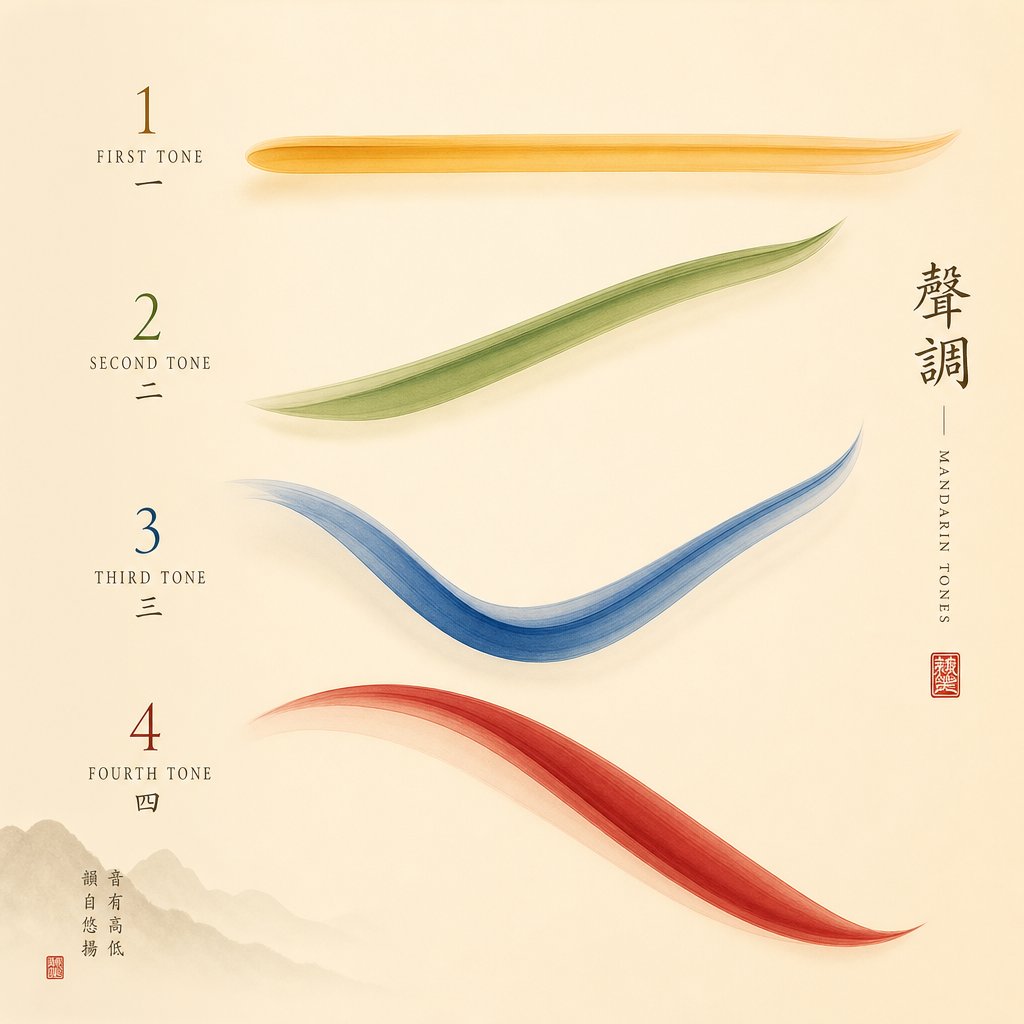
Mandarin uses four main tones plus a neutral (unstressed) tone. Each tone is a specific pitch contour, a direction your voice travels over the length of one syllable. The intonation meaning here is different from English intonation, where a rising pitch signals a question. In Mandarin, pitch direction changes the word itself, not the mood of the sentence. Here is what each tone feels like physically:
- First tone (high and flat): Hold your voice at a steady, slightly elevated pitch, like the sustained note when a doctor asks you to say "aah." It does not rise or fall. The surname Ma with first tone (Ma) means "mother." Think of humming a single note on a monotone.
- Second tone (rising): Start in the middle of your pitch range and glide upward, the way your voice naturally rises when you say "What?" in surprise. The surname Ma with second tone (Ma) means "hemp." Your voice lifts from mid to high.
- Third tone (low and dipping): Drop your voice to the bottom of your comfortable range and let it rumble low. In isolation it dips down and then rises slightly at the end, but in connected speech it mostly just stays low. The surname Ma with third tone (Ma) means "horse." Think of the creaky, low grumble you make when you say "ugh."
- Fourth tone (falling): Start at the top of your range and drop sharply, like the firm "No!" you would say to a child reaching for something dangerous. The surname Ma with fourth tone (Ma) means "to scold." It is short, decisive, and drops fast.
A fifth option, the neutral tone, appears in unstressed syllables. It has no fixed pitch of its own and instead borrows its level from the syllable before it. In names, you rarely encounter it because given name syllables are almost always stressed. It shows up occasionally in casual speech when someone's name is said quickly, but for pronunciation purposes you can focus on the four main tones.
How Tones Change Meaning in Real Names
Tone examples in names make the stakes concrete. Consider the syllable "wen." Pronounced with a fourth tone, it can mean "to ask" or "inquisitive" and appears in names like Wang Wen to suggest intellectual curiosity. Pronounced with a second tone, the same syllable could mean "mosquito," as Temple University's Center for Chinese Language Instruction points out, a meaning no parent would choose for their child. The consonants and vowels are identical. Only the tone separates a compliment from an insult.
This is not an edge case. The tonal definition of Mandarin means that common name syllables like "jing" can mean "quiet," "capital city," "crystal," or "essence" depending on tone. The syllable "li" can mean "beautiful," "strength," "sharp," or "chestnut." Parents choose characters and tones deliberately, embedding aspirations into the sound of their child's name. When you flatten all those syllables into a single monotone delivery, you erase the meaning the name was built to carry.
A Practical Approach to Tones for Non-Speakers
Here is the honest reality: if you are not a Mandarin speaker, your tones will not be perfect. That is okay. Getting the consonants and vowels right matters more for basic recognition than nailing every pitch contour. A name pronounced with correct sounds but flat tone is still far more recognizable than one with correct tone but garbled vowels. Think of it this way: in English, someone saying "Michael" in a monotone voice is still clearly saying "Michael." Someone saying "Mookle" with perfect English intonation is not.
Still, even approximate tone awareness helps. The diacritical marks you see in formal pinyin (the small lines and curves above vowels like a, e, i, o, u) are tone markers. A flat line means first tone. A rising slash means second. A caret or "v" shape means third. A falling slash means fourth. When you see a name written with these diacritical marks, you have a built-in guide to the pitch pattern.
Even rough tone awareness helps native speakers recognize the name you are trying to say. You do not need perfect pitch. You need directional intent: flat, up, low, or down. That small effort closes the gap between confusion and recognition.
A practical strategy: listen to the person say their own name once, and pay attention to whether each syllable goes up, stays flat, dips low, or drops down. Then mimic that contour when you repeat it. You are not learning Mandarin. You are learning one specific two- or three-syllable melody that belongs to one specific person. That is a manageable task, and the effort itself communicates respect regardless of perfection.
Tones give each name its melodic fingerprint, but recognizing a name in the real world also depends on knowing what common surnames and given name components actually sound like. The most frequently encountered Chinese surnames have specific pronunciations that trip up English speakers in predictable ways, and a reference guide makes those patterns easy to look up on the spot.
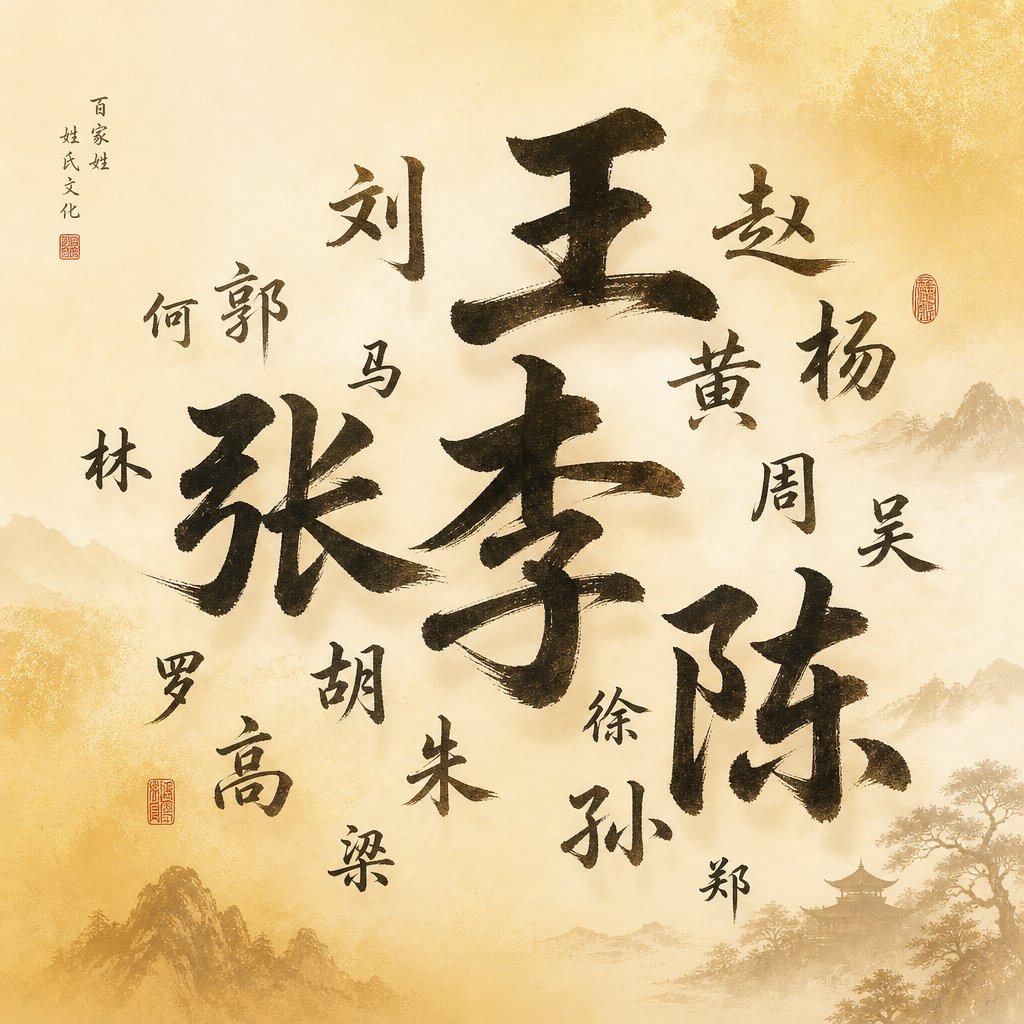
Common Chinese Surnames With Pronunciation Guides
You have the rules. You know how initials and finals combine, and you understand that tones add a pitch layer on top. But when you are staring at a name on a conference badge and need to say it in three seconds, rules alone are not enough. You need a quick-reference lookup. The table below functions as a chinese name pronunciation tool you can return to whenever an unfamiliar surname appears in your inbox or on a meeting agenda.
Top Surnames and Their Pronunciation
China's most common surnames cover a surprisingly large share of the population. The top 25 alone account for roughly half of all people in mainland China. Here are the surnames you are most likely to encounter, with phonetic guides anchored to familiar English words:
| Pinyin Surname | Character | Pronunciation Guide | Common Variants |
|---|---|---|---|
| Wang | 王 | "wahng" (rhymes with "song" but starts with w) | Wong (Cantonese) |
| Li | 李 | "lee" | Lee (common English spelling) |
| Zhang | 张 | "jahng" (like "jong" with an ah vowel) | Chang (Wade-Giles/Taiwan), Cheung (Hong Kong) |
| Liu | 刘 | "lyoh" (glide from "lee" into "oh") | Lau (Cantonese) |
| Chen | 陈 | "chuhn" (not "chen" as in English) | Chan (Cantonese), Tan (Hokkien) |
| Yang | 杨 | "yahng" (like "young" but with "ah") | Yeung (Cantonese) |
| Huang | 黄 | "hwahng" (h + wahng) | Wong (Cantonese), Ng (abbreviated) |
| Zhao | 赵 | "jaow" (like "jow" rhyming with cow) | Chao (Wade-Giles) |
| Wu | 吴 | "woo" | Ng (Cantonese), Goh (Hokkien) |
| Zhou | 周 | "joe" (close to English "Joe") | Chow (Cantonese), Chou (Wade-Giles) |
| Xu | 徐 | "shyu" ("sh" + rounded "ee") | Hsu (Wade-Giles), Tsui (Cantonese) |
| Sun | 孙 | "swuhn" (not like English "sun") | Suen (Cantonese) |
| Ma | 马 | "mah" | Ma (same across systems) |
| Zhu | 朱 | "joo" (tongue curled back) | Chu (Wade-Giles) |
| Hu | 胡 | "hoo" | Woo (Cantonese) |
| Guo | 郭 | "gwaw" (quick w into open aw) | Kwok (Cantonese), Kuo (Wade-Giles) |
| Lin | 林 | "leen" | Lam (Cantonese), Lim (Hokkien) |
| Gao | 高 | "gow" (rhymes with cow) | Ko (Cantonese) |
| Liang | 梁 | "lee-ahng" | Leung (Cantonese) |
| Zheng | 郑 | "jung" (tongue curled back) | Cheng (Wade-Giles/Cantonese) |
| Xie | 谢 | "shee-eh" (tongue tip down) | Hsieh (Wade-Giles), Tse (Cantonese) |
| Song | 宋 | "soong" (rounded oo + ng) | Sung (Wade-Giles) |
| Tang | 唐 | "tahng" (open ah + ng) | Tong (Cantonese) |
| Deng | 邓 | "dung" | Teng (Wade-Giles/Cantonese) |
| Cao | 曹 | "tsow" (ts + rhymes with cow) | Tsao (Wade-Giles) |
| Zou | 邹 | "dzoh" (dz + long oh) | Tsou (Wade-Giles), Chow (Cantonese) |
The zou meaning chinese name carries depends on the specific character, but the surname Zou (邹) refers to an ancient state. Its tsao pronunciation cousin, Cao, is another surname that baffles English speakers because the "c" produces a "ts" sound rather than a "k" or "s." Both Zou and Cao illustrate why you cannot read pinyin as English.
Surnames That Are Commonly Mispronounced
Some surnames trip people up more than others. These are the ones where English reading habits produce the worst results:
- Xu - Almost universally mispronounced as "zoo" or "ex-oo." The correct sound is closer to "shyu," with the tongue-tip-down "sh" and the rounded-lip "ee" vowel covered in the finals section.
- Qiu - Not "kwee-oo" or "koo." It sounds like "chee-oh" with a quick glide. The "q" is always a soft "ch" sound.
- Cui - Not "koo-ee." The "c" is "ts" and the "-ui" sounds like "way." Result: "tsway."
- Zeng - Not "zeng" as in English. The "z" is "dz" and the "-eng" sounds like "ung." Result: "dzung."
- Ren - Not the English name "Wren." The pinyin "r" is a buzzy, friction-heavy sound closer to the "s" in "pleasure." Result: a soft "ruhn" with a French-like r.
- Ye - Not "yee." The "-e" after "y" sounds like "eh" as in "yet." Result: "yeh."
Each of these errors comes from applying English letter-sound rules to a system that does not use them. The chinese name in chinese letters would be unambiguous to a reader of Chinese characters, but the romanized version creates false familiarity. That gap between what pinyin looks like and what it sounds like is exactly what this guide exists to close.
Regional Spelling Variants of the Same Surname
Here is a puzzle that confuses even people who have studied some Mandarin: why does the same family sometimes spell their name as Zhang, sometimes as Chang, and sometimes as Cheung? The answer is that multiple romanization systems exist, and which one a person uses depends on where they or their family came from.
The three main systems you will encounter are:
- Pinyin (Hanyu Pinyin) - The standard in mainland China since 1958 and the international ISO standard since 1982. Uses letters like zh, x, q, and z that look unfamiliar to English readers but map consistently to Mandarin sounds.
- Wade-Giles - An older system developed in the 19th century, still common in Taiwan and among older diaspora communities. Uses apostrophes to mark aspiration (ch' versus ch, t' versus t) and spellings like "hs" for the pinyin "x." As the Library of Congress explains, you can identify Wade-Giles by features like hyphens between given name syllables and apostrophes after consonants.
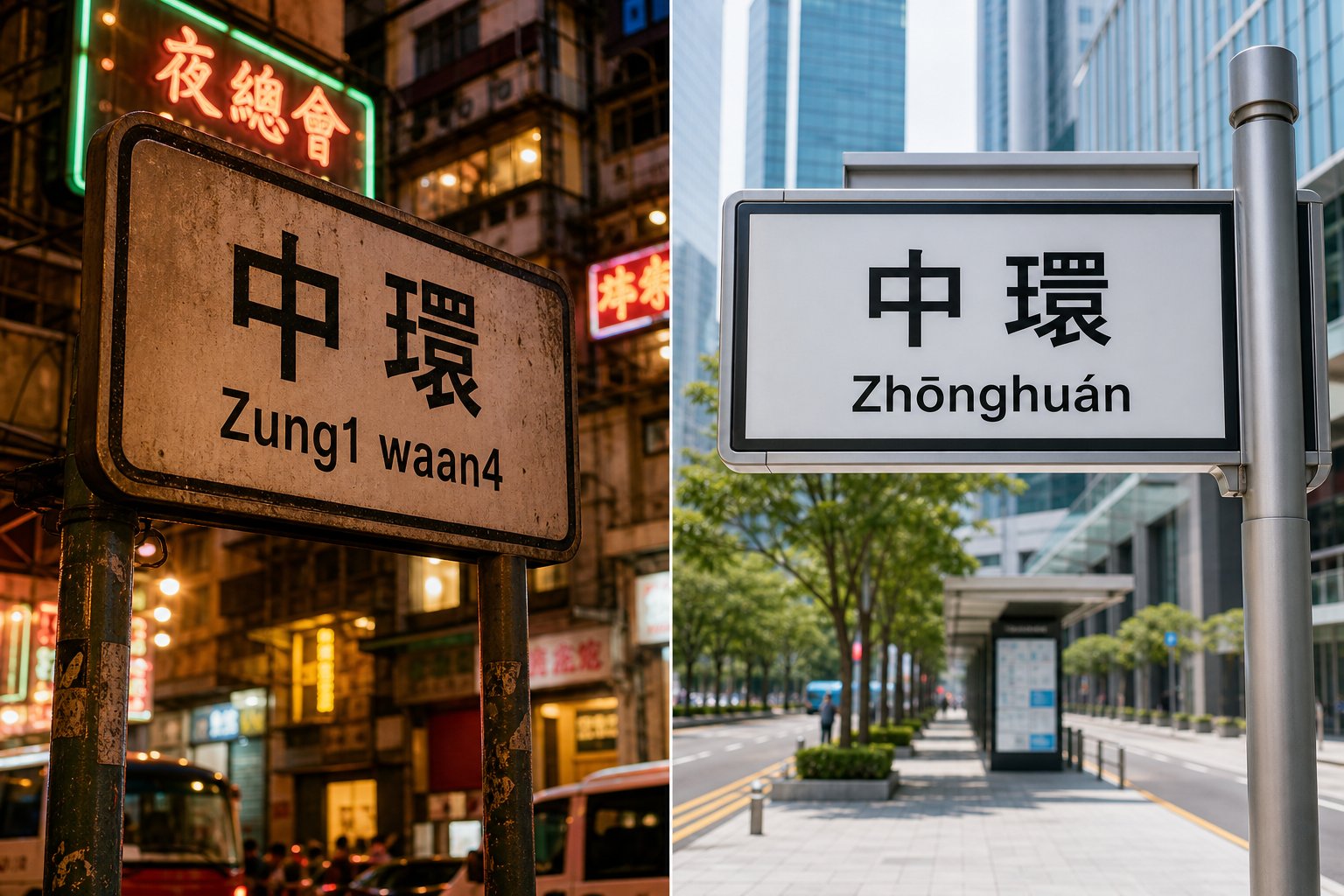
- Cantonese romanization - Used in Hong Kong and Macau, this reflects Cantonese pronunciation rather than Mandarin. The same character pronounced "Zhang" in Mandarin is pronounced "Cheung" in Cantonese because the two dialects have different sound systems entirely.
This means that when you see the surname "Chang" on a business card, you cannot assume it is pinyin. It might be the Wade-Giles spelling of Zhang (Mandarin), or it might be a completely different surname altogether. Zhang (张), the third most common surname in China with over 87 million bearers, appears as Chang in Taiwan, Cheung in Hong Kong, Teoh or Teo in Hokkien-speaking communities, and Truong in Vietnamese contexts. All of these refer to the same chinese name letters: 张.
A few more examples of how one surname travels across systems:
| Pinyin | Wade-Giles | Cantonese | Hokkien/Other |
|---|---|---|---|
| Chen | Ch'en | Chan | Tan (Hokkien) |
| Zhou | Chou | Chow / Chau | Chew (Teochew) |
| Huang | Huang | Wong | Ooi / Ng (Hokkien) |
| Xu | Hsu | Tsui / Chui | Koh (Hokkien) |
| Xie | Hsieh | Tse | Chia (Hokkien) |
| Guo | Kuo | Kwok | Quek / Koay (Hokkien) |
The practical takeaway: if someone's surname does not match any pinyin pattern you recognize, they may be using a different romanization system. The pronunciation rules in this guide apply specifically to pinyin. For names spelled in Wade-Giles or Cantonese romanization, the sound values of the letters are different. When in doubt, ask. Many people who wonder how to write your name in chinese discover that the same character can produce half a dozen different English spellings depending on dialect and system.
Understanding these variants also prevents a common social mistake. If you meet someone named "Cheung" and confidently pronounce it as Mandarin "Zhang," you may be overriding their actual pronunciation. A person from Hong Kong named Cheung pronounces their name in Cantonese, not Mandarin. The chinese letters for names are the same on paper, but the spoken form depends on which Chinese language the family uses. Always take your cue from the person themselves.
With a surname reference in hand and an understanding of why spellings vary, the next step is putting all the pieces together: a systematic method for decoding any unfamiliar Chinese name from scratch, syllable by syllable, sound by sound.
How to Decode Any Chinese Name Step by Step
You have the initials, the finals, the tone logic, and a surname reference table. The question now is practical: when an unfamiliar name lands in front of you, how do you actually work through it? Knowing how to pronounce chinese names is less about memorization and more about following a repeatable process. Think of it as a decoder ring you can apply to any pinyin name, anywhere, every time.
Step One Break the Name Into Syllables
Start by identifying the structure. Remember the pattern: the first syllable is almost always the surname, and the remaining one or two syllables form the given name. If the name is written as two words (like Liu Yifei), the split is already done for you. If it appears as a single block (like someone writing "Liuyifei" in an email address), apply the one-syllable-surname rule and separate accordingly: Liu + Yi + Fei.
Each Chinese character corresponds to exactly one syllable, and each syllable follows the structure of one initial (consonant) plus one final (vowel or vowel combination). No syllable in Mandarin has consonant clusters like "str" or "bl." If you see multiple consonants together, they belong to a single initial unit like "zh," "ch," or "sh." This is the key to segmentation: every syllable boundary falls between a final ending and the next initial beginning.
Step Two Match Each Sound to English
Once you have isolated each syllable, decode it piece by piece. Here is the process applied to a real name pattern: Zheng Qiuyang.
- Identify the surname: Zheng (one syllable, matches a common surname from the reference table).
- Separate the given name syllables: Qiu + Yang (two syllables forming the given name).
- Look up each initial: Zh = tongue curled back, like "j" in "judge." Q = soft "ch" as in "cheese" with tongue tip down. Y = "y" as in "yes."
- Match each final: -eng = "ung" (like "dung"). -iu = "ee-oh" (like "yo" in "trio"). -ang = "ahng" (open "ah" plus nasal ng).
- Combine: Zheng = "jung." Qiu = "chee-oh." Yang = "yahng."
- Apply rhythm: Surname gets its own beat, then the two given-name syllables flow together: JUNG... chee-oh-yahng.
That six-step sequence works for any name. How do you pronounce chinese words you have never seen before? The same way: isolate, decode, combine. The process is identical whether the name has two syllables or three.
Step Three Put It All Together With Rhythm
Rhythm matters more than most people realize. As the pinyin cheatsheet by Peng Qi explains, native speakers maintain clear boundaries between syllables rather than blending them the way English speakers blend connected words. When you pronounce a chinese name, resist the urge to mush syllables together. Give each one its own space. Say "Zheng... Qiu-yang" with a micro-pause after the surname, not "Zhengchyooyahng" in one slurred rush.
Learning how to pronounce mandarin names is ultimately about respecting those syllable boundaries. Each character is one beat, one meaning, one sound. Keep them distinct and the name stays recognizable.
But what happens when you are still unsure after running through the decoder? Maybe the name uses an unusual spelling, or you cannot tell whether it is pinyin or Wade-Giles. Here is what to do:
- Ask directly: "I want to make sure I say your name correctly. Would you mind telling me how you pronounce it?" As The Muse points out, most people appreciate the effort and are happy to help.
- Listen and repeat: When they say it, focus on the melody and rhythm rather than trying to map it to spelling. Repeat it back immediately and ask if you got it right.
- Write it down phonetically: Jot a quick note in your own shorthand. "Zheng = jung, Qiu = chee-oh" is all you need to jog your memory next time.
- Practice before meetings: If you have a scheduled call or presentation, look up the name beforehand. Sites like HowToPronounce.com offer audio recordings that let you hear real examples.
In academic and professional contexts, this skill compounds. Conference introductions, paper citations read aloud, client calls with international teams: these are all moments where knowing how to say chinese names correctly signals competence and respect. You do not need fluency. You need a method. The decoder gives you that method, and practice makes it second nature.
How to pronounce chinese names is not a mystery reserved for language students. It is a five-step lookup that anyone can perform in under thirty seconds. The more names you decode, the faster the pattern recognition becomes, until common syllables like "xiao," "wei," and "jing" roll off your tongue without conscious effort.

Putting It Into Practice With Names You Recognize
Rules and tables are useful, but nothing cements pronunciation faster than connecting sounds to names you already know. Public figures from sports, film, politics, and tech give you built-in reference points. You have heard these names spoken by broadcasters and commentators, which means you already have an audio anchor. The trick is linking that audio to the pinyin rules so you can generalize the pattern to any new name.
Names You Already Know and How to Say Them Better
Think about names you have encountered in headlines. The basketball player Yao Ming, the filmmaker Zhang Yimou, the pianist Lang Lang, the tech executive Lei Jun. Each of these names follows the exact pinyin logic covered in earlier sections. Yao Ming breaks down as "Yao" (y + ao = "yow," rhyming with cow) plus "Ming" (m + ing = "meeng," just like English "ming"). The ming meaning in his name is "bright" or "brilliant," a common aspirational character parents choose for sons.
Zhang Yimou demonstrates the retroflex "zh" initial (tongue curled back, producing "jahng") followed by "Yi" ("ee") and "Mou" (m + ou = "moh," like "go"). If you can say "Zhang" correctly here, you can say it correctly for every Zhang you meet at work.
A name that trips English speakers up regularly is the given name Juan, which appears in names like Li Juan or Wang Juan. The juan pronunciation has nothing to do with the Spanish name "Juan." In pinyin, "juan" breaks into j + uan, where the "j" is a soft tongue-tip-down sound and "uan" after j uses the special rounded-lip vowel: "jyoo-en." It means "graceful" or "beautiful" and is a common component in women's names. Pronouncing chinese names like this correctly requires overriding the instinct to apply Spanish or English sound rules.
Common Patterns in Given Name Components
Chinese given names draw from a relatively small pool of popular syllables, each carrying specific meaning. Once you learn to pronounce these common components, you will recognize them across dozens of different names. Here are the ones you are most likely to encounter:
- Xiao (shee-ow) - means "dawn" or "small" depending on the character. Appears in names like Xiaoming, Xiaoli, Xiaoyan.
- Wei (way) - means "great," "mighty," or "protect." Common in both male and female names: Weijun, Weilin, Guowei.
- Jing (jeeng, soft j) - means "quiet," "crystal," or "capital" depending on tone and character. Found in Yujing, Jingyi, Xiaojing.
- Mei (may) - means "beautiful" in third tone or "plum blossom" in second tone. Appears in Meiling, Xiaomei, Yumei.
- Ming (meeng) - means "bright" or "brilliant." The ming meaning makes it one of the most popular name characters across generations: Xiaoming, Jianming, Mingyu.
- Hua (hwah) - means "flower" or "magnificent." Found in Lihua, Huaming, Guohua.
- Jun (jyoon, rounded lips) - means "handsome" or "talented." Common in male names: Weijun, Haijun, Junjie.
- Yan (yen) - means "beautiful," "swallow" (the bird), or "flame" depending on character. Appears in Xiaoyan, Yanli, Yanfei.
- Fei (fay) - means "fly" or "luxuriant." Found in Yifei, Yanfei, Feifei.
- Yu (yoo with rounded lips) - means "jade," "rain," or "universe." One of the most versatile: Yufei, Yuming, Tianyu.
Notice how many of these syllables reappear across different names. Once you can confidently pronounce chinese names containing "xiao" or "jing," you have unlocked a pattern that applies to hundreds of real people. Mandarin name pronunciation becomes less about individual memorization and more about recognizing familiar building blocks in new combinations.
When to Ask and How to Practice Respectfully
Even with a solid grasp of pinyin rules, you will encounter names that leave you uncertain. Maybe the spelling does not match any system you recognize, or maybe you want to confirm the tone pattern. The best move is always the simplest one: ask.
Asking is not an admission of failure. It is a signal of respect. Here is how to do it without making the moment awkward:
- Be direct and brief: "I want to get your name right. Could you say it for me?" No lengthy apologies needed.
- Repeat it back immediately: After they say it, try it yourself. "Like this?" Most people will gently correct you if needed, and that correction is a gift.
- Focus on the sound, not the spelling: Listen to the melody and rhythm rather than trying to reconcile what you hear with the letters on the page.
- Practice privately before public settings: If you know you will be introducing someone at a meeting or event, look up the pronunciation of chinese names beforehand using audio tools or by asking a mutual contact.
- Do not over-apologize: Saying "I'm so sorry, I'm terrible at this" centers your discomfort rather than the other person. A simple "Let me try again" keeps the focus where it belongs.
The effort matters more than perfection. As the Asia Media Centre notes, Chinese names carry deep personal and family significance, from generational naming traditions to characters chosen to express hopes for a child's future. When you take thirty seconds to learn someone's name properly, you acknowledge that significance. You are telling them: your identity is worth my attention.
Pronouncing chinese names is a skill that improves with repetition. The first time you decode a name using pinyin rules, it feels slow and deliberate. By the tenth time, common syllables fire automatically. By the fiftieth, you will catch mispronunciations in podcasts and news broadcasts and know exactly which rule the speaker missed. That is the real payoff of this guide: not a list to memorize, but a system that makes every Chinese name you encounter readable, speakable, and respectful.
Frequently Asked Questions About Pinyin Name Pronunciation
1. How do you pronounce Chinese names written in pinyin?
Break the name into syllables (usually one for the surname, one or two for the given name), then decode each syllable by matching its initial consonant and final vowel to their pinyin sound values. Pinyin letters follow different rules than English. For example, 'q' sounds like a soft 'ch,' 'x' sounds like a forward 'sh,' and 'c' sounds like 'ts.' Combine the decoded sounds with roughly equal stress on each syllable, keeping a slight pause between the surname and given name.
2. Why does pinyin use letters like X, Q, and Z that sound nothing like English?
Pinyin was designed to represent Mandarin sounds using the 26 Latin letters, not to match English phonetics. Since Mandarin has sounds that do not exist in English, the system repurposes letters like X (a forward 'sh' with tongue tip down), Q (a light 'ch' with tongue tip down), and Z (a 'dz' sound like the end of 'beds'). These assignments are internally consistent within pinyin, so once you learn the mapping, every name becomes predictable.
3. What is the difference between pinyin, Wade-Giles, and Cantonese romanization?
Pinyin is the international standard for romanizing Mandarin, used in mainland China. Wade-Giles is an older system common in Taiwan and among older diaspora communities, recognizable by apostrophes and spellings like 'Hsieh' for pinyin 'Xie.' Cantonese romanization reflects Cantonese pronunciation used in Hong Kong and Macau, producing spellings like 'Cheung' for the same character that pinyin writes as 'Zhang.' The same Chinese character can appear under different spellings depending on which system and dialect a person's family uses.
4. Do I need to get the tones right when saying a Chinese name?
Getting consonants and vowels correct matters more for basic recognition than perfecting tones. A name with accurate sounds but flat tone is still recognizable, while garbled vowels with correct tone is not. However, approximate tone awareness helps significantly. Listen for whether each syllable goes up, stays flat, dips low, or drops down when the person says their own name, then mimic that pitch contour. Even rough directional intent closes the gap between confusion and recognition.
5. How should I ask someone to pronounce their Chinese name without being awkward?
Keep it direct and brief: 'I want to get your name right. Could you say it for me?' Then repeat it back immediately and ask if you got it close. Avoid lengthy apologies or statements like 'I'm terrible at this,' which center your discomfort rather than the other person. Focus on listening to the melody and rhythm rather than reconciling what you hear with the spelling. Most people appreciate the effort and are happy to help with a quick correction.