The Chinese Character for Truth and What It Really Means
When you look up "truth" in a Chinese dictionary, one character rises above the rest: 真 (zhēn). It appears in philosophical texts, everyday conversation, calligraphy scrolls, and modern internet slang alike. But here is the thing most dictionaries won't tell you: this single character carries a meaning far richer than the English word "true" can capture on its own.
This guide breaks down the truth Chinese character meaning from every angle. Whether you need a quick definition or want to explore the deeper cultural layers, you'll find what you're looking for here — from etymology and pronunciation to philosophy and daily usage.
What Does 真 Mean in Chinese
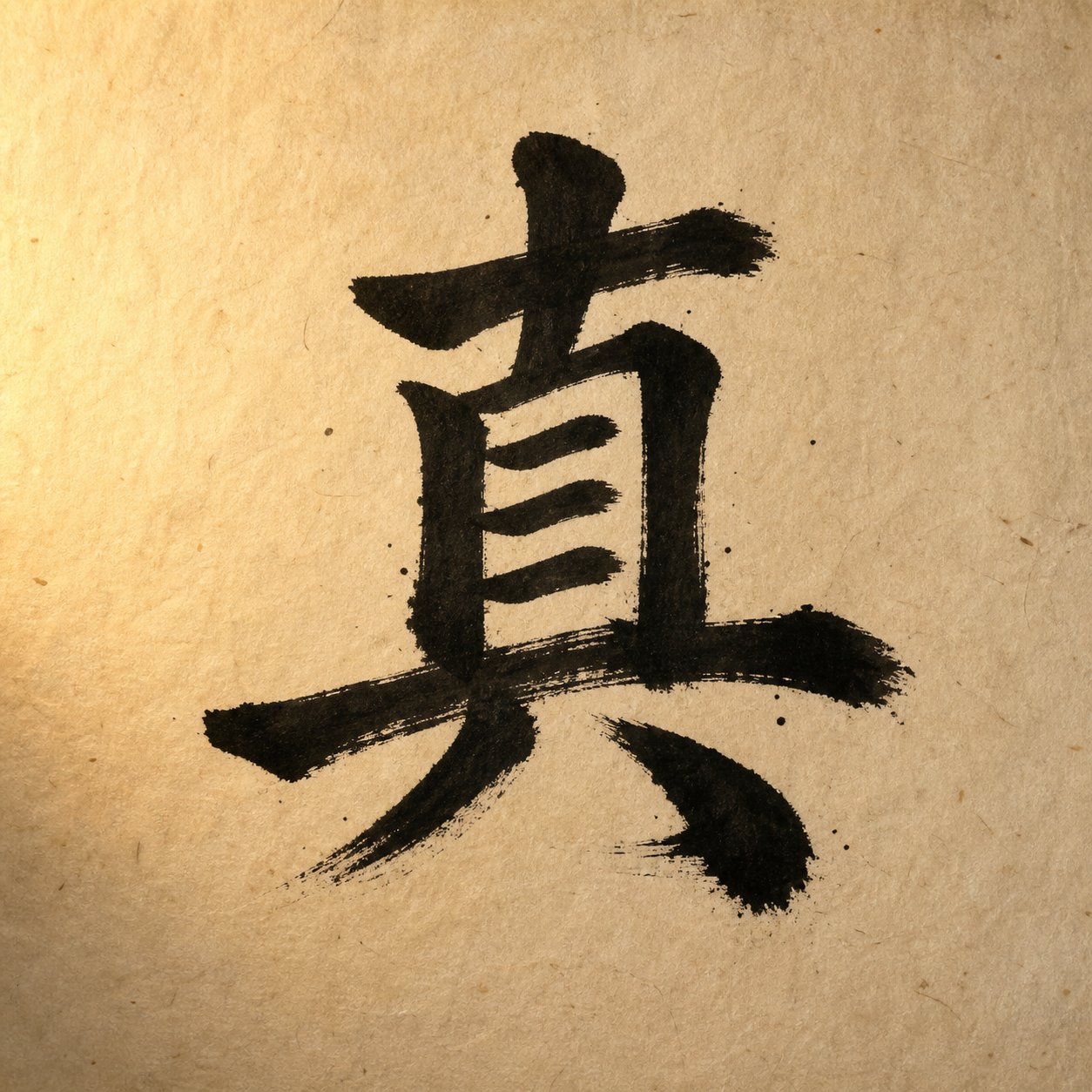
真 (zhēn, first tone) is the primary Chinese character for truth. Its core meanings include genuine, real, authentic, and true. It also carries connotations of purity, sincerity, and even the divine. The character stands for truth in Chinese not as a narrow statement of factual accuracy, but as a quality of being — something is 真 when it is authentically and completely what it claims to be.
Think of it this way. In English, "true" often answers a yes-or-no question: Is this statement true or false? In Chinese, 真 asks a deeper question: Is this thing genuine? Is this person sincere? Is this experience real rather than artificial? The character encompasses genuineness, reality, authenticity, and being right, accurate, or correct — all within a single written form.
Common terms built on 真 give you a sense of its range: 真理 (zhēnlǐ) means universal truth or orthodox principles, 真心 (zhēnxīn) means sincere heart, and 真相 (zhēnxiàng) refers to the real facts of a situation. Each compound draws on a slightly different facet of the character's meaning, yet they all share that root sense of what is genuinely so.
Why Understanding 真 Goes Beyond Translation
English splits truth into separate lanes. You have factual truth, personal authenticity, emotional sincerity, and philosophical reality — each handled by different words in different contexts. Chinese truth, expressed through 真, holds all of these together in one concept. The character functions as a bridge between what is real, what is sincere, and what is natural.
In Chinese thought, 真 does not merely describe whether a statement matches reality. It describes whether a person, an action, or a thing aligns with its own authentic nature — making truth inseparable from genuineness and sincerity.
This layered quality is why 真 appears across such different domains. Daoist philosophy uses it to describe the perfected person who lives without artifice — the 真人 (zhēnrén), or "True Person." Everyday Mandarin uses it to ask "really?" (真的吗?). The character moves fluidly between the sacred and the mundane because, in the Chinese worldview, authenticity is not reserved for grand philosophical statements. It belongs equally to how you speak, how you act, and how you present yourself to the world.
That breadth is exactly what makes the character worth exploring beyond a one-line dictionary entry. Its etymology reveals ancient ideas about transformation and transcendence. Its compounds show how truth functions in modern life. And its philosophical weight connects three major traditions — Daoism, Confucianism, and Buddhism — each drawing on 真 in distinct ways.
Etymology and Radical Decomposition of 真
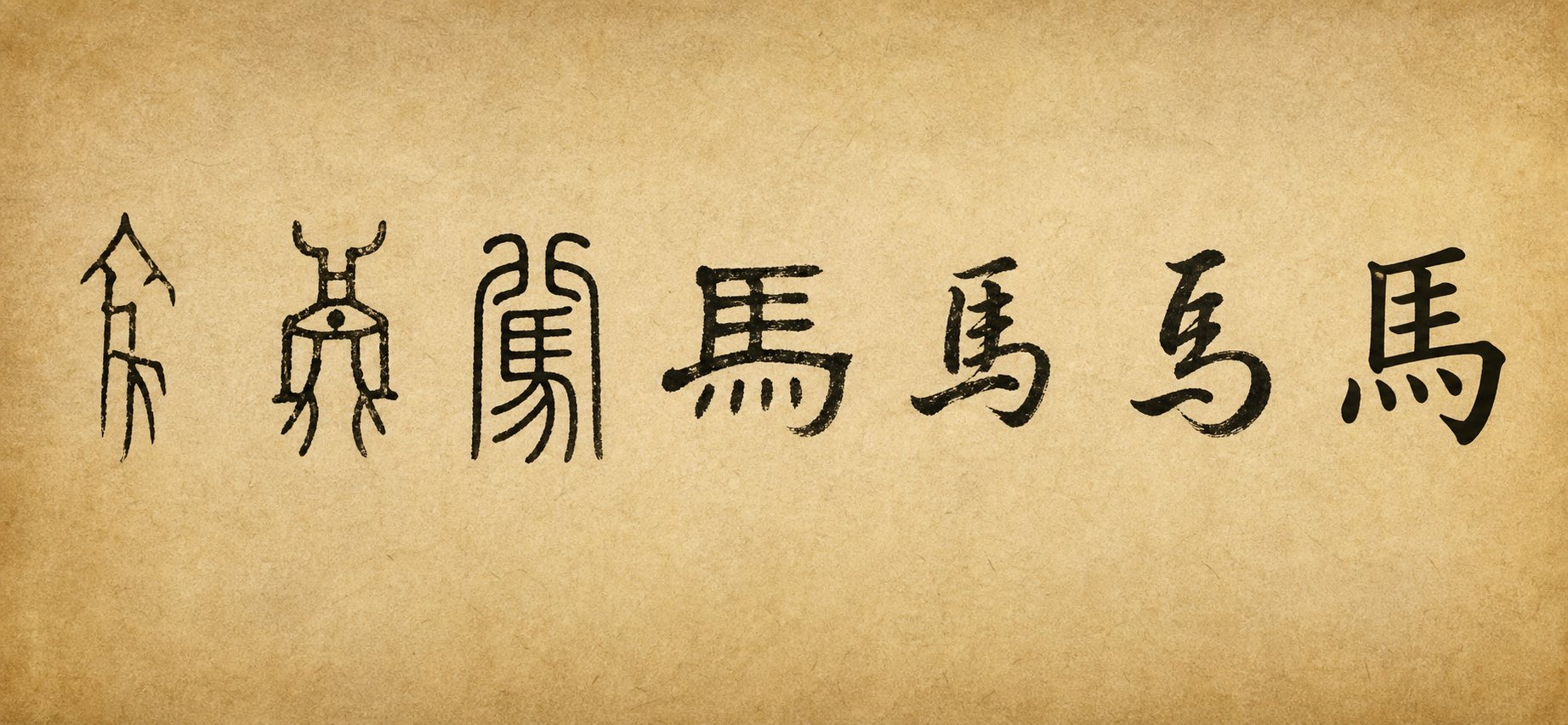
Every Chinese character tells a story through its structure. With 真, that story is especially layered — part spiritual narrative, part linguistic puzzle. The Chinese symbol for truth has been analyzed for over two thousand years, and scholars still debate what its earliest forms actually depict. Two main interpretations exist: one rooted in Daoist cosmology, the other in paleographic evidence. Both reveal something meaningful about how ancient Chinese thinkers understood the concept of what is real.
Radical Breakdown and Structural Analysis of 真
Look at the modern form of 真 and you'll notice it can be divided into distinct sections. The traditional analysis — the one recorded in China's oldest etymological dictionary — breaks the character into components that tell a story of transformation and ascent.
The Shuowen Jiezi (說文解字), compiled by Xu Shen around 100 CE, records the older form 眞 and explains that it depicts an immortal transforming and ascending to heaven. Here is how the components work in that reading:
- The L-shaped radical at the top (匕) represents transformation or change — the moment a being shifts from one state to another.
- 目 (mu) in the middle is the character for "eye," suggesting perception or awareness.
- The L-shaped element 乚 surrounding the eye means to hide or become unseen — even to disappear entirely.
- 八 at the bottom refers to a vehicle or means of transportation, indicating how the immortal ascends to heaven.
Imagine the whole picture: a being whose perception transcends the visible world, who transforms and rises beyond ordinary sight. That is the zhen Chinese character meaning at its most mystical — truth as something that exists beyond surface appearances, accessible only through spiritual transformation.
Modern linguistic scholarship offers a different structural reading. Some paleographers argue the bottom portion of the character relates not to 八 (vehicle) but to 鼎 (ding, a tripod vessel used in ancient rituals). Under this interpretation, 真 may originally have depicted a filled or complete vessel — something substantial, solid, and real. This connects the Chinese symbol truth to a more concrete idea: genuineness as fullness, as opposed to emptiness or falseness.
Neither interpretation is definitively "correct." They coexist in Chinese scholarship, each illuminating a different dimension of the character's meaning. The Daoist reading emphasizes transcendence. The paleographic reading emphasizes substance. Together, they capture the dual nature of 真 — truth as both spiritual authenticity and tangible reality.
Ancient Origins in the Shuowen Jiezi
Xu Shen's explanation in the Shuowen Jiezi remains the most culturally influential account of this character's origin. His dictionary, the first comprehensive Chinese etymological work, treated characters as windows into ancient thought rather than arbitrary symbols. For 真, he saw a spiritual narrative encoded in brushstrokes.
The Daoist connection runs deep. In early Daoist texts, 真 is closely tied to the concept of the 真人 (zhenren) — the "True Person" or "Perfected One" who has cultivated themselves beyond worldly illusion. The character itself, in Xu Shen's reading, literally illustrates that process of perfection: a being who transforms, transcends ordinary perception, and ascends. Truth, in this framework, is not something you discover externally. It is something you become.
The character's visual evolution across different historical periods shows how its form simplified while retaining core structural elements:
- Oracle bone script (circa 1200-1050 BCE) — earliest known forms, though 真 is rare in oracle bone inscriptions; related graphs show pictographic elements suggesting a person or vessel.
- Bronze script (circa 1050-400 BCE) — clearer structural components emerge, with recognizable elements that later scholars would interpret as transformation imagery.
- Seal script (circa 400-200 BCE) — the form 眞 becomes standardized, with the components Xu Shen later analyzed clearly visible.
- Clerical script (circa 200 BCE-200 CE) — strokes flatten and regularize, moving toward the modern form.
- Regular script (circa 200 CE onward) — the simplified form 真 becomes standard, used in everyday writing today.
What stays consistent across these transformations is the character's semantic range. Whether you read it as an immortal ascending or a vessel filled to completeness, the core meaning holds: 真 points to what is genuinely, fully, authentically real. That conceptual stability — maintained across three thousand years of graphic change — speaks to how central this idea is in Chinese culture.
The tension between these two etymological readings also mirrors a broader pattern in Chinese thought. Spiritual truth and material reality are not opposites here. They are two faces of the same character, literally and figuratively. This is part of what makes the study of 真 so rewarding — its structure encodes a worldview where the transcendent and the tangible are not at odds but deeply intertwined.
How to Pronounce Zhen in Chinese
Knowing what 真 means is one thing. Saying it so a native speaker actually understands you is another challenge entirely. Mandarin pronunciation trips up English speakers in two specific ways with this character: the zh- initial and the first tone. Get both right, and you'll sound confident every time you use 真 or its compounds.
How to Pronounce Zhēn Correctly
The syllable zhēn has two parts you need to nail: the initial consonant and the tone.
The zh- sound is similar to the "j" in English words like "judge" or "jerk," but with one key difference. Your tongue needs to curl farther back. As DigMandarin explains, you raise the tip of your tongue to touch the hard palate, forming an obstacle that the airflow breaks through suddenly — without vibrating the vocal cords. Imagine saying "j" while pulling your tongue tip slightly toward the roof of your mouth. That retroflex position is what separates zh- from a flat English "j" or "z."
The tone is equally important. Zhēn carries the first tone: a high, level pitch you sustain steadily, like holding a single musical note without letting it rise or fall. Picture a flat horizontal line drawn at the top of your vocal range. That is your target.
Common pitfalls to watch for:
- Dropping the pitch into a falling pattern (making it sound like the fourth tone, zhèn, which means "to shake")
- Pronouncing zh- as a flat "z" without the tongue curl — this produces the different syllable zēn
- Adding a vowel sound after the final -n, turning "zhen" into something like "zhen-uh"
Each of these mistakes can change the meaning entirely or make the word unrecognizable. In Mandarin, even with the same initial and final, different tones represent different characters and meanings.
Pronouncing Zhēnlǐ and Zhēnxiàng
Two compounds built on 真 come up constantly in conversation and reading: 真理 (zhēnlǐ, meaning universal truth or fundamental principle) and 真相 (zhēnxiàng, meaning the truth of a matter — the real facts). Pronouncing these correctly requires you to handle tone transitions smoothly.
Here is how the tones work in each word:
- Zhēnlǐ — Tone 1 (high flat) followed by Tone 3 (low dipping). Hold the first syllable high and steady, then let the second syllable dip low before rising slightly at the end.
- Zhēnxiàng — Tone 1 (high flat) followed by Tone 4 (sharp falling). Keep the first syllable level and high, then let the second syllable drop sharply from high to low, like a quick command.
A note on tone sandhi: the third tone in zhēnlǐ does not trigger any sandhi rule here because it follows a first tone, not another third tone. You pronounce it as a standard low-dipping third tone. The zhenxiang meaning in Chinese — the factual truth behind a situation — is carried by that crisp tone 1 + tone 4 combination, which gives the word a decisive, clear-cut sound that matches its meaning.
Ready to practice? Here is a step-by-step sequence for English speakers learning zhenli and zhēn:
- Say "judge" slowly, paying attention to where your tongue starts. That is close to the zh- position, but curl your tongue tip back a bit further toward the hard palate.
- Hold the "zh" position and add the vowel sound "en" (rhymes with the "un" in "fun" but slightly more forward in the mouth). Do not add any extra vowel after the -n.
- Now add the first tone: say "zhen" on a steady, high pitch. Imagine a flat line at the top of your comfortable range. Hold it there without wavering.
- Practice zhēnlǐ by saying zhēn (high flat) and immediately dropping into lǐ (low, dipping down then slightly up). Keep the transition smooth — no pause between syllables.
- Practice zhēnxiàng by saying zhēn (high flat) and then letting xiàng fall sharply from high to low, like you are giving a firm one-word answer.
- Repeat each compound five times at a slow, deliberate pace. Speed comes naturally once the tones feel stable.
The key insight: Mandarin tones are not about emotion or emphasis the way English intonation is. They are structural. Getting the tone wrong on 真 does not just sound "off" — it produces a completely different word. Consistent, patient repetition at slow speeds builds the muscle memory that eventually makes these sounds automatic.
All Chinese Words for Truth Compared
Pronouncing 真 correctly gets you heard. But choosing the right word for "truth" in a given context is what gets you understood. Here is the challenge: Mandarin has multiple characters and compounds that all translate to "truth" or "true" in English, yet each one occupies a distinct semantic lane. Use the wrong one and your sentence might be grammatically fine but conceptually off — like saying "honest" when you mean "factual" in English, only the gap is wider.
If you are searching for the true Chinese word for truth, the answer depends entirely on what kind of truth you mean.
真 vs 真理 vs 真相 and When to Use Each
These three are the most commonly confused because they share the character 真. But they function very differently in a sentence.
真 (zhēn) on its own works as an adjective or adverb. It describes a quality — something is genuine, real, or authentic. You would use it to say "this is real gold" (这是真金) or "she is truly kind" (她真善良). It answers the question: Is this thing genuine or fake?
真理 (zhēnlǐ) is a noun referring to universal, abstract, or philosophical truth — the kind of truth that exists as a principle. Scientists pursue 真理. Philosophers debate 真理. Religious texts claim to contain 真理. You would not use this word to describe whether someone is telling the truth about where they were last night. It is too grand for that. Think of it as "Truth" with a capital T.
真相 (zhēnxiàng) is also a noun, but it refers to the specific facts of a situation — what actually happened. Journalists uncover 真相. Detectives reveal 真相. When someone says "I want to know the truth," meaning the real story behind an event, 真相 is the word they reach for. It answers the question: What really happened here?
A quick way to remember: 真 describes quality, 真理 describes principle, and 真相 describes facts.
Other Chinese Characters That Express Truth
Beyond the 真 family, several other characters cover territory that English lumps under "truth." These are the Chinese words for truth and honesty that round out the full picture of how truth functions in China's linguistic landscape.
實/实 (shí) carries the sense of solid, substantial, and real. Where 真 emphasizes genuineness, 实 emphasizes substance — something tangible and verifiable rather than hollow or empty. The compound 真實 (zhēnshí) combines both characters to mean "authentic and substantial" — doubly real.
誠/诚 (chéng) focuses on sincerity and moral honesty. This is truth as a personal virtue — being honest in your intentions, keeping your word, meaning what you say. Confucian ethics places enormous weight on 诚 as a foundation of moral character.
正 (zhèng) means correct, upright, and proper. It overlaps with truth in the sense of "the right answer" or "the correct way." When someone says 正确 (zhèngquè, correct), they are pointing to truth as accuracy and rightness rather than authenticity or sincerity.
事實/事实 (shìshí) translates directly to "fact" — truth in its most concrete, evidence-based form. Courts deal in 事实. News reports present 事实. It is truth stripped of philosophy, reduced to verifiable data points.
The table below lays out these distinctions side by side so you can see exactly where each term fits:
| Character | Pinyin | Core Meaning | Typical Context | Example Phrase |
|---|---|---|---|---|
| 真 | zhēn | Genuine, real, authentic | Describing quality or nature | 真金不怕火炼 (Real gold fears no fire) |
| 真理 | zhēnlǐ | Universal/philosophical truth | Science, philosophy, religion | 追求真理 (Pursue the truth) |
| 真相 | zhēnxiàng | The facts, what really happened | Journalism, investigations, disputes | 揭露真相 (Reveal the truth) |
| 實/实 | shí | Solid, substantial, real | Describing tangible reality | 名副其实 (Name matches reality) |
| 誠/诚 | chéng | Sincerity, moral honesty | Ethics, relationships, promises | 真诚待人 (Treat others with sincerity) |
| 正 | zhèng | Correct, upright, proper | Accuracy, moral rectitude | 正确答案 (The correct answer) |
| 事實/事实 | shìshí | Fact, verifiable data | Law, news, evidence-based claims | 事实胜于雄辩 (Facts speak louder than words) |
Notice the pattern. Truth in China is not one concept with one word — it is a spectrum. At one end sits 事实 (bare facts). At the other sits 真理 (universal principle). In between, you find 真 (genuineness), 诚 (sincerity), 实 (substance), and 正 (correctness), each handling a different slice of what English compresses into a single term.
This is why direct translation so often falls short. When someone asks for the "Chinese word for truth," the honest answer is: which kind of truth do you mean? The philosophical kind, the factual kind, the sincere kind, or the genuine kind? Each has its own character, its own usage rules, and its own cultural weight.
That cultural weight becomes especially visible when you see how 真 combines with other characters to form the compound words Chinese speakers actually use every day.

Modern Compound Words and Daily Usage of 真
A character's dictionary definition only tells you so much. The real test of any Chinese character is how it behaves in the wild — in text messages, news headlines, workplace conversations, and internet comments. 真 is not a relic of classical philosophy. It is one of the most productive root characters in modern Mandarin, generating compound words that Chinese speakers reach for dozens of times a day.
What makes these compounds fascinating is how consistently they draw on that original sense of authenticity. Each one takes the core idea of "genuinely real" and applies it to a specific dimension of life — emotion, attitude, identity, or quality. When you learn these words, you are not just memorizing vocabulary. You are watching a three-thousand-year-old concept adapt to modern needs.
Everyday Compound Words Built on 真
Chinese compound words work like building blocks. As Yoyo Chinese explains, most Chinese vocabulary consists of two or three characters whose individual meanings combine to create the compound's meaning — an "A+B=AB" logic that rewards learners who understand root characters. With 真, that logic is especially transparent. Here are the five most essential compounds you will encounter:
- 真的 (zhēn de) — Literal breakdown: "real" + structural particle. Natural English equivalent: "really" or "truly." This is the most common form of 真 in spoken Mandarin. It works as an adverb ("I really like it" — 我真的很喜欢), a confirmation ("It's true" — 是真的), or a question expressing disbelief ("Really?" — 真的吗?). The zhende meaning in Chinese covers everything from casual emphasis to genuine surprise.
- 真正 (zhēnzhèng) — Literal breakdown: "real" + "correct/proper." Natural English equivalent: "genuine" or "truly" (in the sense of the real deal). Use this when distinguishing the authentic version from imitations or lesser versions. A 真正的朋友 (zhēnzhèng de péngyou) is a true friend — not someone who just acts friendly when it is convenient.
- 真心 (zhēnxīn) — Literal breakdown: "real" + "heart." Natural English equivalent: "sincere" or "wholehearted." This compound connects the truth in Chinese symbol directly to emotional honesty. When you do something 真心 (with a sincere heart), your intentions match your actions. There is no gap between what you feel and what you show.
- 真實 (zhēnshí) — Literal breakdown: "real" + "solid/substantial." Natural English equivalent: "authentic" or "true-to-life." This doubles down on reality by combining two characters that both mean "real" from slightly different angles — 真 (genuine in nature) and 实 (solid in substance). A 真实的故事 (zhēnshí de gùshi) is a story that actually happened, told without embellishment.
- 認真 (rènzhēn) — Literal breakdown: "recognize" + "real." Natural English equivalent: "serious," "earnest," or "diligent." This is the most interesting compound in the group. The renzhen Chinese meaning evolved from the idea of "recognizing what is real" — perceiving the genuine nature of something — into meaning "taking something seriously" or "being conscientious." The logic: if you truly see the reality of a task, you give it your full attention. A 认真的人 (rènzhēn de rén) is someone who does not cut corners or treat responsibilities lightly.
Notice the pattern across all five. Each compound takes 真 and applies its authenticity to a different target: speech (真的), identity (真正), emotion (真心), substance (真实), and attitude (认真). The root character acts like a stamp of genuineness pressed onto whatever concept it touches.
真 in Contemporary Chinese Culture
These compounds are not textbook relics. They pulse through daily life in ways that reveal how much Chinese culture values the distinction between real and fake.
Consider the pairing of 真的 versus 假的 (jiǎ de, fake). As Chilearner notes, the concept of 真假 (zhēn jiǎ, real versus fake) is deeply tied to trust and authenticity in Chinese society, especially in commerce and social interactions. The phrase 真假难辨 (zhēn jiǎ nán biàn — hard to distinguish real from fake) reflects a common cultural concern that has only intensified with the rise of counterfeit goods, deepfakes, and online misinformation. Calling something 真的 carries real weight. It is a claim of trustworthiness.
On social media, 真的 functions almost like punctuation for emphasis. "真的太好笑了" (zhēn de tài hǎoxiào le — that's really too funny) is the kind of phrase you will see hundreds of times scrolling through Chinese platforms. Meanwhile, 认真 shows up constantly in workplace culture — being 认真 about your job is one of the highest compliments a colleague or boss can offer. It signals reliability, thoroughness, and professional integrity.
Internet slang has pushed these words further. The exclamation "真假?!" (zhēn jiǎ?! — Really?! No way!) has become a quick expression of disbelief among younger speakers, functioning much like "for real?" in English. And 真心话 (zhēnxīn huà, words from the heart) is the Chinese name for the game "Truth or Dare" — specifically the "truth" half, where you are expected to speak with genuine honesty.
What ties all of this together is a cultural throughline: in a world full of surfaces and performances, 真 marks the things that are not pretending. Whether you are describing a person's character, evaluating a product, or reacting to surprising news, the compounds built on 真 give you a vocabulary for sorting the genuine from the artificial. That sorting — that constant attention to what is real — is not just a linguistic habit. It reflects a deep cultural preoccupation with authenticity that stretches from ancient Daoist philosophy all the way to modern consumer culture.
And where there is cultural preoccupation, there are idioms. Chinese has distilled centuries of thinking about truth and authenticity into four-character phrases that pack entire philosophies into a single breath.
Chinese Idioms and Proverbs About Truth
Four-character idioms (成语, chéngyǔ) are where Chinese cultural values get compressed into their most portable form. Each one carries centuries of accumulated wisdom in a phrase short enough to drop into conversation. The idioms built around 真 reveal what Chinese culture has consistently believed about truth: that it eventually surfaces, that it requires sincerity, and that the highest form of authenticity is a return to simplicity.
These truth idioms in Mandarin range from everyday expressions you will hear in news broadcasts to literary phrases reserved for formal writing. Knowing which is which helps you use them appropriately.
Classical Idioms Featuring 真
The following list moves from the most commonly encountered idioms to the more literary ones. If you are prioritizing what to learn first, start at the top.
- 真相大白 (zhēnxiàng dàbái) — Literal meaning: the truth becomes greatly white/clear. Figurative meaning: the truth comes fully to light; the facts are finally revealed. This is the idiom you will hear most often in daily life. News anchors use it when a scandal is exposed. Detective shows build entire plots toward the moment of 真相大白. Use it whenever a hidden reality is finally uncovered — "After months of investigation, the truth came to light" (经过数月调查,真相大白).
- 真心实意 (zhēnxīn shíyì) — Literal meaning: true heart, solid intention. Figurative meaning: with complete sincerity and genuine goodwill. This phrase doubles down on authenticity by pairing 真 (genuine) with 实 (substantial). You use it to describe someone whose kindness or commitment is not performative — they mean it all the way through. Common in both spoken and written Chinese when praising someone's character or intentions.
- 真知灼见 (zhēnzhī zhuójiàn) — Literal meaning: genuine knowledge, brilliant insight. Figurative meaning: penetrating understanding born from real experience rather than secondhand theory. The character 灼 means "burning" or "scorching" — the insight is so sharp it illuminates like fire. This phrase appears in academic writing, book reviews, and formal speeches when acknowledging someone's deep expertise.
- 返璞归真 (fǎnpú guīzhēn) — Literal meaning: return to uncarved jade, go back to the genuine. Figurative meaning: shed artifice and return to one's natural, authentic state. This is the most philosophically rich idiom on the list. It draws directly from Daoist thought — the idea that simplicity and naturalness represent the highest truth. The chinese truth symbol 真 here points not to factual accuracy but to an original, uncorrupted state of being. You will encounter this phrase in discussions of lifestyle, art, and spiritual practice.
What unites these idioms is a shared conviction: truth is not manufactured. It is uncovered, returned to, or recognized — never invented from nothing.
Proverbs About Truth in Chinese Thought
Beyond formal 成语, Chinese folk wisdom offers shorter, punchier sayings — chinese proverbs about truth that circulate in everyday speech and reflect popular attitudes toward honesty and reality.
真金不怕火炼 (zhēnjīn bù pà huǒ liàn) — "Real gold does not fear the test of fire." This is perhaps the most widely quoted proverb about authenticity in Chinese. Its logic is simple: if something is genuinely what it claims to be, scrutiny only proves its worth. People use it to encourage confidence in the face of doubt or criticism — if your work is solid, let others examine it.
路遥知马力,日久见人心 (lù yáo zhī mǎlì, rì jiǔ jiàn rénxīn) — "A long road tests a horse's strength; time reveals a person's heart." This proverb encodes the belief that truth about character cannot be rushed. Sincerity and deception both become visible over time. It is often quoted when someone's true nature — good or bad — finally becomes apparent after a long period.
纸包不住火 (zhǐ bāo bù zhù huǒ) — "Paper cannot wrap fire." The truth will burn through any attempt to conceal it. This saying carries a warning: cover-ups are temporary. Reality asserts itself eventually. You will hear it in contexts ranging from personal gossip to political commentary.
These proverbs share a common thread with the formal idioms above. Chinese thought consistently treats truth as something with its own momentum — it surfaces, it endures testing, it outlasts deception. The role of a person is not to create truth but to align with it, recognize it, or simply stop obstructing it.
That philosophical stance — truth as something you align with rather than something you assert — runs even deeper when you examine how the three major Chinese intellectual traditions each interpret 真 through their own lens.
Truth in Chinese Philosophy Across Confucianism, Daoism, and Buddhism
Here is a striking fact: the character 真 does not appear a single time in the Confucian Thirteen Classics — a body of text exceeding 640,000 characters. Yet in the Zhuangzi alone, it appears more than 60 times. That asymmetry is not an accident. It reflects a fundamental difference in how China's three major philosophical traditions approach the question of what is real, what is sincere, and what is ultimately true.
Each tradition treats truth in Chinese philosophy as something distinct. Daoism locates it in naturalness. Confucianism grounds it in moral sincerity. Buddhism points it toward ultimate reality beyond perception. The chinese symbol of truth — 真 — threads through all three, but its weight and function shift dramatically depending on which tradition is speaking.
Truth in Daoist Philosophy as Authenticity
Daoism owns 真. No other tradition uses the character so centrally or so frequently. The early Qing thinker Gu Yanwu noted that "zhen first appears in the books of Lao-Zhuang," and some scholars go further — Ch'ien Mu argued that it was Zhuangzi himself who created and first deployed 真 as a philosophical concept.
So what does the daoist concept of zhen actually point to? Not factual accuracy. Not logical consistency. It points to existential authenticity — being what you naturally are, without artifice, performance, or distortion by social pressure.
The Zhuangzi is filled with expressions that treat 真 as something you can lose, forget, or return to: "endangering one's zhen," "forgetting one's zhen," "returning to one's zhen," "preserving one's zhen." These phrases reveal a core Daoist conviction: every person has an original, authentic nature that gets buried under social expectations, greed, and performative morality. The work of a Daoist is not to build truth but to uncover it — to brush away the dust of 偽 (wei, falseness and artifice) so the concealed 真 can reappear.
This is where the concept of 真人 (zhēnrén, the True Person or Perfected One) enters. In Zhuangzi, the True Person is not a supernatural being or an immortal — despite what later religious Daoism would claim. The True Person is someone who lives in alignment with their own nature and with the Dao. As the Wenzi puts it, "A so-called true person is one whose nature is in accordance with Dao." They do not chase status. They do not perform virtue for an audience. They act from what is genuinely within them.
The Zhuangzi's Chapter 31, "The Old Fisherman," states it plainly: "Zhen is endowed by heaven. It is natural and must not be changed." Truth here is not something you argue into existence. It is something you stop obstructing. The Daoist ideal of 返璞归真 (return to simplicity and authenticity) captures this perfectly — truth is the starting point you return to, not the conclusion you arrive at.
Importantly, this authenticity is individual. Daoism insists that each person's 德 (de, virtue or inherent nature) — received from the Dao — differs from everyone else's. Just as cranes have long legs and ducks have short ones, each person's authentic nature is unique. The True Person does not conform to a single template of goodness. They simply stop pretending to be something they are not.
Truth in Confucian Ethics as Sincerity
If Daoism owns 真, Confucianism deliberately avoids it. The absence is not accidental — it reflects a philosophical choice. Confucian thought prioritizes 善 (shan, goodness) and 美 (mei, beauty) over 真 (zhen, truth/authenticity). When truth and propriety conflict, Confucianism "unambiguously demands that one give up truth and obey propriety."
This does not mean Confucianism ignores honesty. It simply uses a different character to carry that weight: 誠 (chéng, sincerity). The Song Dynasty scholar Sima Guang recognized this directly, stating that "the cheng [Confucians] speak of is exactly zhen."
But 诚 and 真 are not identical. Confucians believed that sincerity is the essence of the "way of heaven," a basis on which everything else is built. The Doctrine of the Mean declares, "Nothing can be achieved without sincerity." Sages are sincere by nature; their words and deeds naturally align with heavenly principles. For everyone else, 诚 is a goal — something you cultivate through moral effort, self-examination, and disciplined practice.
The distinction matters. Where Daoist 真 is directed inward — being true to your own nature regardless of social expectations — Confucian 诚 is directed outward. It means being sincere toward external moral demands: loyalty to your ruler, honesty with your friends, faithfulness to your word. As one scholar framed it, "zhen is being true to oneself; cheng is being sincere to the external, loyal to some external demands."
This is why Confucianism links truth so tightly to moral cultivation. The Great Learning's "eight essential principles" include 诚意 (chéngyì, being sincere in thought) as a necessary stage — you cannot govern well or bring peace to the world without first making your own intentions genuinely honest. Truth here serves ethics. It is a foundation for goodness rather than a value that stands on its own.
Truth in Buddhist Thought as Ultimate Reality
Buddhism takes 真 in yet another direction — away from personal authenticity, away from moral sincerity, and toward the nature of reality itself.
The key term is 真如 (zhēnrú), the Chinese translation of the Sanskrit tathata — usually rendered in English as "suchness" or "thusness." According to The Princeton Dictionary of Buddhism, tathata refers to "the eternal nature of reality that is 'ever thus,' or 'just so,' and free of all conceptual elaborations." It is ultimate reality as it actually is, before the mind imposes categories, distinctions, or judgments upon it.
Where Daoism asks "Are you being authentic?" and Confucianism asks "Are you being sincere?", Buddhism asks "Are you seeing reality as it truly is?" The Buddhist framework distinguishes between two levels of truth: conventional truth (俗谛, sú dì) — the shifting, relative truths of everyday perception — and ultimate truth (真谛, zhēn dì) — the unchanging nature of reality that only wisdom can perceive.
Conventional truth is what unenlightened minds experience: a world of separate objects, fixed identities, and permanent selves. Ultimate truth is what remains when those conceptual overlays dissolve. In Yogacara philosophy, 真如 specifically refers to "the ultimate wisdom that is free from the subject-object distinction" — a state where the perceiver and the perceived are no longer split into separate categories.
The practical implication is profound. A Tathagata — one who has realized 真如 — is described in the Diamond Sutra as "a speaker of the truth, a speaker of veracity, a speaker of thusness, a non-deceptive speaker." Truth here is not a moral achievement or a personal quality. It is a perceptual one. You become truthful by seeing clearly, not by trying harder to be honest.
Daoism treats truth as what you are when you stop pretending. Confucianism treats truth as what you become through moral effort. Buddhism treats truth as what reality is when you stop projecting illusions onto it.
These three approaches are not contradictory — they address different dimensions of the same character. The daoist concept of zhen asks about personal authenticity. Confucian 诚 asks about social and moral integrity. Buddhist 真如 asks about the fundamental nature of existence. Together, they give 真 a philosophical depth that no single English word can match. The character does not just mean "true." It means "aligned with what is real" — and each tradition offers a different map of what that reality looks like.
This philosophical richness lives not only in abstract ideas but also in physical form. When a calligrapher picks up a brush to write 真, the ten strokes that compose the character carry all of these layers — and getting them right requires its own kind of discipline and attention.
How to Write the Truth Symbol in Chinese
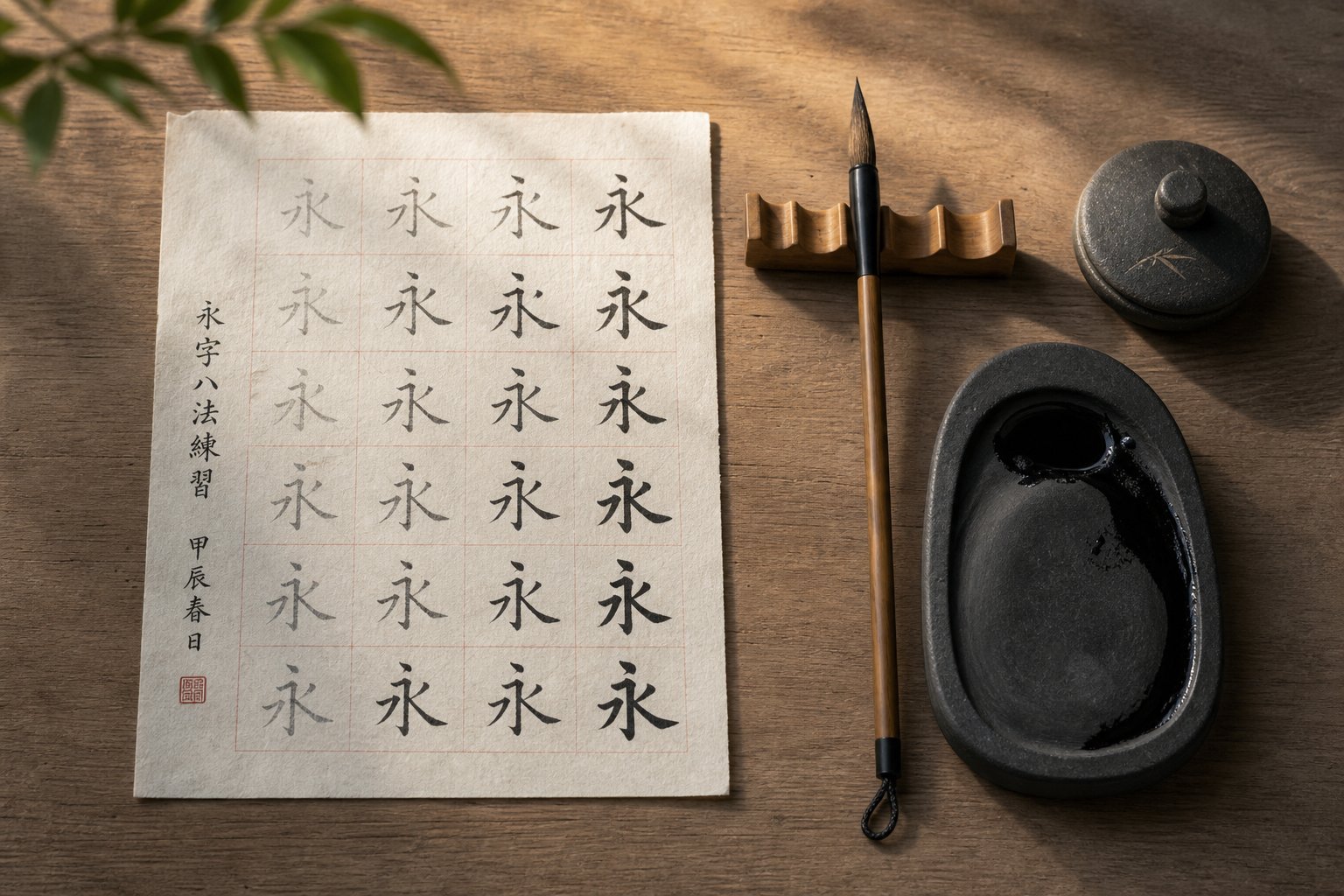
Writing 真 by hand is where philosophy meets physical practice. Every stroke follows a specific sequence, and that sequence is not arbitrary — it produces a balanced, legible character that flows naturally from the brush or pen. Whether you are practicing calligraphy or simply want to write the truth chinese symbol correctly on paper, getting the stroke order right is the foundation everything else builds on.
The character 真 consists of 10 strokes. That places it in the moderate range of complexity — not as simple as 大 (3 strokes) but far less daunting than characters like 鑫 (24 strokes). Its structure fits within a roughly square frame, with the top section sitting slightly narrower than the broad horizontal stroke that anchors the bottom.
Stroke Order and Count for Writing 真
How to write zhen in Chinese comes down to following these ten strokes in the correct sequence. Each stroke has a specific direction and type. Here is the full breakdown:
- Short horizontal stroke (横, héng) — draw left to right across the top of the character. Keep it relatively short; this is not the widest stroke.
- Short vertical stroke (竖, shù) — drop straight down from near the center of the first stroke. This is a brief downward movement, not the full-length central vertical.
- Another short horizontal stroke (横, héng) — draw left to right, forming the top of the enclosed inner section.
- Long vertical stroke (竖, shù) — drop down from the center, passing through the interior of the character. This is the main vertical spine that holds the structure together.
- First inner horizontal stroke (横, héng) — a short line inside the enclosed area, drawn left to right.
- Second inner horizontal stroke (横, héng) — another short interior line below the first, drawn left to right.
- Third inner horizontal stroke (横, héng) — the last of the three evenly spaced interior lines, drawn left to right.
- Closing horizontal stroke (横, héng) — this closes the bottom of the rectangular inner frame, slightly wider than the interior lines above it.
- Left-falling dot or short stroke (撇, piě) — a short stroke falling to the lower left, forming one leg of the base.
- Long bottom horizontal stroke (横, héng) — the final, widest stroke. Draw it left to right with a slight press at the end. This anchors the entire character and should extend slightly beyond the width of everything above it.
The general rules of Chinese stroke order apply here: top before bottom, left before right, outside before inside, and horizontal before vertical when strokes cross. You will notice the character builds from the top down, fills in the interior, then finishes with the wide base — like constructing a building from the roof down to its foundation.
Tips for Balanced and Beautiful Writing
Getting the strokes in the right order is step one. Making the character look good is step two. Here are the proportional keys to a well-written 真:
- Three interior horizontals should be evenly spaced. These are strokes 5, 6, and 7. If they crowd together or spread unevenly, the character looks cramped or lopsided. Imagine dividing the interior rectangle into four equal horizontal bands — each line sits at a boundary.
- The central vertical stroke should be perfectly centered. This is the spine of the character. If it leans left or right, the whole structure tilts. Use it as your reference line for balancing everything else.
- The bottom horizontal stroke anchors everything. Stroke 10 is the widest element. It should extend slightly beyond the left and right edges of the body above it, giving the character a stable, grounded appearance — like a pedestal supporting a sculpture.
- The top section should be slightly narrower than the base. This creates a subtle taper that makes the character feel stable rather than top-heavy.
Think of the overall shape as a rectangle that is just barely taller than it is wide, with weight concentrated at the bottom. That visual gravity is what gives 真 its sense of solidity on the page — fitting for a character that means genuine and real.
Calligraphic style changes how these proportions feel. In regular script (楷書, kǎishū), every stroke is distinct and deliberate — this is the style beginners learn first, and it is where stroke order discipline matters most. The character looks architectural, each line clearly separated. In running script (行書, xíngshū), strokes begin to connect and flow into each other. The three interior horizontals might merge into a quick zigzag motion, and the overall rhythm speeds up while maintaining legibility. In cursive script (草書, cǎoshū), the character becomes almost abstract — reduced to its essential energy rather than its precise structure. A skilled cursive calligrapher can write 真 in what looks like two or three fluid movements, yet a trained eye still recognizes it instantly.
Each style emphasizes a different aesthetic quality. Regular script rewards precision and patience. Running script rewards rhythm and confidence. Cursive rewards spontaneity and expressive freedom. As one calligraphy guide notes, mastering Chinese calligraphy is about more than strokes — it is about appreciating the cultural significance behind each character. With 真, that significance runs especially deep. You are not just drawing lines on paper. You are giving physical form to a concept that three thousand years of Chinese thought have shaped, debated, and revered.
If you are just starting out, stick with regular script and focus on even spacing, centered verticals, and a strong bottom stroke. Speed and style come later. The character 真 rewards the same quality it names — being genuine, patient, and 认真 (serious) about the process rather than rushing toward a polished surface.
Frequently Asked Questions About the Chinese Character for Truth
1. What is the Chinese character for truth?
The primary Chinese character for truth is 真 (zhēn, first tone). It conveys genuineness, authenticity, and reality rather than just factual accuracy. Unlike the English word 'true,' which often implies a yes-or-no judgment, 真 asks whether something is authentically and completely what it claims to be. It appears in philosophical texts, everyday speech, and compound words like 真理 (universal truth) and 真相 (the facts of a situation).
2. What is the difference between 真理 and 真相 in Chinese?
真理 (zhēnlǐ) refers to universal, abstract, or philosophical truth — the kind of principle that scientists pursue or philosophers debate. 真相 (zhēnxiàng) refers to the specific facts of a situation — what actually happened in a particular case. Use 真理 when discussing grand principles or eternal truths, and 真相 when talking about uncovering hidden facts, such as in journalism or investigations. A helpful shortcut: 真理 is 'Truth' with a capital T, while 真相 is 'the truth' about a specific event.
3. How do you pronounce zhēn in Mandarin Chinese?
To pronounce zhēn correctly, start with the zh- initial by curling your tongue tip back toward the hard palate — similar to the English 'j' in 'judge' but with the tongue positioned further back. Then add the vowel 'en' (close to the 'un' in 'fun' but slightly more forward). Finally, maintain a high, level pitch throughout the syllable without letting it rise or fall. This steady high pitch is Mandarin's first tone. Avoid dropping into a falling tone, which would change the meaning to 'shake' (zhèn).
4. What does 真 mean in Daoist philosophy?
In Daoism, 真 represents existential authenticity — being what you naturally are without artifice or social performance. The Zhuangzi uses 真 over 60 times and introduces the concept of 真人 (zhēnrén, the True Person), someone who lives in alignment with their own nature and the Dao. Daoist truth is not something you build or argue into existence; it is your original, uncorrupted state that you return to by shedding pretense. The idiom 返璞归真 (return to simplicity and authenticity) captures this idea perfectly.
5. How many strokes does the Chinese character 真 have?
The character 真 consists of 10 strokes written in a specific sequence: top to bottom, outside to inside. The structure includes a series of horizontal strokes, a central vertical spine, three evenly spaced interior horizontal lines, and a long bottom horizontal stroke that anchors the character. The bottom stroke should extend slightly beyond the width of the body above it, giving 真 a stable, grounded appearance on the page. Beginners should practice in regular script (楷书) before attempting running or cursive styles.