What a Wuxia Name Generator Actually Does and Why It Matters
You typed a prompt into a wuxia name generator, hit the button, and got something like "Feng Longblade" or "Shadow Tiger Wu." It sounds cool for about three seconds — until someone who actually reads martial arts fiction tells you it feels off. The problem isn't the tool. It's that most generators treat Chinese names like random word salads instead of what they really are: compressed poetry carrying centuries of cultural weight.
Wuxia in Chinese literally means "martial heroes" (武侠). It's a genre of fiction set in ancient China where skilled fighters navigate a world of honor, revenge, and secret techniques. The names in these stories aren't decorative labels. They function as narrative architecture — quietly telling you who a character is before they ever draw a sword.
What Makes Wuxia Names Different from Regular Chinese Names
A regular Chinese name like 李明 (Li Ming, meaning "Li Bright") could belong to your neighbor, your coworker, or a million other people. It's functional and common. A wuxia name like 独孤求败 (Dugu Qiubai, meaning "Solitary One Seeking Defeat") immediately paints a picture of a warrior so powerful that his only remaining wish is to lose. That gap between ordinary and evocative is what separates authentic wuxia names from generic outputs.
Wuxia names signal three things simultaneously: a character's origin or allegiance (through surname choice), their inner nature or destiny (through given name meaning), and their role in the martial world (through tonal and poetic weight). A rare compound surname like 慕容 (Murong) or 令狐 (Linghu) instantly marks someone as extraordinary, while a common surname paired with a striking given name — like 张无忌 (Zhang Wuji, "Zhang Without Taboo") — creates dramatic contrast between humble roots and grand fate.
Why Naming Matters in Martial Arts Fiction
Imagine reading a novel where the fearsome swordsman is named something that sounds clumsy or accidentally comedic to native speakers. The immersion breaks. In wuxia fiction, names do heavy narrative lifting that Western fantasy names rarely attempt.
In wuxia, a character's name is not a label — it is a prophecy. It foreshadows arcs, conceals hidden identities, and tells readers whether they are meeting a hero or a villain before a single blow is struck.
This is why a wuxia name generator only works as a starting point. The real craft lies in understanding the cultural logic behind each character choice — the radicals, the tonal flow, the literary allusions. That's exactly what the following sections break down: the linguistic building blocks that separate a forgettable random name from one that sounds like it belongs in a Jin Yong novel.
The Linguistic Structure Behind Authentic Wuxia Names
Every Chinese character is a small machine built from interlocking parts. When you understand how those parts work, you stop guessing and start constructing names that carry real weight. This is the gap between a name generator chinese tools spit out randomly and a name that feels like it was pulled from a lost manuscript. The difference comes down to three layers: radicals that anchor meaning, phonetic components that guide pronunciation, and tonal flow that makes a name sound right when spoken aloud.
How Chinese Characters Build Meaning Through Radicals
Think of radicals as the DNA of a Chinese character. Each one is a small visual element — sometimes a standalone character, sometimes a compressed form — that signals a category of meaning. The character 剑 (jian, "sword") contains the knife radical 刂 on its right side, immediately flagging it as something related to blades. The character 铁 (tie, "iron") carries the metal radical 钅 on its left, anchoring it in the domain of metals and forging.
This matters for wuxia naming because readers — especially Chinese-literate ones — perceive these radicals instantly. A name containing the jade radical 玉 (or its variant 王 when used as a component) evokes preciousness and moral refinement. A name built with the water radical 氵 suggests fluidity, depth, or hidden power. These aren't arbitrary associations. They're baked into how the writing system has worked for thousands of years.
Over 90% of all Chinese characters are pictophonetic compounds — combinations of a semantic radical that supplies meaning and a phonetic component that hints at pronunciation. When you pick a character for a wuxia name, you're selecting both a sound and a visual meaning-signal simultaneously. A chinese character name generator that ignores this dual structure will produce combinations that look hollow on the page.
Here's how this plays out with radicals commonly found in martial arts fiction names:
| Radical | Core Meaning | Wuxia Association | Example Characters in Names |
|---|---|---|---|
| 钅 (jin, metal) | Gold, metal, forging | Weapons, unyielding will, martial strength | 铁 (iron), 锋 (blade edge), 钧 (ancient weight) |
| 玉/王 (yu, jade) | Jade, preciousness | Moral purity, noble bearing, hidden value | 瑶 (precious jade), 琳 (fine jade), 珏 (paired jade) |
| 刂 (dao, knife) | Blade, cutting | Swordsmanship, decisive action, danger | 剑 (sword), 刚 (firm), 利 (sharp) |
| 氵 (shui, water) | Water, flow | Adaptability, depth, hidden currents | 泽 (marsh/grace), 涵 (contain), 澜 (great wave) |
| 龙 (long, dragon) | Dragon | Imperial power, supreme skill, destiny | 龙 (dragon), 珑 (clarity of jade), 胧 (hazy moonlight) |
| 云/雨 (yun/yu, cloud/rain) | Sky, weather, atmosphere | Freedom, wandering, transcendence | 云 (cloud), 霜 (frost), 霖 (lasting rain) |
| 山 (shan, mountain) | Mountain, hill | Immovability, solitude, hermit sects | 岳 (great peak), 峰 (summit), 崖 (cliff) |
You'll notice that a single radical can appear across dozens of characters, each with a different shade of meaning. The metal radical doesn't just mean "sword" — it can suggest the hardness of iron will, the gleam of gold, or the weight of authority. Choosing which metal-radical character to use in a name is where craft begins.
Tonal Considerations and Phonetic Flow in Name Creation
Sounds complex? Here's the practical version. Mandarin Chinese has four tones — high level, rising, falling-rising, and falling — plus a neutral tone. When you string two or three characters together in a name, their tones create a melodic contour. Some combinations flow naturally. Others stumble.
A chinese name generator with meaning that only checks dictionary definitions will miss this entirely. Imagine a name where all three characters share the third tone (falling-rising). Spoken aloud, it sounds halting and awkward — like trying to walk uphill three times in a row. The classic approach is to vary tones across the name, creating a natural rise and fall. A sequence like third tone, first tone, second tone (as in 李金泽, Li Jinze) produces a dynamic, memorable rhythm.
Beyond tonal melody, you need to watch for homophone collisions. Chinese is rich with words that share identical pronunciations but carry wildly different meanings. A name that sounds elegant in isolation might be a near-homophone for something embarrassing or unlucky. The character 思 (si, "to think") is poetic and refined — but pair it carelessly with certain surnames and you risk evoking 死 (si, "death") in listeners' ears. Native speakers catch these echoes instantly.
The test is simple: say the full name out loud, quickly, as if introducing yourself across a noisy teahouse. Does it flow? Does anything snag? Could it be misheard as something unfortunate? If you're building names for English-language fiction, this step still matters — your Chinese-literate readers will notice, and the phonetic logic gives names a grounded authenticity even for readers who don't speak Mandarin.
Common Character Elements in Martial Arts Names
Certain characters appear again and again in wuxia names because their meanings align perfectly with the genre's themes. These aren't random favorites — they're drawn from a shared literary vocabulary that martial arts authors have refined over decades.
- 锋 (feng) — blade edge, sharpness. Suggests a character who is direct, dangerous, and cutting in both speech and combat.
- 云 (yun) — cloud. Evokes freedom, wandering, and detachment from worldly concerns. Common in names of hermit-type characters.
- 寒 (han) — cold. Implies emotional distance, deadly precision, or a tragic past. Often paired with weapon-related characters.
- 傲 (ao) — proud, unyielding. Signals arrogance or unbreakable spirit depending on context.
- 玄 (xuan) — mysterious, dark, profound. Hints at hidden knowledge or connection to esoteric martial arts.
- 影 (ying) — shadow. Suggests stealth, duality, or a character who operates unseen.
Each of these characters carries its radical signature. 锋 has the metal radical, grounding it in the world of blades. 寒 contains the roof radical 宀 at the top, suggesting something contained or sheltered — coldness held within. When you select characters for a name, you're layering visual meaning (radicals), phonetic flow (tones), and literary association (genre conventions) into a package of two or three syllables.
This layered architecture is what separates a name that resonates from one that merely exists. And it's also what connects naming to character identity — because in wuxia, the type of character you're naming shapes which elements belong in their name and which would feel wrong.
How Legendary Wuxia Authors Crafted Iconic Character Names
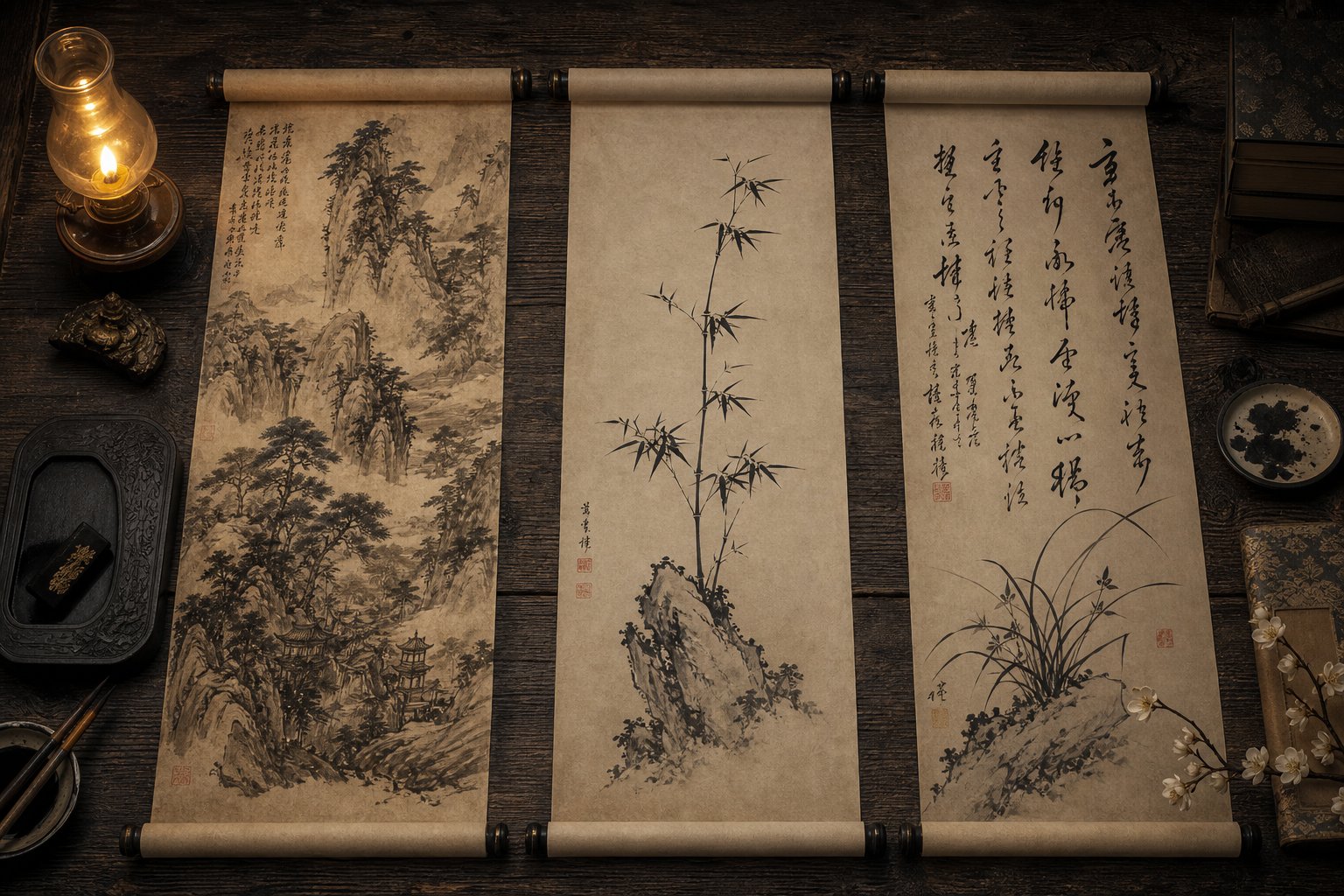
Radicals, tones, and genre conventions give you the raw materials. But how did the actual masters of wuxia fiction assemble those materials into names that readers remember decades later? The three titans of the genre — Jin Yong, Gu Long, and Liang Yusheng — each developed a distinct naming philosophy. Studying their patterns is like studying brushwork from three different calligraphy schools: same ink, same paper, completely different results.
If you've ever used a china names generator and felt the output lacked soul, this is why. Generators randomize. These authors composed. Their wuxia characters carry names that function as compressed narratives — and each author compressed differently.
Jin Yong Naming Patterns and Literary Allusions
Jin Yong (pen name of Louis Cha) is often called the Shakespeare of wuxia, and his naming approach reflects that literary depth. His names draw heavily from classical Chinese poetry, philosophy, and historical texts. When you encounter a Jin Yong character, their name often contains a hidden quotation or allusion that foreshadows their entire arc.
Consider 令狐冲 (Linghu Chong) from The Smiling, Proud Wanderer. The rare compound surname 令狐 evokes a solitary, fox-like cunning, while 冲 means "soaring" or "rushing forward" — perfectly capturing his free-spirited, convention-breaking personality. Or take 张无忌 (Zhang Wuji) from The Heaven Sword and Dragon Saber: a common surname paired with 无忌 ("without taboo" or "fearless"), creating dramatic tension between ordinary origins and extraordinary destiny. His father chose the name hoping the boy would live without enemies — an intention the story tragically subverts.
Then there's 独孤求败 (Dugu Qiubai) — "Solitary One Seeking Defeat." This legendary swordsman never appears on-page in any novel, yet his name alone tells a complete story: a warrior so transcendently powerful that his only remaining desire is to find someone capable of beating him. The name is the character.
Observable conventions across Jin Yong's body of work:
- Frequent use of rare or compound surnames (独孤, 令狐, 慕容, 欧阳) to signal extraordinary lineage
- Given names drawn from classical texts — poetry collections, Confucian classics, Buddhist sutras
- Deliberate contrast between surname weight and given name meaning (common surname + grand destiny, or rare surname + understated name)
- Names that contain ironic prophecy — what the name promises often arrives through suffering rather than triumph
- Sibling or generational naming patterns within families that reveal clan philosophy
Gu Long Style Names and Minimalist Impact
Where Jin Yong builds layered literary puzzles, Gu Long cuts to bone. His chinese fantasy names hit like a blade drawn fast — short, sharp, and immediately memorable. Gu Long favored two-character given names or even single-character names that land with percussive force.
His most famous creation, 楚留香 (Chu Liuxiang, "Chu Lingering Fragrance"), breaks the mold by giving a male martial artist a name associated with delicacy and scent — yet it perfectly captures the character's elegant, elusive nature. 陆小凤 (Lu Xiaofeng, "Lu Little Phoenix") uses a diminutive that sounds almost playful, matching the character's witty, irreverent personality.
Gu Long's villains and antiheroes carry names that sound like weapons being unsheathed. 西门吹雪 (Ximen Chuixue, "West Gate Blowing Snow") conjures an image of cold, lethal beauty — a swordsman whose blade is as silent and inevitable as snowfall.
Key patterns in Gu Long's naming:
- Shorter names with immediate sensory impact — sound, temperature, movement
- Unexpected combinations that subvert gender or role expectations
- Names that function as visual images rather than philosophical statements
- Preference for concrete nouns (snow, fragrance, phoenix) over abstract virtues
- Rhythmic punch — names designed to sound striking when spoken aloud in dialogue
How Author Style Shapes Name Construction
Liang Yusheng, the third pillar of classical wuxia, took yet another path. His names read like lines extracted from Tang and Song dynasty poetry — elegant, measured, and suffused with romantic melancholy. Characters like 白发魔女 (the White-Haired Demoness) carry epithets that blend beauty with tragedy, while his given names favor graceful natural imagery: mist over rivers, moonlight on snow, orchids in mountain valleys.
What does this mean for anyone using a wuxia name generator or building names from scratch? It means authentic chinese fantasy names aren't just linguistically correct — they carry an authorial voice. The style you choose signals the kind of story you're telling:
- Jin Yong style — literary, layered, rewards re-reading. Best for epic narratives with complex character arcs.
- Gu Long style — sharp, sensory, cinematic. Best for fast-paced stories with charismatic protagonists.
- Liang Yusheng style — poetic, romantic, melancholic. Best for stories emphasizing emotion and tragic beauty.
Each philosophy produces wuxia characters whose names feel inevitable rather than assigned. That inevitability — the sense that a character could not possibly be called anything else — is the benchmark no random generator can reach on its own. It requires understanding not just what characters mean, but what role they're meant to play in a story's world.
Matching Names to Character Archetypes in Wuxia Fiction
A name that feels inevitable for a brooding swordsman would sound absurd on a scheming villain. The authorial philosophies covered above all share one principle: the name must fit the role. When you're crafting a chinese warrior name or pulling options from a generator, the first question isn't "what sounds cool?" — it's "what kind of character is this?"
Wuxia fiction operates with a recognizable cast of archetypes, each carrying distinct naming expectations. Readers steeped in the genre pick up on these signals instantly. A name built from the wrong elements for a character's role creates cognitive dissonance — like casting a gentle flute melody over a battle scene.
Naming the Hero and the Wandering Swordsman
The wandering swordsman is wuxia's signature figure — rootless, skilled, morally complex. A chinese swordsman name needs to balance strength with freedom. Think movement, wind, open sky. Characters like 风 (feng, wind), 云 (yun, cloud), and 飞 (fei, fly) appear constantly in hero names because they evoke a life unbound by sect or court.
Surname choice matters here. A rare or compound surname like 独孤 (Dugu, "Solitary") or 令狐 (Linghu) immediately marks the hero as someone set apart from ordinary society. But a common surname — 李, 杨, 萧 — paired with a striking given name creates that classic contrast between humble origins and grand destiny. Jin Yong used this technique repeatedly: 萧峰 (Xiao Feng, "Xiao Peak") carries a common surname but the given name 峰 suggests someone who stands above all others.
For the hero archetype, lean toward characters suggesting upward motion, natural forces, or quiet strength. Avoid characters that are too dark or too soft — the wandering swordsman occupies a middle ground between righteous and dangerous.
Villain and Antagonist Name Conventions
Villain names in wuxia operate differently depending on the type of antagonist. A scheming court official gets cold, sharp-edged characters — 寒 (han, cold), 厉 (li, severe), 暗 (an, dark). A tyrannical sect leader might carry a surname with imperial weight like 上官 (Shangguan, "Upper Official") paired with characters suggesting domination: 霸 (ba, tyrant), 绝 (jue, absolute), 灭 (mie, extinguish).
The key distinction: villain names often sound too perfect, too controlled. Where hero names suggest natural freedom, antagonist names suggest imposed order or suppressed violence. A china warrior name for a villain might use the same martial elements as a hero's name — blade, iron, peak — but pair them with characters implying excess or obsession. 求败 (Qiubai, "Seeking Defeat") works for a legendary figure precisely because the obsession it names is tragic rather than cruel.
Some villains carry deceptively gentle names, creating ironic contrast. A character named 慈 (ci, "merciful") who turns out to be ruthless is a classic wuxia move — the name becomes a mask.
Scholar-Warriors and Love Interest Names
The scholar-warrior archetype blends martial prowess with literary refinement. Their names reflect this duality: one element suggesting cultivation of the mind, another hinting at combat capability. Characters like 书 (shu, book), 文 (wen, literature), 墨 (mo, ink), or 琴 (qin, zither) paired with 剑 (jian, sword) or 锋 (feng, blade edge) create that tension between pen and sword.
Love interest names — particularly female leads — traditionally draw from beauty and nature: 蓉 (rong, hibiscus), 芷 (zhi, iris), 月 (yue, moon), 雪 (xue, snow). But the strongest wuxia love interests carry names with hidden steel. 黄蓉 (Huang Rong) sounds floral and feminine, yet the character is one of the most brilliant tacticians in Jin Yong's entire canon. The name's softness becomes a deliberate misdirection.
If you're using a chinese warrior name generator for a love interest who also fights, blend elements from both pools — a jade radical character paired with something suggesting sharpness or resilience gives you a name that signals complexity rather than a single dimension.
| Archetype | Recommended Name Elements | Suggested Surnames | Example Pattern |
|---|---|---|---|
| Wandering Swordsman | 风 (wind), 云 (cloud), 飞 (fly), 逸 (unrestrained) | 萧, 叶, 独孤, 令狐 | Rare surname + freedom/motion character |
| Sect Leader | 天 (heaven), 岳 (great peak), 尊 (revered), 宗 (ancestor) | 上官, 慕容, 欧阳, 司马 | Compound surname + authority/height character |
| Villain / Antagonist | 寒 (cold), 厉 (severe), 绝 (absolute), 灭 (extinguish) | 上官, 东方, 任, 丁 | Imposing surname + control/darkness character |
| Scholar-Warrior | 文 (literature), 墨 (ink), 书 (book), 琴 (zither) | 陈, 段, 林, 苏 | Elegant surname + mind/art character + martial hint |
| Wandering Hermit | 空 (empty), 隐 (hidden), 寂 (silent), 虚 (void) | 风, 云, 叶, 白 | Nature surname + emptiness/solitude character |
| Disciple / Young Hero | 小 (little), 初 (beginning), 少 (young), 新 (new) | 张, 杨, 李, 周 | Common surname + growth/potential character |
| Female Lead / Love Interest | 月 (moon), 蓉 (hibiscus), 雪 (snow), 琳 (jade) | 黄, 赵, 周, 花 | Surname + beauty element with hidden strength |
Notice how surname weight shifts with archetype. Compound surnames (two characters) carry inherent gravitas — they work for sect leaders and legendary figures but can feel heavy on a young disciple still finding their path. Common single-character surnames ground a character in the everyday world, making their extraordinary abilities feel earned rather than inherited. The surname 萧 sits in a sweet spot: common enough to feel accessible, but its meaning ("desolate" or a type of flute) adds a layer of melancholy that suits wandering heroes perfectly.
These archetype-to-name mappings aren't rigid rules — the best wuxia names often subvert expectations deliberately. But subversion only works when readers recognize what's being subverted. You need to know the conventions before you can break them effectively. And conventions shift depending on more than just character role — they also shift with setting, time period, and where a character sits within the jianghu's social ladder.
Naming Conventions Across Wuxia Settings and Social Hierarchies
A character's role tells you what kind of name they need. But where and when they exist in the story shapes that name just as powerfully. A Tang dynasty court official carries a different naming weight than a Ming dynasty bandit hiding in the greenwood. A sect leader on a remote mountain peak uses formality that a wandering loner in a dusty inn never would. Setting and social position act as invisible filters — they determine which name elements feel natural and which feel out of place.
This is where most ancient chinese name generator tools fall short. They produce names in a vacuum, disconnected from the historical and social context that gives jianghu names their texture. A name that works perfectly for a Song dynasty scholar-swordsman might sound wrong in a story set during the chaotic late Ming. Context isn't decoration — it's structure.
Dynasty-Specific Naming Conventions
Each dynasty in Chinese history carried its own cultural flavor, and wuxia fiction set in different periods reflects this in naming patterns.
During the Tang dynasty (618–907), names tended toward bold, cosmopolitan confidence. The Tang was an era of cultural openness, and names from this period often feature grand natural imagery — mountains, rivers, vast skies. Characters like 昊 (hao, "vast sky") or 瀚 (han, "boundless") fit the Tang's expansive spirit. Compound surnames of non-Han origin (like 尉迟, Yuchi, or 长孙, Zhangsun) also feel historically grounded here because the Tang court included many officials of Turkic and Xianbei descent.
The Song dynasty (960–1279) shifted toward literary refinement. Names from this era lean more scholarly — characters referencing poetry, painting, and philosophical contemplation. Think 逸 (yi, "leisurely"), 清 (qing, "clear/pure"), or 远 (yuan, "distant"). Song-era wuxia stories often feature the tension between martial artists and an increasingly bureaucratic state, so names that blend martial and literary elements feel especially appropriate.
The Ming dynasty (1368–1644) brings a grittier, more populist energy. Many classic wuxia stories are set here — it's the era of armed escort agencies, secret societies, and the infamous Eastern Depot secret police. Names can afford to be more direct and less adorned. Single-character given names became more common historically during the early Ming (influenced by the founder Zhu Yuanzhang's naming edicts), which is a useful detail if you want period-accurate flavor.
If you're using a chinese city name generator or building location names for your setting, the same principle applies. Tang-era place names sound different from Ming-era ones. Match your character names to the same historical register as your setting's geography.
Jianghu Underworld and Sect Hierarchy Names
The jianghu — the martial world's social ecosystem — isn't a single flat community. It's a layered hierarchy where your position determines how you're addressed, what titles you carry, and how formal your name sounds in conversation. The jianghu includes everyone from sect leaders presiding over hundreds of disciples to nameless wanderers sleeping in haystacks. Each level carries distinct naming conventions.
Here's how formality and naming shift from the top of the hierarchy downward:
- Secthead (掌门, zhangmen) — Addressed by title plus surname. Their full given name is rarely used casually. They often carry an additional honorific epithet earned through decades of reputation. Example: "Shaolin's Abbot Kongwen" rather than just a personal name.
- Elders and Senior Masters (长老, 师伯/师叔) — Addressed by generational title within the sect. Their personal names may be known but are used only by peers of equal rank. Naming tends toward characters suggesting wisdom, depth, or endurance.
- Core Disciples (入室弟子) — These inner-circle students are addressed by full name or a courtesy name bestowed by their master. Their names often echo their sect's naming philosophy — shared generational characters are common, marking them as belonging to a specific lineage.
- Ordinary Disciples (弟子) — Addressed by full name. Less likely to have earned epithets or courtesy names. Their given names may follow a generational character pattern set by the sect founder.
- Outer Disciples (外门弟子) — The lowest formal rank. Often addressed simply by surname plus a generic title like "brother" (师兄/师弟). Some outer disciples in fiction don't even get named — they're background figures.
- Unaffiliated Wanderers (散人) — No sect title, no generational naming pattern. Their names stand alone, often carrying a self-chosen epithet or jianghu nickname that functions as their primary identity.
This hierarchy means that when you're generating jianghu names, you need to know where the character sits on this ladder. A sect leader named with casual, playful characters would feel wrong. An outer disciple carrying a name dripping with imperial gravitas would feel equally misplaced — unless the story deliberately uses that mismatch for narrative effect.
Creating Sect Names and School Titles
Character names don't exist in isolation — they belong to organizations that also need authentic names. In wuxia fiction, schools (派, pai) and sects (门, men) follow their own naming logic. The most common pattern, established by authors like Wolong Sheng in the late 1950s, is naming schools after their geographic location — specifically mountains. The famous nine major schools (Shaolin, Wudang, Qingcheng, Mount Hua, Kunlun, Kongtong, Diancang, Emei, and Snowy Mountain) are almost all named after the peaks where they reside.
Beyond mountain names, sects and organizations use several other naming patterns:
- Geographic features — Changbai School (长白派), Mount Huang School (黄山派), Zhongnan School (终南派)
- Family surnames — Tang Sect (唐门), composed primarily of clan members
- Martial arts style or philosophy — Quanzhen Teachings (全真教, "Complete Perfection"), named after their spiritual doctrine
- Evocative imagery — Azure Dragon Society (青龙社), Heavenly Dragon Gang (天龙帮)
Gangs (帮), associations (会), societies (社), and lodges (堂) follow looser naming conventions than formal schools. They often use animals, colors, celestial imagery, or abstract concepts — Red Flower Society (红花会), Four Seas Gang. These organizations belong to what wuxia fiction calls the "black path" (黑道) or "white path" (白道) depending on whether their activities are legal, and their names often signal which side they occupy. A "Heavenly" or "Righteous" prefix suggests white path aspirations. "Shadow," "Ghost," or "Nether" elements lean black path.
When building a complete wuxia world, the sect name should harmonize with its members' names. If your school is named after a cold mountain peak, its disciples' names might share ice, snow, or stone imagery. If your gang draws its identity from fire or dragons, member names carrying water or gentle flower characters would feel disconnected. The organization's name sets a tonal palette that individual character names should echo — not copy exactly, but rhyme with.
This relationship between individual names and organizational identity points to something deeper: wuxia naming isn't just about single characters in isolation. It's an ecosystem where personal names, sect titles, earned epithets, and even weapon names all interlock. And that ecosystem looks quite different depending on whether you're working in wuxia's grounded martial world or its more fantastical cousin — xianxia.
Wuxia vs Xianxia Names and the Art of Jianghu Epithets
People searching for a chinese fantasy name generator often lump wuxia and xianxia together as if they're the same genre with different labels. They're not. The naming conventions diverge sharply because the worlds themselves operate on fundamentally different rules. Wuxia stays rooted in the human martial world — flesh, steel, and hard-won skill. Xianxia reaches toward immortality, celestial realms, and cosmic cultivation. That gap in worldview produces names that look and feel completely different on the page.
When you type a query into a chinese name generator fantasy tool without specifying which genre you're working in, you'll often get results that blend both traditions into an incoherent mess. A wuxia swordsman named "Celestial Void Emperor" sounds ridiculous. An xianxia cultivator named "Iron Third Brother" feels too mundane. Knowing which register you're working in is the first filter for authenticity.
Wuxia vs Xianxia Naming Differences Explained
The core distinction comes down to scale. Wuxia names reference the earthly — mountains, rivers, weather, metals, animals, and human virtues. Xianxia names reference the cosmic — heavens, void, primordial chaos, immortal realms, and spiritual transcendence. A wuxia hero might be named 萧峰 (Xiao Feng, "Desolate Peak") — grounded, physical, evocative of a real landscape. An xianxia protagonist might be named 凌虚 (Ling Xu, "Transcending the Void") — abstract, spiritual, pointing beyond the material world.
This difference extends beyond personal names into every layer of the naming ecosystem. As naming convention guides note, wuxia names are often simpler and grounded in Confucian or historical virtues, while xianxia names lean toward Daoist cosmology, celestial imagery, and poetic metaphor. Here's how the two genres compare across naming categories:
| Category | Wuxia Naming Elements | Xianxia Naming Elements |
|---|---|---|
| Surnames | Historical Chinese surnames, some compound (慕容, 上官, 独孤). Grounded in real clan lineages. | Same historical surnames, but also invented celestial clan names. Ancient/mythological surnames (姬, 轩辕) appear more frequently. |
| Given Names | Natural imagery (peak, cloud, iron, frost), human virtues (loyalty, righteousness), martial elements (sword, blade) | Cosmic imagery (void, primordial, heaven, chaos), spiritual concepts (dao, enlightenment, immortal), celestial bodies (star, moon, sun) |
| Titles / Honorifics | Earned jianghu epithets based on deeds or appearance ("Eastern Heretic," "Northern Beggar"). Sect rank titles (掌门, 长老). | Cultivation rank titles (真人, 仙尊, 帝君). Dao names chosen upon reaching a cultivation stage. Celestial court positions. |
| Technique Names | Physical and poetic — reference animals, weather, weapons, body movements ("Dragon Subduing Palm," "Dugu Nine Swords") | Abstract and cosmic — reference universal forces, creation/destruction, spiritual laws ("Heaven-Sundering Divine Art," "Primordial Chaos Scripture") |
| Weapon Names | Named for material, appearance, or legend. Often a single poetic phrase ("Dragon Slayer," "Heavenly Sword") | Named for spiritual rank or cosmic origin. Often include words like "divine," "immortal," or "primordial" ("Immortal-Slaying Sword," "Void-Shattering Bell") |
You'll notice the pattern: wuxia stays concrete and sensory while xianxia goes abstract and metaphysical. A martial arts name generator that doesn't distinguish between these registers will produce names that feel genre-confused — technically Chinese, but belonging to neither world convincingly.
Creating Jianghu Epithets and Earned Titles
Here's something xianxia largely lacks and wuxia absolutely depends on: the jianghu epithet. These are the nicknames that characters earn through reputation — not chosen by parents, not bestowed by masters, but granted (or imposed) by the martial world itself based on what a person has done or how they fight.
Jin Yong's 五绝 (Five Greats) from The Legend of the Condor Heroes illustrate this perfectly. Each of the five supreme martial artists carries a directional title paired with a defining trait: "Eastern Heretic" (东邪, Huang Yaoshi), "Western Poison" (西毒, Ouyang Feng), "Northern Beggar" (北丐, Hong Qigong), "Southern Emperor" (南帝, Duan Zhixing), and "Central Divine" (中神通, Wang Chongyang). These epithets from classic wuxia literature compress each character's essence into two or three characters — their geographic association, their moral alignment, and their martial specialty all encoded in a phrase short enough to shout across a crowded inn.
Effective jianghu epithets follow a consistent formula:
- Physical trait + skill reference — "Jade-Faced Scholar" (玉面书生), "Iron Palm" (铁掌)
- Weapon + descriptor — "Flying Dagger" (飞刀, Li Xunhuan's signature), "Golden Snake Lord" (金蛇郎君)
- Animal + quality — "Divine Eagle" (神雕), "Venomous Scorpion" (毒蝎)
- Direction or number + defining word — "Southern Hero" (南侠), "Three-Eyed" (三眼)
- Ironic or fearsome reputation — "Smiling Tiger" (笑面虎), "Heartless" (无心)
The key difference from xianxia titles: jianghu epithets are social. They reflect how the martial world perceives you, not what cultivation rank you've achieved. A character might hate their epithet. They might have earned it through a single act decades ago that no longer represents who they are. That tension between name and identity is pure wuxia storytelling — and it's something no generator can produce because it requires narrative context.
Naming Weapons and Martial Arts Techniques
The wuxia naming ecosystem extends beyond people. Weapons and techniques carry names that function as compressed stories, and getting these right is just as important as character names for world-building authenticity.
Weapon names in wuxia tend toward the poetic and specific. The 屠龙刀 (Tulong Dao, "Dragon Slayer Sabre") isn't named for what it literally does — it's a metaphor. The "dragon" refers to the Mongolian Khan, and the sabre was forged to rally heroes against foreign rule. The 倚天剑 (Yitian Jian, "Heavenly Sword") carries a name suggesting reliance on heaven's will — specifically, the will of the people to overthrow tyranny. These names encode history and purpose, not just physical description.
Common patterns for wuxia weapon names include:
- Mythological creature + action — Dragon Slayer (屠龙), Phoenix Wing (凤翼)
- Material or appearance + poetic modifier — Golden Snake Sword (金蛇剑), Jade Flute of the Eastern Ocean (东海玉箫)
- Abstract quality personified — Sword of Longevity (长生剑), Hook of Departure (离别钩)
Technique names follow a parallel logic but lean heavier on numbers, animals, and classical allusions. The 降龙十八掌 (Xianglong Shiba Zhang, "Dragon Subduing Eighteen Palms") uses a number to suggest completeness and a mythological creature to convey power. Each of its eighteen strokes is named after a phrase from the I Ching — layering classical philosophy beneath martial application. The 独孤九剑 (Dugu Jiujian, "Nine Swords of Dugu") names each stroke with the character 破 ("break"), signaling that the technique is a set of countering theories rather than fixed movements.
Gu Long's technique names tend shorter and more visceral. 例不虚发 (Liebu Xufa, "Never Wasted a Shot") isn't even a proper technique name — it's a reputation statement that became the technique's identity. His 天外飞仙 (Tianwai Feixian, "Soaring Fairy Beyond the Heavens") achieves its fame partly through its lyrical name, which sounds more like a line of poetry than a combat manual entry.
When building technique names, the formula typically combines a source or style reference with a movement descriptor: [Origin/Philosophy] + [Number or Scale] + [Action/Weapon Type]. "Shaolin's Seventy-Two Arts" follows this. So does "Tianshan Swordplay" and "Seven Harms Fist." The name should tell a reader three things: where the technique comes from, how complex it is, and what it does — all in four to six characters.
This full ecosystem — personal names, epithets, weapon names, technique names — is what makes wuxia world-building feel complete. Each layer reinforces the others. A character's personal name hints at their nature, their epithet reflects their reputation, their weapon's name echoes their story, and their signature technique's name captures their martial philosophy. When all four layers align, you get a character who feels like they've existed in the jianghu for decades rather than being assembled from a random list.
Of course, all these naming layers carry gendered conventions too. The elements that signal "male warrior" versus "female warrior" in wuxia follow patterns rooted in centuries of literary tradition — patterns that modern writers are increasingly choosing to subvert.
Male and Female Wuxia Name Conventions with Meaning
Gendered naming in wuxia isn't about rigid boxes — it's about a shared vocabulary that readers have internalized over decades of martial arts fiction. Certain characters read as masculine. Others read as feminine. And the most memorable names in the genre often play with that boundary deliberately, using expectation as a storytelling tool. Whether you're using a chinese male name generator or a chinese female name generator as a starting point, understanding these conventions gives you the ability to follow them or break them with purpose.
Male Wuxia Name Elements and Conventions
Wuxia male names draw from a palette of hardness, height, and force. The genre's heroes are swordsmen, wanderers, and fighters — and their names reflect that physicality. When you look at canonical wuxia male names across Jin Yong, Gu Long, and Liang Yusheng, certain character categories dominate.
- Weapons and metal — 剑 (jian, sword), 刀 (dao, blade), 铁 (tie, iron), 钢 (gang, steel). These ground a name in the martial world immediately. A character named with 剑 is someone defined by combat.
- Mountains and height — 峰 (feng, summit), 岳 (yue, great peak), 崖 (ya, cliff), 岩 (yan, rock). These suggest immovability, solitude, and the kind of strength that endures rather than attacks.
- Fierce animals — 龙 (long, dragon), 虎 (hu, tiger), 鹰 (ying, eagle), 豹 (bao, leopard). Dragon and tiger are the most common, signaling supreme power and ferocity respectively.
- Abstract force — 傲 (ao, proud/unyielding), 狂 (kuang, wild), 怒 (nu, wrathful), 霸 (ba, tyrant/dominator). These work best for antiheroes or characters whose personality is their defining trait.
- Cosmic and philosophical — 天 (tian, heaven), 道 (dao, the way), 无 (wu, nothing/without), 空 (kong, void). These suggest a character who has transcended ordinary concerns — often a master or hermit figure.
Classic examples show these elements in action. 萧峰 (Xiao Feng) pairs a melancholic surname with "peak" — a lonely figure standing above all others. 段誉 (Duan Yu) uses "jade/reputation," giving a prince-scholar a name that suggests refinement over raw force. 虚竹 (Xu Zhu, "Empty Bamboo") combines Buddhist emptiness with bamboo's flexible strength — perfect for a monk who becomes a reluctant warrior.
The pattern for wuxia male names tends toward single strong images rather than compound prettiness. One or two characters carrying clear, forceful meaning. This is what separates authentic wuxia male names from generic outputs — they hit with the economy of a blade stroke, not the ornamentation of a scroll painting.
Female Wuxia Name Elements and Conventions
Wuxia names female characters carry follow a different aesthetic register — one rooted in natural beauty, elegance, and subtle power rather than overt force. But "subtle" doesn't mean "weak." The best female names in the genre contain hidden sharpness beneath their graceful surfaces, mirroring how wuxia heroines often conceal deadly skill behind refined exteriors.
- Jade and precious stones — 玉 (yu, jade), 琳 (lin, fine jade), 瑶 (yao, precious jade), 珠 (zhu, pearl). Jade carries enormous cultural weight in Chinese tradition — it represents moral perfection, beauty that improves with age, and inner worth that outlasts surface appearance.
- Moon and celestial light — 月 (yue, moon), 星 (xing, star), 霞 (xia, rosy clouds), 辉 (hui, radiance). Moon imagery is particularly common because it suggests beauty that is cool, distant, and cyclically renewing.
- Flowers and plants — 兰 (lan, orchid), 蓉 (rong, hibiscus), 芷 (zhi, iris), 莲 (lian, lotus), 梅 (mei, plum blossom). Each flower carries specific associations — orchid for refinement, lotus for purity rising from mud, plum blossom for resilience in winter.
- Elegant birds — 凤 (feng, phoenix), 燕 (yan, swallow), 鸾 (luan, mythical bird), 蝶 (die, butterfly). Phoenix is the female counterpart to dragon, signaling supreme feminine power.
- Grace and spirit — 婉 (wan, graceful), 灵 (ling, spirit/clever), 仙 (xian, immortal/fairy), 柔 (rou, gentle/supple). These describe manner and presence rather than physical objects.
Jin Yong's female names demonstrate how these elements work in practice. 黄蓉 (Huang Rong, "Yellow Hibiscus") sounds purely floral — yet the character is the sharpest mind in the story. 周芷若 (Zhou Zhiruo, "Zhou Iris-Like") uses a plant name with 若 ("like" or "as if"), creating a name that means something close to "resembling an iris" — delicate, beautiful, and ultimately deceptive. 小龙女 (Xiao Longnu, "Little Dragon Girl") subverts convention entirely by giving a female character the dragon element typically reserved for men, signaling her otherworldly nature.
A female chinese names generator that only draws from the "pretty" pool misses this complexity. The strongest wuxia names female characters carry contain tension — beauty paired with danger, softness concealing steel, natural imagery that also suggests poison or thorns. 赵敏 (Zhao Min) uses 敏 ("quick/clever") rather than any beauty character, immediately telling readers this woman is defined by her mind, not her appearance.
Chinese Courtesy Names in Martial Arts Fiction
Beyond given names, wuxia fiction draws on the Chinese courtesy name tradition (字, zi) — an additional name bestowed upon reaching adulthood. Historically, courtesy names were given to men at age 20 and sometimes to women upon marriage. In traditional Chinese society, using someone's given name directly was considered disrespectful among peers, making the courtesy name essential for formal address.
In wuxia fiction, courtesy names serve several narrative functions. They add a layer of formality that signals a character's education and social standing. A character addressed by their courtesy name is being treated with respect — or deliberate, pointed politeness that might mask hostility. When an enemy uses your given name instead of your courtesy name, it's an insult. When a lover uses it, it's intimacy.
The construction of a chinese courtesy name typically relates to the given name through synonyms, complementary meanings, or classical allusions. The historical pattern, as documented in the Book of Rites, often used 子 (zi, a respectful prefix meaning "master") as the first character — think of Du Fu's courtesy name Zimei (子美) or Zhao Yun's courtesy name Zilong (子龙, "Master Dragon"). Another common approach uses a character that expands or reinterprets the given name's meaning: if the given name means "bright," the courtesy name might mean "illuminating" or "dawn."
For wuxia characters, courtesy names offer a practical storytelling advantage. A character can be known by different names in different contexts — their given name among family, their courtesy name among peers, and their jianghu epithet among the wider martial world. This layering creates natural opportunities for reveals, disguises, and dramatic recognition scenes. Imagine a wanderer known only by his epithet for half the novel, whose courtesy name — when finally spoken — reveals his connection to a powerful clan.
Modern wuxia and wuxia-inspired fiction increasingly subverts gendered naming conventions. Female characters receive names traditionally coded masculine — carrying sword, iron, or dragon elements — to signal their rejection of expected roles. Male characters might carry flower or moon imagery to suggest sensitivity or unconventional martial philosophies. These subversions work precisely because the traditional conventions are so well-established. A female swordsman named with 铁 (iron) or 霜 (frost) reads as deliberately transgressive in a way that only lands if readers recognize what's being transgressed.
The interplay between gendered conventions, courtesy names, and earned epithets gives wuxia characters a naming depth that most fantasy traditions lack. But all of this cultural machinery creates a challenge for writers working outside the Chinese language — particularly Western authors who want authentic-feeling names without accidentally creating something that sounds nonsensical or offensive to native speakers.
Adapting Wuxia Names for Western Audiences Without Losing Authenticity
Cultural depth is only useful if it doesn't trip you into embarrassing mistakes. Western writers working with Chinese-inspired names face a specific set of pitfalls that native speakers spot immediately — and that no amount of good intention can excuse. Some errors are subtle (wrong romanization system, awkward tonal collisions). Others are glaring (mixing Japanese and Chinese naming structures, or assembling characters that accidentally spell something vulgar). A chinese name generator with characters can give you raw material, but it can't flag these cultural landmines for you.
The challenge isn't choosing between authenticity and accessibility. It's finding the overlap where a name feels grounded to Chinese-literate readers while remaining pronounceable and memorable for English-speaking audiences. That overlap exists — you just need to know where the boundaries are.
Common Mistakes Western Writers Make with Chinese Names
These aren't hypothetical problems. They show up in published novels, indie games, and tabletop RPG supplements regularly enough that native speakers have developed a weary familiarity with them. Here are the pitfalls that break immersion fastest:
- Mixing Japanese and Chinese elements — Using "-san" or "-sama" honorifics with Chinese names, or combining kanji readings with Mandarin pronunciations. Chinese and Japanese share some characters but their naming structures, phonetics, and cultural logic are completely different. A character named "Takeshi Zhang" or addressed as "Zhang-sama" signals that the writer didn't distinguish between the two cultures at all.
- Names that are too long — Chinese names are short: surname (1-2 characters) plus given name (1-2 characters), totaling 2-3 characters maximum. A five-character name like "Zhang Minghua Longtian" doesn't exist in real Chinese naming. If your character's name exceeds three characters (four with a compound surname), it's structurally wrong.
- Random "cool-sounding" character combinations — Pairing characters like 死鬼王 ("Death Ghost King") because they sound dramatic in English. No Chinese parent would name a child using negative characters. Every character in a real name is chosen for positive or aspirational meaning. Villains in fiction might carry darker imagery, but even then, the darkness is poetic rather than blunt.
- Ignoring homophone dangers — The character 思 (si, "to think") is elegant alone, but certain combinations sound nearly identical to 死 (si, "death"). Similarly, 日 (ri) literally means "sun" but functions as a vulgar expletive in colloquial speech. Native speakers catch these echoes instantly — your name might look fine on paper but sound offensive when spoken.
- Defaulting to stereotypical syllables — Overusing "Chang," "Shang," or "Ching" because they "sound Chinese" to Western ears. These syllables carry baggage from decades of Hollywood stereotyping and can echo the offensive "Ching Chang Chong" mockery historically used against Chinese immigrants.
- Ignoring gender conventions — A male warrior named 美美 (Meimei, "Beautiful Beautiful") or a female assassin named 铁柱 (Tiezhu, "Iron Pillar") without narrative justification. Chinese names carry strong gender signals, and mismatching them unintentionally reads as ignorance rather than subversion.
Romanization and Pronunciation for English Readers
When you write a Chinese name in English text, you're choosing a romanization system — and that choice affects how readers perceive and pronounce the name. The two main systems are Pinyin (the modern standard used in mainland China) and Wade-Giles (an older system still seen in some Taiwanese contexts and historical texts).
Pinyin writes the sound "ch" as "q" (Qing), "sh" as "x" (Xiao), and "j" as "zh" (Zhang). Wade-Giles renders these differently: "Ch'ing," "Hsiao," "Chang." For most contemporary fiction, Pinyin is the standard choice — it's what Chinese language education uses worldwide, and it's what readers familiar with Chinese culture will expect.
The wuxian pronunciation challenge for English readers is real, though. Letters in Pinyin don't always map to their English sounds. "Q" is pronounced like "ch," "X" like "sh," "Zh" like "j," and "C" like "ts." You have a few options for helping readers:
- Parenthetical introduction — "Her name was Xue Qinghe (pronounced roughly 'Shweh Ching-huh')." Use this once, then trust readers to remember.
- Character glossary — Include a pronunciation guide at the front or back of your book. This is standard practice in translated wuxia novels.
- Strategic name selection — When possible, choose names whose Pinyin spellings are more intuitive for English readers. "Lin" reads naturally. "Xiu" requires explanation. Both are valid Chinese names, but one creates less friction on the page.
A cantonese name generator adds another layer of complexity. Cantonese romanization (Jyutping or Yale) produces different spellings than Mandarin Pinyin for the same characters — "Wong" instead of "Wang," "Chan" instead of "Chen." If your story is set in a region where Cantonese would be spoken (southern China, Hong Kong), using Cantonese romanization adds authenticity. For most wuxia set in historical northern or central China, Mandarin Pinyin is the appropriate choice.
Balancing Authenticity with Accessibility
The balance point depends on your audience and medium. A novel written primarily for English-speaking fantasy readers needs names that are pronounceable without a linguistics degree. A story written for bilingual readers or the Chinese diaspora can lean harder into untranslated complexity. Neither approach is wrong — but mixing them inconsistently within a single project creates tonal whiplash.
Practical guidelines for finding your balance:
- For English-language novels — Favor names with 2-3 syllables in romanization. Avoid clusters of unfamiliar consonants. Introduce the full name with characters and meaning once, then use the romanized form throughout. Keep your cast's names phonetically distinct from each other so readers don't confuse characters.
- For games and interactive media — Players need to remember and type names. Shorter is better. Consider offering both a romanized name and a translated epithet ("Xiao Feng, the Desolate Peak") so players can use whichever sticks.
- For Chinese-language projects — Authenticity is non-negotiable. Have a native speaker review every name for homophone issues, tonal flow, gender appropriateness, and era-correctness. What reads as "close enough" to a non-native writer might read as painfully wrong to your actual audience.
The single most effective quality check, regardless of your project type: read the name aloud to a native Mandarin speaker and ask if it sounds like a real person's name. Not a translation exercise, not a word puzzle — a name that could belong to someone. That gut-check catches problems no generator or dictionary can flag. It's also the bridge between the cultural knowledge you've built and the practical act of putting a name on the page — which is exactly what the final step of any naming process requires.
How to Use a Wuxia Name Generator Effectively
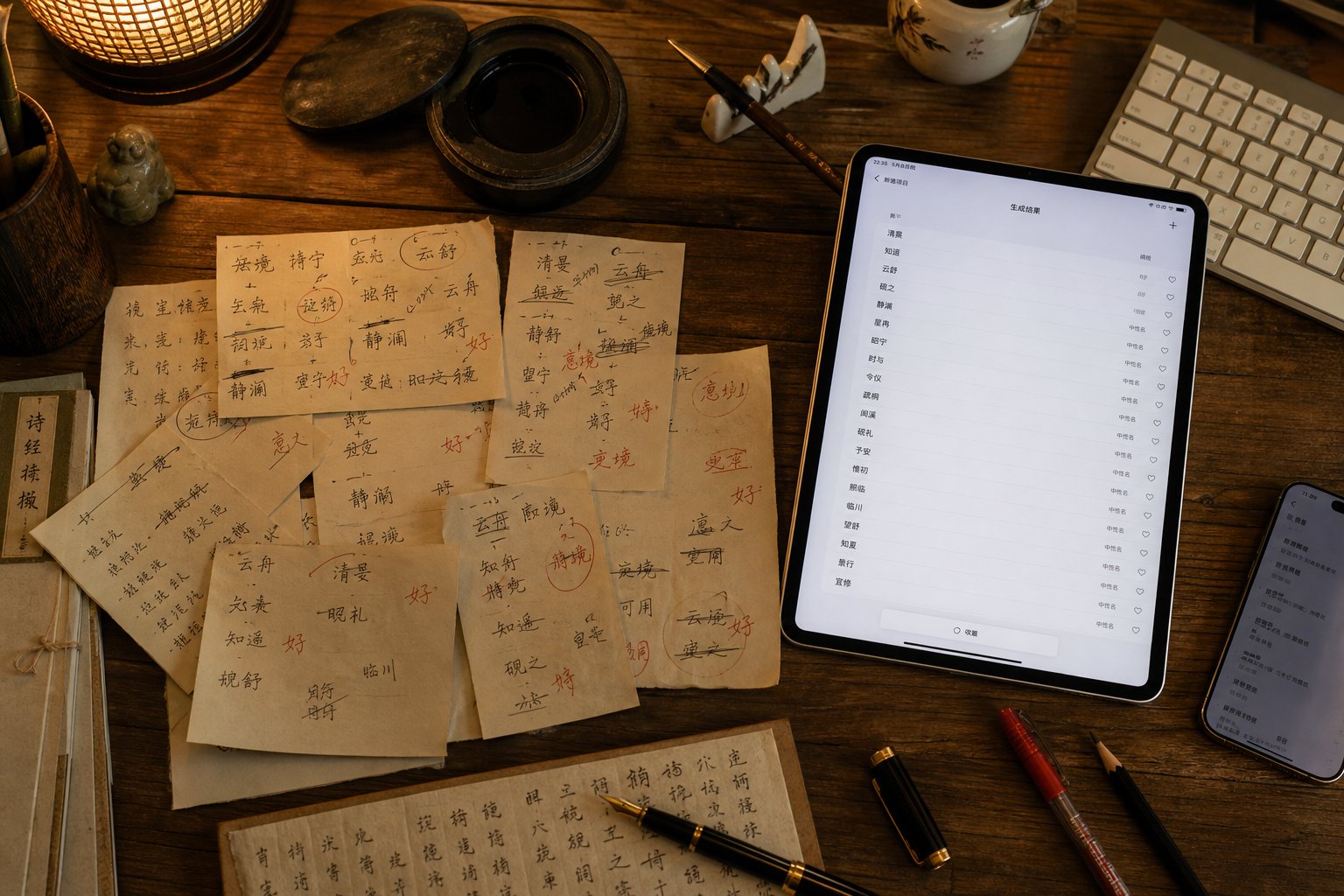
A native speaker gut-check is the gold standard — but you still need raw material to check in the first place. That's where a chinese name generator earns its place in your workflow. Not as an oracle that hands you finished names, but as a brainstorming engine that produces rough candidates for you to refine using everything covered above. The difference between a forgettable output and a story-ready name is the filtering process you apply after hitting "generate."
Evaluating Generator Output for Authenticity
When a tool — whether it's a chinese name generator perchance page, a dedicated app, or an AI prompt — gives you a name, run it through three immediate checks. Does the character count make structural sense (2-3 characters total)? Do the individual characters carry meanings that align with your character's role and genre? And does the tonal contour flow when spoken aloud rather than stumbling over repeated tones?
Most generators produce names that pass the first test but fail the second or third. You'll get structurally valid combinations where the meaning is incoherent — a villain named with characters suggesting gentle spring rain, or a wandering swordsman carrying characters associated with domestic comfort. Treat every output as a draft that needs vetting against the archetype tables and radical meanings from earlier sections.
Combining Tools with Cultural Knowledge
The real power comes from layering. Use a generator for volume — produce ten or twenty candidates quickly. Then apply your filters: radical analysis, tonal flow check, homophone scan, archetype fit, and dynasty-era appropriateness. A chinese male names generator might give you a structurally sound name like 陈天明 (Chen Tianming). Your job is to ask whether "Heaven Bright" fits a brooding assassin (probably not) or a righteous young hero (much better), and whether the tone sequence 2-1-2 flows naturally (it does).
Think of the generator as the first five minutes of a brainstorm — quantity over quality. Your cultural knowledge is the editorial pass that turns quantity into precision.
Choosing Names for Different Creative Projects
Your project type shapes how much refinement a generated name needs. A tabletop RPG character created for a single campaign can tolerate a name that's 80% polished — your gaming group won't scrutinize radical components. A published novel demands 100% authenticity because readers will Google your character names. Video games sit in between: players encounter names briefly but repeatedly, so memorability and phonetic clarity matter more than deep literary allusion. Screenwriting prioritizes names that actors can pronounce naturally in dialogue without stumbling.
Here's the complete process for going from a raw generator output to a finished name, regardless of project type:
- Generate a batch — Produce 10-20 names using one or more tools. Don't evaluate yet. Just collect.
- Structural filter — Remove anything that violates basic Chinese naming structure (wrong character count, nonsensical surname, mixed-language elements).
- Meaning check — Look up each character's primary meaning and radical. Eliminate combinations where meanings clash or produce unintended associations.
- Archetype alignment — Match remaining candidates against your character's role. Does the name signal the right archetype to genre-literate readers?
- Tonal flow test — Say each surviving name aloud. Cut anything that stumbles, repeats tones awkwardly, or sounds too similar to another character in your cast.
- Homophone scan — Check for dangerous near-homophones, especially with the surname attached. When in doubt, swap one character for a tonal variant with cleaner associations.
- Context fit — Verify the name matches your story's dynasty, setting, and social hierarchy. A Ming-era street fighter shouldn't carry a name that sounds like Tang dynasty court poetry.
- Native speaker review — Read your top 2-3 finalists to a Mandarin speaker. Ask: "Does this sound like a real name? Does anything about it make you laugh or wince?"
Steps one through four take minutes. Steps five through eight take a conversation. The entire process transforms a random string of characters into a name that carries weight — one that sounds like it was pulled from a lost chapter of a Jin Yong novel rather than assembled by an algorithm that doesn't read Chinese.
That's the fix. Not a better generator. A better process wrapped around whatever generator you already use.
Frequently Asked Questions About Wuxia Name Generators
1. What is the difference between wuxia and xianxia names?
Wuxia names reference earthly elements like mountains, rivers, metals, and weather, reflecting a grounded martial world of human skill. Xianxia names draw from cosmic and spiritual imagery such as void, primordial chaos, celestial realms, and immortality. A wuxia hero might be named 'Desolate Peak' while an xianxia cultivator could be 'Transcending the Void.' The distinction matters because mixing these registers produces names that feel genre-confused and inauthentic to readers familiar with either tradition.
2. How do I create an authentic Chinese martial arts character name?
Start by selecting a surname that matches your character's social standing — rare compound surnames like Murong or Dugu signal extraordinary lineage, while common surnames like Li or Zhang suggest humble origins. Then choose given name characters whose radicals, tonal flow, and literary associations align with your character's archetype. Check for homophone dangers by saying the full name aloud, verify the tone sequence flows naturally, and confirm the meaning fits your story's dynasty and setting. A native Mandarin speaker review is the final quality gate.
3. What are jianghu epithets and how do they work in wuxia fiction?
Jianghu epithets are nicknames earned through reputation in the martial world — not chosen by parents or bestowed by masters, but granted by the community based on a character's deeds, fighting style, or appearance. They follow formulas like physical trait plus skill reference ('Iron Palm'), weapon plus descriptor ('Flying Dagger'), or animal plus quality ('Divine Eagle'). Unlike xianxia cultivation titles, jianghu epithets are social constructs that reflect how others perceive a character, and they can carry irony or outdated associations that create narrative tension.
4. Why do wuxia name generators produce fake-sounding results?
Most generators treat Chinese names as random character combinations without accounting for radical meaning layers, tonal flow between syllables, homophone dangers, archetype conventions, or dynasty-era appropriateness. They miss the cultural logic that makes authentic wuxia names function as compressed storytelling — signaling a character's origin, destiny, and martial role simultaneously. Generators work best as brainstorming tools that produce raw candidates for manual refinement using linguistic and cultural knowledge.
5. Can I use a wuxia name generator for tabletop RPGs and video games?
Yes, but the refinement level should match your medium. Tabletop RPG names can tolerate roughly 80% polish since gaming groups rarely scrutinize radical components. Video game names need strong memorability and phonetic clarity because players encounter them repeatedly. Published novels demand full authenticity since readers will research character names. For all formats, run generated names through structural, meaning, tonal, and archetype checks to ensure they feel grounded rather than randomly assembled.