How the Rabbit Zodiac Influences Chinese Baby Naming Traditions
When you choose chinese baby names for a child born in the Year of the Rabbit, you are doing something far more intentional than picking a pleasant sound. In Chinese culture, a name is a wish written in ink, a carefully constructed hope that shapes how a child moves through the world. The Rabbit zodiac carries a distinct personality profile, and parents draw directly from those traits when selecting characters for their baby's name.
The Rabbit occupies the fourth position in the Chinese zodiac cycle, and it holds a reputation as one of the most refined and auspicious signs. Children born under this sign are believed to inherit qualities like gentleness, creativity, diplomacy, and emotional sensitivity. These are not vague associations. They actively guide which characters parents consider, which radicals they favor, and which meanings they embed into a name that will follow their child for life.
Why the Rabbit Zodiac Shapes Name Choices
Chinese naming is meaning-driven rather than sound-driven. Each character in a name carries cultural, historical, and sometimes spiritual significance. As Temple University's Center for Chinese Language Instruction explains, the process of naming is believed to influence a person's destiny. Parents do not simply label a child. They bestow a future.
In Chinese tradition, naming a baby is not about finding something that sounds nice. It is about encoding a destiny into characters, giving a child the energy and direction their parents hope they will carry forward.
This philosophy becomes especially powerful during a Rabbit year. Because the Rabbit symbolizes peace, artistic refinement, and quiet intelligence, parents seek out auspicious chinese names for rabbit babies that mirror those qualities. A name containing characters for moonlight, jade, or gentle breezes aligns with the Rabbit's nature. A name evoking aggression or harshness does not.
Rabbit Personality Traits That Inspire Beautiful Names
Imagine a child who grows into someone graceful under pressure, creative in their thinking, and naturally diplomatic in relationships. That is the Rabbit archetype, and it directly informs which chinese baby names and meanings parents gravitate toward. Here are the core traits that shape naming decisions:
- Gentleness - Characters evoking softness, warmth, and kindness are favored, such as those related to jade, flowers, or calm water.
- Creativity - Names referencing art, literature, music, or elegant craftsmanship resonate with the Rabbit's artistic spirit.
- Diplomacy - Characters meaning harmony, balance, or togetherness reflect the Rabbit's natural ability to bring people together.
- Sensitivity - Moon-related characters and nature imagery capture the Rabbit's intuitive, emotionally perceptive nature.
These traits do more than inspire poetic choices. They determine which radicals, or building-block components of Chinese characters, are considered lucky or unlucky for a Rabbit baby. A character built with the grass radical suggests nourishment and safety for the herbivorous Rabbit. A character containing the radical for fire or weaponry works against the sign's gentle energy.
Understanding this connection between zodiac personality and character selection is the foundation for choosing a name that feels both culturally grounded and personally meaningful. The structure of Chinese names themselves, from surname placement to stroke count, adds another layer of intention to the process.
Understanding Chinese Naming Conventions and Structure
Before you can choose the right characters for a Rabbit year baby, you need to understand how a chinese baby name is actually built. The structure is compact, intentional, and operates by rules that differ fundamentally from English naming. If you are a non-Chinese-speaking parent exploring this tradition for the first time, think of this section as your blueprint.
So how do chinese parents name their baby? They work across multiple dimensions simultaneously. A name is not just a sound. It is a visual composition, a tonal melody, a literary reference, and an elemental statement, all compressed into two or three characters. Each component has a job to do.
Surname and Given Name Structure
Chinese names place the family name first, followed by the given name. In the name Wang Yue (王月), "Wang" is the surname and "Yue" is the given name. This order reflects a cultural priority: family heritage comes before individual identity.
Here is what makes the structure distinctive:
- Surname (Xing 姓) - Almost always one character, though rare compound surnames like Ouyang (欧阳) exist. The surname is inherited and fixed. You do not choose it.
- Given name (Ming 名) - One or two characters selected by the parents. This is where all the creative, cultural, and elemental work happens.
- Total length - A complete Chinese name is typically two or three characters total. This brevity means every single character must carry significant weight.
- No middle name - Traditional Chinese names do not use middle names in the Western sense. When a given name has two characters, they function together as one unified name, not as a first-plus-middle combination.
This compact structure is why choosing a baby chinese name feels so high-stakes. You have at most two characters to encode meaning, balance elements, create tonal harmony, and achieve visual beauty. Every stroke matters.
Stroke Count and Tonal Harmony in Chinese Names
Sounds complex? It is, but the logic is straightforward once you see it in action.
Stroke count refers to the number of brush strokes needed to write a character. Parents consider this for two reasons. First, visual balance: a surname with very few strokes (like Yi 一, just one stroke) paired with a given name of twenty-plus strokes per character looks lopsided when written. Second, in traditional naming numerology, certain stroke counts are considered more auspicious than others. A skilled namer ensures the total stroke count across the full name falls into a favorable pattern.
Picture writing your child's name on a red envelope or a formal document. If the surname is visually light and airy but the given name characters are dense and heavy, the name feels unbalanced, like a painting with all the weight on one side. The best names achieve a sense of proportion that looks elegant in calligraphy and on modern documents alike.
Tonal harmony is equally critical. Mandarin has four tones, and the same syllable spoken in different tones carries entirely different meanings. A well-crafted name moves through contrasting tones, creating a natural rhythm when spoken aloud. Three characters all in the same tone sound flat and monotonous. A sequence that alternates between rising, falling, and level tones sounds musical and confident.
The practical test is simple: when someone calls your child's name across a room, does it ring clearly and pleasantly? Names must also avoid homophones, characters that sound identical to words with negative connotations. A beautiful character that happens to sound like a word for "loss" or "illness" would never pass a knowledgeable namer's review.
Generational Naming Traditions
Many Chinese families follow a generational naming system called zibi (字辈). In this tradition, one character in the given name is shared by all children, or all same-gender children, within a single generation of the family. The other character is unique to each child.
For example, if the generational character is "Jia" (嘉, meaning excellence), all siblings and cousins of that generation might be named Jia-something: Jia Wen, Jia Lin, Jia Yu. This creates an immediate visual and phonetic link between family members, reinforcing the sense of shared lineage.
Modern families, especially in diaspora communities, follow this tradition with varying degrees of strictness. Some maintain it faithfully. Others treat it as gentle inspiration rather than a binding rule. Either way, understanding zibi helps you appreciate why certain characters appear repeatedly within a family tree and why grandparents may have strong opinions about which characters are available for your baby's name.
With this structural foundation in place, the deeper cultural layers of Rabbit year naming begin to make sense. The legends and mythology behind the Rabbit zodiac do not just add poetic flavor. They point directly to specific characters, radicals, and themes that carry centuries of symbolic meaning.
The Cultural Legend Behind Rabbit Year Names
Every Chinese zodiac sign carries mythology, but the Rabbit holds a story that lives in the sky itself. When Chinese families choose baby chinese names for children born under this sign, they are drawing from legends that stretch back thousands of years, stories that connect the Rabbit to the moon, to selflessness, and to immortality. These are not decorative footnotes. They are the source code behind specific naming characters that parents still use today.
The Jade Rabbit and Moon Mythology
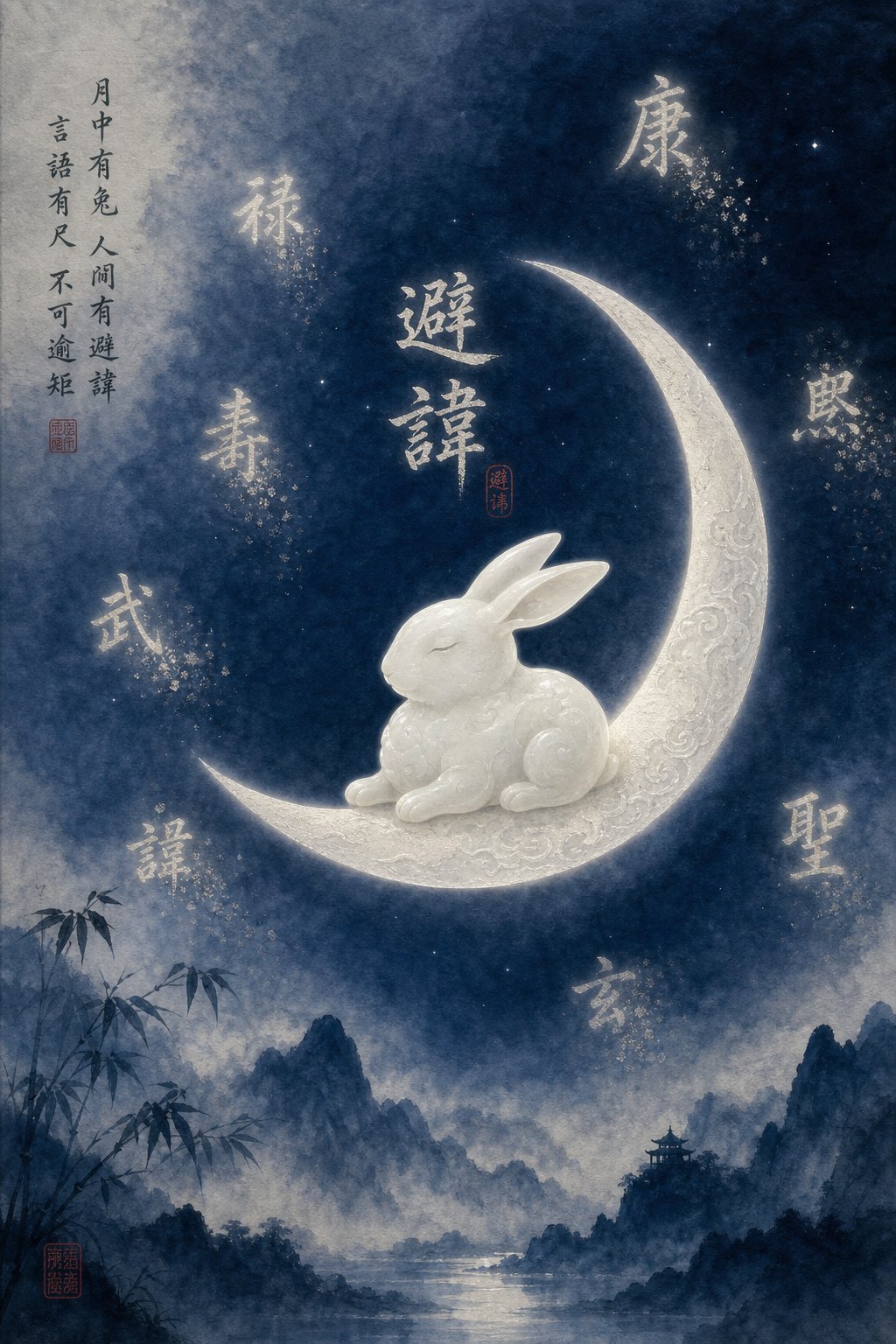
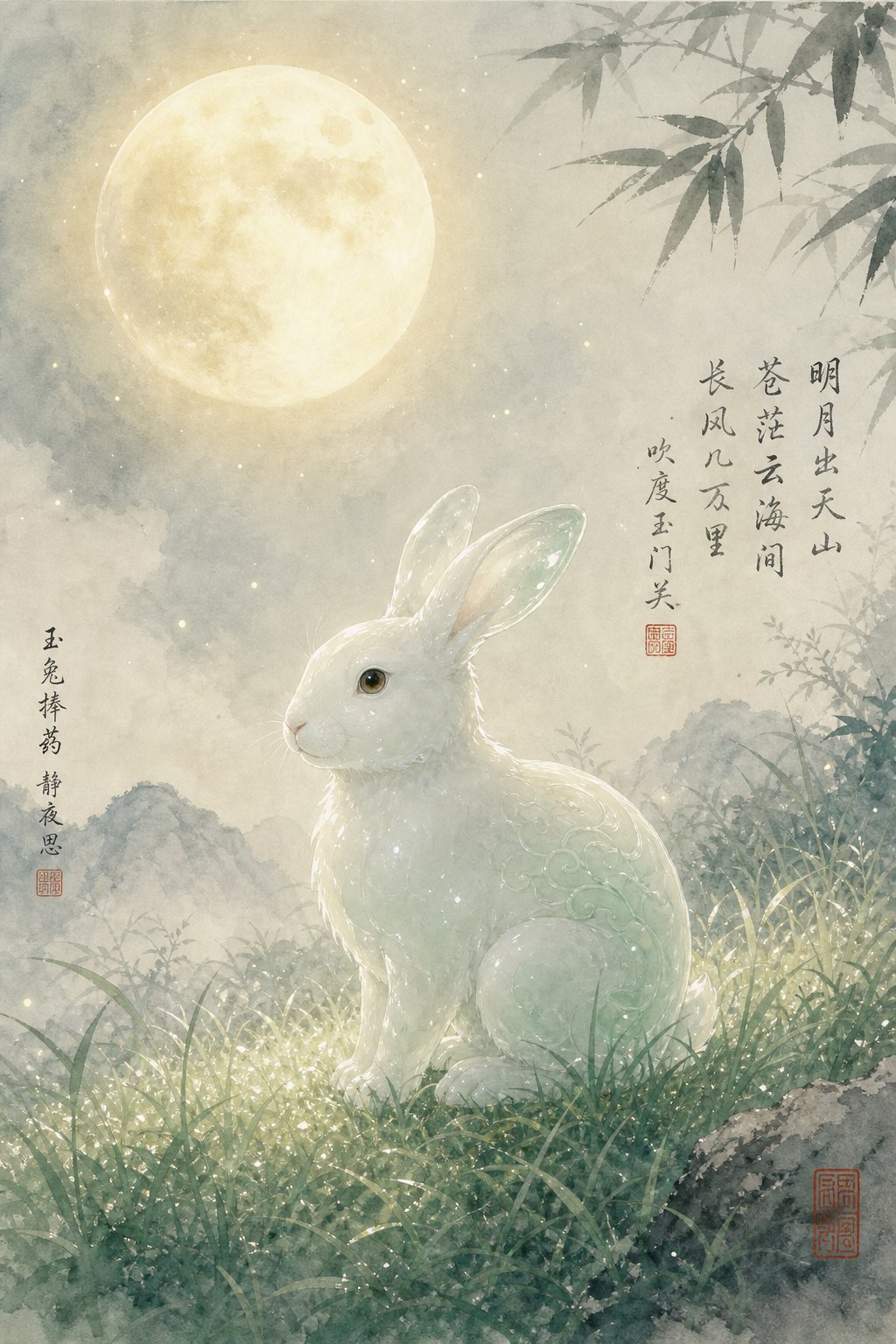
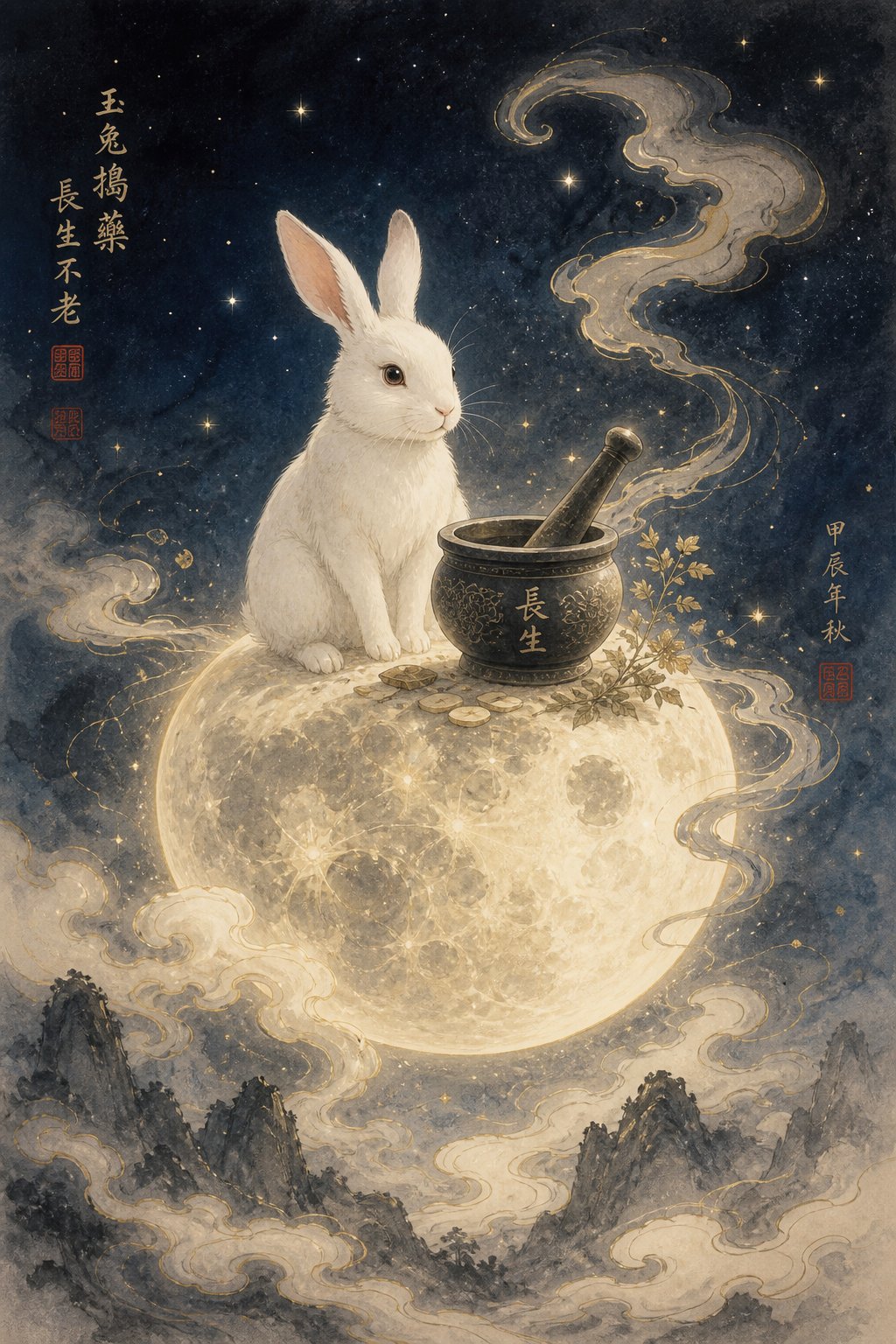
Look up at a full moon and you will notice dark patches across its surface. In Western culture, people see a man in the moon. In Chinese mythology, those shadows form the shape of a rabbit, pounding herbs with a mortar and pestle. This is the Jade Rabbit, or Yu Tu (玉兔), one of the most enduring figures in Chinese folklore.
The Jade Rabbit lives on the moon as a companion to Chang'e, the Moon Goddess, spending eternity preparing the elixir of immortality. The story of how the rabbit arrived there varies across tellings, but the most widely shared version carries a powerful moral:
Three immortals disguised themselves as starving beggars and asked the forest animals for food. The fox brought fish, the monkey gathered fruit, but the rabbit had nothing to offer except itself. It leaped into the fire as a sacrifice. Moved by this selflessness, the immortals rescued the rabbit and placed it on the moon to be honored forever.
This legend is why rabbits are often associated with the moon in Chinese culture and serve as a symbol of longevity and peace. The connection runs deep enough that the Mid-Autumn Festival, one of China's most important celebrations, features the Jade Rabbit prominently in art, mooncakes, and children's stories.
For parents naming a Rabbit year baby, this mythology is not just a bedtime story. It is a naming map. The legend points directly toward characters associated with the moon, jade, purity, sacrifice, and eternal life, all of which carry weight in the naming tradition.
How Rabbit Legends Connect to Name Meanings
Each element of the Jade Rabbit story translates into specific naming themes. When you understand the symbolism, you will notice how ancient chinese baby boy names and ancient chinese girl baby names rooted in Rabbit mythology share common threads that persist into modern naming practice.
Here is how the cultural elements map to naming characters:
- Moon (月 yue) - The Rabbit's celestial home makes moon-related characters especially auspicious. Characters like 月 (moon), 明 (bright, combining sun and moon), and 皓 (luminous, bright as moonlight) all carry lunar energy that aligns with the Rabbit's nature.
- Jade (玉 yu) - The Rabbit is called the Jade Rabbit for a reason. Jade represents purity, moral integrity, and refinement in Chinese culture. Characters containing the jade radical (玉) or referencing jade directly, such as 瑶 (precious jade) or 琳 (fine jade), honor this connection.
- Longevity and peace - Because the Rabbit symbolizes both long life and tranquility, characters like 安 (peace), 宁 (serenity), and 永 (eternal) resonate with the sign's deeper meaning.
- Selflessness and kindness - The Rabbit's sacrifice in the legend elevates characters meaning benevolence, compassion, and generosity. Names incorporating 仁 (benevolence) or 善 (goodness) echo the moral heart of the story.
- Artistic refinement - The Rabbit's association with the elegant Moon Goddess connects it to culture, beauty, and the arts. Characters like 文 (literature, culture) and 雅 (elegance) reflect this artistic dimension.
Imagine telling your child, years from now, that the character in their name connects to a rabbit who lives on the moon, pounding the elixir of immortality beside a goddess. That is the kind of origin story these names carry. It gives a child not just a label but a narrative, a sense of belonging to something ancient and meaningful.
The Jade Rabbit mythology also explains why Rabbit year babies are considered naturally inclined toward gentleness and creativity. The sign is lunar rather than solar, reflective rather than aggressive, artistic rather than combative. Parents choosing baby chinese names for this zodiac lean into that energy rather than working against it.
These cultural layers give you the thematic vocabulary for naming. But the Rabbit zodiac does not operate in isolation. Each Rabbit year also carries one of five elemental associations, water, wood, fire, earth, or metal, and that element shifts which characters and radicals become most favorable for your specific child.
Five Elements Theory Applied to Rabbit Year Naming
Not all Rabbit years are the same. A baby born in 2023 carries different elemental energy than one born in 1999 or 2035, and that difference directly affects which characters work best in their name. This is where Wu Xing, the Five Elements theory, enters the naming process. If you have ever consulted a baby chinese name feng shui guide or spoken with a baby chinese name fortune teller, you have already encountered this system in action.
The Five Elements and Their Rabbit Year Cycles
The Five Elements, Wood, Fire, Earth, Metal, and Water, cycle through the zodiac on a repeating schedule. Every zodiac sign has a fixed element determined by its position in the calendar. The Rabbit's fixed element is Wood, reflecting its association with spring, growth, and creativity.
On top of that fixed element, each specific Rabbit year also carries a cycle element based on the broader 60-year rotation. This means your baby has two elemental influences: the permanent Wood of the Rabbit sign, plus the cycle element of their birth year. Here is how recent and upcoming Rabbit years break down:
| Rabbit Year | Cycle Element | Relationship to Fixed Wood | Recommended Character Themes |
|---|---|---|---|
| 1975, 2035 | Water | Water feeds Wood (generating) | Water and Wood characters: 淳 (pure), 泽 (marsh/grace), 林 (forest), 萌 (sprout) |
| 1987 | Wood | Double Wood (reinforcing) | Strong Wood characters: 桐 (paulownia tree), 森 (lush forest), 芳 (fragrant), 茂 (flourishing) |
| 1999 | Fire | Wood fuels Fire (generating outward) | Fire and Wood balance: 晨 (morning), 煦 (warm), 彤 (vermilion), 曦 (dawn light) |
| 1951, 2011 | Earth | Wood overcomes Earth (overcoming) | Earth-stabilizing characters: 坤 (earth), 培 (nurture), 安 (peace), 均 (balanced) |
| 1963, 2023 | Metal | Metal overcomes Wood (restraining) | Water as mediator: 润 (moist/smooth), 涵 (contain), 清 (clear), 澄 (serene water) |
You will notice that the relationship between the cycle element and the fixed Wood element determines the naming strategy. A baby chinese name calculator typically factors in both elements to identify which characters create harmony rather than conflict.
Choosing Characters Based on Your Baby's Element
The practical difference is significant. A Water Rabbit baby (born in 2035) already enjoys a naturally harmonious elemental pairing, since Water nourishes Wood in the generating cycle. Parents can lean confidently into both Water-radical characters (氵) and Wood-radical characters (木) without worrying about imbalance.
A Metal Rabbit baby (born in 2023) faces a different situation. Metal chops Wood in the overcoming cycle, creating internal tension between the two elemental forces. The naming solution? Introduce Water as a bridge element. Water is generated by Metal and in turn generates Wood, creating a smooth flow of energy through the name. Characters with the Water radical, like 涵 (han, meaning inclusive or containing) or 润 (run, meaning smooth or moist), act as elemental mediators.
For a Fire Rabbit (1999), the energy flows outward, Wood feeding Fire. This can suggest a personality that gives generously but risks burnout. Names that ground this energy with Earth or Water undertones help maintain balance. Characters like 晨 (chen, morning) blend Fire's brightness with a sense of calm beginning.
Mutual Generation and Restraint in Name Selection
The Five Elements interact through two core cycles. The generating cycle (相生, xiang sheng) describes how elements nurture each other: Wood fuels Fire, Fire forms Earth, Earth contains Metal, Metal carries Water, and Water feeds Wood. The overcoming cycle (相克, xiang ke) describes how elements control each other: Wood separates Earth, Earth absorbs Water, Water quenches Fire, Fire melts Metal, and Metal penetrates Wood.
When selecting name characters, you want the elements present in the name to follow the generating cycle relative to your baby's elemental profile. Avoid stacking elements that sit in an overcoming relationship. For example, giving a Metal Rabbit baby a name heavy in Wood-radical characters without a Water bridge creates a name where the elements fight each other rather than flow together.
Here is a simple way to think about it:
- Generating pairs in a name feel supportive, like a parent nurturing a child. They suggest growth, ease, and natural development.
- Overcoming pairs in a name feel restrictive, like a force pressing down on potential. They suggest struggle or blocked energy.
This does not mean overcoming elements are always bad. Sometimes a child's chart shows excess energy in one element, and a controlled amount of the overcoming element provides necessary balance. This is where consulting a knowledgeable namer adds value, someone who can read the full birth chart rather than applying blanket rules.
The elemental layer tells you which broad category of characters to favor. The next question is more specific: which radicals, the structural building blocks inside each character, carry luck or risk for a Rabbit baby regardless of their elemental year?
Lucky and Unlucky Character Radicals for Rabbit Babies
Radicals are the DNA of Chinese characters. Every character is built from one or more radicals (部首, bushou), and these components carry their own symbolic weight. When parents search for baby boy names in chinese characters or girl name options for a Rabbit year child, the radicals inside those characters matter just as much as the overall meaning. A beautiful character with the wrong radical can work against your baby's zodiac energy.
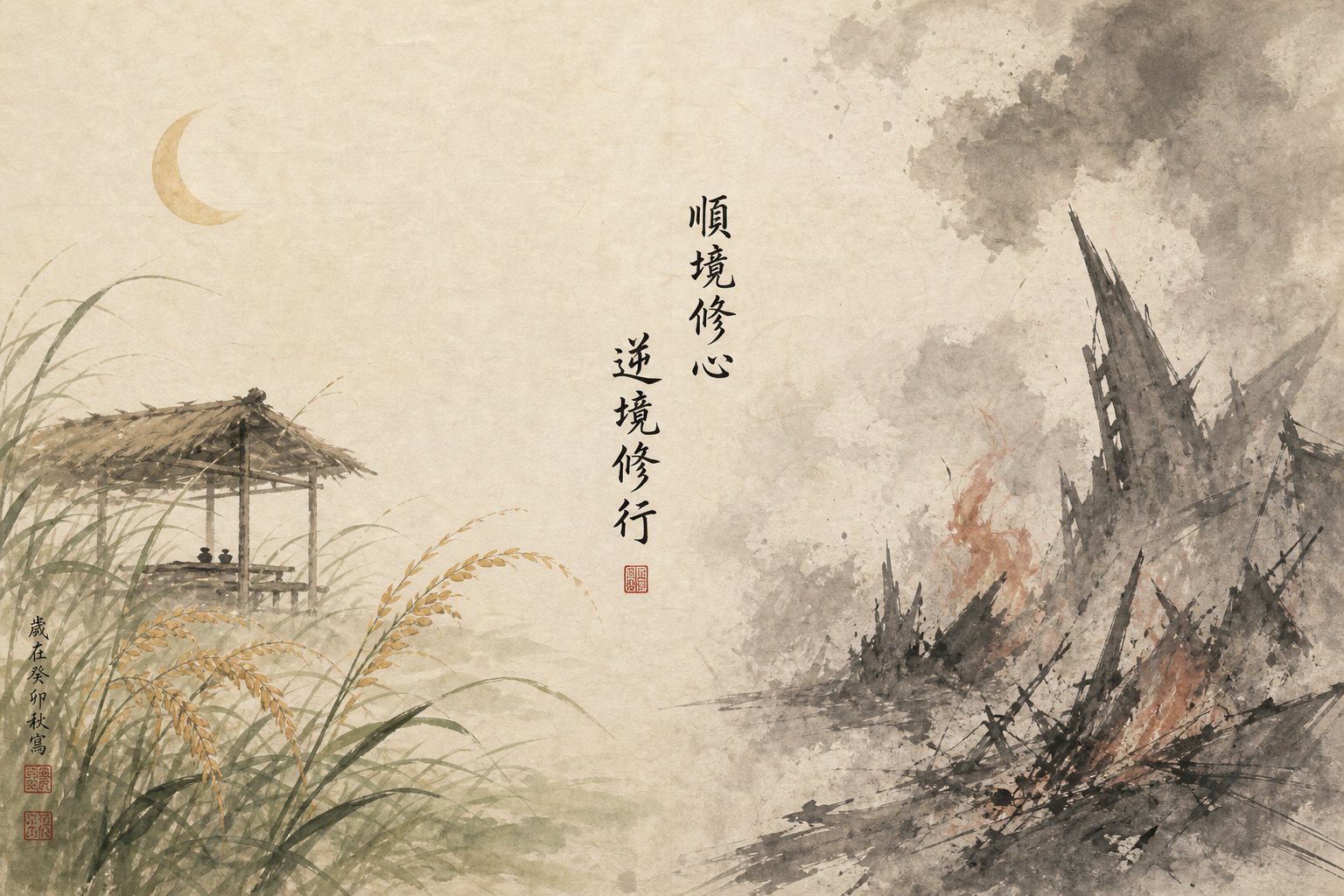
The logic is rooted in the Rabbit's nature. Think about what a real rabbit needs to thrive: grass to eat, a safe burrow for shelter, soft fur for warmth, and an environment free from predators and fire. Chinese naming tradition maps these physical needs onto symbolic ones. Characters containing radicals that represent nourishment, safety, and beauty align with the Rabbit's energy. Characters built from radicals suggesting danger, exposure, or aggression clash with it.
Favorable Radicals and Why They Bring Luck
These radicals are considered auspicious for Rabbit year babies because they mirror what the Rabbit needs to flourish. When you encounter baby boy names in chinese with meaning or girl names containing these components, you can feel confident they carry positive zodiac energy.
| Radical | Pinyin | Meaning | Why It Is Favorable for Rabbit Babies |
|---|---|---|---|
| 艹 | cao | Grass | Rabbits are herbivores. This radical symbolizes abundant food, which by extension represents happiness and wealth. Characters like 芳 (fragrant), 茗 (tea), and 萱 (daylily) all carry this radical. |
| 禾 | he | Grain | Grains represent harvest and sustenance. A rabbit surrounded by grain will never go hungry. Characters like 秀 (elegant) and 穗 (ear of grain) use this radical. |
| 宀 | mian | Roof/Shelter | Rabbits need a safe burrow. The roof radical represents protection, security, and a stable home. Characters like 安 (peace), 宁 (serenity), and 宜 (suitable) contain this radical. |
| 口 | kou | Mouth/Enclosure | Represents a cave-like dwelling where the rabbit feels secure. This radical suggests a safe and stable home from which to pursue ambitious goals. Found in characters like 品 (quality) and 嘉 (excellent). |
| 彡 | shan | Hair/Decoration | Rabbits are known for their beautiful fur. This radical adds confidence and charm to the sometimes shy Rabbit personality. Found in characters like 彦 (accomplished person) and 彬 (refined). |
| 木 | mu | Wood/Tree | Wood is the Rabbit's fixed element. Tree radicals represent natural habitat, growth, and rootedness. Characters like 桐 (paulownia) and 林 (forest) carry this energy. |
| 月 | yue | Moon | The Jade Rabbit lives on the moon. This radical connects directly to the Rabbit's mythology, symbolizing beauty, intuition, and longevity. Found in characters like 朗 (bright) and 朝 (morning). |
| 衤 | yi | Clothing | Represents protection and outward beauty, like the rabbit's coat. Suggests a life of comfort and dignity. Found in characters like 裕 (abundant) and 褀 (auspicious garment). |
Radicals to Avoid for Rabbit Babies
Just as certain radicals nurture the Rabbit's energy, others threaten it. These are not arbitrary superstitions. Each unfavorable radical represents something that would endanger or distress a real rabbit, translated into symbolic naming logic.
| Radical | Pinyin | Meaning | Why It Should Be Avoided for Rabbit Babies |
|---|---|---|---|
| 火 / 灬 | huo | Fire | The Rabbit's legend involves nearly being consumed by fire. Fire also overcomes the Rabbit's fixed Wood element in the overcoming cycle. Characters like 烈 (fierce) or 焰 (flame) introduce destructive energy. |
| 刂 / 刀 | dao | Knife/Blade | Weapons represent direct harm to the gentle, peaceful Rabbit. Characters containing blade radicals suggest conflict and danger, the opposite of what a Rabbit child needs. Found in characters like 刚 (hard/strong) and 剑 (sword). |
| 鹰 / 隹 | zhui | Bird of prey | Eagles and hawks are natural predators of rabbits. Characters associated with large predatory birds introduce a threatening energy. The Rabbit thrives in safety, not under the shadow of hunters. |
| 日 | ri | Sun | Rabbits are crepuscular creatures, most active at dawn and dusk. The harsh midday sun represents exposure and vulnerability. While not strictly forbidden, heavy sun-radical characters can suggest a Rabbit forced into uncomfortable visibility. |
| 山 | shan | Mountain | Rabbits live in plains, meadows, and gentle terrain. Mountains represent harsh, rocky environments where a rabbit struggles to find food or dig a burrow. Characters like 岩 (cliff) suggest an inhospitable landscape. |
| 金 | jin | Metal/Gold | Metal overcomes Wood in the elemental cycle. For Rabbit babies, heavy Metal-radical characters can create a restraining force unless balanced by Water. Characters like 铁 (iron) or 锋 (sharp edge) carry aggressive metallic energy. |
You will notice a pattern: favorable radicals create an environment of nourishment, shelter, and beauty. Unfavorable radicals introduce predators, weapons, harsh elements, and inhospitable terrain. The naming logic mirrors the Rabbit's ideal habitat, peaceful, green, protected, and gentle.
When browsing baby boy names chinese characters or girl name options, check the radical composition before falling in love with a character's meaning alone. A character might translate beautifully into English but contain a radical that works against your child's zodiac energy. The meaning and the structure need to align.
With these radical guidelines as your filter, the next step is applying them to actual names. Girl names for Rabbit year babies tend to lean into the sign's most poetic qualities, drawing from moonlight, jade, and the natural world to create names that feel both ancient and fresh.
Rabbit Year Baby Girl Names Organized by Trait
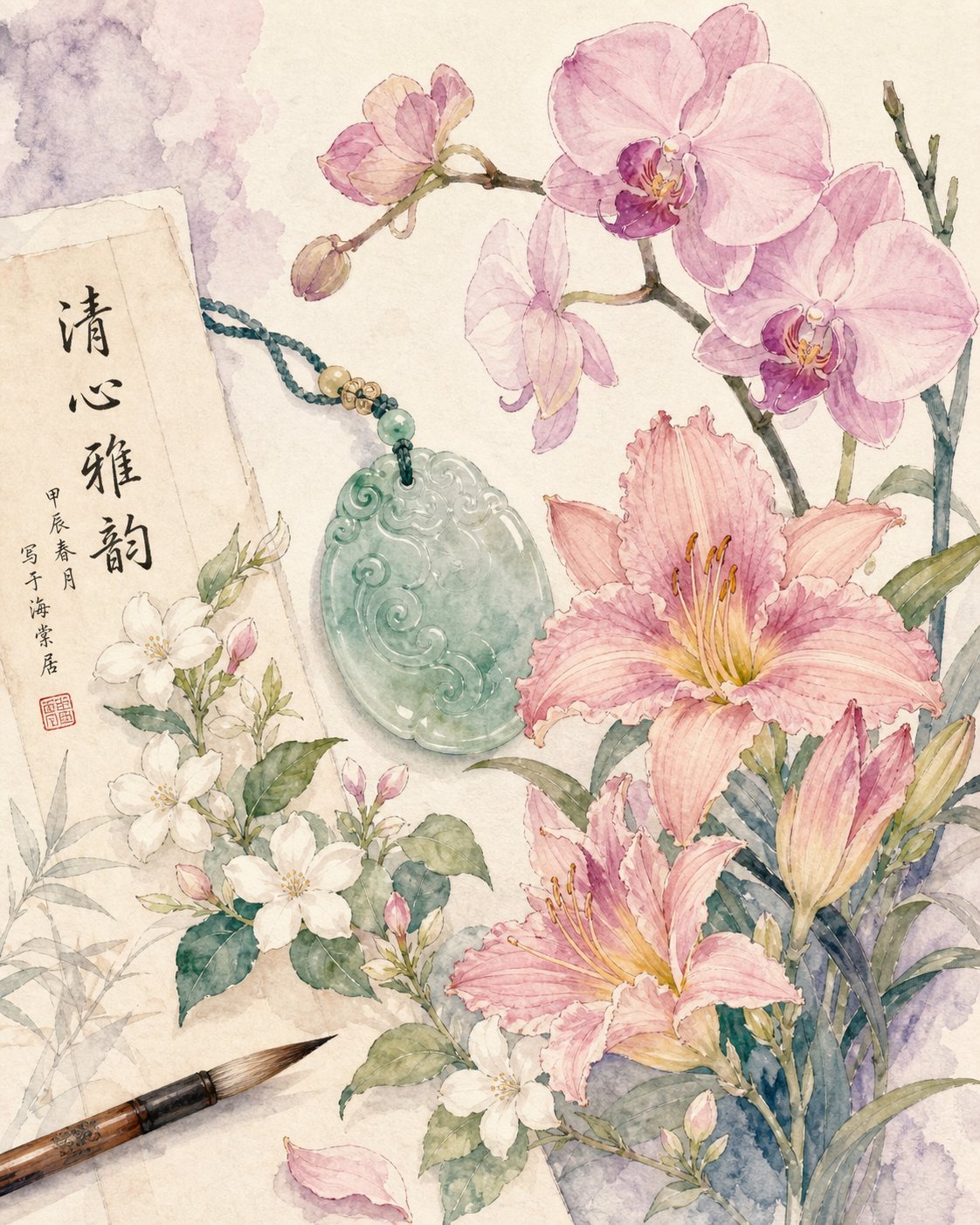
You have the radicals. You understand which building blocks carry luck for a Rabbit child. The question now is: what do those radicals look like when assembled into real, usable names? When searching for chinese baby girl names suited to the Rabbit zodiac, the most effective approach is to organize by the personality trait you want to emphasize. Each baby girl chinese name below contains favorable radicals discussed in the previous section, grass, shelter, moon, wood, or grain, while avoiding the problematic ones.
These chinese baby girl names with meaning are grouped into three core Rabbit traits. Whether you want your daughter's name to whisper gentleness, spark creativity, or embody harmony, you will find options that carry both beautiful meaning and zodiac alignment.
Girl Names Meaning Gentle and Peaceful
The Rabbit's defining quality is its gentle spirit. These chinese baby names for girls lean into softness, calm, and quiet strength, using characters with shelter and grass radicals that create a sense of safety and warmth.
| Chinese Character | Pinyin | Meaning |
|---|---|---|
| 安萱 | An Xuan | Peaceful daylily; calm and nurturing |
| 宁芳 | Ning Fang | Serene fragrance; tranquil and graceful |
| 婉清 | Wan Qing | Gentle and pure; soft-tempered kindness |
| 柔嘉 | Rou Jia | Tender and virtuous; mild inner goodness |
| 静茹 | Jing Ru | Quiet and soft-natured; serene temperament |
| 恬宁 | Tian Ning | Peaceful and still; calm inner world |
| 蕊安 | Rui An | Flower bud at peace; delicate safety |
Notice how characters like 安 (peace, with the roof radical 宀) and 萱 (daylily, with the grass radical 艹) combine two favorable Rabbit radicals in a single name. That double alignment is what makes these choices especially auspicious.
Girl Names Meaning Creative and Artistic
Rabbit children are believed to carry natural artistic talent. These chinese baby names girl options reflect creativity, literary grace, and refined beauty, qualities the Rabbit zodiac nurtures from birth.
| Chinese Character | Pinyin | Meaning |
|---|---|---|
| 书瑶 | Shu Yao | Scholarly grace and fine jade; literary elegance |
| 艺萌 | Yi Meng | Artistic talent and fresh vitality |
| 诗涵 | Shi Han | Poetic depth and inner cultivation |
| 雅茗 | Ya Ming | Refined elegance like fine tea |
| 文萱 | Wen Xuan | Literary grace and gentle beauty |
| 琳芝 | Lin Zhi | Fine jade and fragrant herb; cultured charm |
| 墨萱 | Mo Xuan | Ink artistry and graceful flower |
Characters like 茗 (tea, carrying the grass radical) and 萱 (daylily) ground artistic meaning in Rabbit-friendly structure. A baby girl chinese names list for this zodiac should always check that creative characters also contain nourishing radicals rather than harsh ones.
Girl Names Embodying Harmony and Diplomacy
The Rabbit is a natural peacemaker. These chinese girl baby names reflect the sign's diplomatic instinct, its ability to bring people together and create balance in relationships.
| Chinese Character | Pinyin | Meaning |
|---|---|---|
| 蕙兰 | Hui Lan | Orchid wisdom; noble and harmonious |
| 清荷 | Qing He | Pure lotus; clean-hearted and balanced |
| 宜萱 | Yi Xuan | Suitable grace; naturally fitting harmony |
| 和宁 | He Ning | Harmonious serenity; peaceful togetherness |
| 蓉安 | Rong An | Hibiscus peace; graceful and steady |
| 茉宁 | Mo Ning | Jasmine tranquility; gentle diplomacy |
| 芊和 | Qian He | Lush vitality and harmony; balanced growth |
Many of these names pair the grass radical (艹) with the shelter radical (宀), creating a layered sense of a Rabbit who is both nourished and protected. Characters like 荷 (lotus) and 蕙 (orchid) also carry cultural associations with moral purity and refined social grace, qualities that reinforce the Rabbit's diplomatic nature.
You will also find that moon and nature symbolism weaves through all three categories. Characters like 瑶 (precious jade, echoing the Jade Rabbit legend) and names referencing calm water or moonlight honor the Rabbit's mythological roots while fitting naturally into modern baby girl chinese names and meaning searches.
The key when choosing from these lists is to test each name against your surname for tonal flow and visual balance. A name that looks perfect on paper might sound flat when paired with certain family names. But the character selection itself, grounded in favorable radicals and Rabbit-aligned meaning, gives you a strong foundation to build from.
Boy names for Rabbit year babies follow the same radical logic but tend to balance the Rabbit's gentleness with qualities like wisdom, resilience, and scholarly ambition, creating names that feel both grounded and aspirational.
Rabbit Year Baby Boy Names Organized by Trait
Choosing a baby boy name chinese families feel proud of during a Rabbit year requires a subtle shift in thinking. Traditional chinese baby boy names often lean toward power, dominance, and military strength, characters evoking dragons, tigers, or iron will. But the Rabbit zodiac asks for something different. It rewards names that pair intelligence with kindness, ambition with grace, and resilience with gentleness.
Modern chinese baby names boy options reflect this evolution. Parents increasingly recognize that a name suggesting quiet confidence and scholarly depth serves a child better than one projecting raw aggression. The Rabbit's energy thrives in names that feel both grounded and aspirational, strong without being harsh.
Each baby boy chinese name below uses favorable radicals from the previous section, grass, wood, shelter, moon, and grain, while steering clear of fire, blade, and metal-heavy characters. Think of this as your baby boy chinese name list filtered through both meaning and structural zodiac alignment.
Boy Names Meaning Wise and Scholarly
The Rabbit is one of the most intellectually curious signs in the zodiac. These chinese baby boy names honor that scholarly spirit, pairing literary and wisdom-related characters with Rabbit-friendly radicals.
| Chinese Character | Pinyin | Meaning |
|---|---|---|
| 彦宏 | Yan Hong | Accomplished scholar with grand vision |
| 书安 | Shu An | Scholarly peace; learned and steady |
| 文彬 | Wen Bin | Cultured refinement; literary and polished |
| 宇茗 | Yu Ming | Expansive mind like fine tea; thoughtful depth |
| 朗宁 | Lang Ning | Bright clarity and serenity; clear-minded calm |
| 哲萌 | Zhe Meng | Philosophical vitality; wisdom with fresh energy |
| 秉文 | Bing Wen | Upholding culture and learning; principled scholar |
Notice how characters like 彦 (accomplished person, carrying the hair/decoration radical 彡) and 宁 (serenity, with the shelter radical 宀) embed Rabbit-favorable structure directly into scholarly meaning. The name looks intelligent and feels zodiac-aligned at the same time.
Boy Names Meaning Kind and Benevolent
The Jade Rabbit legend is fundamentally a story about selfless kindness. These baby boy names chinese parents love for Rabbit year children honor that compassionate spirit, the idea that true strength shows itself through generosity rather than force.
| Chinese Character | Pinyin | Meaning |
|---|---|---|
| 仁宇 | Ren Yu | Benevolent and broad-minded; kind universe |
| 善茂 | Shan Mao | Goodness that flourishes; thriving virtue |
| 嘉宁 | Jia Ning | Excellent serenity; virtuous calm |
| 润安 | Run An | Smooth grace and peace; nurturing stability |
| 品萱 | Pin Xuan | Noble character and gentle beauty |
| 宜和 | Yi He | Fitting harmony; naturally balanced kindness |
| 涵茗 | Han Ming | Inclusive depth like fine tea; cultivated warmth |
A baby boy name in chinese that carries benevolence does not suggest weakness. Characters like 嘉 (excellent, with the mouth/enclosure radical 口) and 润 (smooth, with the water radical 氵) project warmth backed by substance. These are names that suggest a person others trust and turn to.
Boy Names Reflecting Resilience and Nature
Gentleness without resilience is fragility. The Rabbit survives because it is adaptable, quick-thinking, and deeply connected to its natural environment. These baby boy chinese names capture that quiet toughness, the ability to thrive through flexibility rather than brute force.
| Chinese Character | Pinyin | Meaning |
|---|---|---|
| 林安 | Lin An | Forest peace; rooted stability in nature |
| 桐宇 | Tong Yu | Paulownia tree reaching broadly; steady growth |
| 茂林 | Mao Lin | Flourishing forest; abundant natural vitality |
| 秀宁 | Xiu Ning | Elegant serenity; refined and enduring |
| 裕安 | Yu An | Abundant peace; prosperous and secure |
| 朝宁 | Chao Ning | Morning calm; fresh beginnings with steady spirit |
| 萧然 | Xiao Ran | Natural ease like rustling grass; effortless composure |
Characters like 林 (forest, doubling the wood radical 木) and 茂 (flourishing, with the grass radical 艹) place the child symbolically in the Rabbit's ideal habitat: lush, green, and alive with growth. The name 裕 (abundant, with the clothing radical 衤) adds a layer of material comfort and dignity.
When reviewing this baby boy chinese name list, remember that the strongest Rabbit year names balance two energies. They carry enough substance to project confidence while remaining true to the sign's reflective, creative nature. A name like 彦宏 (accomplished scholar with grand vision) does not sound soft, but it channels ambition through intellect rather than aggression. That balance is exactly what the Rabbit zodiac rewards.
Of course, many families today navigate naming across two cultures simultaneously. A child might carry a Chinese given name alongside an English first name, or parents might seek a single name that works phonetically in both languages. That cross-cultural challenge opens up a different set of creative strategies.
Cross-Cultural Naming Strategies for Rabbit Year Families
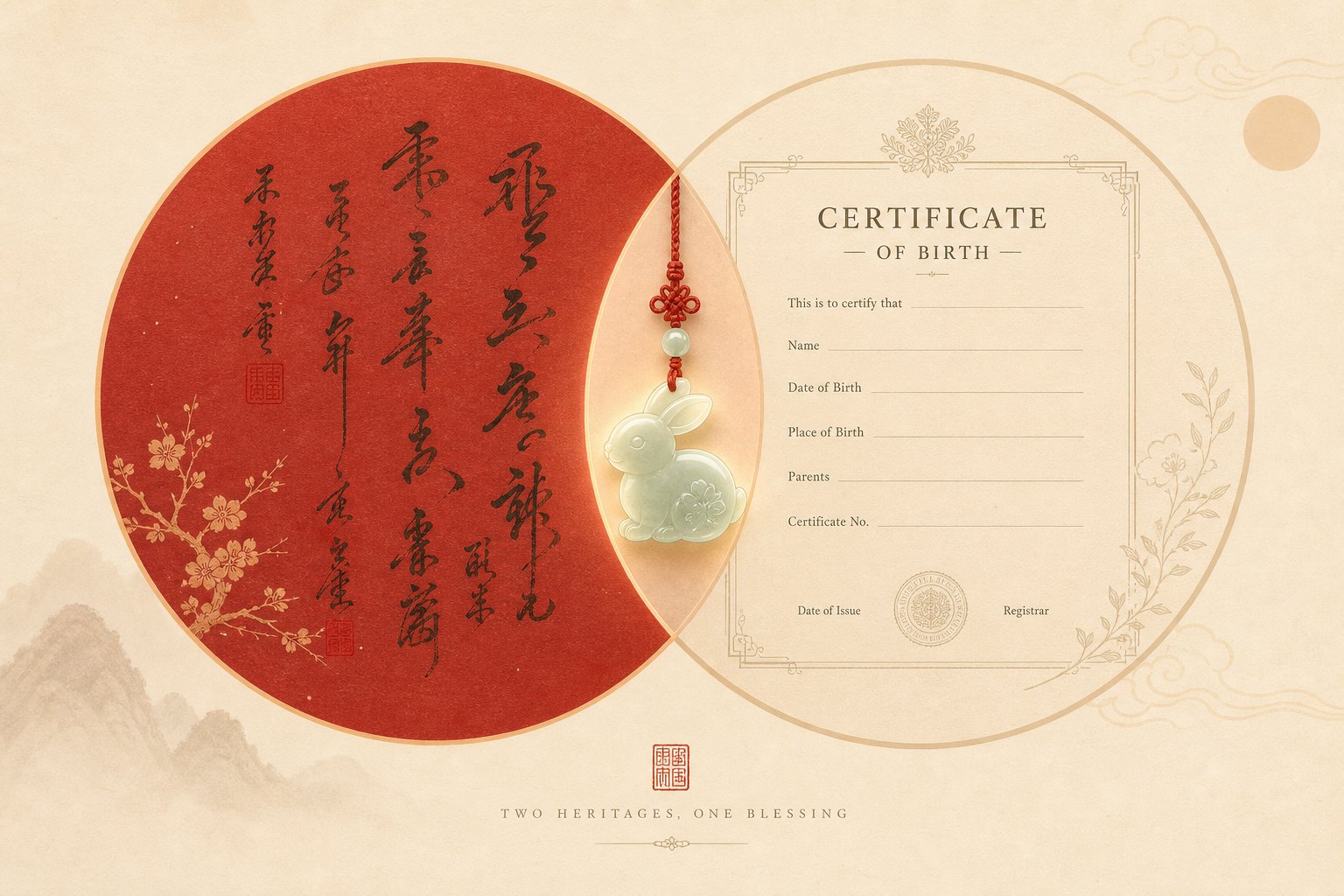
A child born into two cultures needs a name that lives comfortably in both. For diaspora families, mixed-heritage households, and non-Chinese parents drawn to Rabbit year symbolism, the naming challenge is not just about meaning. It is about finding something that sounds right when grandparents call the child home, reads well on school enrollment forms, and survives a Mandarin teacher reading roll call without hesitation.
There is no single correct approach to chinese american baby names. Families tend to land on one of three strategies depending on how central they want the Chinese identity to feel in daily life. Each path honors the Rabbit zodiac differently, and each carries its own strengths.
Fully Chinese Names for Western Contexts
Some families choose a fully Chinese given name as the child's legal first name, even in English-speaking countries. This works best when the name's pinyin romanization is phonetically intuitive for non-Chinese speakers. Names like An (安, peace), Lin (林, forest), or Ming (明, bright) read naturally in English without requiring explanation or repeated correction.
The key consideration with american chinese baby names used as primary identifiers is pronunciation accessibility. A name like Qian or Xiu, while beautiful, requires English speakers to learn unfamiliar sound mappings. That is not a dealbreaker, but it is a daily reality worth weighing. As Nominya's cross-cultural naming guide notes, the bar is not perfection but rather a name no one regrets in twenty years.
For Rabbit year babies specifically, names with the shelter or grass radical that also happen to romanize cleanly offer the best of both worlds. An (安), Ning (宁), and Mao (茂) all carry Rabbit-favorable energy while functioning smoothly as anglo chinese baby names in Western contexts.
Pairing Chinese Middle Names with English First Names
The most common approach among chinese english baby names families is dual-naming: an English first name for daily use paired with a Chinese middle name (or informal Chinese name) for family and cultural contexts. This gives the child flexibility without forcing a single name to do double duty across two linguistic systems.
Three pairing methods work well:
- Phonetic echo - The English and Chinese names share an opening sound. Liam pairs with 立明 (Li Ming); Serena pairs with 思蕊 (Si Rui). The connection is audible without being forced.
- Meaning mirror - The English name's meaning translates into the Chinese name's characters. Sophia (wisdom) pairs with 慧宁 (Hui Ning, wise serenity). Luna (moon) pairs with 月萱 (Yue Xuan, moonlit daylily), directly honoring the Jade Rabbit's lunar home.
- Hybrid blend - The strongest pairings hit both sound and meaning. This is where american baby names popular with chinese parents often land, names like Grace, Jade, or Iris that carry meanings already resonant in Chinese culture and pair naturally with characters sharing similar sounds.
When choosing american chinese baby girl names or baby boy names chinese american families will use across both cultures, test the full sequence aloud: English first name, Chinese middle name, surname. The rhythm should flow without awkward tonal collisions or syllable pileups. A name like "Grace Yue Chen" moves smoothly; "Ruth Ru Zhang" stacks too many similar sounds.
English Names Inspired by Rabbit Symbolism
For families who want to honor the Rabbit year without using Chinese characters at all, English names with Rabbit-aligned meanings offer a meaningful alternative. These american names for chinese babies (or for any family celebrating the zodiac) carry the spirit of the sign through their etymology rather than their script.
English names that echo Rabbit year themes:
- Luna - Moon; directly connects to the Jade Rabbit's celestial home
- Selene - Greek moon goddess; lunar energy aligned with Rabbit mythology
- Jade - The Rabbit's defining stone; purity and refinement
- Irene - Peace; mirrors the Rabbit's gentle, diplomatic nature
- Grace - Elegance and kindness; core Rabbit personality traits
- Clement - Gentle and merciful; embodies Rabbit compassion
- Solomon - Wise and peaceful; reflects the Rabbit's scholarly spirit
- Felix - Lucky and happy; carries the auspicious energy parents seek
- Sylvia / Sylvan - Of the forest; places the child in the Rabbit's natural woodland habitat
- Serena - Calm and tranquil; echoes the Rabbit's serene temperament
These names work especially well as first names paired with a Chinese middle name, giving the child a foot in both worlds. A combination like "Luna Yue" or "Jade Ning" reinforces the Rabbit symbolism across both languages without redundancy, since each name adds a slightly different cultural layer to the same core meaning.
Whatever path you choose, the practical test remains the same: say the full name aloud, check it against family dialect pronunciations, and confirm it reads clearly on both English and Chinese documents. The strongest cross-cultural names feel inevitable rather than forced, as though the two languages were always meant to meet in that particular combination of sounds and meaning.
Pairing Names with Surnames and Finalizing Your Choice
You have shortlisted characters with the right radicals, the right elemental balance, and meanings that resonate. The final step is making sure those characters actually sound beautiful when paired with your family surname. A name that looks perfect on paper can fall flat when spoken aloud if the tonal pattern creates monotony or awkward collisions.
Tonal Patterns That Sound Beautiful Together
Mandarin's four tones create a musical dimension that English names simply do not have. When all three characters in a full name share the same tone, the result sounds monotonous, like a song stuck on one note. The surname Chen (陈, 2nd tone) paired with Ming Ning (明宁, both 2nd tone) produces three rising syllables in a row. It feels flat. Swap to Chen An Yue (陈安月), moving from 2nd to 4th to 4th, and the rhythm gains shape.
The general principle: alternate tones across the full name. A sequence that moves through contrasting tones creates natural cadence, the kind that carries clearly when someone calls your child across a playground. The most pleasing patterns tend to follow a rising-falling-rising or level-falling-rising arc, though any combination that avoids three identical tones works well.
Test your shortlisted names by saying them aloud quickly, as though calling someone from another room. If the name flows without your tongue tripping or your voice going flat, the tonal pattern is working. Also check for homophones: does the full name, spoken quickly, accidentally sound like a common phrase with an unfortunate meaning? This is where native speakers in your family become invaluable consultants.
Modern Versus Traditional Approaches to Zodiac Naming
Families today fall along a wide spectrum when it comes to baby chinese name selection. On one end, some parents consult a baby chinese name master singapore families have relied on for generations, someone who reads the full BaZi birth chart, calculates stroke counts, and prescribes characters with precision. This traditional approach treats naming as a serious metaphysical act, and in communities across Singapore, Taiwan, and mainland China, it remains deeply respected.
On the other end, many modern families use zodiac guidance as gentle inspiration rather than strict prescription. They might check a baby chinese name app to explore character options, filter by favorable radicals, and test tonal combinations digitally before making a final decision. A baby chinese name generator can surface options you would never have considered, though the final choice still benefits from human judgment about family meaning and cultural fit.
If you look at chinese baby names over time popularity, you will notice that zodiac-influenced naming has not faded. It has adapted. The tools have changed, from handwritten consultations to digital platforms, but the underlying philosophy persists: a name should support the child's energy rather than work against it. Whether you consult a specialist for baby chinese name selection singapore style or browse options independently, the zodiac framework gives you a meaningful filter rather than a rigid rulebook.
Here is a practical sequence for bringing everything together:
- Confirm your baby's elemental profile - Identify the Rabbit year's cycle element and note which elements need strengthening or bridging in the name.
- Shortlist characters with favorable radicals - Filter for grass, shelter, wood, moon, and grain radicals. Eliminate characters containing fire, blade, or metal radicals unless balanced by Water.
- Test tonal flow against your surname - Say each full name aloud. Discard combinations where all characters share the same tone or where homophones create unintended meanings.
- Check visual balance - Write the full name out. Ensure stroke counts between surname and given name characters feel proportional rather than lopsided.
- Consult family elders - Share your top choices with grandparents or older relatives. They may catch dialect-specific issues or generational naming conflicts you would not notice on your own.
- Sit with the name for a week - Live with your top choice before making it official. A name that still feels right after seven days of saying it, writing it, and imagining your child growing into it is likely the one.
The best Rabbit year name is not the one that scores highest on any single metric. It is the one that balances cultural meaning, elemental harmony, family significance, and personal resonance into something that feels inevitable, as though your child was always meant to carry it. Trust the process, trust your instincts, and trust that a name chosen with this much care will serve your child well.
Frequently Asked Questions About Year of the Rabbit Chinese Baby Names
1. What radicals are lucky for Year of the Rabbit baby names?
Favorable radicals for Rabbit babies include grass (艹), grain (禾), roof/shelter (宀), mouth/enclosure (口), wood (木), moon (月), hair/decoration (彡), and clothing (衤). These radicals symbolize nourishment, safety, and beauty, mirroring what a rabbit needs to thrive. For example, the grass radical represents abundant food and wealth, while the roof radical suggests a secure home. Characters containing these radicals align with the Rabbit's gentle, herbivorous nature and create positive zodiac energy in a child's name.
2. Which characters should be avoided in Rabbit year baby names?
Parents should avoid characters containing radicals for fire (火/灬), knife or blade (刂/刀), birds of prey (隹), harsh sun (日), mountain (山), and heavy metal (金). Fire overcomes the Rabbit's fixed Wood element, blades represent direct harm to the peaceful Rabbit, and predatory bird radicals introduce threatening energy. Mountain radicals suggest inhospitable terrain where rabbits struggle, and metal radicals create a restraining force against the Rabbit's Wood nature unless balanced by Water-radical characters as mediators.
3. How does the Five Elements theory affect Rabbit year naming?
Each Rabbit year carries a different cycle element (Water, Wood, Fire, Earth, or Metal) on top of the Rabbit's fixed Wood element. The relationship between these two elements determines which characters work best. A Water Rabbit (2035) enjoys natural harmony since Water nourishes Wood, so both Water and Wood radical characters work well. A Metal Rabbit (2023) faces tension because Metal overcomes Wood, so parents introduce Water-radical characters as a bridge element to create smooth energy flow in the name.
4. Can I give my Rabbit year baby both a Chinese and English name?
Yes, dual-naming is the most common approach for cross-cultural families. Three pairing methods work well: phonetic echo (names sharing opening sounds, like Liam with Li Ming), meaning mirror (English meaning translated into Chinese characters, like Luna paired with Yue Xuan), and hybrid blend (names that hit both sound and meaning). English names with Rabbit-aligned meanings such as Luna, Jade, Grace, Serena, or Sylvan also honor the zodiac without requiring Chinese characters, and pair beautifully with a Chinese middle name.
5. How do I test if a Chinese baby name sounds good with my surname?
Say the full name aloud quickly, as though calling your child from another room. Check three things: tonal variety (avoid three characters sharing the same Mandarin tone, which sounds flat), homophone safety (ensure the full name spoken quickly does not accidentally sound like a phrase with negative meaning), and visual balance (write the name out to confirm stroke counts between surname and given name feel proportional). Consulting native-speaking family members helps catch dialect-specific issues you might miss on your own.