What Is an Acrostic Name Generator
Imagine you want to write a personalized poem for someone's birthday, but the moment you stare at the letters of their name arranged vertically on the page, your mind goes blank. That's exactly where an acrostic name generator steps in. It's a tool designed to produce poems where the first letter of each line spells out a specific person's name, turning a simple list of letters into a meaningful, readable piece of writing.
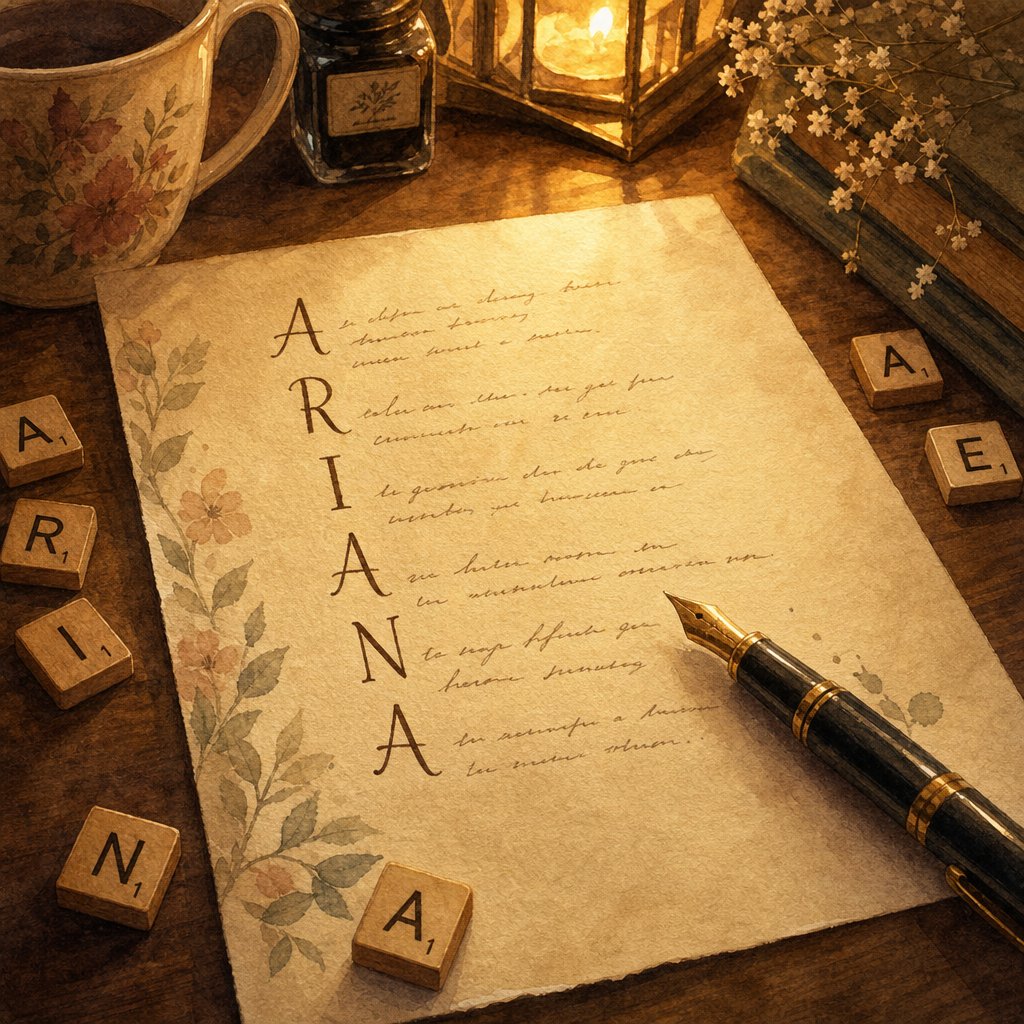
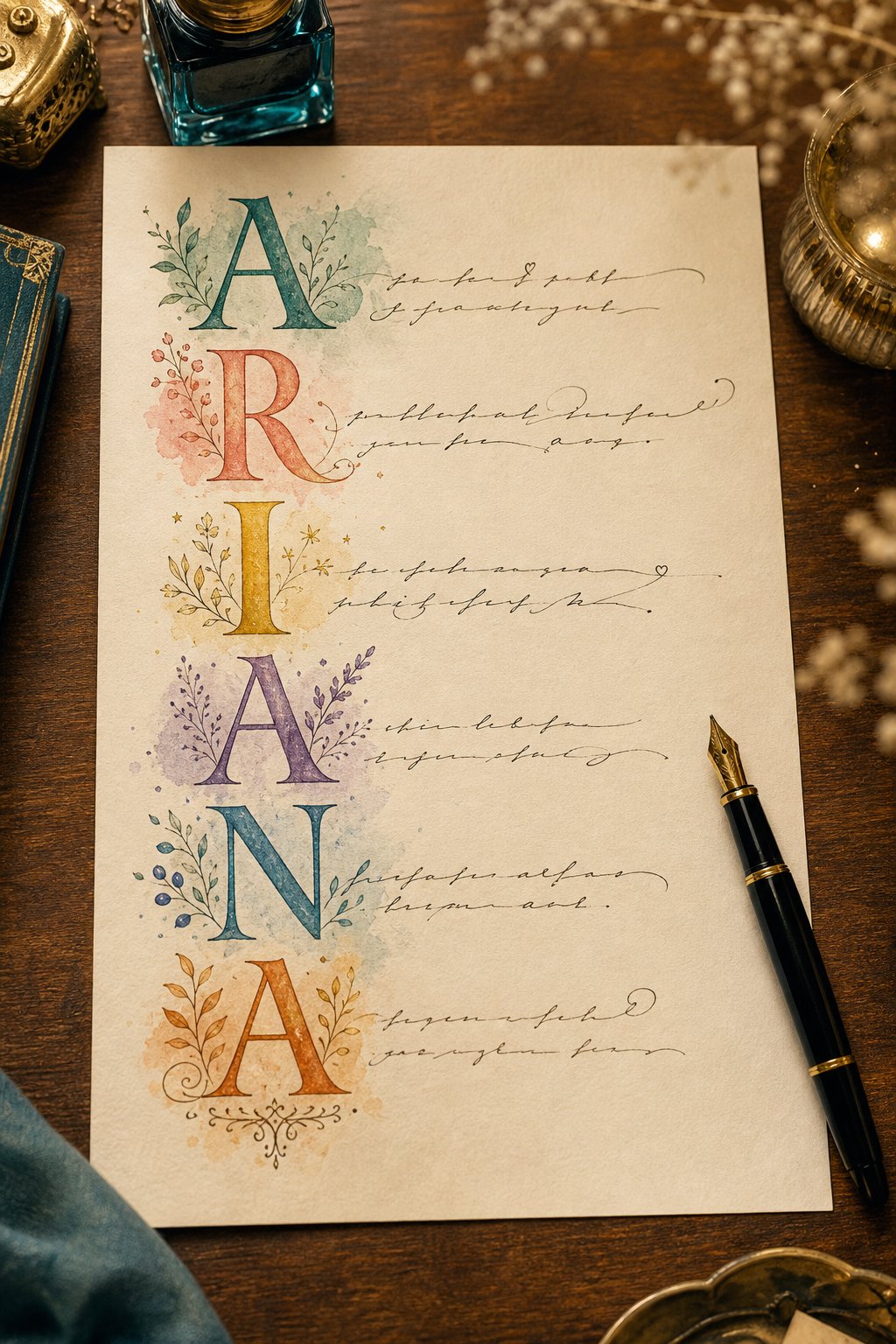
An acrostic name generator is a tool that creates a poem or verse in which the first letter of each line, read vertically, spells out a person's name. Each line typically contains a word, phrase, or sentence that describes or celebrates the individual.
You'll notice this differs from a general acrostic poem tool, which might spell out any word or theme, like "SPRING" or "HOPE." A name-focused generator is built around personal identity. It pulls from descriptive language, personality traits, and emotional vocabulary to craft lines that feel like they belong to one specific person rather than a generic concept.
What Makes a Name Acrostic Different
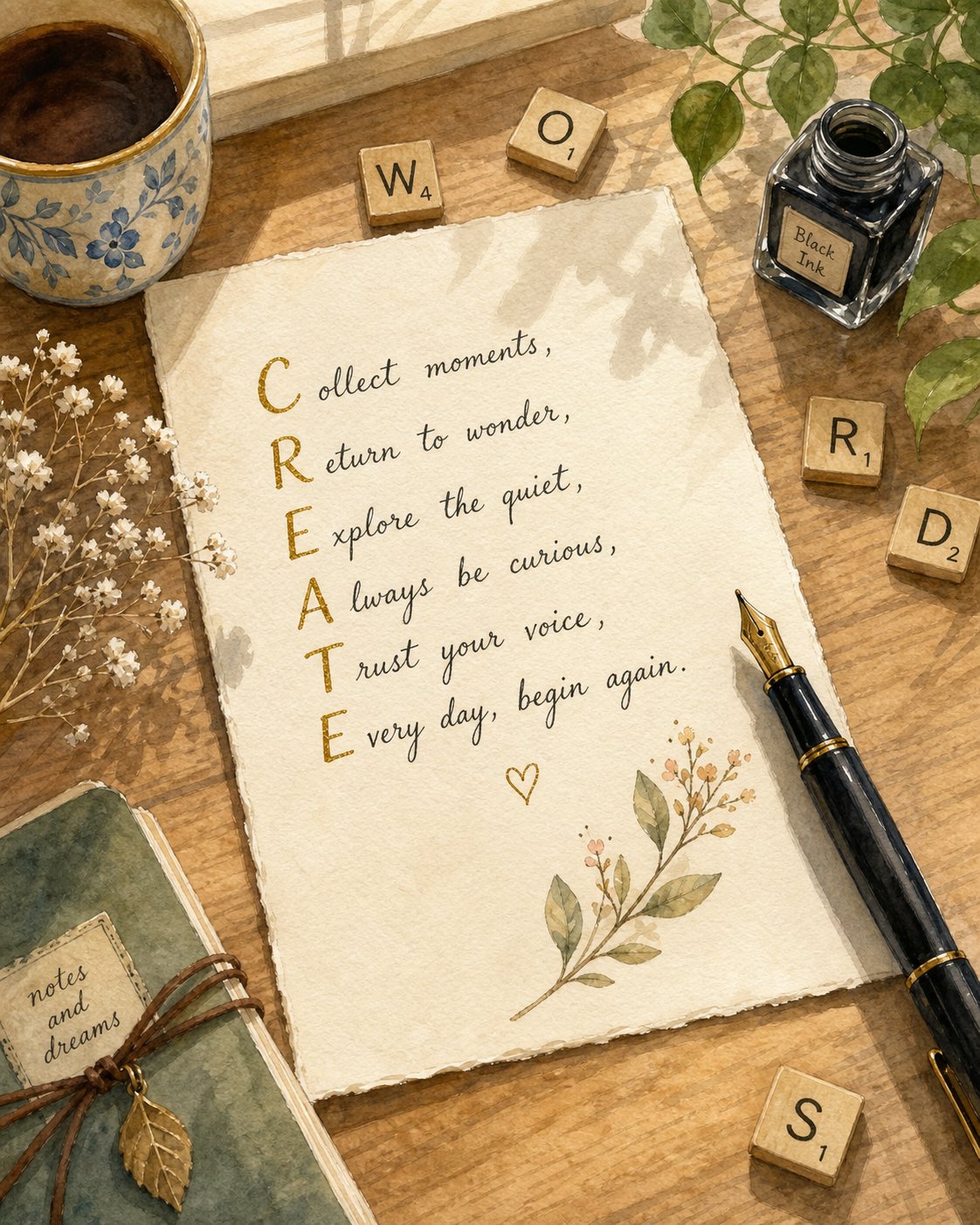
A standard acrostic poem can spell out anything. The Poetry Foundation defines an acrostic as "a poem in which the first letter of each line spells out a word, name, or phrase when read vertically." When that word is a name, the creative challenge shifts. You're no longer matching letters to a theme you chose freely. You're working within the constraints of someone's actual identity, which means every letter is fixed and every line needs to feel personal.
This is what makes an acrostic name poem generator distinct from broader tools. The output isn't just clever wordplay. It's a portrait in verse. Each line carries weight because the reader knows it was shaped around who they are, not just what sounds good.
First Name vs Full Name Acrostics
The scope of your acrostic name changes everything about the output. A first name like "EMMA" gives you four lines to work with, keeping the poem tight and focused. A full name like "EMMA ROSE CHEN" stretches to twelve lines, offering more room for detail but demanding more creative stamina to maintain coherence across every letter.
Here's how the input type shapes the result:
- First name only - Produces a short, punchy poem. Works well for cards, gifts, and classroom activities. Easier to keep thematically unified.
- Full name - Creates a longer piece with space for layered descriptions. Better suited for tributes, memorials, or detailed character portraits. Harder to sustain quality across every line.
- Words or themes - Falls outside the name poem generator category entirely. These spell out concepts like "COURAGE" or "FRIENDSHIP" and don't carry the same personal connection.
The distinction matters because a name acrostic lives or dies on personalization. A five-letter first name demands precision. A twelve-letter full name demands endurance. And both demand that every single line, even the ones starting with difficult letters, feels intentional rather than forced.
That question of difficult letters, the X's and Z's and Q's that appear in so many names, is exactly where the history and mechanics of this poetic form become essential to understand.
The History Behind Acrostic Name Poems
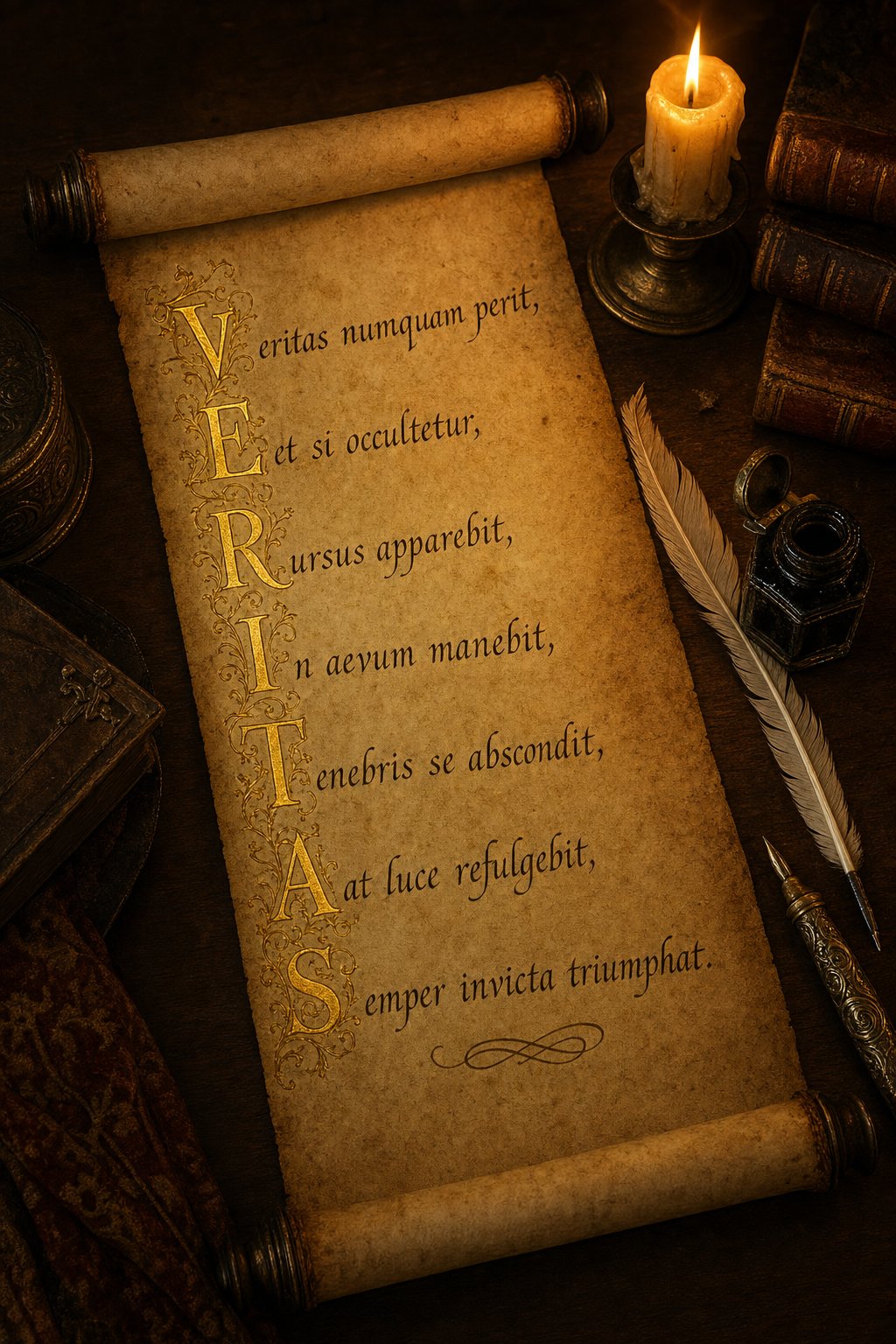
The idea of hiding a name inside a poem didn't start with digital tools or classroom worksheets. Writers have been embedding names, messages, and signatures into verse for thousands of years, using the acrostic form as both a creative challenge and a secret channel of communication. Understanding this history gives you a richer sense of what you're participating in every time you write a name letter poem or use a generator to create one.
Ancient Origins of the Acrostic Form
The word "acrostic" itself comes from the Greek words akros ("at the end") and stichos ("line" or "verse"), according to Britannica. The term was first applied to the prophecies of the Erythraean Sibyl, which were written on leaves arranged so that the initial letters always formed a word. From there, the form spread across cultures and centuries.
In ancient Hebrew poetry, several Psalms use an abecedarian structure where successive verses begin with letters of the Hebrew alphabet in order. Psalms 25 and 34 are well-known examples of this technique. The Book of Lamentations also contains acrostic chapters built on the same alphabetical framework. These weren't decorative flourishes. They served as memory aids and structural anchors for oral recitation.
Greek poets of the Alexandrine period used acrostics frequently, and Latin writers like Ennius and Plautus wrote arguments for their plays as acrostics on the plays' titles. Medieval monks carried the tradition forward, embedding devotional messages and the names of saints into their verse. During the Renaissance, poets like Sir Thomas Wyatt reportedly used the form to spell out the name of Anne Boleyn, turning the acrostic with names into a tool for courtly expression and hidden declaration.
Famous Acrostic Poems in Literature
When you think of an acronym name poem in a literary context, Edgar Allan Poe is one of the first names that comes up. Poe wrote several acrostics in his youth, and his poem "An Acrostic" (circa 1829) spells out E-L-I-Z-A-B-E-T-H. What makes this piece notable isn't just the technique. It's how Poe handled the letter Z, referencing "Zantippe" (the wife of Socrates) to solve one of the hardest letters in the English language. That same struggle with difficult letters is something every acrostic writer still faces today.
Poe wasn't alone. Here are several notable examples of acrostic poems built around names throughout literary history:
- Sir John Davies (1599) - Wrote twenty-six acrostics in Hymnes of Astraea, each spelling out "Elisabetha Regina" in honor of Queen Elizabeth I.
- John Keats (c. 1818) - Composed an acrostic for his sister-in-law spelling out "Georgiana Augusta Keats," opening with the line "Give me your patience, sister, while I frame / Exact in capitals your golden name."
- Edgar Allan Poe (c. 1829) - Created multiple name acrostics, including "An Acrostic" for Elizabeth and "A Valentine" for Frances Sargent Osgood using a more complex hidden-letter pattern.
- Lewis Carroll (1871) - Ended Through the Looking-Glass with a poem spelling out "Alice Pleasance Liddell," the real girl who inspired his Alice stories.
- Anna Rabinowitz (2001) - Sustained the acrostic form across an entire book-length poem, Darkling, based on letters from family members lost in the Holocaust.
What connects all of these examples is purpose. These weren't word games. They were dedications, love letters, memorials, and hidden signatures. The acrostic form gave poets a way to encode identity directly into the structure of their work, making the recipient's name inseparable from the poem itself.
That blend of constraint and creativity is exactly what modern generators attempt to replicate. But how do they actually pull it off, especially when the underlying technology has to handle every letter combination a human name might throw at it?
How Acrostic Name Generators Actually Work
Writing a poem where every line must start with a predetermined letter is a constraint problem. For a human, it's a creative puzzle. For a machine, it's a computational one. The way an acrostic poem generator solves that puzzle depends entirely on what kind of technology sits behind it.
How AI Generates Acrostic Poems
At the core of any AI-powered acrostic generator is a language model, a system trained on massive amounts of text that can predict what words naturally follow other words. When you feed it a name like "SARAH," it doesn't just look up words starting with S, A, R, A, and H. It generates full lines of text while enforcing the constraint that each line's first word must begin with the correct letter.
Research presented at EMNLP 2020 by Agarwal and Kann formalized this as a multi-constraint generation task. Their model had to satisfy three requirements simultaneously: the initial letters spell the target word, the poem's meaning relates to that word, and the output follows a rhyming scheme. They used a conditional neural language model paired with a separate rhyming model to handle these overlapping demands.
A related approach, described in research on Constrained Text Generation Studio (CTGS), applies filter functions to a language model's vocabulary before each word is generated. Think of it as the AI considering every possible next word, then immediately discarding any option that doesn't start with the required letter. This technique is plug-and-play, meaning it works with most existing language models without retraining them. The result is acrostic AI that can produce constrained poetry while still sounding natural.
Simple Generators vs AI-Powered Tools
Not every tool you'll find online uses this kind of sophisticated processing. Many older generators rely on pre-built word lists, essentially databases of adjectives and nouns sorted by first letter. When you type a name, they pull one word per letter and call it a poem. The difference in output quality is significant.
| Criteria | Basic Word-List Generator | AI-Powered Generator |
|---|---|---|
| How it works | Matches letters to a fixed database of words | Uses a language model with constrained decoding |
| Coherence | Lines are unrelated single words | Lines form connected phrases or sentences |
| Personalization | Generic adjectives (e.g., "Kind, Loving") | Context-aware descriptions based on input themes |
| Creativity | Limited to pre-stored vocabulary | Generates novel combinations from learned patterns |
| Handling difficult letters | Often repeats the same few words for X, Z, Q | Constructs original phrases starting with rare letters |
| Output variety | Same name produces identical results each time | Produces different poems on each generation |
If you want to make an acrostic poem generator that produces genuinely readable verse, the AI approach is the only path that scales. A word-list tool might give you "Joyful, Amazing, Caring, Kind" for the name JACK, but an AI-powered poem acrostic generator can produce something like four connected lines that tell a small story or paint a portrait.
The gap between these two approaches also explains why some generators handle difficult letters gracefully while others fall apart the moment a name contains an X or a Z. Knowing what's under the hood helps you choose the right tool, but it also helps you understand where manual writing still has an edge over any acrostic generator, especially when the goal is a poem that truly sounds like it was written by someone who knows the person.

How to Write an Acrostic Poem Step by Step
Generators are useful, but there's something satisfying about crafting a name poem by hand. You control the tone, the rhythm, and the personal details that no algorithm can pull from memory. Whether you're learning how to make an acrostic poem for the first time or looking to sharpen your technique, the process breaks down into a clear sequence that works regardless of which style you choose.
- Choose your name and write it vertically. Each letter gets its own line. Leave space beside each letter for the words or phrases you'll add.
- Decide on a theme or feeling. Are you celebrating someone's personality? Describing their appearance? Expressing gratitude? A clear intention keeps every line pulling in the same direction.
- Brainstorm words and phrases for each letter. Jot down three to five options per letter without judging quality yet. You'll narrow down later.
- Draft your lines using one of the three styles below. Pick the approach that fits your purpose and skill level.
- Read the poem aloud and revise. Listen for awkward rhythms, forced word choices, or lines that feel disconnected from the rest. Swap, trim, and rearrange until the whole piece flows as a single thought.
That's the skeleton. The real creative decision is which style you use to flesh it out. The same name produces dramatically different results depending on your approach.
One Word Per Line Approach
This is the simplest way to create an acrostic poem. Each line contains a single word that starts with the corresponding letter of the name. For the name LUKE, you might write:
Loyal
Unstoppable
Kind
Energetic
It's fast, accessible, and works well for young children or quick greeting cards. The tradeoff is depth. Single words can feel like a list of adjectives rather than a poem. If you want to create a poem with name recognition that carries emotional weight, you'll likely need more room per line.
Full Sentence Acrostic Style
Here, each line is a complete sentence or independent clause. The first word of each sentence starts with the required letter, but the rest of the line develops a full thought. For the same name LUKE:
Laughter follows him into every room.
Under pressure, he stays steady.
Kindness isn't something he performs; it's just how he moves.
Every conversation with him leaves you lighter.
This style gives you space to tell stories, reference shared memories, and build emotional momentum across lines. It takes more effort, but the result reads like genuine writing rather than a vocabulary exercise. When you create an acrostic poem this way, each line can stand on its own while still contributing to a unified portrait.
Descriptive Phrase Method
This third approach blends the brevity of single words with the expressiveness of full sentences. Each line is a short phrase, typically three to six words, that paints a quick image or captures one trait. For LUKE:
Late-night conversations on the porch
Unexpected kindness in small moments
Knack for making strangers laugh
Easy warmth that draws people close
You'll notice this method hits a sweet spot. It's concise enough to maintain rhythm and long enough to carry meaning. The phrases don't need to form grammatically complete sentences, which gives you flexibility when a difficult starting letter limits your options. Many writers find this the most natural way to create a poem with name constraints because it mirrors how we actually describe people in conversation: in fragments, impressions, and quick sketches rather than formal declarations.
Each style has its place. One-word acrostics suit quick gifts and young learners. Full sentences work for tributes and deep personalization. Descriptive phrases land somewhere in between, offering polish without demanding paragraph-level composition for every line. The style you pick also determines how much trouble a difficult letter will cause you, and some letters cause a lot of trouble.
Solving Difficult Letters in Name Acrostics
The letter X stops people cold. So does Z. And Q. You're writing an acrostic poem with your name or someone else's, the first four lines flow beautifully, and then you hit a letter that seems to have no usable words attached to it. This is the single biggest reason people abandon handwritten name acrostics or turn to a poem maker with names built in. The good news: every difficult letter has workable solutions once you know where to look.
Strategies for Difficult Letters
Even Edgar Allan Poe wrestled with this problem. In his famous acrostic for Elizabeth, he handled the Z line by referencing "Zantippe" (Xanthippe), the wife of Socrates. That's one strategy: reach for proper nouns, mythology, or less common vocabulary that still carries clear meaning. But it's not the only approach.
Here are four techniques that work for any tough letter in a name acrostic:
- Use descriptive phrases instead of single words. You don't need a perfect adjective. A phrase like "Xenial warmth in every greeting" uses X naturally without forcing an obscure word to carry the whole line.
- Lean on verbs and action words. Letters like J and U have more verb options than adjective options. "Jumped at every chance to help" or "Understood without being told" feel natural and personal.
- Borrow from other languages sparingly. Words like "Zen," "Qi," and "Joie" have entered common English usage. They read as familiar rather than foreign when placed in context.
- Think in images, not definitions. Instead of searching for an adjective starting with X, picture a scene. "X-rays couldn't show what makes her strong" tells a story while satisfying the letter constraint.
The key shift is moving from "what word starts with this letter?" to "what line can I write that starts with this letter?" That reframe opens up possibilities that single-word thinking never will.
Starter Words for X Z Q and Other Tough Letters
When you're building an acrostic for names that contain uncommon letters, having a reference list saves time. The table below covers the five most problematic letters with words and phrases that work in personal, descriptive poetry. These aren't obscure dictionary pulls. They're options that sound natural when read aloud in a name acrostic context.
| Letter | Usable Words and Phrases |
|---|---|
| X | Xenial, extraordinary (as "X-traordinary"), X-ray, excels (as "Xcels" in casual tone), xyst (a garden walk), exuberant (stylized), "X marks the moment," xenogenous |
| Z | Zealous, zest, zen, zephyr (a gentle breeze), zenith, zany, zippy, "Zero quit in her bones" |
| Q | Quiet, quick, quirky, quintessential, quaint, queen, "Questions everything with curiosity," quill |
| U | Unwavering, unique, understanding, uplifting, unbreakable, "Under every storm she stands," unstoppable, unmatched |
| J | Joyful, jubilant, just, jewel, journey, "Jumps into life with both feet," jovial, judicious |
A few things to notice about this list. The phrase options ("Zero quit in her bones," "Questions everything with curiosity") work especially well in the descriptive phrase style covered in the previous section. They let you satisfy the letter requirement while still sounding like something a real person would say about someone they care about. Single words like "zealous" or "quintessential" fit the one-word-per-line approach but carry enough weight to avoid feeling generic.
For letters like J, you'll find more options than you might expect. Words like joyful, jubilant, and jovial all carry positive energy, while judicious and just add depth beyond simple cheerfulness. The real challenge with J isn't scarcity. It's avoiding repetition if the name contains the letter more than once.
These starter words are exactly what a good acrostic name generator draws from internally, but having them in front of you means you can write by hand with the same confidence. The difficult letters stop being roadblocks and start becoming the most interesting lines in your poem, the ones that force you toward unexpected language and fresh descriptions that the easy letters never demand.
Creative Uses for Acrostic Name Poems
Knowing how to handle tough letters is one thing. Knowing when and why to write a name acrostic in the first place is what turns technique into something people actually value. The form is surprisingly versatile. A single name poem can serve as a classroom exercise, a framed gift, or a quiet act of remembrance, depending on who you're writing for and what the occasion demands.
Classroom and Educational Uses
Teachers have long used acrostic poems as an entry point into creative writing. We Are Teachers describes them as "simple, engaging, and a great way to build creativity and confidence in young writers," noting that they appeal to all ages. The structured format gives students a clear starting point without the blank-page anxiety that free-form poetry often triggers.
In practice, classroom applications range widely:
- Getting-to-know-you activities - Students create name poems about themselves on the first day of school, giving classmates a quick personality snapshot.
- Vocabulary building - Assigning acrostics around subject-specific terms (a student's name using science vocabulary, for instance) reinforces word knowledge.
- Reading comprehension - After reading a novel, students write acrostics using a character's name, demonstrating understanding of traits and motivations.
- Peer appreciation - Classmates write name poems for each other, practicing descriptive language while building community.
A poem name generator can supplement these activities when students get stuck, but the manual writing process itself is where the learning happens. The constraint of fixed letters pushes students to expand their vocabulary in ways that open-ended prompts rarely do.
Gifts and Special Occasions
Outside the classroom, name acrostics carry real emotional weight as personalized gifts. The effort of choosing each word deliberately, rather than buying a generic card, communicates something a store-bought item can't replicate.
- Baby announcements - Parents use a name poem creator to craft a verse around their newborn's name, often framing it for the nursery wall.
- Wedding tributes - A bridesmaid or best man writes acrostics using the couple's names as part of a toast or reception display.
- Memorial poems - Families create name poems for loved ones who have passed, using each letter to capture a memory or quality worth preserving.
- Retirement and farewell gifts - Colleagues write acrostics that highlight a person's contributions, turning a name into a summary of their professional legacy.
- Mother's Day and Father's Day - Children of any age can create a name poem as a heartfelt, low-cost gift that parents tend to keep for years.
These occasions share a common thread: the recipient's name becomes the organizing structure for genuine sentiment. Whether you use a name poem maker or write from scratch, the personal nature of the form does the emotional heavy lifting.
Age-Appropriate Approaches
Not every acrostic style works for every age group. Matching complexity to ability keeps the experience rewarding rather than frustrating.
- Ages 5-7 (early elementary) - One word per line, focusing on simple adjectives or nouns. "Kind, Awesome, Tall, Energetic" for KATE. The goal is letter recognition and basic descriptive vocabulary.
- Ages 8-12 (upper elementary and middle school) - Descriptive phrases of three to six words. Students practice sentence fragments, imagery, and more precise word choices. A name poems generator can offer inspiration when they hit a wall.
- Ages 13-17 (high school) - Full sentences with literary devices like metaphor, alliteration, or internal rhyme. The acrostic becomes a vehicle for practicing craft, not just content.
- Adults - Sophisticated literary acrostics that weave narrative, use varied line lengths, and embed personal references only the recipient would recognize. These read as genuine poems rather than exercises.
The beauty of the acrostic form is that it scales. A kindergartner and a published poet can both create a name poem using the same structural rule. The difference is what they do within that structure, and that difference is where questions of quality, tone, and emotional resonance start to matter.
Love Acrostic Poems Using Names
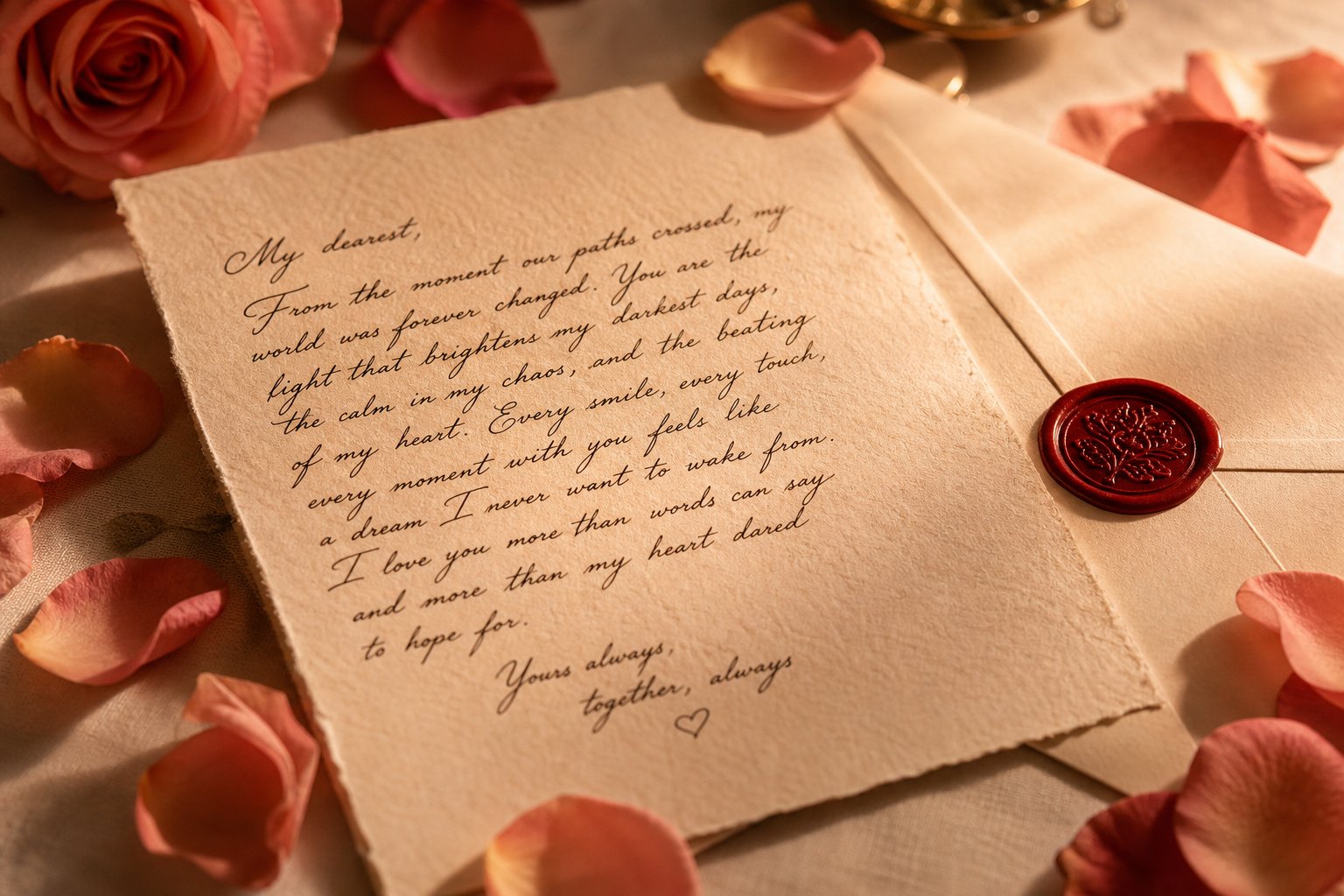
Of all the occasions that call for a name acrostic, romantic ones carry the highest emotional stakes. A love acrostic poem built around your partner's name isn't just a creative exercise. It's a declaration shaped by the very letters that identify them, turning their name into a vessel for everything you feel but struggle to say in ordinary conversation.
Writing a Love Acrostic With Your Partner's Name
The approach here is the same as any name acrostic, but the source material changes. Instead of pulling from general personality traits, you're drawing from shared history. Think about inside jokes, specific moments you've lived together, and the small habits that made you fall in love. Erica Illsley of Finding Joy in Your Home suggests thinking of "fun memories you have shared with your husband, child, or friend" and using favorite songs, inside jokes, or even a partner's favorite cookie as inspiration for each line.
That specificity is what separates a generic acrostic poem about love from one that could only belong to your relationship. A line starting with "M" that reads "Morning coffee you bring before I ask" says more than "Marvelous" ever could. The more particular the detail, the more the poem resonates.
A love acrostic structure uses each letter of a partner's name to anchor a line rooted in shared memory, specific emotion, or intimate detail that only the two of you would recognize.
You don't need a love poem generator to pull this off, though one can help if you're stuck on a difficult letter. The real magic comes from the personal knowledge no tool can access: the texture of your specific relationship translated letter by letter into verse.
Tone and Emotion in Romantic Acrostics
Not every acrostic poem with love as its theme needs to sound like a wedding vow. Tone is a choice, and the right one depends on your relationship's personality. A playful couple might write lines full of humor and teasing. A long-married pair might lean toward quiet gratitude. Someone in the early rush of attraction might go bold and earnest.
Consider these tonal directions when writing an acrostic poem on love:
- Playful - Light humor, pet names, references to silly shared moments. Feels like a love note tucked into a lunchbox.
- Sentimental - Focused on gratitude, growth, and emotional depth. Reads like something you'd frame.
- Passionate - Direct, intense language about attraction and devotion. Works for anniversaries or Valentine's Day.
- Quiet - Understated, observational. Describes small daily acts of love rather than grand declarations.
The acrostic love form works across all of these registers because the structure stays constant while the language shifts. A single name can produce a funny poem or a tearful one depending entirely on what you pour into each line. That flexibility is why the love acrostic remains one of the most popular uses of the form, whether handwritten on a card or generated through a tool.
Whatever tone you choose, the poem still needs to hold together as a unified piece. And that raises a broader question: how do you tell whether a name acrostic, romantic or otherwise, is actually good?
Judging Quality in Acrostic Name Poems
A name acrostic can technically "work" while still falling flat. The letters line up, the words are real, and the name reads vertically. But something feels off. Maybe the lines sound like they were pulled from different poems. Maybe the rhythm lurches from one syllable count to another. Maybe the whole thing reads like a thesaurus entry rather than a portrait of a real person. Knowing what separates a passable acrostic from a genuinely good one gives you a standard to measure against, whether you wrote it by hand or pulled it from an acrostic poem maker.
What Makes a Great Acrostic Name Poem
Quality in this form comes down to a handful of elements working together. You can use the following as a checklist when evaluating your own drafts or output from any acrostic poem builder:
- Coherence across all lines - Every line should feel like it belongs in the same poem. A unified theme, mood, or narrative thread ties the piece together so it reads as a whole rather than a collection of unrelated fragments.
- Rhythm and flow - Lines don't need to follow a strict meter, but they should share a similar cadence. Read the poem aloud. If one line takes two seconds and the next takes eight, the imbalance will jar the reader.
- Meaningful word choices - Each word earns its place. Strong verbs and specific images outperform vague adjectives every time. As poet and writing teacher Kate Messner advises, go through your poem and audit every verb, auditioning alternatives to find the one that conveys the exact action you intend.
- Personalization depth - The poem should only fit one person. If you could swap in a different name and the lines would still make sense, the personalization isn't deep enough.
- Emotional resonance - The reader (especially the recipient) should feel something. That feeling might be warmth, laughter, nostalgia, or pride, but it needs to land.
- Balance of familiar and surprising language - A poem built entirely of unusual words has no surprises left to offer. Casual, grounded language lets the unexpected word choices shine when they appear.
- Strong first and last lines - Your opening line pulls the reader in. Your closing line leaves them with something: a feeling, an image, a quiet resolution. These two lines carry disproportionate weight.
Think of these criteria as a lens, not a rigid scoring rubric. A short acrostic for a child's birthday card doesn't need the literary polish of a memorial tribute. But even simple poems benefit from coherence and intentional word choices.
Common Mistakes and How to Fix Them
Most weak acrostics share the same handful of problems. Recognizing them makes revision faster, whether you're editing your own draft or refining output from an acrostic maker.
- Forced word choices - This happens when a difficult letter pushes you toward a word that doesn't fit the poem's tone. The fix: switch from single-word thinking to phrase thinking. You don't need a perfect adjective starting with X. You need a line that starts with X and serves the poem.
- Lack of thematic unity - Lines describe unrelated qualities with no connecting thread. One line is about appearance, the next about career, the next about a childhood memory. The fix: choose one angle (personality, shared memories, aspirations) and let every line explore it from a different direction.
- Ignoring syllable patterns - Lines of wildly different lengths create a choppy reading experience. The fix: aim for a rough syllable range. You don't need exact counts, but keeping lines within three or four syllables of each other creates a natural flow.
- Over-reliance on adjectives - "Kind, Loving, Amazing, Radiant, Elegant" reads like a list, not a poem. The fix: replace at least half your adjectives with images, actions, or specific memories. Show the kindness rather than naming it.
- Neglecting the turn - Every good poem has a moment where something shifts: a change in mood, a deepening of meaning, or a surprise. Flat acrostics stay at the same emotional level from start to finish. The fix: let one line pivot. Introduce contrast, a question, or a moment of vulnerability that gives the poem dimension.
Revision is where an acrostic poems maker output becomes a real poem. Read your draft aloud, listen for the line that doesn't belong, and ask whether a stronger opening might be hiding in the middle. That single habit, reading aloud and listening honestly, catches more problems than any checklist ever will.
With a clear sense of what quality looks like, the next practical step is having a framework to start from, something that gets you past the blank page and into the writing itself.
Templates and Tools for Getting Started
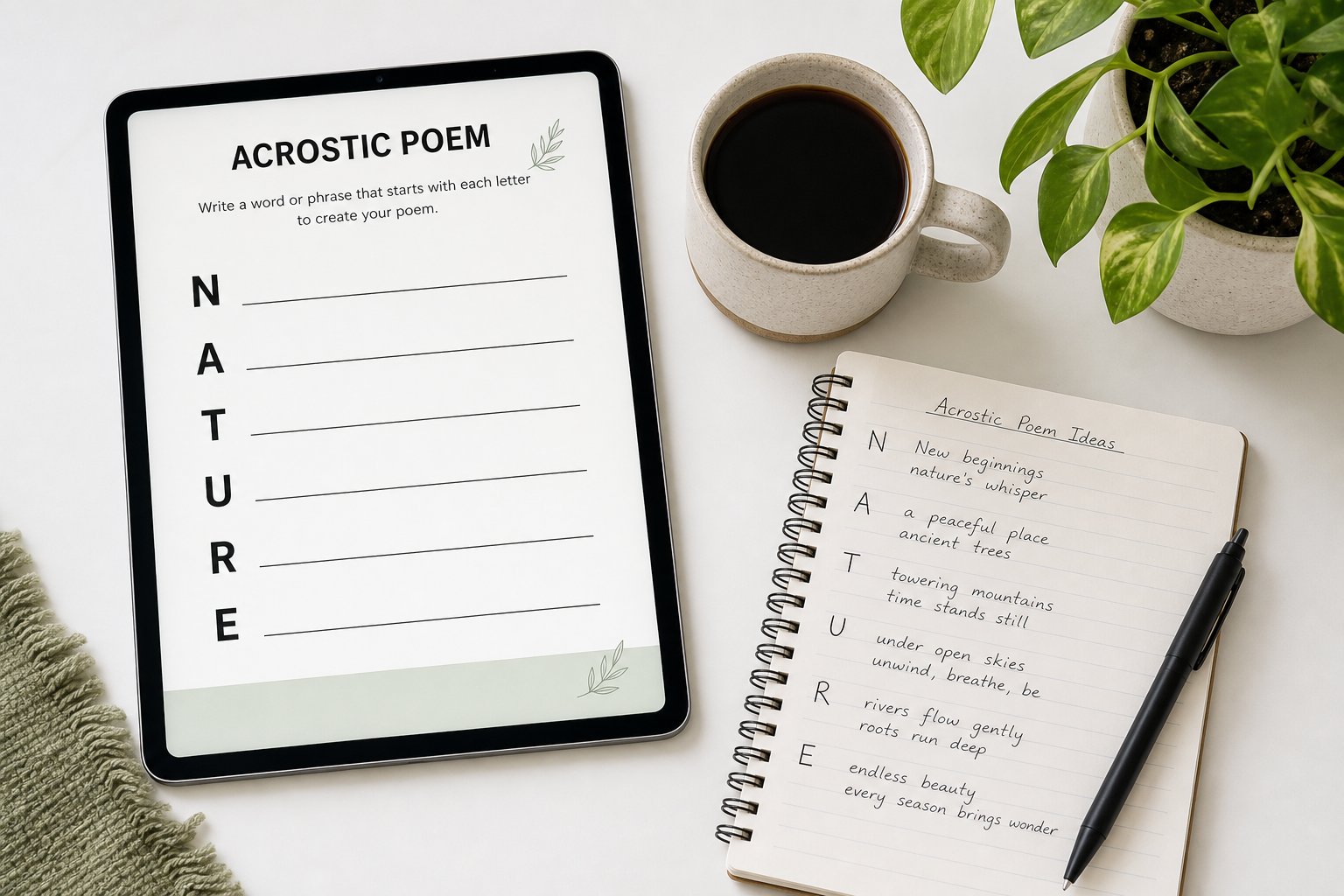
A blank page with a name written vertically down the left margin is technically a starting point, but it doesn't give you much to work with. Templates bridge that gap. They provide just enough structure to get words flowing without dictating what those words should be. Whether you prefer a fill-in-the-blank approach or a brainstorming worksheet that builds toward a polished draft, having a framework in front of you turns the writing process from abstract to actionable.
Beginner Template for Name Acrostics
If you've never written a name acrostic poem template before, the simplest approach is a guided fill-in structure. This works for adults who feel unsure about poetry and for kids who need guardrails without feeling restricted. Here's a numbered framework you can follow for any name:
- Write the name vertically. Use large, bold letters down the left side of your page. Leave at least one full line of space beside each letter.
- Pick one focus. Decide whether you're describing personality, appearance, memories, or wishes for the future. Stick to one lens for the whole poem.
- Fill in the blank for each letter: "[Letter] __________ (word or phrase that connects to your focus)." Don't overthink it. Write the first thing that fits.
- Read your draft top to bottom. Does it sound like one poem or a random list? If it feels disconnected, swap one or two lines to create a thread.
- Polish one line. Pick the weakest line and rewrite it using a more specific image or memory. That single upgrade often lifts the whole piece.
This acrostic poem name template approach works because it breaks the task into small, manageable decisions. You're never staring at a blank line wondering what to do next. Each step narrows your options just enough to keep momentum going.
For intermediate writers who want more depth, a brainstorming worksheet adds a layer before drafting. Write the name vertically, then beside each letter list three to five candidate words or phrases. Circle the strongest option for each letter. Then draft the poem using only your circled choices. This mirrors the process that We Are Teachers recommends in their printable acrostic poem template bundles, where students brainstorm before committing to a final version. The extra step prevents the most common beginner mistake: locking in the first word that comes to mind and building a poem around weak foundations.
Choosing the Right Acrostic Tool
Templates work when you want to write by hand. But sometimes you need a starting point faster than brainstorming allows, or you're stuck on a letter and want to see how a machine handles it. That's where a free online acrostic tool earns its place in your process. The challenge is that not every acrostic maker for names produces output worth using. Some give you a single generic word per letter. Others generate full poems that still need heavy editing. Knowing what to evaluate helps you pick a tool that actually saves time.
When comparing options, look for these features:
- Customization options - Can you specify a theme, mood, or relationship to the person? Tools that accept context beyond just the name produce more relevant output. An acrostic name maker that lets you input "best friend" or "grandmother" alongside the name will outperform one that only takes letters.
- Tone settings - Does the tool let you choose between playful, formal, romantic, or sentimental? A birthday poem and a memorial poem shouldn't sound the same, even if they use the same name.
- Output variety - Does it generate multiple versions? A tool that gives you three or four options per name lets you pick the strongest lines from each and combine them into something better than any single output.
- Line quality - Are the generated lines full phrases or single words? As covered earlier, coherent phrases create real poems. Single-word outputs create lists. Check a sample before committing your time.
- Difficult letter handling - Test the tool with a name containing X, Z, or Q. If it produces the same generic word every time, it's running on a basic word list rather than generating original language.
- No registration required - The best free online acrostic tools let you generate immediately without creating an account. AI Free Forever lists several poetry generators, including acrostic-specific tools, that work without signup and offer adjustable tone and style settings.
The smartest approach combines both methods. Use a template or worksheet to draft your poem manually, then run the same name through a generator to see what it produces. Often, the tool will suggest a word or phrase for a difficult letter that you hadn't considered, and you can fold that into your handwritten version. Other times, your manual draft will be stronger across the board, and the generator output confirms you're on the right track.
Either way, you're no longer stuck. You have a structure to follow, a reference list for tough letters, quality criteria to measure against, and tools that can fill gaps when your own vocabulary runs short. The X's and Z's that once stopped you cold are just another pair of lines waiting to be written.
Frequently Asked Questions About Acrostic Name Generators
1. What is an acrostic name generator and how does it work?
An acrostic name generator is a tool that produces a poem where the first letter of each line spells out a specific person's name when read vertically. Basic generators match letters to pre-stored word lists, while AI-powered versions use language models with constrained decoding to create coherent, meaningful phrases for each line. The AI approach generates full sentences or descriptive phrases rather than isolated adjectives, producing output that reads like genuine poetry rather than a vocabulary list.
2. How do you handle difficult letters like X, Z, and Q in acrostic name poems?
The key strategy is shifting from single-word thinking to phrase-based thinking. Instead of searching for a perfect adjective starting with X, write a full line that begins with that letter, such as 'X-rays couldn't show what makes her strong.' Other techniques include using descriptive verbs, borrowing commonly adopted words from other languages like 'Zen' or 'Qi,' and leaning on imagery rather than definitions. Even Edgar Allan Poe solved his Z line by referencing classical mythology, showing that creative workarounds have always been part of the acrostic tradition.
3. What is the difference between a first name acrostic and a full name acrostic?
A first name acrostic uses only the given name, producing a short, focused poem of typically 3-7 lines that works well for cards and quick gifts. A full name acrostic includes first, middle, and last names, creating a longer piece of 10-15+ lines with more room for layered descriptions and narrative. Full name acrostics suit tributes and memorials but require more creative stamina to maintain quality and coherence across every line, especially when multiple difficult letters appear.
4. Can acrostic name poems be used for educational purposes?
Acrostic name poems are widely used in classrooms across all grade levels. For ages 5-7, one-word-per-line acrostics build letter recognition and basic vocabulary. Students aged 8-12 benefit from descriptive phrase acrostics that develop imagery skills. High schoolers can practice literary devices like metaphor and alliteration within the acrostic structure. Common classroom applications include first-day introductions, vocabulary building with subject-specific terms, reading comprehension exercises using character names, and peer appreciation activities that strengthen community.
5. How do I judge whether my acrostic name poem is good?
Evaluate your acrostic against five core criteria: coherence across all lines so the poem reads as a unified piece rather than fragments, consistent rhythm when read aloud, meaningful word choices that favor specific images over vague adjectives, personalization deep enough that the poem only fits one person, and emotional resonance that makes the reader feel something. The most common mistakes are forced word choices on difficult letters, lack of thematic unity between lines, wildly inconsistent line lengths, and over-reliance on generic adjectives instead of concrete images or memories.