Understanding Auspicious Characters for the Ox Year
Imagine choosing a single written character that could shape your child's fortune. In Chinese culture, that's exactly what auspicious characters (吉字) are designed to do. These carefully selected characters carry specific energetic qualities believed to align with a person's birth year, channeling luck, prosperity, and protection throughout their life.
For families welcoming babies in the chinese year of the ox, or celebrating Ox year festivals, the right characters aren't random picks. They're rooted in a centuries-old metaphysical system that connects each zodiac animal to particular radicals, meanings, and elemental forces.
Why Characters Matter in the Chinese Zodiac Ox Tradition
The ox chinese zodiac sign is tied to the Earthly Branch 丑 (Chou), a Yin Earth branch that occupies the late winter position in the Chinese calendrical cycle. According to classical Chinese metaphysics, 丑 carries hidden stems of Yin Earth (己), Yin Water (癸), and Yin Metal (辛). These hidden elemental influences directly determine which character radicals harmonize with an Ox year birth.
This means auspicious characters for ox year babies aren't just about pleasant meanings. They're selected to resonate with the Ox branch's specific elemental composition, creating energetic alignment between the child's name and their birth chart foundation.
The Cultural Roots of Auspicious Character Selection
The practice serves a dual purpose. Parents use these characters when naming newborns, while communities incorporate them into spring couplets, red envelopes, and decorative blessings during year of ox celebrations. In Western astrology, some people draw parallels between the Taurus year of the ox due to their shared bovine symbolism, though the Chinese system operates on entirely different metaphysical principles.
The Ox's core attributes — diligence, quiet strength, and deep connection to agriculture and water — directly inform which characters are considered lucky. Characters containing water radicals nourish the Ox's hidden Yin Water stem, grass radicals provide sustenance, and shelter radicals offer the stable environment this hardworking animal thrives in.
These aren't arbitrary associations. They emerge from the same Five Elements framework that has guided Chinese naming traditions for generations, linking each zodiac animal's nature to specific written forms that amplify its strengths.
The real question becomes: which specific elements and radical combinations unlock the most favorable energy for each type of Ox year birth?
The Metaphysical Framework Behind Ox Year Characters
The answer lies in a layered system of elemental relationships that Chinese metaphysics has refined over millennia. Selecting favorable characters for Ox year individuals isn't guesswork. It follows a structured framework built on the Earthly Branch system, Five Elements theory, and zodiac compatibility pairings. Each layer narrows down which radicals and character components carry the strongest positive resonance.
The Earthly Branch 丑 and Its Influence on Characters
In chinese astrology for ox, the Ox corresponds to the Earthly Branch 丑 (Chou). This branch carries Yin polarity and is dominated by the Earth element (specifically Ji Earth, 己土). It occupies the late winter month position (roughly early January to early February) and the time period of 1:00 to 2:59 AM.
What makes 丑 particularly interesting for character selection is its hidden stems. Beyond its dominant Ji Earth, the Ox branch conceals Gui Water (癸水) and Xin Metal (辛金) within it. Think of these hidden elements as secondary energetic channels. Characters containing radicals that feed or harmonize with any of these three hidden stems are considered auspicious because they strengthen the Ox's innate elemental composition rather than working against it.
Because 丑 is Yin in nature, characters with softer, nurturing qualities tend to resonate better than those carrying aggressive or overly Yang energy. This is why water and grass radicals — both Yin-leaning in character — appear so frequently in Ox year naming recommendations.
Five Elements Theory Applied to Ox Year Naming
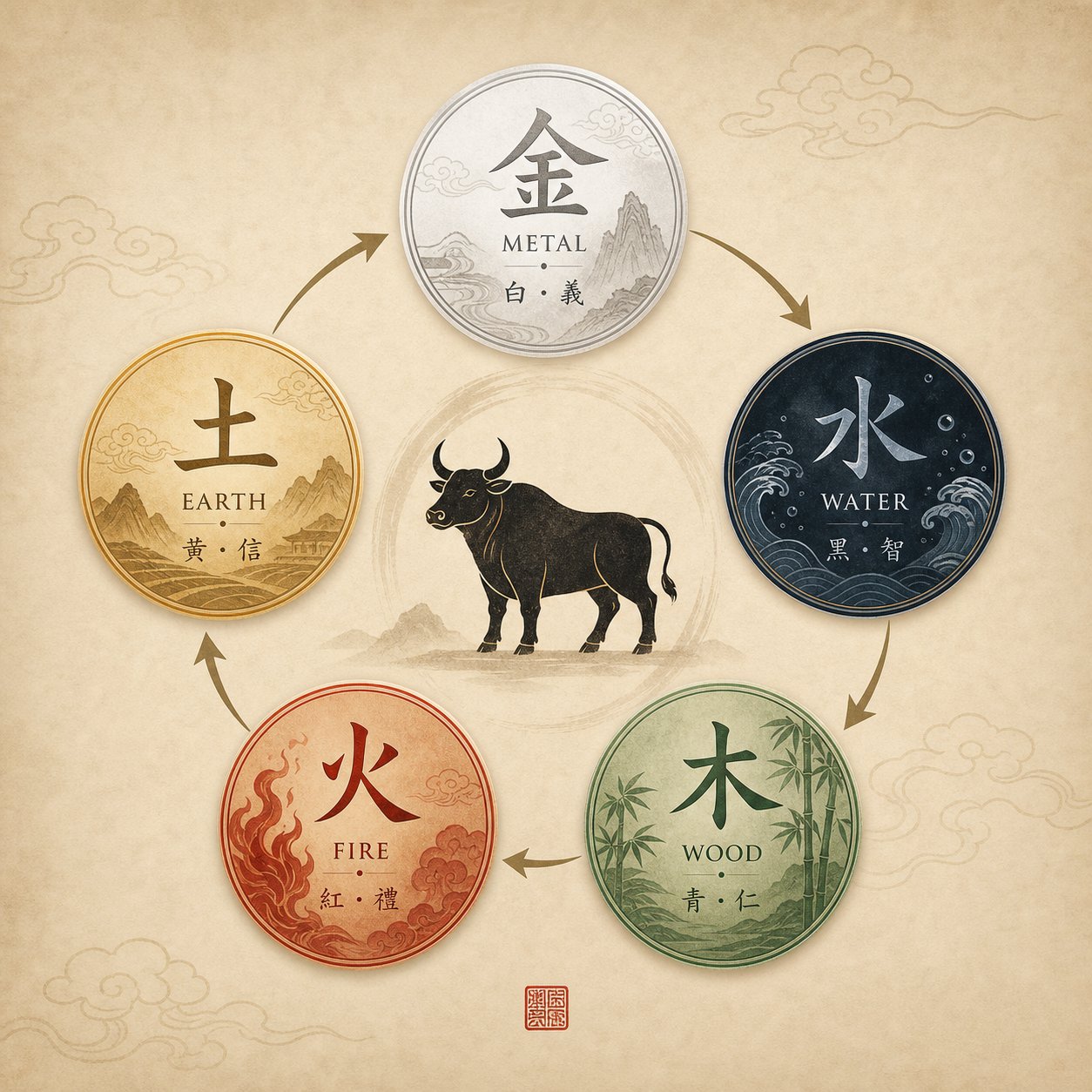
The Five Elements (Wu Xing) — Wood, Fire, Earth, Metal, and Water — interact through generating and overcoming cycles. For the chinese horoscope for the year of the ox, the Ox's fixed element is Earth. This means:
- Metal characters support the Ox — Earth generates Metal in the producing cycle, so Metal radicals (金, 钅) allow the Ox's energy to flow outward productively
- Water characters nourish hidden stems — the Ox's concealed Gui Water benefits from water radicals (氵, 水) that strengthen this internal element
- Fire characters warm the Ox — since 丑 occupies late winter, Fire provides seasonal warmth and generates the Ox's dominant Earth element
- Earth characters reinforce stability — same-element radicals (土, 田) consolidate the Ox's grounding nature
- Wood characters require caution — Wood overcomes Earth in the controlling cycle, so excessive Wood radicals can create tension
This elemental logic is why you'll notice most traditional naming guides for the chinese year of the ox lean heavily toward water and metal radicals. They either nourish the Ox's hidden elements or allow its dominant Earth energy to express itself naturally.
Harmonious Zodiac Relationships and Radical Selection
Beyond the Five Elements, chinese astrology ox principles use two compatibility frameworks to identify favorable radicals:
San He (Three Harmonies): The Ox forms a Three Harmonies trio with the Snake (巳) and Rooster (酉). Together, these three branches combine to produce Metal energy. Characters containing components associated with the Snake or Rooster — or Metal-producing radicals — tap into this powerful triangular alliance.
Liu He (Six Harmonies): The Ox's Six Harmony partner is the Rat (子). When 丑 and 子 combine, they produce Earth energy, reinforcing the Ox's dominant element. Characters with radicals linked to the Rat (such as 子 itself, or water-related components reflecting the Rat's Water nature) are considered especially harmonious.
These compatibility relationships explain why certain radicals appear repeatedly in Ox year character guides. They aren't arbitrary traditions — they're logical extensions of how the Ox branch interacts with other branches in the zodiac cycle.
The framework gets even more specific when you factor in which elemental sub-type of Ox year a person is born into, since each 60-year cycle assigns a different heavenly element to the Ox branch.
How Elemental Ox Types Shape Character Choices
Every Ox year isn't created equal. The Chinese calendar operates on a 60-year cycle (六十甲子) that pairs each zodiac animal with one of five heavenly elements — Metal, Water, Wood, Fire, or Earth. This pairing fundamentally shifts which characters carry the strongest auspicious energy for a person born in that specific Ox year.
So how does this work in practice? Imagine two babies, both born in Ox years. One arrives in 1961 (a Metal Ox year) and the other in 1973 (a Water Ox year). Despite sharing the same zodiac animal, their elemental profiles differ significantly, and the characters that best support their fortune differ too.
Metal Ox Auspicious Characters and Meanings
The 1961 chinese zodiac is the Metal Ox (辛丑), and the 2021 chinese zodiac also falls under this same elemental pairing. Metal Ox individuals carry double Metal energy — the Ox branch's hidden Xin Metal stem is amplified by the heavenly Metal element above it. This creates a personality profile associated with determination, precision, and strong willpower.
For Metal Ox babies, characters containing the metal radical (钅) or the full form (金) reinforce their innate elemental strength. Favorable picks include:
- 鑫 (xin) — prosperity, triple gold; 24 strokes. Three 金 stacked together symbolize abundant wealth
- 铭 (ming) — inscribe, remember; 11 strokes. Combines metal with 名 (name), suggesting lasting legacy
- 锦 (jin) — brocade, splendid; 13 strokes. Metal radical paired with 帛 (silk), evoking refined beauty
- 钰 (yu) — precious jade and metal; 10 strokes. A treasured naming character combining metal with jade
Because Metal's generating element is Earth (Earth produces Metal in the Wu Xing cycle), Metal Ox individuals also benefit from Earth-element characters like 坤 (kun, earth/feminine) and 培 (pei, cultivate). These characters feed their dominant element rather than depleting it.
Water Ox and Wood Ox Favorable Characters
The 1973 horoscope chinese zodiac identifies that year as the Water Ox (癸丑). Water Ox individuals carry amplified Yin Water energy, since the Ox branch already conceals Gui Water internally. This makes them deeply intuitive, adaptable, and emotionally perceptive.
Characters with the three-dot water radical (氵) are especially powerful for Water Ox births:
- 澄 (cheng) — clear, pure; 15 strokes. Suggests clarity of mind and transparent character
- 润 (run) — moist, smooth; 10 strokes. Implies nourishment and gentle prosperity
- 涵 (han) — contain, encompass; 11 strokes. Evokes depth of knowledge and tolerance
- 泓 (hong) — deep pool, clear water; 8 strokes. Symbolizes depth and expansiveness
Wood Ox years (1985, 1925) introduce growth energy into the Ox's stable Earth foundation. Since Water generates Wood in the producing cycle, Wood Ox individuals benefit from characters that bridge both elements. Look for wood-related radicals (木) and grass radicals (艹):
- 栩 (xu) — vivid, lifelike; 10 strokes. Wood radical suggesting creative vitality
- 楠 (nan) — cedar, fine wood; 13 strokes. Implies strength and enduring quality
- 萌 (meng) — sprout, budding; 11 strokes. Grass radical representing new growth and potential
- 蔚 (wei) — luxuriant, grand; 14 strokes. Suggests flourishing abundance
Fire Ox and Earth Ox Character Recommendations
The fire ox chinese zodiac years (1937, 1997) pair the Ox's cool Yin Earth nature with warming Fire energy. This combination is considered particularly balanced because Fire generates Earth — the heavenly element directly nourishes the Ox branch's dominant element. Fire Ox individuals tend to be passionate yet grounded, energetic yet stable.
Favorable characters carry fire-related radicals (火, 灬) or meanings associated with warmth and light:
- 煊 (xuan) — warm, brilliant; 13 strokes. Fire radical suggesting radiant warmth
- 炜 (wei) — brilliant, glowing; 8 strokes. Implies shining achievement
- 烨 (ye) — splendid, glorious; 10 strokes. Fire radical evoking dazzling brightness
- 灿 (can) — brilliant, radiant; 7 strokes. Suggests dazzling success and clarity
Earth Ox years include 1949 and 2009. The 2009 chinese zodiac is the Earth Ox (己丑), where the heavenly element matches the Ox branch's inherent Earth nature. This double-Earth configuration creates exceptionally stable, reliable, and nurturing individuals. Characters with earth and field radicals (土, 田) amplify this grounded quality:
- 垚 (yao) — high, lofty; 9 strokes. Three 土 stacked, symbolizing towering stability
- 坤 (kun) — earth, feminine; 8 strokes. Represents receptive, nurturing power from the I Ching
- 畅 (chang) — smooth, unobstructed; 8 strokes. Field radical suggesting free-flowing progress
- 堃 (kun) — earth, ground; 11 strokes. An alternative form carrying deep grounding energy
Complete Elemental Ox Character Reference
The table below maps each elemental Ox type to its most favorable radicals, recommended characters, and the metaphysical reasoning behind each selection:
| Elemental Ox Type | Years | Favorable Radicals | Top Characters (Pinyin) | Reasoning |
|---|---|---|---|---|
| Metal Ox (辛丑) | 1961, 2021 | 钅, 金, 土 | 鑫 (xin), 铭 (ming), 锦 (jin), 钰 (yu) | Amplifies hidden Xin Metal stem; Earth radicals feed Metal through the generating cycle |
| Water Ox (癸丑) | 1973, 2033 | 氵, 水, 雨 | 澄 (cheng), 润 (run), 涵 (han), 泓 (hong) | Strengthens hidden Gui Water; rain radical adds nourishing moisture energy |
| Wood Ox (乙丑) | 1925, 1985 | 木, 艹, 氵 | 栩 (xu), 楠 (nan), 萌 (meng), 蔚 (wei) | Wood needs Water to grow; grass radicals provide sustenance for the Ox while supporting Wood |
| Fire Ox (丁丑) | 1937, 1997 | 火, 灬, 日 | 煊 (xuan), 炜 (wei), 烨 (ye), 灿 (can) | Fire generates Earth in the producing cycle, directly nourishing the Ox's core element |
| Earth Ox (己丑) | 1949, 2009 | 土, 田, 山 | 垚 (yao), 坤 (kun), 畅 (chang), 堃 (kun) | Same-element reinforcement doubles stability; mountain radical adds protective grounding |
Notice a pattern? Each elemental type benefits most from characters that either match its heavenly element or feed it through the generating cycle. A Metal Ox thrives with Earth-feeding-Metal characters. A Fire Ox benefits from Wood-feeding-Fire or Fire-generating-Earth characters. The system is internally consistent.
These elemental distinctions matter, but they represent just one layer of character selection. The radical categories themselves — water, grass, shelter, field — each carry their own symbolic relationship to the Ox's nature that applies across all five elemental types.
Top Auspicious Characters for Ox Year Baby Names
Regardless of which elemental sub-type applies, certain radical categories carry universal favor for anyone born under the Ox sign. These radicals connect directly to the ox zodiac personality — its love of nourishment, need for stable shelter, and deep bond with agricultural land. Think of them as the foundational building blocks that work for every Ox year baby, which you can then fine-tune based on the specific elemental year.
Below you'll find the most recommended single characters organized by radical category. Each entry includes pinyin pronunciation, core meaning, and stroke count to help you evaluate tonal balance and writing complexity when building a full name.
Water Radical Characters for Ox Year Babies
The Ox's connection to water runs deep. As a creature that drinks abundantly and depends on well-watered pastures, the Ox thrives when water energy is present. The three-dot water radical (氵) also resonates with the hidden Gui Water stem inside the Ox's Earthly Branch, making these characters energetically supportive at a structural level.
Characters with water and rain radicals indicate plentiful nourishment and smooth life flow for Ox year individuals. Here are the strongest picks:
- 浩 (hao) — vast, grand; 10 strokes. Evokes boundless potential and an expansive spirit
- 泽 (ze) — grace, marshland; 8 strokes. Implies benevolence and the gathering of resources
- 润 (run) — moist, smooth; 10 strokes. Suggests gentle prosperity and nourishing influence
- 涵 (han) — contain, encompass; 11 strokes. Represents intellectual depth and tolerance
- 洋 (yang) — ocean, vast; 9 strokes. Symbolizes broad-mindedness and abundance
- 江 (jiang) — river; 6 strokes. Carries strength through steady, persistent flow
- 霖 (lin) — continuous rain; 15 strokes. Rain radical suggesting sustained blessings and timely fortune
- 泓 (hong) — deep pool; 8 strokes. Implies clarity, depth, and quiet power
You'll notice many of these characters carry meanings tied to abundance and flow rather than force. That's intentional — they mirror the year of the ox personality, which favors steady accumulation over sudden bursts of energy.
Grass and Plant Radical Characters
This is the single most popular radical category for Ox year naming, and for good reason. The Ox is a grass-eating animal. Characters containing the grass radical (艹) symbolize plentiful food, a rich inner world, and freedom from material worry throughout life. When parents choose grass radical characters, they're essentially ensuring their child will never lack sustenance — both literal and spiritual.
The characteristics year of the ox emphasizes — diligence, patience, quiet strength — pair beautifully with plant imagery that suggests organic growth and natural flourishing:
- 芳 (fang) — fragrant, virtuous; 7 strokes. Implies moral beauty and lasting reputation
- 蕊 (rui) — pistil, flower bud; 15 strokes. Symbolizes potential about to bloom
- 萱 (xuan) — daylily, carefree; 12 strokes. Traditionally called the "forget-worry grass," representing joy
- 茗 (ming) — tea, fragrant; 9 strokes. Evokes refinement and cultural depth
- 蔚 (wei) — luxuriant, grand; 14 strokes. Suggests flourishing success and literary talent
- 芃 (peng) — lush, thriving; 6 strokes. Represents vigorous growth and vitality
- 荣 (rong) — glory, flourishing; 9 strokes. Carries meanings of honor and prosperity
- 萌 (meng) — sprout, budding; 11 strokes. Symbolizes fresh beginnings and endearing charm
- 莹 (ying) — lustrous, translucent; 10 strokes. Implies clarity and brilliance, like polished jade
- 艺 (yi) — art, skill; 4 strokes. Represents talent and creative cultivation
One practical note: many grass radical characters lean feminine in usage. For boys, consider options like 茂 (mao, luxuriant; 8 strokes), 苍 (cang, deep green/powerful; 7 strokes), or 荣 (rong) which carry stronger, more traditionally masculine energy while still delivering the same auspicious radical benefit.
Shelter and Field Radical Characters
The shelter radical (宀) represents a roof overhead — the Ox resting comfortably under the eaves after a day's work. In chinese astrology ox personality readings, security and stability rank among the Ox's deepest needs. Characters with this radical promise a settled home life and protection from hardship.
- 安 (an) — peace, safety; 6 strokes. One of the most universally auspicious characters in Chinese naming
- 宁 (ning) — tranquil, serene; 5 strokes. Suggests inner calm and a peaceful life path
- 宏 (hong) — grand, magnificent; 7 strokes. Implies expansive ambition within a secure foundation
- 宝 (bao) — treasure, precious; 8 strokes. Directly conveys the child's value and cherished status
- 宜 (yi) — suitable, harmonious; 8 strokes. Represents appropriateness and smooth social relations
- 婉 (wan) — graceful, gentle; 11 strokes. Combines shelter energy with feminine elegance
Field radical (田) characters tap into the Ox's agricultural identity. The image of an Ox plowing a field represents finding one's purpose — working hard in the right environment and reaping rewards from that effort. These characters suggest a life of meaningful contribution:
- 畅 (chang) — smooth, unobstructed; 8 strokes. Implies a life free of major obstacles
- 界 (jie) — boundary, realm; 9 strokes. Suggests clear direction and defined purpose
- 思 (si) — think, contemplate; 9 strokes. Contains the field radical (田) above heart (心), representing thoughtful wisdom
- 富 (fu) — wealthy, abundant; 12 strokes. Shelter radical over field — prosperity under a secure roof
- 男 (nan) — male, son; 7 strokes. Field plus strength (力), embodying the Ox's hardworking nature
The character 富 (fu) is particularly noteworthy because it combines both the shelter radical (宀) on top and a field-related component below. This double-auspicious structure makes it one of the strongest single characters for ox chinese zodiac personality alignment — security above, productive land below, and abundance as the result.
With these individual characters as your palette, the next step is combining them into complete names that balance tonal flow, generational tradition, and layered meaning.
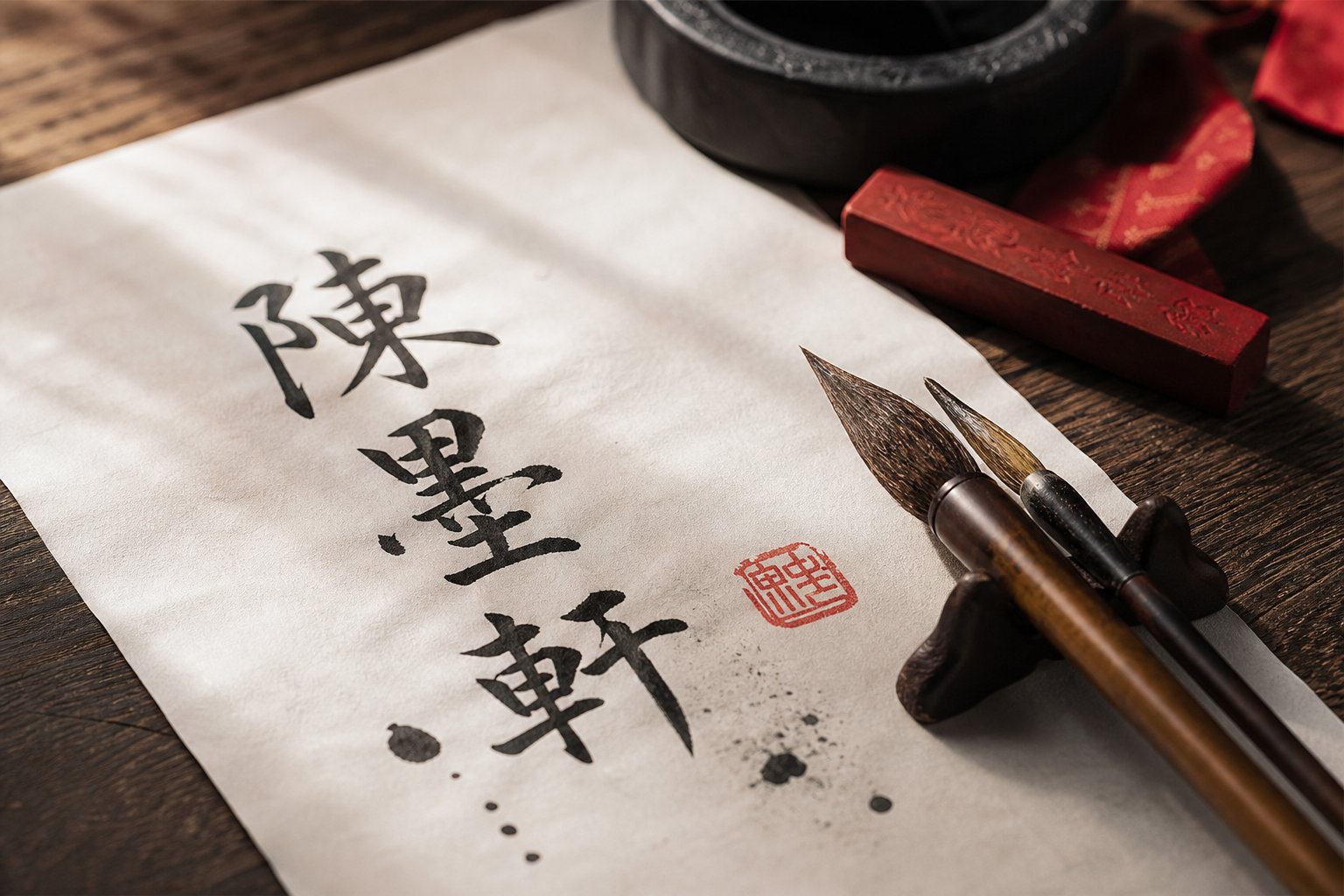
Building Complete Names with Ox Year Characters
A single auspicious character is powerful on its own, but a complete Chinese name weaves multiple characters together into something greater — a layered statement of identity, aspiration, and energetic harmony. The art lies in how you combine them. Two characters with individually strong meanings can clash tonally, create awkward phonetic patterns, or even produce unintended double meanings when placed side by side.
So how do you move from a list of favorable characters to a name that actually sounds beautiful, reads well, and carries coherent cultural weight? It starts with understanding the structural rules that govern Chinese naming.
Two-Character Name Combinations for Boys and Girls
Most modern Chinese names follow a two-character given name paired with a one-character surname, creating a three-character full name (e.g., 王浩宁, Wang Haoning). The two given-name characters should complement each other in meaning while drawing from different radical categories to maximize auspicious coverage for the ox personality.
The principle is straightforward: pair a character representing inner quality with one representing outward fortune. For Ox year babies, this often means combining a water or grass radical character (nourishment, growth) with a shelter or field radical character (stability, purpose).
Here are recommended two-character combinations ranked by cultural significance and energetic harmony:
For Boys
- 浩宁 (Hao Ning) — "vast tranquility." Water radical (浩) paired with shelter radical (宁) creates a year of the ox description in miniature: expansive potential grounded in inner peace. Tones: 4th + 2nd, creating a satisfying falling-then-rising pattern
- 泽安 (Ze An) — "graceful peace." Marshland grace (泽) combined with sheltered safety (安) suggests a life of benevolent calm. Tones: 2nd + 1st, a gentle rising-to-level flow
- 润畅 (Run Chang) — "smooth and unobstructed." Double auspicious meaning — nourishing moisture paired with free-flowing progress. Tones: 4th + 4th; consider adding a level-tone surname to balance
- 宏茂 (Hong Mao) — "grand and flourishing." Shelter radical ambition (宏) meets grass radical abundance (茂), evoking the image of a great estate surrounded by thriving fields. Tones: 2nd + 4th
- 铭泽 (Ming Ze) — "inscribed grace." Metal radical legacy (铭) paired with water radical benevolence (泽) — especially strong for Metal Ox or Water Ox births. Tones: 2nd + 2nd; works best with a 4th-tone surname
For Girls
- 萱宁 (Xuan Ning) — "carefree serenity." The forget-worry daylily (萱) paired with tranquility (宁) creates a name wishing the child a life unburdened by anxiety. Tones: 1st + 2nd, light and melodic
- 芳润 (Fang Run) — "fragrant nourishment." Virtue and beauty (芳) combined with gentle prosperity (润) suggests a woman whose character enriches everyone around her. Tones: 1st + 4th
- 涵莹 (Han Ying) — "encompassing brilliance." Intellectual depth (涵) meets jade-like clarity (莹), evoking both wisdom and luminous beauty. Tones: 2nd + 2nd; pair with a 1st or 4th-tone surname
- 安蕊 (An Rui) — "peaceful blossom." Shelter radical security (安) paired with the flower bud (蕊) about to bloom — protection nurturing potential. Tones: 1st + 3rd
- 宜萌 (Yi Meng) — "harmonious sprouting." Smooth social grace (宜) combined with fresh beginnings (萌), suggesting a child who grows naturally into her environment. Tones: 2nd + 2nd
Three-Character Names with Generation Characters
In many Chinese families, one character in the given name is predetermined — the generation character (辈分字). This character is shared among all siblings or cousins of the same generation, drawn from a poem or phrase established by ancestors. When a generation character is fixed, you select one additional character to pair with it.
Imagine your family's generation character is 志 (zhi, ambition). You'd then choose a second character from the auspicious Ox year list to complete the name. The chinese horoscope ox personality — steady, determined, quietly powerful — pairs naturally with aspiration-oriented generation characters.
Here are examples showing how to build around common generation characters:
- 志浩 (Zhi Hao) — "ambition vast as water." Generation character 志 + water radical 浩. The combination suggests purposeful determination flowing toward grand goals. Works for any Ox elemental type
- 文萱 (Wen Xuan) — "literary daylily." Generation character 文 (literature) + grass radical 萱. Implies cultured refinement paired with carefree joy — a scholarly woman who doesn't carry the weight of the world
- 德润 (De Run) — "virtue that nourishes." Generation character 德 (virtue) + water radical 润. Suggests moral character so strong it enriches others, like rain feeding dry earth
- 家宏 (Jia Hong) — "family grandeur." Generation character 家 (family) + shelter radical 宏. Double shelter energy — the family home expanding into something magnificent
When your generation character already contains a favorable radical (like 家 with its shelter component 宀), you've got a built-in advantage. The second character can then draw from a different radical category to broaden the name's auspicious coverage.
Balancing Tone and Meaning in Ox Year Names
Meaning matters, but so does sound. Mandarin Chinese has four tones, and a name that reads beautifully on paper can sound flat or awkward when spoken aloud if the tonal pattern isn't considered.
The general principle: avoid placing two or more 3rd-tone characters in sequence (they create an uncomfortable dipping pattern), and aim for tonal variety across the full name including the surname. A name like 李 (Li, 3rd tone) + 浩 (Hao, 4th tone) + 宁 (Ning, 2nd tone) moves through three different tones — dipping, falling, rising — creating a natural musical contour.
| Tonal Pattern | Example Name | Pinyin with Tones | Sound Quality |
|---|---|---|---|
| 3-4-2 (varied) | 李浩宁 | Li Hao Ning | Strong contrast, memorable and clear |
| 2-1-4 (varied) | 陈芳润 | Chen Fang Run | Rising-level-falling, elegant flow |
| 1-2-2 (partial repeat) | 张涵莹 | Zhang Han Ying | Acceptable — level start anchors the rising pair |
| 3-3-3 (avoid) | 李雨蕊 | Li Yu Rui | Difficult to pronounce naturally; tones merge |
| 4-2-1 (varied) | 赵泽安 | Zhao Ze An | Falling-rising-level, confident and balanced |
Beyond tones, check for unintended homophones. A name that sounds identical to an unflattering word — even in a regional dialect — can cause lifelong embarrassment. Read the full name aloud quickly several times, and ask native speakers from different dialect backgrounds to listen for potential issues.
The ox horoscope personality favors names that sound grounded and dignified rather than overly delicate or flashy. Names ending on a level (1st) or falling (4th) tone tend to project the steady confidence associated with Ox year individuals, while rising (2nd) tone endings add a touch of warmth and approachability.
Of course, knowing which characters to combine is only half the equation. Equally important is understanding which characters and radicals to steer clear of entirely — combinations that create energetic conflict with the Ox's Earthly Branch.
Characters and Radicals to Avoid in the Ox Year
Selecting the right characters is only half the strategy. The other half? Knowing which characters actively work against the Ox's energy. In Chinese metaphysics, certain radicals and components create what's called 凶字 (xiongzi) — inauspicious characters that generate friction, instability, or outright conflict with the Ox's Earthly Branch 丑. Using them in a name or celebration context is believed to invite obstacles rather than blessings.
This isn't superstition without structure. The avoidance rules follow the same zodiac compatibility logic that identifies favorable characters — just in reverse.
Characters That Clash with the Ox Earthly Branch
The most critical conflict to understand is the Ox's direct clash (冲) with the Goat (未/Wei). In the Earthly Branch system, 丑 and 未 sit directly opposite each other, creating a head-on collision of energy. This makes the Goat the ox enemy sign — and any character containing the goat radical (羊) or goat-associated components carries that clashing vibration.
Beyond the direct clash, the Ox also has a "harm" (害) relationship with the Horse (午/Wu). While not as severe as the Goat clash, characters containing the horse radical (马) introduce disruptive energy that undermines the Ox's steady nature. The Ox also has a "punishment" (刑) relationship with itself and with the Dog and Goat in a three-way penalty formation, adding further caution around certain radical groups.
Contrast this with the Ox's harmonious pairings. The rat and ox compatibility is the strongest — they form a Liu He (Six Harmonies) bond. Similarly, ox and snake compatibility and ox and rabbit compatibility are generally positive, since the Snake is part of the Ox's San He (Three Harmonies) trio and the Rabbit holds a neutral-to-friendly position.
Radicals and Components to Avoid
Here's a side-by-side comparison showing which radicals support the Ox versus which ones create conflict, along with the metaphysical reasoning:
| Category | Favorable Radicals | Example Characters | Unfavorable Radicals | Example Characters | Reason for Conflict |
|---|---|---|---|---|---|
| Zodiac clash | 子 (Rat), 巳 (Snake) | 孟 (meng), 学 (xue) | 羊 (Goat), 未 | 美 (mei), 善 (shan), 羚 (ling) | Direct 丑-未 clash; oppositional Earthly Branches destroy stability |
| Zodiac harm | 酉 (Rooster) | 醇 (chun), 配 (pei) | 马 (Horse), 午 | 骏 (jun), 驰 (chi), 骅 (hua) | 午-丑 harm relationship; Horse energy scatters the Ox's grounded focus |
| Elemental control | 氵 (Water), 金 (Metal) | 浩 (hao), 铭 (ming) | 过多木 (Excess Wood) | 森 (sen), 林 (lin), 彬 (bin) | Wood overcomes Earth in the controlling cycle; drains the Ox's core element |
| Symbolic conflict | 宀 (Shelter), 田 (Field) | 安 (an), 畅 (chang) | 心/忄 (Heart meat radical) | 恒 (heng), 悦 (yue), 忆 (yi) | Heart radical implies sacrificial meat; suggests the Ox being offered up rather than thriving |
| Structural tension | 艹 (Grass) | 萱 (xuan), 芳 (fang) | 王/玉 (King/Jade) | 瑞 (rui), 琪 (qi), 珏 (jue) | King radical implies being led to sacrifice or display; Ox loses autonomy |
Common Naming Mistakes for Ox Year Babies
Even well-intentioned parents fall into predictable traps. Here are the most frequent errors:
- Choosing 美 (mei, beautiful) for girls — the character contains the goat radical (羊) at its top, creating a direct clash despite its lovely meaning
- Using 骏 (jun, fine horse) for boys — popular for its connotation of speed and excellence, but the horse radical introduces harm energy for Ox year children
- Stacking Wood radicals like 森 (sen, forest) — triple Wood overwhelms the Ox's Earth element through the controlling cycle, potentially creating a restless, ungrounded temperament
- Selecting 忠 (zhong, loyalty) without checking structure — while the meaning seems perfect for the loyal Ox, the heart radical (忄/心) at its base carries the sacrificial meat association
The key takeaway: always look beyond surface meaning. A character can sound perfect in translation while carrying radical components that energetically undermine the Ox's Earthly Branch. Check the structural composition — the radicals and hidden components — before committing to any character for naming or celebratory use.
These avoidance principles apply to naming, but auspicious characters serve a much broader purpose during Ox year festivities. Spring couplets, red envelopes, and blessing phrases each draw from their own tradition of character selection — one that emphasizes communal prosperity over individual fortune.
Auspicious Characters for Ox Year Celebrations and Blessings
Naming a child is a private act of hope. But during Lunar New Year, auspicious characters go public — splashed across doorways, pressed into red envelopes, and spoken aloud as blessings between neighbors. The chinese horoscope year of the ox brings its own set of celebratory phrases, each built from characters chosen to invoke the Ox's strengths: steady prosperity, hard-earned reward, and abundant harvest.
Ox Year Spring Couplets Character Analysis
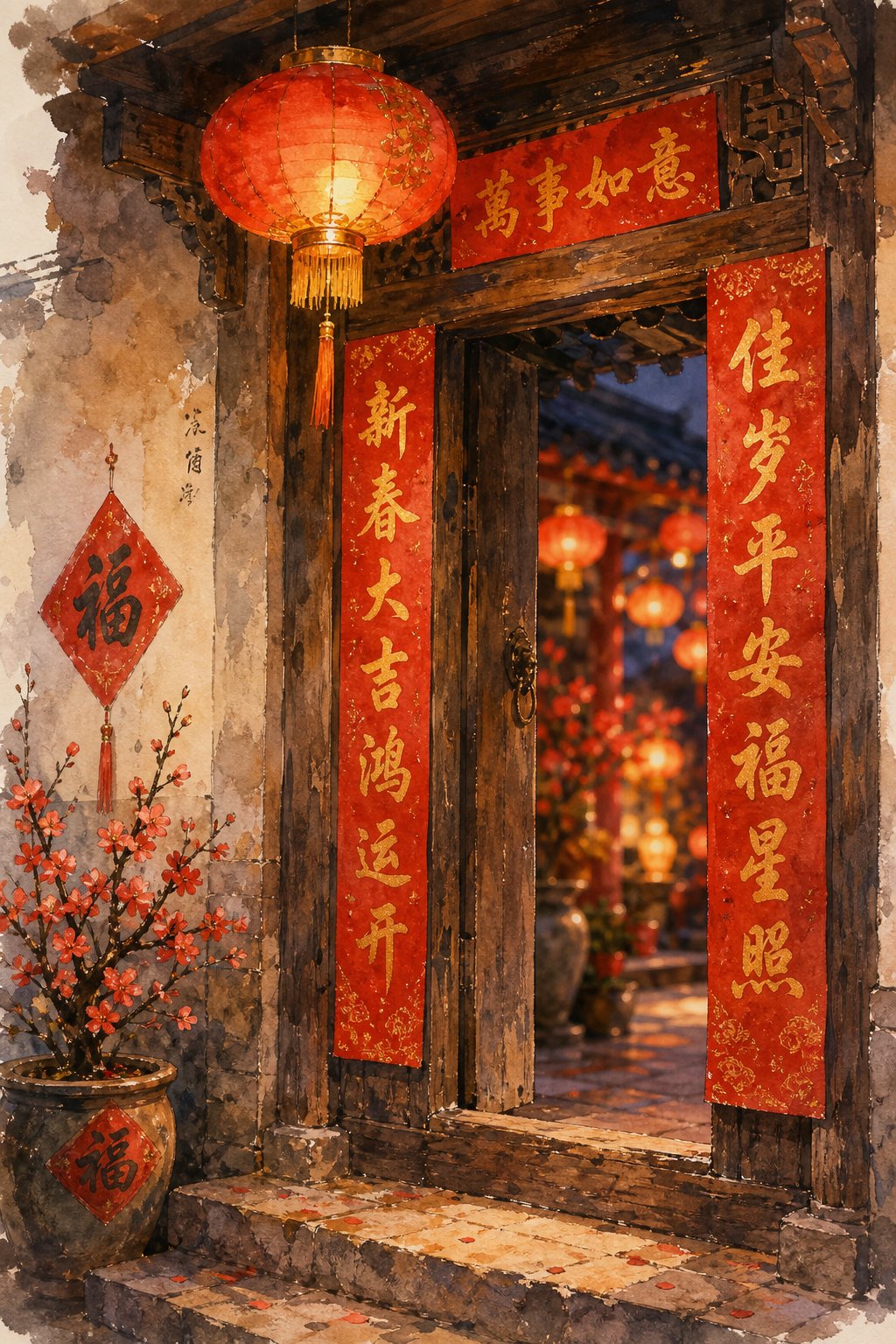
Spring couplets (春联) are paired phrases written on red paper and hung on either side of a doorway. According to traditional practice, these fai chun create a festive atmosphere while channeling luck into the household. For Ox year celebrations, couplets draw on agricultural imagery and the Ox's tireless work ethic.
Here's a classic Ox year couplet broken down character by character:
金牛开出丰收景, 喜鹊衔来幸福春 (Jin niu kai chu fengshou jing, xique xian lai xingfu chun) — "The golden Ox ushers in a harvest scene; the magpie carries in a spring of happiness."
- 金 (jin) — gold, metal. Invokes wealth and connects to the Metal Ox elemental type
- 牛 (niu) — ox. Directly names the zodiac animal, anchoring the blessing to the year
- 丰 (feng) — abundant, plentiful. Represents the harvest reward of diligent labor
- 收 (shou) — gather, harvest. Completing the image of reaping what was sown
- 幸福 (xingfu) — happiness, good fortune. The ultimate wish embedded in the closing phrase
- 春 (chun) — spring. Signals renewal and the start of a prosperous cycle
Notice how the couplet mirrors the year of ox horoscope themes — reward through effort, not luck through chance. Every character reinforces the idea that the Ox's diligence produces tangible results.
Red Envelope and Decoration Characters
Red envelopes (红包) carry more than money. The significance lies in the red paper itself, which symbolizes energy, happiness, and good luck. Characters printed on Ox year red envelopes typically include:
- 福 (fu) — blessing, good fortune. Often displayed upside down because "inverted" (倒, dao) sounds like "arrived" (到, dao) — so an upside-down 福 means "luck has arrived"
- 财 (cai) — wealth. Paired with 发 (fa, to generate) in the phrase 发财, wishing financial growth
- 旺 (wang) — prosperous, thriving. Particularly fitting for Ox year because it suggests vigorous energy building over time
- 顺 (shun) — smooth, favorable. Wishes the recipient a year free of obstacles
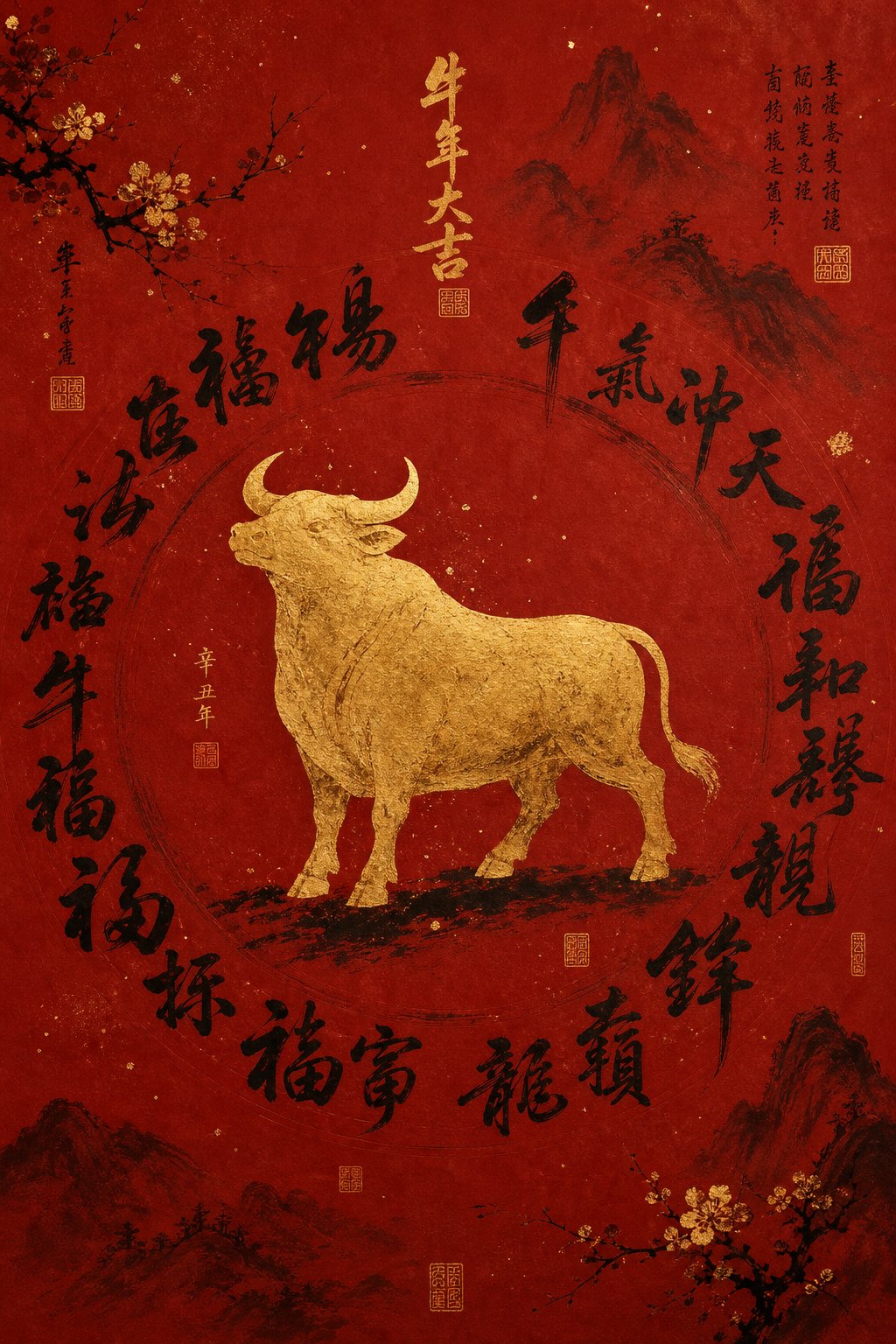
For door decorations and wall hangings during an ox year chinese horoscope celebration, the character 牛 itself often appears stylized in calligraphy, sometimes combined with 气 (qi, energy) to form 牛气冲天 — "Ox energy soaring to the sky" — a popular modern blessing suggesting unstoppable momentum.
Traditional Blessing Phrases for Ox Year Celebrations
When you hand someone a red envelope or greet them during the festival period, spoken blessings carry weight. Here are Ox-specific phrases with their component characters analyzed:
牛年大吉 (Niu nian da ji) — "Great luck in the Ox year."
- 大 (da) — great, large. Amplifies whatever follows it
- 吉 (ji) — auspicious, lucky. The core concept behind all favorable character selection
牛转乾坤 (Niu zhuan qian kun) — "The Ox turns heaven and earth" (meaning to reverse one's fortune for the better).
- 转 (zhuan) — turn, reverse. Implies transformation from difficulty to prosperity
- 乾坤 (qian kun) — heaven and earth (from the I Ching). Represents the entire scope of one's circumstances being renewed
This phrase is especially popular in the chinese horoscope year of ox context because it plays on the Ox's physical strength — powerful enough to literally turn the world around. It's a favorite for families who experienced hardship the previous year and want to signal a fresh start.
Whether written on paper or spoken aloud, these celebratory characters share a common thread with naming characters: they draw power from the Ox's core identity. The difference is scope — names shape one life, while celebration characters bless an entire household or community for the year ahead.
Using Ox Year Characters in Modern Life
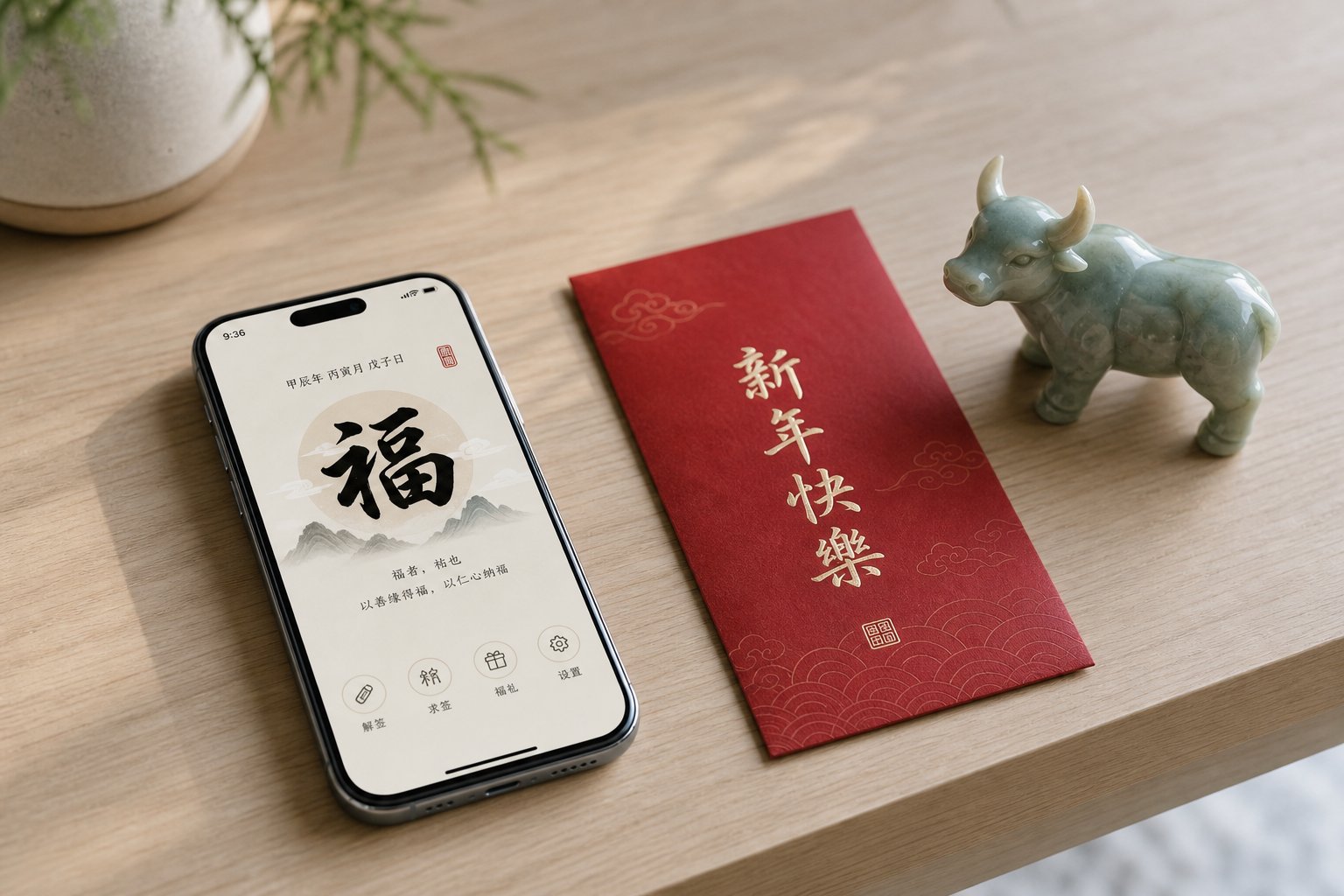
Spring couplets on doorways and hand-brushed red envelopes feel timeless, but the families choosing auspicious characters today live in a very different world. Parents in Shenzhen consult BaZi apps on their phones. Families in Vancouver weigh whether a name works in both Mandarin and English. And WeChat groups light up every Lunar New Year with digital red envelopes stamped with 牛年大吉 stickers. The tradition hasn't faded — it's adapted.
Traditional Characters in Modern Naming Practices
In mainland China, the practice of selecting names based on Five Elements balance and zodiac radicals remains widespread, but the process looks different than it did a generation ago. Contemporary Chinese parents still embrace the Five Elements framework for an auspicious start in life, yet they increasingly blend it with modern sensibilities — choosing characters that sound elegant, avoid overly common combinations, and project individuality alongside traditional fortune.
Digital tools have accelerated this blending. AI-powered BaZi calculators can generate a baby's full Four Pillars chart from exact birth details, identify which elements the chart needs, and suggest character directions within seconds. Parents who welcomed babies during the 2021 chinese new year animal cycle (Metal Ox) could input their child's birth time and receive elemental analysis that once required an in-person consultation with a naming master.
That said, experienced practitioners caution against treating algorithm output as a final answer. A good name still needs to pass human checks: surname rhythm, regional dialect pronunciation, family naming rules, and cultural feel. AI handles the first round of elemental analysis well, but the final decision benefits from personal judgment and family input.
Cross-Cultural Considerations for Diaspora Families
For Chinese families living abroad, the challenge multiplies. A child born in the chinese zodiac 2009 Earth Ox year — or any Ox year — may carry both a Chinese name rooted in radical-based tradition and an English legal name used at school and work. Balancing both requires creative thinking.
Some parents use the BaZi elemental direction as a thematic bridge. If the chart benefits from Water, they might choose a Chinese name with the water radical (like 涵, han) and an English name with water associations (like Brook or Marina). The chinese zodiac in 2009 produced Earth Ox children who benefit from grounding energy — parents might pair a Chinese name containing 坤 (kun) with an English name like Gaia or Clay that carries similar earthy resonance.
Others prioritize phonetic compatibility. They select a Chinese name first based on auspicious radicals, then find an English name that shares similar sounds. A child named 萱宁 (Xuan Ning) might go by Serena in English — different meaning, but a tonal echo that makes both names feel like they belong to the same person.
Here are practical steps for modern families navigating this process, whether in Beijing or Boston:
- Start with the birth chart — use a BaZi calculator to identify which elements support your child's Day Master and determine the most beneficial radical direction
- Filter by radical category — narrow your character list to those containing water, grass, shelter, or field radicals based on the Ox's universal affinities and your child's specific elemental needs
- Check surname compatibility — read the full name aloud multiple times, testing for awkward homophones or tonal clashes in both Mandarin and your family's dialect
- Consider cross-language usability — if your child will use an English name, decide whether you want phonetic similarity, thematic connection, or complete independence between the two names
- Verify character practicality — confirm the chosen characters appear in standard digital input systems, can be printed on official documents, and won't cause encoding issues in school or government databases
- Consult family elders — check for generation name requirements, taboo characters (names of living elders are traditionally avoided), and clan-specific naming poems that may still apply
- Test on social media — in an era where names appear on profiles and messaging apps, make sure the characters display correctly across platforms and don't form unintended slang when abbreviated
The chinese year 2009 animal (Earth Ox) generation is now entering their teenage years, and many carry names that reflect exactly this kind of dual-world thinking — traditional radical logic meeting modern global identity. The same pattern repeated for 2021 Metal Ox babies, whose parents had even more digital resources at their fingertips.
Whether you're selecting characters for a newborn's name or crafting a WeChat blessing for Ox year relatives, the underlying principles haven't changed. What's changed is access — the metaphysical framework that once required specialized knowledge is now available to any family willing to learn the basics and apply them thoughtfully.
Your Complete Ox Year Character Selection Guide
The principles are consistent whether you're naming a 2021 newborn or preparing couplets for the next year of the ox chinese zodiac cycle (2033). Water and grass radicals nourish. Shelter radicals protect. Field radicals ground. And the characters to avoid — goat, horse, heart, and king radicals — remain off-limits regardless of elemental sub-type.
Quick Reference Guide by Purpose and Element
When is the next year of the ox? It falls in 2033 (Water Ox). Whether you're planning ahead or revisiting past ox years, this table organizes the top character picks by use case so you can find what you need at a glance:
| Use Case | Top Pick 1 | Top Pick 2 | Top Pick 3 | Key Radical |
|---|---|---|---|---|
| Baby boy names | 浩 (hao, vast) | 宏 (hong, grand) | 铭 (ming, inscribe) | 氵, 宀, 钅 |
| Baby girl names | 萱 (xuan, daylily) | 涵 (han, encompass) | 安 (an, peace) | 艹, 氵, 宀 |
| Spring couplets | 丰 (feng, abundant) | 春 (chun, spring) | 福 (fu, blessing) | 艹, 宀 |
| Red envelopes | 福 (fu, blessing) | 财 (cai, wealth) | 旺 (wang, thriving) | 宀, 贝 |
| Decorations | 吉 (ji, auspicious) | 顺 (shun, smooth) | 牛 (niu, ox) | 口, 宀 |
Final Principles for Choosing Ox Year Characters
Across all ox years chinese zodiac cycles, the selection philosophy stays anchored to the animal's identity. The Ox works hard, eats grass, drinks water, and rests under shelter. Characters that mirror this life — nourishment, stability, purposeful labor — amplify fortune. Characters that evoke slaughter, display, or conflict drain it.
For anyone born in a year of the chinese ox, remember these core rules:
- Match your elemental sub-type first — a Metal Ox benefits from metal radicals, a Water Ox from water radicals, and so on through the generating cycle
- Layer universal Ox radicals second — grass (艹), water (氵), shelter (宀), and field (田) work for every Ox birth regardless of element
- Always check radical composition — surface meaning can deceive; verify that hidden components don't contain goat, horse, or heart radicals
- Balance sound with structure — tonal variety across the full name prevents flat or awkward pronunciation
A name carries weight for a lifetime. A couplet blesses a household for a year. In both cases, the right characters do the same thing — they align written form with cosmic rhythm, giving the Ox's quiet strength a channel to flow through.
Frequently Asked Questions About Auspicious Characters for Ox Year
1. What radicals are most auspicious for Ox year baby names?
The four most favorable radical categories for Ox year babies are water (氵), grass (艹), shelter (宀), and field (田). Water radicals like those in 浩 and 润 nourish the Ox's hidden Yin Water stem. Grass radicals symbolize plentiful food and freedom from material worry, since the Ox is a grass-eating animal. Shelter radicals represent security and a stable home, while field radicals connect to the Ox's agricultural identity and purposeful labor. These radicals work universally across all five elemental Ox sub-types (Metal, Water, Wood, Fire, Earth) and can be fine-tuned based on the specific birth year's heavenly element.
2. Which characters should you avoid when naming an Ox year baby?
Characters containing the goat radical (羊) should be avoided first, as the Goat is the Ox's direct zodiac clash. This includes popular characters like 美 (beautiful) and 善 (good). Horse radicals (马) are also problematic due to the Ox-Horse harm relationship, ruling out names like 骏 (fine horse). Additionally, avoid excessive Wood radicals like 森 (forest) since Wood overcomes Earth in the controlling cycle. The heart/meat radical (心/忄) implies sacrificial offerings, and the king/jade radical (王/玉) suggests being led to display or sacrifice. Always check a character's structural composition beyond its surface meaning.
3. How do the five elemental Ox types affect character selection?
Each 60-year cycle assigns a different heavenly element to the Ox, creating five sub-types with distinct character needs. Metal Ox (1961, 2021) benefits from metal radicals like 钅 and Earth radicals that feed Metal. Water Ox (1973, 2033) thrives with water radicals (氵) that strengthen its amplified Yin Water energy. Wood Ox (1985) pairs well with wood (木) and grass (艹) radicals. Fire Ox (1937, 1997) benefits from fire radicals (火) since Fire generates Earth. Earth Ox (1949, 2009) gains from earth and field radicals (土, 田) for double-stability reinforcement. The key principle is choosing characters that match or feed the heavenly element through the Wu Xing generating cycle.
4. What are common Ox year blessing phrases used during Lunar New Year?
Popular Ox year blessing phrases include 牛年大吉 (Niu nian da ji, great luck in the Ox year), 牛转乾坤 (Niu zhuan qian kun, the Ox turns heaven and earth to reverse fortune), and 牛气冲天 (Niu qi chong tian, Ox energy soaring to the sky). For spring couplets, phrases like 金牛开出丰收景 invoke the golden Ox ushering in harvest abundance. Red envelopes commonly feature 福 (blessing), 财 (wealth), and 旺 (thriving). These phrases draw on the Ox's core identity of diligent labor producing tangible rewards rather than relying on random luck.
5. How can diaspora families balance traditional Ox year naming with modern cross-cultural needs?
Diaspora families can bridge traditions by using the BaZi elemental direction as a thematic connector between Chinese and English names. If the birth chart favors Water, pair a Chinese water-radical name like 涵 (han) with an English name carrying water associations like Brook. Others prioritize phonetic similarity, matching sounds across both names so they feel unified. Practical steps include running a BaZi calculator for elemental analysis, filtering characters by favorable Ox radicals, testing pronunciation across dialects, verifying characters work in digital systems, and consulting family elders about generation naming rules. Modern AI tools handle initial elemental analysis well, but final decisions benefit from human judgment on cultural feel and cross-language usability.