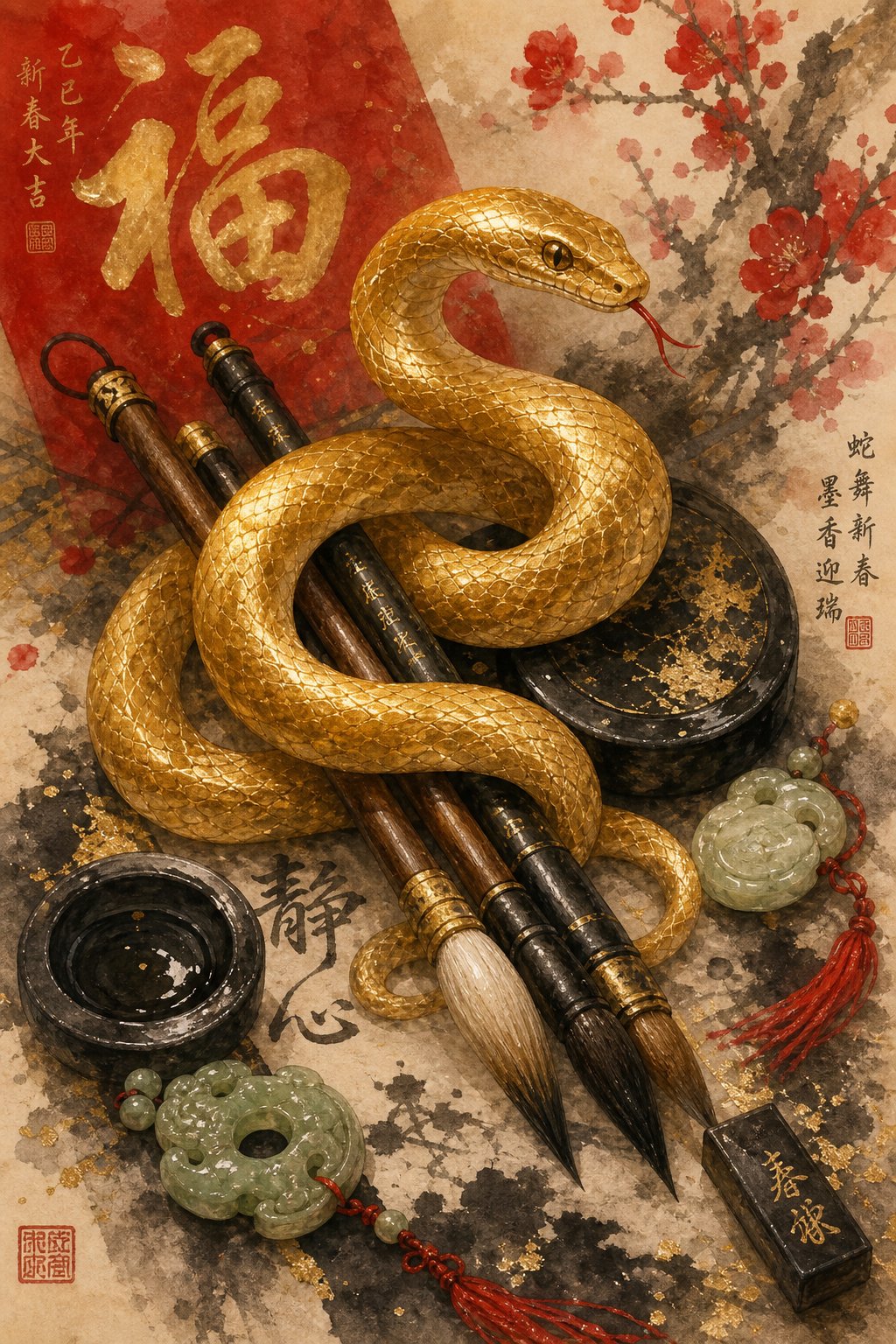
Understanding Auspicious Characters for the Snake Zodiac
Imagine choosing a single written character that could shape a person's fortune, identity, or the energy of an entire year. In Chinese culture, that is exactly what auspicious characters — known as 吉祥字 (jixiang zi) — are designed to do. These are carefully selected Chinese characters believed to carry favorable energy, and their use stretches back centuries across naming traditions, calligraphy, festival greetings, and business branding.
When it comes to the Chinese zodiac, character selection is never random. Each of the twelve zodiac animals carries distinct symbolic attributes, and the characters considered lucky must resonate with that animal's core energy. For the Snake year, this means every stroke, radical, and phonetic component is evaluated through the lens of the Snake's defining qualities: wisdom, elegance, intuition, and transformation.
What Are Auspicious Characters in Chinese Zodiac Tradition
At its simplest, an auspicious character is one whose meaning, structure, and even stroke count align with positive outcomes. In traditional Chinese naming practice, parents often consult fortune tellers who analyze a child's birth chart and then recommend characters that complement the child's destiny. The chosen characters reflect aspirational qualities — strength, beauty, prosperity, virtue — but they must also harmonize with the zodiac animal governing the birth year.
This tradition goes far beyond baby names. You'll find auspicious characters on Spring Festival couplets, red envelopes, business signage, and calligraphy scrolls. The underlying belief is consistent: written language is not merely communicative. It is energetic. The right character, placed in the right context, attracts good fortune.
Why the Snake Zodiac Demands Specific Character Choices
So what is year of the Snake, and why does it require its own set of favorable characters? The Snake is the sixth animal in the Chinese zodiac cycle, associated with the Earthly Branch 巳 (si) and linked to the Fire element. Years of the Snake recur every twelve years — recent cycles include 1965, 1977, 1989, 2001, 2013, and 2025. Each cycle carries the Snake's foundational symbolism while also being shaped by its specific elemental pairing.
As the sixth zodiac animal, the Snake occupies a pivotal midpoint in the twelve-year cycle — a position traditionally associated with depth, reflection, and hidden power. This is why Snake symbolism centers on wisdom and transformation rather than outward force, and why its auspicious characters favor elegance and subtlety over blunt strength.
What number is the Snake in Chinese zodiac? Sixth — and that placement matters. Characters that carry quiet intelligence, refined beauty, or transformative energy align naturally with the Snake's essence. Think of characters containing jade radicals (suggesting elegance), heart radicals (suggesting intuition), or grass radicals (suggesting growth and renewal). A character like 勇 (courage) might suit a Tiger year, but the Snake calls for something more nuanced — perhaps 慧 (wisdom) or 瑾 (fine jade).
This article goes well beyond a simple list of lucky characters. In the sections ahead, you'll find the cultural logic, elemental theory, radical analysis, stroke count numerology, and practical frameworks that explain precisely why certain characters carry favorable energy during the Snake year — and which ones to avoid entirely.
The Cultural Logic Behind Snake Year Character Auspiciousness
Why do certain characters feel right for the Snake year while others fall flat? The answer lies deep in Chinese cosmology, where every zodiac animal carries a distinct energetic signature that shapes which written forms attract fortune and which repel it. The Snake is not just an animal in this system — it is a philosophical archetype, and understanding its symbolic roots is the key to selecting characters with genuine resonance.
Snake Symbolism in Classical Chinese Thought
In classical Chinese philosophy, the Snake represents a unique blend of Yin energy and hidden Fire. It is tied to the Earthly Branch 巳 (si), which sits in the Fire position of the cosmological cycle. This pairing gives the Snake a paradoxical nature: outwardly calm and reserved, yet internally driven by intense, transformative energy. The core chinese zodiac snake traits — wisdom (智), intuition, elegance, stealth, and the capacity for renewal — all stem from this duality.
Think of how a snake moves through the world. It is silent, deliberate, and perceptive. It sheds its skin to emerge renewed. These year of the snake characteristics translate directly into the types of characters considered favorable: those that embody quiet intelligence, graceful beauty, and inner strength rather than loud, aggressive force. Chinese snake characteristics in traditional texts often emphasize the creature's connection to hidden knowledge and spiritual depth, which is why characters associated with jade, wisdom, and subtle growth carry such weight.
How Zodiac Attributes Shape Character Selection
Traditional Chinese naming conventions and feng shui principles operate on a shared assumption: energy flows through form. A character's radicals, strokes, and meaning are not decorative — they channel specific elemental forces. For the Snake, this means characters must harmonize with its Fire-element foundation and Yin-dominant temperament.
Here is where the Yin-Yang balance becomes practical. The Snake is classified as a Yin Fire animal. Unlike the blazing Yang Fire of the Horse, the Snake's fire is internal — think candlelight, not wildfire. This means characters with overly aggressive or expansive energy can overwhelm the Snake's nature. Instead, zodiac snake traits favor characters that carry soft strength: radicals connected to grass (艹) suggest shelter and comfort, mouth radicals (口) represent safe enclosures like caves, and roof radicals (宀) symbolize protection. As noted in zodiac nameology principles, Snakes thrive with characters that evoke hiding, nourishment, and quiet flourishing.
The year of the snake qualities — perceptiveness, refinement, strategic thinking — also guide phonetic choices. Characters with smooth, flowing pronunciations are preferred over harsh or abrupt sounds, mirroring the Snake's graceful movement. And because the Snake's essential snake qualities lean toward introspection and depth, characters with layered meanings (those that reward contemplation) are considered more auspicious than simple, surface-level positive words.
This interplay between zodiac symbolism and character structure is not arbitrary. It follows a coherent metaphysical logic where animal energy, elemental forces, and linguistic form all speak the same language. The next layer of complexity emerges when you factor in the Five Elements cycle — where the Snake's Fire nature interacts with Wood, Water, Earth, and Metal to create specific elemental needs that radicals and stroke counts must address.
Five Elements and Elemental Harmony in Snake Year Characters
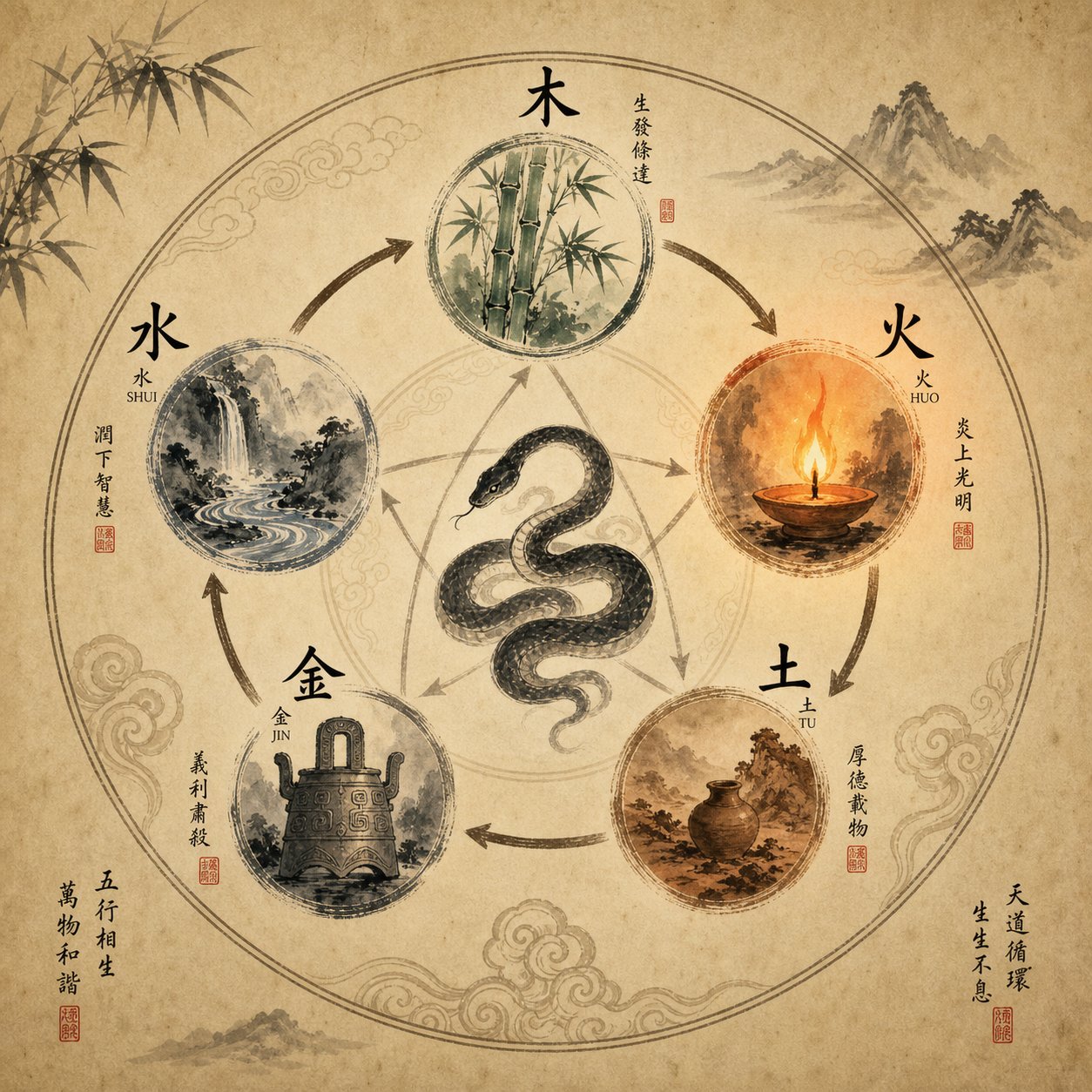
The Snake's Fire nature does not exist in isolation. It sits within a dynamic system of five elemental forces — Wood, Fire, Earth, Metal, and Water — each generating, controlling, or draining the others in a continuous cycle. Selecting auspicious characters for the Snake year means understanding exactly where the Snake stands in this elemental web and which forces strengthen or weaken its energy.
Five Elements Theory and the Snake's Elemental Profile
In Wu Xing (五行) theory, the five elements relate through two primary cycles. The generating cycle flows Wood to Fire to Earth to Metal to Water and back again — each element nourishing the next. The controlling cycle works differently: Water extinguishes Fire, Fire melts Metal, Metal cuts Wood, Wood penetrates Earth, and Earth dams Water. For the Snake, whose base element is Fire, this means Wood acts as its natural fuel, Earth receives its energy, Water threatens to extinguish it, and Metal drains it indirectly through the controlling cycle.
But here is where it gets interesting. Not every Snake year carries the same elemental flavor. The 1989 snake zodiac year, for instance, was an Earth Snake — meaning its Heavenly Stem added Earth energy on top of the base Fire. The 1905 chinese zodiac Snake was a Wood Snake, and zodiac animals 2013 belonged to the Water Snake. Each variation creates a different elemental profile and, consequently, different character needs. In earth snake astrology, the grounding Earth element tempers the Snake's internal fire, producing a personality that is steady and pragmatic. The year of the earth snake calls for characters that reinforce stability without smothering warmth — a very different prescription than what a Water Snake or Fire Snake requires.
Heavenly Stems and Earthly Branches in Character Selection
Every Chinese year is defined by a pairing of one Heavenly Stem (天干) and one Earthly Branch (地支). The Snake's Earthly Branch is always 巳 (si), but the Heavenly Stem rotates through the ten-stem cycle. The 2025 Snake year carries the combination 乙巳 — Yin Wood over Fire. This is significant: in the generating cycle, Wood feeds Fire. The Yin Wood stem (乙) is gentle and flexible, like a vine nurturing a candle flame rather than a log fueling a bonfire.
What does this mean for character selection? The Wood-Fire relationship in 乙巳 suggests the Snake's fire is well-fed but delicate. It does not need more fuel — it needs regulation and grounding. Characters that introduce cooling Water or stabilizing Earth energy become especially valuable. Meanwhile, adding more Wood or Fire risks overheating the chart. This is the logic behind the BaZi (Four Pillars of Destiny) approach to naming: you do not simply pile on favorable-sounding characters. You diagnose what the elemental chart actually needs.
Elemental Balance Through Radical Composition
Chinese characters carry elemental energy through their radicals — the structural components that signal meaning. A character with the water radical (氵) channels Water energy. A character built on the wood radical (木) carries Wood. This is not metaphor; in traditional naming practice, radicals are treated as elemental delivery systems. The table below maps each element to its common radicals and clarifies its relationship to the Snake's inherent Fire energy:
| Element | Common Radicals | Example Characters | Relationship to Snake (Fire) | Effect on Character Selection |
|---|---|---|---|---|
| Wood (木) | 木, 艹, 竹 | 林 (lin, forest), 芳 (fang, fragrant) | Generates Fire | Use cautiously — can overfuel the Snake's fire if chart is already warm |
| Fire (火) | 火, 灬, 日 | 煜 (yu, radiant), 晨 (chen, morning) | Same element | Reinforces Snake energy but risks excess heat; best for weak-Fire charts |
| Earth (土) | 土, 山, 石 | 坤 (kun, earth), 岩 (yan, rock) | Fire generates Earth | Drains Fire gently, providing grounding and stability — often favorable |
| Metal (金) | 金, 钅 | 铭 (ming, inscribe), 鑫 (xin, prosperity) | Earth generates Metal (indirect drain) | Neutral to mildly draining; useful when chart needs structure |
| Water (水) | 氵, 雨, 冫 | 涵 (han, contain), 泽 (ze, marsh) | Controls (extinguishes) Fire | Powerful balancer for overheated charts; avoid if Fire is already weak |
Notice that no element is universally good or bad. A chinese horoscope earth snake born in summer with excessive Fire desperately needs Water radicals for cooling. A Water Snake born in winter might need Wood radicals to gently warm the chart. The correct choice always depends on the individual's full birth chart — their BaZi configuration of year, month, day, and hour pillars.
This is the foundational principle of BaZi naming: the goal is not to add whatever element sounds pleasant, but to identify the chart's "Favorable Element" (用神) and introduce it through radical composition. For chinese zodiac years 1989 — an Earth Snake year — individuals born in that cycle often carry strong Earth and Fire energy, making Water and Metal radicals particularly beneficial in their names. Someone born during the Wood Snake year of 2025 faces a different equation entirely.
The elemental profile tells you which radicals to reach for. But radicals are only one dimension of a character's energy. The total stroke count, the phonetic resonance, and the symbolic meaning all contribute layers of auspiciousness — or conflict — that require their own analytical framework.
Character Anatomy and Stroke Count Numerology Explained
Radicals tell you which elemental force a character channels. But a character is more than its radical — it is an architecture of meaning built from multiple layers: the radical signals category, the phonetic component hints at sound and secondary meaning, the total stroke count carries its own numerological weight, and the overall symbolic resonance ties everything together. To truly understand why certain characters qualify as auspicious characters for snake year use, you need to dissect them the way a jeweler examines a gemstone — facet by facet.
Radical Analysis and Snake-Aligned Components
Two radicals carry special significance for the Snake year, and understanding why reveals how deeply Chinese character structure connects to zodiac energy.
The first is the 虫 radical (chong). In modern Chinese, 虫 means "insect" or "bug," but its historical scope was far broader. In classical usage, 虫 referred to all crawling, slithering creatures — including serpents. The snake in chinese character form (蛇, she) is built directly on this radical. Characters containing 虫 carry a subtle ancestral link to the Snake itself, making them naturally resonant during Snake years. You will find this radical in characters like 蝶 (die, butterfly — transformation), 蕴 (yun, containing hidden depth), and 蜿 (wan, winding gracefully).
The second is the jade radical 玉 (yu), which appears as ⺩ when positioned on the left side of a character. According to radical analysis resources, the jade radical appears in 473 characters in the Kangxi Dictionary, and these characters consistently relate to precious, beautiful, or refined things. Jade itself is the quintessential symbol of elegance, virtue, and quiet strength in Chinese culture — qualities that mirror the Snake's own character. Characters built on the jade radical, such as 瑾 (jin, fine jade), 珍 (zhen, treasure), 琳 (lin, beautiful jade), and 莹 (ying, luster of gems), carry an inherent elegance that aligns perfectly with the Snake's refined energy.
Beyond these two, several other radicals hold favorable associations for the year of the snake in chinese characters:
- Heart radical (忄/心) — connects to intuition and emotional depth, core Snake attributes. Found in characters like 慧 (hui, wisdom) and 悦 (yue, joy).
- Grass radical (艹) — represents shelter and concealment, echoing the Snake's preference for hidden, protected spaces. Found in 蕊 (rui, flower pistil) and 芮 (rui, small and beautiful).
- Roof radical (宀) — symbolizes a safe dwelling, auspicious because Snakes thrive in enclosed, secure environments. Found in 宸 (chen, imperial) and 安 (an, peace).
Stroke Count Numerology for Auspicious Selection
Sounds complex? It gets another layer deeper. In traditional Chinese naming practice, the total number of strokes in a character is not just a structural detail — it is a numerological value with its own fortune rating. This system, known as 笔画吉凶 (bihua jixiong), assigns auspicious or inauspicious qualities to specific stroke counts based on their Five Elements associations and symbolic meanings.
As documented in Chinese Name Numerology systems, each stroke count from 1 through 81 carries a distinct energy signature. Here are the key favorable counts and what they represent:
- 1 stroke — Wood element. Symbolizes independence, creativity, and leadership. Rated very auspicious.
- 3 strokes — Wood element. Represents activity, expression, and optimism. Rated auspicious.
- 5 strokes — Earth element. Embodies change, adaptation, and vitality. Rated auspicious and particularly useful for grounding the Snake's Fire.
- 7 strokes — Metal element. Carries wisdom, analysis, and mystery. Rated auspicious and deeply aligned with the Snake's intellectual nature.
- 8 strokes — Metal element. Symbolizes authority, wealth, and achievement. Rated auspicious.
Counts of 2, 4, 6, 9, and 10 are generally considered inauspicious in this system. However, context matters — a character with an "inauspicious" stroke count might still be favorable if it balances the overall name's Five Formations (五格) calculation, where the Heavenly, Earthly, Human, External, and Total Formations must work in harmony.
One important note: stroke counting in name numerology uses traditional (繁体) character forms, not simplified ones. A character like 华 has 6 strokes in simplified form but 14 in traditional — and it is the traditional count that determines its numerological value.
When you combine radical analysis with stroke count numerology, you get a complete picture of why specific characters earn their place as favorable choices. The table below breaks down several recommended characters with their full anatomy:
| Chinese Character | Pinyin | Meaning | Stroke Count | Key Radical | Snake Year Suitability |
|---|---|---|---|---|---|
| 慧 | hui | Wisdom, intelligence | 15 | 心 (heart) | Directly embodies the Snake's core attribute of wisdom; heart radical connects to intuition and inner knowing |
| 瑾 | jin | Fine jade, precious virtue | 15 | ⺩ (jade) | Jade radical channels elegance and refinement; meaning reflects the Snake's association with hidden beauty and moral depth |
| 蕊 | rui | Flower pistil, essence | 15 | 艹 (grass) | Grass radical provides shelter energy; the pistil symbolizes hidden potential and delicate beauty — quintessential Snake qualities |
| 琳 | lin | Beautiful jade, gem | 12 | ⺩ (jade) | Jade radical carries preciousness; the character suggests refined beauty without ostentation, matching the Snake's understated elegance |
| 宸 | chen | Imperial, celestial | 10 | 宀 (roof) | Roof radical provides the safe enclosure Snakes favor; meaning conveys authority and dignity through quiet power |
| 蝶 | die | Butterfly | 15 | 虫 (insect/serpent) | 虫 radical carries ancestral Snake connection; butterfly symbolizes transformation — the Snake's defining life theme |
| 珍 | zhen | Treasure, precious | 9 | ⺩ (jade) | Jade radical signals value and beauty; meaning suggests something rare and worth protecting, echoing the Snake's private nature |
| 悦 | yue | Joy, delight | 10 | 忄 (heart) | Heart radical connects to emotional intelligence; a gentle, positive character that balances the Snake's sometimes intense inner world |
You'll notice several characters share a stroke count of 15. In the extended numerology system, 15 is associated with prosperity, happiness, and the ability to attract support from others — qualities that complement the Snake's self-reliant nature by opening doors to collaboration and good fortune.
The chinese character for snake itself — 蛇 (she, 11 strokes) — is rarely used in names directly, but its structural DNA informs which characters carry sympathetic energy. Any character sharing the 虫 radical or echoing the Snake's sinuous, flowing form through its stroke patterns taps into that same archetypal resonance. Similarly, the character of snake as a symbol — coiled, patient, elegant — guides aesthetic preferences toward characters with balanced, visually graceful compositions rather than blocky or angular ones.
This anatomical approach transforms character selection from guesswork into informed analysis. Yet characters do not exist in isolation. Their true power emerges when placed into specific contexts — and the most consequential context of all is a child's name, where every radical, stroke, and meaning will accompany a person for life.
Best Auspicious Characters for Snake Year Baby Names
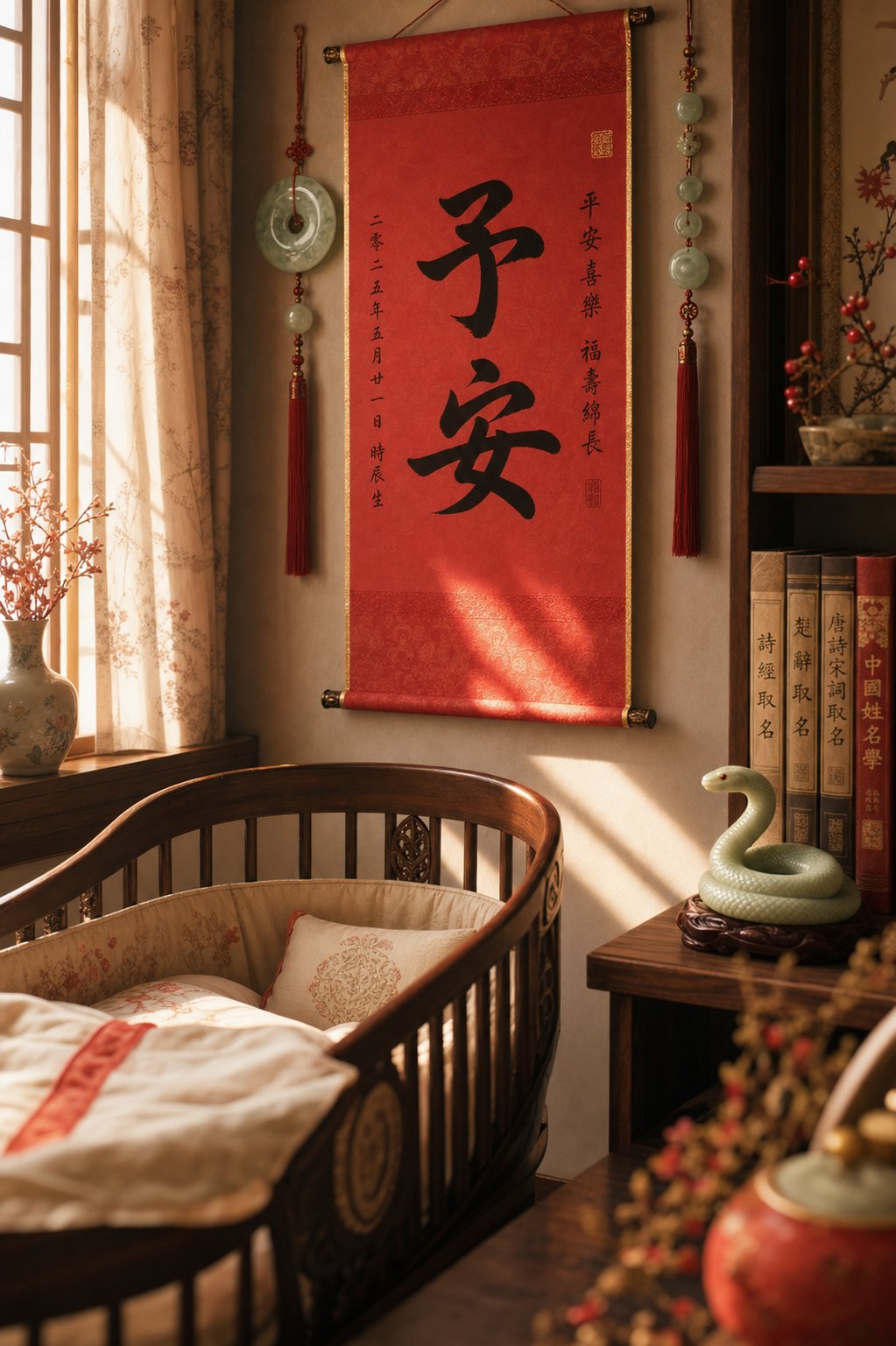
A character on a Spring Festival banner carries energy for a season. A character in a child's name carries energy for a lifetime. That distinction matters enormously when selecting auspicious characters for a year of the snake baby, because naming demands a level of precision that decorative or greeting contexts simply do not require.
When parents choose snake related names for a newborn, they are not just picking pleasant meanings. They are building an identity scaffold that must account for the child's full BaZi birth chart, the family's generational naming conventions, gender-appropriate connotations, and phonetic flow across all three name positions (surname, generation character, and given character). A character that looks perfect in isolation might clash with the surname's tonal pattern or duplicate a radical already present in the generation character. This is why Bazi-informed naming treats character selection as a diagnostic process rather than a shopping exercise.
People born in the year of the snake are traditionally believed to inherit the Snake's intuitive, perceptive, and analytical nature. For babies born in 2025 chinese zodiac cycle — a Yin Wood Snake year — this means a temperament inclined toward quiet observation, strategic thinking, and emotional depth. Name characters can either reinforce these innate strengths or introduce balancing qualities that round out the personality profile. A child whose chart already runs heavy on introspective Yin energy, for example, might benefit from a character carrying gentle warmth or outward confidence.
Naming Characters for Wisdom and Intelligence
Wisdom is the Snake's signature trait, and many parents want their child's name to honor that connection. These characters channel intellectual depth and perceptive clarity:
- 慧 (hui) — Wisdom and keen intelligence. The heart radical grounds this character in intuitive knowing rather than mere book learning.
- 睿 (rui) — Sagacity and foresight. Carries a sense of seeing beyond the surface, perfectly aligned with the Snake's penetrating perception.
- 哲 (zhe) — Philosophy and discernment. Suggests a mind that seeks truth — ideal for people born the year of the snake, who are drawn to deeper understanding.
- 颖 (ying) — Brilliance and talent. Implies standing out through intelligence rather than force, matching the Snake's understated excellence.
- 明 (ming) — Brightness and clarity. Combines the sun and moon radicals, suggesting balanced illumination — both logical and intuitive.
Characters for Beauty and Elegance
The Snake's association with grace and refinement makes beauty-oriented characters especially resonant. These work particularly well for girls' names, though elegance is not gender-exclusive in Chinese naming tradition:
- 瑾 (jin) — Fine jade, moral beauty. The jade radical signals preciousness and quiet virtue.
- 婉 (wan) — Graceful and gentle. Evokes the Snake's sinuous, flowing movement through its very sound.
- 琳 (lin) — Beautiful jade or gem. Suggests refined beauty without ostentation.
- 妍 (yan) — Lovely and attractive. A popular choice in 2025 baby naming trends, often paired with characters like 欣 (xin, joy).
- 蕊 (rui) — Flower pistil, hidden essence. The grass radical provides shelter energy while the meaning suggests delicate, concealed beauty.
Characters for Strength and Prosperity
Not every Snake year baby needs soft, introspective energy. Some birth charts call for characters that introduce resilience, ambition, or material fortune — especially when the child's BaZi shows weak Earth or Metal elements:
- 瑞 (rui) — Auspicious omen, good fortune. The jade radical adds elegance while the meaning carries unmistakable prosperity energy.
- 铭 (ming) — To inscribe, to remember. The metal radical introduces structure and permanence, grounding the Snake's fluid nature.
- 坤 (kun) — Earth, receptive power. Drawn from the I Ching, this character channels steady, enduring strength that balances Fire.
- 泽 (ze) — Marsh, grace, benevolence. The water radical provides cooling balance for the Snake's inherent warmth while suggesting abundance.
- 宸 (chen) — Imperial, celestial. The roof radical offers the safe enclosure Snakes favor, and the meaning conveys dignified authority.
A practical note: these characters are starting points, not prescriptions. The ideal name for any year of the snake baby emerges only after analyzing the specific birth chart — the hour, day, and month pillars all modify what the year pillar suggests. A character perfect for one Snake baby might create elemental excess in another.
Naming is the most personal application of auspicious character selection, but it is far from the only one. The same principles of elemental harmony and symbolic resonance extend outward — into the greetings we write, the couplets we hang, and the business names we register — each context carrying its own rules for how characters should be chosen and combined.
Auspicious Characters for Greetings and Decorations
Characters chosen for a child's name must pass through layers of birth chart analysis and elemental balancing. Characters chosen for a Spring Festival couplet or red envelope? They play by different rules entirely. In decorative and greeting contexts, the priority shifts from personal chart alignment to visual impact, broad fortune energy, and cultural resonance. A couplet on your front door does not need to match anyone's BaZi — it needs to look beautiful, sound harmonious, and broadcast year of the snake fortune to everyone who passes by.
This distinction frees you to work with bolder, more celebratory characters. Where naming demands subtlety and precision, greetings and decorations thrive on directness: prosperity, luck, joy, and auspiciousness stated clearly and confidently. The chinese new year snake characteristics most celebrated in these contexts are the ones that translate into universal blessings — wisdom becoming cleverness for all, elegance becoming beauty for the home, transformation becoming renewal for the year ahead.
Characters for Spring Couplets and Calligraphy
Spring Festival couplets (春联) are two vertical lines of blessings posted on either side of a doorway, often paired with a four-character horizontal banner (横批) across the top. When selecting characters for Snake year couplets, you want individual characters that carry strong visual weight and unmistakable positive meaning. The most commonly featured characters in Spring Festival couplets include:
- 福 (fu) — Blessing, fortune. The single most iconic character of Chinese New Year, often displayed inverted to suggest fortune "arriving" (倒福).
- 吉 (ji) — Lucky, auspicious. Compact and visually balanced, ideal for calligraphy scrolls.
- 瑞 (rui) — Auspicious omen. Carries the jade radical, connecting it to the Snake's elegance while broadcasting good fortune.
- 祥 (xiang) — Propitious, blessed. Frequently paired with Snake year imagery in decorative art.
- 春 (chun) — Spring. Signals renewal and fresh beginnings, echoing the Snake's transformative nature.
For calligraphy scrolls and wall hangings, single-character works featuring 福, 瑞, or 慧 make striking Snake year decorations. The key consideration here is stroke balance — characters with evenly distributed strokes look more commanding when written large. A character like 慧 (15 strokes) fills a scroll beautifully, while a simpler character like 吉 (6 strokes) works better on smaller red paper squares.
Snake Year Idioms for Greetings and Red Envelopes
Four-character phrases (成语 or chengyu-style expressions) are the backbone of Chinese New Year greetings. For the Snake year, the best phrases weave in the chinese new year snake personality — clever, graceful, fortune-bringing — through direct reference or wordplay. Many of these use the character 蛇 (she, snake) or 巳 (si, the Snake's Earthly Branch) as homophonic substitutions in classic idioms, creating playful blessings that feel both traditional and fresh.
Here are recommended phrases organized from straightforward blessings to clever wordplay, with guidance on where each works best:
- 蛇年吉祥 (she nian ji xiang) — "Auspiciousness in the Year of the Snake." The most universal Snake year greeting. Works everywhere: red envelopes, text messages, couplet banners, and business cards.
- 金蛇献瑞 (jin she xian rui) — "The golden snake presents good omens." A classic phrase for formal greetings, calligraphy scrolls, and corporate New Year cards. The golden snake imagery evokes prosperity and divine favor.
- 灵蛇开运 (ling she kai yun) — "The agile snake brings good luck." Emphasizes the Snake's cleverness and spiritual energy. Ideal for red envelope inscriptions and social media greetings.
- 蛇行天下 (she xing tian xia) — "The snake moves freely across the world." Suggests ambition and expansive success. Particularly fitting for business contexts or career-focused blessings.
- 蛇转乾坤 (she zhuan qian kun) — "The snake turns the world around." Implies transformative power and dramatic positive change. Strong choice for someone entering a new chapter.
- 巳巳如意 (si si ru yi) — A wordplay on 事事如意 ("may everything go as you wish"), substituting the Snake's Earthly Branch 巳 for 事. This homophonic twist impresses native speakers and works beautifully on red envelopes.
- 蛇来运转 (she lai yun zhuan) — A play on 时来运转 ("when the time comes, luck turns"), replacing 时 with 蛇. Suggests that the Snake's arrival brings a reversal of fortune. Perfect for friends who had a tough previous year.
- 好巳成双 (hao si cheng shuang) — Adapted from 好事成双 ("good things come in pairs"). A sophisticated greeting for weddings, partnerships, or couples celebrating during the Snake year.
Auspicious Characters for Business and Branding
Business naming during the Snake year follows a middle path between personal naming and decorative use. You want characters that carry broad prosperity energy while also reflecting the Snake's strategic intelligence — qualities like foresight, precision, and quiet authority resonate well in commercial contexts.
Characters frequently chosen for Snake year business launches include 瑞 (auspicious), 智 (wisdom), 鑫 (triple gold, prosperity), 隆 (thriving), and 锦 (brocade, splendid). The Snake's association with wealth accumulation through patience and strategy makes characters suggesting steady growth more appropriate than those implying explosive, aggressive expansion. A business named during the Snake year benefits from characters that project competence and refinement rather than raw power.
For red envelope inscriptions specifically, brevity wins. A simple 蛇年发财 ("prosperity in the Snake year") or 蛇年大吉 ("great luck in the Snake year") written inside the flap adds a personal touch without overwhelming the gesture. The character selection here is less about elemental precision and more about clear, warm intention — which is exactly what makes decorative and greeting contexts so accessible compared to the rigorous demands of personal naming.
Knowing which characters to reach for is half the equation. The other half — equally important and far less discussed — is knowing which characters and radicals to actively avoid during the Snake year, where zodiac clashes and elemental conflicts can turn a well-meaning choice into an energetic liability.
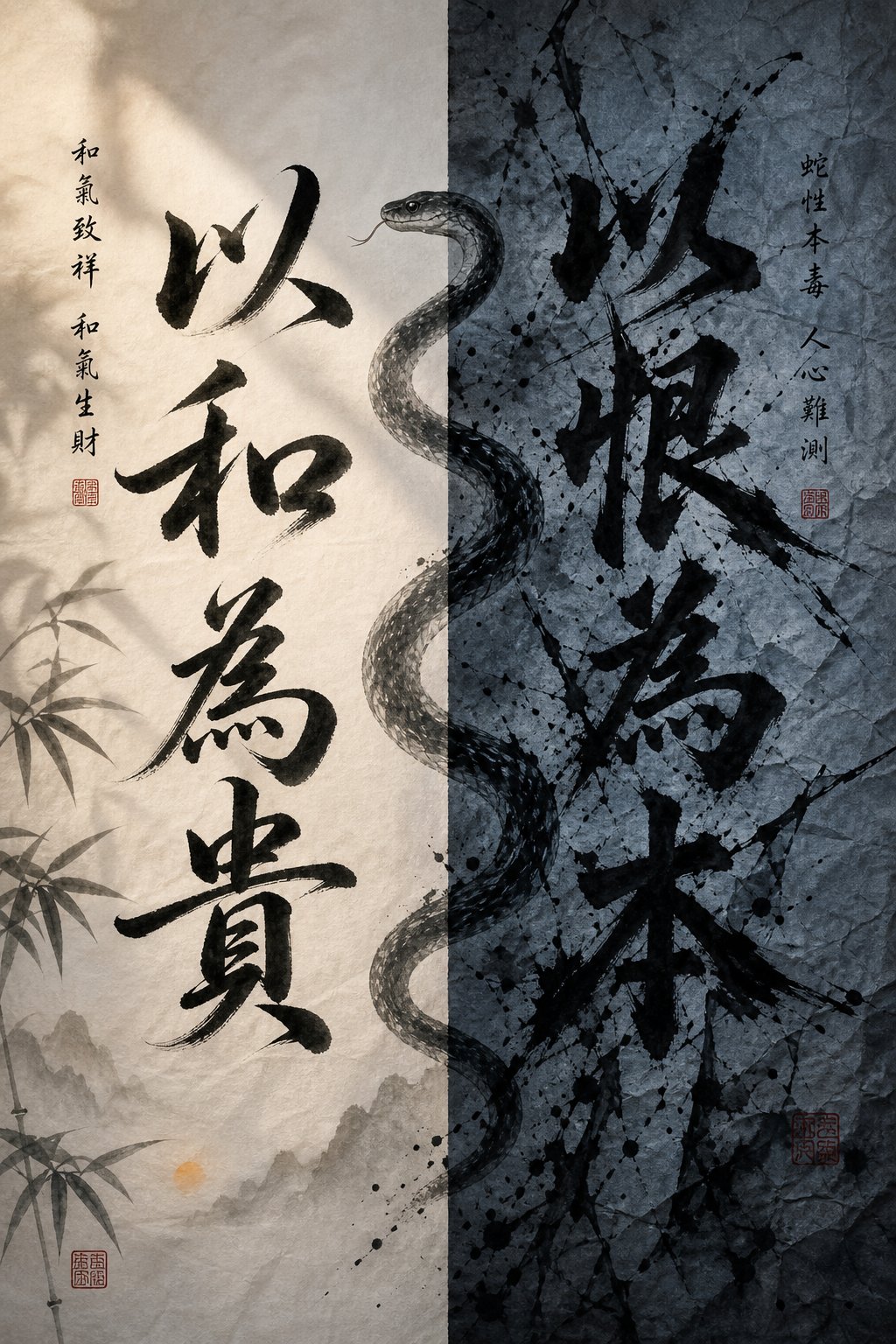
Characters and Radicals to Avoid in the Snake Year
Selecting the right characters is only half the work. Avoiding the wrong ones matters just as much — and in some traditional naming schools, it matters more. A single conflicting radical or clashing zodiac reference can undermine an otherwise well-constructed name or greeting, introducing friction where harmony should flow. For the year of the snake for the snake, this awareness becomes especially critical because the Snake's own zodiac energy is already under pressure from Tai Sui influences.
Zodiac Clashes and Character Conflicts
In Chinese astrology, every zodiac animal has specific adversarial relationships with other animals. These conflicts come in several forms, each carrying different weight:
- Clash (冲, chong) — The most intense conflict. The Snake directly clashes with the Pig (亥). Animals sitting opposite each other on the zodiac wheel create head-on energetic collisions.
- Harm (害, hai) — A subtler but persistent friction. The Snake is harmed by the Tiger (寅), creating interpersonal tension and hidden obstacles.
- Penalty (刑, xing) — A self-destructive or punishing dynamic. The Snake shares a penalty relationship with the Monkey (申) and Tiger in the "graceless punishment" formation.
What does this mean practically? Characters that reference, depict, or phonetically echo these conflicting animals should be avoided in Snake year naming and decorations. As Daoist BaZi analysis confirms, the Pig clashes with Tai Sui in 2025 while the Tiger stands in a harm relationship — making characters associated with either animal energetically hostile to the Snake's interests.
This extends beyond obvious characters like 猪 (zhu, pig) or 虎 (hu, tiger). Any character containing the 豕 radical (the pig component found in characters like 豪 and 家) introduces Pig energy. Characters with the 虍 radical (tiger head, found in 虔 and 彪) carry Tiger resonance. Even the year of snake for ox relationship, while not a direct clash, requires caution — the Ox forms part of a complex three-way dynamic with the Snake and Rooster that can become destabilizing if other chart factors are unfavorable.
Radicals and Stroke Patterns to Avoid
Beyond zodiac animal conflicts, certain elemental radicals create unfavorable conditions for the Snake's inherent Fire energy. The characteristics of the snake — warmth, internal intensity, quiet burning focus — depend on that Fire remaining steady. Radicals that flood, smother, or scatter this flame work against the Snake's nature.
| Element / Radical | Example Characters | Reason for Avoidance | Conflicting Relationship |
|---|---|---|---|
| 豕 (pig radical) | 豪 (hao), 家 (jia), 豫 (yu) | Carries Pig (亥) energy, directly clashing with the Snake's Earthly Branch 巳 | Zodiac Clash (冲) |
| 虍 (tiger radical) | 虔 (qian), 彪 (biao), 虞 (yu) | Introduces Tiger (寅) energy, creating harm and hidden friction | Zodiac Harm (害) |
| Excessive 氵 (water radical) | 淼 (miao), 渊 (yuan), 瀚 (han) | Overwhelming water extinguishes the Snake's core Fire element | Elemental Control (Water克Fire) |
| 亥 (Pig branch directly) | 核 (he), 该 (gai) | Contains the Pig's Earthly Branch as a phonetic component, echoing clash energy | Zodiac Clash (冲) |
| 马/馬 (horse radical) | 骏 (jun), 驰 (chi) | Horse carries strong Yang Fire that competes with rather than supports the Snake's Yin Fire | Elemental Competition |
| Double 火 (excessive fire) | 焱 (yan), 燚 (yi) | Overloads the Snake's already warm chart, risking burnout and instability | Elemental Excess |
A few nuances worth noting. A single water-radical character like 涵 (han, to contain) is not automatically harmful — as discussed in the Five Elements section, moderate Water can beneficially cool an overheated chart. The problem arises when multiple water-heavy characters stack together or when the individual's birth chart already runs cold. The avoidance principle is about excess and direct conflict, not blanket prohibition.
Similarly, characters with overly aggressive or sharp energy — those suggesting cutting, breaking, or violent force — conflict with the Snake's preference for subtlety and strategic patience. Characters like 斩 (zhan, to chop), 击 (ji, to strike), or 烈 (lie, fierce) carry an energetic bluntness that jars against the Snake's refined nature, even when their elemental composition might seem neutral.
Understanding what to avoid sharpens your instincts for what to embrace. And those instincts become even more precise when you factor in the Snake's personality profile — because the traits a Snake year person naturally carries determine whether a character reinforces a strength or compensates for a vulnerability.
Snake Year Personality Traits and Character Alignment
Every character in a name or blessing does one of two things: it amplifies what is already there, or it introduces what is missing. To know which approach serves a Snake year individual best, you first need a clear picture of what the Snake personality actually looks like — its strengths, its blind spots, and the subtle variations that emerge when different elements shape the same zodiac foundation.
Core Snake Personality Traits and Naming Philosophy
The snake chinese zodiac personality carries a distinctive signature that sets it apart from the other eleven animals. Where the Dragon is loud and the Rabbit is gentle, the Snake is something more complex — quietly intense, deeply perceptive, and strategically patient. The core traits that define the year of the snake personality include:
- Analytical and intelligent — Snakes process information deeply. They identify patterns others miss and think several steps ahead before acting.
- Intuitive and perceptive — Beyond logic, Snakes possess a strong gut sense. They read emotional undercurrents and unspoken dynamics with unusual accuracy.
- Private and selective — Trust is earned slowly. Snakes guard their inner world carefully, revealing themselves only to those who have proven reliable.
- Determined and strategic — Once committed to a goal, Snakes pursue it with focused persistence. They rarely rush, but they rarely quit either.
- Graceful and refined — There is an aesthetic sensibility to the Snake that values elegance in appearance, speech, and environment.
How does this translate into character selection? Imagine a child whose snake horoscope personality already leans heavily toward introversion and analytical thinking. Stacking more inward-focused characters — like 默 (mo, silent) or 隐 (yin, hidden) — risks reinforcing a tendency toward isolation. A wiser choice might be a character like 悦 (yue, joy) or 朗 (lang, bright and clear), which introduces warmth and openness without contradicting the Snake's essential nature.
Conversely, a Snake year person whose birth chart shows weak Fire or insufficient Earth might genuinely need reinforcement of core snake zodiac traits. Characters like 慧 (hui, wisdom) or 睿 (rui, sagacity) double down on the Snake's intellectual gifts, strengthening what the chart suggests is underdeveloped rather than excessive.
The chinese snake personality is not a single fixed template — it is a spectrum. And the naming philosophy that serves it best treats character selection as a calibration tool, fine-tuning the balance between what the zodiac provides naturally and what the individual's specific chart requires.
Element Variations and Their Influence on Character Choice
Here is where the picture gains real depth. The five elemental Snake types each carry distinct personality nuances that shift which characters serve them best. According to Five Elements analysis of the Snake sign, the element layered onto the Snake's base Fire creates meaningfully different temperaments — and therefore different character needs:
- Wood Snake (1965, 2025) — Creative, sociable, and appearance-conscious. Wood Snakes value elegance and carry an easygoing warmth that draws friends naturally. However, they can be passive and reluctant to seize opportunities. Recommended character qualities: Characters suggesting initiative, courage, and forward momentum — like 勤 (qin, diligent) or 进 (jin, advance) — help counterbalance their tendency toward inaction without overwhelming their gentle nature.
- Fire Snake (1977) — The fire snake zodiac personality is brilliant, strong-minded, and confident. Fire intensifies the Snake's natural determination, making these individuals bold and outspoken. They seek change and excitement but often lack patience. Recommended character qualities: Characters carrying steadiness and endurance — like 恒 (heng, perseverance) or 坤 (kun, receptive earth) — provide the grounding that the fire snake personality needs to sustain its ambitions long-term.
- Earth Snake (1989) — Forthright, clever, and possessive. Earth Snakes are rational planners who keep everything under control. They are sympathetic and thoughtful but can become sluggish after achieving success. Recommended character qualities: Characters suggesting renewal and continued growth — like 新 (xin, new) or 蕊 (rui, budding essence) — prevent stagnation while honoring their grounded nature.
- Metal Snake (1941, 2001) — Sophisticated, disciplined, and self-protective. Metal sharpens the Snake's focus into laser-like precision, producing natural leaders with strong willpower. They can be overly strict with themselves and others. Recommended character qualities: Characters introducing warmth and flexibility — like 和 (he, harmony) or 柔 (rou, gentle) — soften Metal's rigidity without diluting its strength.
- Water Snake (1953, 2013) — Dynamic, adventurous, and eloquent. Water deepens the Snake's sensitivity and enhances perceptive abilities, creating individuals who are socially adept and artistically inclined. They thrive on risk but need structure. Recommended character qualities: Characters suggesting stability and rootedness — like 安 (an, peace) or 岩 (yan, rock) — anchor the Water Snake's fluid energy without dampening its creative spirit.
Notice the pattern: each elemental variation calls for characters that complement rather than duplicate. A Fire Snake does not need more fire — it needs earth to ground it. A Water Snake does not need more fluidity — it needs something solid to hold onto. This is the same diagnostic logic that drives BaZi naming, applied here through the lens of personality rather than pure elemental calculation.
The fire snake zodiac personality and the Wood Snake personality might both fall under the Snake umbrella, but recommending the same characters for both would be like prescribing the same medicine for two different conditions. Elemental context changes everything.
With personality traits mapped and elemental variations understood, the final piece is a practical framework that pulls all these threads together — elemental balance, radical compatibility, stroke count, personality alignment — into a step-by-step process anyone can follow when choosing their own auspicious characters.
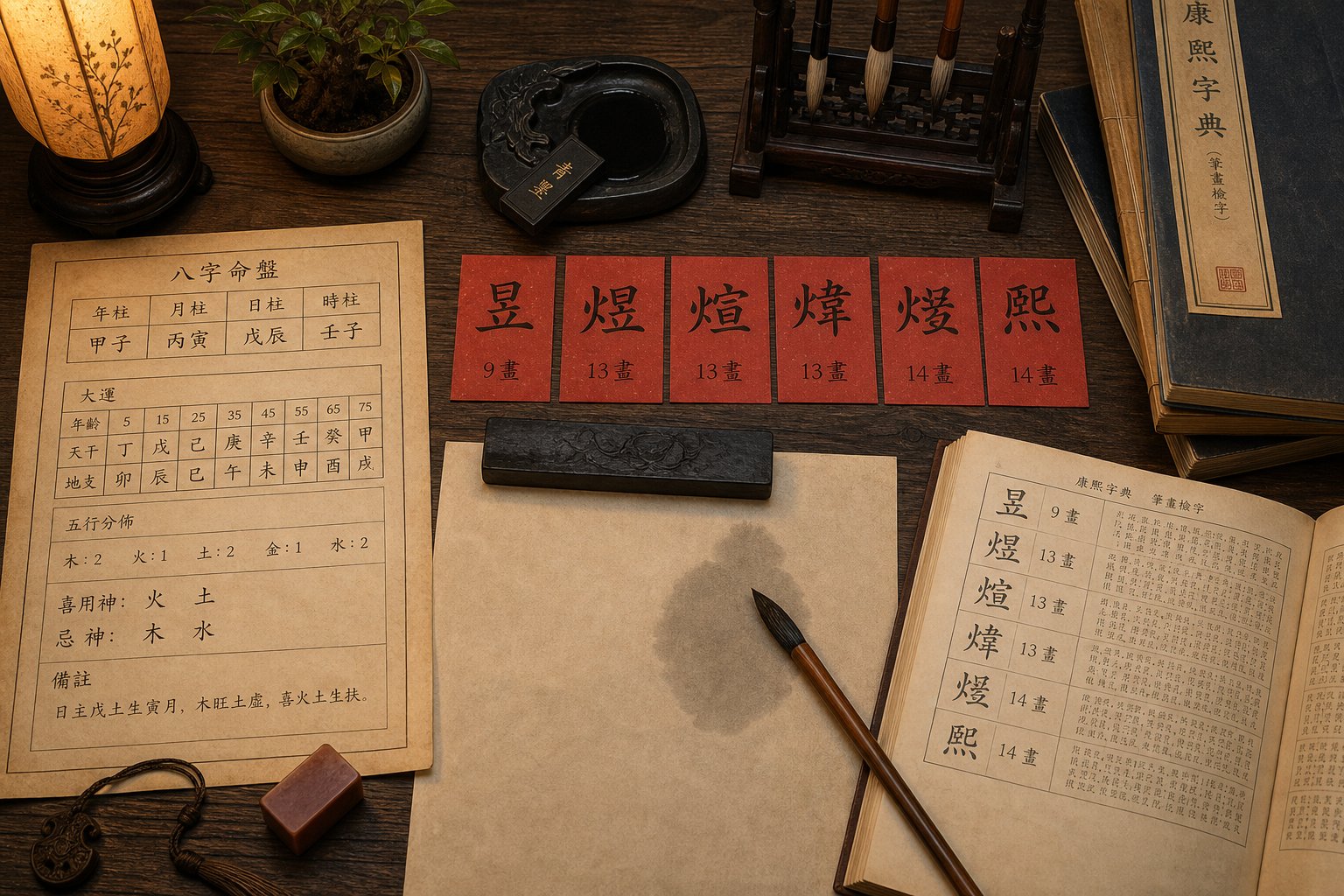
Practical Guide to Choosing Your Auspicious Characters
Knowing the theory is one thing. Sitting down with a blank page and actually choosing the right character? That is where most people freeze. The principles of elemental balance, radical compatibility, stroke numerology, and personality alignment can feel overwhelming when you try to apply them all at once. What you need is a clear sequence — a decision path that filters your options step by step until the right characters emerge naturally.
Step-by-Step Character Selection Framework
Whether you are naming a newborn, launching a business, or writing a Spring Festival couplet, this process adapts to your context. Work through it in order — each step narrows the field so the next becomes easier:
- Define your use case. Are you selecting a character for a personal name, a business brand, or a seasonal greeting? Personal names demand birth chart analysis and phonetic harmony with the surname. Decorative and greeting characters prioritize visual balance and broad positive meaning. Business names sit in between — they need market appeal and elemental alignment with the founding date.
- Identify the elemental balance needed. For personal names, determine the Favorable Element (用神) from the full BaZi chart. For the 2025 Wood Snake year, many individuals will benefit from Earth or Water radicals to regulate the Wood-feeding-Fire dynamic. For decorative use, default to Earth radicals for grounding stability or jade radicals for elegance — both are safe, broadly favorable choices.
- Check radical compatibility. Cross-reference your candidate characters against the avoidance list. Eliminate anything carrying the pig radical (豕), tiger radical (虍), or excessive water that could extinguish the Snake's core Fire. Prioritize radicals with proven Snake affinity: grass (艹) for shelter, roof (宀) for protection, heart (忄) for intuition, jade (⺩) for refinement, and the ancestral serpent radical (虫) for direct zodiac resonance.
- Verify stroke count auspiciousness. Count strokes using traditional character forms, not simplified. Cross-check against the numerological system — favorable counts include 1, 3, 5, 7, 8, 11, 13, 15, and 16. For names, calculate how the character's stroke count interacts with the surname and other name characters across the Five Formations (五格) framework.
- Confirm phonetic harmony. Say the full name or phrase aloud. Tones should flow without awkward repetition or clashing sounds. For names, avoid three consecutive characters in the same tone. For greetings and couplets, parallel tonal structure between the two lines creates the rhythmic balance that makes phrases memorable.
- Align with personality needs. Consider the characteristics of year of the snake — analytical, intuitive, private, graceful — and decide whether your character should reinforce or balance these traits. A child whose chart already runs introspective benefits from a character carrying warmth. A business targeting bold markets might choose characters that complement the Snake's strategic patience with visible confidence.
- Cross-check with Snake lucky numbers. The snake lucky number values — traditionally 2, 8, and 9 — can serve as a final confirmation layer. A character with 8 strokes or a name totaling 28 strokes gains an extra dimension of numerical harmony that reinforces the zodiac alignment.
Combining Multiple Auspiciousness Factors
No single factor makes or breaks a character's suitability. Think of it as a scoring system: a character that carries the right radical, falls on a favorable stroke count, sounds harmonious with the surname, and addresses an elemental gap in the birth chart is exponentially more powerful than one that only checks one box. The characteristics of the snake chinese zodiac — wisdom, elegance, transformation — should echo through every layer of your selection, from radical to meaning to sound.
That said, perfection is rare. When trade-offs arise, prioritize elemental balance first (it affects life energy most directly), then radical compatibility, then stroke count, then phonetic flow. A character with ideal elemental properties and slightly imperfect stroke count still outperforms one with perfect numerology but clashing radicals.
When to Consult a Professional Naming Master
This framework empowers you to make informed, thoughtful choices on your own. But certain situations genuinely benefit from professional guidance. Consider consulting a naming master (取名师) when:
- The birth chart contains complex elemental conflicts — multiple clashing pillars or an unclear Favorable Element.
- You are naming a child and want the Five Formations calculation done precisely across all five grid positions.
- The family has generational naming requirements that constrain your character options significantly.
- You are launching a business and need the company name to harmonize with both the founder's chart and the registration date.
A skilled master brings decades of pattern recognition that no framework can fully replicate. They can spot subtle interactions between characters — tonal clashes, radical echoes, hidden elemental conflicts — that even well-informed parents might miss. The characteristics of people born in the year of the snake include discernment and careful judgment, so trust that instinct: if something feels uncertain, seeking expert input is the wise move.
Understanding these principles does not require you to become a master yourself. It equips you to ask better questions, evaluate recommendations critically, and appreciate the depth behind every character placed in a name, a couplet, or a blessing. Whether you are welcoming a Snake year baby, decorating your home for Spring Festival, or choosing a brand name that carries the Snake's quiet authority, the year of snake traits — patience, perception, and strategic elegance — can guide your hand with every stroke.
Frequently Asked Questions About Auspicious Characters for Snake Year
1. What makes a Chinese character auspicious for the Snake year?
A character qualifies as auspicious for the Snake year when its radical composition, stroke count, meaning, and elemental energy align with the Snake's core attributes of wisdom, elegance, and transformation. Radicals like jade (representing refinement), grass (providing shelter), roof (symbolizing protection), and heart (connecting to intuition) carry natural affinity with Snake energy. The character must also harmonize with the Snake's Fire element foundation, ideally introducing Earth for grounding or moderate Water for balance depending on the individual's birth chart.
2. Which radicals should be avoided in Snake year baby names?
The pig radical (豕) should be avoided because the Pig directly clashes with the Snake in zodiac astrology. The tiger radical (虍) is also problematic since the Tiger harms the Snake. Excessive water radicals (氵) risk extinguishing the Snake's core Fire element, while characters with overly aggressive or sharp symbolism conflict with the Snake's preference for subtlety and strategic patience. Characters containing the horse radical may also compete with the Snake's Yin Fire energy rather than supporting it.
3. How does the Five Elements theory affect character selection for Snake year babies?
The Five Elements theory determines which elemental radicals balance or enhance a Snake year baby's birth chart. Since the Snake's base element is Fire, Wood radicals fuel it, Earth radicals gently ground it, Metal radicals add structure, and Water radicals cool it. The correct choice depends on the child's full BaZi configuration. For example, a 2025 Wood Snake baby with an already warm chart benefits from Earth or Water radicals, while one born in winter with weak Fire may need Wood radicals to strengthen their elemental foundation.
4. What are the best four-character phrases for Snake year greetings?
Popular Snake year four-character blessings include 蛇年吉祥 (auspiciousness in the Snake year), 金蛇献瑞 (the golden snake presents good omens), and 灵蛇开运 (the agile snake brings good luck). Clever homophonic wordplay phrases like 巳巳如意 (a twist on 'may everything go as you wish') and 蛇来运转 (the snake's arrival turns fortune around) are particularly appreciated by native speakers. Each phrase suits different contexts, from formal business cards to casual red envelope inscriptions.
5. Do different elemental Snake types need different auspicious characters?
Yes, each elemental Snake variation requires distinct character qualities. Wood Snakes (1965, 2025) benefit from characters suggesting initiative and forward momentum to counter passivity. Fire Snakes (1977) need grounding characters for steadiness. Earth Snakes (1989) thrive with renewal-themed characters to prevent stagnation. Metal Snakes (2001) require warmth and flexibility to soften rigidity. Water Snakes (2013) need stability-focused characters to anchor their fluid, adventurous energy. The principle is always complementing rather than duplicating existing traits.