Understanding Auspicious Characters for the Tiger Zodiac
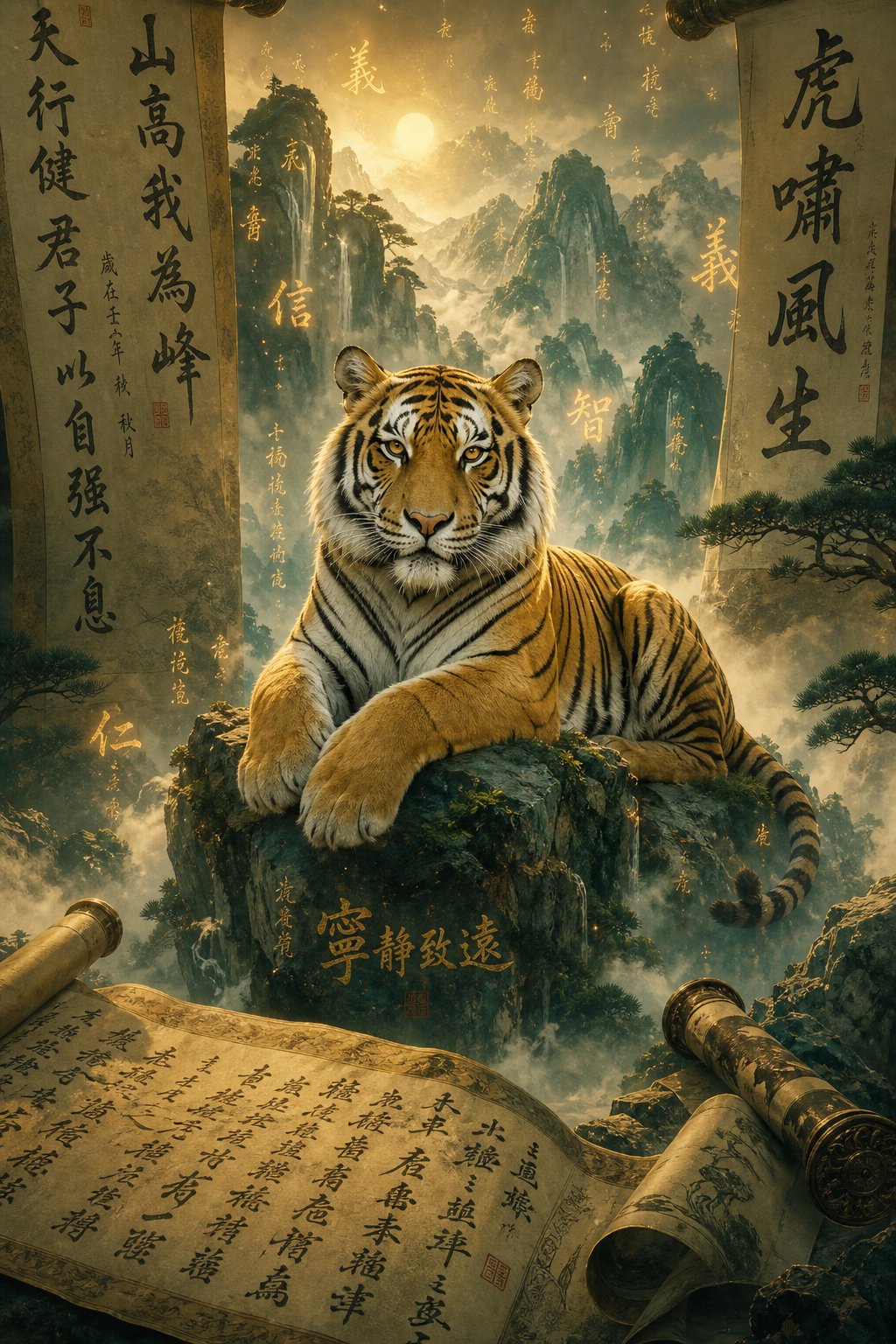
When you hear someone mention auspicious characters for tiger year, you might picture a random list of "lucky" Chinese words slapped onto red banners. The reality is far more structured. These characters, called jixiangzi (吉祥字 jíxiáng zì), are specific Chinese characters selected through a centuries-old system to bring fortune, protection, and prosperity to people born under the tiger Chinese zodiac sign or used during Tiger year celebrations.
The selection process is not guesswork. It is not based on what "sounds nice" or what a calligrapher happens to prefer. Every recommended character traces back to a single foundational concept in Chinese metaphysics: the Earthly Branch system.
What Are Auspicious Characters in Chinese Zodiac Tradition
So what is year of the tiger in terms of character selection? Each of the 12 zodiac animals corresponds to one of the 12 Earthly Branches (十二地支 shí èr dì zhī), and the Tiger is assigned to the branch 寅 (yín). This branch carries specific elemental properties, seasonal associations, and directional energies that determine which character radicals, stroke structures, and meanings are considered harmonious.
Think of it this way: the Earthly Branch acts like a filter. Characters that contain radicals aligned with the Tiger's elemental nature pass through. Characters with conflicting radicals get screened out. The tiger zodiac is dominated by Yang Wood energy, associated with early spring, and linked to the northeast compass direction. These attributes shape every downstream recommendation.
Why the Tiger Sign Demands Specific Character Choices
The year of the tiger is not interchangeable with other zodiac years when it comes to character selection. A tiger in the year of the tiger carries amplified energy that requires careful balancing. The Tiger holds the third position among the Earthly Branches, and its dominant element is Jia Wood (甲木 jiǎ mù), with hidden Bing Fire (丙火 bǐng huǒ) and Wu Earth (戊土 wù tǔ) beneath the surface.
The Tiger's position as the third Earthly Branch means it carries not one but three layered elemental forces: dominant Wood, hidden Fire, and hidden Earth. Every auspicious character recommendation flows from this multi-element foundation, not from surface-level symbolism.
This layered complexity is exactly why generic "lucky character" lists fail Tiger year families. A character that works beautifully for a Rabbit year (pure Yin Wood) may clash with the Tiger's hidden Fire or Earth elements.
This guide covers both naming characters for Tiger year babies and celebration characters used in decorations, couplets, and blessings. Most resources address only one side. Understanding both gives you a complete toolkit, whether you are choosing a name or preparing for festivities. The logic behind each recommendation starts with the radical composition system, where the Tiger's elemental DNA meets the building blocks of Chinese characters.
Zodiac Logic Behind Tiger Year Character Selection
The Earthly Branch 寅 (yin) does not just label the Tiger in the zodiac cycle. It encodes a specific set of elemental properties that dictate which Chinese characters carry harmonious energy for Tiger year use. When you understand how this branch functions, character selection stops being a guessing game and becomes a logical, repeatable process rooted in year of tiger characteristics that have been documented for centuries.
The Earthly Branch 寅 and Its Influence on Character Selection
In the 12 Earthly Branches system, 寅 (yin) occupies the third position and corresponds to the time period of 3:00 to 4:59 AM, the month spanning early February to early March, and the season of early spring. Its dominant element is Jia Wood (甲木 jia mu), which represents tall, upward-growing timber. Hidden within the branch are Bing Fire (丙火 bing huo) and Wu Earth (戊土 wu tu).
Why does this matter for character selection? Because Chinese characters are built from radicals, and each radical carries elemental and symbolic weight. When a radical aligns with the Tiger's elemental profile, the character is considered supportive. When it conflicts, the character introduces friction.
Imagine the Tiger as a creature that thrives in forested mountains, commands authority over its territory, and needs water sources nearby. This is not poetic metaphor. It is a direct translation of the branch's elemental makeup into environmental symbolism. The chinese tiger is a Wood creature that lives among mountains (Earth), drinks from streams (Water), and rules its domain (authority). Characters reflecting these qualities resonate with the branch's energy.
The chinese zodiac traits tiger carries, particularly its Yang Wood dominance, mean that supportive characters should either nourish Wood (Water feeds Wood in the Five Elements cycle), provide a natural habitat for Wood (mountains and forests), or reflect the Tiger's symbolic status as king of beasts.
Key Radicals That Align With Tiger Energy
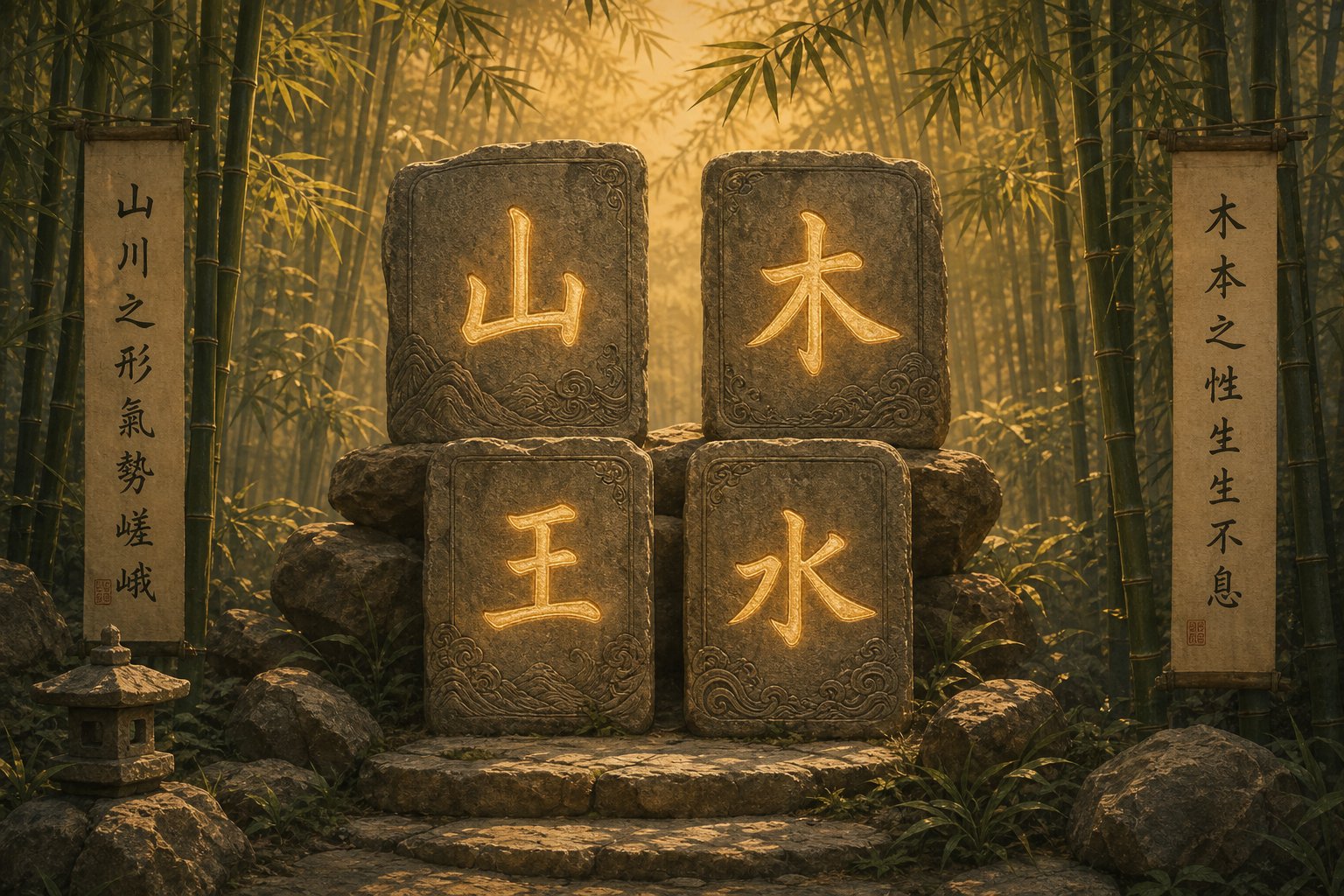
Radicals are the building blocks of Chinese characters. Each character contains one or more radicals that contribute meaning, pronunciation hints, or categorical classification. For auspicious characters for tiger year, four radical families stand out as particularly favorable:
- 山 (shan, mountain) - The Tiger's natural habitat. Mountains provide shelter, elevation, and dominance. Characters with this radical place the Tiger in its element.
- 木 (mu, wood) - Directly aligned with the Tiger's dominant Jia Wood energy. Wood radicals reinforce the branch's core element rather than working against it.
- 王 (wang, king) - The Tiger is traditionally called the king of all beasts (百兽之王 bai shou zhi wang). Characters containing this radical honor the Tiger's authority and status.
- 氵(san dian shui, water) - Water nourishes Wood in the productive cycle of the Five Elements. Characters with water radicals support and sustain the Tiger's elemental foundation.
You will notice these four radicals map precisely onto the Tiger's ecological and metaphysical profile. This is not coincidence. The entire system of chinese zodiac tiger characteristics feeds directly into radical selection logic.
| Radical | Pinyin | Meaning | Why It Supports Tiger | Example Characters | Character Pinyin |
|---|---|---|---|---|---|
| 山 | shan | Mountain | Natural habitat, elevation, dominance | 岚 (mist over mountains), 峻 (tall and steep) | lan, jun |
| 木 | mu | Wood / Tree | Reinforces dominant Jia Wood element | 柏 (cypress), 桐 (paulownia), 林 (forest) | bai, tong, lin |
| 王 | wang | King | Honors Tiger's status as king of beasts | 瑞 (auspicious), 琪 (fine jade), 瑾 (lustrous jade) | rui, qi, jin |
| 氵 | san dian shui | Water | Nourishes Wood through productive cycle | 泽 (marsh/grace), 涵 (contain), 澜 (waves) | ze, han, lan |
Stroke Order and Structural Breakdown of Core Characters
Knowing which radicals are favorable is only half the picture. Understanding how radicals combine within a character reveals why certain characters carry stronger Tiger energy than others.
Take the character 瑞 (rui, meaning auspicious or lucky omen). Its left side contains the 王 radical, connecting it to the Tiger's kingly authority. The right component 专 (zhuan) adds the meaning of focused or dedicated. Together, the structure reads as "focused royal blessing," a powerful combination for year of the tiger attributes like leadership and decisive action.
Or consider 岚 (lan, meaning mountain mist). The top portion is 山 (mountain), and the bottom is 风 (feng, wind). The character literally depicts wind moving through mountains, placing the Tiger in its elevated habitat surrounded by natural forces. This structural logic makes it far more aligned than a character that merely "sounds nice."
Here is another example: 涵 (han, meaning to contain or cultivate). The left radical 氵 provides Water energy that nourishes the Tiger's Wood. The right component 函 (han) suggests enclosure and depth. The full character conveys deep nourishment, exactly the kind of supportive energy a Wood-dominant branch benefits from.
The tiger meaning embedded in each recommended character is never arbitrary. Every stroke traces back to the elemental logic of the 寅 branch. A character with both 山 and 木 components, like 楠 (nan, meaning cedar, a tree that grows on mountains), doubles down on habitat alignment. A character combining 王 and 氵, like 润 (run, meaning moist or smooth), pairs authority with nourishment.
The strongest auspicious characters for Tiger year contain radicals from multiple favorable categories, creating layered elemental support rather than relying on a single point of alignment.
This radical composition system explains why two characters with similar dictionary meanings can have completely different auspicious value. The character 美 (mei, beautiful) contains no Tiger-aligned radicals. The character 琳 (lin, beautiful jade) contains the 王 radical and the 林 (double wood) component, making it exponentially more suitable for Tiger year use despite sharing a similar surface meaning.
The structural logic does not stop at individual radicals, though. The Tiger's elemental profile interacts with a larger system: the Five Elements cycle. Each Tiger year carries a specific elemental variation, Wood Tiger or Fire Tiger or Water Tiger, that further refines which characters rise to the top of the recommendation list.
Five Elements and Their Impact on Tiger Character Choices
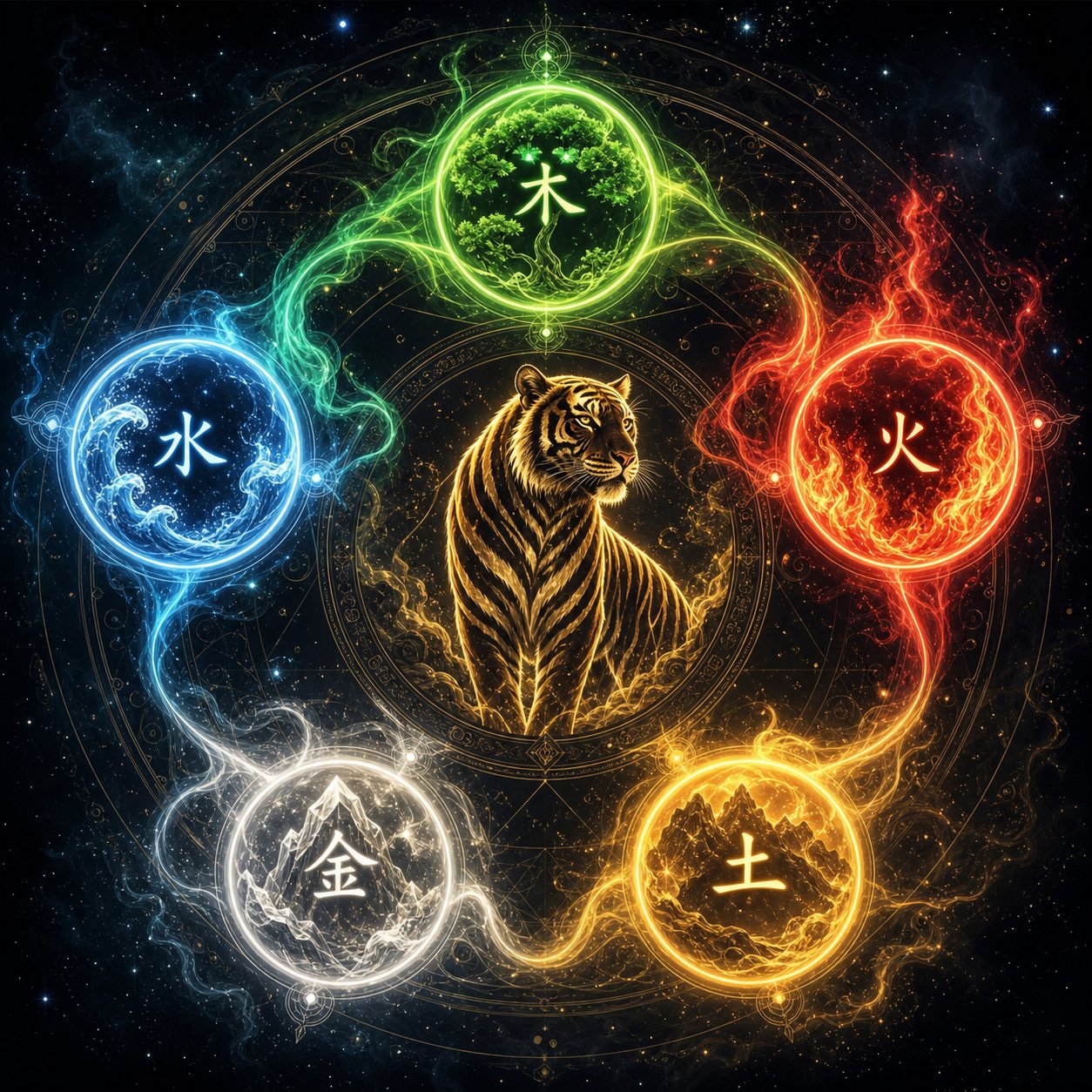
Not all Tiger years are the same. The Chinese calendar operates on a 60-year cycle that pairs each of the 12 zodiac animals with one of the five elements: Wood (木 mu), Fire (火 huo), Earth (土 tu), Metal (金 jin), and Water (水 shui). This means a Tiger year recurs every 12 years, but the same elemental Tiger only repeats once every 60 years. A person born in the 1986 year of the tiger carries Fire Tiger energy, while someone born in 1998 belongs to the Earth Tiger. These elemental differences reshape which characters provide the strongest support.
Here is the quick rule: your birth year's last digit reveals your element. Years ending in 4 or 5 are Wood, 6 or 7 are Fire, 8 or 9 are Earth, 0 or 1 are Metal, and 2 or 3 are Water. Since every Tiger already has Wood as its fixed element (the Tiger's innate elemental identity), the 12-year cycle element layers on top, creating a dual-element profile that demands more precise character selection.
| Tiger Type | Birth Years | Cycle Element | Fixed Element | Top Recommended Characters | Pinyin |
|---|---|---|---|---|---|
| Wood Tiger | 1914, 1974 | Wood | Wood | 森 (forest), 彬 (refined), 楠 (cedar) | sen, bin, nan |
| Fire Tiger | 1926, 1986 | Fire | Wood | 炜 (brilliant), 焕 (radiant), 煜 (illuminate) | wei, huan, yu |
| Earth Tiger | 1938, 1998 | Earth | Wood | 坤 (earth/feminine), 培 (cultivate), 垚 (high) | kun, pei, yao |
| Metal Tiger | 1950, 2010 | Metal | Wood | 铭 (inscribe), 锦 (brocade), 鑫 (prosperity) | ming, jin, xin |
| Water Tiger | 1962, 2022 | Water | Wood | 泽 (grace), 澜 (waves), 涵 (cultivate) | ze, lan, han |
Wood Tiger and Fire Tiger Character Recommendations
The Wood Tiger (1974) doubles down on Wood energy. Both the fixed element and the cycle element are Wood, creating an intensely growth-oriented personality. Characters for Wood Tigers should amplify this strength without tipping into excess. 森 (sen, forest) triples the 木 radical, representing abundant growth. 彬 (bin, refined and elegant) combines 木 with 文 (culture), balancing raw Wood power with intellectual grace.
The fire tiger born during chinese new year 1986 has a different dynamic. Wood is the Tiger's fixed element, and Wood fuels Fire in the productive cycle of the Five Elements. This means the 1986 tiger element combination is naturally harmonious since Wood generates Fire. Characters with fire-related radicals like 火 or 灬 (four dots of fire) channel this energy well. 炜 (wei, brilliant light) and 煜 (yu, to illuminate) both carry the fire radical and honor the Fire Tiger's passionate, driven nature. These individuals benefit from characters that express warmth and leadership without needing to compensate for elemental conflict.
Earth Tiger and Metal Tiger Character Recommendations
Earth Tiger years like the chinese zodiac 1998 cycle introduce a more complex relationship. In Five Elements theory, Wood overcomes Earth (tree roots break apart soil). This means the Tiger's fixed Wood element and the cycle's Earth element exist in a controlling relationship. Characters for Earth Tigers should bridge this tension by emphasizing stability and nurturing qualities. 培 (pei, to cultivate or nurture) contains the 土 (earth) radical and conveys the idea of building something up gradually, softening Wood's aggressive penetration of Earth into a cooperative growth metaphor.
The 2010 chinese zodiac produced Metal Tigers, and this pairing carries the sharpest internal tension. Metal chops Wood in the overcoming cycle, meaning the cycle element actively challenges the Tiger's core nature. People born in zodiac chinese 2010 benefit from characters that honor Metal's strength while not suppressing their innate Wood. 锦 (jin, brocade or splendid) uses the Metal radical 钅 but conveys beauty and refinement rather than cutting force. 铭 (ming, to inscribe or remember) channels Metal into the act of recording and preserving, a constructive rather than destructive expression.
Water Tiger Character Recommendations and Element Balancing
The 2022 chinese zodiac year brought the Water Tiger, and this combination is considered one of the most naturally supportive pairings. Water nourishes Wood in the generating cycle, meaning the cycle element directly feeds the Tiger's fixed element. Water Tigers tend toward calm wisdom and adaptability, traits that distinguish them from other Tiger types.
Characters with the water radical 氵 are ideal here. 涵 (han, to contain or cultivate depth) provides nourishing Water energy while suggesting intellectual richness. 澜 (lan, great waves) captures Water's power without losing the Tiger's inherent boldness. 泽 (ze, marsh or grace) combines Water with the concept of generosity, reflecting the Water Tiger's reputation for strong interpersonal relationships.
The key principle across all five Tiger types: characters should either reinforce the cycle element's natural relationship with Wood or gently resolve tension when the elements conflict.
Element-specific character selection matters because it accounts for the full picture of a person's energetic profile. A generic list of Tiger characters ignores whether someone's cycle element supports, challenges, or duplicates their fixed Wood energy. The difference between a well-matched character and a mismatched one often comes down to understanding these elemental interactions. But elements are only one layer of zodiac logic. The Tiger also forms specific alliances with other animals in the zodiac, and those relationships open up an entirely separate category of favorable radicals.
Zodiac Harmony Relationships and Allied Animal Radicals
The Tiger does not stand alone in the zodiac. It belongs to a network of alliances that have been mapped for centuries through two compatibility systems: the Three Harmonies (三合 sanhe) and the Six Harmonies (六合 liuhe). These relationships go beyond personality matching. They directly influence which radicals carry supportive energy in auspicious characters for tiger year use. If a character contains a radical linked to one of the Tiger's allied animals, it draws on that alliance's cooperative energy.
Think of it like building a team. The Tiger's allies bring complementary strengths, and characters referencing those allies channel that support into the name or decoration where they appear.
Three Harmonies Characters From Horse and Dog Connections
The Three Harmonies group the Tiger (寅 yin) with the Horse (午 wu) and the Dog (戌 xu). This triad shares what traditional chinese astrology match theory describes as bravery, independence, and a direct approach to life. The three signs form a Fire triangle in the Earthly Branch system, meaning their combined energy generates Fire, which the Tiger's Wood naturally produces.
Characters containing radicals associated with Horse and Dog tap into this triadic support. Here are the most relevant options:
- 骏 (jun) - meaning "fine steed" or "outstanding." Contains the 马 (horse) radical. This character channels the Horse's momentum and speed into Tiger year energy, symbolizing rapid success and forward movement.
- 骅 (hua) - meaning "fine horse" or "excellence." Also built on the 马 radical. Traditionally associated with rare talent and distinction.
- 驰 (chi) - meaning "to gallop" or "to spread far." The 马 radical pairs with a phonetic component suggesting speed and reach, ideal for someone born the year of the tiger who wants expansive career energy.
- 献 (xian) - meaning "to offer" or "to dedicate." Contains the 犬 (dog) radical in its traditional form. Represents loyalty and devotion, qualities the Dog brings to the Tiger's alliance.
- 威 (wei) - meaning "power" or "authority." The lower component 女 sits beneath 戌 (the Dog's branch), and the character conveys dignified strength that mirrors tiger traits chinese zodiac practitioners value.
Six Harmonies Characters From the Tiger-Pig Bond
The Six Harmonies system pairs each zodiac sign with one specific partner. For the Tiger, that partner is the Pig (亥 hai). This one-to-one pairing is considered the strongest natural fit in the zodiac. The Tiger brings drive and decisiveness while the Pig brings warmth and generosity. Their opposite yet complementary traits create balance.
Characters linked to the Pig's radical family (豕 shi, or its variant 亥 hai) carry this balancing energy:
- 豪 (hao) - meaning "heroic" or "bold and unrestrained." Contains the 豕 (pig) radical at its base. This character merges the Pig's abundance with the Tiger's courage, creating a meaning of grand ambition backed by resources.
- 家 (jia) - meaning "home" or "family." The character places 豕 beneath a roof (宀), symbolizing domestic prosperity. For someone born the year of the tiger, this character invokes the Pig's stabilizing warmth within a household context.
- 毅 (yi) - meaning "resolute" or "determined." Contains the 豕 component and conveys unwavering willpower, a quality that harmonizes the Tiger's boldness with the Pig's steady follow-through.
The year tiger horoscope tradition also flags characters you should actively avoid. The Tiger's primary zodiac clash is with the Monkey (申 shen), and it also conflicts with the Snake (巳 si). Characters containing the 申 radical or components associated with these animals introduce friction rather than support. For example, 绅 (shen, gentleman) contains 申 directly, and 远 (yuan, far) in its traditional form includes the 辶 radical linked to Snake movement. While these characters carry positive dictionary meanings, their radical composition works against Tiger energy in the year of tiger chinese horoscope framework.
A character's dictionary meaning matters less than its radical DNA. A beautiful-sounding character built on a conflicting animal radical undermines the very harmony it is supposed to create.
This alliance-based logic adds a powerful second filter to character selection. The first filter checks elemental alignment through the Five Elements system. The second filter checks relational alignment through zodiac harmonies. Characters that pass both filters, containing favorable elemental radicals and allied-animal radicals, represent the strongest possible choices. The question then becomes how to apply these filters practically, especially when selecting a name that a child will carry for life.
Best Naming Characters for Tiger Year Babies
Elemental filters and zodiac alliances give you the logic. Naming a child requires something more: a philosophy. The chinese calendar tiger personality is bold, competitive, and intensely Yang. That raw energy shapes how families approach naming in two distinct ways. Some choose characters that amplify the Tiger's strength, leaning into leadership and courage. Others select characters that soften and balance that intensity, introducing Yin qualities like grace, wisdom, or gentleness to prevent the Tiger's fire from burning too hot.
Neither approach is wrong. The choice depends on what the family values and what kind of energy they want to cultivate in the child's life. What matters is that the characters still pass the radical alignment tests covered earlier. A balancing character should contain Tiger-friendly radicals (山, 木, 王, 氵) even if its meaning leans toward softness.
Auspicious Naming Characters for Tiger Year Boys
The tiger personality in boys is traditionally encouraged rather than tempered. Families often select characters that reinforce authority, ambition, and physical vitality. The year of the tiger qualities most prized in masculine names include decisiveness, protective instinct, and natural leadership.
Consider 峻 (jun, meaning tall and steep). The 山 radical places the Tiger on its mountain throne, while the meaning suggests someone who rises above others naturally. Or take 柏 (bai, cypress tree), which carries the 木 radical and symbolizes resilience since cypress trees survive harsh winters without losing their leaves. For families wanting to honor the Tiger's kingly status, 瑞 (rui, auspicious omen) with its 王 radical remains one of the most popular choices in traditional naming practice.
The character 泽 (ze, grace or marsh) works well for boys whose families want to balance strength with generosity. Its 氵 radical nourishes the Tiger's Wood while the meaning suggests someone whose influence benefits others, like water enriching the land around it.
Auspicious Naming Characters for Tiger Year Girls
Selecting a tiger female name involves a more nuanced calculation. The zodiac tiger personality carries intense Yang energy, and traditional practice often introduces Yin-leaning characters to create internal harmony. This does not mean choosing weak characters. It means selecting ones that channel Tiger power through elegance rather than force.
琳 (lin, beautiful jade) is a standout choice. It contains both the 王 radical and the 林 (forest/double wood) component, giving it triple Tiger alignment while its meaning evokes refined beauty. 岚 (lan, mountain mist) pairs the 山 radical with 风 (wind), creating an image of something powerful yet ethereal. For the tiger of female naming traditions, 涵 (han, to contain or cultivate) offers depth and intellectual richness through its 氵 radical without sacrificing strength.
Families who prefer amplifying rather than balancing can look at 琪 (qi, fine jade) or 瑾 (jin, lustrous jade). Both carry the 王 radical and suggest something precious and rare, honoring the Tiger's status while remaining distinctly feminine in cultural usage.
Powerful Unisex Characters for Any Tiger Year Baby
Some characters work beautifully regardless of gender. These tend to carry meanings broad enough to suit any child while maintaining strong radical alignment with Tiger energy. The tiger chinese zodiac personality values independence and self-determination, qualities that transcend gender in modern naming practice.
| Character | Pinyin | Meaning | Radical Category | Suitability Notes |
|---|---|---|---|---|
| 瑞 | rui | Auspicious omen | 王 (King) | Most popular traditional Tiger year choice; honors kingly authority |
| 琳 | lin | Beautiful jade | 王 (King) + 木 (Wood) | Double alignment through king and forest radicals; versatile across genders |
| 峻 | jun | Tall, steep, lofty | 山 (Mountain) | Places Tiger in elevated habitat; conveys natural authority |
| 涵 | han | Contain, cultivate depth | 氵 (Water) | Nourishes Wood element; suggests intellectual richness |
| 岚 | lan | Mountain mist | 山 (Mountain) | Combines habitat with ethereal beauty; strong yet graceful |
| 柏 | bai | Cypress tree | 木 (Wood) | Reinforces core Wood element; symbolizes enduring resilience |
| 泽 | ze | Marsh, grace, generosity | 氵 (Water) | Water nourishes Wood; meaning suggests broad positive influence |
| 森 | sen | Forest, dense growth | 木 (Wood, tripled) | Triple Wood radical; ideal for Wood Tiger births specifically |
| 豪 | hao | Heroic, bold, grand | 豕 (Pig alliance) | Draws on Six Harmonies Tiger-Pig bond; conveys ambition with resources |
| 骏 | jun | Fine steed, outstanding | 马 (Horse alliance) | Three Harmonies support; channels momentum and rapid success |
Characters ranked higher in this table appear more frequently in traditional Tiger year naming records and carry stronger multi-layer alignment. 瑞 (rui) tops the list because it combines the 王 radical with an inherently auspicious meaning, making it a safe and powerful default. 琳 (lin) follows closely due to its rare double-category alignment across both King and Wood radicals.
The practical takeaway: start with radical alignment, then layer in elemental fit based on your specific Tiger type (Wood, Fire, Earth, Metal, or Water), and finally check zodiac harmony connections. A name that satisfies all three filters carries the deepest traditional support. But naming is only one application of these characters. The same principles extend into how Tiger year celebrations use auspicious characters on red envelopes, door decorations, and spring couplets, where individual characters combine into complete blessing phrases.
Celebration and Decoration Characters for Tiger Festivities
A name lives on a birth certificate. Celebration characters live on red envelopes (红包 hongbao), door banners, and spring couplets (春联 chunlian) that transform homes and streets during the year of tiger festivities. These characters serve a different purpose than naming characters. They are not chosen for a single person's lifelong energy. They broadcast collective blessings, invoke seasonal prosperity, and mark the Tiger's arrival with visual power.
The selection logic still draws from the same radical system, but celebration characters prioritize immediate impact and communal meaning over individual elemental balance. You want characters that any visitor, any family member, any passerby can absorb as a blessing at a glance.
Tiger Year Spring Couplet Characters and Pairings
Spring couplets hang on either side of a doorway, with a horizontal scroll across the top. Each line must match in tone pattern, character count, and thematic pairing. During Tiger years, couplets weave tiger imagery with prosperity language. The character 虎 (hu, tiger) itself appears frequently, paired with characters like 威 (wei, power), 啸 (xiao, roar), and 跃 (yue, leap).
A classic Tiger year couplet structure pairs a line about the Tiger's arrival with a line about fortune following. For example:
Upper line: 虎跃龙腾生紫气 (hu yue long teng sheng zi qi) — "The tiger leaps and dragon soars, generating purple auspicious energy."
Lower line: 风调雨顺兆丰年 (feng tiao yu shun zhao feng nian) — "Favorable winds and timely rain herald a bountiful year."
The key characters here, 跃 (leap), 腾 (soar), 丰 (abundant), carry upward and expansive energy that mirrors the lucky tiger symbolism of bold forward movement. Notice how 紫气 (purple energy) connects to the lucky color 2026 traditions where deep purples and golds signal imperial fortune during Tiger cycles.
Red Envelope and Decoration Characters for Tiger Celebrations
Red envelopes and wall decorations favor single characters or short two-character compounds that pack maximum meaning into minimal space. The most common choices for Tiger year decorations include:
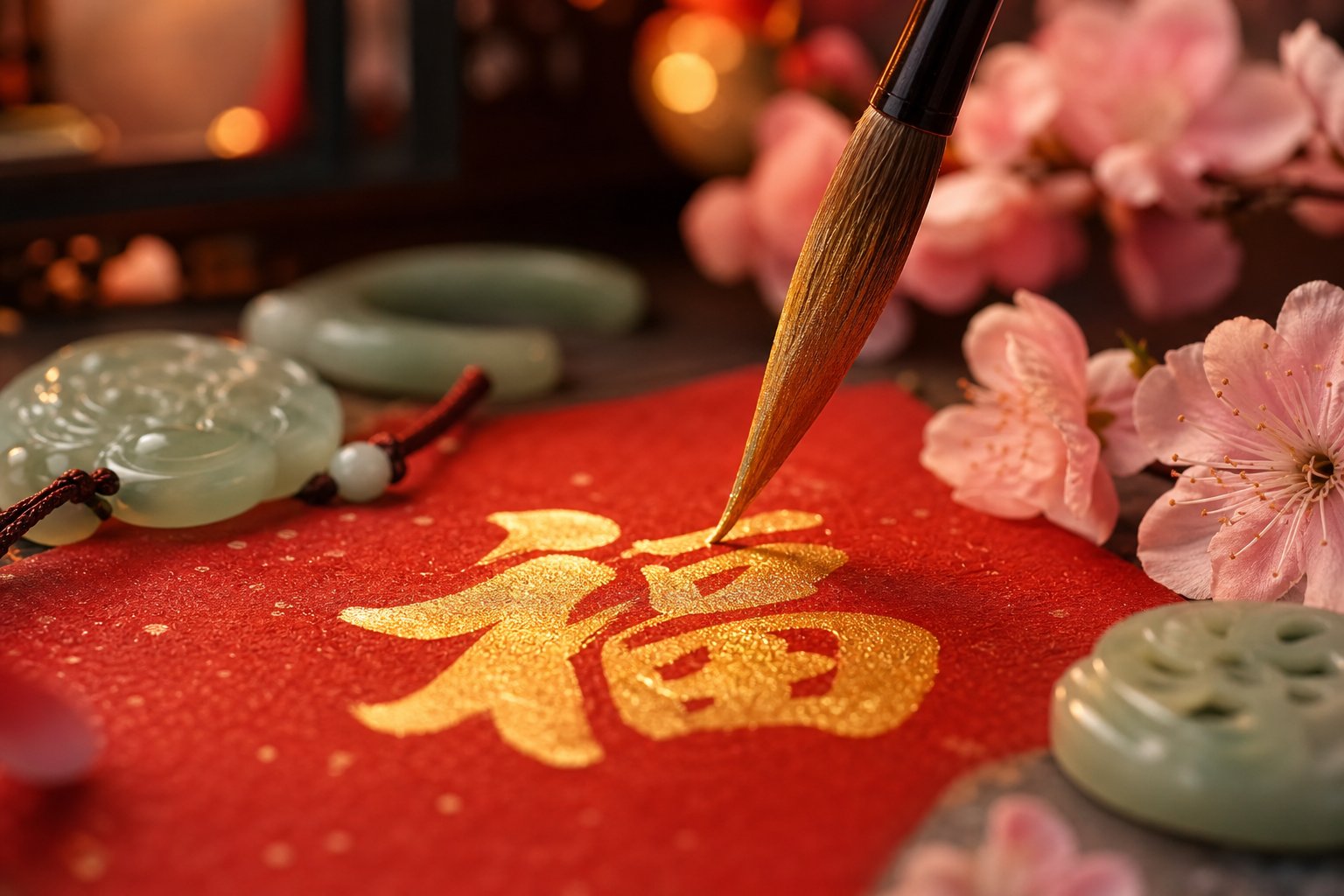
- 福 (fu, fortune) — The universal blessing character, often displayed upside-down (倒福 dao fu) to create a pun meaning "fortune has arrived." During Tiger years, it frequently appears alongside tiger illustrations.
- 威 (wei, power/authority) — Directly references the Tiger's commanding presence. Popular on door decorations and banners.
- 旺 (wang, prosperous/thriving) — Contains the 王 (king) component, linking it to the tiger of the year's royal status. Common on red envelopes for business gifts.
- 瑞 (rui, auspicious omen) — Carries the 王 radical and works in both naming and celebration contexts. A lucky star chinese families display prominently during New Year gatherings.
- 虎 (hu, tiger) — The animal character itself, often rendered in artistic calligraphy or paired with 福 to create 虎福 (tiger fortune).
Walk through any lucky chinatown district during a Tiger year celebration and you will see these characters repeated on lanterns, storefronts, and community banners. The repetition is intentional. It saturates the environment with collective blessing energy.
Complete Tiger Year Blessing Phrases With Translations
Individual characters gain their full celebratory power when combined into four-character phrases (四字成语 si zi chengyu) or greeting expressions. These are what people write inside cards, speak aloud during toasts, and print on decorative scrolls. Ranked by how frequently they appear in traditional Tiger year usage:
- 虎年大吉 (hu nian da ji) — "Great fortune in the Tiger year." The most common and versatile greeting, suitable for any context.
- 虎虎生威 (hu hu sheng wei) — "Full of vigor and vitality." Literally "tiger-tiger generates power." Used to wish someone energetic health.
- 如虎添翼 (ru hu tian yi) — "Like a tiger with wings added." Means gaining extra advantages on top of existing strength. Popular in business contexts.
- 龙腾虎跃 (long teng hu yue) — "Dragons soar and tigers leap." Conveys a scene of dynamic energy and ambitious progress.
- 虎年行大运 (hu nian xing da yun) — "Great luck throughout the Tiger year." A five-character phrase commonly written on red envelopes.
- 金虎送福 (jin hu song fu) — "The golden tiger delivers blessings." Connects the Tiger to gold, reinforcing prosperity symbolism.
- 虎啸风生 (hu xiao feng sheng) — "The tiger roars and wind rises." Suggests that one's actions create powerful ripple effects.
Notice how these phrases connect lucky colors and numbers to specific character choices. Gold (金 jin) appears in phrases like 金虎送福 because gold represents wealth and Metal element energy. Red, the dominant color of envelopes and decorations, pairs with characters containing fire-related meanings since red symbolizes Fire, which Wood (the Tiger's element) naturally produces. The number 8 (八 ba) often appears in monetary amounts inside red envelopes because its pronunciation resembles 发 (fa, to prosper), and during Tiger years, amounts like 888 or 168 carry extra weight when paired with Tiger blessing phrases on the envelope exterior.
These celebration characters and phrases operate in a public, communal space. They welcome guests, bless businesses, and mark seasonal transitions. But auspicious characters also have a quieter, more personal application: how you position them in your living space and integrate them into daily routines where their energy works continuously rather than seasonally.
Practical Ways to Use Tiger Year Characters Daily
Seasonal decorations come down after the festivities end. A name stays fixed on official documents. But there is a third way to work with auspicious characters for tiger year: embedding them into your physical environment and digital presence so their energy operates year-round. This is where feng shui placement meets modern life, and where a single well-chosen character on a wall or screen name can quietly reinforce Tiger energy every day.
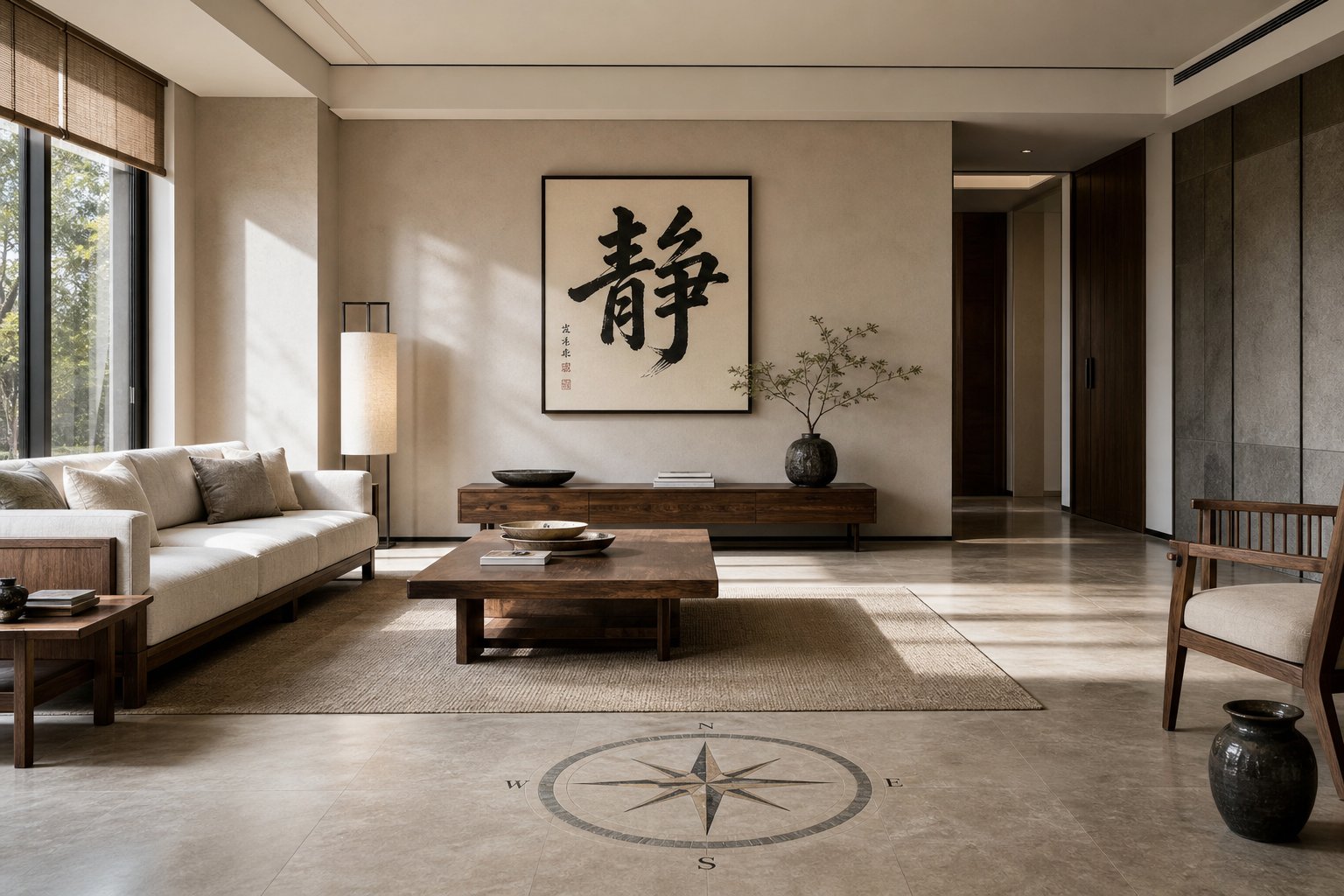
The Tiger's Earthly Branch 寅 (yin) corresponds to the northeast compass direction and the hours between 3:00 and 5:00 AM. These associations are not trivia. They determine where Tiger-aligned characters carry the most energetic weight when displayed in a home or workspace.
Feng Shui Placement of Tiger Year Characters in Your Home
Imagine walking into your living room and seeing a framed calligraphy piece of 威 (wei, power) hanging on the wrong wall. It looks beautiful, but its energy is misdirected. Feng shui placement is about matching the character's meaning and radical composition to the compass sector where that energy is most needed and most naturally supported.
The Tiger is traditionally associated with the White Tiger of the West in the Four Celestial Animals system, while its Earthly Branch points to the northeast. This dual association gives you two primary zones to activate. The West sector strengthens protection and authority. The Northeast sector activates knowledge, wisdom, and personal growth, qualities tied to the Tiger's early-morning energy.
Here are placement recommendations based on character type and compass direction:
- Northeast (Knowledge and Growth): Display characters with 山 (mountain) or 木 (wood) radicals here. 岚 (lan, mountain mist) or 森 (sen, forest) placed in the northeast activates the Tiger's natural habitat energy in the zone governing self-improvement and wisdom.
- West (Protection and Authority): Characters containing the 王 (king) radical belong here. 瑞 (rui, auspicious) or 威 (wei, power) in the west sector reinforces the White Tiger's guardian role, creating a protective barrier for the household.
- Southeast (Wealth and Abundance): Water-radical characters like 泽 (ze, grace) or 涵 (han, cultivate) work well here. Water nourishes Wood, and the southeast governs prosperity, making this combination a natural fit for financial growth.
- East (Family and Health): Wood-radical characters like 柏 (bai, cypress) or 林 (lin, forest) strengthen family bonds and physical vitality when placed in the east, which is already governed by the Wood element.
- Main Entrance: The character 福 (fu, fortune) or 虎 (hu, tiger) displayed near the front door acts as a guardian presence. The Tiger's protective energy is strongest at thresholds, where it can repel negative influences before they enter the space.
A few spaces to avoid: bedrooms benefit from calmer energy, so intensely Yang characters like 威 (wei) or 啸 (xiao, roar) can disrupt sleep. Keep those in living areas, offices, or entryways where active energy is welcome. Similarly, avoid placing Tiger-authority characters in the south sector, which is governed by Fire. Too much stimulation in that zone can create restlessness rather than protection.
You might notice that the chinese good luck cat (招财猫 zhao cai mao), popular in many Asian businesses, serves a similar threshold-guardian function. The difference is intent: the beckoning cat invites wealth inward, while Tiger characters project protective authority outward. Some practitioners place both, with the chinese good luck cat near the cash register and Tiger calligraphy near the entrance, creating a complementary flow of invitation and defense.
Using Auspicious Tiger Characters in Modern Digital Life
Your daily chinese horoscope might suggest wearing certain colors or avoiding specific activities. But there is a subtler way to align with Tiger energy every single day: incorporating auspicious characters into your digital identity. Social media handles, business names, email signatures, and even Wi-Fi network names all carry symbolic weight in a world where digital presence is constant.
Here is how to do it respectfully and effectively:
- Social media display names: Adding a Tiger-aligned character like 瑞 (rui) or 琳 (lin) to your profile name creates a quiet daily affirmation. The character does not need to dominate. Even placing it as a subtle element in a bio or username suffix works.
- Business branding: Companies launched during Tiger years or by Tiger-born founders can integrate favorable radicals into brand names. A business name containing 锦 (jin, brocade/splendid) for a Metal Tiger founder or 澜 (lan, waves) for a Water Tiger founder aligns the brand's identity with its creator's elemental profile. Research on traditional auspicious patterns in logo design confirms that these cultural symbols carry powerful information-transmission functions in visual branding.
- Device and account names: Naming your home Wi-Fi, laptop, or workspace after a luckytiger character keeps the energy present in mundane daily interactions. Something as simple as naming a device 虎威 (hu wei, tiger power) or 瑞林 (rui lin, auspicious forest) maintains a background connection to Tiger symbolism.
- Digital art and wallpapers: Using calligraphy of your chosen auspicious character as a phone or desktop wallpaper creates repeated visual contact throughout the day. This mirrors the feng shui principle of environmental saturation, where consistent exposure to a symbol strengthens its energetic influence.
One important distinction: decorative use versus sacred use. Displaying a character on your wall or in your social media bio is decorative. It carries cultural meaning and personal intention, but it does not require ritual activation. Sacred use involves specific ceremonies, offerings, or placement within a dedicated altar space, practices rooted in Taoist or Buddhist traditions that carry deeper spiritual obligations. If you are approaching these characters from outside Chinese culture, decorative use is entirely appropriate and respectful. What matters is understanding the meaning behind what you display rather than treating characters as purely aesthetic objects.
The practical applications covered here, from compass-aligned wall placement to digital identity choices, give Tiger year characters a continuous presence in your life. They stop being seasonal decorations and become embedded elements of your environment. The final step is making sure you have selected the right characters for your specific Tiger type in the first place, which means knowing your element and avoiding the most common selection mistakes.
Choosing the Right Characters for Your Tiger Type
You have the logic, the radicals, the elemental layers, and the zodiac alliances. The question now is simple: which Tiger are you, and which characters fit your specific profile? People often wonder when is year of the tiger and whether they even fall under this sign. The tiger years in the modern era follow a 12-year cycle: 1926, 1938, 1950, 1962, 1974, 1986, 1998, 2010, 2022, and next up, 2034. If you are asking when is the next year of the tiger, mark January 19, 2034 through February 7, 2035 on your calendar. That gives you time to prepare character selections well in advance.
And what is 2026 the year of? It is the Fire Horse, not the Tiger. Knowing this prevents a surprisingly common error: applying Tiger year characters during the wrong zodiac cycle.
Identify Your Tiger Element Type and Match Characters
A frequent question is what is the chinese zodiac sign for 1986. The answer: Fire Tiger. The 1986 year chinese zodiac falls between February 9, 1986 and January 28, 1987. Use the table below to locate your birth range, confirm your element, and identify your top character matches along with characters to avoid.
| Tiger Type | Birth Date Range | Top 3 Characters (Pinyin) | Characters to Avoid |
|---|---|---|---|
| Fire Tiger | Feb 13, 1926 – Feb 1, 1927 Feb 9, 1986 – Jan 28, 1987 | 炜 (wei), 焕 (huan), 煜 (yu) | Water-heavy: 淼 (miao), 沁 (qin) |
| Earth Tiger | Jan 31, 1938 – Feb 18, 1939 Jan 28, 1998 – Feb 15, 1999 | 坤 (kun), 培 (pei), 垚 (yao) | Wood-dominant: 森 (sen), 彬 (bin) |
| Metal Tiger | Feb 17, 1950 – Feb 5, 1951 Feb 14, 2010 – Feb 2, 2011 | 铭 (ming), 锦 (jin), 鑫 (xin) | Fire-heavy: 炎 (yan), 焱 (yan) |
| Water Tiger | Feb 5, 1962 – Jan 24, 1963 Feb 1, 2022 – Jan 21, 2023 | 泽 (ze), 澜 (lan), 涵 (han) | Earth-heavy: 垒 (lei), 墨 (mo) |
| Wood Tiger | Jan 23, 1974 – Feb 10, 1975 Jan 19, 2034 – Feb 7, 2035 | 森 (sen), 彬 (bin), 楠 (nan) | Metal-sharp: 锋 (feng), 剑 (jian) |
The "characters to avoid" column follows Five Elements overcoming logic. Fire Tiger should avoid excess Water because Water extinguishes Fire. Earth Tiger should limit strong Wood because Wood breaks Earth apart. Metal Tiger avoids Fire since Fire melts Metal. Water Tiger limits Earth because Earth dams Water. Wood Tiger avoids sharp Metal since Metal chops Wood.
Common Mistakes to Avoid When Selecting Tiger Characters
Even with the right element identified, people stumble on a few recurring errors:
- Ignoring radical composition entirely. Choosing a character because it "sounds lucky" without checking whether its radicals align with Tiger energy. A character like 美 (mei, beautiful) has no Tiger-supportive radicals despite its positive meaning.
- Using conflicting animal radicals. Characters containing 申 (Monkey) or 巳 (Snake) components introduce zodiac clashes. This includes characters like 绅 (shen) or 伸 (shen) that hide the Monkey branch inside their structure.
- Mismatching cycle element and fixed element. A Metal Tiger using triple-Wood characters like 森 (sen) amplifies the very element that Metal struggles against. Element-specific recommendations exist for a reason.
- Applying Tiger characters in non-Tiger years. The years of the tiger zodiac follow a strict 12-year rotation. Using Tiger-specific characters during a Horse or Dragon year does not carry the same energetic support.
Character selection rooted in zodiac logic is not superstition dressed up in complexity. It is a structured system where each recommendation traces back to elemental relationships, radical composition, and animal alliances that have been refined across centuries of practice. The deeper you understand the philosophy behind these choices, the more meaningful each character becomes, whether you are naming a child, decorating a home, or simply choosing which energy to carry into your daily life.
Frequently Asked Questions About Auspicious Characters for Tiger Year
1. What radicals make a Chinese character auspicious for Tiger year?
Four radical families carry the strongest Tiger alignment: 山 (mountain) represents the Tiger's natural habitat, 木 (wood) reinforces its dominant Jia Wood element, 王 (king) honors its status as king of beasts, and 氵 (water) nourishes Wood through the Five Elements productive cycle. Characters containing multiple favorable radicals, such as 琳 which combines both 王 and 林 (double wood), offer layered elemental support and rank among the most powerful choices.
2. How do I know which Tiger element type I am?
Your Tiger element type depends on your birth year's last digit. Years ending in 4 or 5 are Wood Tiger (1974, 2034), 6 or 7 are Fire Tiger (1926, 1986), 8 or 9 are Earth Tiger (1938, 1998), 0 or 1 are Metal Tiger (1950, 2010), and 2 or 3 are Water Tiger (1962, 2022). Each element type has different character recommendations because the cycle element interacts differently with the Tiger's fixed Wood energy through generating or overcoming relationships.
3. Which characters should be avoided for Tiger year names?
Avoid characters containing radicals linked to the Tiger's zodiac enemies: the Monkey (申 shen) and the Snake (巳 si). Characters like 绅 or 伸 hide the Monkey branch in their structure. Also avoid characters whose element overcomes your specific Tiger type. For example, Fire Tigers should skip water-heavy characters like 淼, while Metal Tigers should avoid fire-dominant characters like 炎, since these create elemental conflict rather than support.
4. What are the best Tiger year greeting phrases for celebrations?
The most widely used Tiger year blessing phrases include 虎年大吉 (great fortune in the Tiger year), 虎虎生威 (full of vigor and vitality), 如虎添翼 (like a tiger gaining wings, meaning added advantages), and 龙腾虎跃 (dragons soar and tigers leap). These four-character expressions appear on red envelopes, spring couplets, and greeting cards. For business contexts, 如虎添翼 is particularly popular as it suggests gaining competitive advantages.
5. When is the next Year of the Tiger and how should I prepare?
The next Year of the Tiger runs from January 19, 2034 through February 7, 2035. It will be a Wood Tiger year, meaning characters with strong wood radicals like 森 (forest), 彬 (refined), and 楠 (cedar) will be most aligned. Preparation involves identifying whether you need naming characters for a baby, celebration characters for decorations, or personal feng shui characters for your home. Start by confirming the Wood Tiger element profile and selecting characters that pass both the radical alignment and zodiac harmony filters.