Why So Many Chinese Names Accidentally Sound Terrible
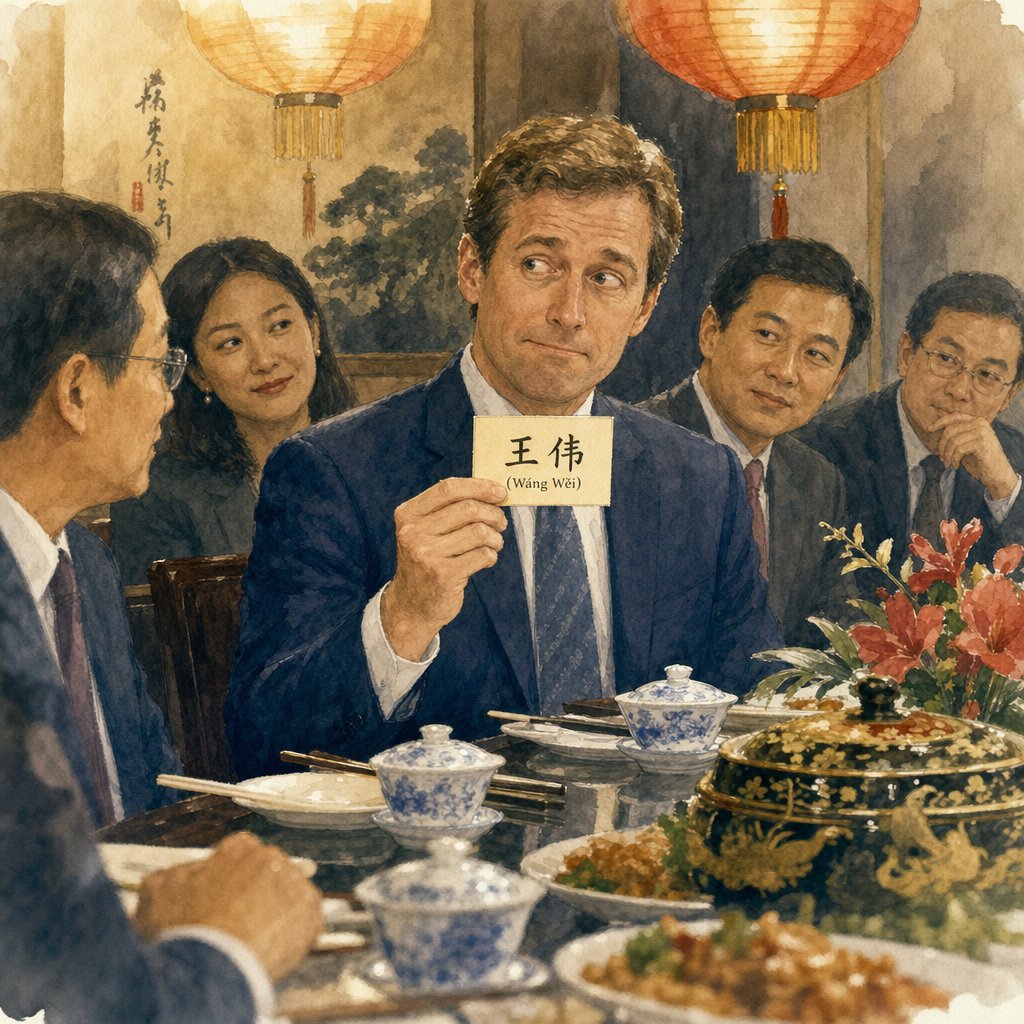
Imagine proudly introducing yourself in Mandarin, only to watch the room suppress a laugh. You picked characters that mean "elegant wisdom," but to every native speaker in earshot, your name sounds like a slang term for something you'd never say in polite company. This happens far more often than you'd think, and the reasons go deeper than a simple translation error.
Chinese is a language where a single syllable can carry dozens of meanings depending on tone, context, and regional pronunciation. Unlike alphabetic languages, where a name is mostly just a name, every Chinese character carries semantic weight. Combine two characters, shift a tone, or move to a different dialect region, and your carefully chosen name transforms into something embarrassing, unlucky, or outright offensive. These are the common chinese naming mistakes foreigners make, but even native-speaking parents stumble into the same traps when they overlook how characters interact.
Why Chinese Names Are Uniquely Easy to Get Wrong
The core problem is layered complexity. Mandarin has four tones, meaning one pinyin syllable like "ma" represents completely different words depending on pitch. Layer in thousands of homophones, culturally loaded character combinations, superstition-based taboos, and dialect variations across regions, and you have a naming system with more hidden pitfalls than any other language. Understanding how to check if a chinese name sounds bad requires examining each of these layers individually.
The Six Categories of Naming Mistakes
Rather than offering scattered tips, this guide organizes chinese name meaning problems explained through a clear taxonomy. Every naming disaster falls into one of these six categories:
- Tonal shifts - where incorrect tone turns a beautiful meaning into an ugly one
- Homophones - where your character sounds identical to an offensive or unlucky word
- Compound meanings - where two good characters create one bad phrase together
- Cultural taboos - where superstition and tradition make certain choices disrespectful
- Dialect clashes - where a Mandarin-safe name fails in Cantonese or Hokkien
- Generational rule violations - where your name accidentally disrespects family elders
Chinese native speakers often will not tell you your name sounds bad out of politeness. Social courtesy means people smile and nod rather than explain that your name reminds them of a curse word. Self-verification is not optional, it is essential.
Each of these categories represents a distinct mechanism for how chinese names with bad meanings slip through. The tonal layer alone is enough to derail a name, and that is exactly where the trouble begins.
How Tones Transform a Name From Beautiful to Embarrassing
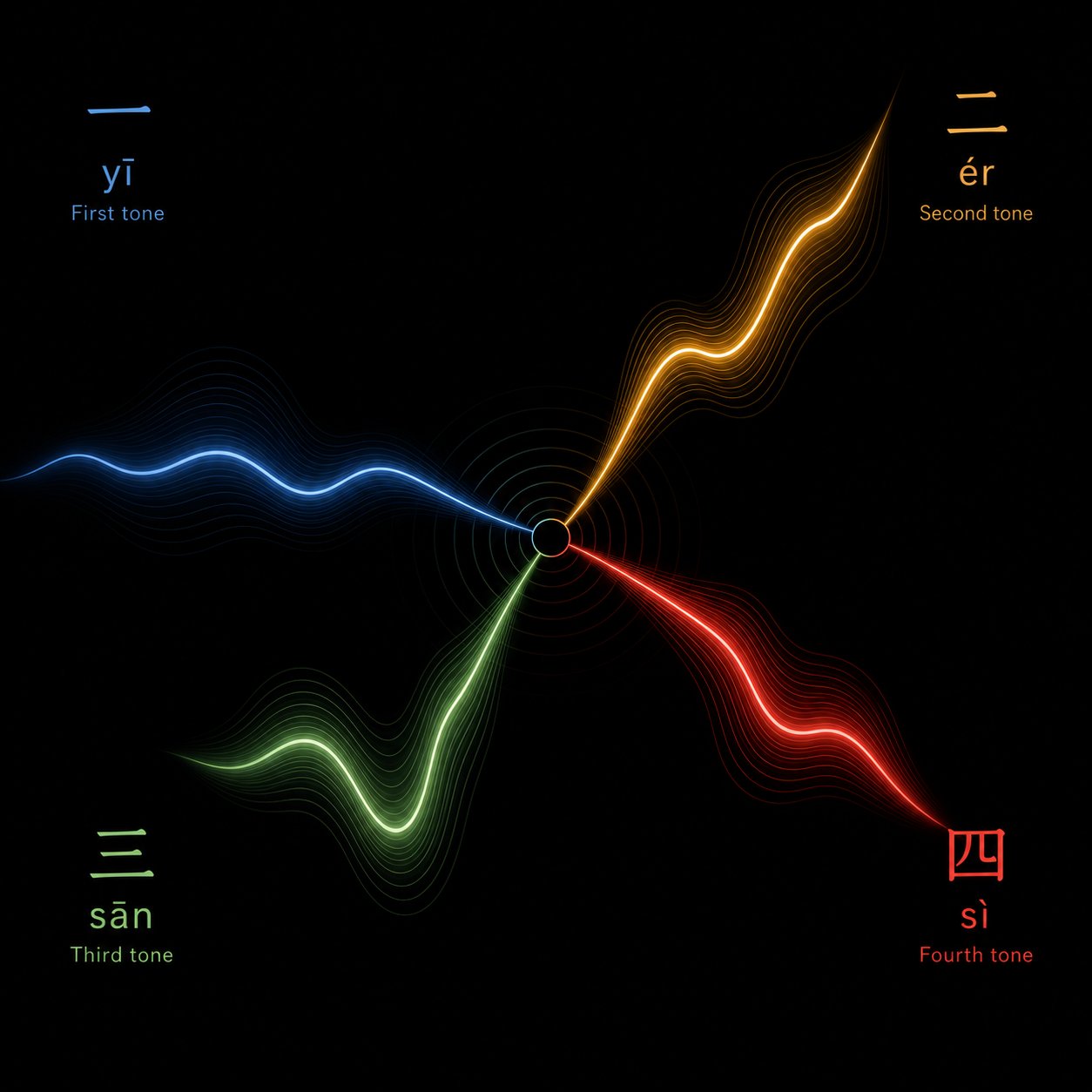
Mandarin Chinese has four distinct tones, and each one changes the meaning of a syllable completely. When you are choosing a chinese name without understanding tones, you are essentially picking from a hat blindfolded. The pinyin "li" could mean "beautiful" (lì, 丽), "power" (lì, 力), "pear" (lí, 梨), or "inside" (lǐ, 里). Write it on paper and it looks fine. Say it with the wrong pitch, and you have introduced yourself as something entirely different.
This is not a minor pronunciation quirk. It is the single fastest way a name goes from elegant to cringe-worthy.
How Four Tones Create Four Different Names
Mandarin's tonal system works like this: the first tone (mā) is high and flat, the second tone (má) rises like a question, the third tone (mǎ) dips down then rises, and the fourth tone (mà) drops sharply. The classic example is "ma" - mā means mother, má means hemp, mǎ means horse, and mà means scold. Four completely unrelated meanings from one syllable.
For naming purposes, this creates a serious problem. You might select the character 诗 (shī, poetry) for your name, intending something literary and refined. But if your pronunciation drifts toward the fourth tone, listeners hear 死 (sǐ, death) or 屎 (shǐ, excrement) depending on context. The gap between "poetic" and "fecal" is literally one tonal shift.
Here is how mandarin tones change name meaning across several common naming syllables:
| Pinyin | Tone 1 (flat) | Tone 2 (rising) | Tone 3 (dip) | Tone 4 (falling) |
|---|---|---|---|---|
| ma | mā 妈 (mother) | má 麻 (hemp/numb) | mǎ 马 (horse) | mà 骂 (scold) |
| shi | shī 诗 (poetry) | shí 石 (stone) | shǐ 屎 (excrement) | shì 世 (world/generation) |
| li | lī 哩 (mile, particle) | lí 离 (leave/separate) | lǐ 礼 (gift/manners) | lì 丽 (beautiful) |
| wen | wēn 温 (warm) | wén 文 (literature) | wěn 吻 (kiss) | wèn 问 (ask) |
| fu | fū 夫 (husband) | fú 福 (fortune) | fǔ 腐 (rotten) | fù 富 (wealthy) |
You'll notice that within a single row, meanings swing from positive to negative with no warning. A name built around "fù" (wealthy) sounds aspirational, but slip into the third tone and you are calling yourself "rotten."
Common Tonal Pitfalls With Pinyin Examples
The biggest trap catches people who choose names based on pinyin romanization alone. They see "wen" and think "literature" (wén, 文), a popular and respectable name element. But mispronouncing wèn (ask) as wěn (kiss) turns a polite question into an awkward proposition. Imagine introducing yourself and having listeners mentally associate your name with the wrong character every single time.
This problem compounds in multi-character names. Consider a name intended as 书芬 (shūfēn, "book fragrance"). If the speaker's tones are slightly off, a listener might hear 输分 (shūfēn, "lose points") or worse. Native speakers process names phonetically first, then assign characters based on context and probability. If the most common character for that tonal combination is negative, that is what people will think of, regardless of what you wrote on paper.
Even native speakers can mishear tones in names, especially over the phone or in noisy environments. This makes careful character selection critical. A name that relies on an uncommon character sharing a tonal slot with a very common negative word will fight an uphill battle every time it is spoken aloud. The written form might be beautiful, but the spoken form is what people encounter first.
Pinyin tone mistakes in chinese names are particularly common among foreigners who learn characters visually but never internalize the tonal distinctions. The solution is not just picking good characters. It is verifying that every possible tonal misinterpretation of your name's syllables still lands somewhere neutral or positive. If even one tone-slip produces something offensive, that name carries risk every time it leaves your mouth.
Tones, though, are only the first layer of phonetic danger. The same syllable pronounced with perfect tonal accuracy can still collide with entirely different characters that share its exact sound, opening up the far more common homophone trap.
The Homophone Trap That Catches Most Foreigners
Perfect tones will not save you from this one. Even when every pitch is flawless, Mandarin's massive inventory of homophones means your chosen character can sound identical to a word that signals death, poverty, or something sexually crude. This is the single most common way chinese name homophones that sound like bad words slip past unsuspecting name-choosers. The character you wrote is lovely. The character listeners hear in their heads? Not so much.
Why does this happen so frequently? Mandarin has roughly 1,600 possible syllable-tone combinations but over 80,000 characters. That means dozens of characters share the exact same pronunciation. When someone hears your name spoken aloud, their brain cycles through every character that matches that sound, and the most culturally loaded or common one tends to stick. You cannot control which association fires first in a listener's mind.
Homophones That Signal Death and Illness
The most dangerous homophones are those linked to death and disease. Chinese culture treats these associations seriously, not just as superstition but as genuine social discomfort. The number four (四, sì) is famously avoided because it sounds nearly identical to death (死, sǐ), differing only by tone. In names, this sensitivity extends far beyond the number four.
Consider the character 梨 (lí, pear). It is a perfectly innocent word, but it is a homophone of 离 (lí, to leave or separate). Using it in a name suggests separation, loss, or abandonment. Similarly, 钟 (zhōng, clock or bell) shares its sound with 终 (zhōng, end or death). This is why gifting a clock (送钟, sòng zhōng) is taboo in Chinese culture: it sounds exactly like 送终 (sòng zhōng), which means attending to a dying parent's funeral rites.
Characters that sound like illness-related words carry the same weight. A name containing a syllable that echoes 病 (bìng, disease), 残 (cán, disabled), or 衰 (shuāi, decline) will make native speakers wince, even if the actual written character is completely unrelated.
Sexual and Insulting Sound-Alikes to Avoid
Some homophones create associations that are not just unlucky but actively embarrassing. Chinese characters that sound like sexual slang or crude insults turn a name into a joke that follows you everywhere. These are the ones native speakers will never tell you about directly, because the explanation itself is too awkward.
Names where syllables combine to sound like body parts, sexual acts, or vulgar insults are more common than you'd expect. The problem intensifies when a full name is read aloud quickly. Individual characters blur together phonetically, and what emerges from the combined syllables may be a phrase the name-bearer never intended. A surname like 杨 (Yáng) paired with certain given names can produce rapid-speech combinations that sound like crude expressions.
Poverty and Misfortune Associations
Beyond death and vulgarity, there is a third category of chinese characters that sound like death or illness adjacent concepts: poverty, loss, and failure. Characters that echo 穷 (qióng, poor), 输 (shū, to lose), 空 (kōng, empty), or 散 (sàn, to scatter/break up) carry negative weight in names. The character 书 (shū, book) is popular in names for its scholarly connotation, but it is an exact homophone of 输 (shū, to lose). Context usually clarifies meaning in conversation, but names stand alone without surrounding sentences to provide that context.
Here is a structured reference for avoiding unlucky homophones in chinese names, organized by the type of negative association:
| Intended Character (Pinyin) | Sounds Like (Pinyin) | Negative Meaning | Category |
|---|---|---|---|
| 思 sī (to think, miss) | 死 sǐ (death) | Death association when tone drifts or in rapid speech | Death/Illness |
| 梨 lí (pear) | 离 lí (to leave, separate) | Separation, abandonment, broken relationships | Misfortune |
| 书 shū (book, scholarly) | 输 shū (to lose) | Failure, losing, defeat | Poverty/Loss |
| 钟 zhōng (bell, clock) | 终 zhōng (end, death) | Finality, death, funeral rites | Death/Illness |
| 莲 lián (lotus) | 怜 lián (pity, pitiful) | Pitiable, wretched condition | Misfortune |
| 琴 qín (musical instrument) | 禽 qín (beast, fowl) | Animal, used in insults like 禽兽 (beast/brute) | Insult |
| 芬 fēn (fragrance) | 坟 fén (grave, tomb) | Burial, death, graveyard | Death/Illness |
| 蜜 mì (honey, sweet) | 秘 mì (secret) in compounds | Can form sexual innuendo in certain name pairings | Sexual |
Notice that some of these are exact homophones (same tone, same pinyin) while others differ by a single tone. Both types are dangerous. Exact homophones like 书/输 are impossible to distinguish by ear alone. Near-homophones like 思/死 collapse into each other during fast speech or in noisy environments.
The homophone problem multiplies when a full name is spoken at natural speed. Characters blur together, syllable boundaries shift, and what a listener perceives may be a completely different set of words than what appears on paper.
This is why a chinese name sounds like curse word more often than people realize. The name-bearer sees beautiful characters on their ID card. Everyone else hears the phonetic shadow of something unfortunate every time the name is called out in a waiting room, a classroom, or a meeting.
The practical takeaway: check every character in your name against its homophones, including near-homophones one tone away. If any match produces a negative word that is more common or more culturally loaded than your intended character, that association will dominate in listeners' minds. A rare, beautiful character loses the battle against a common, ugly homophone every time.
Homophones at the individual character level are dangerous enough. But the real complexity emerges when two perfectly safe characters are placed side by side and their combined sound produces a phrase neither character would suggest alone.
When Two Good Characters Make One Bad Name
You checked each character individually. One means "to think deeply," the other means "prosperous." Both are positive. Both pass the homophone test on their own. So you combine them into a name, say it aloud, and suddenly you have announced yourself as "death" to every native speaker in the room. This is the chinese name compound meaning problem, and it is the most common yet least discussed trap in Chinese naming.
Why Individual Characters Deceive You
Chinese characters do not exist in isolation once they enter a name. When two characters sit next to each other, their combined pinyin syllables form a new phonetic unit that listeners process as a single phrase. The brain does not hear "character one" then "character two." It hears a two-syllable word and immediately searches for a match in its vocabulary.
The classic example: 思旺 (sīwàng). The character 思 (sī) means "to think" or "to miss someone." The character 旺 (wàng) means "prosperous" or "flourishing." Individually, both are excellent name choices. Spoken together at natural speed, sīwàng sounds nearly identical to 死亡 (sǐwáng), which means "death." The tonal difference between sī/sǐ and wàng/wáng collapses in casual speech, and every listener's brain snaps to the far more common word: death.
This happens because how chinese characters change meaning when combined is not about the characters themselves. It is about the phonetic phrase they produce as a unit. Your written name might be beautiful on paper, but spoken language does not carry character boundaries. It carries sound.
The reference materials from TypingMandarin confirm this principle: parents are advised to say the full name aloud many times before committing, specifically because a name might look elegant on paper but sound awkward or worse when spoken quickly. This advice exists precisely because compound phonetic collisions are so common.
Categories of Dangerous Character Pairings
Two character chinese names with hidden bad meaning fall into several distinct categories. Understanding each type helps you systematically screen your name choices rather than relying on luck:
- Characters that form existing negative words when read together - Like 思旺/死亡 above, the combined pinyin of two characters matches a real word with negative meaning. Other examples include pairings that sound like 变态 (biàntài, pervert), 白痴 (báichī, idiot), or 无能 (wúnéng, incompetent) when spoken at conversational speed.
- Characters whose combined pinyin sounds like slang - Internet culture and regional slang evolve constantly. A name that sounded fine twenty years ago might now echo a viral meme or crude expression. As PREP's research on Chinese name humor shows, pairing words that sound innocent alone but funny together is a deliberate comedy technique online, which means your serious name could accidentally replicate a joke format.
- Characters that create unintended double entendres - Some pairings produce phrases with sexual or scatological secondary meanings. These are the ones native speakers will laugh about behind your back but never explain to your face. The double meaning might only emerge in certain regional dialects or age-group slang, making them especially hard to catch without broad consultation.
- Characters that reference historical figures or events negatively - A name that phonetically echoes a disgraced politician, a historical traitor, or a culturally sensitive event carries that association permanently. Chinese culture has a long memory, and phonetic resemblance to infamous names creates an immediate negative impression.
The chinese character combinations that create bad meanings are not always obvious even to educated native speakers. A younger person might miss a historical reference that an older generation catches instantly. A northerner might not hear the slang association that is obvious to someone from the south.
Always read the full name aloud rapidly multiple times and check what phrases emerge from the combined syllables. Say it fast, say it mumbled, say it shouted across a room. If any version produces a recognizable negative phrase, that name carries permanent risk.
The verification process for compound meanings requires more than a dictionary check. You need to test the name as a phonetic unit across different speech speeds, different contexts, and different listeners. A name that passes the individual character test and the single-character homophone test can still fail catastrophically at the compound level.
Phonetic collisions, though, are only one dimension of naming danger. Some names fail not because of how they sound, but because of what they symbolize within deeply rooted cultural belief systems that govern which characters may coexist in a name at all.
Cultural Taboos and Superstitions Behind Naming Rules
Some names fail without making a single bad sound. The characters are phonetically clean, the compound meaning checks out, and no homophone lurks in the shadows. Yet the name still offends, because it violates cultural rules for choosing chinese names that have nothing to do with pronunciation and everything to do with cosmology, history, and ancestral respect.
These taboos operate on a completely different axis than linguistic mistakes. They are rooted in belief systems thousands of years old, and even families who consider themselves modern and non-superstitious often follow them out of cultural inertia and social expectation. Ignoring them does not just produce a "bad" name. It produces a name that signals ignorance of Chinese culture itself.
The Five Elements and Character Radical Conflicts
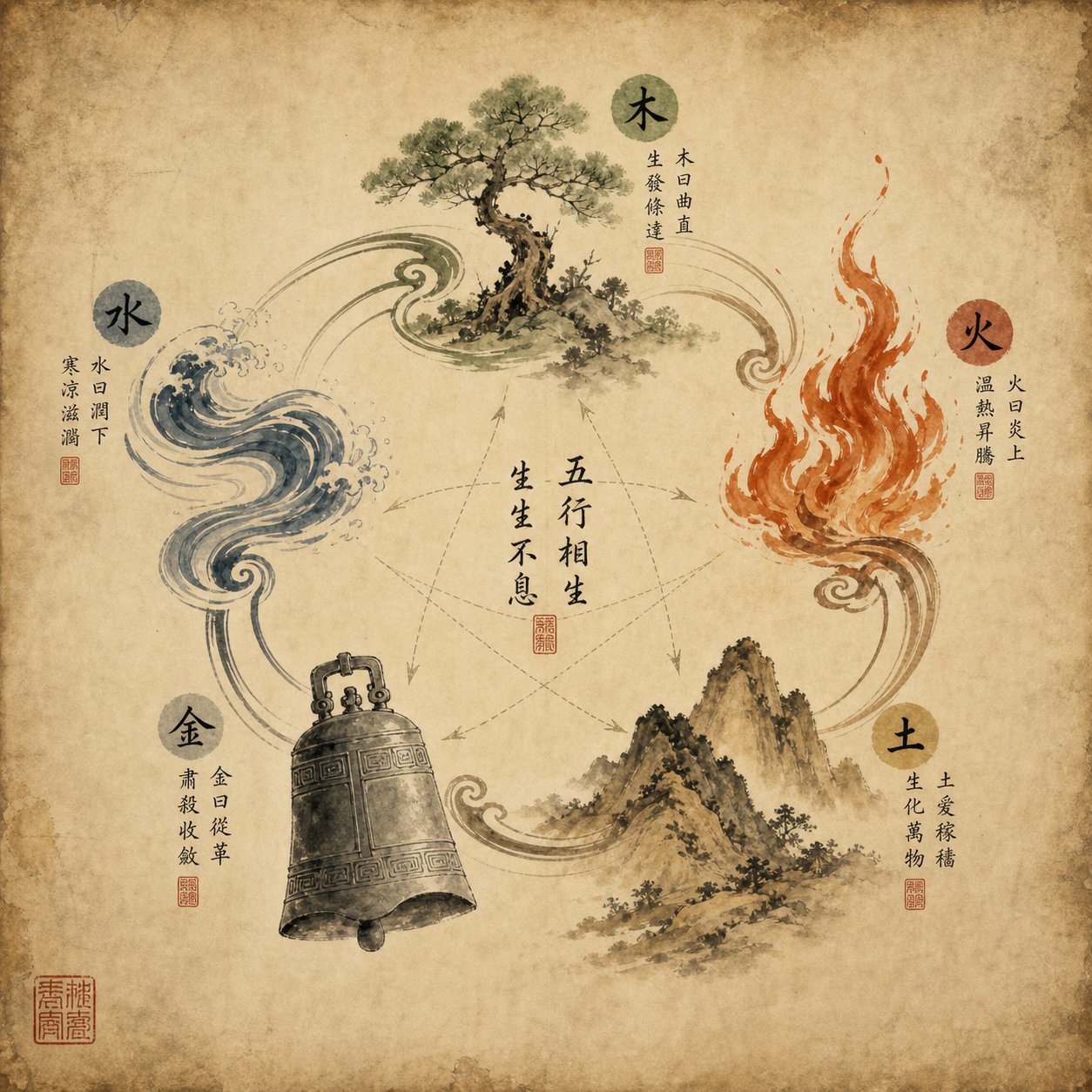
The Wu Xing (五行) system describes five phases of energy: Wood, Fire, Earth, Metal, and Water. In Chinese naming tradition, these elements interact through generating and controlling cycles. When characters in a name contain radicals from elements that "clash" in the controlling cycle, the name is considered internally conflicted and inauspicious.
How does this work practically? Every Chinese character contains a radical, and many radicals carry elemental associations. A name that pairs a Water-radical character with a Fire-radical character places two opposing forces in direct conflict. Water quenches Fire in the controlling cycle, so this combination suggests self-destruction or internal struggle. The five elements wuxing chinese name rules dictate that characters should either share the same element or follow the generating cycle, where one element nourishes the next.
Here is how the elements map to common radicals and which combinations create inauspicious character radicals in chinese names:
| Element | Common Radicals | Example Characters | Clashes With | Reason for Clash |
|---|---|---|---|---|
| Wood (木) | 木 (wood), 艹 (grass) | 林 (forest), 芳 (fragrant), 桐 (paulownia) | Metal (金/钅) | Metal cuts Wood (axe fells trees) |
| Fire (火) | 火 (fire), 灬 (fire dots) | 炎 (flame), 煜 (radiant), 照 (illuminate) | Water (氵/雨) | Water quenches Fire |
| Earth (土) | 土 (earth), 山 (mountain) | 坤 (earth/feminine), 岳 (peak), 城 (city) | Wood (木/艹) | Wood parts Earth (roots break soil) |
| Metal (金) | 金 (metal), 钅 (metal variant) | 鑫 (prosperity), 铭 (inscription), 锐 (sharp) | Fire (火/灬) | Fire melts Metal |
| Water (水) | 氵 (water), 雨 (rain) | 涵 (contain), 泽 (marsh), 润 (moist) | Earth (土/山) | Earth dams Water |
Imagine naming a child 淑炎 (shūyán). The first character 淑 carries the water radical (氵), and the second character 炎 is pure fire (火). To someone versed in Wu Xing, this name pits water against fire, suggesting the child's own name works against itself. Whether you personally believe in elemental cosmology is beside the point. Grandparents, in-laws, and traditional naming consultants will notice immediately.
Historical and Ancestral Naming Taboos
Chinese name taboos about ancestors and emperors represent one of the oldest continuous cultural practices in the language. Known as 避讳 (bìhuì), the naming taboo system historically required that no person use characters from an emperor's given name. This was not merely a suggestion. Throughout Imperial China, it was enforced by law, and violating it could bring serious consequences.
The cultural reasoning is straightforward: using a superior's name character implies you are claiming equality with them. In a hierarchical society built on Confucian respect, this was deeply offensive. Emperor Xuan of Han even changed his own name from Bingyi (病已) to Xun (詢) because his original name contained characters too common for the public to easily avoid. The burden of avoidance was considered so real that emperors sometimes chose rare characters specifically to spare their subjects.
This principle extends directly to family naming. Using a character from a living grandparent's or parent's name in a child's name is still considered disrespectful in most Chinese families. You are essentially "overwriting" the elder's identity. Even using a character that sounds identical to one in an ancestor's name can trigger discomfort, because the phonetic echo implies a claim to their generational rank.
Superstition-Based Rules That Still Matter
Beyond elemental balance and ancestral respect, a broader set of chinese naming taboos and superstitions governs which characters are considered safe. These rules persist not because every family believes in them literally, but because violating them invites social friction and unsolicited commentary from relatives, colleagues, and acquaintances who do observe them:
- Characters associated with mourning or funerals - Characters like 哀 (āi, grief), 丧 (sàng, mourning), or 墓 (mù, tomb) are obvious avoidances, but subtler ones include characters with radicals or components that visually resemble mourning-related words.
- Characters that are "too big" for a person to carry - Names using characters like 天 (tiān, heaven), 皇 (huáng, emperor), or 龙 (lóng, dragon) are considered presumptuous. The belief is that an ordinary person cannot bear the weight of such grand characters, and the name will "crush" the bearer's fortune rather than elevate it.
- Characters with excessive yin energy for boys or excessive yang for girls - Traditional naming follows gendered energy principles. A boy's name heavy in soft, passive characters (many water or flower radicals) or a girl's name loaded with aggressive, sharp characters (metal and weapon radicals) may be flagged as energetically imbalanced.
- Characters containing the "illness" radical (疒) - Any character built on the sickness radical is avoided in names regardless of its actual meaning, because the visual component itself signals disease to readers.
- Stroke count taboos - Some families consult numerology charts where certain total stroke counts for a name are considered unlucky. A name with a "bad" stroke count may be rejected even if every other criterion is satisfied.
The practical reality is this: even if you dismiss these beliefs personally, the people around the name-bearer may not. A Chinese name exists in a social context where grandparents, teachers, employers, and strangers all bring their own cultural frameworks to bear. A name that violates widely recognized taboos creates friction at every introduction, every form submission, every family gathering.
These cultural rules operate within the framework of standard Mandarin and mainstream Han Chinese tradition. But China is not linguistically or culturally monolithic. A name that clears every taboo in Beijing may carry entirely different associations when spoken in Guangzhou, Taipei, or a Hokkien-speaking household overseas.
Regional Dialect Variations That Ruin Good Names
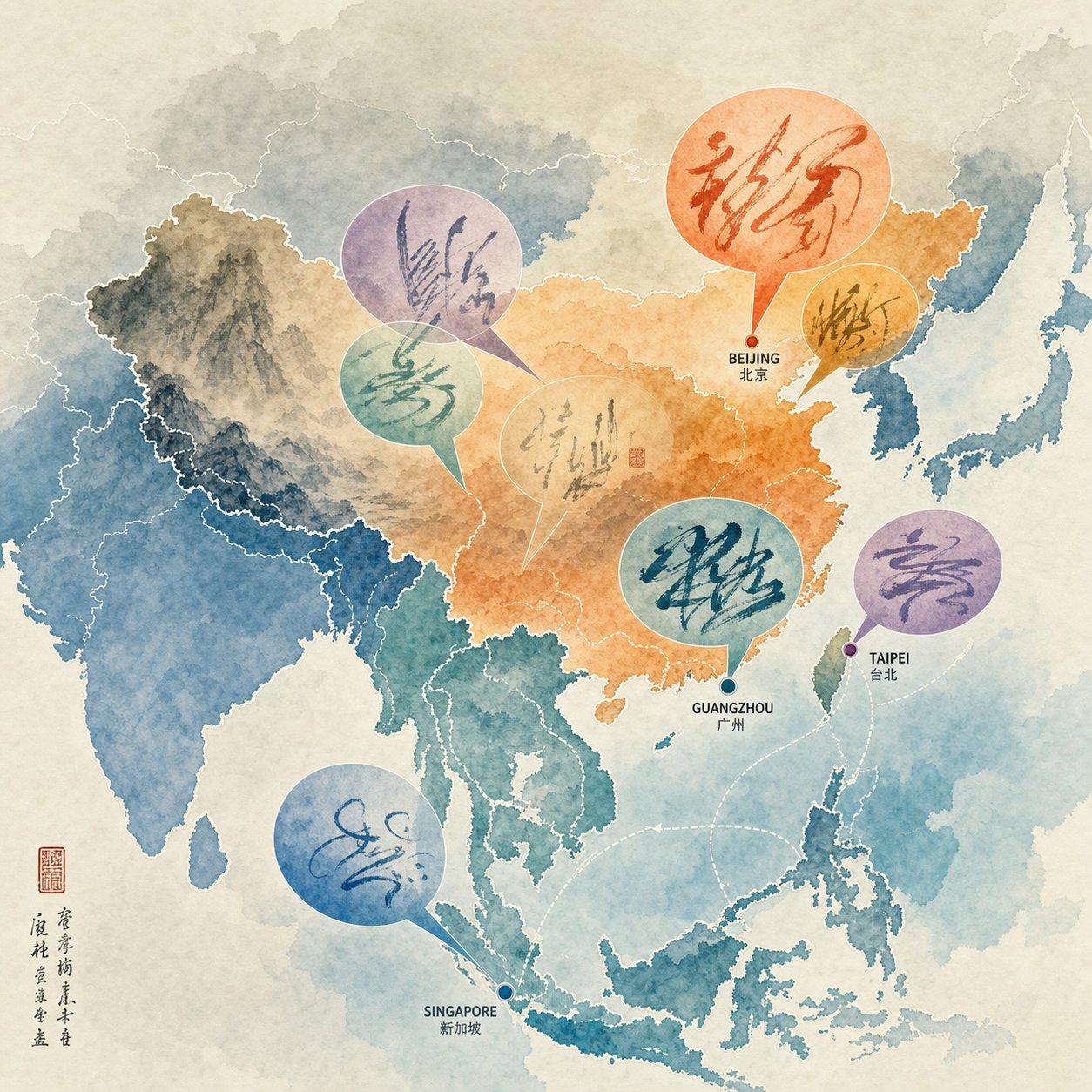
China is not one language wearing a single mask. Mandarin is the official standard, but hundreds of millions of people process names through Cantonese, Hokkien, Shanghainese, Hakka, and dozens of other regional systems. A name that passes every check in standard Mandarin can sound like a curse word or an unlucky phrase the moment it crosses a dialect boundary. If your name will be used in Hong Kong, Taiwan, Southeast Asia, or within a family that speaks a regional dialect at home, checking chinese name across different dialects is not optional.
Mandarin-Safe Names That Fail in Cantonese
The core issue is that Cantonese and Mandarin assign completely different pronunciations to the same written character. Cantonese has six tones (some linguists count nine), creating an entirely separate set of homophones that do not exist in Mandarin. A character that shares no dangerous sound-alikes in Mandarin's four-tone system might land directly on a vulgar or unlucky word in Cantonese's expanded tonal landscape.
Consider the cantonese vs mandarin name pronunciation problems that catch people off guard. The character 久 (jiǔ in Mandarin) means "long-lasting" and seems like a wonderful name element suggesting endurance and permanence. In Cantonese, it is pronounced "gau2," which is crude slang for male genitalia. A name intended to mean "eternally prosperous" becomes a schoolyard joke in Guangdong and Hong Kong. Similarly, characters pronounced with a "gai1" sound in Cantonese can echo 鸡 (chicken), which is well-established slang for a sex worker in southern Chinese dialects.
The reference material from Cultural Atlas confirms that romanization itself shifts dramatically between systems: WANG in Mandarin Pinyin becomes WONG in Cantonese, LIU becomes LAU. These are not minor spelling preferences. They reflect fundamentally different phonetic realities where the same character enters a completely different sound environment.
Here is how a chinese name sounds bad in cantonese but not mandarin, and vice versa:
| Character | Mandarin Pronunciation | Mandarin Meaning | Dialect Pronunciation | Dialect Problem | Dialect |
|---|---|---|---|---|---|
| 久 | jiǔ (long-lasting) | Positive: endurance, permanence | gau2 | Sounds like vulgar slang for male genitalia | Cantonese |
| 景 | jǐng (scenery, bright) | Positive: beautiful view | geng2 | Sounds like 颈 (neck), used in violent idioms | Cantonese |
| 吉 | jí (lucky, auspicious) | Positive: good fortune | gat1 | Close to vulgar expressions in casual speech | Cantonese |
| 雪 | xuě (snow, pure) | Positive: purity, elegance | seh/sueh | Sounds like 衰 (decline, bad luck) in some contexts | Hokkien |
You'll notice the pattern: Mandarin's "j" and "x" initial consonants often map to Cantonese "g" and "s" sounds, landing in entirely different phonetic neighborhoods with their own set of unfortunate neighbors.
Mainland China vs. Taiwan vs. Hong Kong Naming Cultures
The dialect differences in chinese naming conventions extend beyond pronunciation into cultural expectations. Each region carries its own naming sensibility shaped by local language, history, and social norms.
In Hong Kong, names are processed primarily through Cantonese. As the Cultural Atlas research on Hong Kong naming documents, most Hong Kongers also adopt an English name used in daily life, educational settings, and business. This dual-name system means a Chinese name in Hong Kong must survive Cantonese phonetic scrutiny specifically, not Mandarin. Parents there naturally screen names against Cantonese homophones because that is the dialect spoken at home, in schools, and on the street.
Taiwan uses Mandarin as its standard, but with traditional characters and a cultural vocabulary influenced by Japanese colonial history and indigenous Taiwanese (a Hokkien variant). Certain characters carry different cultural weight in Taiwan than on the mainland. Names referencing political figures or using simplified-character-only forms can signal unintended political associations.
Overseas Chinese communities in Southeast Asia, North America, and Europe often maintain older dialect pronunciations that diverge from modern standard Mandarin. A family with Hokkien roots in Malaysia or Teochew heritage in Thailand will hear your name through their ancestral dialect first, even if they also speak Mandarin. These communities sometimes preserve archaic pronunciations that have disappeared from contemporary usage in China itself, creating homophone traps that no modern Mandarin dictionary would flag.
The cross-dialect verification process depends on context. Ask yourself: where will this name be used most? If the answer involves Cantonese-speaking family members, check Cantonese pronunciations. If the name will appear in a business context across Greater China, verify it in Mandarin, Cantonese, and Hokkien at minimum. If the family has roots in a specific dialect group, that dialect takes priority regardless of where they currently live.
Dialect is the hidden variable that even careful name-checkers forget. But there is another layer of naming convention that operates within families themselves, one where the wrong character choice does not just sound bad to strangers but actively disrespects the people closest to you.
Generational Naming Rules You Must Not Break
Every mistake covered so far involves how a name sounds to strangers. This one is different. Generational naming rules operate inside the family, and violating them does not just produce an awkward name. It signals disrespect to living elders, claims a rank in the family hierarchy that is not yours, and can create genuine conflict at reunions, ancestral ceremonies, and family registry updates. If you are naming a child within a Chinese family or marrying into one, the chinese generational naming rules zibei explained here are non-negotiable knowledge.
Understanding the Generational Poem System
Many Chinese families maintain a pre-written poem called a 字辈 (zìbèi) sequence. This poem was composed by ancestors, sometimes centuries ago, and each character in the poem is assigned to one generation in order. Every person born into that generation receives a name containing that specific character, typically as the first character of their two-character given name. Their children receive the next character in the poem. Their grandchildren receive the one after that.
Consider this example from a real generational poem documented by My China Roots:
立显荣朝士, 文方运际祥。祖恩贻泽远, 世代永承昌。
In this system, the first ancestor uses 立 (lì) as their generation character. Their son's generation uses 显 (xiǎn). The grandson's generation uses 荣 (róng). And so on, cycling through the poem across centuries. All male cousins within the same generation share the same generation character, making family relationships immediately visible from names alone.
As the Asia Media Centre explains, these generation names are worked out long in advance and cannot be changed. They are written into the family's genealogical records, sometimes as part of a poem expressing best wishes for the family's future. The chinese name generational poem system essentially pre-assigns one character of every descendant's name for generations to come.
Traditionally, men and women within the same generation might receive different generation characters. All males of one generation share one character, while females share another. This means that if you see two people from the same family with the same first character in their given name, they are almost certainly siblings or first cousins of the same generation.
How to Check for Generational Conflicts
So what goes wrong? Imagine you choose a name for your child that happens to contain the generation character assigned to the child's grandfather's generation. You have just, symbolically, placed your child at the same rank as their grandparent. In a culture built on Confucian hierarchical respect, this is not a quirky coincidence. It is disrespecting elders with wrong generation character placement, and older family members will notice immediately.
The social consequences range from uncomfortable conversations to genuine family rifts. Grandparents may refuse to use the name. Relatives may insist on a name change before the child can be entered into the family genealogy book (族谱, zúpǔ). In traditional families, a name that violates generational order is treated as a serious breach of filial piety.
Here is how to check chinese family generation character requirements before finalizing a name:
- Ask the eldest family members directly - Inquire whether the family maintains a 字辈 poem or generational naming sequence. Many families have this recorded in their 族谱 (family genealogy book), even if younger generations are unaware of it.
- Identify which character belongs to your child's generation - If a poem exists, determine where in the sequence the current generation falls. Count forward from a known ancestor whose generation character you can confirm.
- Check your chosen name against all living generations' characters - Compare every character in your proposed name against the generation characters used by parents, grandparents, great-grandparents, and any elder still living or recently deceased. Even a phonetic match (same sound, different character) can cause discomfort.
- Verify with multiple family branches - Different branches of the same family sometimes diverge in their poem usage or lose track of the sequence. Cross-reference with uncles, aunts, or cousins from other branches to confirm the correct current character.
- Decide whether to follow or respectfully opt out - In mainland China, the practice has declined since the Mao era, and many modern families no longer enforce it strictly. However, if any elder in the family still observes the tradition, using the correct generation character shows respect. If you choose not to follow it, at minimum ensure your chosen name does not accidentally duplicate an elder's generation character.
This applies primarily to parents naming children within Chinese families, but it also matters in other situations. Foreigners adopted into Chinese families, those taking a Chinese spouse's family naming conventions, or anyone being formally added to a family genealogy should ask about 字辈 before selecting a name. Even if the family says "we don't really follow that anymore," checking prevents the one uncle or grandmother who does care from taking offense.
The generational system is the most family-specific of all naming pitfalls. Unlike tones, homophones, or cultural taboos, which apply universally, generational rules vary from clan to clan. No dictionary or online tool can check this for you. It requires direct conversation with the family itself, which makes it the one naming mistake that only human consultation can prevent. That reality points toward a broader truth: every category of naming error covered so far ultimately requires verification from real people, not just reference tables.
Tailored Guidance for Parents, Foreigners, and Businesses
Every naming pitfall discussed so far applies universally, but not equally. A parent choosing a baby name faces different pressure points than a foreigner picking a personal Chinese name for work, and both face entirely different challenges than a company selecting a brand name for the Chinese market. Your risk profile, your verification priorities, and the consequences of getting it wrong all shift depending on which category you fall into.
Think of it this way: a baby carries their name for life across every social context. A foreigner's Chinese name operates primarily in professional and social settings where first impressions matter. A brand name must survive millions of repetitions across advertising, packaging, and word-of-mouth in multiple dialect regions simultaneously. Same language, same traps, but very different stakes and strategies.
For Parents Naming a Child
When you are figuring out how to choose chinese name for baby without bad meaning, the stakes are uniquely high. This name will follow your child through school roll calls, job applications, wedding invitations, and every official document for decades. Unlike a foreigner who can quietly swap their Chinese name if it fails, a child's registered name involves legal paperwork to change and social explanations that never fully disappear.
- The "too ambitious" trap - Parents often reach for characters like 龙 (dragon), 凤 (phoenix), or 天 (heaven), hoping to give their child a powerful identity. In practice, these characters are considered too grand for an ordinary person to "carry." Grandparents and traditional relatives may view the name as presumptuous, believing it invites misfortune by claiming more than the child's fate can support. Aim for aspirational without grandiose: characters like 瑞 (auspicious), 安 (peaceful), or 慧 (wise) convey positive meaning without overreaching.
- Generational conflicts are your highest-priority check - Unlike foreigners or businesses, parents naming within a Chinese family must verify the 字辈 system first. This is the one mistake that creates immediate family conflict rather than just social awkwardness. Ask elders before falling in love with a name.
- Peer-group sound testing is essential - Children are ruthless with names. A name that sounds fine to adults may become a playground taunt when shortened, rhymed, or combined with the surname at the speed kids speak. Test the name with younger native speakers, not just older relatives who may be too polite to flag slang associations.
- Five Elements and stroke count still matter socially - Even if you personally dismiss Wu Xing numerology, your child will encounter teachers, in-laws, and colleagues who do not. A name that violates elemental balance invites unsolicited commentary for years. The path of least resistance is choosing characters whose radicals do not clash, which costs you nothing and prevents future friction.
Verification priority for parents: generational rules first, then compound meaning spoken aloud, then elemental balance, then homophone checks across the family's home dialect.
For Foreigners Choosing a Personal Chinese Name
The pitfalls for a foreigner choosing chinese name are different in kind, not just degree. You are navigating a system designed for native speakers, without the cultural intuition that catches problems automatically. The most common mistakes are not the dramatic ones. They are the subtle signals that mark your name as obviously foreign-chosen, undermining the very purpose of having a Chinese name in the first place.
- The cliche problem - As documented naming research confirms, foreigners gravitate toward stereotypical syllables like "Chang," "Shang," or "Zhang" because they "sound Chinese" to Western ears. These choices echo outdated media portrayals and can carry uncomfortable historical associations. They also immediately signal that the bearer chose their name from a position of cultural unfamiliarity rather than genuine engagement.
- Direct transliteration disasters - Transliterating your English name syllable-by-syllable into Chinese characters almost always produces something awkward. "Charlotte" becomes "Xialuote" (夏洛特), which sounds uncomfortably close to "kill him/her" (杀了他) in rapid speech. A good Chinese name is not a phonetic copy of your English name. It is a separate identity that may share a syllable or two at most.
- Overly common "safe" names that say nothing - Overcorrecting for risk, many foreigners land on names so generic they become invisible. Names like 大卫 (Dàwèi, David) or 安娜 (Ānnà, Anna) are recognizably transliterated foreign names, not Chinese names. They serve as labels but build no cultural bridge. A chinese name selection guide for non-native speakers should push you toward names that feel natural in Chinese while reflecting something genuine about your personality or values.
- Gender mismatch signals - Chinese names carry strong gender coding through character choice. A male foreigner who unknowingly picks characters associated with femininity (花, 莲, 美) or a female foreigner using heavily masculine characters (刚, 军, 强) will face constant confusion and correction. Check gender conventions for every character before committing.
Verification priority for foreigners: homophone and compound meaning checks first (since you lack native intuition for these), then gender appropriateness, then dialect checks relevant to your social or professional context, then consultation with native speakers of different ages to catch generational slang.
For Businesses Selecting a Chinese Brand Name
Brand naming in Chinese operates at a completely different scale of risk. A personal name embarrasses one person. A brand name embarrasses an entire company across millions of consumer touchpoints, and the damage compounds with every advertising dollar spent building awareness of a flawed name. The chinese brand name bad meaning examples that circulate in marketing circles are cautionary tales worth studying.
- Cross-dialect failure at scale - A brand name must work in Mandarin, Cantonese, and ideally Hokkien and Shanghainese simultaneously. As Brandingmag's analysis of Chinese brand naming demonstrates, alphabetic brand names face unique challenges because Chinese consumers often "see" letter shapes more than they "read" semantic meaning. A name like "Frognie Zila" borrows visual codes from luxury brands (resembling Ermenegildo Zegna in letter shapes) while carrying absurd semantic associations for English readers. Your brand name must survive both visual and phonetic processing across multiple language systems.
- The intertextuality trap - Brand names exist in a web of cultural references that shift between markets. The eyewear brand "Helen Keller" sounds fashionable to Chinese consumers unfamiliar with the historical figure, but becomes offensive to anyone who knows she was a famous blind woman. Your brand name will eventually reach audiences beyond your initial market, and cultural references that seem obscure today may become widely known tomorrow.
- Trademark and phonetic territory conflicts - A Chinese brand name must be legally registrable, which means checking not just meaning but phonetic similarity to existing registered marks. Two brands with different characters but similar pronunciation can trigger trademark disputes. The phonetic landscape is far more crowded than the character landscape.
- Tone-of-voice mismatch - Some brand names that are technically "correct" still fail because they communicate the wrong register. Names that sound too literal (like "ComeBuy" for a tea brand) or too descriptive (like "Lancy From25" targeting a specific age demographic) reveal a transactional mindset that sophisticated consumers find off-putting. Chinese brand naming rewards subtlety, metaphor, and poetic resonance over directness.
Verification priority for businesses: multi-dialect phonetic testing across all target markets first, then trademark clearance searches, then cultural reference and intertextuality checks with diverse focus groups, then long-term brand equity assessment. Budget for professional linguistic screening. The cost of renaming after launch dwarfs the cost of getting it right the first time.
Each audience faces a distinct constellation of risks, but all three share one common need: systematic verification before the name becomes permanent. The difference between a name that works and one that fails often comes down to the specific questions you ask, and the order you ask them in, during that final checking process.

Your Before-You-Finalize Verification Checklist
Knowing the categories of naming mistakes is one thing. Running your chosen name through a step by step chinese name verification process before it becomes permanent is what actually prevents disaster. This checklist works as a sequential filter: each step catches problems the previous one missed, and skipping any single step leaves a gap where embarrassment can slip through.
The Complete Verification Flowchart
Work through these steps in order. If your name fails at any stage, revise before continuing. This is how to verify chinese name meaning before using it systematically rather than relying on luck:
- Tone check - Write out the full pinyin with tone marks. For each syllable, list every common character that shares that exact tone-syllable combination. If any negative character occupies the same tonal slot, assess how common it is relative to your intended character. High-frequency negative homophones override low-frequency positive ones in listeners' minds.
- Single-character homophone check - Now check each syllable across all four tones, not just your intended tone. If a one-tone drift produces a death, illness, poverty, or vulgarity association, flag it. Names are misheard constantly in noisy environments.
- Compound meaning check - Say the full name aloud at conversational speed ten times. Say it mumbled. Say it shouted. Write down every word or phrase that emerges from the combined syllables. Check the surname-plus-given-name combination as a phonetic unit, not just the given name alone.
- Dialect check - Identify which dialects matter for your context (family origin, business market, city of residence). Look up the Cantonese, Hokkien, or other relevant pronunciation of each character and repeat steps one through three in that dialect's sound system.
- Cultural taboo check - Examine each character's radical for Five Elements conflicts. Verify that no character duplicates one used by a living elder or famous disgraced figure. Check stroke count if the family observes numerological conventions.
- Generational rule check - Ask the family directly whether a 字辈 poem exists. Confirm your chosen characters do not duplicate any generation character assigned to an elder's cohort.
- Native speaker consultation - Present the name to at least three native speakers from different regions, age groups, and genders. Use the questions below rather than simply asking "is this okay?"
This checklist for checking chinese name is appropriate works as a funnel. Most names fail at steps two or three, which is exactly where you want to catch problems: early, before emotional attachment sets in.
Questions That Get Honest Feedback From Native Speakers
Here is the core difficulty: Chinese speakers often will not volunteer that your name sounds bad. Politeness norms run deep. Asking "is my name okay?" invites a reflexive "yes" regardless of what they actually think. The questions to ask native speaker about chinese name quality must be structured to bypass courtesy and elicit genuine associations.
Instead of asking "Is this name okay?" ask: "When you hear this name, what is the first thing it reminds you of? What image or word comes to mind before you see the characters?"
This reframing works because it asks for an association rather than a judgment. People will freely describe what a name "reminds them of" even when they would never say "your name sounds terrible." Other effective phrasings include:
- "If you heard this name called out in a hospital waiting room without seeing the characters, what would you assume it means?"
- "Does this name remind you of any person, phrase, or joke you have heard before?"
- "If a child had this name in elementary school, would other kids make fun of it? What would they say?"
- "Would you give this name to your own child? If not, why not?"
That last question is the most powerful. People who would never criticize your choice directly will readily explain why they would not make the same choice for their own family. The reasoning they offer reveals exactly what is wrong.
Consult at least three people: one older (over 50), one younger (under 30), and one from a different region than the others. Older speakers catch historical and cultural references younger people miss. Younger speakers catch internet slang and meme associations that older generations are unaware of. Regional diversity catches dialect-specific problems that speakers from a single area would never notice. This breadth of consultation is what separates a name that merely survives from one that genuinely works across every context it will encounter.
Frequently Asked Questions About Avoiding Bad Meaning Chinese Names
1. How do I check if my Chinese name has a bad meaning?
Run your name through a sequential verification process: check each syllable's tonal homophones, test the full name spoken aloud at conversational speed for compound meaning collisions, verify pronunciation in relevant dialects like Cantonese or Hokkien, screen character radicals for Five Elements conflicts, and consult at least three native speakers from different age groups and regions. Ask them what the name reminds them of rather than whether it sounds okay, since politeness norms often prevent direct criticism.
2. Why do Chinese names sound different in Cantonese and Mandarin?
Cantonese and Mandarin assign completely different pronunciations to the same written characters. Cantonese uses six to nine tones compared to Mandarin's four, creating an entirely separate set of homophones. A character like 久 (jiu in Mandarin, meaning long-lasting) becomes 'gau2' in Cantonese, which is vulgar slang. This means a name that passes every Mandarin check can still be offensive in Cantonese-speaking regions like Hong Kong or Guangdong.
3. What are the most common Chinese naming mistakes foreigners make?
Foreigners typically fall into four traps: choosing stereotypical syllables like 'Chang' or 'Shang' that echo outdated media portrayals, directly transliterating their English name syllable-by-syllable into characters that form awkward phrases, picking overly generic transliterated names like 大卫 (David) that function as labels rather than real Chinese names, and selecting characters with mismatched gender coding. The underlying issue is choosing names based on pinyin appearance without understanding tonal, homophonic, and cultural implications.
4. What is the Five Elements rule in Chinese naming?
The Wu Xing (五行) system assigns elemental associations to character radicals: Wood, Fire, Earth, Metal, and Water. These elements interact through generating and controlling cycles. When a name pairs characters from clashing elements, such as a Water-radical character (氵) with a Fire-radical character (火), the name is considered internally conflicted and inauspicious because Water quenches Fire. Even non-superstitious families often follow these conventions to avoid social friction with traditional relatives.
5. Can two positive Chinese characters create a negative name when combined?
Yes, this is one of the most common and least discussed naming traps. Two individually positive characters can produce an offensive phrase when their combined pinyin syllables form a recognizable negative word. The classic example is 思旺 (siwang, meaning 'think' plus 'prosperous'), which sounds nearly identical to 死亡 (siwang, meaning 'death') at natural speaking speed. The brain processes multi-character names as phonetic units, not individual characters, so the combined sound overrides the intended written meaning.