Why Testing Chinese Name Homophones Can Save You From Embarrassment
Imagine spending weeks choosing the perfect Chinese name, only to discover it sounds exactly like a word for "death" or an obscene slang term. This isn't a rare scenario. Chinese name homophone embarrassment has tripped up everyone from new parents to multinational corporations. When KFC entered China, its slogan "Finger-lickin' good" was rendered as "Eat your fingers off." Names carry even higher stakes because they follow a person or brand for life.
The core problem is deceptively simple. Mandarin Chinese uses roughly 400 distinct syllables, yet the language contains tens of thousands of characters. A single syllable like "shi" maps to over 80 different characters, spanning meanings from "poetry" to "corpse" to "feces." When you pick a name based on one beautiful character, every other character sharing that sound comes along for the ride in listeners' minds.
A Chinese name doesn't just carry the meaning you intend. It carries every meaning that sounds like it.
Who Needs to Test Chinese Name Homophones
Three groups face the highest risk. Parents selecting a child's name need to think decades ahead, since schoolyard teasing exploits homophones ruthlessly. Expats and heritage learners choosing a Chinese name often lack the cultural radar to catch sound-meaning problems on their own. Businesses entering Chinese-speaking markets risk brand damage when a product name accidentally evokes something vulgar or unlucky, much like Ford discovered when its Pinto model name turned out to be slang in Brazilian Portuguese.
What Makes Chinese Names Vulnerable to Homophone Problems
Chinese relies on tonal distinctions that many non-native speakers blur in casual conversation. When tones flatten, even more characters collapse into identical sounds. Add regional dialects, generational slang, and the cultural weight of lucky versus unlucky associations, and you'll see why testing a name's sound is just as important as choosing its characters.
Despite these risks, no widely available resource offers a dedicated, repeatable methodology for how to avoid bad Chinese name meanings through systematic homophone testing. The steps that follow give you exactly that: a structured process to catch problems before they become permanent.

Step 1 Learn the Difference Between Exact and Near Homophones
Before you can systematically check a name for sound-meaning problems, you need to understand what you're actually listening for. Chinese homophones fall into two distinct categories, and each one creates a different type of risk. Skipping either category leaves blind spots in your testing.
Exact Homophones With Identical Tones
Exact homophones share the same pinyin spelling and the same tone. They sound completely identical in speech, and only context or written characters distinguish them. Consider the syllable "shi" in the first tone (shi1). The character 诗 means "poetry," while 尸 means "corpse." Both are pronounced exactly the same way. A listener hearing your name cannot tell which character you intend without seeing it written down.
This is the highest-risk category. When your name contains an exact homophone of a negative word, the association is immediate and unavoidable. Native speakers will hear both meanings simultaneously, much like an English speaker hearing the name "Richard Head" cannot unhear the unfortunate shortening. Characters like 他, 她, and 它 all share the pronunciation "ta" in the first tone, demonstrating just how many characters can collapse into a single sound.
Near Homophones With Different Tones
Near homophones share the same pinyin base but differ in tone. For example, "ma" in tone 1 (妈, mother) versus "ma" in tone 4 (骂, to scold). On paper, these are different sounds. In practice, the distinction blurs constantly.
Why? Tones flatten in fast speech, whispered conversation, noisy environments, and when non-native speakers say the name. Young people texting or joking often ignore tonal precision entirely. A name character pronounced "fang" in tone 1 (芳, fragrant) sits dangerously close to "fang" in tone 4 (放, which combines with other characters to form crude expressions). The same pinyin with a different tone creates problems that surface unpredictably in everyday life.
Why Both Types Create Name Problems
You might think near homophones are safe because "technically" the tones differ. But consider how names actually get used. People shout them across rooms, mumble them in introductions, type them into pinyin input systems without tone marks, and sing them in birthday songs where melody overrides tone. Every one of these situations strips away tonal precision and collapses near homophones into exact ones.
| Category | Definition | Risk Level | Example |
|---|---|---|---|
| Exact Homophone | Same pinyin, same tone | High - immediate, unavoidable association | 诗 (shi1, poetry) vs. 尸 (shi1, corpse) |
| Near Homophone | Same pinyin, different tone | Medium - surfaces in casual speech, fast reading, or non-native pronunciation | 芳 (fang1, fragrant) vs. 放 (fang4, release/emit) |
A thorough approach to testing Chinese name homophones accounts for both rows in that table. Exact homophones demand immediate attention since the association is always present. Near homophones require judgment: how tones affect Chinese name meaning depends on how the name will be used, who will say it, and in what contexts. A name used primarily in formal Mandarin settings faces less near-homophone risk than one used in casual, multi-dialect environments.
With these two categories clearly defined, you have the conceptual framework for what comes next: converting your chosen name into pinyin and methodically searching for every character that shares its sound.
Step 2 Convert Your Name to Pinyin for Systematic Lookup
Knowing the difference between exact and near homophones gives you the categories to watch for. The practical question is: how do you actually find every character that shares your name's sound? The answer is pinyin. When you convert a Chinese name to pinyin with its full tonal notation, you create a precise search key that unlocks every character hiding behind that same pronunciation.
Think of pinyin as a filing system. Every Chinese character is filed under its romanized spelling plus tone number. Pull that file open, and you'll see every other character stored in the same slot. That's your homophone risk list.
How to Get Accurate Pinyin for Each Character
Getting the pinyin right matters more than it sounds. Mandarin uses five distinct tones: a flat first tone marked with a macron (a), a rising second tone with an acute accent (a), a dipping third tone with a caron (a), a falling fourth tone with a grave accent (a), and an unmarked neutral tone. Each tone changes meaning entirely, so recording the wrong tone means you'll search the wrong homophone set.
Here's the sequential process for a pinyin lookup for name homophones:
- Write out each character of your proposed name separately.
- Look up each character in a reliable dictionary (MDBG, Pleco, or LINE Dictionary) and record its pinyin with the tone number or tone mark. For example, 明 becomes ming2.
- Check whether your character is a 多音字 (a character with multiple pronunciations). If it is, record every possible pronunciation. The character 乐 can be read as le4 (happy) or yue4 (music), and each reading carries its own homophone set.
- Confirm the correct pronunciation for your intended meaning. A 多音字 multiple pronunciation name check prevents you from testing the wrong sound entirely.
- Combine the syllables in order to see the full name's pinyin string, such as wang2 ming2.
A common mistake is relying on pinyin input methods, which strip tone information. Always use a dictionary source that explicitly marks tones.
Creating Your Tone Variant List
Your exact pinyin gives you the search key for exact homophones. To catch near homophones, you need to expand that key into a variant list. Take each syllable and write it out with all four tones plus the neutral tone.
For a name containing the syllable "li" in tone 3 (li3, 礼, meaning "courtesy"), your variant list looks like this: li1, li2, li3, li4, and li (neutral). Each variant is a separate search query. When you look up li4, you'll find characters like 利 (profit) but also 痢 (dysentery). That's exactly the kind of hidden association you need to surface.
This variant list is how to find Chinese characters with same pronunciation across all tonal neighbors. It transforms a vague worry about "bad sounds" into a concrete, searchable checklist. Each entry on that list becomes a lookup you'll run in the next step, where you match these sounds against categories of negative or culturally sensitive meanings.
Step 3 Test Each Character Against Negative Meanings
You have your pinyin list and your tone variants. Each one is a loaded search query waiting to reveal what lurks behind your name's sound. The goal here is straightforward: run a Chinese name negative meaning check by looking up every character that shares your name's pronunciation, then flag anything problematic. This is where abstract risk becomes concrete.
Using Pinyin Dictionary Lookups to Find Conflicts
A pinyin dictionary name conflict lookup works differently from a standard character lookup. Instead of searching by character, you search by sound. Tools like MDBG (mdbg.net), Pleco, or the Unihan database let you enter a pinyin syllable with its tone and return every character filed under that pronunciation.
Here's how to check Chinese name for bad homophones using this method. Take each syllable from your variant list and enter it into a pinyin-indexed dictionary. For a syllable like "si4," you'll get a results page showing dozens of characters: 四 (four), 似 (similar), 寺 (temple), and critically, 死 (death) at tone 3, which sits just one tone away. Scan the full results list. You're not reading every definition in depth. You're scanning for red flags: characters whose meanings fall into known problem categories.
Work through your list systematically. Check the exact tone first, then each variant tone. Mark any character with a negative or sensitive meaning. Even if a problematic character sits two tones away from your intended pronunciation, note it. Casual speech and regional accents can close that gap quickly.
Categories of Negative Meanings to Check Against
Not every homophone conflict matters equally. A name that sounds like "table" is harmless. A name that sounds like "death" is a serious problem. Focus your scanning on these high-risk categories of unlucky sounds in Chinese names:
- Death and illness - Characters like 死 (si3, death), 病 (bing4, illness), 亡 (wang2, perish), 丧 (sang4, funeral/mourning)
- Bodily functions and anatomy - Characters referencing excretion, flatulence, or private body parts that would cause embarrassment when spoken aloud
- Insults and derogatory terms - Characters like 蠢 (chun3, stupid), 丑 (chou3, ugly), 贱 (jian4, cheap/lowly)
- Unlucky numbers and associations - Primarily 四 (si4), which sounds like 死 (si3, death), but also associations with loss, emptiness, or poverty
- Sexual connotations - Characters or character combinations that reference sexual acts, anatomy, or crude slang, especially combinations that emerge when syllables run together
- Suffering and hardship - Characters like 苦 (ku3, bitter/suffering), 难 (nan4, disaster), 哭 (ku1, to cry)
When you find a match, note the tone distance. An exact-tone match with a death-related character is a dealbreaker for most families. A two-tone-away match with a mildly crude term might be acceptable depending on context.
Cultural Taboos That Apply to Names
Beyond individual character meanings, certain Chinese cultural taboos in naming carry extra weight because they're deeply embedded in daily life. The number four is the most famous example. As Sagebooks Hong Kong explains, the pronunciation of 四 (si4) sounds so close to 死 (si3, death) that many buildings skip the fourth floor entirely, and some aircraft omit row four. A name containing the syllable "si" in any tone triggers this association immediately for Chinese listeners.
Similarly, the act of gifting clocks (送钟 song4 zhong1) sounds identical to 送终 (song4 zhong1), meaning to attend someone's deathbed. If your name contains "zhong" in tone 1, check whether the surname-plus-given-name combination accidentally creates this phrase when spoken together.
Other culturally loaded homophones include 梨 (li2, pear), which sounds like 离 (li2, separation), and 书 (shu1, book), which sounds like 输 (shu1, to lose). These associations might seem minor in isolation, but Chinese naming culture treats phonetic harmony as a serious matter. Families often consult naming specialists who evaluate stroke counts, elemental balance, and sound associations together.
Your character-by-character check catches problems at the individual syllable level. But names aren't spoken one syllable at a time. When a surname and given name combine, entirely new sound patterns emerge that no single-character lookup will reveal.
Step 4 Test the Full Name Combination for Hidden Homophones
A name that passes every single-character check can still fail spectacularly when spoken as a complete phrase. Surname given name sound combination problems arise because syllables blend, overlap, and influence each other in connected speech. The character 吴 (wu2) is a perfectly respectable surname. The character 硕 (shuo4) means "great" or "large." Put them together as 吴硕 and say it quickly. You'll hear something uncomfortably close to 无所 (wu2 suo3), as in 无所谓 ("doesn't matter") or worse, depending on what follows. Individual characters were clean. The combination created a new problem.
How Surname and Given Name Create New Sounds Together
When you speak a full Chinese name, syllable boundaries soften. The ending of one syllable bleeds into the beginning of the next. A surname ending in "-ng" followed by a given name starting with a vowel can merge into a single perceived sound. Consider the surname 杨 (yang2) paired with 伟 (wei3). Spoken at conversational speed, "yang wei" collapses dangerously close to 阳痿 (yang2 wei3), meaning "impotence." Each character alone is fine. Together, they form a phrase that would follow someone through every introduction for the rest of their life.
This is why a Chinese full name homophone test must evaluate the name as a spoken unit, not just as a collection of parts. You're listening for emergent phrases, accidental words, and unintended meanings that only appear when syllables sit side by side.
Tone Sandhi Rules That Change Your Name's Sound
Tone sandhi adds another layer of unpredictability. In Mandarin, certain tone sequences automatically shift pronunciation. The most critical rule for names: when two third-tone syllables appear consecutively, the first one changes to a second tone. The greeting 你好 (ni3 hao3) is actually pronounced "ni2 hao3" in natural speech.
Imagine a name like 柳雨 (liu3 yu3). Both characters carry the third tone. In practice, the name is pronounced "liu2 yu3" due to tone sandhi. That shifted first syllable now sounds like 流 (liu2, to flow) or 留 (liu2, to remain). Suddenly your homophone risk profile has changed without you choosing a different character. The tone sandhi rules for Chinese names mean the pronunciation you test in isolation may not match the pronunciation people actually use.
Three consecutive third tones complicate things further. A full name like 马晓雨 (ma3 xiao3 yu3) triggers a chain of sandhi adjustments where grouping determines which syllables shift. The result can sound different depending on whether the speaker pauses between surname and given name or runs them together.
The Read-Aloud Speed Test Method
Dictionary lookups can't catch combination effects. You need to hear the name spoken at real-world speeds. Here's how to read a Chinese name aloud for testing:
- Say the full name slowly and clearly, one syllable at a time, with correct tones. Listen for any obvious problematic phrases.
- Say it again at normal conversational speed, as if introducing someone at a dinner party. Note where syllables merge or tones flatten.
- Say it quickly three times in a row, simulating how a teacher might call roll or a colleague might shout across an office. Record what you actually hear.
- Whisper it. Whispering removes tonal information almost entirely, revealing which near-homophone associations surface when pitch disappears.
- Sing it on a single note. Like whispering, this strips tones and exposes the raw syllable string for what it sounds like without pitch cues.
Each speed and style simulates a real situation where the name will be used. A name that sounds elegant at careful, measured pace but unfortunate at rapid-fire speed will cause problems in daily life. The goal isn't perfection at every speed. It's awareness of what listeners might hear when tonal precision drops away.
This combination testing covers Mandarin pronunciation. But Mandarin is only one phonetic system in the Chinese-speaking world, and a name that passes every test in standard Mandarin may carry entirely different homophone risks in Cantonese, Hokkien, or Shanghainese.
Step 5 Check Your Name Across Chinese Dialects
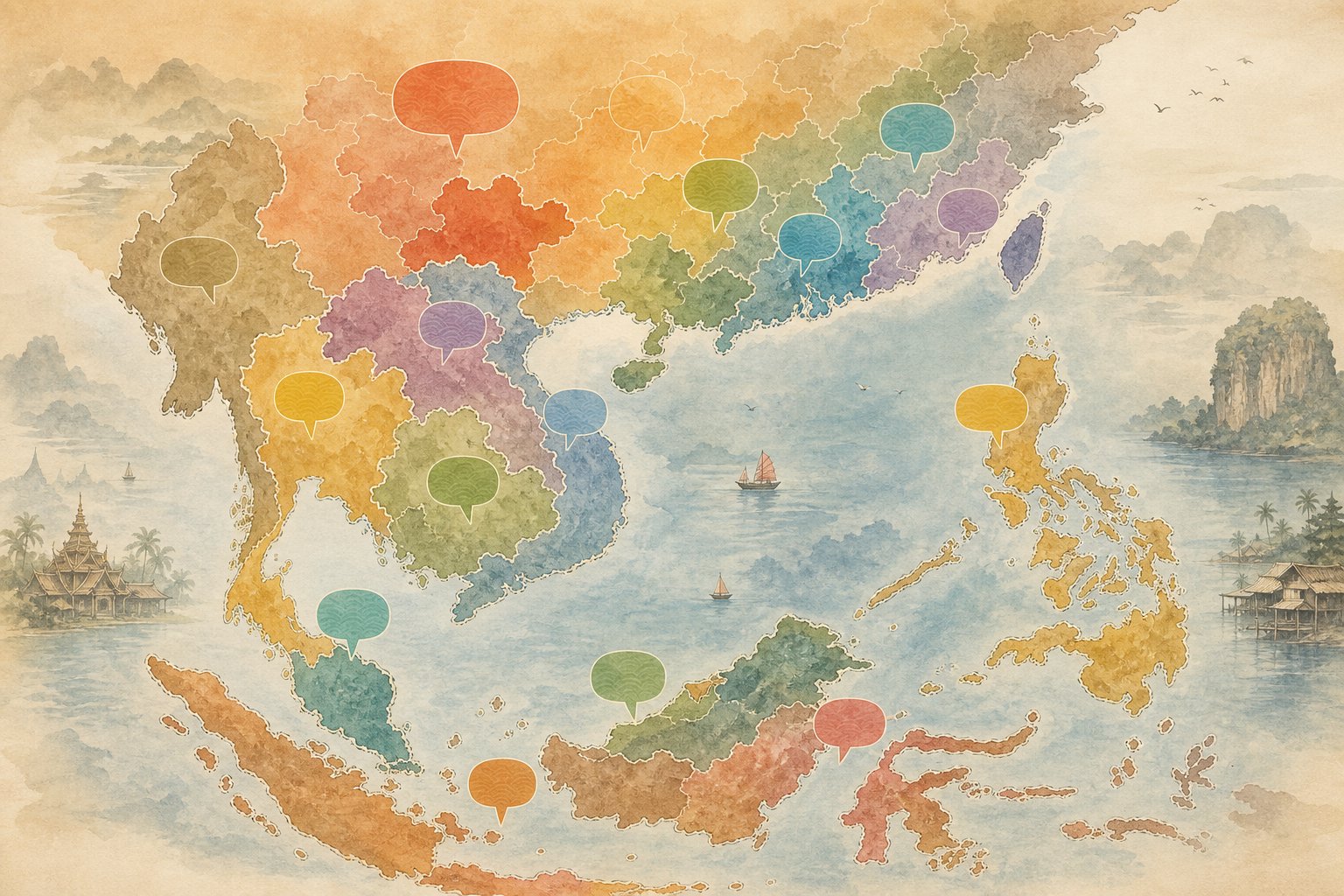
Here's a fact that catches many people off guard: "Chinese" is not a single language. It's a family of related but mutually unintelligible varieties. Mandarin and Cantonese speakers cannot understand each other in conversation, despite sharing a writing system. Hokkien, Shanghainese, Hakka, and dozens of other regional varieties each carry their own phonetic systems. A name that sounds perfectly safe in Mandarin might land on an embarrassing homophone in Cantonese or trigger a crude association in Hokkien. If your name will be used in multi-dialect environments, Mandarin testing alone leaves significant gaps.
Why Mandarin Testing Alone Is Not Enough
Mandarin uses four tones. Cantonese uses six. That difference alone means the homophone landscape shifts dramatically between the two. Characters that occupy distinct tonal slots in Mandarin may collapse into the same sound in Cantonese, or vice versa. The character 一剑 (yijian in Mandarin) becomes something like "Yatgim" or "Jatgim" in Cantonese, and "Chitkiam" or "Itkiam" in Hokkien. Each of those dialect pronunciations carries its own set of sound-alike characters and potential conflicts that simply don't exist in Mandarin.
Dialect-specific Chinese name problems are especially common for families with roots in Guangdong, Fujian, Taiwan, or Southeast Asian Chinese communities where Hokkien, Teochew, or Cantonese dominate daily conversation. A child named in Mandarin may spend holidays with grandparents who exclusively use the family dialect. The name needs to survive both phonetic systems.
Identifying Which Dialects Matter for Your Name
You don't need to test every Chinese dialect. Focus on the ones your name will actually encounter. Ask yourself these questions:
- What dialect does the extended family speak at home or during gatherings?
- Where will the person (or brand) primarily live or operate geographically?
- Will the name be used in Hong Kong or Macau (Cantonese), Taiwan (Mandarin plus Hokkien/Hakka), or Southeast Asia (often Hokkien, Teochew, or Cantonese)?
- Is the surname historically associated with a specific dialect group?
If your answer to all of these points to Mandarin-only environments, dialect testing is optional. If even one answer involves Cantonese, Hokkien, or another variety, you need to test your name in that system.
How to Check Dialect-Specific Homophones
The challenge is that dialect phonetic resources are less standardized than Mandarin pinyin. Cantonese uses Jyutping or Yale romanization. Hokkien uses Pe̍h-ōe-jī or Tai-lo. Each system has its own dictionaries and lookup tools. The CJK Dictionary Institute maintains a database of over 40 million Chinese name dialectal variants covering Cantonese, Hokkien, Hakka, and Hainanese romanizations, illustrating just how many pronunciation variants a single name can generate across dialects.
The table below shows how the same characters produce entirely different sounds and homophone risks depending on the dialect:
| Character | Mandarin (Pinyin) | Cantonese (Jyutping) | Hokkien (POJ) | Homophone Risk Shift |
|---|---|---|---|---|
| 明 | ming2 | ming4 | beng5 / bia5 | Different tone in Cantonese changes which characters share the sound; Hokkien pronunciation is entirely unrelated to Mandarin |
| 书 (book) | shu1 | syu1 | su1 / chu1 | In Mandarin, sounds like 输 (lose). In Cantonese, "syu" has fewer negative homophones |
| 发 (prosper) | fa1 | faat3 | hoat4 | Safe in Mandarin. In some Hokkien subdialects, the pronunciation overlaps with less fortunate terms |
| 伟 (great) | wei3 | wai5 | ui2 | Mandarin "wei" risks 阳痿 combination; Cantonese "wai" carries different combination risks |
For a practical Hokkien name pronunciation check, use resources like the Ministry of Education's Taiwanese Southern Min dictionary (sutian.moe.edu.tw) or iTaigi. For Cantonese, CantoDict and the LSHK Jyutping tools let you search by romanization to find sound-alike characters. The process mirrors what you did in Mandarin: look up the dialect pronunciation, then scan for negative-meaning characters sharing that sound.
Keep in mind that dialect testing doesn't need to be as exhaustive as your Mandarin check. Focus on exact homophones in the relevant dialect and scan for the same high-risk categories: death, illness, bodily functions, and insults. A native speaker of that dialect is your most reliable resource here, which brings us to the critical step of human verification.

Step 6 Get Native Speaker Verification
Dictionaries and tone variant lists catch the obvious conflicts. They won't catch the joke a twelve-year-old would make on a playground, the regional slang that only surfaces in Sichuan, or the outdated insult that older generations still remember. A native speaker Chinese name review fills the gaps that no lookup tool can reach, because language lives in people, not in databases.
Think of it this way: you've done the structural inspection of a house. A native speaker is the person who actually lives in the neighborhood and can tell you the basement floods every spring. Their knowledge is experiential, contextual, and irreplaceable.
Who Qualifies as a Reliable Name Reviewer
Not every native Mandarin speaker makes an equally good reviewer. The ideal person brings three qualities: regional relevance, generational awareness, and willingness to be blunt. Here's who to prioritize:
Native speakers from the relevant dialect region. If the name will be used in Guangdong, a Cantonese speaker catches problems a Beijing native would miss entirely. Match your reviewer to the geographic context where the name will live.
Chinese language teachers or linguists. They have trained ears for tonal precision and often maintain mental databases of common homophone pitfalls. They're also accustomed to explaining problems clearly to non-native speakers.
Older generation family members. Grandparents and great-aunts know naming conventions that younger speakers may have forgotten. They remember which characters were considered taboo in their family line and which sounds carried negative weight decades ago. As naming experts note, traditional Chinese families maintain strict taboos about reusing characters from elders' names, and older relatives are often the only ones who still track these rules.
People who will actually use the name. Colleagues, classmates, or community members who'll say the name daily can tell you whether it feels natural in their mouth or whether it trips them into saying something unintended.
Aim for at least two or three reviewers from different backgrounds. A single opinion, no matter how qualified, reflects one person's associations. Multiple reviewers surface a wider range of potential problems.
Specific Questions to Ask Your Reviewer
Don't just hand someone the name and ask "is this okay?" Vague questions get vague answers. People are polite. They might nod and say it's fine to avoid awkwardness. You need to ask pointed questions that give them permission to be honest. Here are the questions to ask about Chinese name homophones:
- When you hear this name spoken aloud, what's the first thing that comes to mind? Any word, image, or feeling counts.
- Does this name sound like any slang terms, jokes, or insults you've heard, even outdated ones?
- If a child had this name in school, would other kids find a way to make fun of it? What would they say?
- Does the name remind you of any brand names, fictional characters, or public figures, positive or negative?
- Say the name quickly five times. Does it start sounding like something else?
- Would this name sound strange or inappropriate in your home dialect?
- Does the name feel natural for someone of this age and gender, or does something feel off?
- Are there any characters in this name that overlap with names of your elders or ancestors?
The schoolyard question is particularly revealing. Children are ruthless linguists. They find every possible phonetic weakness in a name and exploit it. If your reviewer can imagine a teasing nickname, that nickname will eventually surface in real life.
Why Human Judgment Beats Automated Checks
You might wonder why this step is necessary after all the dictionary work. Automated tools and pinyin lookups operate on fixed rules: same sound equals potential conflict. They can't weigh context. They don't know that a particular homophone only carries negative weight in southern provinces, or that a slang term emerged on social media last year and hasn't made it into any dictionary yet.
Human reviewers bring three capabilities that no algorithm replicates. First, they process connotation, not just denotation. A character might have a neutral dictionary definition but carry cultural baggage from a famous scandal, a viral meme, or a regional joke. Second, they evaluate naturalness. A name can be technically free of negative homophones yet still sound awkward, forced, or foreign in a way that marks the bearer as an outsider. Third, they apply generational filtering. What sounded elegant in the 1960s might sound dated or comical to younger speakers, and vice versa.
This is the Chinese name cultural nuance check that separates adequate testing from thorough testing. Dictionary lookups tell you what a name could mean. Native speakers tell you what it actually evokes in living, breathing conversation.
Verification from real people is the final quality gate before you commit to a name. What remains is consolidating every step into a repeatable workflow you can run for any name, any time, without missing a critical check along the way.
Step 7 Follow This Testing Checklist and Avoid Common Mistakes
You've walked through every layer of the process: pinyin conversion, tone variants, negative meaning scans, full-name combination testing, dialect checks, and native speaker verification. That's a lot of ground to cover, and when you're evaluating multiple name candidates, it's easy to skip a step or forget which names you've already cleared. What you need is a single, repeatable Chinese name homophone testing checklist you can run from top to bottom every time.
Your Complete Name Testing Checklist
Print this out, bookmark it, or copy it into a spreadsheet. Run through it for each name candidate, and don't mark a name as "cleared" until every item has a check beside it:
- Write out each character of the proposed name separately and confirm the correct pinyin with tone marks or tone numbers using a reliable dictionary.
- Identify any characters that are 多音字 (multiple pronunciations) and record all possible readings.
- Create a tone variant list for each syllable, covering all four tones plus the neutral tone.
- Look up every variant in a pinyin-indexed dictionary and scan results for characters related to death, illness, bodily functions, insults, unlucky associations, and sexual connotations.
- Test the full name as a spoken unit. Say it slowly, at conversational speed, rapidly three times, whispered, and on a single sung note.
- Check for tone sandhi effects, especially consecutive third tones that shift pronunciation automatically.
- Identify which dialects are relevant (Cantonese, Hokkien, Hakka, Shanghainese) and run homophone checks in those systems.
- Present the name to at least two native speakers from relevant regions and ask the pointed questions from Step 6.
- Specifically ask a reviewer to imagine how a child might twist the name into a teasing nickname.
- Document any flagged issues with their severity level (dealbreaker vs. minor concern) before making a final decision.
This step-by-step Chinese name homophone workflow takes roughly 30 minutes per name candidate once you're familiar with the process. For high-stakes decisions like a child's legal name or a brand entering the Chinese market, that time investment is trivial compared to the cost of getting it wrong.
Common Mistakes That Lead to Missed Homophones
Even people who know they should test for homophones often fall into predictable traps. These are the common mistakes testing Chinese name sounds that leave problems undetected until it's too late:
- Testing only in Mandarin. A name destined for a Cantonese-speaking family or a Hong Kong market needs dialect-specific checks. Mandarin clearance means nothing if the name will primarily be spoken in another variety.
- Ignoring near homophones. Checking only exact tone matches misses the associations that surface in fast speech, whispered conversation, or non-native pronunciation. Tones flatten constantly in real life.
- Testing characters in isolation but not in combination. Individual characters can be clean while the surname-plus-given-name string creates an entirely new problematic phrase. The 杨伟 (yang wei / impotence) example from Step 4 is a classic case.
- Relying solely on dictionary lookups without native speaker input. Dictionaries don't track slang, regional jokes, viral memes, or generational shifts in connotation. Human ears catch what databases miss.
- Forgetting to test at conversational speed. A name spoken carefully and slowly sounds different from the same name shouted across a crowded room or mumbled during a phone call. Real-world pronunciation strips away precision.
- Checking only negative meanings and ignoring awkward associations. A name might not sound like anything vulgar but could evoke a famous criminal, a disgraced politician, or a ridiculous fictional character. Cultural associations extend beyond dictionary definitions.
- Asking only one person for feedback. A single reviewer reflects one region, one generation, and one set of personal associations. Multiple perspectives surface a wider range of risks.
What to Do When You Find a Problem
So you've run the checklist and something came up. Does that mean the name is dead? Not necessarily. What to do if a Chinese name has a bad homophone depends on two factors: severity and frequency.
Severity measures how negative the association is. A name that sounds like "death," "corpse," or a sexual slur is a dealbreaker in virtually every context. A name that vaguely resembles a word for "lose" or shares a sound with a mildly awkward term sits in a gray zone.
Frequency measures how often the problematic association will actually surface. An exact homophone in Mandarin (same pinyin, same tone) surfaces every single time the name is spoken. A near homophone that only emerges in one subdialect spoken by distant relatives might surface once a year at a family reunion.
A name doesn't need to be perfect. It needs to be defensible in the contexts where it will actually be used.
Use this framework to decide your next move. If the problem is high severity and high frequency, abandon the name and choose a different character or syllable. If the problem is low severity and low frequency, you can likely keep the name, especially if its intended meaning is strong and positive enough to dominate the association. For anything in between, let your native speaker reviewers be the tiebreaker. Ask them directly: "Would this bother you if it were your name?" Their gut reaction is your answer.
When you do need to pivot, you rarely have to start from scratch. Often a single character swap fixes the issue while preserving the name's overall sound and meaning. Changing one tone, one initial consonant, or one final vowel can move you out of a problematic homophone cluster entirely while keeping the name recognizable and aesthetically coherent.
The entire process outlined in this article, from pinyin conversion through native speaker verification, exists to give you confidence. Not the false confidence of ignorance, but the earned confidence of someone who checked thoroughly and found the name sound. That's the difference between hoping a name works and knowing it does.
Frequently Asked Questions About Testing Chinese Name Homophones
1. What is the fastest way to check if a Chinese name has bad homophones?
The fastest method is converting each character to pinyin with tone marks, then searching a pinyin-indexed dictionary like MDBG or Pleco for all characters sharing that sound. Scan results for meanings related to death, illness, insults, or bodily functions. Follow up by saying the full name aloud at conversational speed to catch combination effects that individual character lookups miss. This basic check takes about 10 minutes per name candidate.
2. Do I need to test Chinese name homophones in Cantonese if I only speak Mandarin?
It depends on where the name will be used. If the person will interact with Cantonese-speaking family members, live in Hong Kong or Guangdong, or if the brand targets southern Chinese markets, dialect testing is essential. Cantonese has six tones compared to Mandarin's four, which means entirely different characters can collapse into the same sound. A name safe in Mandarin may carry embarrassing associations in Cantonese. If the name exists purely in Mandarin-speaking environments, dialect testing becomes optional.
3. What are the most common homophone problems in Chinese names?
The most frequent issues involve syllables that sound like death-related words (si sounds like 死), combinations that form crude phrases when surname and given name merge (like 杨伟 sounding like 阳痿, impotence), and characters whose tones flatten into negative meanings during casual speech. Names containing syllables like si, wang, ku, or sang carry elevated risk because they sit close to characters meaning death, perish, suffering, and mourning respectively.
4. Can automated tools replace native speaker review for Chinese name homophone testing?
No. Automated tools and dictionary lookups identify characters sharing the same pronunciation, but they cannot evaluate cultural context, regional slang, generational connotations, or emerging internet memes. A native speaker catches associations that no database tracks, such as playground nicknames children would invent, recently viral jokes, or dialect-specific crude terms. The most reliable approach combines systematic dictionary checks with feedback from at least two native speakers from relevant regions and age groups.
5. How does tone sandhi affect Chinese name homophones?
Tone sandhi automatically changes how certain tone sequences are pronounced in natural speech. The most critical rule for names is that two consecutive third-tone syllables cause the first to shift to a second tone. This means a name like 柳雨 (liu3 yu3) is actually spoken as liu2 yu3, making the first syllable sound like 流 (flow) or 留 (remain) instead of the intended character. This shift creates new homophone associations that you would miss if you only tested each character's dictionary pronunciation in isolation.