Understanding the Structure and Significance of Chinese Names
A generation ago, millions of Chinese children were named "Build the Nation." Today, parents scroll through algorithm-powered apps that cross-reference classical poetry, phonetic harmony, and birth-chart numerology to find the perfect two characters. Between those two moments lies a story of revolution, reform, globalization, and digital transformation — all compressed into the act of choosing a name.
Changes in modern Chinese naming reflect far more than shifting aesthetic tastes. They trace the arc of an entire society moving from collective ideology to individual expression, from isolation to global awareness, from pen-and-paper genealogies to AI-driven consultation platforms. This article examines that transformation through linguistic, sociological, legal, cultural, and technological lenses — a multi-dimensional perspective rarely assembled in a single English-language resource.
But before diving into how Chinese names have evolved, you need to understand how they're built.
How Do Chinese Names Work
A name in Chinese follows a structure opposite to most Western conventions: the family name (surname) comes first, followed by the given name. So when you see "Zhang Wei," Zhang is the surname and Wei is the personal name. Think of it as identity flowing from the collective to the individual — family before self.
Most Chinese surnames are a single character, while given names contain one or two characters. Each character carries its own meaning, tone, and visual form, which means the names and characters parents select function simultaneously as sound, image, and symbol. A name in Chinese language isn't just spoken — it's written with strokes that themselves carry aesthetic and even numerological weight.
Some families also embed a generational character — a shared element given to all children born in the same generation of a clan. For example, siblings named Jia Zhenni and Jia Zhenhai share the element "Zhen," linking them visibly to their cousins and to centuries of family history. Not all families maintain this practice today, but its decline is itself a revealing chapter in the story of modern naming.
Why Naming Matters in Chinese Culture
By the broadest chinese name definition, a name is a label. In Chinese culture, it functions more like a contract between parent and child — a declaration of values, hopes, and identity encoded in carefully chosen characters.
Parents select characters for phonetic beauty, semantic meaning, and even stroke count. A name might invoke strength, wisdom, or natural elegance. It might complement the surname to form a poetic phrase. It might deliberately avoid characters whose pronunciation echoes unlucky words. The process is deliberate, layered, and deeply personal.
A Chinese name is far from a simple label. It is a significant act that blends family heritage and cultural aspirations — telling not only "who you are" but also "who you should be."
This cultural weight is precisely what makes Chinese names such a sensitive barometer of social change. When parents stop naming children after political slogans and start mining Tang dynasty poetry, that shift reveals something profound about where a society has been and where it believes it's heading. The tension between tradition and modernity — between honoring lineage and asserting individuality — runs through every era of Chinese naming, and it's the thread connecting everything that follows.
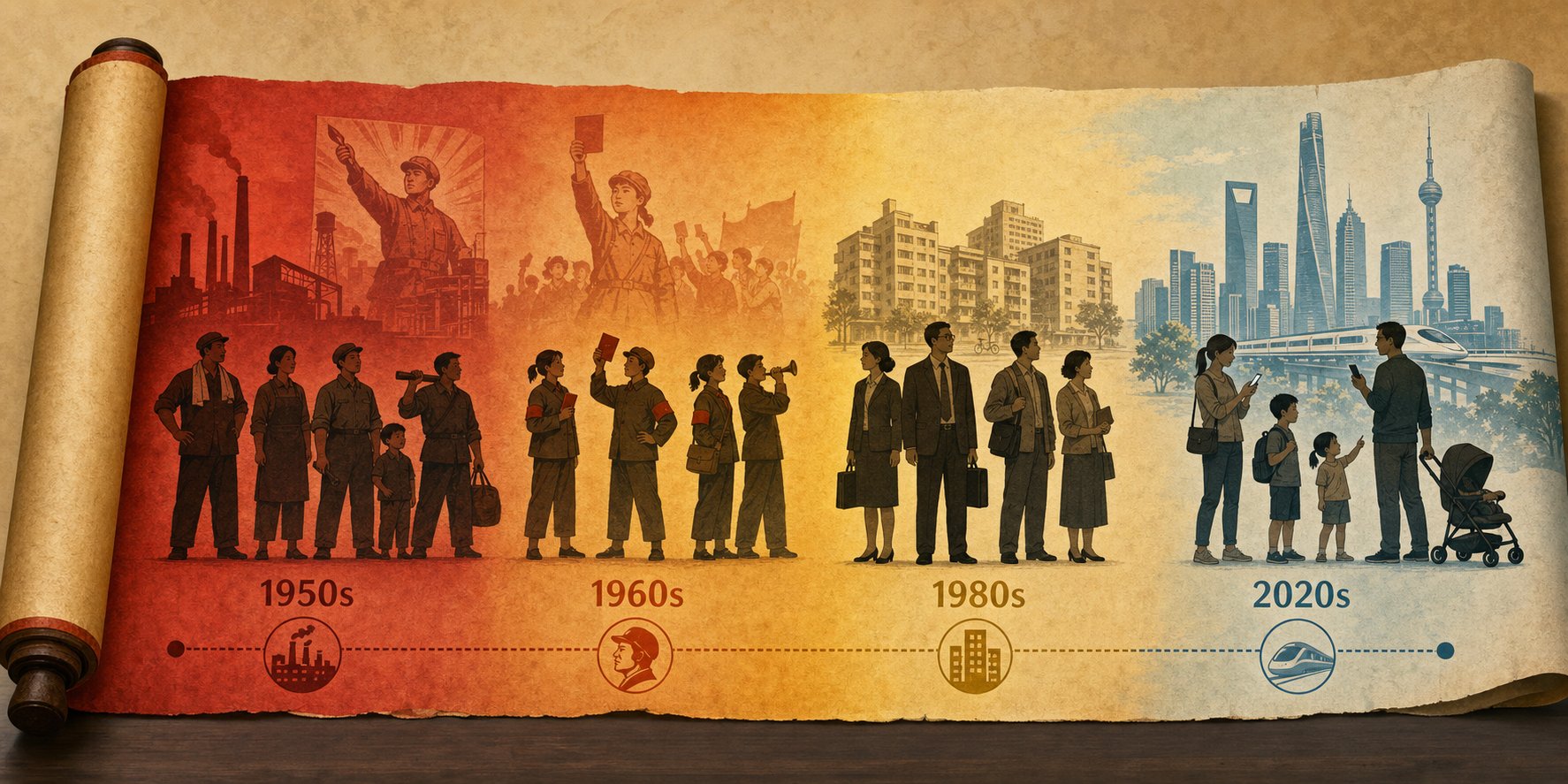
A Decade-by-Decade Timeline of Chinese Naming Evolution
That tension between collective identity and personal expression didn't emerge overnight. It unfolded decade by decade, shaped by political campaigns, economic reforms, and cultural currents that left their fingerprints on millions of birth certificates. Tracing the most popular chinese names across each era reveals a society in constant negotiation with itself — and the results are surprisingly readable once you know what to look for.
Patriotic Names of the Early PRC Era
When the People's Republic of China was founded in 1949, revolutionary fervor swept through every aspect of daily life — including what parents named their children. The character 国 (guo, meaning "nation" or "country") became almost inescapable. Common chinese names from this period include Jianguo (建国, "build the nation"), Weiguo (卫国, "guard the nation"), and Aiguo (爱国, "love the nation").
You'll notice this pattern clearly among famous chinese names from the era: actor Chen Baoguo (陈宝国, born 1956) carries a name homophonous with "protect the country"; Zhang Guoli (张国立, born 1955) means "the country is founded"; Tang Guoqiang (唐国强, born 1952) translates to "the country is powerful." These weren't coincidences — they were declarations of allegiance compressed into two or three characters.
By 1958, the Great Leap Forward introduced another wave of naming inspiration. The word 跃进 (yuejin, "leap forward") was used directly as a given name, reflecting the optimism — however misplaced — of rapid industrialization. Names like Heping (和平, "peace") and Jianshe (建设, "construction") also proliferated, turning chinese first names into miniature political slogans.
Cultural Revolution and Reform Era Shifts
The 1960s brought the Cultural Revolution, and naming became even more ideologically charged. Characters like 红 (hong, "red") and 兵 (bing, "soldier") surged in popularity, directly inspired by the Red Guards (红卫兵). Typical chinese names from this decade include Weidong (卫东, "defend the East" — a reference to Mao), Hongjun (红军, "Red Army"), and even Wenge (文革, short for Cultural Revolution). Wendi Deng, the Chinese-American businesswoman, was originally named Deng Wenge (邓文革) — a fact that illustrates just how deeply politics penetrated personal identity.
The late 1970s marked a sharp pivot. After Reform and Opening Up began in 1978, economic ambition replaced revolutionary zeal. The character 富 (fu, "wealth") became a new favorite. Simultaneously, a trend toward single-character given names emerged — parents favoring concise, modern-sounding names over the politically loaded two-character constructions of previous decades. Research using China's 2005 Census data confirms that one-character given names rose significantly during the 1960s through 1980s, reflecting a desire to break from tradition and signal modernity.
The 1980s then swung back toward two-character names, but with a different flavor. Western-style names appeared for the first time: a girl surnamed Su (苏) might be named Susan (苏珊), and Anna (安娜) entered the Chinese naming vocabulary. Doubled-character names — like Bingbing (冰冰) or Shishi (诗诗) — became popular for girls, projecting lightheartedness rather than political gravity. The common chinese name of this era prioritized aesthetics over ideology.
Pop Culture and Globalization Influences
The 1990s and 2000s introduced an entirely new force: pop culture. Television dramas, novels, and international media exposure reshaped what parents considered beautiful or aspirational in a name. After the time-travel drama Treading On Thin Ice aired in 2011, for instance, a wave of baby girls were named Ruoxi (若曦) after the show's heroine.
This era also saw parents incorporate the mother's surname into children's names — a quiet challenge to patrilineal tradition. And as individualism intensified, some parents selected deliberately rare characters to avoid duplication. Pop star Yi Yangqianxi (易烊千玺) exemplifies this trend: his four-character name combines a surname, a dialect word meaning "welcome," and a homophone of "millennium" marking his birth year of 2000.
Provincial newborn registration data reported by Global Times from regions like Yunnan and Sichuan confirms these patterns aren't limited to coastal cities — they manifest nationwide, though with regional variation in timing and intensity. The most popular chinese names for boys shifted toward literary elegance: Haoran (浩然), drawn from the classical philosopher Mencius, now tops the charts. For girls, names like Zixuan (梓萱) — combining a catalpa tree with a daylily — reflect botanical aesthetics that would have been unthinkable in the era of "Build the Nation."
| Era | Common Naming Themes | Example Names |
|---|---|---|
| 1950s | Patriotism, nation-building | Jianguo (建国), Weiguo (卫国), Heping (和平) |
| 1960s | Revolutionary ideology, military loyalty | Weidong (卫东), Hongjun (红军), Wenge (文革) |
| Late 1970s | Wealth, modernity, conciseness | Single-character names; Fu (富), Yong (勇) |
| 1980s | Western influence, softness, individuality | Susan (苏珊), Bingbing (冰冰), Wei (伟) |
| 1990s | Maternal surnames, creativity, uniqueness | Compound surnames, rare characters |
| 2000s-present | Classical literature, pop culture, aesthetics | Haoran (浩然), Zixuan (梓萱), Ruoxi (若曦) |
What emerges from this timeline is a clear trajectory: naming moved from the collective to the individual, from the political to the aesthetic, from the simple to the complex. Each generation's chinese first names encode not just parental hopes but the entire emotional climate of an era. And as families shrank under the one-child policy, the stakes of naming a single child only grew higher — a dynamic that would quietly erode one of China's oldest naming traditions: the generational character system.
The Decline of Generational Naming and Clan Identity
That generational character system — once the invisible scaffolding holding Chinese clan identity together — deserves a closer look. Its erosion is one of the clearest case studies of how modernization can dismantle a naming tradition that endured for over a thousand years.
What Is Generational Naming and the Courtesy Name Tradition
Imagine a family where every male cousin born in the same generation shares one character in his name. Your father's generation all carry the character "Yi" (义). Yours all carry "Ze" (泽). Your children will all carry whatever character comes next in a predetermined sequence — sometimes a poem composed by ancestors centuries ago. That's generational naming, known as paihang (排行) or zibei (字辈).
The practice dates back to the Han Dynasty (206 BC - 220 AD) and reached maturity during the Song Dynasty (960-1279), when families began pre-selecting entire chains of generation characters — often arranged as a poem praising ancestors or expressing hopes for future prosperity. Mao Zedong's own name illustrates the system perfectly: "Mao" is the chinese surname, "Ze" is the generation name (marking him as the 14th generation since the chain was established in 1737), and "Dong" is his personal given name. His grandfather's generation name was "En," his father's was "Yi" — each drawn sequentially from a 40-character poem encoding 40 generations of the Mao clan.
This system served a practical purpose beyond aesthetics. If you met a stranger with the same chinese surname and recognized a generation character from your clan's sequence, you could immediately determine your relative generational standing — whether to address them as elder uncle or younger cousin. The generation name revealed both horizontal relationships (siblings and cousins) and vertical ones (ancestors and descendants), functioning as a living map of kinship.
Generational naming connects to the broader tradition of the courtesy name (字, zi) in classical China. In ancient chinese names, a person received a given name at birth but was granted a courtesy name upon reaching adulthood — a formal name used in social interactions that often complemented or elaborated on the birth name's meaning. While the chinese courtesy name tradition faded by the early 20th century, generational naming persisted far longer, carrying forward the principle that a name should locate an individual within a web of family relationships rather than stand alone.
Why Generational Names Are Disappearing
So what happened? Research tracking generation name usage across four periods — pre-Mao (1940-1949), early Mao (1950-1959), late Mao (1960-1976), and post-Mao (1977-1983) — found a dramatic collapse. In the pre-Mao era, 90.4% of men actively used their generation names. By the late Mao period, that figure had plummeted to just 41.2%. Meanwhile, the percentage of men with no generation name at all surged from 2.7% to 49%.
The forces behind this decline are multiple and reinforcing:
- Urbanization breaking extended family structures. As millions migrated from ancestral villages to cities, they moved far from the hierarchical clan relationships that gave generation names their meaning. Without cousins and uncles living nearby, the shared character lost its social function.
- Breaking of traditional ties to the land. In rural economies, families stayed rooted in one village for generations. The generation name system depended on this geographic stability. Once that bond dissolved, the naming tradition lost what researchers describe as "the soil for its growth."
- Political rejection of "feudal" practices. During the Cultural Revolution, generation names were seen as relics of patriarchal feudalism. Young people dropped them in favor of politically charged names like Weidong or Hongwei. Fathers didn't dare assign generation names to newborns during this period.
- The one-child policy reducing the pool of same-generation relatives. When each couple produces only one child, there are fewer cousins to share a generation character with. The system's visual impact — seeing a dozen cousins all bearing the same element — simply vanishes.
- Rising individualism making shared characters feel constraining. Younger parents increasingly view the generation character as a creative limitation, occupying one of only two available character slots in a given name and narrowing their options for expressing uniqueness.
The shift from one-character to two-character given names adds another layer to this story. During the 1960s through 1980s, single-character given names surged in popularity — a trend that effectively eliminated the generation name by leaving no room for it. A name like "Li Dong" (李东) has only one given-name character, so there's nowhere to embed a generational marker. This wasn't always a conscious rejection of tradition, but the structural effect was the same: the generation name disappeared from millions of identities.
Understanding chinese last names and their relationship to generation characters also reveals something about chinese surnames meaning in the broader kinship system. Character surnames in China number in the hundreds, but the generation name was what distinguished your specific branch and position within a vast clan sharing that surname. Without it, chinese last name meanings narrow to a single ancestral marker rather than a precise genealogical coordinate.
Yet the story doesn't end with decline. The same research that documented the collapse also found a significant recovery in the post-Mao period — generation name usage among men rose from 41.2% back to 53% after 1976. Today, some families are consciously reviving the practice as part of a broader cultural heritage movement, reconstructing clan genealogies and reinstating generation poems that had been abandoned for decades. It's a small but meaningful counter-current: not a return to the old system's dominance, but a deliberate choice to preserve what urbanization and politics nearly erased.
This tension between erasure and revival mirrors a broader pattern in how modern Chinese society relates to its past. And nowhere is that negotiation more visible — or more personal — than in how gender expectations get encoded into the characters parents choose for their sons and daughters.
How Gender Norms in Chinese Naming Are Shifting
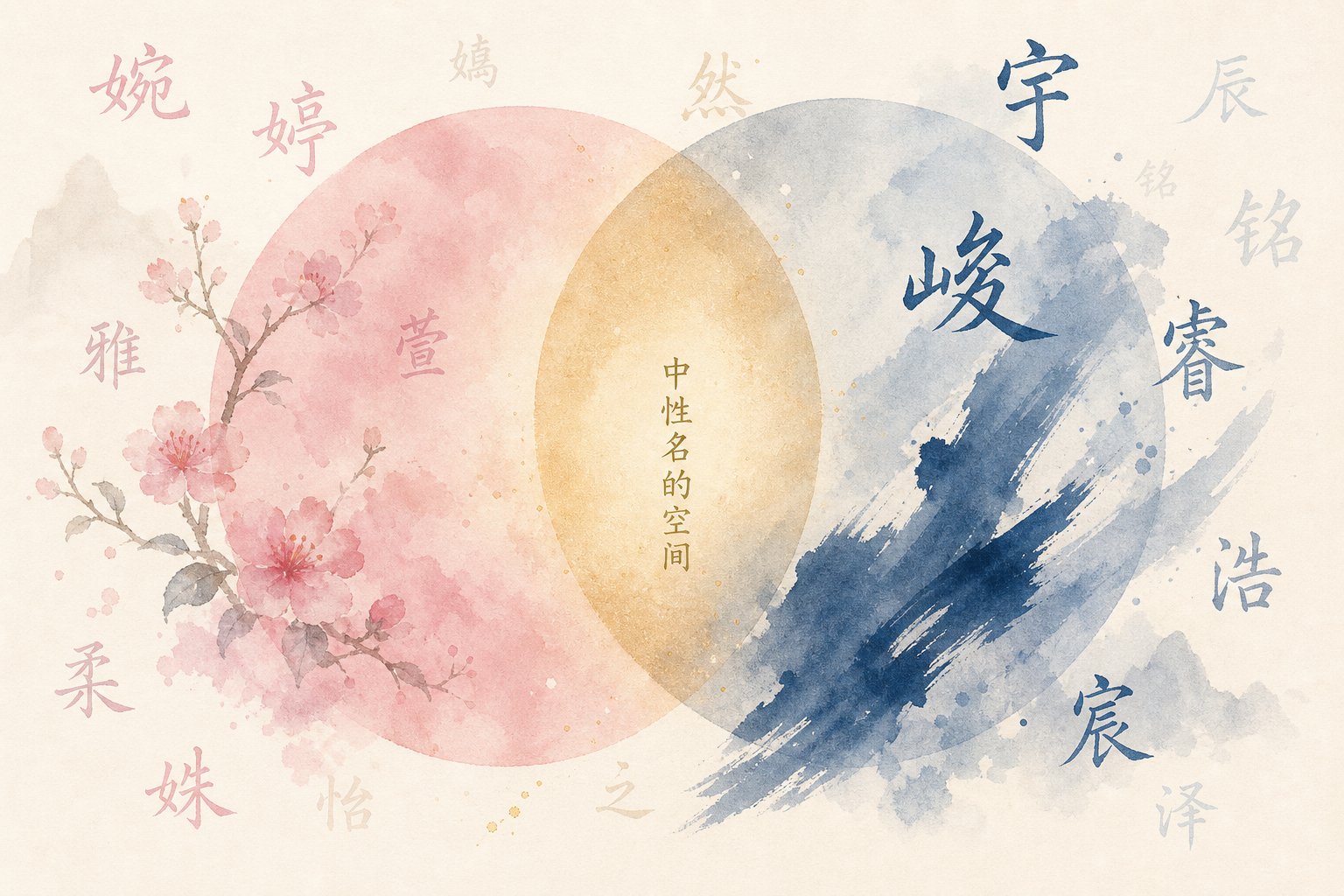
For centuries, you could guess a person's gender from their Chinese name with reasonable accuracy. Chinese masculine names drew on characters evoking power, ambition, and moral fortitude. Chinese feminine names leaned toward beauty, grace, and botanical imagery. That predictability is eroding — and the shift tells a larger story about how Chinese society rethinks gender itself.
Traditional Gender Markers in Chinese Given Names
Historically, chinese names for boys and chinese names male followed a clear pattern. Chinese first names male typically featured characters like 强 (qiang, "strong"), 伟 (wei, "great"), 志 (zhi, "ambition"), 刚 (gang, "firm"), and 勇 (yong, "brave"). Names of chinese male individuals were expected to project authority and determination — qualities aligned with Confucian ideals of masculine virtue.
Chinese first names female operated in a parallel but distinct aesthetic universe. Parents chose characters like 美 (mei, "beautiful"), 花 (hua, "flower"), 淑 (shu, "gentle and virtuous"), 娟 (juan, "graceful"), and 芳 (fang, "fragrant"). These selections reflected expectations that women embody softness, beauty, and domestic virtue. The naming vocabulary itself reinforced a social order where men acted and women adorned.
This division wasn't subtle. A study using China's 2005 mini-census data constructed a Gendered Name Index confirming that traditional chinese male given names and female names occupied clearly distinct character pools — even though Chinese has no grammatical gender and technically any character can appear in any name.
Breaking Gendered Naming Boundaries
That separation has been narrowing for decades. The same research found that the genderedness of male and female names has converged over the past century, with female names showing the most pronounced shift toward gender neutrality — particularly during the 1960s and 1980s. Chinese media have noted the emergence of unisex names especially among Generation Alpha children, signaling that this isn't a passing trend but an accelerating one.
What does this look like in practice? Consider the contrast between traditional and contemporary choices:
- Traditional feminine: 淑芬 (Shufen, "gentle and fragrant") → Modern neutral/strong: 思远 (Siyuan, "thinking far"), 睿琪 (Ruiqi, "wise and outstanding")
- Traditional masculine: 建强 (Jianqiang, "build strength") → Modern neutral/gentle: 子墨 (Zimo, "ink of the scholar"), 宇轩 (Yuxuan, "expansive and elegant")
- Traditional feminine: 美花 (Meihua, "beautiful flower") → Modern neutral: 晨曦 (Chenxi, "morning light"), used for both genders
- Traditional masculine: 志刚 (Zhigang, "ambitious and firm") → Modern neutral: 嘉禾 (Jiahe, "fine grain"), emphasizing harmony over dominance
Girls increasingly receive names connoting independence and intellectual ambition. Boys are given names emphasizing artistic sensibility or natural beauty — territory once reserved exclusively for daughters. The boundary hasn't vanished, but it's far more permeable than it was even a generation ago.
This convergence isn't only a parental choice made at birth. Research published in 2024 examined 334 cases of young Chinese women who changed their given names between January and June 2022 on the social platform Xiaohongshu. Among the reasons these women cited for self-renaming was "clarifying gender confusion" — actively rejecting names they felt misrepresented their identity. The implementation of China's Civil Code in 2021 simplified the legal procedure for name changes, making this kind of identity renegotiation more accessible than ever before.
These self-renaming practices reveal something important: naming isn't a one-time event sealed at birth. It's an ongoing negotiation between the identity parents project and the identity individuals claim for themselves. When a woman replaces a name built from characters meaning "gentle flower" with one meaning "clear wisdom," she's rewriting not just a government record but a gendered expectation.
The broader pattern here — parents and individuals alike pushing against inherited conventions — doesn't happen in a vacuum. It unfolds within a technological environment that has quietly reshaped how names are chosen, checked, and even generated in the first place.
Technology and Digital Culture Reshaping Name Choices
That technological environment deserves far more attention than it typically receives. When people discuss changes in modern Chinese naming, they focus on cultural values, political movements, and generational attitudes. Rarely does anyone ask a more mundane but equally powerful question: what happens to naming when every name must be typed, searched, displayed on a screen, and processed by government databases?
The answer is that technology doesn't just record names — it actively filters which names get chosen in the first place.
Character Input Systems and Name Selection
Imagine you're a parent in China deciding on a name. You've found a beautiful, rare character in a Tang dynasty poem — one with a meaning that perfectly captures your hopes for your child. Then you try to type it. Your pinyin input method doesn't suggest it. You scroll through dozens of homophones and still can't find it. When you finally locate it, your phone displays a blank square because the character isn't in the device's default font set.
This isn't hypothetical. China's national standard character set (GB2312) covers only 6,763 characters, while the full Unicode CJK block contains over 90,000. Characters outside common input method dictionaries create real friction in daily life. Hospital systems may reject them. Bank forms may not render them. School registration software may substitute a question mark. The name chinese characters a parent selects must now pass a technological compatibility test that didn't exist a generation ago.
The result is a subtle but measurable narrowing effect. Parents who might otherwise choose a rare, poetically resonant character opt instead for one that types easily, displays correctly, and won't cause their child a lifetime of administrative headaches. Pinyin-based input systems compound this by ranking characters by frequency — the most common characters appear first when you type a syllable, making them cognitively easier to select. Over millions of naming decisions, this frequency bias nudges the population toward a smaller pool of "digitally convenient" characters.
Government policy reinforces this constraint. China's public security bureaus maintain a list of approved characters for identity documents, and names containing characters outside this list may be refused at registration. Some parents have fought legal battles to register children with rare characters, but most simply avoid the hassle. The practical message is clear: in a digital society, a name must be machine-readable to be socially functional.
Internet Culture and Social Media Identity
Beyond input systems, the internet has transformed naming into a data-driven decision. A generation ago, parents might consult a dictionary, a fortune teller, or an elderly relative. Today, they open an app.
The desire for uniqueness — already strong after decades of millions sharing names like "Wei" and "Fang" — now has a quantifiable dimension. Parents can search national databases to discover exactly how many people already carry a proposed name. Finding out that 290,000 other children are named Zixuan (梓萱) motivates parents to keep looking. Social media searchability adds another layer: a unique name makes a child easier to find online later in life, which parents view as either an advantage or a privacy concern depending on their perspective.
Chinese name translation tools and cross-platform functionality also matter. Parents increasingly consider how a name will render in romanized form for international contexts — whether it will be easy for foreigners to pronounce, whether the pinyin looks aesthetically pleasing in a Latin alphabet, and whether it might carry unintended meanings in English. The question "what is my chinese name" used to flow in one direction — foreigners seeking Chinese equivalents. Now Chinese parents ask the reverse: how will this name travel internationally?
This has given rise to an entire ecosystem of digital naming tools that modern parents navigate:
- Name popularity checkers — databases that reveal how many people in China currently share a given name, helping parents avoid oversaturated choices.
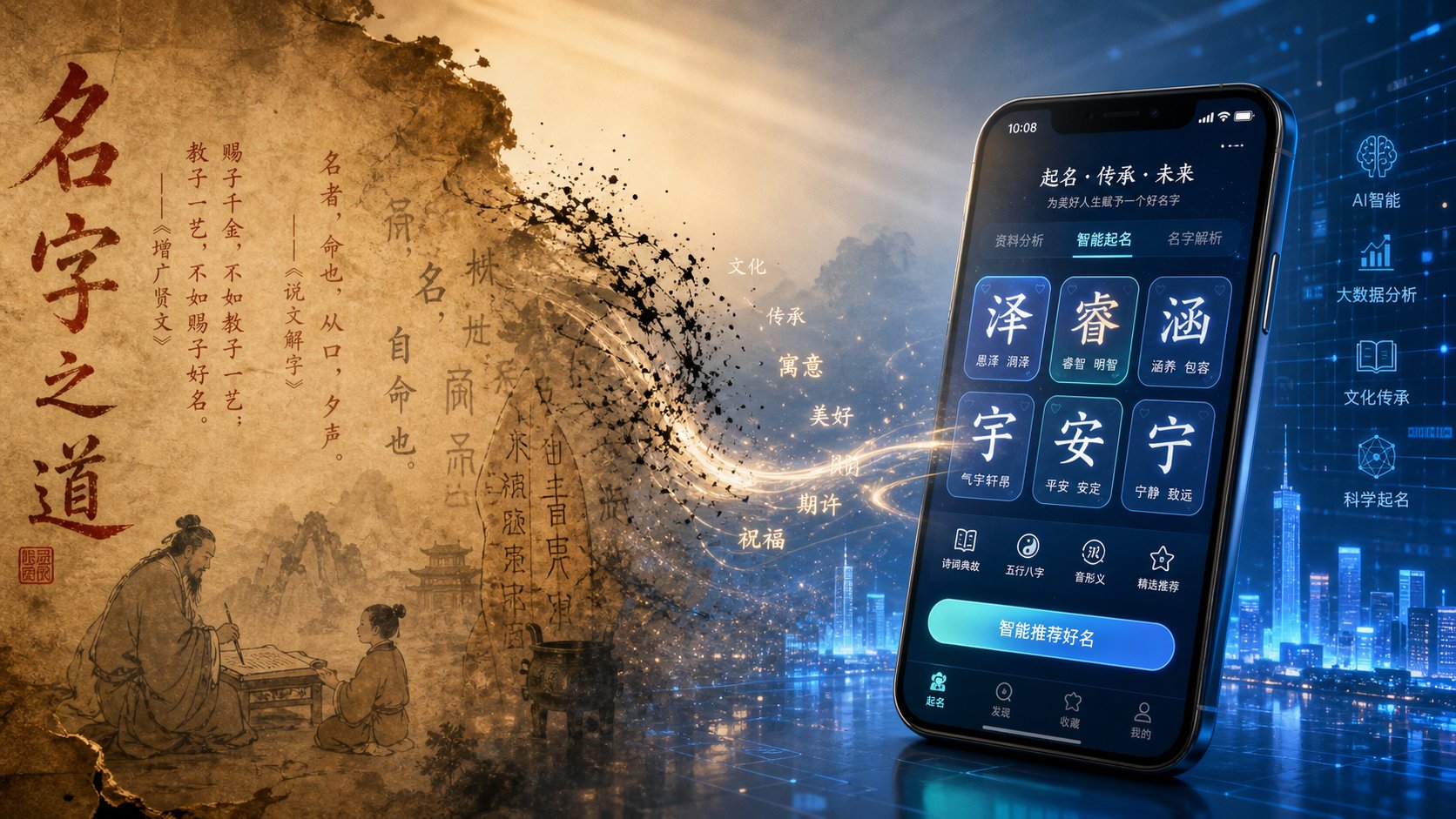
- AI-powered name generators — platforms functioning as a chinese name converter of parental preferences into character suggestions, accepting inputs like birth date, desired personality traits, preferred phonetic patterns, and even Five Elements balance.
- Stroke-count and numerology calculators — digital versions of traditional fortune-telling tools that score names based on the total stroke count of each character and their metaphysical interactions.
- Phonetic harmony analyzers — tools that evaluate how a name sounds across all four tones, flagging combinations that sound awkward, resemble unlucky words, or clash with the surname's tonal pattern.
- Cross-language compatibility tools — services that help parents name translate chinese characters into romanized forms and check for unintended meanings in English, Japanese, or Korean contexts.
- Social media duplicate scanners — apps that search platforms like WeChat and Weibo to show how many existing accounts use a proposed name, helping parents gauge digital uniqueness.
These tools don't just assist decisions — they reshape the decision-making framework itself. When an algorithm suggests names based on parameters, it introduces options parents might never have encountered through traditional methods. A parent who inputs "intelligent, resilient, water element" receives character combinations drawn from a database of thousands of possibilities, filtered by popularity metrics and phonetic rules. The asian names generator concept has evolved from novelty websites into sophisticated platforms that blend cultural knowledge with computational power.
The implications run deeper than convenience. When naming becomes a data-optimized process, it changes what a name means. A name chosen because an algorithm scored it highly for "uniqueness" and "auspicious stroke count" carries a different kind of intentionality than one drawn from a grandmother's suggestion or a father's favorite poem. Both are acts of care, but they reflect fundamentally different relationships between parents, culture, and technology.
There's also a feedback loop at work. As more parents use these platforms, the platforms' recommendations influence naming trends, which then feed back into the popularity databases, which shift future recommendations. Technology doesn't just respond to naming culture — it actively participates in shaping it.
And where there's demand for meaningful, auspicious names backed by data, there's a market. The same technological infrastructure that powers free name-checking apps also supports a thriving commercial industry — one where traditional naming masters and algorithm-driven startups compete for parents willing to pay serious money for the perfect name.
The Booming Business of Professional Name Consultation
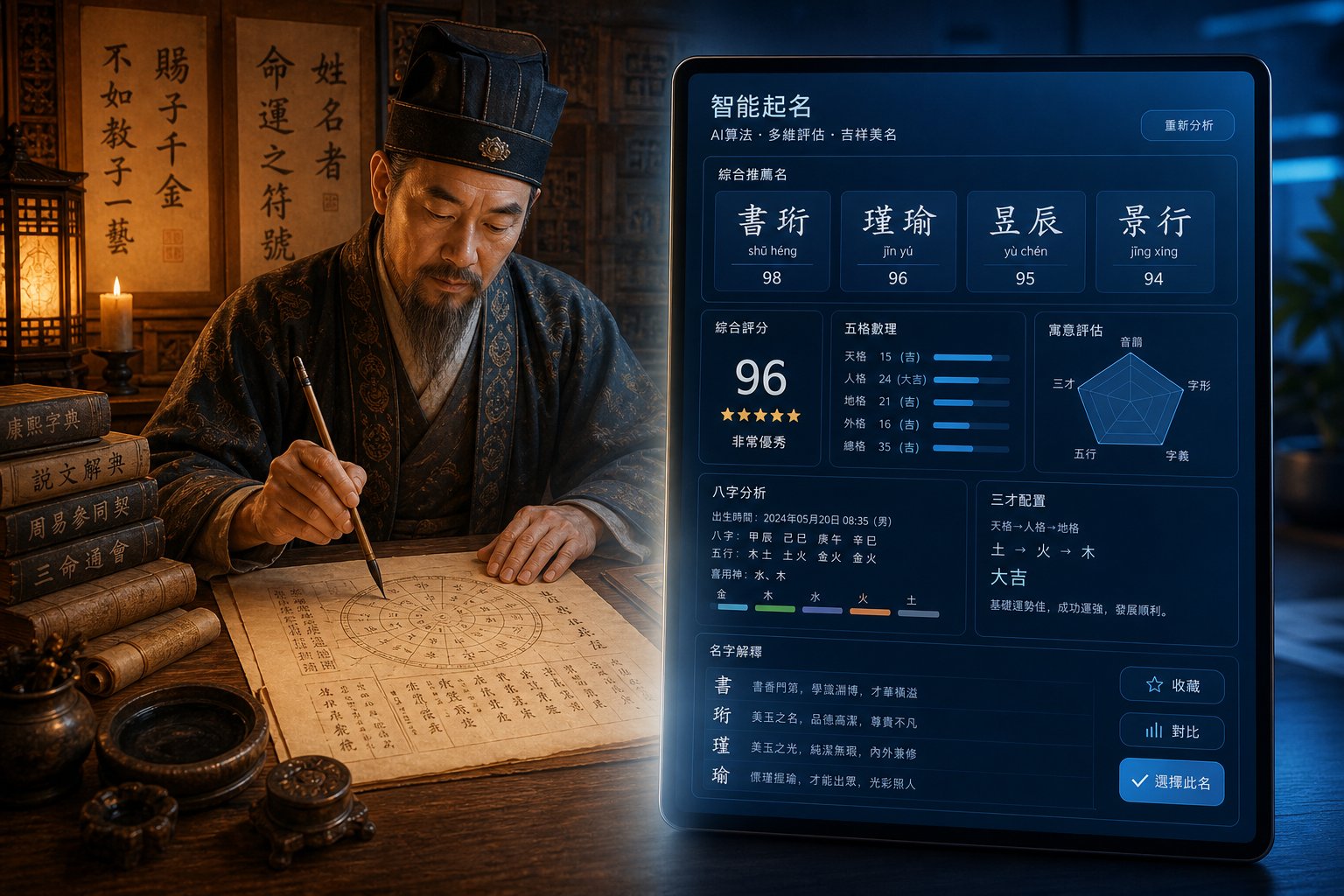
That market is larger — and stranger — than most outsiders realize. In China, naming your child isn't just a family decision. For millions of parents, it's a transaction. A thriving industry of professional naming consultants generates hundreds of millions of yuan annually, blending ancient metaphysics with modern data science in ways that reveal deep tensions within contemporary Chinese society.
Professional Naming Masters and Fortune-Telling Integration
Long before apps existed, families who could afford it consulted a 起名大师 (qiming dashi) — a naming master. These practitioners combine several traditional systems to recommend auspicious chinese baby names tailored to a specific child's cosmic profile.
The process typically works like this: parents provide the child's exact birth date and time, which the master converts into a "Four Pillars of Destiny" (四柱八字) chart. This chart maps the child's elemental composition across the Five Elements — wood, fire, earth, metal, and water. If the chart reveals a deficiency in water, for example, the master recommends characters containing the water radical (氵) or carrying aquatic associations. The goal is balance: a name that compensates for what fate left incomplete.
Stroke-count numerology adds another layer. Each character's total stroke count carries numerological significance, and the interaction between surname strokes and given-name strokes produces scores for categories like career fortune, relationship harmony, and health. A master might reject a character with perfect semantic meaning because its stroke count creates an inauspicious total when combined with the family surname.
What's remarkable is how this ancient practice has scaled commercially. Naming masters who once served their local village now operate storefronts in shopping malls, advertise on Douyin (Chinese TikTok), and offer tiered service packages. A basic consultation might cost 200-500 yuan. Premium services — involving multiple rounds of revision, detailed chinese name interpretation reports, and follow-up adjustments if the child's fortune seems unfavorable in early years — can run 5,000 yuan or more. Top-tier masters with celebrity clientele charge upward of 10,000 yuan for a single name.
The legitimacy of these practitioners varies wildly. Some hold deep knowledge of classical Chinese philosophy and literary tradition. Others are essentially performing a scripted ritual with minimal training. There's no licensing requirement, no professional certification, and no regulatory body — which means the industry operates in a gray zone between cultural service and commercial superstition.
Algorithm-Based Naming Services and Their Growing Market
Tech entrepreneurs spotted the opportunity. If parents want names optimized across multiple dimensions — meaning, phonetics, stroke count, elemental balance, and uniqueness — why not let software handle the computation?
Platforms like Qimingtong (起名通) and similar services have built databases cross-referencing millions of registered names, classical literary sources, phonetic harmony rules, and traditional metaphysical scoring systems. Parents input their surname, the child's birth time, and their preferences — perhaps they want characters suggesting intelligence, or they prefer names with a literary pedigree. The algorithm returns ranked suggestions, each accompanied by a detailed breakdown of chinese names and meanings, elemental analysis, and popularity statistics.
Pricing tiers reflect the depth of analysis. Free versions offer basic suggestions with limited explanation. Paid tiers (typically 98-388 yuan) provide comprehensive reports explaining what each chinese name mean in terms of Five Elements balance, stroke-count fortune, phonetic aesthetics, and cultural connotation. Premium packages include human review by a naming consultant who refines the algorithm's output — a hybrid model blending computational power with traditional expertise.
The market size is substantial. With approximately 10 million births annually in China, even modest penetration rates translate to significant revenue. Industry estimates suggest the professional naming market — combining traditional masters and digital platforms — exceeds one billion yuan annually. Some platforms report serving hundreds of thousands of families per year.
When parents pay for a professionally optimized name, they are purchasing not just characters but cultural capital — transforming identity itself into a commodity with tiered pricing and satisfaction guarantees.
This commodification creates an interesting paradox. The chinese names meaning parents seek is deeply personal — a reflection of family values, hopes, and heritage. Yet the delivery mechanism is increasingly standardized and commercial. A name generated by an algorithm trained on Five Elements theory carries the same metaphysical claims as one produced by a village elder consulting a hand-drawn birth chart, but the relationship between practitioner and family is fundamentally different. One is embedded in community; the other is a marketplace transaction.
The legal framework adds another dimension. China's Civil Code, which took effect in 2021, codifies naming as a personality right under Part 4, Chapter III ("Right of Personal Name and Right of Name"). Article 110 explicitly lists name rights among the fundamental personality rights natural persons enjoy. This means the right to choose a name — and to change it — has formal legal protection. But the Code also establishes boundaries: names must use standardized characters for official registration, and they cannot violate public order or good custom.
These legal provisions interact with the commercial naming ecosystem in practical ways. A naming master might suggest a character that the public security bureau's registration system rejects. A platform might generate a four-character name that exceeds local registration norms. The mandarin name meaning a parent carefully selected and paid for can collide with administrative reality at the registration window. Reputable services now cross-reference their suggestions against known registration constraints — another selling point in a competitive market.
What the naming industry ultimately reveals is a society holding two impulses simultaneously: a rational, data-driven modernity that treats naming as an optimization problem, and a persistent belief that names carry metaphysical weight — that the right characters, chosen at the right time, can shape a child's destiny. These impulses aren't contradictory in practice. They coexist in the same app interface, the same consultation session, the same parent's mind. And they produce chinese name meanings that are simultaneously ancient in their philosophical roots and thoroughly modern in their delivery.
This coexistence of tradition and technology plays out differently depending on where in China you look. The naming industry's offerings assume a Han Chinese, Mandarin-speaking default — but China's linguistic and ethnic diversity means that naming conventions vary dramatically across regions, dialects, and minority communities.
Regional Dialects and Ethnic Minority Naming Traditions
China's naming industry may operate on a Mandarin-speaking, Han Chinese default, but the country itself is anything but monolithic. With seven major dialect groups, hundreds of local varieties, and 55 officially recognized ethnic minorities, the way a name sounds, looks, and functions varies enormously depending on where — and into which community — a child is born. These differences aren't footnotes. They represent entirely distinct naming logics operating within the same national borders.
How Naming Varies Across Dialects and Regions
Consider cantonese names. A parent in Guangdong selects characters not primarily for how they sound in Mandarin pinyin but for their Cantonese pronunciation — the tonal contours, the syllable endings, the way the name flows when spoken in the local tongue. A character that sounds elegant in Cantonese might land flat or even awkward in Mandarin, and vice versa. This means cantonese and Mandarin speakers often gravitate toward different character pools even when drawing from the same written language.
Hokkien-speaking families in Fujian and Southeast Asian diaspora communities maintain their own phonetic preferences — favoring characters with open vowel sounds that carry well in the Hokkien tonal system. Hakka communities similarly select for acoustic beauty in their own dialect. The result is that regional naming aesthetics create subtle but real clustering: you can sometimes guess a person's regional origin from their given name's character choices, even before hearing them speak.
Romanization amplifies these differences internationally. The same surname in chinese — 陈 — becomes "Chen" in Mandarin pinyin, "Chan" in Cantonese romanization, and "Tan" in Hokkien. A person surnamed 黄 might be "Huang," "Wong," or "Ng" depending on their dialect background. For diaspora communities, these romanized forms become fixed legal identities that signal regional heritage to anyone familiar with the patterns. An asian name spelled "Ng" immediately signals Cantonese origin; "Ong" points to Hokkien roots. The last name in chinese characters may be identical, but its international presentation tells a different story depending on which dialect shaped the romanization.
Ethnic Minority Naming Conventions in China
The differences between dialect groups, however, are minor compared to the gulf separating Han Chinese naming from the conventions of China's ethnic minorities. These aren't variations on a theme — they're fundamentally different systems.
Tibetan names typically draw from Buddhist religious vocabulary. A child might be named Tenzin ("holder of teachings"), Dorje ("thunderbolt"), or Lhamo ("goddess"). There's no surname in the Han Chinese sense. Instead, names may reference the day of birth, a lama's blessing, or religious concepts. Uyghur naming follows patronymic traditions: a person's full name consists of their given name followed by their father's name, connected by a middle dot. Mongolian naming historically incorporated clan identifiers, though the Chinese government does not recognize Mongolian clan names as surnames — leaving many ethnic Mongolians with no registered surname at all, their ID cards showing blank surname fields or "XXX" on passports.
The Zhuang people, China's largest ethnic minority, practice bilingual naming — maintaining both a Zhuang-language name for community use and a Chinese-character name for official registration. This dual system reflects a broader pattern: minority communities navigating between their own naming logic and the administrative requirements of a state built around Han Chinese conventions.
Those administrative requirements create real friction. China Daily reported that millions of ethnic minority citizens face persistent difficulties because the middle dot separating their surname and given name renders inconsistently across digital systems. E-commerce platforms, mobile banking apps, and airline booking systems often can't process the punctuation mark correctly — or limit name fields to so few characters that longer ethnic names simply don't fit. Some platforms cap name input at a handful of characters, while Uyghur and Tibetan names transliterated into Chinese can run to 16 characters or more.
Government policy on minority naming oscillates between accommodation and standardization. On one hand, there are no legal character limits for names, and the system technically permits long transliterated names. On the other, the requirement that all names be rendered in Chinese characters forces phonetically rich minority names into an imperfect transliteration system — stripping tonal nuances, collapsing distinct sounds into approximate equivalents, and severing names from their original scripts. In 2017, authorities in Xinjiang went further, banning a list of names deemed to "exaggerate religious fervor," including common Muslim names like Muhammad, Medina, and Jihad — a policy that directly restricts cultural naming practices for Uyghur families.
| Group | Naming Structure | Key Features | Administrative Challenges |
|---|---|---|---|
| Han Chinese (Mandarin) | Surname + 1-2 character given name | Meaning-driven character selection; Five Elements considerations; generational names (declining) | Rare characters may not be supported in digital systems |
| Han Chinese (Cantonese) | Same written structure, different phonetic logic | Characters chosen for Cantonese tonal beauty; distinct romanization (Chan, Wong, Ng) | Official pinyin romanization doesn't reflect actual pronunciation |
| Tibetan | Given name only (no surname); often 2-4 syllables | Buddhist religious vocabulary; lama blessings; birth-day references | Long transliterated names; no surname field to fill on forms |
| Uyghur | Given name + patronymic (father's name), separated by middle dot | Arabic/Persian-origin names; religious and nature references | Middle dot inconsistency across platforms; name bans on religious names |
| Mongolian | Given name (clan name historically present but unrecognized) | Nature imagery; clan identity; some adopt single-character Han surname | No registered surname on ID cards; passport surname field shows "XXX" |
What this diversity reveals is that "Chinese naming" is itself a simplification. The asian names emerging from China's borders represent not one tradition but dozens, each with its own logic, aesthetics, and relationship to identity. The standardization pressures of a modern state — digital systems, character databases, ID card formats — push toward uniformity, while communities push back to preserve naming practices that carry religious meaning, kinship structure, and cultural memory.
This tension between standardization and cultural specificity isn't unique to minorities. It echoes across Han Chinese society too, where parents increasingly look backward — past the political slogans, past the pop culture trends — toward classical literary sources that predate modern standardization entirely.
The Classical Text Revival in Contemporary Naming
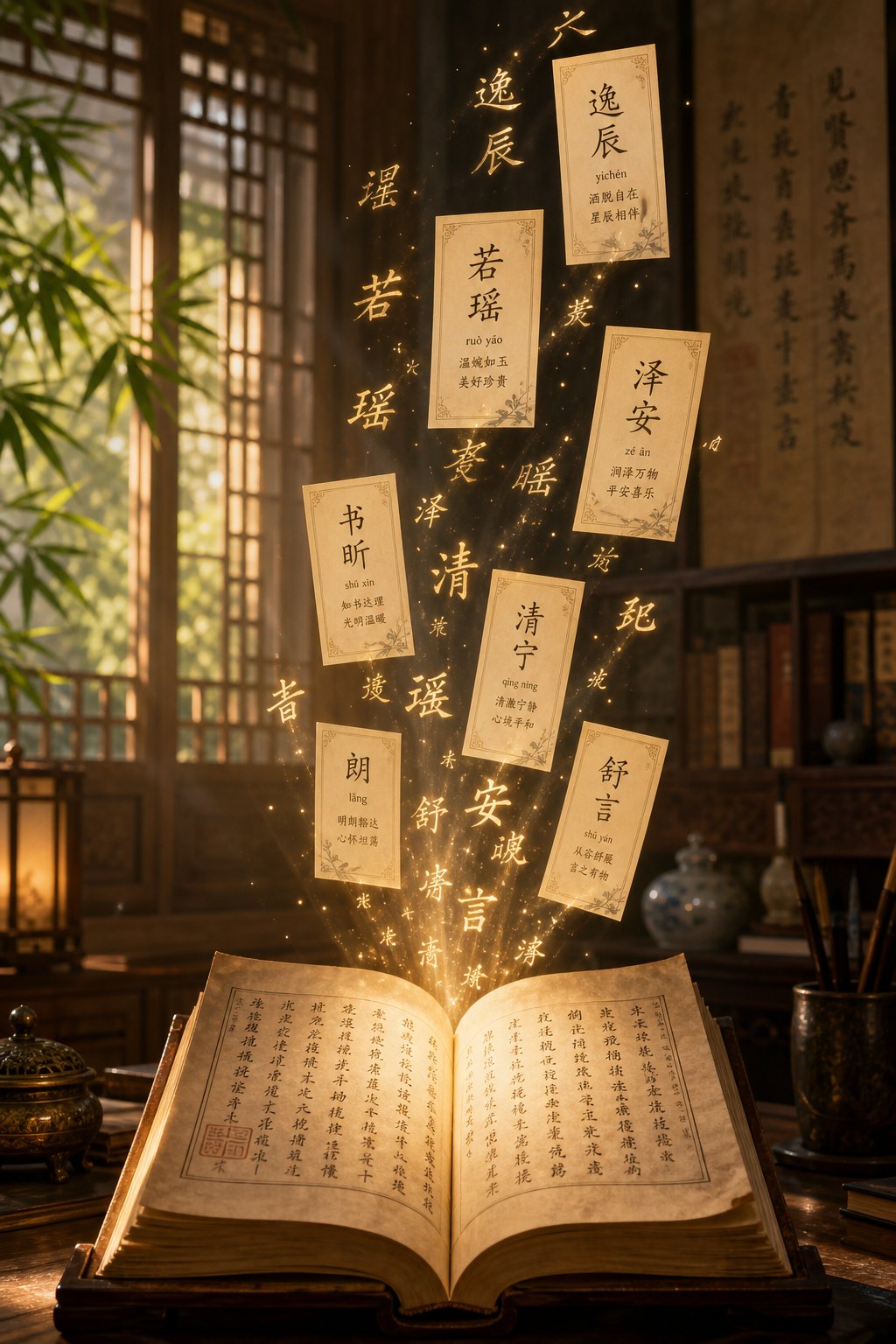
That backward glance has become one of the defining features of naming in the 2010s and 2020s. Across China, a growing number of parents are bypassing both political slogans and pop-culture trends to draw their children's names directly from texts written two thousand years ago. The result is a generation of children carrying fragments of ancient poetry in their identities — and a naming movement that says as much about China's present confidence as it does about its literary past.
Drawing Names From Ancient Literary Sources
The source texts parents reach for aren't random. A loose convention has emerged: "names for girls from the Book of Songs, names for boys from the Chu Ci" (女诗经, 男楚辞). The Book of Songs (诗经), China's oldest poetry anthology dating to the 11th-7th centuries BC, offers lyrical imagery of nature, emotion, and virtue — making it a rich mine for feminine names. The Chu Ci (楚辞), with its grander, more heroic tone, supplies characters suited to masculine aspiration. But in practice, parents draw freely from both, along with the Tao Te Ching, Tang dynasty poetry, and the Book of Changes (易经).
Consider the name Yuxin (语昕). The character 语 appears throughout classical poetry meaning "words" or "speech," while 昕 evokes the first light of dawn. Together they suggest eloquence illuminated by new beginnings — a china name meaning layered enough to reward contemplation. Or take Zhiyuan (致远), drawn from Zhuge Liang's famous letter to his son: "Only through tranquility can one reach far" (非淡泊无以明志, 非宁静无以致远). The name in chinese meaning carries not just two characters but an entire philosophical argument about patience and ambition.
This depth is precisely the point. Parents pursuing classical names aren't just selecting pleasant sounds — they're embedding literary allusions that function as cultural credentials. A name like Siqi (思齐), drawn from the Book of Songs, means "aspiring to virtue" and signals that the family values scholarly refinement. Even names that mean friend or companionship — like Youshan (友善) or Boyi (伯夷, referencing the legendary friends of antiquity) — gain weight when rooted in classical context rather than modern invention.
The etymological depth these parents seek mirrors the kind of analysis found on platforms like Language Log, where linguists trace individual chinese words name by name through centuries of textual usage. That scholarly impulse — treating a name as a research project — has filtered into mainstream parenting culture. Forums dedicated to classical naming dissect character origins, debate which edition of a poem contains the most elegant phrasing, and cross-reference historical usage to avoid characters that shifted meaning over time.
Cultural Confidence and the Return to Heritage
Why now? The timing isn't accidental. China's classical naming revival coincides with the broader cultural confidence movement (文化自信) that has gained momentum since the mid-2010s. As economic development matured and global influence expanded, a societal mood shifted: rather than looking outward to Western models for markers of sophistication, many Chinese families began looking inward — toward a literary heritage that predates most Western nations entirely.
This represents a meaningful departure from the naming patterns of the 1990s and 2000s, when pop culture and globalization drove aesthetic choices. A parent in 2005 might name a daughter after a television heroine. A parent in 2025 names her after a line in a 2,500-year-old poem. The shift isn't merely aesthetic — it's ideological. It says: our own tradition contains everything we need to express beauty, aspiration, and meaning chinese names should carry.
When parents name a child from classical texts, they are investing cultural capital — encoding literary heritage into identity itself, ensuring their child carries not just a label but a lineage of meaning that connects them to millennia of Chinese thought.
Yet this inward turn coexists comfortably with an outward-facing practice: the simultaneous adoption of English names for international contexts. Research on Chinese multilingual students confirms that maintaining both a Chinese name and a foreign name doesn't create identity conflict — instead, it reflects what scholars describe as "identity flexibility and enrichment" rather than replacement. Students report that their Chinese names symbolize nationality and cultural pride, while foreign names facilitate international communication and signal openness to cross-cultural exchange.
This dual-identity naming practice is now standard among educated urban families. A child might carry a classically sourced Chinese name — rich with meaning chinese names have accumulated over centuries — alongside an English name chosen for phonetic compatibility or personal resonance. The two names don't compete. They serve different contexts, different audiences, different aspects of a single identity navigating both local heritage and global connectivity.
The classical revival, then, isn't a retreat from modernity. It's a confident assertion that tradition and globalization can coexist in the same person's identity — sometimes literally in the same child's two names. And that coexistence points toward the larger question of where Chinese naming goes from here, as technology, policy, and cultural pride continue pulling in multiple directions simultaneously.
Where Chinese Naming Traditions Go From Here
Every thread explored in this article — political slogans giving way to classical poetry, generational characters dissolving under urbanization, algorithms replacing village elders, gender boundaries blurring in character choices — converges on a single insight: a Chinese name is never just a name. It's a two-character compression of an entire society's relationship with its past, its politics, and its sense of possibility.
Naming as a Mirror of Societal Transformation
Each generation has negotiated the same fundamental tension differently. In the 1950s, parents resolved it by surrendering individuality to collective purpose. In the 1980s, they reached outward toward Western modernity. In the 2020s, they reach simultaneously backward to classical literature and forward to AI-powered optimization. The shift from collective to individual, from political to aesthetic, from local to globally aware represents China's broader social trajectory compressed into the act of choosing characters for a birth certificate.
What remains constant is the seriousness of the act itself. Whether a parent consults a naming master, an algorithm, or a 2,500-year-old poem, the underlying belief persists: the right name shapes a life. That conviction hasn't weakened under modernity — it has simply found new tools and new sources of meaning.
Navigating Chinese and International Name Identity
One of the most distinctive features of contemporary practice is the growing norm of maintaining dual identities — a Chinese name and an English name operating in parallel. As Sixth Tone has documented, this practice echoes the ancient tradition of the hao (self-chosen name), where individuals adopted additional names to express different facets of identity in different social contexts. Today's english name chinese name pairing serves the same function: one name for family and formal Chinese contexts, another for international workplaces and cross-cultural communication.
Parents increasingly select names that work phonetically across languages — choosing a chinese name from english phonetic roots or finding characters whose pinyin approximates a Western name. Converting chinese names into english-friendly forms, or working backward from an English name to find semantically rich Chinese characters, has become a routine part of the naming process for globally minded families. A chinese translation for names now flows in both directions, reflecting a generation comfortable operating in multiple linguistic worlds.
For diaspora communities, this negotiation intensifies. Families abroad must decide whether to prioritize a name's meaning in Mandarin, its pronounceability in the local language, or its ability to signal cultural heritage. The english to chinese name conversion — and its reverse — becomes an identity statement about where a family positions itself between assimilation and preservation. Expressing one's identity in english in mandarin chinese contexts, or vice versa, is no longer exceptional. It's the norm for millions.
Looking ahead, the forces shaping Chinese naming will only intensify and interact in more complex ways:
- Technology — AI naming platforms will grow more sophisticated, potentially homogenizing choices even as they promise uniqueness.
- Globalization — Cross-cultural naming will deepen as international mobility increases and chinese names for english names become standard practice in educated families.
- Policy — Government character standardization and registration systems will continue constraining which names are practically viable.
- Cultural revival — The classical text movement will persist as cultural confidence grows, anchoring names in literary heritage.
- Individualism — The drive toward unique, personally meaningful names will keep pushing against any force — traditional or algorithmic — that produces conformity.
These forces don't resolve neatly. They pull in different directions, and that productive tension is precisely what keeps Chinese naming dynamic. A practice that has absorbed Confucian philosophy, Maoist revolution, market economics, and machine learning isn't going to settle into stasis anytime soon. The only certainty is that the next generation's names will, as always, tell us exactly where Chinese society believes it's heading — even before it arrives.
Frequently Asked Questions About Changes in Modern Chinese Naming
1. How have Chinese naming trends changed since 1949?
Chinese naming has moved through distinct phases: patriotic names tied to nation-building in the 1950s (like Jianguo, meaning 'build the nation'), revolutionary ideology during the Cultural Revolution (Weidong, Hongjun), wealth-oriented names after Reform and Opening Up, Western-influenced and pop-culture names in the 1980s-2000s, and a current revival of classical literary names drawn from ancient poetry. Each era's naming patterns directly mirror the political climate and cultural values of the time.
2. Why are generational names disappearing in China?
Generational naming — where all same-generation family members share one character — has declined due to several reinforcing factors: urbanization breaking apart extended family networks, the one-child policy reducing the number of same-generation relatives, political rejection of 'feudal' customs during the Cultural Revolution, and rising individualism that makes shared characters feel restrictive. Usage among men dropped from over 90% before 1949 to around 41% during the late Mao era, though a partial revival is now underway as part of broader heritage preservation efforts.
3. How does technology influence Chinese baby name selection today?
Technology shapes naming in multiple ways. Pinyin-based input systems favor frequently used characters, subtly steering parents away from rare ones. Government databases reject characters outside approved sets. Meanwhile, AI-powered naming apps cross-reference birth charts, phonetic harmony, stroke-count numerology, and popularity databases to generate suggestions. Parents also use social media duplicate scanners and cross-language compatibility tools to ensure names function well both domestically and internationally.
4. Are Chinese names becoming more gender-neutral?
Yes. Research using census data shows that the gap between traditionally masculine and feminine character pools has been narrowing for decades, with female names shifting most dramatically toward neutrality. Modern parents increasingly give girls names connoting strength and intellect (like Siyuan, 'thinking far') and boys names emphasizing elegance or artistry (like Zimo, 'ink of the scholar'). Some young women are also legally changing gendered birth names to better reflect their identity, a process simplified by China's 2021 Civil Code.
5. What is the classical text revival in Chinese naming?
A growing number of Chinese parents now draw children's names from ancient literary works like the Book of Songs, Chu Ci, Tao Te Ching, and Tang poetry. This trend connects to China's broader cultural confidence movement, where families look inward to their own literary heritage rather than outward to foreign influences. Parents treat naming as a research project, tracing character origins through centuries of textual usage to embed literary allusions that function as cultural credentials for their children.