Understanding China's Name Registration System
Imagine choosing a name for your new business in China, only to have it rejected because a single character violated a rule you never knew existed. Or picture a parent discovering their child's preferred name contains a character the government database simply cannot process. In China, name registration is not a formality you breeze through. It is a regulated, rule-bound process that touches both personal identity and commercial activity.
What Name Registration Means in China
The term "name registration" in China covers two distinct but equally regulated domains. Personal name registration falls under the Civil Code (Articles 1012-1017) and is tied to the household registration system known as hukou. Business name registration is governed by administrative regulations, primarily the Business Entity Name Filing Administrative Rules, and is administered by the Administration for Market Regulation (AMR). Both systems impose strict character requirements, structural rules, and content prohibitions that have no direct equivalent in most Western legal frameworks.
For companies, every registered name must follow a mandatory four-component structure: administrative division, trade name, industry description, and organizational form. A company's official registered name in Chinese characters is its sole legally recognized identity, and even a minor variation in a single character can mean the name refers to an entirely different entity. For individuals, the rules dictate which characters are permissible, how surnames are assigned, and under what narrow conditions a legal name change is allowed.
Why China's Naming System Differs From Western Countries
In the United States or the United Kingdom, you can generally name a child almost anything and register a business under a wide range of creative names with minimal restrictions. China's approach is fundamentally different. The government treats naming as a matter of public order, cultural preservation, and administrative efficiency, not just personal preference.
Name registration in China is not merely an administrative step. It carries legal, cultural, and commercial significance that shapes everything from contract enforceability to brand perception.
This dual-scope nature is what makes China's system unique. Personal names must use standardized simplified Chinese characters that exist in the national character database. Business names must avoid politically sensitive terms, cannot mislead the public about scope or ownership, and are geographically limited in their protection. Most English-language resources only cover one side of this equation, leaving foreign entrepreneurs and families navigating China without a complete picture.
This article breaks down both dimensions, from the personal naming rules embedded in civil law to the structural requirements and prohibited terms that trip up business registrations. Whether you are registering a child's name through the hukou system or filing a company name with the AMR, the rules that follow will help you understand exactly what gets an application approved or denied.
Personal Name Registration Rules Under Chinese Law
Every person born in China receives a legally registered name, and that name is not just a label. It is a regulated identity marker governed by specific provisions in the Civil Code of the People's Republic of China. Articles 1012 through 1017 establish the right to a name while simultaneously setting boundaries on how that right can be exercised. You'll notice these rules go far beyond what most Western countries impose, touching everything from which characters are acceptable to how surnames are inherited.
Surname Rules and the Hukou System
When a child is born in China, their name is formally recorded through the household registration system, commonly known as hukou. This registration is not optional. It is the mechanism through which a person gains legal identity, access to public services, education enrollment, and eventually a Resident Identity Card. The name entered into the hukou becomes the individual's official legal name for all government and civil purposes.
So how are surnames assigned? Article 1015 of the Civil Code states that a natural person shall take the surname of either their father or mother. This is the default rule, and it covers the vast majority of cases. However, the law does allow exceptions. A person may take a surname other than their father's or mother's under these specific conditions:
- Taking the surname of a senior lineal relative by blood (such as a grandparent)
- Taking the surname of a foster parent or other legal care provider who is not the biological parent
- Taking a surname for other legitimate reasons that do not offend public order and good morals
The Civil Code also recognizes that natural persons of ethnic minorities may take surnames in compliance with their cultural traditions and local customs. This provision accommodates groups like Tibetans, Mongols, and Uyghurs, whose naming conventions differ significantly from Han Chinese traditions. For example, some Mongol individuals register only a given name without a formal surname, since the government does not recognize Mongolian clan names as surnames in the same way it treats Han Chinese family names.
Character Restrictions for Personal Names
Here is where many applications run into trouble. China personal name registration rules require that all names use Chinese characters. Latin characters, numerals, and non-Chinese symbols are strictly prohibited. The famous case of "Zhao C" illustrates this perfectly. A young man who had used the Latin letter "C" as his given name his entire life was eventually forced to change it when upgrading to a second-generation ID card, because the government does not accept non-Chinese characters in registered names.
Beyond the alphabet ban, there is a practical constraint that catches many families off guard: the character must exist in the government's digital database. China's public security system maintains all citizen records electronically, and the national character encoding standard supports roughly 32,000 characters. With over 70,000 known Chinese characters in existence, thousands of rare or archaic characters simply cannot be entered into the system. If a character cannot be digitally processed, it cannot appear on an ID card, and the name registration will be denied.
Simplified Chinese characters are advised over traditional forms, though this is not always strictly enforced. The government recommends that parents choose characters others can easily read and input, but there is no formal cap on character complexity or the total number of characters in a name. Typical Han Chinese names use two or three characters total, while ethnic minority names transliterated into Chinese may be considerably longer.
Legal Provisions for Changing Your Name
What if you want to change your registered name later in life? Article 1012 grants natural persons the right to "determine, use, change, or allow others to use" their name, but this right is qualified by the phrase "in accordance with law" and must not offend "public order and good morals." In practice, name changes are permitted only under limited circumstances and require approval from the local public security bureau.
The conditions under which a name change is generally accepted include:
- The current name causes confusion due to homonyms shared with other family members or close associates
- The name uses characters that are extremely rare, causing persistent difficulties in daily life and official transactions
- A change in legal guardianship or adoption necessitates a new surname
- The individual has a legitimate personal reason that does not violate public order or good morals
- Ethnic minorities seeking to align their registered name with cultural naming conventions
Article 1016 requires that any name change be filed with the relevant authorities. Importantly, civil juristic acts performed under the previous name remain legally binding after the change takes effect. You cannot escape a contract or legal obligation simply by registering a new name.
These personal naming rules create a tightly controlled framework, but they only represent half of the picture. The structural requirements for business names in China introduce an entirely different layer of complexity, one built around mandatory components that every company must assemble correctly before registration can proceed.

How Chinese Company Names Must Be Structured
Every company registered in China must follow a rigid naming formula. Unlike Western jurisdictions where you can call your business nearly anything that is not already taken, China company name format rules require a specific four-part structure, often referred to as the "four-segment format" (四段式). Miss one segment, arrange them incorrectly, or use the wrong type of characters, and your application gets denied before anyone even checks whether the name is available.
Imagine you want to register a technology company in Shanghai. Your name cannot simply be "Bright Future Tech" or any creative variation. It must be assembled from four mandatory building blocks, placed in a prescribed order, each governed by its own set of rules.
The Four Mandatory Components of a Company Name
The Business Entity Name Filing Administrative Rules (Articles 7-12) define the structure clearly. A compliant Chinese company name consists of:
- Administrative division (行政区划) - the geographic jurisdiction where the company is registered
- Trade name (字号) - the unique, brand-identifying portion of the name
- Industry description (行业描述) - a term reflecting the company's primary business activity
- Organizational form (组织形式) - the legal entity type
Put together, the standard format looks like this: Shanghai + ZhiSheng + Technology + Co., Ltd. Or in Chinese: 上海智胜科技有限公司. Each piece serves a distinct legal and administrative function, and you'll notice that the order is not optional.
There is one permitted variation worth noting. The administrative division can be placed after the trade name instead of at the beginning, but it must be enclosed in parentheses. So "ZhiSheng (Shanghai) Technology Co., Ltd." or "ZhiSheng Technology (Shanghai) Co., Ltd." are both acceptable alternatives. This flexibility is common among companies that want their brand name to appear first for commercial impact.
| Component | Description | Example | Key Rules |
|---|---|---|---|
| Administrative Division (行政区划) | The county-level or higher administrative area where the company is registered | Shanghai (上海), Beijing (北京), Guangzhou (广州) | Must be county-level or above; municipal districts cannot stand alone (e.g., "Pudong" alone is not valid) |
| Trade Name (字号) | The unique brand identifier chosen by the applicant | ZhiSheng (智胜), HuaMei (华美) | Minimum 2 standardized Chinese characters; no traditional characters, variant forms, or Arabic numerals |
| Industry Description (行业描述) | A term reflecting the company's main business activity | Technology (科技), Consulting (咨询), Trading (贸易) | Must align with the company's primary business scope and follow the National Economic Industry Classification standard |
| Organizational Form (组织形式) | The legal structure of the entity | Co., Ltd. (有限公司), Joint-Stock Co. (股份有限公司) | Must match the actual organizational structure; partnerships must include specific designations in parentheses |
Rules Governing Each Name Element
Each component carries its own constraints. Getting the structure right means understanding what is and is not permitted within each segment.
Administrative division. The geographic marker must correspond to the actual registration location and must be at the county level or above. A critical detail: municipal districts (市辖区) cannot be used alone. You cannot register a company as "Pudong XYZ Technology Co., Ltd." without including "Shanghai" as the administrative division. The district can appear alongside the city name (e.g., "Shanghai Pudong"), but it cannot replace it.
Trade name. This is where most rejections happen. The trade name must consist of two or more standardized Chinese characters (规范汉字). One-character trade names are not accepted, and names exceeding six characters, while technically possible, are usually rejected in practice. The characters must be simplified forms. Traditional characters (繁体字), variant characters (异体字), and Arabic numerals are all prohibited. The trade name should also have distinctiveness, meaning generic or overly common word combinations that lack identifying power may be flagged.
Industry description. This segment is not a free-text field. The industry term must be determined based on the company's primary business activity and must align with the National Economic Industry Classification standard (国民经济行业分类). Common examples include Technology (科技), Information Technology (信息技术), Consulting (咨询), Trading (贸易), and Management (管理). If your business scope spans multiple industries, the industry description should reflect the principal activity.
Organizational form. The final segment must accurately reflect the company's legal structure. For limited liability companies, the acceptable terms are "有限责任公司" or the shortened "有限公司." Joint-stock companies use "股份有限公司" or "股份公司." Partnerships carry additional requirements: general partnerships must include "(普通合伙)" in the name, limited partnerships must include "(有限合伙)," and special general partnerships must include "(特殊普通合伙)." Sole proprietorships must be marked with "(个人独资)." These designations are not decorative. They signal the liability structure to anyone reading the business license.
Understanding how to structure a company name in China is the foundation, but structure alone does not guarantee approval. Even a perfectly formatted name can be rejected if it contains terms the government considers prohibited or restricted, and the list of off-limits content is longer than most foreign applicants expect.
Prohibited and Restricted Terms in Company Names
A perfectly structured four-component name can still be rejected outright if it contains the wrong words. China's naming regulations draw a clear line between content that is absolutely prohibited and content that is restricted but potentially approvable under special circumstances. Understanding where that line falls is what separates a smooth registration from a denied application.
The governing framework here is the Regulations on the Administration of Enterprise Name Registration (State Council Decree No. 734, effective March 1, 2021), supplemented by the Enterprise Name Prohibited and Restricted Use Rules issued by the State Administration for Market Regulation (SAMR). Together, these documents spell out exactly which prohibited words in Chinese company names will trigger an automatic rejection and which restricted terms require special approval.
Terms Requiring State Council Approval
Can you use "China" in a company name? Technically yes, but the bar is extraordinarily high. Article 13 of the 2021 Regulations states that enterprise names shall not contain "China" (中国), "Chinese" (中华), "National" (全国/国家), "State," or similar words unless approved in accordance with the law. In practice, this means State Council approval for company names in China is required before any of these terms can appear at the beginning of a registered name.
There are three scenarios where these terms might be permissible:
- An enterprise established by a decision of the State Council itself may use these terms as a prefix
- When used in the middle of a name, terms like "中国" or "全国" must function as an industry qualifier rather than implying government affiliation (e.g., describing the scope of the industry, not the ownership of the company)
- Foreign-invested enterprises that use the foreign investor's trade name as their Chinese trade name may include "(中国)" in parentheses in the middle of the name, signaling the entity is the China arm of an international brand
The logic behind this restriction is straightforward: allowing any company to brand itself with "China" or "National" would mislead the public into believing the entity has government backing or nationwide authority. The State Council approval threshold ensures only entities with genuine national significance carry these designations.
Prohibited Content in Business Names
Beyond the high-profile national terms, the regulations cast a wide net over content that is flatly banned regardless of context. SAMR's Enterprise Name Prohibited and Restricted Use Rules organize these into clear categories:
- Content harmful to national or public interest - This includes names with negative political connotations, names promoting terrorism, separatism, or extremism, names carrying colonial overtones that damage national dignity, and names referencing drugs, pornography, violence, or gambling
- Content that deceives or misleads the public - Names containing the names of Party or state leaders, well-known revolutionary martyrs, or model citizens are prohibited. So are names referencing illegal organizations, notorious historical figures, or names with overt religious connotations that could confuse the public about the nature of the business
- Foreign country or international organization names - You cannot embed the name of a foreign nation, territory, or international body (such as "United Nations" or "European Union") into a Chinese company name
- Political party, government, and military references - Names of political parties, party or government organs, mass organizations, social organizations, and military unit designations are all off-limits
- Non-standard characters - Enterprise names must use standardized Chinese characters (规范汉字). Foreign text, Latin letters, and Arabic numerals are prohibited in registered company names
- Superlative or misleading qualifiers - Terms like "national-level" (国家级), "highest" (最高级), or "best" (最佳) cannot appear in the trade name portion because they imply a ranking or endorsement that does not exist
Each prohibition serves a specific policy goal. The ban on political and military references prevents private enterprises from appearing to carry state authority. The character standardization rule ensures names are universally readable and processable across government systems. The restriction on misleading qualifiers protects consumers from false impressions about a company's status or quality.
Restricted Geographic and Political Terms
Restricted terms for business names in China differ from outright prohibitions in one important way: they can sometimes be used if specific conditions are met or if the term carries an alternative meaning in context.
Geographic restrictions are particularly nuanced. Foreign country or region names, city names, and their abbreviations cannot be used as the trade name portion of a company name. However, if the foreign geographic term has an independent meaning in Chinese or is used as part of a larger phrase where the overall trade name carries a distinct meaning, it may be permissible. For example, a term that happens to coincide with a foreign city name but has a recognized alternative meaning in Chinese could pass review.
Similarly, administrative division names within China cannot serve as the trade name. You cannot register "Beijing" as your trade name in a Beijing-registered company because it would create confusion between the geographic marker and the brand identifier. The exception: county-level or higher place names that carry a well-established alternative meaning beyond their geographic function.
The practical takeaway? When selecting a trade name, avoid anything that sounds governmental, geographic, or politically charged. The registration system's automated comparison tools will flag these terms immediately, and manual review rarely overturns the initial rejection unless you can demonstrate the term has a clearly distinct meaning in your specific usage context.
These content restrictions apply uniformly to domestic companies, but foreign investors face an additional layer of complexity. Different entity types available to international businesses each carry their own naming constraints, and the rules shift depending on whether you are setting up a wholly owned subsidiary, a joint venture, or simply a representative office.
Naming Rules for Foreign Companies in China by Entity Type
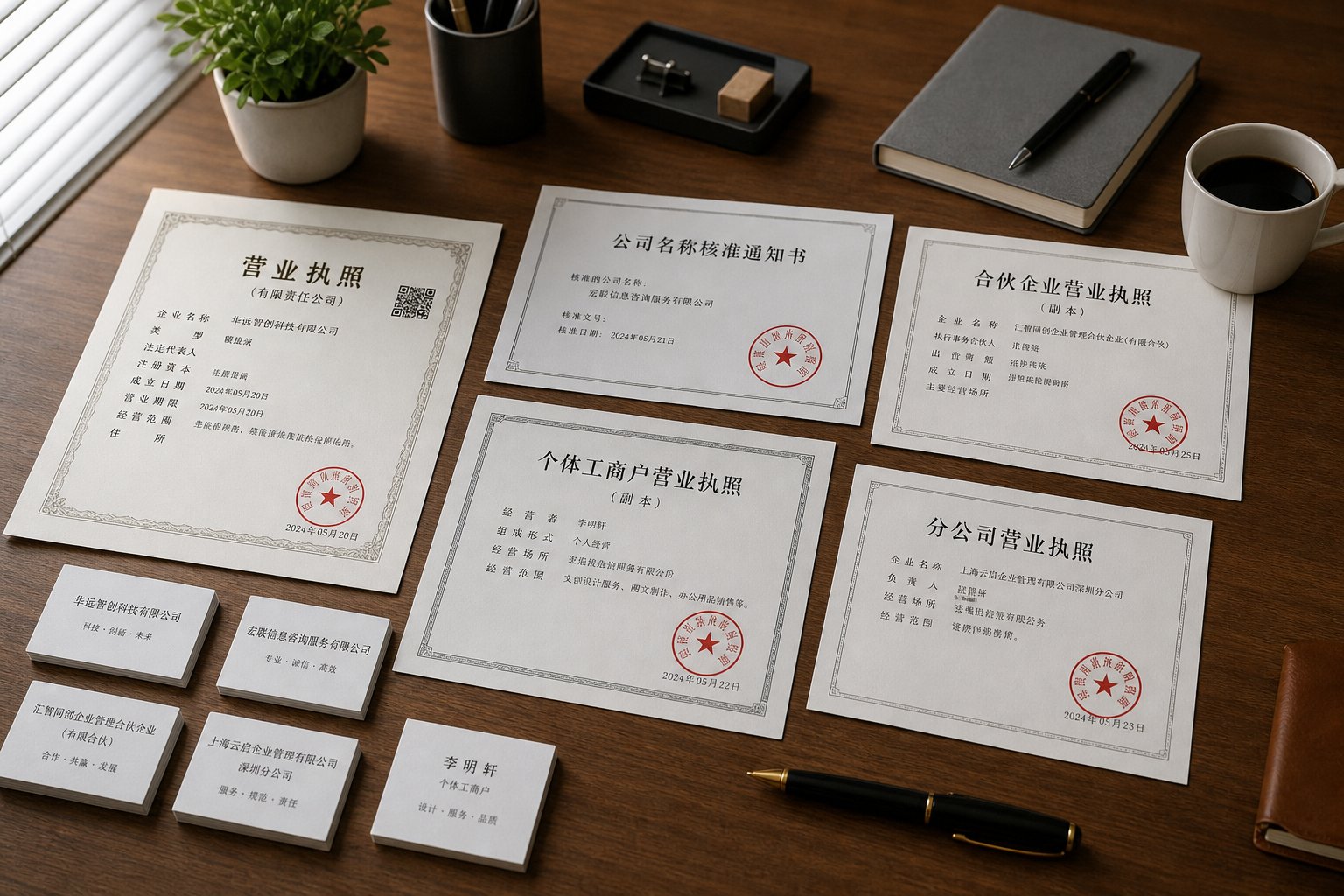
Foreign investors entering China do not all enter through the same door. The entity type you choose, whether a wholly owned subsidiary, a joint venture, a representative office, or a partnership, determines not just your tax obligations and liability structure but also the naming rules your registration must follow. Each vehicle carries distinct constraints on how the company name is assembled, what elements are mandatory, and how much creative freedom you actually have.
WFOE and Joint Venture Naming Requirements
A Wholly Foreign-Owned Enterprise (WFOE) follows the standard four-component structure covered earlier. The WFOE naming requirements in China are identical to those for any domestic limited liability company: administrative division + trade name + industry descriptor + organizational form. The fact that the company is 100% foreign-owned does not change the naming formula itself.
For example, a U.S. technology firm setting up a WFOE in Shanghai would register a name like: Shanghai + [Trade Name] + Technology + Co., Ltd. (上海+字号+科技+有限公司). The trade name portion must be in simplified Chinese characters, minimum two characters, and cannot replicate or closely resemble an existing registered name within the same jurisdiction and industry.
Joint venture company name registration in China follows the same structural pattern. Whether the venture is a Sino-foreign equity joint venture or a cooperative joint venture, the registered name uses the identical four-segment format. The foreign partner's brand does not automatically appear in the registered Chinese name. Instead, the joint venture selects a new Chinese trade name that both parties agree upon, subject to the same character restrictions and prohibited-term rules as any other entity.
One key distinction applies to foreign-invested holding companies. These entities may use the format: Trade Name + (China) + Industry + Co., Ltd. For instance, "Siemens (China) Investment Co., Ltd." This structure places the brand name first and uses "China" in parentheses to signal the entity's role as the China headquarters of a multinational group. Remember, though, that including "China" still requires regulatory approval, and the company must demonstrate genuine nationwide operational scope.
Representative Office and Branch Naming Constraints
Representative offices operate under entirely different China representative office name rules. They are not independent legal entities. They cannot engage in direct profit-generating activities. And their naming structure reflects this subordinate status.
A representative office name must include the full name of the foreign parent company, followed by the city of registration and the designation "Representative Office." The format looks like this:
Foreign Parent Company Name + (City) + Representative Office
So a U.S. consulting firm called "Meridian Partners LLC" opening a representative office in Beijing would register as: Meridian Partners LLC (Beijing) Representative Office. There is no trade name selection, no industry descriptor, and no organizational form to choose. The name is essentially dictated by the parent company's existing identity. This means you cannot rebrand or localize the name for the Chinese market through the representative office registration itself.
Branch offices of foreign companies follow a similar logic. A branch is an extension of the foreign parent, not a separate legal person. Its registered name must include the foreign company's full name plus the branch designation. The format is: Foreign Company Name + (China/City) + Branch. Branches are relatively rare for foreign companies in China because most industries require a separately incorporated entity, but they remain available in sectors like banking and insurance where specific regulations permit them.
Foreign-invested partnerships add another variation. General partnerships and limited partnerships must follow the four-component structure but with mandatory parenthetical designations indicating the partnership type. A foreign-invested limited partnership in Shanghai, for example, would be registered as: Shanghai + [Trade Name] + [Industry] + Partnership Enterprise (Limited Partnership). The parenthetical "(有限合伙)" or "(普通合伙)" is not optional. It must appear in the name to signal the liability structure to third parties.
| Entity Type | Name Structure | Key Restrictions | Example Format |
|---|---|---|---|
| WFOE (Limited Liability) | Administrative Division + Trade Name + Industry + Co., Ltd. | Standard four-component rules; trade name must be 2+ simplified Chinese characters; no foreign text | Shanghai ZhiYuan Technology Co., Ltd. (上海智远科技有限公司) |
| Sino-Foreign Joint Venture | Administrative Division + Trade Name + Industry + Co., Ltd. | Same as WFOE; foreign partner's brand does not automatically appear; both parties must agree on trade name | Shenzhen BrightVision Medical Equipment Co., Ltd. |
| Foreign-Invested Holding Company | Trade Name + (China) + Industry + Co., Ltd. | Using "China" requires State Council or provincial SAMR approval; must demonstrate nationwide scope | Siemens (China) Investment Co., Ltd. |
| Representative Office | Foreign Parent Name + (City/China) + Representative Office | No independent trade name; must use parent company's full legal name; cannot include "Co., Ltd." | Microsoft Corporation (Shanghai) Representative Office |
| Branch of Foreign Company | Foreign Parent Name + (China/City) + Branch | Must use parent's full name; limited to industries where branch registration is permitted | HSBC (China) Shanghai Branch |
| Foreign-Invested Partnership | Administrative Division + Trade Name + Industry + Partnership Enterprise (Type) | Must include partnership type in parentheses; general or limited designation is mandatory | Beijing HuaXin Consulting Partnership Enterprise (Limited Partnership) |
One additional factor worth noting: free trade zones can offer slightly different naming flexibility. In zones like the Shanghai Free Trade Zone, Hainan Free Trade Port, and Shenzhen's Qianhai zone, the registration process is often streamlined, and some jurisdictions allow the FTZ name to serve as the administrative division (e.g., "China (Shanghai) Pilot Free Trade Zone" as the geographic prefix). Certain FTZs also process name declarations faster and may apply slightly more relaxed similarity-comparison standards, making it easier to secure a desired trade name. However, the fundamental four-component structure and prohibited-term rules still apply. The flexibility is procedural, not structural.
Choosing the right entity type shapes your naming options from the start. But regardless of which structure you select, every foreign investor faces the same next step: navigating the online self-declaration platform where names are checked, compared, and either approved or flagged for conflict.
How to Check Company Name Availability in China Step by Step
You have your entity type selected, your four-component name assembled, and your trade name free of prohibited terms. The next question is practical: how do you actually submit it? China's business name registration process has undergone a significant shift in recent years, moving from a slow, paper-based pre-approval system to a faster, digitized self-declaration model. For foreign investors accustomed to bureaucratic delays, this is genuinely good news, but the platform still has rules and limitations you need to understand before clicking "submit."
Using the Online Self-Declaration Platform Step by Step
The China company name self-declaration system (企业名称自主申报) replaced the old pre-approval process in most jurisdictions. Under the previous regime, applicants submitted a name to the local Administration for Market Regulation (AMR) and waited for manual review, a process that could take days or even weeks. The 2021 Regulations on the Administration of Enterprise Name Registration formalized the shift to a system built around automated comparison and real-time feedback.
The platform is accessible through the National Enterprise Credit Information Publicity System (国家企业信用信息公示系统) or through local AMR portals, depending on the jurisdiction where you plan to register. Here is the China business name registration process step by step:
- Create an account or log in. Access the enterprise registration online service system for your target jurisdiction. You will need a verified identity, typically linked to the legal representative's or authorized agent's ID credentials.
- Select the registration jurisdiction. Choose the administrative division where the company will be registered. This determines which existing name database your proposed name is compared against.
- Enter your proposed name components. Input each of the four segments separately: administrative division, trade name, industry description, and organizational form. The system requires you to fill these in as distinct fields, not as a single text string.
- Run the automated comparison. The system performs an intelligent comparison (智能比对) against the unified enterprise name database. It checks for identical names, confusingly similar names, prohibited terms, and restricted content. Results appear in real time.
- Review the comparison results. If the system flags conflicts or violations, it will display the specific reason for rejection. You can modify your proposed trade name and run the comparison again immediately, without penalty or waiting period.
- Submit the self-declaration. Once the name passes the automated check, you submit the declaration. The system reserves the name for a limited period, typically allowing you to proceed with the full business registration within a set timeframe.
- Complete business registration. The reserved name must be used to complete the company's full registration (including articles of association, registered capital, and business scope) within the reservation window. If you fail to complete registration in time, the name reservation expires and the name becomes available to others.
A key detail: the self-declaration system uses the unified enterprise name database referenced in Article 17 of the 2021 Regulations. This database covers all registered enterprise names nationwide, enabling cross-jurisdictional comparison. The system does not just check your local city. It compares against names registered across the country to flag potential conflicts with well-known enterprises or names that carry national significance.
Timelines and Costs for Name Registration
Speed is one of the biggest improvements the self-declaration system delivers. Under the old pre-approval model, name review alone could take three to five business days, sometimes longer during peak filing periods. The current system provides automated comparison results almost instantly, often within seconds of submission.
The name reservation period varies by jurisdiction but typically ranges from a few days to several months. In most cities, you have a window of around 30 days to complete the full business registration after your name declaration is accepted. Some jurisdictions extend this to 60 days. If the window lapses, you need to re-declare the name, and there is no guarantee it will still be available.
As for costs, the name self-declaration itself carries no government fee in most jurisdictions. The reforms aimed at making business name registration easier eliminated the separate name pre-approval fee that previously applied. Costs only arise when you proceed to the full company registration stage, where standard registration fees and any required notarization or authentication charges apply. Foreign investors should note that document legalization (apostille or consular authentication of foreign shareholder documents) adds both time and expense to the overall process, though this is separate from the name declaration itself.
Resolving Name Conflicts and Disputes
What happens when the name you want is already taken? The automated system will tell you immediately if an identical name exists within the same jurisdiction and industry category. But "identical" is not the only standard. The system also flags names that are confusingly similar, meaning names that share the same trade name characters in a different order, or names that differ by only one character in a way that could mislead the public.
If your preferred name is blocked, you have several options:
- Modify the trade name. The simplest path. Change one or more characters in the trade name portion and re-run the comparison. Even a single-character substitution can resolve a conflict.
- Change the industry descriptor. If the conflict exists only within the same industry category, switching to a different (but still accurate) industry description may clear the name for registration.
- Register in a different jurisdiction. Business names in China are geographically scoped. A name registered in Shanghai does not automatically block the same name in Guangzhou, provided the existing entity is not a nationally recognized brand. This geographic scope limitation is one of the most important practical features of the system.
The geographic scope limitation deserves emphasis. Under Article 11 of the 2021 Regulations, the same enterprise name shall not be registered by two or more enterprises within the same administrative region. But across different regions, identical trade names can coexist, as long as neither party has national-level name protection. This means a company called "Shanghai ZhiYuan Technology Co., Ltd." and "Beijing ZhiYuan Technology Co., Ltd." can both exist legally. For companies planning to operate across multiple Chinese cities, this creates a practical gap: your registered name in one city does not prevent a competitor from using the same trade name in another.
For disputes involving names that are already registered, the 2021 Regulations provide formal mechanisms. Any organization or individual may raise an objection to a registered enterprise name that violates the regulations. The process works as follows:
- The objecting party submits a complaint to the registration authority (the local AMR office that registered the disputed name)
- The registration authority examines the objection and determines whether the name violates the regulations
- If a violation is found, the authority may order the enterprise to correct its name within a prescribed time limit
- If the enterprise refuses to correct the name, the registration authority may revoke the enterprise name registration
- Where the dispute involves infringement of civil rights (such as trademark rights or the exclusive right to use a registered enterprise name), the parties may resolve the matter through negotiation, mediation, arbitration, or litigation
Company name dispute resolution in China tends to be faster through the administrative channel than through courts, but the administrative route only addresses regulatory violations. If your claim is that another company's name infringes your trademark or causes market confusion, you will likely need to pursue civil litigation or file a complaint with the local AMR's unfair competition enforcement division.
One practical tip: prepare three to five alternative name options before starting the declaration process. The most common trade name combinations in popular industries like technology, consulting, and trading are heavily saturated in major cities. Having backup options ready saves time and avoids the frustration of repeated rejections on a single preferred name.
The self-declaration system handles the mechanics of registration, but it cannot help you make a strategically sound naming decision. For foreign companies entering China, the challenge goes beyond compliance. It extends into how you transliterate your international brand into Chinese characters that resonate with local consumers while still passing the registration system's automated checks.

Choosing Chinese Characters for Foreign Brand Names
Passing the self-declaration system is one thing. Choosing a Chinese name that actually works in the market is something else entirely. For foreign companies, the trade name portion of a registered company name is not just a compliance checkbox. It is the first impression Chinese consumers, partners, and regulators will have of your brand. Pick the wrong characters, and you might end up with a name that sounds like a curse word in Cantonese or evokes an image completely at odds with your product.
Chinese has thousands of characters, each carrying its own meaning, tone, and cultural weight. A single syllable can be represented by dozens of different characters, each shifting the perception of your brand. This is why choosing Chinese characters for a foreign company name requires a deliberate strategy, not a quick dictionary lookup.
Phonetic vs Semantic vs Hybrid Transliteration
Foreign brands entering China generally follow one of three Chinese name transliteration strategies:
Phonetic translation prioritizes sound. The goal is to select characters whose pronunciation approximates the original brand name, regardless of what those characters literally mean. Audi, for example, uses "奥迪" (Ao Di), which sounds close to the English name but carries no particular semantic connection to automobiles. This approach preserves global brand recognition for consumers who already know the international name, but it risks producing a string of characters that feels meaningless or awkward to native speakers.
Semantic translation prioritizes meaning over sound. Instead of mimicking pronunciation, the Chinese name conveys the brand's core concept or value proposition. General Electric uses "通用电气" (Tongyong Dianqi), which translates directly to "General Electricity." The sound bears no resemblance to the English name, but the meaning communicates exactly what the company does. This works well for B2B brands or companies whose original name is already descriptive.
Hybrid translation combines both, and it is widely considered the gold standard. The name sounds similar to the original while simultaneously carrying a positive or relevant meaning in Chinese. Coca-Cola's "可口可乐" (Kekou Kele) is the textbook example: it echoes the English pronunciation while meaning "delicious happiness." Research on 100 multinational brands found that fewer than a quarter achieved this combination of phonetic and semantic alignment, making it the most difficult but most rewarding approach.
Which strategy fits your brand depends on several factors: how recognizable your English name already is in China, whether your brand name is descriptive or abstract, and how many syllables you are working with. Shorter names (one or two syllables) offer more flexibility for hybrid approaches. Longer names often force a choice between sound and meaning.
Cultural Pitfalls and Character Selection Strategy
The technical registration rules covered earlier in this article set the floor. Your name must use simplified Chinese characters, avoid prohibited terms, and pass the automated comparison system. But cultural missteps can sink a brand even when the name is legally compliant.
Consider what happened when Mercedes-Benz first entered China. The initial name chosen was "奔死" (Ben Si), which unfortunately translates to "rush to die" in Mandarin. The company quickly rebranded to "奔驰" (Ben Chi), meaning "run quickly" or "gallop," a far more fitting image for a luxury automaker. This is not an isolated case. Early distributors of Coca-Cola in China used characters that sounded similar to the English name but produced nonsensical meanings like "wax-flattened mare" before the company settled on its now-iconic Chinese name.
Here are the most common cultural mistakes in Chinese brand naming that foreign companies make:
- Selecting characters based solely on sound without checking their individual and combined meanings across major dialects
- Ignoring tonal implications, where a character that sounds fine in Mandarin carries negative connotations in Cantonese, Shanghainese, or other regional languages
- Using characters associated with death (死), loss (失/亡), or illness (病/疾), even indirectly through homophones
- Choosing overly complex or rare characters that consumers cannot easily read, write, or type on a phone
- Failing to test the name with native speakers across different age groups and regions before committing to registration
- Neglecting to check whether the proposed characters are already associated with a competitor or carry an established connotation in the industry
- Assuming a direct phonetic match is sufficient without considering whether the character combination creates an unintended visual image
Beyond avoiding pitfalls, smart character selection can actively strengthen your brand. Characters associated with prosperity (富, 盛), harmony (和, 合), or excellence (优, 卓) carry inherently positive weight. Numbers embedded in character meanings matter too: the number 8 (八) connotes wealth, while 4 (四) is associated with death due to its tonal similarity to 死. Even the visual balance of the characters, how they look together on a sign or business card, influences perception in ways that have no parallel in alphabetic languages.
The practical path forward involves collaboration with native Chinese speakers and cultural consultants early in the process, not after you have already fallen in love with a name. Brainstorming with linguistic experts, testing candidates through consumer research, and running legal availability checks should happen in parallel rather than sequentially. A name that tests well culturally but is already registered is useless, and a name that clears the registration system but repels consumers is worse.
Getting the characters right positions your brand for the Chinese market. But even a perfectly chosen, culturally resonant Chinese name registered through the self-declaration system does not automatically protect your brand from competitors. The gap between name registration and trademark protection is one of the most misunderstood aspects of China's intellectual property landscape, and it is where many foreign companies leave themselves exposed.
Name Registration vs Trademark Protection in China
Here is the misconception that trips up foreign companies more than almost any other: registering a company name in China does not protect your brand. It secures your right to operate under that name within a specific geographic jurisdiction. That is all. Trademark rights, brand exclusivity, and nationwide protection live in an entirely separate legal system, managed by a different agency, governed by different rules, and offering a fundamentally different scope of coverage.
Why Name Registration Does Not Equal Trademark Protection
Company name registration and trademark registration in China are processed through two completely independent systems. Business names are filed with the local Administration for Market Regulation (AMR), while trademarks are registered through the Trademark Office of the National Intellectual Property Administration (CNIPA). Neither system checks the other's database before approving a registration. This means a company can register a trade name that is identical to someone else's registered trademark, and a trademark applicant can register a mark that matches another entity's existing trade name, all without either system raising a flag.
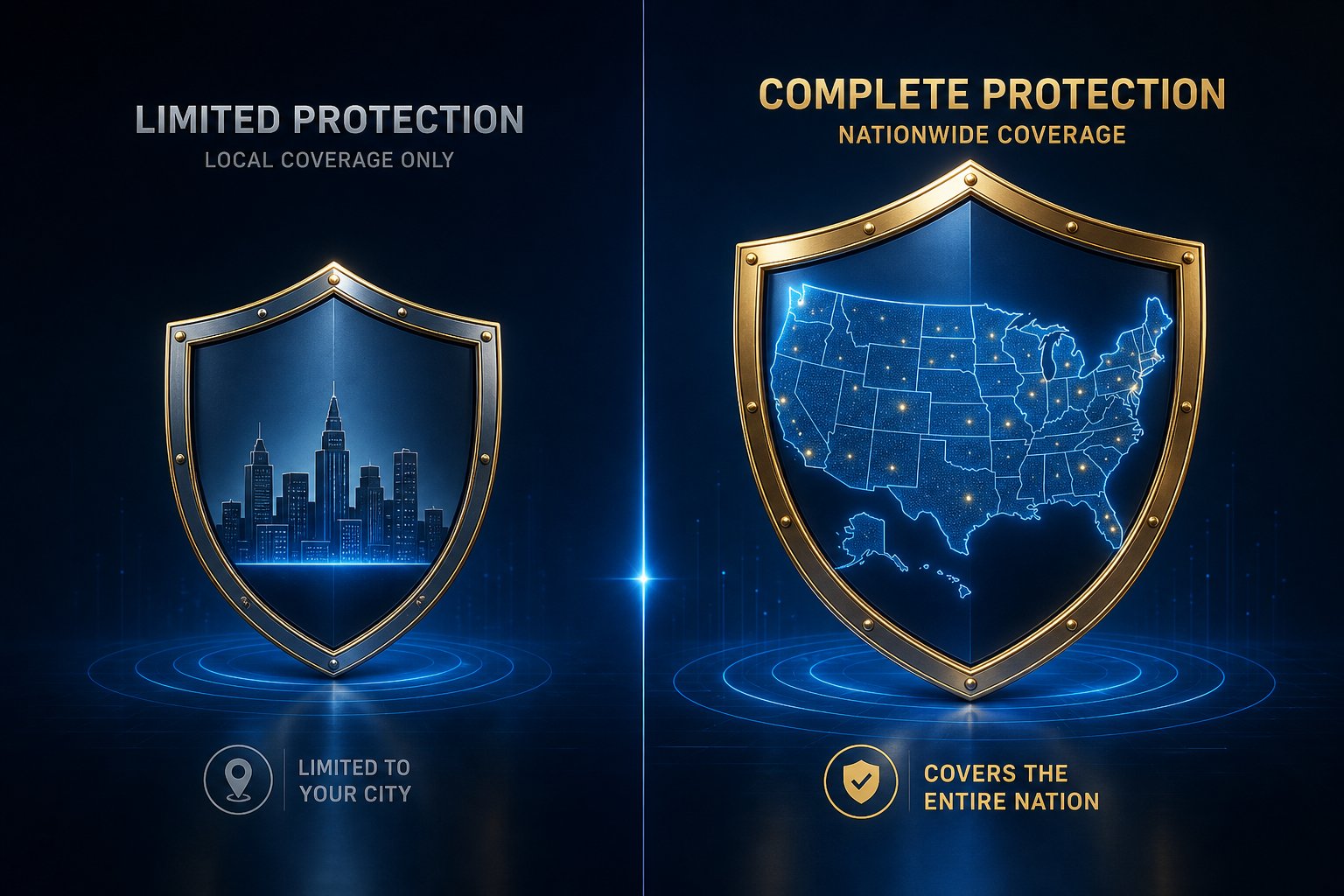
The practical consequences are significant. Does company name registration protect your brand in China? Only within the administrative region where you registered, and only against other companies attempting to register the same name in the same industry within that same jurisdiction. A company registered as "Shanghai ZhiYuan Technology Co., Ltd." has no legal basis to stop someone in Guangzhou from registering "Guangzhou ZhiYuan Technology Co., Ltd." And neither registration prevents a third party from filing "智远" as a trademark with CNIPA and gaining exclusive nationwide rights to use that mark on specified goods or services.
Company name registration is geographically limited to a single administrative region. Trademark registration provides exclusive rights across all of China. Without both, your brand has gaps a competitor can walk through.
China's trademark system operates on a strict first-to-file rule. Unlike the United States, where prior use can establish trademark rights, China awards the trademark to whoever files the application first, regardless of who used the name earlier in the market. This China first to file trademark rule has burned countless foreign companies who assumed their registered company name or international brand reputation would be enough to secure their rights. It is not. If someone else files your trade name as a trademark before you do, they own it, and you may find yourself unable to use your own company's name on product packaging, advertising, or e-commerce platforms.
Building a Comprehensive Naming and IP Strategy
The conflicts between trade names and trademarks are not hypothetical. They happen constantly. A Beijing IP Court case involving Jin Dun Building Materials illustrates the problem clearly. The trademark owner "金盾JinDun" discovered that another company, New Century Jin Dun Construction Company, was using a shortened version of its own trade name, "Jin Dun waterproof company," in advertising. The court found this constituted both unfair competition (through improper trade name use) and trademark infringement (through using the trade name distinctly as a trademark). The defendant was ordered to pay compensation, but the dispute could have been avoided entirely if both parties had coordinated their name and trademark strategies from the start.
So how do you protect your business name in China comprehensively? The answer is a coordinated company name and trademark strategy that treats both registrations as complementary layers of a single IP framework:
- Register your trade name as a trademark immediately. File with CNIPA as early as possible, ideally before or simultaneously with your company name registration. Cover all relevant product and service classes, not just your primary business activity.
- File defensive trademark registrations. Register similar variations of your trade name, common misspellings, and related character combinations. Major Chinese companies like Alibaba register dozens of defensive marks, including "Ali Father," "Ali Mother," and other variants, to prevent brand-riding.
- Monitor both systems continuously. Use CNIPA's trademark database to watch for applications that copy your trade name, and check company name databases across provinces for entities registering confusingly similar names. Since China's provinces maintain independent name declaration systems, a single-city check is not sufficient.
- Act fast when conflicts arise. If someone files your trade name as a trademark, you can oppose the application during the publication period or apply for invalidation after registration. If someone registers a confusingly similar company name, file an administrative complaint with the local AMR or pursue litigation under the Anti-Unfair Competition Law.
- Maintain evidence of use. Document your trade name's market presence through dated marketing materials, sales records, advertising contracts, and media coverage. This evidence becomes critical if you need to prove "certain influence" under unfair competition law or challenge a bad-faith trademark filing.
The geographic limitation of name registration versus the nationwide scope of trademark protection creates a strategic gap that only coordinated action can close. A company entering China through a single-city WFOE registration might feel secure with its local name approval, but without trademark coverage, that same trade name is vulnerable in every other city and on every e-commerce platform across the country.
Think of it this way: name registration gives you the legal right to exist as a business entity. Trademark registration gives you the legal right to own your brand. In China's first-to-file environment, waiting on either one is a risk most companies cannot afford to take. The smartest approach treats your China market entry as a single coordinated process, where entity formation, name declaration, and trademark filing happen in parallel rather than in sequence.
Frequently Asked Questions About China Name Registration Rules
1. What are the four mandatory components of a Chinese company name?
Every Chinese company name must include four elements in a prescribed order: the administrative division (such as Shanghai or Beijing), a trade name of at least two simplified Chinese characters, an industry description aligned with the National Economic Industry Classification, and an organizational form indicating the legal structure (such as Co., Ltd. or Partnership Enterprise). The administrative division can alternatively be placed in parentheses after the trade name for branding flexibility, but all four segments must be present for the registration to be accepted.
2. Can a foreign company use 'China' in its registered business name?
Using terms like 'China,' 'Chinese,' or 'National' in a company name requires State Council approval, which sets an extremely high bar. Foreign-invested enterprises have one notable exception: if the foreign investor's existing trade name is used as the Chinese entity's trade name, the company may include '(China)' in parentheses in the middle of the name to indicate it is the China arm of an international brand. This still requires regulatory approval and the company must demonstrate genuine nationwide operational scope.
3. Does registering a company name in China protect my brand nationwide?
No. Company name registration in China is geographically limited to the administrative region where you register. A name registered in Shanghai does not prevent someone in Guangzhou from registering the same trade name in the same industry. For nationwide brand protection, you need a separate trademark registration filed through CNIPA. China operates on a first-to-file trademark system, meaning whoever files first owns the mark regardless of prior use, so filing early is critical.
4. How long does the company name registration process take in China?
The online self-declaration system provides automated comparison results almost instantly, often within seconds. Once your name passes the automated check, it is reserved for a limited period, typically 30 to 60 days depending on the jurisdiction. During this window, you must complete the full business registration including articles of association and registered capital. The name declaration itself carries no government fee in most jurisdictions, with costs arising only at the full registration stage.
5. What characters are prohibited in Chinese personal and business names?
For personal names, all Latin characters, numerals, and non-Chinese symbols are prohibited. The chosen characters must also exist in the government's digital database, which supports roughly 32,000 of the 70,000-plus known Chinese characters. For business names, traditional Chinese characters, variant characters, Arabic numerals, and foreign text are all banned. Additionally, business names cannot contain superlative terms like 'best' or 'highest,' political or military references, foreign country names, or content that could mislead the public about the company's nature or ownership.