What Drives Chinese Baby Name Trends Today
When Western parents name a child, they might browse a list, fall in love with a sound, and move on. When Chinese parents name a baby, they're making a decision that intersects philosophy, family legacy, tonal linguistics, and sometimes even government regulation. A single character carries visual beauty, phonetic weight, and layered meaning all at once. Get one element wrong, and the name can sound like an insult or invite bad fortune.
Why Chinese Baby Naming Is a Cultural Act
Chinese baby names operate on a fundamentally different logic than their Western counterparts. The family name comes first, reflecting Confucian values that place collective identity above the individual. Given names for a Chinese baby aren't pulled from a fixed pool of pre-existing options the way "James" or "Emily" might be. Instead, parents construct names character by character, choosing from thousands of possibilities where each symbol carries its own meaning, tone, and visual form. Chinese girl names often draw on characters evoking grace and natural beauty, while Chinese boy names traditionally lean toward strength and ambition, though these boundaries are shifting fast.
In Chinese culture, a name is not simply a label. It encodes parental aspirations, philosophical beliefs, family lineage, and even the political era into which a child is born.
What Makes These Trends Worth Understanding
Most articles on this topic hand you a list of common Chinese names and call it a day. This one takes a different approach. Chinese baby name trends reveal something deeper about how an entire society thinks about identity, tradition, and change. Understanding why certain characters surge in popularity, why millions of children end up sharing the same name, and why parents now hire professional consultants to avoid exactly that outcome tells you more about modern China than any surface-level list ever could. The forces shaping these choices, from classical poetry revivals to social media virality, are worth decoding.
How Chinese Names Are Structured and Why It Matters
Before you can make sense of which names are trending and why, you need to understand how Chinese names are built. The architecture is radically different from Western naming conventions, and every structural choice carries cultural weight.
Surname Conventions and Family Identity
In Chinese names, the family name always comes first, symbolizing the primacy of lineage over individuality. This surname-first order isn't just a formatting preference. It reflects a Confucian worldview where you belong to your family before you belong to yourself.
The vast majority of Chinese surnames are single characters. Wang, Li, Zhang, Liu, and Chen alone account for hundreds of millions of people. But compound surnames also exist: Ouyang, Sima, Zhuge, and Shangguan are two-character surnames with deep historical roots, often tracing back to ancient nobility or geographic origins. When you see chinese names in chinese written form, the surname is always the anchor point from which the rest of the name flows.
Single vs Double Given Names and Why It Matters
Chinese first names, the given name portion, can be either one or two characters long. A single-character given name paired with a one-character surname creates what's sometimes called a 3 letter chinese name in romanized pinyin, like Li Wei or Wang Fang. These shorter names were common in earlier decades but have fallen out of favor.
The modern trend strongly favors two-character given names. Why? A two-character given name offers more room for layered meaning, better tonal flow, and greater uniqueness. It also allows space for what's traditionally called a generational character, or chinese middle names in a loose Western analogy. In families that follow the beifen tradition, one character in the given name is shared across all siblings or cousins of the same generation, while the second character is chosen individually. Male chinese given names and chinese given names female alike now overwhelmingly use this two-character structure, giving parents a broader canvas for expressing aspirations.
| Position | Function | Example (Li Mingzhi / 李明志) |
|---|---|---|
| 1st character | Surname (family identity) | 李 (Li) - one of China's most common surnames |
| 2nd character | Generational or first given character | 明 (Ming) - meaning bright, could be a shared generational character |
| 3rd character | Individual given character | 志 (Zhi) - meaning ambition, chosen uniquely for the child |
How Stroke Count and Tonal Balance Shape Choices
Here's where things get tricky for anyone reading Chinese names only in romanized pinyin. The same pinyin spelling can represent dozens of completely different characters with unrelated meanings. Take "li" alone: it can mean beautiful (丽), strength (力), sharp (利), or plum (李), depending on which character is written. Tonal differences compound this further. As Chineasy explains, Chinese has four tones plus a neutral tone, and pronouncing a syllable in the wrong tone produces an entirely different word. The classic example: ma in the first tone means mother, but in the third tone it means horse.
This is critical for understanding chinese baby name trends discussed in romanized form. When you see that "Zihan" is popular, you're actually looking at potentially dozens of different names. 子涵, 梓涵, 子翰, and 紫涵 all romanize to "Zihan" but carry distinct meanings and visual identities. Parents choosing names aren't just picking sounds. They're selecting specific characters where stroke count, radical composition, and tonal harmony with the surname all factor into the final decision.
These structural layers explain why naming in Chinese is closer to composition than selection. And they set the stage for understanding how broader cultural forces, from political movements to poetry revivals, have shaped which characters rise and fall across generations.
Generational Naming Shifts Across Decades
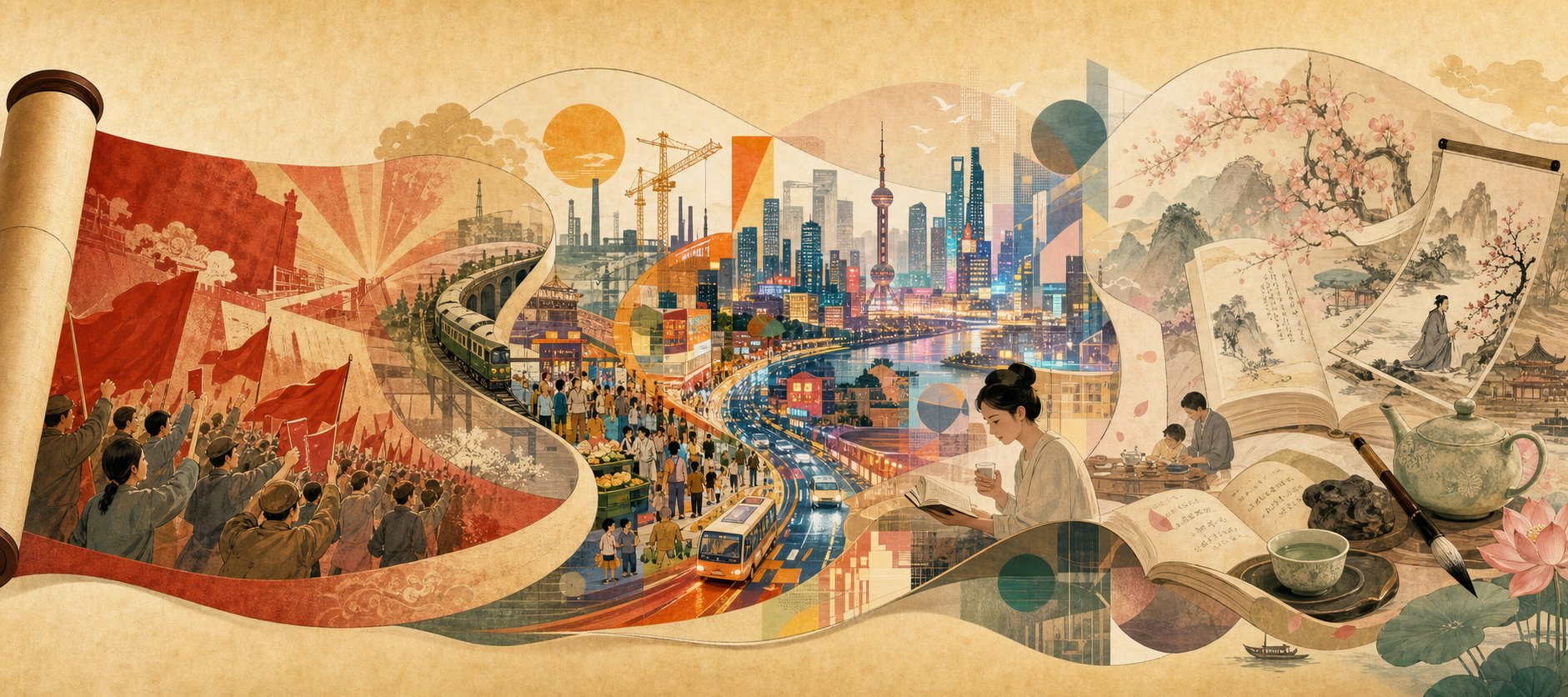
Every generation of Chinese parents names their children against a backdrop of political reality, economic conditions, and cultural mood. Track the most common chinese names across decades and you'll find a living record of how an entire society's values transformed in real time.
Revolutionary Era Names and Collective Identity
Imagine being born in 1950s China. The People's Republic has just been founded, national pride is surging, and your parents want your very identity to reflect this historic moment. The result? A wave of patriotic names that read like political slogans. Jianguo (建国, "build the nation") became so widespread that data from China's National Citizen Identity Information Center shows more than 960,000 people share this name, with roughly 24 percent born between 1949 and 1959.
Other popular chinese names from this era include Weiguo (卫国, "guard the country"), Guoqiang (国强, "strong country"), and Yuanchao (援朝, "aid Korea") during the Korean War years. The character 国 (guo, nation) appeared in names so frequently it became a generational signature. By the 1960s, the Cultural Revolution pushed naming even further into ideological territory. Characters like 红 (hong, red) and 兵 (bing, soldier) dominated, producing names like Hongwei (红卫, "red guard") and Wenge (文革, "cultural revolution"). Even businesswoman Wendi Deng's birth name was Deng Wenge, directly referencing the political movement.
Reform Era and the Prosperity Naming Wave
When Deng Xiaoping launched Reform and Opening Up in 1978, the national psyche pivoted from revolution to prosperity. Typical chinese names shifted accordingly. Characters like 富 (fu, wealth) and 财 (cai, fortune) entered the naming vocabulary as parents projected economic aspirations onto their children. The one-child policy, introduced in the 1980s, amplified this shift. With only one shot at naming, parents invested more thought and creativity into the process.
This era also introduced Western-influenced names. A girl surnamed Su (苏) might become Susan (苏珊), and Anna (安娜) appeared as a given name. Double-character names where the same character repeats, like Bingbing (冰冰) or Shishi (诗诗), became a lighthearted trend for girls. The pool of naming styles expanded dramatically as society loosened its ideological grip.
The Modern Shift Toward Individuality
The 2000s brought globalization-influenced names reflecting openness and aspiration. After China's successful Olympic bid in 2001, roughly 31,000 infants were named Shen'ao (申奥, "bid for Olympics") or Aoyun (奥运, "Olympics"). But the bigger story of this era is the rise of aesthetic individuality. The most popular chinese names today draw from classical literature and poetic imagery rather than political events or wealth symbols. Characters like 梓 (zi, catalpa tree), 萱 (xuan, daylily), and 浩然 (haoran, upright and noble, from the philosopher Mencius) now top the charts.
Parents in the post-1990s generation also began combining both parents' surnames in their child's name, reflecting shifting gender dynamics within families. Some even chose rare or archaic characters to guarantee uniqueness, a direct reaction against decades of homogeneous naming.
| Era | Dominant Themes | Example Characters | Societal Forces |
|---|---|---|---|
| 1950s-1960s | Patriotism, revolution, collective identity | 建国, 卫国, 红卫, 文革 | PRC founding, Korean War, Cultural Revolution |
| 1970s-1980s | Prosperity, modernity, Western influence | 富, 财, 苏珊, 冰冰 | Reform and Opening Up, one-child policy |
| 1990s-2000s | Globalization, aspiration, dual-surname creativity | 奥运, 千禧, combined surnames | Economic boom, Olympics, rising individualism |
| 2010s-present | Classical elegance, aesthetics, uniqueness | 梓萱, 浩然, 子轩, poetic characters | Traditional culture revival, social media, anti-homogeneity backlash |
You'll notice a clear arc here: from collective identity to individual expression, from political loyalty to personal aesthetics. Each generation's naming choices function as a cultural timestamp. And the current generation's return to classical poetry and ancient texts for inspiration isn't random. It's part of a broader cultural movement where young Chinese parents are actively reconnecting with traditional systems that once guided every aspect of name selection.
Traditional Naming Systems Still Shaping Modern Choices
Those traditional systems weren't vague superstitions. They were structured frameworks, each with its own internal logic, designed to align a child's name with cosmic, familial, and linguistic harmony. Even today, when young parents browse naming apps or consult online forums, these ancient methods quietly shape what feels "right" about a name. Understanding names in chinese and meanings requires grasping the systems that generate those meanings in the first place.
Five Elements and Character Selection
The five-element system, or wuxing, connects every Chinese character to one of five elemental forces: water, wood, fire, earth, and metal. How? Through radicals, the building blocks embedded within characters. A character containing the water radical (氵) like 涵 (han, meaning encompass) carries water energy. One with the wood radical (木) like 梓 (zi, catalpa tree) belongs to wood. Parents using this system first determine which elements are weak or missing in their child's birth chart, then select characters containing radicals that restore balance.
Imagine a child born at a time when their chart shows a deficiency in water. Their parents might choose characters like 淼 (miao, vast water), 泽 (ze, marsh), or 洋 (yang, ocean) to compensate. This isn't random aesthetics. It's a deliberate attempt to harmonize the child's elemental constitution through their name. Chinese boy names and meanings often reflect this logic, with parents selecting powerful-sounding characters that also satisfy elemental requirements. The same applies to chinese names female and meanings, where grace and balance guide the elemental pairing.
Stroke Count Numerology in Practice
Every Chinese character has a fixed number of brushstrokes, and in naming numerology, those strokes carry mathematical significance. The total stroke count of a full name, broken into specific configurations (heaven, earth, person, outer, and total), is evaluated against numerological charts that assign auspicious or inauspicious values to each number.
Sounds complex? Here's how it works in practice. A parent might love the character 馨 (xin, fragrance) for their daughter but discover its 20 strokes create an unfavorable total when combined with their surname. They'd then look for alternatives with similar chinese names meaning but different stroke counts, perhaps 欣 (xin, joyful) at only 8 strokes. This system can eliminate otherwise perfect characters purely on mathematical grounds, which is why many parents find it both fascinating and frustrating.
Generational Poems and the Beifen Tradition
Perhaps the most poetic of all traditional naming systems is the generational poem, or beifen. Families composed multi-line poems centuries ago, and each successive generation takes the next character from the poem as part of their given name. Every cousin, no matter how distant, shares that same generational character, creating an instant marker of where someone falls in the family lineage.
The Wong family of Gom Benn Village offers a vivid example. Their generational poem, attributed to Ming Dynasty scholar Wong Shi Jun (1570-1661), guided naming for nearly 300 years. One line reads: 世传礼义重, and each character corresponds to a generation. The 23rd generation used 传 (chuan), the 24th used 礼 (li), and so on. This tradition of generational poems began roughly 2,000 years ago during the Han Dynasty and became widespread just before the Song Dynasty (960-1276 AD). Research by Li Zhonghua and Edwin D. Lawson found that among university students surveyed, approximately 20-30% still carried generational names, suggesting a quiet persistence of this practice even in modern China.
When you explore chinese family names and meanings through this lens, you realize that a name doesn't just identify an individual. It locates them within a centuries-long family narrative. The beifen tradition transforms naming into an act of genealogical record-keeping, where each child's name is literally a line in an ongoing poem.
Here's a summary of how each system operates and where it stands today:
- Five Elements (Wuxing): Characters are selected based on elemental radicals to balance a child's birth chart. Still widely practiced, especially in southern China and among families consulting traditional practitioners.
- Stroke Count Numerology: Total brushstrokes across the full name are calculated and evaluated for auspiciousness. Gaining popularity through naming apps that automate the calculations.
- Generational Poems (Beifen): Pre-composed family poems assign one character per generation, linking all same-generation relatives. Declining in urban areas but experiencing a modest revival as families reconnect with genealogical records and chinese family names and meanings.
- Eight Characters (Bazi): Based on the year, month, day, and hour of birth, this system identifies elemental strengths and weaknesses that the name should address. Remains influential, particularly for families who consult fortune-tellers or naming masters before registering a birth.
What's particularly interesting is how these systems interact. A professional name consultant doesn't pick just one method. They layer all four, searching for characters that satisfy elemental balance, produce favorable stroke counts, honor generational traditions where applicable, and complement the child's bazi. This layered approach explains why hiring a naming consultant has become a growing industry in China. Fees range from a few hundred to several thousand yuan, and the best consultants combine deep knowledge of classical systems with an ear for modern aesthetic trends. Parents want a name that passes traditional tests but also sounds elegant, photographs well in calligraphy, and won't be shared by half the kindergarten class.
These ancient frameworks don't exist in isolation from contemporary culture. They collide with it daily, especially when parents discover that the poetic, classically inspired names they love are being chosen by millions of other families drawing from the same literary sources.
Pop Culture and the Classical Naming Renaissance
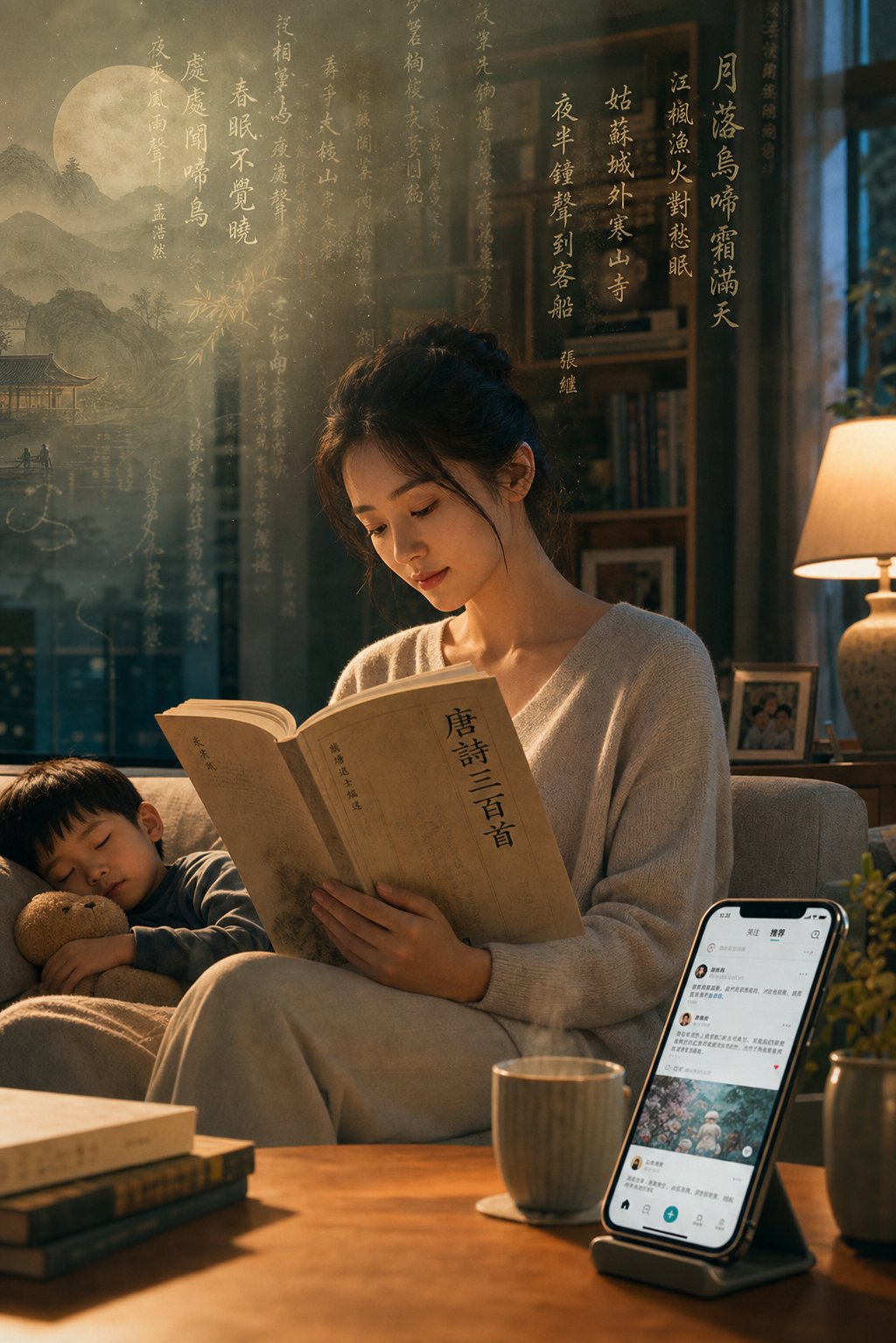
That collision between ancient systems and modern taste has produced something unexpected. Rather than abandoning tradition entirely, young Chinese parents are reaching further back in time, past the revolutionary slogans and prosperity characters of their parents' era, straight into Tang and Song dynasty poetry for inspiration. The result is a naming renaissance that's reshaping which characters become chinese names popular across the country.
The Classical Literature Revival in Baby Naming
A 34-year-old mother in Chengdu named her daughter "Liao Chirou," drawing directly from Chapter 43 of the Tao Te Ching. The character combination speaks to the quiet power of softness: "The way of the gentlest of things can master the hardest." As she told the Global Times, the name is her "first life gift" to her daughter, one that "carries cultural tradition beyond value."
She's far from alone. Lists of newborn names released by provincial authorities across Sichuan, Yunnan, and Zhejiang reveal a clear pattern. Names like "Yanzhou" (inkstone and boat), rooted in a poem by Northern Song Dynasty poet Zeng Gong, have gained cross-regional popularity. "Fusu," which appears in China's oldest poem anthology the Book of Songs and was also the name of Emperor Qinshihuang's eldest son, is showing up in first-grade classrooms. "Jincheng," drawn from the idiom "Qiancheng Sijin" meaning "the future is like brocade," ranks among trending choices for boys.
These aren't random picks. Parents are actively mining the Classic of Poetry (Shijing), Chu Ci, and Tang dynasty verse for characters that sound both unique chinese girl names and timeless. The appeal is clear: classical sources offer characters with rich layered meanings, elegant tonal qualities, and a sense of historical depth that modern coinages can't match. For parents seeking pretty chinese girl names or cool chinese names for boys, ancient poetry delivers both beauty and gravitas in a single character.
Cultural sociologist Xu Shumin describes this trend not as a pursuit of uniqueness alone, but as evidence that young parents are reclaiming traditional Chinese culture as a living aesthetic in everyday life, much like wearing Hanfu or practicing calligraphy.
C-Drama Characters and Celebrity Influence
Classical literature isn't the only driver. Chinese costume dramas, or C-dramas, function as a gateway drug to poetic naming. When a historical drama features a protagonist with an elegant, classically derived name, millions of viewers hear that name repeated across 40 episodes. The character becomes associated with beauty, intelligence, or heroism, and within months, registration data shows a spike.
This pattern repeats with celebrity culture. When a popular actor or singer carries a name with appealing characters, parents borrow not just the sound but the specific character combination. The effect is amplified because C-drama names are often deliberately crafted by screenwriters to sound poetic and ancient, creating a curated version of classical naming that feels accessible. Parents searching for cute chinese girl names or distinctive options for boys find ready-made inspiration in their favorite shows.
How Social Media Creates Viral Name Trends
Platforms like Xiaohongshu (RED) and Douyin accelerate these trends at unprecedented speed. A single viral post analyzing the poetic origins of a name, or ranking characters by aesthetic appeal, can reach millions of expectant parents overnight. Naming content performs well on these platforms because it's inherently shareable. Parents post their naming process, explain the literary references, and invite feedback from strangers.
Here's the paradox this creates. A name inspired by an obscure Song dynasty poem feels deeply personal and unique chinese girl names material when you discover it. But when that same poem goes viral on Douyin, millions of parents discover it simultaneously. The characters that felt rare become the next wave of chinese names popular across kindergarten rosters. Cultural sociologist Xu Shumin frames this broader shift as a "microcosm" of societal change, where post-1990s parents express cultural identity through naming the same way they might through fashion or art.
The tension is real: parents want names that honor tradition and sound distinctive, but the very tools that help them find those names ensure that distinctiveness has a short shelf life. This growing awareness of oversaturation is pushing some families toward an entirely different kind of boundary-breaking, one that challenges not literary convention but gender convention itself.
The Rise of Gender-Neutral Chinese Names
For centuries, Chinese characters carried invisible gender tags. Certain radicals, meanings, and aesthetic qualities marked a character as unmistakably feminine or masculine. Parents rarely crossed those lines. But the current generation is rewriting the rules, and the shift shows up clearly in registration data. What was once a rigid binary in chinese female names and chinese male names is blurring into something more fluid, more deliberate, and more culturally significant than a simple style preference.
Traditional Gender Associations in Chinese Characters
Chinese characters signal gender through their radicals, the small structural components that hint at meaning. Characters containing the "grass" radical (艹) like 萱 (xuan, daylily), 芷 (zhi, angelica), and 蕊 (rui, pistil) were historically reserved for girls, evoking flowers, softness, and natural beauty. The "jade" radical (王) in characters like 瑶 (yao, precious jade) and 琳 (lin, fine jade) similarly coded as feminine. Traditional chinese feminine names drew heavily from this botanical and gemstone vocabulary.
On the other side, chinese masculine names leaned on characters with the "strength" radical (力), "metal" radical (钅), or "mountain" component (山). Characters like 刚 (gang, steel), 强 (qiang, strong), 磊 (lei, stacked rocks), and 鹏 (peng, mythical bird) projected power and ambition. The expectation was clear: daughters should embody grace, sons should embody force.
Research analyzing 1.2 billion Han Chinese names confirms these patterns held firm for decades. Characters scoring high on "warmth" clustered in female names, while those scoring high on "competence" dominated male names. Sons were expected to be "ambitious" (志, zhi) and "cultured" (文, wen), while daughters were to be "beautiful" (丽, li) and "fragrant" (芳, fang).
Characters Crossing Gender Boundaries
Something shifted after the 1980s. The same research shows that popular characters for both men and women began sporting gender-neutral radicals with meanings like "water" (氵), "bird" (鸟), and "green" (青). Even radicals with traditionally gendered connotations started appearing more loosely across the sexes. Daughters are now expected to be "excellent" (佳, jia, which contains the "man" radical), "knowing" (晓, xiao), and "cultured" (文, wen), characters that would have read as exclusively masculine a generation earlier.
The crossover runs in specific directions. Characters once reserved for feminine chinese names are appearing in boys' names when they carry connotations of refinement or sensitivity. Meanwhile, traditionally masculine characters are flowing into girls' names when they suggest intelligence, ambition, or independence. Here's how some of the most notable crossovers break down:
| Character | Meaning | Traditional Gender | Modern Crossover Usage |
|---|---|---|---|
| 萱 (xuan) | Daylily | Feminine | Appearing in boys' names paired with strong second characters for balanced elegance |
| 睿 (rui) | Wise, astute | Masculine | Now one of the most popular characters in girls' names, signaling intellectual aspiration |
| 文 (wen) | Cultured, literary | Masculine | Widely used for girls since the 1990s, reflecting rising educational expectations for daughters |
| 佳 (jia) | Excellent, fine | Masculine (contains "man" radical) | Common in female names, the "man" radical reinterpreted as "person" rather than gendered |
| 宇 (yu) | Universe, house | Masculine | Increasingly used for girls, suggesting expansiveness and ambition beyond domestic roles |
| 诗 (shi) | Poetry | Feminine | Growing in boys' names as parents value artistic sensitivity in sons |
One pattern stands out: the "man" radical (亻, ren) is flexible because it technically means "person" rather than "male," making it easier for characters containing it to cross into female usage. The "woman" radical (女, nv), however, still rarely appears in chinese names male. That asymmetry reveals something important. Society has expanded what femininity can include faster than it has expanded what masculinity can absorb.
What Gender-Neutral Naming Signals Culturally
This isn't happening in a vacuum. China's rapid modernization, rising female educational attainment, and shifting family structures all feed into naming choices. When parents give their daughter a character like 睿 (wise) or 宇 (universe), they're encoding an expectation that she'll compete intellectually and professionally on equal footing. When they give their son a character like 诗 (poetry) or 萱 (daylily), they're signaling that emotional depth and aesthetic sensitivity are valued in men.
But generational friction is real. Grandparents, who often hold significant influence in Chinese naming decisions, may resist choices that feel gender-ambiguous. A grandmother might object to her grandson's name containing a "grass" radical, viewing it as too soft. A grandfather might push back against his granddaughter receiving a character associated with military strength, seeing it as unfeminine. These negotiations play out in family group chats and living rooms across China, with the final name often representing a compromise between generations.
The result is a naming landscape where chinese male names and chinese female names still differ on average, but the overlap zone is expanding rapidly. Parents who grew up as the one-child generation, accustomed to carrying all family expectations regardless of gender, are now projecting that same gender-flexible worldview onto their children's names. It's a quiet revolution, written one character at a time, and it connects directly to a broader challenge facing Chinese families everywhere: how to choose names that work not just within one culture's gender expectations, but across cultural and linguistic boundaries entirely.
Bilingual Naming Challenges for Global Chinese Families
Choosing a name that works within one language is already a layered decision. For families navigating two linguistic worlds simultaneously, the complexity multiplies. Overseas Chinese parents and diaspora families face a challenge that mainland parents rarely encounter: how to name your asian baby in a way that honors Chinese cultural identity while functioning smoothly in English-speaking environments. The result is a distinct set of naming strategies that have produced their own trends, separate from what's happening inside China.
Strategies for Cross-Cultural Name Selection
Families approach bilingual naming in several ways, each with trade-offs. Some prioritize phonetic harmony, others prioritize cultural preservation, and many land somewhere in between. Here's how the most common strategies break down:
- Phonetic bridge names: Parents choose a Chinese name that naturally sounds like an English name when romanized. For example, 美琳 (Meilin) approximates "Maylin," and 凯文 (Kaiwen) echoes "Kevin."
Pros
One name works in both contexts, reducing identity fragmentation. The child doesn't need to switch between names.Cons
The pool of characters that produce English-friendly sounds is limited, which can force parents to compromise on meaning or elemental balance. - Separate Chinese and English names: The child receives a full Chinese name for family and cultural contexts, plus an unrelated English name for school and professional life.
Pros
Maximum freedom in both languages. The Chinese name can follow traditional systems without phonetic constraints, and the English name can be chosen purely for how it sounds in Western contexts.Cons
The child navigates two identities. Some people report feeling split between their "home self" and "public self," particularly during adolescence. - Chinese names for english names (transliteration): Parents select an English name first, then create a Chinese transliteration using characters with positive meanings. "Anna" becomes 安娜 (peaceful and graceful), "Leo" becomes 利奥 (sharp and profound).
Pros
The chinese names english translation feels cohesive because both versions share phonetic DNA.Cons
Transliterated characters sometimes feel forced or lack the poetic depth of names chosen meaning-first. - Meaning-matched pairs: Rather than matching sound, parents match meaning across languages. A child named 明 (Ming, meaning bright) might receive the English name "Claire" (from Latin clarus, meaning clear/bright).
Pros
Both names carry the same semantic weight, creating conceptual unity.Cons
Requires knowledge of etymology in both languages, and the connection may not be obvious to others.
Research from the University of Nottingham Ningbo found that among mainland Chinese students adopting English names, uniqueness was a key motivator. Students wanted names that distinguished them from peers and expressed individual identity, often using creative approaches that blended phonetic and semantic strategies. This desire for distinctiveness mirrors the broader trend inside China, but plays out differently when two languages are involved.
Regional Differences Across the Chinese Diaspora
How families handle bilingual naming varies dramatically by region. These differences reflect distinct colonial histories, language policies, and degrees of Western integration.
In Hong Kong, carrying both a Chinese and English name has been standard practice since the colonial era. English names are often officially registered and appear on identity documents. The convention is so normalized that not having an English name can feel unusual. Hong Kong names are romanized using older systems like Wade-Giles rather than pinyin, producing spellings like "Cheung" instead of "Zhang" and "Wong" instead of "Wang."
In Taiwan, English names are common in professional and educational settings but less formally entrenched than in Hong Kong. Romanization follows different standards, and given names are typically hyphenated (Kai-shek, Ching-te), creating a visual distinction from mainland pinyin conventions where syllables are joined together.
Singapore presents yet another pattern. Ethnic Chinese Singaporeans often carry three-part names: a Chinese surname, a romanized Chinese given name, and an English given name, all on official documents. The romanization itself varies because Singaporean Chinese families speak different dialects, producing Hokkien, Teochew, or Cantonese romanizations rather than Mandarin pinyin.
For Western diaspora communities in the US, Canada, UK, and Australia, the approach depends heavily on generation. First-generation immigrants typically maintain full Chinese names and add English names for practical integration. Second and third-generation families face a different pressure: preserving cultural connection when the dominant language at home may already be English. Asian names for boys and girls in these communities often reflect a conscious effort to maintain heritage, with parents choosing Chinese names their children can pronounce even if they don't speak Mandarin fluently.
Phonetic Bridges Between Chinese and English
The mechanics of building a name that crosses linguistic boundaries involve navigating some real constraints. Mandarin Chinese has roughly 400 distinct syllables (before tonal variation), while English has thousands. Many common Chinese sounds don't map cleanly to English phonetics, and vice versa. The "x" in Mandarin pinyin (as in Xiao) has no English equivalent, leaving Western speakers guessing. The "zh" and "q" sounds create similar friction.
Savvy parents work around these gaps by favoring Chinese characters whose pinyin romanizations use sounds that exist in both languages. Syllables like "li," "mei," "kai," "an," and "lin" cross over naturally. This is why certain asian names appear repeatedly in diaspora communities: they sit in the phonetic overlap zone where both languages feel comfortable.
The reverse also works. Parents starting from an English name look for Chinese characters that approximate its sound while carrying independent meaning. The key is that chinese names for english names aren't just phonetic transcriptions. Each character still needs to hold up as meaningful Chinese. A name like 凯瑟琳 (Kaisilin, for "Catherine") uses characters meaning "triumphant," "lute," and "jade," transforming a simple transliteration into something with its own Chinese identity.
These bilingual pressures have created a feedback loop. As more Chinese families operate across cultures, the names that succeed in both worlds gain visibility and influence naming trends back in mainland China. A character combination that works beautifully in both Mandarin and English carries a kind of cosmopolitan prestige. But all of this creative freedom operates within boundaries that many parents don't discover until they try to register their chosen name officially, boundaries set not by culture or linguistics, but by law.
Legal Rules and the Push for Unique Names
Those boundaries are more concrete than most parents expect. China doesn't just leave naming to family tradition and personal taste. The government actively regulates what characters can appear on a birth certificate, how many characters a name can contain, and even publishes annual data revealing exactly how common your carefully chosen name actually is. For parents who spent months consulting poetry anthologies and five-element charts, discovering that their name is legally restricted or statistically oversaturated can feel like a cold splash of bureaucratic reality.
Government Regulations and the Approved Character List
China's naming regulations stem from a practical problem: the national identity database needs to process names digitally. Every character in a registered name must exist within the standardized character set used by government computer systems. This means obscure classical characters, no matter how poetically perfect, may be rejected at the registration office if they fall outside the approved list.
The basic rules are straightforward. Names must use simplified Chinese characters from the standardized set. They're limited in length, typically two to four characters total including the surname. Foreign characters, symbols, and numerals are prohibited. Minority ethnic groups may use characters that transliterate names from their native languages, but even these must conform to the approved character database.
Where things get complicated is at the edges. Parents who choose rare or archaic characters sometimes discover at the registration window that their chosen name simply cannot be entered into the system. A character that appears in a Song dynasty poem might not exist in the government's digital character set. Some families have fought legal battles over the right to use specific characters, with mixed results. The tension between creative naming and administrative standardization is ongoing, and it shapes which characters parents realistically consider.
The Ministry of Public Security maintains oversight of the national population registry and periodically updates its guidelines. These aren't just passive rules. The ministry actively publishes annual reports on naming patterns, turning raw registration data into public information that directly influences how the next wave of parents thinks about their choices.
The Backlash Against Oversaturated Names
Here's where government data creates an unexpected feedback loop. Each year, authorities release lists showing the most popular names in china for newborns. When parents discover that the name they lovingly assembled from classical poetry is shared by hundreds of thousands of other children born the same year, the reaction is visceral.
The numbers are staggering. Names like Zihan (子涵/梓涵), Yuxi (雨萱), Zixuan (子轩/梓萱), and Haoran (浩然) have appeared at or near the top of registration charts for years running. In some provinces, a single common chinese name might be shared by tens of thousands of newborns in a single year. Multiply that across the country and you get classrooms where three or four children share the same name, distinguished only by their surnames.
You spend months choosing a name that feels deeply personal, rooted in classical poetry and family meaning, only to learn that 280,000 other parents made the exact same choice that year. The name that was supposed to make your child unique becomes the very thing that makes them blend in.
This oversaturation problem is partly a consequence of the classical naming renaissance discussed earlier. When millions of educated young parents all draw inspiration from the same literary sources, convergence is inevitable. The Shijing has a finite number of elegant character combinations. Tang dynasty poetry, however vast, produces predictable favorites. The most common name in china for any given year often traces directly back to a viral social media post or a popular C-drama that sent millions of parents to the same page of the same poem.
The backlash is measurable. Parents who check registration data before finalizing a name actively avoid characters that appear on the most popular names in china lists. Some treat these annual reports the way Western parents treat the Social Security Administration's name rankings: if it's in the top ten, it's automatically disqualified. This creates a rolling cycle where today's trendy name becomes tomorrow's avoided cliche, pushing parents toward increasingly uncommon character combinations.
How Official Data Is Changing Parental Behavior
The Ministry of Public Security's annual name reports have transformed naming from a private family ritual into a data-informed decision. Parents now approach the process with a researcher's mindset, cross-referencing their preferred characters against popularity databases before committing.
Several tools facilitate this shift. Local public security bureaus in some cities offer name-checking services where parents can query how many people in their province already carry a specific name. Online platforms aggregate this data, letting users test combinations and see approximate popularity scores. Some naming apps integrate government statistics directly, flagging characters or combinations that fall among the most common names in china for recent birth cohorts.
The behavioral change is significant. A generation ago, parents chose names based on meaning, sound, and family tradition without any way to know whether thousands of other families were making identical choices. Today's parents treat uniqueness as a measurable variable. They want a name that scores well on traditional metrics like elemental balance and stroke count, sounds poetically elegant, and passes the popularity test by not appearing on any oversaturation list.
This data-driven approach has pushed naming creativity in new directions. Some parents combine characters that individually are common but rarely appear together. Others reach for characters from less-mined literary sources, moving beyond the Shijing and Tang poetry into Song ci lyrics, Ming dynasty essays, or even Buddhist sutras. Still others solve the problem by choosing characters with unusual pronunciations or tonal patterns that feel fresh precisely because they haven't been trending on social media.
The irony is that government transparency, intended simply to inform, has become one of the most powerful forces shaping popular names in china. By revealing patterns, the data disrupts them. Each annual report triggers a wave of avoidance behavior that reshapes the following year's trends. Parents aren't just choosing names anymore. They're choosing names in response to what everyone else chose last year, creating a dynamic system where popularity data and parental behavior continuously influence each other.
All of this raises a practical question: with so many systems to satisfy, so much data to check, and so many cultural layers to navigate, how do modern parents actually pull it all together into a final decision?
Practical Guide to Choosing a Chinese Baby Name
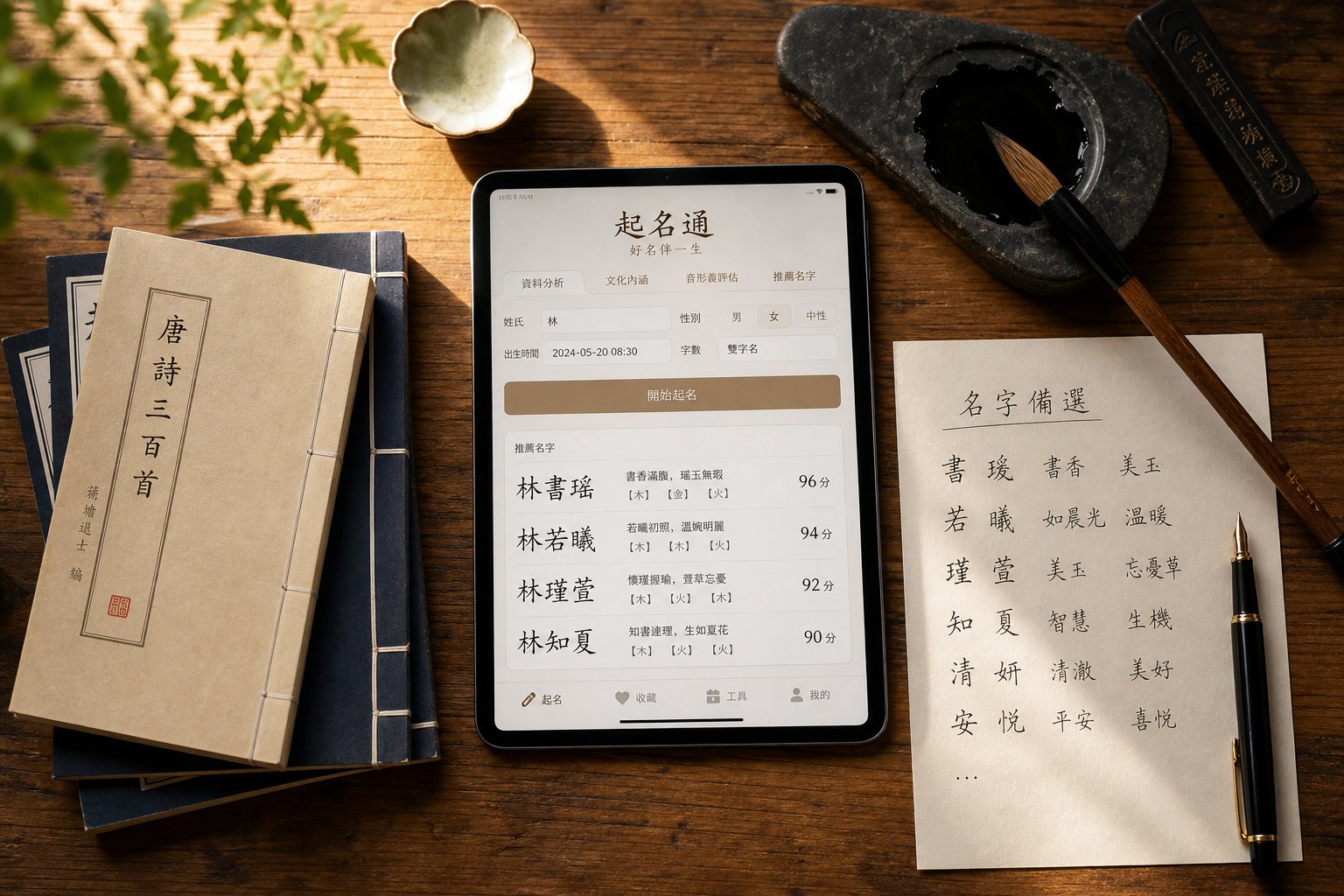
The answer, for most families, involves a combination of digital tools, professional guidance, family negotiation, and a healthy dose of data-checking. Whether you're a Chinese-speaking parent navigating traditional systems or a non-Chinese-speaking parent drawn to the depth of this naming tradition, the process follows a recognizable path once you understand the resources available.
Resources Chinese Parents Actually Use
Modern parents don't rely on a single source. They layer multiple tools to arrive at a name that satisfies cultural, aesthetic, and statistical requirements simultaneously. Provincial public security bureaus in regions like Guangdong have launched WeChat-based platforms where parents can search how many residents already carry a specific name. This simple query transforms naming from guesswork into informed decision-making.
Online naming platforms take things further. Sites allow users to input their surname, expected delivery date, and preferences to receive algorithmically generated suggestions within minutes. These platforms function as a modern, algorithmic version of the traditional fortune-teller, calculating five-element balance, stroke count numerology, and tonal harmony automatically. Some even claim to evaluate how a name will benefit a child's future prospects. For parents researching chinese names for girls or chinese names for boys, these tools offer a starting point, though most families treat the output as raw material rather than a final answer.
Working With Professional Name Consultants
When the stakes feel too high for an algorithm, families turn to professional name consultants. These specialists evaluate candidates across every traditional system simultaneously: bazi compatibility based on birth date and time, five-element balance through radical analysis, stroke count numerology across the full name, and tonal flow with the surname. The best consultants also bring literary knowledge, suggesting characters drawn from classical sources that haven't yet been oversaturated by trending lists.
Fees vary widely, from a few hundred yuan for basic consultations to several thousand for comprehensive packages that include multiple name options with detailed analysis. What you're paying for isn't just a name. It's the assurance that someone with deep expertise has stress-tested your choice against systems most parents can't fully evaluate on their own. For families choosing a chinese girl name or chinese boy name with generational significance, this professional layer adds confidence that the name will hold up across decades.
Verifying Uniqueness and Cultural Appropriateness
Verification has become its own step in the process. Parents cross-reference their shortlisted names against government popularity data, check that all characters exist within the approved registration set, and sometimes even test how the name looks in calligraphy or how it sounds when called across a playground. For non-Chinese-speaking parents interested in giving their child a Chinese name, verification also means consulting native speakers to catch unintended homophones, regional slang associations, or tonal clashes that wouldn't be obvious from a dictionary alone.
Here's a step-by-step framework for approaching the process thoughtfully:
- Establish structural parameters. Confirm the surname, decide between a one-character or two-character given name, and identify any generational character requirements from family tradition.
- Determine traditional system priorities. Will you follow five-element balancing based on the child's birth chart? Stroke count numerology? Both? Neither? Clarify which systems matter to your family before generating candidates.
- Generate character candidates. Draw from literary sources, naming platforms, or consultant recommendations. Build a long list of characters whose meanings resonate, filtering common chinese girl names or common chinese boy names that appear on recent oversaturation lists if uniqueness matters to you.
- Test combinations for sound and flow. Read the full name aloud with the surname. Check tonal patterns. Ensure no syllable combination creates an unintended homophone or awkward rhythm in Mandarin.
- Verify against popularity databases. Use provincial registry tools or online platforms to check how many people already carry your chosen name. Decide your threshold for acceptable commonality.
- Confirm registration eligibility. Ensure every character in the name exists within the government's approved digital character set. If you're using a rare character, verify it can be entered at the registration office before committing.
- Gather family input. In Chinese naming culture, grandparents and extended family often expect a voice in the decision. Present your shortlist, explain your reasoning, and be prepared to negotiate, especially around gender associations or generational traditions.
- Final cultural check. For bilingual families or non-native speakers, have a knowledgeable native speaker review the final choice for regional associations, slang meanings, or cultural connotations you might have missed.
For non-Chinese-speaking parents drawn to chinese girls names or chinese names for boys, the most important guidance is this: don't choose characters based solely on romanized pinyin or English translations. A character's meaning, visual form, tonal quality, and cultural associations all matter. Work with someone who reads Chinese fluently, ideally someone familiar with naming conventions, to ensure your choice carries the weight and beauty you intend rather than an accidental double meaning.
Looking ahead, chinese baby name trends are moving toward an increasingly dynamic tension. Parents want names rooted in tradition but resistant to homogeneity. They want classical elegance verified by modern data. They want cultural depth that also works across linguistic borders. Technology is opening new possibilities: AI-powered naming tools that can cross-reference literary databases, elemental charts, and popularity statistics simultaneously are already emerging. But the fundamental act remains deeply human. A name is still a parent's first declaration of hope for their child, encoded in characters that carry thousands of years of meaning. The tools evolve. The weight of the choice doesn't.
Frequently Asked Questions About Chinese Baby Name Trends
1. What are the most popular Chinese baby names right now?
Current top names in China draw heavily from classical poetry and literature. Characters like Zihan (梓涵), Yuxi (雨萱), Zixuan (子轩/梓萱), and Haoran (浩然) have dominated registration charts in recent years. However, growing awareness of oversaturation is pushing parents toward less common combinations. Many now check government popularity databases before finalizing a name, actively avoiding characters that appear on annual most-popular lists published by the Ministry of Public Security.
2. How do Chinese parents choose a baby name?
Modern Chinese parents typically layer multiple approaches. They may consult traditional systems like five-element (wuxing) balancing and stroke count numerology, draw inspiration from classical literature or poetry, use online naming platforms that generate suggestions algorithmically, and cross-reference government registry databases to check how common a name is. Some hire professional name consultants who evaluate candidates across all traditional systems while ensuring the name sounds elegant and avoids oversaturation. Family input, especially from grandparents, also plays a significant role in the final decision.
3. Are there legal restrictions on baby names in China?
Yes, China regulates baby names through several rules. Names must use simplified Chinese characters from a government-approved digital character set, are typically limited to two to four characters total including the surname, and cannot include foreign characters, symbols, or numerals. Obscure or archaic characters that fall outside the standardized computer system may be rejected at the registration office, even if they carry deep literary significance. Some families have pursued legal challenges over rejected characters with varying outcomes.
4. What is the difference between Chinese boy names and girl names?
Traditionally, Chinese characters signal gender through their radicals and meanings. Female names historically used characters with grass radicals (evoking flowers and nature) or jade radicals (suggesting preciousness), while male names favored characters with strength, metal, or mountain components. However, this binary is shifting significantly. Characters like 睿 (wise) now appear frequently in girls' names, and 诗 (poetry) is growing in boys' names. The trend toward gender-neutral naming reflects broader societal changes around expectations for both daughters and sons in modern China.
5. How do bilingual Chinese families choose names that work in both languages?
Diaspora and overseas Chinese families use several strategies: phonetic bridge names where the Chinese name naturally sounds like an English name (e.g., Meilin/Maylin), maintaining completely separate Chinese and English names, transliterating an English name into meaningful Chinese characters, or matching meaning across languages rather than sound (e.g., Ming/Claire, both meaning bright). Each approach involves trade-offs between cultural preservation, phonetic harmony, and practical integration. The best strategy depends on the family's linguistic environment and how strongly they prioritize cultural continuity.