The Beautiful Tradition Behind Chinese Names That Mean Love
Imagine choosing a name that does more than sound pleasant. A name that encodes your deepest hopes into every brushstroke of its characters. That is exactly what happens when parents select chinese baby names meaning love. In Chinese tradition, naming a child is not a casual decision. It is an act of intention, a compressed blessing meant to travel with that person for life.
Why Chinese Love Names Carry Deep Cultural Weight
Chinese names are built from characters, each carrying its own meaning, history, and emotional resonance. Unlike many Western names where the etymology has faded from everyday awareness, chinese name meanings remain transparent and alive. When a parent chooses a character meaning love, compassion, or tenderness, the child grows up knowing exactly what was wished for them. The meaning is not buried in Latin roots or ancient Germanic origins. It is right there on the surface, spoken aloud at every family gathering and written on every document.
This is why chinese names with meanings rooted in love carry such emotional weight. They are not decorative. They are declarations. A parent who names their chinese baby with a love-themed character is saying: this is the quality I want to define your life.
In Chinese culture, naming a child is considered the first and most enduring gift a parent gives. The characters chosen become a lifelong blessing, a compressed poem about who the parents hope this child will become.
What Makes This Guide Different From Generic Name Lists
Most online resources offer romanized spellings without tone marks, skip the actual chinese characters entirely, or list names without explaining the type of love each one expresses. This guide takes a different approach. Every name includes the original characters, pinyin with tone marks, an English pronunciation approximation, and a breakdown of what each character contributes to the name's meaning. You will also find names organized by the specific shade of love they convey, from fierce parental devotion to quiet, tender affection.
That distinction matters because the Chinese language does not treat love as a single concept. Multiple characters express different facets of love, and each one shapes a name's personality in a unique way.
Understanding the Chinese Characters That Express Love
The Chinese language does not squeeze all forms of love into a single word. Instead, it offers a spectrum of characters, each capturing a different emotional texture. When you are searching for the right chinese symbol for love to use in a name, understanding these distinctions is essential. The character you choose shapes not just the sound of the name but the specific kind of love it carries.
Five Key Characters That Express Love in Chinese
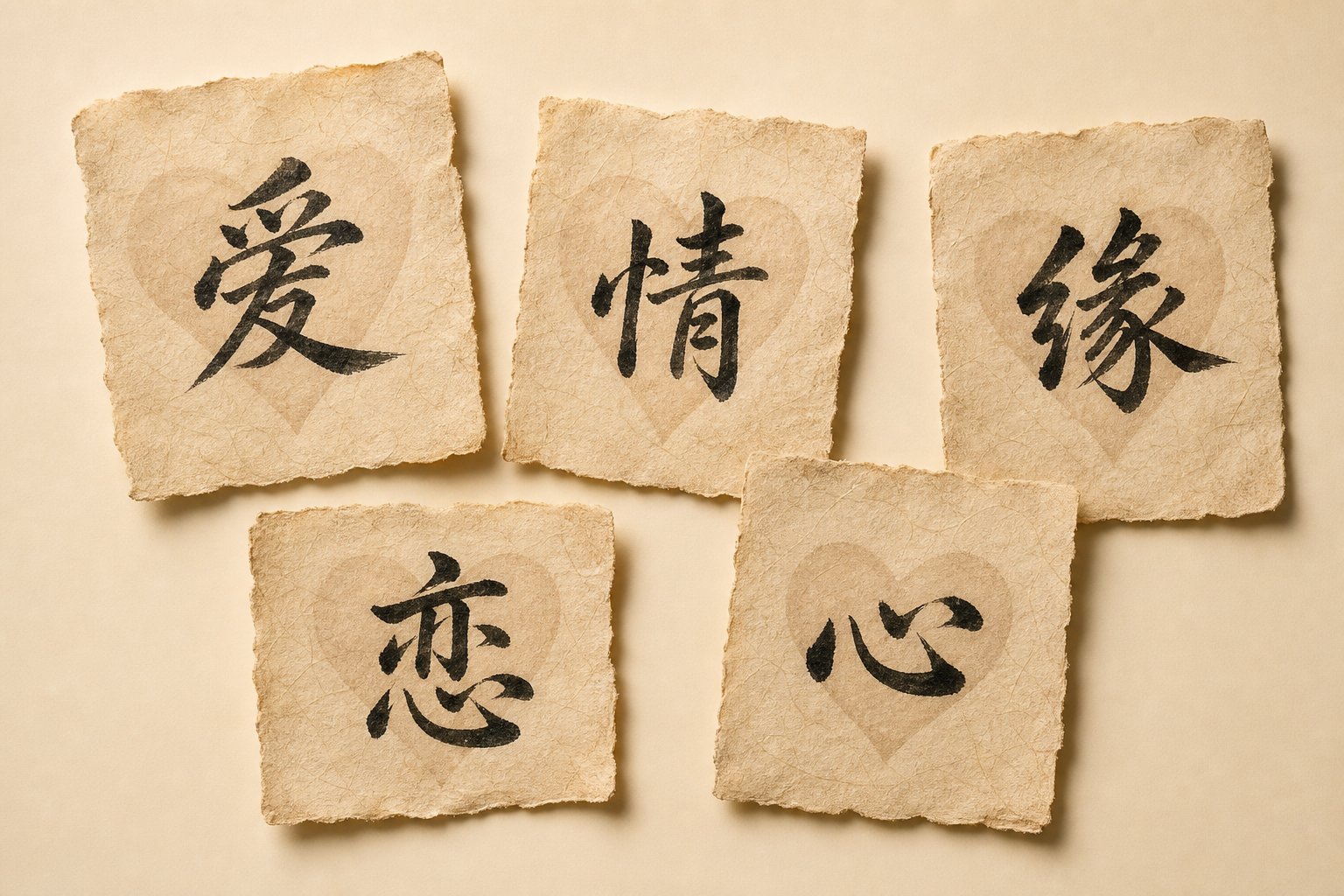
Think of these five characters as different colors on the same emotional palette. Each one says "loved in chinese," but the feeling behind it shifts dramatically.
爱 (ai) is the most universal. It covers romantic love, familial love, and even love for a country or an ideal. In han mandarin pronunciation, it sounds like "eye" with a falling tone. This is the character most people recognize, and it works beautifully in names for both boys and girls.
恋 (lian) carries a sense of longing and deep attachment. It suggests a love that lingers, the kind that pulls you back to someone or something. In names, it evokes devotion and emotional depth rather than casual affection.
慈 (ci) expresses compassionate, nurturing love. This is the love of a mother watching over her child, or the kindness of someone who gives without expecting return. It appears frequently in names meant to honor maternal warmth.
情 (qing) is broader than love alone. It encompasses affection, emotion, and the bonds between people. A name containing 情 suggests someone rich in feeling, emotionally generous, and deeply connected to others.
怜 (lian) conveys tender love mixed with compassion. It is the gentle ache you feel for someone vulnerable, the impulse to protect and care. In names, it suggests softness and empathy.
Each of these characters brings its own personality to a name. Understanding their meaning helps you move beyond generic choices and select something that truly reflects the kind of love you want your child's name to express.
| Character | Pinyin | Pronunciation | Literal Meaning | Type of Love |
|---|---|---|---|---|
| 爱 | ai | "eye" with falling tone | Love, to love | Universal: romantic, familial, patriotic |
| 恋 | lian | "lee-en" with falling tone | To long for, attachment | Longing, deep emotional attachment |
| 慈 | ci | "tsuh" with rising tone | Compassion, kindness | Maternal, nurturing compassion |
| 情 | qing | "ching" with rising tone | Emotion, affection | Emotional bonds, deep feeling |
| 怜 | lian | "lee-en" with rising tone | Tender pity, compassion | Gentle, protective tenderness |
The Heart Radical and How It Connects Love Characters
You'll notice something interesting if you look closely at the characters above. Most of them share a visual element: the heart radical. In Chinese, this radical appears in two forms. The full form 心 (xin) typically sits at the bottom of a character, while the abbreviated form 忄, sometimes called the "standing heart," appears on the left side.
This is not a coincidence. The heart radical is the 61st radical in the traditional Kangxi system, and its original meaning encompasses the physical heart, the mind, emotions, and the inner self. When it appears as a component in a character, it signals that the character relates to feelings, thoughts, or mental states.
Look at how it works in practice:
- 恋 (lian) contains 心 at the bottom, grounding the character in deep emotion
- 慈 (ci) places 心 at the bottom beneath 兹, visually showing compassion rooted in the heart
- 情 (qing) uses the standing heart radical 忄 on the left, marking it as an emotional concept
- 怜 (lian) also uses 忄 on the left, connecting it to tender feeling
Even 爱 contains 心 in its traditional form 愛, nestled in the middle of the character. The simplified version removed the heart component, which is a point of cultural discussion among those who prefer traditional characters.
For parents choosing chinese name and meanings related to love, this visual connection matters. Characters containing the heart radical wear their emotional nature openly. Anyone literate in Chinese can see at a glance that the name relates to feeling and the inner life.
Simplified vs. Traditional Characters for Love Names
Which version of a character should you use? The answer depends on your family's heritage and where the name will primarily be used.
Mainland China uses simplified characters, introduced in the 1950s and 1960s to increase literacy. Taiwan, Hong Kong, and Macau continue using traditional characters. Many overseas Chinese communities use one or the other depending on their family's origin.
For love-related characters, the differences range from subtle to significant:
- 爱 vs. 愛 is the most notable difference. The traditional form 愛 preserves the heart radical 心 in the center of the character. The simplified 爱 replaces it with 友 (friend). Some families feel strongly that the traditional form, with its visible heart, better represents their meaning.
- 恋 vs. 戀 shows a dramatic visual change. The traditional 戀 is far more complex, with 22 strokes compared to the simplified version's 10.
- 慈, 情, and 怜 remain identical or nearly identical in both systems, making them straightforward choices regardless of which script your family uses.
If your family has roots in Taiwan or Hong Kong, you will likely want the traditional forms for official documents and family records. For mainland Chinese heritage, simplified characters are standard. Many diaspora families register both versions, using simplified for practical purposes and traditional for ceremonial ones like red egg and ginger parties or ancestral records.
The key takeaway: when researching their meaning and selecting love characters for a name, confirm which script version your family prefers before finalizing. A name that looks elegant in one system may have a different visual balance in the other, and han mandarin pronunciation remains the same regardless of which written form you choose.
How Chinese Naming Works and Where Love Characters Fit
Knowing which characters express love is one thing. Knowing where those characters actually go inside a name is another. Chinese names follow a structure that differs fundamentally from Western naming conventions, and understanding that structure helps you place a love-meaning character exactly where it belongs.
How Chinese Names Are Structured
A Chinese name is compact. Most names consist of just two or three characters total, and every single syllable meaning something specific. There are no filler sounds or decorative syllables. Each character pulls its weight.
The structure follows a strict order: family name first, given name second. This is the opposite of English naming conventions, where the personal name leads. So when you see a name like Wang Aili, "Wang" is the surname and "Aili" is the given name. The family identity comes before the individual, reflecting a cultural value that runs deep in Chinese tradition.
Here is how the components break down:
- Family name (surname): Almost always a single character. Comes first. Examples: 王 (Wang), 李 (Li), 张 (Zhang), 陈 (Chen), 刘 (Liu). These five chinese surnames alone are shared by over 300 million people in mainland China.
- Given name: One or two characters. Comes after the surname. This is where love-meaning characters live. Example: 爱琳 (Ailin) as a two-character given name, or simply 爱 (Ai) as a single-character given name.
- Full name example: 王爱琳 (Wang Ailin) = surname 王 + given name 爱琳. Three characters total, which is the most common length.
When you are naming a baby in chinese tradition, you are working within this tight framework. A two-character surname like 欧阳 (Ouyang) exists but is rare. The vast majority of asian surnames are single characters, which means your creative space is the one or two characters of the given name.
One-Character vs. Two-Character Given Names
Should the given name be one character or two? Both options are legitimate, and each creates a different effect.
A single-character given name like 爱 (Ai) paired with a surname creates a two-character full name: 王爱 (Wang Ai). This is short, direct, and punchy. The love character stands alone and carries the entire weight of the name's personal meaning. However, single-character given names are less common today because they offer fewer opportunities to create unique combinations. With over a billion Chinese speakers, two-character given names provide more distinctiveness.
A two-character given name like 爱琳 (Ailin) gives you room to layer meanings. The love character combines with a second character to create something richer. You might pair 慈 (ci, compassion) with 恩 (en, grace) to get 慈恩, a name meaning "compassionate grace." This layering is where the art of Chinese naming really lives.
For families searching for pretty family names that honor their heritage, two-character given names offer the most flexibility. You can balance the emotional weight of a love character with something grounding, like a nature element or a virtue, creating a name that feels complete and harmonious.
Generational Names and Modern Approaches
Traditionally, many Chinese families used generational names. This means siblings and patrilineal cousins share one character in their given names, marking them as belonging to the same generation. For example, siblings named 家振妮 (Jia Zhenni) and 家振海 (Jia Zhenhai) share the character 振 (zhen) as their generational marker. Their cousins might be 家振华 (Jia Zhenhua) and 家振东 (Jia Zhendong), all connected by that shared syllable.
In this system, one character of the given name is predetermined by family tradition, and only the remaining character is freely chosen. If your family uses generational names, a love character could fill that free slot. If 振 is the generational character, you might create 振爱 (Zhen'ai), combining the family's generational identity with your personal wish for love.
Modern families, especially in diaspora communities, often skip generational naming. This gives parents full creative control over both characters in the given name. Among surnames asian families carry forward, the given name becomes the primary space for personal expression, and love-themed characters fit naturally into that space.
Why Tones Matter When Choosing a Name
Here is where many non-Chinese-speaking parents stumble. Mandarin Chinese has four tones, and the same romanized syllable can mean completely different things depending on which tone you use. This is not a minor pronunciation detail. It changes the word entirely.
Consider the classic example: the syllable "ma" has four distinct meanings based on tone.
| Tone | Pinyin | Character | Meaning |
|---|---|---|---|
| 1st (flat) | ma | 妈 | Mother |
| 2nd (rising) | ma | 麻 | Trouble / hemp |
| 3rd (dipping) | ma | 马 | Horse |
| 4th (falling) | ma | 骂 | To scold |
The same principle applies directly to love-related names. The syllable "ai" in the fourth tone (ai) means love. But "ai" in the first tone can mean sorrow or grief. If someone mispronounces your child's name with the wrong tone, the meaning shifts from something beautiful to something unfortunate.
This is also why asian surnames names can sound identical to English speakers but carry entirely different characters and meanings. Two families named "Li" might write it as 李 (plum tree) or 黎 (dawn), each with a different tone and meaning.
When selecting a love-themed name, pay attention to how the tones of each character interact. Chinese parents traditionally avoid pairing two characters with the same tone, especially two third tones together, because the combination can sound flat or awkward when spoken aloud. A name like 美恋 (Mei Lian), with a third tone followed by a fourth tone, flows more naturally than two consecutive falling tones.
Sounds complex? The practical takeaway is straightforward: always learn the correct tone for your chosen love character, practice saying the full name aloud with the surname, and listen for whether the tonal pattern feels smooth or choppy. This small effort ensures the name sounds as beautiful spoken as it looks written.
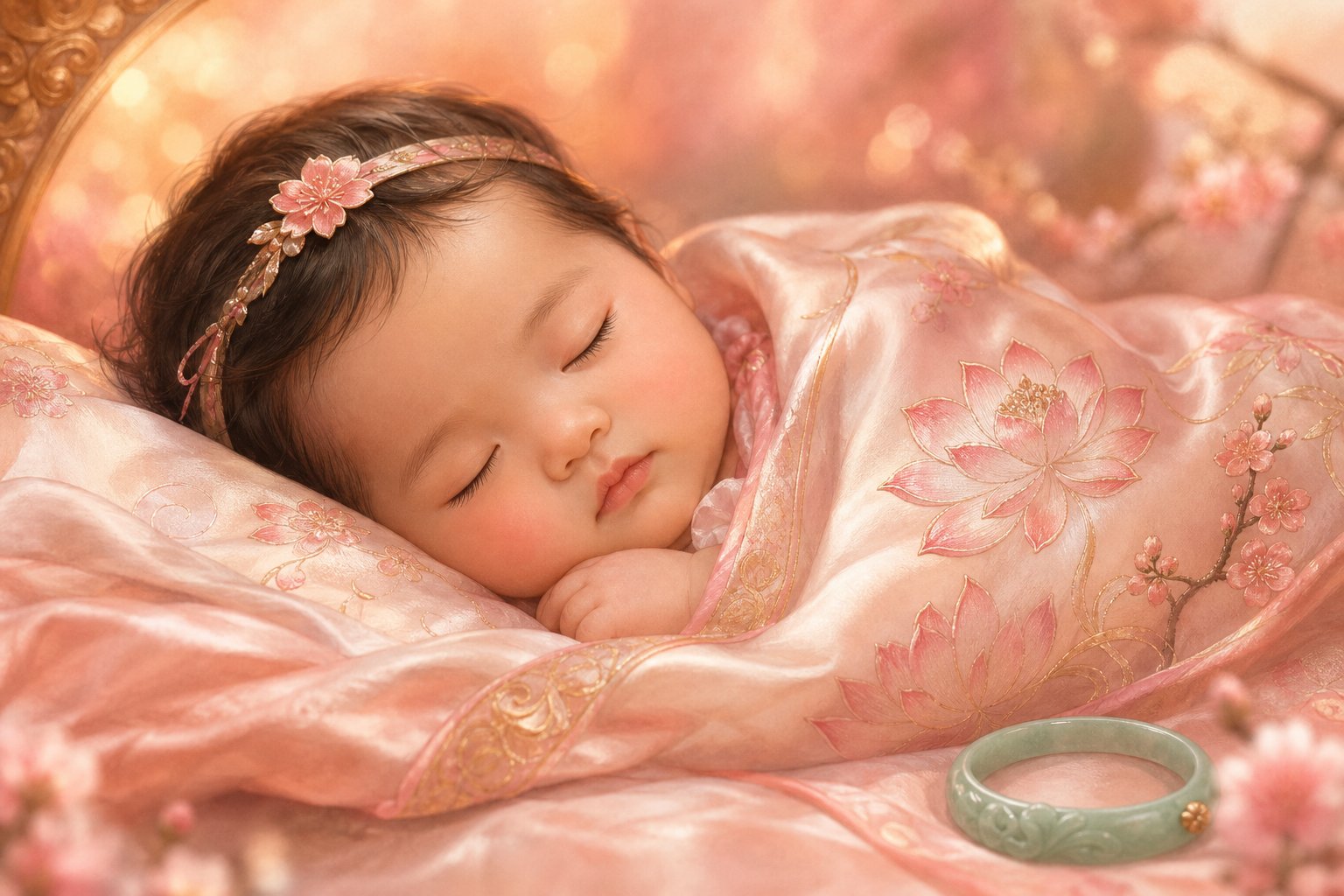
Chinese Girl Names Meaning Love Organized by Theme
With the structure and tonal principles in place, you can start exploring actual names. Rather than dumping an alphabetical chinese names list female readers have to sift through, the names below are grouped by the emotional flavor of love they express. This makes it easier to find a name that matches the specific feeling you want your daughter to carry.
Each entry includes the full characters, pinyin with tone marks, a pronunciation guide for English speakers, and a breakdown of what each character contributes. These are not random pairings. They reflect combinations that Chinese parents actually use, balancing meaning, sound, and visual elegance.
Girl Names Expressing Parental and Familial Love
These chinese girl names center on the love between parent and child, the protective warmth of family, and the deep bond of belonging. Characters like 爱 (ai) and 恩 (en, grace or kindness) appear frequently here because they speak directly to the relationship between a parent and the child they are naming.
- 爱琳 (Ai Lin) - "eye-leen" - Love (爱) + beautiful jade (琳). A classic choice that pairs universal love with the preciousness of jade, suggesting a child treasured like a gem.
- 爱华 (Ai Hua) - "eye-hwah" - Love (爱) + magnificent (华). Carries a sense of loving something grand, often associated with love for family and heritage.
- 慈恩 (Ci En) - "tsuh-un" - Compassion (慈) + grace (恩). Evokes a mother's compassionate kindness, a name that honors the nurturing love a parent gives.
- 恩爱 (En Ai) - "un-eye" - Grace (恩) + love (爱). Literally "gracious love," this name describes the devoted affection between family members.
- 爱宁 (Ai Ning) - "eye-neeng" - Love (爱) + peaceful (宁). Expresses the wish for a child to live surrounded by peaceful, steady love.
Girl Names Expressing Gentle Affection and Tenderness
If you are drawn to something softer, these chinese names for girls use characters that convey tenderness, longing, and quiet emotional depth. They suit parents who want elegant female names that whisper rather than shout.
- 美恋 (Mei Lian) - "may-lee-en" - Beautiful (美) + longing love (恋). Combines beauty with deep attachment, creating a name that feels both graceful and emotionally rich.
- 怜秀 (Lian Xiu) - "lee-en-shyo" - Tender love (怜) + elegant (秀). Pairs gentle compassion with refinement, a name for a girl whose kindness is her grace.
- 情雅 (Qing Ya) - "ching-yah" - Affection (情) + elegant (雅). Suggests someone whose emotional warmth is expressed with poise and sophistication.
- 柔爱 (Rou Ai) - "row-eye" - Gentle (柔) + love (爱). Directly names the quality of soft, yielding love. Simple and immediately understood.
- 恋雪 (Lian Xue) - "lee-en-shweh" - Longing (恋) + snow (雪). A poetic pairing that connects devotion with purity, evoking quiet beauty.
Girl Names Expressing Compassion and Devotion
These female chinese names lean toward selfless love, the kind that gives without keeping score. Characters like 慈 (ci) and 情 (qing) anchor these names in emotional generosity and deep commitment.
- 慈慧 (Ci Hui) - "tsuh-hway" - Compassion (慈) + wisdom (慧). A name suggesting that true compassion requires wisdom, and true wisdom includes compassion.
- 爱莲 (Ai Lian) - "eye-lee-en" - Love (爱) + lotus (莲). The lotus symbolizes purity rising from muddy water, so this name suggests love that remains pure regardless of circumstances.
- 情怡 (Qing Yi) - "ching-ee" - Affection (情) + joy (怡). Names the happiness that comes from deep emotional connection.
- 慈心 (Ci Xin) - "tsuh-sheen" - Compassion (慈) + heart (心). Literally "compassionate heart." Direct, powerful, and unmistakable in meaning.
- 恋芳 (Lian Fang) - "lee-en-fahng" - Devotion (恋) + fragrance (芳). Connects lasting attachment with virtue, since 芳 traditionally symbolizes moral beauty in chinese female names.
| Chinese Characters | Pinyin | Pronunciation Guide | Meaning Breakdown | Type of Love |
|---|---|---|---|---|
| 爱琳 | Ai Lin | eye-leen | Love + beautiful jade | Parental / familial |
| 爱华 | Ai Hua | eye-hwah | Love + magnificent | Parental / familial |
| 慈恩 | Ci En | tsuh-un | Compassion + grace | Parental / familial |
| 恩爱 | En Ai | un-eye | Grace + love | Parental / familial |
| 爱宁 | Ai Ning | eye-neeng | Love + peaceful | Parental / familial |
| 美恋 | Mei Lian | may-lee-en | Beautiful + longing love | Gentle affection |
| 怜秀 | Lian Xiu | lee-en-shyo | Tender love + elegant | Gentle affection |
| 情雅 | Qing Ya | ching-yah | Affection + elegant | Gentle affection |
| 柔爱 | Rou Ai | row-eye | Gentle + love | Gentle affection |
| 恋雪 | Lian Xue | lee-en-shweh | Longing + snow | Gentle affection |
| 慈慧 | Ci Hui | tsuh-hway | Compassion + wisdom | Compassion / devotion |
| 爱莲 | Ai Lian | eye-lee-en | Love + lotus | Compassion / devotion |
| 情怡 | Qing Yi | ching-ee | Affection + joy | Compassion / devotion |
| 慈心 | Ci Xin | tsuh-sheen | Compassion + heart | Compassion / devotion |
| 恋芳 | Lian Fang | lee-en-fahng | Devotion + fragrance | Compassion / devotion |
You will notice that many of these chinese names girl parents choose share a pattern: one character carries the love meaning while the second character adds texture, whether that is nature imagery, a virtue, or a sensory quality like fragrance or brightness. This pairing principle is not unique to love names. It is how all two-character given names work. But love characters are especially versatile partners because they pair naturally with almost any complementary character.
The question that often follows is whether boys' names work the same way, or whether certain love characters shift in meaning or appropriateness when applied to a son rather than a daughter.
Chinese Boy Names That Carry the Meaning of Love
The short answer is yes, love characters work beautifully in boys' names, but the conventions around which characters feel masculine versus feminine are worth understanding before you choose. Chinese boy names meaning love tend to frame love differently. Rather than tenderness or longing, they lean toward love expressed as benevolence, moral duty, and strength of character. The emotional core is the same. The outward expression shifts.
In traditional Chinese naming, love in a boy's name is often expressed through action rather than feeling. Characters like 仁 (benevolent love) and 慈 (compassionate love) frame love as something a man does for his community, not just something he feels privately. This reflects Confucian ideals where masculine virtue includes caring for others through righteous conduct.
That said, modern Chinese parents are increasingly comfortable crossing these lines. A boy named with 爱 (ai) is no longer unusual, and characters once reserved for girls' names appear in boys' names when the overall combination feels balanced. The conventions are guidelines, not rules.
Boy Names Expressing Benevolent and Noble Love
These asian names center on 仁 (ren, benevolence) and 爱 (ai, love) paired with characters that suggest leadership, service, and moral strength. They carry the idea that love is not passive. It is something you extend outward to family, community, and the world.
- 仁爱 (Ren Ai) - "run-eye" - Benevolence (仁) + love (爱). This name directly states the Confucian ideal of compassionate love for all people. It is a bold, philosophical choice.
- 爱民 (Ai Min) - "eye-meen" - Love (爱) + people (民). Expresses love directed toward the community. Historically associated with leaders who serve their people selflessly.
- 爱国 (Ai Guo) - "eye-gwoh" - Love (爱) + nation (国). A patriotic name expressing love for one's country and heritage. Common among families with strong cultural pride.
- 仁杰 (Ren Jie) - "run-jyeh" - Benevolence (仁) + outstanding (杰). Pairs loving-kindness with excellence, suggesting someone whose greatness comes from their compassion.
- 爱博 (Ai Bo) - "eye-bwoh" - Love (爱) + broad (博). Suggests expansive, generous love. The character 博 adds intellectual depth, implying someone whose love is informed by wide knowledge.
Boy Names Expressing Strength Through Compassion
These names use 慈 (ci, compassion) and 情 (qing, deep feeling) in combinations that balance emotional warmth with traditionally masculine qualities like brightness, wisdom, and clarity. The ming meaning in these names often refers to brightness or wisdom, depending on which character is used, and it pairs naturally with love characters to create names suggesting enlightened compassion.
- 明慈 (Ming Ci) - "meeng-tsuh" - Bright/wise (明) + compassion (慈). A name meaning "enlightened compassion." The character 明 combines sun and moon, suggesting someone whose kindness is guided by clear understanding.
- 慈安 (Ci An) - "tsuh-ahn" - Compassion (慈) + peace (安). Expresses the idea that true compassion creates stability. A grounded, calm name with emotional depth.
- 情志 (Qing Zhi) - "ching-jrr" - Affection (情) + aspiration (志). Connects deep feeling with determination. This name suggests someone whose emotional bonds fuel their ambition.
- 慈铭 (Ci Ming) - "tsuh-meeng" - Compassion (慈) + inscribed motto (铭). Implies compassion so deep it is engraved permanently, like a guiding principle carved in stone.
- 爱泽 (Ai Ze) - "eye-zuh" - Love (爱) + nourishing waters (泽). Evokes love that sustains others the way water nourishes a landscape. A generous, life-giving name.
Which Love Characters Work Best for Boys
Not every love character carries the same weight in a boy's name. Here is how the main options break down in terms of traditional gender associations:
- 仁 (ren) - Strongly masculine. Rooted in Confucian philosophy, it implies moral duty and active benevolence. Works as a one syllable boy names option when used as a standalone given name: 王仁 (Wang Ren).
- 爱 (ai) - Gender-neutral. Works for both boys and girls depending on the pairing character. When combined with strong or action-oriented characters like 民, 国, or 博, it reads as masculine.
- 慈 (ci) - Traditionally feminine in isolation, but reads masculine when paired with characters like 明, 铭, or 安. The combination matters more than the individual character.
- 情 (qing) - Slightly feminine lean, but works in boys' names when paired with aspirational characters like 志 (ambition) or 远 (far-reaching).
- 恋 (lian) - Strongly feminine. Rarely used in boys' names because its connotation of romantic longing conflicts with traditional masculine ideals. Modern parents occasionally use it, but it remains uncommon.
The pattern is clear: love characters that emphasize action, duty, and outward generosity pair most naturally with boys' names, while those emphasizing longing and tenderness lean feminine. But the second character in the combination does heavy lifting. A character like 慈 that might feel soft on its own becomes grounded and strong when paired with 铭 (inscribed) or 明 (bright).
| Chinese Characters | Pinyin | Pronunciation Guide | Meaning Breakdown | Type of Love |
|---|---|---|---|---|
| 仁爱 | Ren Ai | run-eye | Benevolence + love | Noble / universal |
| 爱民 | Ai Min | eye-meen | Love + people | Civic / selfless |
| 爱国 | Ai Guo | eye-gwoh | Love + nation | Patriotic devotion |
| 仁杰 | Ren Jie | run-jyeh | Benevolence + outstanding | Noble / aspirational |
| 爱博 | Ai Bo | eye-bwoh | Love + broad | Expansive generosity |
| 明慈 | Ming Ci | meeng-tsuh | Bright + compassion | Enlightened compassion |
| 慈安 | Ci An | tsuh-ahn | Compassion + peace | Nurturing stability |
| 情志 | Qing Zhi | ching-jrr | Affection + aspiration | Driven devotion |
| 慈铭 | Ci Ming | tsuh-meeng | Compassion + inscribed motto | Enduring compassion |
| 爱泽 | Ai Ze | eye-zuh | Love + nourishing waters | Generous / life-giving |
You will notice that many of these names pair a love character with something concrete: people, nation, water, stone, light. This grounding effect is what gives boys' love names their distinctive feel. The love is not abstract. It is directed somewhere, toward someone, for a purpose.
Of course, love in Chinese naming extends far beyond the literal characters for love itself. Many parents prefer to express affection indirectly, through characters meaning cherish, treasure, or precious, words that say "you are loved" without spelling it out so directly.
Love-Adjacent Names That Express Cherish and Treasure
In Chinese culture, the most powerful expressions of love are often indirect. Rather than stating "I love you" outright, a parent might name their child with a character meaning "precious" or "treasured," letting the implication speak for itself. This indirectness is not avoidance. It is a deeply traditional way of showing affection through metaphor, nature imagery, and the language of value. When something preciously means "held close and protected," naming a child with that concept says everything without saying the word love at all.
These love-adjacent characters open up a much wider naming palette. They let you express the feeling behind love, the cherishing, the warmth, the sense that this child is irreplaceable, without relying solely on 爱 and its direct synonyms.
Names Meaning Cherish and Treasure
Several characters capture the act of holding something dear. They express love through the lens of value: you are so important to me that I will protect and keep you always.
惜 (xi) means to cherish, to treasure, to feel that something is too precious to waste or lose. It carries a gentle urgency, the sense of holding tightly to what matters. In names, it suggests a child whose presence is deeply valued.
宝 (bao) translates directly to treasure or jewel. This is one of the most recognizable characters in Chinese baby naming. It appears in the common term of endearment 宝贝 (baobei, "treasure" or "darling"), making it immediately warm and familiar. The precious meaning here is literal: this child is my greatest treasure.
珍 (zhen) means precious, rare, or to value highly. It shares the jade radical 王 (which appears in many gem-related characters), visually connecting it to things of extraordinary worth. A name containing 珍 tells the world this child is rare and irreplaceable.
珂 (ke) refers to a type of white jade or precious stone. Less common than 宝 or 珍, it offers a more distinctive option for parents who want the precious meaning without choosing the most obvious character.
Here are names built from these cherishing characters:
- 惜缘 (Xi Yuan) - "shee-ywen" - Cherish (惜) + fate/destiny (缘). Means "cherishing the destined connection," expressing gratitude for the bond between parent and child.
- 宝怡 (Bao Yi) - "bow-ee" - Treasure (宝) + joy (怡). A treasured joy. Simple, warm, and immediately understood.
- 珍妮 (Zhen Ni) - "jun-nee" - Precious (珍) + graceful (妮). Works beautifully as a cross-cultural name since it sounds similar to "Jenny" while carrying deeper Chinese meaning.
- 珂瑶 (Ke Yao) - "kuh-yow" - Precious jade (珂) + beautiful jade (瑶). Doubles down on the imagery of rare gems, creating a name that radiates value and beauty.
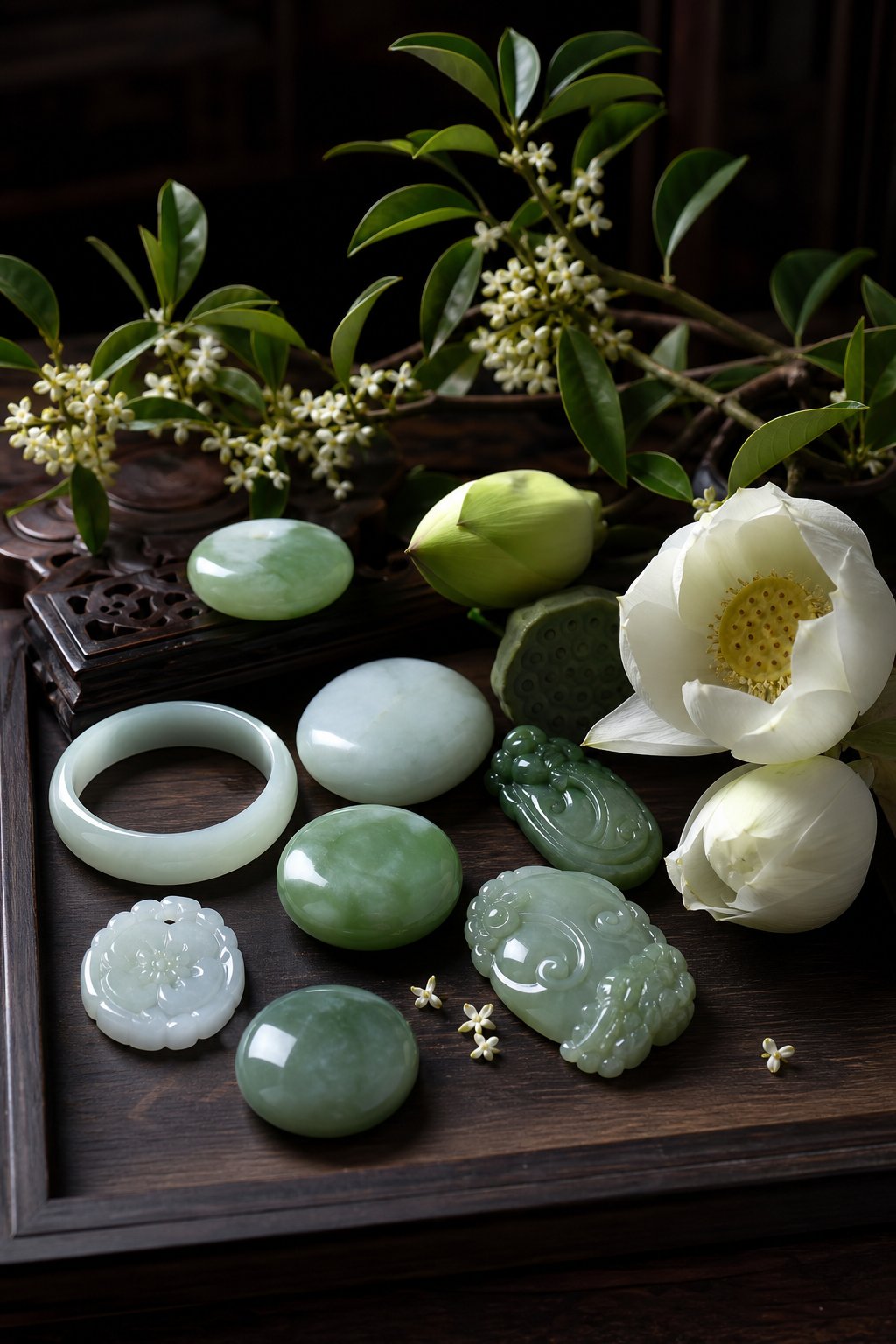
Jade Names as Symbols of Precious Love
Jade holds a unique position in Chinese culture. For thousands of years, it has symbolized virtue, purity, beauty, and enduring love. When a parent gives a child a jade-related name, they are drawing on this deep cultural association. The jade name meaning goes far beyond "a green stone." It implies moral excellence, resilience, and something so valuable it transcends material worth.
Several characters reference jade directly or indirectly:
玉 (yu) is the most straightforward jade character. It means jade in its purest sense and carries connotations of moral perfection and beauty. In classical Chinese poetry, comparing someone to jade is the highest compliment.
瑾 (jin) refers specifically to a beautiful jade stone. It is more literary and less common than 玉, giving it an elegant, distinctive quality. Parents who want a jade name meaning without choosing the most obvious character often reach for 瑾.
琪 (qi) means fine jade or rare and beautiful. It appears frequently in girls' names and carries a sense of something extraordinary and precious.
瑶 (yao) refers to precious jade or a jade-like beauty. It suggests something luminous and otherworldly, a child who seems to glow with inner light.
| Chinese Characters | Pinyin | Pronunciation Guide | Connection to Love |
|---|---|---|---|
| 惜缘 | Xi Yuan | shee-ywen | Cherishing the bond of destiny |
| 宝怡 | Bao Yi | bow-ee | Treasured joy, a beloved child |
| 珍妮 | Zhen Ni | jun-nee | Precious and graceful, deeply valued |
| 珂瑶 | Ke Yao | kuh-yow | Rare jade upon jade, irreplaceable worth |
| 玉婷 | Yu Ting | yoo-teeng | Jade-like grace, treasured beauty |
| 瑾萱 | Jin Xuan | jeen-shwen | Beautiful jade + daylily (mother's love flower) |
| 琪华 | Qi Hua | chee-hwah | Fine jade + splendor, precious brilliance |
| 暖心 | Nuan Xin | nwan-sheen | Warm heart, love expressed as warmth |
| 温柔 | Wen Rou | wun-row | Gentle warmth, tender affection |
| 善美 | Shan Mei | shahn-may | Kindness + beauty, love through goodness |
Characters expressing warmth and kindness round out this category. 暖 (nuan) means warm, and in names it evokes the physical sensation of being loved, like sunlight or a held hand. 温 (wen) carries a similar warmth but with added gentleness and mildness. 善 (shan) means kindness or goodness, framing love as an ethical practice rather than just a feeling. A child named with 善 is wished a life of active, generous love toward others.
Nature and Flower Names Connected to Love
Chinese poetry and naming tradition have always used nature and meaning together as a single expressive unit. Flowers, in particular, carry specific emotional associations that Chinese-speaking families recognize instantly. For parents seeking flower girl names with depth beyond surface beauty, these botanical characters connect directly to love, devotion, and emotional richness.
- 莲 (lian) - Lotus: Symbolizes purity and devoted love. The lotus rises clean from muddy water, representing love that remains untainted by difficulty. One of the most beloved flower girl names in Chinese tradition.
- 梅 (mei) - Plum blossom: Blooms in winter when all other flowers have died. Represents perseverance and faithful love that endures hardship. A name meaning "love that does not give up."
- 兰 (lan) - Orchid: Symbolizes refined beauty, integrity, and deep affection. In classical Chinese culture, giving someone an orchid expressed love and respect simultaneously.
- 茉 (mo) - Jasmine: Associated with sweetness, purity, and maternal love. The jasmine's fragrance is gentle but persistent, like quiet, steady affection.
- 萱 (xuan) - Daylily: Known as the "mother's flower" in Chinese tradition. Naming a daughter with 萱 directly honors maternal love and the bond between mother and child.
- 芙 (fu) - Hibiscus: Connected to beauty and warmth. In traditional flower meanings hibiscus represents delicate beauty and the fleeting preciousness of youth, making it a tender choice for a daughter's name.
- 桂 (gui) - Osmanthus: Its sweet fragrance symbolizes love, nobility, and harvest abundance. Often associated with names that mean moon because osmanthus trees are said to grow on the moon in Chinese mythology.
The moon connection deserves a brief note. In Chinese culture, the moon represents reunion, longing, and the love between separated family members. The Mid-Autumn Festival is essentially a celebration of familial love under the full moon. Characters like 月 (yue, moon) and poetic concepts like moon blossom imagery appear in names that express love through celestial beauty. A name like 月桂 (Yue Gui, "moon osmanthus") or 月华 (Yue Hua, "moonlight") carries this romantic, longing quality, perfect for parents drawn to names that mean moon and its associations with love across distance.
What makes all these love-adjacent names powerful is their layered quality. A name like 瑾萱 does not simply say "love." It says "you are as precious as beautiful jade, and you are connected to the tradition of maternal devotion." That kind of compressed meaning, where nature, value, and emotion intertwine, is what Chinese naming does at its best.
Choosing the right love-adjacent character is only half the work, though. The real art emerges when you pair it with a second character to create a two-character given name that balances sound, meaning, and visual harmony.
Creating Harmonious Two-Character Names With Love
Pairing a love character with a complementary second character is where naming becomes a craft. A single character carries meaning, but two characters together create a relationship, a tiny narrative compressed into a name. The goal is not just to stack two nice-sounding words. It is to build a chinese name with meaning that feels unified across sound, appearance, and emotional resonance.
Think of it like composing a two-note chord. Each note is fine alone, but together they either harmonize or clash. The same principle applies to two-character given names. A love character like 爱 paired with the wrong companion can sound flat, look visually lopsided, or create an unintended meaning. Paired well, it becomes something greater than either character alone.
Principles of Harmonious Character Pairing
Three dimensions govern whether a two-character combination works. Traditional Chinese naming considers all three simultaneously, and skipping any one of them produces a name that feels incomplete.
Meaning harmony is the most intuitive. The two characters should create a coherent image or idea when read together. Pairing love with virtue (慈 + 慧 = compassionate wisdom), love with nature (爱 + 泽 = love that nourishes like water), or love with aspiration (仁 + 杰 = benevolent excellence) all work because the meanings complement rather than contradict each other. A name combining love with a character meaning "sharp blade" or "fierce battle" would feel dissonant unless the family has a specific cultural reason for the pairing.
Tonal balance determines how the name sounds when spoken aloud. This is where many parents who do not speak Mandarin need guidance, and it is covered in detail below.
Visual balance refers to how the characters look when written side by side. Chinese characters occupy equal-sized square spaces, but their internal complexity varies enormously. A character with 4 strokes next to one with 20 strokes creates a visual mismatch, like pairing a delicate watercolor with a dense oil painting in the same frame. The traditional approach to Chinese naming treats visual form as one of four essential dimensions, recognizing that a name will be written on documents, red envelopes, and seals throughout a person's life.
Tonal Balance in Two-Character Names
Mandarin's four tones create a natural musicality in speech. When you string two characters together in a given name, and then add the surname in front, you are creating a three-tone sequence that people will hear thousands of times. It needs to flow.
The core guidelines are straightforward:
- Avoid two consecutive third tones. Two dipping tones back-to-back create an awkward rhythm. If your love character is third tone (like 美, měi), pair it with a first, second, or fourth tone character.
- Vary the tonal pattern. A sequence like 4th-4th-4th (all falling) sounds monotone and heavy. Mixing tones, such as a rising tone followed by a falling tone, creates natural movement.
- Test with the surname. The given name does not exist in isolation. Say the full name aloud: surname + both given name characters. Does it rise and fall naturally, or does it stumble? For example, 王爱泽 (Wang Ai Ze) moves through second tone, fourth tone, then second tone, creating a pleasing wave pattern.
- Listen for homophones. The combined syllables of the full name should not accidentally sound like a common word or phrase with negative connotations.
Names with sun meaning characters like 阳 (yang, second tone) or 晨 (chen, second tone) pair well with fourth-tone love characters like 爱 because the rising-falling pattern creates energy. Similarly, names that mean water, such as those using 泽 (ze, second tone) or 溪 (xi, first tone), offer tonal variety when combined with love characters in other tones.
Example Combinations With Love Characters
Here is a step-by-step process for building a balanced two-character given name:
- Choose your love character. Decide which shade of love you want: universal love (爱), compassion (慈), benevolence (仁), or cherishing (惜).
- Identify the tone of your love character. This determines which tones work best for the second character. For example, 慈 is second tone, so avoid pairing it with another second-tone character.
- Select a complementary meaning category. Nature imagery, virtues, aspirations, or sensory qualities (brightness, warmth, fragrance) all pair naturally with love.
- Check the stroke count balance. If your love character is visually complex (like 慈 at 13 strokes), consider a simpler second character (like 安 at 6 strokes) for visual breathing room.
- Say the full name aloud with your surname. Listen for tonal flow, awkward sound combinations, and unintended homophones. If it sounds smooth across a room, it passes.
To see this in action, here is one love character, 慈 (ci, compassion), paired with five different complementary characters. Notice how each pairing creates a completely different name personality while maintaining the core theme of love:
| Combination | Pinyin | Complementary Character Meaning | Combined Name Meaning | Tonal Pattern |
|---|---|---|---|---|
| 慈阳 | Ci Yang | Sun / sunlight (names with meaning of sun) | Compassion bright as sunlight | 2nd + 2nd (acceptable) |
| 慈安 | Ci An | Peace / stability | Compassion that brings peace | 2nd + 1st (smooth) |
| 慈泽 | Ci Ze | Nourishing water (names that mean water) | Compassion that nourishes like rain | 2nd + 2nd (acceptable) |
| 慈瑾 | Ci Jin | Beautiful jade / elegant meaning | Compassion precious as jade | 2nd + 3rd (good contrast) |
| 慈恒 | Ci Heng | Eternal / enduring | Everlasting compassion | 2nd + 2nd (acceptable) |
Each combination takes the same root character and sends it in a different direction. 慈阳 feels warm and outward-facing, perfect for a child you hope will radiate kindness. 慈瑾 feels more refined and inward, suggesting compassion as a personal virtue of elegant meaning. 慈泽 connects love to the natural world, evoking generosity that flows freely like water.
This is the creative heart of Chinese naming. You are not picking from a fixed list. You are composing. And the composition must work not just on paper but in the real world, where your child's name will be called across playgrounds, written on diplomas, and spoken in introductions for decades to come.
Of course, for bicultural families, there is an additional layer of complexity. The name also needs to function across languages and cultural contexts, which introduces a whole new set of considerations around phonetic compatibility and cross-cultural perception.
Cross-Cultural Naming Tips for Bicultural Families
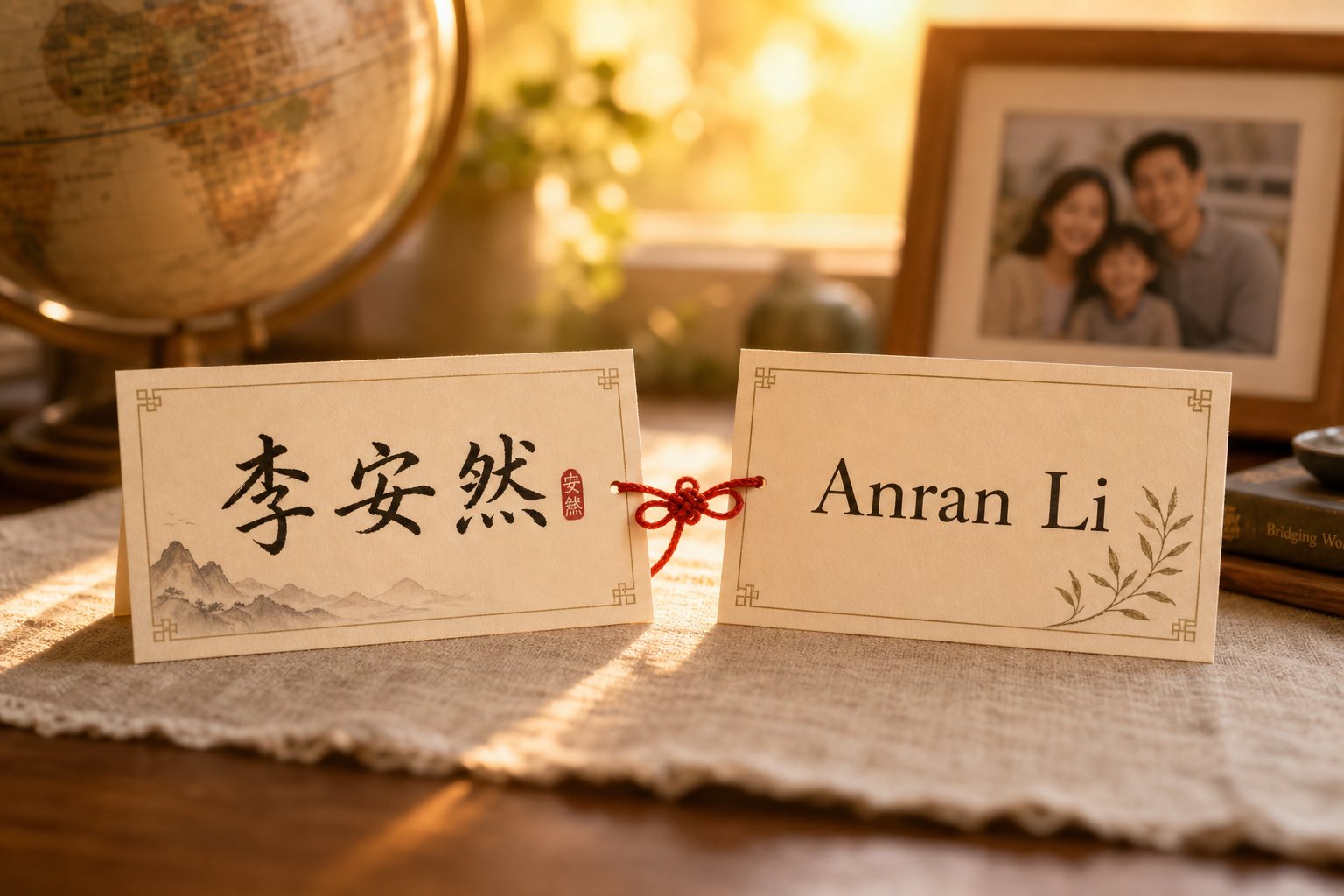
A name that sounds beautiful in Mandarin still needs to survive roll call at an English-speaking school. For bicultural families, the naming challenge doubles: you want a chinese name for my love that honors heritage and carries emotional depth, but you also need something that works when a non-Chinese speaker encounters it for the first time. These two goals are not in conflict. They just require a bit more intentional planning.
Pairing Chinese Love Names With English Names
Most bicultural families take one of three approaches when integrating a Chinese love name into their child's identity. Each has trade-offs, and the right choice depends on how prominently you want the Chinese name to function in daily life.
- Chinese name as the legal first name: Names like Ai (爱), Ren (仁), or Mei (美) are short enough to work as everyday first names in English-speaking contexts. They are easy to spell, easy to pronounce, and carry their full Chinese meaning intact. This approach works best with one-syllable or two-syllable names that do not contain sounds unfamiliar to English speakers.
- Chinese name as a middle name: A longer or more tonally complex name like Cihui (慈慧) or Ailin (爱琳) can sit comfortably as a middle name behind an English first name. The child uses their English name daily but carries the Chinese love name on official documents and within the family. Many families find this preserves cultural meaning without creating pronunciation friction.
- Separate cultural name: Some families maintain a completely independent Chinese name that exists outside the legal Western name entirely. This is common practice among Chinese people who use different names across different contexts, reverting to their original Chinese name whenever speaking or writing in Chinese.
For parents who want a single name that bridges both worlds, look for love-themed names with phonetic overlap. Aileen (爱琳, Ai Lin) works because it sounds like the English name Eileen. Renee pairs naturally with 仁 (Ren). Meilin (美恋) echoes familiar English sounds while carrying layered Chinese meaning. These crossover names give your child a story to tell in either language.
How Love Names Are Perceived in Modern China vs. Abroad
Context shapes how a name lands. In mainland China, love-themed names are common but carry generational associations. Names with 爱国 (love for country) or 爱民 (love for the people) feel distinctly mid-twentieth century. Younger Chinese parents tend toward subtler expressions of love, choosing characters like 惜 (cherish), 暖 (warmth), or jade-related characters that imply preciousness without stating love directly.
In diaspora communities, the calculus shifts. A name like 爱琳 (Ailin) reads as a proud cultural statement rather than a dated choice. Overseas families often feel freer to use direct love characters because the name functions primarily within the family rather than in a fully Chinese-speaking social environment. The name becomes a private inheritance, a connection to roots, rather than something measured against current mainland naming trends.
This difference matters when grandparents or relatives in China weigh in on name choices. What feels meaningful to a family in Toronto or Sydney might strike a Shanghai grandmother as old-fashioned. Neither perspective is wrong. They simply reflect different naming ecosystems.
Practical Tips for Bicultural Families
When you are narrowing down your options, these strategies help ensure the name works across cultures without sacrificing depth:
- Test pronunciation with non-Chinese friends. Say the name aloud and ask them to repeat it. If they consistently mangle it or hesitate, consider whether a simpler alternative exists. Names with Q, X, or Zh sounds (like Qing or Zhen) require coaching that not everyone will remember.
- Consider syllable count for daily use. Short names travel more easily. Among 3 letter girl names that work cross-culturally, Mei (美), Xin (心), and Yan (燕) all carry love-adjacent meanings and fit naturally into English conversation. For parents drawn to long girl names with more elaborate meaning, options like Ailian (爱莲) or Ciying (慈莹) work beautifully but may need a nickname for casual settings.
- Write out the full legal name in Western order. Check that the Chinese given name does not accidentally create an awkward combination with the English first name or surname. Say the entire sequence aloud quickly, listening for unintended word blends.
- Prepare a one-sentence meaning explanation. Your child will be asked "what does your name mean?" hundreds of times. Give them a clear, confident answer. "It means compassionate heart" or "it means treasured jade" gives people an immediate emotional connection to the name.
- Respect both naming traditions equally. The Chinese name is not a decorative add-on to the "real" English name. Treat it with the same care and intentionality you would give any name your child will carry for life.
The strongest bicultural names honor heritage without creating daily friction. Your child should feel proud explaining their name, not exhausted by it.
Choosing unique girl names or distinctive boy names that bridge Chinese and English is not about compromise. It is about finding the intersection where sound, meaning, and cultural identity overlap naturally. The love characters explored throughout this guide, from 爱 to 慈 to 惜, all offer pathways into that intersection. Some are phonetically simple enough to serve as standalone names in any context. Others work best tucked into a middle name or kept as a family name spoken at home.
What matters most is that the name carries the blessing you intend. Whether your child grows up in Beijing, Brisbane, or Boston, a name rooted in love speaks clearly in every language. The characters may need explaining, but the feeling behind them never does. That is the enduring power of choosing asian girl names and elegant girl names built on love: the meaning transcends the pronunciation, and the intention outlasts any awkward first introduction.
Frequently Asked Questions About Chinese Baby Names Meaning Love
1. What is the most common Chinese character for love used in baby names?
The character 爱 (ai, pronounced like 'eye' with a falling tone) is the most widely recognized and versatile love character in Chinese naming. It covers romantic, familial, and universal love, making it suitable for both boys and girls. However, Chinese offers several other love characters like 慈 (compassion), 仁 (benevolence), and 恋 (longing), each expressing a distinct emotional shade that parents can choose based on the specific type of love they wish to convey.
2. Can boys have Chinese names that mean love?
Absolutely. Chinese boy names meaning love typically frame the emotion through action and moral duty rather than tenderness. Characters like 仁 (ren, benevolent love) and 爱 paired with strong complementary characters such as 民 (people), 国 (nation), or 博 (broad) create masculine names rooted in Confucian ideals of compassionate leadership. Modern parents are also increasingly comfortable using traditionally softer characters like 慈 in boys' names when balanced with grounding partners like 明 (bright) or 铭 (inscribed).
3. How do I choose a Chinese love name that works in English-speaking countries?
Focus on names with sounds familiar to English speakers and avoid characters requiring Mandarin-specific sounds like Q, X, or Zh. Short names like Ai (爱), Mei (美), or Ren (仁) function well as legal first names. Longer options like Ailin (爱琳, similar to Eileen) offer phonetic crossover appeal. You can also place the Chinese name as a middle name behind an English first name, preserving cultural meaning on documents while avoiding daily pronunciation challenges.
4. What is the difference between simplified and traditional Chinese characters for love names?
The most significant difference involves 爱 (simplified) versus 愛 (traditional). The traditional form preserves the heart radical 心 visibly within the character, which many families feel better represents the meaning of love. Mainland China uses simplified characters, while Taiwan, Hong Kong, and Macau use traditional. Characters like 慈, 情, and 怜 remain nearly identical in both systems. Your family's regional heritage typically determines which version to use for official records.
5. Are there Chinese names that express love indirectly without using the character 爱?
Yes, and indirect expressions of love are deeply traditional in Chinese culture. Characters meaning cherish (惜), treasure (宝), precious (珍), and jade (玉, 瑾) all communicate 'you are loved' through the language of value. Nature imagery also works: 莲 (lotus) symbolizes devoted love, 梅 (plum blossom) represents enduring love, and 萱 (daylily) is known as the mother's flower. These indirect choices often feel more poetic and culturally nuanced than using 爱 directly.