Why Name Etiquette on Chinese Business Cards Matters More Than You Think
Imagine walking into a meeting in Shanghai, confidently handing over your card, and watching your potential partner's expression shift from interest to quiet discomfort. You didn't say anything wrong. You didn't fumble the handshake. But the way you handled their name card, or the way your own card presented your name, just cost you credibility before the conversation even started.
In Chinese business culture, a name card (known as "Ming Pian" or 名片) carries weight that goes far beyond contact details. It functions as a physical extension of the person's identity, professional standing, and reputation. Getting the name etiquette right on that small rectangle of paper is one of the fastest ways to build trust in your first impression at a Chinese business meeting.
Why Your Business Card Is Your First Impression in China
Why are business cards important in Chinese culture? The answer ties directly to how relationships are built. Chinese business operates on a foundation of mutual respect and hierarchy rooted in Confucian values. Your card signals who you are within a professional structure, your rank, your organization, and by extension, whether you are someone worth investing time in. Appearing at a meeting without a properly prepared card is considered tantamount to refusing a handshake in a Western context. It communicates that you are either unprepared or indifferent to the relationship.
This is why titles, awards, and positions frequently appear on Chinese business cards. They are not vanity. They are social proof, carefully chosen to convey credibility and authority at a glance.
The Connection Between Face Culture and Name Etiquette
At the heart of Chinese business card etiquette sits the concept of "face" (mianzi, 面子), a deeply embedded cultural value that governs social interactions. Face represents honor, dignity, and one's standing in the eyes of others. Every exchange, every gesture, either builds or diminishes it.
In China, mishandling someone's name card is perceived as disrespecting the person themselves, because the card is treated as a direct representation of their identity and reputation.
This connection between mianzi and business card exchange means that how you present your name, how you receive theirs, and how you use that name afterward all carry real consequences. A card stuffed carelessly into a back pocket or glanced at for half a second before being tossed aside doesn't just break protocol. It damages face, and damaged face is difficult to repair.
Whether you are a Western professional preparing for meetings in Beijing or Shenzhen, or a Chinese professional designing bilingual cards for international partnerships, understanding this cultural layer transforms a simple exchange into a relationship-building moment. The formatting of names, the structure of titles, and the physical ritual of the exchange all work together as a single system of respect.
That system starts with something deceptively simple: understanding how Chinese names are actually structured and what each part of the name on that card is telling you.
Understanding Chinese Name Structure for Business Contexts
When you look at a Chinese business card for the first time, the name printed on it follows a logic that runs opposite to what most Western professionals expect. In English, you introduce yourself as "John Smith" with the given name leading. In Chinese, the structure flips entirely: surname first, given name second. This isn't a quirk of formatting. It reflects a core Confucian value where family identity takes precedence over the individual. Misreading this order on a card means you might address someone by their given name thinking it's their surname, an error that signals unfamiliarity with the culture before the meeting even gains momentum.
Surname First and Given Name Second
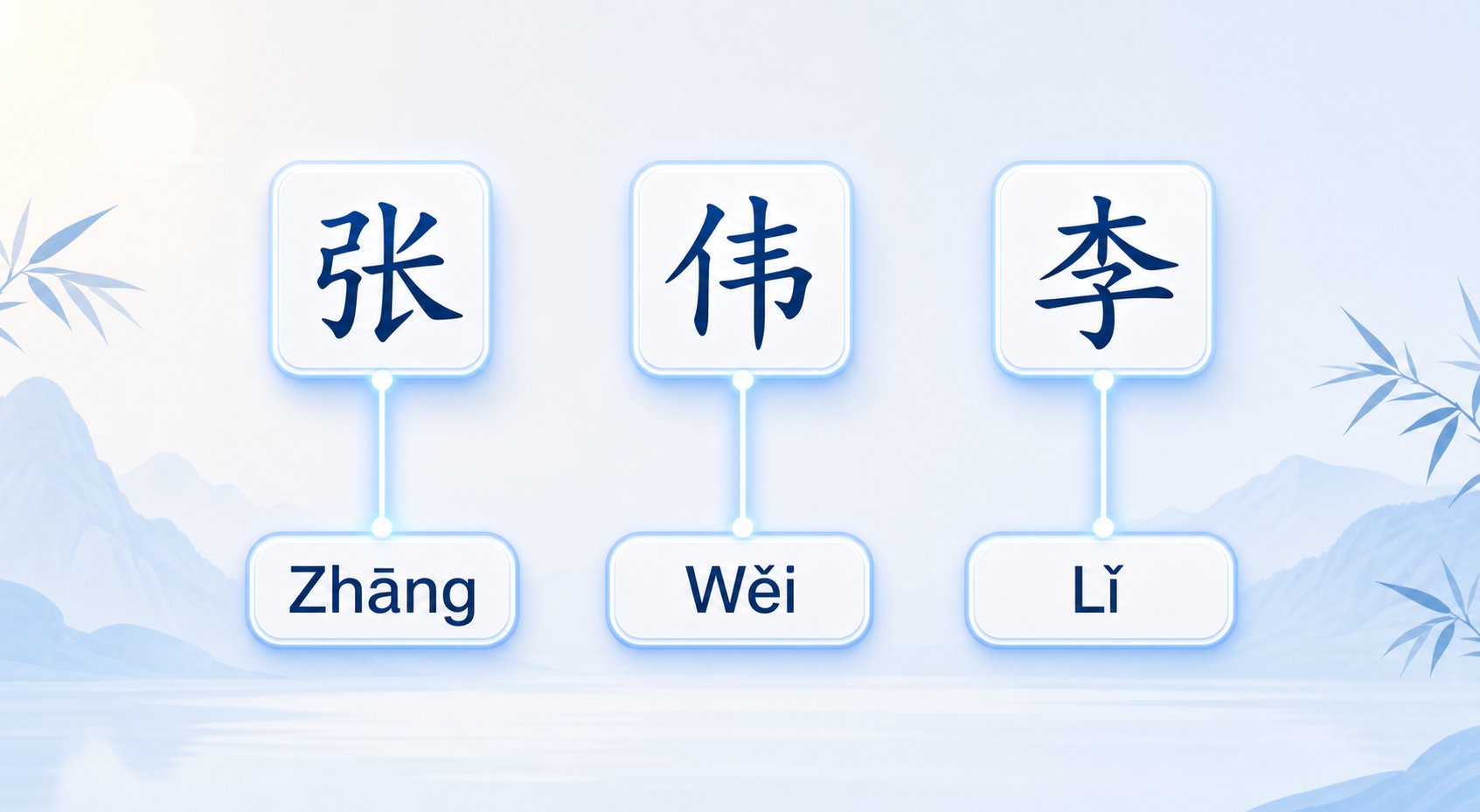
The Chinese name structure follows a surname-given-name order that applies universally across formal contexts. The surname (姓, xing) appears first and represents the person's family lineage. The given name (名, ming) follows and is the part chosen specifically for the individual, usually by parents or grandparents.
Here's what makes this tricky for Western readers: most Chinese surnames are a single character, while given names are typically one or two characters. A full Chinese name is usually just two or three characters total. That's it. No middle name, no suffix. Take the name 王伟明 (Wang Weiming). Wang is the one-character surname. Weiming is the two-character given name. On a business card, this might appear as "王伟明" on the Chinese side and "Weiming Wang" or "Wang Weiming" on the English side, depending on the cardholder's preference.
The difference between Chinese and Western name order creates a real reading challenge. When you see a three-character name on a card, the first character is almost always the surname. When you see a two-character name, the first character is still the surname and the second is a single-character given name. Knowing this simple rule prevents the most common mistake foreigners make: calling someone by the wrong part of their name.
| Full Name (Characters) | Full Name (Pinyin) | Surname | Given Name | Structure |
|---|---|---|---|---|
| 李美华 | Li Meihua | 李 (Li) | 美华 (Meihua) | 1-character surname + 2-character given name |
| 王明 | Wang Ming | 王 (Wang) | 明 (Ming) | 1-character surname + 1-character given name |
| 欧阳志远 | Ouyang Zhiyuan | 欧阳 (Ouyang) | 志远 (Zhiyuan) | 2-character surname + 2-character given name |
| 陈德 | Chen De | 陈 (Chen) | 德 (De) | 1-character surname + 1-character given name |
Notice the third example. A small number of Chinese surnames are two characters, such as 欧阳 (Ouyang), 司马 (Sima), or 诸葛 (Zhuge). These compound surnames are less common but do appear in business settings. If you see a four-character name on a card, there's a good chance the first two characters form a compound surname rather than the person having an unusually long given name.
Generational Names and Courtesy Names Explained
You'll sometimes notice that siblings or cousins within a Chinese family share one character in their given names. This is the generational name (辈分名), a tradition where all members of the same generation share a character to maintain family continuity. For example, siblings named 张志明 (Zhang Zhiming) and 张志华 (Zhang Zhihua) share the character 志 (zhi) as their generational marker. The practice creates an audible link between family members that reinforces lineage and belonging.
Not every family still uses generational names. The tradition has faded in some modern urban families, particularly after the one-child policy reduced the number of same-generation relatives. Still, you may encounter it when meeting multiple members of a family-run business, and recognizing the shared character helps you understand the family relationships at the table.
Courtesy names (字, zi) carry a different function entirely. In ancient China, a person received a courtesy name around age twenty, and peers used this name as a sign of respect. Using someone's birth name (名) directly was considered a grave insult, reserved only for elders addressing juniors. The courtesy name was often thematically linked to the birth name through synonyms or complementary meanings. The famous strategist 诸葛亮 (Zhuge Liang) had the courtesy name 孔明 (Kongming), both 亮 and 明 meaning "bright."
Courtesy names are no longer used in modern business. You won't find one printed on a contemporary business card. But understanding their historical role explains why Chinese culture still treats names with such gravity and formality. The cultural memory of names as layered, meaningful, and deserving of careful use persists in how professionals expect their names to be handled today.
How Name Structure Affects Business Card Reading
So how does all of this translate to the practical moment of reading a Chinese name on a business card? Start with these principles:
First, identify the surname. On the Chinese-language side of a bilingual card, the surname is the first character (or first two characters in rare compound-surname cases). On the English side, the surname might appear first or last depending on how the cardholder has chosen to romanize their name. Some Chinese professionals write their surname in all capitals on the English side to eliminate confusion, such as "WANG Weiming" or "Weiming WANG."
Second, recognize that the given name is personal. In a business context, you will almost never use someone's given name alone when addressing them. The given name on the card tells you who they are, but how you address them depends on their title and your relationship stage, which is a separate layer of etiquette entirely.
Third, pay attention to the Pinyin romanization. Each character in a Chinese name carries a specific tone, and mispronouncing a tone can change the meaning entirely. The name 王问 (Wang Wen) in the fourth tone suggests a smart, inquisitive person, but pronounced in the second tone, 王蚊 could mean "mosquito." You don't need perfect tonal pronunciation at a first meeting, but showing awareness that tones matter demonstrates respect.
The structure of a Chinese name is compact and deliberate. Every character was chosen with intention, often reflecting the family's hopes, values, or heritage. When you hold a business card and take a moment to read the name carefully, you're acknowledging that intention. And that acknowledgment is exactly what sets the stage for how you'll use the name in conversation, which titles to pair with it, and how formal or familiar your address should be.

How to Read and Acknowledge a Chinese Business Card Properly
You've received a business card with both hands, given a respectful nod, and now you're holding it in front of you. What happens in the next five to ten seconds matters more than most people realize. In Chinese business culture, this is not the moment to glance at the card and slide it into your pocket. It's the moment to read, acknowledge, and demonstrate that you value the person standing in front of you. Knowing how to read Chinese business card titles and respond appropriately separates a forgettable introduction from a relationship-building one.
How to Identify the Surname on a Chinese Business Card
The Chinese-language side of the card gives you the clearest signal. The name is typically printed prominently, often in a larger font than the rest of the text. The first character is the surname in the vast majority of cases. If you see a three-character name like 刘建国, the first character (刘, Liu) is the surname. If you see a two-character name like 赵磊, the first character (赵, Zhao) is still the surname.
On the English side, formatting varies. Some professionals follow Western order and place the surname last: "Jianguo Liu." Others preserve Chinese order: "Liu Jianguo." A growing number of Chinese professionals capitalize their surname on the English side to remove ambiguity, writing "LIU Jianguo" or "Jianguo LIU." If you're unsure which part is the surname, look at the Chinese side for confirmation. The character that appears first there is the family name.
Here's a practical tip: the title printed beneath the name often pairs with the surname. If you see 刘总经理 or "General Manager Liu" on the card, you've just confirmed which part is the surname without needing to ask.
Decoding Title Hierarchy and Professional Rank
Chinese professional titles on business cards carry more weight than their Western equivalents. A title isn't just a job description. It signals where someone sits in the organizational hierarchy, and by extension, how much decision-making authority they hold. Addressing someone by the wrong title, or ignoring their title entirely, can feel dismissive in a culture where rank and respect are tightly linked.
The standard format on a Chinese business card places the person's title directly below or beside their name. In Chinese, the title often appears as surname plus title when used in conversation. For example, if the card reads 王明 and the title is 总经理, you would address this person as "Wang Zong" (王总) in conversation, a shortened, respectful form.
Here are the most common Chinese honorifics for business meetings you'll encounter on cards:
- 董事长 (Dongshizhang) - Chairman/Chairperson. The highest-ranking title in a company. Address as surname + 董事长, e.g., "Li Dongshizhang" or simply "Li Dong" in less formal moments.
- 总经理 (Zongjingli) - General Manager/CEO. The most common senior leadership title. Address as surname + 总 (Zong), e.g., "Wang Zong." This shortened form is widely used and considered respectful.
- 副总经理 (Fu Zongjingli) - Deputy General Manager. Address as surname + 副总 (Fu Zong), e.g., "Chen Fu Zong."
- 总监 (Zongjian) - Director. Common in larger organizations. Address as surname + 总监, e.g., "Zhang Zongjian."
- 经理 (Jingli) - Manager. A mid-level title. Address as surname + 经理, e.g., "Liu Jingli."
- 主管 (Zhuguan) - Supervisor. Address as surname + 主管, e.g., "Zhao Zhuguan."
- 教授 (Jiaoshou) - Professor. Used in academic and research contexts. Address as surname + 教授, e.g., "Chen Jiaoshou."
- 工程师 (Gongchengshi) - Engineer. Common in technical industries. Address as surname + 工 (Gong), e.g., "Li Gong."
- 律师 (Lushi) - Lawyer/Attorney. Address as surname + 律师, e.g., "Wang Lushi."
You'll notice a pattern: the surname always comes first, followed by the title or its abbreviated form. This structure, surname plus title, is the default way to address a Chinese business partner by name in any professional setting. When in doubt, use the highest title printed on the card. If someone holds multiple roles, they'll typically list the most senior one first.
Using the Name Correctly After the Exchange
The moment you receive the card, take a few seconds to study it visibly. This isn't awkward. It's expected. Read the name, note the title, and if you're uncertain about pronunciation, this is the appropriate time to ask. A simple "May I ask how to pronounce your name correctly?" shows respect rather than ignorance. Most Chinese professionals appreciate the effort and will guide you through the tones patiently.
During the meeting, use the person's surname plus title when addressing them directly. "Wang Zong, I'd like to discuss..." or "Li Jingli, could you share your perspective on..." This approach demonstrates that you've paid attention to their card and understand the hierarchy at the table. Avoid using someone's given name unless explicitly invited to do so, as premature familiarity can feel presumptuous.
If you're meeting multiple people, place each card on the table in front of you, arranged to mirror the seating order. This serves as a visual reference throughout the meeting, helping you address each person correctly without fumbling. It also signals to your Chinese counterparts that you treat their cards, and by extension their identities, with care.
One subtle but powerful move: reference something specific from the card during conversation. Mentioning their company's full name as printed, or acknowledging their professional title in context, shows you didn't just glance at the card. You read it. In a culture where attention to detail reflects respect, that small act carries outsized weight.
Knowing how to read and respond to the information on a card is one layer of the interaction. The deeper question, one that trips up even experienced professionals, is knowing exactly how formal to remain and when the relationship has progressed enough to shift your form of address.
When to Use Full Names Versus Titles Versus Given Names
Formal vs informal address in Chinese business isn't a matter of personal preference. It follows a clear, unspoken progression tied to relationship depth and hierarchical position. Jump ahead too quickly, say, calling someone by their given name at a second meeting, and you risk signaling a level of closeness that hasn't been earned. In Chinese business culture, how you address someone tells them exactly where you believe the relationship stands.
Formal Address Rules for Initial Business Meetings
The default starting point is always surname plus title. When you first meet someone and read their card, you address them as "Wang Zong" or "Li Jingli," never as "Weiming" or "Meihua." This applies regardless of how casually they might address you. Even if a Chinese counterpart uses your first name (a common accommodation for Western visitors), it does not mean you have permission to reciprocate with their given name.
If you don't know someone's professional title, fall back on surname plus a general honorific: "Wang Xiansheng" (Mr. Wang) or "Li Nushi" (Ms. Li). As experienced cross-cultural practitioners note, you should not start calling a Chinese colleague by their first name until a closer relationship has been established or they explicitly ask you to do so.
In group settings, address the most senior person first. Chinese business name hierarchy etiquette dictates that rank determines the order of acknowledgment, and using the correct title for each person at the table demonstrates that you've done your homework.
When Familiarity Becomes Appropriate
So when is it acceptable to use a first name in Chinese business culture? The short answer: when you're invited. The shift from formal to familiar address is a relationship milestone, not a casual decision. Your Chinese counterpart may signal readiness by saying something like "Just call me Weiming" or by switching to a nickname in conversation. Until that invitation arrives, stay formal.
Here's how the progression typically unfolds, from most formal to most casual:
- Surname + full professional title (e.g., "Wang Zongjingli") - Used in first meetings, formal events, and when addressing someone significantly senior. This is the safest default.
- Surname + abbreviated title (e.g., "Wang Zong") - The most common form in ongoing business relationships. Signals respect while acknowledging growing familiarity. Appropriate after initial meetings have gone well.
- Surname + general honorific (e.g., "Wang Xiansheng" or "Wang Nushi") - Used when you don't know the title, or in cross-industry settings where titles vary widely.
- Full name without title (e.g., "Wang Weiming") - Acceptable among peers of equal rank who have worked together for some time. Still maintains a degree of formality.
- Given name or nickname (e.g., "Weiming" or "Xiao Wang") - Reserved for close colleagues, friends, or situations where the other person has explicitly invited informal address.
Navigating Hierarchy Through Name Usage
Hierarchy adds another layer. Even within a team that has worked together for years, a junior employee will typically continue addressing a senior leader by surname plus title. The familiarity progression moves faster among peers than it does across rank. A department head might call a fellow department head by given name after months of collaboration, but a new hire in that same department would still use the formal address for both leaders.
How to address Chinese colleagues by title also depends on context. In a formal meeting with external partners, even close colleagues may revert to titles to maintain professional face. In a casual team dinner, the same people might use nicknames. Reading the room matters as much as reading the card.
One practical signal to watch for: if your Chinese counterpart introduces themselves using an English name ("Call me David"), they're offering you a bridge. Many Chinese professionals adopt English names specifically to ease cross-cultural interactions. Using that English name is perfectly appropriate and doesn't carry the same weight as using their Chinese given name uninvited.
The key principle is patience. Relationships in Chinese business culture develop through repeated positive interactions, shared meals, and demonstrated reliability. The invitation to drop formality is a sign of trust. Rushing it communicates that you don't understand, or don't value, the process of building that trust.
With the verbal side of name etiquette mapped out, the physical dimension of the exchange itself carries its own set of expectations, from how you hold the card to where you place it during the meeting.

The Business Card Exchange Ritual Step by Step
Knowing how to read a name correctly is only half the equation. The physical act of exchanging the card, how you hold it, how you offer it, how you receive it, follows a protocol that your Chinese counterparts will notice immediately. Think of it as a choreographed moment where every gesture communicates respect or carelessness.
Presenting Your Card With Both Hands
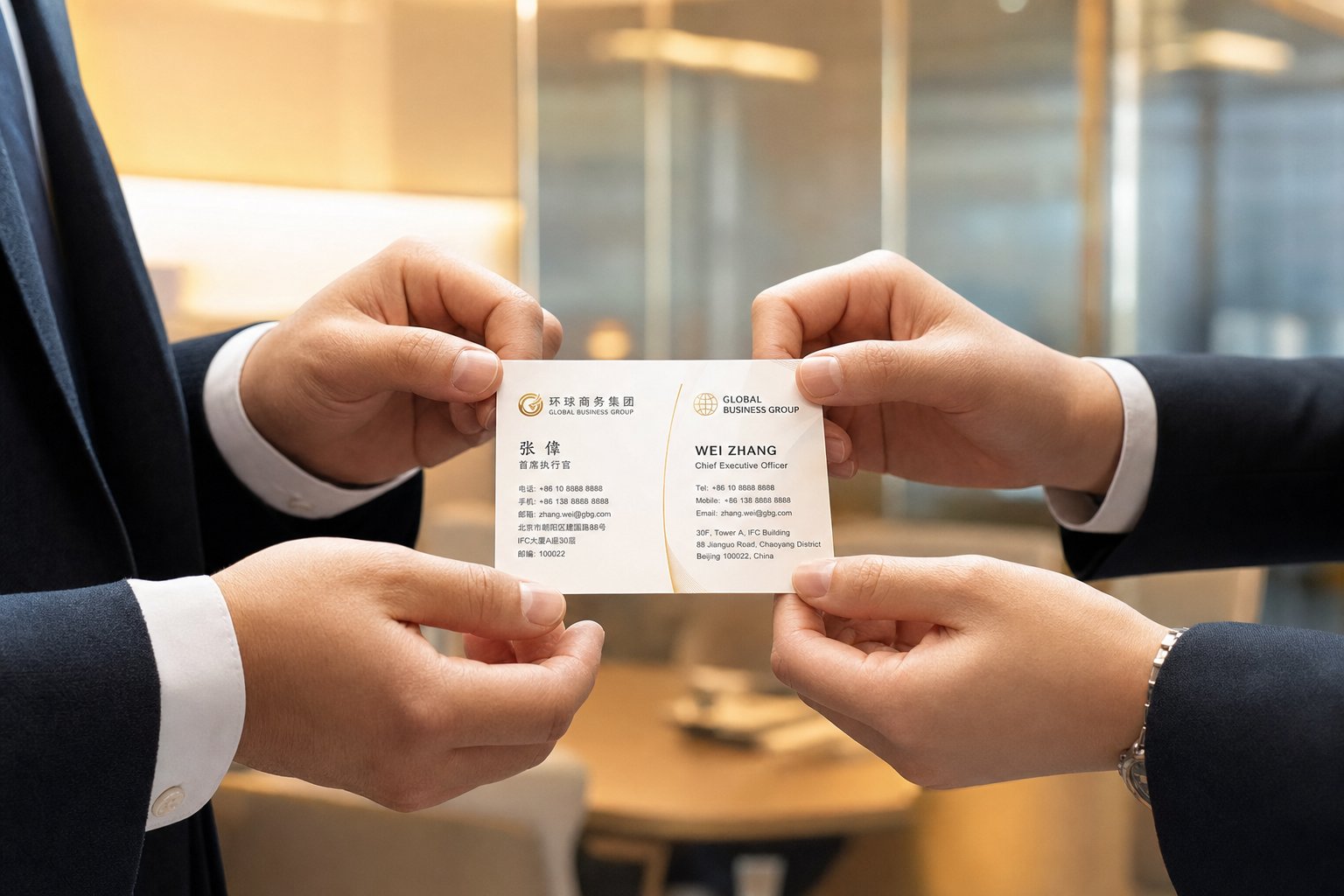
When presenting your business card in China, hold it with both hands, thumbs on the top corners, with the text facing the recipient so they can read it without rotating it. If your card is bilingual, the Chinese side should face up. This small detail signals that you've prepared specifically for this interaction and respect the language of the person receiving it.
Orientation matters. You're not just handing over a piece of cardstock. You're offering your professional identity in a way that makes it immediately accessible. Fumbling the card, presenting it one-handed, or letting the text face yourself rather than the recipient all register as inattention.
One protocol point that catches many Western professionals off guard: the most junior person or the visitor typically presents their card first. If you're the one entering someone else's office or territory, you initiate the exchange. In group settings, present to the most senior person in the room first, then work your way down the hierarchy.
Receiving and Handling Cards With Respect
A business card in Chinese culture should be treated as an extension of the person handing it to you. The respect you show the card is the respect you show them.
Accept every card with both hands. Once it's in your hands, read it visibly and carefully. Comment on something you notice, their company location, their title, anything that shows genuine engagement. A simple "I see you're based in Shenzhen" demonstrates attentiveness.
Never put the card away immediately. During the meeting, place received cards on the table in front of you, arranged to mirror the seating order of the people across from you. This serves as a reference for names and titles throughout the conversation, and it shows everyone at the table that their cards are being treated with care rather than discarded into a pocket.
After the meeting, store cards in a dedicated card holder or the breast pocket of your jacket. Sliding a card into your back pocket, writing notes on it, or bending it are all actions that signal disrespect in the Chinese business card exchange ritual protocol.
Greetings and Physical Gestures During the Exchange
A common question from Western professionals: should you bow? The short answer is no. Bowing is a Japanese custom, not a Chinese one. In China, the standard greeting during a card exchange is a light handshake paired with a slight nod of the head. The nod is subtle, a small downward tilt that conveys acknowledgment and respect without the formality of a full bow.
Accompany the physical exchange with a brief verbal greeting. "Ni hao, hen gaoxing renshi nin" (Hello, very pleased to meet you) works well. If you know the person's surname and title from a prior introduction, use it immediately: "Wang Zong, ni hao." This combination of correct name usage, proper physical handling, and appropriate greeting creates a seamless first impression.
Keep your grip gentle during the handshake. An overly firm squeeze can feel aggressive in Chinese business settings. The entire exchange should feel unhurried and deliberate, not rushed or mechanical.
Mastering the physical ritual ensures you start the relationship on solid ground. But if you're preparing your own card for Chinese business contexts, the design decisions you make, particularly around bilingual formatting and character choice, carry their own set of cultural expectations.
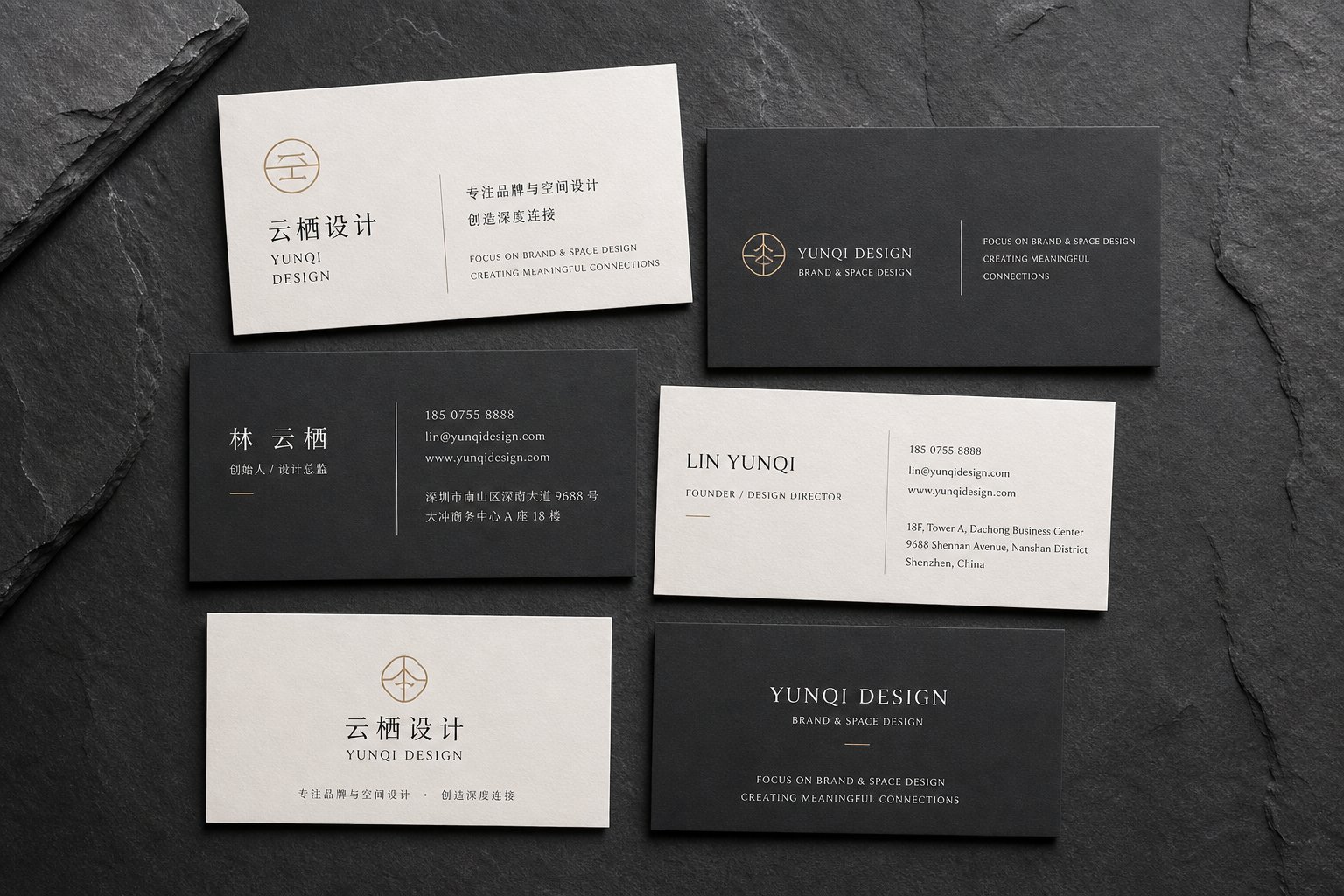
Designing a Bilingual Business Card That Respects Both Cultures
You've learned how to exchange a card, read a name, and use the right title. But what about the card you're handing over? If you're doing business in China, a monolingual English card sends a clear message: you didn't prepare. A well-designed bilingual Chinese English business card, on the other hand, tells your counterpart that you take the relationship seriously enough to meet them in their language.
The design choices you make, from character type to name placement, reflect your cultural awareness before you even open your mouth.
Choosing Between Simplified and Traditional Characters
This decision isn't aesthetic. It's geographic. Mainland China, Malaysia, and Singapore use Simplified Chinese characters, while Hong Kong and Taiwan use Traditional Chinese. Printing the wrong system for your target audience is like spelling someone's name wrong on purpose. It signals that you haven't done basic homework about where your counterpart operates.
If your business spans multiple regions, you have two options: create separate card sets for each market, or default to Simplified for Mainland China interactions (the largest market) and prepare Traditional versions when meeting partners from Hong Kong or Taiwan specifically. Mixing the two systems on a single card is never appropriate.
Displaying Western and Chinese Names Together
How to put a Chinese name on a business card depends on who you are and who you're meeting. If you're a Western professional who has been given a Chinese name (a common practice for those working long-term in China), display it prominently on the Chinese side alongside your title and company name. Your Western name takes the lead on the English side. The two names don't need to be translations of each other. They function as parallel identities for different audiences.
For Pinyin romanization, capitalize the surname and write the given name with an initial capital: "WANG Weiming" or "Wang Weiming." Tone marks are generally omitted on business cards since they can look cluttered in a design context, though including them is not incorrect. The priority is readability.
Chinese professionals creating cards for international use face the reverse challenge: which name order to use on the English side? The safest approach is to capitalize the surname regardless of position, making it instantly identifiable: "Weiming WANG" or "WANG Weiming."
Layout and Design Principles for Bilingual Cards
The standard bilingual business card layout for China places Chinese on one side and English on the other. When presenting the card, the Chinese side faces up toward the recipient, a detail that shows you're prioritizing their language. The name should be the most prominent element on both sides, typically in a larger font than the company name or contact details.
Here's how design choices shift based on your specific scenario:
| Scenario | Chinese Side | English Side | Name Prominence | Character System |
|---|---|---|---|---|
| Western professional with Chinese name | Chinese name + title + company in Chinese | Western name + title + company in English | Chinese name leads on Chinese side; Western name leads on English side | Match target region (Simplified for Mainland) |
| Chinese professional with English name | Chinese name + title + company in Chinese | English name or Pinyin + title + company in English | Chinese name is primary; English name serves international contacts | Native system of the professional's region |
| Joint venture or cross-border context | Chinese name + both company names in Chinese | Western name + both company names in English | Equal weight on both sides; dual branding | Simplified unless partner is HK/Taiwan-based |
Font sizing follows a clear hierarchy: name first (largest), title second, company third, contact details last. On the Chinese side, use a clean sans-serif or standard Song typeface (宋体) for readability. Avoid decorative fonts that sacrifice legibility for style. The card should feel balanced, with neither language side appearing as an afterthought or a cramped translation squeezed into remaining space.
One detail that often gets overlooked: ensure your title translates accurately rather than literally. "Vice President" in a Western company might translate to 副总裁 or 副总经理 depending on the organizational structure. An inaccurate title translation can confuse your counterpart about your actual authority level, which directly impacts how they engage with you.
Getting the bilingual design right prepares your card for broad use, but the reality is that "China" isn't a single market. The conventions that work perfectly in Shanghai may need adjustment for meetings in Hong Kong or Taipei, where everything from character systems to formality expectations shifts.
Regional Differences Across Mainland China, Hong Kong, and Taiwan
A card designed for a meeting in Beijing won't land the same way in Hong Kong or Taipei. Each region carries its own writing system, romanization conventions, and expectations around formality. Treating them as interchangeable is one of the fastest ways to signal that you haven't done your research, and your counterparts will notice immediately.
Mainland China Conventions and Expectations
Mainland China uses Simplified Chinese characters exclusively. Pinyin is the standard romanization system, and you'll see it on the English side of most cards as the default way to render Chinese names in Latin script. Business culture here leans heavily on hierarchy and title usage. Addressing someone as surname plus title ("Wang Zong," "Li Jingli") is non-negotiable in early interactions. Cards are exchanged with both hands, and the ritual follows the formal protocol described earlier without much regional variation across cities like Shanghai, Beijing, or Shenzhen.
Mandarin is the language of business. Even in southern cities where local dialects are spoken at home, professional meetings default to Putonghua. Your card's Chinese side should reflect this: Simplified characters, Mandarin-based titles, and Pinyin romanization.
Hong Kong and Cantonese Name Considerations
Hong Kong business card name conventions diverge from the Mainland in several important ways. Traditional Chinese characters are standard here, and printing Simplified characters on a card intended for Hong Kong contacts reads as culturally tone-deaf. The spoken business language is Cantonese, though English is widely used in international settings, and many professionals are trilingual (Cantonese, Mandarin, English).
Romanization in Hong Kong doesn't follow Pinyin. Instead, names are romanized using older systems rooted in Cantonese pronunciation. A surname written as "Chan" in Hong Kong would be "Chen" in Pinyin. "Wong" in Hong Kong is "Wang" in Mainland convention. This means the same Chinese character produces different English spellings depending on region, a detail that can cause confusion if you're cross-referencing contacts.
Many Hong Kong professionals also adopt Western first names, a legacy of British colonial influence. You'll frequently encounter cards reading "David Wong" or "Catherine Chan" on the English side, with the full Chinese name on the reverse. As regional etiquette guides note, you should keep track of both a person's actual Chinese name and any Westernized version they offer, since colleagues may only know one or the other. Address them with surname and title unless invited to use their English first name.
Taiwan and Its Distinct Etiquette Norms
Taiwan business card etiquette vs mainland China shows subtle but meaningful differences. Taiwan uses Traditional Chinese characters, the same system as Hong Kong. However, romanization follows a different path. While Taiwan officially adopted Hanyu Pinyin for some government purposes, many Taiwanese names are still romanized using Wade-Giles or local conventions. A name spelled "Tsai" in Taiwan would be "Cai" in Mainland Pinyin. "Hsieh" becomes "Xie."
Formality in Taiwan tends to be slightly softer than in the Mainland. Business relationships still respect hierarchy, but the atmosphere often feels less rigid, particularly in the technology sector where startup culture has introduced more casual norms. That said, the card exchange itself still follows the two-handed protocol, and using surname plus title remains the safe default for initial meetings.
Here's a side-by-side comparison of simplified vs traditional characters by region and other key differences:
| Dimension | Mainland China | Hong Kong | Taiwan |
|---|---|---|---|
| Character system | Simplified | Traditional | Traditional |
| Romanization standard | Hanyu Pinyin | Cantonese-based (Jyutping, Yale, or informal) | Wade-Giles, Tongyong Pinyin, or Hanyu Pinyin (varies) |
| Primary business language | Mandarin (Putonghua) | Cantonese and English | Mandarin (Guoyu) |
| Card language sides | Chinese (Simplified) + English | Chinese (Traditional) + English | Chinese (Traditional) + English |
| Western name adoption | Less common, growing among younger professionals | Very common, often used as primary English name | Common in international-facing roles |
| Formality level | High; strict title usage expected | High; hierarchy deeply respected | Moderate to high; slightly more relaxed in tech sectors |
| Common title conventions | Surname + title (e.g., 王总) | Surname + title, or Western name in English contexts | Surname + title (e.g., 蔡董事长) |
The practical takeaway: prepare region-specific cards whenever possible. A single bilingual card works if you're only operating in one market, but professionals who move between Mainland China, Hong Kong, and Taiwan benefit from having separate versions tailored to each region's character system and romanization norms. It's a small investment that prevents the kind of mismatch your counterparts will quietly register but never mention to your face.
Regional awareness helps you avoid systemic errors. But even professionals who get the big-picture details right can stumble on smaller, more personal mistakes during the exchange itself, errors that are easy to prevent once you know what to watch for.
Common Mistakes That Damage Your First Impression
Most of these errors aren't born from disrespect. They come from applying Western assumptions to a system that operates on entirely different logic. The good news? Each one is preventable, and even when you slip up, there are graceful ways to recover without lasting damage to the relationship.
Confusing Surname and Given Name Order
This is the single most frequent mistake Western professionals make with Chinese business cards. You see the name "Chen Weiguo" on a card and assume "Chen" is the first name because it appears first, the same position a given name occupies in English. Then you spend the entire meeting calling him "Mr. Weiguo" while his actual surname is Chen.
The confusion deepens on cards where the English side uses Western order. If the card reads "Weiguo Chen," you might correctly identify Chen as the surname. But flip to the Chinese side, and the same name reads 陈伟国, with Chen (陈) appearing first. The inconsistency between sides trips people up constantly.
How to recover: If you realize mid-conversation that you've been using the wrong part of someone's name, correct yourself simply and without excessive apology. "I apologize, Mr. Chen, I had your name reversed." A brief acknowledgment shows awareness. Over-apologizing draws more attention to the error and can make your counterpart uncomfortable.
Pronunciation Mistakes and How to Recover Gracefully
Chinese is a tonal language, and names carry specific tonal patterns that affect meaning. Many Western professionals either avoid saying a Chinese name altogether (substituting "you" or vague references) or pronounce it so incorrectly that it becomes unrecognizable. Neither approach builds rapport.
You don't need perfect Mandarin pronunciation to show respect. What matters is the effort and the willingness to be corrected. Here's what typically goes wrong and how to handle it:
- Mistake: Avoiding the name entirely because you're afraid of mispronouncing it. Cultural impact: Your counterpart may feel their identity isn't worth the effort. Better approach: Attempt the pronunciation and ask, "Am I saying your name correctly?" Most Chinese professionals will appreciate the effort and gently correct you.
- Mistake: Anglicizing the pronunciation beyond recognition (turning "Xu" into "Zoo" or "Zhang" into "Zang"). Cultural impact: Signals that you haven't taken even a moment to learn basic Pinyin sounds. Better approach: Before the meeting, look up the Pinyin pronunciation of your counterpart's name. Even a quick audio search gives you a workable starting point.
- Mistake: Mispronouncing once and never correcting yourself throughout the meeting. Cultural impact: Repeating an error suggests indifference. Better approach: Listen carefully when others say the name, adjust your pronunciation, and try again. Progress matters more than perfection.
Physical Handling Errors That Signal Disrespect
The physical mistakes tend to carry more cultural weight than pronunciation errors because they're visible to everyone in the room. Writing on someone's card during a meeting is considered rude in Chinese business culture, yet Western professionals do it reflexively, jotting a note about where they met or a follow-up item. In a culture where the card represents the person, marking it up feels like scribbling on someone's face.
Here are the most common physical handling errors and their alternatives:
- Mistake: Writing on a received business card in front of the owner. Cultural impact: Perceived as defacing their identity. Better approach: If you need to take notes, write on your own notepad or on the back of your own card. Add notes to their card later, in private, if needed.
- Mistake: Placing the card in your back pocket or wallet immediately after receiving it. Cultural impact: Suggests the person's identity is worth sitting on, literally. Better approach: Store cards respectfully in a dedicated card holder or place them on the table during the meeting, arranged by seating order.
- Mistake: Leaving your own cards on the table for people to pick up rather than presenting individually. Cultural impact: Feels impersonal and dismissive, as if the exchange isn't worth your direct attention. Better approach: Hand your card directly to each person, using both hands, with the text facing them.
- Mistake: Failing to bring cards at all or running out mid-meeting. Cultural impact: Signals that you didn't consider the meeting important enough to prepare for. Better approach: Always carry more cards than you think you'll need. If you do run out, acknowledge it directly and offer to send your details via WeChat or email immediately after.
- Mistake: Receiving a card with one hand while your other hand holds a drink or phone. Cultural impact: One-handed receipt suggests the exchange is an afterthought. Better approach: Put down whatever you're holding. Accept with both hands, read the card, and acknowledge the person before doing anything else.
The thread connecting all of these mistakes is the same: they treat the card as a piece of paper rather than a representation of a person. Once you internalize that distinction, the correct behavior becomes intuitive rather than a checklist to memorize.
What's worth noting is that younger Chinese professionals, particularly in tech hubs like Shenzhen and Hangzhou, may be more forgiving of minor protocol slips. But they still notice them. And in any meeting involving senior leadership or state-owned enterprises, traditional expectations remain fully in force.
These mistakes belong to the physical, in-person exchange. But business introductions increasingly happen through screens and apps, where a different set of name etiquette questions emerges around digital cards, WeChat contacts, and the blurring line between formal and informal first impressions.
Digital Business Cards and WeChat Integration in Modern Practice
You've mastered the two-handed exchange, the table placement, the surname-plus-title address. But what happens when the introduction doesn't take place across a conference table? In modern Chinese business, a growing number of first connections happen through a phone screen, specifically through WeChat. The question isn't whether digital exchange is replacing physical cards. It's knowing when each format is appropriate and how to maintain proper name etiquette regardless of the medium.
WeChat Name Cards and Digital Exchange Protocols
WeChat functions as the default professional communication platform in China, far beyond its origins as a messaging app. Its built-in "name card" feature (个人名片) allows users to share their contact profile digitally, essentially functioning as a virtual business card. When someone shares their WeChat name card with you, it displays their profile name, avatar, WeChat ID, and region.
How to share contact on WeChat professionally follows a simple process: you open the person's profile, tap "Share Contact," and send it to the relevant party. But the etiquette layer matters more than the mechanics. Your WeChat profile itself becomes your digital card. This means your display name, profile photo, and personal signature all function as first-impression elements. A professional WeChat profile for business use should display your real name (or your professional English name if that's how contacts know you), a clear headshot or company logo, and a signature line that references your role or organization.
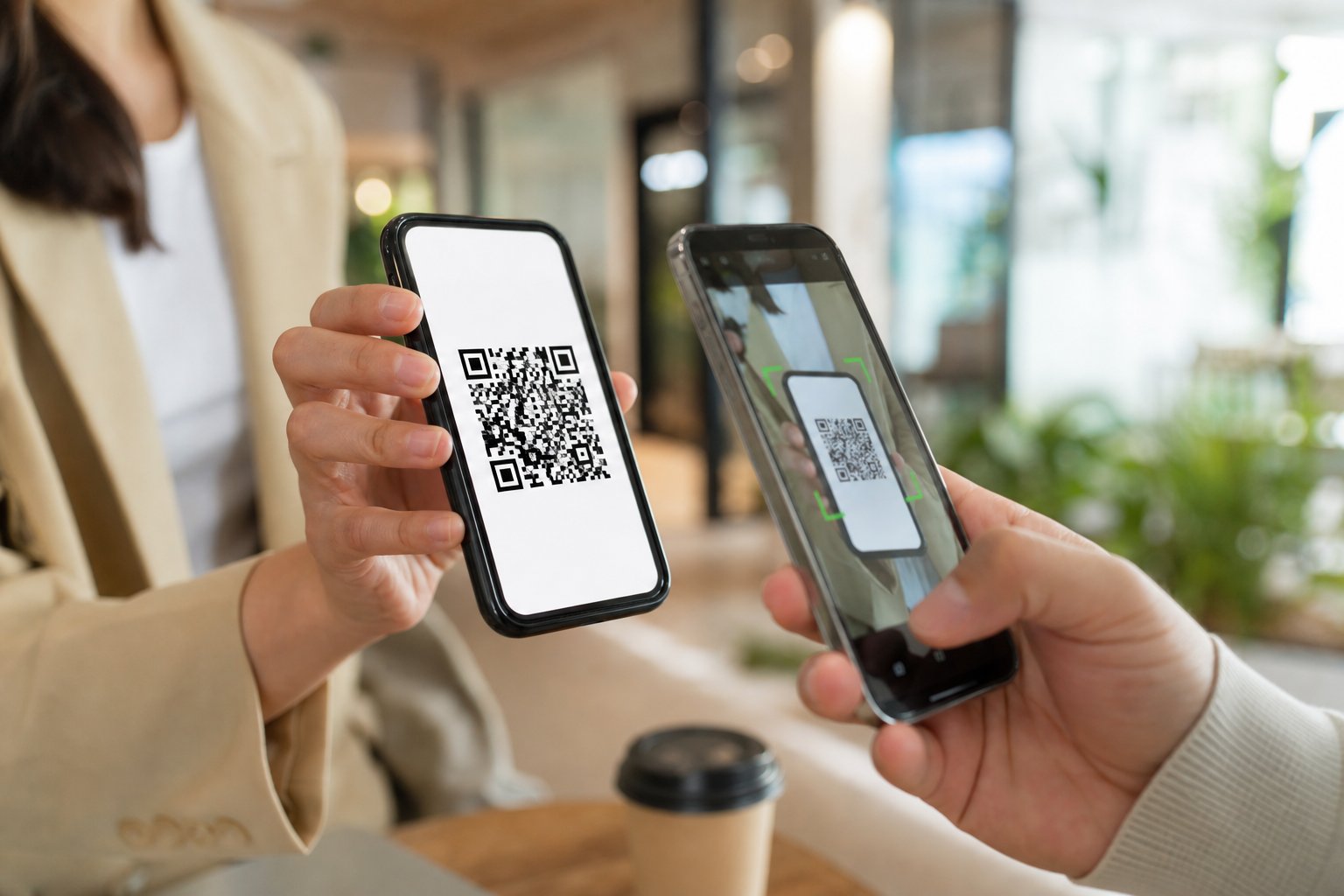
When exchanging WeChat contacts in person, the most common method is scanning each other's QR codes. One person opens their "My QR Code" screen, the other scans it. As industry observers note, this digital approach offers instant connection, enhanced engagement through in-app profiles, and eliminates the risk of losing paper contact details. The exchange itself should still feel intentional. Hold your phone steadily, make eye contact before and after the scan, and confirm the connection verbally: "I've added you, Wang Zong."
When Physical Cards Still Matter
Digital convenience hasn't erased the need for physical cards. The two formats serve different contexts, and misjudging which one a situation calls for can undermine your professionalism. Here's how to read the room:
- Physical cards remain essential: Formal first meetings with senior executives or government officials; meetings at state-owned enterprises; legal, finance, and manufacturing industry introductions; banquets or formal dinners where phones on the table feel inappropriate; any setting where your counterpart is over 50 and holds a traditional leadership role.
- Digital exchange is acceptable or preferred: Casual networking events and industry conferences; introductions among tech, e-commerce, or startup professionals; follow-up connections after an initial in-person meeting; remote introductions where no face-to-face meeting occurs; interactions with younger professionals (under 40) in innovation-driven sectors.
- Hybrid approach works best: International business trips where you meet contacts across multiple contexts; joint ventures blending traditional and modern corporate cultures; situations where you exchange physical cards at the meeting and add WeChat afterward to maintain the connection digitally.
The hybrid strategy is increasingly common. Many professionals now carry minimalist physical cards printed with a name, title, and QR code, bridging both worlds on a single piece of cardstock. The physical card satisfies the ritual expectation, while the QR code provides a frictionless path to digital connection.
Maintaining Name Etiquette in Digital Communication
Shifting to digital doesn't mean formality disappears. The same name hierarchy applies in WeChat messages as it does in person. When you first message a new contact, address them by surname plus title: "Wang Zong, thank you for connecting today." Don't default to casual greetings just because the platform feels informal. WeChat is used for everything from family group chats to multi-million-dollar deal negotiations, and your tone should match the relationship stage, not the medium.
One detail that catches Western professionals off guard: many Chinese users set their WeChat display name to something other than their legal name. You might see a nickname, an English name, or even a phrase. Don't assume the display name is how they want to be addressed professionally. Refer back to the information on their physical card or their formal introduction. If you only have a digital connection, it's perfectly appropriate to ask: "How would you prefer I address you?"
Younger Chinese professionals, particularly those in Shenzhen, Hangzhou, and other tech hubs, blend traditional and digital approaches fluidly. They might exchange WeChat QR codes at a coffee meeting but still carry physical cards for client-facing events. They may use English nicknames on WeChat while maintaining full Chinese names on formal documents. The underlying principle hasn't changed: respect the person's identity and let them signal how they want to be addressed. The format is just the delivery mechanism. The etiquette travels with the name, not the card stock.
Frequently Asked Questions About Chinese Business Card Name Etiquette
1. Which name comes first on a Chinese business card, the surname or given name?
On the Chinese-language side of a business card, the surname always appears first, followed by the given name. Most Chinese surnames are a single character, while given names are one or two characters. For example, in the name 王伟明 (Wang Weiming), Wang is the surname and Weiming is the given name. On the English side, the order may vary based on the cardholder's preference, but many professionals capitalize their surname (e.g., WANG Weiming) to eliminate confusion for international contacts.
2. How should you address a Chinese business partner after receiving their card?
The standard practice is to use their surname followed by their professional title. For instance, if the card shows the name 王明 with the title 总经理 (General Manager), you would address them as 'Wang Zong' in conversation. Never use someone's given name unless they explicitly invite you to do so, as premature familiarity can feel presumptuous and disrespectful in Chinese business culture. If you are unsure of their title, default to surname plus a general honorific like Xiansheng (Mr.) or Nushi (Ms.).
3. What are the biggest mistakes to avoid when exchanging business cards in China?
The most damaging mistakes include receiving a card with one hand instead of two, immediately pocketing the card without reading it, writing notes on someone's card in their presence, and confusing the surname with the given name. Each of these actions is perceived as disrespecting the person's identity. Physical cards should be placed on the table during the meeting, arranged by seating order, and stored in a dedicated card holder afterward. If you make an error, correct yourself briefly without over-apologizing.
4. Should you use simplified or traditional Chinese characters on a bilingual business card?
The choice depends entirely on your target region. Mainland China, Singapore, and Malaysia use Simplified Chinese, while Hong Kong and Taiwan use Traditional Chinese. Printing the wrong character system signals a lack of preparation. If your business spans multiple regions, create separate card sets for each market rather than mixing systems on a single card. Defaulting to Simplified works for Mainland China interactions, but always prepare Traditional versions for Hong Kong or Taiwan contacts.
5. Is exchanging WeChat contacts replacing physical business cards in China?
Not entirely. Physical cards remain essential for formal first meetings with senior executives, government officials, and professionals in traditional industries like finance and manufacturing. However, digital exchange via WeChat QR codes is increasingly acceptable at networking events, tech industry meetings, and among younger professionals. The most effective approach is hybrid: exchange physical cards at formal meetings to satisfy ritual expectations, then add each other on WeChat afterward to maintain the connection digitally. Regardless of format, the same name hierarchy and formality rules apply.