How Chinese Names Work and Why Structure Matters
When you encounter a Chinese name for the first time, you might wonder which part is the family name and which is the given name. The answer is simpler than you'd expect: Chinese name structure follows a consistent formula that has remained largely unchanged for thousands of years. The surname comes first, followed by the given name, and the full name typically contains just two or three characters total.
Imagine meeting someone named Wang Xiaoming. In this case, Wang is the family name (one character), and Xiaoming is the given name (two characters). That's the entire name. No middle name, no suffix, no hyphenated additions. This compact structure packs identity, family heritage, and personal meaning into as few as two syllables.
Surname (1 character) + Given Name (1-2 characters) = Full Chinese Name
What Makes Chinese Names Different From Western Names
The most immediate difference between Chinese names and Western names is the order. In English-speaking countries, you introduce yourself with your given name first: "Hi, I'm John Smith." In China, the family name leads: "I'm Smith John," if we translate the logic directly. This isn't just a quirk of grammar. It reflects a cultural priority where family identity precedes individual identity.
There's also the matter of scale. Only about 6,000 surnames are currently in use across China's population of over 1.4 billion people. The three most common family names in mainland China, Li, Wang, and Zhang, are shared by more than 270 million people. Compare that to the United States, which reported 6.3 million surnames in its 2010 census despite having less than a quarter of China's population. This concentration means surnames in China carry enormous collective weight, and the given name does the heavy lifting when it comes to individual distinction.
Why Understanding Chinese Name Structure Matters
Getting Chinese names right isn't just about politeness. It has real consequences across several fields:
- Business: Addressing a Chinese colleague by their given name as if it were their surname (or vice versa) signals a lack of cultural awareness. In professional settings, names in China are paired with titles, and using the wrong part of the name can undermine trust.
- Genealogy: Chinese naming conventions encode generational information directly into the name. Researchers tracing family lineage rely on these patterns to connect relatives across centuries.
- Education: Teachers and administrators working with international students benefit from recognizing how Chinese names are structured so they can correctly identify and address students.
- Cross-cultural communication: Whether you're reading a news article, reviewing a business proposal, or filling out immigration paperwork, knowing the Chinese naming convention prevents errors that range from embarrassing to legally problematic.
In the early days of Chinese immigration to New Zealand, for example, confusion over which part of a name was the surname and which was the given name resulted in subsequent generations of Chinese-New Zealanders being registered under the wrong surnames entirely. That kind of mix-up still happens in international contexts where forms assume a Western name order.
The structure itself is elegant in its simplicity, but the meaning layered within each character runs deep. Every surname connects to ancient clan histories, and every given name is chosen with deliberate intent, often reflecting parental hopes, philosophical values, or even the balance of natural elements.
Chinese Surnames and Their Ancient Origins
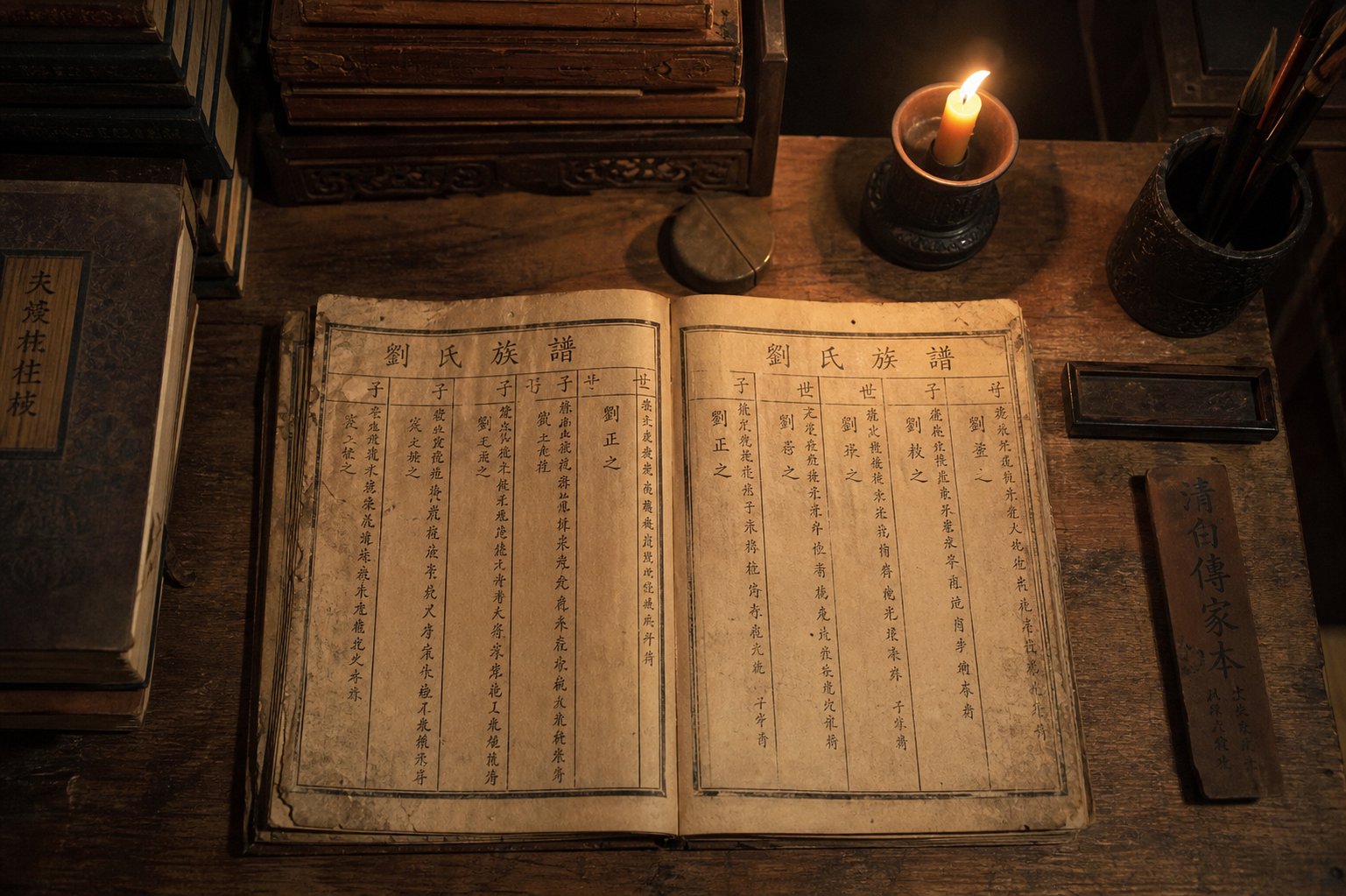
Those ancient clan histories encoded in every Chinese surname? They stretch back over 5,000 years. The surname, or 姓 (xing), always occupies the first position in a Chinese name and is almost always a single character. Unlike Western family names that often evolved from occupations (Smith, Baker) or geography (Hill, Brooks), Chinese surnames trace their roots to royal lineages, feudal states, and ancestral legends.
The Most Common Chinese Surnames and Their Origins
With roughly 85% of China's 1.4 billion people sharing the top 100 surnames, a handful of Chinese last names dominate the landscape. Here's a closer look at the ones you'll encounter most often:
Wang (王) - The wang last name origin is tied directly to royalty. The character 王 means "king" and visually represents a ruler connecting heaven, humanity, and earth through three horizontal strokes joined by a single vertical line. Multiple royal families across dynasties from the Qin to the Tang adopted this surname, which is why approximately 100 million people carry it today.
Li (李) - The li surname literally means "plum tree," combining the characters for wood (木) and child (子). Its rise to prominence came during the Tang Dynasty (618-907 AD), when it served as the imperial family name. According to folklore, the name originated when a fugitive named Li Lizhen survived by eating plums during his escape and changed his surname in gratitude.
Zhang (张) - Meaning "to draw a bow" or "archer," this Chinese surname combines the radical for bow (弓) with the character for long (长). Tradition credits the Yellow Emperor's grandson with inventing the bow and arrow, earning his descendants this name.
Chen (陈) - The chen last name origin connects to the ancient State of Chen in present-day Henan province during the Zhou Dynasty. The character can mean "to display" or "ancient." It's the most common surname in both Taiwan and Singapore, making it one of the most widespread Chinese family names across East and Southeast Asia.
Huang (黄) - The huang name origin ties to the color yellow, the imperial color in ancient China. Historically, at least three Huang kingdoms existed, and most bearers can trace their lineage to one of these states. The connection to the Yellow Emperor (黄帝) gives this surname deep cultural resonance.
The table below shows the most common Chinese surnames ranked by population, along with their characters, pronunciation, and meanings:
| Rank | Character | Pinyin | Meaning | Estimated Bearers |
|---|---|---|---|---|
| 1 | 王 | Wang | King | ~100 million |
| 2 | 李 | Li | Plum tree | ~100 million |
| 3 | 张 | Zhang | Archer / draw a bow | ~95 million |
| 4 | 刘 | Liu | Battle axe / conquer | ~70 million |
| 5 | 陈 | Chen | Ancient / to display | ~60 million |
| 6 | 杨 | Yang | Poplar tree | ~40 million |
| 7 | 黄 | Huang | Yellow | ~30 million |
| 8 | 赵 | Zhao | Ancient kingdom | ~30 million |
| 9 | 吴 | Wu | State of Wu | ~25 million |
| 10 | 周 | Zhou | Cycle / circumference | ~25 million |
When you study chinese surnames and meanings together, a pattern emerges. Many of the most common chinese last names derive from ancient states (Chen, Wu, Zhao), royal titles (Wang), or nature imagery (Li, Yang). These aren't random labels. They're compressed histories.
How Chinese Family Names Are Inherited
Chinese surnames pass patrilineally, meaning children traditionally receive their father's surname. This practice has remained consistent for millennia, creating unbroken surname lineages that genealogists can trace across dozens of generations.
The classic text that cataloged these lineages is the Hundred Family Surnames (百家姓, Bai Jia Xing), a Song Dynasty poem from around 960 AD. Despite its name, it actually lists 438 surnames arranged in rhyming couplets that children memorized as part of their education. The poem opens with Zhao (赵) not because it was the most common chinese surname at the time, but because it belonged to the Song Dynasty emperor.
One important modern shift: since 2014, Chinese law has allowed children to take either parent's surname. While the vast majority still follow the patrilineal tradition, an increasing number of families, particularly those with only one child, are choosing the mother's chinese last name to keep her family line alive. This legal change hasn't disrupted the fundamental structure of how surnames work within a name. It simply expanded who gets to pass theirs on.
Each of these single-character surnames acts as a gateway into family history. But the real artistry in Chinese naming happens in the characters that follow, where parents craft meaning one stroke at a time.
Given Names and the Art of Character Selection
That one or two-character space after the surname is where Chinese first names come alive. Unlike English given names, which are typically chosen from an existing pool of established names, Chinese given names are built from scratch. Parents select individual characters, each carrying its own pronunciation, visual structure, and meaning, then combine them into a phrase that expresses their hopes for the child. The result is less like picking a name from a list and more like composing a tiny poem.
How Characters Encode Meaning in Given Names
Every Chinese character is constructed from smaller components called radicals. These radicals act as semantic building blocks, giving visual clues about a character's meaning before you even know how to read it. When parents choose names and characters together, they're considering multiple layers simultaneously.
Take the character 婷 (ting, graceful). It contains the female radical 女 on the left, immediately signaling a feminine association. The character 森 (sen, forest) stacks three instances of the wood radical 木, visually evoking dense woodland. A name like 林森 (Lin Sen) literally layers trees upon trees, suggesting growth and abundance.
Stroke count matters too. Many families consult traditional numerology to ensure the total stroke count of a name aligns with favorable numbers. A character with too few strokes might feel visually thin, while one with too many creates practical headaches when writing and typing. Parents often say the full name aloud dozens of times, checking that the tonal flow sounds pleasant and that no unfortunate homophones lurk nearby.
This is where tones become critical. The syllable "wang" pronounced in the second tone (wang) means "king," but in the third tone (wang) it means "net." The name 王问 (Wang Wen) with the fourth tone on wen means "inquisitive," but mispronounced in the second tone, it could mean "mosquito." A single tonal shift transforms a name's entire identity.
Common Character Choices for Male and Female Names
Chinese names aren't grammatically gendered the way English names like "Elizabeth" or "James" are. Still, strong cultural patterns guide character selection by gender. When exploring chinese names and meanings, you'll notice distinct thematic clusters.
Popular characters in chinese first names male choices tend to emphasize strength, ambition, and the natural world:
- 伟 (wei) - great, magnificent
- 强 (qiang) - strong, powerful
- 龙 (long) - dragon, imperial power
- 志 (zhi) - aspiration, will
- 军 (jun) - military, army
- 国 (guo) - nation, country
- 鹏 (peng) - mythical great bird (ambition)
Characters commonly found in chinese given names female lean toward beauty, elegance, and nature imagery:
- 美 (mei) - beautiful
- 婷 (ting) - graceful, elegant
- 花 (hua) - flower
- 玉 (yu) - jade (purity and refinement)
- 秀 (xiu) - elegant, outstanding
- 莉 (li) - jasmine (contains the flower radical 艹)
- 雪 (xue) - snow (purity)
You'll also notice that female names more frequently use repeated characters, like the actress Fan Bingbing (范冰冰) or Gao Yuanyuan (高圆圆). Chinese names male bearers carry rarely double up this way.
That said, many characters cross gender lines freely. Characters like 明 (ming, bright) and 华 (hua, splendid) appear in both chinese given names male and chinese first names female without raising eyebrows. The boundaries are cultural tendencies, not rigid rules, and modern parents increasingly choose gender-neutral characters that prioritize meaning over convention.
These individual character choices represent one generation's creative expression. But in many families, the given name isn't entirely free-form. One of its characters may already be predetermined by a system that reaches back through centuries of family history.
Generational Names and the Family Lineage System
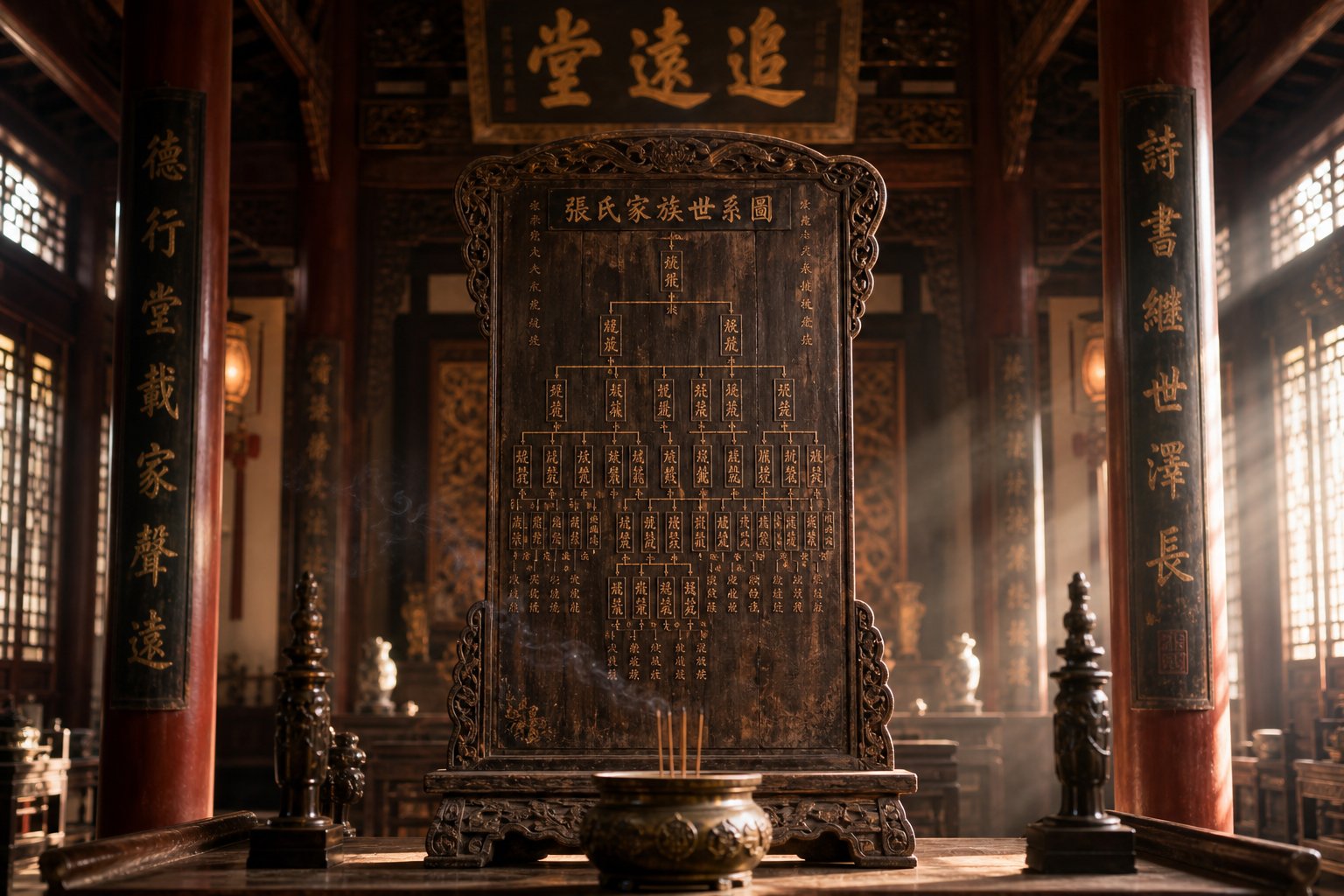
That predetermined character is called a generation name, or 字辈 (zibei). It's a shared character assigned to every member of the same generation within a clan, meaning siblings and paternal cousins all carry the same character in their given name. This system transforms a 3 letter chinese name into a layered code: surname + generation character + individual character. When you see a family where the father is Li Yufeng, his brother is Li Yuyan, and the next generation includes Li Wenlong and Li Wenfeng, you're looking at generational naming in action. The "Yu" and "Wen" characters mark each generation's place in the family line.
How Generational Names Track Family Lineage
The generation character typically occupies the first position of the given name, though some lineages place it second or alternate its position from one generation to the next. What keeps the system organized across centuries is a generation poem (字辈诗), a sequence of characters composed by family elders when a new lineage branch is established. Each successive character in the poem becomes the generation name for the next generation of descendants.
Consider how a generation poem might assign characters across five generations of the Li family:
- Generation 1: Character 裕 (Yu, abundance) - Father's generation: Li Yufeng, Li Yuyan
- Generation 2: Character 文 (Wen, literature) - Children's generation: Li Wenlong, Li Wenfeng
- Generation 3: Character 德 (De, virtue) - Grandchildren's generation
- Generation 4: Character 昌 (Chang, prosperity) - Great-grandchildren's generation
- Generation 5: Character 明 (Ming, brightness) - Great-great-grandchildren's generation
These poems can range from a dozen characters to hundreds. One of the most famous belongs to the descendants of Confucius, whose generation poem was imperially bestowed during the Ming Dynasty and later extended under the Qing Dynasty and the Beiyang government. Because each clan's poem is unique, even a handful of generation characters can act like a fingerprint, helping genealogists identify which family and which branch a person belongs to.
Generation poems were primarily created for male descendants, though some families included daughters as well. The characters often conveyed virtues like loyalty, wisdom, or respect, expressing the hopes a clan held for each successive generation. Structured in lines of five or seven characters, they functioned as both a naming guide and a moral compass.
This system explains why chinese middle names don't really exist in the Western sense. What might look like a middle name to an English speaker is actually the generation character, serving a completely different purpose: marking lineage rather than personal identity.
The Courtesy Name Tradition in Historical Context
Generation names weren't the only layer in ancient chinese names. From at least the Zhou Dynasty onward, men and women of status received a courtesy name (字, zi) upon reaching adulthood. The courtesy name functioned as a person's public identity. It was considered rude for anyone outside the immediate family to use someone's given name directly, so the chinese courtesy name became the standard form of address in social and professional life.
The given name (名, ming) and the courtesy name (字, zi) were chosen to complement each other, often through contrast or elaboration. Together, they form the modern Chinese word for "name": 名字 (mingzi). Beyond these, a person might also accumulate various 号 (hao), or style names, throughout their life to mark achievements, career changes, or personal milestones. The Song Dynasty poet Su Shi, for instance, wrote under the style name Dongpo Jushi ("Resident of the Eastern Slope").
The courtesy name tradition declined sharply in the 20th century. Modern Chinese citizens carry only their legal name, and the elaborate multi-name system of imperial China has largely disappeared. Generation names have also faded in urban areas, though many families in rural southern China and overseas communities still maintain them. Among chinese traditional names, the generational system remains one of the most powerful tools for connecting living people to their ancestors, and genealogy researchers rely on these patterns to reconstruct family trees spanning dozens of generations.
By the mid-20th century, single-character given names without a generation character grew more popular, breaking the classic three-character pattern. Still, the underlying logic of the system persists. Whether a family actively follows a generation poem or not, the structural blueprint of surname + given name remains constant. What varies dramatically, however, is how that name looks and sounds once it crosses regional and linguistic borders.
Regional Variations and Romanization Systems
The same Chinese character can look completely different once it's written in English letters. A person surnamed 王 might appear as Wang on a mainland Chinese passport, Wong on a Hong Kong ID card, and Ong on a Singaporean birth certificate. The name chinese characters haven't changed. What changed is the romanization system used to convert those characters into the Latin alphabet. This single variable creates enormous confusion for anyone trying to trace family connections, verify identities, or simply figure out how to pronounce zhang (张) when they see it written down.
Romanization Systems and Why the Same Name Looks Different
Four major systems govern how Chinese names get spelled in English, and each one emerged from a different historical and political context:
- Hanyu Pinyin - The official romanization system of mainland China since 1958 and the ISO standard since 1982. It's what most Mandarin learners study today. Under Pinyin, the surname 张 becomes "Zhang" and 陈 becomes "Chen."
- Wade-Giles - Developed by British diplomats in the 19th century, this system dominated English-language academic texts for over a century. It uses apostrophes to mark aspiration, so 张 becomes "Chang" and 陈 becomes "Ch'en." You'll still encounter it in older library catalogs and historical texts.
- Jyutping - The standardized romanization for Cantonese, used primarily in Hong Kong and Macau. Because Cantonese preserves sounds that Mandarin has lost (like final consonants -p, -t, -k), cantonese names often look and sound strikingly different from their Mandarin equivalents.
- Tongyong Pinyin - A system briefly adopted in Taiwan between 2002 and 2008 as an alternative to Hanyu Pinyin. Though Taiwan officially switched to Hanyu Pinyin in 2009, many street signs and personal names still reflect Tongyong spellings.
So when you see "Wong" in chinese contexts, you're looking at the Cantonese pronunciation of 王. The character is identical to Mandarin "Wang," but Cantonese preserves an older pronunciation with a rounded vowel. Similarly, the surname 陈 appears as "Chan" in Hong Kong (Cantonese), "Tan" among Hokkien speakers in Singapore and Malaysia, and "Chen" in mainland China. Same character, same family, completely different spellings.
How do you pronounce zhang correctly? In Mandarin Pinyin, the "zh" represents a retroflex sound. Curl your tongue tip back toward the roof of your mouth and produce a sound partway between English "j" and "dr." The vowel "ang" rhymes with "song" in Mandarin. The full pronunciation lands somewhere close to "jahng" for English speakers, though the retroflex initial has no exact English equivalent. In Wade-Giles, this same syllable is written as "chang," which is why older texts refer to the same surname as "Chang" rather than "Zhang."
Mainland China vs Taiwan vs Hong Kong Naming Differences
Regional differences go beyond romanization. The way people handle their surname in chinese-speaking regions reflects distinct political histories and linguistic realities.
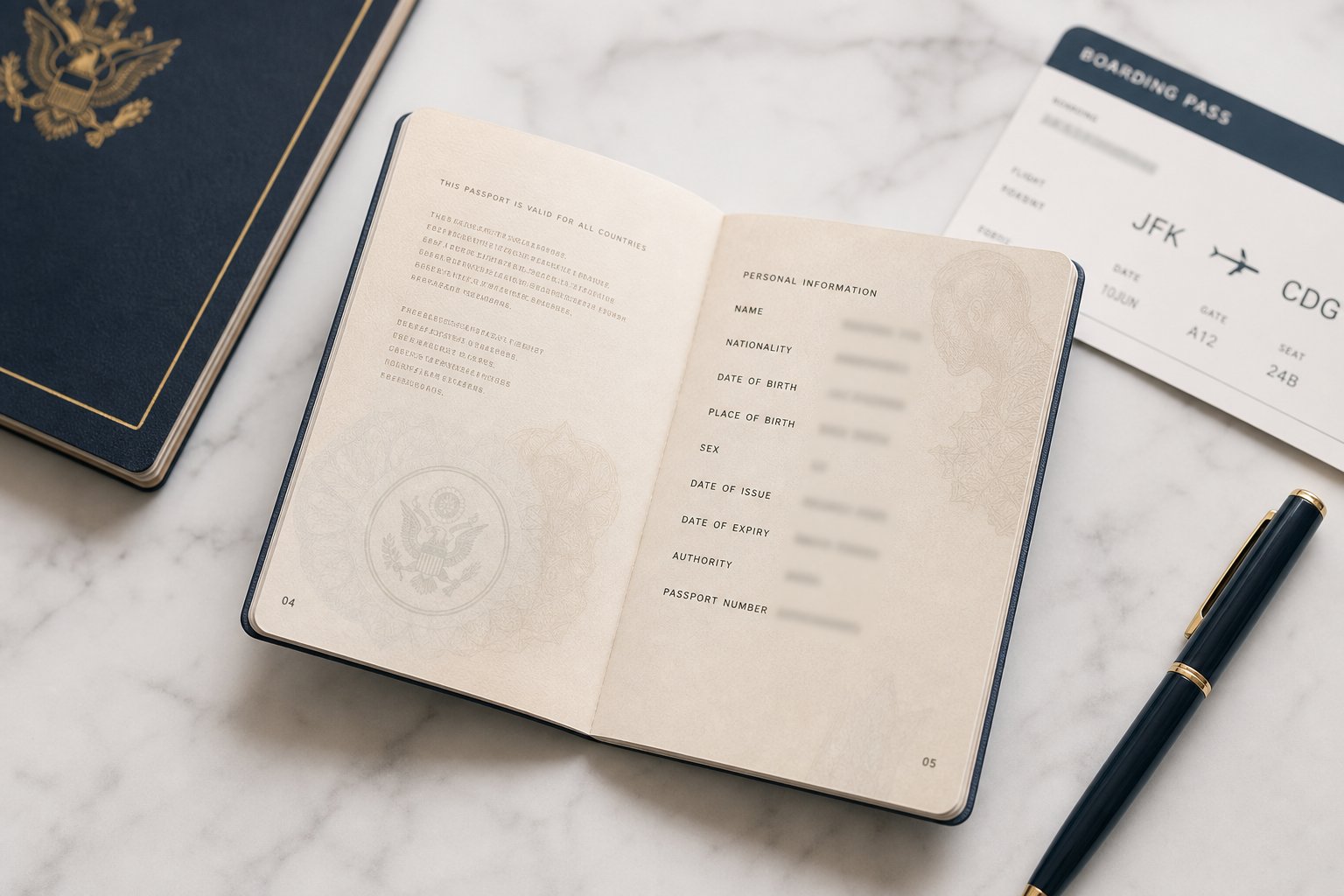
Mainland China uses simplified characters and Hanyu Pinyin exclusively. Names on official documents follow the format: surname + given name, no spaces within the given name. A passport reads "WANG XIAOMING" with the surname sometimes highlighted in a different format.
Taiwan uses traditional characters and a patchwork of romanization systems. Many Taiwanese people romanize their names using Wade-Giles conventions established decades ago, which is why you'll see "Tsai" (蔡) instead of Pinyin's "Cai" and "Hsieh" (谢) instead of "Xie." Personal name romanization in Taiwan is often a family choice rather than a government mandate, creating inconsistencies even within the same family.
Hong Kong follows Cantonese pronunciation for romanization, producing distinctive spellings that immediately signal regional origin. The surname 黄 becomes "Wong" (not "Huang"), 吴 becomes "Ng" (not "Wu"), and 林 becomes "Lam" (not "Lin"). Hong Kong also places the surname first in official English documents, unlike many diaspora communities that reverse the order for Western audiences.
Diaspora communities in Malaysia and Singapore add another layer. Because early Chinese immigrants to Southeast Asia came predominantly from southern provinces speaking Hokkien, Teochew, and Cantonese, their surname romanizations reflect those dialects rather than Mandarin. A Singaporean with the surname "Tan" shares the same character (陈) as a mainland Chinese person named "Chen" and a Hong Konger named "Chan." The spelling alone tells you which dialect group the family belongs to.
The table below shows how five common surnames appear across different romanization systems and regional conventions:
| Character | Pinyin (Mainland) | Wade-Giles (Taiwan) | Cantonese/Jyutping (HK) | Hokkien (Singapore/Malaysia) |
|---|---|---|---|---|
| 王 | Wang | Wang | Wong (wong4) | Ong / Heng |
| 陈 / 陳 | Chen | Ch'en | Chan (can4) | Tan |
| 张 / 張 | Zhang | Chang | Cheung (zoeng1) | Teo / Teoh |
| 黄 / 黃 | Huang | Huang | Wong (wong4) | Ng / Ooi |
| 吴 / 吳 | Wu | Wu | Ng (ng4) | Goh |
Notice that 王 and 黄 both romanize as "Wong" in Cantonese despite being completely different characters. Context and the person's full name usually clarify which surname is intended, but this overlap illustrates why chinese names english translation is never a straightforward one-to-one process. The romanized spelling is an approximation, not a translation. The actual meaning lives in the original characters.
This is also why looking at chinese names in chinese, meaning the original characters rather than their romanized forms, gives you far more information. The character tells you the surname's meaning, its radical structure, and its historical lineage. The romanized version only tells you how one particular dialect pronounces it.
For anyone researching family history or working across Chinese-speaking regions, understanding which romanization system a name uses is the first step toward identifying the correct character behind it. A "Wong" from Hong Kong and an "Ong" from Penang may well be distant relatives sharing the same surname中文 character 王, separated only by dialect and geography.
These regional spelling differences are purely phonetic. The deeper cultural forces that shape a name, from elemental balance to ancestral taboos, operate at the character level and follow traditions that predate any romanization system by millennia.
Cultural Practices and Taboos in Chinese Naming
Those deeper cultural forces aren't abstract philosophy. They form a practical decision-making framework that families still use when choosing chinese baby names. In many households, naming a child involves consulting fortune tellers, counting brushstrokes, and cross-referencing elemental charts before a single character is finalized. The process reveals how seriously chinese naming customs treat the relationship between a name and a person's fate.
The Five Elements and Numerology in Name Selection
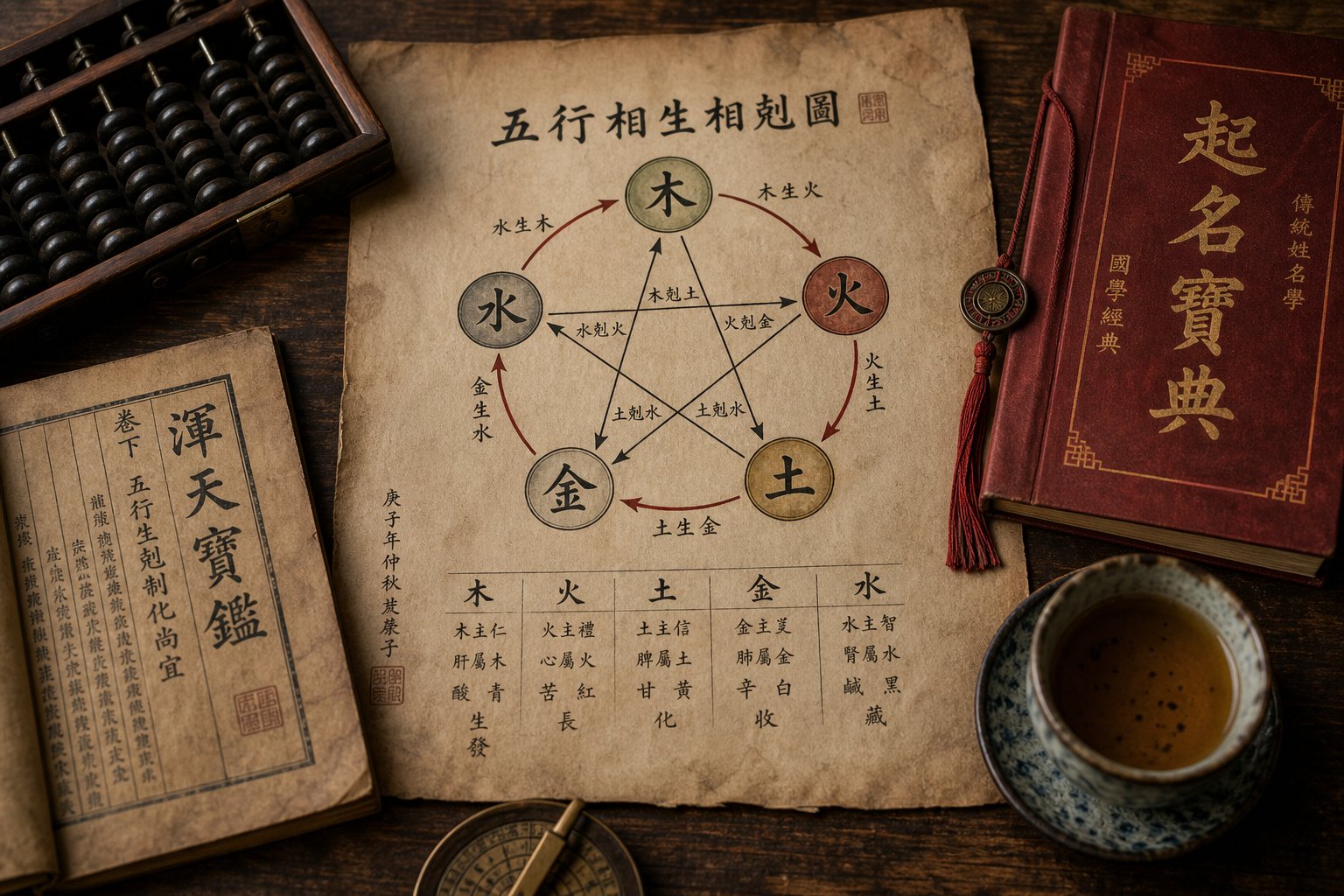
At the heart of traditional name selection sits the theory of five elements (五行, wuxing): metal, wood, water, fire, and earth. According to this system, every person is born with a specific elemental profile determined by their birth year, month, day, and hour. These eight temporal markers, called the "Eight Characters" (八字, bazi), combine to reveal which elements are strong and which are deficient in a child's destiny.
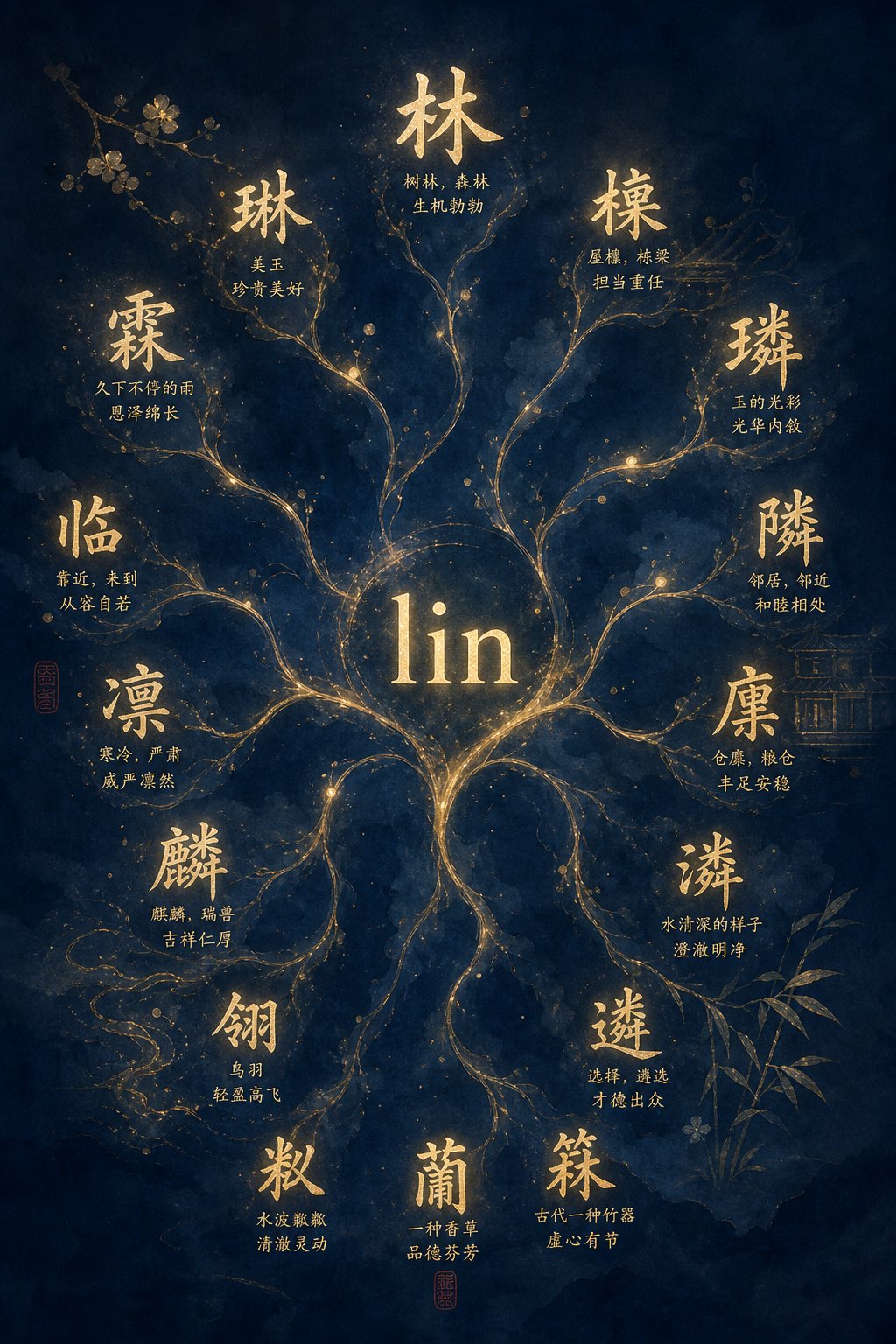
A balanced life requires all five elements in harmony. When a child's birth chart shows a deficiency, parents select name characters that contain the missing element. Someone lacking water might receive a name with the water radical (氵), like 浩 (hao, vast) or 洋 (yang, ocean). A child short on wood could get 林 (lin, forest) or 柏 (bai, cypress). Fortune tellers analyze these eight characters and can reportedly describe a child's personality without ever meeting them, then recommend specific characters that restore elemental balance.
Stroke count adds another layer. Each character's total number of brushstrokes carries numerological significance, and the combined stroke count of the full name must align with favorable numbers. Too few strokes might suggest a life lacking substance; too many could signal overwhelming burdens. This is why figuring out how to name your asian baby in the traditional Chinese way isn't a casual afternoon decision. It's a structured consultation that can take days or weeks, often involving professional naming masters who charge fees for their expertise.
The china name meaning embedded through this process goes beyond simple dictionary definitions. A name chosen through five-element analysis is believed to actively shape the child's fortune, temperament, and life trajectory. Parents aren't just labeling their child. They're attempting to correct cosmic imbalances at birth.
Naming Taboos and Modern Legal Restrictions
Equally important to what goes into a name is what must stay out. Chinese naming customs include a set of taboos (避讳, bihui) that have governed character selection for centuries:
- Names of living elders: Using the same character as a living parent, grandparent, or respected elder is considered deeply disrespectful. Only names of deceased relatives may be referenced, and even then with caution.
- Imperial name avoidance: Historically, characters used in an emperor's name became off-limits for the entire population. During the Tang Dynasty, the character 世 (shi, generation) was avoided because it appeared in Emperor Taizong's given name.
- Homophones of negative words: Characters that sound like 死 (si, death), 苦 (ku, bitter), 败 (bai, defeat), or 病 (bing, illness) are strictly avoided, even if the character itself has a neutral or positive meaning.
- Names of tragic historical figures: Characters associated with people who met violent or unfortunate ends are believed to carry that negative fate forward.
- Clashing initial sounds: Names where every character starts with the same consonant sound are avoided because they're awkward to pronounce and can sound comical.
- Current political leaders: Naming a child after a sitting leader implies competition or presumption and is socially taboo.
Modern China adds legal restrictions on top of these cultural ones. Naming laws in the People's Republic of China require all names to use Chinese characters. Latin letters, numerals, and symbols are prohibited. While there's no official cap on character count, names must be compatible with government computer systems, which support approximately 32,000 characters. Rare or archaic characters that fall outside this digital range are effectively banned, not by law but by technology. One well-known case involved a Beijing woman named Ma Cheng whose name character (three horse radicals stacked together) couldn't be entered into police databases, causing years of bureaucratic headaches.
The government also bans names deemed to "exaggerate religious fervor," and citizens may take their surname from either parent under current marriage law. Beyond these rules, parents retain full creative freedom over given names. No approval process exists, and duplicate names are perfectly legal, which is why millions of people share identical full names.
Despite these constraints, modern trends are reshaping how chinese names meaning and identity intersect. Gender-neutral names have surged in popularity, with parents choosing characters like 睿 (rui, wise) and 宇 (yu, universe) that carry no gendered associations. Pop culture influences naming too. Characters from popular dramas and novels inspire waves of similarly named children. Some parents pursue extreme uniqueness, selecting obscure characters that few people can read, a strategy that backfires when schools and employers can't type the name. Internet-influenced names incorporating tech-related characters like 科 (ke, science) or playful references reflect a generation of digitally connected parents.
What hasn't changed is the underlying belief that chinese name origins matter. Whether a family consults a fortune teller or browses naming apps, the conviction that a well-chosen name shapes a child's path remains deeply rooted. The methods evolve, but the weight placed on getting it right stays constant. That weight only intensifies when a Chinese name needs to function not just domestically but across languages and cultures.
Navigating Chinese Names in International Settings
When a Chinese name crosses into English-speaking environments, it doesn't just get translated. It gets restructured, abbreviated, supplemented, and sometimes replaced entirely. A person who is 王小明 (Wang Xiaoming) at home might introduce themselves as "Kevin Wang" at work in New York, list their name as "WANG Xiaoming" on a passport, and publish academic papers under "X. Wang." Each format serves a different audience, and knowing which version you're looking at prevents the kind of confusion that turns a business meeting awkward or a database entry into a mess.
Why Chinese People Adopt Western Names
The practice of choosing an English name isn't new. It connects to a centuries-old tradition of carrying multiple names for different social contexts. In imperial China, a person had their given name (名, ming), a courtesy name (字, zi) for public use, and often a style name (号, hao) chosen by themselves. English names function as modern-day haos, representing another layer of identity rather than a replacement for the original.
The practical reasons are straightforward. Some Chinese names contain sounds that English speakers struggle with, particularly syllables starting with "x" (a soft "sh" sound), "q" (closer to "ch"), or "zh" (a retroflex "j"). A name like Xu Zhenqi becomes a pronunciation obstacle course for most Western colleagues. Worse, certain perfectly beautiful Chinese names produce unfortunate results when their Pinyin is read through English phonetics. The name 诗婷 (Shiting), meaning "poetic and graceful," is a classic example of why many Chinese professionals opt for an English alternative.
There's also the question of why people don't simply translate their Chinese names into English. Chinese names carry meaning through individual characters, not through the combined sound. Translating 王伟 as "King Great" sounds absurd in English, even though that's what the characters literally mean. The meaning is inseparable from the Chinese linguistic context. This disconnect explains why some people end up with quirky English names like "Sunny" or "Apple." They're choosing based on feeling or sound rather than direct translation.
If you're wondering how do i say my name in chinese or what is my chinese name, the process works differently in reverse. English names don't convert neatly into Chinese characters because the systems operate on fundamentally different principles. Most people either get a phonetic approximation (where characters are chosen to mimic the English sounds) or a semantic adaptation (where a native speaker selects characters that capture the spirit of the name). A chinese name converter tool can suggest phonetic matches, but a culturally resonant Chinese name typically requires human judgment about character meaning, tonal flow, and cultural associations.
Name Order Conventions Across Professional Contexts
The question "what is your name in chinese" has a different structural answer depending on where you encounter it. Chinese name order places the surname first, reflecting the cultural priority of family over individual. International contexts often reverse this to match Western expectations. The result is that the same person's name can appear in four or five different formats depending on the document.
Here's how a single person's name might look across different contexts:
| Context | Format | Example | Notes |
|---|---|---|---|
| Chinese ID card | Surname + Given name (characters) | 王小明 | Characters only, no romanization |
| Chinese passport | SURNAME Given name (Pinyin) | WANG Xiaoming | Surname capitalized, no space in given name |
| International business card | English name + Surname, Given name | Kevin Wang (王小明) | English name first for Western audiences |
| Academic paper | Surname, Initial. | Wang, X. | Follows journal citation style |
| Email signature (global company) | Given name + Surname | Xiaoming Wang | Western order for international colleagues |
Notice the passport format: Chinese passports list the surname first in capitals, followed by the given name with no space between its syllables. So "WANG Xiaoming" tells you immediately that WANG is the surname. This convention helps immigration officers worldwide, but it doesn't always carry over to other documents. On a business card designed for Western clients, the same person might flip the order entirely.
Academic publishing creates its own headaches. When "Wang, X." appears in a citation, it's impossible to distinguish from thousands of other researchers with the same surname and initial. Some Chinese academics now hyphenate their given names (Xiao-Ming Wang) or keep both syllables visible (Xiaoming Wang) to reduce ambiguity.
Chinese Honorifics and Professional Etiquette
Knowing the structure is only half the challenge. Using a Chinese name correctly in professional settings requires understanding chinese honorifics, the titles and forms of address that signal respect.
The standard formula in Chinese business culture is surname + title. You'll hear 王先生 (Wang xiansheng, Mr. Wang), 李女士 (Li nushi, Ms. Li), or 张经理 (Zhang jingli, Manager Zhang). The surname always comes first, and the title follows. In more formal settings, a person's professional position replaces generic honorifics: 王教授 (Professor Wang), 陈主任 (Director Chen).
Common etiquette mistakes Westerners make with Chinese names include:
- Using the given name too early: In Chinese business culture, first-name basis implies close personal friendship. Calling someone "Xiaoming" instead of "Wang xiansheng" in a first meeting feels presumptuous.
- Confusing surname and given name: If someone introduces themselves as "Wang Xiaoming," addressing them as "Mr. Xiaoming" treats the given name as the surname. Always use the first element as the surname unless told otherwise.
- Shortening two-syllable given names: Calling someone named Xiaoming just "Xiao" changes the meaning entirely. "Xiao" (小) means "little" and is used as a casual, sometimes condescending, prefix for younger people.
- Assuming the English name is preferred: Some Chinese professionals use English names purely for Western convenience but prefer their Chinese name. When in doubt, ask which they'd like you to use.
- Ignoring married name conventions: Women in China typically do not take their husband's surname after marriage. Addressing a married woman by her husband's surname can cause confusion.
The safest approach in any professional context is to listen to how a person introduces themselves and mirror that format. If they say "Call me Kevin," use Kevin. If they introduce themselves as "Wang Xiaoming," respond with "Mr. Wang" or "Wang xiansheng" until invited to do otherwise.
These navigation challenges multiply when Chinese names travel not just across languages but across entire generations of diaspora communities, where naming conventions have evolved independently from mainland China for decades or even centuries.
Chinese Names Across the Global Diaspora
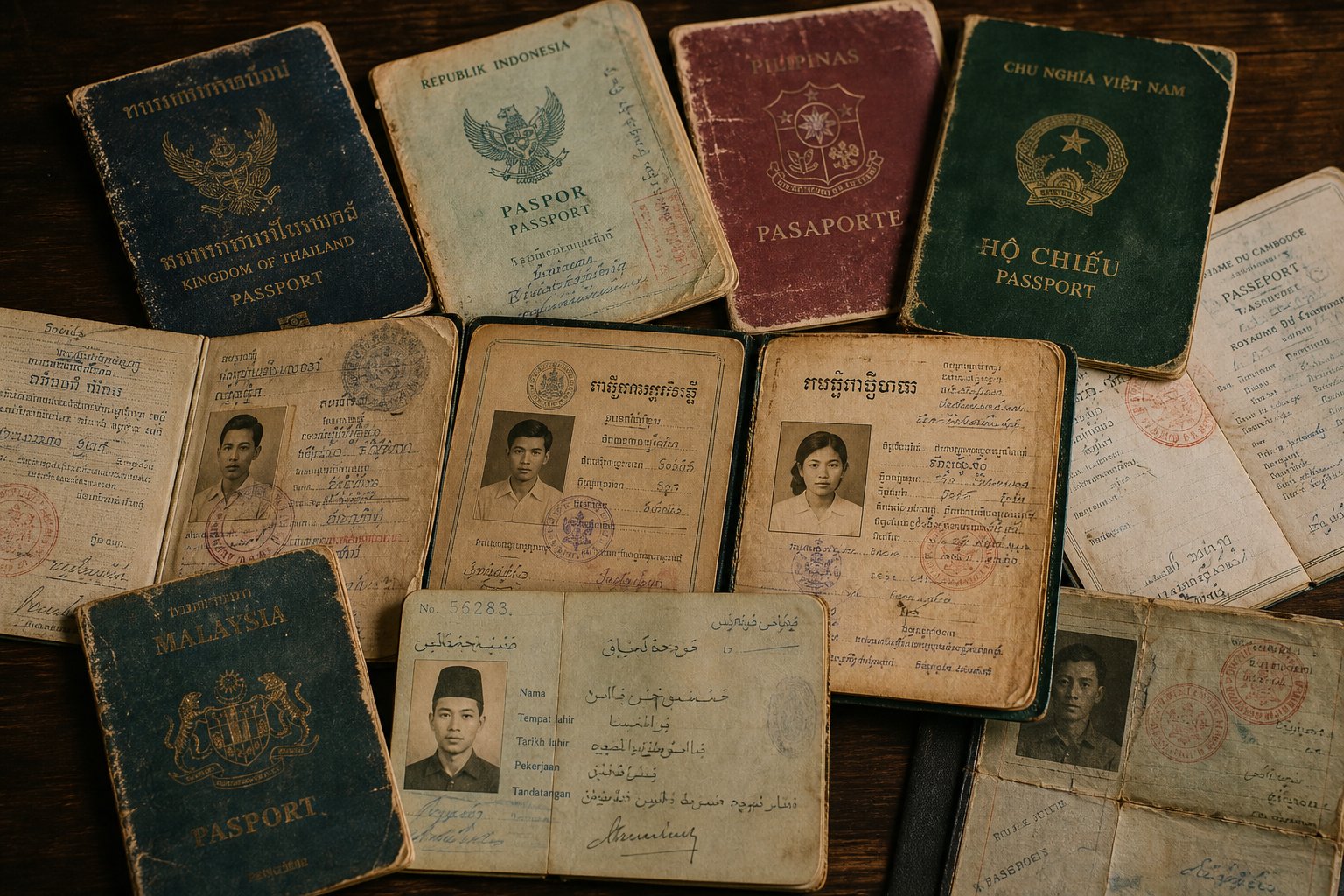
Those independent evolutions aren't subtle. A Chinese family that settled in Jakarta in the 1920s and one that settled in Manila in the same decade now carry names that look nothing alike, even if they share the same ancestral surname character. Diaspora communities across Southeast Asia developed naming conventions shaped by colonial languages, government policies, and local dialect groups, creating a patchwork of asian names that can puzzle even native Chinese speakers.
When you encounter famous chinese names in international contexts, like filmmaker Ang Lee, politician Corazon Aquino (born Cojuangco, a Hokkien-derived surname), or business magnate Robert Kuok, you're seeing the end result of generations of adaptation. Each name tells a story about which country the family landed in, which dialect they spoke, and what political pressures they faced.
Diaspora Naming Patterns Across Southeast Asia
Each major diaspora community developed its own relationship between Chinese identity and local naming conventions. Here's how the patterns diverge:
- Malaysian Chinese: Names are romanized based on ancestral dialect pronunciation rather than Mandarin Pinyin. A person surnamed 黄 might be "Wee" (Hokkien), "Ooi" (Teochew), or "Wong" (Cantonese) depending on their family's linguistic roots. Many Malaysian Chinese carry three-part names: an English given name, a dialect-romanized Chinese name, and a Malay name for official documents.
- Singaporean Chinese: Similar to Malaysia, surnames follow dialect pronunciation. The author Wee Kek Koon, for example, carries the surname 黄 romanized as "Wee" because his ancestors spoke Hokkien from Fujian province. Younger Singaporeans increasingly use Hanyu Pinyin for given names while keeping their dialect-based surname, creating hybrid combinations like "Tan Wei Ming" (Hokkien surname + Mandarin given name).
- Indonesian Chinese: Under Suharto's New Order regime beginning in 1968, Indonesian Chinese were pressured to adopt Indonesian-sounding names. A person surnamed "Huang" or "Wang" might become "Ingkiriwang," while "Lim" became "Limanto" or "Halim." Displays of Chinese culture, including Chinese characters and Mandarin use in public, were prohibited. Though these policies were reversed after 1998, many families retained their Indonesian names across subsequent generations.
- Filipino Chinese: Chinese surnames were often hispanicized during Spanish colonial rule. The surname 许 (Xu/Kho) became "Cojuangco," 蔡 (Cai/Chua) became "Chuatoco," and 林 (Lin/Lim) sometimes became "Limjoco." Modern Filipino Chinese frequently use hyphenated surnames combining their Chinese family name with a Filipino one, like "Tan-Gatue" or "Sy-Changco."
- Vietnamese Chinese (Hoa people): Chinese surnames were adapted to Vietnamese phonetics. 陈 became "Tran," 黄 became "Huynh," and 李 became "Ly." These adaptations are so thorough that many Vietnamese surnames are actually Chinese in origin, though the connection isn't always obvious.
How Immigration Shaped Chinese Surname Adaptations
The Singaporean and Malaysian cases are particularly revealing. As the South China Morning Post documented, the naming convention for people of Chinese descent in these countries reflects the diverse range of Chinese languages spoken by early immigrants. When these communities formed in the 19th and early 20th centuries, Mandarin wasn't the dominant language among southern Chinese emigrants. They spoke Hokkien, Teochew, Cantonese, Hakka, and Hainanese. Their names were romanized accordingly, and those romanizations became permanent legal identities passed down through generations.
This means a mainland Chinese professor encountering the name "Wee Kek Koon" might struggle to connect it to the characters 黄克群, because the Hokkien pronunciation bears almost no resemblance to the Mandarin "Huang Kequn." The asian surname looks unfamiliar even to someone who reads Chinese fluently. It's not that the name is "weird," as one Hong Kong immigration officer once suggested to the writer Wee Kek Koon. It reflects a linguistic diversity that standardized Mandarin has since flattened within China itself.
Indonesia's case is more extreme. The forced name changes under Suharto weren't just phonetic adaptations. They were deliberate erasures of Chinese identity. Families transformed their one-syllable Chinese surnames into multi-syllable Indonesian words, sometimes embedding the original surname within a longer construction (Wang becoming Ingkiriwang) and sometimes abandoning it entirely for common Indonesian names like "Hartono" or "Sutanto." After the discriminatory policies were rolled back, some families reclaimed their Chinese names, but many kept the Indonesian versions that had become their legal identity for decades.
So is Lee an asian or white name? The answer reveals exactly how diaspora adaptation works. "Lee" functions as a romanization of the Chinese surname 李 (Li), the Korean surname 이 (Yi), and an English/Irish surname derived from Old English "leah" (meadow). The spelling converged from completely unrelated origins. A person named Lee could be Chinese, Korean, Anglo-Saxon, or any combination. Context, not spelling, determines origin. This overlap is a direct consequence of how different romanization systems and immigration histories produced identical-looking asian surnames from unrelated source languages.
These diaspora variations remind us that no single naming system captures the full picture. The underlying structure, surname first and given name second, persists across every community. But the surface appearance of that structure has been shaped by colonial languages, political violence, dialect diversity, and generational distance from China. Recognizing these layers is what transforms a confusing string of letters back into a name with history, meaning, and family behind it.
Putting It All Together With Real Name Examples
Recognizing those layers in diaspora names is one thing. Applying the same logic to any Chinese name you encounter, whether on a business card, a family tree, or a news headline, is the practical skill that ties this entire framework together. The best way to build that skill is to walk through real examples character by character.
Complete Name Breakdowns With Meaning Annotations
Let's decode three names in chinese and meanings, each illustrating a different facet of the naming system:
Male (modern): Wang Haoran (王浩然)
- 王 (Wang) - Surname meaning "king." One of the most common chinese names in terms of surname frequency, shared by roughly 100 million people.
- 浩 (Hao) - Vast, grand. Contains the water radical (氵), contributing the Water element.
- 然 (Ran) - Natural, so, correct. Adds a philosophical tone suggesting ease and authenticity.
- Combined meaning: A person of vast, natural integrity. The tonal flow (second tone, fourth tone, second tone) creates a rising-falling-rising rhythm that sounds confident when spoken aloud. Haoran (浩然) is among the most popular chinese names for boys in recent years.
Female (modern): Li Yinuo (李一诺)
- 李 (Li) - Surname meaning "plum tree." The second most common chinese name surname in mainland China.
- 一 (Yi) - One, singular, whole.
- 诺 (Nuo) - Promise, commitment.
- Combined meaning: One who keeps her word. The chinese name first name portion, Yinuo, ranks as the single most popular given name for girls according to China's National Name Report. Its appeal lies in the elegant simplicity of the characters and the aspirational meaning.
Historical: Zhuge Liang, courtesy name Kongming (诸葛亮, 字孔明)
- 诸葛 (Zhuge) - A rare two-character compound surname, tracing to the ancient state of Zhu and the Ge clan.
- 亮 (Liang) - Bright, luminous. His given name.
- 孔明 (Kongming) - Courtesy name meaning "exceedingly bright." Notice how it echoes and amplifies the given name's meaning, a hallmark of classical naming practice.
- Combined meaning: The given name and courtesy name work as a pair, both pointing toward brilliance and clarity. This layered structure is typical of ancient chinese names where the courtesy name elaborated on the birth name's theme.
Key Takeaways for Understanding Any Chinese Name
Every Chinese name follows the same blueprint: surname anchors you in family history, given name expresses individual identity, and every character carries meaning across sound, form, and cultural resonance simultaneously.
Whether you're reading a typical chinese names list or encountering a single unfamiliar name in a professional context, this step-by-step process will help you decode it:
- Identify the surname. It's almost always the first character (occasionally two characters for compound surnames like Ouyang or Sima). Check it against common surname lists if you're unsure.
- Determine the given name. Everything after the surname is the chinese name first name, whether one or two characters. Don't split it into "first" and "middle."
- Check the romanization system. Is it Pinyin, Wade-Giles, Cantonese, or a dialect spelling? This tells you the person's regional background.
- Look up character meanings. Each character in the given name carries deliberate meaning. Even a basic dictionary search reveals the parents' intentions.
- Consider generational patterns. If siblings or cousins share one character in their given names, that's a generation name marking their place in the family lineage.
- Respect the name order. In Chinese contexts, use surname + title (Wang xiansheng). In international contexts, follow the person's own preferred format.
Understanding chinese name structure isn't about memorizing rules. It's about recognizing that every name you encounter, from the most common chinese names like Wang Wei to rare compound-surname constructions, follows the same underlying logic. The surname connects to ancestors. The given name connects to aspirations. And the characters themselves connect to thousands of years of linguistic, philosophical, and artistic tradition. Once you see that architecture, every Chinese name becomes a small window into someone's family story and cultural world.
Frequently Asked Questions About Chinese Name Structure
1. How are Chinese names structured differently from Western names?
Chinese names place the surname (family name) first, followed by the given name, which is the opposite of Western naming order. A typical Chinese name contains two or three characters total: one character for the surname and one or two characters for the given name. There are no middle names in the Western sense. What might appear to be a middle name is usually a generational character shared among siblings and cousins to mark their place in the family lineage.
2. Why do Chinese surnames come first in a name?
The surname-first order reflects a deep cultural value in Chinese society where family identity takes precedence over individual identity. This convention has remained consistent for thousands of years. In Chinese culture, you belong to your family before you belong to yourself, and the name structure mirrors that priority. When conducting business or formal interactions in China, people are addressed by surname plus title, reinforcing the importance of family lineage in social contexts.
3. What is a generational name in Chinese naming tradition?
A generational name (字辈, zibei) is a shared character assigned to every member of the same generation within a clan. Siblings and paternal cousins all carry this identical character in their given name, typically in the first position. These characters are drawn from a family lineage poem composed by ancestors, where each successive character in the poem corresponds to the next generation. This system allows genealogists to identify a person's generation, family branch, and ancestral connections simply by examining their name.
4. Why does the same Chinese surname have different English spellings?
Different romanization systems and regional dialects produce varied English spellings for the same Chinese character. For example, the surname 王 appears as Wang in Mandarin Pinyin, Wong in Cantonese (Hong Kong), and Ong in Hokkien (Singapore/Malaysia). The character itself is identical, but the pronunciation differs across Chinese dialect groups, and each region uses its own system to convert that pronunciation into Latin letters. Knowing which system was used helps identify a person's regional background.
5. How do Chinese parents choose characters for a baby's name?
Traditional Chinese name selection involves multiple considerations: the five elements theory (wuxing) to balance elemental deficiencies in the child's birth chart, stroke count numerology for favorable numbers, avoidance of taboo characters (homophones of negative words, names of living elders, or tragic historical figures), and the aesthetic balance of how characters look when written together. Many families consult fortune tellers or naming masters who analyze the child's birth date and time to recommend characters that promote a harmonious life path.