What Chinese Cat Owners Actually Name Their Cats
Search for cat names Chinese pet owners use, and you'll find dozens of English-language lists suggesting words like "Long" for dragon or "Mei" for beautiful. They sound exotic. They look nice on paper. But scroll through Douyin or Xiaohongshu — China's most popular social platforms — and you'll notice something odd. Real Chinese cat owners rarely use those names. Instead, their cats answer to names like Pudding, Dumpling, or Little Orange. The gap between what Western sites recommend and what actually happens in Chinese homes is wide.
Why Most Chinese Cat Name Lists Get It Wrong
Most English-language resources treat chinese cat names like a translation exercise. They pick pretty Chinese words, slap on a pinyin spelling, and call it a list. The problem? Naming a cat in Chinese follows completely different rules than naming a child or translating vocabulary. Chinese pet names rely on reduplication (repeating a syllable for cuteness), food references, and affectionate prefixes that signal "this is my little creature, and I adore it." These patterns are baked into the language itself. When you skip them, you end up with names that sound formal, stiff, or just plain strange to a native speaker.
There is a real difference between translating Chinese words into cat names and using the names Chinese people actually give their cats. One sounds like a dictionary entry. The other sounds like love.
What You Will Learn From This Guide
This guide draws from real chinese pet names trending across Chinese social media communities — not textbook translations. You'll walk away with authentic chinese names for cats organized by theme, a pronunciation system that uses familiar English sounds, cultural context for why each name works, and a decision framework to pick the right one. Whether you're drawn to asian names for cats because of cultural heritage or simply because they sound beautiful, the goal here is the same: find a name your cat will actually respond to, one that carries genuine meaning rooted in how millions of Chinese cat owners express affection every single day.
That authenticity starts with understanding one small but powerful character — and the tonal system that gives it life.
How to Say Cat in Chinese and Why Tones Matter
Every name on this list builds from a single character. Before you can call your cat anything in Mandarin, you need to get comfortable with the chinese word for cat itself — and the tonal system that makes it sound right.
The Character 猫 and How to Pronounce It
The chinese character for cat is 猫, and its pinyin spelling is māo. Wondering how to say cat in chinese without butchering it? Think of the word "mow" — as in mowing a lawn — spoken with a flat, steady pitch. That flat pitch is Mandarin's first tone: your voice stays level from start to finish, like holding a single musical note. No rise, no dip.
Here's the fun part: māo sounds remarkably close to the English word "meow." Many learners remember it instantly because the chinese for cat practically mimics the sound a cat makes. The actual onomatopoeia for a cat's meow in Chinese is a separate character — 喵 (miāo) — but the resemblance between the two makes 猫 one of the easiest characters to recall.
Visually, the cat chinese character breaks into two components. On the left sits 犭(quǎn), the animal radical you'll spot in characters for dog (狗), lion (狮), and wolf (狼). On the right is 苗 (miáo), which means "sprout" but here serves as a phonetic hint. When you see 犭in any character, you know you're dealing with an animal — a helpful pattern if you're browsing cat in chinese characters for the first time.
Mandarin vs Cantonese Differences
Mandarin isn't the only Chinese language your cat's name might come from. In Cantonese — spoken widely in Hong Kong, Guangdong, and diaspora communities — the same character 猫 is pronounced "maau" (roughly rhyming with "cow" but with an "m" start). The mandarin word for cat uses a flatter, shorter vowel sound, while Cantonese stretches it slightly longer with a different tonal contour.
For naming purposes, most popular chinese cat names you'll encounter online default to Mandarin pronunciation, since Mandarin is the standard across mainland China's massive pet community. If your family speaks Cantonese, the same characters work perfectly — just adjust the sound. The written name stays identical either way.
Related Cat Vocabulary in Chinese
Once you know 猫, a handful of related terms unlock the vocabulary you'll see repeated in name lists and pet communities across China:
| Chinese | Pinyin | Tone | Sounds Like | Meaning |
|---|---|---|---|---|
| 猫 | māo | 1st (flat) | "mow" (lawnmower) | cat |
| 小猫 | xiǎo māo | 3rd + 1st | "shee-OW mow" | kitten |
| 猫咪 | māomī | 1st + 1st | "mow-mee" | kitty (affectionate) |
| 小猫咪 | xiǎo māomī | 3rd + 1st + 1st | "shee-OW mow-mee" | little kitty |
| 喵 | miāo | 1st (flat) | "meow" (flat tone) | meow (sound) |
The term 猫咪 (māomī) deserves special attention. It's the soft, affectionate equivalent of "kitty" in English — the word Chinese speakers default to on social media, in conversation, and when cooing at their pets. If you've ever wondered what "kitty" means in a Chinese context, 猫咪 is your answer. It carries warmth and endearment that the plain character 猫 doesn't quite convey on its own.
You'll also notice 小 (xiǎo) appearing constantly. It means "little" or "small," and Chinese speakers attach it to almost everything they find cute or dear. 小猫 is simply "little cat," but the emotional weight goes beyond size — it signals affection. This prefix shows up in dozens of popular names, which is exactly where Chinese naming patterns start to get interesting.
Chinese Naming Patterns That Make Perfect Pet Names
Chinese parents spend weeks consulting dictionaries, generational naming charts, and even fortune tellers before naming a child. Naming a cat? Completely different energy. Pet names in chinese follow informal patterns that would never appear on a birth certificate — and that's exactly what makes them sound so affectionate. These patterns signal closeness, playfulness, and the kind of intimacy reserved for creatures you genuinely adore.
Three structures dominate cat names in chinese across social media and real households alike: reduplication, the xiǎo prefix, and the er suffix. Once you recognize them, you'll spot them everywhere.
Reduplication Names and Why They Sound Adorable
Imagine calling someone by repeating a single syllable twice — that's reduplication, and it's the most popular naming pattern for pets in China. Doubling a character instantly transforms it from a regular word into something soft and endearing. It works the same way English speakers might say "night-night" instead of "goodnight" to a child. The repetition itself carries emotional warmth.
Interestingly, this same reduplication pattern appears in chinese pet names for lovers — couples often call each other 宝宝 (Bǎobǎo) or 甜甜 (Tiántián) using the exact same structure. The linguistic logic is identical: repetition equals intimacy. For cats, it also creates short, rhythmic sounds that are easy to call out across a room.
Here are popular reduplication names you'll find across Chinese pet communities:
- 毛毛 (Máomáo) — "Fluffy," literally "fur fur." One of the most common nicknames in chinese for pets with soft coats.
- 咪咪 (Mīmī) — A sound-based name mimicking a cat's soft meow. Classic and universally recognized.
- 豆豆 (Dòudòu) — "Bean Bean." Cute, round, and perfect for a small cat.
- 乖乖 (Guāiguāi) — "Well-behaved." Ideal for a calm, gentle cat that never knocks things off tables.
- 球球 (Qiúqiú) — "Ball Ball." For the round, chubby cat who curls into a perfect sphere.
- 点点 (Diǎndiǎn) — "Dot Dot." Great for cats with spotted or speckled coats.
- 团团 (Tuántuán) — "Round Round." Another shape-based name for plump, cuddly cats.
- 皮皮 (Pípí) — "Mischievous." For the cat who's always getting into trouble.
- 蛋蛋 (Dàndàn) — "Egg Egg." Sounds silly in English, but it's genuinely popular and endearing in Chinese.
The Xiǎo Prefix for Little Ones
Adding 小 (xiǎo) before a descriptive word is the second most common pattern. It translates to "little," but the emotional meaning goes further — it conveys fondness, protectiveness, and a gentle kind of ownership. You're not just describing size. You're saying "this small thing belongs to me, and I treasure it."
Chinese speakers use this prefix so naturally that it barely registers as a conscious choice. A white cat becomes 小白. An orange cat becomes 小橘. The pattern is intuitive: pick your cat's most obvious trait, add 小, and you have a name that any Chinese speaker would immediately understand.
- 小白 (Xiǎo Bái) — "Little White." The go-to name for white cats across China.
- 小黑 (Xiǎo Hēi) — "Little Black." Equally common for dark-furred cats.
- 小花 (Xiǎo Huā) — "Little Flower." Used for calico or multicolored cats with patterned coats.
- 小虎 (Xiǎo Hǔ) — "Little Tiger." Perfect for a feisty, energetic cat with tabby stripes.
- 小鱼 (Xiǎo Yú) — "Little Fish." A playful name referencing a cat's favorite food.
- 小宝 (Xiǎo Bǎo) — "Little Treasure." Pure affection, no physical description needed.
- 小橘 (Xiǎo Jú) — "Little Orange." Hugely popular for orange tabbies, which Chinese internet culture adores.
- 小美 (Xiǎo Měi) — "Little Beauty." For the cat that knows she's gorgeous.
A third pattern worth knowing is the 儿 (er) suffix, which adds a soft, lilting sound to the end of a name. It's especially common in northern Chinese dialects and gives names a breezy, casual feel — think 雪儿 (Xuě'ér, "Snowy") or 风儿 (Fēng'ér, "Breezy"). The suffix doesn't change meaning; it simply makes the name sound more tender and personal.
Trending Names From Chinese Pet Communities
Scroll through Douyin's pet channels or Xiaohongshu's cat hashtags and certain names appear over and over. Trends shift, but the underlying patterns stay consistent. Recent favorites combine all three structures with food words, pop culture references, and personality traits:
- 奶茶 (Nǎichá) — "Milk Tea." A massive trend reflecting China's bubble tea obsession.
- 布丁 (Bùdīng) — "Pudding." Soft, sweet, and easy to pronounce.
- 年糕 (Niángāo) — "Rice Cake." Sticky, cute, and culturally resonant.
- 麻薯 (Máshǔ) — "Mochi." Borrowed from Japanese but widely used in Chinese pet circles.
- 芒果 (Mángguǒ) — "Mango." Bright, cheerful, and popular for orange-toned cats.
- 六六 (Liùliù) — "Six Six." The number six represents smoothness and luck in Chinese culture.
- 肉肉 (Ròuròu) — "Meaty." An affectionate way to describe a chubby, squeezable cat.
- 糯米 (Nuòmǐ) — "Sticky Rice." Soft, white, and comforting — just like the cat.
Notice how food names keep surfacing? That's not a coincidence. Food-based naming is its own cultural phenomenon in Chinese pet culture, driven by a logic that might surprise you — and it runs far deeper than just thinking dumplings are cute.
Food-Inspired Chinese Cat Names and Their Cultural Roots
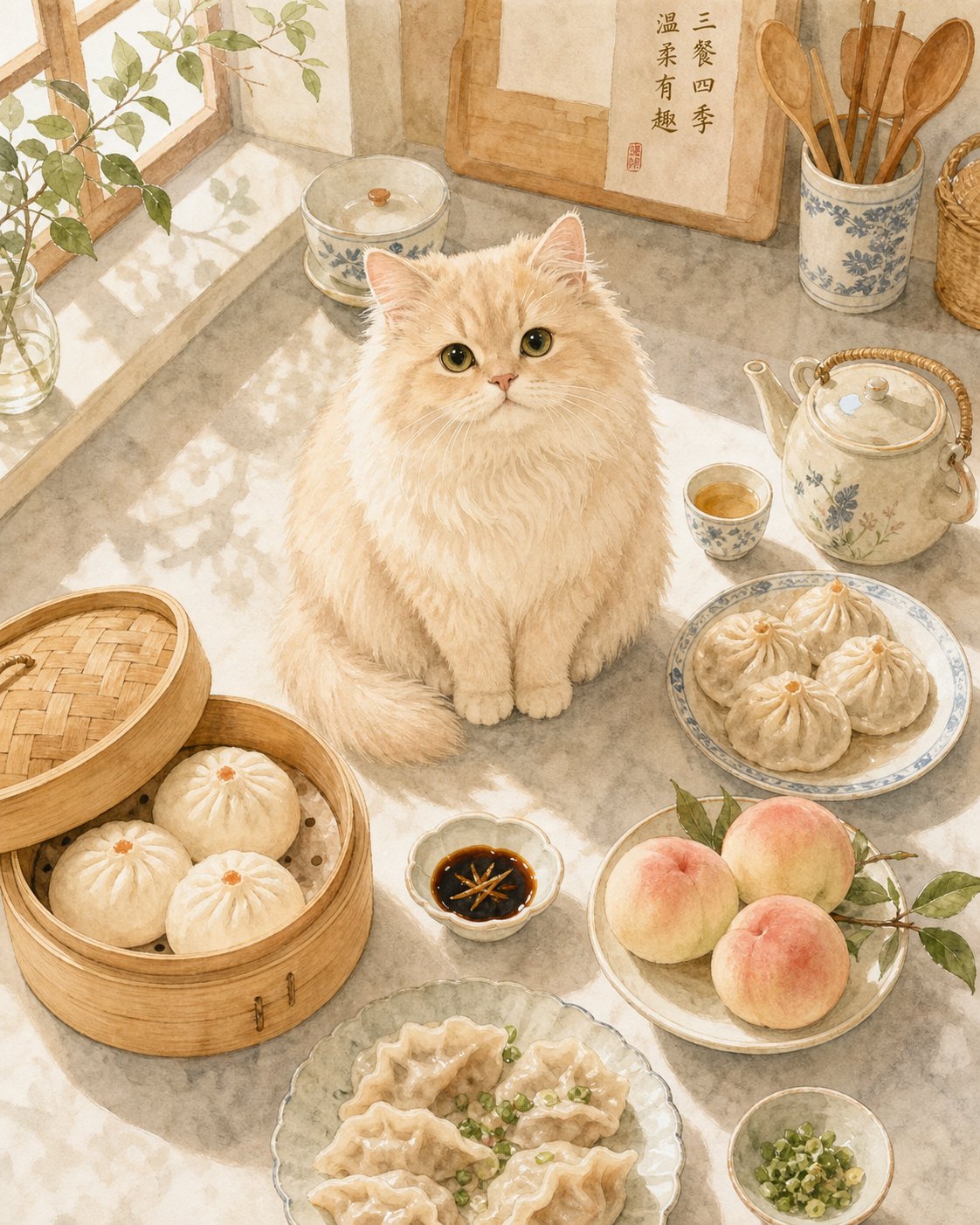
In China, naming your cat after food isn't quirky or random — it's the default. Browse any Chinese pet forum, and food names outnumber every other category combined. Dumplings, peaches, pudding, milk tea. These aren't joke names. They're given with genuine affection, and the cultural reasoning behind them reveals something deeper about how Chinese speakers express love.
Why Food Names Dominate Chinese Pet Culture
Why would you name something precious after something you eat? In Chinese culture, the logic is surprisingly intuitive: you name what you cherish after what brings you joy. Food carries overwhelmingly positive associations — comfort, warmth, home, celebration. Calling your cat "Dumpling" isn't reductive. It's intimate. It says "you are soft, you are comforting, you are something I love having in my life."
There's also a practical element. Food names are considered unpretentious and down-to-earth. In Chinese social norms, giving a pet an overly grand or literary name can feel awkward — like you're taking yourself too seriously. A cute chinese cat named 布丁 (Pudding) signals that the owner is relaxed, playful, and doesn't need to prove anything. It's naming as personality statement, both for the cat and the human.
Food names also tend to be short, punchy, and phonetically satisfying. Most are two syllables with clear tonal patterns, making them easy to call out and easy for a chinese kitten to learn. That combination of cultural warmth, social ease, and phonetic sharpness explains why food dominates the naming landscape so completely.
Fruit and Dessert Names for Cats
Fruit names rank among the most popular asian kitten names in Chinese-speaking communities. They're colorful, cheerful, and often match a cat's appearance — an orange tabby becomes 橘子 (Orange), a round white cat becomes 汤圆 (Rice Ball). Dessert names lean sweeter and softer, perfect for cats with gentle temperaments or cream-colored coats.
| Chinese Characters | Pinyin | English Meaning | Pronunciation Tip |
|---|---|---|---|
| 橘子 | Júzi | Orange (fruit) | "JOO-dzuh" — rhymes with "who's a" |
| 桃子 | Táozi | Peach | "TOW-dzuh" — "tow" like towing a car |
| 芒果 | Mángguǒ | Mango | "MAHNG-gwoh" — close to English "mango" |
| 布丁 | Bùdīng | Pudding | "BOO-ding" — almost like English "pudding" reshaped |
| 奶茶 | Nǎichá | Milk Tea | "NYE-chah" — "nye" rhymes with "eye" |
| 麻薯 | Máshǔ | Mochi | "MAH-shoo" — soft and quick |
| 草莓 | Cǎoméi | Strawberry | "TSOW-may" — "tsow" like "cow" with a T |
| 西瓜 | Xīguā | Watermelon | "SHEE-gwah" — fast two syllables |
Among these, 橘子 and 奶茶 are currently trending hardest on Douyin and Xiaohongshu. The milk tea craze in China has spilled directly into pet naming — owners joke that their cat is as addictive and comforting as their daily bubble tea order. Meanwhile, 橘子 dominates because orange tabbies are wildly popular in China, and the name is a perfect visual match.
Classic Food Names Every Chinese Cat Owner Knows
Beyond fruits and desserts, staple foods and traditional snacks form another massive category. These names carry cultural weight because they reference dishes tied to holidays, family gatherings, and childhood memories. Naming a cat 饺子 (Dumpling) doesn't just sound cute in chinese — it evokes warmth, togetherness, and the comfort of home cooking.
| Chinese Characters | Pinyin | English Meaning | Pronunciation Tip |
|---|---|---|---|
| 饺子 | Jiǎozi | Dumpling | "JOW-dzuh" — "jow" rhymes with "cow" |
| 汤圆 | Tāngyuán | Rice Ball (sweet soup) | "TAHNG-ywen" — smooth and round-sounding |
| 年糕 | Niángāo | Rice Cake | "NYEN-gow" — "gow" like "cow" |
| 糯米 | Nuòmǐ | Sticky Rice | "NWOH-mee" — soft ending |
| 包子 | Bāozi | Steamed Bun | "BOW-dzuh" — "bow" like taking a bow |
| 花卷 | Huājuǎn | Flower Roll (bread) | "HWAH-jwen" — quick and light |
| 豆腐 | Dòufu | Tofu | "DOH-foo" — nearly identical to English "tofu" |
| 小馒头 | Xiǎo Mántou | Little Steamed Bun | "SHYOW mahn-toe" — three gentle syllables |
汤圆 deserves a special mention. These sweet glutinous rice balls are traditionally eaten during the Lantern Festival and symbolize family reunion. Naming a cat 汤圆 carries that emotional resonance — round, sweet, and bringing people together. It's one of those names that makes Chinese speakers smile immediately because the cultural association is so warm.
饺子 and 包子 follow similar logic. They're comfort foods tied to family rituals, and their two-syllable structure with a crisp ending makes them phonetically ideal for calling a cat. You'll notice that many of these names end in the "zi" sound (子), which adds a casual, diminutive quality — much like adding "-ie" to English names.
Food names work so well precisely because they sit at the intersection of everything Chinese pet naming values: affection without pretension, cultural resonance without heaviness, and sounds that roll off the tongue when you're calling a cute chinese cat in from the balcony. They're proof that the best names don't need to be grand — they just need to feel right.
Of course, not every owner wants their cat named after lunch. Some prefer names that carry a different kind of weight — the kind rooted in centuries of Chinese beliefs about fortune, prosperity, and the power of auspicious words to shape reality.
Lucky Chinese Cat Names Rooted in Cultural Symbolism
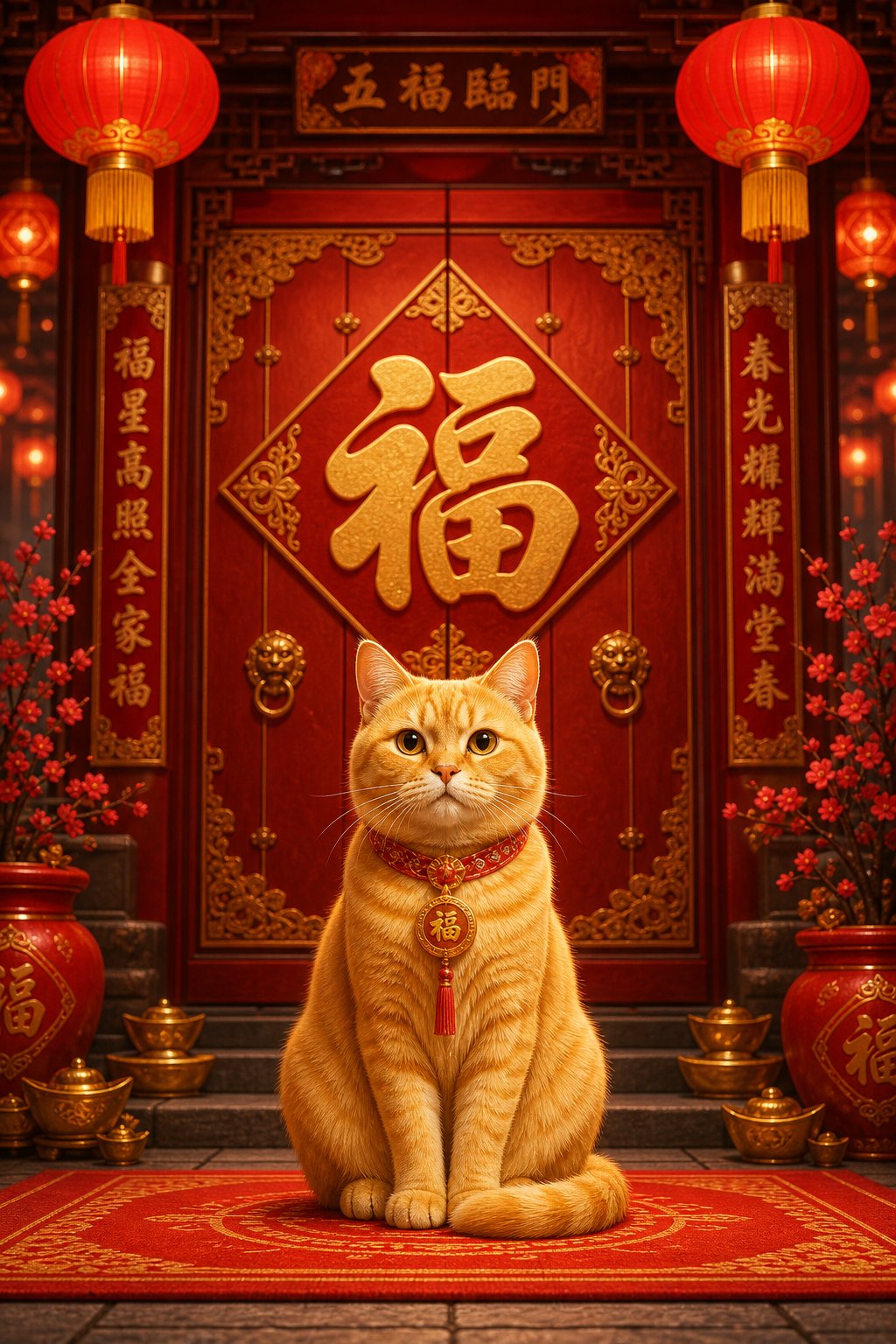
In Chinese tradition, words carry power. The right name doesn't just label something — it invites energy into a household. This belief runs deep through Chinese culture, from the names parents give children to the phrases displayed during Lunar New Year. And yes, it extends to cats. A chinese name related to luck isn't just wishful thinking for many owners. It's a deliberate act of welcoming good fortune through the door, one paw at a time.
Auspicious naming reflects a worldview where language and reality are intertwined. Saying something positive — or naming a living creature after prosperity — is believed to attract that very quality. When a cat named "Beckoning Wealth" greets you at the door each evening, the symbolism isn't lost on anyone in the household. It's practical optimism embedded in daily life.
In Chinese households, naming a pet after luck or wealth isn't superstition — it's a cultural practice rooted in the belief that positive words create positive energy in a living space.
Names That Invite Wealth and Prosperity
Wealth-related names are among the most popular choices for cats in chinese culture, especially for cats that greet visitors at the door or sit prominently in living spaces. These names draw from traditional symbols of financial fortune — gold, coins, treasure — and transform them into affectionate daily calls.
- 招财 (Zhāocái) — "Beckoning Wealth." Directly references the beckoning gesture of the lucky cat figurine. Pronunciation: "JAO-tsai" with a flat first tone on both syllables.
- 元宝 (Yuánbǎo) — "Gold Ingot." The boat-shaped gold pieces used as currency in ancient China. Pronunciation: "YWEN-bow" — "bow" like taking a bow.
- 金子 (Jīnzi) — "Gold." Simple, direct, and unmistakable in meaning. Pronunciation: "JIN-dzuh" — crisp and short.
- 钱钱 (Qiánqián) — "Money Money." Uses reduplication to make the word for money sound cute rather than greedy. Pronunciation: "CHYEN-chyen."
- 财财 (Cáicái) — "Wealth Wealth." Another reduplicated form, softening the concept into something endearing. Pronunciation: "TSAI-tsai."
- 多多 (Duōduō) — "Plenty Plenty." Implies abundance in all things. Pronunciation: "DWOH-dwoh" — round and cheerful.
- 锦鲤 (Jǐnlǐ) — "Koi Fish." In Chinese internet culture, a "koi" person is someone blessed with extraordinary luck. Pronunciation: "JIN-lee."
Among these, 招财 remains the single most iconic luck-based cat name in China. Its popularity connects directly to one of the most recognizable symbols in East Asian culture — the waving cat figurine you've seen in restaurants and shops worldwide.
Fortune and Blessing Names
Beyond wealth specifically, a broader category of names draws from concepts of general good fortune, blessings, and thriving energy. These feel slightly less material and more spiritual — they wish for happiness, smooth sailing, and a blessed life rather than money alone.
- 福福 (Fúfú) — "Double Blessing." The character 福 is the most powerful luck symbol in Chinese culture, displayed on doors during New Year. Pronunciation: "FOO-foo."
- 来福 (Láifú) — "Fortune Comes." A classic name implying that luck arrives with this cat. Pronunciation: "LYE-foo."
- 旺旺 (Wàngwàng) — "Prosperous" or "Thriving." Also mimics a dog's bark, which adds a layer of humor for cat owners. Pronunciation: "WAHNG-wahng."
- 吉祥 (Jíxiáng) — "Auspicious." A formal-sounding name that carries serious cultural weight. Pronunciation: "JEE-shyang."
- 如意 (Rúyì) — "As You Wish." References the ruyi scepter, a traditional symbol of fulfilled desires. Pronunciation: "ROO-yee."
- 平安 (Píng'ān) — "Peace and Safety." A wish for the household's wellbeing. Pronunciation: "PING-ahn."
- 顺顺 (Shùnshùn) — "Smooth Smooth." Hopes that everything goes smoothly in life. Pronunciation: "SHWUN-shwun."
- 有福 (Yǒufú) — "Possessing Fortune." States directly that this cat carries blessings. Pronunciation: "YOH-foo."
福福 and 来福 appear constantly across Chinese pet communities. The character 福 alone is so culturally loaded — it's the red diamond-shaped decoration hung on nearly every door during Spring Festival — that doubling it into a cat name feels like concentrating all that positive energy into a single furry creature. Cats in chinese culture have long been associated with domestic harmony, and a name like 来福 reinforces that role explicitly.
The Lucky Cat Connection
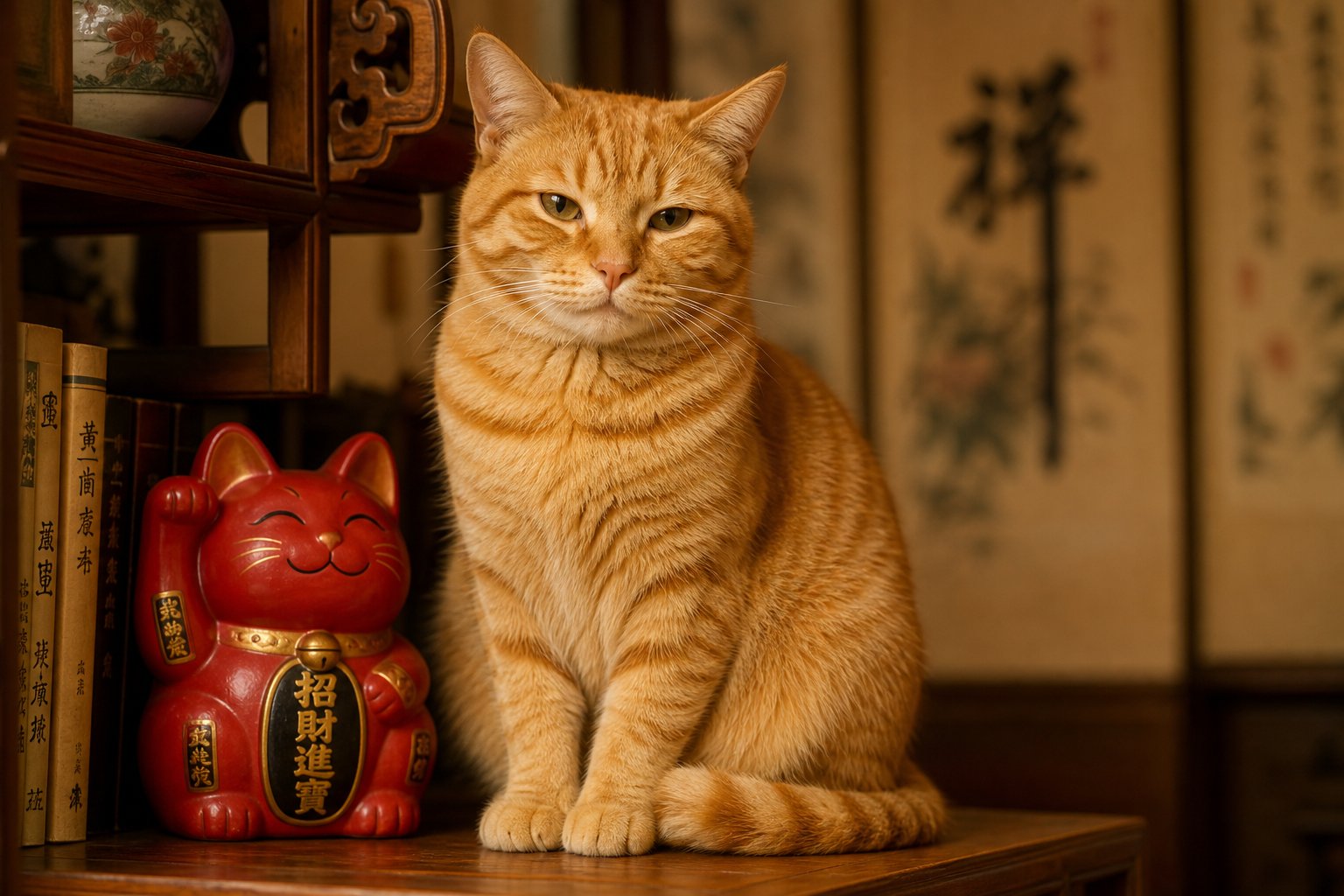
You've almost certainly seen the 招财猫 (Zhāocái Māo) — the "beckoning wealth cat" figurine with one raised paw, found in businesses across Asia. What many people outside China don't realize is that the chinese cat meaning behind this figurine directly influences how real cats are named. The figurine represents a cat literally waving prosperity toward its owner. Naming a living cat 招财 completes the symbolism: your actual cat becomes the lucky charm.
This connection explains why cats in chinese culture occupy a unique symbolic space. They're not just pets — they're seen as creatures capable of anchoring positive energy in a home. A cat that sits by the entrance, a cat with a golden or orange coat, a cat that seems to "welcome" guests — these cats especially receive luck-based names because their behavior mirrors the figurine's gesture.
Color symbolism plays a role too. Gold and orange cats frequently receive wealth names because their coat color echoes the color of gold ingots and coins. Black cats, rather than being unlucky as in some Western traditions, are sometimes considered protective in Chinese folk belief — capable of warding off evil spirits. A black cat might earn the name 辟邪 (Pìxié, "Ward Off Evil") or 墨宝 (Mòbǎo, "Ink Treasure").
Lucky numbers also influence naming. The number six (六 liù) represents smoothness and ease, which is why 六六 (Liùliù) appears on trending name lists. Eight (八 bā) symbolizes wealth because it sounds like 发 (fā, "to prosper"), making 八八 (Bābā) or 发财 (Fācái, "Get Rich") viable options. Meanwhile, owners avoid the number four (四 sì) because it sounds like 死 (sǐ, "death") — a tonal near-miss that carries real cultural weight.
Whether rooted in ancient symbolism or modern internet culture, these luck-based names reveal something essential about the relationship between Chinese owners and their cats. The cat isn't just a companion. It's a living embodiment of hope — a small, purring reminder that good things are always welcome in the home.
Luck and fortune speak to what owners wish for. But many Chinese cat owners take an entirely different approach — they look at the cat itself and let its appearance do the naming. A coal-black coat, a snowball-white belly, or the distinctive tabby swirls of a native Chinese breed can all point directly to the perfect name.
Chinese Cat Names Based on Appearance and Breed
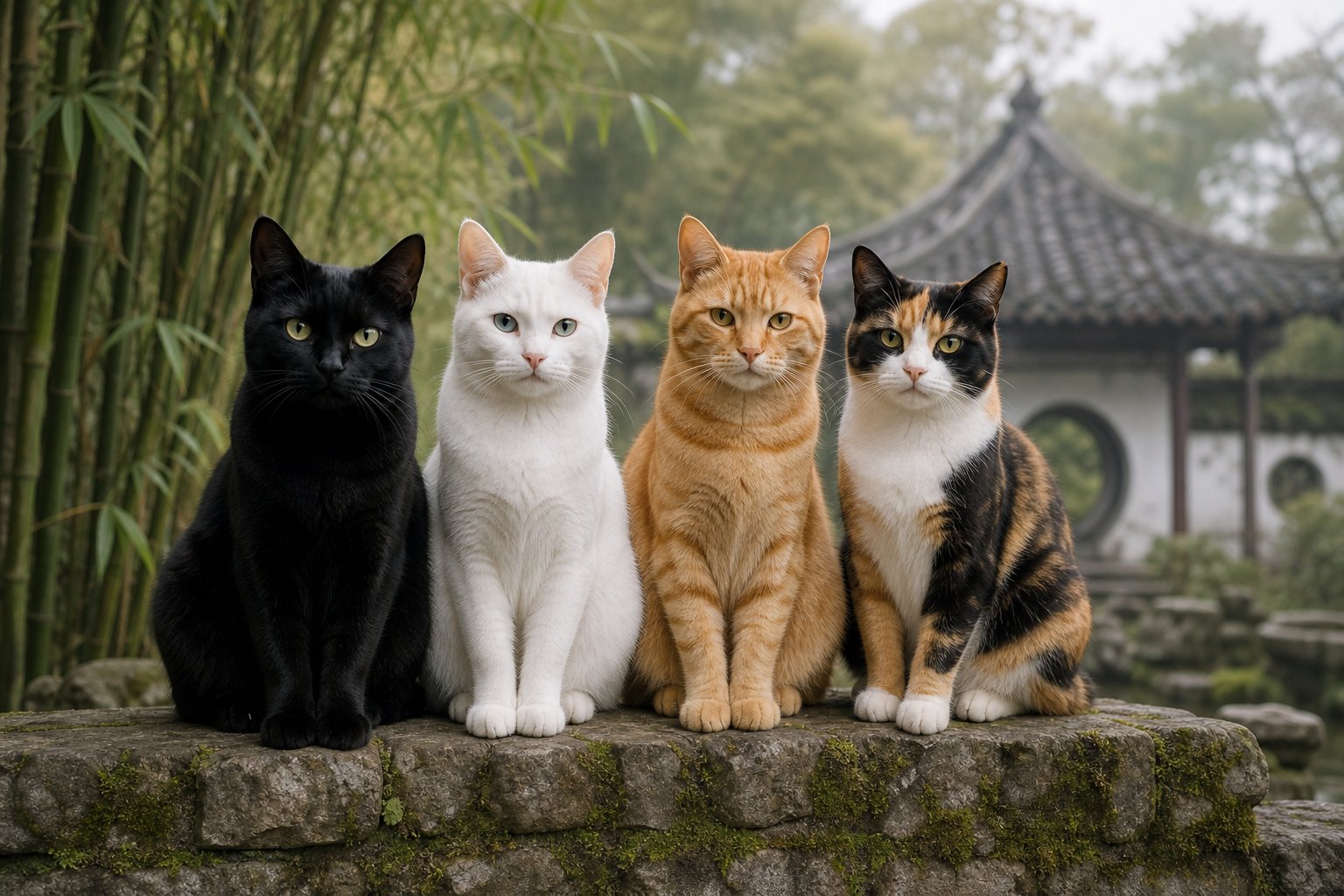
Chinese is a deeply descriptive language. Where English might say "the black cat," Chinese speakers naturally compress that description into a name — 小黑, "Little Black." No extra explanation needed. Everyone who hears it instantly pictures the cat. This directness is a feature, not a limitation. Appearance-based naming is one of the oldest and most intuitive traditions among chinese cats owners, and it produces names that are immediately meaningful, easy to remember, and satisfying to call out.
The logic is simple: look at your cat, identify its most striking visual trait, and build a name around it. A coal-dark coat. A snowdrift belly. Marmalade stripes. Each color and pattern has its own vocabulary in Chinese, and owners have turned that vocabulary into an entire naming ecosystem.
Names for Black Cats in Chinese
A chinese black cat carries none of the superstitious baggage it might in Western cultures. In Chinese folk tradition, black cats are often considered protective — capable of absorbing negative energy or guarding a household. That cultural neutrality (and sometimes outright positivity) means black cat in chinese naming is playful, affectionate, and creative rather than ominous.
The most common approach? Describe what the cat looks like using everyday objects that share its dark coloring. A lump of coal, a black bean, ink on paper — these become names that feel vivid and specific rather than generic.
- 小黑 (Xiǎo Hēi) — "Little Black." The most straightforward and widely used name for any chinese domestic cat black in color. Pronunciation: "SHYOW-hay."
- 煤球 (Méiqiú) — "Coal Ball." Evokes a round, dark lump of coal — perfect for a plump black cat. Pronunciation: "MAY-chyo."
- 黑豆 (Hēidòu) — "Black Bean." Small, sleek, and compact. Ideal for a petite black cat. Pronunciation: "HAY-doe."
- 墨墨 (Mòmò) — "Ink Ink." Poetic and smooth, referencing traditional Chinese calligraphy ink. Pronunciation: "MWO-mwo."
- 黑炭 (Hēitàn) — "Black Charcoal." A playful, slightly teasing name for an especially dark cat. Pronunciation: "HAY-tahn."
- 夜夜 (Yèyè) — "Night Night." Reduplication makes it soft and affectionate. Pronunciation: "YEH-yeh."
- 芝麻 (Zhīma) — "Sesame." Works beautifully for black cats, since black sesame is a staple in Chinese cooking. Pronunciation: "JUR-mah."
Among these, 煤球 and 黑豆 trend heavily on Chinese social media. They strike the right balance between descriptive and cute — you can picture the cat immediately, and the name makes you smile.
Names by Coat Color and Pattern
Beyond black, every coat color has its own naming tradition. White cats get names evoking snow, cotton, and clouds. Orange tabbies — wildly beloved in Chinese internet culture — have spawned an entire subculture of naming conventions. Calico and multicolored cats draw from patterns and flowers. Here's how it breaks down:
| Color Category | Chinese Name | Pinyin | English Meaning |
|---|---|---|---|
| White | 雪球 | Xuěqiú | Snowball |
| White | 棉花 | Miánhua | Cotton |
| White | 小白 | Xiǎo Bái | Little White |
| White | 云朵 | Yúnduǒ | Cloud |
| Orange | 大橘 | Dà Jú | Big Orange |
| Orange | 橘座 | Jú Zuò | Orange Majesty (humorous) |
| Orange | 橘子 | Júzi | Orange (fruit) |
| Orange | 小橘 | Xiǎo Jú | Little Orange |
| Grey | 小灰 | Xiǎo Huī | Little Grey |
| Grey | 烟灰 | Yānhuī | Ash |
| Calico | 小花 | Xiǎo Huā | Little Flower (patterned) |
| Calico | 斑斑 | Bānbān | Spotted |
| Calico | 三花 | Sān Huā | Three Flowers (tricolor) |
Orange cats deserve special attention. Chinese internet culture has elevated the orange tabby to near-mythical status. The running joke? Every orange cat is destined to become fat. The name 大橘 ("Big Orange") leans into this meme with affection, while 橘座 — literally "Orange Majesty" or "His Orangeness" — treats the cat like royalty. You'll see 橘座 used across Douyin videos where chubby orange cats lounge like emperors on their owners' furniture. It's humor and love wrapped into two characters.
For white chinese cats, 雪球 (Snowball) and 棉花 (Cotton) dominate because they capture both color and texture. A fluffy white cat isn't just white — it's soft, round, and cloud-like. The name should reflect that tactile quality, and these options do exactly that.
Calico cats are called 三花猫 (Sān Huā Māo, "three-flower cat") as a breed descriptor in Chinese, so naming one 小花 or 三花 feels natural. The word 花 here doesn't mean "flower" in the botanical sense — it means "patterned" or "multicolored," a usage specific to describing coats and fabrics.
Dragon Li and Chinese Breed Heritage Names
Among all china cat breeds, the Dragon Li (狸花猫, Lí Huā Māo) holds a unique place. This is China's native domestic cat — a natural breed with a lineage stretching back thousands of years, documented in ancient Chinese texts. The Dragon Li has a distinctive brown mackerel tabby coat with bold, swirling stripes, a muscular build, and a reputation for intelligence and independence.
Owners of Dragon Li cats often choose names that honor this heritage rather than defaulting to generic color descriptions. These names reference the breed's wild appearance, its connection to Chinese history, or its tiger-like markings:
- 狸花 (Líhuā) — The breed name itself, used directly as a personal name. "Patterned tabby." Pronunciation: "LEE-hwah."
- 虎斑 (Hǔbān) — "Tiger Stripes." References the bold mackerel pattern. Pronunciation: "HOO-bahn."
- 大狸 (Dà Lí) — "Big Tabby." Simple and proud. Pronunciation: "DAH-lee."
- 山猫 (Shānmāo) — "Mountain Cat." Evokes the breed's wild, self-sufficient nature. Pronunciation: "SHAHN-mow."
- 阿狸 (Ā Lí) — "Ah-Li." A casual, affectionate form using the prefix 阿, common in southern Chinese dialects. Pronunciation: "AH-lee."
- 花花 (Huāhuā) — "Patterned." Reduplication makes it cute while still describing the tabby coat. Pronunciation: "HWAH-hwah."
The Dragon Li's cultural significance goes beyond aesthetics. It's one of the few naturally occurring cat breeds recognized internationally that originated in China, and Chinese cat enthusiasts take pride in this heritage. Naming a Dragon Li after its breed characteristics — rather than giving it a Western-style name — is a small act of cultural appreciation that resonates within Chinese pet communities.
Appearance-based naming connects to a broader tradition in Chinese descriptive language. Chinese has always favored concrete, visual vocabulary over abstract labels. A person's nickname might reference their height, build, or most noticeable feature. The same instinct applies to pets: describe what you see, make it affectionate, and you have a name that sticks. It's naming at its most honest — your cat looks like a coal ball, so that's what you call it. No pretense, just observation turned into love.
Physical traits tell you what a cat looks like. But some owners want a name that captures something more ethereal — grace, beauty, the quiet elegance of moonlight or plum blossoms. For those cats, Chinese offers an entirely different register of names drawn from poetry, nature, and classical femininity.
Beautiful Female Chinese Cat Names With Meaning
Food names are playful. Appearance names are practical. But some cats carry themselves differently — a slow blink, a graceful stretch, the way they perch on a windowsill like they belong in a painting. For these cats, Chinese offers a register of names rooted in poetry, flowers, and natural beauty. These pretty female chinese names carry more emotional weight than a dumpling reference ever could, and they're often reserved for pedigree cats or felines with an undeniable air of elegance.
What makes this category distinct? These names overlap with beautiful female chinese names used for people. In Chinese culture, many of the same characters that appear in women's given names — moon, orchid, plum blossom, jade — also work perfectly for a graceful cat. That crossover isn't accidental. It reflects a shared aesthetic vocabulary where nature and femininity intertwine. Giving your cat one of these names places her in the same poetic tradition as centuries of Chinese literature and art.
Flower and Nature Names for Female Cats
Flowers hold deep symbolic meaning in Chinese culture. The plum blossom represents resilience. The orchid symbolizes refinement. The lotus stands for purity rising from muddy water. When Chinese owners choose flower-based female mandarin names for their cats, they're drawing on that symbolism — not just picking something that sounds nice.
Nature names work similarly. The moon (月 yuè) suggests quiet beauty and mystery. Snow (雪 xuě) implies purity and softness. Stars (星 xīng) evoke brightness and sparkle. These are the same characters you'll find in chinese names for girls with meaning — names parents give daughters when they want to express grace, gentleness, or inner strength.
Elegant Names From Chinese Poetry and Literature
Classical Chinese poetry is filled with imagery that translates beautifully into cat names. A cat named 黛玉 (Dàiyù) references the tragic heroine of Dream of the Red Chamber, China's most celebrated novel — perfect for a delicate, moody cat with dark features. 瑶瑶 (Yáoyáo), meaning "precious jade," echoes the language of ancient love poetry. These literary names signal that the owner appreciates cultural depth, and they give a cat an identity that feels storied rather than simply cute.
Names That Work for Both Cats and Nicknames
Several of the most popular choices double as human nicknames in Chinese. This crossover adds a layer of intimacy — you're naming your cat the way you'd affectionately address a close friend or younger sister. Here are the top-ranked female cat names from Chinese pet communities, each carrying real cultural resonance:
- 美美 (Měiměi) — "Beautiful." One of the most common cute chinese girl names used as a nickname for women and cats alike. Reduplication makes it warm rather than vain. Pronunciation: "MAY-may."
- 甜甜 (Tiántián) — "Sweet." Universally endearing, used for girls and gentle-natured cats. Pronunciation: "TYEN-tyen."
- 月月 (Yuèyuè) — "Moon Moon." Evokes quiet nighttime beauty. Also a popular chinese names for women in its single form. Pronunciation: "YWEH-yweh."
- 星星 (Xīngxīng) — "Star Star." Bright-eyed cats with sparkling personalities earn this one. Pronunciation: "SHING-shing."
- 梅梅 (Méiméi) — "Plum Blossom." Symbolizes resilience and winter beauty. A classic among pretty female chinese names. Pronunciation: "MAY-may" (second tone, distinct from 美美).
- 兰兰 (Lánlán) — "Orchid." Represents refinement and quiet elegance in Chinese tradition. Pronunciation: "LAHN-lahn."
- 莲花 (Liánhuā) — "Lotus." Carries Buddhist associations of purity. Less casual than reduplicated names, more poetic. Pronunciation: "LYEN-hwah."
- 雪儿 (Xuě'ér) — "Snowy." The 儿 suffix adds tenderness. Perfect for white or silver cats. Pronunciation: "SHWEH-er."
- 珍珠 (Zhēnzhū) — "Pearl." Precious, luminous, and compact — just like the cat. Pronunciation: "JEN-joo."
- 瑶瑶 (Yáoyáo) — "Precious Jade." Literary and luxurious, often chosen for pedigree cats. Pronunciation: "YOW-yow."
You'll notice that most of these use reduplication — the same pattern from casual names like 豆豆 or 球球. The difference is the source character. Doubling 美 (beautiful) or 月 (moon) produces something that feels elevated rather than playful. The structure stays familiar and affectionate, but the meaning shifts toward elegance. It's the same linguistic tool applied with a different aesthetic intention.
These names sound lovely, but can English speakers actually pronounce them well enough to use daily? Tones, unfamiliar vowel combinations, and sounds that don't exist in English can turn even the prettiest name into a stumbling block. That's exactly the gap the next section closes — with a pronunciation system built specifically for English-speaking cat owners.

A Pronunciation Guide That Actually Helps English Speakers
You've found the perfect name. It looks beautiful in characters, the meaning resonates, and you can already imagine calling it across the living room. But then you try to say it out loud and something feels off. The vowels blur together. The tone disappears. Your cat stares blankly. This is where most English-language guides abandon you — they give you pinyin and assume you'll figure it out. This section won't do that. Instead, you'll get English-word comparisons, tone explanations rooted in sounds you already make, and a clear sense of which names your cat will actually hear and respond to.
Understanding the Four Tones With English Examples
Mandarin has four tones, and they change a word's meaning the way vowels change meaning in English. Say "bat" versus "bit" versus "but" — same consonants, different word. Tones work the same way, except the difference is in pitch rather than vowel sound. Tones are roughly as important as vowels in Mandarin, so getting them approximately right matters — especially when you're calling a name repeatedly and want your cat to recognize a consistent sound.
Here's how each tone maps to something you already do in English:
- First tone (flat, high): Imagine holding a musical note steady — like singing "laaaa" on one pitch. When a doctor asks you to say "ahhh," that sustained, level sound is your first tone. Example: māo (cat).
- Second tone (rising): Think of how your voice rises when you ask "What?" or "Huh?" That upward swoop from mid-pitch to high is the second tone. Example: máo (fur).
- Third tone (dipping/low): Picture the creaky, low grumble you make when you say "Ugh..." with mild annoyance. Your voice drops low and may bounce slightly at the end. In practice, it mostly just stays low. Example: mǎo (not a common word, but useful for contrast).
- Fourth tone (falling): Say "No!" firmly to a misbehaving cat. That sharp drop from high to low — decisive and quick — is the fourth tone. Example: mào (hat).
The good news? You don't need perfect tones to use a cat name effectively. You need consistency. If you always say your cat's name with the same pitch pattern, your cat will learn to associate that specific sound with attention, food, or affection. Cats respond to patterns, not linguistic accuracy. But getting close to the right tone means Chinese-speaking friends and family will also recognize the name — and that's worth the small effort.
A common pitfall: English speakers tend to flatten everything into a monotone or accidentally add a questioning rise at the end of every word. If you catch yourself doing this, just remember — a first-tone name like Mīmī should sound steady and even, not like you're asking a question.
Pronunciation Table for Popular Names
Wondering how to say kitty in chinese? The term is 猫咪 (māomī) — "mow-mee" with both syllables flat and steady. And how to say kitten in chinese? That's 小猫 (xiǎo māo) — "shyow mow," with a low dip on the first syllable and a flat tone on the second. Those two phrases unlock the basic vocabulary, but the real value is in pronouncing actual names you'll use daily.
Below is a reference table covering the most popular names from this article. The "cat-responsiveness" rating reflects how well each name's phonetic qualities — sharpness, brevity, distinct consonants — align with sounds cats tend to notice. Short, crisp syllables with clear consonant attacks score highest.
| Name | Pinyin | English Sounds Like | Cat-Responsiveness |
|---|---|---|---|
| 咪咪 | Mīmī | "mee-mee" (flat and steady) | High |
| 豆豆 | Dòudòu | "doe-doe" (sharp falling tone) | High |
| 球球 | Qiúqiú | "chyo-chyo" (rising tone) | High |
| 布丁 | Bùdīng | "boo-ding" (falling + flat) | High |
| 橘子 | Júzi | "joo-dzuh" (rising + neutral) | High |
| 招财 | Zhāocái | "jow-tsai" (flat + rising) | Medium-High |
| 毛毛 | Máomáo | "mow-mow" (both rising) | Medium-High |
| 小黑 | Xiǎo Hēi | "shyow-hay" (low + flat) | Medium-High |
| 饺子 | Jiǎozi | "jow-dzuh" (low + neutral) | Medium-High |
| 奶茶 | Nǎichá | "nye-chah" (low + rising) | Medium |
| 福福 | Fúfú | "foo-foo" (both rising) | Medium |
| 雪球 | Xuěqiú | "shweh-chyo" (low + rising) | Medium |
| 甜甜 | Tiántián | "tyen-tyen" (both rising) | Medium |
| 星星 | Xīngxīng | "shing-shing" (both flat) | Medium |
| 美美 | Měiměi | "may-may" (both low/dipping) | Medium |
| 煤球 | Méiqiú | "may-chyo" (rising + rising) | Medium-High |
| 年糕 | Niángāo | "nyen-gow" (rising + flat) | Medium |
| 元宝 | Yuánbǎo | "ywen-bow" (rising + low) | Medium |
Which Names Cats Actually Respond To
Cats aren't linguists, but they are pattern-recognition machines. Research on feline auditory response consistently shows that cats react best to short, high-pitched sounds with distinct consonant onsets — think sharp "k," "t," "d," and "ch" sounds rather than soft, blurry vowels. This is where Chinese monosyllabic and disyllabic names have a natural advantage.
Consider the difference between calling "Dòudòu" versus a longer English name like "Butterscotch." The Chinese name delivers two identical, punchy syllables with a hard "d" attack each time. It's compact, rhythmic, and cuts through ambient noise. Your cat's ears perk at that crisp repetition. The same applies to kitty in chinese language — 猫咪 (māomī) ends with a sharp, high "mee" sound that naturally draws feline attention.
Names scoring "High" in the table above share specific traits: they start with a hard consonant (b, d, j, q), they're two syllables or fewer, and they use vowels that carry well across a room ("ee," "ow," "oo"). Names like 咪咪, 豆豆, and 布丁 hit all three criteria. If your priority is a name your cat will actually learn and respond to — not just one that looks beautiful on an adoption certificate — lean toward these phonetically sharp options.
Softer names like 美美 or 星星 still work, but they may take slightly longer for a cat to distinguish from background speech. The tradeoff is aesthetic: these names sound more elegant to human ears. It's a balance between what pleases you and what registers clearly for your cat — and honestly, consistency in how you say it matters more than the name itself.
Pronunciation and phonetic sharpness give you the tools. But choosing the right name from hundreds of options still requires a framework — a way to narrow down candidates, avoid embarrassing mistakes, and land on something that works for daily life, not just on paper.
How to Choose the Perfect Chinese Name for Your Cat
You've seen hundreds of options across food, luck, appearance, and elegance categories. The list is long. The possibilities are exciting. But staring at a wall of characters and pinyin can feel paralyzing. How do you actually narrow it down to one chinese name for cat that fits? And more importantly, how do you avoid picking something that sounds beautiful to you but carries an unintended meaning — or worse, sounds like a Chinese swear word when you mispronounce it?
This section gives you a concrete framework: what to avoid, how to decide, and how to think about names differently depending on whether you're calling your cat from the kitchen or posting her on Instagram.
Chinese Cat Names to Avoid and Common Mistakes
Certain names look fine on paper but create problems in practice. Some carry negative associations that only native speakers would catch. Others become awkward when tone errors shift the meaning entirely. Before you commit to a cat chinese name, scan this list of common pitfalls:
- 四四 (Sìsì) or any name heavy on the "sì" sound — The number four sounds nearly identical to 死 (sǐ, "death") in Mandarin. Chinese cultural norms treat this as genuinely unlucky, not just mildly superstitious. Avoid it.
- 旺财 (Wàngcái) for a cat — While technically a luck name, 旺财 is so strongly associated with dogs in Chinese pop culture (it's a famous movie dog name) that using it for a cat sounds odd to native speakers. It's like naming a cat "Fido."
- Names that sound like commands — 过来 (Guòlái, "come here") or 走走 (Zǒuzǒu, "walk walk") might seem cute, but they overlap with actual commands you'd use daily. Your cat hears the same sound in two different contexts, creating confusion.
- Tone-error traps — 妈妈 (Māmā) means "mother," but mispronouncing the tones can produce 骂 (mà, "to scold") or 马 (mǎ, "horse"). If you can't reliably hit first tone, avoid names where a tone slip creates an embarrassing word.
- Names with funeral or mourning associations — Characters like 哀 (āi, "sorrow"), 丧 (sàng, "mourning"), or 墓 (mù, "grave") should never appear in a pet name, even if they look visually interesting to non-readers.
- Overly formal or imperial names — Naming a house cat 皇帝 (Huángdì, "Emperor") or 太后 (Tàihòu, "Empress Dowager") can come across as pretentious or satirical rather than affectionate. Chinese pet naming culture values warmth over grandeur.
A quick note on cultural curiosity: many people ask what does hello kitty mean in chinese. The brand is translated as 凯蒂猫 (Kǎidì Māo) — a phonetic approximation of "Kitty" plus the word for cat. It's a brand translation, not a name Chinese people would give a real cat. Treating brand translations as authentic names that mean cat is a common misstep on English-language lists.
A Step-by-Step Framework for Choosing Your Name
Rather than scrolling endlessly, work through these five steps in order. Each one eliminates options until you're left with a short list of two or three strong candidates for your chinese name cat.
- Start with appearance. Look at your cat. What's the most obvious visual trait — coat color, size, markings, body shape? If something jumps out immediately (pure black, bright orange, calico patches), check the appearance-based names first. The most natural chinese name for cat often comes from what you see every day.
- Match personality to meaning. Is your cat mischievous, regal, lazy, or sweet? Cross-reference personality with name meanings. A hyperactive cat named 甜甜 (Sweet) creates a mismatch. A calm, graceful cat named 皮皮 (Mischievous) feels wrong. The name should ring true when you say it while watching your cat do its thing.
- Test pronunciation comfort. Say the name out loud ten times fast. Does it flow naturally, or do you stumble? If you consistently mangle a sound — the "x" in xiǎo, the "q" in qiú — pick a different name. A name you can't say confidently won't stick. Prioritize names with sounds that already exist in English: "m," "d," "b," "j," and "sh" are safe starting consonants.
- Check calling distance. Stand in your kitchen and call the name toward another room. Does it carry? Short, two-syllable names with hard consonant attacks (豆豆, 布丁, 咪咪) cut through ambient noise. Longer or softer names (莲花, 吉祥) sound elegant but may not register when your cat is three rooms away.
- Verify with a native speaker. Before you commit, ask a Chinese-speaking friend to hear the name and share their honest reaction. They'll catch unintended puns, awkward associations, or tonal issues you'd never notice on your own. This single step prevents most naming regrets.
Think of it as a funnel: appearance narrows the category, personality refines the meaning, pronunciation filters for comfort, calling distance tests practicality, and native-speaker feedback catches blind spots. By step five, you should have one clear winner.
Daily Use Names vs Display Names
Here's something Chinese cat owners understand intuitively that Western owners often miss: you can have two names. A daily-use name (小名, xiǎo míng) and a display name (大名, dà míng) serve different purposes and follow different rules.
Your daily-use name is what you actually call your cat — out loud, repeatedly, across the apartment. It needs to be short (two syllables max), phonetically sharp, and easy to say dozens of times a day without feeling ridiculous. Names like 豆豆, 小黑, or 布丁 excel here. They're casual, warm, and built for repetition.
Your display name is what goes on vet records, social media profiles, adoption certificates, or the cat's Douyin account (yes, many Chinese cats have their own). This name can be longer, more literary, or more elaborate. 招财进宝 ("Beckoning Wealth and Treasure"), 雪中莲花 ("Lotus in Snow"), or a full three-character name like 小福星 ("Little Lucky Star") all work beautifully in writing but would be cumbersome to shout across a room.
Many Chinese owners give their cat a poetic display name for registration and social media, then shorten it into a daily nickname. A cat officially named 元宝 might be called 宝宝 at home. A cat registered as 招财 gets shortened to 财财 in daily life. This dual-name system gives you the freedom to choose something meaningful and something practical — without forcing one name to do both jobs.
If you're choosing a single name that must serve both purposes, lean toward the daily-use criteria. A name you love saying out loud will always serve you better than one that only looks impressive written down. Your cat doesn't read characters. She responds to sound, rhythm, and the warmth in your voice when you call her name — and that's what makes any chinese name cat owners choose truly stick.
Frequently Asked Questions About Chinese Cat Names
1. What is the most popular cat name in China?
Food-based names dominate Chinese pet culture. Names like 布丁 (Budding/Pudding), 奶茶 (Naicha/Milk Tea), and 橘子 (Juzi/Orange) consistently trend across Chinese social media platforms. For luck-based names, 招财 (Zhaocai/Beckoning Wealth) remains the single most iconic choice, directly referencing the famous lucky cat figurine. The popularity shifts with internet trends, but reduplication names like 豆豆 (Doudou/Bean Bean) and 咪咪 (Mimi) remain evergreen favorites due to their affectionate sound and ease of use.
2. How do you say cat in Chinese?
The Chinese word for cat is 猫, spelled 'mao' in pinyin with a first tone (flat pitch). It sounds like 'mow' as in mowing a lawn, spoken with a steady, level pitch. The affectionate term for kitty is 猫咪 (maomi), pronounced 'mow-mee,' which is what Chinese speakers actually use when talking to or about their cats on social media and in daily conversation. For kitten, the term is 小猫 (xiao mao), meaning 'little cat.'
3. What are good Chinese names for a black cat?
Chinese culture views black cats positively, often as protective creatures. Popular names include 小黑 (Xiao Hei/Little Black), 煤球 (Meiqiu/Coal Ball) for round plump cats, 黑豆 (Heidou/Black Bean) for petite ones, 墨墨 (Momo/Ink) referencing calligraphy ink, 芝麻 (Zhima/Sesame) after black sesame seeds, and 夜夜 (Yeye/Night Night) using affectionate reduplication. Coal Ball and Black Bean are currently the most trending black cat names on Chinese social media.
4. Do Chinese cat names have to use tones correctly?
Perfect tones are not required for daily use with your cat. What matters most is consistency. Cats respond to repeated sound patterns rather than linguistic accuracy, so if you always say the name the same way, your cat will learn it. However, getting tones approximately right helps Chinese-speaking friends recognize the name and prevents accidental meanings. For example, mispronouncing tones on 妈 (mother) could produce the word for 'horse' or 'scold,' which is why testing pronunciation with a native speaker before committing is recommended.
5. Why do Chinese people name their cats after food?
Food names dominate Chinese pet culture because food carries overwhelmingly positive associations: comfort, warmth, home, and celebration. Naming a cat after food expresses affection without pretension. In Chinese social norms, overly grand pet names can feel awkward, while a name like 饺子 (Dumpling) or 汤圆 (Rice Ball) signals the owner is relaxed and playful. Food names also tend to be phonetically ideal for cats: two syllables, clear tonal patterns, and crisp endings that are easy to call out and easy for cats to learn.