How Chinese Dog Naming Actually Works
When English speakers pick a dog name, the process is mostly one-dimensional: does it sound good when you call it across the park? Chinese names for dogs operate differently. Each name carries meaning baked into the characters themselves, layered with tonal music and cultural associations that a native speaker picks up instantly. Understanding this system turns a random word choice into something genuinely resonant.
How Chinese Names Differ From Western Pet Names
In Western naming, "Max" is just a sound. In Chinese, every character is a small picture with its own meaning, visual weight, and tonal value. A chinese dog name like 旺财 (Wàng Cái) does not just sound cute. It literally means "prosperous wealth" and signals good fortune to anyone who hears it.
Chinese pet names also follow patterns you will not find in English. The prefix 小 (xiǎo), meaning "little," is added to create affectionate nicknames like 小熊 (Xiǎo Xióng, "Little Bear"). Doubled syllables are another hallmark of chinese pet names. Names like 豆豆 (Dòu Dòu, "Bean Bean") or 毛毛 (Máo Máo, "Fluffy Fluffy") sound endearing to Chinese ears the same way "Buddy" or "Biscuit" feels warm in English. These repetitive character patterns signal intimacy and affection, telling everyone that this animal is deeply loved.
Another key difference: tones change everything. The syllable "ma" can mean mother, horse, hemp, or scold depending on which of Mandarin's four tones you use. This means two chinese dog names that look identical in English letters can carry completely different meanings when spoken aloud.
A Chinese name operates across multiple dimensions simultaneously. Sound, visual form, literary meaning, and cultural resonance must all align. A name that succeeds on one dimension but fails on another is considered incomplete.
The Three-Layer System for Understanding Chinese Names
To make chinese names for dogs accessible throughout this guide, every name will be presented in three layers:
- Character - the written Chinese form (e.g., 旺财)
- Pinyin with tones - the official romanization showing pronunciation and tone marks (e.g., Wàng Cái)
- English sound-alike - a phonetic approximation for non-speakers (e.g., "wahng tsai")
This framework lets you appreciate the meaning, learn the correct pronunciation, and still call your dog's name confidently on day one. Think of it as a chinese name dog owners can actually use without a linguistics degree.
Of course, seeing the framework is one thing. Knowing how to produce those tones and sounds with your own voice is another challenge entirely, especially when Mandarin and Cantonese pronunciations diverge for the same characters.
Pronunciation and Character Guide for Non-Speakers
Tones are the single biggest hurdle between you and confidently calling your dog by a Chinese name. The good news: you do not need to master all of Mandarin phonetics. You just need enough to make a one- or two-syllable name sound right.
Mandarin Tones Made Simple for Dog Owners
Mandarin has four main tones, and each one changes a word's meaning entirely. Imagine calling your dog and accidentally saying "horse" instead of "mother" because you dropped the pitch wrong. That is exactly what happens with the syllable "ma" depending on tone. Here is the quick version:
- First tone (high and flat) - Hold a steady high pitch, like singing a sustained note. Example: 天 (tiān) meaning "sky."
- Second tone (rising) - Your voice goes up, like asking "huh?" in English. Example: 福 (fú) meaning "fortune."
- Third tone (dipping) - Start mid-range, dip low, then rise slightly. Example: 狗 (gǒu) meaning "dog."
- Fourth tone (falling) - A sharp drop from high to low, like a firm command. Example: 旺 (wàng) meaning "prosperous."
Notice something useful? That commanding fourth tone naturally suits how you call a dog. Names using fourth-tone characters like 旺 (wàng) or 大 (dà, "big") carry a punchy, attention-grabbing quality that dogs respond to well.
Key Characters and Sounds You Will Use
So how do you say dog in Chinese? The word for dog in Mandarin is 狗 (gǒu), pronounced roughly like "go" with a dipping tone and a slight "oo" at the end. If you are wondering how to say dog in Mandarin more casually, many native speakers use 狗狗 (gǒu gou), the doubled form that sounds affectionate, similar to saying "doggy" in English. And puppy in Chinese? That is 小狗 (xiǎo gǒu), literally "little dog," pronounced roughly "shyow go."
Knowing how to write dog in Chinese characters starts with recognizing 犬 (quǎn), the formal literary character, and 狗 (gǒu), the everyday word. Many dog-related name components use the 犭radical (the "dog radical") on their left side, which visually signals an animal connection in the written form.
Below is a reference table of common characters you will encounter in dog names throughout this guide:
| Chinese Character | Pinyin with Tone Marks | English Phonetic Approximation | Meaning |
|---|---|---|---|
| 狗 | gǒu | go (dipping tone) | Dog |
| 犬 | quǎn | chwen (dipping) | Dog (formal/literary) |
| 小 | xiǎo | shyow (dipping) | Little/small |
| 大 | dà | dah (falling) | Big/great |
| 旺 | wàng | wahng (falling) | Prosperous/thriving |
| 福 | fú | foo (rising) | Fortune/blessing |
| 金 | jīn | jeen (high flat) | Gold |
| 龙 | lóng | loong (rising) | Dragon |
| 美 | měi | may (dipping) | Beautiful |
| 豆 | dòu | doe (falling) | Bean |
Cantonese Pronunciation Differences
If your dog is a Shar Pei, Chow Chow, or another breed originating from southern China, Cantonese pronunciations carry extra cultural authenticity. Cantonese uses six tones instead of four, but the core vocabulary shifts in ways that matter for naming.
How do you say dog in Chinese if you are speaking Cantonese? The word becomes 狗 (gau2), sounding closer to "gow" with a rising tone. Puppy is 狗仔 (gau2 zai2), literally "dog child," pronounced roughly "gow dzai." The character 仔 (zai2) is a distinctly Cantonese diminutive that you will not hear in standard Mandarin pet talk.
Some name characters also shift dramatically between dialects. 福 (fú in Mandarin) becomes "fuk1" in Cantonese. 金 (jīn) becomes "gam1." These differences matter if cultural accuracy for a southern Chinese breed is your goal, and they open up a whole separate palette of sounds to work with.
With pronunciation fundamentals in place, the real question becomes which characters to choose and why. In Chinese culture, that decision is never random. It is guided by a deep tradition of luck, auspiciousness, and the belief that a name shapes destiny.
Lucky and Auspicious Chinese Dog Names
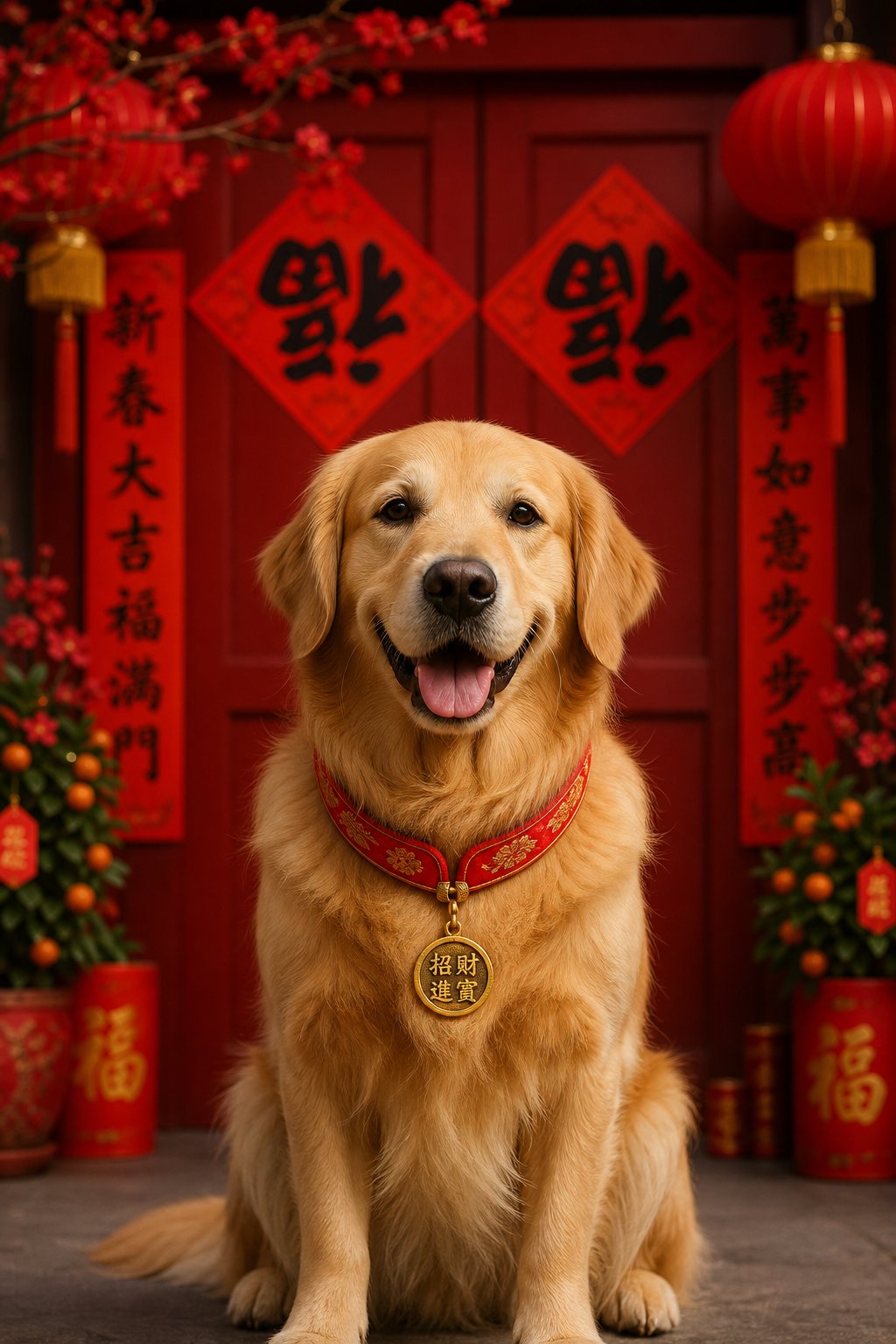
In Chinese culture, naming is never just about aesthetics. It is an act of intention. The characters you choose are believed to shape energy, attract fortune, and even influence the fate of the named. This belief extends fully to pets. A lucky dog name is not superstition for show. It reflects a worldview where language, sound, and symbolism actively participate in daily life.
Why Luck Matters in Chinese Pet Names
The concept of auspiciousness in Chinese naming draws from multiple traditions: Confucian values of virtue, Daoist ideas about harmony with nature, and folk beliefs around homophones and numerology. When a Chinese family names their dog 旺财 (Wàng Cái), they are not just being playful. They are inviting prosperity into the household through the animal that greets them at the door every day.
This connection between pets and fortune runs deep. Dog chinese zodiac compatibility plays a role too. In the Chinese zodiac, the Dog sign belongs to the earth element and forms a harmonious "three-harmony" relationship with the Tiger and Horse signs. People born under compatible signs may choose names that reinforce this auspicious energy, selecting characters associated with fire or earth elements to strengthen the bond.
A well-chosen Chinese name does not merely describe. It invokes. Each character is a small spell of intention, calling a specific quality into existence through daily repetition.
Auspicious Names and Their Deeper Meanings
Lucky dog names in Chinese fall into distinct categories based on the type of fortune they represent. Below are curated options with full three-layer notation so you can understand, pronounce, and use each one confidently.
Wealth and Prosperity
- 旺财 (Wàng Cái / "wahng tsai") - "Prosperous Wealth." The most iconic lucky dog name in China, popularized by the film Shaolin Soccer. The chinese character for dog owners who want maximum good-fortune energy.
- 金宝 (Jīn Bǎo / "jeen bow") - "Golden Treasure." Combines gold with the character for precious things, doubling the wealth symbolism.
- 禄禄 (Lù Lù / "loo loo") - "Prosperity Prosperity." The doubled form makes it affectionate while invoking Lù, the traditional symbol of official prosperity in Chinese culture.
Health and Longevity
- 寿寿 (Shòu Shòu / "show show") - "Long Life." Shòu is one of the most revered good-luck symbols, appearing in over 100 variant forms across Chinese decorative arts.
- 康康 (Kāng Kāng / "kahng kahng") - "Healthy and Strong." A doubled character name that sounds warm and is easy for non-speakers to pronounce.
- 壮壮 (Zhuàng Zhuàng / "jwahng jwahng") - "Sturdy and Robust." Ideal for larger breeds, this name wishes physical vitality onto the dog.
Happiness and Harmony
- 福福 (Fú Fú / "foo foo") - "Blessing Blessing." Fú is the single most popular good-luck character in Chinese culture, often displayed upside down during New Year because the word for "upside down" sounds like "arrived," implying good luck has come.
- 乐乐 (Lè Lè / "luh luh") - "Joy Joy." Simple, cheerful, and universally positive.
- 喜喜 (Xǐ Xǐ / "shee shee") - "Happiness Happiness." Echoes the famous Double Happiness symbol used in Chinese weddings, making it a name that radiates celebration.
Good Fortune and Protection
- 吉祥 (Jí Xiáng / "jee shyahng") - "Lucky and Auspicious." A classic pairing that covers all bases of general good fortune.
- 瑞瑞 (Ruì Ruì / "rway rway") - "Auspicious Omen." Carries connotations of jade and precious signs from heaven.
- 安安 (Ān Ān / "ahn ahn") - "Peace Peace." Invokes safety and calm, perfect for a dog that brings tranquility to the home.
Sounds and Characters to Avoid
Chinese horoscope dog compatibility principles warn against specific characters that clash with the Dog zodiac sign. The most critical rule: avoid characters containing the Dragon radical or meaning, since Dog and Dragon form a direct clash (冲, chōng) in the Ba Zi system. Names like 丽 (Lì, "beautiful") look harmless but contain a hidden Dragon component that creates inauspicious energy for dogs and Dog-sign people alike.
Beyond zodiac clashes, watch for these pitfalls:
- Negative homophones - The character 死 (sǐ, "death") sounds similar to 四 (sì, "four"), making the number four and any name resembling it unlucky. Avoid names where tonal slips produce words like 苦 (kǔ, "bitter") or 哭 (kū, "cry").
- Characters with 口 (mouth) radical - One 口 in a name forms the word 吠 (fèi, "bark"), while two 口 radicals create 骂 (mà, "scold"). For dog-associated names, this implies the animal will attract disputes or conflict.
- Mountain radicals (山) - Characters like 峰 (fēng, "peak") or 岳 (yuè, "mountain") suggest a dog roaming in dangerous terrain, implying a life of unnecessary struggle.
- Grain-related radicals (禾, 米, 豆) - Dogs are carnivores. Characters associated with rice or grain suggest the dog will "play with" rather than value what it has, leading to a lack of perseverance.
The takeaway is straightforward: a lucky name requires checking not just what a character means on the surface, but what it contains structurally and how it sounds when spoken aloud. The most beautiful-looking character can carry hidden conflicts that a native speaker would immediately recognize.
Luck sets the foundation, but it is only one dimension of meaning. Many dog owners want names that also evoke the natural world, connecting their pet's personality to imagery of mountains, water, flowers, or stars.
Nature and Beauty Inspired Chinese Dog Names for Females and Males
Chinese culture views nature not as scenery but as a moral vocabulary. A mountain represents steadfastness. A plum blossom signals resilience through hardship. A stream suggests adaptability and grace. When parents name children after natural elements, they are encoding aspirations into language. The same logic applies to pets. A nature-inspired name tells everyone who hears it exactly what quality you see in your dog.
The names below are organized by what they express rather than alphabetically. Each one includes the full three-layer notation (character, pinyin, phonetic approximation) plus the cultural connotation that a native speaker would immediately understand. Whether you are looking for chinese female dog names rooted in elegance or bold male options that project power, the natural world offers a deep well of meaning.
Nature Names That Evoke Strength and Majesty
These names suit dogs with commanding presence, protective instincts, or a dignified bearing. Think of breeds that carry themselves with quiet authority or dogs whose energy fills a room the moment they enter.
| Name (Characters) | Pronunciation | Literal Meaning | Cultural Connotation |
|---|---|---|---|
| 大山 (M) | Dà Shān / "dah shahn" | Great Mountain | Immovable strength and reliability. Mountains in Chinese philosophy represent the ultimate symbol of permanence and fatherly protection. |
| 松松 (M) | Sōng Sōng / "soong soong" | Pine Pine | The pine tree endures harsh winters without losing its needles. This name signals loyalty and resilience through difficulty. |
| 岩石 (M) | Yán Shí / "yen shir" | Rock | Solid, unyielding, dependable. Suits a dog that is calm under pressure and unshakable in temperament. |
| 雷雷 (M) | Léi Léi / "lay lay" | Thunder Thunder | Raw power and energy. In Chinese mythology, thunder gods protect against evil spirits, making this name both fierce and protective. |
| 铁铁 (M) | Tiě Tiě / "tyeh tyeh" | Iron Iron | Unbreakable will. The doubled form softens the hardness into affection while keeping the strength intact. |
Personality match: If your dog is the type that plants itself between you and a stranger, or stands guard at the window with quiet intensity, these names honor that protective nature. They work especially well for larger breeds with deep barks and steady temperaments.
Elegant Names Inspired by Flowers and Seasons
Flower and season names are among the most popular chinese names for dogs female owners choose. In classical Chinese poetry, flowers carry specific moral associations. The orchid represents integrity. The lotus rises pure from muddy water. The plum blossom blooms in winter when nothing else dares. These are not just pretty images. They are character statements.
| Name (Characters) | Pronunciation | Literal Meaning | Cultural Connotation |
|---|---|---|---|
| 梅梅 (F) | Méi Méi / "may may" | Plum Blossom | Resilience and beauty under pressure. The plum blossom is one of the "Four Gentlemen" of Chinese art, blooming in snow when all other flowers have retreated. |
| 兰兰 (F) | Lán Lán / "lahn lahn" | Orchid Orchid | Quiet elegance and moral integrity. Confucius compared the orchid to a person of noble character who remains virtuous even in obscurity. |
| 莲花 (F) | Lián Huā / "lyen hwah" | Lotus Flower | Purity rising above difficult circumstances. The lotus grows from mud yet blooms spotless, a Buddhist symbol of spiritual transcendence. |
| 春春 (F) | Chūn Chūn / "chwun chwun" | Spring Spring | New beginnings, vitality, and warmth. Suits a young dog full of energy and optimism. |
| 雪梅 (F) | Xuě Méi / "shweh may" | Snow Plum | The image of a plum blossom against white snow. Represents rare beauty that stands out precisely because of harsh conditions. |
| 秋月 (F) | Qiū Yuè / "chyoh yweh" | Autumn Moon | Mature elegance and calm reflection. The autumn moon is the brightest of the year in Chinese tradition, celebrated during the Mid-Autumn Festival. |
Personality match: Gentle dogs with graceful movement, quiet confidence, or a serene disposition suit these names perfectly. If your dog is the one who sits calmly while others race around, or moves with a dancer's poise, a flower or season name captures that energy. Many of these work beautifully as asian dog names girl owners gravitate toward for their softness and depth.
Chinese dog names for females drawn from nature tend to favor two-character combinations that pair a season or element with a flower or quality. This creates a miniature poem: 雪梅 is not just "snow" and "plum" side by side. It is a complete image, a tiny painting in two syllables.
Celestial and Water-Themed Names
Stars, moons, rivers, and rain occupy a special place in Chinese naming. Celestial names suggest something beyond the ordinary, a connection to forces larger than daily life. Water names evoke adaptability, the Daoist ideal of yielding yet powerful, soft yet capable of carving through stone over time.
| Name (Characters) | Pronunciation | Literal Meaning | Cultural Connotation |
|---|---|---|---|
| 星辰 (M/F) | Xīng Chén / "shing chun" | Stars | Vast potential and brilliance. Implies the dog has a destiny that shines. Works for both genders as a unisex name. |
| 明月 (F) | Míng Yuè / "ming yweh" | Bright Moon | Clarity, beauty, and emotional depth. The moon is the most referenced natural image in Chinese poetry, symbolizing longing and reunion. |
| 涛涛 (M) | Tāo Tāo / "tow tow" | Wave Wave | Powerful, rhythmic energy. Suggests a dog with boundless enthusiasm that comes in surges, like ocean waves. |
| 溪溪 (F) | Xī Xī / "shee shee" | Stream Stream | Gentle, persistent, and refreshing. A stream finds its way around obstacles rather than crashing through them. Suits a clever, adaptable dog. |
| 云云 (F) | Yún Yún / "ywen ywen" | Cloud Cloud | Freedom, lightness, and a dreamy quality. In Daoist thought, clouds represent the wandering spirit unbound by earthly concerns. |
| 海海 (M) | Hǎi Hǎi / "hi hi" | Ocean Ocean | Vast heart and generous spirit. The ocean accepts all rivers without judgment, symbolizing tolerance and magnitude. |
Personality match: Energetic, playful dogs who seem to move like water suit names like 涛涛 or 海海. Dreamy, independent dogs who drift through the house at their own pace align with 云云 or 溪溪. For a dog that seems to watch the world with unusual depth and intelligence, 星辰 or 明月 captures that quality of being slightly beyond the ordinary.
The beauty of nature-themed names is their flexibility across gender. While female chinese dog names traditionally lean toward flowers and moonlight, and male names toward mountains and thunder, modern Chinese pet culture increasingly embraces crossover. A male dog named 云云 or a female named 雷雷 breaks no rules. It simply tells a different story about who that dog is.
Nature names ground a dog's identity in something timeless. But Chinese culture also offers a completely different source of naming power: the heroes, creatures, and legends of thousands of years of mythology and folklore.
Mythology and Warrior Names From Chinese Folklore
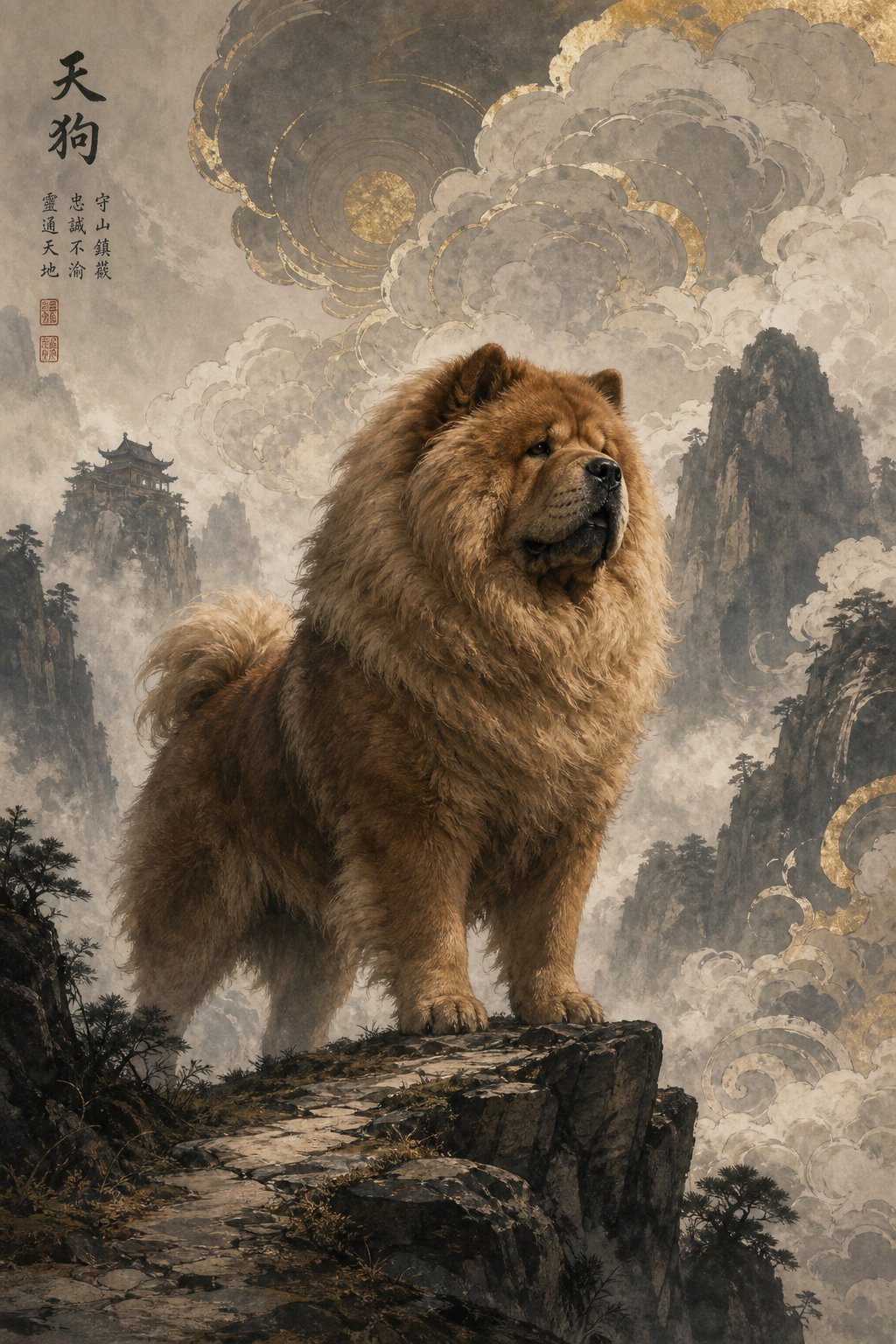
Thousands of years of storytelling have produced characters so vivid they feel alive. A dog named after one of these figures carries not just a sound but an entire narrative, a personality blueprint that anyone familiar with Chinese culture will recognize instantly. These are names with built-in backstories, and they suit dogs whose personalities are too big for a simple adjective.
Names From Chinese Mythology and Legends
Chinese mythology spans creation stories, epic journeys, celestial battles, and tales of rebellion against unjust authority. The figures below have endured for centuries because they embody qualities people admire: courage, cleverness, loyalty, and defiance. When you choose one of these as a chinese mythology dog name, you are telling everyone exactly what kind of spirit your dog carries.
Ranked by popularity and ease of pronunciation for English speakers:
- 悟空 (Wùkōng / "woo-kohng") - Sun Wukong, the Monkey King. The most iconic figure in Chinese literature. Sun Wukong is the main character in Journey to the West and possesses shape-shifting abilities, immortality, and immense strength. He is mischievous, fiercely loyal, and impossible to contain. This name suits a dog that is clever, energetic, and constantly testing boundaries while remaining deeply devoted to its owner. Best for: high-energy, intelligent dogs who keep you on your toes.
- 哪吒 (Nézhā / "nuh-jah") - The Third Lotus Prince. Nezha is a rebellious young warrior deity famous for battling dragons and demons. He defies authority, protects the innocent, and fights with extraordinary combat skills. The recent global success of Ne Zha 2 has made this name more recognizable than ever to international audiences. Best for: fearless smaller dogs with outsized courage and a stubborn streak. If you want to pronounce Chang'e correctly, the same tonal principles apply to Nezha: the rising second tone on "Né" followed by a flat first tone on "zhā."
- 木兰 (Mùlán / "moo-lahn") - Mulan. The legendary warrior who disguised herself as a man to take her aging father's place in the army. Her story is about sacrifice, bravery, and quiet determination. Unlike the flashier warriors, Mulan's strength is understated. Best for: loyal female dogs with a protective instinct and calm exterior that hides fierce capability.
- 嫦娥 (Cháng'é / "chahng-uh") - Moon Goddess. Chang'e drank an immortality elixir and ascended to the moon, where she lives in eternal solitude with a jade rabbit. Her story is bittersweet: beauty, sacrifice, and loneliness intertwined. To pronounce Chang'e correctly, use a rising tone on "Cháng" and a falling tone on "é." Best for: elegant, independent dogs who seem to exist in their own world, slightly apart from the chaos around them.
- 后羿 (Hòu Yì / "ho yee") - The Archer God. Hou Yi shot down nine of ten suns that were scorching the earth, saving humanity from destruction. He represents precision, decisive action, and selfless heroism. Best for: focused, athletic dogs with sharp instincts and a protective nature.
You will notice that many animal names in mandarin draw from the same mythological tradition. The dragon (龙, lóng), phoenix (凤, fèng), and tiger (虎, hǔ) all appear in legends alongside these human figures, creating a shared vocabulary of power and meaning that Chinese speakers instinctively understand.
Historical Warriors and Scholars as Name Inspiration
Beyond mythology, real historical figures offer chinese warrior dog names grounded in documented bravery and intellect. These names carry weight because the people behind them actually lived, fought, and shaped Chinese civilization.
- 关羽 (Guān Yǔ / "gwahn yoo") - God of War and Loyalty. Originally a historical general during the Three Kingdoms period, Guan Yu was later deified as a god of war and loyalty, worshipped across Chinese folk religion. His name is synonymous with unwavering faithfulness. Best for: large, dignified dogs who bond deeply with one person and display fierce loyalty.
- 诸葛 (Zhūgě / "joo-guh") - From Zhuge Liang, the legendary strategist. Zhuge Liang was the brilliant military advisor of the Shu Kingdom, known for outsmarting opponents through intellect rather than brute force. Best for: clever dogs who seem to think three steps ahead, the ones who figure out puzzle toys in minutes.
- 神农 (Shénnóng / "shun-nohng") - God of Agriculture. A mythical emperor credited with inventing farming and discovering medicinal herbs by tasting hundreds of plants. His name means "Divine Farmer." Best for: gentle, curious dogs who investigate everything with their nose, the natural explorers.
Scholar names tend to suit calm, observant dogs. Warrior names fit protectors. The distinction matters because a native Chinese speaker hearing your dog's name will immediately form expectations about the animal's personality based on the figure referenced.
Mythological Creatures That Make Bold Dog Names
Chinese mythology is populated with creatures that blend multiple animals into singular beings of immense symbolic power. These make striking unique chinese names for dogs because they are instantly recognizable yet rarely used as pet names, giving your dog a name that stands apart.
- 貔貅 (Píxiū / "pee-shyo") - The Wealth Guardian. Pixiu has the head of a Chinese dragon and the body of a lion, with feathered wings allowing it to fly between heaven and earth. Legend says it can only consume gold and jewels but never release them, making it the ultimate symbol of attracting and retaining wealth. Best for: stocky, powerful dogs with a possessive streak over their toys. The name carries 2,000 years of auspicious meaning.
- 麒麟 (Qílín / "chee-lin") - The Chinese Unicorn. The Qilin ranks first among the Four Spiritual Beasts, above even the dragon and phoenix. It was said to appear at the birth and death of Confucius, signaling events of cosmic importance. The Qilin represents peace, longevity, and extraordinary virtue. Best for: gentle giants, dogs with a regal bearing who never start fights but command respect simply by existing.
- 白泽 (Bái Zé / "bye zuh") - The All-Knowing Beast. Bai Ze possesses knowledge of all supernatural beings and spirits. It appeared to the Yellow Emperor and catalogued every creature in existence. Best for: watchful, alert dogs who seem to notice everything, the ones who bark at something you cannot see.
- 龙王 (Lóng Wáng / "lohng wahng") - Dragon King. The ruler of the seas, responsible for rain and weather. This name projects absolute authority and elemental power. Best for: large, commanding dogs with deep voices and a presence that dominates any space they enter.
A practical note on creature names: Pixiu and Qilin work well because they are two syllables, punchy, and easy to call across a park. Longer names like 龙王 still function because the tonal contrast between the rising "lóng" and falling "wáng" creates a natural calling rhythm that dogs respond to.
When choosing between these categories, consider what story you want your dog's name to tell. A warrior name says "this dog will protect you." A scholar name says "this dog understands more than you think." A creature name says "this dog is something extraordinary." The mythology behind each option gives your choice a depth that animal names in mandarin rarely achieve when pulled from a simple dictionary list.
These legendary names carry universal appeal regardless of breed. But for dogs whose ancestry traces directly back to China, there is an even more specific layer of naming available: names drawn from the exact region and cultural tradition where their breed originated.
Breed-Specific Names for Chinese Dog Breeds
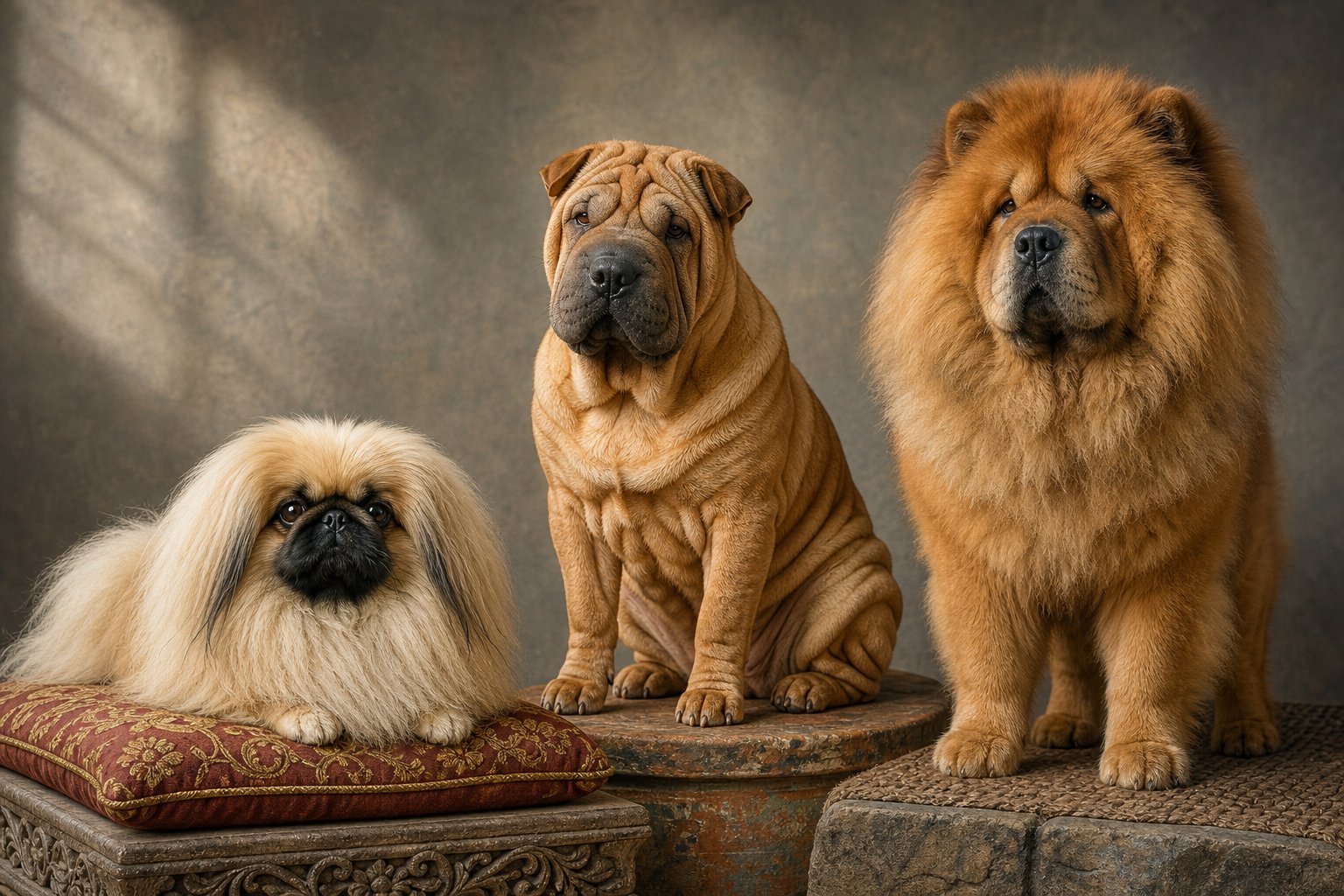
A Shar Pei from Guangdong and a Pekingese from the imperial palace share a country of origin but almost nothing else. Their histories, regional dialects, and cultural associations diverge so sharply that naming them from the same generic list misses the point entirely. The breeds of dogs from china each carry a distinct regional identity, and the most culturally resonant names honor that specificity rather than treating "Chinese" as a single monolithic category.
Understanding what each breed's name actually means in Chinese reveals the naming logic. The chinese shih tzu gets its name from 狮子 (shīzi), meaning "lion," because its flowing mane resembles the guardian lion statues outside Chinese temples. "Shar Pei" comes from 沙皮 (shā pí), literally "sand skin," describing the breed's uniquely harsh, short coat. The Pekingese is called 京巴狗 (jīngbāgǒu), with 京 (jīng) referencing Beijing directly. Each etymology points you toward the right cultural register for naming.
Imperial Names for Shih Tzu and Pekingese
Both the Shih Tzu and Pekingese lived exclusively within imperial palace walls for centuries. The Pekingese served as tiny guard dogs in the imperial palaces of ancient China, and the Shih Tzu remained a closely guarded treasure of the Chinese court until the 12th century. Names for these breeds should reflect that regal heritage rather than casual street culture.
When choosing names for dogs shih tzu owners want to feel authentic, think palace vocabulary: jade, silk, imperial titles, and precious objects that only royalty could possess. For names for shih tzu dogs male, characters associated with emperors, guardians, and noble materials carry the right weight. Chinese pekingese dog names follow the same logic, drawing from Beijing's Forbidden City culture.
| Name (Characters) | Pinyin / Phonetic | Meaning | Why It Fits |
|---|---|---|---|
| 玉龙 (M) | Yù Lóng / "yoo lohng" | Jade Dragon | Jade was reserved for royalty. Combined with dragon, this name signals imperial power in miniature, perfect for a Shih Tzu's lion-like confidence. |
| 珍珠 (F) | Zhēn Zhū / "jun joo" | Pearl | Pearls were among the most prized treasures in the Forbidden City. Suits a white or cream-colored Pekingese with a luminous coat. |
| 太后 (F) | Tài Hòu / "tie ho" | Empress Dowager | The Empress Dowager Cixi famously kept dozens of Pekingese in the palace. This name honors that direct historical connection. |
| 金狮 (M) | Jīn Shī / "jeen shir" | Golden Lion | References both the Shih Tzu's lion etymology and the gilded guardian statues flanking palace gates. |
| 如意 (F) | Rú Yì / "roo yee" | As You Wish | Named after the ornamental scepter carried by emperors, symbolizing authority and fulfilled desires. |
| 宝贝 (M/F) | Bǎo Bèi / "bow bay" | Precious Treasure | How palace attendants referred to the emperor's favorite pets. Universally endearing and easy to pronounce. |
Northern Chinese Names for Chow Chows
The Chow Chow has ancient origins in northern China, where it served as a guardian, hunter, and working companion for centuries. Unlike the pampered palace breeds, the Chow Chow earned its keep through strength and independence. Good chow chow names should reflect that rugged northern character rather than delicate imperial aesthetics.
Northern Chinese culture values directness, resilience, and earthy strength. The landscape is harsh, the winters are long, and the naming conventions reflect that no-nonsense spirit. When brainstorming chow chow puppy names, lean toward characters that evoke power, loyalty, and the natural elements of China's northern provinces.
| Name (Characters) | Pinyin / Phonetic | Meaning | Why It Fits |
|---|---|---|---|
| 熊熊 (M) | Xióng Xióng / "shyohng shyohng" | Bear Bear | Chow Chows resemble bears in build and movement. This doubled name is affectionate while acknowledging their powerful frame. |
| 铁虎 (M) | Tiě Hǔ / "tyeh hoo" | Iron Tiger | Combines the unbreakable quality of iron with the tiger's authority. Suits the Chow Chow's independent, fearless temperament. |
| 北风 (M) | Běi Fēng / "bay fung" | North Wind | References the breed's northern origins and their thick coat built for cold climates. Carries a sense of untamed natural force. |
| 狮王 (M) | Shī Wáng / "shir wahng" | Lion King | The Chow Chow's thick mane gives it a lion-like silhouette. This name honors that visual resemblance with a title of authority. |
| 忠忠 (M/F) | Zhōng Zhōng / "johng johng" | Loyal Loyal | Chow Chows bond deeply with their family while remaining aloof with strangers. This name captures that selective, fierce devotion. |
Cantonese Names for Shar Pei Dogs
The Chinese Shar Pei traces its roots to southern Guangdong province, with geographic concentrations around the town of Dali southwest of Guangzhou. This makes Cantonese, not Mandarin, the breed's native linguistic environment. Authentic chinese shar pei names should draw from Cantonese pronunciation and southern Chinese cultural references.
The breed's original name in the region was either 沙皮狗 (Sha Pi Gou) describing its sand-textured coat, or 藤狗 (Teng Gou) meaning "vine dog," referencing its slim, agile build. Both names focus on physical characteristics, a practical naming tradition common in rural southern China where working dogs earned descriptive rather than aspirational names.
| Name (Characters) | Cantonese / Mandarin | Meaning | Why It Fits |
|---|---|---|---|
| 沙沙 | saa1 saa1 / Shā Shā | Sand Sand | A direct nod to the breed's etymology. The doubled form makes it affectionate while honoring the "sand skin" origin story. |
| 大力 | daai6 lik6 / Dà Lì | Great Strength | Shar Pei were versatile working dogs used for hunting in rural Guangdong. This name respects their athletic heritage. |
| 阿旺 | aa3 wong6 / Ā Wàng | Prosperous One | The 阿 (aa3) prefix is distinctly Cantonese, used for familiar address. Combined with 旺 (prosperity), it sounds natural to southern Chinese ears. |
| 猎仔 | lip6 zai2 / Liè Zǎi | Little Hunter | References the Shar Pei's documented history as a hunting dog that contributed directly to family income in rural Dali. |
| 威威 | wai1 wai1 / Wēi Wēi | Mighty Mighty | A popular Cantonese pet name that projects strength without aggression. The doubled syllable keeps it warm and approachable. |
One more breed deserves mention: the Chinese Crested. Its connection to China is debated among historians, but the breed gained its reputation aboard Chinese merchant ships where it controlled rodent populations. Maritime-themed names like 海风 (Hǎi Fēng, "Sea Breeze") or 水手 (Shuǐ Shǒu, "Sailor") honor that seafaring history while remaining easy to call aloud.
The key principle across all these breeds: match the name's cultural register to the dog's actual heritage. A Shar Pei with a Cantonese name sounds right to anyone who knows the breed's story. A Pekingese with an imperial name carries the weight of centuries. That alignment between breed history and naming tradition is what separates a thoughtful choice from a random one.
Regional heritage gives names historical depth, but there is another naming tradition in Chinese pet culture that comes from an entirely different place: the kitchen. Food names are everywhere in Chinese pet communities, and the reasons go far beyond simple cuteness.
Food-Inspired Chinese Dog Names and Why They Work
In Chinese families, love is rarely spoken outright. It is cooked. It arrives as a bowl of soup pushed across the table, a dumpling folded with extra care, a fruit peeled and placed silently in front of you. Food is the primary love language, and when that same affection extends to a pet, naming them after something delicious is not random or silly. It is the highest compliment: you are so precious to me that I associate you with the thing that nourishes and comforts.
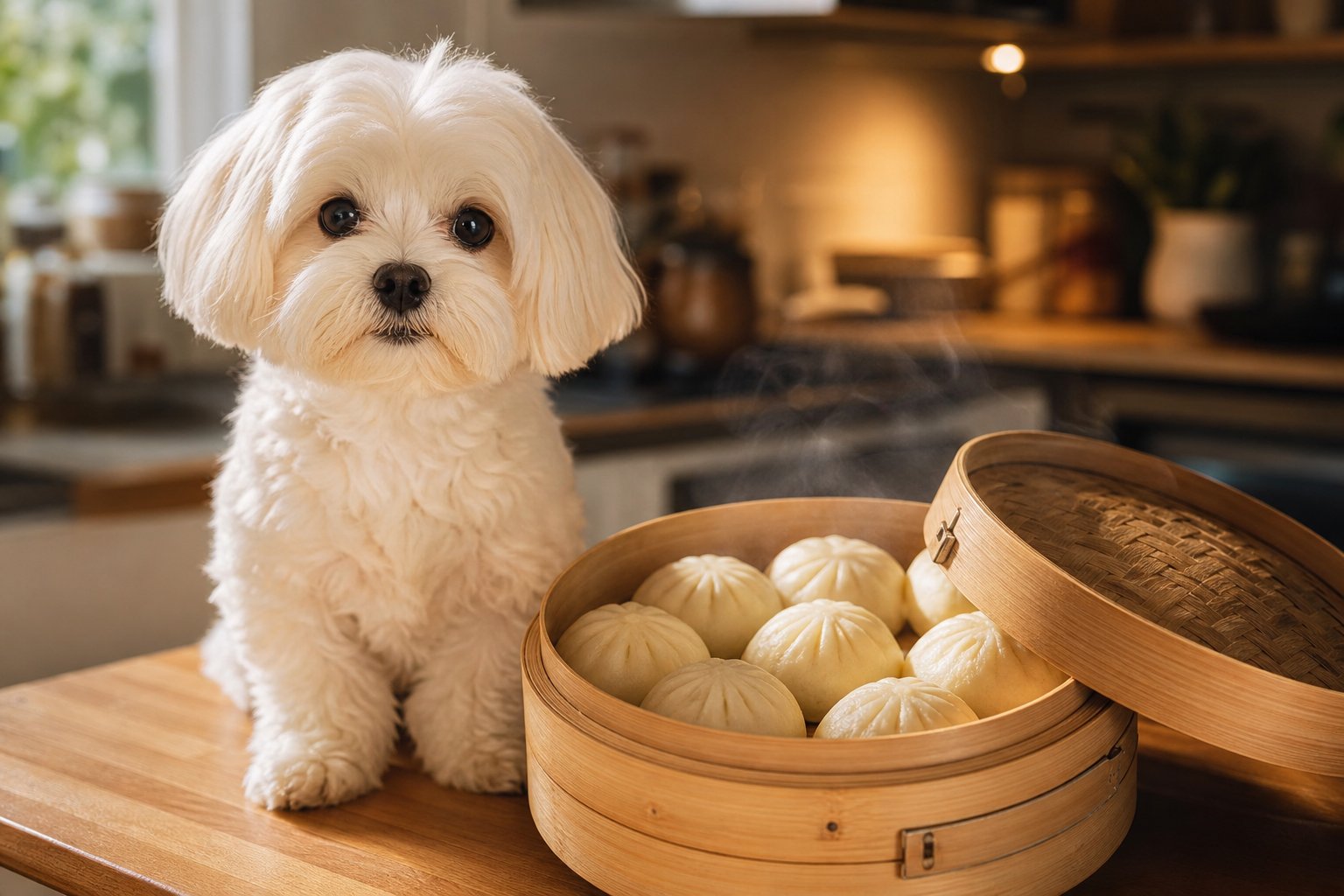
This is why food names dominate Chinese pet culture. Walk through any Chinese dog park and you will hear owners calling out Mantou, Doufu, Tangyuan. A cute chinese dog trotting toward its owner at the sound of "Baozi" is one of the most common scenes in urban China. These names signal warmth, intimacy, and a particular kind of humor that treats the pet as a source of daily joy, much like a favorite snack.
Why Food Names Are a Sign of Affection
The logic is straightforward once you understand the cultural context. Chinese families express care through feeding. Grandparents show love by insisting you eat more. Parents pack extra food "just in case." The kitchen is the emotional center of the household. When a pet enters that family unit, it absorbs the same vocabulary of tenderness.
Food names also carry a built-in cuteness factor. Many Chinese dishes have round, soft sounds that naturally suit the doubled-syllable pattern popular in asian pet names. Words like "Dòufu" (tofu) or "Tāngyuán" (glutinous rice ball) roll off the tongue with a gentle rhythm that dogs respond to well. The sounds are short, distinct, and easy to call repeatedly without feeling harsh.
There is a practical element too. Chinese pet owners often choose food names because they sound lively and amusing, expressing love for their pets "as pure and fervent as for good cuisine." The name becomes a small daily joke shared between owner and animal, a private language of affection.
Dim Sum and Dessert Names for Small Dogs
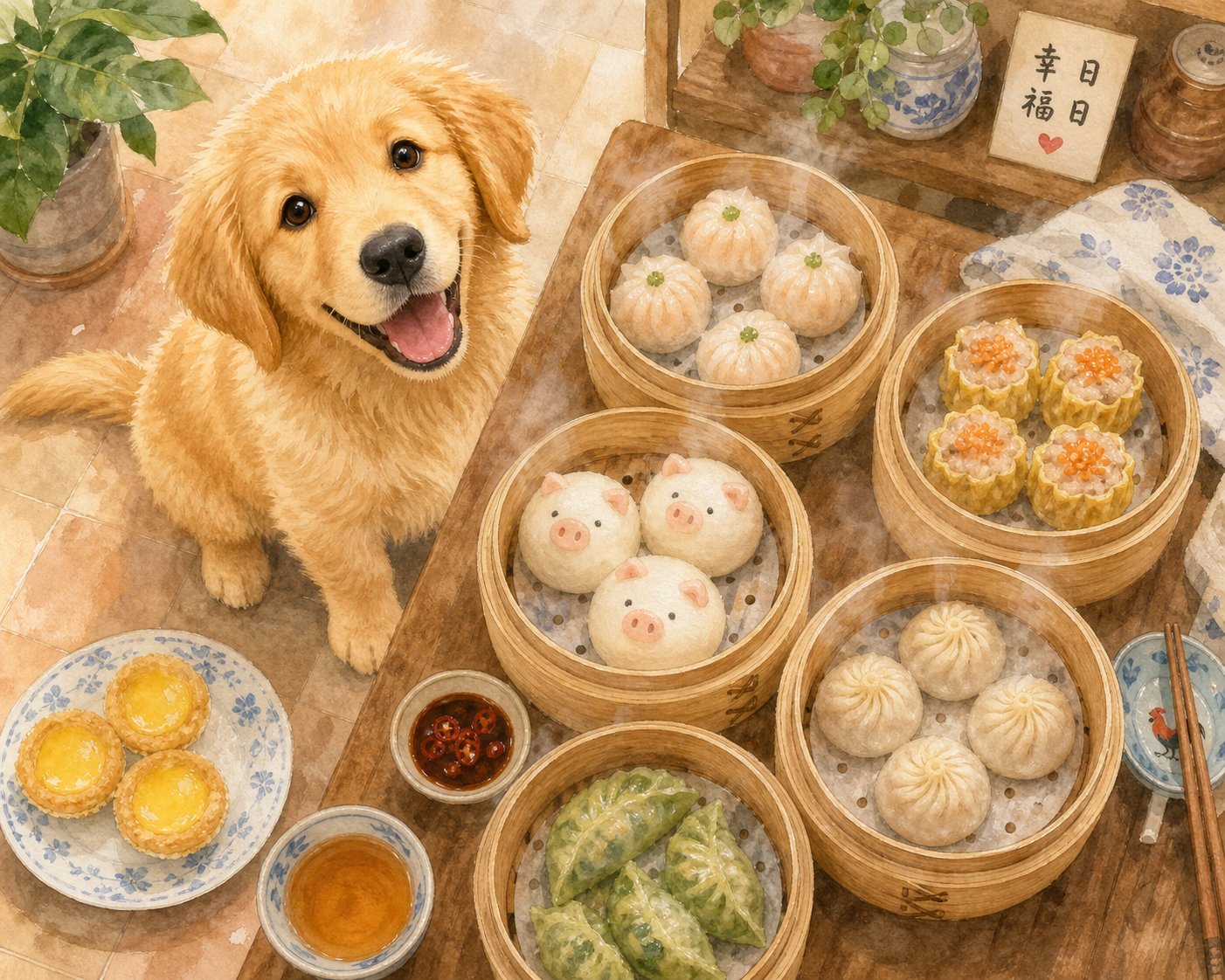
Dim sum items make ideal chinese puppy names because the dishes themselves are small, carefully crafted, and meant to be savored in delicate portions. The parallel to a tiny dog is irresistible. Many of these names originate from Cantonese cuisine, so both Mandarin and Cantonese pronunciations are included below.
- 包子 (Bāozi / Cantonese: baau1 zi2 / "bow-dzuh") - Steamed stuffed bun. Round, soft, and warm. Perfect for a chubby, fluffy dog with a gentle temperament. The name sounds inherently cuddly and is one of the most popular cute asian dog names in China.
- 馒头 (Mántou / Cantonese: maan4 tau4 / "mahn-toe") - Plain steamed bun. Even simpler and softer than baozi. Suits a white or cream-colored dog with a pillowy, round body. The name implies something comforting and unpretentious.
- 小笼包 (Xiǎolóngbāo / Cantonese: siu2 lung4 baau1 / "shyow-lohng-bow") - Soup dumpling. Delicate, precious, and full of hidden warmth inside. A longer name that works well shortened to "Xiǎolóng" for daily use. Ideal for a small dog with a surprisingly big personality.
- 汤圆 (Tāngyuán / Cantonese: tong1 jyun4 / "tahng-ywen") - Glutinous rice ball served in sweet soup. These are eaten during the Lantern Festival and symbolize family reunion. Naming a dog Tangyuan implies it completes the family circle.
- 蛋挞 (Dàntà / Cantonese: daan6 taat1 / "dahn-taht") - Egg custard tart. Golden, sweet, and irresistible. Suits a golden or tan-colored small dog. The Cantonese pronunciation "daan taat" has a satisfying crispness that mirrors the pastry itself.
- 麻薯 (Máshǔ / "mah-shoo") - Mochi. Soft, chewy, and slightly bouncy. Perfect for a playful small dog that springs around with elastic energy. The texture association makes this name feel physical and fun.
Personality match: dim sum and dessert names work best for dogs under 20 pounds with soft features, round eyes, or a gentle disposition. The names carry an inherent smallness and preciousness that feels mismatched on a 90-pound mastiff but absolutely right on a Pomeranian or Maltese.
Savory and Bold Food Names for Larger Breeds
Bigger dogs need names with more weight. Savory dishes, hearty staples, and bold flavors provide asian food names for dogs that project substance without losing the affectionate quality that makes food names work in the first place.
- 土豆 (Tǔdòu / "too-doe") - Potato. Earthy, solid, and dependable. A humble name that carries warmth precisely because of its simplicity. Suits a sturdy, no-nonsense dog with a grounded personality. Extremely popular in Chinese pet communities for its unpretentious charm.
- 大饼 (Dàbǐng / "dah-bing") - Large flatbread. Round, substantial, and satisfying. The "dà" (big) prefix gives it a heft that matches larger breeds. Works especially well for broad-chested dogs with a calm, steady presence.
- 烧麦 (Shāomài / Cantonese: siu1 maai6 / "show-my") - Open-topped dumpling. Slightly more refined than a basic bun, with visible filling. Suits a medium-to-large dog with an open, expressive face. The Cantonese "siu mai" pronunciation is widely recognized even outside China.
- 叉烧 (Chāshāo / Cantonese: caa1 siu1 / "chah-show") - Cantonese barbecued pork. Rich, bold, and deeply flavorful. A name with swagger that suits a confident, outgoing dog. The reddish-brown color association makes it particularly fitting for dogs with warm-toned coats.
- 锅贴 (Guōtiē / "gwoh-tyeh") - Potsticker. Crispy on the outside, juicy on the inside. Perfect for a dog that appears tough or aloof to strangers but melts into affection with family. The contrast between exterior and interior mirrors the dumpling's defining characteristic.
- 辣椒 (Làjiāo / "lah-jyow") - Chili pepper. Small but fiery. Ideal for a dog with a spicy attitude, one that barks first and asks questions later. The name warns people not to underestimate the heat inside a compact package.
A cute chinese dog named after food is never being mocked. Quite the opposite. In a culture where feeding someone is the deepest expression of care, giving your dog a food name places it squarely at the center of family life. It says: you belong here, at the table, in the warmth, surrounded by the people who love you most.
Food names represent one end of the Chinese pet-naming spectrum: playful, intimate, rooted in daily life. But naming trends in China are not static. Younger generations are blending these traditional patterns with pop culture references, internet humor, and hybrid naming styles that would have puzzled their grandparents.
Modern Trends vs Traditional Chinese Pet Naming
Generational shifts reshape everything, including what people call their dogs. The same cultural forces transforming how young Chinese parents name their children, drawing from classical poetry and philosophical texts while simultaneously embracing global pop culture, are playing out in pet naming too. Understanding where tradition ends and trend begins helps you choose a name that feels timeless or contemporary, depending on what you want.
Traditional Naming Rooted in Virtue and Fortune
Older generations of Chinese pet owners draw from the same well that has supplied human names for centuries: virtue characters, nature imagery, and auspicious wishes. Traditional pet names in chinese culture prioritize meaning over sound. A name like 旺财 (Wàng Cái, "Prosperous Wealth") or 阿福 (Ā Fú, "Lucky") carries explicit good-fortune intentions. These names treat the pet as a family member whose name should contribute positive energy to the household.
The traditional approach favors characters with deep literary roots. Just as post-1980s Chinese parents chose characters like 伟 (wěi, "great") and 强 (qiáng, "powerful") for their children, they gave dogs names reflecting strength, loyalty, and prosperity. The naming act itself was serious, sometimes involving consultation with elders or even fortune-telling principles to ensure compatibility between the name's elements and the dog's birth year.
Modern Trends in Chinese Pet Culture
Younger chinese pet owners, particularly the post-1990 and post-2000 generations, approach naming with a different sensibility. They still value meaning, but they layer it with humor, internet culture, and global references. The result is a hybrid style that would puzzle their grandparents but makes perfect sense in a world where Douyin (Chinese TikTok) videos of dogs go viral daily.
Key shifts defining modern asian dog names in China:
- The 小 (xiǎo) prefix explosion - While older generations used 小 occasionally, younger owners apply it to almost everything. 小奶茶 (Xiǎo Nǎichá, "Little Milk Tea"), 小可乐 (Xiǎo Kělè, "Little Cola"). The prefix signals casual intimacy rather than formal naming.
- Western-Chinese hybrids - Names like 奥利奥 (Àolì'ào, the phonetic rendering of "Oreo") for black-and-white dogs, or 可可 (Kěkě, from "cocoa") blend foreign sounds with Chinese phonetic patterns.
- Internet-influenced humor - Meme culture produces names like 二哈 (Èr Hā, short for "二货哈士奇," meaning "silly Husky"), which became so widespread it is now a generic term for goofy dogs regardless of breed.
- Pop culture references - Characters from anime, dramas, and games become asian names for dogs. The success of films like Ne Zha 2 spikes interest in mythology names, while K-drama fans might choose 欧巴 (Ōubā, from Korean "oppa").
The table below captures how these two approaches differ across key naming dimensions:
| Dimension | Traditional Style | Example | Modern Style | Example |
|---|---|---|---|---|
| Source of meaning | Classical literature, virtue characters | 忠义 (Zhōng Yì, "Loyal and Righteous") | Pop culture, food, internet slang | 奥利奥 (Àolì'ào, "Oreo") |
| Sound pattern | Two meaningful characters | 瑞祥 (Ruì Xiáng, "Auspicious Omen") | Doubled syllables or three-character playful names | 奶茶 (Nǎichá, "Milk Tea") |
| Tone | Formal, aspirational | 大壮 (Dà Zhuàng, "Big and Strong") | Casual, humorous, cute | 肥肥 (Féi Féi, "Chubby Chubby") |
| Cultural register | Confucian values, fortune principles | 福寿 (Fú Shòu, "Fortune and Longevity") | Global, bilingual, ironic | 皮卡丘 (Píkǎqiū, "Pikachu") |
| Naming intent | Wish fulfillment for the household | 旺财 (Wàng Cái, "Prosperous Wealth") | Personality expression of the owner | 戏精 (Xìjīng, "Drama Queen") |
Here is what is interesting: these two streams are not mutually exclusive. Many young owners choose names that look modern on the surface but contain traditional auspicious characters underneath. A dog named 小福星 (Xiǎo Fúxīng, "Little Lucky Star") uses the trendy 小 prefix and the playful "star" suffix while embedding 福 (fú, "fortune") at its core. The traditional values persist. They just wear different clothes now.
Whether you lean toward classic asian names for pets rooted in centuries of cultural weight or prefer something that reflects contemporary Chinese internet humor, both paths produce names with genuine meaning. The difference is simply which era of Chinese culture you want your dog's name to reference.
Whichever direction you choose, one critical step remains: making sure your chosen name does not accidentally say something you did not intend. Chinese is a language where a single tonal slip or an overlooked homophone can turn a beautiful name into an embarrassing one.
Naming Taboos and How to Choose the Perfect Dog Chinese Name
A name that looks elegant on paper can sound like a curse word when spoken aloud. Chinese is packed with homophones, words that share identical sounds but carry wildly different meanings depending on tone and context. For non-speakers choosing a chinese name for dog, these hidden landmines are invisible until a native speaker winces, laughs, or politely suggests you reconsider.
Naming Taboos Non-Chinese Speakers Should Know
The most dangerous mistakes are not the obvious ones. Nobody accidentally names their dog 死 (sǐ, "death"). The real problems come from characters that sound like something negative when called across a park or combined with other syllables. As naming experts note, even individual characters can be problematic: "Ri" literally means "sun," but in colloquial usage it functions as a vulgar expletive similar to an English obscenity.
Here are the core taboos to watch for when selecting names for chinese dogs:
- The number four problem - 四 (sì, "four") sounds nearly identical to 死 (sǐ, "death"). Any name containing "si" sounds will trigger this association for native speakers. Avoid characters like 思 (sī, "to think") in combination with others that amplify the death connection.
- Dangerous character combinations - Two perfectly fine characters can form an unfortunate word when placed together. 思旺 (Sī Wàng) looks like "thoughtful and prosperous" but sounds almost identical to 死亡 (sǐwáng), the word for "death." Always check how your chosen characters sound as a complete phrase.
- The "250" insult - The number 250 (二百五, èr bǎi wǔ) is a well-known insult meaning "fool" or "idiot" in Chinese. Avoid any name that could be shortened or misheard as this number.
- Vulgar homophones - Characters containing sounds like "ri," "cao," or "bi" can overlap with profanity in certain tonal combinations. What reads as poetic in characters may sound crude when shouted repeatedly at a dog park.
- Ancestral name conflicts - In traditional Chinese culture, using a character from an elder's or ancestor's name is considered deeply disrespectful. If you have Chinese friends or family, check that your dog's name does not share characters with their relatives' names.
- Overly human names - Naming a dog something like 建国 (Jiànguó, "Build the Nation") or 伟大 (Wěidà, "Great") can come across as mocking, since these are serious patriotic names given to people. The line between pet names and human names is more defined in Chinese culture than in English.
The golden rule of Chinese name selection: never finalize a name until you have said it aloud fifty times and had at least one native speaker confirm it carries no unintended meaning in any tonal variation.
A Personality-Matching Framework for Your Dog
With taboos cleared, the positive selection process begins. Rather than scrolling through random lists, use this framework to narrow your options based on four dimensions that matter in Chinese naming tradition:
- Personality - Is your dog calm or chaotic? Protective or playful? Match energy to meaning. A serene dog suits water names (溪溪, 云云). A bold dog earns warrior names (关羽, 铁虎). A mischievous dog deserves trickster names (悟空, 哪吒).
- Breed heritage - Does your dog have Chinese ancestry? If so, match the name's regional and cultural register to the breed's origin. Cantonese names for Shar Pei, imperial names for Pekingese, northern names for Chow Chows.
- Appearance - Physical traits guide naming in Chinese culture just as they do in English. A golden dog might be 金金 (Jīn Jīn, "Gold Gold"). A black dog could be 墨墨 (Mò Mò, "Ink Ink"). A fluffy white dog becomes 雪球 (Xuěqiú, "Snowball").
- Desired meaning - What do you want the name to invoke? Luck and fortune point toward auspicious characters. Beauty and elegance point toward nature imagery. Strength and protection point toward mythology and warrior references.
When two dimensions conflict, prioritize sound over meaning. A dog name gets called hundreds of times per week. If the chinese for dog owners to pronounce comfortably does not roll off your tongue naturally, the most beautiful meaning in the world will not save it from becoming a daily frustration.
Final Tips for Picking and Testing Your Name
You have a shortlist. The cultural checks are done. Before committing, run these practical tests that separate a good dog names chinese choice from a great one:
- The shout test - Stand in your backyard and call the name at full volume ten times. Does it feel natural? Does it carry across distance? Names with sharp consonants (like the "zh" in 壮壮 or the "g" in 关羽) project better than soft, breathy sounds.
- The two-syllable rule - Dogs respond best to one or two syllable calls. If your chosen name is longer (like 小龙包), decide in advance what the shortened daily-use version will be. Most Chinese pet owners default to the last two syllables or the doubled form.
- The tonal comfort check - Can you consistently produce the correct tone? If you struggle with third-tone dips, avoid names heavy on third-tone characters. A name you mispronounce every time loses its cultural resonance. Fourth-tone names (falling pitch) tend to be easiest for English speakers because they mimic the natural command voice used with dogs.
- The native speaker review - Share your top three choices with a Mandarin or Cantonese speaker. Ask specifically: "Does this sound like anything embarrassing? Would you find it strange for a dog?" Native speakers catch connotations that dictionaries miss entirely.
- The dog response test - Say the name near your dog in a cheerful tone for several days before making it official. Some sounds naturally attract canine attention (hard consonants, rising intonation). If your dog perks up at the sound, you have a winner.
Choosing a dog chinese name with real cultural depth is not about perfection. It is about respect, intention, and a willingness to look beyond surface-level translation. The fact that you have read this far means you care about getting it right, and that care is exactly what separates a thoughtful name from a careless one. Your dog will not know the difference. But every native speaker who hears the name will.
Frequently Asked Questions About Chinese Dog Names
1. What is the most popular Chinese dog name and what does it mean?
The most iconic Chinese dog name is 旺财 (Wang Cai), meaning 'Prosperous Wealth.' It became widely popular after the film Shaolin Soccer and remains a top choice because it invites good fortune into the household. The character 旺 means thriving or prosperous, while 财 means wealth, making it a double dose of auspicious energy every time you call your dog.
2. How do you say dog in Chinese and what characters are used?
The everyday word for dog in Mandarin is 狗 (gou, third tone), pronounced roughly like 'go' with a dipping pitch. The formal literary character is 犬 (quan). In Cantonese, dog is also written 狗 but pronounced 'gau2.' For puppy, Mandarin uses 小狗 (xiao gou, meaning 'little dog') while Cantonese says 狗仔 (gau2 zai2, meaning 'dog child').
3. What Chinese dog names should I avoid due to cultural taboos?
Avoid names containing sounds similar to 四 (si, 'four') since it sounds like 死 (si, 'death'). Watch for character combinations that accidentally form negative words, like 思旺 which sounds like 死亡 (death). Characters with vulgar homophones such as 'ri,' 'cao,' or 'bi' should also be avoided. Additionally, never use characters from a Chinese friend's or family member's ancestral names, as this is considered deeply disrespectful.
4. Why are food names so common for Chinese dogs?
In Chinese culture, food is the primary love language. Families express care through cooking and feeding, so naming a pet after a beloved dish like 包子 (Baozi, steamed bun) or 汤圆 (Tangyuan, rice ball) places the animal at the emotional center of family life. These names signal warmth and intimacy rather than mockery, and their round, soft sounds naturally suit the doubled-syllable patterns that Chinese speakers find endearing.
5. Should I use Mandarin or Cantonese pronunciation for my Chinese dog's name?
Match the dialect to your dog's breed heritage for maximum cultural authenticity. Shar Pei originated in Guangdong province, making Cantonese their native linguistic environment. Chow Chows come from northern China where Mandarin dominates. For non-Chinese breeds, Mandarin is the safer default since it is more widely understood globally. Either way, choose whichever pronunciation you can produce comfortably and consistently.