Understanding the Art Behind Chinese Fantasy Novel Names
When you pick up a Chinese fantasy novel, the title alone carries layers of meaning that most Western readers glide right past. Words like "heaven," "immortal," or "seal" aren't chosen for dramatic flair alone. They signal the subgenre, hint at the protagonist's journey, and sometimes compress an entire thematic arc into just a few characters. Every Chinese fantasy novel title is a small act of worldbuilding before the story even begins.
This isn't accidental. Chinese fantasy draws on thousands of years of literary tradition where titles function as compressed poetry. A four-character phrase can reference classical philosophy, martial arts lineage, or Daoist cosmology all at once. For readers unfamiliar with these conventions, the names can feel interchangeable or arbitrarily mystical. But once you understand the system behind them, patterns emerge fast.
Why Chinese Fantasy Novel Names Feel Different
English-language fantasy titles tend to rely on proper nouns or evocative phrases: think "The Name of the Wind" or "A Game of Thrones." Chinese fantasy titles work differently. They often encode the story's core conflict or the protagonist's ultimate goal directly into the name. A title like "I Shall Seal the Heavens" (我欲封天) isn't just dramatic. It tells you the character's ambition, the scale of the world, and the cultivation-driven power system all in five words.
Chinese fantasy titles function less like labels and more like thesis statements, compressing theme, genre, and narrative ambition into a handful of carefully chosen characters.
What This Guide Covers
This article isn't a reading list or a ranking of the best Chinese fantasy novels. Instead, it's a decoder ring. You'll learn how subgenres like wuxia, xianxia, and xuanhuan each follow distinct naming logic. You'll see which Chinese characters appear again and again in titles and what they actually mean. And you'll understand why a single character in a Chinese fantasy story might carry four different names throughout the narrative.
Two separate naming systems run through these stories. The first governs novel titles themselves, shaped by genre conventions and literary tradition. The second governs character names, where family names, courtesy names, and dao names each serve a different narrative purpose. Both systems reward readers who pay attention, and both become far more intuitive once you know what to look for.
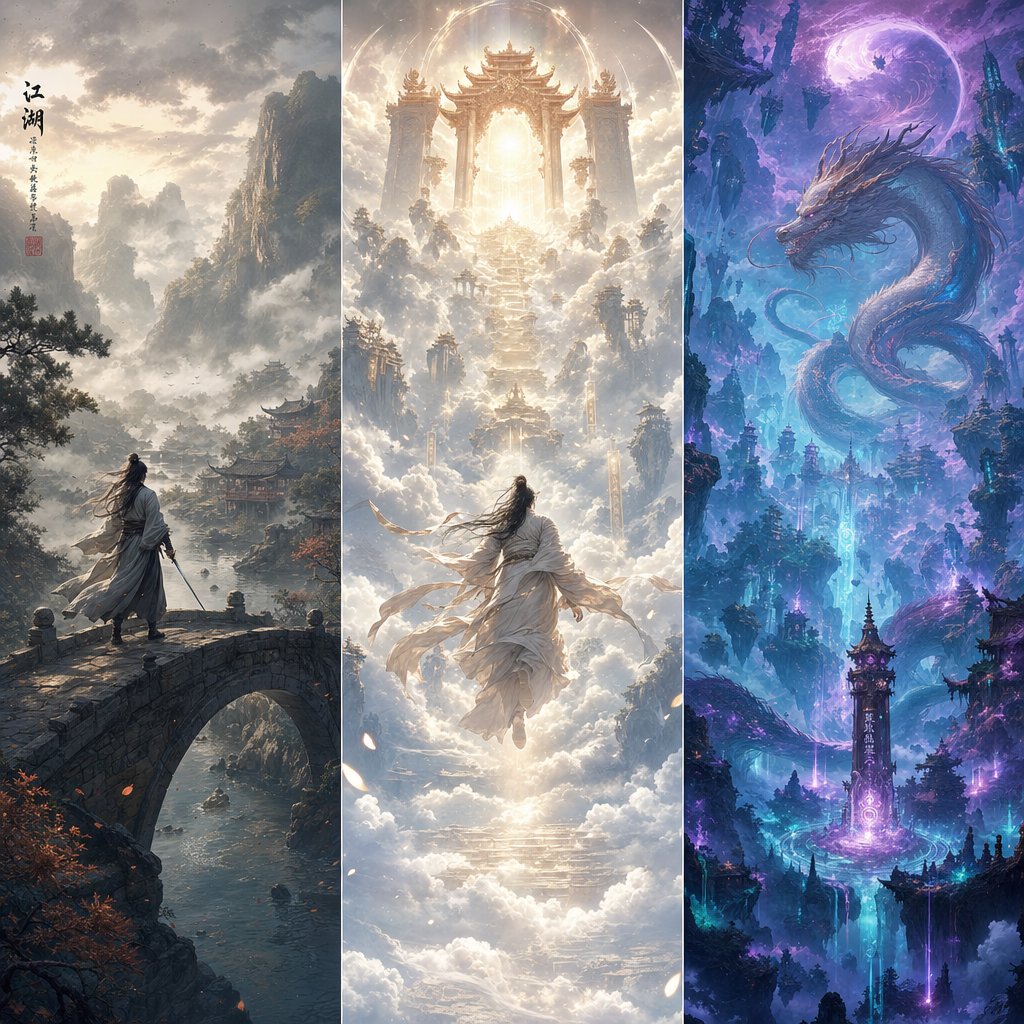
How Subgenres Shape Chinese Fantasy Novel Titles
Each branch of Chinese fantasy carries its own vocabulary, its own imagery, and its own set of expectations baked right into the title. The three major subgenres don't just tell different kinds of stories. They name those stories using entirely different linguistic toolkits. Recognizing which toolkit a title draws from tells you what kind of world you're stepping into before you read a single page.
Think of it this way: if you see "sword" and "river" in a title, you're likely looking at a wuxia story grounded in the martial world. If you spot "heaven" or "immortal," the story probably involves cultivation and celestial realms. And if the title feels deliberately abstract or blends unexpected elements, you might be holding a xuanhuan novel where the rules are whatever the author imagines them to be.
Wuxia Titles and Martial World Imagery
Wuxia (武侠) literally breaks down into two characters: 武 (wu) meaning martial or combat, and 侠 (xia) meaning chivalrous hero. This is the oldest of the three subgenres, rooted in stories of martial artists navigating the jianghu, the "rivers and lakes" world of wandering swordsmen, secret societies, and codes of honor.
Wuxia titles reflect this grounded, human-scale world. You'll find references to swords, martial techniques, legendary fighters, and the jianghu itself. These titles tend to feel historical and poetic rather than cosmic. They evoke a world where extraordinary skill comes from discipline and training, not divine power. Novels in this chinese fantasy series tradition include classics like "The Legend of the Condor Heroes" (射雕英雄传) and "The Smiling, Proud Wanderer" (笑傲江湖), where the titles reference heroic deeds and the martial world directly.
As Wuxia Society notes, wuxia stories emphasize the moral code of xia alongside martial arts action, and this dual focus shows up clearly in how these novels are named. Titles often embed a sense of honor, justice, or wandering freedom.
Xianxia Titles and Immortal Cultivation Language
Xianxia (仙侠) swaps the first character: 仙 (xian) means immortal or celestial being, while 侠 (xia) retains that chivalrous hero meaning. The genre emerged as a fusion of wuxia storytelling and Chinese mythology, particularly Daoist cultivation traditions. Characters don't just train their bodies. They cultivate their spirits toward immortality, ascending through heavenly realms and battling demons along the way.
This shift in scope transforms the naming language entirely. Chinese xianxia novel names lean heavily on celestial imagery: heavens, sealing, ascending, eternal life, and spiritual realms. Titles like "I Shall Seal the Heavens" (我欲封天), "A Record of a Mortal's Journey to Immortality" (凡人修仙传), and "Renegade Immortal" (仙逆) all telegraph the cultivation journey at the heart of the story. You'll notice the word 仙 (immortal) appearing frequently, alongside references to heavens (天), cultivation paths (道), and spiritual transformation.
Where wuxia titles stay earthbound, xianxia titles reach upward. They promise transcendence, cosmic conflict, and the long road from mortal to something beyond human.
Xuanhuan Titles and Mystical Blending
Xuanhuan (玄幻) takes a different approach altogether. 玄 (xuan) refers to the mysterious or profound, derived from xuanxiang (玄想) meaning imagination or illusion. 幻 (huan) means fantasy or illusion. Together, the term signals stories built on pure imaginative freedom.
The genre was pioneered by author Huang Yi, who described his works as fantasy novels based on the imagination. Unlike xianxia, xuanhuan doesn't anchor itself in traditional Chinese mythology or Daoist cultivation systems. It freely blends elements from multiple genres, including Western fantasy, science fiction, gaming mechanics, and martial arts. This china fantasy series tradition produces titles that feel more abstract or eclectic. "Coiling Dragon" (盘龙), "Against the Gods" (逆天邪神), and "Douluo Continent" (斗罗大陆) each pull from different mythological and conceptual pools.
Xuanhuan titles often sound grander and less culturally specific than their wuxia or xianxia counterparts. They might reference dragons, gods, or entire continents without tying themselves to a particular philosophical tradition. The naming logic here prioritizes epic scale and creative novelty over classical allusion.
| Genre | Chinese Characters | Literal Meaning | Characteristic Title Elements | Example Titles |
|---|---|---|---|---|
| Wuxia | 武侠 | Martial hero / Chivalrous combat | Swords, jianghu, honor, martial techniques, wandering heroes | The Smiling, Proud Wanderer (笑傲江湖); The Legend of the Condor Heroes (射雕英雄传) |
| Xianxia | 仙侠 | Immortal hero / Celestial chivalry | Heavens, immortality, cultivation, sealing, spiritual ascension | I Shall Seal the Heavens (我欲封天); A Record of a Mortal's Journey to Immortality (凡人修仙传) |
| Xuanhuan | 玄幻 | Mysterious fantasy / Profound illusion | Dragons, gods, continents, blended mythologies, unique power systems | Coiling Dragon (盘龙); Against the Gods (逆天邪神); Douluo Continent (斗罗大陆) |
These three naming traditions aren't rigid walls. Some novels straddle boundaries, and readers will debate endlessly whether a particular title belongs in the xianxia or xuanhuan camp. But the linguistic patterns hold remarkably consistent. Once you can identify whether a title draws from martial, celestial, or abstract-mystical vocabulary, you've already decoded its genre DNA. The next layer goes deeper: the individual characters that appear across all three subgenres, each carrying its own weight of meaning.
Decoding Common Characters in Chinese Fantasy Titles
Certain Chinese characters show up in fantasy novel titles so frequently that they function almost like genre tags. Spot one of these characters, and you immediately know something about the story's world, its power system, or the scale of conflict the protagonist faces. Learning even a handful of these recurring building blocks transforms how you read and interpret chinese fantasy novel names.
These characters aren't decorative. Each one carries centuries of philosophical, mythological, or martial weight. Authors select them deliberately because a single character can evoke an entire cosmology. When two or three of these characters combine in a title, they create layered chinese fantasy title meanings that reward readers who recognize the components.
Heaven and Immortality Characters in Titles
The most common characters in xianxia and xuanhuan titles relate to the celestial realm and the pursuit of transcendence. These are the characters that signal cosmic scale and spiritual ambition in chinese fantasy stories.
- 天 (tian, heaven/sky) - Represents the heavens, the celestial order, or ultimate authority. It appears in titles that deal with defying fate or challenging divine power. Example: "Against the Gods" (逆天邪神, Ni Tian Xie Shen) literally means "Defying-Heaven Evil God."
- 仙 (xian, immortal) - Refers to celestial beings or the state of immortality achieved through cultivation. It signals stories rooted in Daoist ascension traditions. Example: "Renegade Immortal" (仙逆, Xian Ni) combines "immortal" with "rebellion."
- 道 (dao, the way/path) - Carries deep Daoist philosophical meaning, representing the fundamental nature of the universe or a cultivator's chosen path. Example: "I Shall Seal the Heavens" features the pursuit of one's own Grand Dao as a central theme, and many titles reference 道 to signal philosophical depth.
You'll notice these three characters often appear together or in opposition. A title containing both 天 and 逆 (ni, to defy) immediately tells you the protagonist challenges heaven itself. A title pairing 仙 with 凡 (fan, mortal) signals a journey from ordinary to transcendent.
Martial and Mystical Characters in Titles
The second cluster of recurring chinese characters in fantasy novels relates to combat, creatures, and the boundaries between worlds. These characters ground the story in physical conflict or define the terrain where that conflict plays out.
- 剑 (jian, sword) - The sword is central to both wuxia and xianxia traditions, symbolizing martial mastery and spiritual refinement. Example: "The Legend of Sword and Fairy" (仙剑奇侠传, Xian Jian Qi Xia Zhuan) pairs "immortal" with "sword" to blend cultivation and martial arts.
- 龙 (long, dragon) - Dragons in Chinese mythology represent imperial power, cosmic force, and transformation. Example: "Coiling Dragon" (盘龙, Pan Long) uses the dragon to evoke ancient, coiled power waiting to be unleashed.
- 魔 (mo, demon/devil) - Represents demonic forces, corruption, or the dark path of cultivation. It often signals moral conflict or antagonistic forces. Example: "Demon's Diary" (魔天记, Mo Tian Ji) combines "demon" with "heaven" to suggest a dark cultivator's chronicle.
- 界 (jie, realm/world) - Defines the boundaries of a fictional world or the multiple planes of existence characters travel between. Example: "World of Cultivation" (修真世界, Xiu Zhen Shi Jie) uses 界/世界 to frame the entire setting as a realm dedicated to cultivation practice.
What makes these characters powerful in combination is how they create tension. Pairing 魔 (demon) with 道 (the way) suggests a demonic cultivation path. Combining 剑 (sword) with 天 (heaven) implies a blade that can cut through the celestial order. Authors build titles the way alchemists combine elements: each character reacts with the others to produce something greater than the sum of its parts.
This combinatorial logic is why experienced readers of chinese fantasy stories can glance at an unfamiliar title and immediately sense its genre, tone, and ambition. A title stacking 天, 魔, and 界 promises a story spanning multiple realms with demonic conflict at cosmic scale. One featuring 剑 and 仙 together points toward sword-cultivation and immortal sects. The characters themselves become a shared vocabulary between author and audience, encoding expectations before the first chapter even loads.
These individual building blocks don't float in isolation, though. They slot into specific structural patterns that govern how Chinese fantasy titles are assembled, from classical four-character formats to protagonist-embedded constructions that Western readers rarely encounter in their own literary traditions.
Structural Patterns That Shape Chinese Fantasy Novel Titles
Knowing the individual characters is one thing. Knowing how they get assembled into a title is where the real pattern recognition kicks in. Chinese fantasy novel title structure follows a surprisingly small set of blueprints, and once you see them, you'll start categorizing titles instinctively. These patterns aren't random. They draw from classical Chinese literary conventions, idiomatic phrasing, and storytelling traditions that predate the web novel era by centuries.
Imagine walking into a bookstore where every spine follows one of five or six naming formulas. That's essentially what browsing chinese fantasy books looks like once you understand the underlying architecture. Here are the most common structural patterns, ranked roughly by how often they appear across popular titles.
- Four-character titles (chengyu-style) - The most traditional and dominant format, echoing the rhythm of classical Chinese idioms. Examples: "Battle Through the Heavens" (斗破苍穹, Dou Po Cang Qiong), "A Will Eternal" (一念永恒, Yi Nian Yong Heng), "Martial World" (武极天下, Wu Ji Tian Xia), "Perfect World" (完美世界, Wan Mei Shi Jie).
- Declarative statement titles - The protagonist's ambition or destiny stated outright. Examples: "I Shall Seal the Heavens" (我欲封天), "Against the Gods" (逆天邪神).
- Noun-compound titles (X of Y / X + descriptor) - A subject paired with a defining quality or location. Examples: "Coiling Dragon" (盘龙, Pan Long), "Renegade Immortal" (仙逆, Xian Ni), "Desolate Era" (莽荒纪, Mang Huang Ji).
- Number-embedded titles - Numbers carry symbolic weight in Chinese culture, and titles use them to signal scope or cosmic hierarchy. Examples: "Nine Star Hegemon Body Art" (九星霸体诀), "Sovereign of the Three Realms" (三界独尊), "Forty Millenniums of Cultivation" (修真四万年).
- Protagonist-name titles - The main character's name becomes the title itself, a convention less common in Western fantasy. Examples: "Fang Yuan" in "Reverend Insanity" is referenced through the title's Chinese form (蛊真人), and "Douluo Continent" (斗罗大陆) names the world the protagonist defines.
- Cultivation-technique titles - Named after a specific martial art, spiritual method, or power system central to the plot. Examples: "Nine Star Hegemon Body Art" (九星霸体诀) references the cultivation technique directly, while "Stellar Transformations" (星辰变, Xing Chen Bian) names the transformative practice the protagonist masters.
Four-Character Titles and Classical Allusions
The four-character format deserves special attention because it's deeply rooted in how Chinese language itself works. Classical Chinese idioms, called chengyu (成语), almost always consist of exactly four characters. They compress entire stories, moral lessons, or philosophical concepts into a tight rhythmic unit. When authors title their novels with four characters, they're tapping into that same linguistic gravity.
Consider "Battle Through the Heavens" (斗破苍穹). Each character pulls weight: 斗 (fight), 破 (break through), 苍 (vast/blue), 穹 (sky/dome). Together they create a four-beat phrase that sounds like a classical declaration of war against the heavens themselves. This isn't just a title. It's a compressed mission statement with the cadence of ancient poetry.
Four character chinese novel titles dominate the genre because they feel authoritative and complete in Mandarin. They roll off the tongue with a balanced rhythm that longer or shorter titles can't replicate. For Western readers, the closest equivalent might be how "Lord of the Rings" or "Game of Thrones" achieves a certain weight through syllabic balance, but the four-character convention is far more codified in Chinese literary tradition.
Number Symbolism and Protagonist-Embedded Titles
Numbers in Chinese culture carry specific associations that authors exploit deliberately. Nine (九) represents the highest single digit and symbolizes imperial power and completeness. Three (三) references the three realms of heaven, earth, and the underworld. Seven (七) connects to death and the supernatural. When a title includes a number, it's rarely arbitrary.
"Sovereign of the Three Realms" (三界独尊) uses three to define the scope of the protagonist's dominion: all three planes of existence. "Nine Star Hegemon Body Art" stacks nine with stars and a body-cultivation technique to signal the absolute peak of physical power. Even "Forty Millenniums of Cultivation" uses an impossibly large number to convey the vast timescale of its world.
Protagonist-embedded titles work differently. Rather than describing the story's theme or world, they center the character's identity or role. This pattern appears more often in chinese fantasy books where the main character's reputation becomes legendary within the story itself. The title becomes a name the world gives the protagonist, blurring the line between what the book is called and who the book is about.
These structural patterns interact with the genre-specific vocabulary covered earlier. A four-character xianxia title will stack celestial characters into that classical rhythm. A number-embedded xuanhuan title might reference realms or power levels from its unique magic system. The formula stays consistent even as the ingredients change, giving readers a reliable framework for decoding unfamiliar titles at a glance.
Titles, though, are only half the naming puzzle in Chinese fantasy. Inside the story itself, characters carry an entirely different kind of naming complexity, where a single person might answer to four or five different names depending on who's speaking and what stage of their journey they've reached.
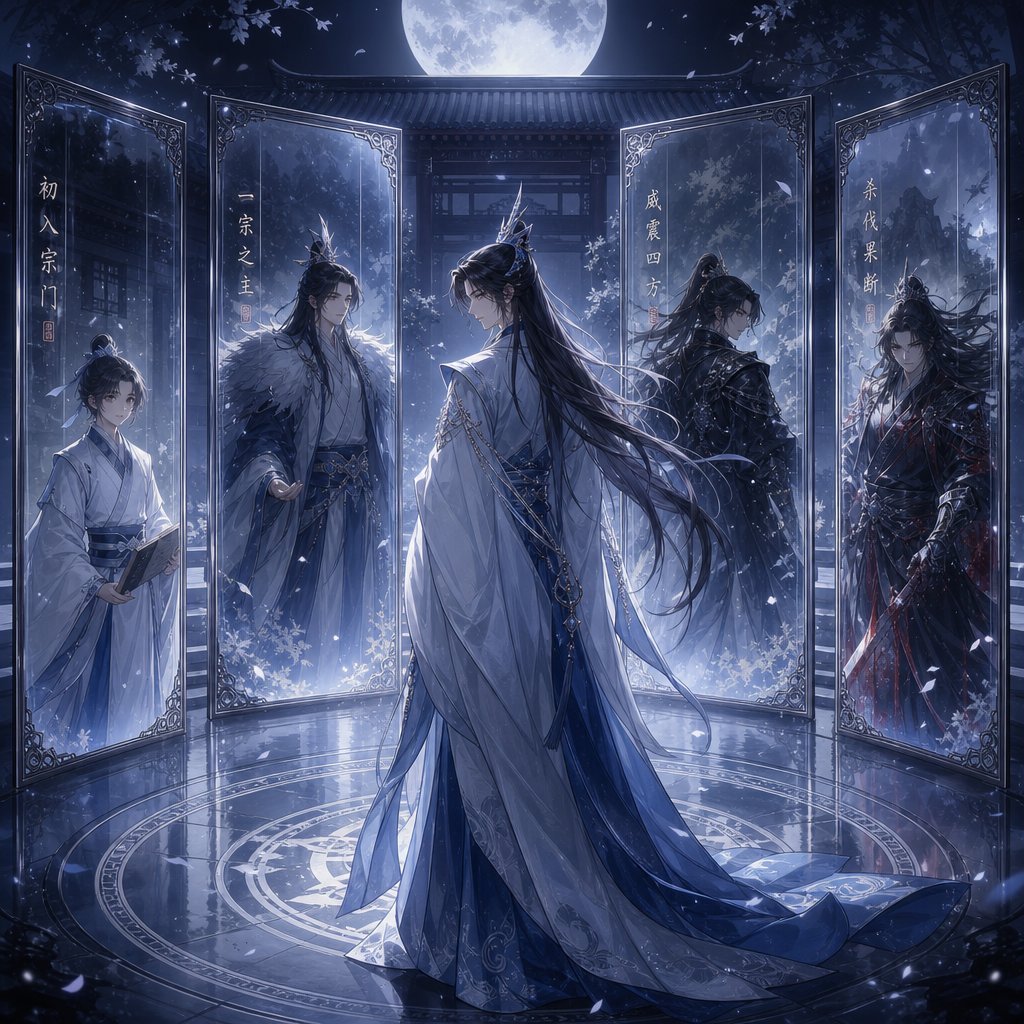
Why Characters Have Multiple Names in Chinese Fantasy Novels
You're reading a chinese fantasy romance novel, and one character gets called three different things in a single chapter. The narrator uses one name, a friend uses another, and a stranger on the road uses a third. It's not a translation error. It's the naming system working exactly as intended.
In Chinese culture, names aren't static labels. They're relational. The name someone uses for you reveals their status relative to yours, the formality of the situation, and how close they are to you personally. Chinese fantasy character names layer on top of this real-world system, adding cultivation-specific titles and sect honorifics that shift as a character grows in power. A single protagonist might accumulate four or five names across a story, and each one tells you something different about where they stand.
Family Names and Given Names in Chinese Fantasy
The most basic layer is the surname-first convention. Where English puts the given name first (Harry Potter), Chinese reverses it. Wei Wuxian from "Grandmaster of Demonic Cultivation" (魔道祖师) breaks down as Wei (魏, surname) + Wuxian (无羡, given name). The surname identifies clan and ancestry, while the given name, or ming (名), is chosen by parents and often carries aspirational meaning.
Here's the catch: in ancient Chinese tradition, using someone's birth name was considered incredibly rude unless you were a family elder or someone of clearly higher status. The idiom 指名道姓 (zhi ming dao xing), meaning to publicly call out someone's full name, was essentially a declaration of disrespect. This is why characters in chinese fantasy stories almost never address peers by their birth names in formal settings.
Given names themselves are rarely random. Parents chose names that expressed hopes or virtues. In fantasy novels, authors use this convention to foreshadow character arcs. A name containing 玉 (yu, jade) suggests purity or refinement. One with 战 (zhan, battle) signals a martial destiny. Readers who catch these meanings get early hints about where a character's story is heading.
Courtesy Names and Dao Names Explained
The courtesy name, or zi (字), is where things get interesting for Western readers encountering courtesy names in chinese novels for the first time. Traditionally given at age twenty, the zi was the name peers and acquaintances used in polite conversation. It often connected to the birth name through synonyms, antonyms, or thematic extension.
The classic example: Zhuge Liang (诸葛亮) had the courtesy name Kongming (孔明). Both 亮 and 明 mean "bright." In fantasy novels, this convention carries over directly. In "Grandmaster of Demonic Cultivation," Lan Zhan is the birth name and Lan Wangji is the courtesy name. As translators have noted, which name a character uses reveals the intimacy of the relationship. Wei Wuxian calling him "Lan Zhan" rather than "Lan Wangji" signals deep personal closeness, something that would have been socially bold in a formal setting.
Dao names (道号, dao hao) add another layer specific to cultivation fiction. When a character reaches a certain stage of spiritual practice, they may take or receive a name reflecting their path. The poet Tao Yuanming called himself "Mr. Five Willows" (五柳先生) after the trees near his home. In xianxia novels, cultivators adopt names like "Sword Immortal" or "Azure Lotus" that reflect their cultivation identity. These self-chosen aliases function like a spiritual brand, separate from family lineage entirely.
Honorifics and Titles Readers Encounter
Beyond personal names, chinese fantasy character names include a whole ecosystem of titles and honorifics that shift based on context. Within a sect, everyone relates to each other through a familial hierarchy that has nothing to do with actual blood relations.
Your shixiong (师兄, senior martial brother) isn't your sibling. He's a fellow disciple who entered the sect before you. Your shifu (师父, master) is your teacher, but the relationship carries the weight of a parental bond. As one guide to MDZS honorifics explains, seniority within a sect is typically based on how long someone has studied there, not their age. A younger disciple who joined first outranks an older newcomer.
Then there are status-based titles that characters earn or inherit: sect leader (宗主, zongzhu), young master (公子, gongzi), senior (前辈, qianbei), and more. Each one communicates something specific about power dynamics in the scene.
| Name Type | Chinese Term | When It Is Used | Example from a Well-Known Novel |
|---|---|---|---|
| Surname + Given Name (birth name) | 姓 + 名 (xing + ming) | Used by elders, narration, or as a sign of disrespect between peers | Wei Ying (魏婴) in "Grandmaster of Demonic Cultivation" - used by Lan Wangji to show intimacy |
| Courtesy Name | 字 (zi) | Used by peers and acquaintances in polite or formal settings | Wei Wuxian (魏无羡) - the courtesy name used by most characters in MDZS |
| Dao Name / Alias | 号 (hao) / 道号 (dao hao) | Self-chosen or earned through cultivation achievement; used publicly | Yiling Laozu (夷陵老祖, "Yiling Patriarch") - Wei Wuxian's feared public title |
| Sect Title | 宗主 (zongzhu) / 掌门 (zhangmen) | Used when addressing someone in their official capacity as leader | Sandu Shengshou (三毒圣手, "Sandu Shengshou") - Jiang Cheng's title as Jiang sect leader |
| Sect Honorific | 师兄/师弟 (shixiong/shidi) | Used between fellow disciples based on seniority within the sect | Shijie (师姐) - how Wei Wuxian addresses Jiang Yanli as his senior martial sister |
| Polite Address | 公子 (gongzi) / 前辈 (qianbei) | Used by strangers or in formal social situations to show respect | Lan-er-gongzi (蓝二公子, "Second Young Master Lan") - how outsiders refer to Lan Wangji |
This layered system means that tracking which name gets used in a scene is itself a form of storytelling. When a character suddenly switches from a courtesy name to a birth name, it signals a shift in emotional register. When a feared title replaces a personal name, it shows how the world perceives someone differently than their loved ones do. In chinese fantasy romance novels especially, the moment one character uses another's birth name often marks a turning point in their relationship, carrying the weight that a first kiss might in Western fiction.
All of these naming layers exist in the original Chinese text with perfect clarity. The real challenge comes when translators must carry this system into English, where readers lack the cultural context to distinguish a courtesy name from a title at a glance.
How Chinese Fantasy Names Get Translated Into English
A translator staring at a Chinese fantasy title faces a genuine dilemma. Do you preserve the literal meaning and risk sounding awkward in English? Do you adapt the title into something that captures the spirit but loses specific cultural references? Or do you keep the original sound through transliteration and let readers figure out the meaning on their own? Each approach trades something away, and the choice shapes how English-speaking audiences discover and remember these stories.
This isn't a hypothetical problem. The same novel can end up with wildly different English titles depending on who translates it and what platform publishes it. Chinese fantasy novel translation is as much an art as the original naming itself, and understanding the three main strategies helps you trace a title back to its source when you're searching for fantasy books in Chinese (fantasy books 中文) or trying to connect an adaptation to its original text.
Literal vs Adapted vs Transliterated Titles
The three core approaches to chinese to english fantasy title translation each serve a different purpose:
Literal translation preserves the meaning of each character as closely as possible. "I Shall Seal the Heavens" is a near-direct rendering of 我欲封天 (Wo Yu Feng Tian). Each word maps to its Chinese counterpart: I (我), shall/desire (欲), seal (封), heavens (天). This approach works beautifully when the original title already sounds dramatic in English. It struggles when the Chinese phrasing relies on cultural context that doesn't translate cleanly.
Adapted translation captures the spirit or theme rather than the exact words. The classic example comes from traditional Chinese literature: Pearl S. Buck translated 水浒传 (Shuihu Zhuan) as "All Men Are Brothers" in 1933. The literal meaning, roughly "Chronicles of the Water Margin," struck Buck as meaningless for English-language readers encountering the story for the first time. Instead, she chose a Confucian quote that captured the novel's spirit of brotherhood among outlaws. The adapted title sacrifices precision for resonance.
Transliteration keeps the original Chinese sound using pinyin or romanization, leaving the meaning encoded. "Douluo Continent" (斗罗大陆) transliterates "Douluo" rather than translating it, because the term is a coined fantasy word without a clean English equivalent. Similarly, "wuxia" and "xianxia" themselves are transliterations that have entered English as loanwords because no single English word captures their meaning.
Most published titles actually blend these approaches. "Coiling Dragon" literally translates 盘龙 (Pan Long), but "Against the Gods" adapts 逆天邪神 (Ni Tian Xie Shen), which literally means "Defying-Heaven Evil God." The translator chose a punchier English phrase over a word-for-word rendering that might sound clunky.
How Translation Choices Affect Reader Discovery
The stakes of these choices go beyond aesthetics. When you're searching online for a specific novel, the title used determines whether you find it. Web novel platforms like Wuxia World tend to favor literal or semi-literal translations because their audience already understands genre conventions. Readers on these platforms know what "seal the heavens" or "renegade immortal" implies within a cultivation context. The literal approach works because the community shares a baseline of genre literacy.
Traditional publishers take a different path. They often adapt titles to appeal to readers who may have zero familiarity with Chinese fantasy conventions. A title needs to sell on a bookstore shelf without requiring prior knowledge of xianxia tropes. This is why the same source novel can carry one title on a fan translation site and a completely different one in a print edition.
The Water Margin case illustrates this perfectly. Over nearly a century of translation, 水浒传 has been published as "All Men Are Brothers" (adapted), "Water Margin" (semi-literal), "Outlaws of the Marsh" (adapted), and "The Marshes of Mount Liang" (literal-geographic). Each translator made a defensible choice, and each title attracts a slightly different reader.
| Original Chinese Title | Pinyin | Literal Translation | Published English Title | Translation Approach |
|---|---|---|---|---|
| 我欲封天 | Wo Yu Feng Tian | I Desire to Seal the Heavens | I Shall Seal the Heavens | Literal (slightly adapted verb) |
| 逆天邪神 | Ni Tian Xie Shen | Defying-Heaven Evil God | Against the Gods | Adapted (condensed for impact) |
| 盘龙 | Pan Long | Coiling Dragon | Coiling Dragon | Literal (direct match) |
| 斗罗大陆 | Dou Luo Da Lu | Douluo Continent | Soul Land / Douluo Continent | Transliteration + literal hybrid |
| 水浒传 | Shuihu Zhuan | Chronicles of the Water Margin | All Men Are Brothers / Outlaws of the Marsh | Adapted (multiple versions) |
| 仙逆 | Xian Ni | Immortal Rebellion | Renegade Immortal | Adapted (captures tone) |
| 凡人修仙传 | Fan Ren Xiu Xian Zhuan | A Common Person's Cultivation to Immortality Record | A Record of a Mortal's Journey to Immortality | Literal (smoothed grammar) |
You'll notice a pattern in the table: titles that already sound evocative in direct translation tend to stay literal. Titles that would sound awkward or overly long in English get adapted. And coined fantasy terms that have no real-world meaning get transliterated. The best translators match their approach to what the specific title demands rather than applying one strategy universally.
For readers trying to track down source material, knowing these translation patterns is practical knowledge. If you loved a C-drama but can't find the novel it's based on, the screen adaptation might use an entirely different English title than the fan translation. Searching with the original Chinese characters or pinyin often cuts through the confusion faster than guessing which English adaptation a particular platform chose.
A Practical Pronunciation Guide for Chinese Fantasy Terms
Knowing what a title means is one thing. Saying it out loud without stumbling is another challenge entirely. If you've ever hesitated over how to pronounce chinese fantasy names in conversation or while searching for audiobooks, this chinese fantasy pronunciation guide will get you close enough to be understood without requiring a linguistics degree.
Mandarin Chinese is a tonal language with four main tones, meaning the same syllable pronounced with a rising pitch versus a falling pitch can mean completely different things. For casual reading purposes, though, getting the consonant and vowel sounds right matters more than nailing every tone. Think of tones as the difference between a slight accent and total miscommunication. For fantasy chinese terms you'll encounter in novels and discussions, the approximations below will serve you well.
Pronouncing Genre and World-Building Terms
These are the terms you'll see in genre discussions, wiki pages, and translation platform descriptions. Each one trips up English speakers in predictable ways because pinyin letters don't map directly to English sounds.
- Qi (气) - Sounds like "chee" with a soft start. Not "kee" or "kwee." The "q" in pinyin is always a "ch" sound made with the tongue near the front of the mouth.
- Xian (仙) - Sounds like "shee-en" blended into one syllable. The "x" in pinyin is a soft "sh" sound, lighter than the English "sh" in "ship."
- Wuxia (武侠) - "Woo-shee-ah." The "x" again makes that soft "sh" sound. Two syllables blended smoothly.
- Xianxia (仙侠) - "Shee-en-shee-ah." Same "x" sound applied twice.
- Xuanhuan (玄幻) - "Shwen-hwahn." The "xu" sounds like "shw" with rounded lips, and "huan" rhymes roughly with "wahn."
- Jianghu (江湖) - "Jee-ahng-hoo." The "j" is softer than English, closer to a "dj" sound made at the front of the mouth.
- Dao (道) - "Dow" as in "how." Not "day-oh."
- Gongzi (公子) - "Goong-dzuh." The "zi" uses a buzzing "dz" sound, not a "zee."
- Shifu (师父) - "Shir-foo." Straightforward for English speakers.
Common Character Name Sounds for Western Readers
Surnames and given-name syllables in fantasy chinese novels recycle a relatively small set of sounds. Once you learn how to pronounce chinese fantasy names that use these common elements, you'll handle most character introductions without pausing.
- Wei (魏/卫) - "Way." Simple and direct.
- Lan (蓝/兰) - "Lahn" with a broad "a" like "father." Not "lan" as in "land."
- Jiang (江/姜) - "Jee-ahng" as one smooth syllable. The "j" is soft.
- Xiao (萧/小) - "Shee-ow" blended together. Rhymes with "meow" with a "sh" at the front.
- Zhan (战) - "Jahn" with a harder start. The "zh" sounds like the "j" in "judge."
- Qing (清/青) - "Ching." The "q" becomes "ch" just like in "qi."
- Yun (云) - "Ywen" with rounded lips. Not "yun" as in "fun."
- Shen (神/沈) - "Shun" with a softer vowel, close to the "e" in "taken."
The biggest traps for English speakers are the letters "x," "q," and "zh" in pinyin. Remember: "x" is always a soft "sh," "q" is always "ch," and "zh" is a harder "j" like in "judge." Get those three right and you'll handle the vast majority of names and terms you encounter across any subgenre.
Pronunciation confidence does more than help you discuss these novels out loud. It also makes searching for adaptations far easier, since streaming platforms, fan communities, and databases often use pinyin romanization as their primary search terms.
Connecting Novel Names to Drama and Donghua Adaptations
You watched a C-drama on Netflix, fell in love with the story, and now you want to read the source novel. You search the English title of the show and find nothing. Or worse, you find a completely different book. This is one of the most common frustrations for fans crossing between chinese fantasy novel adaptations and their original texts, and it happens because screen adaptations frequently rebrand titles for international marketing.
The disconnect isn't a bug in the system. It's a deliberate choice by production companies and streaming platforms that prioritize catchy, marketable English names over faithful translations. Understanding how names travel from page to screen, and how they get altered along the way, gives you a reliable method for tracing any adaptation back to its source material.
From Novel to Screen and How Names Travel
When a chinese fantasy novel gets adapted into a drama or donghua, the original title sometimes survives intact and sometimes gets completely replaced. The pattern depends on whether the production targets domestic Chinese audiences or international viewers.
For domestic release, adaptations usually keep the novel's title or something very close to it. "Eternal Love" (2017), one of the most-watched xianxia dramas globally, carries the Chinese title 三生三世十里桃花 (San Sheng San Shi Shi Li Tao Hua), which translates literally to "Three Lives, Three Worlds, Ten Miles of Peach Blossoms." The novel by Tang Qi Gong Zi uses this exact same Chinese title. But for international streaming on Netflix and Viki, the show was marketed simply as "Eternal Love," a title that captures the romantic theme but drops every cultural reference the original name carried.
The same pattern repeats across the genre. "Word of Honor" (2021) is the international title for a drama adapted from Priest's novel "Faraway Wanderers" (天涯客, Tian Ya Ke). Neither the drama's English title nor the novel's English translation match each other, even though they tell the same story. "Nirvana in Fire" adapts Hai Yan's novel 琅琊榜 (Lang Ya Bang, literally "Langya Rankings"), where the English drama title is an adapted translation that sounds more dramatic to Western ears than a direct rendering would.
Chinese fantasy donghua novel names follow a slightly different path. Animated adaptations tend to stay closer to the original novel title because their audience skews toward readers already familiar with the source material. "Douluo Continent" (斗罗大陆) keeps its title across novel, donghua, and live-action versions. "Battle Through the Heavens" (斗破苍穹) similarly maintains its name from web novel to animated series. Donghua fans often have an easier time finding source novels because the titles haven't been rebranded for a general audience.
Finding Source Novels Through Their Original Names
The most reliable way to connect an adaptation to its novel is to bypass English titles entirely and search using the original Chinese characters or pinyin romanization. English marketing titles are inconsistent across platforms, but the Chinese title remains constant regardless of how many adaptations exist.
When searching for a novel behind a drama or donghua, use the original Chinese title characters rather than the English adaptation name. Paste the Chinese characters into search engines or novel databases, and you'll find the source material immediately, regardless of how many different English titles exist for the same story.
Here's a practical example. Say you watched "Legend of Fuyao" (2018) starring Yang Mi and want the novel. The drama adapts Tian Xia Gui Yuan's novel titled 扶摇皇后 (Fu Yao Huang Hou), which translates to "Empress Fuyao." Searching "Legend of Fuyao novel" might lead you to the right place eventually, but searching 扶摇皇后 takes you directly to the source text on Chinese reading platforms.
This approach works especially well for china fantasy adaptations that haven't received official English novel translations yet. Many popular dramas adapt web novels that only exist in Chinese or in fan-translated form. The original Chinese title is your skeleton key to finding those texts on platforms like JJWLC (晋江文学城), Qidian (起点), or archived fan translation sites.
A few practical tips for tracing adaptations back to their novels:
- Check the drama's Chinese Wikipedia or Baidu page - These almost always list the source novel with its original title and author name.
- Look for the author's name in pinyin - Searching the author alongside the drama title narrows results fast. For example, "Priest novel" will surface multiple works by the author behind "Word of Honor" and "Guardian."
- Use MyDramaList or Douban - Both platforms link adaptations to their source material and list original Chinese titles alongside English ones.
- Note that donghua titles are more stable - If a story has both a donghua and a live-action version, the donghua title usually matches the novel title more closely.
The naming conventions explored throughout this guide, from subgenre vocabulary to structural patterns to translation strategies, all converge at this practical point. When you understand that a title like 三生三世十里桃花 encodes reincarnation themes (three lives, three worlds) and romantic imagery (ten miles of peach blossoms), you can recognize the story's DNA regardless of whether it's marketed as "Eternal Love," "Ten Miles of Peach Blossoms," or "Three Lives Three Worlds." The original name is the constant. Everything else is adaptation.
Frequently Asked Questions About Chinese Fantasy Novel Names
1. Why do characters in Chinese fantasy novels have so many different names?
Chinese naming conventions are relational. A character's birth name (ming) is used by elders or narration, their courtesy name (zi) by peers in polite settings, and their dao name or alias reflects cultivation achievements. Sect honorifics like shixiong (senior brother) or gongzi (young master) add further layers based on social context. Each name signals the speaker's relationship to the character and the formality of the situation, so a single protagonist may carry four or five names that shift throughout the story as their status evolves.
2. What is the difference between wuxia, xianxia, and xuanhuan novel titles?
Wuxia titles reference martial arts, swords, and the jianghu (rivers and lakes world of wandering heroes), staying grounded in human-scale conflict. Xianxia titles use celestial language like heavens, immortality, and cultivation to signal spiritual ascension stories rooted in Daoist tradition. Xuanhuan titles blend abstract or eclectic elements from multiple mythologies, often referencing dragons, gods, or invented continents without anchoring to a specific philosophical system. The vocabulary in a title reliably identifies which subgenre a novel belongs to.
3. How are Chinese fantasy novel titles translated into English?
Translators use three main approaches: literal translation preserves each character's meaning directly (like 'I Shall Seal the Heavens'), adapted translation captures the spirit in more natural English (like 'Against the Gods' for a title literally meaning 'Defying-Heaven Evil God'), and transliteration keeps the original sound using pinyin (like 'Douluo Continent'). Most published titles blend these methods, choosing whichever approach makes the specific title sound most compelling in English while retaining enough of the original meaning to signal the story's genre.
4. How do I find the source novel for a Chinese fantasy drama or donghua?
The most reliable method is searching with the original Chinese title characters rather than the English adaptation name. Screen adaptations often rebrand titles for international marketing, so the English drama title may differ completely from the novel's English translation. Check the show's Chinese Wikipedia or Baidu page for the source novel listing, use platforms like MyDramaList or Douban that link adaptations to source material, or search the author's name in pinyin alongside the drama title to narrow results quickly.
5. What do common Chinese characters like tian, xian, and dao mean in fantasy novel titles?
Tian (天) means heaven or sky and appears in titles about defying fate or challenging divine authority. Xian (仙) means immortal and signals cultivation stories rooted in Daoist ascension traditions. Dao (道) represents 'the way' or a fundamental path, carrying deep philosophical weight about the nature of the universe. Other frequent characters include jian (剑, sword) for martial mastery, long (龙, dragon) for cosmic power, mo (魔, demon) for dark forces, and jie (界, realm) for multi-world settings. These characters combine to create layered meanings that experienced readers decode at a glance.