What Are Chinese Musician Stage Names
A Chinese musician stage name, known as yiming (艺名, literally "art name"), is a professionally adopted identity that a performer uses in place of their legal birth name. Unlike Western stage names that often simply shorten or glamorize a real name, Chinese stage names operate within a unique linguistic system where every character carries tonal value, visual meaning, and cultural weight. For any singer in chinese pop or a musician from china working across borders, a stage name becomes far more than a label. It becomes a carefully constructed artistic brand.
What Makes a Chinese Stage Name Different From a Birth Name
To understand why these names matter, you need to know how Chinese names work in the first place. Standard Chinese naming convention places the family name (xing, 姓) before the given name (ming, 名). Most surnames are a single syllable, and given names are one or two syllables. So a name like Wang Xiaoming (王小明) tells you immediately that Wang is the family name and Xiaoming is the personal name.
Stage names can follow this structure, break it entirely, or reinvent it. Some chinese musicians keep their surname and swap out the given name for something more memorable. Others drop the surname altogether and go by a single poetic word. Still others adopt English acronyms, invented words, or hybrid names that blend Mandarin with Western phonetics. The model Angelababy, for instance, is known by that English moniker professionally, though her legal Chinese name is Yang Ying (杨颖). Rapper KnowKnow from the Higher Brothers uses an English word doubled, sidestepping Chinese naming conventions entirely.
This flexibility is what separates a stage name from a birth name. A birth name anchors you to family lineage, generational naming traditions, and parental hopes. A stage name anchors you to an audience.
A Chinese stage name functions as a distinct artistic identity, one that can be tuned for sound, meaning, memorability, and cross-cultural appeal in ways a legal name never could.
Why This Naming Tradition Matters in Music
Chinese music artists operate in a landscape where names do heavy lifting. Mandarin Chinese is a tonal language with extensive homophones, meaning two names spelled identically in pinyin can carry completely different meanings depending on the characters chosen. A single poorly chosen character can evoke an unfortunate pun or clash with cultural taboos. The right character, on the other hand, can suggest elegance, strength, or poetic depth before a listener ever hears a note.
Stage names also solve a practical problem. With only about 400 common surnames in China and billions of people sharing them, standing out is genuinely difficult. The top three surnames alone, Li (李), Wang (王), and Zhang (张), belong to over 270 million people. A chinese musician entering the industry with a common name faces immediate searchability and branding challenges.
Beyond domestic concerns, stage names serve international purposes. As C-pop, Mandopop, and Cantopop reach global audiences, artists need names that travel well across languages. Some adopt Western first names paired with their Chinese surname. Others create entirely new identities designed to be pronounceable and memorable for non-Chinese-speaking fans. The result is a naming culture that blends tradition, linguistics, marketing strategy, and personal expression into a single creative decision, one that shapes how millions of listeners first encounter a musician in chinese pop culture.
Historical Roots of Stage Names in Chinese Performing Arts
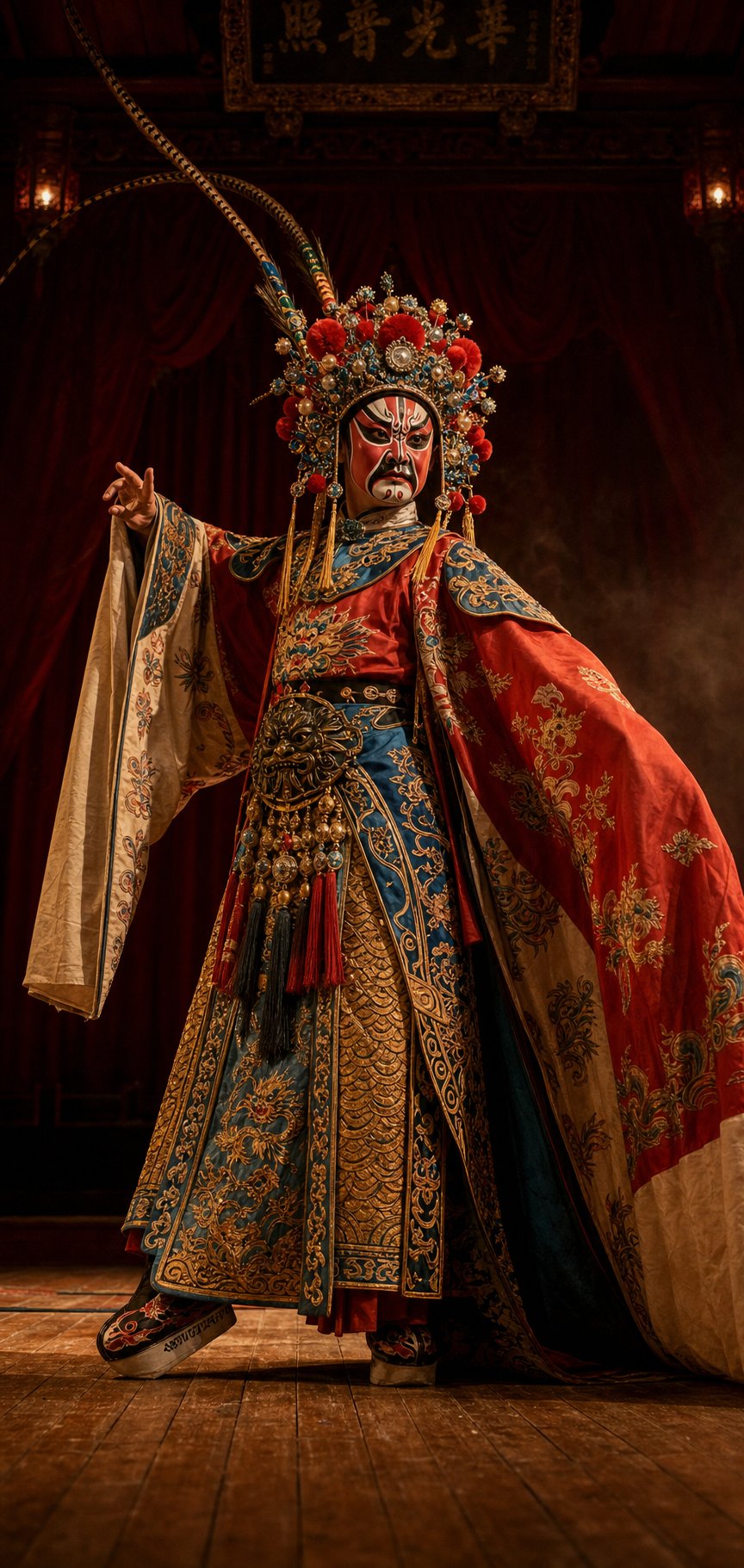
The practice of performers adopting artistic identities didn't start with pop music. It stretches back centuries through Chinese opera, literary culture, and theatrical tradition. Long before the 華語樂壇 (Chinese-language music scene) produced idol groups and streaming hits, performers were already crafting names that signaled skill, lineage, and artistic philosophy.
Stage Names in Traditional Chinese Opera and Theater
Peking opera, with its 200-year history, offers the clearest window into how stage names functioned in traditional chinese music. Opera performers didn't just pick catchy names. Their artistic identities encoded information about their training lineage, role specialization, and creative school.
Consider a few examples. Mei Lanfang (梅兰芳), arguably the most famous chinese musicians in opera history, was born with the surname Lan and also went by Heming. His stage name Lanfang became so iconic that his entire performance style was called Mei Pai (the Mei School). Zhou Xinfang (周信芳) adopted the stage name Qi Lin (麒麟, meaning "unicorn boy"), and his artistic school became known as Qi Pai after that chosen identity rather than his birth name. Shang Xiaoyun (尚小云), formerly named Quande, built the Shang Pai school under his adopted artistic name.
You'll notice a pattern here. Each performer's stage name became the foundation for an entire school of practice. Students didn't just learn techniques. They inherited a naming lineage, much like apprentices carrying forward a master's brand.
This tradition also connects to broader Chinese literary culture. Scholars and poets adopted pen names called biming (笔名) to separate their creative output from their family identity. Calligraphers carved personal seals with artistic names distinct from their legal ones. The idea that creative work deserves its own identity, separate from the self you were born into, runs deep in Chinese intellectual tradition.
How Historical Naming Practices Shaped Modern C-Pop
The continuity between opera naming and popular chinese music today is more direct than it might seem. Opera performers chose names that communicated role type and artistic lineage. Modern C-pop artists choose names that communicate genre, personality, and market positioning. The underlying logic is the same: a name is a creative statement, not just a label.
When today's famous chinese musicians adopt stage names that evoke poetic imagery or carry auspicious meanings, they're drawing on the same cultural instinct that led Mei Lanfang to build an empire around two carefully chosen characters. The difference is scale and medium, not philosophy. Opera schools passed names through master-student relationships. Entertainment companies now assign names through branding meetings. But the core belief persists: in Chinese performing arts, your artistic name is your artistic destiny.
That belief raises a practical question. If names carry this much weight, what specific factors guide the selection process? The motivations turn out to be surprisingly systematic, ranging from numerology to phonetics to international marketability.
Why Chinese Musicians Adopt Stage Names
A stage name in the Chinese music industry is never arbitrary. Every chinese singer who adopts one is responding to a specific set of pressures, some cultural, some commercial, some deeply personal. The motivations overlap and reinforce each other, creating a decision matrix that's far more complex than simply picking something that "sounds cool."
Here's a breakdown of the core reasons singers in china choose to perform under names different from the ones on their birth certificates:
- Numerology and lucky character counts - Chinese naming tradition places significant weight on the total stroke count of characters. Certain numbers are considered auspicious (8 for prosperity, 6 for smoothness), while others carry negative associations (4 sounds like "death"). Artists and their teams often consult numerological charts to ensure the total strokes in a stage name align with favorable outcomes.
- Phonetic appeal and memorability - A name needs to roll off the tongue in Mandarin, and ideally in Cantonese or other dialects too. Tonal balance matters. Names that alternate between rising and falling tones tend to sound more musical and are easier to chant at concerts.
- Avoiding homonyms with negative connotations - Mandarin is packed with homophones. A name that looks elegant in characters might sound identical to an embarrassing word when spoken aloud. Careful screening eliminates these landmines before they become viral jokes.
- Character meaning and poetic resonance - Each Chinese character carries layered meanings. Artists select characters that evoke specific imagery: strength, elegance, freedom, mystery. The visual beauty of the characters when written also factors in, since names appear on album covers, merchandise, and social media profiles.
- International branding considerations - As C-pop reaches global audiences, names need to work across languages. This might mean choosing characters whose pinyin romanization is easy for English speakers to pronounce, or adopting a parallel English name entirely.
- Distinguishing oneself from artists with common surnames - When your surname is shared by tens of millions of people, a distinctive given name or a complete name change becomes a practical necessity for searchability and brand recognition.
Numerology and Character Meaning in Name Selection
Imagine you're a chinese singer songwriter preparing to debut. Your birth name has 24 total strokes across its three characters. A numerology consultant flags this as an unlucky configuration. The solution? Adopt a stage name with a more favorable count, perhaps 16 strokes (associated with leadership and success) or 23 (linked to creativity).
This isn't fringe thinking. It's mainstream practice across the industry. The character xin (鑫), meaning "prosperous" and built from three gold radicals stacked together, appears frequently in stage names precisely because its meaning and visual structure both signal abundance. Characters like yi (逸, meaning "elegant" or "free"), xuan (轩, meaning "lofty"), and yao (耀, meaning "shine") are popular choices for their aspirational meanings.
The flip side is equally important. Characters associated with illness, decline, or sorrow are avoided regardless of how beautiful they might sound. As Chinese naming experts note, words pertaining to death, disaster, or negativity are typically shunned when selecting names, and this cultural principle applies doubly in the entertainment world where public perception is everything.
Phonetic Appeal and Avoiding Negative Associations
Sound is where things get tricky. Mandarin has only about 400 distinct syllables (before tonal variation), which means homophones are everywhere. The character shi (史), a perfectly respectable surname meaning "history," sounds identical to shi (屎), meaning "feces." A popular chinese artist would never want fans mentally associating their name with something unpleasant every time it's spoken aloud.
Real examples illustrate the stakes. A name combining the characters for "elegant" and "lotus" might look poetic on paper, but if the pinyin combination sounds like slang for something crude in a regional dialect, it becomes a liability. Artists and their teams test potential names across Mandarin, Cantonese, Hokkien, and other major Chinese dialect groups to catch these conflicts early.
Tonal flow also shapes decisions. Names with two consecutive fourth-tone (falling) syllables can sound harsh or aggressive. A mix of tones, particularly a second tone (rising) followed by a fourth tone (falling), creates a natural melodic arc that feels pleasant to say and hear. For chinese singers building a career on vocal performance, having a name that itself sounds musical is a subtle but meaningful advantage.
Gender signaling through character choice adds another layer. Characters like lan (兰, orchid), ying (英, elegant), and hua (花, flower) traditionally code feminine, while jun (军, military), wei (伟, great), and gang (刚, strong) code masculine. A chinese singer songwriter crafting a stage name might deliberately play with or against these conventions depending on the artistic persona they want to project.
International considerations have grown increasingly important as Chinese musicians target audiences beyond the Sinosphere. A name that works beautifully in Mandarin but contains sounds difficult for English or Korean speakers, like the retroflex zh, ch, or sh, may be supplemented with a Western-friendly alternative. This dual-naming strategy has become standard practice, but the motivations behind it reveal something deeper: every element of a stage name, from stroke count to tonal pattern to cross-linguistic pronounceability, serves a deliberate purpose in building an artist's identity from the ground up.
These motivations don't exist in isolation. They combine differently depending on whether an artist is a solo performer, a group member assigned a name by a company, or an independent musician choosing their own path. The resulting variety produces distinct categories of stage names, each with its own logic and notable examples.
Types and Categories of Chinese Stage Names
Not all stage names follow the same formula. Across the spectrum of chinese pop artists, hip-hop acts, and ballad singers, naming strategies fall into recognizable patterns. Each category reflects a different balance of the cultural, phonetic, and branding motivations discussed above. The table below maps out the major types you'll encounter.
| Type | Description | Notable Examples |
|---|---|---|
| Acronyms / Abbreviations | English initials or abbreviations that form a catchy, globally portable identity | G.E.M. (Get Everybody Moving), LuHan (Lu Han, 鹿晗), BOY STORY members |
| Single-Word Mononyms | A single character or word used alone, dropping both surname and multi-syllable structure | Bibi Zhou (周笔畅, zhōu bǐchàng, often just "Bibi"), Xin (鑫) |
| Poetic / Literary Names | Characters chosen for their imagery, classical allusions, or emotional resonance | Mao Buyi (毛不易, máo bù yì, meaning "not easy to change"), Hua Chenyu (华晨宇, huá chén yǔ, "magnificent morning universe") |
| Western First-Name Adaptations | An English given name paired with the Chinese surname for international accessibility | Lay Zhang (张艺兴, zhāng yì xīng), Jackson Wang (王嘉尔, wáng jiā ěr), Kris Wu (吴亦凡, wú yì fán) |
| Surname-Only Names | Using just the family name as the primary stage identity | Sa Dingding (萨顶顶, sà dǐng dǐng, adopted surname + invented given name) |
| Completely Invented Names | Names with no connection to the artist's birth name, often created for branding or persona | Jolin Tsai (蔡依林, càiyīlín, "Jolin" invented), Hebe Tien (田馥甄, tián fù zhēn, "Hebe" from mythology) |
Acronyms and Abbreviated Stage Names
The acronym approach is one of the most distinctive strategies among chinese pop singers targeting both domestic and international audiences. The clearest example is G.E.M., born Tang Tsz-kei (邓紫棋, dèng zǐ qí) in Hong Kong. Her stage name stands for "Get Everybody Moving," a phrase that doubles as a mission statement. It's instantly memorable, language-neutral, and functions as a brand logo in text form. The name helped position her as a chinese pop star with crossover ambitions from the very start of her career.
Acronyms work because they sidestep the pronunciation challenges that Chinese names present for non-Mandarin speakers. They also compress an artist's identity into something punchy enough for hashtags, concert chants, and merchandise. Other artists use partial abbreviations, keeping one element of their Chinese name while shortening or anglicizing the rest.
Poetic Names and Single-Word Monikers
At the opposite end of the spectrum, some chinese pop idols lean into the literary tradition. Hua Chenyu (华晨宇, huá chén yǔ) carries characters meaning "magnificent," "morning," and "universe," a name that reads like a line of poetry. Mao Buyi (毛不易, máo bù yì) kept his surname but chose a given name meaning "not easily changed," a philosophical statement embedded in two characters.
Single-word mononyms strip things down even further. By going by one name, an artist signals confidence and distinctiveness. Think of how "Adele" or "Drake" function in English. In Chinese, this approach is rarer because single characters can be ambiguous without context, but artists who pull it off gain immediate recognizability. The c pop star who uses a mononym is betting that one word is enough to carry their entire brand.
Western Adaptations for Global Audiences
The Western first-name strategy has become standard among chinese pop idols who trained in or target the K-pop and international markets. Lay Zhang (张艺兴, zhāng yì xīng), a member of EXO, uses "Lay" as his English-facing identity while retaining his full Chinese name for domestic audiences. Jackson Wang (王嘉尔, wáng jiā ěr) of Got7 follows the same pattern, pairing an English given name with his Chinese surname.
This dual-name system lets artists maintain cultural authenticity at home while removing barriers abroad. The English name doesn't replace the Chinese one. It runs parallel to it, activated depending on the market. For a generation of chinese pop artists building careers across multiple countries simultaneously, this flexibility isn't optional. It's infrastructure.
What's worth noting is that these categories aren't mutually exclusive. An artist might use a poetic Chinese name domestically, an acronym on social media, and a Western adaptation for international press. The category they "belong" to often depends on which audience you ask. That fluidity becomes especially visible when you look at specific artists and the stories behind their naming choices, starting with some of the most recognized male performers in the industry.
Famous Male Chinese Musicians and Their Stage Names
Categories and naming strategies only tell part of the story. The real texture emerges when you look at individual artists, the specific choices they made, and what those choices reveal about genre, era, and ambition. Among chinese male singers, the range of approaches spans from keeping a birth name nearly intact to inventing an identity from scratch.
Male Mandopop and Cantopop Stage Names
The biggest names in Mandopop and Cantopop illustrate how differently famous male chinese singers handle the naming question, even within the same generation and market.
- Jay Chou (周杰伦, zhōu jié lún) - Birth name and stage name are identical. Chou kept his full legal name, a deliberate choice that grounds his brand in authenticity. Internationally, he uses "Jay Chou," pairing an English first name with his romanized surname. This preserves surname recognition across markets while giving Western audiences an easy entry point. The strategy worked: "Jay Chou" is searchable, pronounceable, and unmistakably his.
- Eason Chan (陈奕迅, chén yì xùn) - One of the most popular chinese male singers in Cantopop history, Chan performs under his birth name domestically but is known internationally as "Eason Chan." His English name "Eason" was adopted during his school years in England. Fans also call him "E-God" (E神), a nickname that became a cultural shorthand for his vocal dominance. His three Golden Melody Awards for Best Male Mandarin Singer cemented a legacy built on a name that bridges Hong Kong and the Mandarin-speaking world.
- JJ Lin (林俊杰, lín jùn jié) - Born in Singapore, Lin uses "JJ" as his international-facing abbreviation, derived from the initials of his given name Junjie. The double-letter format is punchy and globally portable, while his full Chinese name retains the poetic weight of its characters: jun (俊, handsome/talented) and jie (杰, outstanding).
- Wang Leehom (王力宏, wáng lì hóng) - A Chinese-American artist who kept his Chinese birth name but romanized it as "Leehom" rather than the standard pinyin "Lihong." This subtle spelling choice makes the name feel more natural to English readers while preserving its Chinese phonetics.
Among hong kong male singers specifically, the pattern of adopting an English given name during school years in the UK or Australia and carrying it into a music career is remarkably common. It reflects Hong Kong's bilingual culture, where English names function as parallel identities rather than replacements.
Hip-Hop and Idol Group Naming Conventions for Men
Hip-hop and idol culture represent two extremes of the naming spectrum for chinese singers male. Rappers typically choose their own names to project individuality. Idol group members often receive names assigned by entertainment companies to optimize group branding.
- GAI (周延, zhōu yán) - Born Zhou Yan, this Chongqing rapper adopted "GAI" (盖), a character meaning "to cover" or "to dominate." The name signals supremacy in classic hip-hop fashion. After winning "The Rap of China," GAI became one of the most recognized names in Chinese hip-hop, his single-syllable stage name carrying the weight of an entire genre's mainstream breakthrough.
- Wang Yitai (王以太, wáng yǐ tài) - A member of Chengdu's CDC rap collective, Wang kept his surname but adopted a given name that sounds like "ether" in English, blending Chinese and Western hip-hop references. His style infuses mainstream pop sounds while maintaining street credibility through his name's connection to the Chengdu scene.
- Higher Brothers (海尔兄弟, hǎi ěr xiōng dì) - This Chengdu group's name plays on the Chinese appliance brand Haier Brothers (a well-known cartoon), repurposing a familiar cultural reference into something that reads as aspirational in English. Individual members use names like MaSiWei, DZKnow, and Psy.P, mixing pinyin, English, and invented words.
- Lay Zhang (张艺兴, zhāng yì xīng) - Assigned the stage name "Lay" by SM Entertainment during his time in EXO, Zhang uses this single syllable internationally while performing under his full Chinese name at home. The company-assigned name prioritizes simplicity and distinctiveness within a multi-member group.
- Luhan (鹿晗, lù hán) - Former EXO member whose stage name is simply the pinyin romanization of his birth name. The characters mean "deer" (鹿) and "dawn" (晗), creating a poetic image that works in both Chinese and romanized form without modification.
The contrast is telling. Hip-hop artists in China choose names that assert dominance, reference street culture, or play with bilingual wordplay. Idol group members receive names optimized for fan chants, lightstick colors, and social media handles. Both approaches serve branding purposes, but the power dynamic differs completely. A rapper names himself. An idol is named.
That distinction between self-naming and being named becomes even more pronounced when looking at female artists, where considerations around femininity, power, and genre identity add additional layers to the decision-making process.

Famous Female Chinese Musicians and Their Stage Names
Female chinese singers face a naming landscape shaped by additional forces. Beyond the standard branding and phonetic concerns, women in the industry navigate expectations around femininity, vocal power, and how much of their ethnic or personal identity to foreground. The result is a naming spectrum that ranges from deeply personal cultural statements to calculated international branding moves.
Female Vocalists From Traditional to Pop
Among the most established chinese female singers, stage names often carry stories of identity transformation, cultural bridging, or deliberate artistic reinvention.
- Han Hong (韩红, Hán Hóng) - Born Yangchen Drolma (央金卓玛, Yāngjīn Zhuōmǎ) in Chamdo, Tibet, in 1971. Her Tibetan birth name translates roughly to "Saraswati Tara," connecting her to Buddhist tradition. She adopted the Chinese name Han Hong using her Han Chinese father's surname paired with hong (红, meaning "red"), a character associated with prosperity and celebration. The name bridges her dual Tibetan-Han heritage while functioning seamlessly in Mandarin-speaking markets. As one of China's best-known folk singers, Han Hong built her career on a name that honors both sides of her lineage without privileging one over the other.
- Shang Wenjie (尚雯婕, Shàng Wénjié) / Laure Shang - Born in Shanghai in 1982, Shang Wenjie performs under her birth name domestically but uses "Laure Shang" for international work. The dual identity reflects her background as a Fudan University French major who won Super Girl in 2006 and later collaborated with European musicians. Her French-facing name isn't a stage name in the traditional sense but rather a parallel identity activated for cross-cultural contexts, a strategy that let her perform for the King of Belgium and collaborate with Laurent Voulzy without requiring audiences to navigate unfamiliar tones.
- Alan (阿兰, Ā Lán) / Alan Dawa Dolma (阿兰·达瓦卓玛) - The chinese singer Alan, born in Sichuan's Tibetan regions, shortened her full Tibetan name for commercial use. "Alan" works as a mononym that's instantly recognizable across Chinese and Japanese markets, where she built a parallel career. Like Han Hong, her naming choice reflects the challenge Tibetan-Chinese artists face in making ethnic names accessible to mainstream audiences without erasing their origins entirely.
- Na Ying (那英, Nà Yīng) - Born Na Ying, this Mandopop powerhouse is one of the rare chinese female singer examples where the birth name and stage name are identical. Her Manchu-origin surname Na (那) is distinctive enough to stand out, and the character ying (英) carries connotations of brilliance and heroism. Sometimes the best branding decision is no change at all.
- Song Zuying (宋祖英, Sòng Zǔyīng) - China's most prominent ethnic Miao soprano performs under her birth name. The characters zu (祖, ancestor) and ying (英, outstanding) project gravitas and national pride, fitting for an artist whose career is closely tied to state performances and the CCTV Spring Festival Gala.
A pattern emerges among these established vocalists. Artists from ethnic minority backgrounds, particularly Tibetan performers, face the most complex naming decisions. They must balance cultural authenticity with commercial accessibility, often maintaining a full ethnic name for formal contexts while using a shortened or sinicized version professionally.
Stage Names in Chinese Female Rap and Indie Music
The chinese female rapper scene operates under entirely different naming logic. Where traditional vocalists often keep or lightly modify birth names, rappers construct identities that signal toughness, independence, and genre credibility.
- VaVa (毛衍七, Máo Yǎnqī) - Born Mao Yanqi, she adopted "VaVa" as a stage name that's punchy, gender-neutral, and carries no Chinese linguistic baggage. The repetitive syllable structure makes it chantable and memorable. As one of the first female chinese singers to break through in mainstream hip-hop via "The Rap of China," her name needed to compete with male rappers' aggressive branding without defaulting to feminized imagery.
- Lexie Liu (刘柏辛, Liú Bǎixīn) - Born Liu Baixin, she pairs an English first name with her surname for international audiences. "Lexie" sounds approachable and modern, while her Chinese given name baixin (柏辛) combines cypress tree imagery with a character meaning "laborious" or "spicy." The contrast between her soft English name and her sharp Chinese one mirrors her music's blend of pop accessibility and experimental edge.
- Vinida (万妮达, Wàn Nīdá) - Her stage name is essentially the phonetic rendering of her Chinese name Wan Nida, but spelled in a way that reads as exotic and Western. It's a clever trick: the name sounds international without actually being a foreign word. This approach lets a chinese female rapper signal global ambition while keeping her Chinese identity embedded in the syllables themselves.
What separates female rappers from their pop counterparts is the degree of self-determination in naming. Like male hip-hop artists, these women choose their own identities rather than receiving them from companies. The names they pick tend to be short, hard-edged, and deliberately stripped of traditional feminine markers. No orchids, no jade, no gentle water imagery. Instead, you get percussive syllables and invented words that refuse to be categorized.
Whether it's Han Hong bridging Tibetan and Han identity, Shang Wen Jie toggling between Shanghai and Paris, or VaVa punching through gender expectations in hip-hop, female chinese singers use naming as a tool for self-definition in ways that reflect both personal history and industry pressures. The choices these artists make individually, however, don't happen in a vacuum. Behind many of them stands a system of entertainment companies, management teams, and fan communities that shape how names are created, assigned, and ultimately transformed into cultural currency.
The Role of Entertainment Companies and Fan Culture
Individual artistry drives some naming decisions, but the machinery behind many of the most popular chinese singers tells a different story. Entertainment companies in China, South Korea, and across the region treat stage names as strategic assets, ones that are tested, refined, and deployed with the same rigor as a product launch. For chinese group singers debuting through survival shows or agency training systems, the name they carry into the spotlight is often not their own creation at all.
How Entertainment Companies Assign Stage Names
When a trainee signs with a major agency, their birth name enters a branding evaluation. The company considers several factors simultaneously: Does the name photograph well on album covers? Is it easy to chant at concerts? Does it clash with any existing artist's trademark? Can fans build memorable hashtags around it?
Imagine a trainee named Zhang Wei (张伟), one of the most common name combinations in China. An entertainment company would almost certainly assign a new identity. The replacement might keep the surname Zhang but swap the given name for something distinctive, or it might abandon the birth name entirely in favor of a mononym or English-facing alternative. The goal is differentiation within the group and searchability on platforms like Weibo and Douyin.
Companies also think about how names interact within a group lineup. Chinese pop stars in idol groups need names that sound distinct from each other when called out in sequence. Two members with similar-sounding names create confusion during fan chants and variety show introductions. Agencies test name combinations aloud, checking for tonal clashes, rhythmic flow, and whether the full roster of names sounds cohesive as a set.
Trademark registration happens early in this process. Under China's Trademark Law, stage names, nicknames, and even well-established translations of names can be protected as prior rights. Companies file trademark applications for their artists' names across multiple classes of goods and services, covering everything from music recordings to merchandise to cosmetics endorsements. A name that can't be trademarked, perhaps because it's too generic or already registered by someone else, gets rejected before a trainee ever steps on stage.
A well-chosen stage name becomes a brand asset worth protecting legally, one that can be trademarked, licensed, and defended against bad-faith filers who attempt to profit from an artist's reputation without consent.
This legal dimension explains why companies invest so heavily in name selection. A top chinese pop star's name isn't just an identity. It's intellectual property that generates revenue through endorsement deals, merchandise lines, and licensing agreements. The Supreme People's Court in China has clarified that name rights extend to stage names and nicknames, provided a stable link exists between the name and the individual in the public's perception. That legal precedent gives companies strong incentive to build distinctive, protectable names from day one.
Fan Culture and Name Variations on Chinese Social Media
The moment a stage name goes public, fans take ownership of it in ways companies can't fully control. Chinese fan culture, particularly on Weibo, transforms artist names into an entire ecosystem of nicknames, puns, emoji codes, and hashtag variations.
Here's how it works. Fans dissect each character of an artist's name and generate affectionate variations. A character might be replaced with a homophone that carries a cuter or funnier meaning. The name might be shortened to a single repeated syllable, like calling someone named Weizhou "zhouzhou" (洲洲). Animal associations emerge from character meanings: an artist whose name contains the character for "whale" (鲸, jing) might have their entire fandom branded around whale imagery, with fan group names, emoji shorthand, and even charity campaigns built on that single character's meaning.
These fan-generated nicknames serve practical purposes on Chinese social media. When famous chinese singers trend on Weibo, fans use coded nicknames and abbreviations to discuss their idols without triggering content filters or attracting organized hate campaigns. The abbreviation system runs deep: "dc" for a solo artist's supertopic forum (单超, danchao), "sc" for a paired supertopic (双超, shuangchao), and countless other shorthand terms that function as in-group markers.
Fan communities also organize around names in competitive ways. Weibo's supertopic system assigns fan levels based on activity, and dedicated supporters rise through ranks from casual followers to moderators (主持人, zhuchiren) who wield real influence over how an artist's name and image are discussed. These moderators coordinate anti-hate squads (反黑) that monitor search results and rally fans to report negative content, effectively managing the public narrative around their idol's name.
The most popular chinese singers generate entire vocabularies. Girlfriend fans (女友粉) call their idol "hubby" (老公). Mummy fans (妈妈粉) treat them as sons. Rival fandom camps develop coded language to distinguish insiders from outsiders, with terms like "poison fans" (毒唯, du wei) marking those whose devotion crosses into toxicity. All of this linguistic creativity spirals outward from a single starting point: the stage name itself.
For top chinese singers, this fan-driven name culture creates a feedback loop. The more distinctive and character-rich a stage name is, the more material fans have to work with. A name built from evocative characters generates richer nicknames, more creative hashtags, and stronger emotional attachment. Companies have learned to factor this into their naming decisions, choosing characters that lend themselves to playful reinterpretation rather than names so plain they offer fans nothing to build on.
This interplay between corporate strategy and grassroots creativity shapes how names function in the Chinese music ecosystem. But it operates primarily within domestic platforms and Chinese-language contexts. The question of what happens when these carefully constructed identities need to cross linguistic and cultural borders introduces an entirely different set of challenges, ones that are reshaping naming conventions as Chinese music reaches wider global audiences.
Cross-Cultural Naming and International Branding
Domestic fan culture and corporate naming strategies operate within a Chinese-language ecosystem. But the moment an artist steps onto a global stage, their name faces a completely different test: Can it survive translation? Can it be pronounced by someone who has never heard a Mandarin tone? Does it carry meaning, or does it collapse into a string of unfamiliar syllables?
These questions have pushed singers from asia toward increasingly sophisticated dual-naming systems. The approach varies dramatically by generation, genre, and target market, revealing how deeply naming strategy is tied to an artist's international ambitions.
Dual Naming Strategies for Domestic and Global Markets
The core challenge is structural. Chinese names encode meaning through characters, but when romanized into pinyin, that meaning vanishes for non-Chinese readers. "Hua Chenyu" tells a Mandarin speaker about a magnificent morning universe. To an English speaker, it's simply a sequence of unfamiliar sounds. Artists and their teams respond to this gap in three distinct ways:
- Keep the Chinese name, romanize it directly - Artists like Jay Chou (周杰伦) and Luhan (鹿晗) use pinyin romanization as their international identity. This preserves cultural authenticity but requires audiences to learn an unfamiliar name. It works best when an artist is already famous enough that the name carries its own gravity.
- Add a Western given name to the Chinese surname - Jackson Wang, Lay Zhang, Kris Wu. This hybrid format gives Western audiences a familiar anchor (the English first name) while retaining the Chinese surname as a cultural marker. It's the dominant strategy among asian pop singers who trained in K-pop systems or target multiple markets simultaneously.
- Create an entirely separate international identity - G.E.M., Jolin Tsai, Hebe Tien. These artists operate under names that bear no phonetic resemblance to their Chinese identities. The trade-off is maximum accessibility abroad at the cost of a split brand that requires audiences to learn two completely different names.
Research on naming practices in Hong Kong shows that maintaining dual names is deeply embedded in Chinese-speaking cultures. The English name functions in casual and professional settings, while the Chinese name remains reserved for intimate or formal contexts. For musicians, this cultural habit scales naturally into a market-segmentation tool: one name for Weibo, another for Instagram.
Chinese american singers occupy a unique position in this landscape. Artists like Wang Leehom and Coco Lee grew up navigating both naming systems natively. Their English names aren't strategic additions but genuine first-language identities, giving them a fluency in cross-cultural branding that mainland-born artists often spend years developing. This bicultural advantage has made chinese american singers some of the earliest and most successful crossover acts in the Mandopop world.
Genre Trends From Traditional Artists to Modern C-Pop Idols
Genre is the strongest predictor of how an artist handles international naming. The pattern breaks down along clear generational and stylistic lines.
Traditional and folk musicians almost never adopt English names. Song Zuying, Tan Dun, and Lang Lang perform internationally under romanized versions of their birth names. Their audiences, typically classical music or world music listeners, expect and respect non-English names. The cultural weight of a Chinese name actually enhances their brand positioning as authentic voices from a specific tradition. A famous asian singer in the classical space gains credibility by keeping their name intact rather than anglicizing it.
Mandopop and Cantopop artists from the 1990s and 2000s represent a transitional generation. Many adopted English names during school years in Hong Kong, Taiwan, or abroad, then carried those names into music careers. Eason Chan, Andy Lau, Faye Wong. The English name wasn't a strategic branding decision so much as a cultural habit inherited from bilingual education systems. These artists didn't plan for global audiences. They simply already had two names because their societies expected it.
C-pop idols from the 2010s onward treat English naming as mandatory infrastructure. Groups like A2O May, whose members include Chinese-American twins alongside mainland Chinese idols, release music in both English and Chinese from day one. As Jing Daily reported, the group's sound is "clearly designed for an international audience," with vocal styles that deliberately blur the line between Mandarin and English phonetics. Their naming follows the same logic: each member's identity is built to function across languages without friction.
Hip-hop artists blend both approaches in ways that reflect the genre's inherent bilingualism. Rappers like Higher Brothers mix English and Chinese within single tracks, and their names mirror that code-switching. MaSiWei, DZKnow, Psy.P. These names aren't fully Chinese or fully English. They exist in a linguistic middle ground that matches the music itself. Among popular asian musicians in hip-hop, this hybrid naming signals cosmopolitan credibility without abandoning Chinese identity.
The generational shift is accelerating. Where Jay Chou's generation could build massive domestic careers and only later worry about international naming, today's C-pop debuts are global from the start. Entertainment companies now test names against English-language search algorithms, check domain availability, and verify that social media handles are open across platforms before finalizing an artist's identity. The name isn't just a creative choice anymore. It's a piece of digital infrastructure that needs to function across Spotify, YouTube, Weibo, and QQ Music simultaneously.
What emerges from this evolution is a naming culture in constant motion. Traditional artists hold firm to Chinese names as markers of authenticity. Pop idols build parallel identities optimized for each market. Hip-hop artists invent hybrid forms that refuse to choose one language over the other. And a growing cohort of famous asian musicians, particularly those with diasporic backgrounds, treat the boundary between Chinese and English naming as something to play with rather than solve.
As Chinese music continues gaining international visibility, the stage name will keep evolving. The artists who navigate this space most successfully won't be those who pick the "right" name for one market. They'll be the ones who build naming systems flexible enough to carry meaning across every context they enter, from a Chengdu rap cypher to a Los Angeles radio chart, without losing the cultural specificity that made their identity compelling in the first place.
Frequently Asked Questions About Chinese Musician Stage Names
1. Why do Chinese musicians use stage names instead of their real names?
Chinese musicians adopt stage names for several interconnected reasons. Numerology plays a role, as artists seek characters with auspicious stroke counts. Phonetic appeal matters because Mandarin's tonal system and abundant homophones can create unintended negative associations. Common surnames shared by millions make searchability difficult, so a distinctive stage name helps artists stand out. International branding is also key, as names need to work across languages for global audiences. Finally, poetic character meanings allow artists to project specific imagery like strength, elegance, or freedom before listeners ever hear their music.
2. What are the different types of Chinese stage names in the music industry?
Chinese stage names fall into six main categories. Acronyms like G.E.M. (Get Everybody Moving) offer globally portable identities. Single-word mononyms strip identity down to one powerful character. Poetic or literary names use characters chosen for classical imagery, such as Hua Chenyu meaning 'magnificent morning universe.' Western first-name adaptations pair an English name with a Chinese surname, like Jackson Wang or Lay Zhang. Surname-only names use just the family name as the primary identity. Completely invented names bear no connection to the birth name, such as Jolin Tsai's English moniker.
3. How do Chinese entertainment companies choose stage names for idol group members?
Entertainment companies evaluate trainee names through a branding lens, considering how the name photographs on album covers, whether it is easy to chant at concerts, if it clashes with existing trademarks, and whether fans can build memorable hashtags around it. Companies test name combinations within groups to avoid tonal clashes and ensure rhythmic flow when names are called in sequence. Trademark registration happens early, as stage names become intellectual property generating revenue through endorsements and merchandise. Names too generic or already registered get rejected before an artist ever debuts.
4. How do Chinese musicians handle having different names for domestic and international audiences?
Chinese musicians typically use one of three dual-naming strategies. Some keep their Chinese name and romanize it directly, like Jay Chou or Luhan, which preserves cultural authenticity but requires audiences to learn unfamiliar sounds. Others add a Western given name to their Chinese surname, like Jackson Wang or Lay Zhang, giving international fans a familiar anchor. A third group creates entirely separate international identities, like G.E.M. or Jolin Tsai, maximizing accessibility abroad but splitting their brand across two unrelated names. The choice depends on genre, target market, and generation.
5. What is the historical origin of stage names in Chinese music?
Stage names in Chinese music trace back to Peking opera and earlier theatrical traditions spanning over 200 years. Opera performers adopted artistic names that encoded information about their training lineage, role specialization, and creative school. Mei Lanfang's stage name became so iconic that his entire performance style was named after it. This practice connects to broader Chinese literary culture where scholars used pen names (biming) and calligraphers carved personal seals with artistic identities. The core belief that creative work deserves its own identity, separate from one's birth self, carried directly into modern C-pop naming conventions.