What Is a Chinese Name Consultation
Imagine someone hands you a dictionary with over 50,000 characters and says, "Pick two or three that will define your identity for decades." That's essentially what choosing a name in Chinese involves. A Chinese name consultation is a professional service designed to cut through that complexity, pairing you with an expert who selects or crafts a name based on linguistic precision, cultural depth, and sometimes metaphysical principles like elemental balance or numerology.
A Chinese name consultation is a personalized service where a naming expert creates a culturally appropriate Chinese name by analyzing linguistic meaning, tonal harmony, character composition, and the client's background or birth data.
This is not the same as typing your English name into a free online generator. Those tools typically produce a transliteration — a phonetic approximation using Chinese characters that sound similar to your original name. The result often reads awkwardly to native speakers, much like writing "Chen Yonghui" in English and calling it a Western name. A proper consultation goes further. It considers character meaning, tonal flow between syllables, cultural connotations, and how the name will be perceived in real social and professional contexts.
What a Chinese Name Consultation Actually Involves
The process typically starts with an intake conversation. A consultant gathers details about you: your personality, goals, the context where you'll use the name, and sometimes your birth date and time if traditional methods are part of their approach. They then research character combinations, test tonal pairings, screen for unintended meanings or homophones, and present multiple options with full explanations. Each proposed name comes with character breakdowns, pronunciation guides, and cultural reasoning. You'll understand not just what your Chinese name means, but why it works.
This methodology is what separates a consultation from guesswork. With Chinese having far more possibilities for names compared to English, where you can simply choose from a list, the selection process demands real expertise.
Who Seeks Chinese Name Consultations
The people who use this service span a wide range:
- Parents naming newborns, often incorporating family naming traditions and metaphysical analysis
- Foreigners looking to get a Chinese name for business, study abroad, or daily life in Chinese-speaking communities
- Adults pursuing legal name changes for personal or professional reasons
- Companies and entrepreneurs choosing brand names that resonate in Chinese markets
For non-native speakers especially, the stakes are real. A well-chosen name signals cultural awareness and helps you connect with Chinese speakers on a deeper level. It tells people you've invested effort rather than settling for whatever a machine spit out. Whether you need to find a Chinese name for a new chapter in your career or you're a parent weighing what is your child's name in Chinese culture, the consultation process ensures the result carries genuine meaning.
The hidden rules behind Chinese naming — from tonal harmony to stroke count, from generational customs to elemental theory — are what make this process both fascinating and surprisingly easy to get wrong.
How Chinese Names Are Structured
Understanding Chinese name structure is the foundation for everything that follows in the consultation process. If you've ever wondered how do Chinese names work, the short answer is: almost the reverse of what English speakers expect. The chinese last name first convention means the family name leads, followed by the given name. There's no middle name in the Western sense, though a generational character sometimes fills a similar structural role.
Here's how the components break down:
| Component | Chinese Term | Position | Example (Name: Wang Zhenni) |
|---|---|---|---|
| Surname (Family Name) | 姓 (xing) | First | Wang (王) |
| Generation Name (if used) | 辈分 (beifen) | Second | Zhen (振) |
| Given Name | 名 (ming) | Last | Ni (妮) |
When you see a three-syllable name like Wang Xiaoming, the single syllable at the front is almost always the surname. The two-syllable portion is the given name. This chinese name order trips up many English speakers, and historically, confusion over first name and last name for Chinese immigrants even resulted in subsequent generations carrying incorrect surnames in countries like New Zealand.
Surname and Given Name Order Explained
The first name last name chinese convention reflects a cultural priority: family identity comes before individual identity. With only about 400 surnames covering the vast majority of China's population, the given name carries the real weight of distinction. Parents choose one or two characters for the given name, selecting each for its meaning, sound, and visual form. A chinese name first name — meaning the given name — is where creativity and cultural knowledge matter most.
In formal documents and business cards, many Chinese professionals now capitalize their surname (WANG Xiaoming) to prevent confusion in international settings. In casual introductions, friends use only the given name, while colleagues often use the full name or surname plus a title.
How Generational Naming Works in Chinese Families
Some families follow a tradition called generational naming, where all siblings or patrilineal cousins of the same generation share one character in their given names. For example, siblings named Jia Zhenni, Jia Zhenhai, and cousins named Jia Zhenhua all carry the character "Zhen" as their generational marker. These generation names are sometimes determined decades in advance, recorded in family genealogies or poems expressing hopes for future descendants.
This tradition directly affects consultation work. A naming consultant must ask about family naming history to avoid accidentally choosing a character already reserved for a different generation — or worse, one belonging to an elder. Not every family still follows this practice, but when they do, it constrains which characters are available and which positions they must occupy within the chinese name structure.
These structural rules are just the visible framework. Beneath them lies a deeper layer of traditional principles — elemental theory, birth data analysis, and stroke count significance — that shape how consultants actually select the characters that fill each position.
Traditional Naming Principles Behind the Consultation
Chinese naming is not just about picking characters that sound pleasant. For centuries, professional namers have relied on structured intellectual frameworks to guide their choices. These systems connect a person's birth data to specific characters, treating the name as a tool for balance rather than mere decoration. Whether you find these principles compelling or prefer a purely linguistic approach, understanding them helps you make informed decisions during a consultation.
Five Elements Theory and Character Selection
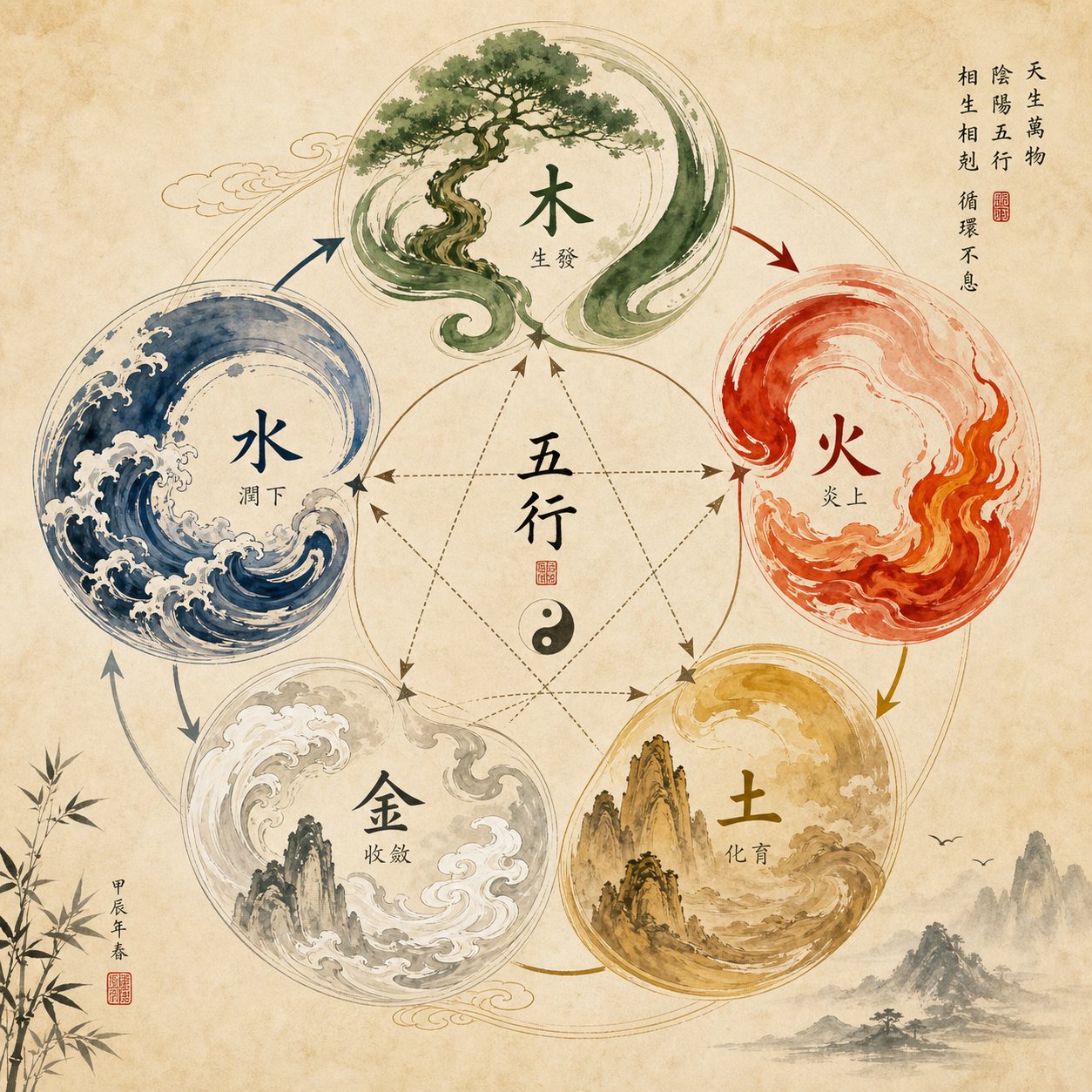
The Five Elements theory — called Wu Xing (五行) — is the backbone of traditional naming. It maps all natural phenomena into five categories: Wood, Fire, Earth, Metal, and Water. Each element generates one and controls another in a continuous cycle. When naming chinese characters are selected, consultants look at which elements are strong or weak in a person's chart and choose characters that restore balance.
How does a written character carry elemental energy? Through its radical, meaning, and symbolic associations. Here's how the five elements connect to character selection:
- Wood (木): Characters with the wood radical (木) or grass radical (艹). Associated with growth, learning, kindness, and vitality. Examples: 林 (lin, forest), 芳 (fang, fragrant)
- Fire (火): Characters with the fire radical (火) or sun radical (日). Associated with brightness, warmth, passion, and courage. Examples: 炎 (yan, flame), 晨 (chen, morning)
- Earth (土): Characters with the earth radical (土) or mountain radical (山). Associated with stability, reliability, and nurturing. Examples: 坤 (kun, earth), 岳 (yue, mountain peak)
- Metal (金): Characters with the metal radical (金) or jade radical (玉). Associated with precision, integrity, and strength. Examples: 鑫 (xin, prosperity), 瑞 (rui, auspicious)
- Water (水): Characters with the water radical (氵) or rain radical (雨). Associated with wisdom, adaptability, depth, and calm. Examples: 涵 (han, to contain), 泽 (ze, marsh)
A consultant doesn't simply add whatever element is missing. If a chart is dominated by Fire with little Water, the goal isn't to drown the fire — it's to regulate it. A name in chinese characters like 涵 (han) introduces Water energy gently, suggesting depth and composure without overwhelming the chart's natural warmth. This nuance is what separates professional analysis from a mechanical "fill the gap" approach.
Bazi Analysis in the Naming Process
Bazi (八字) literally means "Eight Characters." It's a calendar-based system that converts your birth year, month, day, and hour into four pairs of characters — the Four Pillars of Destiny. Each pillar contains a Heavenly Stem and an Earthly Branch, and together they reveal your elemental makeup.
The central figure in any Bazi chart is the Day Master (日主) — the Heavenly Stem of your Day Pillar. Think of it as your core elemental identity. If your Day Master is Yang Wood, you're fundamentally a "Wood person" whose nature resonates with growth and ambition. The consultant then assesses whether your Day Master is strong or weak by examining how the surrounding elements support or drain it.
Here's what matters for naming: the analysis identifies your Favorable Element (用神), the element that best supports balance in your specific chart. A common misconception is that you simply count elements and add whatever's missing. In reality, a missing element is useful only when it actually supports the whole chart. A baby born in winter with strong Water doesn't need more Water — they need Fire for warmth, even if Fire is already present.
This is why Bazi-based naming requires the exact birth time. The Hour Pillar can shift the entire elemental picture, changing which characters qualify as a chinese good name for that specific person.
Stroke Count and Radical Meaning Considerations
Beyond elemental theory, traditional consultants also analyze stroke count (笔画). Each chinese name in chinese characters carries a specific number of strokes, and the total across surname and given name holds numerological significance in systems like the San Cai Wu Ge (三才五格) method. This framework divides the name's stroke counts into five "grids" — Heaven, Earth, Human, External, and Total — each associated with different life aspects.
Sounds complex? In practice, it means a consultant might reject an otherwise perfect character because its stroke count creates an unfavorable total when combined with the surname. Two characters with identical meanings and similar pronunciation could receive very different evaluations based purely on their stroke structure.
Radical meaning adds another layer. The radical of a character — its structural component — often signals its semantic category. A character with the heart radical (忄) suggests emotion or virtue. One with the speech radical (讠) connects to communication. Consultants read these signals to ensure every component of the name reinforces the intended meaning.
These traditional frameworks — Five Elements, Bazi, stroke count — represent one end of the consultation spectrum. Not every consultant uses all of them, and not every client wants metaphysical analysis. Some prefer a purely cultural and linguistic approach. The value in understanding these systems is clarity: you'll know exactly what you're opting into or out of when you choose your consultation type.
Types of Chinese Name Consultations
Different naming situations call for different methodologies. A parent choosing a name for a newborn has entirely different constraints than a marketing director converting a brand name to chinese for the mainland market. Each consultation type draws on its own mix of traditional principles, linguistic analysis, and practical considerations.
Here's a breakdown of the main consultation categories:
- Baby naming consultations: The most traditional type, often incorporating Bazi analysis, Five Elements balancing, stroke count evaluation, and family generational naming rules. Serves parents who want a culturally grounded name with auspicious meaning.
- Chinese names for non-native speakers: Designed for foreigners who need a functional, natural-sounding Chinese name for business, study, or social life. Balances phonetic similarity to the original name with meaningful character choices.
- Professional name changes: For adults — both native and non-native speakers — seeking a new name due to career shifts, personal reinvention, or dissatisfaction with their current name's connotations.
- Business and brand naming: The most commercially complex type, requiring market research, trademark screening, and strategic alignment between brand identity and character meaning.
Baby Naming Consultations
This is where traditional principles carry the most weight. Parents typically provide the baby's exact birth date and time so the consultant can run a full Bazi analysis, identify the Favorable Element, and select characters that strengthen the child's chart. Family naming rules add constraints — if a generational character is required, the consultant works within that boundary while optimizing the remaining character for meaning, tone, and stroke count.
Tonal combinations matter here more than people realize. Mandarin has four tones, and certain pairings create a natural musicality while others feel flat or abrupt. A name combining two fourth-tone characters (both falling sharply) can sound harsh when called aloud. Consultants test how a name sounds when spoken by parents, teachers, and eventually colleagues — across a lifetime of use.
Chinese Names for Non-Native Speakers
If you're wondering how to get a chinese name that actually works in conversation, this is the consultation type built for you. The core challenge is bridging two languages: creating something that feels authentically Chinese while maintaining a recognizable connection to your original identity.
Consultants handling an english to chinese name project typically follow a layered process. First, they analyze the phonetics of your original name to identify which syllables can map onto natural-sounding Chinese characters. Then they filter those phonetic matches for meaning — discarding characters with negative or awkward connotations and prioritizing ones that carry positive associations. Finally, they test the full name for tonal flow and cultural naturalness.
The result of converting a chinese name from english isn't a transliteration. It's a name that a native speaker would hear and accept as a real name, while you still recognize its connection to your own. For example, someone named "David" might receive a name starting with "Da" (达) meaning "to reach" or "to achieve," paired with a second character chosen for meaning rather than sound. The consultant decides how much phonetic similarity to preserve versus how much to prioritize meaning — and that balance depends on your goals.
Translating chinese names in this direction is fundamentally different from the reverse process of romanizing Chinese names into English. When you convert your name into chinese, you're not translating meaning — you're creating a new identity that bridges two linguistic worlds.
Business and Brand Naming in Chinese
Brand naming adds layers of complexity that personal naming doesn't face. A company entering the Chinese market needs a name that resonates with consumers, avoids trademark conflicts, and aligns with brand positioning. According to Acclime's guide on Chinese company names, there are four main strategies: dual adaptation (matching both sound and meaning), phonetic adaptation (sound only), meaning adaptation (meaning only), or choosing an entirely new name.
Nike's Chinese name 耐克 (nai ke) is a textbook dual adaptation — it sounds similar to "Nike" while conveying endurance and perseverance. Heineken chose 喜力 (xi li), meaning "happiness" and "strength," sacrificing phonetic similarity for emotional resonance. These aren't random choices. They emerge from consultations that weigh phonetics, consumer psychology, industry context, and trademark availability simultaneously.
The stakes are high. If a company doesn't proactively choose a Chinese name, consumers will create one themselves — and that organic nickname may not align with the brand's intended positioning. Market perception, regional dialect variations, and even the visual aesthetics of characters on packaging all factor into the final recommendation.
Each of these consultation types produces a polished result. But how does that result compare to what you could achieve on your own with a dictionary and some research? The gap between self-selection and professional guidance is wider than most people assume — and narrower in specific situations than consultants might admit.

How to Pick a Chinese Name: DIY Selection vs Professional Consultation
Plenty of people successfully choose their own Chinese names. Plenty of others end up with names that make native speakers wince. The difference usually comes down to what resources you have access to and how high the stakes are. Here's an honest look at both paths.
What You Can Accomplish on Your Own
If you're figuring out how to choose a chinese name independently, you have several tools at your disposal. Online name generators offer instant results — you type in your English name and receive a phonetic approximation in characters. Dictionaries let you browse characters by meaning and radical. And Chinese-speaking friends or teachers can suggest options based on your personality and goals.
These resources work. But they have real limits. Free generators typically produce transliterations that don't sound natural to native ears. Dictionaries give you individual character meanings without revealing how combinations interact — two perfectly fine characters can form an embarrassing homophone when placed together. And friends, however well-intentioned, may not catch tonal clashes or regional dialect issues outside their own background.
The biggest blind spot when picking a chinese name solo? You don't know what you don't know. A character might look beautiful in isolation but carry slang connotations, sound like an existing idiom with negative meaning, or clash with common surnames in ways that create unintended wordplay.
What Professional Consultation Adds
A professional consultation follows a structured process designed to catch exactly those hidden problems. Here's what the workflow typically looks like:
- Intake interview: The consultant gathers your background, goals, intended use context, and personal preferences around sound or meaning.
- Birth data collection: If traditional methods are requested, your birth date and time are recorded for Bazi analysis and elemental balancing.
- Character research: The consultant identifies candidate characters, screening each for meaning, tonal harmony, stroke count, homophone risks, and cultural associations.
- Presentation of options: You receive multiple name options (typically three to five), each with full character breakdowns, pronunciation guides, and explanations of why the name works.
- Revision rounds: You provide feedback, and the consultant refines or replaces options based on your reactions.
The deliverables go beyond just a name. You walk away understanding the cultural reasoning behind each choice — what the characters mean individually and together, how the tones flow, and how the name will be perceived in professional versus casual settings.
Here's how the two approaches compare across the dimensions that matter most when you're deciding how to make a chinese name that actually holds up:
| Dimension | DIY Selection | Professional Consultation |
|---|---|---|
| Cultural accuracy | Variable — depends on your network and research depth | High — systematic screening by native expert |
| Tonal harmony | Often overlooked unless you speak Mandarin fluently | Tested across tone combinations and speaking contexts |
| Metaphysical analysis (Bazi, Five Elements) | Not available without specialized training | Available if requested; optional in linguistic-only approaches |
| Time investment | Hours to weeks of personal research | Minimal on your end; 1-3 weeks for consultant delivery |
| Cost | Free to minimal | $15-$200+ depending on depth and consultant credentials |
| Risk of unintended meanings | Moderate to high — homophones and slang are easy to miss | Low — consultants screen for dialect-level issues |
| Personalization | High creative control, but limited by your own knowledge | Tailored to your background, goals, and context |
Neither path is universally better. If you pick a chinese name through a knowledgeable friend who understands your goals and tests the result with multiple native speakers, you can land something excellent. If you rely solely on a generator or a single dictionary session, you're rolling the dice on problems you can't see.
The real question isn't whether professional help exists — it's whether your specific situation carries enough risk to justify it. And that depends entirely on where and how you'll use the name.
Common Mistakes and Cultural Taboos in Chinese Naming
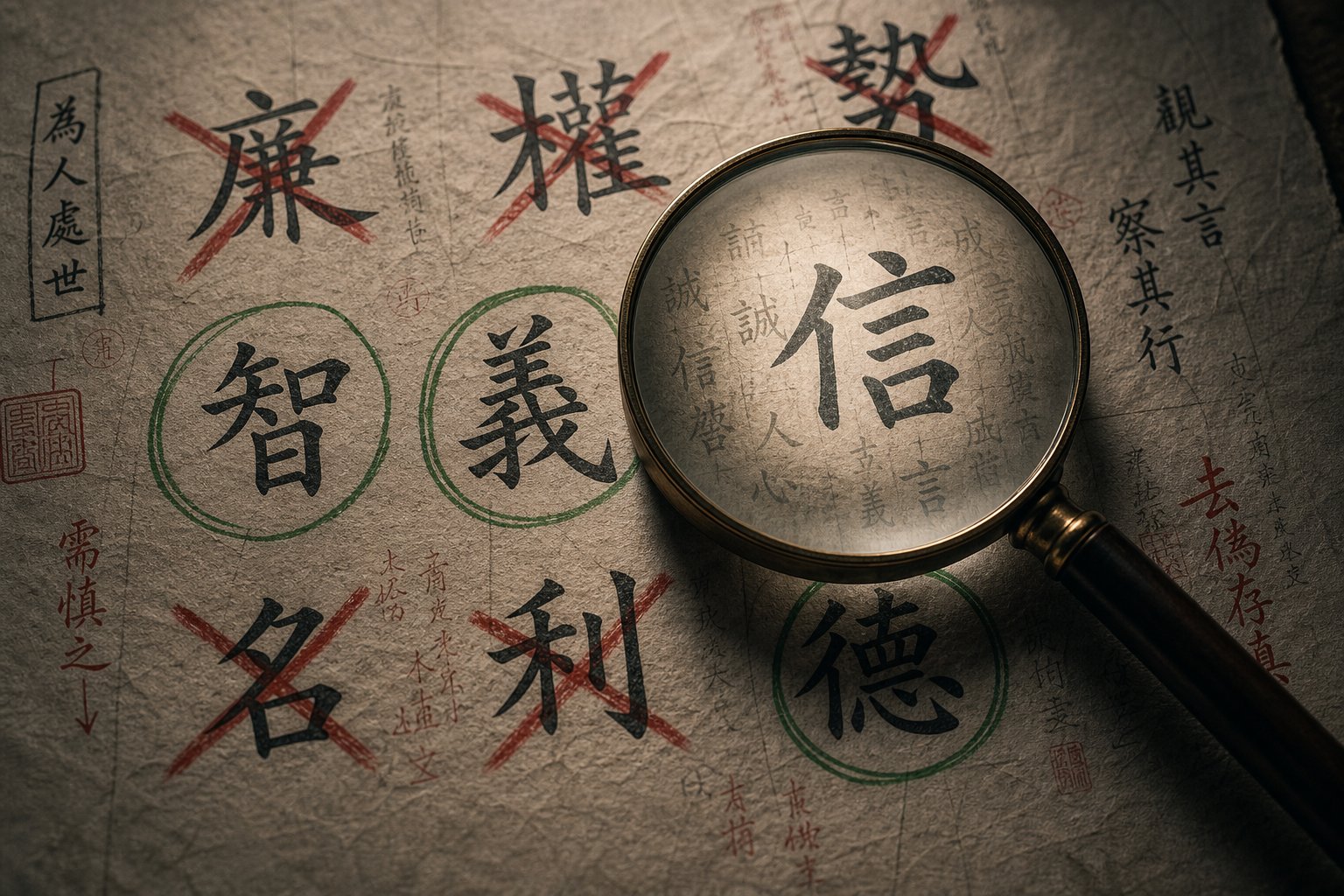
Risk sounds abstract until you see what actually goes wrong. Chinese naming conventions carry layers of unwritten rules, and violating even one can turn a well-intentioned name into a source of embarrassment — or worse, social friction that follows someone for years. These aren't obscure edge cases. They're traps that catch beginners and intermediate learners alike.
Homophone Pitfalls and Unintended Meanings
Mandarin has roughly 1,600 distinct syllables spread across four tones. That means hundreds of characters share identical pronunciations. When you write a chinese name, each character might look fine on paper, but spoken aloud, the combination could sound identical to something unfortunate.
Consider the classic example from Chineasy's breakdown of Chinese homophones: the number four (四, si) and the word for death (死, si) differ only by tone. A name containing "si" in the wrong tonal context immediately triggers that association for native listeners. The problem multiplies when you combine two or three characters — each syllable interacts with its neighbors, creating compound sounds that may echo idioms, slang, or vulgar expressions the name-giver never intended.
Regional dialects make this worse. A name that sounds perfectly neutral in standard Mandarin might be a crude joke in Cantonese, Hokkien, or Shanghainese. If you don't know how to say chinese names across dialect groups, you can't screen for these cross-linguistic landmines. This is one area where even basic chinese names — simple, common character choices — can fail spectacularly if the phonetic overlap isn't caught.
Gender Expectations in Character Choice
Chinese naming customs carry strong gender associations embedded in specific characters and radicals. Characters with the grass radical (艹) or those evoking beauty, flowers, and gentleness — like 婷 (ting, graceful) or 芳 (fang, fragrant) — read as distinctly feminine. Characters suggesting strength, ambition, or vastness — like 伟 (wei, great) or 刚 (gang, firm) — read as masculine.
These aren't absolute rules, and gender-neutral naming is increasingly common in modern China. But mismatches still cause friction. A man given a name full of traditionally feminine characters may face repeated assumptions and corrections throughout life. A woman with an aggressively masculine name might encounter confusion in professional settings before anyone meets her in person. Understanding these chinese name conventions helps you make deliberate choices rather than accidental ones.
Characters and Combinations to Avoid
Beyond homophones and gender signals, several categories of mistakes trip people up consistently. According to GoEast Mandarin's overview of naming taboos, traditional chinese naming conventions prohibit everything from using living relatives' characters to choosing names associated with historical figures who met tragic ends.
Here are the most common categories of naming errors:
- Characters associated with death or misfortune: Any character whose pronunciation or meaning connects to illness, loss, or bad luck — even indirectly through homophones
- Names echoing negative idioms: Two-character combinations that sound like existing phrases with unfavorable connotations, such as names resembling 无能 (wuneng, incompetent) or 败家 (baijia, squanderer)
- Generational naming violations: Using a character reserved for elders in the family, which signals disrespect in traditional households
- Overly common combinations that lack distinction: Basic chinese names like 王伟 (Wang Wei) are so widespread that they create identity confusion — imagine sharing your exact full name with thousands of others
- Rare or archaic characters: Characters that most people cannot read or write, causing constant spelling issues on official documents and digital systems
- Successive similar initials: Names where every syllable starts with the same sound, creating tongue-twister effects that make the name awkward to call out
These issues are precisely what professional consultants screen for systematically. A trained namer runs each candidate through multiple filters — phonetic, semantic, cultural, and structural — before presenting it as an option. They test how the name sounds when called across a room, how it reads on a resume, and whether any dialect group would hear something unintended. That systematic screening is the core value proposition of a consultation: not creativity alone, but the elimination of invisible risk.
Knowing what can go wrong raises a practical question. How do you decide whether your situation actually warrants professional help, or whether careful self-research is enough to navigate these pitfalls on your own?
When You Should Seek Professional Consultation
Typing "whats my chinese name" into a search engine is a common starting point. But the answer to that question depends heavily on what you plan to do with the name. A classroom nickname and a legal name on a Chinese business license carry very different consequences if something goes wrong. The real decision isn't whether professional help exists — it's whether your situation has enough at stake to justify it.
As naming agency Tanj puts it, stakes are a function of exposure: how widely the name will be seen, how long it has to hold up, how hard it is to change later, and what it costs if it fails. That framework applies directly to Chinese names.
Scenarios Where Professional Help Matters Most
Not every naming situation carries equal weight. Here's a ranking from highest to lowest need for professional consultation:
- Naming a child who will grow up in Chinese-speaking communities: This name appears on legal documents, school records, and professional credentials for a lifetime. Family naming rules, Bazi expectations, and cultural scrutiny from relatives all apply. The cost of getting it wrong is decades of friction.
- Choosing a professional name for business in China or Taiwan: Your name appears on contracts, business cards, and introductions with partners and clients. A poorly chosen name undermines credibility before you've said a word about your work.
- Legal name changes: Irreversible in practical terms. Once filed, a name becomes embedded in government records, banking systems, and professional histories.
- Family expectations around traditional principles: If your in-laws or extended family expect Bazi analysis and Five Elements balancing, self-selection won't satisfy them — regardless of how linguistically sound your choice might be.
- Long-term social use in Chinese-speaking environments: Living, studying, or working in China for years means your name gets tested daily by native speakers across regions and dialects.
When Self-Selection Works Fine
If you're wondering what would be my chinese name purely for a language class, a short study-abroad semester, or a social media handle — the stakes drop considerably. These situations share common traits: limited exposure, short lifespan, and easy reversibility. You can change a classroom name next semester without consequence.
Similarly, if you're asking "what's my name in chinese" out of curiosity rather than practical need, a knowledgeable friend or a well-reviewed online tool can give you something functional. The key question is whether anyone beyond your immediate circle will ever use this name in a context that matters professionally or legally.
The quality spectrum reflects these different needs. Free generators give you instant phonetic approximations — fine for casual use, unreliable for anything permanent. Mid-range online services (typically $30-$80) offer personalized character selection with cultural explanations, suitable for social and academic contexts. Premium consultants ($100-$300+) provide full Bazi analysis, multiple revision rounds, and systematic screening for dialect-level issues — the level appropriate for legal names, business identities, and family-facing decisions.
If you're trying to figure out how to find your chinese name and you've landed somewhere in the middle of that spectrum, the next step is preparation. What you bring to a consultation directly shapes the quality of what you get back.

How to Prepare for Your Chinese Name Consultation
A consultation is only as good as the information you feed into it. Walk in unprepared, and even the best consultant is working with one hand tied behind their back. Walk in with the right details organized, and you'll get sharper options, faster turnaround, and a name that genuinely fits your life rather than a generic "sounds nice" suggestion.
Think of it like visiting a tailor. You could show up and say "make me something nice," but you'll get a better suit if you bring reference photos, explain where you'll wear it, and mention that you hate stiff collars. The same logic applies here.
Information to Gather Before Your Session
Consultants need specific raw material to do their work well. The exact requirements vary depending on methodology — a Bazi-focused practitioner needs your birth hour, while a purely linguistic consultant cares more about your phonetic preferences. But across approaches, certain information is universally useful.
Here's a preparation checklist you can reference before your session:
- Full name in your original language: Include any nicknames or shortened forms you commonly use, since these may offer better phonetic starting points than your formal name
- Birth date and time: Required for Bazi-based approaches. The more precise the birth time, the more accurate the elemental analysis. If you don't know your exact birth hour, mention that upfront so the consultant can adjust their methodology
- Family surname (if already determined): If you're adopting a Chinese surname through marriage, family connection, or personal choice, the consultant needs this first — it constrains stroke count totals and tonal pairings for the given name
- Family naming rules or generational characters: Ask your family whether a generation character (辈分) is expected. If one exists, provide it so the consultant works within that constraint rather than discovering it after presenting options
- Intended use context: Will this name appear on business cards in Shanghai? University enrollment forms in Taipei? Social introductions at language exchange meetups? Each context carries different formality expectations and regional considerations
- Personal preferences around meaning or sound: Do you want your Chinese name to echo the sound of your English name, or do you prioritize meaningful characters regardless of phonetic similarity? Are there specific qualities — strength, wisdom, creativity, warmth — you want the name to convey?
- Characters or meanings to avoid: If you know certain associations feel wrong — perhaps you dislike names that sound overly aggressive, or you want to avoid religious connotations — say so upfront
- How you plan to spell your name in Chinese contexts: Will you use Pinyin romanization on international documents? Knowing how to write your name in chinese language systems (simplified vs. traditional characters) matters if you'll operate across mainland China and Taiwan
You don't need perfect answers to every item. But the more context you provide, the less guesswork the consultant does — and guesswork is where generic results come from.
Questions to Ask Your Consultant
Not all consultants operate the same way. Before committing, ask questions that reveal their process, depth, and whether their approach matches what you actually want. Here's what to cover:
- What methodology do you use? Traditional metaphysical (Bazi, Five Elements, stroke count), purely linguistic and cultural, or a hybrid? There's no wrong answer, but you should know what you're getting.
- How many name options will I receive? Most reputable consultants provide three to five options with full explanations. A single take-it-or-leave-it result suggests a shallow process.
- Do you explain character meanings and tonal analysis? You should understand what does my chinese name mean at every level — individual characters, combined meaning, tonal flow, and cultural associations. A consultant who just hands you a name without explanation isn't teaching you to own it.
- What's your revision policy? Can you request adjustments if none of the initial options feel right? How many rounds of refinement are included?
- What's your background? Are they a native speaker with formal training in linguistics or traditional naming arts? Do they have experience working with non-native speakers specifically? How do they write names in chinese for clients who need both simplified and traditional versions?
- Do you screen for dialect-level issues? A name that works in Mandarin might fail in Cantonese or Hokkien. If you'll interact with speakers of multiple Chinese dialects, this screening matters.
- How do you handle phonetic mapping from English? If you want your Chinese name to echo your original name, ask how they balance sound similarity against meaning quality. Their answer reveals how they approach the how to choose a chinese name question for cross-cultural clients.
These questions aren't adversarial. Good consultants welcome them because informed clients make the collaboration smoother. If someone gets defensive about explaining their process, that's a signal worth noting.
Evaluating a Consultant's Credibility
The naming consultation space ranges from seasoned professionals with decades of practice to hobbyists offering quick picks on freelance platforms. Here's how to distinguish depth from surface-level service:
Look for bilingual explanations. A credible consultant explains their reasoning in your language, not just in Chinese. If they can't articulate why a character works — its meaning, its tonal role, its cultural weight — in terms you understand, you're trusting blindly rather than making an informed choice.
Prioritize educators over deliverers. The best consultants teach you something about your own name. They explain how do you write names in chinese tradition, why certain characters pair well with your surname, and what native speakers will perceive when they hear it. You should finish the process understanding your name, not just possessing it.
Check for transparency about approach. Does the consultant clearly state whether they use Bazi analysis, pure linguistics, or both? Do they acknowledge the limits of their method? A traditional practitioner who admits that metaphysical naming is a belief system — not a guarantee — demonstrates intellectual honesty. A linguistic consultant who acknowledges they don't offer elemental analysis shows clarity about scope.
Review their sample work. Many consultants share anonymized examples of past naming projects. Look at how they spell names in chinese, how they explain character choices, and whether their reasoning feels rigorous or formulaic. Depth shows in the details — a strong sample explains not just what a character means, but why it was chosen over alternatives.
Preparation and the right questions won't guarantee a perfect name. But they dramatically increase the odds that what you receive fits your identity, serves your goals, and holds up across every context where it'll be spoken, written, and judged.
Frequently Asked Questions About Chinese Name Consultations
1. How much does a Chinese name consultation cost?
Pricing varies by depth and consultant credentials. Free online generators offer instant phonetic approximations suitable for casual use. Mid-range online services typically charge $30-$80 and provide personalized character selection with cultural explanations. Premium consultants charge $100-$300 or more for full Bazi analysis, multiple revision rounds, and systematic dialect-level screening. The right investment level depends on how the name will be used — a classroom nickname warrants less spending than a legal name or business identity.
2. Can I just translate my English name into Chinese?
Direct translation rarely works well. A transliteration maps English sounds onto Chinese characters, but the result often reads awkwardly to native speakers and may carry unintended meanings. Professional consultants take a layered approach: they analyze your name's phonetics, filter matching characters for positive meaning, and test the full combination for tonal flow and cultural naturalness. The goal is a name that feels authentically Chinese while maintaining a recognizable connection to your original identity.
3. What information do I need to provide for a Chinese name consultation?
At minimum, bring your full name in your original language, your intended use context (business, academic, social), and any preferences around meaning or sound. If you want traditional Bazi-based analysis, you will also need your exact birth date and time. Additional helpful details include family surname if predetermined, any generational naming characters required by family tradition, whether you prefer simplified or traditional characters, and specific qualities you want the name to convey such as strength, wisdom, or creativity.
4. How long does the Chinese name consultation process take?
Most professional consultations deliver results within one to three weeks. The process includes an intake interview, character research and screening, presentation of three to five name options with full explanations, and one or more revision rounds based on your feedback. Simpler requests like casual social names may be completed faster, while complex projects involving Bazi analysis, family naming constraints, or brand naming with trademark screening can take longer.
5. What is the difference between Bazi naming and linguistic naming approaches?
Bazi naming uses your birth date and time to calculate your elemental makeup, then selects characters that strengthen or balance specific elements in your chart. It treats the name as a metaphysical tool for harmony. Linguistic naming focuses purely on character meaning, tonal flow, cultural connotations, and phonetic aesthetics without metaphysical analysis. Many modern consultants offer a hybrid approach, combining elemental considerations with rigorous linguistic screening. Neither method is inherently superior — the choice depends on whether you value traditional metaphysical frameworks or prefer a secular, culture-focused methodology.