What Makes a Chinese Name Dictionary Different From Any Other
When you look up "Michael" in a Western name dictionary, you get a tidy origin story: Hebrew, meaning "who is like God." Done. But try that approach with a Chinese name and you'll hit a wall almost immediately. Chinese names don't work like Western ones. Each character in a name carries its own meaning, its own tone, and its own internal structure built from smaller components called radicals. A Chinese name dictionary has to account for all of these layers simultaneously.
The basic unit in written Chinese consists of three parts: the character, the pronunciation, and the meaning. All three come into play when naming a child, as Temple University's EDVICE Exchange explains. This means a proper reference tool for Chinese names isn't just a list of names and origins. It's a character-level decoder that reveals how radicals, tones, and semantic pairings combine to form names that function as deliberate, meaningful phrases.
What a Chinese Name Dictionary Actually Does
Imagine someone tells you their name is Chenxi. A standard translation tool might give you "morning" or "dawn." But a dedicated dictionary of Chinese names and characters breaks it further: the character 晨 (chén) contains the sun radical, signaling time and light, while 曦 (xī) refers specifically to the first ray of sunshine. Together, the name paints a complete image. One woman named Chenxi described it this way: her parents chose it because she was born early in the day, and they hoped she would carry the vigor of morning sunlight throughout her life.
This is the gap a Chinese name dictionary fills. It doesn't just translate. It unpacks.
Chinese names are meaningful phrases, not arbitrary labels. Each one tells the story of a parent's ideals and hopes, aspirations that the bearer often embraces for life.
Who Needs a Chinese Name Dictionary
You might wonder who actually sits down to decode common Chinese names character by character. More people than you'd expect:
- Language learners trying to understand why saying "my name is" in Chinese (我叫) is just the beginning, since the name itself demands interpretation
- Professionals working with Chinese colleagues who want to show respect by understanding what a name actually means
- Writers and screenwriters creating authentic Chinese characters for fiction
- Genealogy researchers tracing family lineage through naming patterns
For each of these groups, a simple phonetic spelling or one-word translation falls short. The real value comes from understanding how individual characters interact, what radicals suggest about a name's thematic intent, and why certain tonal combinations sound harmonious while others feel off. That depth of analysis is exactly what separates a Chinese name dictionary from any generic lookup tool.
The structure of Chinese names themselves holds the first key to unlocking that depth, starting with a rule that surprises many newcomers: the surname always comes first.
How Chinese Names Are Structured From Surname to Given Name
In English, you hear "John Smith" and instinctively know John is the personal name and Smith is the family name. Chinese flips that order entirely. The family name leads, the given name follows, and the two parts carry very different weight in terms of character count, meaning, and cultural function. Understanding this structure is the foundation of using any Chinese name dictionary effectively, because position alone changes how you interpret a character.
Surname First and Given Name Second
Chinese naming conventions place the family name (姓, xing) before the given name (名, ming). So when you encounter a name like 王明 (Wang Ming), Wang is the surname and Ming is the personal name. This isn't just a formatting preference. It reflects a cultural priority: family identity comes before individual identity.
The surname is almost always a single character. According to Wikipedia's overview of Chinese names, just the top three surnames, Wang (王), Li (李), and Zhang (张), cover more than 20% of China's population. That concentration means the given name carries the real burden of individuality. It's where parents invest creative energy, choosing characters for their meaning, sound, and visual beauty.
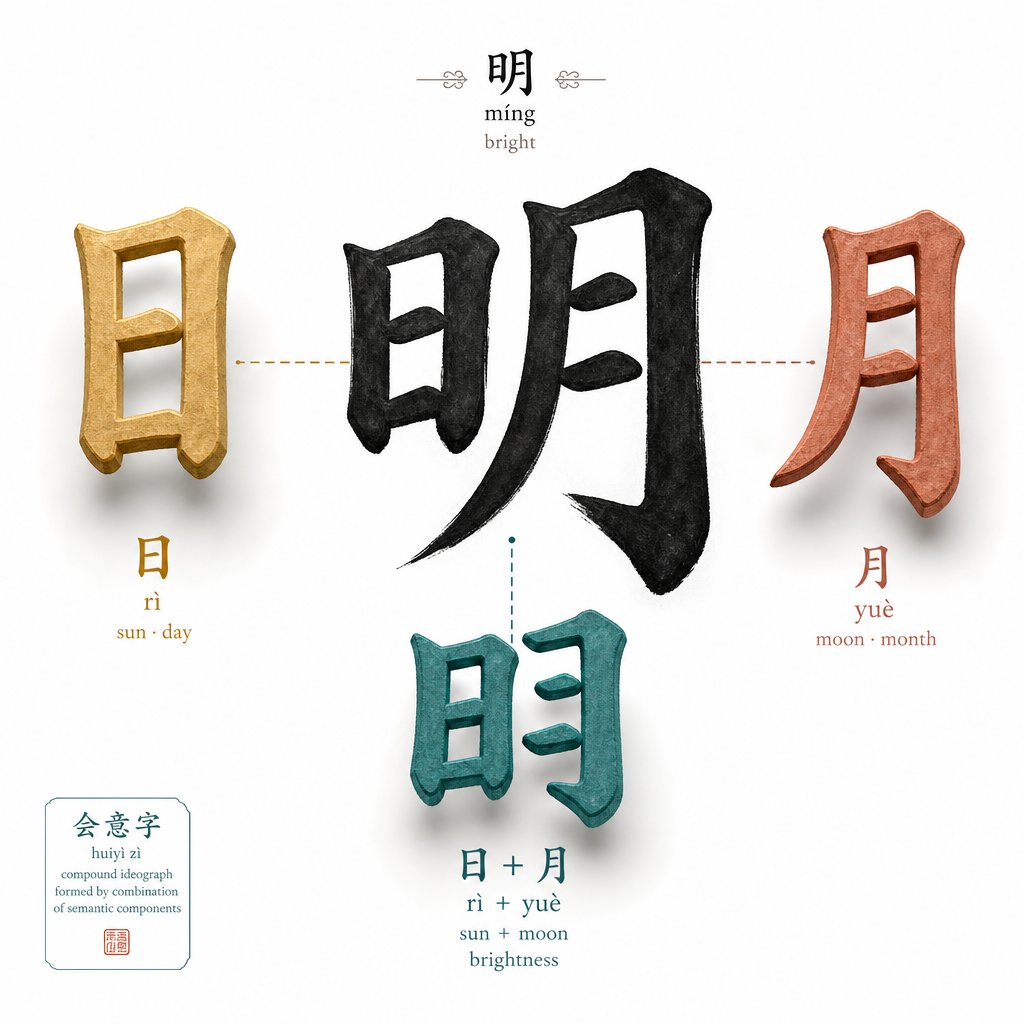
Here's what makes this tricky for outsiders: many Chinese characters can function as either a surname or a given name. The character 明 (ming, meaning "bright") appears as a given name in 王明, but it could theoretically appear in other positions with different functions. Context and position tell you everything. This is why Cultural Atlas notes that it is common practice to write family names in capitals (e.g., WANG Ming) to avoid confusion when romanized.
One Character vs Two Character Given Names
Given names in Chinese are either one or two characters long. A single-character given name like 明 (Ming) paired with the surname 王 creates the two-syllable name Wang Ming. A two-character given name like 秀英 (Xiuying) paired with the same surname creates the three-syllable name Wang Xiuying.
Two-character given names dominate modern Chinese naming. Studies from the 2000s and 2010s estimated that over three-quarters of China's population had two-character given names, with the remainder almost exclusively having one character. This wasn't always the case. During the early Han dynasty, about 70% of names used only one character, and the usurper Wang Mang even banned two-character names outright. The current preference for two characters solidified during the Ming dynasty and has held steady since.
Why does this matter for dictionary lookups? Because two-character given names create compound meaning. Each character contributes its own definition, but the pairing produces something greater than the sum of its parts. When searching for chinese names male or female, you'll notice that the interplay between characters is where the real artistry lives.
| Full Name | Surname | Given Name | Combined Meaning |
|---|---|---|---|
| 王明 (Wang Ming) | 王 (Wang) - King | 明 (Ming) - Bright | Bright one of the Wang family |
| 李秀英 (Li Xiuying) | 李 (Li) - Plum tree | 秀英 (Xiuying) - Elegant, heroic | Elegant and outstanding |
| 刘青 (Liu Qing) | 刘 (Liu) - Willow | 青 (Qing) - Green | Green willow (nature imagery) |
| 张伟 (Zhang Wei) | 张 (Zhang) - To stretch | 伟 (Wei) - Great, mighty | Greatness, grand ambition |
Notice how 刘青 (Liu Qing) works: the surname Liu means "willow tree," and the given name Qing means "green." Together, the full name paints the image of a green willow, a deliberate poetic composition by the parents. This kind of surname-given name harmony is a hallmark of thoughtful Chinese naming, and it's something you'll only catch by looking up each character individually. Among chinese male first names, characters like 伟 (great) and 强 (strong) appear frequently, while chinese first names female often feature characters evoking grace and natural beauty.
Formal Names vs Nicknames vs Courtesy Names
A single person in Chinese tradition could carry multiple names across different stages of life and social contexts. This layered system goes far beyond what most people expect.
The milk name (小名, xiaoming) is an informal childhood name given at birth, often deliberately plain or even crude. Historically, parents believed that beautiful names attracted bad luck or the attention of malicious spirits. A child might be called something like 小胖 (Xiao Pang, "Little Fatty") until a formal name was chosen. These nicknames persist within families even into adulthood.
The school name (学名, xueming) was a more respectable formal name given when a child began their education. As Skritter's research on ancient naming explains, this name replaced the milk name in public settings and served as the child's official identity outside the home.
The courtesy name (字, zi) was granted around age twenty, typically by parents or a teacher. Peers and juniors used this name to show respect. Using someone's birth name (名) directly was considered a grave insult in classical Chinese culture. The courtesy name often mirrored or complemented the birth name's meaning. The famous strategist Zhuge Liang (诸葛亮) had the courtesy name Kongming (孔明). Both 亮 and 明 mean "bright," creating a deliberate echo between the two names.
While courtesy names have largely fallen out of modern use since the May Fourth Movement, the concept of multiple names persists. Many Chinese people today maintain a formal registered name, a family nickname, and often a Western name for international contexts. Understanding these layers through a dedicated reference tool reveals that the chinese for name (名字, mingzi) encompasses far more than a single label.
Each of these naming layers draws from the same pool of characters, but the characters chosen for a formal name versus a nickname follow very different rules. The formal name connects to family lineage, cultural values, and sometimes centuries-old surname traditions that trace back to ancient kingdoms and noble houses.
Common Chinese Surnames With Their Character Meanings and Origins
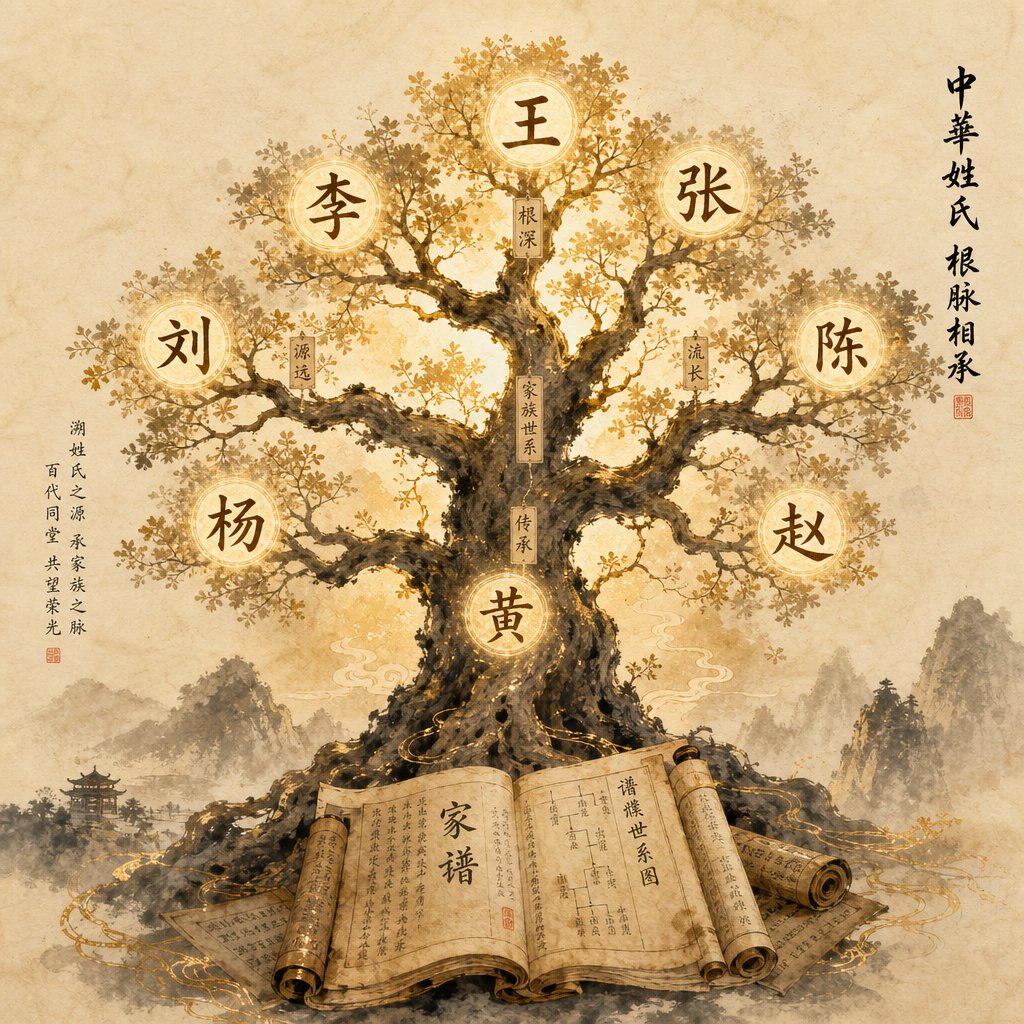
Chinese surnames aren't random sounds passed down through generations. Each one is a living character with a literal meaning, a historical backstory, and often a connection to ancient royalty, geography, or occupation. When you look up common chinese last names in a dedicated reference tool, you're not just finding a family label. You're uncovering thousands of years of lineage compressed into a single character.
Here's a striking fact: there are only about 400 different family names in active use across China, yet the Asia Media Centre reports that the top 100 surnames cover roughly 85 percent of the country's population. The concentration is even more dramatic at the top. The three most common chinese surnames in mainland China, Li (李), Wang (王), and Zhang (张), are shared by more than 270 million people combined.
The Most Common Chinese Surnames and What They Mean
Unlike many popular last names in English-speaking countries, where meanings have faded from everyday awareness, Chinese surnames retain visible meaning because each one is still a functioning character in the language. Wang doesn't just sound like a name. It literally means "king" every time you see it written.
| Rank | Character | Pinyin | Literal Meaning | Notable Origin |
|---|---|---|---|---|
| 1 | 王 | Wang | King | Title of nobility; descendants of royal families |
| 2 | 李 | Li | Plum tree | Connected to Tang dynasty emperors (618-906 AD) |
| 3 | 张 | Zhang | To draw a bow | Said to honor the inventor of the bow and arrow |
| 4 | 刘 | Liu | Kill (archaic); now used only as surname | Linked to rulers of the Han dynasty |
| 5 | 陈 | Chen | Ancient kingdom name | Traced to the state of Chen in modern Henan |
| 6 | 杨 | Yang | Poplar tree | Derived from a place name in ancient China |
| 7 | 黄 | Huang | Yellow | Connected to the ancient state of Huang |
| 8 | 赵 | Zhao | To walk quickly | Royal surname of the Song dynasty |
| 9 | 周 | Zhou | Circumference; cycle | Named after the Zhou dynasty territory |
| 10 | 吴 | Wu | Ancient kingdom of Wu | Place-based, from the state of Wu |
| 11 | 邹 | Zou | Ancient state of Zou | Territory-based, from the state of Zou in modern Shandong |
| 12 | 马 | Ma | Horse | Adopted widely by Hui Muslim communities |
When someone searches for the zou meaning chinese name, they'll find it traces back to an ancient state in what is now Shandong province. It's a perfect example of how even less common asian last names carry geographic and political history within a single character.
Historical Origins of Chinese Family Names
Chinese surname culture stretches back over 4,000 years. According to legend, the Yellow Emperor (Huangdi) decreed that families should adopt hereditary surnames, and the practice has continued unbroken since. The FamilySearch wiki on Chinese surnames documents that over 12,000 surnames were recorded throughout history, though only about a quarter remain in use today.
What's fascinating is how predictable the origin categories are. Most of the most common chinese last names fall into a handful of source types:
- Place-based surnames - derived from ancient kingdoms, territories, or fiefdoms (e.g., Chen from the state of Chen, Wu from the state of Wu, Zheng from the state of Zheng)
- Occupation-based surnames - linked to ancestral roles or skills (e.g., Situ meaning "minister of education," Tao from pottery-making)
- Royal decree surnames - bestowed by emperors as honors (e.g., Li was granted by Tang dynasty rulers to those deemed worthy)
- Ethnic adaptation surnames - adopted by non-Han peoples integrating into Chinese society (e.g., Ma adopted by Hui Muslims, Jin meaning "Jurchen")
The My China Roots database notes that titles of nobility represent one of the oldest surname sources. Wang (王) is the clearest example: it literally means "king," and its bearers descend from various royal lineages across multiple dynasties. The character Zhang (张/張) tells an even more vivid story. Composed of the symbols for "bow" and "long," it reportedly honors Hui, grandson of the Yellow Emperor, who is credited with inventing the bow and arrow.
These origins matter for anyone using a chinese name dictionary because they reveal that surnames aren't just identifiers. They're compressed histories. A surname tells you whether a family traces its roots to a specific kingdom, a professional guild, or an imperial gift. That context shapes how the full name reads when combined with a given name chosen for its character-level meaning, the layer we'll decode next.
Decoding Chinese Characters and Radicals Used in Names
A surname tells you where a family came from. The given name tells you what they hoped for. And the key to reading that hope lies inside the characters themselves. Chinese characters are not single, indivisible symbols. Each one is a composition of smaller parts called radicals, and those radicals carry their own semantic weight. When you encounter mandarin characters in a name, you're looking at a layered structure where every component contributes meaning, much like how Latin roots work in English words, except visually embedded within a single square.
This is what makes a chinese name dictionary fundamentally different from a phonetic translator. A translator gives you sound. A dictionary built for names gives you the internal architecture of each char in chinese, revealing why parents chose it and what it signals about their aspirations.
How Radicals Build Meaning Inside Name Characters
Think of radicals as the DNA of chinese hanzi. There are 214 radicals in the traditional system, but only a handful appear frequently in names. Each one acts as a semantic tag, hinting at the character's meaning category before you even look up the full definition.
Here are the radicals you'll encounter most often in Chinese given names:
- Water radical (氵) - Found in characters like 泽 (ze, grace/marsh), 洁 (jie, pure), and 海 (hai, ocean). Names with this radical suggest wisdom, depth, and adaptability. In the Five Elements system, parents choose water-radical characters to compensate for a deficiency in the Water element on a child's birth chart.
- Jade radical (玉/王) - Appears in characters like 珍 (zhen, precious), 琳 (lin, fine jade), and 瑶 (yao, jasper). The jade radical signals preciousness, refinement, and moral integrity. As MingShu's naming guide notes, this radical hints at the character's ancient meaning of something treasured and rare.
- Wood radical (木) - Present in characters like 林 (lin, forest), 桐 (tong, paulownia tree), and 梅 (mei, plum blossom). It connects to growth, vitality, and resilience.
- Heart radical (心/忄) - Found in 慧 (hui, wisdom), 恩 (en, kindness), and 悦 (yue, joy). This radical ties characters to emotions, moral character, and inner life.
- Woman radical (女) - Appears in 婷 (ting, graceful), 娜 (na, elegant), and 妍 (yan, beautiful). Historically a strong gender marker in names, though modern naming increasingly uses it more flexibly.
- Fire radical (火/灬) - Present in 炎 (yan, flame), 煜 (yu, brilliant), and 熙 (xi, prosperous). It signals passion, brightness, and energy.
Radicals aren't always reliable predictors. As Berlitz's radical guide cautions, sometimes a radical indicates pronunciation rather than meaning. But in the context of names, where parents deliberately select characters, the radical's semantic contribution is almost always intentional.
Combinatorial Meaning When Characters Are Paired
A single character carries meaning on its own. But when two given-name characters sit side by side, they create something new, a compound idea that neither character expresses alone. This combinatorial effect is where Chinese naming becomes genuinely poetic.
Consider the name 金泽 (Jinze). The character 金 (jin) means gold or metal, symbolizing strength and integrity. The character 泽 (ze) means a pool of water or, in literary usage, grace and benevolence. Together, they evoke the image of someone whose integrity shines like gold and whose kindness flows like water. The pairing also works on an elemental level: Metal generates Water in the Five Elements cycle, creating a harmonious productive relationship between the two characters.
The chinese symbol that means love, 爱 (ai), offers another example of how radicals build layered meaning. The traditional form of this character contains the heart radical (心) at its center, literally placing the heart inside the concept of love in chinese. When 爱 appears in a name, it carries not just the dictionary definition but the visual poetry of a heart enclosed and protected.
This combinatorial logic means you can't decode a two-character given name by looking up each character in isolation. You need to read them as a phrase, considering how their meanings interact, whether they create contrast, harmony, or narrative progression.
Tonal Significance in Name Selection
Meaning and radicals aren't the only considerations. Chinese is a tonal language with four tones plus a neutral tone, and the tonal flow of a full name matters enormously. A name that reads beautifully on paper can sound awkward or even comical when spoken aloud if the tones clash.
The ideal name moves through different tones across its two or three syllables, creating a natural melodic rhythm. A sequence like Li Jinze (Lǐ Jin Ze, tones 3-1-2) rises and falls pleasantly. Three consecutive third tones, by contrast, would create an uncomfortable staccato that most families avoid. Families also check for homophones, ensuring the name doesn't accidentally sound like a word with negative connotations when spoken quickly.
The table below organizes common chinese characters used in names by their meaning category, showing how parents draw from distinct thematic pools depending on what qualities they want to express:
| Category | Character | Pinyin | Meaning | Key Radical |
|---|---|---|---|---|
| Virtues | 慧 | hui | Wisdom | 心 (heart) |
| Virtues | 仁 | ren | Benevolence | 人 (person) |
| Virtues | 信 | xin | Trust, faith | 人 (person) |
| Nature | 林 | lin | Forest | 木 (wood) |
| Nature | 海 | hai | Ocean | 氵 (water) |
| Nature | 梅 | mei | Plum blossom | 木 (wood) |
| Beauty | 婷 | ting | Graceful | 女 (woman) |
| Beauty | 瑶 | yao | Precious jade | 王 (jade) |
| Beauty | 琳 | lin | Fine jade | 王 (jade) |
| Strength | 伟 | wei | Great, mighty | 人 (person) |
| Strength | 强 | qiang | Strong | 弓 (bow) |
| Strength | 龙 | long | Dragon | 龙 (dragon) |
| Scholarly | 文 | wen | Literature, culture | 文 (script) |
| Scholarly | 明 | ming | Bright, clarity | 日 (sun) |
| Scholarly | 书 | shu | Book, writing | — (simplified) |
Each category reflects a different set of parental hopes. Virtue characters express moral ideals. Nature characters connect the child to the natural world. Beauty and strength characters signal gendered aspirations (though this is shifting in modern naming). Scholarly characters emphasize intellectual achievement and cultural refinement.
What's remarkable is how much information a single name packs into two or three syllables. The radical tells you the semantic family. The character's full meaning tells you the specific aspiration. The tonal pattern tells you whether the name flows musically. And the pairing of characters tells you the composite story the parents wanted to write. All of these layers are invisible to anyone who only hears the romanized pronunciation, which is precisely why dedicated reference tools exist for this level of analysis.
These character choices don't happen in a vacuum, though. Certain characters cluster heavily around gender expectations, creating patterns that a trained eye can spot almost instantly from the radicals alone.
Understanding Gender Patterns in Chinese Name Characters
Spot the woman radical (女) on the left side of a character, and you're almost certainly looking at a female name. See the dragon radical (龙) or a character evoking mountains and vastness? Likely male. Chinese names carry gender signals embedded directly in their visual structure, and once you know what to look for, you can read those signals with surprising accuracy. That said, the lines are blurring. Modern parents increasingly choose characters that defy traditional gender categories, making a careful character-level lookup more important than ever.
Characters That Typically Signal Female Names
When browsing chinese girl names, you'll notice certain characters and radicals appearing again and again. The woman radical (女) is the strongest single indicator. It appears in dozens of characters used almost exclusively in female chinese names:
- 婷 (ting) - graceful, elegant
- 娜 (na) - elegant, delicate
- 妍 (yan) - beautiful, attractive
- 姝 (shu) - beautiful woman
Beyond the woman radical, chinese names girl choices frequently draw from nature and beauty imagery. Characters referencing flowers, jade, and the moon dominate this space:
- 花 (hua) - flower
- 玉 (yu) - jade
- 美 (mei) - beauty
- 月 (yue) - moon
- 雪 (xue) - snow
- 莲 (lian) - lotus
According to Parade's list of Chinese names, popular china female names like Liling (白jasmine), Meilin (plum blossom growth), and Lixue (pretty as snow) all follow this pattern of pairing beauty with natural imagery. The grass radical (艹) at the top of a character often signals a plant or flower reference, making it another reliable feminine marker.
Characters That Typically Signal Male Names
Chinese boy names pull from a completely different thematic palette. Where female names favor softness and natural beauty, chinese male names lean toward strength, ambition, and scale. The most common characters in chinese names for boys include:
- 伟 (wei) - great, mighty
- 强 (qiang) - strong, powerful
- 志 (zhi) - ambition, will
- 龙 (long) - dragon
- 勇 (yong) - brave, courageous
- 刚 (gang) - firm, unyielding
Characters referencing vastness and the natural world at its most imposing also cluster in chinese names for boys: 海 (hai, ocean), 山 (shan, mountain), and 鹏 (peng, mythical giant bird). The name Longwei (龙伟), meaning "dragon greatness," stacks two intensely masculine characters together for maximum effect. Similarly, names like Zhang Yong (张勇, brave archer) combine a surname's martial origin with a given name reinforcing that warrior energy.
Unisex Characters and Modern Gender-Neutral Naming
Not every character falls neatly into a gendered category. Some of the most popular naming characters in modern China work equally well for any gender:
- 明 (ming) - bright, clear
- 文 (wen) - literary, cultured
- 安 (an) - tranquility, peace
- 瑞 (rui) - auspicious
- 嘉 (jia) - excellent, good
These characters emphasize intellectual or moral qualities rather than physical attributes or aesthetic beauty, which is precisely why they cross gender lines so easily. The name Zixuan, which has been the most popular for baby boys born after 2010, uses characters that carry no inherent gender weight.
Modern Chinese parents are increasingly drawn to this neutral territory. The shift reflects broader cultural changes: less emphasis on traditional gender roles, more focus on individuality and intellectual aspiration. For anyone using a chinese name dictionary to identify gender from characters alone, this trend means that context matters more than it used to. A name built from virtue or scholarly characters could belong to anyone, and that ambiguity is often intentional.
Gender patterns in character choice represent just one layer of the cultural logic behind Chinese naming. Beneath these preferences lies an even deeper system, one rooted in elemental philosophy, generational poetry, and taboos that have governed name selection for millennia.

Cultural Traditions That Shape Chinese Name Selection
Character choice in Chinese naming isn't just about what sounds nice or looks elegant on paper. For centuries, families have relied on philosophical systems, generational codes, and strict taboos to guide their decisions. These traditions turn naming into something closer to engineering: balancing cosmic forces, encoding lineage, and navigating cultural landmines, all within two or three characters. A chinese name dictionary can tell you what a character means, but understanding why that character was chosen requires knowing the deeper systems at work.
Five Elements Naming and Elemental Balance
Imagine a newborn's exact birth time functioning like a blueprint. In traditional Chinese naming, it does. The Wu Xing (五行) system, often called the Five Elements, maps a child's birth hour, day, month, and year to five phases of energy: Wood (木), Fire (火), Earth (土), Metal (金), and Water (水). A naming specialist calculates the child's BaZi (八字) birth chart to identify which elements are dominant, which are weak, and which are missing entirely.
The goal? Compensation through character selection. If a child's chart lacks Water energy, the parents choose given-name characters containing the water radical (氵), like 泽 (ze, grace) or 涵 (han, contain). A Metal deficiency might call for characters like 铭 (ming, inscription) or 锐 (rui, sharp), both carrying the metal radical (钅). The character isn't chosen for its meaning alone. It's chosen because its radical feeds a specific elemental need.
This is why the jade name meaning carries such weight in naming contexts. Characters containing the jade radical (玉/王), like 瑶 (yao, precious jade) or 琳 (lin, fine jade), are associated with Earth energy, providing grounding and stability. Similarly, dragon in chinese naming, represented by 龙 (long), connects to Water and imperial power, making it a character that serves both elemental and aspirational purposes.
The five phases interact through generating and controlling cycles. Wood feeds Fire. Fire creates Earth. Earth bears Metal. Metal collects Water. Water nourishes Wood. A skilled namer doesn't just fill a gap. They consider how the chosen element relates to the surname's elemental association, ensuring the full name flows through a productive cycle rather than a destructive one.
Generational Naming Conventions With Zibei
Beyond elemental balance, many Chinese families encode lineage directly into names through a system called zibei (字辈), or generational naming. Here's how it works: a family composes a poem, typically four to eight lines, and each character in that poem corresponds to one generation. Every child born into that generation shares the designated character as part of their given name.
The Gom Benn Wong family offers a vivid real-world example. Their generational poem, attributed to Ming Dynasty scholar Wong Shi Jun (1570-1661), reads:
The Holy Emperor begot civilization; the imperial court respects morality; etiquette is passed down from generation to generation; family traditions are invigorated from age to age.
Each character in this poem maps to a generation. The 23rd generation Wongs all shared the character 传 (chuan, to pass down). The 24th generation used 礼 (li, etiquette). Distant cousins who had never met could identify their generational relationship simply by recognizing the shared character in their names. The poetic meaning embedded in these verses wasn't decorative. It was functional, serving as a genealogical index that stretched across centuries.
This tradition began roughly 2,000 years ago during the Han Dynasty and became formalized when families started using poems rather than single repeating characters. A chinese emperor or high-ranking scholar often composed the original poem, lending it authority and permanence. The dynasty meaning behind these poems is literal: they frequently reference imperial courts, moral governance, and civilizational continuity, reflecting the values of the era in which they were written.
The practice declined in the early 20th century as urbanization pulled families away from ancestral villages. Yet research by Li Zhonghua and Edwin Lawson found that roughly 20-30% of Chinese students surveyed still carried generational names, suggesting a quiet revival tied to renewed interest in traditional culture.
Cultural Taboos and Superstitions in Chinese Naming
Knowing what to include in a name is only half the equation. Equally important is knowing what to avoid. Chinese naming taboos are deeply rooted and, in some cases, legally enforced. Violating them ranges from socially awkward to genuinely offensive.
The major taboo categories, ranked by cultural weight:
- Imperial name avoidance (避讳, bihui) - Historically, using any character from a reigning emperor's name was forbidden throughout the entire empire. During imperial chinese rule, this taboo was so strict that examination candidates who accidentally wrote the emperor's name character could be failed or punished. Even today, naming a child after a prominent political leader is considered presumptuous.
- Ancestor name avoidance - Using a character from a living elder's name, particularly parents or grandparents, is considered deeply disrespectful. This extends to homophones: if your grandfather's name contains the character 明 (ming), you'd avoid any character pronounced "ming" regardless of which character it is.
- Homophone taboos - Chinese is rich in homophones, and families carefully check whether a name sounds like an unlucky word when spoken aloud. The number four (四, si) sounds like death (死, si), so characters with similar pronunciations get scrutinized. A name that reads beautifully on paper but sounds like "lose money" or "early death" in spoken Mandarin or the family's dialect would be immediately rejected.
- Overly grand characters - Naming a child with characters that are "too big" (太大), like 天 (heaven) or 帝 (emperor), was traditionally believed to invite misfortune. The logic: a child too small to carry such weight would be crushed by it. This is why childhood nicknames were deliberately humble.
- Rare or unreadable characters - While modern parents sometimes choose obscure characters for uniqueness, practically speaking, characters not included in standard computer encoding systems cause problems with official documents, bank accounts, and ID cards. China's government has periodically issued lists of approved naming characters for this reason.
These taboos reveal something important about how Chinese culture views names: they aren't just labels. They're active forces. A name can attract fortune or invite disaster, honor ancestors or insult them, balance cosmic energy or disrupt it. This belief system is precisely why traditional families invested so much deliberation in the naming process, often consulting fortune tellers, generational poems, and elemental charts before settling on a final choice.
All of these traditions, the elemental calculations, the generational poems, the taboo avoidance, assume you can read and interpret the characters involved. For anyone approaching Chinese names from outside the language, the practical question remains: how do you actually look up and decode a name when you encounter one in the wild?
How to Look Up and Decode Any Chinese Name You Encounter
You see a name on a business card, a news article, or a film credit. It's romanized, maybe hyphenated, maybe not. You have no idea what it means or even how to pronounce it correctly. Where do you start? The good news: decoding a Chinese name is a learnable process, and the tools available today make it far easier than flipping through a paper dictionary ever was. The challenge is knowing which steps to follow and which resources to trust.
Step by Step Process to Decode a Chinese Name
Whether you're starting from romanized text or actual Chinese characters, the workflow follows a consistent logic. Here's the process from first encounter to full understanding:
- Identify the romanization system. Is the name written in Pinyin (e.g., Zhang Wei) or Wade-Giles (e.g., Chang Wei)? Look for telltale signs like apostrophes and hyphens (Wade-Giles) or letters like Q, X, and Z at the start of syllables (Pinyin). This determines how you'll convert the romanization back to characters.
- Separate the surname from the given name. The first syllable is almost always the surname. If the name has three syllables, the first is the surname and the last two form the given name. A name like "Li Mingzhi" breaks into Li (surname) + Mingzhi (given name).
- Convert romanization to characters. Type the yin pinyin spelling into a dictionary tool. For a surname like Li, you'll see multiple character options: 李, 黎, 厉. Context and frequency help you narrow it down. Li as a surname is almost always 李.
- Look up each character individually. Check the radical, the tone, and the full range of meanings. A character like 明 (ming) means "bright" or "clarity" and contains the sun radical (日) and moon radical (月) side by side.
- Read the characters as a combined phrase. Interpret the given-name characters together. 明志 (Mingzhi) pairs "bright" with "ambition," creating the compound meaning of "clear purpose" or "illuminated aspiration."
- Check for cultural context. Is one character a generational marker? Does the combination reference a classical poem or philosophical concept? Cross-reference with broader name databases if the meaning isn't immediately clear.
This process works whether you're doing a quick chinese to english translation of a colleague's name or conducting deep genealogical research. The key insight is that you're not translating a word. You're interpreting a phrase, character by character.
Pinyin vs Wade-Giles and Why Names Get Romanized Differently
Here's a common source of confusion: the same Chinese name can look completely different depending on which romanization system was used. The surname 邓 appears as "Deng" in Pinyin but "Teng" in Wade-Giles. The city 北京 is "Beijing" in Pinyin and "Peking" in Wade-Giles. Same characters, same pronunciation, wildly different spellings.
Wade-Giles was developed in the 19th century by British diplomats and dominated English-language texts about China for over a hundred years. Pinyin, created by the Chinese government in the 1950s, became the international standard in 1979. The problem? Millions of people, especially in Taiwan and older diaspora communities, still use Wade-Giles romanization for their names. And historical figures are often known exclusively by their Wade-Giles spellings.
The Library of Congress Pinyin Conversion Project documents the key differences. Wade-Giles uses apostrophes to mark aspiration (ts'ui, ch'ien) and hyphens to separate syllables in given names (Tse-tung). Pinyin joins syllables together (Zedong) and uses letters like B, D, G, Q, X, and Z that never begin Wade-Giles syllables. A personal name like "Wang T'ieh-jen" in Wade-Giles becomes "Wang Tieren" in Pinyin, the same person, spelled two entirely different ways.
When you're trying to chinese translate to english from a romanized name, identifying the system first saves you from looking up the wrong characters entirely. Here's a quick comparison of common surnames across both systems:
| Wade-Giles | Pinyin | Character | Key Difference |
|---|---|---|---|
| Teng | Deng | 邓 | WG uses T for unaspirated D sound |
| Ch'en | Chen | 陈 | WG adds apostrophe for aspiration |
| Chou | Zhou | 周 | WG uses Ch, PY uses Zh |
| Ts'ao | Cao | 曹 | WG uses Ts', PY uses C |
| Hsu | Xu | 徐 | WG uses Hs, PY uses X |
| Ch'iu | Qiu | 邱 | WG uses Ch', PY uses Q |
| Hsiao | Xiao | 萧 | WG uses Hs, PY uses X |
| Kung | Gong | 龚 | WG uses K for unaspirated G sound |
Notice the pattern: Wade-Giles tends to use familiar English letter combinations (Ch, Ts, Hs) while Pinyin assigns specific letters (Zh, C, X) that look unfamiliar but are internally consistent. Once you recognize which system you're dealing with, converting between them becomes mechanical rather than mysterious.
Dictionary Tools for Chinese Name Lookup
The right tool depends on what you're starting with. If you have characters, any dictionary works. If you only have a romanized spelling or a handwritten character you can't type, you need something more flexible.
MDBG Chinese Dictionary is one of the most comprehensive free resources for character-level research. It supports lookup by pinyin, radical, stroke count, and English meaning. Its radical index page lets you identify unknown characters the traditional way, by finding the radical component and counting remaining strokes, but in a digital interface that's far faster than paper. For anyone doing chinese to eng lookups on individual name characters, MDBG provides detailed entries including all possible meanings, compound words, and pronunciation with tone marks.
Arch Chinese excels at breaking characters into their component parts visually. It shows stroke order animations, radical decomposition, and character etymology, all useful when you want to understand why a particular character was chosen for a name. Its pronounce dict feature lets you hear the correct tonal pronunciation, which matters when you want to address someone properly rather than just understand their name on paper.
Beyond these dedicated tools, several other approaches work well:
- Handwriting input - If you can see the character but can't type it, use Google Translate's handwriting feature or a mobile app like Pleco. Draw the character stroke by stroke, and the tool identifies it for you. As Hacking Chinese notes, recognition works best when you use the correct number of strokes in roughly the right positions.
- OCR scanning - For printed characters on business cards, documents, or signage, optical character recognition apps can identify characters from a photo instantly. Pleco offers this as a mobile add-on, and Google Lens handles it well for free.
- Wildcard search - If you know one character in a two-character name but not the other, some dictionaries let you search with wildcards. In Pleco, searching "@明" returns all two-character combinations ending in 明, helping you identify the unknown first character through context.
The combination of these tools means that any chinese to english translator workflow, whether starting from handwritten characters, a romanized business card, or a name heard in conversation, can reach a full character-level breakdown within minutes. The real skill isn't in using any single tool. It's in knowing which entry point matches your situation and following the lookup process systematically from identification through interpretation.
One complication these tools can't fully resolve on their own: the same name characters get handled very differently depending on whether the person is from mainland China, Taiwan, Hong Kong, or an overseas community. Regional conventions shape everything from which characters are available to how names appear on official documents.
Regional Variations in Chinese Naming Across Different Communities
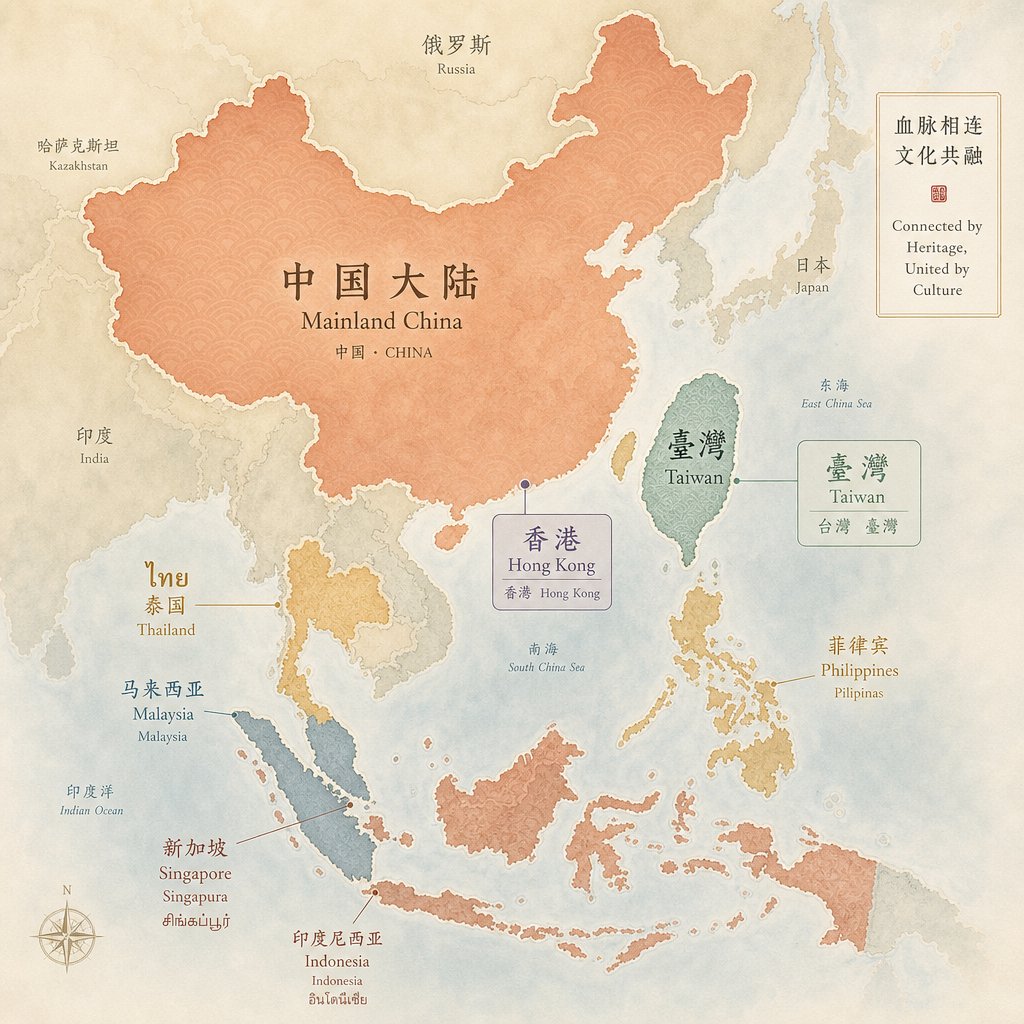
The same character 王 is pronounced Wang in Mandarin, Wong in Cantonese, Ong in Hokkien, and Heng in Teochew. Same character, same meaning, four completely different romanized spellings on a passport. This single example captures why regional context matters so much when decoding Chinese names. A chinese name dictionary built only for mainland conventions will leave you confused the moment you encounter a Taiwanese, Hong Kong, or diaspora name. Each community has developed its own naming ecosystem shaped by local languages, political history, and cultural contact with the West.
Mainland China Naming Conventions and Simplified Characters
In the People's Republic of China, naming operates within a specific regulatory framework. China's naming laws require all names to be written in Chinese characters, with simplified characters advised over traditional ones. Latin characters, numerals, and non-Chinese symbols are prohibited. The government also bans names deemed to "exaggerate religious fervor" and, practically speaking, characters that can't be input into government computer systems are effectively off-limits.
These constraints shape naming in ways outsiders rarely consider. There are over 70,000 known Chinese characters, but only about 32,000 were supported by government databases as of the last major system update. Parents who choose rare or archaic characters for their child's name can face real bureaucratic headaches: ID cards that display the name incorrectly, airport systems that reject it, or bank accounts that can't be opened. The case of Ma Cheng, a Beijing woman whose name character (three horse radicals stacked together) couldn't be typed into any government system, illustrates the problem vividly. Her ID card had to be partially handwritten.
Beyond technical restrictions, mainland naming follows Pinyin as the sole official romanization system. Every citizen's name appears in Pinyin on their passport, with no spaces or hyphens within the given name. A name like 王小明 becomes WANG XIAOMING in travel documents. This standardization makes mainland names the most predictable to look up, since you can reliably convert the Pinyin back to characters using any dictionary tool.
Taiwanese and Hong Kong Naming Differences
Cross the Taiwan Strait and the rules change entirely. Taiwan uses traditional (unsimplified) Chinese characters for all official documents, meaning the same name looks visually different on paper. The surname 张 in simplified form becomes 張 in traditional. If you're trying to translate english to chinese traditional for a Taiwanese name, you need a dictionary that supports traditional character lookup, not just simplified.
Romanization in Taiwan adds another layer of complexity. Rather than Pinyin, Taiwan historically used Wade-Giles and various local systems. A surname spelled "Tsai" in Taiwan would be "Cai" in mainland Pinyin. "Hsieh" becomes "Xie." "Chiang" becomes "Jiang." This means the same family name can look unrecognizably different depending on which side of the strait the person comes from. Some younger Taiwanese have adopted Pinyin-influenced spellings, but official documents still reflect older systems, creating a patchwork that confuses anyone attempting a straightforward taiwanese to english name conversion.
You might wonder: is taiwanese a language separate from Mandarin? Linguistically, Taiwan uses Mandarin Chinese (often called taiwanese mandarin) as its official language, but with pronunciation differences, vocabulary variations, and the continued influence of Hokkien (Taiwanese Southern Min) and Hakka. These local languages affect how names are romanized in everyday use. A person whose official name uses Mandarin-based romanization might introduce themselves using a Hokkien pronunciation of their surname in casual settings.
Hong Kong presents yet another pattern. The Asia Media Centre notes that Cantonese names are pronounced differently from Mandarin Chinese even when using the same characters. Hong Kong uses traditional characters and a Cantonese-based romanization system with no single official standard. The surname 陈 appears as "Chan" in Hong Kong rather than "Chen" (Pinyin) or "Ch'en" (Wade-Giles).
Perhaps the most distinctive Hong Kong naming feature is the widespread adoption of English given names alongside Chinese ones. A person might be officially registered as Chan Tai-man but go by "David Chan" in professional contexts. This bilingual naming practice, where an English name precedes the surname and the Chinese given name follows it, is deeply embedded in Hong Kong culture. It emerged from British colonial influence and persists as a marker of cosmopolitan identity.
Overseas Chinese Naming Adaptations
In diaspora communities across Southeast Asia, North America, and Europe, naming conventions adapt further to local norms. The research by Peter Tan on Singaporean Chinese names documents how Englishisation has progressively transformed naming patterns. In Singapore, the romanized version of a name constitutes the legal identity, not the Chinese characters. This means the spelling is fixed and cannot be altered, even if it was originally based on a non-Mandarin dialect pronunciation.
Diaspora naming reveals ancestral origins in ways that mainland names don't. The Asia Media Centre explains that in territories with a sizeable Chinese diaspora, like Singapore and Malaysia, the way a family name is spelled signals the region a person's ancestors came from. A person surnamed "Wong" likely has Cantonese heritage from Guangdong province or Hong Kong. Someone spelled "Ong" probably traces roots to Hokkien-speaking Fujian. Both are the same character (王), just romanized through different dialect lenses.
Generational shifts compound the complexity. First-generation immigrants typically maintain full Chinese given names. Second-generation members often add an English given name before the surname, creating hybrid formats like "Peter Tan Kok Wan." By the third generation, many families have dropped Chinese given names from official documents entirely, retaining only the surname and an English first name. Tan's research found that over one-third of Chinese Singaporean parents were registering English given names for their children as early as the 1980s, a figure that has only grown since.
Name order itself becomes a site of negotiation. In China, the surname always leads. In English-speaking countries, putting the surname first causes constant confusion about which name is which. The Asia Media Centre documents how early Chinese immigration to New Zealand created generations of families with the "wrong" surnames because officials recorded given names as family names and vice versa. Today, many overseas Chinese resolve this by capitalizing their surname on business cards or placing it last in Western contexts while keeping it first in Chinese ones.
| Feature | Mainland China | Taiwan | Hong Kong | Overseas Diaspora |
|---|---|---|---|---|
| Character Set | Simplified | Traditional | Traditional | Varies by generation |
| Romanization System | Pinyin | Wade-Giles / mixed | Cantonese-based (no single standard) | Dialect-based (Hokkien, Cantonese, etc.) |
| English Given Names | Rare in official docs | Uncommon officially | Very common | Increasingly standard |
| Name Order | Surname first, always | Surname first | Flexible (surname first or last) | Often surname last in Western contexts |
| Naming Regulations | Government-enforced character limits | Minimal restrictions | Minimal restrictions | Subject to local naming laws |
| Dialect Influence on Spelling | None (Mandarin only) | Some Hokkien/Hakka influence | Strong Cantonese influence | Primary determinant of spelling |
What this regional variation means for anyone using a reference tool is straightforward: you need to know where a person's name originates before you can decode it accurately. A surname spelled "Ng" could be 吴 (Wu in Pinyin) from a Cantonese speaker, or 黄 (Huang in Pinyin) from a Hokkien speaker. Without regional context, even the best dictionary lookup starts from the wrong character. The english to taiwanese conversion of a name follows different rules than the english to mainland Chinese one, and both differ from the Cantonese conventions used in Hong Kong.
These regional patterns have remained relatively stable for decades. What's changing rapidly, though, is how younger generations across all these communities approach naming itself, driven by pop culture, digital tools, and a growing desire to break from convention entirely.
Modern Chinese Naming Trends and How They Change Dictionary Lookups
A generation ago, decoding a Chinese name meant recognizing a familiar set of virtue characters and patriotic references. Today, you might encounter a name pulled from an obscure Tang dynasty poem, a fantasy novel, or a character so rare it doesn't appear in standard digital fonts. Modern naming in China has shifted dramatically, and that shift makes a chinese name dictionary more necessary than ever, precisely because the characters parents choose now are harder to look up.
The Shift From Traditional to Modern Naming Patterns
Chinese naming has moved through distinct generational waves. The Global Times reports that names from the 1950s and 1960s reflected patriotic fervor: Jianguo (build the country), Yongjun (support the army), Aimin (love the people). The post-1980 generation favored single-character names signaling strength and ambition, like Wei (great) and Qiang (powerful). By the 1990s, influenced by Hong Kong and Taiwanese media, romanticized characters like Meng (dream), Yu (rain), and Han (cultivation) dominated.
The current generation of parents, mostly born after 1990, has taken a different path entirely. Cultural sociologist Xu Shumin describes it as young parents "reclaiming traditional Chinese culture as a living aesthetic in everyday life." Names like Yanzhou (inkstone and boat, from a Song dynasty poem) and Fusu (from the Book of Songs and also the name of Emperor Qinshihuang's eldest son) are trending on newborn name lists across multiple provinces.
Here's the paradox: these names look backward to classical sources but feel modern because they reject the common characters that dominated the previous fifty years. The result is names built from less frequently used characters that require deeper dictionary research to decode.
- Traditional approach: Characters chosen from a small pool of widely recognized virtues (loyalty, strength, beauty)
- 1980s-1990s approach: Popular characters repeated across millions of people (Wei, Fang, Jing)
- Modern approach: Rare or literary characters chosen for uniqueness and classical resonance
- Traditional motivation: Elemental balance, generational poems, family honor
- Modern motivation: Aesthetic individuality, cultural identity expression, poetic meaning
- Traditional sources: Fortune tellers, family elders, zibei poems
- Modern sources: Classical texts, online research, AI-powered tools, social media inspiration
Pop Culture and Literary Influences on Contemporary Names
Fiction has always shaped naming, but the scale and speed of influence have exploded. The xianxia genre (immortal hero fantasy) and danmei genre (boys' love fiction) have introduced millions of readers to elaborately crafted character names that sound ancient, elegant, and otherworldly. Names from popular web novels and their drama adaptations, like Wei Wuxian or Lan Wangji, showcase character combinations that prioritize aesthetic beauty and classical resonance over conventional meaning.
This literary influence extends beyond China. Fans searching for asian names and surnames for creative projects, cosplay identities, or online personas often draw directly from these fictional universes. The appeal isn't hard to understand: xianxia and danmei authors spend considerable effort crafting names where every character carries thematic weight, essentially doing the same work traditional Chinese parents do but for narrative purposes.
The crossover effect is real. Parents who grew up reading these novels now name their children using the same aesthetic principles: unusual character pairings, poetic imagery, and tonal beauty that sounds like it belongs in a classical text. When you encounter asian names on younger generations that feel unusually literary, there's a good chance fiction played a role in the selection.
Using Name Generators and Digital Tools as Starting Points
Not every parent has deep classical literacy or access to a naming specialist. This is where a chinese name generator enters the picture. These digital tools, powered by algorithms trained on linguistic patterns and cultural conventions, offer starting points for parents and creators who want culturally grounded suggestions without years of study.
A typical AI-powered name generator lets users set parameters like desired meaning, tonal preference, elemental association, and style (traditional vs. modern). The tool then produces character combinations that meet those criteria. Think of it as a brainstorming partner rather than a final authority. The output still needs human judgment: checking for unfortunate homophones, verifying elemental compatibility, and ensuring the name doesn't violate family taboos.
These generators differ fundamentally from a novelty tool like a wu tang name generator, which maps English names to preset combinations for entertainment. A serious chinese name generator works with actual character semantics, radical composition, and tonal harmony. Similarly, while a generic username generator might produce random strings, name generation for Chinese contexts requires cultural logic that only specialized tools provide.
For anyone browsing asian girl names or boy names for a character, a child, or personal use, these tools serve as a first filter. But they don't replace the deeper lookup process. A generator might suggest the name 诗涵 (Shihan, poetry and containment), but understanding why those characters work together, what radicals they contain, and how they sound in sequence still requires the kind of character-level analysis that only a proper reference tool provides.
This is the essential takeaway for modern naming: as character choices become more individualistic and literary, the need for thorough dictionary research grows rather than shrinks. A name like Yanzhou, drawn from an obscure Song dynasty poem, won't appear in any list of "common Chinese names." You'll need to look up each character independently, trace its literary source, and interpret the combined meaning in context. The tools have gotten better, but the interpretive work remains irreplaceable.
Frequently Asked Questions About Chinese Name Dictionaries
1. How is a Chinese name dictionary different from a regular translation tool?
A regular translation tool converts romanized text into a single English word or phrase. A Chinese name dictionary goes deeper by breaking each character into its radical components, tonal value, and semantic meaning. It reveals how paired characters create compound meanings, why specific radicals were chosen, and what cultural or elemental significance the name carries. This layered analysis uncovers the deliberate phrase parents composed rather than just providing a surface-level translation.
2. Why do Chinese surnames come before given names?
Chinese naming conventions place the family name first because the culture prioritizes collective family identity over individual identity. The surname (xing) represents lineage stretching back thousands of years, while the given name (ming) expresses personal hopes and aspirations. This structural order means the first syllable in a Chinese name is almost always the surname, and the remaining one or two syllables form the given name chosen by parents.
3. How can I tell if a Chinese name is male or female from the characters?
Gender signals are often embedded in the radicals and thematic associations of name characters. The woman radical (女) strongly indicates a female name, as do characters referencing flowers, jade, and the moon. Male names typically use characters evoking strength, ambition, and vastness like dragon (龙), great (伟), or mountain (山). However, modern naming increasingly uses gender-neutral characters focused on intellect and virtue, such as bright (明) or literary (文), making context important.
4. What is the Five Elements (Wuxing) system in Chinese naming?
The Five Elements system maps a child's birth time to five phases of energy: Wood, Fire, Earth, Metal, and Water. A naming specialist calculates which elements are strong or missing in the child's birth chart, then selects name characters with radicals that compensate for deficiencies. For example, a child lacking Water energy might receive a name containing the water radical (氵). The goal is cosmic balance, ensuring the name's elemental composition complements rather than conflicts with the child's innate chart.
5. Why does the same Chinese surname get spelled differently in different countries?
Regional romanization systems create vastly different spellings for identical characters. Mainland China uses Pinyin, Taiwan uses Wade-Giles or mixed systems, Hong Kong uses Cantonese-based romanization, and diaspora communities spell names based on ancestral dialect pronunciations. The character 王 becomes Wang in Mandarin Pinyin, Wong in Cantonese, and Ong in Hokkien. Identifying the person's regional background is essential before attempting to convert a romanized name back to its original characters.