What a Chinese Name Generator from English Really Means
Ever wondered "what is my Chinese name" and typed your English name into an online tool, only to get back a string of characters you can't read or verify? You're not alone. A Chinese name generator takes your English name and produces a culturally appropriate Chinese equivalent, but the process is far more involved than swapping letters for characters.
Think of it this way: English names are built from an alphabet where letters represent individual sounds. Chinese names are built from characters, and each character is a complete unit of meaning and sound. There is no letter-by-letter conversion. A proper chinese name generator analyzes your English name's phonetic structure, identifies Mandarin syllables that approximate those sounds, and then selects characters that carry positive meaning, flow naturally together, and follow real Chinese naming conventions.
What a Chinese Name Generator Actually Does
A reliable english to chinese name converter does three things simultaneously. First, it breaks your English name into syllable chunks that can map onto Mandarin's roughly 400 available syllables. Second, it filters candidate characters for each syllable based on meaning, tone, and cultural appropriateness. Third, it assembles a full name that follows the surname-plus-given-name structure Chinese speakers expect.
The difference between a good tool and a bad one comes down to that second and third step. A basic chinese name translation might give you phonetically similar characters that mean nothing coherent together, or worse, form an unintentionally ridiculous phrase. As one language learner discovered the hard way, picking characters based on a dictionary search alone led him to introduce himself as "Golden Skill Universe" for months, making every native speaker he met visibly uncomfortable.
Why Your English Name Cannot Be Directly Translated
Chinese can only represent syllables as concrete blocks of sound, not as fluid combinations of letters. A name like "Christopher" contains consonant clusters ("chr", "st") and unstressed syllables that simply do not exist in Mandarin's phonetic system. The result? Transliteration stretches a two-syllable name like "Jack" into two full Chinese syllables (jie ke), and a name like "Thomas" becomes three syllables (tuo ma si). These transliterated versions sound neither like the original English nor like an authentic Chinese name.
Chinese names are chosen for meaning, not sound approximation. A name that sounds vaguely like your English name but carries no coherent meaning will immediately mark you as someone who used a chinese name gen without understanding the culture behind it.
This is why my chinese name matters beyond a simple phonetic exercise. When a native speaker hears a Chinese name, they picture the characters, consider the meaning, and judge whether it sounds like a real person's name. A chinese name converter that only focuses on sound matching misses the entire cultural layer that makes a name feel authentic.
Throughout this guide, you'll learn exactly how phonetics, character meaning, cultural taboos, and regional differences all factor into generating a Chinese name that won't raise eyebrows. The goal is a name you can confidently hand over on a business card or introduce yourself with in conversation, one that sounds like it belongs to a real person rather than a translation algorithm.
How English Phonemes Connect to Chinese Pinyin Syllables
So how does a mandarin name generator actually bridge two completely different sound systems? English has approximately 44 phonemes, including 20 vowel sounds and 24 consonant sounds. Mandarin, by contrast, works with around 21 consonants and 5 basic vowels, but adds four tones that change word meaning entirely. When you want to express your name in mandarin characters, the tool has to navigate this mismatch syllable by syllable.
How English Sounds Map to Mandarin Pinyin
Mandarin organizes all its sounds into a pinyin system, roughly 400 unique syllables (about 1,200 if you count tonal variations). Each syllable pairs an initial consonant with a final vowel sound. When converting english to chinese mandarin, a generator breaks your name into chunks and finds the closest pinyin match for each one.
Imagine your name is "David." The "Da" maps cleanly to the pinyin syllable da. The "vid" part is trickier: Mandarin has no "v" sound and no syllable-final "d." So the generator approximates it as wei or fu, depending on whether it prioritizes the vowel sound or the consonant. Understanding romanization meaning here is essential. Pinyin is not just a spelling system; it represents specific, fixed sounds that cannot be bent to fit English phonetics.
Here is how some common English sounds map to their closest pinyin equivalents:
| English Sound | Example | Closest Pinyin | Example Character | Notes |
|---|---|---|---|---|
| /dʒ/ (J sound) | James | jie | 杰 (jie, outstanding) | Clean match; Mandarin "j" is similar |
| /θ/ (TH sound) | Thomas | tuo | 托 (tuo, entrust) | No TH in Mandarin; replaced with "t" |
| /v/ | Victor | wei | 维 (wei, maintain) | No "v" in standard Mandarin; "w" substitutes |
| /r/ (English R) | Rachel | rui or lei | 瑞 (rui, auspicious) | English "r" and Chinese "r" differ in articulation |
| /æ/ (short A) | Patrick | pa | 帕 (pa, handkerchief) | Mandarin /a/ is broader than English /æ/ |
| /ks/ (X sound) | Alex | ke si | 克斯 (ke si) | Clusters split into separate syllables |
Handling Sounds That Do Not Exist in Chinese
Research from a comparative study of English and Mandarin pronunciation confirms that English contains numerous fricatives and consonant clusters that have no Mandarin equivalent. Sounds like /θ/, /ð/, /v/, and clusters like "str" or "ks" simply do not exist in the pinyin to chinese sound inventory. A phonetic pronunciation generator handles these gaps through substitution rules:
- /θ/ and /ð/ (as in "think" and "this") become /s/ or /t/ in pinyin
- /v/ shifts to /w/ because Mandarin lacks a labiodental fricative
- Consonant clusters like "br," "str," or "pl" get split into separate syllables, each with its own vowel
- Final consonants like "-ck" or "-ld" are either dropped or given a trailing vowel (e.g., "Mark" becomes ma ke)
This splitting effect is why english in mandarin chinese names often end up longer than the original. A one-syllable name like "Grace" becomes two syllables (ge lei si or ge rui si), and a name like "Stephanie" can stretch to four.
Phonetic Matching vs. Meaning-Based Selection
Here is where the real decision happens. Once a generator identifies candidate pinyin syllables for my name in mandarin, it faces a choice: prioritize sound similarity or prioritize character meaning? Pure phonetic matching gives you something that sounds vaguely like your English name but may carry no coherent meaning. Meaning-based selection picks characters that form a real, culturally resonant name but may drift further from your original pronunciation.
Most quality tools blend both approaches. They narrow down pinyin syllables that approximate your name's sound, then filter the available characters for positive connotations. The character 杰 (jie, meaning "outstanding") gets chosen over 节 (jie, meaning "joint" or "festival") not because of sound but because of what it communicates on paper. Native speakers read names visually before they hear them spoken, so the characters you select carry weight that pure phonetics never will.
The tension between sound and meaning is exactly why character selection deserves its own deep dive, particularly the radical components that give each character its cultural resonance.
The Cultural Significance of Character Selection in Chinese Names
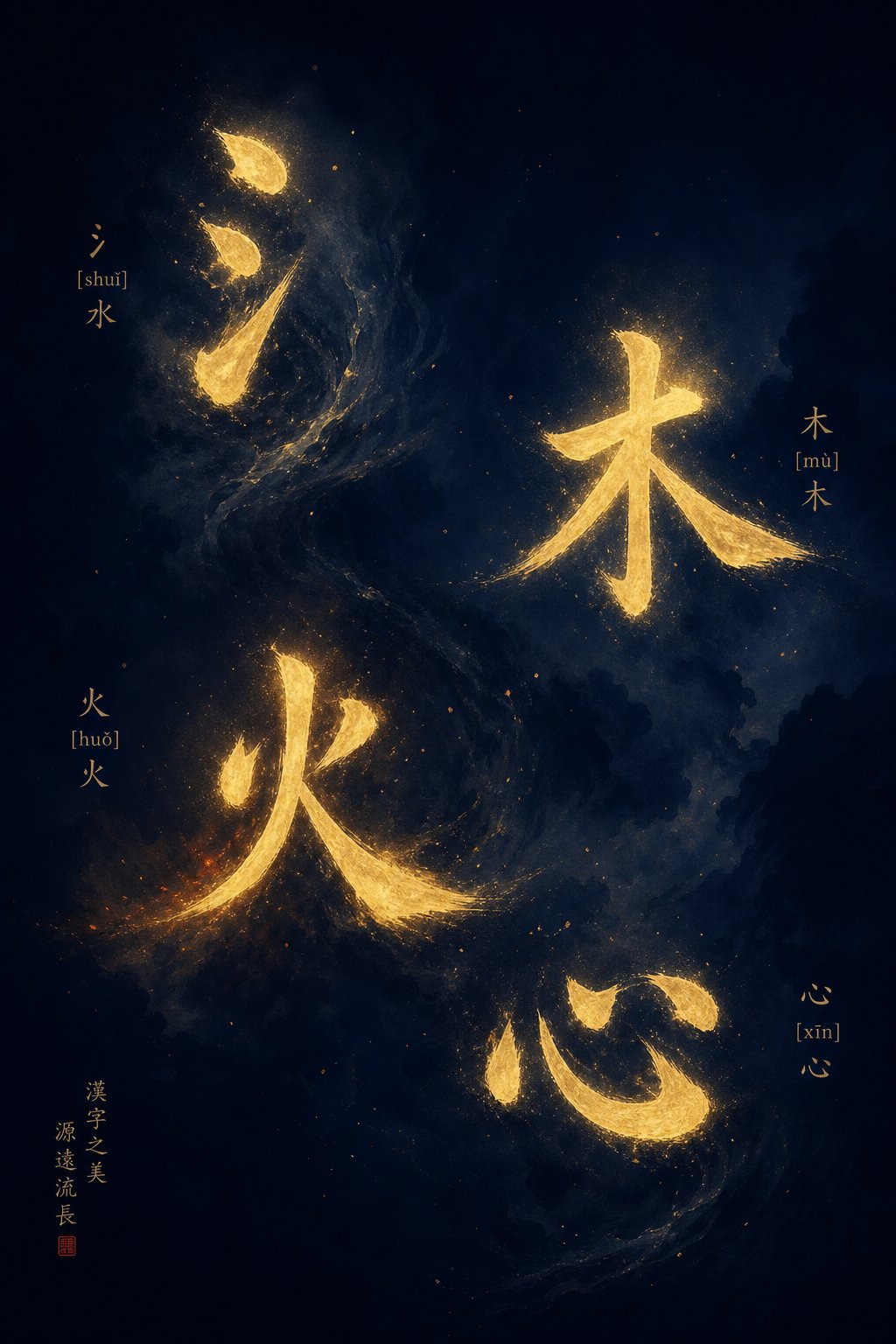
Every Chinese character is built from smaller structural components called radicals. These radicals are not decorative. They function as semantic tags, telling the reader what category of meaning a character belongs to before they even process the full word. When you see a name in characters, the radicals immediately communicate a feeling: water suggests depth and flow, wood implies growth, fire evokes warmth and energy. This is the layer that separates a meaningful chinese name from a random string of syllables.
Understanding Radicals and Their Role in Names
Imagine radicals as the DNA of a character. The radical sits inside the character (usually on the left side or at the bottom) and signals its conceptual family. A character with the water radical (氵) will relate to liquids, fluidity, or emotional depth. A character with the jade radical (玉/王) connects to beauty and preciousness. Parents and name-choosers in Chinese culture select characters partly based on which radical family feels right for the person.
Here are common radicals you will encounter in Chinese names and the connotations they carry:
- 氵(water) — depth, wisdom, adaptability, nourishment. Found in characters like 泽 (ze, grace), 润 (run, to nourish), and 清 (qing, pure).
- 木 (wood) — growth, vitality, resilience, nature. Found in 林 (lin, forest), 柏 (bai, cypress), and 梓 (zi, catalpa tree).
- 火 (fire) — energy, brightness, passion, warmth. Found in 煜 (yu, to shine), 灿 (can, brilliant), and 炎 (yan, flame).
- 钅(metal/gold) — strength, clarity, value, precision. Found in 铭 (ming, to inscribe), 钧 (jun, weight/substance), and 锐 (rui, sharp).
- 土 (earth) — stability, reliability, groundedness. Found in 坤 (kun, the receptive), 坚 (jian, firm), and 安 (an, peace).
- 心/忄(heart) — emotion, character, inner life. Found in 慧 (hui, intelligent), 恩 (en, kindness), and 悦 (yue, joy).
- 玉/王 (jade) — beauty, purity, preciousness. Found in 瑶 (yao, precious jade), 琳 (lin, fine jade), and 珊 (shan, coral).
Understanding chinese symbols and meanings at this radical level reveals why two characters that share the same pronunciation can carry completely different emotional weight. The character 清 (qing, clear/pure) with its water radical feels calm and introspective, while 青 (qing, green/youthful) without that radical feels fresh and energetic. Same sound, different soul.
How Character Combinations Create Layered Meaning
Most Chinese given names use two characters, and the magic happens in how those characters interact. Each character contributes its own meaning, but together they form a compound idea greater than either part alone. This is what makes names in chinese and meanings so fascinating to unpack.
Consider the name 明慧 (Minghu). The first character 明 means "bright" or "clear," combining the radicals for sun (日) and moon (月). The second character 慧 means "wisdom" or "intelligence," built on the heart radical (心). Together, they create a layered meaning: "bright wisdom" or "clarity of mind illuminated from within." Neither character alone says what the combination expresses.
Other examples of how two-character names build compound meaning:
- 志远 (Zhiyuan) — 志 (aspiration) + 远 (far) = "ambition that reaches far"
- 美华 (Meihua) — 美 (beautiful) + 华 (splendid) = "beautiful splendor"
- 泽恩 (Ze'en) — 泽 (grace/nourishment) + 恩 (kindness) = "gracious kindness"
This compound structure is exactly what a chinese name generator from english must replicate to produce something that feels authentic. A name where both characters reinforce or complement each other reads as intentional. A name where the characters have no logical relationship reads as machine-generated.
Why Native Speakers Judge Names by Characters Not Sound
Here is something that surprises most English speakers: when Chinese people encounter a name, they think in characters first and sound second. You might ask "what does a chinese name mean?" and expect an answer about pronunciation. But a native speaker's first reaction is visual. They see the written characters, register the radicals, and assess whether the name in chinese meaning makes sense as a deliberate choice.
This is why phonetic similarity to your English name matters far less than you might assume. A name that sounds 80% like "Michael" but uses characters meaning "to sell" and "overcome" will confuse every native speaker who reads it. Meanwhile, a name that sounds nothing like "Michael" but uses characters meaning "bright" and "outstanding" will feel like a real person's name immediately.
Chinese naming culture treats character selection as an art form. Families spend weeks deliberating over which characters to pair, consulting dictionaries, poetry collections, and sometimes professional name consultants who practice 姓名学 (xingmingxue, "name science"). The name in chinese meaning is not an afterthought; it is the entire point.
Characters also carry generational and cultural associations. Some characters feel modern while others feel classical. Some skew feminine, others masculine. A character like 伟 (wei, great/magnificent) peaked in popularity during the 1960s-70s in China and now feels dated to younger speakers. Choosing characters without awareness of these associations is like naming an American baby "Gertrude" in 2026 — technically fine, but culturally tone-deaf.
The radical system, compound meanings, and cultural weight of individual characters all point to one conclusion: the characters you choose define how your name is received. Sound gets you in the door, but characters determine whether you stay. And beyond characters themselves, the surname you pair them with introduces another layer of convention that most generators handle poorly.
Chinese Surnames and the Name Order Convention
In English, you introduce yourself given name first: "Hi, I'm Sarah Johnson." In Chinese, the family name always leads. The basketball star known worldwide as Yao Ming is actually surname Yao (姚), given name Ming (明). This surname-first structure reflects a Confucian value baked into the language itself: family identity precedes individual identity. When a chinese name generator from english produces your name, it must follow this convention or the result will immediately sound wrong to any native speaker.
The Surname-First Convention Explained
A typical Chinese name is two or three characters total. The first character is the surname (姓, xing), and the remaining one or two characters form the given name (名, ming). So a name like 李美华 (Li Meihua) breaks down as surname 李 plus given name 美华. You'll never hear a Chinese person introduce themselves given-name-first in Mandarin. The structure is fixed.
This matters practically because when you receive a Chinese name, you need to know which part is which. On business cards, formal documents, and introductions, the surname comes first without exception. Calling someone by their given name alone signals close familiarity, while using their full name or surname plus a title (like 王先生, Wang xiansheng, "Mr. Wang") is the default for professional and social contexts.
Why English Surnames Rarely Convert Directly
Here's where most people hit a wall. English surnames like "Johnson," "Williams," or "O'Brien" have no phonetic equivalent in the Chinese surname system. The pool of common chinese surnames is surprisingly small. While the classic Hundred Family Surnames text from the Song dynasty (960-1279 CE) catalogued around 504 surnames, and the modern full list runs to roughly 6,000, the vast majority of Chinese people share a handful of common chinese last names. The top five alone — Li (李), Wang (王), Zhang (张), Liu (刘), and Chen (陈) — account for roughly 35% of China's entire population.
Most chinese family names are single characters. Two-character surnames like 欧阳 (Ouyang) or 司马 (Sima) exist but are rare. This single-character constraint means your English surname, which might be two or three syllables, simply cannot map onto a Chinese surname without being truncated or replaced entirely. "Anderson" does not become a three-character Chinese surname. It gets replaced with a single character that either sounds vaguely similar to part of your name or is chosen for other reasons.
Understanding the meaning of chinese last names also helps explain why direct conversion fails. Many Chinese surnames originated from ancient state names, occupations, or ancestral titles thousands of years ago. The surname 王 (Wang) originally meant "king." The surname 林 (Lin) means "forest." These are inherited identifiers with deep historical roots, not labels you can simply assign based on phonetic convenience.
Choosing a Chinese Surname That Fits
So how do foreigners pick a chinese surname? Three common approaches work:
- Match your English surname's first sound. If your last name is "Harris," the surname 何 (He) captures the opening "H" sound and is a legitimate, common Chinese surname. "Martin" maps well to 马 (Ma). "Lee" conveniently already is a Chinese surname: 李 (Li).
- Match your English first name's sound. Some people prefer a surname that echoes their given name instead. A "David" might choose 戴 (Dai) as a surname because it captures the opening syllable.
- Adopt a common surname for simplicity. If no phonetic match feels natural, picking a high-frequency surname like 王 (Wang), 李 (Li), or 林 (Lin) works fine. Native speakers won't question it.
Among asian names and surnames, Chinese surnames stand out for their brevity and their sheer concentration. A single surname shared by 100 million people is normal in China. This is why the given name carries so much creative weight — it's the part that distinguishes you.
Here are the most common chinese last names you'll encounter, along with their approximate English sound equivalents:
| Surname | Character | Pinyin | Meaning | Sounds Like | Approx. Population |
|---|---|---|---|---|---|
| Li | 李 | Li | Plum tree | "Lee" | ~100 million |
| Wang | 王 | Wang | King | "Wong" (approx.) | ~99 million |
| Zhang | 张 | Zhang | To stretch/draw a bow | "Jong" (approx.) | ~95 million |
| Liu | 刘 | Liu | To kill (archaic) | "Leo" (approx.) | ~73 million |
| Chen | 陈 | Chen | To display/ancient state | "Chun" (approx.) | ~63 million |
| Yang | 杨 | Yang | Poplar tree | "Young" | ~46 million |
| Huang | 黄 | Huang | Yellow | "Hwong" | ~29 million |
| Zhao | 赵 | Zhao | Ancient state name | "Jow" | ~29 million |
| Wu | 吴 | Wu | Ancient state name | "Woo" | ~27 million |
| Zhou | 周 | Zhou | Cycle/dynasty name | "Joe" | ~26 million |
Notice that several of these most common chinese last names have meanings rooted in nature (plum, poplar, yellow) or ancient political history (state names, dynasty names). The original meaning rarely matters in daily use — nobody thinks "king" when they hear the surname Wang — but it adds a layer of heritage that pure phonetic matching from English cannot replicate.
The practical takeaway: pick a real Chinese surname that either echoes part of your English name or simply feels comfortable to say. Don't invent one, don't use a two-character surname unless you have a specific reason, and don't overthink it. The given name is where your personality and meaning live. The surname just needs to be legitimate and natural-sounding.
Of course, which surnames feel "natural" depends heavily on where you plan to use your Chinese name. A surname common in Mainland China might carry different associations in Taiwan or Hong Kong, where naming conventions, character sets, and even romanization systems diverge in ways that affect your choice.
Regional Differences in Chinese Naming Conventions
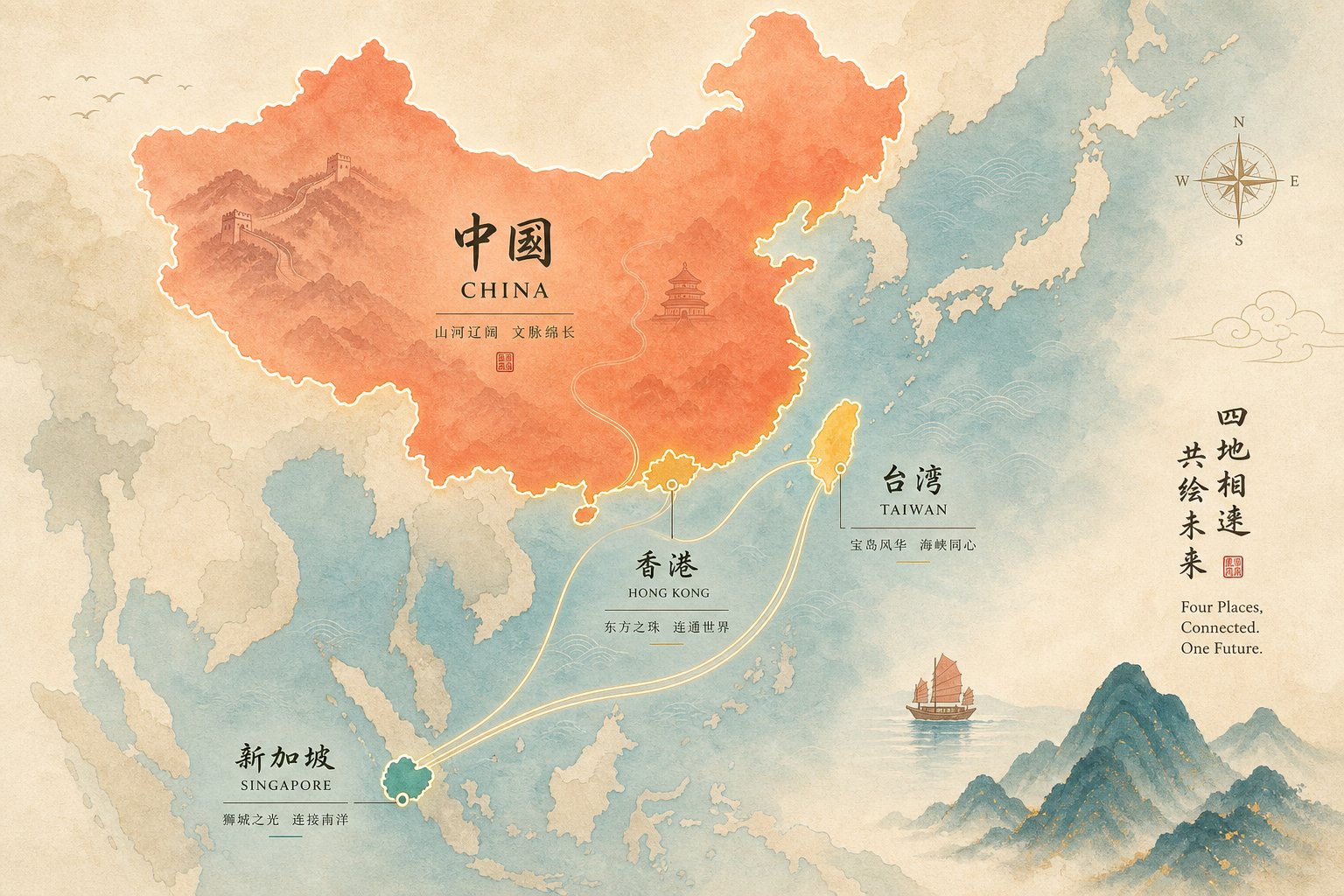
A Chinese name that works perfectly in Beijing might raise eyebrows in Taipei or confuse someone in Hong Kong. The Chinese-speaking world is not monolithic, and the characters, romanization systems, and cultural preferences surrounding names shift depending on where you plan to use yours. If you want to translate english to simplified chinese characters for a business trip to Shanghai, you'll make different choices than someone preparing for a semester at a Taiwanese university.
Mainland China vs. Taiwan Naming Preferences
The most visible difference is the writing system itself. Mainland China uses simplified chinese hanzi, a streamlined character set introduced in the 1950s and 60s. Taiwan uses traditional characters, which retain the full complexity of classical forms. The same name written in both systems can look quite different. For example, the character 龙 (dragon, simplified) becomes 龍 in traditional form. Some characters available in traditional writing were merged or altered during simplification, meaning certain name characters popular in Taiwan simply don't exist in the simplified set.
Beyond script, naming aesthetics differ. Mainland Chinese names trending in recent decades lean toward characters like 浩 (hao, vast), 宇 (yu, universe), and 欣 (xin, joyful). Taiwanese names often favor more literary or classical characters, reflecting the island's preservation of older cultural traditions. Taiwanese last names follow the same core pool as the mainland — Li, Wang, Chen, Lin — but their romanization uses different systems. While mainland China standardized on Hanyu Pinyin, Taiwan historically used Wade-Giles and now officially uses a modified pinyin system, which is why taiwanese surnames like 張 appear romanized as "Chang" in Taiwan but "Zhang" in China.
People sometimes ask "is taiwanese a language?" The answer matters for naming: Taiwan's official language is Mandarin (often called taiwanese mandarin due to slight pronunciation and vocabulary differences from mainland Mandarin), but many families also speak Hokkien or Hakka. These dialect backgrounds can influence which characters families prefer and how taiwanese last names get romanized on passports and official documents.
Hong Kong and Cantonese Considerations
Hong Kong operates in a different linguistic universe. The spoken language is Cantonese, not Mandarin, and names are romanized according to Cantonese pronunciation rather than pinyin. The same character 黄 that reads "Huang" in pinyin becomes "Wong" in Cantonese romanization. As one analysis of Chinese naming conventions notes, Hong Kong uses a mix of romanization systems — Wade-Giles, Yale, Jyutping, and informal local conventions — with no single standard dominating.
This means a name generated using Mandarin pinyin won't match how Hong Kong locals would read or romanize it. If your Chinese name is for use in Hong Kong, you'll need to consider Cantonese pronunciation. A character chosen because it sounds elegant in Mandarin might sound flat or awkward in Cantonese's six-tone system.
Hong Kong names also tend to separate the two characters of a given name with a space or hyphen when romanized (e.g., "Chun Fei" or "Ching-te"), unlike mainland convention which joins them together (e.g., "Jinping").
How Your Context Should Guide Your Choice
Singapore adds yet another layer. Chinese names in Singapore and Malaysia are romanized based on ancestral dialect pronunciation — Hokkien, Teochew, Cantonese, or Hakka — rather than Mandarin. A surname written 黄 might appear as "Wee," "Ng," "Wong," or "Huang" depending on the family's dialect heritage. This diversity means a name optimized for Mandarin speakers may not resonate with Singaporean Chinese communities.
Here's a quick breakdown of the key regional differences to keep in mind:
- Mainland China — Simplified characters, Hanyu Pinyin romanization, given name written as one word (e.g., Jinping), Mandarin pronunciation standard
- Taiwan — Traditional characters, Wade-Giles or Taiwan Pinyin romanization, given name often hyphenated (e.g., Ching-te), taiwanese mandarin pronunciation
- Hong Kong — Traditional characters, Cantonese-based romanization (no single standard), given name spaced or hyphenated, six-tone Cantonese pronunciation
- Singapore — Simplified characters officially, but romanization follows ancestral dialect (Hokkien, Teochew, Cantonese, Hakka), creating wide variation in how identical characters appear in Latin script
The practical implication: before generating your Chinese name, decide where and with whom you'll use it most. A name for professional networking in Shanghai should use simplified characters and sound natural in Mandarin. A name for studying in Taipei needs traditional characters and should avoid mainland-specific naming trends. A name for Hong Kong contacts should be checked against Cantonese pronunciation, not just pinyin.
Getting the regional context right ensures your name doesn't just look correct on paper — it sounds right to the specific community you're engaging with. But even a regionally appropriate name can backfire if it accidentally violates one of several deeply held cultural taboos that govern Chinese naming, rules that no amount of phonetic matching can protect you from.
Chinese Naming Taboos and Cultural Pitfalls to Avoid
A name can tick every box — beautiful characters, balanced tones, positive meaning — and still offend someone deeply. Chinese naming culture carries invisible rules that no phonetic algorithm can detect. These taboos are rooted in family hierarchy, linguistic coincidence, and centuries of cultural memory. Violating them doesn't just make your name sound odd; it can signal disrespect or ignorance in ways that damage relationships before they start.
Ancestral Name Taboos You Must Know
The most serious naming rule in Chinese culture is 避讳 (bihu, "name avoidance"). The chinese name definition of this concept is straightforward: you must never use a character that appears in the name of a living elder in your family or social circle. This applies to parents, grandparents, great-grandparents, and in traditional families, even respected teachers or mentors.
Never select a character that duplicates any character in the names of living elders — parents, grandparents, or respected seniors. In Chinese culture, this is not a preference; it is a fundamental rule of respect that predates the Qin dynasty and remains actively observed today.
The naming taboo tradition was so strictly enforced throughout Imperial China that even emperors would change their names to use less common characters, sparing the general population the burden of avoiding everyday words. Emperor Xuan of Han changed his given name from Bingyi (病已), which contained two extremely common characters, to Xun (詢), a far rarer character, specifically to ease the public's compliance.
For foreigners choosing chinese names, this rule matters in a specific way: if you're being given a name by a Chinese friend, teacher, or colleague, they will instinctively avoid characters from their own family elders' names. If you're generating a name independently and plan to use it within a specific Chinese family or organization, ask whether any characters in your candidate name overlap with senior members' names. The embarrassment of accidentally sharing a character with someone's grandmother is real and immediate.
Dangerous Homophones and Tonal Pitfalls
Mandarin uses roughly 400 base syllables multiplied by four tones, producing about 1,300 to 1,600 distinct spoken units that map to over 8,000 commonly used characters. The math creates an unavoidable problem: every syllable you choose for your name shares its sound with dozens of other characters, some of them deeply unfortunate.
The character 明 (ming) is a popular name element with the ming meaning of "bright" or "brilliant," combining the radicals for sun and moon. It appears in countless respected names. But pair it carelessly with certain surnames or second characters, and the spoken result can collide with unwanted homophones. Tonal precision is everything. The syllable "si" in first tone means "silk" (丝) or "thought" (思); in third tone it means "death" (死). A single tonal slip transforms your name's entire impression.
Here are common homophone traps that generators and uninformed users frequently fall into:
- 死 (si, death) — Any character pronounced "si" in third tone risks association with death. Even characters like 思 (si, thought) in first tone can collapse toward the death-reading in fast speech, especially when doubled.
- 杜紫藤 (Du Ziteng) — A refined name meaning "purple wisteria" that sounds nearly identical to 肚子疼 (duzi teng, "stomachache") when spoken quickly. The surname-plus-given-name combination creates the disaster.
- 范桶 (Fan Tong) — Sounds like 饭桶 (fantong, "rice bucket"), slang for a useless person. Anyone with the surname Fan (范) must check every candidate given name against food-related compounds.
- 失 (shi, to lose) vs. 诗 (shi, poetry) — Identical pronunciation in first tone. A name with 诗 is elegant; the spoken version carries both readings simultaneously, forcing the listener to guess.
- 鸡 (ji, chicken) vs. 妓 (ji, prostitute) — Same initial and final, differing only in tone. Characters with the "ji" reading require extreme care, particularly in names for women.
- 王思 (Wang Si) — The two-syllable sequence "Wang Si" in fast Mandarin can collapse toward 亡死 (death-related) to a careless ear, even though both characters are individually positive.
The zou meaning chinese name illustrates another layer of this problem. The character 邹 (Zou) is a legitimate surname, but paired with certain given-name characters, the full name can produce homophones that sound like 走 (zou, "to leave/run away") in combination — not the impression you want on a business card. Similarly, understanding chang shi chinese meaning requires checking whether a character combination like 常识 (changshi, "common sense") accidentally forms when surname and given name are read together, creating an unintentional phrase rather than a personal name.
Cantonese-speaking families face additional risk because the same characters read with different tones across dialects. A name that sits cleanly in Mandarin can produce a homophone disaster in Cantonese, especially around syllables like "fai," "ngai," and "gau," which map to different — sometimes vulgar — meanings in the two language varieties. Multilingual Chinese families run the read-aloud test in two or three dialects before signing off on a name.
Generational Naming Traditions and 字辈
Beyond individual taboos, many Chinese families follow a system called 字辈 (zibei, "generation characters"). Under this tradition, all members of the same generation within a family share one specific character in their given name. These generation characters are predetermined — often written into a family genealogy book or encoded in a poem composed by ancestors — and cannot be changed or reused by other generations.
As the Asia Media Centre explains, males of the same generation in a traditional family often share the first character of their given names, with these generation names worked out long in advance and recorded in family history. The system creates an instant identifier: hearing someone's name tells you exactly which generation they belong to within their clan.
For foreigners, 字辈 matters in two ways. First, if a Chinese family is helping you choose a name and they follow this tradition, they may suggest incorporating their family's current generation character as a gesture of inclusion — or they may specifically avoid it to maintain the system's integrity. Second, if you independently choose a character that happens to be a generation marker in a common family, older members of that family may find it presumptuous or confusing.
The practical lesson: always have a native speaker review your generated name before you commit to it. No algorithm can check your candidate against a specific family's ancestral records, dialect-specific homophones, or generational naming patterns. These cultural layers exist beneath the surface of every chinese name definition, invisible to outsiders but immediately apparent to anyone who grew up within the system.
These taboos and traditions reflect something deeper about Chinese naming philosophy — the belief that a name interacts with forces beyond language. Many families still consult systems like Five Elements theory and stroke-count numerology to ensure a name harmonizes with the bearer's destiny, adding yet another dimension that pure linguistic matching cannot address.
Five Elements Theory and Stroke Count in Chinese Names
Chinese naming is not purely a linguistic exercise. For centuries, families have treated name selection as a form of metaphysical calibration — aligning a child's name with cosmic forces believed to shape their fortune. Two systems dominate this tradition: the Five Elements (五行, wuxing) and stroke-count numerology. Even if you're using a chinese name generator from english, understanding these frameworks explains why certain characters get recommended over others and why a native speaker might question a name that ignores elemental balance entirely.
The Five Elements Theory in Name Selection
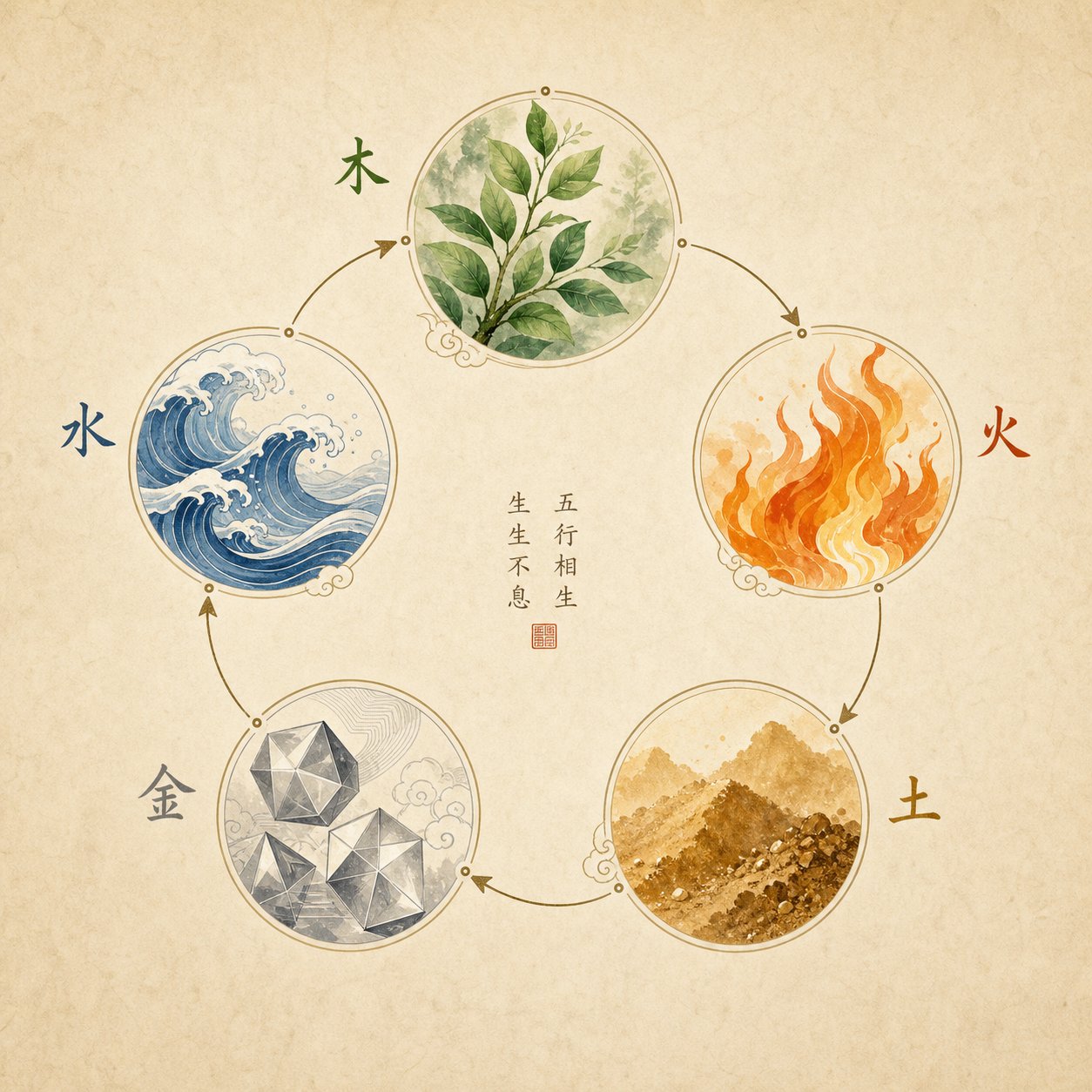
The Five Elements — Wood (木), Fire (火), Earth (土), Metal (金), and Water (水) — form the backbone of traditional Chinese cosmology. Everything in the natural world maps to one of these categories, including time, seasons, directions, body organs, and yes, chinese word symbols used in names. The connection between astrology and names runs deep here: a person's birth date and time (calculated through a system called Bazi, or "Eight Characters") determines their elemental composition.
Imagine your Bazi analysis reveals an abundance of Fire and Wood but a deficiency in Water. Traditional naming practice would compensate by selecting characters containing the water radical (氵) or characters semantically linked to fluidity and depth. The name becomes a corrective tool, restoring balance to what the birth chart lacks.
Each element carries distinct qualities that shape the poetic meaning of a name:
- Wood (木) — Growth, vitality, flexibility. Characters like 林 (lin, forest) or 柏 (bai, cypress) channel this energy.
- Fire (火) — Passion, warmth, brightness. Characters like 煜 (yu, to shine) or 灿 (can, brilliant) belong here.
- Earth (土) — Stability, nourishment, groundedness. Characters like 坤 (kun, the receptive) or 安 (an, peace) carry this weight.
- Metal (金) — Strength, clarity, precision. Characters like 铭 (ming, to inscribe) or 锐 (rui, sharp) represent this element.
- Water (水) — Adaptability, wisdom, flow. Characters like 泽 (ze, grace) or 淼 (miao, vast water) express this quality.
A guide on italki walks through this process step by step: calculate your missing element using a Bazi calculator based on your birth date, then select a first character aligned with that element. Pair it with a second character chosen for personal resonance — perhaps 辰 (chen, stars) or 泽 (ze, grace) — and you have a name that carries both elemental balance and individual meaning. The jade name meaning tradition works similarly: characters containing the jade radical (玉) connect to the Earth or Metal element depending on interpretation, channeling preciousness and moral purity.
Stroke Count and Numerological Considerations
Beyond elemental balance, traditional Chinese naming also considers the total number of brush strokes in a name. If you've ever used a calligraphy generator chinese tool to visualize characters, you'll notice that each one requires a specific number of individual pen movements. These strokes aren't just aesthetic — they carry numerological weight.
Chinese characters are classified as Yin (even stroke count) or Yang (odd stroke count). A well-constructed name balances Yin and Yang across its characters in specific patterns. According to ThoughtCo's analysis of stroke-count naming, the three characters of a full Chinese name (surname plus two-character given name) should follow one of four acceptable Yin-Yang patterns:
- Yang Yang Yin (odd, odd, even)
- Yin Yin Yang (even, even, odd)
- Yang Yin Yin (odd, even, even)
- Yin Yang Yang (even, odd, odd)
The total stroke count of the full name (called 忠格, zhonge) also matters. Auspicious totals include 3, 5, 6, 7, 8, 11, 13, 15, 16, 17, 18, 21, 23, 25, 29, 31, 32, 33, 37, 39, 45, 47, 48, 52, 63, 65, 67, 68, 73, and 81. A name whose strokes total 14 or 22, for instance, would be considered inauspicious under this system. The name is further divided into sections — the family name portion (天格, tiange) and the given name portion (地格, dige) — each evaluated separately for harmonic balance.
Sounds complex? It is. Professional name consultants in China spend years mastering these calculations, cross-referencing elemental needs with stroke-count constraints while simultaneously ensuring the characters carry beautiful meaning and avoid taboo homophones.
How Traditional and Modern Approaches Differ
In practice, adherence to these systems varies enormously. Urban professionals in Shanghai or Shenzhen may dismiss Five Elements theory as superstition, choosing names based purely on aesthetic preference and modern trends. Meanwhile, families in smaller cities or those with strong traditional values still consult Bazi charts and stroke-count tables before finalizing a child's name. Grandparents often insist on elemental balancing even when parents are skeptical.
For foreigners generating a Chinese name, you don't need to follow these systems strictly. But awareness of them serves two purposes. First, it helps you understand why a Chinese colleague or teacher might suggest specific characters that seem unrelated to your English name — they may be compensating for an elemental gap they calculated from your birth date. Second, if you ever use a calligraphy generator chinese tool to write your name and share it with traditional families, a name that accidentally violates stroke-count harmony may draw quiet judgment.
The pragmatic approach: treat Five Elements and stroke count as optional layers of refinement rather than hard requirements. A name with good meaning, natural tonal flow, and no taboo violations will serve you well in most contexts. But if you want to go deeper — or if you're choosing a name for a formal, long-term context like marriage into a Chinese family — consulting these traditional systems adds a layer of cultural authenticity that pure phonetic generators cannot provide.
All of this theory, of course, only matters if you actually need a Chinese name. The next question is practical: in what situations does having one genuinely help, and how formal does it need to be?
When and Why You Actually Need a Chinese Name
Not everyone who searches "my name in chinese" actually needs a fully vetted, culturally balanced Chinese name. Sometimes curiosity is enough. But there are specific situations where having a proper name in chinese language becomes genuinely useful — and others where it's practically required. The level of care you put into choosing that name should match the stakes of the context you'll use it in.
Business and Professional Contexts
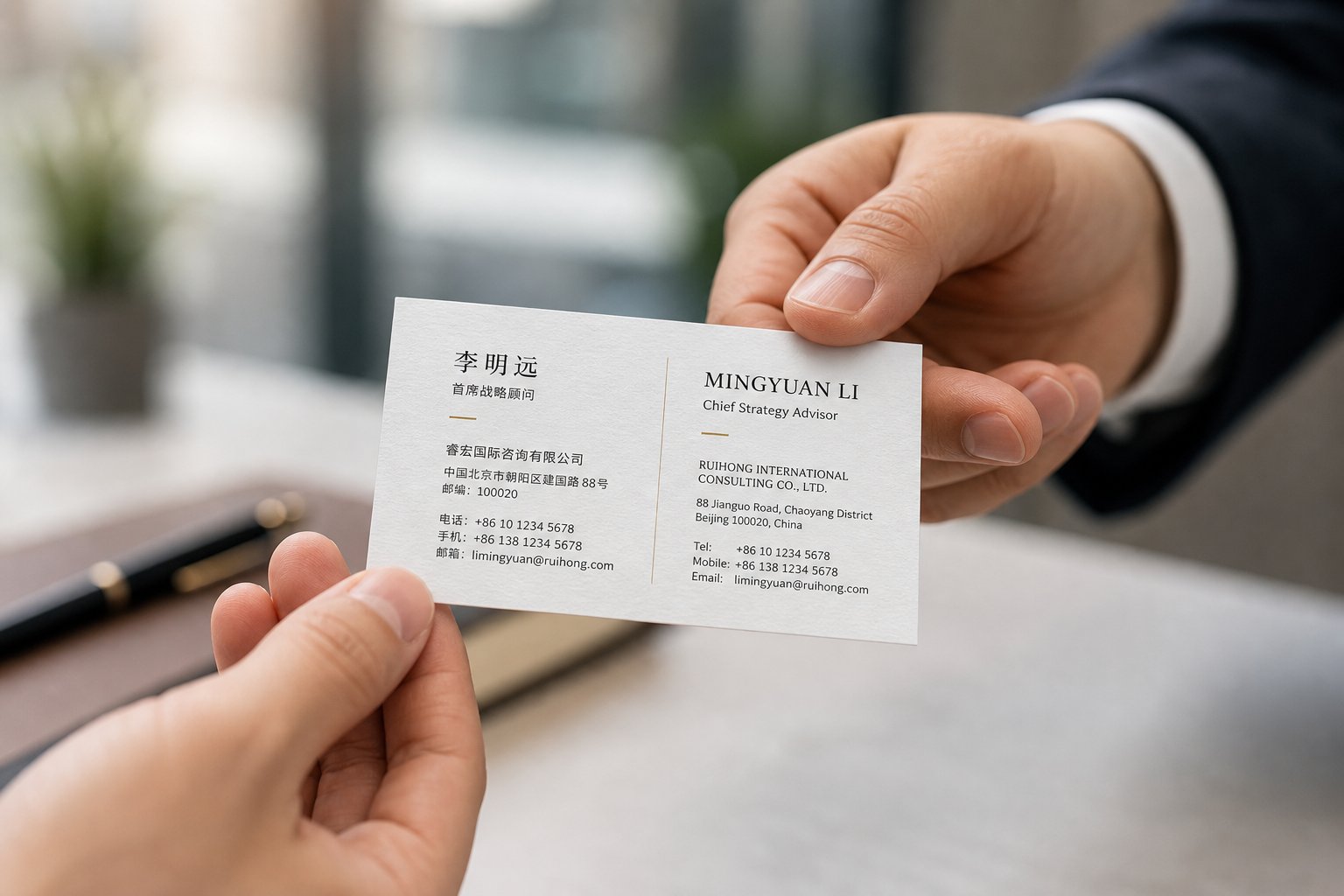
Imagine handing a business card to a potential partner in Shanghai. One side has your English name. The other side has a Chinese name printed in characters. That small detail signals effort, cultural awareness, and respect. In Chinese business culture, where forms of address carry hierarchical weight, having a Chinese name allows colleagues to address you naturally using the surname-plus-title format (like 马经理, Ma jingli, "Manager Ma") rather than awkwardly attempting your English name with Chinese phonetics.
For professionals working with Chinese partners, suppliers, or clients, a Chinese name does three practical things. It makes you easier to remember — Chinese speakers recall characters far more readily than foreign letter combinations. It simplifies communication in emails, WeChat groups, and internal documents where typing English names requires switching input methods. And it demonstrates that you've invested in the relationship beyond the transactional level.
The formality bar here is high. A business name appears on cards, contracts, company directories, and potentially legal documents. It needs to sound professional, carry appropriate gravitas, and avoid any character that could be misread as casual or humorous. This is not the place for a playful classroom nickname.
Language Study and Cultural Immersion
Every Mandarin language school assigns students a Chinese name on day one. Teachers need something to call you during class, and practicing introductions — learning how to say my name is in chinese — is one of the first conversational skills you'll build. These classroom names tend to be simpler and more forgiving. A teacher might pick something phonetically close to your English name without agonizing over stroke count or elemental balance.
If you're living in a Chinese-speaking country, your name extends beyond the classroom into daily life. Ordering coffee, signing for packages, making restaurant reservations, introducing yourself to neighbors — all of these become smoother when you have a name people can actually say and write without hesitation. The reference material from TropicalHainan.com highlights a real consequence: administrative systems in China record foreign names inconsistently, with middle names dropped, hyphens removed, and given names reversed. Having a consistent Chinese name for informal use sidesteps much of this confusion in daily interactions, even if your passport retains your legal English name.
The formality bar for immersion names sits in the middle. You want something that sounds natural and won't embarrass you at a dinner party, but it doesn't need the same weight as a name on a legal contract. Many long-term residents eventually upgrade their initial classroom name to something more considered as their cultural understanding deepens.
Creative Writing and Character Development
Writers crafting fiction set in Chinese-speaking worlds face a different challenge entirely. When you need to translate name chinese characters for a novel, screenplay, or game, the name must feel authentic to readers who know the culture. A poorly chosen character name breaks immersion instantly for Chinese-speaking audiences. The same principles apply: meaning, tonal flow, generational appropriateness, and regional consistency all matter.
For creative contexts, the freedom is greater but the research burden is heavier. You're not constrained by needing phonetic similarity to an English name, so you can choose purely for meaning and aesthetic. But you also need to match the name to the character's age, social class, region, and era. A modern Shanghai businesswoman wouldn't carry the same name style as a rural grandmother from Sichuan or a Qing dynasty scholar.
Ranking Use Cases by Formality
How carefully should you choose your name? That depends entirely on context. Here's a practical ranking from most formal to least:
- Legal or official registration — Marriage documents, company registration in China, property ownership. Requires maximum care, ideally with professional consultation. Errors here propagate across administrative systems and are difficult to correct.
- Business cards and professional networking — High visibility, repeated use, and association with your professional reputation. Worth investing time and getting native speaker feedback.
- Long-term residence and daily life — Used constantly with neighbors, service providers, and social contacts. Should sound natural and be easy to write, but doesn't carry legal weight.
- Language school and classroom use — Functional and temporary. A reasonable phonetic approximation with decent characters works fine. You can always upgrade later.
- Creative writing and fiction — Needs cultural authenticity for the audience but carries no personal social consequences for you.
- Casual curiosity or social media — Low stakes. A generator output is fine for a profile name or conversation starter, though even here, avoiding embarrassing characters is worth the extra minute of checking.
The key distinction is between a name for daily use and one registered officially. Your classroom name can evolve. Your business card name should be stable. And any name attached to legal documents in China needs to be treated with the same seriousness a Chinese family would give to naming a child — because once it enters an administrative system, changing it creates cascading paperwork across banks, tax records, work permits, and residence permits.
Whatever your context, the goal remains the same: a name that sounds like it belongs to a real person, not an output from an english to chinese name tool that nobody bothered to verify. The difference between a name that opens doors and one that raises eyebrows often comes down to a handful of avoidable mistakes — mistakes that even experienced Mandarin learners make when they skip the verification step.
Common Mistakes and How to Sound Natural with Your Chinese Name
The gap between a name that impresses native speakers and one that makes them wince is often just one or two bad character choices. Whether you used a chinese name generator male tool, a chinese name generator female option, or picked characters yourself from a dictionary, certain patterns instantly mark a name as foreign-generated. Knowing these red flags before you commit saves you from months of awkward introductions.
Mistakes That Make Your Name Sound Artificial
The most common error is grandiosity. Foreigners gravitate toward characters that mean "dragon," "emperor," "celestial," or "eternal" because they sound impressive in English translation. To a native speaker, a name like 龙天帝 (Long Tiandi, "Dragon Sky Emperor") reads the way "Sir Maximilian Thunderbolt III" would read on an American resume. It's not wrong grammatically — it's just absurd. Common chinese names in actual use tend toward understated elegance: 伟明 (Weiming, "great and bright"), 小红 (Xiaohong, "little red"), 志强 (Zhiqiang, "strong-willed"). Restraint signals authenticity.
The second trap is archaism. Pulling characters from classical poetry or ancient texts might seem sophisticated, but if the character hasn't appeared in a name since the Tang dynasty, native speakers will stumble over it. Imagine meeting someone named "Bartholomew Thaddeus" at a coffee shop — technically valid, culturally jarring. Characters like 曦 (xi, dawn light) or 翊 (yi, to assist) sit in a gray zone: beautiful but uncommon enough that some people won't recognize them immediately. Characters like 鑫 (xin, prosperous) or 淼 (miao, vast water) are flashy triple-stack constructions that feel more like a business name than a person's name.
Gender mismatch is another frequent problem. Chinese names carry strong gender signals through character choice. Characters like 婷 (ting, graceful), 芳 (fang, fragrant), and 琳 (lin, fine jade) are overwhelmingly female chinese names. Characters like 刚 (gang, firm), 军 (jun, military), and 磊 (lei, stacked rocks) skew heavily male. A man who unknowingly picks characters from the chinese girl names pool will get puzzled looks every time he introduces himself. The reverse is equally awkward — a woman using chinese boy names characters sounds like a deliberate statement, which may not be the intent.
Finally, tonal flow. Mandarin has four tones, and a name where all characters share the same tone sounds flat and monotonous. Three consecutive fourth-tone characters feel aggressive. Three first-tone characters sound robotic. Natural chinese male names and chinese female names almost always mix tones, creating a melodic rise and fall that feels pleasant to say aloud.
What Native Speakers Notice Immediately
When a Chinese person hears your name, they run an unconscious checklist in about two seconds. Here's what triggers the "that's not a real name" reaction:
- Characters that don't belong together — Two characters with no semantic relationship (like "mountain" + "electricity") feel random rather than intentional.
- Overly literal translations — Names that transparently translate an English meaning (like 白雪 for "Snow White") read as nicknames, not given names.
- Wrong register — Using formal literary characters in a casual name, or slang-adjacent characters in a professional name.
- Surname mismatch — A rare or unusual surname paired with an extremely common given name (or vice versa) creates an uncanny valley effect.
- Impossible character pairings — Some characters simply never appear together in real names. Native speakers have seen thousands of names in their lifetime and can spot combinations that no Chinese parent would choose.
- Stroke-count extremes — A name where every character requires 20+ strokes looks intimidating and impractical. Most popular names balance complex and simple characters.
The underlying principle is simple: a good Chinese name sounds like something a thoughtful parent would choose for a child. It carries meaning without shouting it. It flows when spoken aloud. It looks balanced when written. If your name passes the "would a Chinese parent actually name their kid this?" test, you're in good shape.
After You Get Your Name — Next Steps
Having a name is only half the work. Using it confidently requires a few practical skills that most guides skip over.
Introducing yourself. The standard formula is "我叫 [full name]" (wo jiao..., "I'm called...") or the more formal "我姓 [surname], 叫 [full name]" (wo xing..., jiao..., "My surname is..., I'm called..."). Practice saying your name with correct tones until it feels automatic. If you hesitate or mispronounce your own name, the effect is worse than not having one at all.
Writing it correctly. Learn to write your name's characters by hand, even if your handwriting is rough. In business settings, you may need to fill out forms, sign guest books, or write your name on a whiteboard. Stroke order matters less than legibility, but getting the basic structure right shows respect for the writing system. Keep a note on your phone with the characters for quick copy-paste in digital contexts.
Explaining the meaning. Native speakers will ask "你的名字是什么意思?" (What does your name mean?) almost every time they hear a foreigner's Chinese name. Have a one-sentence answer ready. Something like "明 is brightness and 远 is distance — my teacher chose it to mean 'far-reaching clarity'" works perfectly. This explanation becomes a natural conversation starter and demonstrates that you chose your name with intention rather than clicking "generate" and accepting whatever appeared.
Accepting feedback gracefully. If a native speaker gently suggests your name sounds unusual, listen. They're doing you a favor. Ask what specifically feels off — the character choice, the tonal combination, or the overall impression. Many foreigners go through two or three iterations before landing on a name that feels right to both them and the Chinese speakers around them.
The entire process — from generator output to confident daily use — works best when you treat your Chinese name as a living choice rather than a one-time transaction. Start with a tool to generate candidates, verify with a native speaker, practice until it feels natural, and be willing to refine. A name that fits you well becomes more than a cultural accessory. It becomes the version of yourself that exists in Chinese, carrying meaning you chose deliberately and can explain with pride.
Frequently Asked Questions About Chinese Name Generators
1. How does a Chinese name generator from English actually work?
A Chinese name generator breaks your English name into syllable chunks that map onto Mandarin's approximately 400 available syllables. It then filters candidate characters for each syllable based on meaning, tone, and cultural appropriateness, and assembles a full name following the surname-plus-given-name structure. Quality generators balance phonetic similarity with character meaning, ensuring the result sounds like a real person's name rather than a random transliteration.
2. Can I just translate my English name directly into Chinese characters?
No, direct translation does not work because Chinese and English operate on fundamentally different phonetic systems. Mandarin lacks many English sounds like 'th,' 'v,' and consonant clusters like 'str.' A name like 'Christopher' contains sounds that simply do not exist in Mandarin, forcing awkward multi-syllable approximations. More importantly, Chinese names are judged by character meaning rather than sound, so a purely phonetic conversion produces something that looks meaningless or absurd to native speakers.
3. What is the difference between a Chinese name for business use versus casual use?
A business Chinese name appears on cards, contracts, and professional directories, so it requires maximum care with character selection, tonal balance, and cultural appropriateness. It should sound professional and carry appropriate gravitas. A casual or classroom name serves functional purposes like daily introductions and can be simpler, more phonetically driven, and easier to change later. The key distinction is permanence and visibility — formal names need native speaker verification and should avoid any characters that could be misread as humorous or overly casual.
4. What are the most common mistakes foreigners make when choosing a Chinese name?
The top mistakes include choosing overly grandiose characters like 'dragon emperor' that sound pretentious, picking archaic characters unfamiliar to modern speakers, ignoring gender signals in character choice, using characters with the same tone creating monotonous pronunciation, and selecting characters that form no coherent meaning together. Native speakers instantly notice these patterns because they have encountered thousands of real names throughout their lives and can spot combinations no Chinese parent would actually choose.
5. Do I need to follow Five Elements theory when choosing my Chinese name?
Strict adherence to Five Elements theory is optional for foreigners, but awareness of the system helps you understand why native speakers might suggest specific characters based on your birth date. Traditional families use Bazi calculations to identify elemental deficiencies and compensate through name characters. For most professional or social contexts, a name with good meaning, natural tonal flow, and no cultural taboo violations will serve you well without elemental balancing. However, if you are marrying into a traditional Chinese family or need a name for formal long-term use, consulting these systems adds cultural authenticity.