What Makes Chinese Nicknames So Culturally Rich
When someone calls you by a nickname in Mandarin, they are telling the world exactly how close you two are. Unique Chinese nicknames do far more than shorten a name or sound cute. They encode relationship status, social hierarchy, and emotional intimacy into a single word or phrase. A boss, a lover, a grandmother, and a childhood friend would each use a completely different nickname for the same person, and every listener within earshot would instantly understand the dynamic.
Why Chinese Nicknames Carry Hidden Meaning
So what separates a common nickname from a genuinely unique one? Common nicknames in Chinese follow predictable formulas. Adding the prefix 小 (xiǎo) before a surname, for instance, is so standard it barely registers as creative. A unique nickname, by contrast, layers in wordplay, tonal humor, cultural references, or personalized meaning that only the speaker and listener fully appreciate. Think of it less as picking from a list and more as generating from a system.
That system is what this guide teaches. Rather than handing you a static collection of names to memorize, you will learn the generative patterns behind nicknames in Chinese: prefix structures, reduplication rules, homophone tricks, and digital-age inventions. These patterns apply whether you are crafting romantic pet names, funny inside jokes, gaming usernames, or even chinese nicknames for children that carry auspicious meaning.
The Social Currency of Naming in Chinese Culture
In Chinese culture, the nickname someone uses for you is not decoration. It is a social contract, publicly declaring the level of intimacy they claim with you.
As the Cultural Atlas notes, people may address close friends and relatives by terms that indicate closeness and endearment, while strangers rely on full names and formal titles. The gap between those two modes is where nickname mandarin creativity lives. Choosing or accepting a nickname signals a shift in the relationship itself.
The categories ahead cover romantic and flirty terms, humor-driven wordplay, internet and gaming handles, regional variations across Mainland China, Taiwan, and Hong Kong, pet names for cats and dogs, and a step-by-step framework for building your own. Each section unpacks the linguistic logic so you can adapt, remix, and create rather than copy.
The Pattern System Behind Every Chinese Nickname
Every unique Chinese nickname you encounter is built from a small set of repeatable patterns. Learn these patterns and you stop memorizing individual names. Instead, you start generating them on the fly. This is the difference between copying a phrase from a textbook and actually understanding how cute mandarin expressions get constructed from the ground up.
Prefix Patterns That Signal Closeness
Three prefixes do most of the heavy lifting in Chinese nickname culture. Each one carries a distinct emotional flavor, and native speakers instinctively read the relationship dynamic from which prefix is chosen.
| Prefix | Pinyin | Core Meaning | Usage Context | Example Nicknames |
|---|---|---|---|---|
| 小 | xiǎo | Small, young | Colleagues, friends of similar age, affectionate address from elders | 小李 (Xiǎo Lǐ), 小明 (Xiǎo Míng), 小贺 (Xiǎo Hè) |
| 阿 | ā | Familiar, intimate | Southern dialects, Cantonese speakers, close family, long-time friends | 阿丽 (Ā Lì), 阿王 (Ā Wáng), 阿武 (Ā Wǔ) |
| 老 | lǎo | Old, respected | Close peers of similar or older age, signals warmth and mutual respect | 老张 (Lǎo Zhāng), 老公 (lǎo gōng), 老婆 (lǎo pó) |
The prefix 小 (xiǎo) works like a verbal pat on the shoulder. It is the most common across northern China and professional settings, often used by a senior toward a younger colleague or between peers. The prefix 阿 (ā) dominates in Cantonese-speaking regions and Taiwan, carrying a sense of familiarity bred through time rather than hierarchy. And 老 (lǎo) might seem counterintuitive since it literally means "old," but between friends it communicates respected closeness and camaraderie. You will hear 老张 (Lǎo Zhāng) shouted across a dinner table between buddies who have known each other for decades.
These same prefixes appear in kinship terms that often confuse learners. If you have wondered what does gege mean, it translates to "older brother" (哥哥, gēge), and the gege meaning in Chinese extends beyond blood relations into any affectionate address toward an older male peer. Similarly, the nainai meaning refers to paternal grandmother (奶奶, nǎinai), a reduplicated kinship term that follows the same sound-doubling logic nicknames use.
Reduplication and Why Doubling Sounds Cute
Reduplication is the pattern that makes Chinese nicknames sound inherently endearing. Take a single character from someone's name, repeat it, and you instantly create warmth. 明 becomes 明明 (Míngming). 芳 becomes 芳芳 (Fāngfang). 乐 becomes 乐乐 (Lèle).
Why does this work? Chinese is a syllable-timed language where each character gets roughly equal weight. Doubling a syllable creates a rhythmic, musical bounce that the ear registers as playful and gentle. It is the same reason cute chinese words often feature repetition: 宝宝 (bǎobao, baby), 抱抱 (bàobào, hug-hug), 亲亲 (qīnqīn, kiss-kiss). The pattern taps into something almost universal about how humans associate repetition with comfort and childhood.
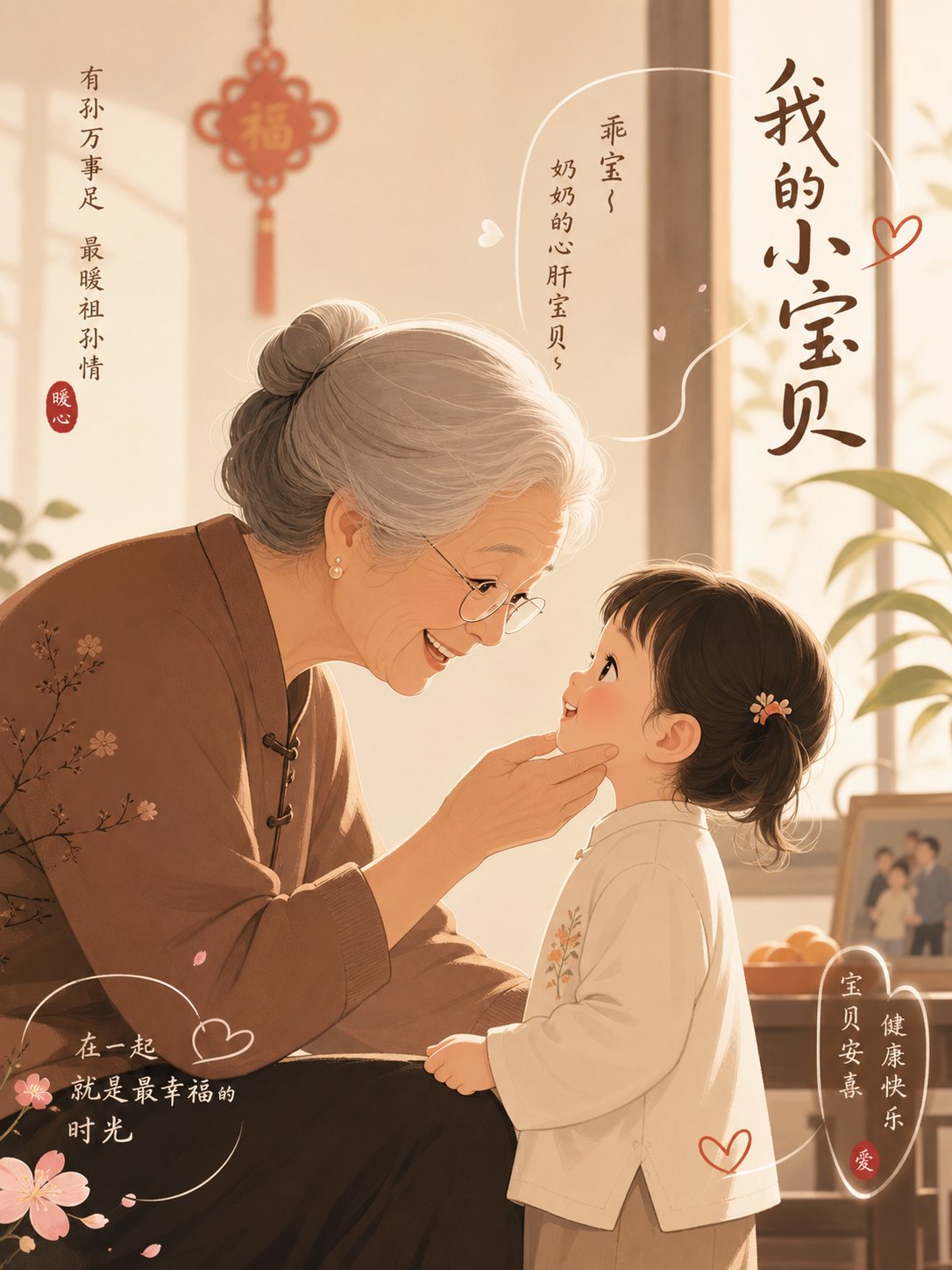
Historically, this convention traces back to how parents created 小名 (xiǎo míng) for their children. Yoyo Chinese notes that families would take the last character of a child's given name and double it as a term of endearment. The practice became so embedded that reduplication now signals intimacy at any age. Your professor might be Zhāng Yìrán in the lecture hall and Ránrán at the family dinner table.
A common question from learners: do chinese people have middle names? Not in the Western sense. Chinese names typically consist of a one-character surname followed by a one- or two-character given name. There is no separate "middle" slot. But this compact structure is exactly what makes reduplication and prefix patterns so efficient. With only one or two characters to work with, doubling or prefixing transforms the entire feel of a name without adding complexity.
How Tone and Sound Shape Nickname Feeling
Tone matters more than most learners realize. A nickname built from first-tone (high, flat) characters like 飞飞 (Fēifēi) sounds bright and energetic. One using third-tone characters like 小宝 (Xiǎo Bǎo) dips and rises, creating a softer, more tender feel. Fourth-tone combinations like 乐乐 (Lèle) land with a decisive punch that still sounds affectionate because of the reduplication.
Native speakers intuitively select nickname patterns that produce pleasant tonal flow. A combination that forces two consecutive third tones triggers a tone sandhi rule where the first third tone shifts to a second tone, subtly changing the acoustic texture. This is why some doubled names feel smoother than others and why certain prefix-plus-name combinations catch on while others sound awkward.
The takeaway: these patterns are not random. They are a generative toolkit. Once you internalize how prefixes, reduplication, and tonal flow interact, you can craft nicknames that feel natural to native ears rather than borrowed from a list. The next layer of complexity comes when these patterns get applied to romance, where intimacy levels determine which structure is appropriate and which would feel presumptuous.

Romantic Chinese Nicknames for Lovers and Partners
Intimacy levels in Chinese relationships are not just felt. They are spoken aloud through the specific terms of endearment in Chinese that partners choose for each other. Use the wrong one too early and you come across as presumptuous. Use one that is too formal after months of dating and you signal emotional distance. The nickname itself becomes a relationship milestone.
Sweet Names for Your Girlfriend in Chinese
When referring to a girlfriend in Chinese, the options range from universally safe to deeply personal. Here they are grouped by how much closeness they assume:
- Formal or early-stage: 亲爱的 (qīn ai de) meaning "dear" or "darling." Character breakdown: 亲 (intimate) + 爱 (love) + 的 (possessive particle). This is the safest chinese for my love equivalent and works in texts, calls, or face-to-face.
- Established relationship: 宝贝 (bǎo bei) meaning "treasure" or "baby." 宝 (precious) + 贝 (shell, an ancient symbol of value). Also 宝宝 (bǎo bao), which carries a slightly more playful, babying tone.
- Committed or long-term: 老婆 (lǎo po) literally "old wife." Despite the translation, unmarried couples use this freely to signal deep commitment. 媳妇儿 (xi fu er) is a northern variant with a similar weight.
- Creative and unique: 小公主 (xiǎo gōng zhǔ) meaning "little princess," 心肝 (xīn gān) meaning "heart and liver" to say someone is your most vital person, and 甜甜 (tian tian) meaning "sweetie" using the reduplication pattern.
The character-level logic matters here. 心肝 (xīn gān) works because in Chinese medicine, the heart and liver are considered the organs most essential to life. Calling someone your heart and liver is not grotesque. It is saying they are indispensable. This kind of layered meaning is what separates generic chinese endearments from ones that genuinely resonate.
Affectionate Terms for Boyfriends and Partners
Chinese terms of affection for a boyfriend in Chinese follow a parallel structure but carry different cultural weight. Men are less commonly called "cute" names in older generations, though that norm is shifting fast.
- Standard romantic: 老公 (lǎo gōng) meaning "husband." Like 老婆, dating couples adopt this term well before marriage to express seriousness.
- Playful: 小哥哥 (xiǎo gē ge) meaning "little older brother," a flirty term popularized on social media. 熊熊 (xiong xiong) meaning "bear," used for someone cuddly or physically strong.
- Humorous: 老头子 (lǎo tou zi) meaning "old man," used affectionately the way English speakers might say "my old man" with a grin.
- Poetic: 心上人 (xīn shang ren) meaning "the person on my heart" or "my beloved." This one appears in literature and song lyrics but some couples adopt it for its romantic weight. 爱人 (ai ren) translates directly as "lover" in Chinese language and is favored by married couples for its sincerity.
A notable generational shift is happening. A growing trend among younger married couples replaces traditional chinese terms of endearment entirely. Terms like 队友 (dui yǒu, "teammate") and 室友 (shi yǒu, "roommate") have emerged as alternatives that frame marriage as a partnership rather than a romance. These originated among overseas Chinese couples who felt traditional terms like 老公/老婆 sounded too schmaltzy, and the trend has since spread across mainland social media.
Code Names and Secret Crush Nicknames
Gen Z speakers in China have developed an entire system for referencing crushes without naming them directly. Imagine you want to talk about someone you like without your friend group immediately knowing who it is.
Common strategies include using the pinyin initials of the person's name (referred to as 缩写, suō xiě), assigning a food or animal code name based on a shared inside joke, or using number homophones. The number 520 (wǔ er ling) sounds like 我爱你 (wǒ ai nǐ, "I love you"), so referencing someone as "my 520" in a group chat is a veiled confession only the recipient might catch.
Another popular move: picking a character from the crush's name and building a nickname around it using reduplication or the 小 prefix, then using that nickname exclusively in private messages. The nickname becomes a secret shared language, a tiny act of intimacy before the relationship even begins. This creative, low-risk flirting style reflects how younger speakers treat nicknames as evolving, living things rather than fixed labels, a mindset that extends well beyond romance into humor and wordplay.
Funny Chinese Nicknames and the Wordplay Behind Them
Romance is not the only arena where Chinese nickname creativity thrives. Humor runs just as deep, and the mechanics behind funny chinese nicknames rely on something baked into the language itself: an enormous number of homophones. Mandarin has roughly 1,600 possible syllables (including tones), yet tens of thousands of characters. The result is a language where nearly every word sounds like several other words, and native speakers exploit this overlap constantly to create jokes that are almost impossible to translate.
Homophone Humor and Tonal Tricks
Why do certain funny names in chinese land so hard with native speakers yet fall flat in English? The answer is tonal collision. Change a single tone and a word's meaning flips entirely. The classic example: 妈 (mā, tone 1) means "mother," while 马 (mǎ, tone 3) means "horse." Call someone 小马 (xiǎo mǎ, "little horse") and it sounds adorable. Mispronounce it as 小妈 (xiǎo mā) and you have just called them "little mother," which carries an entirely different connotation.
This tonal sensitivity is what makes expressing something funny in chinese language so context-dependent. A nickname that plays on tone shifts creates a double meaning only audible to speakers who catch the tonal difference. It is humor that lives in the ear, not on the page. The famous internet meme 草泥马 (cǎo ni mǎ, "grass mud horse") sounds nearly identical to a vulgar insult, which is precisely why Chinese netizens invented it as a censorship workaround. As a nickname among close friends, it signals irreverent humor and shared internet culture.
Food and Animal Based Funny Names
Food and animal references dominate the funny chinese names landscape because they combine visual absurdity with affection. Calling someone a potato or a dumpling is not cruel. It is endearing in the same way English speakers might call a friend "nugget" or "bean." Here are some of the most creative funny nicknames ranked by how well the wordplay works:
- 大土豆 (dà tǔ dòu, tone 4-3-4) meaning "Big Potato." Used for someone lovably clumsy or down-to-earth. The humor comes from the visual mismatch between a person and a lumpy root vegetable.
- 小笨蛋 (xiǎo bèn dàn, tone 3-4-4) meaning "Little Fool." Equivalent to calling someone a "goofball" in English. The 蛋 (egg) character adds absurdity since it literally makes them a "stupid egg."
- 大傻瓜 (dà shǎ guā, tone 4-3-1) meaning "Big Silly Melon." The 瓜 (melon) suffix is what makes this funny rather than mean. It is like calling someone a "silly goose" with the same warmth.
- 小胖子 (xiǎo pàng zi, tone 3-4-0) meaning "Little Fatty." In Chinese culture, chubbiness in children is considered cute, so this nickname carries affection rather than cruelty.
- 臭宝 (chòu bǎo, tone 4-3) meaning "Stinky Treasure." A trending nickname that pairs something gross with something precious, creating a funny asian nicknames style that signals extreme closeness.
- 猪猪 (zhū zhū, tone 1-1) meaning "Piggy." Pigs symbolize prosperity in Chinese culture, and the reduplication makes it sound playful rather than insulting.
Notice how many of these follow the same prefix and reduplication patterns from earlier sections. The humor is not random. It layers a funny or unexpected word into a familiar affectionate structure, which is what signals "I am joking with you" rather than "I am mocking you."
Nickname Mistakes That Make Native Speakers Laugh
Foreigners stumble into unintentionally hilarious territory more often than they realize. The most common mistake is choosing characters based purely on sound without checking alternate meanings. As Chinese Name Translator documents, the transliteration "Xialuote" for Charlotte sounds dangerously close to 杀了他 (shā le tā, "kill him"). Similarly, picking 日 (rì, "sun") for a name component seems poetic until you learn it doubles as a vulgar expletive in colloquial speech.
Another frequent blunder: using pet-level names in professional contexts. Names like 旺财 (wàng cái, "prosperous wealth") or 铁柱 (tiě zhù, "iron pillar") are traditionally reserved for dogs or rural childhood nicknames. Introducing yourself with one of these at a business dinner would be like an English speaker saying "Hi, I'm Fluffy" to a boardroom. The chinese names funny moments that go viral on social media often involve exactly this kind of register mismatch, where someone uses a name that belongs to a completely different social layer.
The safest approach before committing to any humorous nickname: say it aloud to a native speaker and watch their face. If they suppress a laugh or wince, you have your answer. Humor in Chinese nicknames works brilliantly when both parties share the joke. It backfires when the joke is on you without your knowledge, a dynamic that shifts dramatically once nicknames move from spoken conversation into the digital space.

Internet and Gaming Chinese Nicknames for the Digital Age
Spoken nicknames rely on tone and context. Digital nicknames operate under entirely different constraints: character limits, platform aesthetics, searchability, and the need to stand out in a sea of usernames. Chinese internet culture has spawned nickname conventions that barely resemble their offline counterparts, blending abbreviated pinyin, number codes, ASCII art, and cross-language mashups into something distinctly new.
WeChat and Weibo Nickname Trends
On WeChat, your display name functions as a personal brand visible to every contact. Younger users treat it as a rotating mood board, changing their chinese username weekly to reflect current emotions, inside jokes, or aesthetic preferences. Common patterns include:
- Pinyin initial abbreviations: Using the first letters of a phrase as a cryptic display name. Someone named 张小雨 might go by "zxy" or layer in slang like "yyds" (yǒng yuǎn de shén, meaning GOAT) as a self-deprecating joke.
- Aesthetic symbol names: Combining Chinese characters with decorative punctuation, like "温柔·鬼" (wēn róu guǐ, "gentle ghost") or "废物少女" (fèi wù shào nǚ, "useless girl"), a self-mocking trend among Gen Z women.
- English-Chinese hybrids: Mixing scripts for visual contrast, such as "vitamin你" (vitamin you) or "404女孩" (404 girl, meaning someone who zones out).
Weibo leans more performative. Display names there often reference fandoms, trending memes, or satirical commentary. A user might name themselves "躺平专业户" (tǎng píng zhuān yè hù, "professional flat-lier") to signal their stance on hustle culture, turning a nickname into a micro-manifesto.
Gaming Usernames and Roblox Display Names
Gaming platforms demand something different: names that look cool, fit tight character limits, and translate across languages. If you are searching for roblox chinese display name ideas or chinese gamertags that work internationally, the most effective approach combines a Chinese character or two with a universal element.
Popular structures for chinese names for games include:
- Character + number: 夜七 (yè qī, "Night Seven"), 零度 (líng dù, "Zero Degrees")
- Mythological references: 白泽 (Bái Zé, a legendary beast), 麒麟 (Qí Lín, the Chinese unicorn), 凤凰 (Fèng Huáng, phoenix)
- Mood words: 孤影 (gū yǐng, "Lone Shadow"), 无名 (wú míng, "Nameless"), 浮生 (fú shēng, "Fleeting Life")
- Food-based humor: 辣条战士 (là tiáo zhàn shì, "Spicy Strip Warrior"), 饺子杀手 (jiǎo zi shā shǒu, "Dumpling Killer")
Chinese usernames on international platforms often lean toward two-character combinations that look visually balanced and carry poetic weight. The trick is choosing characters that non-Chinese-reading players still find visually striking while carrying real meaning for those who can read them.
Number Codes and Digital Wordplay
Number homophones form their own nickname language online. These codes exploit how Chinese digits sound similar to common words and phrases, creating a shorthand that doubles as identity markers in display names.
| Platform | Nickname Style | Example | Meaning |
|---|---|---|---|
| Pinyin initials + mood words | zxy·温柔 | Initials of name + "gentle" | |
| Satirical phrases, fandom tags | 躺平专业户 | "Professional flat-lier" | |
| Douyin | Number codes + emoji aesthetic | 520小仙女 | "Love fairy girl" |
| Gaming (Roblox, etc.) | Mythic/poetic two-character combos | 夜凤 or 孤影 | "Night Phoenix" or "Lone Shadow" |
The number 520 (wǔ èr líng, sounds like wǒ ài nǐ, "I love you") shows up in couple display names. Partners might use 520 and 1314 (yī sān yī sì, sounds like yī shēng yī shì, "one lifetime") as matching names. The code 666 (liù liù liù) meaning "awesome" appears in gaming tags to signal skill, while 233 (from a laughing forum emoticon) marks someone as humorous.
What makes digital nicknames fundamentally different from offline ones is their impermanence. A spoken nickname sticks for years or decades. An online display name shifts with mood, season, or trending meme. Younger Chinese speakers treat their digital identity as fluid and performative, cycling through names the way someone might change an outfit. This fluidity means the same person might carry a poetic two-character gaming handle, a self-deprecating Weibo name, and a number-coded WeChat name simultaneously, each tailored to a different audience and platform culture.
That platform-specific adaptability also varies by geography. The same digital conventions play out differently depending on whether someone is posting from Shenzhen, Taipei, or Toronto, where regional dialect and diaspora identity add yet another layer to how nicknames get constructed.
Regional Differences Across China, Taiwan, and Hong Kong
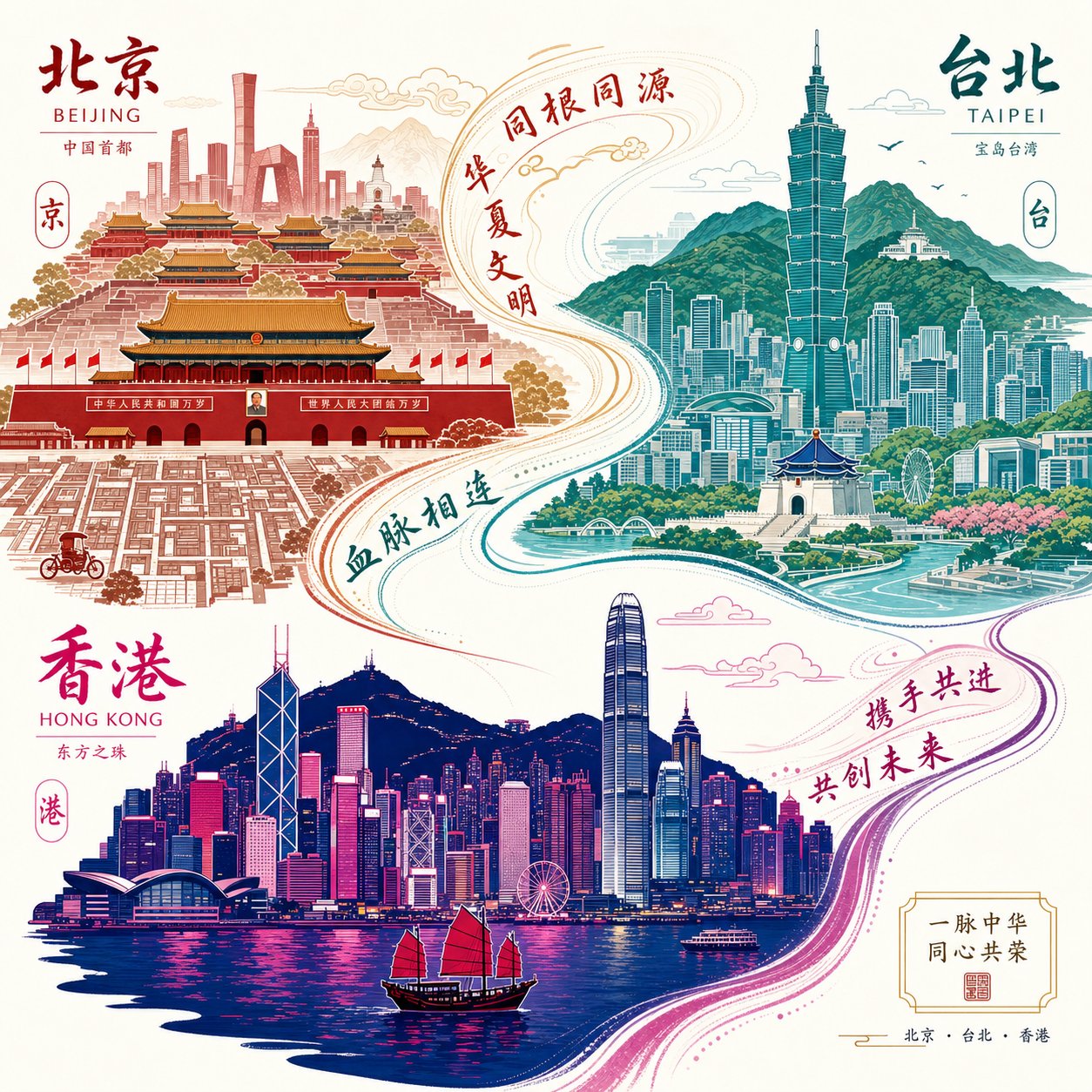
Geography reshapes everything about how a china nickname lands. A term that sounds flirty in Beijing might register as old-fashioned in Taipei or completely foreign in Hong Kong. The same prefix system, the same reduplication logic, and even the same characters carry different emotional weight depending on which side of the Taiwan Strait or Pearl River Delta you are standing on. Understanding these regional splits is what separates someone who memorized a list from someone who actually knows how asian nicknames function in practice.
Taiwan Versus Mainland Nickname Styles
The most visible difference is how the prefix 阿 (ā) operates. In Mainland China, 阿 leans southern and informal. It signals Cantonese or Hokkien influence and sounds out of place in a Beijing office. In Taiwan, 阿 is everywhere. It is the default affectionate prefix for friends, family, and even acquaintances you feel warmth toward. A taiwan nickname like 阿明 (Ā Míng) or 阿美 (Ā Měi) carries zero regional stigma there. It is simply how people talk.
Taiwanese speakers also favor softer, more playful nickname endings. Where a Mainland speaker might use 小王 (Xiǎo Wáng) for a colleague, a Taiwanese speaker often reaches for reduplication or Hokkien-influenced terms instead. LTL Language School notes that Taiwanese Mandarin borrows heavily from Hokkien in casual speech, and nicknames are no exception. You will hear Hokkien-origin terms like 阿公 (a-kong, grandpa) and 阿嬤 (a-ma, grandma) used as affectionate references even among Mandarin-dominant speakers.
Another subtle difference: Taiwanese couples tend to adopt 老公/老婆 (lǎo gōng/lǎo po) earlier in relationships than Mainland couples, where the terms still carry a slightly more committed weight. The emotional thermostat is simply calibrated differently.
Cantonese Nicknames and Hong Kong Slang
Hong Kong nickname culture operates in Cantonese, which means entirely different phonetics, tones (six versus Mandarin's four), and slang conventions. Cantonese nicknames rely heavily on the 阿 (aa3 in Jyutping) prefix, but they also layer in English loanwords and local slang that Mandarin speakers would not recognize.
A hong kong nickname might sound like this: 阿肥 (aa3 fei4, "Fatty") used affectionately for a close friend, or 阿叔 (aa3 suk1, "Uncle") for a slightly older male acquaintance. The Honeycombers Hong Kong slang guide documents how Cantonese speakers use suffixes like 佬 (lou2, "man"), 仔 (zai2, "boy"), 婆 (po4, "woman"), and 妹 (mui2, "girl") to build descriptive nicknames on the fly. The famous 鬼佬 (gwai2 lou2) for Caucasian men is one example of this suffix system in action.
Cantonese nicknames also lean into food metaphors more aggressively than Mandarin ones. Calling someone 叉燒 (caa1 siu1, "BBQ pork") or referencing 魷魚 (jau4 jyu2, "squid") taps into a rich tradition of food-based humor unique to the region.
| Nickname Concept | Mainland (Mandarin/Pinyin) | Taiwan (Mandarin/Pinyin) | Hong Kong (Cantonese/Jyutping) |
|---|---|---|---|
| Affectionate prefix + name | 小明 (Xiǎo Míng) | 阿明 (Ā Míng) | 阿明 (aa3 ming4) |
| "Fatty" as endearment | 小胖 (Xiǎo Pàng) | 胖胖 (Pàng Pàng) | 肥仔 (fei4 zai2) |
| Older brother figure | 哥 (Gē) or 大哥 (Dà Gē) | 阿哥 (Ā Gē) | 大佬 (daai6 lou2) |
| Close female friend | 小姐姐 (Xiǎo Jiě Jie) | 阿姐 (Ā Jiě) | 靚女 (leng3 neoi5) |
| Playful insult nickname | 笨蛋 (Bèn Dàn) | 白痴 (Bái Chī) | 戇鳩 (ngong6 gau1) |
Notice how the same concept of calling a close friend "fatty" shifts from the diminutive 小胖 in the north, to reduplicated 胖胖 in Taiwan, to the suffix-driven 肥仔 in Hong Kong. Same affection, completely different linguistic architecture.
Diaspora Blends of English and Chinese Names
Chinese speakers living in English-dominant countries develop a third layer: hybrid nicknames that code-switch between languages. A common pattern is taking an English name and attaching a Chinese prefix or suffix. Someone named Kevin becomes 阿Kev or 小Kev among bilingual friends. A girl named Michelle might go by 米雪 (Mǐ Xuě), a phonetic approximation that also means "rice snow" and carries its own quirky charm.
Diaspora communities also reverse the process, giving Chinese names English-style shortenings. 伟明 (Wěi Míng) becomes "Wei" in mixed company, then 阿Wei among Chinese-speaking friends, creating a china nickname that lives comfortably in both worlds. This blending is especially common among second-generation speakers in cities like Vancouver, Sydney, and London, where identity itself is a negotiation between two naming systems.
The regional dimension matters because a nickname that works perfectly in one community can misfire in another. Knowing where your audience sits, geographically and culturally, is just as important as knowing the linguistic pattern. That same awareness applies when the "audience" is a pet rather than a person, where naming conventions borrow familiar patterns but follow their own distinct rules.
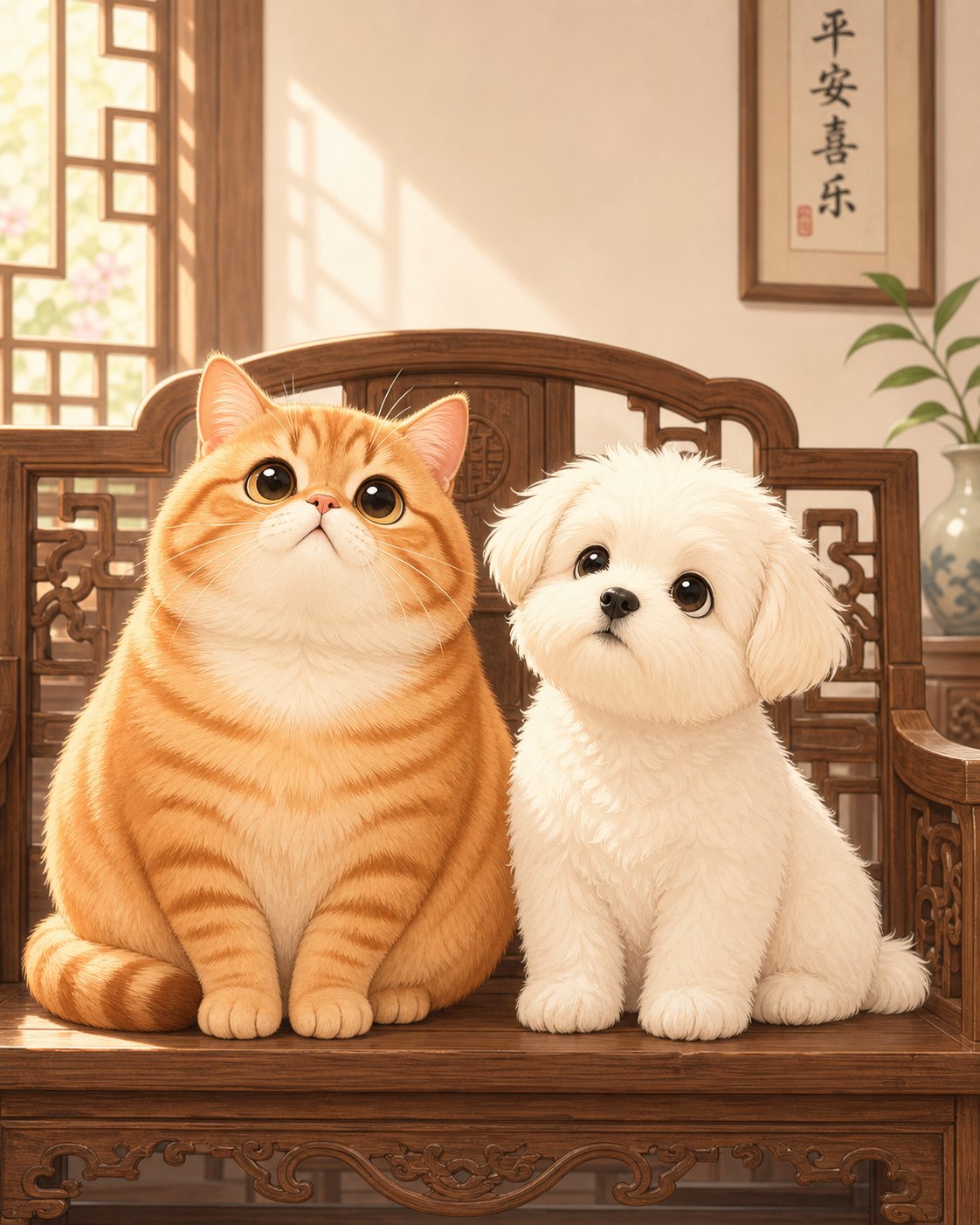
Creative Chinese Nicknames for Cats and Dogs
Pet naming in China borrows the same reduplication, prefix, and food-reference patterns you have seen throughout this guide, but the rules loosen considerably. Nobody worries about social hierarchy when naming a cat. Instead, chinese pet names lean into pure cuteness, humor, and wishful thinking. A name that would sound childish or even embarrassing for a person becomes perfectly charming on a golden retriever or a tabby kitten.
The key difference: pet names prioritize sound and visual association over relational signaling. You are not communicating status to outsiders. You are picking something that feels good to say fifty times a day. That is why food words, bouncy reduplication, and short punchy syllables dominate the landscape of chinese cat names and chinese names for dogs alike.
Chinese Names for Cats and Kittens
Cats in China get names that match their independent, slightly regal energy. When browsing cat names in chinese, you will notice a split between names that reference appearance and names that play on personality. Here are popular options grouped by inspiration:
- Food-inspired: 馒头 (Mán tou, "Steamed Bun") for round, fluffy cats; 小笼包 (Xiǎo Lóng Bāo, "Soup Dumpling") for plump kittens; 布丁 (Bù Dīng, "Pudding") for sweet-tempered cats; 芝麻 (Zhī Ma, "Sesame") for cats with dark spots
- Personality-based: 大王 (Dà Wáng, "King") for a cat that rules the household; 灵猫 (Líng Māo, "Spirit Cat") for mysterious, elusive cats; 皮皮 (Pí Pí, "Mischievous") for troublemakers who knock things off shelves
- Appearance-based: 雪儿 (Xuě Er, "Snowy") for white cats; 黑子 (Hēi Zi, "Blackie") for dark-furred cats; 花花 (Huā Huā, "Colorful") for calicos or tabbies with striking patterns
- Playful and cute: 咪咪 (Mī Mī, "Meow Meow") the classic sound-based name; 豆豆 (Dòu Dòu, "Bean Bean") for tiny kittens; 小虎 (Xiǎo Hǔ, "Little Tiger") for feisty, energetic cats
Notice how many of these cat names chinese owners love follow the reduplication pattern. Doubling a character like 豆豆 or 咪咪 creates that bouncy, affectionate sound that feels natural to call out across a room.
Chinese Dog Names for Male and Female Puppies
Dogs get a broader naming range because their personalities vary so dramatically by breed. A Shih Tzu and a German Shepherd call for completely different energy. When choosing chinese puppy names, consider whether the name matches the dog's size, temperament, and the tone you want to set.
- Food-inspired: 小馒头 (Xiǎo Mán Tou, "Little Bun") for round puppies; 年糕 (Nián Gāo, "Rice Cake") for white, squishy dogs; 辣椒 (Là Jiāo, "Chili Pepper") for feisty small breeds
- Personality-based: 乖乖 (Guāi Guāi, "Well-Behaved") for obedient dogs; 小狼 (Xiǎo Láng, "Little Wolf") for huskies or dogs that howl; 大壮 (Dà Zhuàng, "Big and Strong") for muscular breeds like labs or bulldogs
- Lucky and auspicious: 旺财 (Wàng Cái, "Prosperity") a classic dog name wishing wealth upon the household; 阿福 (Ā Fú, "Lucky") using the familiar 阿 prefix with the character for good fortune; 来福 (Lái Fú, "Fortune Comes") for a dog believed to bring blessings
- Playful: 毛毛 (Máo Máo, "Fluffy") for long-haired breeds; 小熊 (Xiǎo Xióng, "Little Bear") for stocky, cuddly puppies; 蹦蹦 (Bèng Bèng, "Bouncy") for dogs that cannot sit still
The name 旺财 (Wàng Cái) deserves special mention. It is one of the most traditional chinese names for dogs, carrying the cultural belief that a well-named pet can attract prosperity to the family. You will hear it across rural and urban China alike, a name so embedded in dog-naming culture that it has become almost a genre marker, signaling "this is a beloved family dog" the way "Buddy" or "Max" might in English.
Auspicious and Trendy Pet Name Picks
Cultural context shapes which names trend at any given moment. Auspicious naming remains strong because many Chinese pet owners genuinely believe a lucky name contributes to the household's fortune. At the same time, younger owners increasingly pick names that are ironic, internet-influenced, or borrowed from pop culture.
- Auspicious picks: 福宝 (Fú Bǎo, "Fortune Treasure"); 吉祥 (Jí Xiáng, "Auspicious"); 金宝 (Jīn Bǎo, "Golden Treasure"); 瑞瑞 (Ruì Ruì, "Lucky Lucky")
- Trendy and internet-influenced: 奶茶 (Nǎi Chá, "Milk Tea") riding the bubble tea craze; 多肉 (Duō Ròu, "Succulent") for chubby pets, borrowed from plant culture; 秃头 (Tū Tóu, "Baldy") ironic humor for a fluffy pet; 社恐 (Shè Kǒng, "Socially Anxious") for shy cats, a Gen Z internet term turned pet name
One important cultural note: avoid names containing the number four or the character 死 (sǐ, "death") since these carry strongly negative associations. Characters like 福 (fú, "blessing"), 旺 (wàng, "prosperous"), and 宝 (bǎo, "treasure") remain safe bets that satisfy both traditional sensibilities and modern taste.
Whether you are drawn to classic cat names chinese families have used for generations or prefer something trending on Douyin this week, the underlying logic stays consistent: short syllables, pleasant tonal flow, and a meaning that reflects either what your pet is or what you hope they bring into your life. That same intentionality, choosing sounds and meanings with purpose, is exactly what the final section teaches you to do for yourself.
How to Create Your Own Unique Chinese Nickname
Naming a pet is low-stakes. Naming yourself or someone you care about carries real social weight. The patterns you have learned throughout this guide, prefixes, reduplication, homophones, food references, number codes, all function as building blocks. The question is how to assemble them into a chinese nickname that sounds natural, carries the right emotional tone, and avoids cultural landmines.
Step by Step Guide to Building Your Own Nickname
Whether you want cute chinese nicknames for a partner, cool chinese nicknames for a gaming handle, or something playful for a friend group, the creation process follows the same logic:
- Choose your base character. Start with a character that has personal meaning. This could be from your Chinese name, a character you love the sound of, or one that represents a quality you identify with. If you already have a Chinese name, pull the last character. If not, pick a character with a meaning you connect to: 月 (yuè, moon), 风 (fēng, wind), 星 (xīng, star).
- Apply a pattern. Decide which structure fits your intent. Reduplication (星星, Xīngxing) creates warmth and cuteness. The 小 prefix (小星, Xiǎo Xīng) adds casual affection. The 阿 prefix (阿星, Ā Xīng) signals familiarity. Homophone play lets you layer in hidden meaning or humor.
- Check tonal flow. Say the nickname aloud several times. Does it roll off the tongue? Avoid combinations that force awkward tone sandhi or cluster too many fourth tones together, which can sound harsh. Cute chinese names tend to favor rising or flat tones that feel gentle to the ear.
- Verify cultural appropriateness. Search the characters together online to confirm they do not form an unintended word. Check whether the combination sounds like a vulgar term, a brand name, or something associated with a specific region or generation you did not intend.
- Test it with a native speaker. As Yoyo Chinese advises, even well-constructed nicknames can carry unintended connotations. A quick gut-check from a native speaker saves embarrassment. Watch their reaction before they formulate a polite response. The initial facial expression tells you everything.
This framework works for any context. Looking for cute chinese names for girls? Try reduplication with soft-sounding characters like 柔柔 (Róuróu, "gentle") or 甜甜 (Tiántián, "sweet"). Want cool chinese names for guys? Lean toward two-character combinations with stronger tones: 夜风 (Yè Fēng, "Night Wind") or 铁哥 (Tiě Gē, "Iron Brother"). The same system generates awesome chinese names across every register.
Social Rules for When and How to Use Nicknames
Knowing how to build a nickname is only half the equation. Knowing when to deploy it matters just as much. In Chinese relationships, nicknames are not casually assigned. They are earned through closeness and often initiated by the person with more social authority or emotional investment.
A few guidelines that native speakers follow instinctively:
- Elders nickname juniors, not the reverse. A grandmother gives a grandchild a 小名. A child does not invent one for grandma. Calling someone older by a casual nickname without invitation is disrespectful.
- Nicknames signal relationship progression. Moving from full name to 小 + surname to a personalized nickname mirrors the stages of growing closeness. If someone starts using your reduplicated name, they are claiming intimacy.
- Context determines register. The same person might be 张总 (Zhāng Zǒng, "Director Zhang") in a meeting, 老张 (Lǎo Zhāng) at dinner, and 张宝 (Zhāng Bǎo) at home. Using the wrong register in the wrong setting creates awkwardness.
- Ask before using someone's 小名. These names are deeply personal and reserved for family and very close friends. Asking to hear someone's childhood nickname is fine among close friends, but using it without permission crosses a boundary.
Checking Your Nickname for Cultural Missteps
The most common mistakes non-native speakers make when creating chinese nicknames in english-influenced contexts fall into predictable categories:
- Transliteration traps. Forcing English sounds into Chinese characters often produces unintended meanings. Always prioritize meaning over phonetic similarity.
- Register mismatch. Using a pet-level name (like 旺财) for yourself, or a children's nickname pattern in a professional context, signals that you do not understand the social layers.
- Ignoring regional variation. A nickname that works in Taipei might confuse someone from Harbin. Know your audience.
- Overcomplicating it. The best nicknames are short, phonetically smooth, and immediately recognizable. Two syllables is the sweet spot. Three is the maximum before it stops feeling like a nickname and starts feeling like a title.
The patterns in this guide are not rules carved in stone. They are a living system that native speakers bend, remix, and reinvent constantly. Every trending internet name, every couple's private code word, every grandmother's affectionate call across a courtyard is someone using these same building blocks in a new way. You now have the toolkit. The only step left is to experiment, say your creations aloud, test them with people you trust, and let the nickname that sticks become yours.
Frequently Asked Questions About Chinese Nicknames
1. What are common Chinese nickname patterns?
Chinese nicknames follow three main patterns: prefix addition, reduplication, and homophone wordplay. The prefix 小 (xiǎo) signals casual affection, 阿 (ā) indicates deep familiarity common in southern regions, and 老 (lǎo) conveys respected closeness between peers. Reduplication doubles a character from someone's name (like 明明 from 明) to create a warm, playful sound. These patterns function as a generative system, meaning once you understand the logic, you can create countless natural-sounding nicknames rather than memorizing a fixed list.
2. What do Chinese couples call each other?
Chinese couples use different terms depending on their relationship stage. Early-stage couples often use 亲爱的 (qīn ài de, darling) or 宝贝 (bǎo bèi, treasure). More committed partners adopt 老公 (lǎo gōng, husband) and 老婆 (lǎo po, wife) even before marriage. Younger Gen Z couples have introduced ironic alternatives like 队友 (duì yǒu, teammate) and 室友 (shì yǒu, roommate) to frame relationships as partnerships. Creative options include 心肝 (xīn gān, heart and liver) meaning someone indispensable, and secret number codes like 520 which sounds like 我爱你 (I love you).
3. How do Chinese nicknames differ between Mainland China, Taiwan, and Hong Kong?
The same nickname can carry different weight across regions. In Taiwan, the prefix 阿 (ā) is a universal affectionate marker used freely with friends and family, while in Mainland China it sounds specifically southern or informal. Hong Kong nicknames operate in Cantonese with six tones and rely on suffixes like 仔 (zai, boy) and 佬 (lou, man) plus heavy food metaphors. Diaspora communities blend English and Chinese, creating hybrid forms like attaching 小 or 阿 to English names. Understanding regional context prevents using a term that sounds flirty in one city but awkward in another.
4. What are popular Chinese nicknames for pets?
Chinese pet names lean heavily into food references, reduplication, and auspicious meanings. Popular cat names include 馒头 (Mán tou, Steamed Bun) for round cats, 咪咪 (Mī Mī, Meow Meow), and 豆豆 (Dòu Dòu, Bean Bean). For dogs, 旺财 (Wàng Cái, Prosperity) is a classic believed to attract wealth, while 毛毛 (Máo Máo, Fluffy) and 小熊 (Xiǎo Xióng, Little Bear) suit cuddly breeds. Trending names borrow from internet culture, like 奶茶 (Nǎi Chá, Milk Tea) or the ironic 社恐 (Shè Kǒng, Socially Anxious) for shy cats.
5. How do I create my own unique Chinese nickname?
Start by choosing a base character with personal meaning, whether from your Chinese name or a character you connect with. Then apply a pattern: reduplication for warmth, the 小 prefix for casual affection, or homophone play for humor. Next, say it aloud to check tonal flow, avoiding harsh clusters of fourth tones. Search the character combination online to confirm it does not form an unintended vulgar or awkward meaning. Finally, test it with a native speaker and watch their immediate reaction. The best nicknames stay at two syllables, sound smooth, and carry meaning only you and your audience fully appreciate.