Understanding Chinese Name Length and What It Really Means
When you first encounter Chinese names, something feels immediately different. A full legal name like Wang Xiaoming (王小明) is only three characters long. Compare that to an English name like "Christopher Alexander Johnson" and you'll notice a dramatic gap. Chinese name length typically ranges from just 2 to 4 characters total, yet each of those characters carries a density of meaning that rivals much longer Western names.
So what is a Chinese name, exactly, in terms of length? A standard Chinese name combines a one-character surname with a one- or two-character given name. That's it. Two or three characters to hold an entire identity. This brevity isn't a limitation. It's a feature of the logographic writing system, where each character functions as a complete unit of meaning rather than a single sound.
What Chinese Name Length Actually Means
Here's where confusion creeps in for non-Chinese speakers. "Length" can refer to several different measurements depending on context. The character count (hanzi) is the traditional and most meaningful metric. Wang Xiaoming is three characters. But when romanized into pinyin, that same name becomes 13 letters across two words. Spoken aloud, it's three syllables. These different ways of counting create real misunderstandings, especially when people try to compare Chinese names directly against English ones.
The core definition of Chinese name length always refers to character count. A two-character name like Yao Ming (姚明) and a three-character name like Li Jinze (李金泽) represent the two most common chinese names patterns you'll encounter.
Why This Matters for Understanding Chinese Culture
Chinese names and meanings are deeply intertwined with length. Each character is chosen to satisfy multiple dimensions simultaneously: sound, visual form, literary meaning, and even elemental balance. A name isn't just a label. It's a compact poem carrying family hopes, cultural values, and personal identity.
The overwhelming majority of Chinese names are 2 to 3 characters total, with the three-character format being the most common among China's 1.4 billion people.
Understanding chinese name meaning requires appreciating why brevity matters so much. In a system where the top 100 surnames cover roughly 85 percent of the population, every character in a given name must work harder to create distinction. The result is a naming tradition where length itself becomes a deliberate cultural choice, shaped by history, family structure, and social perception.
That raises a natural question: how exactly are those 2 to 4 characters distributed between surname and given name, and what determines which configuration a person ends up with?
How Chinese Names Are Structured by Character Count
Every Chinese name follows a simple formula: surname plus given name. The surname comes first, the given name follows. This chinese name order is the reverse of Western conventions, where the given name leads and the family name trails behind. But within that straightforward structure, the character count of each component creates distinct configurations that determine total name length.
Think of it like building blocks. A surname contributes one or two characters. A given name contributes one or two characters. Stack them together and you get a full name ranging from 2 to 4 characters. The combination a person carries depends on their family lineage and their parents' choices.
Surname Length in Chinese Names
The vast majority of Chinese surnames are a single character. Names like Wang (王), Li (李), Zhang (张), and Chen (陈) each occupy just one character slot. This isn't a coincidence. Single-character surnames dominate the landscape so thoroughly that the top 100 single-character surnames cover approximately 85 percent of China's citizens.
The pool of available surnames is surprisingly small. Only about 400 different family names circulate in China, and the three most common ones alone (Li, Wang, and Zhang) are shared by more than 270 million people. This concentration means that for the overwhelming majority of the population, the surname contributes exactly one character to total name length.
Compound surnames (复姓) are the notable exception. Names like Ouyang (欧阳), Zhuge (诸葛), and Shangguan (上官) use two characters instead of one. These are genuinely rare. Out of roughly 400 surnames in active use, only about 81 are compound names. If you encounter a four-character Chinese name, there's a good chance the person carries one of these double-character family names.
The order of chinese names always places the surname first, whether it's a single character or a compound. So when you see a name like Ouyang Xiu (欧阳修), the two-character surname Ouyang leads, followed by the single-character given name Xiu. Understanding chinese first and last names starts with recognizing this fixed sequence.
Given Name Length and Its Variations
Where surnames are largely inherited and fixed, given names are where parents exercise creative control. A given name can be either one character or two characters long. This single decision is what tips the total name length between two, three, or four characters.
A one-character given name paired with a one-character surname creates the shortest possible Chinese name: just two characters total. Yao Ming (姚明) is a well-known example. A two-character given name paired with a single-character surname produces the standard three-character name, like Wang Xiaoming (王小明). The two given-name characters function as a single unified unit rather than as separate first and middle names.
Here's how all four possible configurations break down:
| Configuration | Surname Length | Given Name Length | Total Characters | Example |
|---|---|---|---|---|
| 1 + 1 | 1 character | 1 character | 2 | 姚明 (Yao Ming) |
| 1 + 2 | 1 character | 2 characters | 3 | 王小明 (Wang Xiaoming) |
| 2 + 1 | 2 characters | 1 character | 3 | 欧阳修 (Ouyang Xiu) |
| 2 + 2 | 2 characters | 2 characters | 4 | 司马相如 (Sima Xiangru) |
The 1+2 configuration is by far the most common in modern China. A single-character surname plus a two-character given name produces the standard three-character name that most people carry. This pattern dominates because single-character surnames account for the vast majority of the population, and two-character given names offer more room for meaningful, distinctive character combinations.
Why do most parents lean toward two-character given names? With hundreds of millions of people sharing the same handful of surnames, a single-character given name creates a high risk of duplication. Two characters provide exponentially more possible combinations, making it easier to craft something unique. The chinese naming conventions around given name length have also shifted historically, with certain eras favoring brevity and others favoring the fuller two-character form.
This structural simplicity is deceptive. A three-character name might look minimal on paper, but each character is doing heavy lifting across multiple dimensions: sound, visual balance, literary meaning, and cultural resonance. The compact chinese name structure packs layers of intention into a space that Western naming traditions would consider impossibly tight. That compression raises an obvious follow-up: how can so few characters carry as much weight as a multi-syllable English name?
Why Chinese Names Use So Few Characters
The answer lies in how the writing system itself works. English uses an alphabet where individual letters represent sounds, not meanings. You need multiple letters strung together to form a single meaningful word. Chinese operates on a completely different principle. Each character is a self-contained unit of meaning, a complete morpheme that stands on its own. This fundamental difference in how names and characters relate to meaning explains why a name in chinese language can say so much with so little.
How Characters Pack Meaning Into Fewer Units
Imagine the English name "Bright." It takes six letters to spell, but it communicates one idea. The Chinese character 明 (ming) communicates that same idea of brightness and clarity in a single character, composed of the radicals for "sun" (日) and "moon" (月). One character. One syllable. One complete concept built from two visual elements that reinforce the meaning.
When naming chinese characters are selected for a given name, each one carries independent semantic weight. A two-character given name like 金泽 (Jinze) isn't just two sounds. It's two layered meanings: "gold" and "grace" working together as a unified expression. That's the equivalent of an English name needing to convey "golden grace" in just two written units. The logographic system compresses what alphabetic languages spread across many letters into dense, meaning-rich blocks.
This is why chinese names in chinese letters look so compact. Each character does the work of an entire word. A well-crafted Chinese name satisfies sound, visual form, literary meaning, and elemental balance simultaneously within just two or three characters. Nothing is wasted.
Comparing Chinese and English Name Length
Consider a direct comparison. The name 李明 (Li Ming) is two characters total. Romanized into pinyin, it becomes six letters across two syllables. A typical English name like "Michael Smith" uses twelve letters across four syllables. Both are complete, culturally normal full names, yet the Chinese version uses a fraction of the written space.
The confusion deepens because there's no single way to measure a name in chinese symbols. A 3 letter chinese name in pinyin (like "Li Yi") is actually a two-character name. The same name might require anywhere from 4 to 30+ brush strokes depending on character complexity. Stroke count is itself a meaningful dimension in Chinese naming, influencing perceived fortune and balance.
Here are the different ways to measure name chinese characters and their length:
- By characters (hanzi): The traditional count. Most names are 2-3 characters. This is the metric Chinese speakers use.
- By syllables: Each character equals one syllable, so a three-character name is always three syllables.
- By pinyin letters: The romanized spelling varies widely. 王 (Wang) is four letters, while 李 (Li) is two. A three-character name can range from 6 to 18+ letters in pinyin.
- By strokes: The total brush strokes needed to write the name. A simple name like 丁一川 uses about 8 strokes total, while a complex name like 魏鑫麟 requires 60+.
Each measurement tells a different story about the same name. Western systems that impose minimum character requirements on forms are measuring by letters, which makes a perfectly normal Chinese name look impossibly short. The name itself isn't short. The measurement is simply mismatched to the writing system it came from.
This compact efficiency didn't emerge by accident. It's the product of thousands of years of cultural evolution, where naming conventions shifted alongside dynasties, population pressures, and changing ideas about what a name should accomplish.
Historical Evolution of Chinese Name Length
Chinese name length hasn't always looked the way it does today. The preference for two-character or single-character given names has swung back and forth across millennia, shaped by imperial decrees, population dynamics, political upheaval, and family traditions. Tracing that arc reveals how deeply naming conventions are tied to the broader currents of Chinese history.
Ancient Naming Patterns and Single-Character Given Names
In ancient China, single-character given names were the norm rather than the exception. During the Zhou dynasty and into the Qin and Han periods, most people carried names of just two characters total: one surname, one given name. Think of figures like Liu Bang (刘邦), Xiang Yu (项羽), or Cao Cao (曹操). These ancient chinese names reflect a cultural preference for brevity that persisted for centuries.
Several forces reinforced this pattern. Confucian ideals valued simplicity and directness. Imperial naming taboos (避讳) also played a role. When an emperor's name had to be avoided by the entire population, a single-character given name meant only one character needed to be taboo. Two characters would double the restriction. Practicality favored short names in an era when literacy was limited and record-keeping was done by hand on bamboo strips or silk.
The Han dynasty (206 BCE - 220 CE) represents the peak of single-character dominance. Wang Mang, the usurper who briefly interrupted the Han, even issued an edict mandating single-character given names as part of his reform program. While his dynasty collapsed quickly, the cultural momentum behind one-character names persisted well into the Three Kingdoms period and beyond.
It's worth noting that ancient chinese names also included layers beyond the formal given name. A person might carry a courtesy name (字, zi) given at adulthood, a literary pseudonym (号, hao), and other titles. The chinese courtesy name was typically two characters and used in social interactions among peers, while the birth name remained reserved for family and formal contexts. So while the official name stayed short, the full naming system was rich and multi-layered.
The Modern Shift Toward Two-Character Given Names
The transition from single-character to two-character given names happened gradually, driven by a force that's easy to understand: population growth. As China's population expanded from roughly 60 million during the Han dynasty to over a billion in the modern era, single-character names became increasingly inadequate for distinguishing individuals. With only a few thousand commonly used characters and a small pool of surnames, duplication became inevitable.
Chinese generational names (字辈, zibei) also shaped this shift. Since the Three Kingdoms era, many families maintained generation name poems where all members of a generation shared one character in their two-character given name. For example, three siblings might be named 瑞奇 (Ruiqi), 瑞林 (Ruilin), and 瑞杰 (Ruijie), all sharing the character 瑞 as their generational marker. This practice inherently required two-character given names, since one slot was reserved for the shared generation character and the other for individual distinction. Chinese generation names thus built a structural expectation of three-character full names into family tradition.
The one-child policy era (beginning in 1979) created an interesting disruption. With no siblings to share a generation character with, many parents in the 1980s opted for single-character given names again, producing a brief resurgence of two-character full names. But this was short-lived. People quickly realized that single-character names led to massive duplication. A colloquial term emerged: "market names" (菜市场名), describing how calling out a common name in a crowded market would turn dozens of heads.
After the 1980s, two-character given names became the dominant norm once more. Parents recognized that the extra character provided exponentially more possible combinations, making it easier to craft something unique and meaningful. The chinese name origin of this modern preference is ultimately practical: in a country of over a billion people sharing a few hundred surnames, a three-character name simply offers better odds of standing out.
Here's a simplified timeline of how these conventions shifted across major periods:
- Zhou and Qin dynasties (1046-206 BCE): Single-character given names predominate. Names are short, formal, and tied to clan identity.
- Han dynasty (206 BCE - 220 CE): Single-character names reach peak dominance. Wang Mang's edict briefly enforces this as law.
- Three Kingdoms through Tang (220-907 CE): Two-character given names gradually gain ground. Generation name systems emerge and spread among elite families.
- Song through Qing dynasties (960-1912): Two-character given names become standard practice. Generation poems formalize the tradition across clans.
- Republican era (1912-1949): Naming conventions loosen. Western influence introduces new patterns, but traditional structures persist.
- Early PRC era (1949-1979): Political names flourish. Both single and two-character given names coexist, often reflecting revolutionary ideals.
- One-child policy era (1980s): Single-character given names spike briefly as generation naming loses relevance for only children.
- 1990s to present: Two-character given names reassert dominance. Parents prioritize uniqueness, meaning, and aesthetic balance over brevity.
Each shift reflects something larger than personal taste. Population pressure, political ideology, family structure, and cultural values all leave fingerprints on how long a name ends up being. The three-character standard we see today isn't arbitrary. It's the product of centuries of experimentation, arriving at a length that balances individuality against the constraints of a shared surname system.
Yet even within this standard, exceptions persist. Some families still carry naming traditions that push beyond three characters, and entire communities within China follow completely different conventions altogether.
Compound Surnames and Names Longer Than Four Characters
The three-character standard covers most of China's population, but millions of people carry names that stretch to four characters or beyond. These longer names aren't errors or modern inventions. They represent some of the oldest and most culturally significant naming traditions in Chinese history, from ancient compound surnames to the transliterated names of ethnic minorities whose languages operate on entirely different principles.
Common Compound Surnames That Create Four-Character Names
A compound surname in chinese uses two characters instead of one. Pair that with a two-character given name and you get a four-character full name, the maximum length for standard Han Chinese naming. These double-character family names carry a sense of antiquity and literary elegance that single-character surnames rarely match.
The most widely used compound chinese surname today is Ouyang (欧阳). The 2020 National Name Report by China's Ministry of Public Security recorded over 1.1 million people carrying this surname. After Ouyang, the next most common compound surnames are Shangguan (上官) with about 88,000 bearers, followed by Huangfu (皇甫), Linghu (令狐), Zhuge (诸葛), Situ (司徒), and Sima (司马).
Where do these long chinese names come from? The origins are diverse. Some compound surnames derived from ancient official titles. Others came from geographic regions, like Ouyang (literally "south of Ou Mountain") and Dongguo ("east of the outer city wall"). Still others were adapted from the names of ethnic minority tribes that integrated into Han Chinese society over centuries. China once had over 1,000 compound surnames in circulation. Fewer than 100 remain active today.
The disappearance happened gradually. Many compound surnames were simplified into single-character versions over generations. People with the surname Ou or Yang today are believed to be descendants of the original Ouyang family who dropped one character at some point in their lineage. Others were simply lost when families had only female offspring in eras where surnames passed through the father's line.
Despite their rarity, compound surnames punch above their weight in cultural visibility. Famous historical figures like the Han dynasty historian Sima Qian, the Song dynasty poet Ouyang Xiu, and the Three Kingdoms strategist Zhuge Liang all carried compound surnames. In modern fiction, wuxia novels by Jin Yong and Gu Long feature characters like Linghu Chong, Ouyang Feng, and Ximen Chuixue, reinforcing the association between compound surnames and poetic, heroic identity. This literary connection is part of why chinese surnames meaning and prestige are often linked to length. A two-character surname signals deep roots.
One important caveat: not every four-character name indicates a compound surname. Some modern parents blend both parents' single-character surnames together (for example, combining the father's surname Li with the mother's surname Chen to create "Li-Chen" as a two-character surname unit). This is a contemporary trend driven by gender equality rather than historical lineage, and it's distinct from traditional compound surnames with centuries of documented history.
Ethnic Minority Names and Names Beyond Four Characters
Step outside Han Chinese naming conventions and the rules change entirely. China officially recognizes 56 ethnic groups, and many of them follow naming systems that produce names far longer than four characters when written in Chinese script.
Consider Tibetan names. A name like Tashi Delek (扎西德勒) uses four characters in Chinese transliteration, but many Tibetan names run to five or six characters. Mongolian names present a similar situation. Research on naming differences between Chinese Mongolians and Han Chinese highlights that Mongolian names are phonetically transliterated into Chinese characters, where each character represents a sound rather than an independent meaning. A Mongolian name like Wulantuya (乌兰图雅), meaning "red sunglow," requires four Chinese characters to approximate two Mongolian words. Longer Mongolian names can easily reach five or six characters.
Uyghur names follow Arabic and Turkic naming traditions that produce even longer transliterations. A name like Ailikemu Abudureheman (艾力克木·阿布都热合曼) can stretch to ten or more Chinese characters. These aren't unusual or excessively long names within their own cultural context. They simply belong to linguistic systems where names function differently, using patronymics, honorifics, or multi-word descriptive elements that Han Chinese naming doesn't employ.
The key distinction is linguistic. In Han Chinese names, each character carries independent semantic weight. In transliterated minority names, the characters are purely phonetic markers. The character 乌 in the Mongolian name Wulantuya doesn't mean anything on its own in that context. It's just approximating a Mongolian sound. This fundamental difference in how characters function means that chinese last name meanings work completely differently for Han Chinese versus transliterated ethnic minority names.
Here's how name length ranges compare across different naming traditions within China:
| Naming Tradition | Typical Character Range | Most Common Length | Example |
|---|---|---|---|
| Han Chinese (single surname) | 2-3 characters | 3 characters | 王小明 (Wang Xiaoming) |
| Han Chinese (compound surname) | 3-4 characters | 4 characters | 欧阳娜娜 (Ouyang Nana) |
| Mongolian (transliterated) | 3-6 characters | 4-5 characters | 乌兰图雅 (Wulantuya) |
| Tibetan (transliterated) | 4-6 characters | 4 characters | 扎西德勒 (Tashi Delek) |
| Uyghur (transliterated) | 4-10+ characters | 6-8 characters | 古丽娜扎尔 (Gulinazar) |
| Zhuang / Miao / Yi | 2-5 characters | 3-4 characters | Varies by sub-group |
These differences aren't just academic. They create real friction in systems designed around the Han Chinese norm of 2-4 characters. National ID card databases, online registration forms, and official documents have historically imposed character limits that work fine for three-character names but cause headaches for ethnic minorities with longer ones. A Uyghur citizen whose full name requires twelve characters may find that government systems truncate or reject their name entirely.
The existence of these longer names also reframes what we mean when we talk about typical chinese last names and naming conventions. The "2-4 character" rule is really a Han Chinese rule. It describes the majority experience, but it doesn't capture the full diversity of naming within China's borders. Compound character surnames and ethnic minority traditions together represent millions of people whose names break the standard mold, each for different historical and linguistic reasons.
Length, it turns out, doesn't just reflect family heritage or ethnic identity. It also sends social signals about how a name is perceived, how modern or traditional it sounds, and what assumptions others make when they hear it.
Social Perception and Modern Trends in Name Length
Hear a two-character name like Li Bai (李白) and something registers differently than a three-character name like Zhang Xiaoming (张小明). Both are perfectly valid, but they carry distinct social textures. Chinese name length isn't just a structural outcome of surname plus given name. It's a signal, one that shapes first impressions, evokes certain associations, and reflects the era in which a person was born.
What Name Length Signals About Identity
Two-character full names (single surname plus single-character given name) tend to sound more literary, more classical. They echo the naming patterns of ancient poets, emperors, and historical figures. When you hear a name like Chen Yu (陈宇) or Zhao Lei (赵磊), there's a crispness to it, a sense of weight compressed into minimal space. These names can feel more formal, more decisive.
Three-character names, by contrast, feel standard and approachable. They're the default rhythm of modern Chinese naming. A name like Wang Junkai (王俊凯) or Liu Yifei (刘亦菲) flows with an easy cadence that signals normalcy. There's nothing remarkable about the length itself, which is precisely the point. The three-character format lets the meaning and sound of the characters do the talking without the name's structure drawing attention.
Gender associations add another layer. Research on chinese names male patterns shows that single-character given names have historically skewed slightly masculine. Names like 刚 (Gang, "strong"), 伟 (Wei, "great"), and 军 (Jun, "army") were common chinese masculine names during the 1980s, when single-character given names peaked in popularity. For chinese first names female, two-character given names have long been more common, partly because characters associated with chinese feminine names like 美丽 (Meili, "beautiful") or 雅琴 (Yaqin, "elegant zither") naturally pair together to create layered, melodic meanings.
That said, these are tendencies rather than rules. A large-scale dataset of over 30 million Chinese names demonstrates that gender prediction from names is possible but imperfect, with certain characters strongly associated with one gender while others remain genuinely neutral. The length of a name alone doesn't determine gender, but it contributes to the overall impression a name creates.
Modern Trends in Choosing Name Length
Something shifted in the 1990s. Research using China's 2005 population census data (N = 2.1 million) found that name uniqueness has been rising steadily since the 1970s. Characters that are rare in daily life started appearing more frequently in given names, and the standard deviation of name length increased, meaning more parents were choosing atypical lengths to stand out.
The driver is straightforward: saturation. When millions of children born in the same decade share the most popular chinese names like 伟 (Wei), 芳 (Fang), or 静 (Jing), parents start looking for alternatives. A two-character given name offers exponentially more possible combinations than a single character, so the shift toward longer given names is partly a mathematical response to overcrowding.
But the modern trend goes further than simply adding a character. Contemporary parents, especially those born after 1990, are drawing from classical Chinese literature and poetry to craft names that feel both unique chinese names and culturally rooted. Recent newborn name reports from Chinese provinces show names like "Yanzhou" (砚舟, meaning "inkstone boat") and "Jincheng" (锦程, meaning "brocade journey") trending among new parents. These names pull from Song dynasty poetry and classical idioms, blending literary depth with modern individuality.
Perhaps the most striking development is the rise of four-character names among Han Chinese families who don't carry compound surnames. Some parents combine both parents' single-character surnames into a two-character unit, then add a two-character given name. A child might be named Chen-Li Yuhan (陈李雨涵), blending the father's surname Chen with the mother's surname Li. This practice reflects shifting attitudes toward gender equality in family naming, and it produces four-character names that would have been unusual a generation ago.
Here are the key factors influencing how modern parents decide on name length:
- Uniqueness: Avoiding duplication with classmates and peers. Two-character given names offer far more combinations than single-character ones.
- Sound and rhythm: How the full name flows when spoken aloud. Three-character names have a natural cadence in Mandarin, while four-character names can sound more distinctive or formal.
- Meaning and literary depth: Longer names allow for richer semantic layering, drawing from poetry, philosophy, or family aspirations.
- Stroke count for fortune: Traditional numerology (五格剖象法) assigns luck values based on total stroke count. Some parents adjust name length to hit auspicious numbers.
- Compatibility with English names: Parents who anticipate their child living or studying abroad may consider how the pinyin romanization looks and sounds in international contexts.
These considerations don't operate in isolation. A family might want a name that sounds poetic, avoids the typical chinese names their neighbors chose, hits a lucky stroke count, and still works as an email address. The result is a generation of names that are more diverse in length and character choice than any previous era in Chinese history.
Yet all of these personal choices exist within a framework of rules. Governments across Chinese-speaking regions impose their own constraints on what names can look like, how long they can be, and what characters are permitted, creating a tension between creative freedom and bureaucratic standardization.
Legal Restrictions and Official Limits on Name Length
Personal taste is one thing. Government databases are another. No matter how creative parents get with naming, the final name has to fit inside official systems designed for registration, identification, and record-keeping. Across Chinese-speaking jurisdictions, these systems impose practical limits on how long a name can be, and those limits don't always accommodate the full diversity of names in china.
Mainland China ID Card and Registration Rules
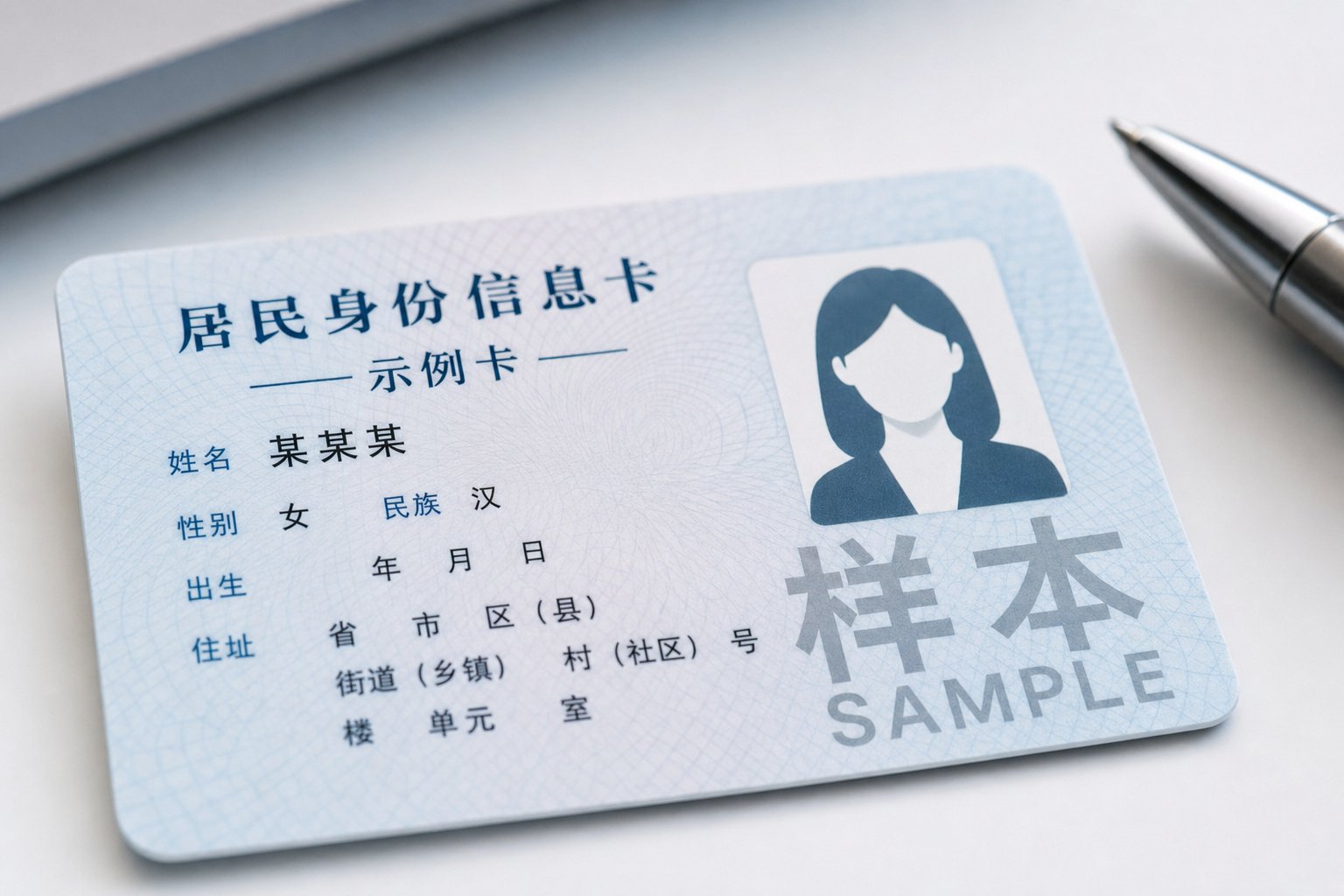
China's national ID card (居民身份证) is the backbone of civic identity. Every citizen's name must be registered in the household registration (hukou) system and encoded onto an 18-digit ID card. The database behind this system was originally built around the assumption that names would be 2-4 characters long, reflecting standard Han Chinese naming convention patterns.
The technical infrastructure uses a character encoding standard that supports a defined set of Chinese characters. For most citizens carrying a typical chinese name first name and surname combination of three characters, the system works seamlessly. You register at birth, your name goes into the database, and it follows you through school enrollment, bank accounts, train tickets, and mobile phone contracts.
Problems emerge at the edges. Authorities in Xinjiang reported that some websites and smartphone apps limited the number of characters a customer could enter in the name field, causing problems for ethnic minority group members whose names can reach up to 16 characters long. The middle dot punctuation mark (·) used to separate surname and given name components in Uyghur, Kazak, and Tibetan names created additional inconsistencies. Bank accounts couldn't match ID cards. Train and airline tickets couldn't display full names. The mismatch between system design and actual name diversity became more significant as e-commerce and digital services expanded.
Mainland regulations don't set a hard maximum character count in law, but practical limits exist through database field lengths and encoding constraints. The government has worked to standardize name input practices across industries and agencies, particularly for newborns from ethnic minority groups, to ensure correct registration from the start.
Taiwan and Hong Kong Naming Regulations
Taiwan's Name Act (姓名条例) is more explicit about boundaries. The law permits Chinese names and also allows indigenous Taiwanese peoples to register names in romanized form or traditional characters that may exceed typical Han Chinese lengths. Taiwan revised its naming laws to give indigenous citizens more flexibility, recognizing that names from Amis, Paiwan, Atayal, and other indigenous languages don't conform to the 2-4 character norm.
Hong Kong presents a unique case because of its bilingual requirements. Hong Kong residents follow Chinese naming conventions for their Chinese name but most also carry an English name used in international contexts. Official documents like the HKID card display both. A person's chinese first name and last name appear in Chinese characters alongside a romanized version, and often an additional English given name.
This dual-name system means Hong Kongers navigate two different length considerations simultaneously. Their Chinese name follows the standard 2-3 character format, with the last name in chinese coming first. Their English name can be anything from a single word like "Cathy" to a full Western-style name. The romanization of the Chinese name itself varies because Hong Kong uses Cantonese pronunciation rather than Mandarin pinyin, producing different letter counts for the same characters.
Given names with two characters may be written together, hyphenated, or separated into two words. For example, 光明 could appear as Kwongming, Kwong-Ming, or Kwong Ming on different documents. This flexibility in formatting means the same name can look like it has different lengths depending on which document you're reading.
Here's how name length regulations compare across major Chinese-speaking jurisdictions:
| Jurisdiction | Typical Name Length | Practical System Limit | Special Considerations |
|---|---|---|---|
| Mainland China | 2-4 characters | ~15-16 characters (database dependent) | Ethnic minority names may require middle dot separator; standardization ongoing |
| Taiwan | 2-4 characters | No strict cap for indigenous names | Indigenous peoples may register romanized names; Name Act allows flexibility |
| Hong Kong | 2-3 characters (Chinese) + English name | No fixed limit | Bilingual ID cards; Cantonese romanization; multiple formatting styles accepted |
| Singapore | 2-4 characters (Chinese component) | Varies by ethnic group | NRIC displays romanized name; dialect-based romanization (Hokkien, Teochew, Cantonese) |
For everyday life, the difference between a two-character and three-character name might seem trivial. But it ripples through dozens of small interactions. Shorter names fill fewer boxes on handwritten forms. They're faster to write during exams (a genuine consideration Chinese students mention). They leave more blank space on ID cards, which can occasionally trigger manual verification. Longer names, especially those exceeding four characters, may get truncated on boarding passes, delivery labels, or app interfaces that weren't designed with them in mind.
The first name and last name for chinese citizens isn't just a personal identifier. It's a data point that must pass through hundreds of interconnected systems over a lifetime. When those systems assume a narrow range of acceptable lengths, anyone outside that range faces friction, whether they carry a compound surname, an ethnic minority name, or even a modern four-character creation that combines both parents' surnames.
These bureaucratic constraints stay mostly invisible within domestic borders. Cross an international boundary, though, and an entirely new set of length-related challenges appears, ones that affect millions of Chinese travelers, students, and professionals navigating systems built for very different naming traditions.
Chinese Name Length in International and Digital Contexts
A three-character name works perfectly inside China. It fits on ID cards, bank forms, and train tickets without a second thought. But the moment that same name crosses a border, it enters systems built around entirely different assumptions about how long a name should be. The result is a surprisingly common set of headaches for Chinese travelers, students, and professionals navigating global infrastructure.
Passport Romanization and Western Form Challenges
When a chinese name in english appears on a passport, it follows name pinyin romanization rules. The surname is written first, followed by the given name as a single unbroken string. So 陈志明 becomes "CHEN ZHIMING" on a Chinese passport. Two words. Eleven letters total. By Western standards, that's a remarkably short full name.
This brevity creates real problems. Many international systems impose minimum character requirements on name fields. Airline booking engines, hotel reservation platforms, and visa application portals often expect at least two or three characters per field. A single-character surname like "Li" (李) is just two letters in pinyin. Some systems reject it outright, flagging it as incomplete input. Others require a minimum of three letters in the "first name" field, which means a given name like "Yi" (一) literally cannot be entered.
The confusion deepens because Western systems split names into "first name" and "last name" fields, but chinese name translation into these categories isn't straightforward. The Taiwan Ministry of Education's romanization guidelines specify that the surname comes before the given name without a comma, with the given name written as one unit. But which part goes in which field on a Western form? A person named Wang Xiaoming might enter "Wang" as last name and "Xiaoming" as first name, or they might split it as "Xiao Ming," creating inconsistencies across documents that cause matching failures later.
Spaces compound the issue. In Chinese characters, 王小明 has no spaces at all. Romanized, it could appear as "Wang Xiaoming," "Wang Xiao Ming," "Wang Xiao-Ming," or "WANG, XIAOMING" depending on the system. Each variation looks like a different person to a database performing exact-match searches. A flight booked as "Xiaoming Wang" won't match a visa issued to "WANG XIAOMING," potentially causing boarding denials or immigration delays.
Adapting Chinese Name Length for Global Systems
Chinese people have developed several strategies to navigate these mismatches. The most common is adopting an English given name for international use. Many Chinese people use a westernised version of their original Chinese name in English-speaking contexts. Someone named 张晨 (Zhang Chen) might go by "James Zhang" professionally, keeping their Chinese name for Chinese-language contexts. This chinese name and english name pairing gives them a name that fits Western systems without friction.
Others opt for names with a hyphen to clarify the structure of their given name. Writing "Xiao-Ming" instead of "Xiaoming" signals to Western readers that the given name has two distinct syllables. This approach preserves the original name while making it more legible internationally. The Cultural Atlas notes that two-syllable given names may be written together, hyphenated, or divided into two, though writing them as a single unit is advisable to clearly indicate it's one name.
A third strategy involves combining everything into one pinyin string without spaces. "Wangxiaoming" as a single word avoids the first-name/last-name split entirely, though it creates an unusually long string that looks odd by any standard. Some people reverse the order entirely, writing "Xiaoming Wang" to match Western conventions, which works socially but can create mismatches with passport formatting.
Paradoxically, the english translation of chinese names can actually produce longer strings than the original. The two-character name 王翔 is just two characters and two syllables, but romanized as "Wang Xiang" it's nine letters. Add tone marks for linguistic accuracy (Wáng Xiáng) and you get diacritical characters that many systems can't process at all. The compact original becomes an awkward fit in systems designed for neither extreme brevity nor special characters.
Here are the most common international scenarios where chinese names into english conversion causes friction:
- Airline bookings: Name must exactly match passport romanization. Spaces, hyphens, and letter count all matter for boarding pass validation.
- Email addresses: Short pinyin names like "[email protected]" look incomplete, while combined names like "wangxiaoming" exceed typical username conventions.
- Social media handles: Common pinyin combinations are almost always taken, forcing creative spelling or number additions.
- Legal documents: Inconsistent romanization across passports, visas, diplomas, and bank accounts creates identity verification failures.
- Academic publications: Authors named "Y. Li" or "J. Wang" become nearly impossible to distinguish in citation databases, affecting career metrics.
- Professional networking: LinkedIn profiles with very short romanized names may appear incomplete or generate fewer search results.
These aren't minor inconveniences. For the millions of Chinese citizens studying, working, and traveling internationally, name length friction is a recurring practical challenge. A name that functions flawlessly within its native writing system becomes a source of constant small adjustments the moment it enters global infrastructure built on Latin-alphabet assumptions.
The strategies people choose, whether adopting an English name, hyphenating, or simply accepting inconsistency, often depend on where they live and which Chinese-speaking community they belong to. Regional conventions around romanization, dialect pronunciation, and diaspora traditions create yet another layer of variation in how name length plays out across the Chinese-speaking world.
Regional Variations and Diaspora Naming Patterns
The same three-character name written in Chinese characters can look dramatically different once romanized, depending on whether the speaker is Cantonese, Hokkien, or Mandarin. The character count stays identical, but the letter count, syllable structure, and overall appearance shift based on dialect and regional convention. This means that chinese name length, measured in romanized form, is partly a question of geography.
Regional Differences Across Chinese-Speaking Areas
Consider the surname 黄. In Mandarin pinyin, it's "Huang" (five letters). In Cantonese romanization, it becomes "Wong" (four letters). In Hokkien, common across Malaysia and Singapore, it's often spelled "Ng" or "Ooi" depending on the sub-dialect. Same character, same single-syllable surname, but the romanized length ranges from two to five letters. Multiply that variation across an entire name and you'll see why mandarin names and cantonese names can look like they belong to different naming systems entirely, even when the underlying characters are identical.
Hong Kong names follow Cantonese pronunciation and often use older romanization conventions rather than standardized pinyin. A name like 张伟明 appears as "Cheung Wai Ming" in Hong Kong but "Zhang Weiming" in mainland China. The Cantonese version uses three separate words and thirteen letters. The Mandarin version uses two words and twelve letters. Neither is more correct. They're simply different regional conventions applied to the same characters.
In Southeast Asia, Hokkien and Teochew romanizations produce yet another set of patterns. The surname 陈 becomes "Tan" in Hokkien (common in Singapore and Malaysia), "Chan" in Cantonese, and "Chen" in Mandarin. Families who emigrated generations ago often carry romanized surnames that reflect the dialect spoken in their ancestral village rather than modern standard Mandarin. This creates situations where two people with the exact same Chinese characters have completely different-looking romanized names.
Do Chinese People Have Middle Names?
This is one of the most common questions outsiders ask, and the answer requires some untangling. In the traditional Chinese naming system, there is no middle name in chinese the way English speakers understand the concept. A Chinese name has exactly two components: surname and given name. The two characters of a given name like 小明 function as a single unit, not as a "first name" plus a "middle name."
So do asians have middle names? Not in the Western sense, within traditional naming. The confusion arises because Western forms force Chinese names into a first/middle/last framework that doesn't map cleanly. When a person named Wang Xiaoming fills out an English form, they might enter "Xiao" as a middle name and "Ming" as a first name, or vice versa. This is an adaptation to the form's structure, not a reflection of how the name actually works in Chinese.
That said, the concept of a middle name for chinese people has evolved in diaspora communities. Many overseas Chinese families now give children a Western given name, retain the Chinese given name, and use the family surname last. The result looks like: "David Weiming Chen," where "Weiming" occupies the middle name slot on official documents. It's not a traditional chinese middle names practice but rather a practical bridge between two naming systems.
Overseas Chinese Naming and Length Adaptation
Diaspora communities have developed distinct approaches to name length depending on how many generations they've lived abroad and how integrated they are into local naming conventions. Research on mainland Chinese students' English naming practices found that uniqueness is a key driver in name choice, with students demonstrating high agency in selecting names that distinguish them from peers while expressing their identity.
In practice, overseas Chinese naming patterns fall into several categories:
- Full preservation: Using the complete Chinese name in romanized form with no additions. Common among first-generation immigrants and in communities with large Chinese-speaking populations.
- English name addition: Keeping the Chinese name legally while using an English given name socially. The person effectively carries two names of different lengths for different contexts.
- Hybrid structure: Combining an English given name with the Chinese given name as a middle name and the surname last. This creates names like "Michelle Yifei Liu" that are longer than either tradition would produce alone.
- Hyphenated given names: Writing the two-syllable given name with a hyphen (Xiao-Ming) to signal its structure to non-Chinese readers while preserving the original name intact.
Each approach produces a different total name length. A person who goes by "Li Wei" in China might be "David Wei Li" in Canada or "Li, Wei (David)" on university records. The underlying Chinese name hasn't changed, but its apparent length shifts depending on context and adaptation strategy.
Chinese name length is not a single fixed rule. It varies by region, ethnicity, generation, and international context, making it a living system that adapts rather than a rigid formula.
What ties all these variations together is the core principle that started this exploration: Chinese names pack extraordinary meaning into minimal space. Whether a name is two characters or four, whether it's romanized as Cantonese or Mandarin, whether it carries an English addition or stands alone, the underlying logic remains the same. Each character is chosen with intention. Each configuration reflects a specific cultural, historical, or practical reality. Understanding chinese name length means appreciating both the elegant simplicity of the standard and the rich diversity of exceptions that surround it.
Frequently Asked Questions About Chinese Name Length
1. How many characters are in a typical Chinese name?
Most Chinese names contain 2 to 3 characters total. The most common format is a single-character surname paired with a two-character given name, producing a three-character full name. Two-character names (one surname character plus one given name character) are the second most common pattern. Four-character names exist but are relatively rare, usually involving compound surnames like Ouyang or Sima paired with two-character given names.
2. Why are Chinese names so short compared to English names?
Chinese names appear short because each character is a complete unit of meaning, not just a sound. A single Chinese character like 明 (bright) carries the same semantic weight as an entire English word. So a two-character given name packs as much meaning as a multi-syllable English name. The logographic writing system compresses what alphabetic languages spread across many letters into dense, meaning-rich blocks, making brevity a feature rather than a limitation.
3. Do Chinese people have middle names?
Traditional Chinese naming has no middle name in the Western sense. A Chinese name consists of exactly two parts: surname and given name. When a given name has two characters, those function as one unified unit, not as a first name plus a middle name. However, in diaspora communities, many overseas Chinese adopt a hybrid structure where the Chinese given name occupies the middle name slot on official documents, such as 'David Weiming Chen,' bridging two naming systems practically.
4. Can Chinese names be longer than four characters?
Yes. While Han Chinese names rarely exceed four characters, ethnic minority names within China can be significantly longer. Tibetan names often reach 5-6 characters when transliterated into Chinese script, Mongolian names typically span 4-5 characters, and Uyghur names can stretch to 10 or more characters. These longer names use Chinese characters purely as phonetic markers rather than for their individual meanings, following entirely different naming conventions from Han Chinese traditions.
5. How do Chinese names cause problems on international forms and systems?
Chinese names create friction internationally because many global systems impose minimum character requirements that short pinyin names cannot meet. A surname like 'Li' is only two letters, which some systems reject as incomplete. Additionally, inconsistent romanization across documents (spaces, hyphens, word splitting) causes identity verification failures. Common strategies to navigate this include adopting an English given name, hyphenating the given name syllables, or combining pinyin into a single string without spaces.