What Is Pinyin Name Character Meaning Lookup
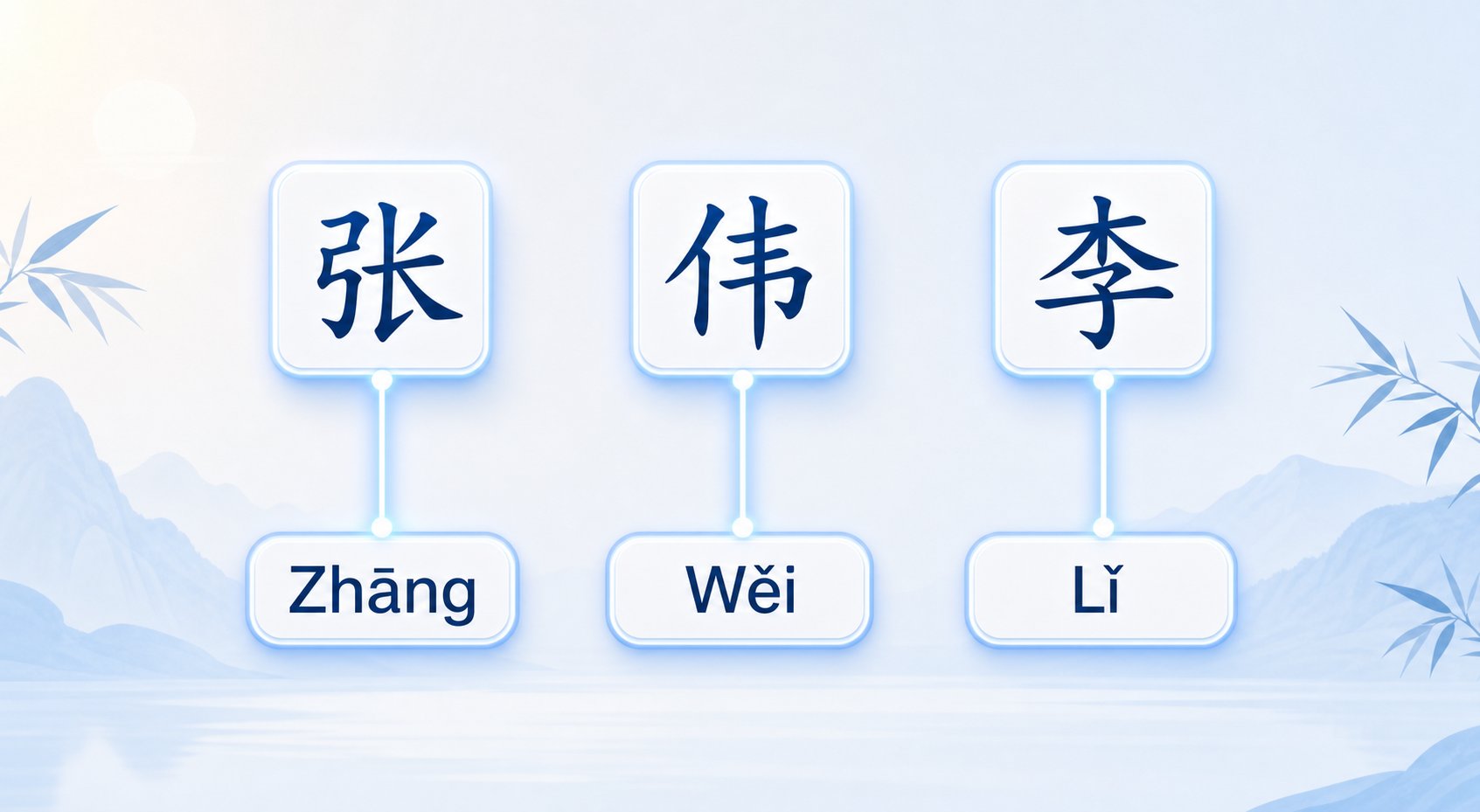
Imagine a colleague introduces herself as "Li Wei." You smile, nod, and move on. But later, curiosity strikes. What does her name actually mean? Is "Wei" the character for greatness, for a rose, or for something else entirely? When all you have is the romanized spelling, you're standing at the entrance of a puzzle with dozens of possible answers.
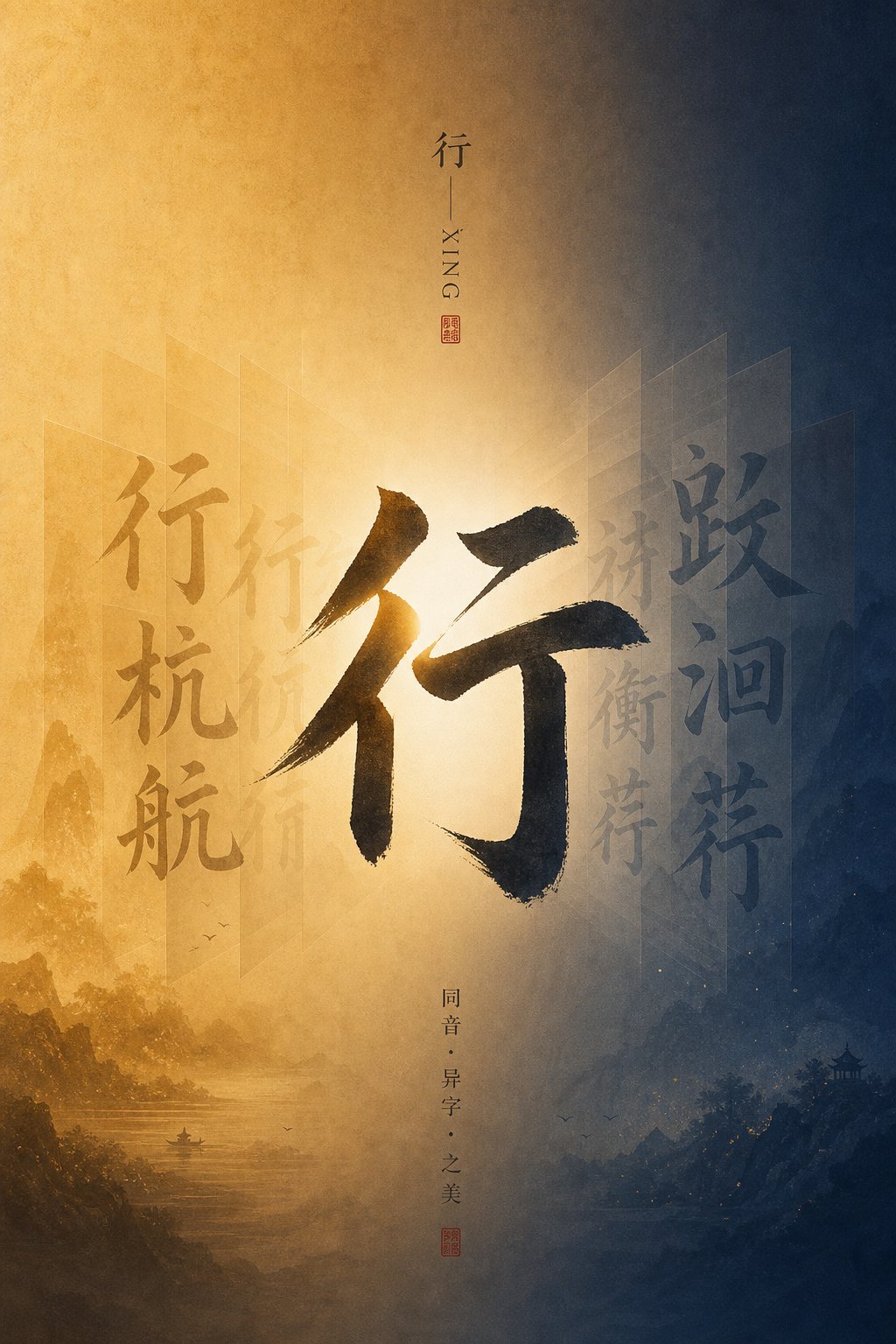
Pinyin name character meaning lookup is the process of identifying which Chinese characters correspond to a name you've only seen or heard in its romanized form. Pinyin, the standard system for writing Mandarin sounds using Latin letters, acts as a bridge between spoken language and written Chinese characters. But it's a bridge that forks in many directions. A single pinyin syllable can represent dozens of completely different characters, each carrying its own meaning, history, and visual identity.
Why Pinyin Name Lookup Matters
Chinese names are not arbitrary labels. Parents choose specific characters for their children based on meaning, visual elegance, and even the balance of strokes. When you encounter a name in characters, you're seeing the full intention behind it. When you only have the pinyin spelling, you're hearing the sound without seeing the soul.
This gap matters in real situations. You might want to understand what your own name is in Chinese after a relative explains it over the phone. Perhaps you're researching names for a child using a Chinese name generator and need to verify which characters match the sounds you like. Or maybe you're reading a novel, watching a film, or reviewing a business card and want to decode the meaning behind the pinyin to Chinese characters on the page.
A single pinyin syllable like "yi" can map to over 80 different characters, from 一 (one) to 义 (justice) to 艺 (art) to 忆 (memory). Without identifying the exact character, you cannot know the name's true meaning.
Who Needs Character Meaning Lookup
This kind of Chinese character lookup serves a wide range of people. You'll find it useful if you're:
- A professional working with international colleagues whose Chinese names appear only in pinyin on email signatures or directories
- Someone of Chinese heritage trying to understand the meaning behind your own name in characters as passed down by family
- A parent exploring meaningful characters for a baby name after finding appealing sounds
- A student, writer, or researcher decoding names encountered in media, literature, or historical texts
- A translator or journalist needing accurate character identification for proper attribution
The common thread is simple: you know how a name sounds, and you want to know what it means. That journey from sound to meaning is what pinyin name character meaning lookup is all about. The challenge, though, is that Mandarin's tonal system and vast character inventory mean the same sound can carry wildly different meanings depending on which character was chosen.
Understanding this gap between sound and meaning is the first step. The next question becomes: how do tones reshape what a single syllable can represent?

How Pinyin and Tones Shape Character Meaning
Pinyin is the official romanization system for Mandarin Chinese, adopted by the Chinese government in 1958. It assigns Latin letters and tone marks to each syllable, giving non-readers a way to approximate chinese pronunciation without needing to recognize characters on sight. Every pinyin syllable consists of an initial consonant (or none), a final vowel combination, and a tone mark that sits above the primary vowel.
Sounds straightforward? Here's where it gets interesting. Mandarin has four distinct tones plus a neutral tone, and each tone transforms the meaning of a syllable entirely. The yin pinyin system captures this through diacritical marks: a flat line for the first tone, a rising stroke for the second, a dipping caret for the third, and a falling stroke for the fourth. Without these marks, you're left guessing which of many possible characters a syllable represents.
How Tones Change Character Meaning
The classic demonstration uses "ma." With a high, level first tone, ma means mother. With a rising second tone, it means hemp. Drop into the dipping third tone and you get horse. A sharp falling fourth tone turns it into scold. Same letters, four completely different words. This pattern repeats across the entire language, which is why tone awareness is non-negotiable for any pinyin name character meaning lookup.
Consider the syllable "li," one of the most common sounds in Chinese names. The table below shows how tone alone reshapes its identity:
| Pinyin | Tone | Character | Meaning |
|---|---|---|---|
| li (1st tone) | High level | 丽 | Beautiful |
| li (2nd tone) | Rising | 黎 | Dawn, multitude |
| li (3rd tone) | Dipping | 礼 | Ritual, courtesy |
| li (4th tone) | Falling | 力 | Strength, power |
A name spelled "Li" in pinyin could carry the elegance of beauty, the promise of dawn, the grace of courtesy, or the force of strength. And within each tone, multiple characters still compete. The second tone alone also includes 莉 (jasmine) and 离 (departure). This is why a pinyinizer tool or dictionary that strips tone information leaves you with an incomplete picture.
Reading Pinyin Tone Marks Correctly
Tone marks follow a placement rule: they sit on the vowel with highest priority in the sequence a > e > o > i/u. When you see "jĭ," you know it carries a third tone. When you see "jián," the rising mark tells you it's second tone, pointing toward characters like 建 (build) or 健 (healthy) rather than third-tone options like 简 (simple).
This matters practically. If someone asks you to pronounce qing, the tone mark determines whether you're saying 清 (qing, first tone, meaning clear), 情 (qing, second tone, meaning emotion), or 庆 (qing, fourth tone, meaning celebration). Similarly, when you encounter yôu in chinese contexts, recognizing the tone helps you distinguish 优 (excellent) from 友 (friend) from 右 (right).
Tones are not optional decoration. They are the mechanism that narrows dozens of candidate characters down to a manageable few. With tone information in hand, you're ready to tackle the next layer of complexity: how Chinese names are structured and where the most meaningful character choices actually live.
Understanding Chinese Name Structure Before Lookup
Chinese names follow a fixed architecture that reverses the Western convention. The family name comes first, followed by the given name. When you see "Wang Xiaoming," Wang is the surname and Xiaoming is the given name. Knowing which part is which matters enormously for any character meaning lookup, because surnames and given names operate under completely different rules.
Surname Plus Given Name Structure
Most Chinese names are two or three characters long. The structural patterns break down like this:
- Single-character surname + single-character given name (two characters total, e.g., Li Wei)
- Single-character surname + two-character given name (three characters total, e.g., Wang Xiaoming)
- Compound surname + single or double-character given name (rarer, e.g., Ouyang Xiu, Zhuge Liang)
The vast majority of Chinese names fall into the first two categories. According to the Asia Media Centre, the top 100 Chinese family names all have a single syllable and cover roughly 85 percent of China's population. Only about 400 different surnames exist in total, of which 81 are compound names like Ouyang, Zhuge, and Shangguan.
This means when you encounter a three-syllable name, the two-syllable portion is almost always the given name. That's where the real character detective work begins. Surnames draw from a limited, well-documented pool. The three most common in mainland China are Li (meaning plum tree), Wang (meaning king), and Zhang (meaning archer or to stretch). You can usually identify a surname quickly because the options are so constrained.
Given names, on the other hand, pull from thousands of possible characters. This is where chinese names male and female diverge in tradition, where family history surfaces, and where parents invest the most creative energy.
Why Given Name Characters Are Chosen Deliberately
Chinese given names are not picked from a pre-existing list the way many Western names are. Parents select individual characters based on meaning, tonal harmony, stroke count balance, and sometimes even the five-element theory from traditional philosophy. A name is a crafted statement of hope.
Some parents choose characters that express aspirations for their children. Kang (healthy), Yong (brave), and Ling (wise) are popular choices that carry direct wishes. Others select nature imagery or poetic references. When exploring female chinese names, you'll often encounter characters like Mei (beautiful), Lan (orchid), or Xue (snow). For chinese given names male, characters like Jun (handsome, noble), Hao (vast, grand), or Zhi (ambition) appear frequently. A chinese name generator male tool might suggest these common characters, but the real selection process in families goes much deeper.
Generational naming adds another layer. In traditional families, males of the same generation share one character in their given names. These generation characters are predetermined, sometimes written into family genealogy records decades in advance. So if you're looking up a name and one character seems generic while the other feels more personal, the generic one may be the generational marker.
Chinese woman names follow their own patterns too. Women do not change their surnames after marriage, which means a woman's name remains a permanent reflection of her parents' original character choices throughout her life.
Understanding this structure gives you a practical advantage. When performing a lookup, separate the surname first. It's likely one of a few hundred common options. Then focus your energy on the given name characters, where the real meaning lives and where the homophone challenge becomes most complex. That complexity is exactly what makes the next step so critical: figuring out which character, among many sharing the same sound, is the one actually intended.

The Homophone Problem in Pinyin Name Lookup
You've separated the surname from the given name. You know the tone. And yet, you're still staring at a list of candidate characters that all share the same pronunciation. This is the homophone problem, and it's the single biggest obstacle in any pinyin name character meaning lookup.
Mandarin Chinese has roughly 1,200 distinct syllables when tones are included. But the language uses tens of thousands of characters. The math is unavoidable: many characters must share the same sound. In everyday vocabulary, context resolves most ambiguity. In names, though, characters appear in isolation or in unusual pairings, stripping away the contextual clues you'd normally rely on.
Why One Pinyin Syllable Maps to Many Characters
Take the syllable xuan. Even after you narrow it to a specific tone, the options multiply. Xuān (first tone) could be 轩 (lofty, a high-roofed hall), 宣 (declare), or 萱 (daylily, a plant symbolizing a mother's love). Shift to xuán (second tone) and you get 璇 (fine jade) or 悬 (suspend). Drop to xuàn (fourth tone) and 炫 (dazzle) or 选 (choose) enter the picture. All of these appear in real names, and each carries a completely different emotional weight.
This pattern repeats across nearly every popular name syllable. The sounds jie, wei, zhen, qian, and jiao each map to dozens of characters commonly used in given names. Without seeing the written form, you simply cannot determine meaning from sound alone.
| Pinyin | Character | Meaning | Common In |
|---|---|---|---|
| xuan (1st) | 轩 | Lofty, grand | Male names |
| xuan (1st) | 萱 | Daylily (maternal love) | Female names |
| xuan (2nd) | 璇 | Fine jade | Female names |
| jie (2nd) | 杰 | Outstanding, heroic | Male names |
| jie (2nd) | 洁 | Pure, clean | Female names |
| jie (1st) | 婕 | Graceful (imperial title) | Female names |
| wei (3rd) | 伟 | Great, mighty | Male names |
| wei (1st) | 薇 | Fern, rose | Female names |
| wei (2nd) | 维 | Maintain, dimension | Both |
Notice how wei chinese name characters split along gendered lines: 伟 (great) trends male, while 薇 (fern, rose) trends female. The same applies to jie, where 杰 (outstanding) leans male and 洁 (pure) leans female. These tendencies offer your first filtering strategy.
Strategies for Identifying the Correct Character
When you can't ask the name's owner directly, several approaches help narrow the field:
- Gender patterns: Characters like zhen split predictably. 珍 (precious) and 贞 (chaste) appear overwhelmingly in female names, while 振 (invigorate) and 震 (shake, thunder) skew male.
- Generational context: If you know the person's approximate age, certain characters reflect naming trends of specific decades. Qian as 强 (strong) was popular in the 1960s-70s, while 茜 (madder red) gained popularity for girls in the 1990s onward.
- Tone confirmation: Even partial tone information eliminates large groups of candidates. If you know jiao carries a first tone, you're looking at 娇 (delicate) or 骄 (proud) rather than fourth-tone 教 (teach).
- Character pairing logic: In two-character given names, the characters usually share a thematic thread. If one character is clearly nature-related, the other likely follows suit.
- Frequency in names: Not all characters with a given pronunciation actually appear in names. Dictionaries that flag name-usage frequency help you prioritize the most likely candidates over obscure options.
The homophone problem doesn't have a single clean solution. It requires layering multiple clues, tone, gender, era, thematic pairing, and frequency, until the list of candidates shrinks to one or two strong possibilities. When even that isn't enough, the most reliable path is asking the person directly or requesting the written characters.
Knowing which strategies to apply is one thing. Executing them efficiently requires a structured workflow and the right digital tools, which is where a step-by-step lookup process becomes essential.
How to Look Up Name Character Meanings from Pinyin
Strategies are useful, but a repeatable process is what actually gets results. When you're sitting in front of a pinyin name and need to decode its characters, having a structured workflow saves you from wandering through endless dictionary entries. The steps below turn a vague sound into a concrete meaning, one layer of filtering at a time.
Step-by-Step Lookup Process
Think of this as a funnel. You start with a broad set of possibilities and narrow them down through each step until you reach the most likely character match.
- Determine the tone if possible. Check whether the pinyin you have includes tone marks or tone numbers. If someone wrote "li3," you know it's third tone. If you heard the name spoken, recall whether the syllable rose, fell, or dipped. Even partial tone information eliminates large groups of candidates immediately. No tone data? You'll work harder in later steps, but the process still functions.
- Separate the surname from the given name. Identify which syllable is the family name. Since the vast majority of Chinese surnames are single characters drawn from a pool of a few hundred, this is usually the easiest part. Cross-reference the first syllable against common surname lists. Once isolated, focus your deeper investigation on the given name characters where meaningful choices live.
- Search the pinyin in a character dictionary filtered by tone. Use a dedicated chinese character finder that supports pinyin input with tone filtering. The MDBG Chinese dictionary is particularly effective here. Its character dictionary allows you to search by Mandarin pinyin with tone numbers (e.g., "xuan1" for first tone) and returns all matching characters with their definitions, radicals, and stroke counts. You can enter tones as numbers 1 through 5, where 5 represents the neutral tone.
- Look for characters commonly used in names. Not every character that shares a pronunciation actually appears in names. Many dictionaries and name databases flag characters by usage frequency in given names. When your search returns 15 results for a single syllable, prioritize the ones marked as common name characters. Characters like 轩, 萱, 杰, 伟, and 婷 appear in names far more often than their homophones 掀, 喧, 截, 围, or 亭.
- Use radicals and context to confirm meaning. Once you have a shortlist of likely characters, examine their radicals for meaning-category clues. A character with the jade radical (王) suggests preciousness. One with the grass radical (艹) points to plants or nature. Cross-reference these meaning categories against what you know about the person: their gender, approximate age, and any cultural context available.
- Consider how characters combine for compound meaning. For two-character given names, the characters rarely exist in isolation. They form a thematic pair. If your first character means "bright" and the second candidate list includes both "radiance" and "return," the thematic fit strongly favors "radiance." Evaluate character pairs as a unit, not as independent lookups.
This workflow isn't always linear. Sometimes step 5 sends you back to step 3 with new filtering criteria. That's normal. The goal is progressive narrowing, not a single pass.
Using Dictionaries and Digital Tools Effectively
The right tools make each step faster and more accurate. Here's how to get the most from them.
The MDBG Chinese dictionary deserves special attention because its character dictionary section supports multiple search methods simultaneously. You can search by Mandarin pinyin matching, enter tone numbers directly (pin1 yin1 format), and receive results showing the character, radical, stroke count, and English definition in one view. Its word dictionary also lets you use wildcards, so searching "xuan1*" returns all words beginning with that syllable and tone.
For situations where you've seen a character written but can't type it, a draw chinese character lookup tool lets you sketch the character with your mouse or finger. Several online platforms offer chinese handwriting input that recognizes hand-drawn strokes and returns matching characters with their pinyin and definitions. This works in reverse too: if someone texts you their name in characters and you need the pronunciation, these tools bridge the gap from visual to phonetic.
When you don't have a Chinese keyboard installed, online chinese character input tools let you type pinyin directly in your browser and select from candidate characters. MDBG itself offers a web-based chinese input online interface supporting Mandarin pinyin for both simplified and traditional characters. You type the pinyin, a list of matching characters appears, and you select the correct one. This is especially useful when you need to copy a character into another application for further research.
A few practical tips for using these tools effectively:
- Always enter tone numbers when you have them. Searching "li" without a tone returns every character pronounced "li" across all four tones. Searching "li4" cuts the results dramatically.
- Use the component search feature. If you remember part of a character's visual structure, MDBG's "character components" search lets you find characters containing specific building blocks, even if you don't know the full character.
- Cross-reference with name-specific databases. General dictionaries list all characters for a pronunciation. Name databases rank them by how frequently they appear in actual given names, which is far more useful for this specific task.
- Try both simplified and traditional character results. A name might use a traditional form that looks different from its simplified equivalent, especially for names from Taiwan, Hong Kong, or older generations.
The pinyin input method built into most operating systems also helps during research. When you type a pinyin syllable, the system suggests characters ranked by usage frequency. While this ranking reflects general language use rather than name-specific frequency, it still surfaces the most common characters first and pushes obscure options further down the list.
With a reliable workflow and the right digital tools, you can move from a bare pinyin spelling to a shortlist of likely characters in minutes. But characters don't just carry dictionary definitions. Their internal structure, specifically their radicals, reveals meaning at a deeper level that pure dictionary lookup might miss.

Using Radicals to Decode Character Meanings
A dictionary definition tells you what a character means. A radical tells you why it means that. When you're staring at a shortlist of candidate characters for a name, radicals act as visual fingerprints that sort characters into meaning families before you even read a full definition. They're the internal logic of writing in chinese language, and they give you an immediate foothold when navigating homophones.
Chinese character radicals are recurring components, typically positioned on the left, top, or bottom of a character, that signal the broad semantic category a character belongs to. The traditional system includes 214 Kangxi radicals, though only about 50-80 appear frequently in everyday characters. For name lookup purposes, an even smaller set of radicals covers the vast majority of characters parents choose for given names.
Common Radicals in Name Characters
Imagine you've narrowed a pinyin syllable down to five possible characters. You don't need to memorize every definition. Instead, look at the radical and ask: what category does this character belong to? The table below lists the radicals you'll encounter most often in Chinese given names, along with the meaning families they represent.
| Radical | Form in Characters | Meaning Category | Example Name Characters |
|---|---|---|---|
| Water | 氵 | Water, fluidity, purity | 洁 (pure), 涵 (contain), 清 (clear), 泽 (marsh, grace) |
| Jade/King | 王 | Precious stones, treasure | 瑶 (precious jade), 琳 (fine jade), 璇 (beautiful jade), 珍 (precious) |
| Grass | 艹 | Plants, nature, growth | 萱 (daylily), 芳 (fragrant), 蕾 (bud), 薇 (fern) |
| Heart | 心 / 忄 | Emotions, mind, character | 慧 (wise), 恩 (grace), 怡 (joyful), 悦 (pleased) |
| Sun | 日 | Light, time, brightness | 明 (bright), 晨 (morning), 昊 (vast sky), 晴 (sunny) |
| Woman | 女 | Feminine qualities, beauty | 婷 (graceful), 娜 (elegant), 妍 (beautiful), 婕 (imperial lady) |
| Wood | 木 | Trees, growth, stability | 林 (forest), 桐 (paulownia), 梓 (catalpa), 柏 (cypress) |
| Metal/Gold | 钅 | Metal, value, strength | 锦 (brocade), 铭 (inscribe), 鑫 (prosperous), 钰 (precious metal) |
Notice how the jade radical (王) appears in characters that all relate to precious stones and beauty. If you see this radical in a candidate character for a female name, you can immediately infer the character carries connotations of value and elegance, even before checking the full definition. Similarly, the grass radical (艹) clusters characters around plant imagery, nature, and organic growth.
How Radicals Reveal Meaning Categories
Here's where radicals become genuinely powerful for name lookup. When your pinyin search returns multiple characters, grouping them by radical instantly sorts them into meaning lanes:
- A character with 氵 (water) relates to purity, flow, or depth
- A character with 忄 (heart) connects to emotion, wisdom, or inner qualities
- A character with 艹 (grass) points toward nature, beauty, or vitality
- A character with 钅 (metal) suggests strength, permanence, or value
This categorization helps even if you're not a chinese character writer yourself or deeply familiar with chinese character stroke order. You don't need to know how to produce the character from memory. You just need to recognize which radical sits inside it and what that radical signals about meaning.
Radicals also work as a cross-check against gender and thematic expectations. If you're looking up a female name and one candidate contains the woman radical (女) while another contains the knife radical (刂), the first is almost certainly correct. If a two-character name's first character uses the sun radical and you're evaluating options for the second, a character with the fire or light-related radical creates thematic harmony.
The radical chinese characters system, in short, gives you a visual shortcut that complements tone filtering and frequency data. It transforms unfamiliar characters from opaque symbols into categorized clues. And when two characters in a given name share related radicals or belong to complementary meaning families, they often create something greater than the sum of their parts: a compound meaning that tells a small story.
How Character Meanings Combine in Given Names
A single character carries a definition. Two characters placed together in a given name create something closer to poetry. When parents select a two-character given name, they're not just stacking two independent meanings side by side. They're composing a phrase, an image, or an aspiration that neither character could express alone. Understanding this compound logic is the final layer of any thorough pinyin name character meaning lookup.
How Two Characters Create Compound Meaning
Two-character given names work through several mechanisms. Sometimes the characters intensify each other: 明辉 (ming hui) pairs "bright" with "radiance," creating a doubled sense of brilliance that's stronger than either word alone. Other times they paint a scene: 雨桐 (yu tong) combines "rain" with "paulownia tree," evoking the image of rain falling on broad leaves, a quiet, literary moment compressed into two syllables.
Consider the name 仁浩 (ren hao). Individually, 仁 means benevolence and 浩 means vast or grand. Together, the meaning of hao amplifies the scope of virtue: boundless kindness, generosity without limit. The characters don't just coexist. They interact, each reshaping how you read the other.
This compound effect means you can't simply look up two characters independently and call the job done. The name 小美 (xiaomei) technically combines "small" and "beautiful," but in practice it reads as a term of endearment, something like "little beauty" or a nickname suggesting charm and approachability. The mei meaning shifts from a neutral adjective to something warmer and more personal inside a name context.
Similarly, a name like 宇成恩 (yu cheng en) layers "universe," "accomplish," and "grace" into a three-character given name that reads as an aspiration: to achieve grace on a cosmic scale. Each character modifies the others, building meaning that's greater than any single definition.
Common Thematic Pairings in Chinese Names
Certain character combinations follow recognizable thematic patterns. When you encounter a two-character given name during lookup, identifying which category it belongs to helps you interpret the combined meaning more accurately.
- Virtue combinations: Characters expressing moral qualities paired for emphasis. 志明 (zhi ming) joins "ambition" with "clarity" for clear-minded purpose. 信义 (xin yi) pairs "trust" with "righteousness." The combination 心力 (xin li) merges "heart" and "strength" to suggest inner resolve and emotional fortitude.
- Nature imagery: Poetic scenes drawn from the natural world. 雨桐 (yu tong) evokes rain on paulownia leaves. 雪梅 (xue mei) pairs "snow" with "plum blossom," referencing the flower that blooms in winter as a symbol of resilience.
- Aspiration pairs: Characters expressing hopes for achievement or greatness. 明宝 (ming bao) combines "bright" with "treasure," suggesting a precious and luminous future. 邹 (zou) as a surname paired with aspiration characters in the given name creates names where the zou meaning in a chinese name context frames the family identity while the given name carries forward-looking hope.
- Complementary qualities: Characters that balance each other. 文武 (wen wu) pairs "literary" with "martial," expressing well-roundedness. 静雅 (jing ya) joins "calm" with "elegant" for composed grace.
One important nuance: characters can carry different connotations inside names than they do in general vocabulary. 龙 (long) means "dragon" in everyday use, but in a name it signals imperial ambition and extraordinary destiny. 莲 (lian) means "lotus" botanically, but in a name it invokes purity rising from muddy water, a Buddhist metaphor. Always interpret name characters through the lens of naming culture, not just dictionary definitions.
This layered meaning is what makes Chinese names so rich and so resistant to simple translation. But it's also what makes mistakes costly. Misidentifying even one character in a pair can flip the entire name's meaning, which brings us to the most common errors people make during lookup and how to sidestep them.

Common Pitfalls in Pinyin Name Lookup and How to Avoid Them
Misidentifying a character doesn't just produce a wrong answer. It produces a confidently wrong answer, one that looks plausible but carries an entirely different meaning. The lookup process described in earlier sections works well when executed carefully, but several recurring mistakes trip people up. Knowing where others stumble helps you avoid the same traps.
Tone Mark and Spelling Confusion
Ignoring tone marks is the single most common error in pinyin name lookup. Without tones, a search for "yu" returns characters meaning rain, jade, fish, language, and universe, all unrelated. Tones are not optional annotations. They are the primary filter that separates one chinese character from another.
Beyond tones, pinyin spelling itself creates confusion for people unfamiliar with Mandarin's sound system. Several initial consonants look similar on paper but represent completely different sounds and map to different character sets. Here are the pitfalls that surface most often, paired with practical fixes:
- Dropping or misreading tone marks: When converting chinese to han yu pin yin, tone numbers or diacritical marks must be preserved. If your source strips them (as many email systems and databases do), note that the information is incomplete and search across all four tones rather than assuming the first result is correct.
- Confusing similar initials (zh/z, sh/s, ch/c, q/ch): These pairs sound distinct to Mandarin speakers but look interchangeable to English readers. "Zhang" and "Zang" are different surnames with different chinese mandarin characters. "Qian" and "Chian" point to different syllables entirely. Always verify the exact pinyin spelling before searching.
- Accepting the first dictionary result: General dictionaries rank characters by overall usage frequency, not name frequency. The most common mandarin characters for a syllable in everyday text may rarely appear in names. Cross-reference results against name-specific databases to find characters parents actually choose.
- Overlooking regional pronunciation: Cantonese, Hokkien, and other dialect romanizations sometimes get mistaken for Mandarin pinyin. A name spelled "Ng" or "Ong" follows a different system entirely. Confirm which romanization standard applies before searching.
Simplified Versus Traditional Character Differences
This pitfall catches people who don't realize the same name can look different depending on whether it's written in simplified or traditional script. Mainland China uses simplified characters, while Taiwan, Hong Kong, and many overseas communities use traditional forms. The character 华 (simplified, meaning splendid or China) appears as 華 in traditional script. They share the same pinyin and meaning, but visually they're distinct.
When you translate english to chinese traditional forms for a name from Taiwan, you'll get a different visual result than searching simp chinese databases. An english to traditional chinese converter will output 華 where a simplified tool outputs 华. If you're looking up a name and the person's background connects to Taiwan or Hong Kong, search traditional chinese to english dictionaries specifically. Using the wrong script system means you might not find the character at all, or worse, find a simplified character that happens to look like a different traditional one.
A few additional tips to keep your lookup accurate:
- When in doubt about any character identification, ask the person directly. A quick "could you write your name in characters for me?" is culturally appropriate and avoids guesswork entirely.
- Double-check by searching the full name as a unit, not just individual syllables. Some character combinations are so common as names that dictionaries list them as set phrases.
- Remember that older generations may use Wade-Giles or other legacy romanization systems rather than standard pinyin. "Tsai" in Wade-Giles is "Cai" in pinyin. Recognizing the system prevents false starts.
Every pitfall here shares a common root: assuming that the romanized spelling gives you enough information on its own. It doesn't. Pinyin is a starting point, not a destination. The characters themselves, with their tones, radicals, and cultural weight, hold the meaning you're looking for. Approach each lookup with patience, verify at every step, and treat ambiguity as a signal to dig deeper rather than settle for the first plausible match.
Frequently Asked Questions About Pinyin Name Character Meaning Lookup
1. How do I find the Chinese characters for a name I only know in pinyin?
Start by identifying the tone of each syllable if possible, then separate the surname from the given name. Use a pinyin-searchable dictionary like MDBG with tone filtering to generate a list of candidate characters. Narrow results by checking which characters commonly appear in names, examining radicals for meaning clues, and considering gender patterns or generational naming trends. For two-character given names, evaluate whether the characters form a coherent thematic pair.
2. Why does the same pinyin syllable have so many different character meanings?
Mandarin Chinese has approximately 1,200 distinct syllables including tones, but tens of thousands of characters exist in the language. This mathematical imbalance forces many characters to share identical pronunciations. Even within a single tone, multiple characters compete for the same sound. For example, the first-tone syllable 'xuan' maps to characters meaning lofty, declare, and daylily, all unrelated in meaning despite sounding identical.
3. Can I determine a Chinese name's meaning without knowing the tones?
You can still attempt a lookup without tone information, but the process becomes significantly harder. Without tones, a syllable like 'yu' returns characters meaning rain, jade, fish, language, and universe. To compensate, use gender patterns, generational context, character pairing logic, and name-frequency databases to filter candidates. However, the most reliable solution is to ask the name's owner for the written characters or confirm the tones directly.
4. What is the difference between simplified and traditional characters in name lookup?
Simplified characters are used in mainland China, while traditional characters are standard in Taiwan, Hong Kong, and many overseas Chinese communities. The same name can look visually different depending on the script system. For instance, the character for splendid appears as 华 in simplified form and 華 in traditional. When performing a lookup, match your dictionary to the person's regional background to ensure you find the correct character form.
5. How do radicals help identify the meaning of Chinese name characters?
Radicals are recurring components within characters that signal broad semantic categories. The water radical indicates purity or fluidity, the jade radical suggests preciousness, and the grass radical points to plants and nature. When your pinyin search returns multiple candidate characters, grouping them by radical lets you quickly sort options into meaning families. This visual shortcut helps you match characters to expected name themes without memorizing every individual definition.