What Chinese Nickname Angel Really Means
When you search for a chinese nickname angel, you probably fall into one of two camps. Either your actual name is Angel and you want a proper Chinese equivalent, or you want to call someone special your "angel" in Mandarin. These are two completely different goals, and mixing them up leads to awkward results fast.
The English word "angel" doesn't map neatly onto a single Chinese term. Unlike pet names such as 宝贝 (baobei) that work universally as endearments, angel-related terms in Chinese split along a clear line: literal meaning versus phonetic sound. Get the wrong one for your situation, and you'll either sound overly religious or just confusing.
Why Angel Has Multiple Chinese Translations
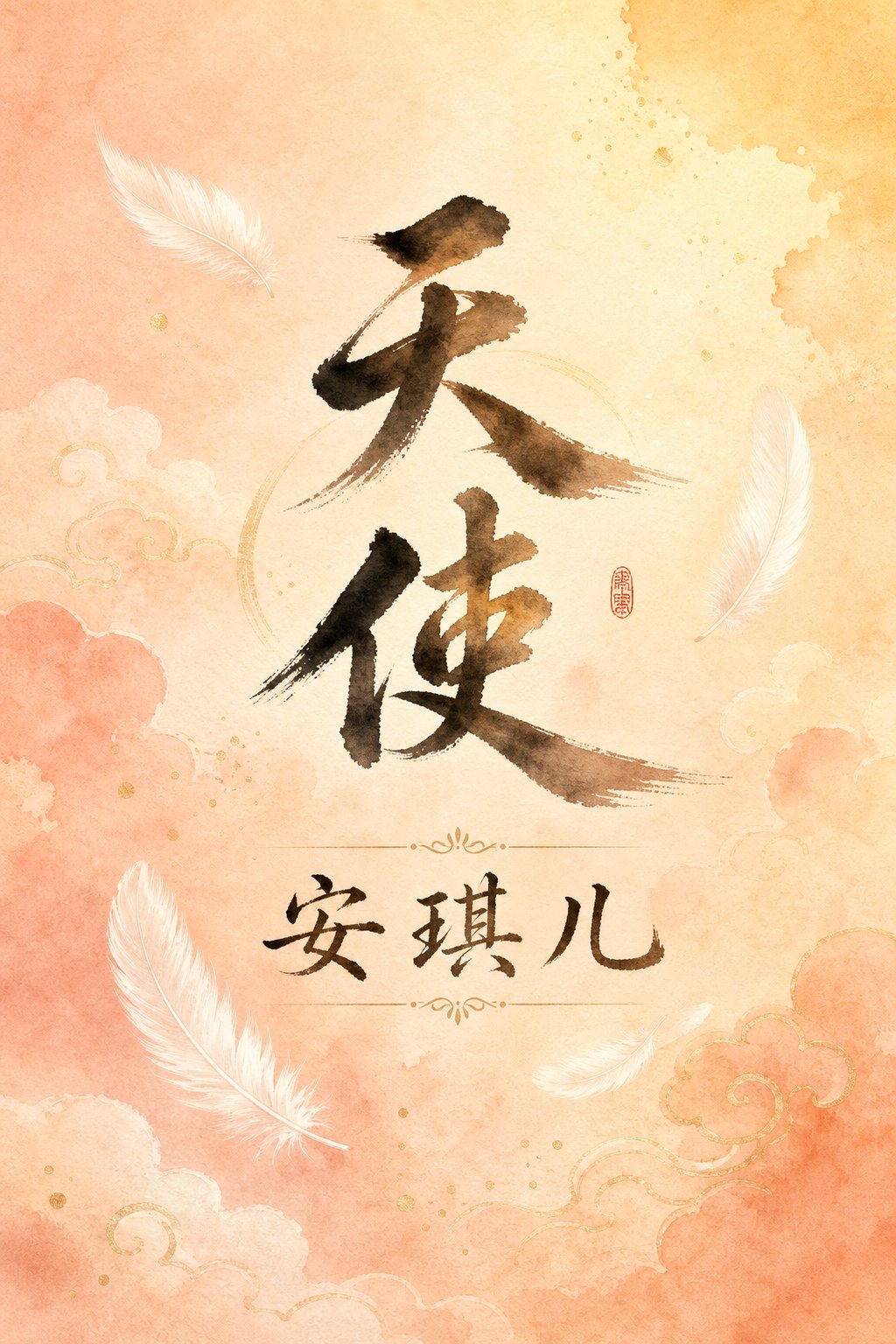
So what does angel mean in chinese? There are two primary options. 天使 (tianshi) is the semantic translation, literally meaning "heavenly messenger." Then there's 安琪儿 (anqi'er), a phonetic borrowing that sounds like the English word "Angel" spoken with Chinese characters. One carries meaning. The other carries sound. That distinction matters more than most guides bother to explain.
Translating the name Angel into Chinese characters is not the same as using "angel" as a pet name for someone you love. The first is about identity. The second is about affection. This guide covers both.
Two Distinct Reasons People Search This Term
If you need a chinese translation of the name Angel for a social profile, a language class, or even official documents, you'll want to understand how 安琪儿 and 安琪 function as personal names. If you're looking for an angel nickname in mandarin chinese to use with a partner, child, or close friend, terms like 小天使 (xiao tianshi) and 我的天使 (wo de tianshi) are where you should focus.
This guide walks through both paths with full pinyin, correct tone marks, and the cultural context you need to avoid sounding ridiculous. Knowing how to say angel in chinese characters is only half the job. Knowing when and where to use each version is what separates a natural speaker from someone who clearly pulled a phrase off a translation app.
The real question isn't just which characters to pick. It's understanding why Chinese has these separate options in the first place, and what cultural history shaped them.

The Cultural History Behind Angel in Chinese Language
Chinese didn't always have a word for "angel." The concept had to be imported, and the way it arrived shaped how the term functions today as both a name and a nickname. Understanding the history of angel in chinese culture explains why you have two very different options and why each carries its own weight.
How 天使 Entered the Chinese Language
The 天使 etymology and meaning traces back to when Western missionaries first arrived in China during the Ming Dynasty (late 1500s). Jesuits like Matteo Ricci needed a way to explain the Christian concept of angels to Chinese audiences. They faced a real problem: Chinese spiritual traditions already had their own category of supernatural beings called 鬼神 (guishen), but these weren't the same thing as Western angels.
The angel character breakdown in mandarin reveals how missionaries solved this. They built the term from two existing Chinese characters:
- 天 (tian) = heaven, sky
- 使 (shi) = messenger, envoy
Put them together and you get 天使: "heavenly messenger." This is a semantic translation, meaning it captures the concept rather than the sound. Missionaries also used the term 天神 (tianshen, "heavenly spirit") in their early writings, but 天使 became the standard over time. The tianshi meaning in chinese today is understood broadly as "angel" without requiring any religious belief on the listener's part.
What's interesting is that by the time this term entered everyday Chinese, it had already shed much of its theological weight. Ricci and later missionaries like Alfonso Vagnone wrote extensively about how Chinese 鬼神 and Christian angels operated under completely different metaphysical systems. Angels were spiritual creatures created by God; Chinese spirits were understood through the lens of Qi (vital energy) and Yin-Yang philosophy. But for modern speakers, 天使 simply means a kind, pure, or beautiful being. The religious debate faded. The word stayed.
The Phonetic Borrowing Behind 安琪儿
The anqier chinese name origin follows a completely different path. Instead of translating the meaning of "angel," this version translates the sound. Someone hearing the English word "Angel" picked Chinese characters that approximate the pronunciation:
- 安 (an) = peace, tranquility
- 琪 (qi) = fine jade, precious stone
- 儿 (er) = child suffix, adds a soft diminutive quality
This is called a phonetic loan (音译, yinyi). The characters were chosen not for their combined meaning but because they sound close to "Angel" when spoken aloud. That said, the individual characters aren't random. 安 and 琪 both carry positive connotations: peace and jade. This makes 安琪儿 feel elegant rather than arbitrary, which is why it works well as a personal name.
Phonetic borrowings like this became more common during the early 20th century as Chinese encountered more English names through trade, media, and cultural exchange. Unlike 天使, which anyone would recognize as the word for "angel," 安琪儿 reads primarily as a name. Most Chinese speakers hearing 安琪儿 think "person named Angel" rather than "winged celestial being."
Angels in Western vs Chinese Cultural Traditions
Here's where things get practical for nickname usage. In Western culture, calling someone "angel" carries layers of meaning: purity, divine protection, moral goodness, even a hint of the sacred. Angels in Christianity are powerful intermediaries between God and humanity, present at birth, death, and every spiritual milestone in between.
Chinese spiritual traditions don't have an equivalent figure. The closest parallels are 仙 (xian, immortals) and 神 (shen, spirits or deities), but these carry different associations. Immortals are humans who achieved transcendence. Spirits govern natural forces. Neither maps cleanly onto the Western angel as a devoted guardian sent from heaven.
This cultural gap actually works in your favor when using angel as a chinese nickname. Because 天使 doesn't trigger deep religious associations for most Chinese speakers, it functions as a lighter, more playful term of endearment than "angel" does in English. You won't accidentally sound like you're making a theological statement. The word simply evokes someone sweet, kind, and good, without the solemnity that might feel heavy in a Western context.
That lightness is exactly what makes 小天使 (little angel) so popular as a pet name across relationships, fan communities, and social media. The cultural distance from its religious origins gave the term room to become casual and warm rather than formal and sacred.
How Do You Say Angel in Chinese With Correct Tones
Cultural lightness only helps if people can actually understand what you're saying. Mandarin is a tonal language, which means the pitch pattern you use on each syllable isn't optional decoration. It changes the word entirely. Pronouncing your chinese angel nickname with tones slightly off can shift your meaning from "heavenly messenger" to something unrelated or, worse, nonsensical.
Here's the good news: the angel-related terms use only first, second, and third tones. No fourth tone to worry about. But you still need to get them right, because these specific tone combinations trip up English speakers in predictable ways.
Pinyin and Tone Marks for Every Angel Nickname
Below is a complete reference for how to pronounce angel in chinese pinyin. Each term includes the characters, full pinyin with tone marks, an English-speaker-friendly approximation, and the literal meaning.
| Chinese Characters | Pinyin (with tone marks) | Approximate English Pronunciation | Literal Meaning |
|---|---|---|---|
| 天使 | tiānshǐ | tee-EN (high flat) + shuh (dipping low) | Heavenly messenger |
| 小天使 | xiǎo tiānshǐ | shee-OW (dipping) + tee-EN (high flat) + shuh (dipping low) | Little angel |
| 安琪儿 | ānqí'ér | AHN (high flat) + CHEE (rising) + ER (rising) | Peace + jade + child (phonetic for "Angel") |
| 安琪 | ānqí | AHN (high flat) + CHEE (rising) | Peace + jade (short form name) |
| 天使宝宝 | tiānshǐ bǎobao | tee-EN (high flat) + shuh (dipping) + BOW (dipping) + bow (neutral) | Angel baby |
| 我的天使 | wǒ de tiānshǐ | WAW (dipping) + duh (neutral) + tee-EN (high flat) + shuh (dipping) | My angel |
A few things to notice in this table. The tianshi tone marks and pronunciation follow a first-tone-then-third-tone pattern. That combination feels unnatural to English speakers because you hold a high flat pitch and then immediately dip low. Your instinct will be to let the first tone slide downward. Resist that.
For the anqi pinyin pronunciation guide, both syllables use rising or flat tones, which English speakers generally find easier. The "q" in pinyin sounds like "ch" in "cheese" but with the tongue positioned further forward. It's not a "k" sound.
Written Pronunciation Guide for English Speakers
Pinyin is precise, but if you've never studied it, the letters can mislead you. Here's how each sound actually works in your mouth:
- tiān - The "t" is unaspirated (less breathy than English "t"). The "ian" rhymes with "yen" as in Japanese currency. Hold the pitch high and flat, like sustaining a musical note.
- shǐ - The "sh" is retroflex, meaning your tongue curls back slightly. The "i" after "sh" is not a bright "ee" sound. It's a buzzy, muffled vowel, almost like holding the "sh" sound and just letting your voice vibrate. The third tone dips low then rises slightly.
- ān - Sounds like "on" in "Ontario" but with a high flat pitch. Keep it steady.
- qí - Start with a "ch" sound (tongue forward, near your teeth), then glide into a bright "ee." The pitch rises from mid to high, like asking a question in English.
- ér - Similar to the English word "are" but with a rising pitch. The tongue curls back for the "r" coloring.
- xiǎo - The "x" sounds like "sh" but with your tongue flat and forward (think "she" said with a smile). The "iao" rhymes with "meow." Third tone: dip low, then rise.
The pinyin system follows a formula: initial consonant + final vowel + tone. Once you internalize that structure, every new term becomes predictable rather than mysterious.
Common Tonal Mistakes to Avoid
When you get the correct tones for 天使 in mandarin wrong, what actually happens? Context usually saves you from total confusion, but certain errors create awkward moments.
Imagine saying tiánshǐ (second tone + third tone) instead of tiānshǐ (first tone + third tone). The character 甜 (tian, second tone) means "sweet." So instead of "heavenly messenger," a listener might momentarily hear something closer to "sweet envoy," which sounds odd but probably won't derail the conversation. As research on Mandarin tone errors points out, confusion is most likely when two words share the same grammatical role and appear in similar contexts. Since 天使 is a well-known compound, most listeners will mentally correct a slight tone slip.
That said, the third tone in shǐ matters more than you'd think. Pronounce it as shì (fourth tone) and you've said 天世 or 天事, neither of which is a real word. The listener has nothing to correct toward. They just hear gibberish.
The riskier mistake is with 安琪 (ānqí). If you flatten the second syllable into first tone, saying ānqī, a Chinese listener might not register it as a name at all. It loses its phonetic resemblance to "Angel" and just sounds like random syllables. Since 安琪 works precisely because it echoes the English pronunciation, getting the rising tone on qí right is what makes the whole name click.
Tones carry about as much information as vowels do in English. Getting one wrong won't always cause confusion, but it always makes you harder to understand.
A practical tip: when practicing 小天使 (xiǎo tiānshǐ), you'll hit two third tones in sequence (xiǎo and shǐ) with a first tone sandwiched between them. In natural speech, the first xiǎo often shifts to a rising tone (second tone) due to tone sandhi rules. This is normal and correct. Don't fight it by forcing a full dip on every third tone in a row.
Pronunciation is the foundation, but knowing how to say these terms is only useful once you understand which one fits your actual situation. The choice between 天使 and 安琪儿 depends entirely on whether you're translating a concept or adapting a name.
Choosing Between 天使 and 安琪儿 for Your Name
Imagine introducing yourself at a business dinner in Shanghai and saying, "Hi, my name is Heavenly Messenger." That's essentially what happens when someone named Angel uses 天使 as their Chinese name in the wrong context. It's technically accurate, but it lands strangely because Chinese speakers hear a common noun, not a personal name.
The distinction is simple: 天使 is a word. 安琪儿 is a name. Picking the right one depends on whether you want people to understand the meaning behind your name or recognize it as your name. Both are valid approaches to finding the best chinese equivalent of the name Angel, but they serve different purposes and fit different situations.
天使 as a Literal Translation of Angel
Using 天使 (tianshi) as your chinese name for angel english name works in limited scenarios. Because every Mandarin speaker already knows this word means "angel," it immediately communicates the meaning behind your name. People will understand that your English name is Angel and that you've translated it directly.
The problem? It sounds like a descriptor, not an identity. In Chinese naming conventions, using a standalone common noun as a personal name feels unusual. It's similar to an English speaker introducing themselves as "Sunshine" or "Freedom." Not impossible, but it raises eyebrows. Chinese names typically combine characters in ways that feel personal and specific rather than generic.
That said, 天使 works well in contexts where you're explaining your name rather than using it as one:
- Language exchange conversations - "My name means 天使 in Chinese" is a natural way to help someone understand your English name without adopting it as your Chinese identity.
- Casual introductions with context - If you say "I'm Angel, like 天使," Chinese speakers immediately grasp the connection. You're providing a translation, not claiming it as your go-to name.
- Creative or artistic contexts - Stage names, pen names, and online personas have more flexibility. A singer or artist calling themselves 天使 feels intentional rather than awkward.
Where 天使 falls flat is on official documents, business cards, or any situation where you need a name that functions like a name. A Chinese colleague seeing 天使 on a form would likely assume it's a nickname or a mistake rather than a legal name choice.
安琪儿 as a Phonetic Name Adaptation
This is where most people named Angel should focus. 安琪儿 (anqi'er) works as a personal name because it follows Chinese phonetic patterns and uses characters commonly found in real names. When a Chinese speaker sees or hears 安琪儿, they register it as a name first and might then notice it sounds like the English word "Angel." That's the ideal reaction: recognition without confusion.
The phonetic approach to Chinese name adaptation preserves your original identity while fitting into the local linguistic landscape. You're not asking people to call you a common noun. You're giving them a proper name that happens to echo your English one.
安琪儿 also benefits from its individual character meanings. 安 (peace) and 琪 (fine jade) are both popular elements in Chinese girls' names. The combination feels natural and carries positive associations even for listeners who don't catch the English connection. Among modern Chinese girl names, 安琪 appears as a recognized name with international appeal.
The three-character form 安琪儿 is slightly more casual due to the 儿 (er) suffix, which adds a diminutive, affectionate quality. For formal use, the two-character version 安琪 often works better.
When to Use 安琪 as a Standalone Name
Drop the 儿 and you get 安琪 (anqi), which is the most versatile option for how to write angel as a chinese name. Two-character names are the standard format in Mandarin. They look natural on documents, sound clean in introductions, and don't require explanation.
安琪 reads as a complete, standalone Chinese name. Many native Chinese women are actually named 安琪 with no connection to the English word at all. They chose it for the meaning: "peaceful jade" or "tranquil and precious." This overlap is a strength. Your name blends in rather than standing out as obviously foreign, while still preserving the phonetic link to Angel for anyone who listens closely.
Here's a quick guide for deciding which form fits your situation:
- Formal name registration (school enrollment, work ID, visa applications) - Use 安琪 (anqi). It's concise, professional, and follows standard naming conventions. Pair it with a Chinese surname if needed.
- Introducing yourself to Chinese friends - Either 安琪 or 安琪儿 works. The longer form sounds slightly warmer and more approachable. Say "叫我安琪就好" (just call me Anqi) for a natural delivery.
- Social media profiles (WeChat, Xiaohongshu, Douyin) - 安琪儿 adds personality with its softer ending. It reads as friendly and approachable, which suits casual platforms.
- Professional contexts (LinkedIn, business cards, email signatures) - Stick with 安琪. The two-character format looks polished and doesn't need explanation. It signals that you've put thought into your Chinese name rather than grabbing a quick translation.
When weighing anqi vs tianshi which to use, the deciding factor is always context. Are you translating a concept or presenting a name? If someone asks "what does your name mean," you explain with 天使. If someone asks "what's your Chinese name," you answer with 安琪 or 安琪儿.
One practical note: if your full English name is Angela rather than Angel, 安琪拉 (anqila) is the standard phonetic adaptation. The extra character 拉 (la) captures that final syllable. For Angelina, you'd see 安琪莉娜 (anqilina). The 安琪 root stays consistent across all these variations, making it a reliable foundation regardless of your exact English spelling.
Choosing the right form for your name is one decision. Using angel-themed terms as pet names for someone else is an entirely different game with its own rules about intimacy, formality, and who you're talking to.

Using Angel as a Chinese Term of Endearment
Calling someone "angel" in English can sound a little heavy. It carries echoes of church hymns, guardian spirits, and divine purity. In Mandarin, that weight mostly disappears. Because 天使 evolved away from its religious roots in everyday Chinese, it functions as a lighter, more playful endearment. You can use it without sounding like you're canonizing someone. That flexibility is exactly why angel-themed pet names show up across so many relationship types in Chinese.
So how do you call someone angel in chinese without it feeling forced? It depends on who you're talking to and how close you are. The same base word shifts in warmth and intimacy depending on what you attach to it.
Angel Nicknames for Romantic Partners
For couples, 我的天使 (wo de tianshi) is the most direct equivalent of "my angel" in Chinese. It's a recognized term of endearment generally used to address a female romantic partner, though it's not strictly gendered. You'll hear it in texts, voice messages, and those late-night phone calls where people get sentimental.
The diminutive form 小天使 works as a chinese pet name angel for girlfriend that feels slightly more playful than 我的天使. Adding 小 (xiao, "little") softens the term and makes it cuter rather than grand. Think of the difference between calling someone "my angel" versus "my little angel" in English. The second one sounds warmer, less formal, more like something whispered rather than declared.
Among romantic chinese nicknames meaning angel, 小天使 hits a sweet spot. It's affectionate without being over-the-top, recognizable without being cliche. It sits comfortably alongside other popular couple nicknames like 宝贝 (baobei, "baby") and 甜心 (tianxin, "sweetheart") without feeling out of place. Unlike 宝贝, which has become almost universal, 小天使 as a term of endearment still carries a sense of specificity. You're not just calling them precious. You're saying they're good, kind, and a little ethereal.
Calling Children Angel in Chinese
Parents use angel nicknames differently. The most common angel nickname for baby in mandarin is 小天使, the same term couples use, but the context makes the meaning obvious. A mother cooing 小天使 at her infant isn't being romantic. She's expressing that her child is pure, sweet, and maybe sleeping peacefully for once.
天使宝宝 (tianshi baobao, "angel baby") is another popular variant specifically for young children. It combines the angel concept with 宝宝, which already means "baby" or "precious one." You'll see this phrase on parenting forums, baby photo captions, and those moments when a toddler does something unexpectedly gentle. It's purely affectionate with zero religious undertone.
The Omniglot reference for Mandarin endearments confirms that 我的天使 works for both romantic partners and your own children. This dual usage is natural in Chinese because the term lacks the sacred gravity it carries in English. No one will think you're being weird for calling your three-year-old 小天使. It's as normal as saying "sweetie" or "little one."
Formality Levels and Social Context Rules
Not every angel variant fits every situation. You wouldn't call a coworker 小天使 in a meeting, and you probably wouldn't use the full 我的天使 with a casual friend unless you were being deliberately playful or ironic. Here's how the formality spectrum works, ranked from most intimate to most casual:
- 我的天使 (wo de tianshi) - Most intimate. The possessive 我的 ("my") makes this personal and direct. Reserved for romantic partners or your own children. Using it with anyone else implies a level of closeness that could feel presumptuous.
- 小天使 (xiao tianshi) - Intimate but versatile. Works for partners, children, and very close friends. The 小 prefix keeps it warm without the possessive claim. Also widely used in fan culture for celebrities, which dilutes its romantic exclusivity.
- 天使宝宝 (tianshi baobao) - Affectionate and specific to children or babies. Parents, grandparents, and close family members use this freely. It would sound strange directed at an adult unless used ironically.
- 天使 (tianshi) alone - Most casual and broad. Can be used as a general compliment ("you're such an angel") without implying deep personal attachment. Friends, acquaintances, and even strangers can receive this as a lighthearted remark about their kindness.
One important social note: angel-related endearments in Chinese skew feminine. While there's no grammatical rule preventing you from calling a boyfriend 小天使, the cultural association leans toward women and children. For male partners, terms like 宝贝 or 老公 (laogong, "hubby") tend to feel more natural. That said, younger couples increasingly use 小天使 regardless of gender, especially in texting where playful language is the norm.
The key takeaway is that these terms scale with relationship depth. The more possessive or diminutive the form, the closer the relationship needs to be. Get that calibration right, and your angel nickname lands as sweet rather than strange.
These endearment patterns don't stay confined to private conversations, though. Online, angel nicknames take on entirely new dimensions as fan communities, gamers, and social media users remix them in creative ways.

Angel Nicknames in Modern Chinese Internet Culture
Private pet names between couples are one thing. But scroll through Weibo comments, Bilibili livestream chats, or any C-pop fan forum, and you'll notice 小天使 everywhere. Online, angel-related terms have evolved far beyond personal endearments. They've become a shared vocabulary for expressing admiration, building community identity, and crafting digital personas across platforms.
The way Chinese internet users deploy angel nicknames depends heavily on the platform, the audience, and whether you're naming yourself or labeling someone else. Each context has its own unwritten rules.
Angel Nicknames in Chinese Social Media and Gaming
Different platforms attract different styles of angel-themed display names. If you're looking for angel username ideas in chinese characters, the approach shifts depending on where you plan to use them.
- WeChat (微信) - A wechat angel display name chinese users favor tends to be subtle and personal. You'll see names like 安琪小姐 (Miss Anqi), 天使在线 (Angel Online), or simply 小天使 paired with an emoji. WeChat is semi-private, so display names lean toward genuine self-expression rather than performance.
- Weibo (微博) - More public-facing, so angel names get creative. Users combine 天使 with adjectives or locations: 迷路的天使 (Lost Angel), 暗黑天使 (Dark Angel), or 天使不打烊 (Angel Never Closes). The playful, slightly ironic tone fits Weibo's personality-driven culture.
- Douyin / Xiaohongshu - Content creators use angel references to signal a soft, approachable aesthetic. Names like 安琪的日常 (Anqi's Daily Life) or 天使面孔 (Angel Face) work as personal branding. They communicate warmth without trying too hard.
- Gaming platforms (Honor of Kings, Genshin Impact, League of Legends CN) - Chinese gaming names with angel meaning tend to be more dramatic. Players choose handles like 堕落天使 (Fallen Angel), 天使之翼 (Angel Wings), 暗夜天使 (Night Angel), or 天使裁决 (Angel's Judgment). The tone shifts from cute to powerful, matching the competitive or fantasy context.
- Bilibili (B站) - Fan accounts and content creators often incorporate 天使 into usernames that reference their favorite idol or anime character. Something like XX的小天使 (XX's Little Angel) signals fan identity immediately.
Notice the pattern: casual and personal platforms favor softer angel names, while public or competitive spaces push toward bolder, more stylized versions. The base vocabulary stays the same. The tone shifts with the audience.
How Idol Fan Culture Uses 小天使
This is where 小天使 in chinese fan culture really takes off. In C-pop and idol fandoms, calling your favorite celebrity 小天使 is standard practice. It's not just a compliment. It's a category of fan language that signals devotion, protectiveness, and affection all at once.
When fans flood a Weibo comment section with "小天使今天也辛苦了" (Little angel worked hard today too) or "我们的小天使" (our little angel), they're performing a specific social role. The term positions the idol as someone precious who deserves care, and the fan as someone who provides that emotional support. It's parasocial intimacy packaged in two characters.
Fan communities also use angel-related terms to describe specific idol qualities:
- 天使笑容 (tianshi xiaorong) - "Angel smile." Used when an idol's smile is particularly warm or innocent-looking. You'll see this in photo comments and fan edits constantly.
- 天使面孔魔鬼身材 (tianshi miankong mogui shencai) - "Angel face, devil body." A common compliment describing someone with an innocent face and a striking figure. It's playful rather than crude in Chinese internet culture.
- 人间天使 (renjian tianshi) - "Angel on earth" or "angel among humans." Reserved for moments when a celebrity does something genuinely kind, like charity work or helping a fan in distress. It elevates 天使 from cute to meaningful.
The fan usage of 小天使 has become so widespread that it's almost lost its romantic connotation in online spaces. When you see it in a comment section, the default assumption is fan-to-idol, not lover-to-lover. Context does all the heavy lifting.
Introducing Your Chinese Angel Name in English
Here's the reverse scenario that rarely gets addressed. What if you're a Chinese speaker named 安琪 or someone who uses 天使 as an online handle, and you need to introduce yourself in English-speaking contexts?
For people named 安琪, the transition is smooth. You can simply say "My name is Anqi, like Angel in English." Most English speakers will hear the phonetic similarity immediately. The connection is intuitive and requires no lengthy explanation. Some people named 安琪 choose to go by "Angel" in English directly, which works because the phonetic borrowing was designed to echo that exact word.
For those using 天使 as a username or handle, the translation is straightforward but the cultural weight shifts. Calling yourself "Angel" as an English username carries slightly more gravity than 天使 does in Chinese internet spaces. In English, it can sound self-aggrandizing. In Chinese, it reads as playful or aspirational. If you're translating your handle for an international audience, consider whether "Angel" alone captures the tone you intended, or whether something like "Little Angel" (for 小天使) better preserves the casual warmth.
Gamers face a practical choice: translate the meaning or transliterate the sound? A player named 堕落天使 could go with "Fallen Angel" (meaning-based) or "DuoLuoTianShi" (pinyin-based). The first reads naturally to English speakers. The second preserves Chinese identity but looks opaque to anyone who doesn't read pinyin. Most bilingual gamers opt for the English meaning translation since gaming handles need to be instantly readable.
Whether you're picking an angel-themed name for a Chinese platform or carrying one into English spaces, the underlying principle stays consistent: match the tone to the context. A name that works perfectly in a Weibo bio might need adjustment for a LinkedIn profile, and a gaming handle built for impact won't necessarily suit a personal introduction.
Seeing how these terms function across platforms and cultures is useful, but nothing beats watching them work inside actual sentences. Real conversational examples show the rhythm and placement that make angel nicknames sound natural rather than textbook-stiff.
Example Sentences With Angel Nicknames in Context
Reading definitions and pronunciation guides is one thing. Hearing how a phrase actually lands in conversation is something else entirely. The difference between sounding natural and sounding like a phrasebook comes down to placement, rhythm, and knowing which version fits which moment. These chinese angel nickname example sentences cover the situations you're most likely to encounter, from late-night texts to casual introductions.
Romantic Conversation Examples
When you're texting a partner or speaking to them privately, angel nicknames tend to appear at the beginning or end of a sentence as a form of address. You'll notice they function almost like punctuation, softening whatever comes before or after them.
| Chinese Sentence | Pinyin | English Translation | Context |
|---|---|---|---|
| 晚安,我的天使。 | Wan'an, wo de tianshi. | Good night, my angel. | Texting a partner before bed |
| 小天使,今天想你了。 | Xiao tianshi, jintian xiang ni le. | Little angel, I missed you today. | Afternoon message to girlfriend |
| 你就是我的小天使。 | Ni jiu shi wo de xiao tianshi. | You are my little angel. | Spoken during a sweet moment together |
| 天使,吃饭了吗? | Tianshi, chifan le ma? | Angel, have you eaten? | Casual check-in text (a classic Chinese way of showing care) |
Notice how 小天使 used in chinese sentences with pinyin often sits at the front of the sentence as a direct address. This mirrors how English speakers might start a text with "Babe, are you free tonight?" The nickname opens the message and sets an affectionate tone for everything that follows. You can also place it at the end for emphasis, the way the first example uses 我的天使 to close out a goodnight message.
Social Media Comment Examples
Online, angel nicknames shift from personal address to public compliment. You're no longer talking to your angel. You're telling the world someone is one. The sentence structure changes accordingly, moving from second person ("you") to third person or exclamatory statements.
| Chinese Sentence | Pinyin | English Translation | Context |
|---|---|---|---|
| 小天使今天也太好看了吧! | Xiao tianshi jintian ye tai haokan le ba! | Little angel looks way too good today! | Fan comment on an idol's photo |
| 这就是人间天使吧。 | Zhe jiu shi renjian tianshi ba. | This must be an angel on earth. | Reacting to someone's kind act in a viral post |
| 安琪儿本人! | Anqi'er benren! | Angel herself! | Playful comment on a friend's selfie |
| 谁家的天使宝宝这么可爱? | Shei jia de tianshi baobao zheme ke'ai? | Whose angel baby is this cute? | Comment on a baby photo post |
The fan culture examples show how to use tianshi in a sentence that's directed at a public figure. The structure "小天使 + observation" is a formula you'll see repeated thousands of times in any idol's comment section. It works because it's concise, warm, and immediately recognizable as fan language rather than something creepy or overly personal.
Everyday Spoken Examples With Pinyin
Beyond romance and social media, angel nicknames appear in everyday family life and casual introductions. These angel in chinese conversation examples reflect how the terms sound in spoken Mandarin rather than written posts.
| Chinese Sentence | Pinyin | English Translation | Context |
|---|---|---|---|
| 来,小天使,妈妈抱抱。 | Lai, xiao tianshi, mama baobao. | Come here, little angel, mommy will hold you. | Parent picking up a toddler |
| 我叫安琪,很高兴认识你。 | Wo jiao Anqi, hen gaoxing renshi ni. | My name is Anqi, nice to meet you. | Self-introduction in a social setting |
| 你可以叫我安琪儿。 | Ni keyi jiao wo Anqi'er. | You can call me Angel (Anqi'er). | Telling a new friend your preferred nickname |
| 她真是个小天使,帮了我大忙。 | Ta zhen shi ge xiao tianshi, bang le wo da mang. | She's really a little angel, she helped me so much. | Describing a helpful person to a friend |
The introduction examples are especially practical if your English name is Angel and you've chosen 安琪 or 安琪儿 as your Chinese equivalent. The phrase "我叫安琪" is clean, natural, and requires no further explanation. Chinese speakers will register it as a name immediately. Compare that to saying "我叫天使," which would make people pause and wonder if you're joking.
One pattern worth noting across all these examples: the more intimate the relationship, the shorter the phrase tends to be. A partner might just say "天使" as a standalone address. A parent uses "小天使" with a simple command. A social media comment builds a full sentence around the term. The nickname itself stays the same, but the surrounding language expands or contracts based on closeness and context.
With these patterns in your pocket, the final step is matching the right term to your specific situation. A quick decision framework pulls everything together so you can pick confidently without second-guessing.
Which Chinese Angel Nickname Is Right for You
You've seen the history, the pronunciation breakdowns, the relationship contexts, and the real-world examples. Here's where it all collapses into one decision. The best chinese angel nickname for my situation depends on exactly one question: what are you trying to do with it?
Quick Decision Guide by Use Case
This chinese angel nickname comparison chart organizes every option by purpose. Bookmark it, screenshot it, or just scan for your row and move on with confidence.
| Use Case | Recommended Term | Pinyin | Why This One |
|---|---|---|---|
| Formal Chinese name (documents, school, work) | 安琪 | anqi | Two-character format follows standard naming conventions. Sounds natural, reads as a real name, and echoes "Angel" phonetically. |
| Casual self-introduction to Chinese friends | 安琪儿 | anqi'er | The 儿 suffix adds warmth and approachability. Closer phonetic match to English "Angel." |
| Pet name for a romantic partner | 小天使 | xiao tianshi | Playful, intimate, and widely understood as an endearment. Not too heavy, not too casual. |
| Nickname for your child or baby | 天使宝宝 | tianshi baobao | Combines angel imagery with the standard baby term. Sweet without being unusual. |
| Social media display name | 小天使 or 安琪儿 | xiao tianshi / anqi'er | Both read as friendly and personal. Pick 安琪儿 if it's your actual name; pick 小天使 for a persona. |
| Gaming handle | 天使 + modifier | tianshi + modifier | Pair with words like 堕落 (fallen), 暗夜 (dark night), or 之翼 (wings) for impact. |
| Explaining your English name's meaning | 天使 | tianshi | Direct semantic translation. Use it to explain, not as your go-to name. |
If you're still unsure which chinese word for angel you should use, the simplest filter is this: are you naming yourself or describing someone else? For self-naming, lean toward 安琪 or 安琪儿. For endearments and compliments, lean toward 小天使 or 我的天使. For pure vocabulary knowledge, 天使 is the word you want.
Final Pronunciation Reminders
Whichever term you choose, these three points keep you from stumbling:
- 天使 (tianshi) - First tone held high and flat, then third tone dipping low. Don't let the first syllable slide downward.
- 安琪 (anqi) - The "q" sounds like "ch" with your tongue forward. The second syllable rises. If it doesn't rise, it stops sounding like "Angel."
- 小天使 (xiao tianshi) - The first 小 naturally shifts to a rising tone before 天 due to tone sandhi. Let it happen.
Pick based on purpose, not just sound. A name that fits your context will always land better than one that's technically correct but socially off.
This angel name in chinese quick guide covers the core decisions. The cultural weight is light, the pronunciation is learnable, and the options are clear. Choose one, practice the tones, and use it with the confidence that you picked the version that actually fits your life.
Frequently Asked Questions About Chinese Nickname Angel
1. What is the most common way to say angel in Chinese?
The most common Chinese word for angel is 天使 (tianshi), which literally translates to 'heavenly messenger.' It uses first tone on tian and third tone on shi. This term works as a general vocabulary word, a compliment, and a casual endearment. However, if you need a personal name rather than a descriptive word, 安琪 (anqi) or 安琪儿 (anqi'er) are better choices because they function as proper names in Chinese naming conventions.
2. Can I use 天使 as my Chinese name if my English name is Angel?
You can, but it often sounds awkward in formal or professional settings. 天使 is a common noun in Chinese, similar to introducing yourself as 'Sunshine' in English. Most Chinese speakers will hear it as a word rather than a name. The phonetic adaptation 安琪 (anqi) or 安琪儿 (anqi'er) works much better as a personal name because it follows standard Chinese naming patterns while still echoing the sound of 'Angel' in English.
3. What is the difference between 安琪 and 安琪儿?
安琪 (anqi) is the two-character version that works best for formal contexts like documents, business cards, and professional introductions. 安琪儿 (anqi'er) adds the diminutive suffix 儿, which gives it a softer, more affectionate quality suited to casual introductions and social media profiles. Both are phonetic adaptations of 'Angel,' but 安琪 reads as a standard Chinese name while 安琪儿 sounds slightly warmer and more playful.
4. How do you call your girlfriend angel in Chinese?
The most natural way to call a girlfriend 'angel' in Chinese is 小天使 (xiao tianshi), meaning 'little angel.' It strikes a balance between affectionate and playful without sounding overly dramatic. For a more intimate option, 我的天使 (wo de tianshi) means 'my angel' and carries stronger possessive warmth. Both are widely used in texting and spoken Mandarin between romantic partners.
5. Is calling someone 小天使 in Chinese considered romantic?
Not necessarily. While 小天使 works as a romantic pet name between couples, it has broader usage in modern Chinese. Parents call young children 小天使, fans use it for their favorite celebrities in idol culture, and friends sometimes use it playfully. The context determines the meaning. In a private message to a partner, it reads as romantic. In a Weibo comment section under an idol's photo, it reads as fan admiration. The term carries less romantic exclusivity than 'my angel' does in English.