The Chinese Nickname Big Head and Why It Surprises English Speakers
The Chinese nickname big head, written as 大头 (da tou), is a common term of endearment used among family members, close friends, and even sports fans. It is not an insult. In Chinese culture, calling someone "big head" typically signals affection, warmth, or playful familiarity rather than criticism about physical appearance.
If you've stumbled across this term and assumed it was rude, you're not alone. Most English speakers interpret "big head" as a jab at someone's ego or a blunt comment about their looks. In Mandarin and Cantonese, though, the meaning lands completely differently.
What Does Big Head Mean as a Chinese Nickname
大头 (da tou) literally translates to "big head," but its function as a Chinese nickname carries none of the negativity you might expect. Parents use it lovingly for babies with round faces. Friends use it as a casual, teasing label that signals closeness. Think of it the way English speakers might call someone "buddy" or "kiddo" - it's familiar, not hostile.
Chinese nicknames in English often sound strange or even offensive because the translation strips away cultural context. When you translate a nickname from Chinese directly, you lose the tone, the relationship dynamics, and the centuries of tradition behind it. The phrase "big head" in a nickname Chinese families use daily carries warmth that simply doesn't survive a literal word-for-word conversion.
Why Western Speakers Misunderstand This Term
The confusion comes down to one core difference in how cultures handle physical descriptions.
Physical-attribute nicknames in Chinese culture function as markers of intimacy and affection, while in English-speaking cultures, commenting on someone's appearance is often considered impolite or mocking.
In English, calling someone "big head" implies arrogance. In Chinese, it implies you know someone well enough to give them a playful label based on a noticeable trait. That gap in meaning catches Western speakers off guard every time.
This distinction runs deeper than a single Chinese nickname. It reflects an entire system of naming conventions where physical descriptors, age references, and even animal comparisons all serve as expressions of closeness. Understanding how that system works reveals why 大头 is just one piece of a much larger cultural pattern.
How Chinese Nicknames Work and Where Big Head Fits
Chinese nicknames follow a structured system that might look random to outsiders but is actually highly predictable once you understand the building blocks. A nickname in Chinese is rarely invented from scratch. Instead, it's assembled from a set of common prefixes, suffixes, and patterns that native speakers recognize instantly. 大头 (da tou) isn't a one-off creation. It's a product of this system, and knowing how the system works makes the whole landscape of nicknames in Chinese click into place.
Common Prefixes in Chinese Nickname Formation
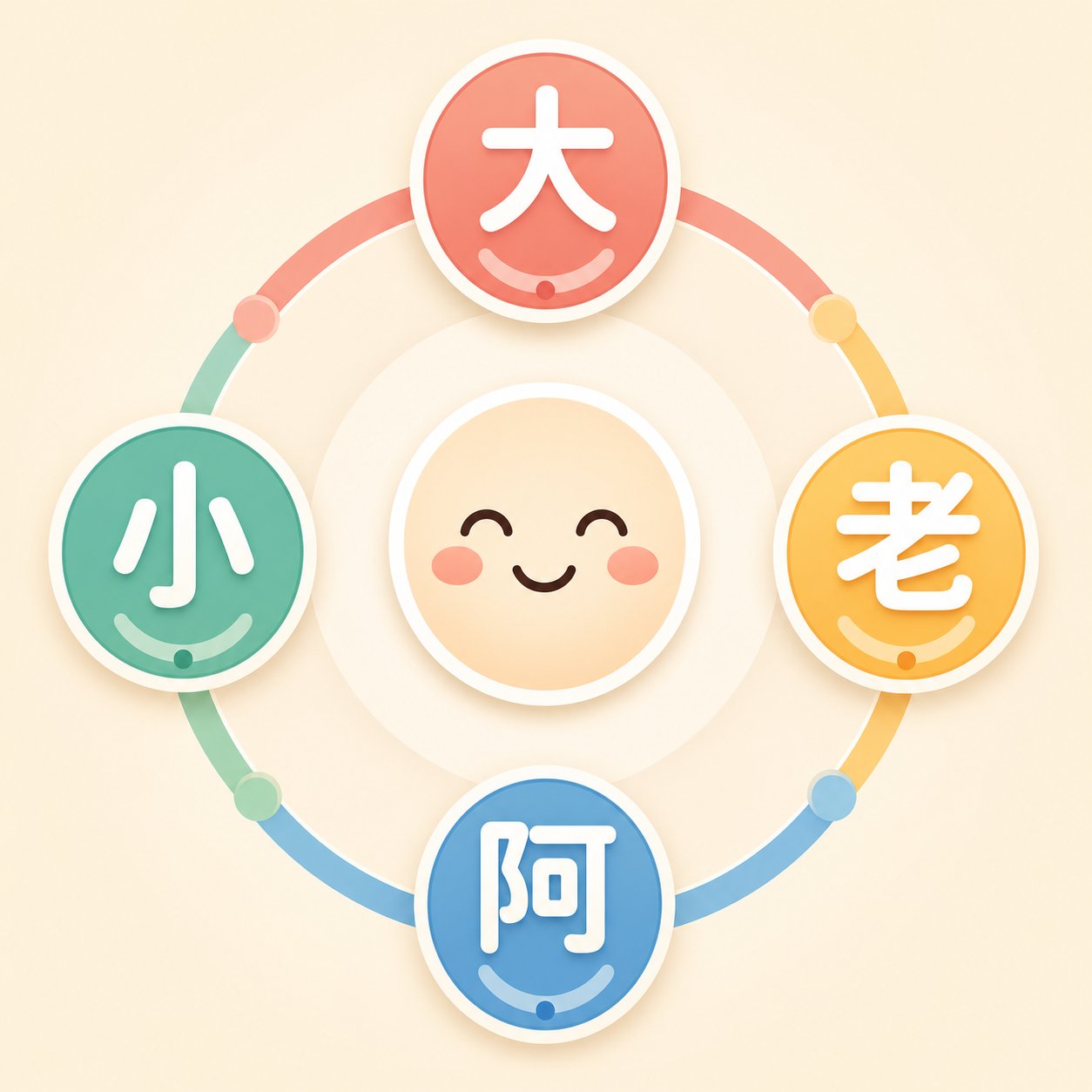
Imagine you have a toolkit with just a handful of pieces, and from those pieces you can build hundreds of affectionate names. That's essentially how do Chinese nicknames work. The language relies on a small set of prefixes that attach to names, nouns, or descriptors to instantly signal familiarity and warmth.
Here are the most common ones:
| Prefix | Pinyin | Literal Meaning | Example Nickname | Translation |
|---|---|---|---|---|
| 大 | da | Big | 大头 (da tou) | Big head |
| 小 | xiao | Small / Little | 小胖 (xiao pang) | Little chubby |
| 老 | lao | Old | 老王 (lao Wang) | Old Wang |
| 阿 | a | No direct meaning (familiar marker) | 阿宝 (a Bao) | Ah Bao (treasure) |
Each prefix carries a slightly different flavor. 小 (xiao) suggests youth and approachability, making it the go-to for peers and colleagues. 老 (lao) doesn't literally mean someone is elderly - it signals respect and long-standing familiarity, like calling a trusted coworker "Old Wang" even if he's 35. 阿 (a) dominates in Cantonese-speaking regions like Guangdong and Hong Kong, where it functions as a universal familiarity marker that softens any name it touches.
And then there's 大 (da), meaning "big." When paired with a physical trait like 头 (head), it creates a descriptor-based nickname that highlights a noticeable feature. The key insight: in this system, highlighting a feature isn't commentary. It's connection.
How Physical Attributes Become Terms of Endearment
Western nickname conventions tend to shorten names. Alexander becomes Alex. Elizabeth becomes Liz. The process is about convenience and casual tone, not description. A nickname in Chinese works differently. Rather than trimming syllables, it often adds a descriptor or repeats a character to create something new and emotionally loaded.
Physical-attribute nicknames like 大头 combine a size descriptor with a body part or trait. 小胖 (xiao pang, "little chubby") works the same way - it pairs the diminutive 小 with a physical quality. These labels don't function as observations about someone's body. They function as verbal shorthand for "I know you well enough to name you this way."
Beyond prefixes, reduplication is another core pattern. You take a single character from someone's name and double it: 明明 (Mingming), 娜娜 (Nana), 乐乐 (Lele). This repetition creates a rhythmic, almost musical quality that sounds inherently affectionate in Mandarin. Parents use doubled names for children constantly. The nickname chinese translation for these forms often sounds odd in English - "Ming-Ming" doesn't carry the same softness - but in Mandarin, the doubling signals love and closeness without any additional words needed.
What makes this system powerful is its instant readability. Any Chinese speaker hearing 大头 immediately understands three things: the speaker knows this person well, the relationship is informal, and the tone is affectionate. No explanation required. The prefix and structure do all the emotional heavy lifting.
This framework also explains why 大头 doesn't sting the way "big head" would in English. It's not a standalone comment plucked from thin air. It's a nickname built from the same familiar toolkit that produces 小虎 (little tiger), 老李 (Old Li), and 阿宝 (Ah Treasure). The structure itself communicates warmth, regardless of what the literal words describe.
Of course, structure only tells part of the story. The deeper question is why a "big head" specifically carries positive weight in Chinese culture, and that answer reaches back into folk beliefs about intelligence, fortune, and what a round face means for a child's future.
Cultural Significance of Big Head in Chinese Naming Traditions
In Chinese folk tradition, a child born with a large, round head isn't just cute. That child is considered lucky. The cultural weight behind 大头 as a nickname draws from centuries of belief connecting head size and shape to intelligence, prosperity, and future success. This is where the gap between Chinese and Western interpretations becomes most striking.
Big Head as a Sign of Intelligence and Good Fortune
Chinese physiognomy, the ancient practice of reading a person's destiny through their physical features, places enormous importance on the head. A full, round head is considered auspicious, signaling a life of wealth, nobility, and community respect. Prominent forehead bones specifically indicate great intellect and creativity, while a well-rounded skull suggests natural leadership ability.
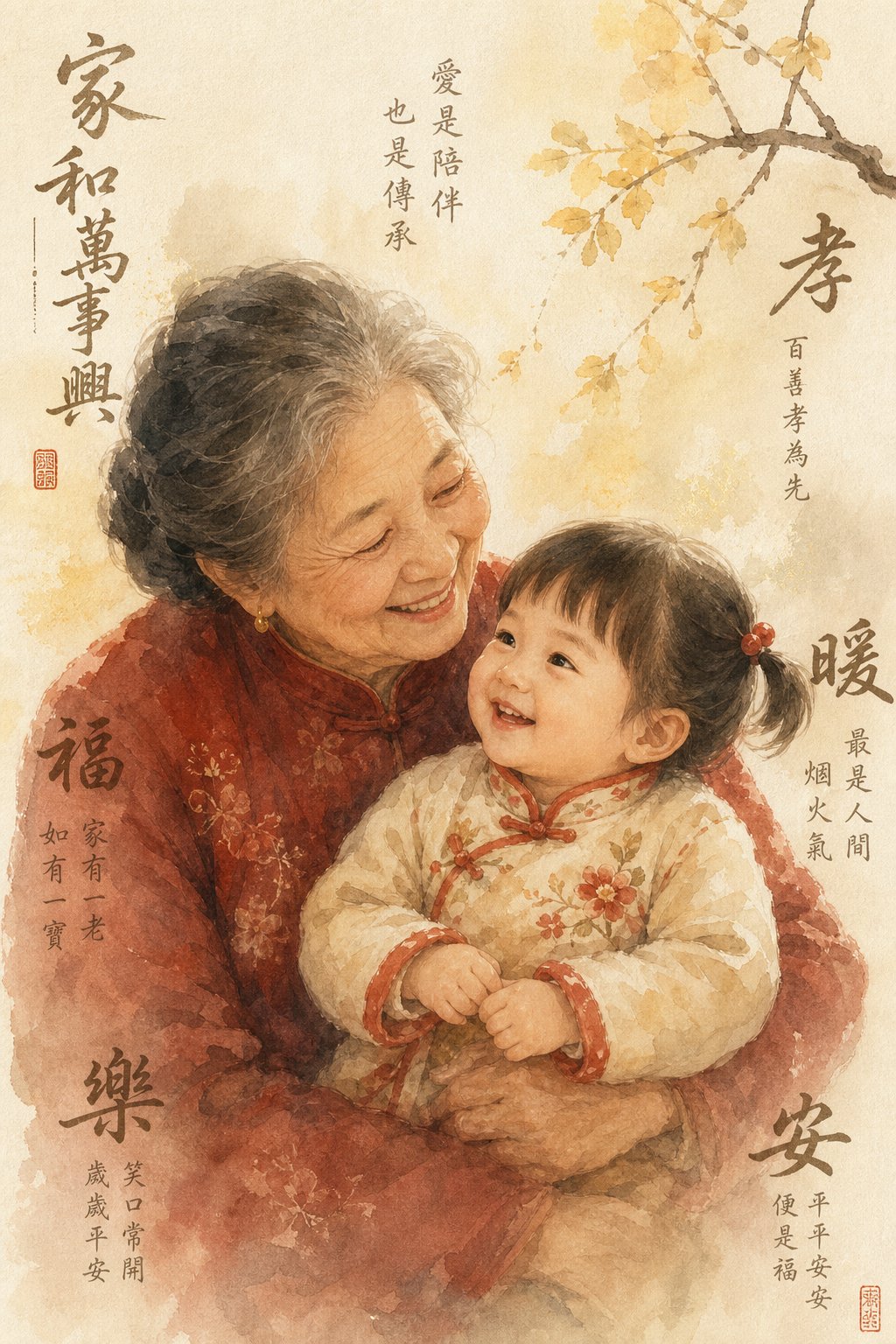
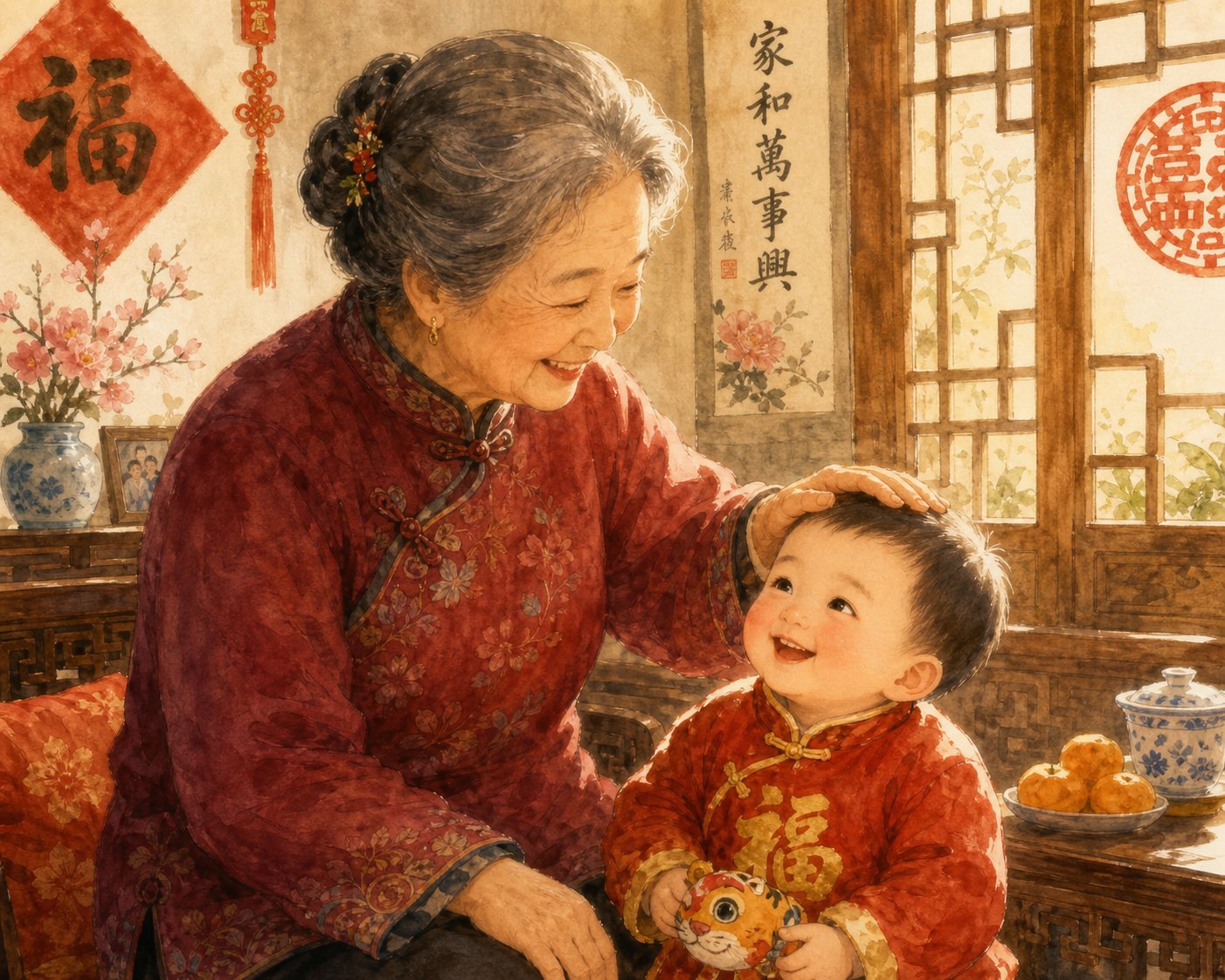
When a grandparent looks at a baby with a noticeably round face and calls them 大头, they're not pointing out something awkward. They're essentially saying, "This child will go far." The nickname carries an embedded blessing, a verbal nod to the folk belief that bigger heads house bigger futures.
Here are the positive connotations packed into this single term:
- Intelligence - A large head suggests mental sharpness and academic potential
- Prosperity - Round features are linked to wealth luck in Chinese face reading
- Cuteness - Babies with round heads and chubby cheeks are considered adorable
- Good luck - An auspicious head shape signals a smooth, fortunate life ahead
- Endearment - The nickname itself functions as a verbal hug from family members
Compare this to English, where "big head" almost always means someone is arrogant or full of themselves. The cultural wiring runs in completely opposite directions. Western speakers hear ego. Chinese speakers hear affection and optimism.
The Affectionate Use Among Family Members
Chinese nicknames for children often come from grandparents or parents who notice a physical trait early and turn it into a lifelong label of love. A baby with a round face becomes 大头. A chubby toddler becomes 小胖 (little chubby). These are among the most common affectionate nicknames in Chinese family life, and they stick well into adulthood.
The tradition of giving children informal names, called 小名 (xiao ming) or 乳名 (ru ming), is deeply rooted in Chinese culture. Parents and grandparents choose these endearing chinese nicknames to express love and care, and physical-attribute names like 大头 fit naturally into this practice. The nickname becomes a private family language, a word that carries years of shared warmth every time it's spoken.
So is calling someone 大头 rude or affectionate? Context determines everything. Within a family or among close friends, it's one of the most common cute chinese nicknames you'll hear. Between strangers or in formal settings, it could land differently. The relationship between speaker and listener is what gives the word its emotional charge.
Chinese affectionate nicknames built on physical traits work precisely because they require closeness to use. You wouldn't call a stranger 大头 any more than you'd call a stranger "sweetie" in English. The intimacy is the point. And that same principle of closeness-through-naming extends far beyond family circles, showing up in colorful idioms, Cantonese slang, and expressions that use 大头 in ways that are creative, humorous, and sometimes completely unexpected.

Chinese Idioms and Expressions That Use Big Head
The term 大头 doesn't stop at nicknames. It has burrowed deep into Chinese language, popping up in idioms, slang, and everyday expressions that range from gently teasing to laugh-out-loud funny. Some of these phrases are specific to Cantonese, others belong to Mandarin, and a few cross regional boundaries entirely. What they share is a playful creativity that turns "big head" into a surprisingly versatile linguistic building block.
If you enjoy funny chinese nicknames and wordplay, these expressions reveal just how inventive Chinese speakers get with a simple two-character phrase.
Big Head Prawn and Other Cantonese Expressions
Ever left your keys at home for the third time this week? In Hong Kong, someone would call you a 大头虾 (daai tau haa), literally "big head prawn." This Cantonese expression describes someone who is careless, absentminded, or just plain forgetful. The logic behind it? A prawn may have a big head, but there isn't much going on inside.
The beauty of this phrase is its tone. Being called a big head prawn isn't harsh. It's often used endearingly or self-deprecatingly. You might hear someone say it about themselves after forgetting their phone on the bus, or a friend might toss it out with a laugh when you show up to dinner at the wrong restaurant. It doesn't describe a permanent character flaw either - you can be a big head prawn just when you're stressed or distracted.
Cantonese speakers love building colorful slang from seafood and animals. The same culture that gave us 大头虾 also produced 炒鱿鱼 (caau yau yu, "stir-fried squid") meaning to get fired from a job, and 扮晒蟹 (baan saai haai, "acting like a crab") for someone who brags about their achievements. Shellfish and crustaceans, it turns out, carry a whole emotional vocabulary in Hong Kong slang.
Idioms and Slang Using 大头 in Mandarin
Mandarin takes 大头 in different directions. Some expressions are humorous, some are cautionary, and one is just a vegetable. Here's a breakdown of the most common ones:
| Chinese | Pinyin | Literal Meaning | Actual Meaning |
|---|---|---|---|
| 大头虾 | da tou xia | Big head prawn | A forgetful or careless person |
| 大头鬼 | da tou gui | Big head ghost | An exclamation of disbelief, like "nonsense!" or "no way!" |
| 大头菜 | da tou cai | Big head vegetable | Kohlrabi (a type of turnip); sometimes used as a playful insult |
| 大头症 | da tou zheng | Big head disease | Delusions of grandeur; someone who overestimates their importance |
| 冤大头 | yuan da tou | Wronged big head | A sucker or easy mark; someone who gets cheated or overpays |
Each of these expressions uses 大头 differently, which is part of what makes Chinese nicknames funny and the broader language so layered.
大头鬼 (da tou gui) is a dismissive exclamation. When someone tells you something unbelievable, you might respond with "大头鬼!" - roughly equivalent to "Yeah, right!" or "Get out of here!" The "big head ghost" isn't a real supernatural creature. It's just a colorful way to call something ridiculous.
大头症 (da tou zheng) is the one expression where "big head" does carry a negative meaning closer to the English sense. It describes someone who has an inflated sense of self-importance, acting as though they're more powerful or influential than they actually are. Interestingly, this is the exception that proves the rule. Chinese speakers needed a specific medical-sounding term (症 means "syndrome" or "disease") to make 大头 mean something negative. Without that suffix, the phrase defaults to warmth.
Then there's 冤大头 (yuan da tou), which paints a vivid picture of someone who gets taken advantage of financially. Imagine the person who always picks up the check, gets overcharged by vendors, or falls for obvious scams. That's the 冤大头. The "wronged" prefix flips the meaning entirely, turning "big head" from a term of endearment into a label for gullibility.
What's remarkable about all these expressions is how much emotional range a single two-character phrase can carry depending on context and surrounding words. 大头 alone is affectionate. Add 虾 and it becomes a gentle tease about forgetfulness. Add 症 and it becomes criticism. Add 冤 and it becomes sympathy mixed with exasperation. Chinese funny nicknames and idioms work this way constantly, building complex meanings from simple, modular parts.
This linguistic flexibility also explains why 大头 travels so easily from family kitchens to sports arenas. The same playful spirit that produces idioms about prawns and ghosts also fuels the creative nickname culture of Chinese fan communities, where athletes and celebrities receive elaborate labels that blend physical description with admiration.

Big Head in Chinese Sports and Celebrity Fan Culture
Fan communities take the same playful naming instincts found in families and idioms and amplify them across social media. Chinese celebrity nicknames aren't handed down by publicists or branding teams. They bubble up from millions of fans on platforms like Weibo, Douyin, and Bilibili, where creativity and humor determine which labels stick. Physical-attribute names like "big head" thrive in this environment because they're instantly memorable and carry that built-in warmth.
How Chinese Sports Fans Create Athlete Nicknames
The process is organic and fast. A fan notices something about an athlete, a physical feature, a playing style, a funny moment, and coins a nickname in a comment or post. If it resonates, thousands of users adopt it within hours. Platforms like Weibo function as nickname incubators where the wittiest, most layered creations rise to the top through shares and reposts.
Chinese nicknames for celebrities emerge this way because official phonetic translations of foreign names are often long and clunky. As The Guardian documented, a name like Russell Westbrook becomes an unwieldy eight-character string in Chinese. Fans naturally gravitate toward shorter, punchier alternatives that are easier to type and more fun to say. The result is a nickname culture driven entirely by fan creativity rather than athlete self-branding.
Chinese fans also use nicknames to express admiration and closeness. As one figure skating fan explained during the 2022 Winter Olympics, "It is a way for fans to express their affection for athletes." The nickname becomes a badge of popularity. When a player gets well-known enough in China, the community-sourced names start multiplying.
Famous Athletes Known by Big Head and Similar Names
The most direct example? Table tennis world number one Wang Chuqin. His coach gave him the nickname "Big Head" (大头) as a child because of his noticeably round head, and it followed him all the way to the Paris 2024 Olympics. According to Olympics.com, the name stuck on Chinese social media, and even his parents still call him by it. Wang himself mentioned during a livestream that he had a big head as a child, hence the nickname. There's zero mockery involved. It's pure familiarity.
The NBA fan community in China takes this creativity even further. Chinese NBA nicknames are legendary for their layered wordplay and cultural references. Here are some well-known examples of Chinese nicknames for NBA players that use physical descriptors or clever cultural allusions:
- LeBron James - 小皇帝 (xiao huangdi, "The Little Emperor"), a play on "King James" that also references China's one-child policy slang. The LeBron Chinese nickname works on multiple levels simultaneously.
- Steph Curry - 库昊 (ku hao), an elaborate pun where the characters rearrange to suggest he "dominates the sky" with his three-pointers. The Steph Curry Chinese nickname showcases the wordplay fans love.
- Charles Barkley - 飞猪 (fei zhu, "Flying Fat Pig"), referencing his ability to out-rebound taller, slimmer players despite his stocky build
- Manu Ginobili - 妖刀 (yao dao, "The Demon Blade"), alluding to his slashing drives and the martial arts trope of a powerful sword that occasionally turns on its owner
- Joel Embiid - 大帝 (da di, "The Great"), used with a hint of sarcasm suggesting the title is self-appointed
- Dirk Nowitzki - 德国战车 (deguo zhanche, "The German Panzer Tank"), a physical-power metaphor
What connects all these NBA Chinese nicknames is their fan-sourced origin. Nobody in a marketing department invented "Flying Fat Pig." Chinese netizens did, and the name endured because it captured something true about Barkley's game while being genuinely funny. Even newer players like Anthony Edwards receive creative Chinese labels as their popularity grows. The Anthony Edwards Chinese nickname culture follows the same pattern: fans watch, notice something distinctive, and coin a term that spreads virally.
The key distinction from Western sports culture is intent. American nicknames trend toward self-branding, initials and jersey numbers chosen by the athletes themselves. Chinese nicknames for celebrities and athletes are community property, created by fans as expressions of engagement and affection. Even when the names sound harsh in translation, like "fat pig" or "big head," they carry admiration underneath. The fan who bothers to invent a clever nickname is a fan who cares deeply.
This fan-driven naming culture raises a practical question, though. If physical-attribute nicknames signal closeness in Chinese, where exactly is the line? When does a playful label cross from endearing to inappropriate, and how do relationship dynamics, setting, and tone shift the meaning?
Chinese Nickname Etiquette for Big Head and Physical Descriptors
You now know that 大头 carries affection, humor, and cultural depth. But here's the practical question: can you actually use it? And if so, with whom? The answer depends entirely on context. The same nickname that makes a grandmother smile could make a colleague uncomfortable. Relationship closeness, setting, and tone act as the three invisible switches that flip a physical-attribute nickname from warm to awkward.
When Big Head Is Endearing Versus Inappropriate
Think of Chinese nickname etiquette as a series of concentric circles. The closer you are to the center, the more freedom you have with physical descriptors. Move outward toward strangers and formal environments, and those same words lose their warmth entirely.
Here's how the hierarchy works, ranked from most appropriate to least:
- Immediate family - Parents, grandparents, and siblings use 大头 freely. This is where the nickname originates and where it carries the most love. No risk of offense.
- Close friends from childhood - Friends who grew up together often keep physical-attribute nicknames for life. The shared history makes the label feel like an inside joke rather than a comment.
- Close peers and classmates - Among tight-knit friend groups, nicknames for chinese people within the circle are common and accepted. The group dynamic provides cover.
- Casual acquaintances - Here the ground gets shaky. Using a physical descriptor for someone you don't know well can feel presumptuous or overly familiar.
- Workplace and professional settings - Physical-attribute nicknames are generally inappropriate here. Chinese workplace culture relies on title-based or surname-based address like 王总 (Wang Zong) or 张老师 (Zhang Laoshi). Calling a colleague 大头 in a meeting would feel jarring.
- Strangers - Never appropriate. Using a physical descriptor for someone you've just met crosses a clear social boundary in any culture, Chinese included.
The pattern is straightforward: intimacy grants permission. Without an established relationship, a nickname for chinese people based on appearance reads as rude rather than affectionate, regardless of the speaker's intent.
Reading Social Context for Chinese Nickname Use
Beyond relationship closeness, a few other factors shape how physical-attribute nicknames land.
Tone and delivery matter enormously. The same word said with a laugh among friends and said flatly to a stranger carries completely different emotional weight. Chinese is a tonal language in more ways than one. The social tone, the warmth or coldness in someone's voice, determines whether 大头 registers as love or insult.
Generational differences play a role too. Older generations in China use physical-attribute nicknames more freely. Grandparents calling grandchildren 小胖 (little chubby) or 大头 is standard practice. Younger urban Chinese, especially those exposed to Western cultural norms around body image, may be more sensitive to appearance-based labels. This doesn't mean the tradition is dying, but awareness of individual preferences matters more than it did a generation ago.
Regional variation adds another layer. Cantonese speakers in Hong Kong and Guangdong tend to use the 阿 (a) prefix more heavily and deploy funny nicknames for chinese people with a particular flair for seafood metaphors and animal comparisons. Mandarin speakers in northern China lean toward 小 and 老 prefixes. The underlying principle is the same, closeness equals permission, but the specific vocabulary shifts by region.
For non-Chinese speakers, the safest approach is to understand these nicknames rather than use them. If a Chinese friend introduces themselves by a physical-attribute nickname, feel free to use it. They've given you explicit permission. But inventing one yourself for a Chinese acquaintance, especially based on appearance, risks crossing a line you can't see. The cultural fluency required to deploy these names correctly takes years of immersion, not just vocabulary knowledge.
What makes this etiquette system work is its flexibility. Chinese naming culture doesn't operate on rigid rules but on relational intelligence, reading the room, knowing your audience, and matching your language to the level of closeness you've actually earned. That same relational awareness extends into every other category of Chinese nicknames, from romantic pet names between couples to the creative internet-era labels that have nothing to do with physical traits at all.

Beyond Big Head and Other Popular Chinese Nickname Categories
Physical-attribute names like 大头 represent just one branch of a much larger naming ecosystem. Chinese nickname culture spans romantic relationships, friendships, family bonds, and the ever-evolving world of internet slang. Each category follows its own logic, draws from different emotional registers, and serves a distinct social purpose. Together, they paint a complete picture of how Chinese speakers use language to signal closeness, humor, and love.
If you've been focused on understanding the chinese nickname big head, broadening your view to these other categories shows just how rich and layered the entire system is.
Romantic and Couple Nicknames in Chinese
Chinese love nicknames between partners tend to fall into two camps: sweet and sincere, or playfully absurd. Both signal intimacy, just through different emotional channels.
The most universal couple nicknames in chinese include 亲爱的 (qin'ai de, "darling"), 宝贝 (bao bei, "treasure" or "baby"), and 亲亲 (qin qin, "dear one" or "kiss kiss"). These are gender-neutral and work for any stage of a relationship. You'll hear them constantly on Chinese social media, in text messages, and whispered in coffee shops across Beijing and Shanghai.
Chinese lover nicknames get more specific when gendered. Women often call their boyfriends 老公 (lao gong, "husband") even before marriage, or 哥哥 (gege, "older brother"), which signals family-level closeness rather than anything uncomfortable. Men reciprocate with 老婆 (lao po, "wife"), 小公举 (xiao gong ju, "little princess"), or 妹妹 (meimei, "little sister"). As Mandarin Blueprint notes, these family-term nicknames stem from Confucian values where invoking family relationships signals that someone is as close as kin.
Then there's the playfully absurd end of the spectrum. Chinese couple nicknames include 大野猪 (da yezhu, "big wild boar") for a boyfriend who's lovably clumsy, or 傻瓜 (shagua, "silly melon") for a partner who does something endearingly dumb. These work because the relationship is secure enough to absorb teasing. The insult is the affection.
Chinese nicknames for girlfriend and chinese nicknames for boyfriend choices often reveal something about the couple's dynamic. A woman who calls her partner 男神 (nan shen, "male god") is playfully stroking his ego. A man who calls his girlfriend 妞妞 (niu niu, "little girl") is emphasizing her youthful energy. Chinese nicknames for lovers function as a private language, a verbal shorthand that outsiders aren't meant to fully decode.
Friend and Internet Nicknames Beyond Physical Traits
Friendship nicknames in Chinese rely heavily on the prefix system covered earlier, but they also venture into territory that has nothing to do with appearance. Calling a friend 心肝 (xingan, "heart and liver") means they're so essential to your life that you couldn't survive without them. Calling someone 唐僧 (Tang Seng, the famous talkative monk) means they never stop talking. These cultural-reference nicknames require shared knowledge to land, which is exactly what makes them feel exclusive and bonding.
Internet-era Chinese nicknames have exploded the possibilities even further. Weibo and Douyin users coin terms that blend puns, memes, and pop culture at lightning speed. The viral 叶良辰 (Ye Liangchen) nickname, born from an arrogant chat screenshot that became a meme, is now shorthand for anyone who acts self-important. These digital nicknames spread faster than traditional ones and often have shorter lifespans, but they follow the same underlying principle: naming someone is claiming closeness to them.
Here's how the major nickname categories compare:
| Category | Example | Pinyin | English | Used Between |
|---|---|---|---|---|
| Physical attribute | 大头 | da tou | Big head | Family, close friends |
| Romantic | 宝贝 | bao bei | Treasure / Baby | Couples |
| Romantic (playful) | 大野猪 | da yezhu | Big wild boar | Girlfriend to boyfriend |
| Friendship | 心肝 | xingan | Heart and liver | Closest friends |
| Friendship (teasing) | 傻瓜 | shagua | Silly melon | Close friends, couples |
| Internet slang | 叶良辰 | Ye Liangchen | Arrogant person (meme) | Online communities |
| Children | 可乐 | kele | Cola (cute + happy) | Parents to children |
What connects every category is the same principle that makes 大头 work: nicknames in Chinese are relational tools. They don't just label someone. They define the space between two people. A romantic nickname says "we belong to each other." A friend nickname says "we share something no one else does." An internet nickname says "we're part of the same community."
Whether you're exploring chinese couple nicknames for a partner, looking for the right teasing label for a friend, or just trying to decode what Chinese fans are calling their favorite athlete, the underlying grammar is always the same. Closeness creates permission. Permission creates naming. And naming, in Chinese culture, is one of the most direct ways to say "you matter to me" without ever using those words.
Understanding Chinese Nicknames Across Cultures
Whether you arrived here as a language learner, a sports fan decoding athlete labels, or someone navigating a cross-cultural relationship, the thread running through every section is the same: Chinese nicknames are relational acts, not descriptions. 大头 doesn't describe a head. It describes a bond.
Key Takeaways About Chinese Nickname Culture
The best chinese nicknames, from 大头 to 小胖 to 宝贝, all operate on one shared principle. They measure closeness, not appearance, not ego, not status. A physical-attribute nickname signals that two people have crossed the threshold from polite distance into genuine familiarity. That's why the same word can sound loving from a grandmother and strange from a stranger.
Here's what to carry with you:
- Common chinese nicknames built on physical traits are affectionate by default. Context and relationship determine tone, not the literal words.
- The prefix system (大, 小, 老, 阿) gives you a reliable framework for recognizing and understanding nicknames when you encounter them.
- Cool chinese nicknames in fan culture follow the same warmth principle, just scaled up to millions of people expressing collective admiration.
- Etiquette is relational, not rule-based. Intimacy grants permission. Without it, hold back.
In Chinese culture, giving someone a nickname based on how they look is not a comment about their body. It is a statement about how close you are to their heart.
Practical Tips for Cross-Cultural Nickname Understanding
If you want to go deeper, language exchange apps and conversation partners will teach you more than any chinese nickname generator ever could. Real fluency with nicknames comes from hearing them used in context, noticing who says what to whom, and feeling the warmth that no translation captures.
For cross-cultural couples, ask your partner about their 小名. That childhood nickname carries family history, folk beliefs, and years of love compressed into two syllables. Understanding it means understanding them at a level most outsiders never reach.
Chinese naming culture, as Temple University's Center for Chinese Language Instruction emphasizes, reflects philosophical traditions and social customs that go far beyond simple labels. Names carry culturally rich meanings and a personal history that the bearer often embraces throughout their life. The same is true for nicknames. Learning to read them correctly unlocks a layer of Chinese interpersonal communication that textbooks rarely cover but daily life constantly reveals.
Frequently Asked Questions About the Chinese Nickname Big Head
1. Is calling someone big head in Chinese considered rude or offensive?
In most contexts, calling someone 大头 (da tou) in Chinese is affectionate rather than rude. Within families and close friendships, it functions as a term of endearment similar to calling someone 'buddy' in English. Chinese folk tradition associates a large, round head with intelligence, good fortune, and cuteness, especially in children. However, context matters. Using it with strangers or in professional settings would be inappropriate, just as overly familiar language would be in any culture. The relationship between speaker and listener determines whether the nickname lands as loving or awkward.
2. What does big head prawn mean in Cantonese slang?
大头虾 (daai tau haa), literally 'big head prawn,' is a popular Cantonese expression describing someone who is forgetful, careless, or absentminded. The humorous logic is that a prawn has a big head but not much going on inside it. The phrase is typically used in a lighthearted, self-deprecating way rather than as a harsh insult. You might hear someone call themselves a big head prawn after leaving their keys at home or showing up to the wrong restaurant. It describes a temporary state of distraction rather than a permanent character flaw.
3. How do Chinese fans create nicknames for NBA players and athletes?
Chinese sports fans organically create nicknames on platforms like Weibo and Douyin. The process starts when a fan notices something distinctive about an athlete, whether a physical trait, playing style, or memorable moment, and coins a creative label. If the nickname resonates with the community, it spreads virally within hours. These fan-sourced names often use wordplay, cultural references, and physical descriptors. For example, LeBron James is called 小皇帝 (Little Emperor), and Steph Curry is known as 库昊, a clever pun suggesting he dominates the sky with three-pointers. Unlike Western athlete branding, these nicknames are community property expressing collective admiration.
4. What are common Chinese nickname prefixes and how do they work?
Chinese nicknames are built from a small set of recognizable prefixes that instantly signal familiarity and warmth. The four most common are: 大 (da, big) for highlighting a noticeable trait, 小 (xiao, small/little) for suggesting youth and approachability, 老 (lao, old) for signaling respect and long-standing familiarity regardless of actual age, and 阿 (a) as a universal familiarity marker especially popular in Cantonese regions. These prefixes attach to names, nouns, or physical descriptors to create affectionate labels. Any native speaker hearing a prefix-based nickname immediately understands the relationship is informal and the tone is warm.
5. What are popular romantic and couple nicknames in Chinese?
Chinese romantic nicknames range from sweet and sincere to playfully absurd. Universal terms include 亲爱的 (qin'ai de, darling), 宝贝 (bao bei, treasure/baby), and 亲亲 (qin qin, dear one). Gendered options include women calling partners 老公 (lao gong, husband) even before marriage, while men use 老婆 (lao po, wife) or 小公举 (xiao gong ju, little princess). On the playful end, couples use teasing names like 傻瓜 (shagua, silly melon) or even 大野猪 (da yezhu, big wild boar) for a lovably clumsy partner. These nicknames function as private language that defines the couple's unique dynamic.