Why Chinese Has Dozens of Nicknames for Older Brother
In English, you get one word: brother. Maybe "bro" if you're feeling casual. That's about it. In Chinese, the options for addressing an older brother stretch into the dozens, each carrying a different emotional weight, social signal, and level of formality. Why does one language need so many terms for the same family relationship?
The answer sits at the intersection of language and culture. Saying "older brother in Chinese" is never just a matter of translation. It's a choice that reveals how close you are to someone, how formal the situation is, and even which region of China you come from. The term you pick tells a story before you even finish your sentence.
Why Chinese Has So Many Ways to Say Older Brother
Chinese kinship vocabulary is famously specific. Where English lumps relatives into broad categories like "uncle" or "cousin," Mandarin splits them into precise terms based on age, gender, paternal vs. maternal lineage, and social context. The word for brother in Chinese isn't a single entry. It's an entire spectrum, from the classical 兄 (xiong) used in literature and formal letters, to the everyday 哥 (ge) you'd hear on any street corner, all the way to 小哥哥 (xiao gege), a flirty internet term fans use for attractive young men online.
This isn't random complexity. It's a system built over thousands of years, shaped by a culture that treats family hierarchy as the foundation of social order. When you explore the family tree Chinese families maintain, you'll notice every branch has its own vocabulary, and birth order sits at the center of it all.
The Confucian Roots of Sibling Hierarchy
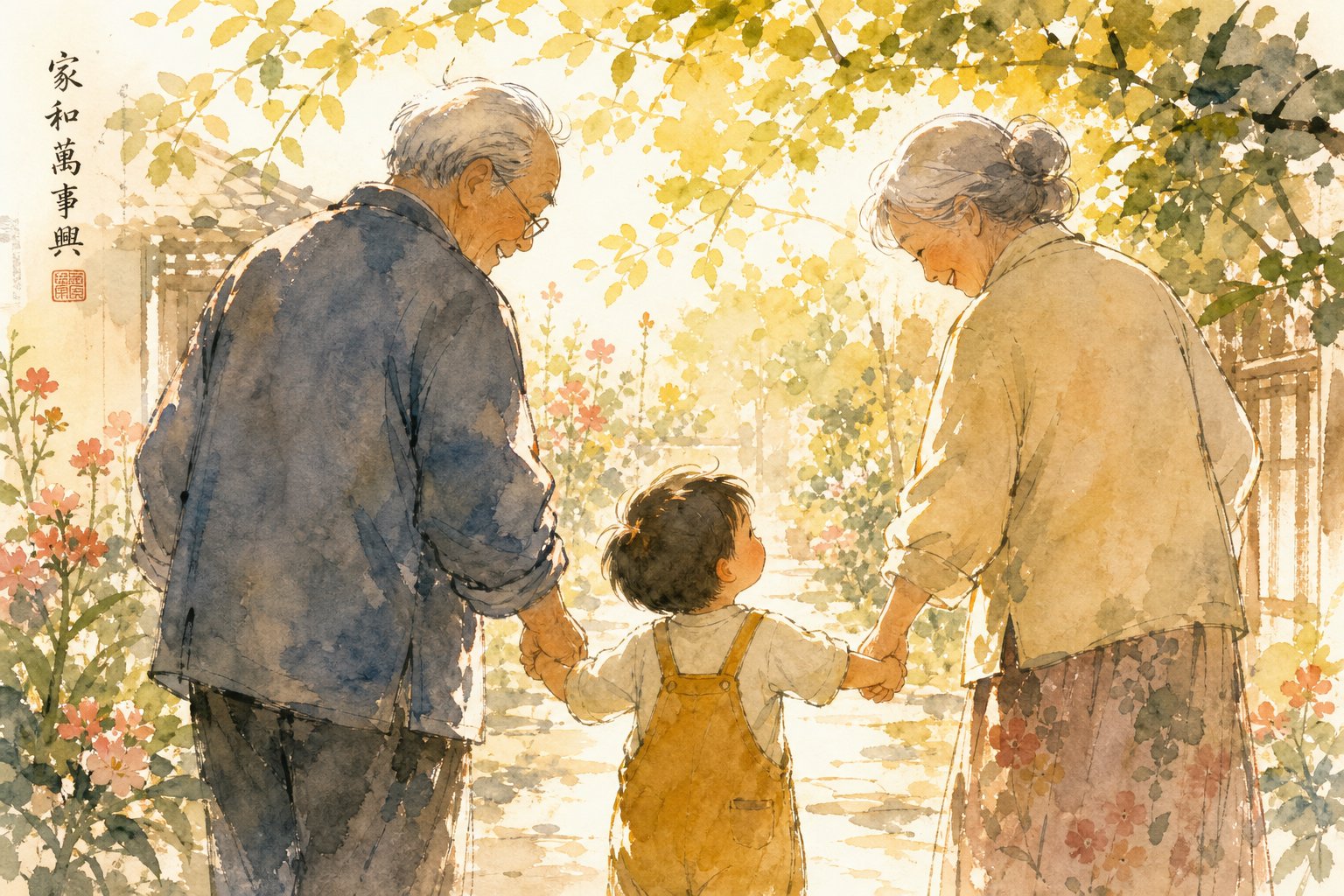
Confucianism, the philosophical system that shaped Chinese society for over two millennia, placed family at the core of all social organization. The concept of 孝顺 (xiaoshun), or filial piety, demanded that younger family members show respect and obedience to elders. This wasn't just a suggestion. It was the moral code that governed daily life.
Within a Chinese family, birth order determined responsibilities, inheritance, and even how you spoke to one another. The eldest brother carried authority second only to the father. Younger siblings were expected to defer to him, address him with appropriate respect, and recognize his position in the household hierarchy.
In traditional Chinese culture, your position in the family hierarchy isn't just about who was born first. It shapes how people speak to you, what they expect from you, and which words they use to address you for the rest of your life.
This Confucian emphasis on hierarchy and roles is directly reflected in the precise way that relatives are classified using different names in Chinese. The language didn't develop dozens of nicknames for older brother by accident. Each term evolved to mark a specific relationship dynamic, whether that's the warmth between siblings, the respect owed to an elder, or the playful affection between friends who treat each other like family.
What makes Chinese nicknames for older brother fascinating for learners is that vocabulary alone won't get you far. You need to understand the social rules behind each choice. Use the wrong term and you might sound overly formal, accidentally flirtatious, or even disrespectful. The sections ahead break down every major term, from the standard 哥哥 (gege) that every beginner learns, through the numbered system families use for multiple brothers, to the slang that Gen Z speakers have reinvented for the internet age.
Gege and Ge: The Everyday Terms Everyone Should Know
If you learn only one way to say older brother Chinese speakers actually use in daily life, make it 哥哥 (gege). This is the default, the go-to, the term that covers almost every situation where you need to address or refer to an older male sibling. Its shortened form, 哥 (ge), works like a quick verbal shortcut between people who already share familiarity. The difference between the two is subtle but meaningful, and native speakers pick up on it instantly.
哥哥 (Gege): The Standard Older Brother
哥哥 (gege) is a compound word formed by repeating the character 哥 twice. This repetition isn't filler. In Mandarin, doubling a kinship term creates a warmer, more affectionate tone. Think of it as the difference between saying "brother" and "big brother" in English, except the emotional weight is baked directly into the word structure.
When you call someone 哥哥, you're signaling closeness. It's the term younger siblings use at home, the word children grow up hearing, and the form that carries the most emotional warmth. It works whether you're a younger brother or a younger sister addressing your older male sibling.
Here's how it sounds in real conversation:
- 哥哥,你今天回来吃饭吗? (Gege, ni jintian huilai chi fan ma?) — "Brother, are you coming home for dinner today?"
- 我哥哥很聪明。 (Wo gege hen congming.) — "My older brother is very smart."
- 我和哥哥一起长大的。 (Wo he gege yiqi zhangda de.) — "I grew up together with my older brother."
You'll notice that gege meaning in Chinese goes beyond a simple label. It carries affection, familiarity, and a sense of family bond. This is the term dramas get right, and it's the one most learners encounter first when studying brother in Chinese Mandarin.
哥 (Ge): The Casual Shortcut
Drop one syllable and the whole register shifts. 哥 (ge) on its own is faster, more casual, and often used between people who don't need the extra warmth of the full doubled form. You'll hear it constantly in everyday Mandarin, especially among teenagers, young adults, and anyone in a hurry.
The single-syllable 哥 works best in these situations:
- Calling out to your brother quickly: 哥,等一下! (Ge, deng yixia!) — "Bro, wait up!"
- Referring to someone else's older brother casually: 你哥呢? (Ni ge ne?) — "Where's your brother?"
- Attaching it after a surname as a friendly title: 王哥 (Wang ge) — "Brother Wang"
The emotional difference is real. 哥哥 feels like a warm hug. 哥 feels like a fist bump. Both are appropriate, but they signal different levels of intimacy and formality. A five-year-old calling for their brother at home will almost always say 哥哥. A college student texting their older sibling about weekend plans will likely just type 哥.
Pronunciation Guide With Tone Marks
Getting the tone right matters. Mandarin is a tonal language, and mispronouncing the tone can change meaning entirely. Both 哥哥 and 哥 use the first tone (high and flat), which makes them relatively straightforward for beginners.
Imagine holding a single musical note steady without letting your pitch rise or fall. That's first tone. The vowel sound "e" in ge is pronounced like the "u" in the English word "duh" but shorter and cleaner. It's not "gay" and it's not "guh." It sits somewhere in between, closer to a soft, open "guh" with rounded lips.
| Term | Pinyin | Tone | Literal Meaning | Typical Usage Context |
|---|---|---|---|---|
| 哥哥 | gege | 1st tone + neutral tone | Older brother (affectionate) | Family conversations, younger siblings addressing older brothers directly, warm and intimate settings |
| 哥 | ge | 1st tone | Brother (casual) | Quick address between familiar people, combined with surnames as a friendly title, texting and informal speech |
One detail worth noting: in natural speech, the second syllable of 哥哥 often shifts to a neutral tone. So instead of two equally stressed first-tone syllables, you'll hear the first ge at full pitch and the second ge slightly lighter and unstressed. This is standard Mandarin pronunciation, not slang or laziness.
Whether you choose the full gege or the clipped ge depends entirely on your relationship with the person and the moment you're in. Both are correct brother in Mandarin terms. The real skill isn't knowing the words exist. It's reading the social situation well enough to pick the right one. And when families have more than one older brother to address? That's where the numbering system comes in.

The Numbering System When You Have Multiple Older Brothers
Imagine you're the youngest in a family with three older brothers. You can't just yell "ge" across the dinner table and expect the right person to look up. Chinese solves this problem with an elegant numbering system that slots each elder brother into a clear, ranked position. The eldest brother in Chinese is 大哥 (dage), the second is 二哥 (erge), the third is 三哥 (sange), and the pattern continues as far as the family tree stretches.
大哥, 二哥, 三哥: The Numbering System for Multiple Brothers
The logic is simple: place a number before 哥 to indicate birth order. The only exception is the eldest, who gets 大 (da, meaning "big" or "great") instead of the number one. This isn't just a counting trick. It reflects the special status the oldest in Chinese family culture holds. The big brother in Chinese households traditionally carries extra responsibility, acting as a secondary authority figure and protector for younger siblings.
Here's the full sequence you'll encounter in families with multiple brothers:
- 大哥 (dage) — First tone + first tone. The eldest brother. Carries the most authority and respect among siblings. You'll never hear 一哥 (yige) used in its place within families.
- 二哥 (erge) — Fourth tone + first tone. The second oldest brother. Often perceived as the middle ground between the serious eldest and the more relaxed younger brothers.
- 三哥 (sange) — First tone + first tone. The third oldest brother. Less common in modern nuclear families but still widely used in extended family settings.
- 四哥 (sige) — Fourth tone + first tone. The fourth oldest brother. Rare in contemporary families but appears in period dramas and large traditional households.
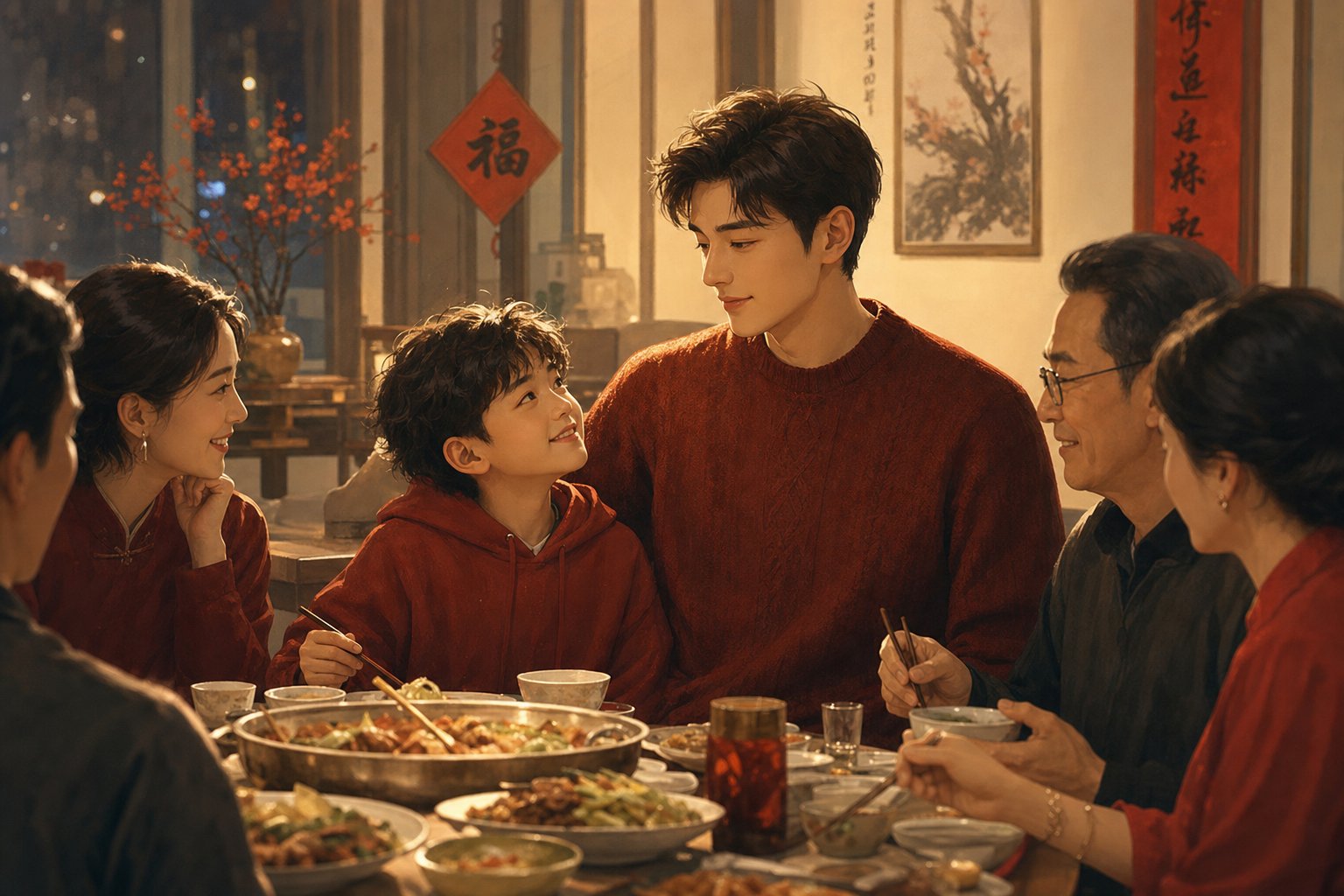
In practice, these terms feel natural and warm. Picture a family dinner where the youngest daughter calls out: "大哥,把盐递给我" (Dage, ba yan di gei wo) — "Eldest brother, pass me the salt." Meanwhile, she might turn to another sibling and say: "二哥,你明天有空吗?" (Erge, ni mingtian you kong ma?) — "Second brother, are you free tomorrow?" Each number instantly identifies who she's talking to without any confusion.
The elder brother in Chinese family dynamics isn't just a label. 大哥 signals that this person is the oldest in Chinese sibling hierarchy, the one who shoulders the most expectation and often mediates between parents and younger children. The numbered system makes these roles audible every time someone speaks.
How Modern Families Use Brother Numbers for Cousins
Here's where things get interesting for learners. China's One Child Policy, enforced from 1979 to 2016, meant that an entire generation grew up without biological siblings. Chinese families used to have an average of four children each, but the policy reduced most urban households to a single child. So who are all these 大哥 and 二哥 terms being used for today?
Cousins. Close family friends. Neighbors who grew up alongside you. The numbering system didn't disappear with smaller families. It simply expanded beyond blood siblings.
Sociologist Vanessa Fong's research on Chinese "singletons" found that many only children struggled to even distinguish between siblings and cousins as concepts. When asked if they had brothers or sisters, they'd respond: "Oh, I'm talking about my aunts' children." For these only children, a paternal cousin older than them naturally became 堂哥 (tangge) or simply 大哥, filling the emotional role that a biological eldest brother would have occupied.
This practice remains widespread. A child with no siblings might call their oldest male cousin 大哥 at every family gathering, their second-oldest male cousin 二哥, and so on. The Chinese family tree vocabulary supports this flexibility. Terms like 堂哥 (tangge, paternal uncle's son older than you) and 表哥 (biaoge, maternal uncle's or aunt's son older than you) exist for precision, but in casual family settings, many speakers drop the 堂 or 表 prefix entirely and just use the numbered 哥 system.
Even children born after the policy's relaxation often have only one sibling at most. The cousin-as-brother habit has become so ingrained that it now feels like standard practice rather than a workaround. You'll hear a twenty-something in Shanghai refer to their mother's sister's son as 二哥 without a second thought, no biological sibling relationship required.
This flexibility is part of what makes Chinese nicknames for older brother so rich. The numbered system isn't locked to genetics. It maps onto emotional closeness and family structure, adapting as Chinese society itself changes. And while these numbered terms stay grounded in real family relationships, other forms of 哥 drift into far more formal territory, carrying the weight of classical literature and centuries of written tradition.
Formal and Literary Terms for Older Brother
The numbered system and casual 哥 forms handle everyday family life. But open a classical Chinese novel, watch a period drama set in imperial China, or read a formal letter between educated friends, and you'll encounter a completely different register. The character 兄 (xiong) and its compounds occupy the high end of the formality spectrum, a space where respect, distance, and literary tradition converge.
兄 (Xiong): The Literary and Formal Register
兄 (xiong, first tone) is the oldest and most formal way to say older brother in Mandarin. In classical Chinese texts, it stood alone as the standard term. Today, it rarely appears in casual speech. You won't hear a teenager call their brother 兄 at the breakfast table. It would sound like quoting Shakespeare to ask someone to pass the cereal.
Where you will encounter it:
- Period dramas: Characters in historical settings use 兄 constantly. In the popular drama Nirvana in Fire, younger characters address their senior companions as "Su xiong" (苏兄), meaning "Brother Su" in a respectful, peer-level way.
- Formal letters: When writing to a male friend or colleague of similar age, educated Chinese speakers sometimes use 兄 as a polite closing or address. Think of it as the Chinese equivalent of "Dear Sir" but warmer.
- Literary fiction: Novels set in ancient or republican-era China use 兄 to signal the social class and education level of characters.
Two important compounds build on this character. 兄长 (xiongzhang) adds 长 (zhang, meaning "elder" or "senior"), creating an even more respectful form. This is chinese for older brother at its most deferential. A speaker using 兄长 acknowledges not just the sibling relationship but the authority and seniority of the person they're addressing. You'll hear it in dramas when a character speaks to an older brother they deeply respect or haven't seen in years.
Then there's 仁兄 (renxiong), which pairs 仁 (ren, meaning "benevolent" or "kind") with 兄. This term appears almost exclusively in literary or period contexts. It's the kind of address two scholars might exchange in a teahouse during the Tang Dynasty. Using it in a modern coffee shop would get you puzzled stares.
In a formal letter between friends, you might read: "仁兄近来可好?久未通信,甚为挂念。" (Renxiong jinlai ke hao? Jiu wei tongxin, shen wei guanian.) — "Dear brother, have you been well lately? It has been long since we corresponded, and I miss you greatly."
When Formal Brother Terms Appear in Modern Life
If you're wondering how to write brother in Chinese for a formal context, 兄 is your answer. But knowing when to use it matters more than knowing it exists. Here's a quick way to think about the formality spectrum:
| Term | Register | Where You'll Hear It | Modern Equivalent Feel |
|---|---|---|---|
| 哥 (ge) | Casual | Daily conversation, texting | "Bro" |
| 哥哥 (gege) | Warm, familiar | Family settings, close relationships | "Big brother" |
| 兄 (xiong) | Formal, literary | Period dramas, formal writing, educated speech | "Dear brother" (in a letter) |
| 兄长 (xiongzhang) | Very formal, respectful | Historical fiction, ceremonial contexts | "Esteemed elder brother" |
| 仁兄 (renxiong) | Archaic, literary | Classical texts, period dramas between scholars | "My good sir" (among peers) |
For learners, the practical takeaway is straightforward. If you're watching a historical drama and hear 兄 or 兄长, you now know it's the formal older brother in Mandarin register at work. If you're writing a creative piece set in ancient China, these terms add authenticity. But in any modern conversation, stick with 哥哥 or 哥 unless you're deliberately being playful or ironic.
That ironic, playful dimension is exactly where things get interesting. Beyond the formal-casual axis, Chinese speakers have developed an entire layer of affectionate, slang, and context-dependent nicknames that bend the rules of both registers.

Affectionate and Slang Nicknames Beyond the Basics
So how do you say brother in Chinese when you're not talking about an actual sibling? This is where the language gets creative. Beyond the standard family terms and the formal literary register, Mandarin has a rich layer of affectionate, playful, and street-level nicknames built on 哥. These terms blur the line between family and friendship, formality and humor, respect and irony. The same word can feel like a warm handshake or a veiled threat depending on who says it and how.
老哥, 阿哥, and 哥们: Affectionate and Slang Variants
Each of these terms occupies its own social niche. 老哥 (laoge) literally translates to "old brother," but don't let the word "old" mislead you. The prefix 老 here signals familiarity and warmth, not age. It's the term you'd use for a buddy you've known for years, someone you trust and feel comfortable around. Picture two guys who went to college together grabbing beers a decade later. That's 老哥 territory. GoEast Mandarin describes it as carrying an "informal or affectionate tone" that adds emphasis to the brotherly bond.
阿哥 (age) carries a different flavor entirely. The prefix 阿 (a) is common in southern Chinese dialects and gives the word a regional, slightly old-fashioned feel. If you've watched the classic drama Mo Li Hua or any Qing Dynasty period piece, you've heard 阿哥 used as a title for imperial princes. Outside of historical contexts, it survives in Cantonese-influenced speech and among older speakers in certain regions. For most young Mandarin speakers today, 阿哥 sounds either charmingly retro or deliberately theatrical.
Then there's 哥们 (gemen) and its Beijing-accented variant 哥们儿 (gemenr). This is pure brotherhood slang. It doesn't refer to a single older brother. It means "the boys," "my guys," or "bros" as a collective. You'll hear it constantly in northern China, especially Beijing, where the erhua (儿) suffix adds that distinctive local color. Two friends greeting each other might say: "哥们儿,最近怎么样?" (Gemenr, zuijin zenmeyang?) — "Bro, how've you been?" It's exclusively male-coded and signals casual, equal-status friendship rather than any age hierarchy.
Calling Non-Relatives 哥: The Social Rules
Here's something that surprises many learners: Chinese speakers routinely call people 哥 who aren't brothers, cousins, or even friends. The ge ge Chinese speakers attach to strangers follows specific social rules that native speakers absorb instinctively.
When you encounter someone slightly older than you in a casual setting, a service worker, a colleague, or a neighbor, adding 哥 after their surname creates instant friendliness. DigMandarin notes that using 大哥 or 哥 for people "not much older than you" helps "show respect or establish a more friendly tone." A delivery driver might be called 快递小哥 (kuaidi xiao ge). A street vendor you buy breakfast from every morning might become 张哥 (Zhang ge) after a few visits.
The unwritten rules are straightforward:
- The person should be roughly your age or slightly older. Calling someone significantly younger than you 哥 sounds sarcastic.
- The context should be casual or semi-casual. You wouldn't call your boss 哥 in a board meeting.
- Gender matters. 哥 is exclusively for males. The female equivalent is 姐 (jie).
- Tone of voice seals the deal. A warm, genuine tone makes 哥 feel respectful. A flat or exaggerated tone can flip it into mockery.
This non-familial usage is one of the reasons the gege Chinese meaning extends far beyond biology. It's a social tool, a way to build rapport quickly with someone you might not know well but want to treat with casual warmth.
How Context Changes Everything About 大哥
No term in this entire vocabulary demonstrates context-dependence better than 大哥 (dage). Within a family, it simply means "eldest brother." Step outside the family and it becomes a chameleon.
Imagine three scenarios. A young woman approaches a man on the street who looks a few years older and asks: "大哥,请问地铁站怎么走?" (Dage, qingwen ditie zhan zenme zou?) — "Brother, could you tell me how to get to the subway?" That's polite and perfectly normal. She's using 大哥 the way English speakers might say "sir" to a stranger, but warmer.
Shift the scene. A group of friends is teasing one member who just said something ridiculous. Someone responds with a drawn-out, exasperated "大哥..." and an eye roll. Here, 大哥 drips with sarcasm. It means something closer to "dude, seriously?" or "come on, man." The tone does all the work.
Third scenario. A crime drama. A gang member addresses the leader as 大哥. In this context, it carries weight, loyalty, and a clear power dynamic. It's the Chinese equivalent of "boss" in mafia films, signaling deference to the top of a hierarchy that exists outside legal structures.
Same two characters. Three completely different meanings. This is why brothers in Chinese culture and language can't be reduced to a simple vocabulary list. The social context, your tone of voice, and your relationship to the listener determine everything.
| Nickname | Pinyin | Tone/Register | Typical Context | Connotation |
|---|---|---|---|---|
| 老哥 | laoge | Casual, warm | Between close male friends, long-time buddies | Affectionate, familiar, equal-status |
| 阿哥 | age | Regional, historical | Southern dialects, period dramas, older speakers | Retro charm, regional identity, princely (historical) |
| 哥们/哥们儿 | gemen/gemenr | Slang, northern | Male friend groups, casual greetings, Beijing dialect | Brotherhood, camaraderie, "the boys" |
| 大哥 (polite) | dage | Respectful, friendly | Addressing slightly older male strangers | Warm respect, approachable |
| 大哥 (sarcastic) | dage | Ironic, exasperated | Friends teasing each other, expressing disbelief | "Dude, seriously?" / mild frustration |
| 大哥 (underworld) | dage | Deferential, hierarchical | Crime dramas, gang dynamics, power structures | Boss, leader, loyalty and authority |
What ties all these variants together is flexibility. Chinese nicknames for older brother aren't fixed labels. They're living tools that speakers reshape in real time based on who they're talking to, where they are, and what they want the word to accomplish. The same syllable can build a bridge or draw a boundary. And while Mandarin speakers across China share most of these terms, the story shifts dramatically once you cross into different dialect regions, where entirely separate vocabularies for "older brother" have evolved in parallel.
Regional and Dialect Variations Across Chinese Languages
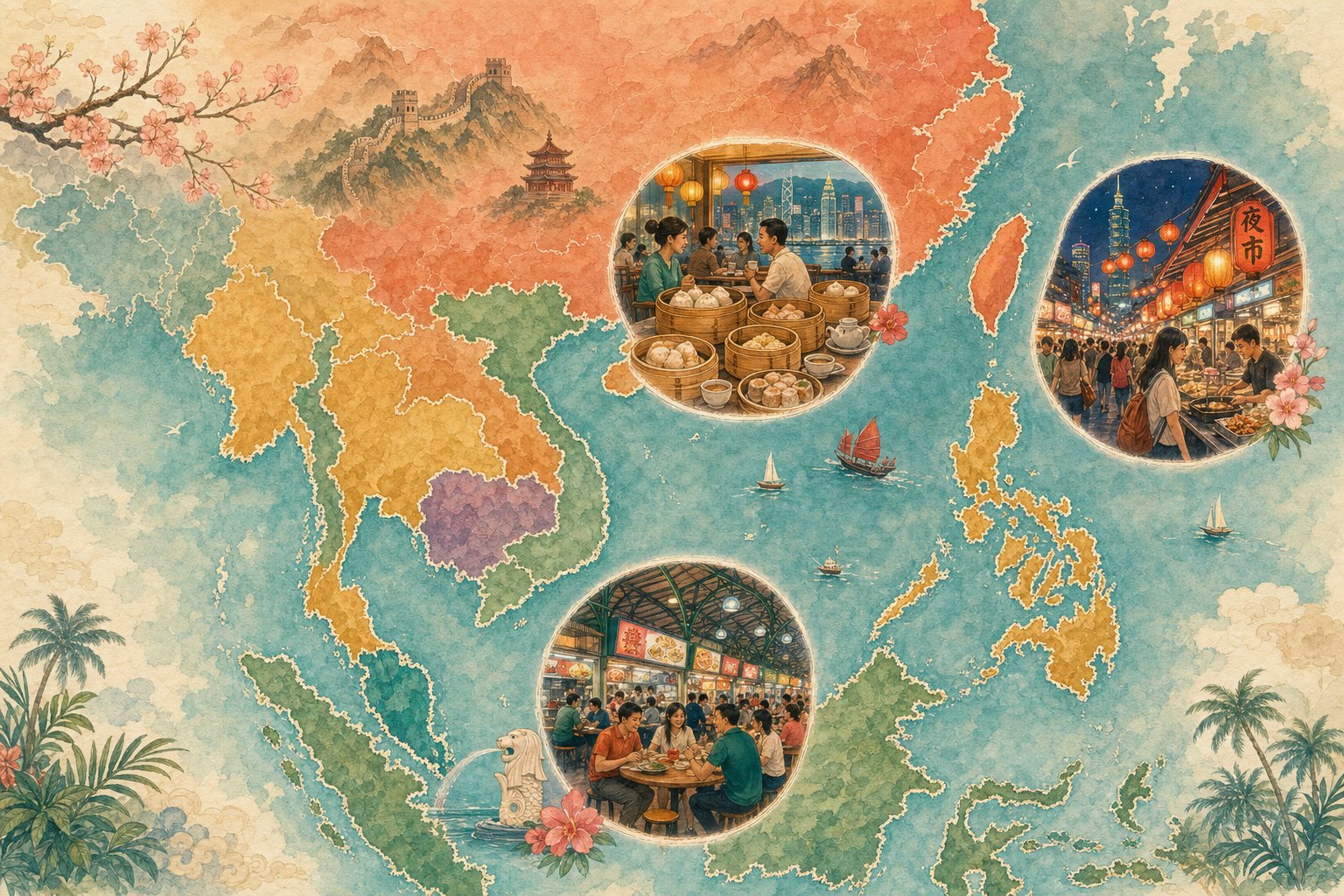
Mandarin dominates textbooks and language apps, but millions of Chinese speakers grow up using entirely different words for "older brother." If you interact with Chinese siblings in diaspora communities, from Chinatowns in San Francisco to hawker centers in Singapore, you'll quickly discover that the Mandarin terms covered so far are only part of the picture. Cantonese, Hokkien, Taiwanese, and Shanghainese each developed their own vocabulary for family in Chinese language traditions, and these dialect terms carry distinct pronunciations, emotional textures, and cultural associations that Mandarin equivalents simply can't replicate.
Cantonese Nicknames for Older Brother
Cantonese, spoken by roughly 85 million people across Hong Kong, Macau, Guangdong province, and overseas communities worldwide, has two primary ways to address an older brother. The first is familiar: 哥哥, written with the same characters as Mandarin but pronounced completely differently. In Cantonese romanization (Jyutping), it's go4 go1, with a falling tone on the first syllable and a high-level tone on the second. The sound is rounder and more open than Mandarin's gege, closer to "gaw-goh" for English speakers.
The second term is where Cantonese truly diverges. 大佬 (daai6 lou2) literally translates to "big guy" or "big boss," but within Cantonese family vocabulary it functions as a casual, affectionate way to say "elder brother." It's the term you'll hear in Hong Kong households, in TVB dramas, and among Cantonese-speaking families abroad. Unlike the more neutral 哥哥, 大佬 carries a streetwise, slightly rough-around-the-edges warmth. Imagine the difference between calling someone "big brother" versus "big man" in English. Both are affectionate, but the vibe is different.
Cantonese also uses the full sibling term 兄弟姊妹 (hing1 dai6 zi2 mui6) when referring to siblings as a group. You'll notice this mirrors the Mandarin 兄弟 姐妹 structure but with Cantonese pronunciation and the character 姊 instead of 姐. This collective term shows up constantly at family gatherings when older relatives ask about your 兄弟姊妹, expecting you to account for all your brothers and sisters by their proper titles.
For learners, Cantonese is the dialect you're most likely to encounter outside mainland China. Hong Kong cinema, dim sum restaurants, and established Chinatown communities in North America, the UK, and Australia are predominantly Cantonese-speaking. If someone calls their brother 大佬 rather than 哥哥, you're hearing Cantonese family culture in action.
Hokkien, Taiwanese, and Shanghainese Variants
Hokkien (also called Southern Min or Minnan) is spoken across Fujian province, Taiwan, and large diaspora communities in Southeast Asia, particularly Malaysia, Singapore, Indonesia, and the Philippines. The Hokkien term for older brother is 阿兄 (a-hiaⁿ), where the nasal vowel on the second syllable gives it a distinctive sound that doesn't exist in Mandarin at all. The prefix 阿 (a) works the same way it does in Cantonese, adding familiarity and warmth.
In Taiwanese families specifically, addressing relatives often blends Mandarin and Hokkien depending on the generation. Older family members might use ah hian or dwa hian (the latter meaning "big brother," with a nasal sound on "hian"), while younger Taiwanese speakers increasingly default to Mandarin 哥哥 in daily life but switch to Hokkien terms during family gatherings or when speaking with grandparents. The term dwa hian parallels Mandarin's 大哥 in meaning but sounds nothing like it, a reminder that family in Mandarin and family in other Chinese languages can share structure while diverging completely in sound.
Shanghainese (Wu dialect) takes yet another path. The common term for older brother in Shanghainese is 阿哥 (a-ku or ah-goh depending on the romanization system), which looks identical to the Mandarin 阿哥 in writing but carries a distinctly local pronunciation. The vowel is rounder, the tone contour different, and the overall feel more clipped. Shanghainese speakers also use 哥哥 (gugu in local pronunciation), which sounds startlingly different from both Mandarin and Cantonese versions of the same characters.
| Dialect | Term | Romanization | Literal Meaning | Where Commonly Spoken |
|---|---|---|---|---|
| Cantonese | 哥哥 | go4 go1 | Elder brother | Hong Kong, Macau, Guangdong, overseas Chinatowns |
| Cantonese | 大佬 | daai6 lou2 | Big guy / elder brother | Hong Kong, Guangdong, casual family settings |
| Hokkien | 阿兄 | a-hiaⁿ | Elder brother (affectionate) | Fujian, Taiwan, Malaysia, Singapore, Philippines |
| Taiwanese Hokkien | 大兄 | dwa hiaⁿ | Big/eldest brother | Taiwan, older generation speakers |
| Shanghainese | 阿哥 | a-ku / ah-goh | Elder brother | Shanghai, Zhejiang, Jiangsu (Wu dialect region) |
What's striking across all these dialects is the shared underlying logic. Every Chinese language variety distinguishes between older and younger siblings in mandarin and beyond, maintaining that age-based hierarchy regardless of which sounds they use. The concept of 兄弟 姐妹 as an ordered system, where each sibling's position determines how they're addressed, persists whether you're in a Cantonese-speaking household in Vancouver or a Hokkien-speaking family in Penang.
For learners, the practical question is: which dialect will you actually encounter? If your Chinese friends or in-laws are from Hong Kong or Guangdong, expect Cantonese terms. If they're Taiwanese, you'll likely hear a mix of Mandarin and Hokkien. Southeast Asian Chinese communities skew heavily Hokkien and Teochew. Knowing even one or two dialect terms for "older brother" signals cultural awareness that goes far beyond textbook Mandarin, and it's the kind of detail that earns genuine appreciation from native speakers.
These regional roots run deep, but language never stays still. The internet has taken all these dialect traditions and remixed them into something entirely new, creating a generation of speakers who use "older brother" terms in ways their grandparents would never recognize.

Internet Slang and Pop Culture Uses of Older Brother Nicknames
Scroll through Douyin or Weibo for five minutes and you'll notice something: "older brother" terms show up everywhere, but they rarely refer to actual siblings. Chinese internet culture has taken these family words and repurposed them into tools for flirting, fandom, gaming trash talk, and social commentary. If you only know how to say big brother in Mandarin from a textbook, the way Gen Z speakers deploy these terms online will catch you off guard.
小哥哥 and Fan Culture Nicknames
小哥哥 (xiao gege) is arguably the most significant internet-era evolution of any brother term in China. Literally "little older brother," it sounds contradictory, but the logic makes sense once you understand the tone. 小 (xiao, "little") here doesn't mean younger. It adds cuteness, approachability, and a hint of flirtation. When someone on Douyin comments 小哥哥好帅 (xiao gege hao shuai), they're saying "this guy is so handsome" with a playful, admiring edge.
The term exploded around 2017-2018 on short video platforms and became the default way female users address attractive young men they don't know personally. Male idols, street fashion influencers, food delivery guys caught on camera looking good, random strangers in viral clips: all of them get labeled 小哥哥 by fans and commenters. It's the feminine-coded counterpart to 小姐姐 (xiao jiejie, "little older sister"), which men use the same way toward women.
For male celebrities specifically, 哥 functions as a suffix attached to a name or nickname. Fans of a singer might call him "X哥" as a term of endearment that signals both admiration and a sense of parasocial closeness. It's less formal than using their full name but more respectful than just a nickname. The viral "Chicken Cutlet Brother" (鸡排哥) phenomenon on Douyin in 2025 perfectly illustrates this pattern: a 48-year-old street vendor in Jingdezhen became an overnight sensation after a customer's video went viral, and millions of viewers immediately dubbed him 鸡排哥, turning 哥 into an affectionate public title for a complete stranger.
Gaming and Online Slang Uses of 哥 and 大哥
Gaming communities across China use da ge in ways that would confuse anyone expecting the traditional "eldest brother" meaning. In multiplayer games like Honor of Kings (王者荣耀) or League of Legends, calling a teammate 大哥 can mean several things depending on the moment. Did they just pull off an incredible play? 大哥 is genuine praise, acknowledging them as the carry, the big brother in China's gaming slang who's shouldering the team. Did they just feed three kills in a row? That same 大哥 drips with sarcasm: "nice one, big guy."
Gaming culture has also generated brother-adjacent slang that bleeds into mainstream internet language. The phrase 团灭 (tuanmie, "total wipeout") started in team-based games like World of Warcraft to describe an entire squad getting eliminated. It's since crossed into everyday Chinese internet speech to describe any collective failure, from a group of friends all failing their driving tests to exporters fearing tariff impacts. Similarly, 贴脸开大 (tielian kai da, "full confrontation mode") originated from the gaming move of rushing an enemy point-blank to unleash your ultimate ability. In 2025, it went mainstream when a Gen Z employee at Chery Auto used it to describe his refusal to work Saturdays.
These gaming-born phrases don't always contain 哥 directly, but they exist in the same linguistic ecosystem where big brother in China's online spaces means "the one carrying the team" or "the one calling the shots." When a streamer dominates a match, chat floods with 大哥带带我 (dage dai dai wo) — "big bro, carry me" — blending the traditional respect of 大哥 with the playful desperation of someone who wants to ride a skilled player's coattails.
How Gen Z Reinvents Older Brother Terms
Gen Z Chinese speakers (born roughly 1997-2012) treat older brother nicknames as modular building blocks rather than fixed vocabulary. They remix, abbreviate, and layer irony onto these terms in ways that shift meaning month to month. Here are the most common internet variations you'll encounter on Chinese social media right now:
- 小哥哥 (xiao gege) — Flirty, admiring term for attractive young men. Used by female commenters on Douyin and Xiaohongshu. Not appropriate for actual family members.
- X哥 (name + ge) — Fan nickname suffix for male celebrities, influencers, and viral personalities. Examples: 鸡排哥 (Chicken Cutlet Brother), 快递小哥 (delivery brother). Creates parasocial familiarity.
- 大哥 (dage) in gaming — Praise for a skilled player carrying the team, or heavy sarcasm for someone playing terribly. Context and tone are everything.
- 老哥 (laoge) on forums — Used on platforms like Zhihu and Tieba the way English speakers use "bro" or "my dude" on Reddit. Gender-neutral in some online spaces despite its male origin.
- 哥 as ironic self-deprecation — Young men sometimes refer to themselves as 哥 in third person for comedic effect, like saying "your boy" in English. Example: 哥今天又加班了 (Ge jintian you jiaban le) — "Your boy worked overtime again today."
- 老登 (laodeng) — Not a brother term, but part of the same generational shift. This 2025 viral slang word for "out-of-touch middle-aged man" represents Gen Z actively rejecting the respect traditionally owed to older males, a direct inversion of the Confucian hierarchy that created 哥 terms in the first place.
What's happening here is a generational renegotiation of respect. Traditional Chinese culture demanded that younger people use brother terms to show deference. Gen Z flips this: they use 哥 terms to show affection, attraction, or irony, but they've also created vocabulary like 老登 to mock the very authority that 大哥 once represented. The hierarchy hasn't disappeared. It's been made optional, something you can invoke playfully rather than something imposed on you by birth order.
This internet layer adds a challenge for learners. The same term that sounds respectful in a family dinner can sound flirtatious in a Douyin comment or sarcastic in a gaming lobby. Reading the platform, the tone, and the relationship between speakers matters more than memorizing definitions. And that's exactly where non-native speakers tend to stumble, choosing the right nickname for the wrong situation in ways that make native speakers wince.
Common Mistakes and How to Choose the Right Nickname
Knowing the vocabulary is one thing. Using it without making a room full of native speakers cringe is another. Every term covered in this article carries invisible social rules, and non-native speakers tend to trip over the same handful of mistakes again and again. The good news? Most of these errors are completely avoidable once you understand the logic behind them.
Mistakes That Make Native Speakers Cringe
The most common blunder isn't mispronunciation. It's misreading the social situation. You might nail the tones perfectly and still choose a term that feels deeply wrong to the person hearing it. Here are the mistakes that come up most often:
Calling a younger person 哥哥. In Chinese, age hierarchy isn't optional. If someone is clearly younger than you, addressing them as 哥哥 sounds confusing at best and mocking at worst. The system works in one direction: younger people call older people 哥. Reversing it breaks the fundamental logic. The same applies in the other direction. If you're learning little brother in Chinese (弟弟, didi), remember that you'd never call someone older than you 弟弟 unless you're deliberately being rude.
Using 小哥哥 without understanding the flirtation. Many learners pick up 小哥哥 from dramas or social media and assume it's just a cute way to say "brother." It's not. When a woman calls a man 小哥哥 in person, it carries a flirtatious undertone similar to saying "hey handsome" in English. A male learner using it toward another man will get confused looks. A female learner using it toward a colleague will send unintended signals.
Dropping 大哥 with the wrong tone of voice. As covered earlier, 大哥 is a chameleon. Say it warmly to a stranger on the street and you're being polite. Say it with a flat, drawn-out delivery and you sound sarcastic, like you're calling someone out for being ridiculous. Non-native speakers often land in an awkward middle ground where their tone doesn't clearly signal either intention, leaving the listener unsure whether they're being respected or mocked.
Applying 哥哥 to someone much older. If the person looks old enough to be your father, 哥哥 is inappropriate. The Beijinger's guide to kinship terms offers a useful rule of thumb: address older contemporaries as 哥哥, people around 45 and up as 叔叔 (shushu), and those 70 and up as 爷爷 (yeye). Calling a 60-year-old man 哥 is like calling your grandfather "bro." It doesn't land well.
Dos and Donts for Non-Native Speakers
The cross-cultural angle adds another layer. Chinese speakers generally find it charming when foreigners attempt kinship terms, but there's a line between endearing effort and uncomfortable misuse. Here's a practical framework:
| Common Mistake | Correct Usage |
|---|---|
| Using 小哥哥 toward a male coworker or classmate, thinking it means "older brother" | Use 哥 or surname + 哥 (e.g., 王哥) for casual friendliness without flirtatious overtones |
| Calling someone 大哥 in a flat, uncertain tone that sounds sarcastic | Commit to a warm, slightly upbeat delivery when using 大哥 politely with strangers |
| Addressing a man 15+ years older as 哥哥 because it's the only term you know | Switch to 叔叔 (shushu) for men roughly a generation older than you |
| Using 哥们儿 with someone you just met, assuming it's a generic greeting | Reserve 哥们儿 for established friendships; use 哥 or full name for new acquaintances |
| Calling your actual older sister 哥哥 because you mixed up the terms | Older sister in Chinese is 姐姐 (jiejie); 哥哥 is exclusively for males |
| Using 兄 or 兄长 in casual conversation, thinking it sounds respectful | These are literary terms; in spoken Mandarin, stick with 哥哥 or 哥 for warmth and naturalness |
A few additional pointers for learners at different stages. If you're a beginner, 哥哥 and 哥 will cover 90% of situations. Don't overcomplicate things. If you're intermediate, start paying attention to the surname + 哥 pattern (张哥, 李哥) because it's the most versatile way to address male acquaintances slightly older than you. If you're advanced, you can experiment with 老哥 among close friends or 大哥 with strangers, but always monitor the listener's reaction.
Choosing the Right Nickname for Every Situation
When you're unsure which term to use, ask yourself three questions:
- What's the age gap? If the person is close to your age or slightly older, 哥 works. If they're significantly older, move up to 叔叔. If they're younger, you don't use any "older brother" term at all. You might instead be the one called 哥, or you'd use younger brother in Chinese (弟弟, didi) or little brother in Mandarin Chinese (小弟, xiaodi) to refer to them.
- What's the relationship? Family members get 哥哥 (warm) or numbered terms (大哥, 二哥). Friends get 哥 or 老哥. Strangers get surname + 哥 or a polite 大哥. Online strangers get whatever the platform's culture dictates.
- What's the setting? Formal settings call for full names or titles, not 哥 terms. Casual settings welcome them. Online spaces have their own rules that shift by platform and community.
The underlying principle is simple: Chinese nicknames for older brother exist on a spectrum from intimate to formal, playful to respectful. Your job as a learner isn't to memorize every possible term. It's to develop the social awareness to read a situation and pick the term that fits. Start conservative. Use 哥哥 with actual older brothers and surname + 哥 with friendly acquaintances. As your ear develops and you spend more time in Chinese-speaking environments, the subtler options like 老哥, contextual 大哥, and even the chinese for younger brother terms like 小弟 will start feeling natural rather than risky.
One final thought: making mistakes is part of the process. Native speakers rarely judge foreigners harshly for getting a kinship term slightly wrong. What they notice, and appreciate, is the effort to use these terms at all. The fact that you're thinking about whether to say 哥哥 or 哥, rather than just defaulting to someone's name, already signals cultural respect. Get the basics right, stay aware of context, and let the finer distinctions develop with time and exposure.
Frequently Asked Questions About Chinese Nicknames for Older Brother
1. What is the most common way to say older brother in Chinese?
The most common term is 哥哥 (gege), used in everyday family conversations with a warm, affectionate tone. Its shortened form 哥 (ge) works in casual settings like texting or quick exchanges. Both use the first tone in Mandarin. Native speakers choose between them based on intimacy level: 哥哥 feels warmer and more personal, while 哥 is quicker and more relaxed, similar to the difference between saying 'brother' and 'bro' in English.
2. What does xiao gege mean in Chinese internet slang?
小哥哥 (xiao gege) literally means 'little older brother,' but on Chinese social media platforms like Douyin and Weibo, it functions as a flirtatious compliment directed at attractive young men. Female users commonly use it to comment on male idols, influencers, or good-looking strangers in viral videos. It carries a playful, admiring tone rather than any actual familial meaning, and using it in person signals romantic interest rather than sibling affection.
3. How do Chinese families address multiple older brothers?
Chinese uses a numbering system: 大哥 (dage) for the eldest, 二哥 (erge) for the second, 三哥 (sange) for the third, and so on. The eldest gets 大 (big) rather than the number one, reflecting his special status in family hierarchy. Since the One Child Policy era, many Chinese speakers now apply this same system to older male cousins or close family friends, not just biological siblings.
4. What is the difference between ge and xiong in Chinese?
哥 (ge) is the casual, everyday term used in spoken Mandarin for addressing an older brother or friendly male acquaintance. 兄 (xiong) belongs to the formal and literary register, appearing in classical texts, period dramas, formal letters, and historical fiction. Using 兄 in modern casual conversation would sound extremely out of place, similar to speaking in Shakespearean English at a coffee shop. Stick with 哥 for all spoken interactions unless you are deliberately being literary or ironic.
5. Can you call someone who is not your brother ge or gege in Chinese?
Yes, and it happens constantly in Chinese-speaking cultures. Adding 哥 after someone's surname (like 王哥, Wang ge) creates instant friendliness with male acquaintances slightly older than you. Service workers, colleagues, and neighbors all receive this treatment. The key social rules are: the person should be roughly your age or slightly older, the setting should be casual, and your tone should be genuinely warm. A flat or exaggerated tone can accidentally flip the meaning into sarcasm.