Chinese Sibling Nicknames Beyond the Textbook
Most guides teaching siblings in Chinese stop at four words: 哥哥 (gege), 弟弟 (didi), 姐姐 (jiejie), 妹妹 (meimei). Useful? Sure. But imagine learning English family terms and only knowing "brother" and "sister" without ever hearing "bro," "sis," "big guy," or any of the dozens of ways real families talk to each other. That gap between textbook terms and living language is exactly where Chinese nicknames for siblings come alive.
Chinese kinship terms form one of the most detailed relationship systems in any language. The formal term 兄弟 姐妹 (xiongdi jiemei) covers "siblings" as a group, but real families rarely stop there. They layer on affection, humor, hierarchy, and context through nicknames that shift depending on who is speaking, where they are, and how they feel in that moment.
The same older brother can be called 哥哥, 哥, 老哥, 大哥, or a childhood pet name depending on whether you are five years old, texting casually, or introducing him to a friend. One relationship, five different forms of address.
Why Chinese Sibling Nicknames Are More Than Vocabulary
When you study family in Mandarin, you quickly notice that Chinese family terms encode respect, birth order, and emotional closeness all at once. Nicknames add another dimension. They tell you whether siblings are being playful or formal, whether the speaker is a child or an adult, and even which region of China the family calls home. A sibling中文 nickname is not just a label. It is a social signal.
What This Guide Covers That Others Miss
This guide maps the full nickname spectrum for chinese siblings rather than listing dictionary definitions. You will see how formality levels work, how dialect shapes address forms, how nicknames evolve across life stages, and which modern internet terms have entered family chat groups. The goal is practical fluency in how real Chinese families actually speak to each other, not just what a vocabulary list says they should.
The Formality Spectrum From Respectful to Playful
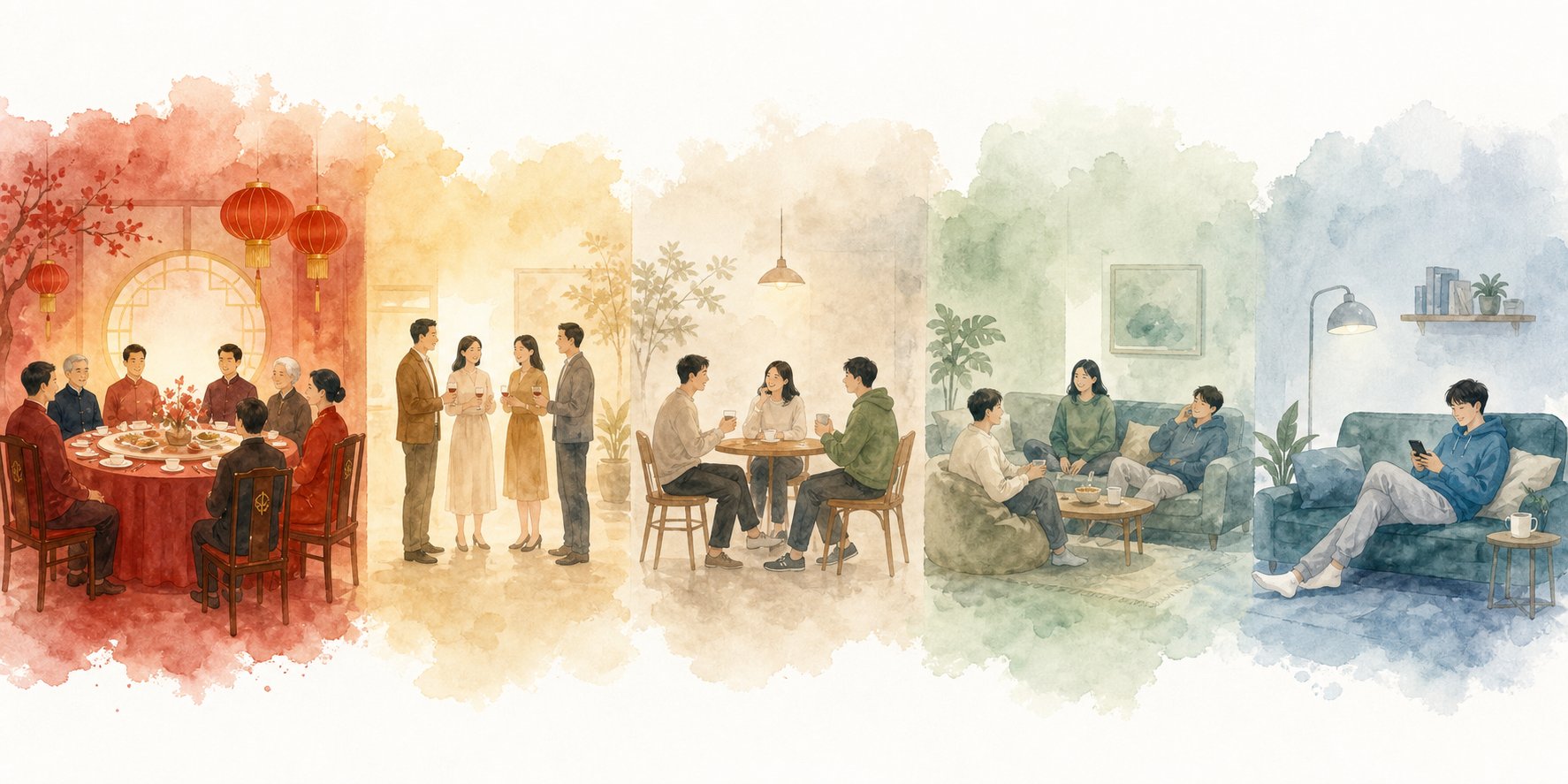
Every sibling relationship in Chinese operates on a sliding scale. You do not pick one term and stick with it forever. Instead, the way you address a brother in Chinese Mandarin shifts fluidly based on your mood, your audience, and the setting. Think of it like a volume dial for emotional closeness: formal at one end, deeply intimate at the other.
The Five Levels of Sibling Address
Consider how a younger sister might address her older brother across different moments in a single day. At a family banquet with grandparents present, she uses the full reduplicated form. Texting him about dinner plans, she drops a syllable. Joking around at home, she reaches for something more casual or even ironic. Each level carries a distinct emotional weight.
Here is how the formality spectrum works for siblings in Mandarin, using the older brother relationship as a model:
| Level | Form | Pinyin | Tone/Register | Typical Context |
|---|---|---|---|---|
| 1 - Formal | 哥哥 | gēge | Respectful, polite | Speaking to elders, formal introductions, young children addressing siblings |
| 2 - Standard | 哥 | gē | Neutral, everyday | Daily conversation at home between teens or adults |
| 3 - Casual | 老哥 | lǎo gē | Warm, slightly humorous | Between adult siblings with easy rapport, texting |
| 4 - Personalized | [Name] + 哥 | e.g., Míng gē | Familiar, affectionate | Used by younger siblings, cousins, or close friends within the family circle |
| 5 - Intimate | Childhood pet name | Varies | Deeply personal, nostalgic | Private family use, often from parents or between siblings who grew up very close |
The same five-level pattern applies to sister in Chinese Mandarin: 姐姐 (jiějie) → 姐 (jiě) → 老姐 (lǎo jiě) → [Name]+姐 → pet name. Younger siblings follow a parallel structure with 弟弟 (dìdi) and 妹妹 (mèimei) as starting points. The logic stays consistent across all sibling roles.
When to Use Each Formality Level
Levels 1 and 2 are where most learners stay. But real fluency in kinship in Chinese means knowing when to shift gears. A few practical signals:
- Level 1 (哥哥/姐姐): Default for children under ten, or when speaking in front of grandparents and older relatives who value traditional hierarchy.
- Level 2 (哥/姐): The workhorse form. Most siblings over twelve use this daily. It is respectful without sounding overly formal.
- Level 3 (老哥/老姐): Adds a layer of camaraderie. Common among brothers in Chinese families where siblings are close in age and share a peer-like dynamic.
- Level 4 ([Name]+哥/姐): Personalizes the address. Especially common in larger families where multiple older brothers or sisters need distinguishing. For example, 小明哥 (Xiǎo Míng gē) specifies exactly which brother in Mandarin you mean.
- Level 5 (Pet names): Reserved for the most private contexts. These might be baby-talk holdovers or inside jokes that only the family understands.
One crucial distinction that most guides overlook: the form you use to address a sibling directly often differs from the form you use when talking about them to someone else. You might call your older sister 姐 (jiě) to her face, but refer to her as 我姐 (wǒ jiě) or 我姐姐 (wǒ jiějie) when describing her to a friend. Parents add yet another layer. A mother might call her eldest son 大宝 (dà bǎo) at home but refer to him as 你哥哥 (nǐ gēge) when speaking to his younger sibling. Outsiders, meanwhile, default to the most formal level unless they are close enough to the family to adopt its internal nicknames.
Understanding this spectrum gives you something a vocabulary list never can: the ability to read the emotional temperature of a conversation just by noticing which level someone chooses. That awareness becomes especially useful when you start exploring the specific nickname variations each sibling role carries.
Nicknames for Older Brothers and Sisters
The formality spectrum gives you the framework. Now let's fill it in with the actual nicknames Chinese families use for older siblings, the emotional weight each one carries, and how they sound in real conversation. If you have ever wondered about the gege meaning in Chinese beyond a simple dictionary entry, this is where it gets interesting.
Older Brother Nicknames and Their Emotional Weight
The chinese for older brother starts with 哥哥 (gēge), but that is just the entry point. Each variation communicates something different about your relationship, your age, and the moment you are in. Here are the main forms you will hear in real families:
- 哥哥 (gēge) - The full reduplicated form. Warm and respectful. Young children use this naturally, and it retains an affectionate quality when adults use it in emotional moments. However, a 30-year-old using 哥哥 in casual daily conversation can sound slightly childish unless the tone is deliberately playful.
- 哥 (gē) - The single-syllable workhorse. Neutral, efficient, and appropriate in almost any context. Most teenagers and adults default here. "哥, 吃饭了!" (Gē, chīfàn le! - Bro, dinner's ready!) is the kind of sentence you will hear echoing through apartments every evening.
- 老哥 (lǎo gē) - Adds warmth and a hint of humor. The 老 (lǎo) prefix here does not mean "old" literally. It signals familiarity and camaraderie. Think of it as the difference between "brother" and "my man." Common between adult siblings who share an easy, peer-like bond. "老哥, 帮个忙呗" (Lǎo gē, bāng ge máng bei - Hey bro, do me a favor) feels relaxed and natural.
- 大哥 (dà gē) - Big brother in Chinese carries real weight. In family contexts, it specifically identifies the eldest brother when there are multiple siblings. It conveys admiration and respect. Outside the family, though, be aware that 大哥 can carry street or triad connotations depending on tone and context.
- [Name] + 哥 (e.g., 小明哥 / Xiǎo Míng gē) - Personalizes the address. Especially useful in larger families or extended family gatherings where you need to distinguish between multiple older brother figures. It feels warm without being overly formal.
Notice the pattern: the older brother in Chinese gets addressed with respect markers regardless of which level you choose. Even the most casual form, 老哥, still contains 哥. You never fully drop the hierarchical signal. That is Confucian family structure baked right into the language.
Older Sister Nicknames and When Each Feels Natural
The chinese for older sister follows a parallel structure, but the emotional texture differs slightly. Older sisters in Chinese culture often occupy a nurturing role, and the nicknames reflect that warmth:
- 姐姐 (jiějie) - The full form. Affectionate and respectful. Like 哥哥, it sounds natural from children and carries a sweet, close quality when adults use it intentionally. "姐姐, 你觉得这件好看吗?" (Jiějie, nǐ juéde zhè jiàn hǎokàn ma? - Sis, do you think this one looks good?) is a classic shopping-trip sentence.
- 姐 (jiě) - The everyday default for teens and adults. Clean, respectful, zero fuss. "姐, 我到了" (Jiě, wǒ dào le - Sis, I'm here) is the kind of text message you would send when arriving somewhere.
- 老姐 (lǎo jiě) - Casual and slightly teasing. Younger brothers especially use this when the sibling dynamic is playful. It implies closeness and a lack of stiffness. "我老姐又在催我了" (Wǒ lǎo jiě yòu zài cuī wǒ le - My sis is nagging me again) is how someone might describe the situation to a friend, half-complaining, half-affectionate.
- 大姐 (dà jiě) - Big sister in Chinese. Identifies the eldest sister specifically. Carries authority and respect. In some contexts, it can also gently imply that someone is being bossy, so tone matters.
- [Name] + 姐 (e.g., 小红姐 / Xiǎo Hóng jiě) - The personalized form. Common in families with multiple older sisters or when cousins and close family friends address an older female figure.
The reduplication question comes up often for learners: when does 哥哥 or 姐姐 sound affectionate versus childish? The short answer is age and intent. A seven-year-old saying 哥哥 sounds completely natural. A twenty-five-year-old saying it in a flat, everyday tone might get teased. But that same twenty-five-year-old using 哥哥 in a deliberately sweet or exaggerated way, maybe when asking for a favor, lands as charming rather than immature. Context and vocal tone do the heavy lifting.
What makes older sibling nicknames distinct from younger sibling nicknames is this consistent thread of respect. Every variation, from the most formal to the most playful, preserves the hierarchical marker. Younger siblings, as you will see, get a completely different treatment, one built around affection and diminutives rather than deference.
Nicknames for Younger Brothers and Sisters
Older siblings get respect markers. Younger siblings get something different: affection markers. That distinction is not random. It reflects a deep cultural logic rooted in Confucian family hierarchy, where the elder-younger relationship (长幼有序, zhǎng yòu yǒu xù) assigns different emotional registers to each direction of address. When you call your younger brother in Chinese, you are not signaling deference. You are signaling care, protectiveness, and sometimes playful authority.
This is why the nickname patterns for little brother in Chinese and little sister in Chinese look and feel so different from the older sibling forms covered above. The suffixes shift, the prefixes change, and the emotional flavor moves from "I look up to you" to "I look out for you."
Younger Brother Nicknames From Sweet to Casual
The chinese for younger brother begins with 弟弟 (dìdi), but the variations branch out quickly depending on the speaker's age, the brothers' closeness, and the setting. Here is what you will actually hear in Chinese households:
- 弟弟 (dìdi) - The full reduplicated form. Warm, protective, and natural from older siblings of any age. Unlike 哥哥, which can sound childish from adult speakers, 弟弟 retains its sweetness longer because it flows downward in the hierarchy. An older sister saying "弟弟, 过来" (Dìdi, guòlái - Come here, little brother) sounds caring rather than immature, even at thirty.
- 弟 (dì) - The clipped single-syllable form. Less common as a standalone address than 哥 is for older brothers. You will hear it more often in compound forms or when speaking quickly. "我弟说他不来了" (Wǒ dì shuō tā bù lái le - My brother said he's not coming) is typical when talking about a younger brother to friends.
- 小弟 (xiǎo dì) - Little brother in Mandarin Chinese at its most affectionate. The 小 (xiǎo) prefix adds a diminutive quality that emphasizes youth and endearment. Older siblings and parents both use this. "小弟还小, 让着他点" (Xiǎo dì hái xiǎo, ràngzhe tā diǎn - Little brother is still young, go easy on him) is the kind of sentence you hear parents say to an older child.
- 老弟 (lǎo dì) - The casual, buddy-style form. Just like 老哥 signals camaraderie upward, 老弟 signals it downward. It is peer-like and warm, common between adult brothers who have outgrown the protective dynamic. "老弟, 最近怎么样?" (Lǎo dì, zuìjìn zěnmeyàng? - Hey bro, how've you been?) feels like two equals catching up.
- [Name] + 弟 (e.g., 小明弟 / Xiǎo Míng dì) - Less common than the [Name]+哥 pattern but still used in larger families to distinguish between multiple younger brothers or younger male cousins.
Notice how little brother in Mandarin gets the 小 prefix naturally, while older brothers never do. Calling an older brother 小哥 would feel strange or even disrespectful in most family contexts. The diminutive belongs to the younger sibling because the cultural script positions them as the one being cared for, not the one commanding respect.
Younger Sister Nicknames and Their Nuances
The younger sister in Chinese follows the same affection-first logic, but with its own texture. Little sister in Chinese carries a particular sweetness in the culture, and the nickname variations reflect that:
- 妹妹 (mèimei) - The default form and arguably the most universally warm sibling term in Mandarin. It sounds gentle from almost anyone. "妹妹, 要不要一起去?" (Mèimei, yào bù yào yīqǐ qù? - Sis, want to come along?) is everyday family language.
- 妹 (mèi) - The short form. More common in compound constructions or rapid speech than as a standalone call. You will hear it in phrases like 我妹 (wǒ mèi - my younger sister) when someone is referring to their sister in conversation.
- 小妹 (xiǎo mèi) - The diminutive form for the youngest sister in Chinese. Especially common when there are multiple sisters and the youngest needs distinguishing. It carries a protective, doting quality. "小妹最怕打雷" (Xiǎo mèi zuì pà dǎléi - Little sis is most scared of thunder) is the kind of thing an older sibling might say with fond exasperation.
- 老妹 (lǎo mèi) - The casual adult form. Regional variation matters here. In northeastern China (东北, Dōngběi), 老妹 is extremely common and carries a distinctly warm, down-to-earth flavor. In other regions, it sounds more marked. "老妹, 吃了吗?" (Lǎo mèi, chī le ma? - Hey sis, eaten yet?) is classic northeastern sibling talk.
- [Name] + 妹 (e.g., 小红妹 / Xiǎo Hóng mèi) - Used in extended family settings or when multiple younger female figures are present. Less frequent than [Name]+姐 but still part of the system.
A quick dialogue to show how these land in real conversation:
Older brother texting his younger sister:
"妹, 妈说让你早点回来。" (Mèi, mā shuō ràng nǐ zǎo diǎn huílái. - Sis, Mom says come home early.)
Older sister talking about her little brother chinese style to a coworker:
"我老弟刚考上大学, 全家都高兴坏了。" (Wǒ lǎo dì gāng kǎoshàng dàxué, quán jiā dōu gāoxìng huài le. - My little bro just got into college, the whole family is thrilled.)
Why the Affection-Respect Split Exists
The pattern is consistent: older siblings receive 大 (dà, big) and respect-coded prefixes, while younger siblings receive 小 (xiǎo, little) and affection-coded ones. This is not accidental. Confucian family structure assigns the elder sibling a quasi-parental role. They are owed deference. The younger sibling, in turn, is owed protection and care. The nicknames encode these obligations directly into everyday speech.
As CLI's research on Chinese family hierarchy notes, Confucian ideology positioned clear power hierarchies within the family as the foundation for social harmony. The elder-younger sibling relationship (悌, tì) was one of the five cardinal relationships. Nicknames are where that philosophy lives on in casual, daily language, even among families who have never consciously thought about Confucius.
The One-Child Policy's Impact on Sibling Nicknames
Here is something most language guides ignore entirely: for roughly 35 years (1979-2015), China's one-child policy meant that an entire generation grew up without siblings at all. Research published in BMJ Open documented how this policy reshaped family structures across rural and urban China, with many families having only a single child.
The linguistic consequence? Sibling nicknames did not disappear, but they migrated. Cousins became the primary recipients of 哥, 姐, 弟, and 妹 terms. Only children used these words for close friends and neighbors instead. The terms survived, but their emotional context shifted from daily household use to occasional family gathering language.
Since the policy's relaxation and the subsequent shift to a three-child policy, sibling nickname culture is experiencing a revival. Young parents who grew up as only children are now raising two or three kids, and they are actively teaching these terms. But there is a generational gap: many of these parents learned sibling nicknames from TV dramas and extended family rather than from lived daily experience. The result is a fascinating moment where traditional nickname patterns are being consciously relearned rather than passively inherited.
This cultural reset also explains why younger sibling nicknames feel fresh and emotionally charged for many Chinese families right now. For parents hearing their older child call the baby 弟弟 or 妹妹 for the first time, these are not just vocabulary words. They are the sound of a family dynamic their own childhood never had.
The affection-respect split, the regional flavors of terms like 老妹, the revival of sibling address after decades of dormancy: all of this operates within standard Mandarin. But Chinese is far from monolithic. Step outside Mandarin and into Cantonese, Hokkien, or Shanghainese, and the sibling nickname landscape transforms entirely.
Dialect Variations in Cantonese, Hokkien, and Beyond
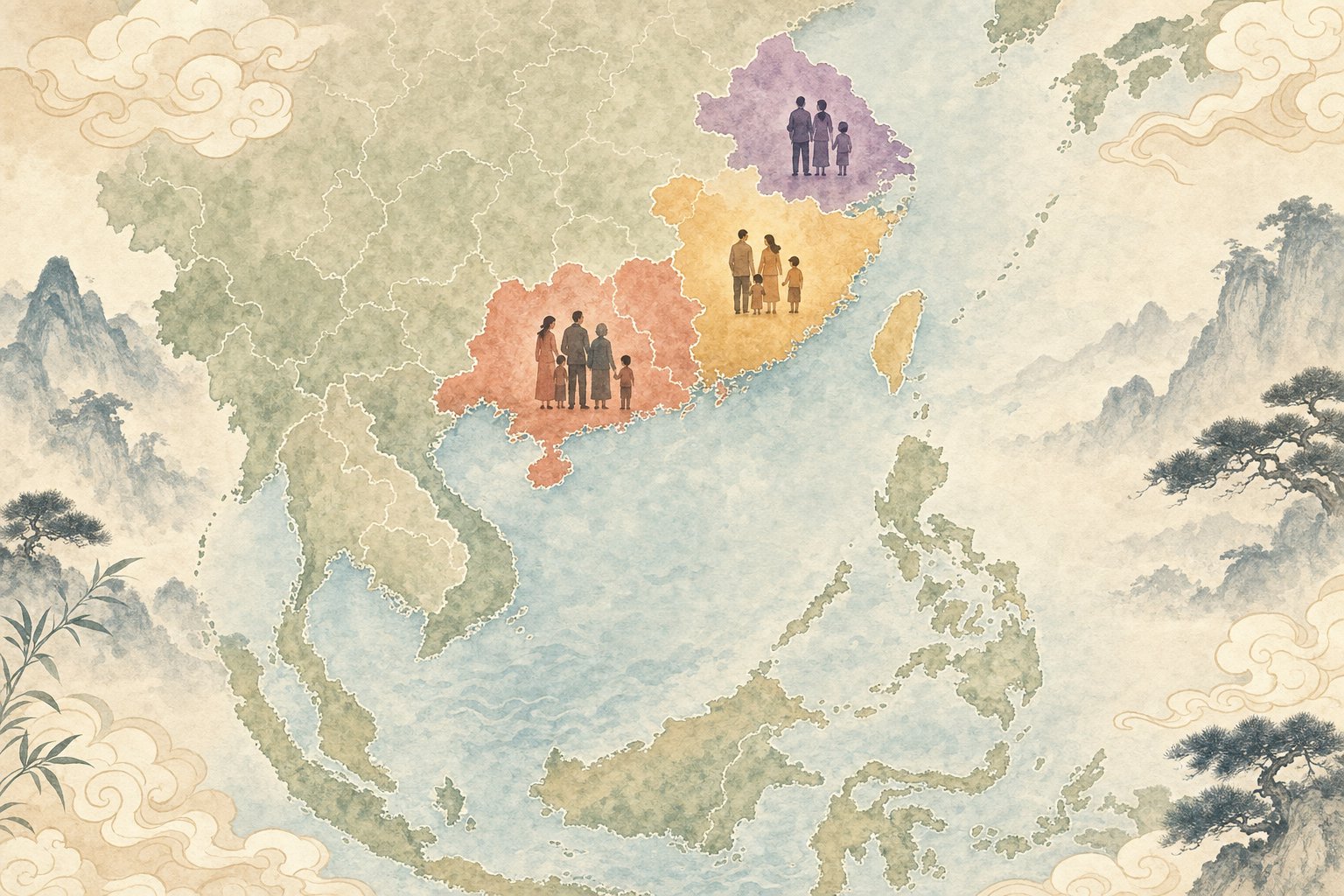
A family in Guangzhou, a family in Xiamen, and a family in Taipei might all be speaking "Chinese," yet the way siblings address each other sounds completely different across these households. If your family speaks Cantonese at home, the Mandarin terms you learned in class will not match what you hear at the dinner table. Knowing which dialect system your family or community uses is the first step toward getting sibling nicknames right.
Cantonese Sibling Nicknames and the 阿 Prefix
Cantonese sibling terms share structural DNA with Mandarin but diverge in key ways. The most distinctive feature is the 阿 (aa3) prefix, a familiar marker that softens any term it attaches to. Where Mandarin speakers might say 哥哥 (gēge), a Cantonese speaker reaches for 阿哥 (aa3 go1). The 阿 signals warmth and everyday familiarity without the formality of full reduplication.
Here is how the core sibling terms map out in Cantonese, drawing on jyutping romanization conventions:
- Older brother: 哥哥 (go1 go1) formally, 阿哥 (aa3 go1) or 大哥 (daai6 go1) casually
- Older sister in Chinese Cantonese: 姐姐 (ze2 ze2) formally, 家姐 (gaa1 ze2) or 阿姐 (aa3 ze2) in everyday speech
- Younger brother: 弟弟 (dai6 dai6) formally, 細佬 (sai3 lou2) as the go-to casual form. This is the little brother in Chinese Cantonese that you will actually hear at home rather than the textbook 弟弟.
- Younger sister in Cantonese: 妹妹 (mui6 mui6) formally, 細妹 (sai3 mui6) casually. The 細 (sai3) character means "small" or "young" and functions like Mandarin's 小 prefix but feels distinctly Cantonese.
Notice how Cantonese uses 細 (sai3) where Mandarin uses 小 (xiǎo) for younger siblings. A little sister in Cantonese is 細妹, not 小妹. That single-character difference immediately marks which dialect world you are operating in. The sister Cantonese speakers call 家姐 would be 姐姐 in a Mandarin-speaking household, same relationship, different linguistic packaging.
Hokkien and Taiwanese Variations
Hokkien, spoken across Fujian province, Southeast Asia, and Taiwan, brings its own sibling nickname system. The 阿 (a) prefix appears here too, but the root words shift:
- Older brother: 阿兄 (a-hiaⁿ) is the everyday form, distinct from both Mandarin's 哥 and Cantonese's 哥
- Older sister: 阿姊 (a-chí) rather than 姐, using the character 姊 which Mandarin reserves for formal writing
- Younger brother: 小弟 (sió-tī) or simply 弟仔 (tī-á), with the Hokkien diminutive suffix 仔 (á)
- Younger sister: 小妹 (sió-moē) or 妹仔 (moē-á), following the same diminutive pattern
Taiwanese Mandarin, meanwhile, blends standard Mandarin terms with Hokkien-influenced habits. You will hear 哥 and 姐 used just like in mainland Mandarin, but families often code-switch mid-sentence, dropping a Hokkien 阿兄 into otherwise Mandarin conversation. The boundaries between systems are porous in daily life.
Shanghainese (Wu dialect) adds yet another layer. Older brothers become 阿哥 (a-ku), older sisters become 阿姐 (a-tsia), and the tonal patterns differ entirely from both Cantonese and Mandarin. The structure looks similar on paper but sounds like a different language entirely.
Here is a side-by-side comparison to make the differences concrete:
| Relationship | Mandarin Form | Cantonese Form | Hokkien Form |
|---|---|---|---|
| Older brother | 哥哥 (gēge) / 哥 (gē) | 阿哥 (aa3 go1) / 大哥 (daai6 go1) | 阿兄 (a-hiaⁿ) |
| Older sister | 姐姐 (jiějie) / 姐 (jiě) | 家姐 (gaa1 ze2) / 阿姐 (aa3 ze2) | 阿姊 (a-chí) |
| Younger brother | 弟弟 (dìdi) / 小弟 (xiǎo dì) | 細佬 (sai3 lou2) | 小弟 (sió-tī) / 弟仔 (tī-á) |
| Younger sister | 妹妹 (mèimei) / 小妹 (xiǎo mèi) | 細妹 (sai3 mui6) | 小妹 (sió-moē) / 妹仔 (moē-á) |
The takeaway here is practical: if you are learning sibling nicknames to connect with a specific family, ask which dialect they speak at home. A heritage Cantonese speaker will light up when you use 家姐 instead of 姐姐. A Hokkien-speaking grandmother will notice if you say 阿兄 rather than 哥哥. The "correct" term depends entirely on which linguistic world that family inhabits.
These dialect systems share underlying logic, age and gender still determine the term, hierarchy still shapes the prefix, but the surface forms diverge enough that mixing them up marks you as an outsider. Getting the dialect right signals something vocabulary alone cannot: that you understand where this family comes from, not just what language they speak on paper.
Dialect stays relatively stable across a lifetime. But within any single dialect system, the nicknames siblings use for each other shift dramatically as both people age, moving through childhood pet names, teenage coolness, adult irony, and elderly tenderness.
How Sibling Nicknames Change Across Life Stages
A five-year-old calling her elder brother in Chinese 哥哥 (gēge) sounds completely natural. That same woman at thirty-five still using the identical form? It lands differently. Chinese sibling nicknames are not static labels you assign once and keep forever. They evolve alongside the relationship itself, shifting in tone, structure, and emotional meaning as both siblings grow, separate, reunite, and age together.
This lifecycle dimension is something vocabulary lists never capture. Yet it is one of the most revealing aspects of how Chinese families actually communicate. The nickname a sibling chooses at any given moment tells you not just who they are talking to, but where they are in life.
Childhood Pet Names Between Siblings
In early childhood, sibling nicknames lean heavily on diminutives and reduplication. Young children naturally gravitate toward soft, repetitive sounds, and Chinese gives them plenty to work with. The youngest sister in Chinese might hear herself called any of these by older siblings or parents directing the older child's language:
- 小宝 (xiǎo bǎo) - "Little treasure." A universal pet name that older siblings adopt from their parents. Gender-neutral and deeply affectionate.
- 宝宝 (bǎobao) - The reduplicated form of "treasure." Even more babyish, typically used when the younger sibling is still a toddler.
- 小不点 (xiǎo bùdiǎn) - "Little tiny one." Playful and size-based, common between siblings with a significant age gap.
- [Milk name] + 弟/妹 - Many Chinese children receive a 小名 (xiǎomíng, milk name or pet name) at birth. Siblings often combine this with the kinship suffix: 豆豆弟 (Dòudou dì) or 糖糖妹 (Tángtang mèi).
These childhood forms carry enormous emotional weight precisely because they belong to a specific window of time. When an adult sibling revives a childhood pet name, it instantly evokes that early closeness. Imagine a forty-year-old eldest brother in Chinese calling his sister 小不点 at a family reunion. Everyone at the table feels the warmth of that callback.
How Nicknames Evolve Into Adulthood
The progression from childhood to old age follows a recognizable arc. Here is how it typically unfolds:
- Early childhood (ages 2-7): Full reduplication dominates. 哥哥, 姐姐, 弟弟, 妹妹. Pet names like 小宝 flow freely. Everything sounds soft and round. The oldest brother in Chinese is simply 哥哥 to everyone younger.
- Late childhood (ages 8-12): Reduplication starts feeling babyish. Kids begin clipping to single syllables: 哥, 姐. They resist being called baby names in front of friends. An elder sister in Mandarin might insist her younger siblings drop 姐姐 for just 姐 because the longer form now embarrasses her.
- Teenage years (ages 13-19): Coolness takes over. Siblings adopt more casual, peer-like forms. 老哥 and 老姐 enter the rotation. Some teenagers start using each other's actual names, which can feel either rebellious or equalizing depending on family culture. The old brother in Chinese form 老哥 peaks in usage here as younger siblings try to sound less deferential.
- Young adulthood (ages 20-35): Irony and affection blend. Adult siblings might cycle between extremely casual forms (just the name, no title) and deliberately retro ones (reviving 哥哥 or 姐姐 with playful exaggeration). Texting culture introduces emoji-laden versions and playful misspellings.
- Middle age (ages 35-60): Nicknames stabilize into whatever feels most natural for the relationship's current state. Siblings who stayed close often settle on Level 3 forms (老哥, 老姐, 老弟, 老妹). Those with more distance might revert to polite Level 2 forms.
- Elderly years (60+): A tender reversal often occurs. Elderly siblings sometimes return to childhood forms, calling each other by milk names or using full reduplication again. The oldest in Chinese family hierarchies, the 大哥 or 大姐, might hear their youngest sibling call them 哥哥 or 姐姐 with the same softness as sixty years prior. It circles back.
The emotional logic is clear: formality peaks in the teenage-to-young-adult window when siblings are establishing independent identities, then gradually relaxes as the relationship matures and ego concerns fade.
The Diaspora Dimension: Mixing Languages
Overseas Chinese families add a fascinating layer to this lifecycle. When siblings grow up speaking English at school and Chinese at home, the nickname system adapts by blending both languages. The most common pattern is attaching the Chinese kinship suffix to an English name:
- David哥 (David gē) - A younger sibling addressing their older brother who goes by his English name
- Sarah姐 (Sarah jiě) - The same pattern for an older sister
- 小Kevin (Xiǎo Kevin) - A diminutive applied to a younger sibling's English name
These hybrid forms are not broken Chinese or lazy code-switching. They represent a genuine adaptation of the kinship system to multilingual reality. The hierarchical logic stays intact: the 哥/姐 suffix still signals respect upward, and the 小 prefix still signals affection downward. Only the name root changes.
In diaspora families, you will also notice that the lifecycle progression sometimes stalls or accelerates differently. A second-generation Chinese-American teenager might keep using 哥哥 longer than a peer in Beijing because they have fewer Chinese-language contexts where the shift to 哥 would feel natural. Conversely, some diaspora siblings drop Chinese address forms entirely by adulthood, only to revive them when they have children of their own and want to pass the system forward.
Whether a family speaks Mandarin in Shanghai, Cantonese in Vancouver, or a mix of English and Hokkien in Singapore, the underlying principle holds: sibling nicknames are living things that grow and change with the people using them. They mark time, encode emotion, and quietly document a relationship's entire history in a single syllable. That richness is also what makes them easy to get wrong, especially when learners apply the wrong form to the wrong context.
Modern and Internet-Era Sibling Nicknames
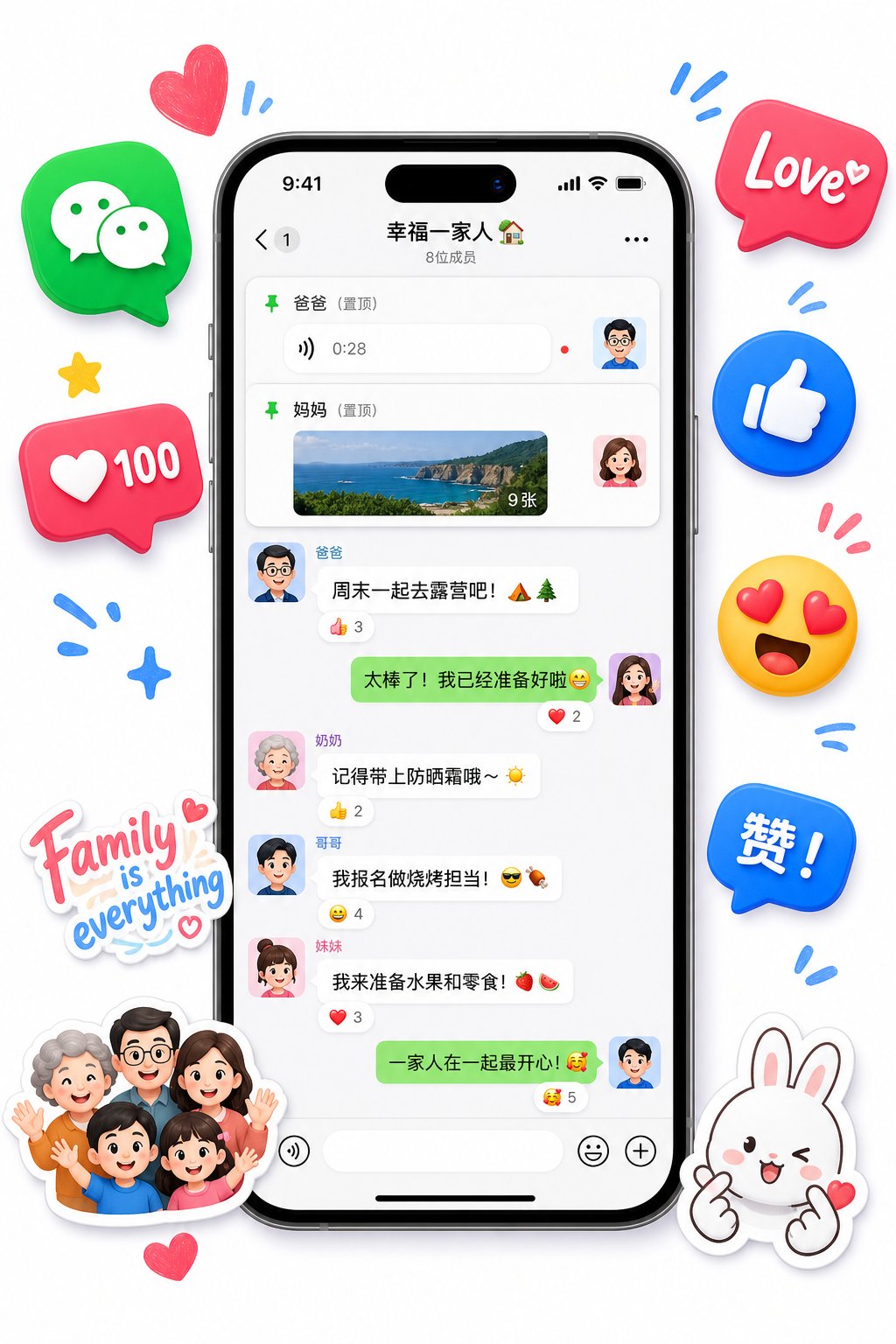
Sibling nicknames have always evolved with the times, but the internet compressed decades of linguistic change into a few years. Chinese social media, e-commerce culture, and the explosion of idol variety shows created a whole new layer of address forms that young siblings now use daily in family group chats, voice messages, and video calls. If you only know the traditional forms, you will miss half of what siblings under thirty are actually saying to each other.
Internet Slang Siblings Use Online
WeChat family groups and Douyin comment sections have become breeding grounds for new sibling endearments. Some originated in completely unrelated contexts and migrated into family language because they felt right. Here are the ones you will encounter most often:
- 老铁 (lǎo tiě) - Literally "old iron," meaning someone rock-solid and dependable. Originally northeastern slang for a close buddy, it spread through livestreaming culture and is now used affectionately between siblings, especially brothers, in casual texting. "老铁, 借我点钱" (Lǎo tiě, jiè wǒ diǎn qián - Bro, lend me some cash) carries a playful, no-pretense energy.
- 亲 (qīn) - Short for 亲爱的 (qīn'ài de, dear). This started as Taobao seller-to-buyer language and became a universal online endearment. Siblings, especially sisters, drop it into texts as a warm opener. "亲, 帮我拿个快递" (Qīn, bāng wǒ ná ge kuàidì - Dear, grab my package for me) is typical chinese sister chat language.
- 宝 (bǎo) / 宝子 (bǎozi) - "Treasure" or "precious one." Evolved from parent-to-child language into peer endearment online. Older sisters use it for younger siblings in texts, blending the traditional 小宝 concept with internet-era casualness.
- 哥/姐 + 们 (gē/jiěmen) - Adding the plural suffix 们 creates a group-chat vibe even when addressing one sibling. "姐们儿, 周末有空吗?" feels like talking to your big sister in Mandarin and your best friend simultaneously.
- 大冤种 (dà yuānzhǒng) - "Big fool" in the most affectionate possible way. Siblings use this to tease each other about bad decisions. It sounds harsh translated literally but lands as pure warmth between close siblings online.
Pop Culture References That Became Nicknames
Chinese entertainment reshaped how siblings address each other in two directions. First, idol survival shows and variety programs like "创造营" and "青春有你" normalized fans calling male idols 哥哥 and female idols 姐姐, regardless of actual age. This jie jie in Chinese usage, once reserved for real older sisters, became a term of admiration for any impressive woman. The cultural feedback loop is fascinating: fans used family terms for idols, then brought that exaggerated, adoring tone back home. A younger brother in China might now call his older sister 姐姐 with the same drawn-out, slightly dramatic inflection he picked up from variety show culture, turning a traditional term into something playfully ironic.
Second, specific drama characters generated nickname trends. The popularity of shows featuring strong older sister chinese archetypes led to terms like 御姐 (yùjiě, queen-like older sister) being used between real siblings when the older sister displays her authoritative side. Similarly, big brother in Chinese Mandarin got a refresh through action dramas where 大哥 carries cool, protective energy rather than its older triad associations.
A few more pop-culture-driven terms worth knowing:
- 小奶狗/小奶猫 (xiǎo nǎigǒu / xiǎo nǎimāo) - "Little milk dog" or "little milk cat." Used by older siblings for younger ones who are cute and clingy. Originated in relationship culture online but migrated into sibling teasing.
- 社恐弟/社恐妹 (shèkǒng dì/mèi) - "Socially anxious little brother/sister." A label-as-nickname trend where siblings assign each other personality-based titles drawn from internet psychology vocabulary.
- 干饭哥/干饭姐 (gānfàn gē/jiě) - "Rice-eating bro/sis," meaning the sibling who loves food. This meme-originated term became a genuine family nickname in many households.
What makes these modern forms distinct from traditional nicknames is their source: they come from peer culture and media rather than from family hierarchy. A china sister relationship expressed through 亲 or 宝子 carries a different emotional signature than one expressed through 姐姐. It says "we are peers who happen to be siblings" rather than "I respect your position above me." Both are valid. Both are real. The modern forms just add another register to an already rich system.
This internet-era layer is still settling. Some terms will stick around for decades; others will feel dated within a year. The underlying principle, though, remains constant: siblings reach for whatever language best captures their current emotional reality. And when that language gets misapplied, the results range from awkward to genuinely offensive, which is exactly why understanding common mistakes matters just as much as knowing the terms themselves.
Common Mistakes to Avoid With Sibling Nicknames
Knowing the right terms is half the battle. The other half is knowing which combinations sound wrong, confusing, or accidentally offensive. Even learners who have memorized every chinese for sister variation can stumble when they mix up the contextual rules governing these nicknames. A single misplaced prefix can shift your tone from affectionate to disrespectful in ways that are invisible on paper but immediately obvious to native ears.
Mistakes That Change the Meaning Entirely
Some errors are minor and get a gentle laugh. Others genuinely change what you are communicating. Here are the most common pitfalls non-native speakers fall into:
| Common Mistake | Why It's Wrong | Correct Alternative |
|---|---|---|
| Using 小哥 (xiǎo gē) to address your older brother | The 小 prefix signals "younger" or "lesser." Attaching it to an older sibling undermines their hierarchical position. It can sound dismissive or condescending. | Use 哥 (gē), 老哥 (lǎo gē), or 哥哥 (gēge) instead. |
| Calling someone 大哥 (dà gē) in the wrong context | While 大哥 means big brother in China within families, it also carries strong triad or gang-boss connotations in street slang and media. Using it with strangers or in formal settings can sound like you are addressing a mob leader. | Stick to 哥 (gē) or [Name]+哥 for non-family contexts. Reserve 大哥 for actual eldest brothers within the family. |
| Over-using 哥哥/姐姐 reduplication as an adult | Full reduplication sounds childish or overly cutesy from speakers over twenty in everyday conversation. It can come across as immature or as if you are performing a character. | Use the single-syllable 哥 (gē) or 姐 (jiě) for daily adult conversation. Save reduplication for deliberate warmth or humor. |
| Mixing Cantonese 細佬 (sai3 lou2) into a Mandarin conversation | Dialect terms do not transfer across systems. Dropping Cantonese forms into Mandarin speech confuses listeners and signals that you learned terms without understanding their linguistic context. | Match your terms to the dialect being spoken. Use 小弟 (xiǎo dì) in Mandarin, 細佬 in Cantonese. |
| Using cousin terms (堂哥/表姐) for actual siblings | A cousin in Chinese has specific prefixes: 堂 (táng) for paternal-side cousins, 表 (biǎo) for maternal-side. Applying these to a real sibling implies they are not your full brother or sister, which can feel distancing or even hurtful. | Use direct sibling terms: 哥, 姐, 弟, 妹. Drop the 堂/表 prefix entirely for actual siblings. |
| Assuming the chinese sister symbol 姐 and 妹 are interchangeable | The symbol for sister in Chinese is not one character but two distinct ones encoding age hierarchy. 姐 (jiě) is exclusively for older sisters; 妹 (mèi) is exclusively for younger. Swapping them reverses the power dynamic and confuses everyone. | Always confirm whether the sister is older (姐) or younger (妹) before choosing. When unsure, ask. |
A quick side-by-side to show how these land in practice:
- Incorrect: "小姐, 你回来了?" (Xiǎo jiě, nǐ huílái le?) - Intended as chinese for younger sister, but 小姐 actually means "Miss" or, in some contexts, carries inappropriate connotations. Completely wrong for addressing a sibling.
- Correct: "妹, 你回来了?" (Mèi, nǐ huílái le? - Sis, you're back?) - Clean, appropriate, and unmistakably sibling language.
- Incorrect: "大哥, 这个多少钱?" (Dà gē, zhège duōshao qián?) to a shopkeeper - Sounds like you are addressing a gang boss rather than making a purchase.
- Correct: "老板, 这个多少钱?" (Lǎobǎn, zhège duōshao qián?) - Use 老板 (boss) for shopkeepers instead.
Getting the Tone and Context Right
The best way to avoid mistakes is also the simplest: ask. Chinese families appreciate the effort far more than they judge the stumble. The phrase "我应该怎么称呼你?" (Wǒ yīnggāi zěnme chēnghu nǐ? - How should I address you?) works in almost any situation. It shows respect, signals that you care about getting it right, and gives the other person agency over how they want to be addressed.
For learners studying the chinese sister symbol or trying to distinguish chinese for little sister from the older sister form, here is a practical tip: listen before you speak. Pay attention to how other family members address each sibling. If everyone calls the eldest daughter 大姐 (dà jiě), follow their lead. If the family uses 姐 (jiě) casually, match that register. Mimicking the family's existing patterns is far safer than importing textbook forms that might not fit their style.
One more thing worth noting: mistakes in the direction of more respect are always safer than mistakes in the direction of less. Calling an older sibling 哥哥 when everyone else uses 哥 might sound slightly formal, but nobody will be offended. Calling them by their bare name when the family expects a kinship title, though, can feel jarring. When in doubt, err toward the more respectful form and let the family correct you downward. That correction itself is a sign of acceptance, an invitation into their informal register.
With these pitfalls mapped out, the remaining question is practical: given everything you now know about formality levels, dialect variations, life-stage shifts, and common errors, how do you actually choose the right nickname for a specific moment? That is where a quick-reference framework pulls it all together.
Putting It All Together: How to Say Brother and Sister in Chinese by Situation
You now have the full picture: formality levels, dialect systems, life-stage shifts, internet-era slang, and the mistakes that trip people up. The question is no longer "how do you say brother in Chinese" or "how to say sister in Chinese" in the abstract. It is "which form fits this exact moment?" The answer always depends on where you are, who is listening, and what emotional register you want to hit.
Quick Reference by Situation and Relationship
This table maps the most natural nickname choices across four common contexts. Use it as a starting point, then adjust based on what you hear from the specific family you are interacting with.
| Sibling Role | At Home | In Public | Online/Texting | Talking About Them |
|---|---|---|---|---|
| Older Brother | 哥 (ge) or childhood pet name | 哥哥 (gege) or [Name]+哥 | 老哥 (lao ge), 老铁 (lao tie) | 我哥 (wo ge) or 我哥哥 (wo gege) |
| Older Sister | 姐 (jie) or pet name | 姐姐 (jiejie) or [Name]+姐 | 老姐 (lao jie), 亲 (qin) | 我姐 (wo jie) or 我姐姐 (wo jiejie) |
| Younger Brother | 弟弟 (didi) or 小名 (milk name) | 弟弟 (didi) or [Name]+弟 | 老弟 (lao di), 宝 (bao) | 我弟 (wo di) or 我弟弟 (wo didi) |
| Younger Sister | 妹妹 (meimei) or 小妹 (xiao mei) | 妹妹 (meimei) or [Name]+妹 | 老妹 (lao mei), 宝子 (baozi) | 我妹 (wo mei) or 我妹妹 (wo meimei) |
A few patterns jump out. At home, you default to the shortest, most comfortable form because no one is performing for an audience. In public, you add a syllable or a name to sound clear and appropriate. Online, you reach for the warmest or funniest option because texting rewards personality. And when talking about a sibling to someone else, the possessive 我 (wo, my) always precedes the term.
Choosing the Right Nickname for Your Context
If you have read this far, you already understand something most learners miss: knowing how to write brother in Chinese (哥/弟) or how to write sister in Chinese (姐/妹) is just the starting line. The real skill is reading the room. Which form does this family use? What life stage are these siblings in? Is the tone playful or respectful today?
That awareness cannot come from a vocabulary list alone. It comes from listening. Pay attention to how native-speaking families address each other at restaurants, in vlogs, during phone calls you overhear on the subway. Notice which forms parents model for their children. Watch how siblings shift registers when grandparents enter the room versus when they leave it.
Brother in Chinese is not one word. Sister in Chinese is not one word. Each is a spectrum of choices that communicates exactly how you feel about someone in that moment. The fact that you now understand why those choices exist, not just what they are, puts you ahead of any flashcard deck. Use the table as your cheat sheet, but let real conversations be your teacher.
Frequently Asked Questions About Chinese Sibling Nicknames
1. What is the difference between 哥哥 and 哥 when addressing an older brother in Chinese?
哥哥 (gege) is the full reduplicated form that sounds respectful and warm, typically used by young children or in formal family settings like banquets with grandparents. 哥 (ge) is the clipped single-syllable version that most teenagers and adults use daily. It carries the same respect but feels more efficient and natural in casual conversation. Using 哥哥 as an adult in everyday speech can sound childish unless delivered with deliberate playfulness or affection.
2. How do Cantonese sibling nicknames differ from Mandarin ones?
Cantonese uses distinct vocabulary and structural patterns. The most notable difference is the 阿 (aa3) prefix for familiarity, producing forms like 阿哥 (aa3 go1) for older brother and 阿姐 (aa3 ze2) for older sister. Younger siblings use entirely different words: 細佬 (sai3 lou2) for younger brother and 細妹 (sai3 mui6) for younger sister, where 細 replaces Mandarin's 小. Cantonese also uses 家姐 (gaa1 ze2) as the everyday term for older sister, which has no direct Mandarin equivalent.
3. Why do older and younger siblings get different types of nicknames in Chinese?
The difference stems from Confucian family hierarchy. Older siblings receive respect-coded prefixes like 大 (da, big) because they hold a quasi-parental role and are owed deference. Younger siblings receive affection-coded prefixes like 小 (xiao, little) because they are positioned as the ones being cared for and protected. This is why calling an older brother 小哥 feels disrespectful while calling a younger brother 小弟 feels perfectly natural and loving.
4. What modern internet nicknames do Chinese siblings use in text messages?
Young Chinese siblings commonly use terms like 老铁 (lao tie, meaning a dependable buddy), 亲 (qin, short for dear, borrowed from e-commerce culture), and 宝子 (baozi, meaning precious one). Personality-based labels like 干饭哥 (the food-loving brother) or 社恐妹 (the socially anxious sister) have also become genuine family nicknames. These internet-era forms signal a peer-like dynamic between siblings rather than traditional hierarchy.
5. What are the most common mistakes when using Chinese sibling nicknames?
The top mistakes include using the 小 prefix with older siblings (which undermines their status), using 大哥 with strangers (which carries gang connotations outside family contexts), over-using reduplication like 哥哥 or 姐姐 as an adult (which sounds childish), mixing dialect forms inappropriately, and confusing the characters 姐 (older sister) and 妹 (younger sister) which encode strict age hierarchy. When uncertain, defaulting to the more respectful form is always the safer choice.