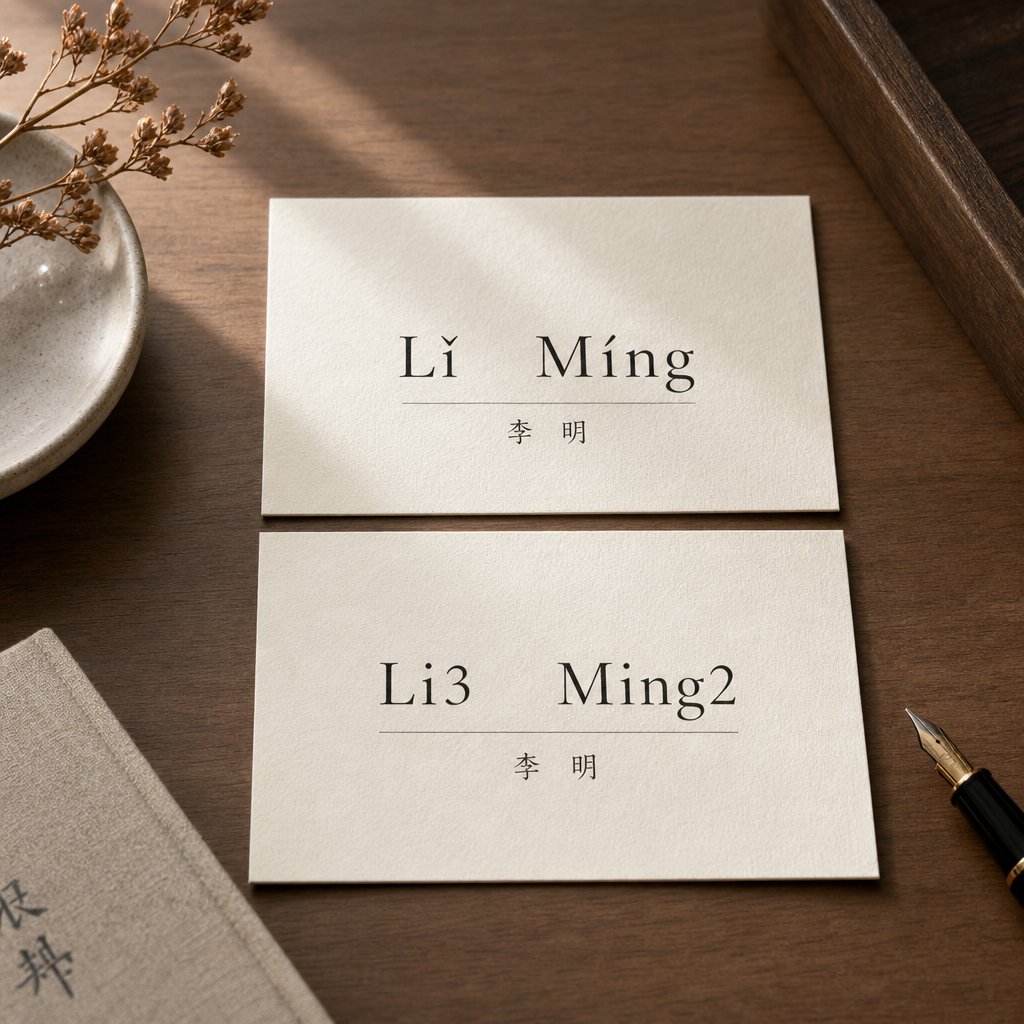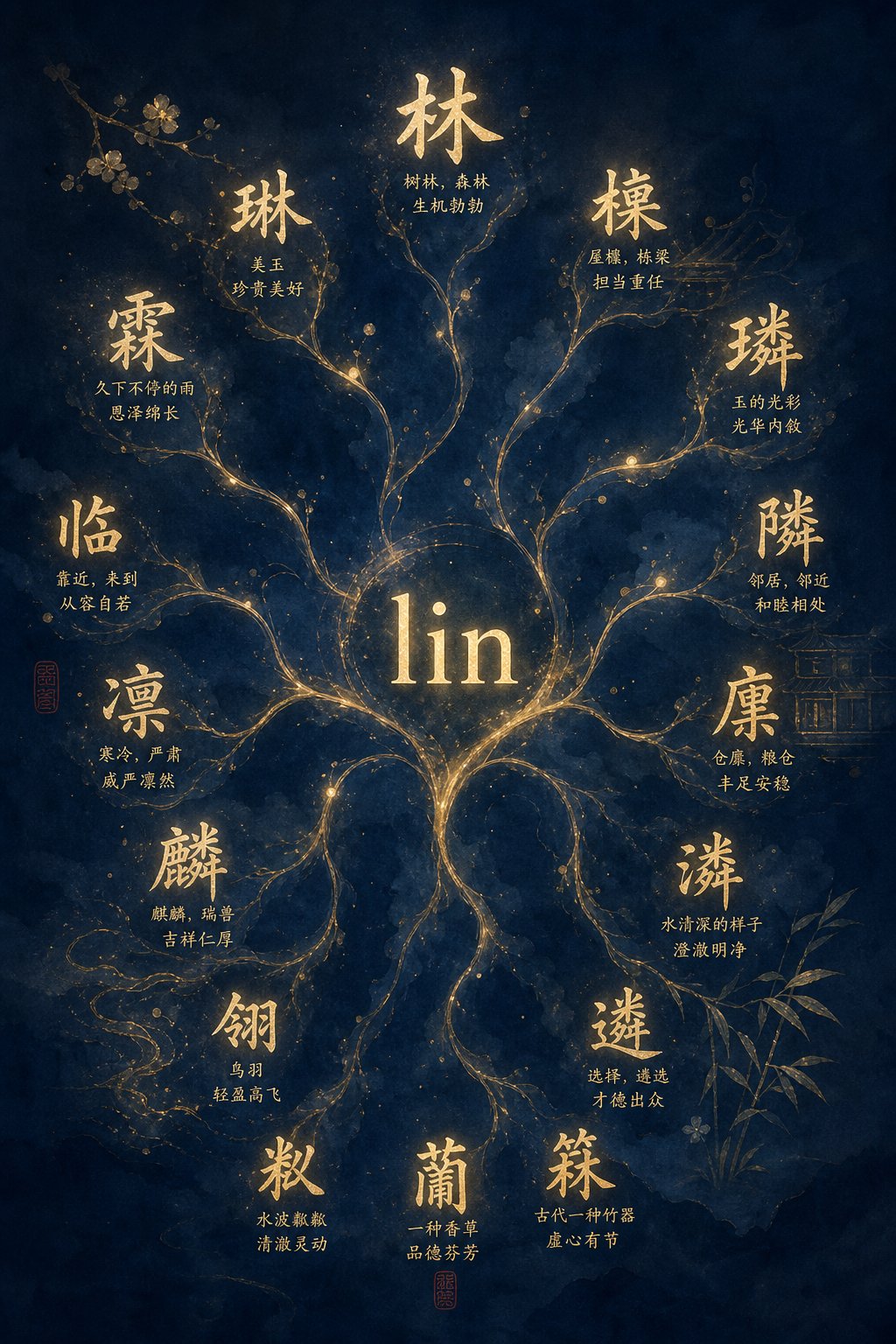
Why Understanding Chinese Surname vs Given Name Matters
Imagine you receive an email from a new colleague named Wang Xiaoming. You want to reply politely, but a question stops you mid-sentence: is Wang the first name or the last name? Should you write "Dear Wang" or "Dear Xiaoming"? If you have ever hesitated like this, you are far from alone. This confusion has real consequences. In the early days of Chinese immigration to New Zealand, misunderstanding which part of a name was the surname and which was the given name actually resulted in subsequent generations carrying the wrong surnames on official records.
The core issue is simple: Chinese names follow the opposite order from Western names. The family name always comes first, and the personal name follows. So in Wang Xiaoming, Wang is the surname and Xiaoming is the given name. This is not just a formatting quirk. It reflects a cultural philosophy where the collective identity of the family takes priority over the individual.
In Chinese culture, the collective (family) comes before the individual, and this philosophy is embedded directly in name order. The name in Chinese is structured to announce who you belong to before declaring who you are.
Why This Distinction Trips Up So Many People
English speakers instinctively assume the first word in any name is the given name. That assumption works perfectly for John Smith but fails completely for Chinese names. Add in the fact that many Chinese surnames, like Li or Chen, sound short enough to be first names to an untrained ear, and you can see why mistakes happen constantly in business emails, academic citations, medical records, and immigration paperwork. The chinese for name itself hints at this structure: the word for full name (姓名, xingming) literally places the surname character before the given name character.
What You Will Learn From This Guide
This guide breaks down 7 key differences between Chinese surnames and Chinese first names, covering everything from position and character count to meaning, inheritance, and regional formatting. Whether you are addressing Chinese colleagues, researching Chinese last names in your family tree, or simply trying to understand how Chinese names work, these distinctions will give you the clarity to never mix them up again. Each difference is grounded in cultural logic, so you will not just memorize rules but actually understand why the system works the way it does.
How We Organized This Comparison
Not all points of confusion carry equal weight. Someone filling out a visa application faces different challenges than a genealogist tracing ancestors through centuries-old clan records. To make this guide as useful as possible, the 7 differences covered here were selected based on the most frequently reported pain points across three domains: cross-cultural business communication, genealogy and heritage research, and official document processing.
Selection Criteria for Key Differences
Each difference addresses a specific question people ask when trying to understand how do Chinese names work. Some are structural, like character count and position. Others are cultural, like why certain naming choices carry deep significance in the name in chinese language tradition. The goal was to cover the full spectrum of confusion, from "which part do I say first?" to "why does this name look completely different on a Hong Kong ID versus a mainland passport?"
How Each Difference Is Structured
Every section evaluates its topic across four consistent dimensions:
- Structural rules - the mechanical, character-level patterns that define how surnames and given names are built
- Cultural reasoning - the philosophical or historical logic behind the convention
- Practical impact - how the difference affects real-world tasks like addressing someone, filing documents, or searching records
- Regional variation - how the convention shifts across mainland China, Taiwan, Hong Kong, and Southeast Asian Chinese communities
Information throughout this guide draws from linguistic research on personal name systems, census data, and documented naming conventions spanning multiple Chinese-speaking regions. This cross-regional approach matters because a single chinese name definition does not capture the full picture. The way a name is romanized, formatted, and interpreted varies significantly depending on geography, and each variation introduces its own layer of potential misreading for outsiders attempting chinese name interpretation.
Position and Order in the Full Name
Of all the differences between Chinese first name last name conventions and Western ones, position is the most fundamental. In English, you say given name first, family name second: John Smith. In Chinese, the structure flips entirely. The surname in chinese (姓, xìng) always leads, followed by the given name (名, míng). Zhang Wei is not a person named Zhang whose family name is Wei. Zhang is the family name, and Wei is the personal name.
Surname-First Order and Its Cultural Logic
This ordering is not arbitrary formatting. It reflects a deeply rooted cultural principle: the family unit comes before the individual. When you hear a Chinese name, the very first sound identifies which lineage that person belongs to. Only after establishing collective identity does the personal, individual name follow. Think of it as introducing your house before introducing yourself. The last name in chinese culture carries the weight of ancestry, clan, and shared responsibility, so it earns the leading position.
As Temple University's Center for Chinese Language Instruction explains, the family name represents not just an individual but an entire lineage, reinforcing a sense of belonging and connection that Chinese naming conventions place front and center.
How Reversal Happens in Western Contexts
Problems arise when Chinese names enter English-language systems. Many Chinese people reverse their name order to match Western expectations, so Zhang Wei becomes Wei Zhang in casual English settings. Others adopt a Western first name chinese speakers use alongside their surname, creating combinations like James Zhang. Without context clues, you cannot always tell whether someone has already flipped their name for your benefit or kept the original order. This is exactly why the chinese name first name confusion persists in workplaces, universities, and official records worldwide.
Identifying Position in Real Documents
Fortunately, formal documents often provide formatting hints. Passports from the People's Republic of China display the surname field separately from the given name field. Academic citations typically use a comma after the family name. Capitalization is another common signal: many style guides write the chinese last name in all caps to distinguish it visually.
Here is how the same name appears across different contexts:
| Context | Format | Example |
|---|---|---|
| Chinese document (original order) | [Surname] [Given name] | 张伟 / Zhang Wei |
| Western casual order | [Given name] [Surname] | Wei Zhang |
| Passport (ICAO standard) | [SURNAME] [Given name] | ZHANG Wei |
| Academic citation | [Surname], [Given name] | Zhang, Wei |
Notice the pattern: whenever a system needs to clarify first name and last name for chinese names, it relies on capitalization, comma placement, or labeled fields. If you spot a single syllable in all caps at the beginning of a romanized Chinese name, that is almost certainly the surname. When you see a comma separating two parts, the element before the comma is the family name. These small visual cues are your most reliable tools for parsing the first name in chinese naming conventions without needing to ask.
Position alone, though, does not tell the whole story. A name like Ouyang Xiu appears to have two given-name syllables followed by one, but Ouyang is actually a two-character surname. Recognizing these exceptions requires understanding character count patterns, which reveal a second layer of structural logic built into every Chinese name.
Character Count and Length Patterns
Knowing that the surname comes first is only half the puzzle. The next question is: where does the surname end and the given name begin? In English, a space neatly separates first and last names. In Chinese, the answer lies in character count. The relationship between names and characters follows predictable rules that, once you learn them, make parsing almost any Chinese name straightforward.
One-Character Surnames as the Dominant Pattern
The vast majority of Chinese surnames consist of a single character. These are called single surnames (单姓, dānxìng). Wang (王), Li (李), Zhang (张), Liu (刘), Chen (陈) — each is just one character, one syllable. This pattern holds for over 96% of the Chinese population. So when you encounter a name written in chinese characters, the default assumption is simple: the first character is the surname, and everything after it is the given name.
Given names, meanwhile, are typically one or two characters long. This means a standard full Chinese name totals either two or three characters. A 3 letter chinese name like Zhang Wei (张伟) breaks down as one surname character plus two given-name characters. A two-character name like Li Na (李娜) has one surname character plus a single given-name character. Both structures are common, though studies from the 2000s and 2010s estimated that over three-quarters of China's population had two-character given names, making the three-character full name the dominant pattern.
| Total Characters | Structure | Example (Chinese) | Example (Pinyin) | Breakdown |
|---|---|---|---|---|
| 2 characters | 1 surname + 1 given | 李娜 | Li Na | Li (surname) + Na (given) |
| 3 characters | 1 surname + 2 given | 张小明 | Zhang Xiaoming | Zhang (surname) + Xiaoming (given) |
| 4 characters | 2 surname + 2 given | 欧阳修文 | Ouyang Xiuwen | Ouyang (surname) + Xiuwen (given) |
This table covers the structures you will encounter most often when reading chinese names in chinese or in romanized form. The two-character and three-character names account for nearly all cases.
Compound Surnames That Break the Rule
Here is where things get tricky. A small number of Chinese surnames use two characters instead of one. These are called compound surnames (复姓, fùxìng), and they create real parsing confusion for anyone unfamiliar with the system. Imagine seeing the name Sima Qian (司马迁). If you assume the standard one-character surname rule, you might read Si as the surname and Maqian as the given name. But Sima is actually the complete surname — it means "Master of the Horse" and originated as an ancient official title.
Common compound surnames still in use include:
- Ouyang (欧阳) — the most frequently encountered compound surname among ethnic Han families, meaning "south of Mt. Ou Yu"
- Sima (司马) — derived from a Zhou dynasty military title
- Shangguan (上官) — meaning "high official"
- Zhuge (诸葛) — famously borne by the strategist Zhuge Liang
- Situ (司徒) — from the ancient title "Minister over the Masses"
Many of these character surnames derive from Zhou dynasty noble titles, professions, or place names. Others originated from non-Han ethnic groups whose multi-syllable names were transliterated into Chinese characters. The Manchu imperial clan Aisin Gioro (爱新觉罗), for instance, uses four characters — though such long surnames are extremely rare in modern daily life.
The practical takeaway? If a name has four characters total and you cannot identify the first character as a known common surname, consider whether the first two characters might form a compound surname. A quick mental check against familiar compound surnames like Ouyang or Sima can save you from an embarrassing misidentification.
Given Name Length and Generation Naming
People sometimes ask about chinese middle names, expecting a three-part structure similar to Western naming. Traditional Chinese names do not have middle names in the Western sense. When a given name contains two characters, those characters function together as a single unit — not as a "first name" plus a "middle name." The name chinese characters form one cohesive given name, even though it happens to be two syllables long.
That said, there is a historical practice that superficially resembles the middle-name concept: generational names (字辈, zìbèi). In this tradition, one character of the two-character given name is shared among all siblings, cousins, or clan members of the same generation. The other character is unique to the individual. For example, in Mao Zedong's family, the generation poem assigned the character Ze (泽) to his generation. His brothers were named Mao Zemin and Mao Zetan — all sharing Ze as the first character of their given names, with the second character distinguishing each person.
This system served a practical purpose: by looking at someone's name chinese characters, you could immediately identify which generation of a family they belonged to. Sixteen or even thirty-two generations might be planned in advance through a generation poem, with each line providing the shared character for a successive generation. While this practice has become less common in urban China, it still appears in traditional families and rural communities, and it explains why you might notice siblings or cousins sharing one identical character in their given names.
Understanding these length patterns gives you a reliable framework for splitting any Chinese name into its component parts. But character count only tells you where the boundary falls — it says nothing about why certain characters ended up in the surname slot versus the given-name slot. That distinction comes down to origin: one part of the name is inherited across millennia, while the other is freshly created for each new life.
Origin and Inheritance Rules
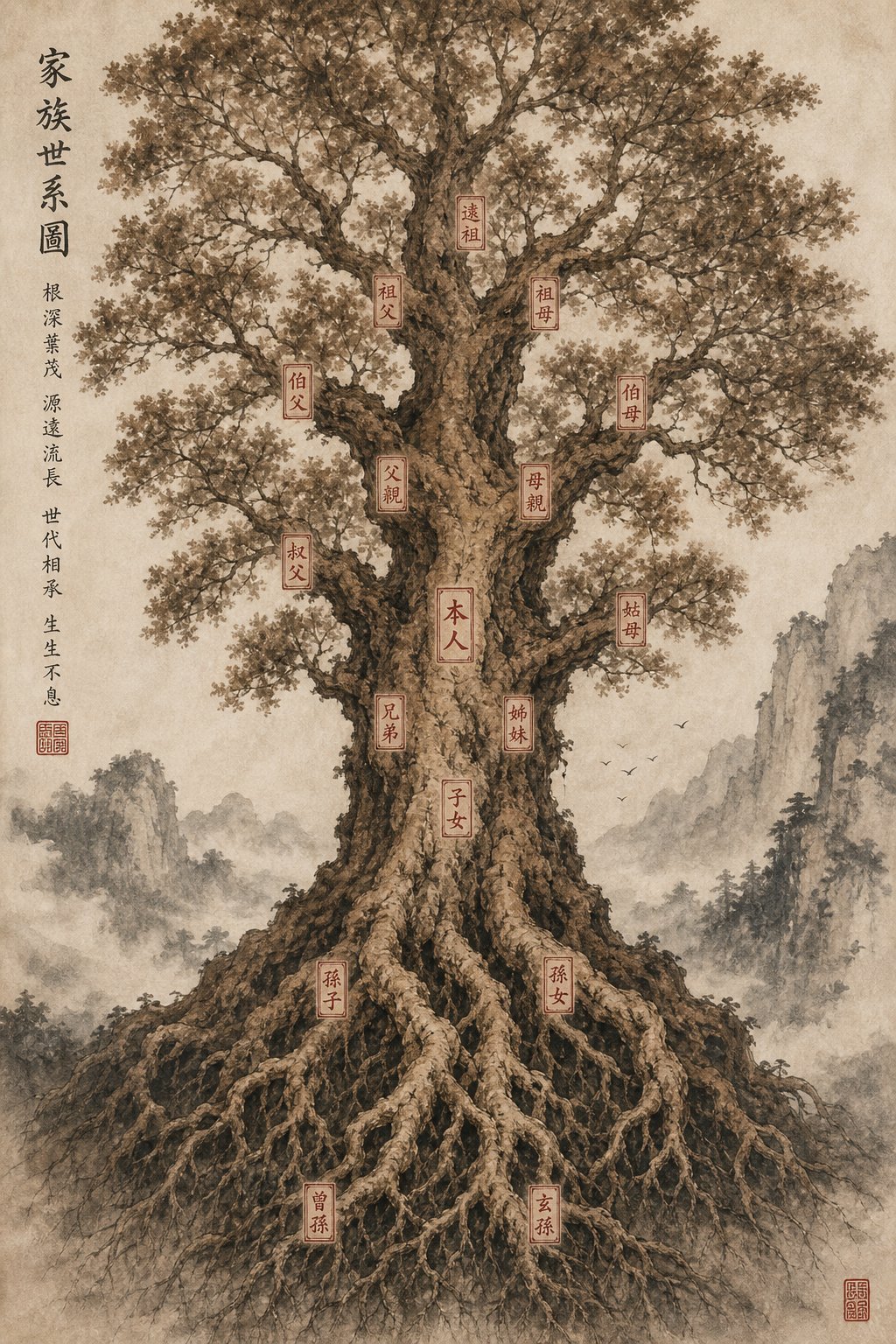
Chinese family names are not invented. They are inherited. A surname passes from parent to child across generations, unchanged for centuries or even millennia. Given names, on the other hand, are created fresh for each new person born into the family. This contrast between ancient inheritance and individual creation is one of the sharpest differences separating the two halves of a Chinese name.
Inherited Surnames and Their Ancient Roots
China is one of the earliest civilizations to adopt a surname system, with a documented history stretching back over five thousand years. The famous Hundred Family Surnames (百家姓) text, compiled during the Song Dynasty (960-1279 AD), organized common chinese last names into a rhyming poem that children memorized for generations. But the surnames themselves are far older than that poem. Many trace their origins to ancient state names, noble titles, ancestral lands, or occupations from the Zhou Dynasty and earlier.
The wang last name origin, for example, is directly tied to royalty. The character 王 literally means "king" or "monarch," and descendants of various royal lineages adopted it as their surname. The chen last name origin follows a different path: it derives from the ancient State of Chen in present-day Henan province, which existed during the Zhou Dynasty. When the state fell, its people took the state's name as their family identifier.
These origins matter because they reveal something fundamental about how surnames function. Unlike given names, they were never chosen to express personal meaning. They are fixed lineage markers, passed down patrilineally with almost no modification across dozens of generations. According to the Dictionary of Chinese Surnames, various ethnic groups throughout Chinese history have used approximately 24,000 surnames in total. Many vanished over time, leaving roughly 6,000 surnames in active use today.
The Concentration of Common Surnames
Here is what makes the most common chinese surnames so remarkable: a tiny fraction of those 6,000 surnames covers the vast majority of the population. The top 100 surnames alone account for approximately 85% of China's 1.4 billion people. The concentration at the very top is even more dramatic.
Based on China's Sixth National Population Census data, the top 3 surnames — Wang, Li, and Zhang — together cover approximately 270 million people. That means roughly one in five Chinese citizens shares one of just three family names. The most popular chinese last names have maintained their dominance for centuries, appearing consistently at the top of rankings from the Song Dynasty through modern census reports.
| Rank | Surname | Chinese Character | Approx. Population (millions) | % of Total Population |
|---|---|---|---|---|
| 1 | Wang | 王 | 94.7 | 7.10% |
| 2 | Li | 李 | 92.8 | 6.96% |
| 3 | Zhang | 张 | 85.5 | 6.42% |
| 4 | Liu | 刘 | 68.8 | 5.16% |
| 5 | Chen | 陈 | 56.7 | 4.26% |
| 6 | Yang | 杨 | 39.6 | 2.97% |
| 7 | Huang | 黄 | 28.8 | 2.16% |
| 8 | Zhao | 赵 | 27.0 | 2.03% |
| 9 | Zhou | 周 | 25.1 | 1.88% |
| 10 | Wu | 吴 | 23.8 | 1.78% |
The chen last name alone covers nearly 57 million people. This extreme concentration is partly why the most common chinese last names feel so familiar even to people with limited exposure to Chinese culture. You will encounter Wang, Li, Zhang, Liu, and Chen repeatedly in international business, academia, and media.
How Given Names Are Chosen at Birth
Given names operate on completely different logic. While surnames are inherited automatically, given names are deliberately crafted — usually by parents or grandparents — at or shortly after birth. Each given name is a fresh creation, selected to carry specific hopes, values, or aesthetic qualities. No two siblings receive the same given name, and no rule requires a child's given name to resemble anyone else's in the family (generational naming traditions aside).
This means the pool of possible given names is virtually unlimited. Any character or combination of characters with positive connotations can serve as a given name. Parents might draw inspiration from classical poetry, seasonal imagery, philosophical ideals, or even current events at the time of birth. The result is a naming landscape where surnames are shared by millions but given names are deeply personal and often unique within a community.
The practical implication? When researching most common chinese surnames for genealogy or professional purposes, you are working with a closed, well-documented set. Identifying a surname is a matter of matching against a known list. Interpreting a given name, however, requires understanding the specific characters chosen and the cultural moment in which they were selected — a task that depends less on inheritance rules and more on meaning, symbolism, and personal intention.
Meaning and Cultural Significance
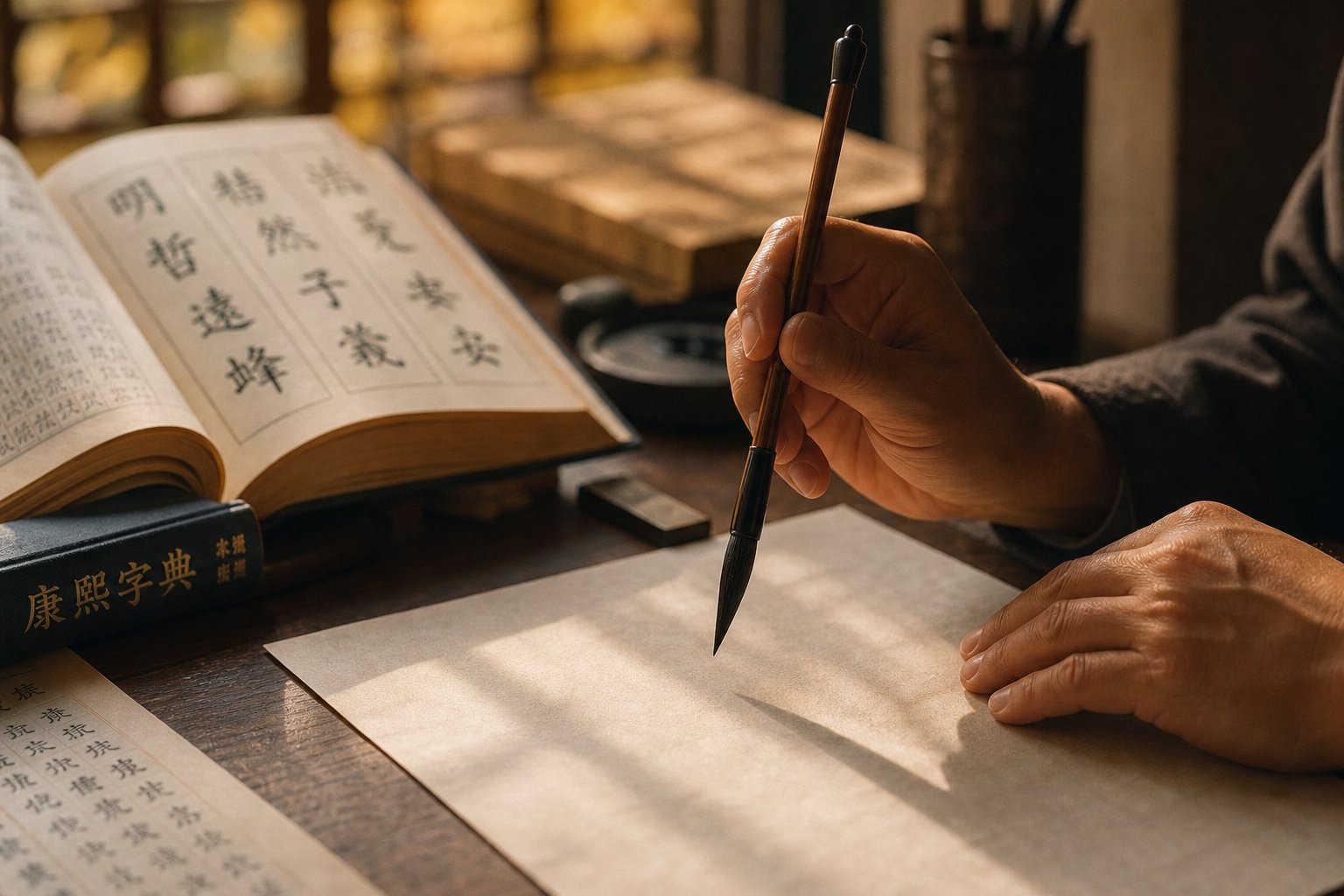
Every Chinese character carries semantic weight. Unlike letters in an alphabet, each character is a word with its own meaning, pronunciation, and visual form. This makes every chinese name meaning something — literally. But the type of meaning embedded in a surname versus a given name could not be more different. One is a fossil of history. The other is a wish for the future.
Surnames as Fixed Lineage Markers
Many chinese last names and meanings do have a connection — just not a chosen one. The character Li (李) literally means "plum tree." Lin (林) means "forest." Ye (叶) means "leaf." These translations are real, but they are incidental. Nobody named Li chose that surname because they admired plum trees. The meaning was already baked into the character when it became a clan identifier centuries ago, and it has been passed down ever since without regard for its literal definition.
This is the key distinction: surnames function as lineage markers, not as meaning carriers. Their semantic content is historical trivia rather than intentional communication. When you look up chinese surnames and meanings, you are essentially reading etymology — the ancient origin story of a clan name — rather than a deliberate message from the name-bearer's parents. The surname Wang (王) means "king," but a person named Wang today is not claiming royalty. They are simply identifying which family line they belong to.
In practice, most Chinese people rarely think about the literal meaning of their surname. It is a fixed identifier, inherited automatically, and its primary function is social: connecting you to your ancestors, your clan, and your extended family network.
Given Names as Deliberate Meaning Carriers
Given names operate on entirely different logic. When parents choose a given name, they are composing a tiny poem — one or two characters that together express a hope, a value, or an aspiration for their child's life. Understanding names in chinese and meanings requires recognizing that this selection process is deeply intentional. Families often spend weeks or months deliberating, consulting dictionaries, classical poetry, and sometimes even fortune tellers who practice literomancy to find characters with favorable stroke counts and elemental balance.
The five-element system (五行, wuxing) plays a role here. If a child's birth chart shows a deficiency in the water element, parents might choose a given name containing a water-related character like 海 (hai, "sea") or 淼 (miao, "vast water"). This practice of meaning chinese names through elemental harmony remains common, particularly in regions where traditional fortune-telling is popular.
Common meaning categories for given names include:
- Virtues and character — 德 (de, virtue), 仁 (ren, benevolence), 义 (yi, righteousness), 智 (zhi, wisdom)
- Aspiration and strength — 志 (zhi, ambition), 强 (qiang, strong), 伟 (wei, great), 勇 (yong, brave)
- Nature and beauty — 梅 (mei, plum blossom), 竹 (zhu, bamboo), 雪 (xue, snow), 云 (yun, cloud)
- Prosperity and fortune — 福 (fu, blessing), 财 (cai, wealth), 祥 (xiang, auspicious)
- Scholarly achievement — 文 (wen, literature), 博 (bo, broad knowledge), 学 (xue, learning)
- Patriotic ideals — 国 (guo, nation), 建国 (jianguo, build the nation), 卫 (wei, defend)
A name like 李美华 (Li Meihua) combines the inherited surname Li with a given name meaning "beautiful splendor." The surname tells you the family. The given name tells you what the family hoped this child would become. That layered structure is what makes chinese names and meanings so rich — each full name is simultaneously a genealogical record and a personal blessing.
Gender Patterns in Given Name Meanings
While Chinese characters are not grammatically gendered, strong cultural associations guide which characters appear in male chinese given names versus chinese first names female parents tend to choose. The patterns are consistent enough that native speakers can often guess a person's gender from their given name alone — though exceptions are common.
Male given names frequently draw from characters suggesting:
- Physical or moral strength — 强 (qiang, strong), 刚 (gang, hard/firm), 勇 (yong, brave)
- Ambition and greatness — 伟 (wei, great), 志 (zhi, aspiration), 鹏 (peng, mythical great bird)
- Military or national service — 军 (jun, army), 国 (guo, nation), 卫 (wei, defend)
Female given names lean toward:
- Beauty and elegance — 美 (mei, beautiful), 丽 (li, pretty), 秀 (xiu, elegant)
- Flowers and nature — 梅 (mei, plum blossom), 兰 (lan, orchid), 芳 (fang, fragrance)
- Jade and precious materials — 玉 (yu, jade), 珍 (zhen, precious), 琳 (lin, fine jade)
Data from China's most common name rankings confirms these tendencies. Among the top 50 most frequently used full names, female entries cluster around characters like 丽 (pretty), 秀英 (outstanding beauty), 芳 (fragrance), and 静 (tranquil). Male entries favor 伟 (great), 强 (strong), 军 (army), and 勇 (brave). The given name 伟 alone appears paired with multiple common surnames — Wang Wei, Li Wei, Liu Wei — each time carrying the same aspirational meaning of greatness.
That said, many characters cross gender lines freely. 明 (ming, bright) and 华 (hua, splendid) appear in both male and female names. And modern naming trends are shifting: younger generations increasingly choose gender-neutral or unconventional characters, moving away from the more rigid patterns their grandparents followed. The chinese name meaning parents intend is becoming more individualistic and less bound by traditional gender expectations.
Meaning, then, is where the surname and given name diverge most dramatically in purpose. One is a passive inheritance. The other is an active creation. But both exist within a system that varies significantly depending on where in the Chinese-speaking world a person lives — and how their name gets translated into Roman letters.
Regional Variations and Romanization Styles
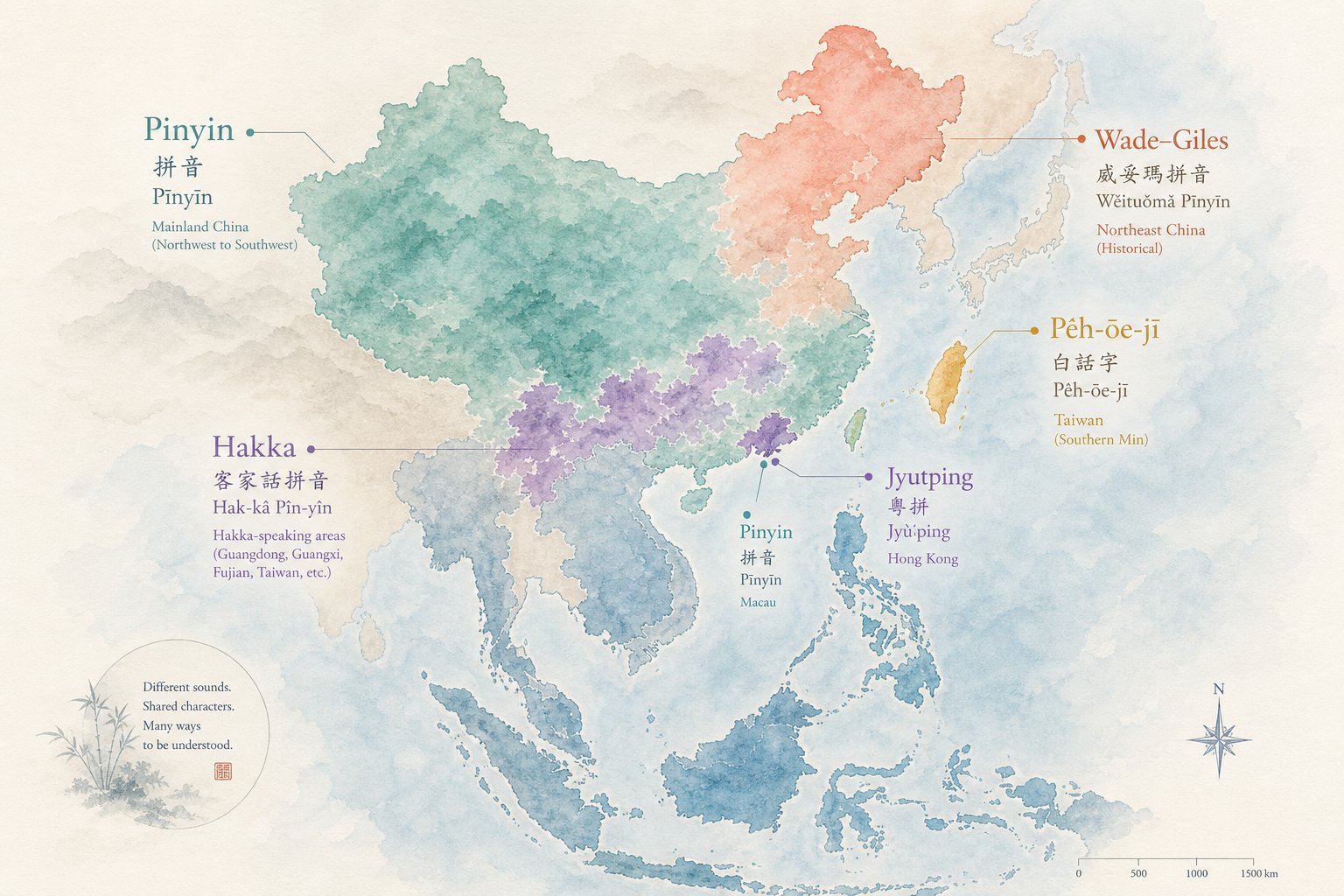
A single Chinese character can produce half a dozen different spellings depending on where in the world its bearer lives. The surname 张 is Zhang in mainland China, Cheung in Hong Kong, Chang in Taiwan, and Teo in some Hokkien-speaking communities. If you are trying to identify which part of a romanized name is the surname and which is the given name, regional formatting differences can make an already tricky task feel nearly impossible. The way Chinese names get rendered into English varies so dramatically across regions that the same person could appear to have completely different names on documents from Beijing, Taipei, and Singapore.
Mainland China Formatting Standards
Mainland China uses pinyin as its official romanization system. Pinyin follows strict rules: the surname is written as one capitalized word, and the given name is written as a second word with no space or hyphen between its syllables. So 张小明 becomes Zhang Xiaoming — not Zhang Xiao Ming, not Zhang Xiao-Ming. This convention means that when you see a two-word romanized name from mainland China, the first word is almost always the surname and the second word is the complete given name, regardless of how many syllables it contains.
Chinese name pronunciation in pinyin can trip up English speakers because many letter combinations do not map to their expected English sounds. To pronounce Zhang correctly, for instance, the "zh" sounds closer to a "j" in English (like "jang" with a slightly harder initial consonant), not like the "zh" in "Zhivago." The confusion around how to pronounce Zhang is one of the most common stumbling blocks for non-Chinese speakers encountering mainland names for the first time.
Mainland passports and official documents separate the surname and given name into labeled fields, and the surname typically appears in all capitals (ZHANG Xiaoming). This formatting makes identification relatively straightforward — if you know to look for it.
Taiwan and Hong Kong Variations
Taiwan uses traditional characters rather than simplified ones, and its romanization landscape is far less standardized. Over the decades, Taiwan has employed Wade-Giles, Tongyong Pinyin, and Hanyu Pinyin at different times and in different municipalities. The result is inconsistency: the same surname 张 might appear as Chang (Wade-Giles) or Zhang (Hanyu Pinyin) depending on when and where the person's passport was issued.
One distinctive feature of Taiwanese romanization is the use of names with a hyphen in the given name. Where mainland China writes Xiaoping as one unbroken word, Taiwanese documents often render it as Xiao-Ping or Hsiao-Ping. This hyphenation actually helps outsiders identify the given name portion, since the hyphenated pair clearly belongs together as a unit separate from the surname.
Hong Kong presents yet another layer of complexity. As a historically Cantonese-speaking region, Hong Kong romanizes names based on Cantonese pronunciation rather than Mandarin. The character 王 — Wang in Mandarin pinyin — becomes Wong in Cantonese romanization. So when you see wong in chinese name contexts, you are looking at the Cantonese rendering of the same character that mainlanders spell as Wang. Similarly, 陈 is Chen in Mandarin but Chan in Cantonese, and 张 is Zhang in Mandarin but Cheung or Cheong in Cantonese.
Hong Kong residents also frequently adopt a Western first name, creating a three-part structure like Jackie Chan or Andy Lau. In these cases, the Western name comes first, the Cantonese surname comes last, and the Chinese given name may or may not appear at all in everyday use. This makes cantonese names particularly confusing for outsiders because the format mimics Western name order even though the surname is still the Chinese family name.
Southeast Asian Chinese Name Adaptations
Chinese communities in Singapore, Malaysia, Indonesia, Thailand, and the Philippines have developed their own romanization conventions shaped by local languages and colonial histories. In Singapore and Malaysia, surnames are often romanized according to the dialect group of the family's ancestors — Hokkien, Teochew, Cantonese, or Hakka. The character 林 (Lin in Mandarin) becomes Lim in Hokkien, Lam in Cantonese, and Lim in Teochew. A person surnamed Tan in Singapore almost certainly has Hokkien roots, since Tan is the Hokkien pronunciation of 陈 (Chen in Mandarin, Chan in Cantonese).
In places like Singapore, the way a family name is spelled can be a signifier of the region a person's ancestors hail from. A Wong signals Cantonese heritage. A Tan signals Hokkien. An Ong could be Hokkien for 王 (Wang). These dialect-based spellings add another dimension to the challenge of translating chinese names into english — the same character produces entirely different romanizations depending on ancestral dialect.
Some Southeast Asian Chinese communities have also reversed name order entirely, placing the given name before the surname to match local conventions. In Indonesia, government policies once required Chinese residents to adopt Indonesian-sounding names, further obscuring the original surname-given name structure. The result is that chinese name translation in Southeast Asian contexts often requires knowing not just the character but the dialect, the country, and the era of immigration.
Here is how the same name might appear across different regions:
| Region | Character | Romanization System | Full Name Example | Format |
|---|---|---|---|---|
| Mainland China | 张伟明 | Hanyu Pinyin | Zhang Weiming | Surname + given (no hyphen) |
| Taiwan | 張偉明 | Wade-Giles / mixed | Chang Wei-Ming | Surname + given (hyphenated) |
| Hong Kong | 張偉明 | Cantonese romanization | Cheung Wai-Ming | Surname + given (hyphenated) |
| Singapore (Hokkien) | 张伟明 | Dialect-based | Teo Wee Beng | Surname + given (spaced) |
| Malaysia (Cantonese) | 张伟明 | Dialect-based | Cheong Wai Meng | Surname + given (spaced) |
You will notice that the same three characters produce five completely different-looking names. Without knowing the regional conventions, there is no reliable way to perform a chinese names english translation by spelling alone. The surname could be Zhang, Chang, Cheung, Teo, or Cheong — all representing the identical character 张.
These regional differences compound every other distinction covered so far. Position, character count, origin, and meaning all remain consistent in the Chinese-character original. But the moment a name crosses into romanized text, regional variation can obscure every structural clue you have learned to rely on. That is precisely why a consolidated reference comparing all the key differences side by side becomes essential for anyone who regularly encounters Chinese names across multiple contexts.
Side-by-Side Comparison Summary
With regional romanization, character count rules, inheritance patterns, and meaning layers all working simultaneously, keeping track of every distinction can feel overwhelming. This section pulls all seven differences into a single reference you can return to whenever you encounter an unfamiliar Chinese name and need to quickly determine which part is which.
Complete Surname vs Given Name Comparison Table
The table below consolidates every structural and cultural difference covered so far. Whether you are parsing typical chinese names on a business card or sorting through names in chinese on an official roster, these seven dimensions give you a complete framework for identification.
| Dimension | Surname (姓, xing) | Given Name (名, ming) |
|---|---|---|
| Position in full name | Always first (in Chinese-language contexts) | Always second (follows the surname) |
| Typical length | 1 character (rarely 2 for compound surnames) | 1-2 characters |
| Origin | Inherited patrilineally across generations | Freshly chosen by parents or grandparents at birth |
| Meaning function | Lineage marker (meaning is incidental, not chosen) | Aspirational (meaning is deliberately selected) |
| Number in existence | ~6,000 in active use | Virtually unlimited combinations |
| Changeability | Fixed for life (extremely rare to change) | Can be legally changed, though uncommon |
| Cultural weight | Collective identity (clan, lineage, ancestry) | Individual identity (personal hopes, character) |
Notice the pattern: surnames are constrained, inherited, and collective. Given names are open, created, and personal. This contrast holds true across all Chinese-speaking regions, even when romanization styles differ dramatically. If you remember nothing else, remember that the surname is the fixed, short element that connects a person to millions of others sharing the same family line — while the given name is the unique, meaningful element chosen just for them.
Quick Identification Checklist
When you encounter an unfamiliar Chinese name and need to figure out which part is the surname, run through these practical checks:
- Check the first character against common surnames — Wang, Li, Zhang, Liu, Chen, Yang, Huang, Zhao, Zhou, and Wu cover over 40% of the population. If the first syllable matches one of these most common chinese names, it is almost certainly the surname.
- Look for capitalization conventions — many style guides and official documents write the surname in all caps (ZHANG Weiming), making it visually distinct from the given name.
- Note comma placement — in academic citations and formal lists, a comma after the first element signals surname-first formatting (Zhang, Weiming).
- Count the syllables — in a three-syllable name, the single opening syllable is the surname roughly 96% of the time. A two-syllable name is trickier but the same rule applies.
- Check for labeled fields — passports, visa forms, and official databases separate "surname" (sometimes labeled surname中文 on bilingual forms) from "given name" into distinct fields.
- Look for hyphens or joined syllables — a hyphenated pair (Wei-Ming) or a joined multi-syllable word (Weiming) after the first element is the given name.
- Consider regional spelling — if the name uses Cantonese romanization (Cheung, Wong, Chan), the surname still comes first unless an English first name precedes it.
These checks work for the vast majority of popular chinese names you will encounter in professional, academic, or social settings. No single clue is foolproof on its own, but combining two or three of them gives you high confidence. And when all else fails, the simplest approach remains the most reliable: ask the person directly which part is their family name. Most people appreciate the effort far more than they mind the question.
Final Recommendations for Getting Chinese Names Right
Knowing the rules is one thing. Applying them in real situations is another. Whether you are drafting an email to a new contact in Shanghai, digging through immigration records, or wondering what is my chinese name equivalent, the guidance below maps directly to your specific scenario.
When uncertain whether you are looking at a surname or given name, remember that the surname is almost always one character and appears first in Chinese-language contexts.
For Business and Professional Settings
In cross-cultural workplaces, the safest approach is straightforward: ask. A quick "How would you like me to address you?" shows respect without assuming. Many Chinese professionals working internationally already adapt their name order or adopt an English first name for convenience. If you cannot ask directly, default to treating the first element of a Chinese-ordered name as the surname. In Chinese business etiquette, addressing someone as their surname plus a title (Manager Wang, Director Li) is always appropriate and appreciated. The phrase "what is your name in chinese" — or more precisely, "nin gui xing" (您贵姓, what is your honorable surname?) — is itself a polite conversation opener that signals cultural awareness.
For Genealogy and Heritage Research
If you are tracing Chinese ancestry, always search by the Chinese character of the surname rather than its romanized spelling. As this guide has shown, a single surname character can appear as Chen, Chan, Tan, or Chin depending on region and dialect. Romanization is unreliable across eras and geographies. Start with the character, then branch outward. Genealogy databases organized by chinese family names will yield far more accurate results than spelling-based searches.
For Choosing or Understanding a Chinese Name
Parents researching chinese baby names should know that the creative work lives entirely in the given name. The surname is inherited and fixed. The given name is where meaning, aspiration, and individuality reside. If you are exploring how to name your asian baby with a Chinese given name, focus on character meanings, tonal harmony, and stroke-count balance. Those wondering how do i say my name in chinese or looking for a chinese name from english name often turn to a chinese name converter tool or a native speaker who can match phonetic similarity with meaningful characters. The goal is not a direct translation — it is finding characters that sound close to your English name while carrying positive meaning. Many people also choose chinese names for english names that are entirely new, unrelated to their Western name, selecting characters purely for their aspirational qualities.
Here are final practical recommendations to carry with you:
- Always confirm preferred name order before defaulting to assumptions
- Treat the first syllable of an unfamiliar Chinese name as the likely surname
- Use the Chinese character, not romanization, as your primary identifier in research
- Recognize that regional spelling differences do not change the underlying name structure
- Remember that the given name carries personal meaning — complimenting someone on their given name's meaning is a genuine cultural gesture
- When in doubt, ask — it is always better to ask than to guess wrong
Frequently Asked Questions About Chinese Surname vs Given Name
1. Which comes first in a Chinese name, the surname or the given name?
In Chinese naming conventions, the surname always comes first, followed by the given name. For example, in Zhang Wei, Zhang is the family name and Wei is the personal name. This order reflects the cultural principle that collective family identity takes precedence over the individual. However, many Chinese people reverse this order when interacting in Western contexts, so Wei Zhang and Zhang Wei refer to the same person with the same surname (Zhang).
2. How can I tell which part of a Chinese name is the surname?
The most reliable method is to check whether the first syllable matches a common Chinese surname like Wang, Li, Zhang, Liu, or Chen, which together cover over 40% of the population. In formal documents, the surname is often written in all capitals (ZHANG Weiming) or separated by a comma (Zhang, Weiming). In a three-syllable name, the single opening syllable is the surname approximately 96% of the time. When uncertain, combining capitalization cues, comma placement, and common surname recognition gives you high confidence.
3. Do Chinese names have middle names?
Traditional Chinese names do not include middle names in the Western sense. A two-character given name functions as a single unit rather than a first-plus-middle combination. However, the historical practice of generational names (zibei) resembles the concept: one character of the given name is shared among all family members of the same generation, while the other character is unique to the individual. This system helped identify which generation someone belonged to within a clan.
4. Why do the same Chinese surnames have different spellings like Chan, Chen, and Tan?
These spelling differences arise from regional romanization systems based on different Chinese dialects. The character 陈 is pronounced Chen in Mandarin (mainland China), Chan in Cantonese (Hong Kong), and Tan in Hokkien (Singapore and parts of Southeast Asia). Each region romanizes names according to local pronunciation rather than a universal standard. This means a single surname character can produce multiple English spellings depending on the bearer's geographic and linguistic background.
5. What are the most common Chinese surnames and how many people share them?
The three most common Chinese surnames are Wang (王, approximately 94.7 million people), Li (李, approximately 92.8 million), and Zhang (张, approximately 85.5 million). Together these three surnames alone cover roughly 270 million people, meaning about one in five Chinese citizens shares one of just three family names. The top 100 surnames account for approximately 85% of China's entire population, which is why name duplication is extremely common and given names carry extra importance for individual identification.