Chinese Surnames That Are Actually Animal Names
Imagine discovering that your chinese last name literally translates to "horse," "bear," or "dragon." For millions of people across China and the global diaspora, this is not a quirky coincidence — it is a direct link to ancient clan identity. Dozens of chinese surnames are, character for character, the same words used to name animals. These are not metaphors or loose translations. The character 马 means horse whether it appears in a nature documentary subtitle or on a family registry.
What Makes a Chinese Surname an Animal Name
A chinese surname qualifies as an "animal name" when the character itself is primarily recognized as an animal in the Chinese language. The surname 牛 (Niu) is the standard word for ox. The surname 熊 (Xiong) is the everyday word for bear. This direct overlap between fauna vocabulary and chinese family names traces back to totem worship in primitive society, where clans adopted animal symbols as spiritual guardians and identity markers. Over generations, these totemic labels hardened into hereditary surnames passed from parent to child.
This category exists because early Chinese naming conventions drew from the natural world long before standardized bureaucracy. Animals represented power, survival, and spiritual protection — qualities a clan wanted embedded in its very identity.
How Many Animal Surnames Exist in Chinese
Researchers have identified over 60 chinese last names that directly reference animals, spanning mammals, birds, fish, insects, and mythological creatures. Some, like 马 (Ma, horse), rank among the top 20 most common chinese surname entries in population surveys. Others, like 鱼 (Yu, fish), are far rarer. Collectively, these animal-character surnames account for a staggering number of bearers.
An estimated 100 million or more people in China alone carry a surname whose character is an animal — making this one of the largest "hidden" naming categories in any language on Earth.
What makes this category especially fascinating is its range. A common chinese surname like Ma sits alongside obscure entries that fewer than a thousand families still carry. The spectrum stretches from everyday livestock to celestial beasts, and each one carries a distinct origin story rooted in geography, occupation, or spiritual belief.
Those origin stories reveal something deeper than vocabulary trivia. They point to a time when the animal a clan chose as its symbol shaped everything — from where they settled to how neighboring groups perceived them.
Why Animals Became Chinese Family Names
A clan choosing a bear or a horse as its spiritual emblem was not a casual decision. It was a declaration of identity, protection, and lineage. The mechanisms that turned animal symbols into hereditary ancient chinese surnames operated across thousands of years, and they followed several distinct paths — some spiritual, some practical, and some political.
Totemic Worship and Clan Identity
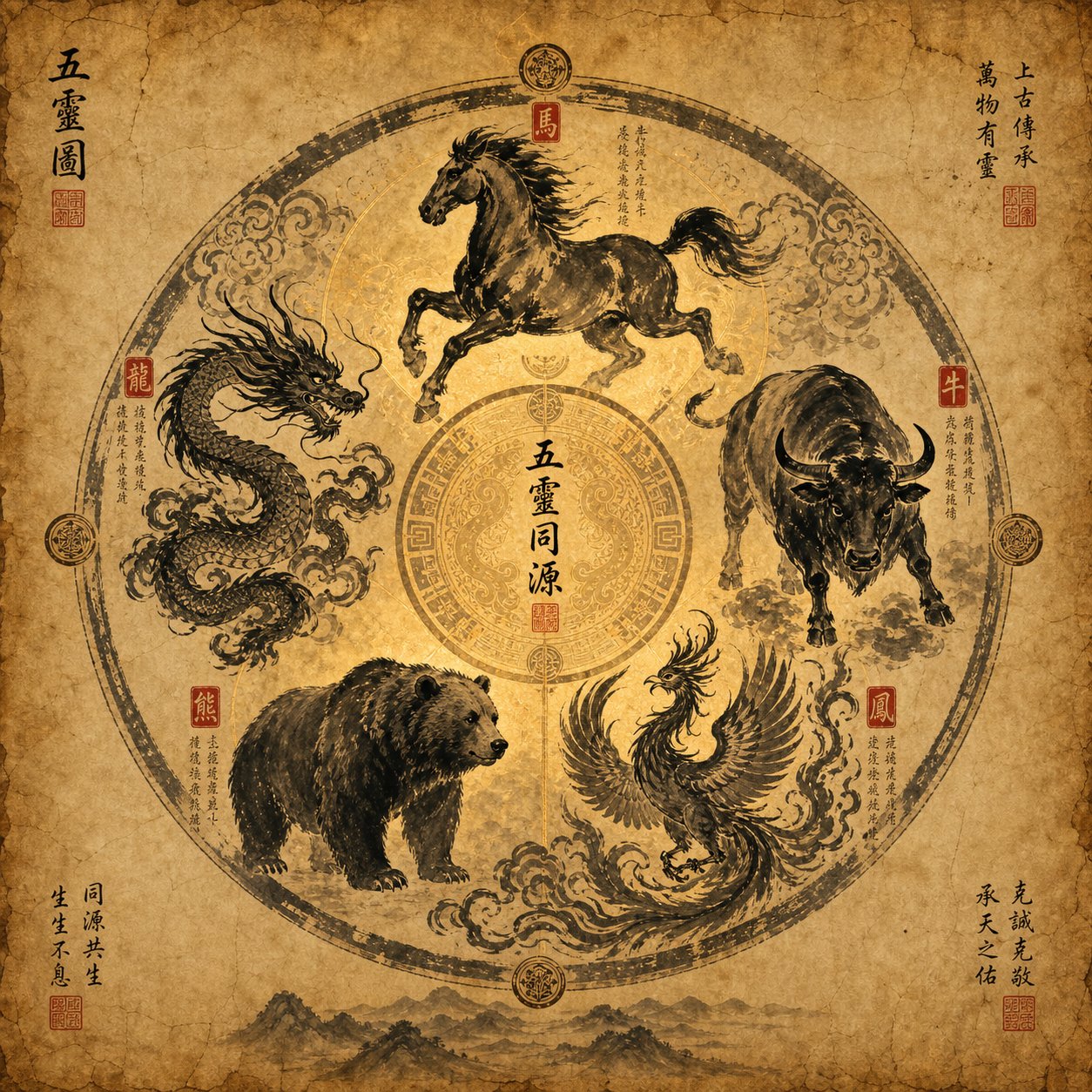
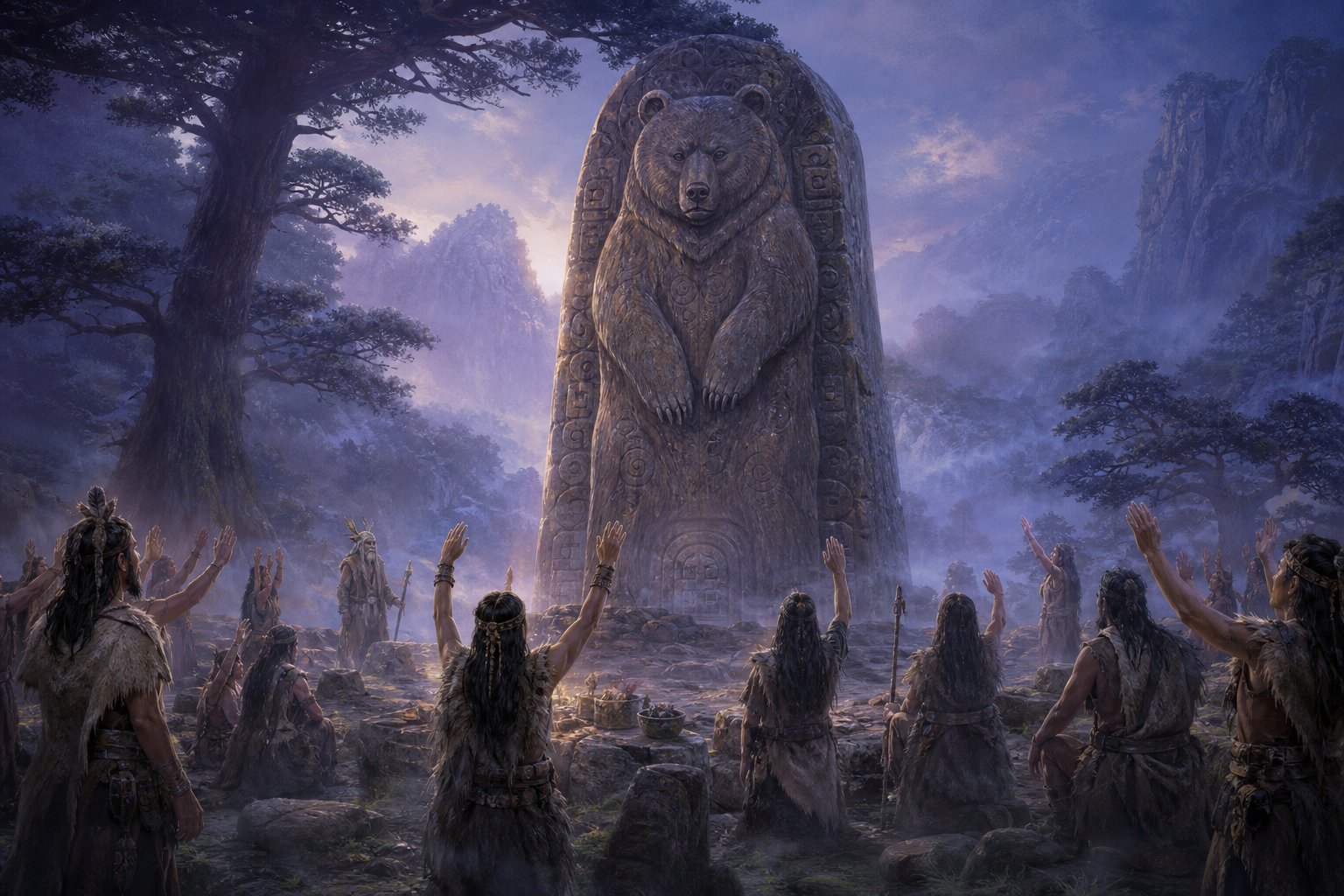
The most widely accepted explanation traces ancient chinese family names back to totemic worship. In prehistoric China, clans believed that a specific animal served as their spiritual ancestor or divine protector. The bear clan revered bears. The horse clan revered horses. These totems were not just decorative — they functioned as sacred identifiers that distinguished one group from another.
As People's Daily Online explains, each ancient clan had its own totem, which people believed carried supernatural force that could protect them and endow them with power and skills. Over generations, these totemic symbols became so deeply tied to group identity that they naturally transitioned into hereditary clan names. The surname 熊 (Xiong, bear) likely descends from a bear-worshipping clan, while 牛 (Niu, ox) may trace to groups that considered cattle sacred.
You'll notice a pattern here: the animal was not chosen at random. It reflected what the clan depended on for survival, feared, or aspired to embody.
From Oracle Bones to Modern Surnames
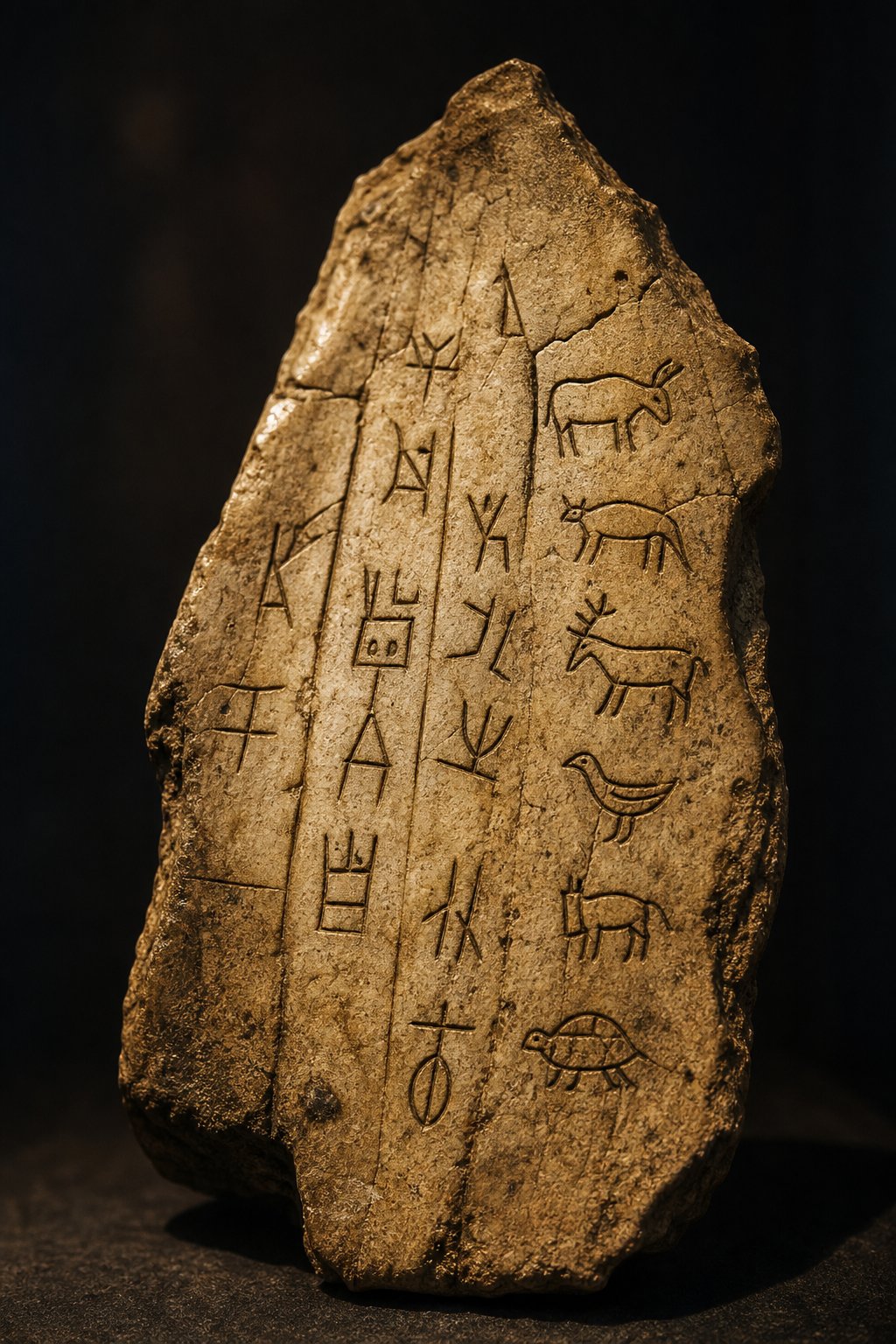
Physical evidence supports this totemic theory. Oracle bone inscriptions from the Shang Dynasty (roughly 1600-1046 BCE) contain clearly pictographic versions of animal characters — 马 looked like a horse in profile, 牛 showed horns atop a bovine head, and 龙 depicted a serpentine creature with claws. These were not abstract symbols. They were drawings that evolved into writing.
The fact that ancient chinese last names appear alongside these animal pictographs in early records suggests that clan identity and animal symbolism were already intertwined by the time writing emerged. The characters carried dual meaning from the start: they named the animal and they named the people.
Multiple Origin Paths for the Same Surname
Totemic worship was the oldest pathway, but it was not the only one. A single animal surname might have entered the naming system through entirely different routes depending on the region and era. The major origin categories include:
- Totemic worship — Clans adopted an animal as a sacred ancestor, and the totem became the hereditary surname over generations.
- Geographic association — Families living near specific animal habitats (a river full of fish, a mountain known for bears) took on the animal name as a locational identifier.
- Occupational naming — People involved in animal husbandry, horse training, or falconry sometimes adopted the animal they worked with as a surname. The surname 马 (Ma) has documented ties to horse trainers in ancient China.
- Royal grants — Emperors occasionally bestowed surnames on loyal officials or assimilated ethnic groups. Some royal chinese surnames carried animal characters as marks of honor or as replacements for non-Han names that were difficult to transcribe.
This means two families sharing the same animal surname today might have completely unrelated origins — one descending from a totemic clan, the other from a geographic label assigned centuries later. The surname is identical, but the story behind it diverges entirely.
These layered origins also explain why some animal surnames are far more common than others. A surname that entered the system through multiple independent pathways — totemic, occupational, and geographic — naturally accumulated more bearers over time than one with a single, narrow origin.
Real Animals in Chinese Surnames with Characters and Pinyin
Multiple origin paths produced multiple animal surnames — but which ones actually survived into the modern era, and how do you read them correctly? Understanding chinese last name meanings requires more than a translation. You need the character, the tone, and the context. A single syllable pronounced with the wrong tone becomes an entirely different word. Mǎ (third tone) means horse. Mà (fourth tone) means to scold. The difference between introducing yourself as "Horse" and "Scold" comes down to a pitch shift most English speakers barely notice.
Here are the most widely carried real-animal surnames, each with its character, precise pronunciation, and origin context.
马 Mǎ — The Horse Surname
马 (Mǎ) is the heavyweight of chinese surname meanings in the animal category. National surname surveys place Ma at approximately 19th among all Chinese surnames, making it the most common animal-character surname by a wide margin. Tens of millions of people carry this name.
Its origin is layered. One major branch traces to the ancient state of Zhao, where descendants of the nobleman Zhao She were granted the surname Ma after his victory at the Battle of Mǎfú. Another branch connects to Muslim communities during the Yuan and Ming dynasties, when many Hui people adopted 马 as a phonetic approximation of "Muhammad." This dual origin — one native Han, one adopted through cultural integration — helps explain why Ma is so widespread across northern and western China.
牛 Niú — The Ox Surname
牛 (Niú, second tone) means ox or cow. It ranks around 113th in modern population surveys, placing it firmly in the mid-range — not rare, but far less common than Ma. The reference material from the Baijiaxing historical records notes that the surname traces to the Western Zhou period, when a descendant of Song Zhengzi named Niu Wen served as Minister of Justice. His descendants adopted "Niu" from his given name as their hereditary surname.
Imagine carrying a surname that literally means "ox" — in Chinese culture, that is not a joke. The ox symbolizes hard work, reliability, and quiet strength. Families with this name often view it as a badge of diligence rather than something to explain away.
Other Common Real-Animal Surnames
Beyond the two most recognized entries, several other chinese family names and meanings tie directly to living creatures:
熊 (Xióng, bear) ranks around 68th nationally. Its origin connects to the ancient Chu royal family — the rulers of Chu carried 熊 as their clan name, linking this surname to one of the most powerful states of the Warring States period. The reference material confirms that Xiong traces back to Zhuan Xu's descendant Jilian, whose lineage became the Chu aristocracy.
鱼/魚 (Yú, fish) is far rarer, falling outside the top 300. It originates from the Spring and Autumn period, when a nobleman of the Song state known as "Sima Ziyu" (Minister of War Ziyu) passed the character 鱼 from his courtesy name to his descendants as a hereditary surname.
羊 (Yáng, sheep/goat) is uncommon and should not be confused with the extremely popular surname 杨 (Yáng, poplar tree). Despite identical pinyin and tone, these are completely different characters with unrelated origins. The sheep surname 羊 has fewer than a few hundred thousand bearers.
燕 (Yàn, swallow bird) ranks approximately 233rd. Its origin ties to the ancient state of Yan in northern China, though the character itself depicts the swallow — a bird associated with spring, homecoming, and good fortune.
The following table consolidates these meaning of chinese last names into a structured reference:
| Chinese Character | Pinyin with Tone | Animal Meaning | Approximate Frequency Ranking |
|---|---|---|---|
| 马 | Mǎ (3rd tone) | Horse | ~19th |
| 熊 | Xióng (2nd tone) | Bear | ~68th |
| 牛 | Niú (2nd tone) | Ox / Cow | ~113th |
| 燕 | Yàn (4th tone) | Swallow (bird) | ~233rd |
| 羊 | Yáng (2nd tone) | Sheep / Goat | Outside top 300 |
| 鱼/魚 | Yú (2nd tone) | Fish | Outside top 300 |
Notice the enormous gap between the top-ranked Ma and the rest. That gap reflects the multiple independent origin streams feeding into 马 — totemic, occupational, and ethnic adoption all compounding its numbers over centuries. The rarer surnames typically entered the system through a single, narrow pathway.
Real animals tell one part of the story. But Chinese culture also produced surnames drawn from creatures that never walked the earth — mythological beasts whose symbolic weight far exceeds anything a horse or ox could carry.
Mythological Creatures as Chinese Surnames
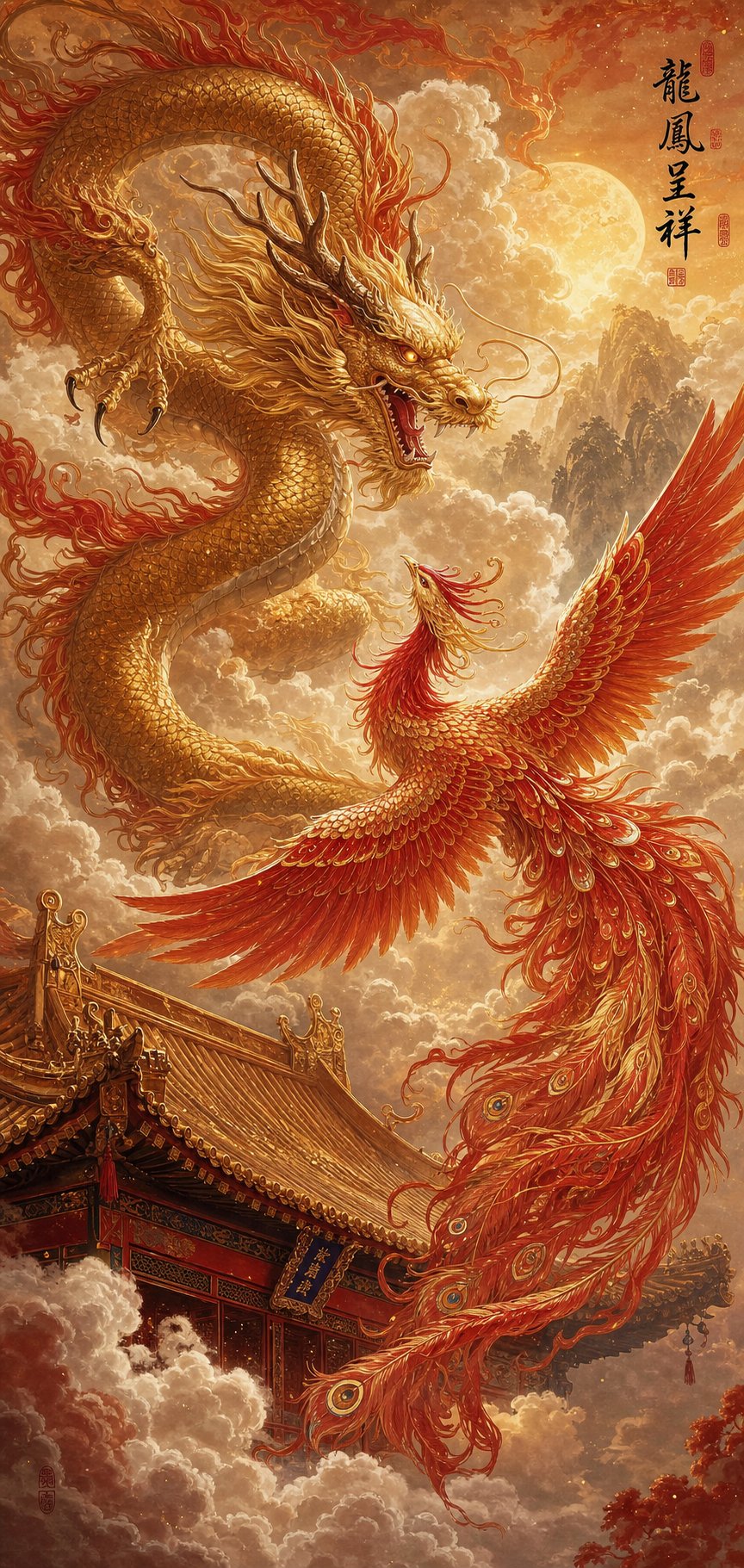
Dragons, phoenixes, and unicorns never grazed in a pasture or swam in a river — yet they became hereditary surnames carried by real families across centuries. These mythological animal surnames occupy a different tier entirely from their real-animal counterparts. Where 马 (horse) or 牛 (ox) connect bearers to pastoral life and practical survival, surnames drawn from legendary creatures connect bearers to cosmic power, imperial authority, and divine virtue.
That distinction matters. Among rare chinese last names, the mythological category carries a cultural prestige that no livestock-based surname can match.
龙 Lóng — The Dragon Surname and Imperial Connections
龙 (Lóng, dragon) is arguably the most symbolically loaded surname in the entire Chinese naming system. The dragon represents imperial sovereignty, cosmic energy, and the generative force of nature. For thousands of years, only the emperor could claim the dragon as his personal symbol — the dragon throne, dragon robes, dragon face.
In Chinese culture, the dragon is not a monster to be slain. It is the supreme symbol of power, prosperity, and celestial authority — making 龙 one of the most culturally significant unique chinese surnames in existence.
The surname's origin traces back to Emperor Yao's descendant Liu Lei, who served as the Keeper of Dragons for King Kong Jia during the Xia Dynasty. His descendants adopted 龙 as their hereditary name. A separate lineage connects to Emperor Shun, who had an official named Long whose descendants carried the surname forward. These dual origins — one tied to dragon-keeping mythology, the other to an ancient official's given name — gave the surname multiple entry points into the population.
Despite its powerful symbolism, 龙 is not extremely common. It falls outside the top 80 surnames, placing it among uncommon chinese last names relative to giants like Wang or Li. Its rarity only adds to its mystique.
凤 Fèng — The Phoenix Surname
凤 (Fèng, phoenix) represents virtue, grace, and harmonious union. Where the dragon embodies yang energy and masculine imperial power, the phoenix embodies yin energy and feminine elegance. Together they form the dragon-phoenix pairing seen at weddings and on ceremonial art throughout Chinese history.
As a surname, 凤 is genuinely rare — one of the rarest chinese surnames still in active use. Its origin ties to the legendary figure Feng Niao Shi, a clan leader in remote antiquity whose people revered the phoenix as their totemic guardian. Bearers of this unique chinese last name carry a character associated with beauty, renewal, and moral excellence.
Mythological vs Real Animal Surnames in Status
Why do mythological animal surnames tend to carry more prestige? The answer lies in what each creature represents. A horse is useful. An ox is dependable. But a dragon commands heaven and earth. A phoenix heralds the arrival of a sage ruler. The qilin 麒 (Qi) — sometimes called the Chinese unicorn — appears only during times of peace and prosperity, making it an omen of cosmic approval.
These uncommon chinese surnames function almost like chinese noble last names in cultural perception. They do not guarantee aristocratic lineage, but they evoke it. Families bearing 龙 or 凤 often report a quiet pride in the character's weight — a sense that their surname carries something grander than a simple label.
Symbolism this potent does not stay locked in mythology. It bleeds into everyday life, shaping how people perceive a surname's bearer, how parents choose given names to pair with it, and how entire communities interpret the fortune embedded in a family's identity.
Cultural Symbolism Behind Each Animal Surname
Symbolism does not stay locked in mythology — it shapes real-world perception. Every animal character in the Chinese naming system carries centuries of accumulated cultural meaning, and that meaning colors how people respond to a surname the moment they hear it. When you understand chinese surnames and meanings at this symbolic level, you realize that a family name is never just a label. It is a condensed story about what a culture values.
So what does each animal actually represent? And how does that representation affect the people who carry it as a surname?
Auspicious Animal Surnames and Their Symbolism
Chinese culture assigns specific virtues, energies, and fortunes to different animals. These associations developed over millennia through folklore, philosophy, art, and daily life. For families carrying animal surnames, these symbolic layers become part of their identity — sometimes a source of pride, occasionally a source of gentle teasing.
Here is how the major animal surnames break down by their symbolic associations:
- Power and authority: 龙 (Long, dragon) — supreme cosmic power, imperial destiny, and boundless fortune. As Chineasy notes, the dragon is a symbol of power and good luck often connected with rulers and emperors. The phrase 龙的传人 (descendants of the dragon) reflects how deeply Chinese people identify with this creature.
- Speed and success: 马 (Ma, horse) — faithfulness, nobility, and an indomitable spirit. Outstanding individuals are praised as 千里马 (thousand-kilometer horses), a compliment likening their talents to legendary steeds that could cover vast distances in a single day.
- Diligence and strength: 牛 (Niu, ox) — hard work, honesty, and quiet perseverance. The ox represents wealth and good luck in Chinese tradition, and many farming families historically treated oxen as members of the household rather than mere livestock.
- Grace and virtue: 凤 (Feng, phoenix) — moral excellence, beauty, and harmonious renewal. The phoenix signals the arrival of peace and wise leadership.
- Peace and gentleness: 羊 (Yang, sheep/goat) — traditionally a beacon of good luck, peace, and auspicious energy. The goat symbolizes prosperity and positivity in classical Chinese thought.
- Homecoming and hope: 燕 (Yan, swallow) — spring, return, and domestic happiness. Swallows nesting under a family's eaves are considered a sign of good fortune.
- Resilience and abundance: 鱼 (Yu, fish) — surplus and prosperity, since 鱼 (yu) is a homophone of 余 (yu, surplus). Fish imagery appears everywhere during Chinese New Year celebrations for this reason.
- Courage and vitality: 熊 (Xiong, bear) — raw strength and fearlessness, connected to the powerful Chu royal lineage.
You'll notice that nearly every animal surname carries at least one positive connotation. This is not coincidence — surnames that survived thousands of years of cultural filtering tended to be ones people were willing to pass down. A deeply inauspicious character would face pressure to be changed or abandoned over generations.
The Chinese Zodiac Connection
If you are already familiar with the 12 animals of the Chinese zodiac, you have a ready-made framework for understanding the meaning of chinese surnames tied to animals. The zodiac assigns personality traits and fortunes to each creature, and those associations inevitably color how people perceive the matching surname.
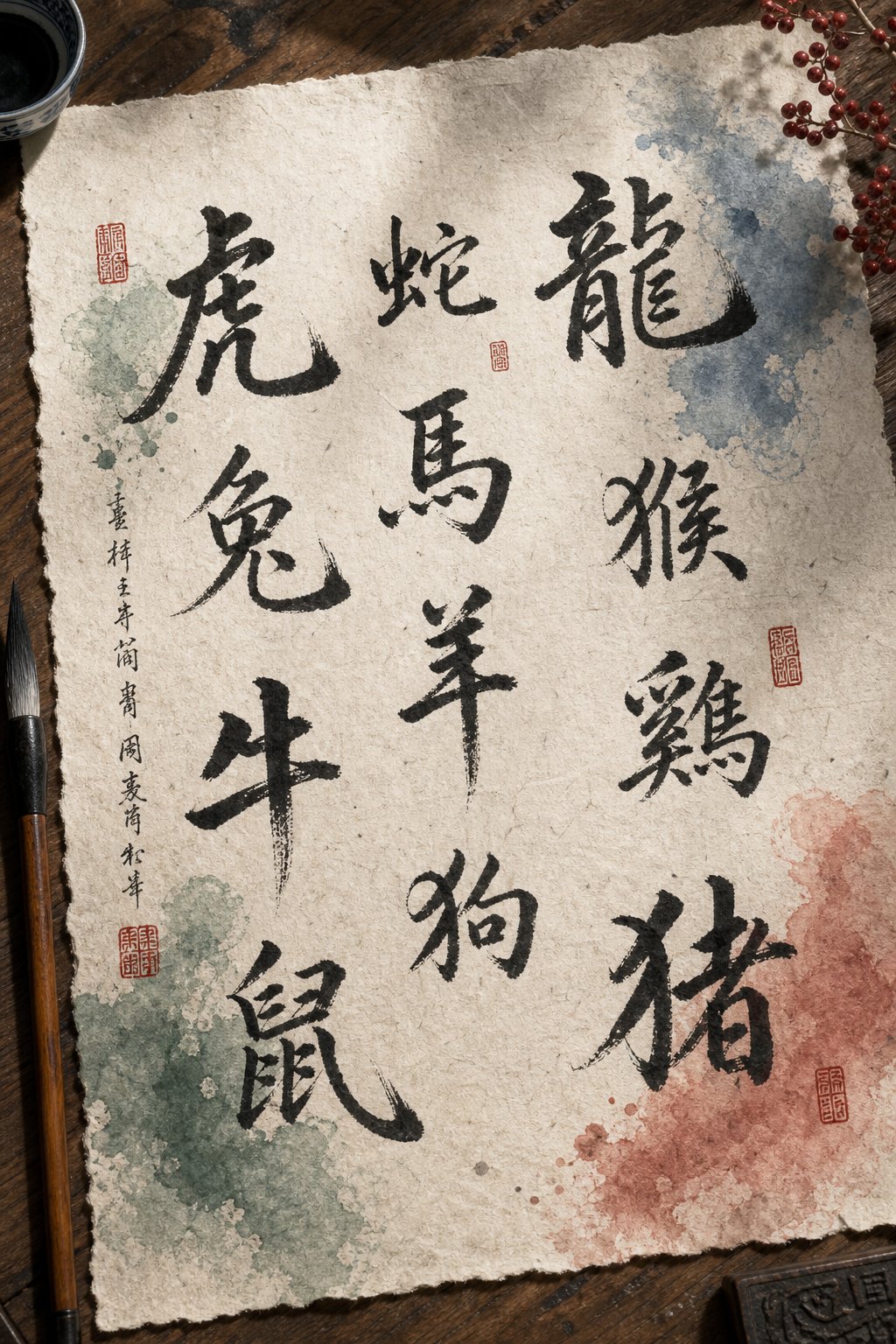
Consider the overlap. The zodiac includes the rat, ox, tiger, rabbit, dragon, snake, horse, goat, monkey, rooster, dog, and pig. Several of these double as hereditary surnames: 牛 (ox), 龙 (dragon), 马 (horse), and 羊 (goat) all appear in both systems. When someone carries the surname 马 and was also born in the Year of the Horse, Chinese folk belief sometimes interprets this as a doubled energy — an intensification of the horse's symbolic qualities of speed, ambition, and restless drive.
But animal surnames extend well beyond the zodiac's 12 creatures. Fish, bear, swallow, phoenix, and qilin have no zodiac year, yet they carry equally rich symbolic weight. The zodiac is a useful entry point for Western readers exploring chinese last names meaning, but it covers only a fraction of the animal-surname landscape.
How Symbolism Affects Modern Perceptions
Does any of this actually matter in daily life? More than you might expect. Chinese last name meaning still registers in social interactions, even in modern urban settings. A person surnamed 龙 (dragon) may receive comments about their "powerful name" from new acquaintances. Someone surnamed 牛 might hear the pun on 牛 as slang for "awesome" — a modern colloquial usage that gives the old surname fresh energy.
Parents also factor symbolism into given-name selection. A surname already loaded with strong imagery (dragon, horse) might pair best with a given name that balances or complements that energy rather than doubling it. A surname with gentler connotations (sheep, swallow) might invite a given name that adds strength or ambition.
Some animal surnames sit in more neutral territory. 鱼 (fish) and 熊 (bear) carry positive classical associations but lack the immediate prestige of dragon or phoenix. They are neither auspicious nor inauspicious — simply distinctive. Bearers of these surnames often describe them as conversation starters rather than status markers.
The symbolic weight a surname carries also varies by region and generation. Older generations tend to feel the classical connotations more strongly, while younger urban Chinese may treat the animal character as a quirky feature of their identity rather than a spiritual inheritance. Either way, the symbolism is there — embedded in the character itself, waiting to be read by anyone who knows the cultural code.
Symbolism tells you how a surname feels. But population data tells you how common that feeling actually is — and the distribution of animal surnames across modern China reveals surprising geographic patterns that symbolism alone cannot explain.
How Common Are Animal Surnames in Modern China
Symbolism tells you what a surname means culturally. Population data tells you how many people actually carry it — and the gap between the most common and rarest animal surnames is enormous. Among the most common chinese last names, one animal surname dominates the category so thoroughly that it dwarfs all others combined. Meanwhile, some animal-character surnames are carried by fewer people than a single apartment complex could hold.
How do these surnames actually distribute across China's 1.4 billion people? The answer involves migration patterns, ethnic adoption, and geographic isolation stretching back centuries.
Population Rankings of Animal Surnames
The Seventh National Population Census data provides the clearest picture of where animal surnames fall in the overall ranking. Among the most popular chinese last names, 马 (Ma, horse) stands at position 14 — placing it ahead of thousands of other surnames and giving it an estimated 17 to 19 million bearers. That makes Ma not just the most common animal surname, but one of the most common last name in china entries overall.
After Ma, the drop-off is steep. 熊 (Xiong, bear) sits at approximately 72nd, 龙 (Long, dragon) at 80th, and 牛 (Niu, ox) at 98th. These are still within the top 100 — meaning each one is carried by millions of people — but they represent a fraction of Ma's total population.
Beyond the top 100, animal surnames become genuinely uncommon. 燕 (Yan, swallow) falls around 233rd, while 羊 (Yang, sheep) and 鱼 (Yu, fish) sit well outside the top 300. At these levels, you are looking at populations in the low hundreds of thousands rather than tens of millions.
The following table ranks the major animal surnames by their approximate population standing, with notes on where they concentrate geographically:
| Chinese Character | Pinyin | Animal | National Ranking | Estimated Bearers | Regional Concentration |
|---|---|---|---|---|---|
| 马 | Mǎ | Horse | ~14th | 17-19 million | Northwest, North China (Hui communities) |
| 熊 | Xióng | Bear | ~72nd | 3-4 million | Central-South (Hubei, Jiangxi, Sichuan) |
| 龙 | Lóng | Dragon | ~80th | 2-3 million | South, Southwest (Hunan, Guizhou) |
| 牛 | Niú | Ox | ~98th | 2-3 million | North China Plain (Henan, Hebei, Shanxi) |
| 燕 | Yàn | Swallow | ~233rd | 300,000-500,000 | North China (historical Yan state region) |
| 羊 | Yáng | Sheep/Goat | ~391st | ~136,000 | Hainan, scattered |
| 鱼/魚 | Yú | Fish | Outside top 400 | <100,000 | Shaanxi, scattered |
The contrast is striking. Ma has over 100 times more bearers than the sheep yang surname. That ratio reflects the multiple independent origin streams feeding into Ma — totemic, occupational, and ethnic adoption all compounding its numbers — while rarer surnames like 鱼 entered the system through a single narrow pathway.
Regional Distribution Across China
Animal surnames do not spread evenly across the map. They cluster, and those clusters tell stories about migration, isolation, and historical power centers.
Research published in the American Journal of Physical Anthropology analyzed 1.28 billion citizen records and found that surname distributions in southern China are more isolated and locally distinct, while northern and northeastern regions show greater surname homogeneity due to centuries of large-scale migration. This pattern directly affects animal surnames:
- 马 (Horse) concentrates heavily in northwestern China — Ningxia, Gansu, Qinghai, and parts of Henan. This reflects the surname's strong adoption by Hui Muslim communities, who are historically concentrated in these regions.
- 熊 (Bear) clusters in the central-south corridor, particularly Hubei, Jiangxi, and Sichuan — areas connected to the ancient state of Chu, whose royal family carried this surname.
- 龙 (Dragon) appears most frequently in southern and southwestern provinces like Hunan and Guizhou, where ethnic minority communities (particularly Miao and Dong groups) adopted the character during surname standardization.
- 牛 (Ox) concentrates on the North China Plain — Henan, Hebei, and Shanxi — the agricultural heartland where cattle were central to daily life for millennia.
- 羊 (Sheep) shows its highest concentration in Hainan province, an island in the far south, with scattered pockets elsewhere.
Why does geography matter? Because it reveals the forces that shaped each surname's survival. Surnames tied to migration (like Ma spreading with Hui communities along trade routes) became widespread. Surnames tied to isolated local traditions (like 鱼 in parts of Shaanxi) stayed geographically confined. The PMC research confirms that prefectures in southern China — mountainous, linguistically diverse, and historically isolated — preserve more unique and rare surname distributions, while the northern plains show greater uniformity from centuries of population mixing.
The Yang Confusion — Tree vs Sheep
Few surname mix-ups cause more confusion than the yang last name. When English speakers encounter "Yang" as a Chinese surname, they almost always assume it is a single name. In reality, at least two completely different characters share this romanization — and the difference in their frequency is staggering.
杨 (Yáng, poplar tree) ranks 6th nationally. It is one of the most common chinese last names in existence, carried by roughly 40 million people. The yang family name 杨 traces its origin to the ancient state of Yang during the Western Zhou dynasty and has nothing to do with animals.
羊 (Yáng, sheep/goat) ranks approximately 391st. A 2013 study found it was shared by only 136,000 people — about 0.01% of the population. The yang last name origin for this character traces to the Western Zhou period, when an official post called yangren (羊人) oversaw animal sacrifices. Descendants of these officials adopted the character as their hereditary surname. A second lineage shortened the compound surname Yangshe (羊舌), originally a fief name in the state of Jin.
In pinyin, both are written "Yang" with the same second tone. In characters, they look nothing alike. The tree version 杨 has a wood radical (木) on the left. The sheep version 羊 depicts horns atop a body — a pictograph that has remained recognizable for over three thousand years. When researching the yang surname in genealogical records, confirming which character your family uses is the essential first step. The odds overwhelmingly favor 杨 (tree), but the animal version 羊 (sheep) persists as a living surname, most notably in Hainan.
Is yang a korean last name as well? Yes — the romanization "Yang" appears in Korean naming systems too, though it typically corresponds to different hanja characters (梁 or 楊) with distinct meanings and origins from the Chinese sheep character.
Population data and regional patterns reveal where these surnames live today. But the characters themselves hold an even older story — one written in bone and bronze thousands of years before census bureaus existed.
How Animal Characters Evolved from Ancient Pictographs
Three thousand years ago, the character for horse looked like a horse. Not abstractly. Not symbolically. It was a small drawing of a horse in profile — four legs, a mane, a tail. The same was true for ox, dragon, and dozens of other animal characters that eventually became hereditary surnames. Every time someone writes their surname 马 today, they are tracing a line back to a Shang Dynasty scribe who carved a tiny horse into a piece of bone.
That visual lineage is what makes animal surnames uniquely powerful. The characters did not start as arbitrary symbols. They started as pictures — and you can still read the animal in them if you know where to look.
From Pictograph to Surname — Character Evolution
Chinese characters passed through distinct developmental stages over roughly 3,400 years. Each stage reshaped the animal pictographs, gradually abstracting them from drawings into the streamlined strokes used today. Oracle bone script (甲骨文), the earliest confirmed Chinese writing from the mid-to-late Shang Dynasty (1500-1000 BCE), featured characters etched on turtle shells and animal bones that clearly resembled the objects they represented — true pictographs (象形字).
The full evolutionary path looks like this:
- Oracle Bone Script (甲骨文, ca. 1500-1000 BCE) — Crude, angular carvings on bone and shell. Animal characters are recognizably pictorial. The character 马 shows a horse with visible legs and mane. The character 牛 displays prominent horns atop a bovine head.
- Bronze Script (金文, ca. 1000-200 BCE) — Cast into bronze vessels during the Zhou Dynasty. Strokes become thicker and rounder, but the pictographic quality remains strong. The dragon character 龙 still shows a serpentine body with claws.
- Seal Script (篆书, ca. 221 BCE onward) — Standardized under Qin Shi Huang's unification. Characters become more uniform and elongated, forming the foundation of all later scripts. Animal shapes are still traceable but increasingly stylized.
- Regular Script (楷书, ca. 200 CE onward) — Developed through the Han Dynasty and fully matured by the Tang Dynasty. Characters become precisely formed and easily legible. The pictographic origins are now hidden beneath standardized stroke patterns.
- Simplified Script (简体字, 1956 onward) — The People's Republic reduced stroke counts for common characters. 馬 became 马. 龍 became 龙. The animal imagery, already abstract in regular script, became even more compressed.
As the Academy of Chinese Studies explains, the original idea of simplification was to change graphic forms into linear ones — a process that traded visual resemblance for writing speed. The oracle bone version of 马 took perhaps 10 strokes to sketch a recognizable horse. The modern simplified version uses just 3.
Reading Ancient Animals in Modern Characters
Can you still see the animal? In some cases, yes. The modern character 牛 retains the two upward strokes representing horns — a direct echo of the oracle bone original. The character 羊 (sheep) similarly preserves its horn structure, which is why the yang chinese character has remained visually recognizable across millennia. When people ask what yang in chinese means, the character itself offers a visual answer: those two diverging strokes at the top are horns.
The 杨 meaning is entirely different — its wood radical (木) on the left signals a tree, not an animal. But the sheep character 羊 embedded in the right side of some compound characters still carries its ancient pictographic DNA. Understanding the chinese character for yang requires distinguishing between these visual components. The yang name 羊 is a standalone pictograph; the yang name 杨 is a compound character built from different parts entirely.
For dragon (龙), the modern simplified form has drifted far from its oracle bone ancestor. The original showed a crowned serpent with an open jaw and curling body. Today's 龙 compresses that into five strokes that bear little visual resemblance to the ancient drawing. Only by tracing the intermediate stages — bronze, seal, regular — can you watch the serpent slowly flatten into abstraction.
This evolutionary depth means something for surname bearers. When you carry the surname 马, 牛, or 龙, your family name is not just a word. It is a character with a 3,000-year visual history — one that began as a drawing of the actual animal and transformed, dynasty by dynasty, into the modern form you write today. That continuity connects living families to the oldest layer of Chinese written culture.
Characters carry history in their strokes. But they also carry practical consequences — especially when parents must pair an animal surname with a given name that sounds right, reads well, and avoids the cultural pitfalls that centuries of naming tradition have mapped out.
Naming Traditions and Taboos for Animal Surname Families
Characters carry history in their strokes — but they also carry practical consequences the moment a new child needs a name. For families with animal surnames, choosing a given name is not just about sound and meaning. It is about avoiding combinations that accidentally turn a dignified heritage into a playground joke. When your surname literally means "horse" or "bear," the wrong given name can create readings that range from mildly awkward to genuinely unfortunate.
This is where traditional chinese surnames intersect with one of the oldest arts in Chinese culture: the careful, deliberate craft of naming a child.
Naming Taboos and Animal Surname Combinations
In Chinese, a full name reads as a phrase. The surname comes first, followed by one or two given-name characters. That means the animal character leads the phrase — and everything after it must harmonize rather than clash. Imagine the surname 熊 (Xiong, bear) paired with a given name meaning "small" or "timid." The combination reads as a contradiction at best, a joke at worst.
Parents navigating traditional chinese last names with animal characters typically consider several factors before settling on a given name:
- Avoid literal absurdity — Pairing 马 (horse) with characters meaning "slow" or "lazy" creates an ironic reading. Pairing 牛 (ox) with characters meaning "fly" produces an unintentionally comic image.
- Watch for homophones — Chinese is rich in homophones, and a given name that sounds fine in isolation might create an unfortunate phrase when read after the animal surname. 马虎 (mǎhu) means "careless" — so naming a child in the Ma family "Hu" invites a lifetime of puns.
- Balance symbolic weight — A surname like 龙 (dragon) already carries immense symbolic power. Pairing it with an equally grandiose given name (meaning "emperor" or "heaven") can feel excessive. Many families opt for grounding characters that balance the dragon's intensity.
- Consider stroke count and visual harmony — Traditional naming practice evaluates how the characters look written together. An animal character with few strokes (马, 3 strokes) pairs visually with moderate-complexity given names rather than extremely dense characters.
- Respect generational naming poems — Many clans follow a predetermined sequence of characters across generations. If the generational character clashes with the animal surname, families face a tension between tradition and aesthetics.
These considerations apply to all chinese first and last names, but animal surnames amplify the stakes because the surname's meaning is so immediately recognizable. A surname like 王 (Wang, king) is abstract enough that most given names work beside it. A surname like 鱼 (Yu, fish) is concrete enough that every pairing creates a vivid mental image.
Animal Surnames in the Chinese Diaspora
When chinese names and last names cross borders, a new layer of complexity emerges: romanization. The same character can be spelled half a dozen ways depending on which dialect the family spoke and which country's immigration officials transcribed it.
Take 马 (horse). In Mandarin pinyin, it is "Ma." In Cantonese, it is also romanized as "Ma" — one of the rare cases where both systems align. But the surname 羊 (sheep) becomes "Yeung" in Cantonese romanization. The yeung last name origin traces to the same sheep character 羊, just filtered through Cantonese pronunciation and colonial-era transcription in Hong Kong. A family surnamed Yeung and a family surnamed Yang may share the exact same ancestral character — or they may not, since 杨 (poplar tree) also romanizes as "Yeung" in Cantonese.
The confusion multiplies across romanization systems. As the Wade-Giles to Pinyin conversion table demonstrates, older systems produced spellings that look nothing like modern pinyin. The surname 龙 appears as "Lung" in Wade-Giles and Cantonese contexts, "Long" in pinyin, and "Liong" in some Hokkien transcriptions. Without a standardized system, immigration officials simply guessed at spellings based on what they heard — producing dozens of variants for typical chinese last names that were perfectly unambiguous in written Chinese.
This romanization fragmentation means that diaspora families researching their heritage often cannot identify their animal surname from the English spelling alone. "Ma" could be 马 (horse), 麻 (hemp), or even 玛 (agate). "Lung" could be 龙 (dragon) or 隆 (prosperous). Only by tracing the original character — through family records, dialect identification, or genealogical tools — can the animal connection be confirmed.
For mandarin last names, pinyin has become the global standard, simplifying identification. But families whose ancestors emigrated before pinyin's adoption in the 1950s often carry Wade-Giles, postal romanization, or dialect-based spellings that obscure the original character entirely. Is yang a korean last name? It appears in Korean systems too, but typically maps to different hanja — making cross-cultural surname research even more layered when animal characters are involved.
Whether a family carries their animal surname as "Ma" in Toronto, "Mah" in San Francisco, or "Ba" in Vietnamese transcription, the character underneath remains the same horse it has been for three millennia. The romanization is a costume. The character is the identity.
All of these naming considerations — taboos, harmony, diaspora spelling — orbit individual families making individual choices. But stepping back to see the full landscape of animal surnames reveals a comprehensive taxonomy that spans every category of creature, from mammals to myths.
Complete Reference of All Chinese Animal Surnames
Individual families navigate naming taboos and romanization puzzles one surname at a time. But the full scope of animal-character surnames in China stretches far beyond the handful of well-known examples. When you compile every documented case — mammals, birds, aquatic creatures, insects, and mythological beasts — the list of chinese surnames tied to fauna reveals a taxonomy as diverse as the natural world itself.
This reference organizes all widely documented animal surnames chinese researchers have identified, grouped by creature category. Use it as a lookup tool for genealogical research, language study, or simple curiosity about which animals made it into the naming system.
Complete List of Chinese Animal Surnames by Category
| Character | Pinyin | Animal | Category |
|---|---|---|---|
| 马 | Mǎ | Horse | Mammal |
| 牛 | Niú | Ox / Cow | Mammal |
| 熊 | Xióng | Bear | Mammal |
| 羊 | Yáng | Sheep / Goat | Mammal |
| 鹿 | Lù | Deer | Mammal |
| 虎 | Hǔ | Tiger | Mammal |
| 狐 | Hú | Fox | Mammal |
| 象 | Xiàng | Elephant | Mammal |
| 豹 | Bào | Leopard | Mammal |
| 狼 | Láng | Wolf | Mammal |
| 猴 | Hóu | Monkey | Mammal |
| 燕 | Yàn | Swallow | Bird |
| 凤 | Fèng | Phoenix | Bird (Mythological) |
| 鹤 | Hè | Crane | Bird |
| 雁 | Yàn | Wild Goose | Bird |
| 鹰 | Yīng | Eagle / Hawk | Bird |
| 雀 | Què | Sparrow | Bird |
| 鸟 | Niǎo | Bird (generic) | Bird |
| 鱼/魚 | Yú | Fish | Aquatic |
| 蛇 | Shé | Snake | Reptile |
| 龟 | Guī | Turtle | Reptile |
| 蚁 | Yǐ | Ant | Insect |
| 蜂 | Fēng | Bee | Insect |
| 龙 | Lóng | Dragon | Mythological |
| 麒 | Qí | Qilin (Unicorn) | Mythological |
This china surnames list is not exhaustive — some extremely rare entries survive in only a handful of families or appear solely in historical records. But it captures the major documented animal surnames that genealogical databases and census data confirm as active last names chinese families still carry today. The mammals dominate in both variety and total population, reflecting the central role livestock and predators played in ancient clan identity. Birds form the second-largest group, while insects and reptiles remain the rarest — likely because fewer clans chose these creatures as totemic symbols.
You'll notice that the mythological category is small but culturally outsized. Dragon and phoenix alone carry more symbolic weight than the entire insect category combined. That imbalance mirrors how surnames china has preserved over millennia tend to reflect cultural prestige as much as biological diversity.
Connecting to Your Own Surname Heritage
If your family carries one of these animal characters, you are connected to something older than any dynasty. The character on your ID card or family register began as a drawing — a pictograph carved into bone or cast into bronze by someone who saw the actual animal and wanted to capture it in a mark. That mark became a word. The word became a clan name. The clan name became yours.
Exploring your own chinese family name list entry means tracing that chain backward: from the modern simplified character to its traditional form, from regular script to seal script, from bronze inscription to oracle bone. Each stage reveals a slightly different version of the same animal — and a slightly different chapter of your family's place in Chinese history.
Every animal surname is a living fossil — a piece of totemic culture that survived dynastic collapse, script reform, and mass migration to arrive in the present, still legible, still carried by real families who may not realize they bear one of the oldest naming traditions on Earth.
Whether your surname is a horse galloping across the northern plains, a dragon coiling through southern mountains, or a fish swimming quietly through a single province's records, the character connects you to a specific moment when an ancient community looked at the natural world and said: that creature is us. That decision — made thousands of years ago by people whose individual names are lost — still echoes every time you write your surname today.
Frequently Asked Questions About Chinese Animal Surnames
1. What is the most common Chinese surname that means an animal?
Ma (马, horse) is the most common animal-character surname in China, ranking approximately 14th among all Chinese surnames with an estimated 17 to 19 million bearers. Its widespread use stems from multiple origin paths: descendants of the ancient Zhao nobleman, adoption by Hui Muslim communities as a phonetic approximation of Muhammad, and occupational ties to horse training. This combination of totemic, ethnic, and occupational origins gave Ma far more bearers than any other animal surname.
2. Why do some Chinese last names mean animals?
Animal surnames trace primarily to totemic worship in prehistoric China. Ancient clans adopted specific animals as spiritual ancestors and divine protectors, using these totems to distinguish themselves from neighboring groups. Over generations, the totemic symbol became a hereditary clan name. Additional pathways include geographic association (families living near animal habitats), occupational naming (horse trainers or animal husbandry workers), and royal grants from emperors who bestowed animal-character surnames on loyal officials or assimilated ethnic groups.
3. Is the Chinese surname Yang an animal name?
It depends on which character is used. The extremely common Yang (杨, poplar tree) ranks 6th nationally with about 40 million bearers and has no animal connection. The rare Yang (羊, sheep/goat) ranks around 391st with only about 136,000 bearers. Both share identical pinyin and tone, but they are completely different characters with unrelated origins. The sheep version traces to Western Zhou officials who oversaw animal sacrifices, while the tree version connects to the ancient state of Yang.
4. What Chinese surnames come from mythological animals?
The most notable mythological animal surnames are Long (龙, dragon), Feng (凤, phoenix), and Qi (麒, qilin or Chinese unicorn). These carry significantly more cultural prestige than real-animal surnames because they symbolize cosmic power, imperial authority, and divine virtue. Long ranks around 80th nationally with 2-3 million bearers, while Feng is genuinely rare. Mythological surnames function almost like noble titles in cultural perception, evoking grandeur that livestock-based names cannot match.
5. How do Chinese animal surnames affect naming children?
Parents with animal surnames must carefully avoid given-name combinations that create unintended meanings or humorous readings. For example, pairing Ma (horse) with the character Hu creates Mahu, meaning careless. Key considerations include avoiding literal absurdity, watching for unfortunate homophones, balancing symbolic weight so the name does not feel excessive, ensuring visual harmony in stroke count, and respecting generational naming poems used by many clans. The concrete imagery of animal characters makes these concerns more pressing than for abstract surnames.